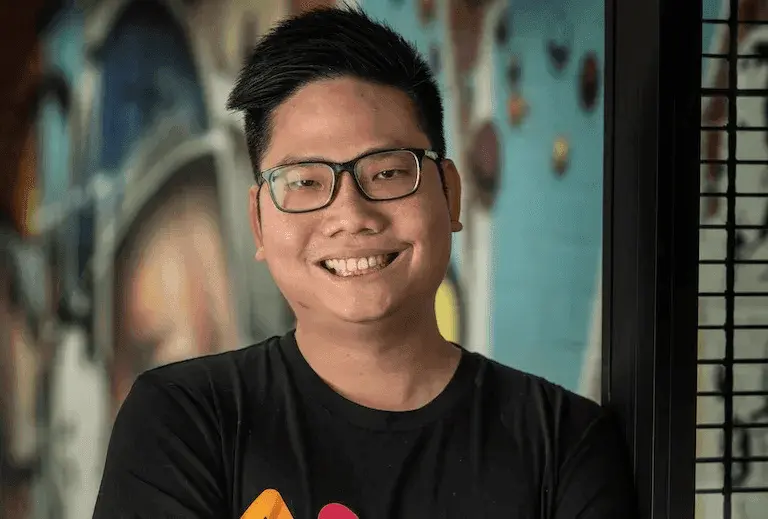
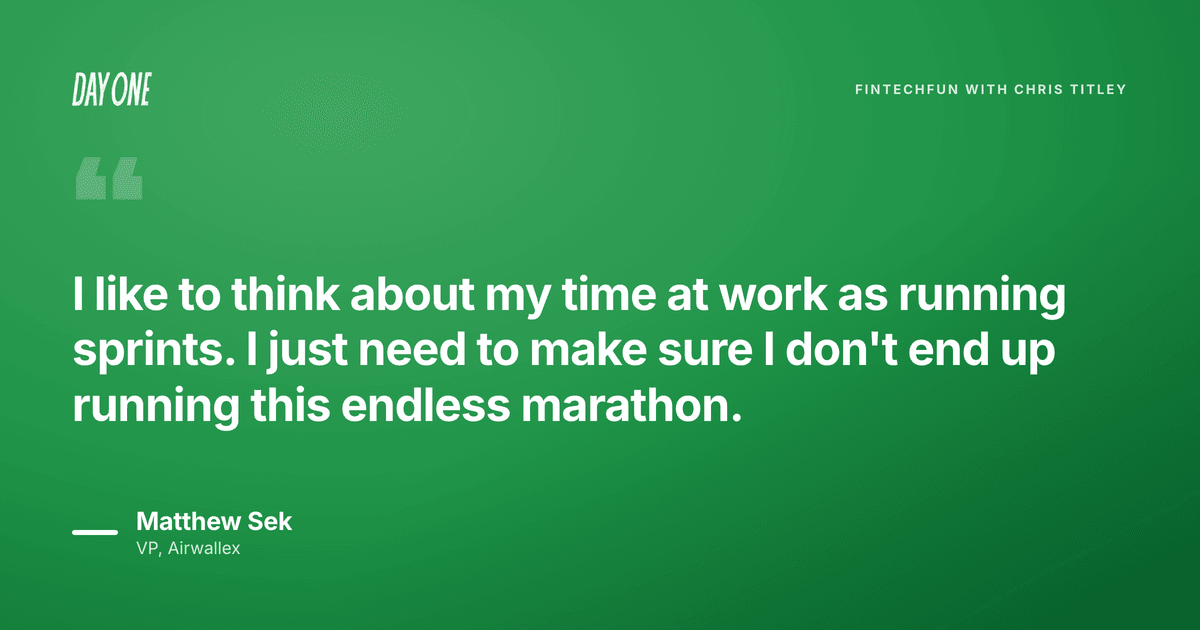
Transcript Synced · select any line to jump ▾ 0:00 Speaker: You're listening to a Day One FM show. 0:07 Speaker: Pick My Brain is the podcast where founders pitch me their startup and I try to give them some useful advice so they can connect better with potential co-founders, investors, media, and of course, customers. My name's Alan Jones and I was a founder myself for about 15 years, and after that, an angel investor for another 15 years. So yeah, old. Some of my ventures have been successful and some failed disastrously, But I like to think I've learned a thing or two along the way, and maybe some of that can help you. So if you'd like to learn how to tweak your pitch, subscribe to the Pick My Brain show now, wherever you like to listen to podcasts. 0:38 Chris Titley: Hi, it's Chris Tittley, and as part of the FinTech Fun podcast series, I'm joined by Matt Sek, VP for Airwallex ANZ. Matt, thank you so much for being part of this series. 0:49 Speaker: Thank you, Chris, for having me on the show. I'm excited to be here. Yes, that makes sense. 0:54 Chris Titley: Matt, for the listeners out there, a lot of people are familiar with Airwallex, but I'd love a little bit of a history of the business and what Airwallex does. 1:02 Matthew Sek: I'll kind of take you to the very start of kind of where we were founded. We actually started in a non-traditional sense. We were a coffee shop here in Melbourne, in Docklands. So we didn't start out to be a fintech directly, but the founders of the business had a lot of challenges paying overseas suppliers. So you can imagine sort of paying for, your coffee beans, paying for cups and the likes in a coffee shop business. And that led them to start this business, which kind of started off as a money transfers business. So we wanted to essentially solve the pain point for SMBs collecting and paying suppliers overseas. So collecting from overseas customers, setting up international bank accounts, but also to pay our international suppliers in a faster, cheaper, more reliable manner. than the options available in the market today. And so that was kind of where we, where we started. Since then, we've kind of branched out a lot more to a full suite of, of financial products. So we can do payment acceptance and checkout today. So we can accept credit cards, you know, card payments, direct debits, etc. We can also sort of— we have a corporate card product as well and a spend management solution as well. So where, you know, customers can issue corporate cards to employees, be able to kind of track spending, be able to manage reimbursement. Mm-hmm. What employee expenses, et cetera, in the process. So it's basically all of these packaged in the one neat solution for customers. 2:30 Chris Titley: I'm curious to know from the coffee shop to start to where Airwallex is now, the idea of being global, the idea of being, helping businesses globally, where that came from and how important that is from an Airwallex point of view in terms of being global. 2:47 Matthew Sek: I think we have a thesis from day one that the number of businesses that are transacting globally is ever increasing, right? And I think in hindsight, sort of like COVID has further accelerated this trend. And what we've seen is that a lot more businesses are hiring employees overseas. Like there is a talent shortage in Australia itself. So more and more businesses are hiring all over the world, right? Whether that's in both developed and developing countries around the world. These day and age, you see a lot of businesses kind of paying for some level of software subscription in a foreign currency, and that's just inevitable. And then lastly, you just kind of see sort of like a lot more businesses are more digital by nature. And so, you know, selling overseas or having a few overseas clients is becoming more and more the norm. And so initially that started mainly between Australia and New Zealand, but we see a lot of Australian businesses kind of like expanding into the US, Canada, UK, Europe, which are gigantic markets overall. Yeah., to tap into new customer segment and new customer base. And this is particularly true for tech businesses or e-commerce businesses, uh, in the market. But, um, by and large, I think like as the trend sort of increases, I think like our view is that every single SME business would have some level of global exposure, whether that's just paying for a single software subscription in US dollars. And that could be like $10 a month all the way to having, you know, a multinational business, uh, overseas, any, anything in between. Um, what we don't, what, what we don't see is just kind of businesses just being kind of like stuck domestically in Australia. And that's why I think we, we set out to build what we have built, which is linking these businesses overseas, right? Helping them save money, uh, and time as they start transacting more and more. 4:36 Chris Titley: Matt, you touched on the, the product suite and the different offerings that Airwallex done. I'm interested to know how you prioritize though, and what are some of the major products that Airwallex have out there that, that everyone finds pretty popular? 4:48 Matthew Sek: Good question. I think, I mean, our two most popular products are FX and global payouts. So basically the ability to do foreign currency conversions and pay suppliers and employees internationally. And then secondly, our corporate cards product as well. Those are our two most, like most of our customers, like I would say a big majority of our customers use those two products. In particular, with our corporate cards product, we don't charge any international transaction fees, which means they save every time they spend on an international transaction. And that savings can add up between 3 to 5% for them. In terms of kind of your other question around sort of like what is on the horizon for us, I think as I mentioned earlier, we're kind of like started with FX, we kind of broaden it to checkout corporate cards. I think the obvious sort of like question that we get a lot from customers is like, are we going to do lending? And now we're going to move into lending. And we have actually sort of like started trialing this. We've got a credit cards product live in Hong Kong at the moment. We're trialing that in Australia and we will be looking to roll that out more broadly in 2025 itself. So that is definitely an expansion area for us and one that is hotly demanded by our customers. 6:01 Chris Titley: And Matt, that's obviously another growth path for the company. I'm also curious to know about the amount of data that you guys get. In regards to small businesses, 'cause it is the engine that powers multiple countries around the world. And what you can do with that data, I did notice recently that you've released like a spend management report. Do you want to talk to that and what that was about? 6:24 Matthew Sek: Yeah, I think like with the spend management report that we saw, we basically surveyed a whole heap of our customers, but also non-customers, so basically SMBs in the market. To just better understand the challenges that they face in managing spend. And I think sort of like the biggest, biggest insights that we had out of that report that we've seen is that a large majority of businesses, and that's sitting at 63% of businesses in the SMB category, are still managing expenses and reimbursements through spreadsheets. 7:05 Speaker: Oh. 7:05 Matthew Sek: And so they don't have proper tools in place. They don't have live visibility on cash flow. And oftentimes without a proper tool, these types of spending and approval processes goes onto various forms of channels, right? Emails, Slack, WhatsApp, many, many different channels. And so for a lot of finance teams, I think this is a struggle, right? Ultimately managing cash is kind of like quite important to businesses. And this is sort of like one area that our spend management report at least highlighted. That despite advancement in technology and tools and services available, a lot of businesses are still sort of like resorting to very traditional, unstructured methods of managing this, which is something that we're determined and set up to sort of solve over time as well. 7:55 Chris Titley: Yeah. And Matt, I suppose for small businesses, they sometimes they don't know what they don't know. So how important is education in Airwallex to educate people to say, actually, there could be a better way and just, you know, try this. 8:09 Matthew Sek: Yeah, I think that's sort of like, and definitely an area where we are seeing sort of like, I think the fact that 63% of our survey respondents said that they're using spreadsheets, I don't think that is by choice, right? I think like it is, to your point, it's due to a lack of awareness of what's available in the market. And like a solution like ours, isn't at the same time like super expensive compared to the benefits it brings to customers, right? I think that the challenge with, if we take kind of spend management overall as a topic area, the biggest challenge that we see is this whole dynamic of how much do you empower your employees to spend by giving them a corporate card that is pre-approved versus you're in a business where you don't trust your employees necessarily and you say, why don't you spend first and then you claim a reimbursement later and I would then decide whether or not to approve that reimbursement. And I think right now what, what at least we find is that a lot of SMBs at least focus more on the, the latter solution, which is employees spend first and then claim reimbursement. But what a lot of these businesses don't— Uh, realize in the process is one, it's a very manual process, right? And one that actually has a lot of impact to employee morale and how empowered employees feel. And secondly, when you go down a reimbursement process, you don't actually have live visibility what's already been spent. And reimbursements could come in a month, 2 months, 3 months later. And that's the time period in which you can actually close your books. And so that delay is often not factored in. And so to your point around education is actually us spending a lot more time on making some of these sort of like benefits of moving from a reimbursement model to a corporate card model and the benefits of moving that to that corporate card model more apparent to the SME market. But also making sure that they're very clear that there is a level of control that they can actually have. So like these corporate cards are not just unlimited spending credit cards. There are tools in place like Airwallex what we offer in terms of allowing finance teams to actually set proper controls on these cards so employees don't go out and just, you know, go on a shopping spree altogether. 10:39 Chris Titley: I think one of the sort of not talked about factors in small business, you know, there's the cost of things, there's the price of things, but time is something which people don't often focus on and getting time back to do other things and making, you know, having tools out there that are more efficient to actually give back time. And if you sort of reverse engineer like an hourly rate on someone, you give them back an hour, that's quite a lot of money that adds up. How do you think, you know, if people start using some of these tools and start actually understanding the benefits, how beneficial that could be to small businesses? 11:14 Matthew Sek: Certainly. I think, I mean, a lot like quantifying these sort of like what I would describe as admin tasks, is often really hard, right? I think like generally, if you're, one of the most precious resources for small and medium-sized businesses is time, right? But actually quantifying sort of like how much time are you spending on tasks that you could potentially automate, especially in your finance processes, is often sort of something that is overlooked. But like, I actually, to be honest, don't have a very straightforward solution to your question, Chris, because we can go on webinars or podcasts like this and sort of like try and quantify this, try and explain sort of like, you know, through case studies to say, hey, this client actually saved this much time. But I do think that more broadly, there is sort of a potentially even a role more broadly in our education system, like as we kind of like train up fresh grads in accounting and finance, like, what are the very— beyond sort of like a university course kind of focusing on just here is how you do your month-end sort of like reconciliation and balancing of your books, what are actually tools that you can use as a finance and accounting professional to actually just automate a lot of processes, to actually get a lot of visibility, and actually making the educational courses a lot more practical rather than just— 12:44 Speaker: Yeah. 12:44 Matthew Sek: Theoretical base, uh, if that makes sense, right? Because I think the end goal for a lot of finance professionals is value-add, right? And so the less time they spend on admin, the more time they can spend on forecasting cash flow, figure out growth strategies, figure out pricing strategies that help the business grow rather than chasing receipts around, uh, for employees who have not submitted receipts just because they need to justify an expense to the tax office. 13:07 Chris Titley: That's a very good point, Matt, and I agree with you wholeheartedly. And I've just, you know, some of my colleagues, um, that run small businesses, they spend half a a day doing something or a day doing something, which is, you know, might be setting up a YouTube channel or it might be trying to work out, you know, chasing an invoice or working out an invoice. And that actually, you know, they get there and it's like their day's done, that they've actually just done a monotonous task. But, you know, having tools at your fingertips to enhance productivity, I think, is hugely beneficial to the business and also to the state and the nation. And I suppose, with that. My question, my next question is around Airwallex as a company. It's grown significantly in its scale. I mean, are you enjoying being part of the group that's actually, you know, I believe now one of the 9 unicorns in Australian startup landscape? 14:00 Matthew Sek: Yeah, I think I've been with Airwallex for now about coming up to 5 years. It's been a good growth journey. I think like from a headcount perspective, I joined when we had, say about 400 employees and now we're more than 1,600 globally. So we've kind of grown about 4 times since I joined. And so it's been tremendous sort of learning on how we actually get from 0 to 1, 1 to 10, 10 to 100 and so on and so forth. And so I think for us, the biggest challenge being in financial services, so we're quite different from the other unicorns, right? A lot of the other Aussie unicorns, obviously, You know, the likes of Canva, Employment Hero, like they're all wonderful businesses. They've all achieved massive successes both domestically and abroad. I think the biggest challenge for us is like, at the end of the day, we set out to build a financial solution for businesses. And with financial services, actually, regardless of sort of like how strong our product is, and there's always room for improvement in our product, I think building trust is quite challenging because at the end of the day, we're dealing with people's money, right? And these are hard-earned money from SMBs. And so a lot of sort of like what we focus on doing in the market is like, how do we build stronger trust? How do we build greater, beyond just awareness of what we do, how can we help businesses trust us as a fintech? And I'm sure that this is something that is true across most fintech businesses that you speak to, Chris, on a weekly or monthly basis, right? And building that trust is actually quite challenging. And I don't think we've kind of cracked the secret sauce. We've definitely had tremendous growth, but that's something that we're continually sort of like working on beyond just marketing and advertising. How can we partner up with a lot more trusted organizations to actually better educate customers on what potential sort of like SMBs of what we actually do and how sort of like secure the solution we've kind of built is. Yeah. For them. 16:04 Chris Titley: Matt, when you're not thinking about cross-border payments, fintech innovation, looking after your customers, all the things that go with your role and staff and scaling to where you are now and being part of a company that's gone up 4 times pretty much in terms of staff since you've joined, what does Matt do to actually wind down and take some time away, or is it not possible? 16:30 Matthew Sek: Good question, Chris. So I've got a pretty young family at the moment. So I've got a 20-month-old baby at home, and so I spend a lot of time playing with him. But at the same time, my wife and I enjoy traveling a lot. And so before we had the baby, before we had Ethan, my son, We thought that, you know, we'll do all the travel we can. And as soon as we have the baby, we would stop traveling because it's just too hard to go overseas. That hasn't been true so far. We are still traveling and, you know, we're about to sort of like go on a major trip in the coming months. But we make at least 2 to 3 trips every year. And it's also quite important for me to get the time to recharge in between. And I like to think about sort of like my time at work as running sprints, right? And so we run, we have pretty aggressive growth targets, growth ambitions. And so I just need to make sure that I don't end up kind of running this endless marathon and that I take sort of like every, you know, 5 or so months, I go on a vacation overseas and I make sure sort of I find time to relax and chill out. 17:50 Speaker: Yeah. 17:50 Matthew Sek: And then come back re-energized to kind of start running again. And so as part of that travel hobby, one interesting fact about myself is I like to do a lot of frequent flyer point hacking. So I book a lot of my trips on points, so that kind of like helps with lowering my travel costs for the year. It's more a hobby and I get a lot of enjoyment out of kind of, you know, getting a good deal out of, the airlines itself and hotel groups. 18:18 Chris Titley: Matt, that's the first actual hobby of that that I've come across in my podcast. So congratulations on that. I've always been fascinated about the ratios of spend versus points on what's best to spend. Is it on airline travel? Is it on to retail stores? And also, you know, the amount of promotions that you get, it's like the algorithms must be very sought after, and the actuaries within those organizations must have a keen eye on things. But for people like yourself that want to try and get around it, I'd love it. Do you have a spreadsheet, or how do you kind of monitor that? 18:55 Matthew Sek: I have a spreadsheet set up. I think I'm probably one of— I wouldn't say I'm the biggest contributor, right? But like, I'd definitely be up there in terms of contributions to either Qantas or Virgin's kind of like bottom line. From the loyalty sort of like program profits itself. These days you can get points on any, almost anything, right? Groceries, utilities, petrol, you know, travel, et cetera. And so like most of my points does not actually come from travel itself, but more on day-to-day sort of like spending and just being kind of like pretty savvy with that. And then also like I'm a big planner, right? So like I plan my trips well, way, way in advance so I can lock in sort of some of these bookings at ridiculous sort of like point rates, right? And so also because, you know, my son is still pretty young and so we don't have to be locked into traveling during school holiday periods. And so, because that's when you're not, you're not going to get availability on these redemption seats. And so that's what I, that's what I kind of like. It's a lot of work actually, if you think about sort of like, you know, earning points and calculating and finding reward seats. And it's probably not a good use of my time, but I actually genuinely get fun out of it. And so I would spend weekends kind of like looking up some flights or planning for my next holiday. And my wife would literally sort of complain and nag me and kind of like that I'm wasting too much time on it. So it's a hobby that I maybe at some point I would grow out of it, but for now. kind of keeps me occupied on the weekends. 20:30 Chris Titley: Matt, I'm just going to say one thing before we leave it there is that take it while you can in regards to non-school holiday periods. I've got 3 kids at school and that's all we can do right now. And it's peak, peak hour traffic in terms of prices for travel and accommodation. And you just have to grin and bear it if you want to go away for your school holidays. So make the most of it while you can. Matt, thank you so much for being part of the FinTech Fund podcast series and giving us a little bit of a glimpse of the Airwalleye story, the growth, the scale the, the operations are at now in terms of, uh, not just being an Australian ideation of a coffee shop to where you are now, some of the products that you've, you've got into market, and some of the tools that you can enhance small businesses with. Thank you so much for your time and looking forward to catching up. 21:14 Matthew Sek: All right, thanks for having me on the show, Chris. I appreciate the chat.




 ▶
▶  ▶
▶  ▶
▶  ▶
▶  ▶
▶  ▶
▶  ▶
▶ ▶
▶ ▶
▶