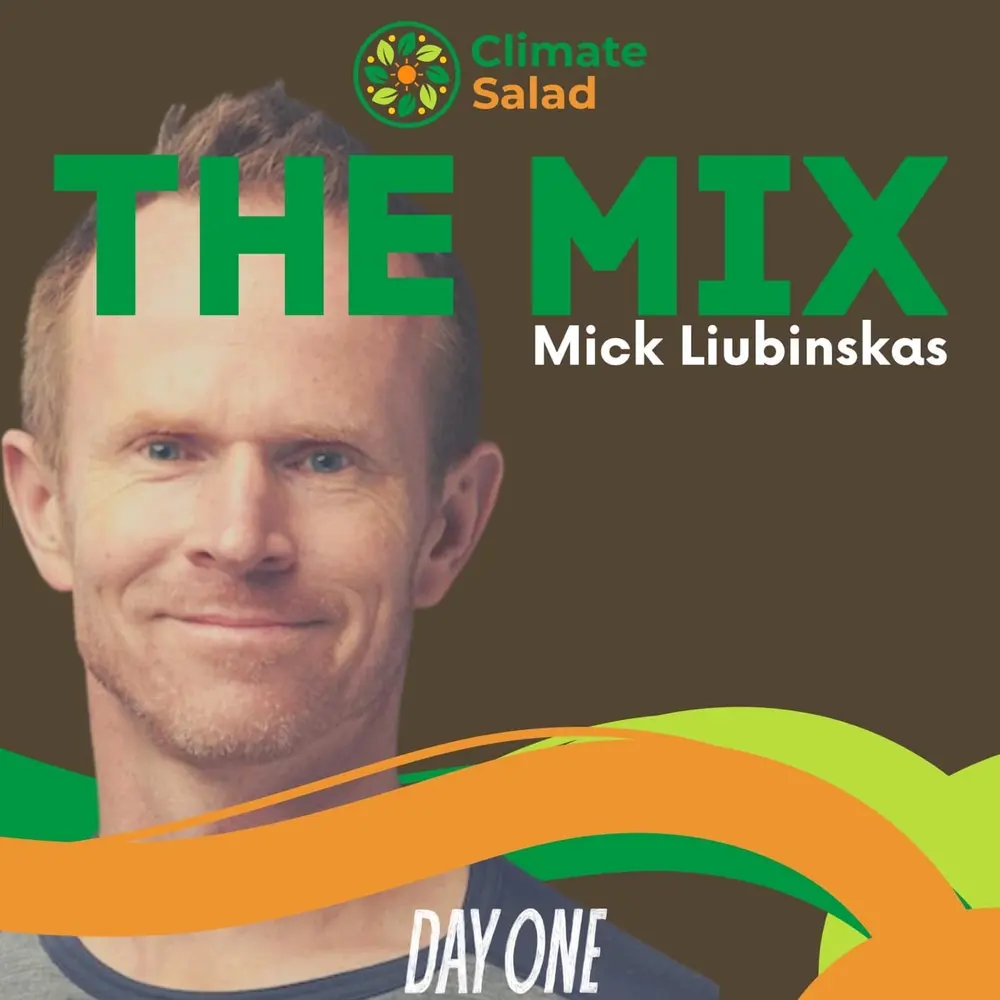
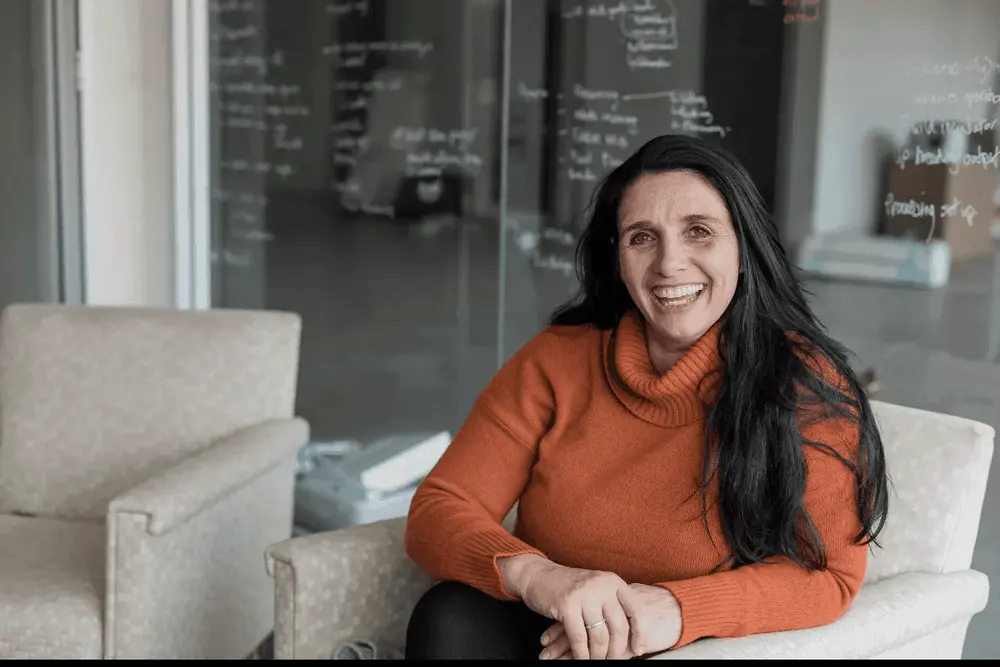
Transcript Synced · select any line to jump ▾ 0:00 Speaker: You're listening to a DayOne.fm show. 0:05 Speaker: What drives you to make bold moves, to build something that didn't exist before, to live, lead, and choose life with intention? Welcome to Perspective X. I'm Pauline Fatowi, and this is not your typical business podcast. Each episode, I get to speak to extraordinary entrepreneurs and leading innovators to unpack what truly fuels their journey. Not just the wins, but the inner work, the overlooked decisions, the mindset shifts, and the personal moments that sparked something bigger. This show is about the ripple effect of choice, the kind of deep accountability that lets us respond to life rather than react to it. Because when you realize everything is temporary, and you are the creator of your own experience, you start to play the game differently. So if you're curious about how people build meaning alongside success, how they evolve through challenges and shape the world with intention, this is your invitation to listen in. Perspective X, where we go beyond the highlight reel and into the moments that changed everything. Available now wherever you get your podcasts. Are you building a SaaS business and looking to achieve compliance with SOC 2 and ISO 27001 or other security and privacy frameworks? Compliance can unlock major growth and build essential customer trust, but let's face it, it's usually time-consuming and expensive. And like really kind of a pain. That's where Vanta comes in. Vanta automates up to 90% of customer compliance tasks, making you audit-ready fast and saving you up to 85% of the associated costs. Plus, Vanta scales with your business, offering a market-leading trust management platform to continuously monitor compliance, unify risk management, and streamline security reviews. Join 7,000 global companies, including Atlassian and Dovetail, that trust Vanta to build and improve their security in real time. And for our listeners, Vanta is offering 10% off. Just go to vanta.com/first. That's vanta.com/first. 2:12 Olympia Yarger: I'm in this park in the middle of San Fran and the sky was really blue and there were all these hummingbirds and I'm like, screw Mars, man, look at this place. Like, how could you not want to save it with every piece of energy you have? 2:31 Mick Liubinskas: Hi everybody, it's Mick Lubinski here from Climate Salad and we're doing our first recording of a podcast. 2:37 Olympia Yarger: Woo! 2:38 Mick Liubinskas: I'm going to jump to my co-host first, Charlotte. 2:40 Speaker: Hello. Yes. Thanks, Mick, for that wonderful introduction. But yeah, we are Climate Salad. So we run a community of climate tech founders and our whole purpose is to make sure that they scale and succeed globally. We want to create 10 global successes, help 1,000 climate tech companies, and hopefully make a really great impact on this one precious planet of ours. I'm really excited about our first guest, who's just a rock star in the climate tech community. 3:08 Mick Liubinskas: Olympia. So excited to be hearing from Olympia from Goterra. 3:12 Speaker: I love her climate tech solution. You think of climate tech, people automatically go to SaaS carbon accounting, but here is a maggot farmer who has these autonomous robots that digest food waste, create a sustainable food source for feedstock. I love it. I love the solution, and I love that it's dirty and it's not what you expect, and Olympia is such an incredible and inspiring founder. 3:35 Mick Liubinskas: One bit I loved is how she gets hope from her team. She's got an incredibly diverse team of different talents, capabilities, and skills, really strong cohort of people with disabilities. And the fact that gives her as the CEO hope and energy, I thought was awesome to hear. 3:53 Speaker: And if you want to be immersed in all these array of solutions, please join us on December 7th for our Climate Tech Festival and Awards. It's an immersive climate tech extravaganza There'll be lots of founders there, lots of climate tech solutions, investors, and if you're climate curious, it's the place to come along and learn a hell of a lot more. 4:12 Mick Liubinskas: But for now, let's hear from Olympia. 4:17 Olympia Yarger: Hey guys, how are you? 4:19 Mick Liubinskas: Excellent. 4:20 Olympia Yarger: Yeah, it's good to be here. 4:21 Mick Liubinskas: Great to have you here. We just spent a bit of time together in the US, the three of us at Verge, so good to take a lot of those stories and a lot of your journey and share some of that to the listeners today. 4:32 Olympia Yarger: Yeah. Let's have fun. 4:34 Mick Liubinskas: So Olympia, just get started, give us the quick elevator pitch. Everyone, this is Olympia and she does— 4:41 Speaker: Autonomous waste management infrastructure that can be deployed at will to manage food waste as a fee-for-service. 4:48 Mick Liubinskas: Love it, that's not the first time you've done that. 4:50 Olympia Yarger: It gets better every time. The first time I tried to do that, it was like, there's a box and it does stuff with maggots and things. That was in 2016, so surely I was destined to get better at it by then. 5:05 Mick Liubinskas: Now, I highly expected this to ramble and to meander, but it's meandering already. Just mention in terms of how you narrow down, like the storytelling around it. Like you mentioned infrastructure there, you're talking about waste. These are big kind of things that you might not ordinarily associate with climate or even these solutions and what someone might do to help. How did you develop that story and narrative and why is it important? 5:29 Olympia Yarger: Yeah, I think the interesting thing about founders and particularly climate tech founders is that you kind of end up having a few different little pitches depending on who you're gonna speak to. We're commercial, so our conversation and our short little spiels have to be relative to our customers because otherwise they don't get it. And so if you were saying a more investor-driven thing, it would be autonomous robotic systems that deliver, and you'd sort of create more magic, mystery around your tech and you'd sort of, to speak to that cadence. But that sort of just sounds like word salad to customers. They're like, what is it? And you're like, oh, it's infrastructure that manages waste as a fee-for-service. And so these are the things that tell Waste customers, oh, okay, so it's a piece of infrastructure that I can send wherever I need it to go, and she's going to charge me by the ton or by the bin or whatever, and it manages my food waste. Great. The evolution, I think, when you when you start, because you come for a climate tech company, you come in with a heap of passion. My sort of arc was like, make maggots eat food waste and save the world, right? So it's like these two things equal savior. And then the longer I did it, I was like, oh, hang on a second. Like, yes, but I realized really quickly that the climate change is a symptom of what we've done, right? It's a symptom of how we live. It's a system of our ecosystems. It's a system of our communities. Mm-hmm. And doesn't make sense to talk about how you solve a symptom. You have to talk about how you solve the problem. And the problem that I'm solving is that waste management infrastructure is centralized and creates challenges for distribution, which is why we're really bad at managing all our waste streams and even worse at managing recycling. And so if I can solve that problem, then we can manage our waste better and in turn will benefit the climate action that we need. So yeah, it kind of starts in one place and you get to know yourself a little bit better and you sort of get better at explaining who you are. 7:32 Speaker: I've heard you talk before about you really wanted to be a farmer and now it's like you're known as a maggot farmer. There is a black soldier fly larvae named after you, Olympia Hematia. Is that right? Have I got it correct? 7:45 Olympia Yarger: Hematia Olympia, yeah. 7:48 Speaker: Ah, Hematia Olympia. Would you consider yourself the farmer or a founder? 7:53 Olympia Yarger: Yeah, again, I think it depends on how I'm thinking about it. I honestly don't think of myself in the terms of being a founder much, to be honest. I've always found the term founder felt, it didn't feel reliable. I didn't like the term. It felt like it was the beginning of something. And particularly now, I kind of have dropped it off a lot of my sort of conversations 'cause it's like, I'm just the CEO. I'm the operations executive that delivers on a vision, and we have a team that's doing the rest of that. But I do still largely consider myself a farmer because that's where the passion is, right? Like, the, the system of producing a thing that drives an outcome, creates a product— that still is where so much of my passion lies and where a lot of the inspiration comes from. And so, yeah, I, I don't call myself a farmer technically a lot of the time, but I feel that I am one in my work. 8:54 Mick Liubinskas: I'd love to dig in that a little bit. No farm pun intended there about digging. But, um, you're also really ambitious. So the, the simultaneous holding of humility, of being, being very grounded down to earth— and anyone who's met you for more than 48 seconds would describe you that way— but you also got these big ambitions. Like, how do you hold those two things that often have tension, right? Because I hear what you're saying to us. I'm a founder, I'm a startup CEO, and I'm going to change the world. 9:21 Olympia Yarger: Like, total bro culture. Yeah, yeah. 9:24 Mick Liubinskas: And it's not like you're— well, people might go, oh well, she doesn't have that, therefore she's not ambitious. But that's not the case. 9:31 Olympia Yarger: No. 9:32 Mick Liubinskas: Like, can you talk about how you balance those? 9:33 Olympia Yarger: Yeah, it's still something I'm trying to figure out, and I, I think sometimes maybe does hinder me because I maybe don't— I'm not as loud or talk as much about, you know, the things that we are doing. Or I say them in— sometimes I sort of say them in an offhand way, and, and, and, and, and people are like, whoa, hold on a second, like, what was that? I think the most I think the most important thing for me is that I think it's really important to know who you are and know what you want. And I think if you can know those things, then you can find confidence to like take that next step past where you believe reality is, right? Because every time when you're sort of moving into those places and being aggressive in innovation or pushing boundaries, the challenge is you get to the boundary and you're like, that's as far as I wanna go. And you feel like you've done something 'cause you're at your limit. But the reality is that good stuff only ever happens once you've gone past that place. And the only way you ever have enough courage to go past that place is if you constantly sort of mental abacus of like, what do you need to do better? What are you good at? Who do you need to help you? Have you asked enough questions? Like sort of maintaining that sort of gear check around what you're gonna need to go forward. And so it feels potentially like humility, but really what it is is a fear of failure. Yeah. And I would prefer to say that I don't know or be really curious or ask a bunch of questions and have people go, "Oh, does she know what she's talking about? 'Cause she's asking all these questions." Or push and push and push than to say, "Oh yeah, I've got it." And then I get out there and I'm like, "Phew, I don't have it at all." Right? So I think, yeah, it's that combination in really in sort of saying, what do you actually want? What are you trying to achieve? And then finding— Yeah. A way to sort of make that gear check every day to say, if you're gonna go here, what the hell do you have to do to make that true? And the reality is you can keep it on the top level so it's safe and go, I'm gonna need really good sales, I'm gonna need some revenue, I'm gonna need all my customers. The reality is you're gonna need to know where you aren't succeeding and you're gonna have to hire there. And you're gonna need to fix some stuff about how you interact with people because as you accelerate, some of the not great parts of your personality need to be refined or adapted or you need to do better or whatever. It's actually more the soft skill stuff. And then worst of all, and the hardest one, is you're gonna have to fall in love and learn to love the part of yourself that's too afraid to do those things so that you can, like, instead of them sort of dragging you down, you kind of, you know, you sort of shoulder them on your backpack and like, all right, will you sit back there and sort of be scared? But the rest of us are sort of— Not saying I've got lots of personas inside my head. But just, you know, from an analogy perspective, I think those sorts of things, we don't pay enough attention to that, right? So we're like, go really fast and do really big things, but inside you're going home and you can't sleep because you're just scared that like, who am I? Why should I be here? What's going on? So I think it's that stuff that makes it easier. 12:42 Speaker: It's interesting you say that, Olympia, because on the, you know, the few women in climate tech calls we have that comes up a lot that, you know, we've got to be more bro town to, to get the investor's attention. You have a fantastic relationship with your investors and you really foster that. And but it's not— you're definitely not impersonating a bro town persona. You are authentically you and unapologetically you. Can we tap into that journey as a female founder? 13:11 Olympia Yarger: Sure. 13:12 Speaker: In hardware a little bit. I know we might be jumping ahead in terms of how we go, but I think it's so central to who you are. 13:19 Olympia Yarger: Yeah. 13:20 Speaker: And how you help other founders. 13:21 Olympia Yarger: Yeah, like it doesn't always work out in my favor. I think, like I've always said, even from the beginning in the first raise, like I, it became very clear very early that I had found my way to venture capital partners and analysts who were extraordinary. And I don't say that lightly. I have been super fortunate We were just talking about this the other day, it was super interesting. Sorry, just to go back a little bit, right? Because I think this sets the scene, particularly from the female founder perspective. It's not about bro-towning, right? It is and it isn't. The suggestion that we should act more like men is a shortcut to prevent the actual thing that needs to happen, which is we need to change our bias, right? And so when you think about that as a female founder, What you're struggling with is you've come up with this ridiculously crazy idea, right? And it's hardware, so now we're immediately, there's a bias, right? Hardware is hard, great, okay, we've started, here we go. Now you're gonna say, okay, in my case, so I've got this idea that if I take this maggot, which everyone's doing that, so that's not unusual, so don't get scared about that, but I put it in this box, which is gonna be a robot, and then I take it to a place and someone's gonna let me do that. Not only does my venture capitalist have to suspend belief or create belief, I guess, that that is plausible, that somebody's gonna want that to be true, a lot of people are gonna want that to be true. They also then have to say, this woman that's standing in front of me is the person that can realize this as a unicorn thing, right? Again, we're at hardware, we've got a living thing. So these are two things that venture has had challenges getting comfortable with. Right? So I'm already in bias land. I'm a woman of a certain age with a certain kind of a mouth, and I don't behave like a traditional founder insofar as I've never— because I'm older, I've never taken the approach of, you know, I sell a story just like anyone, but I've always been probably a lot more transparent than a lot of my peers. And I remember one of the first meetings I've had with Jeremy at Grok. I told him for like 30 minutes all the things I didn't know, and I didn't even know better that I shouldn't maybe have done that. But again, because I was talking to Jeremy, who is a different person in how he assesses deals, he didn't hear that as her talking down her business. He was just like, this person has critically analyzed the issues and she has a proper understanding of the risks and opportunities, right? 15:58 Speaker: Yeah. 15:59 Olympia Yarger: But conversely, when I was in the US recently and I was talking now about a different issue, so I was talking about venture debt and I asked an investor, "Hey, what do you think about venture debt? 'Cause in the future, I think there's actually an opportunity here for us to put most of our expansion onto debt." And their response was, "Don't ever tell a venture capitalist that you're not venture-backable." I'm like, "Did I tell, did I say that?" Right? And I was really shocked 'cause I was like, Oh, hang on a second, that's not what I'm saying. I would've thought you would've heard me understand, heard that I understand how my business has to evolve and that as a venture capitalist, you would be pleased that I have a plan to scale this business that doesn't require you to keep shelling out venture 'cause that's not the best way to scale a hardware business, right? But he didn't hear that and he heard instead that I thought that we weren't venture-backable. The problem is always bias. So if you're coming to the table and you're not a dude of a certain age with a certain college degree, or you're a female founder with a female team, right? So female founders with a dude in the team tend to be okay 'cause there's a dude there. But if you're just all female founders or a solo female founder, now they've gotta get through a lot of bias. Right. I've collated a bit of a list about those sorts of things where it's like people have sort of said, oh, you're a mom, you won't be able to pay enough attention to the business. You're older, will you have the stamina or the desire to wanna work the way you're gonna need to work? Those sorts of statements are the reality of how people think about me when I walk in the door. And so sometimes you can get to a place where people are like, oh man, Olympia's awesome. And then it's like, great, money? And they're like, Oh no. 17:54 Speaker: Right. 17:56 Olympia Yarger: Like, because they can't, they can't align the person standing in front of them and all of the things that I'm saying and how compelling all that is and how much they like all of it with the bias challenge that I am the person that can execute on this huge but big thing. So I have always felt grateful that the investors that we have to date not only recognize the business for what it is, but recognize me for who I am and don't ever feel uncomfortable that I'm, you know, another one of the comments I get is that I'm unpolished, right? Because I'm direct and I sometimes swear or I will talk more casually about our things. So, you know, I've done presentations where I make fun jokes and people don't get it. Yeah. 18:46 Speaker: One of your investors told me they have a running competition to see how frequently you can say vagina when you're speaking on a panel. 18:54 Olympia Yarger: Yeah, yeah, that was last year. 18:56 Speaker: Oh, so that is true. 18:57 Olympia Yarger: Yeah, yeah, so one of the staff members, we were talking about bias at work and he said to me, he was all like, "Oh, you just have to keep saying vagina and then people will get over it." And I said, "All right." So I adopted it as a thing and then it became a joke with the investors 'cause people are like, "Why do you keep saying vagina on all the podcasts?" I'm like, oh, I've got this thing now, I've got to say vagina and blah blah. 19:21 Mick Liubinskas: And it's 3, yeah, 3 ticks, that's good. Yeah, yeah, plus Charlotte, that's 4. We can see we get to 10 and we'll get a cheer. 19:27 Olympia Yarger: Just keep going. And so I'm at South Start and then half my investor cap table is sitting in the crowd of like 120 people, and I've got like year 12 kids sitting on the other side. And I walk out and I'm like, hello. And then, you know, and so then it was like I got off and Kylie Fraser and Sarah Nollick came over and they were like, "25 seconds, it's a new record." So yeah, but you've gotta start saying that stuff, right? Because what's interesting to me is that you've got, I don't know how many blogs and LinkedIn posts and tweets from VCs about how they wanna commit, you know, work with founders and they want transparency and they want founders to be on there. Authentic selves. The reality is most founders are petrified of dropping that curtain in front of their investors. They are not interested in any way in showing, you know, they show just enough vulnerability to be plausible, but they would never say, I'm not okay, I'm scared, and I need you to give me 2 hours of your time so I can work through this problem. 20:38 Speaker: Yeah. 20:38 Olympia Yarger: Because I can't get out of my own way, right? And the irony is that I don't know if the exchange actually works, right? So founders did do that, I think there are quite the wrong proportion of venture VCs who would feel uncomfortable if their founders did that, right? So then you don't and then you do and then we just sort of, we're at stalemate staring at each other across the divide going, "No, you go first." Right. I think inevitably it's not an even game. It doesn't matter how even we say it is and everyone's like, "Oh no, you can control it." It's like, yeah, until you're 2 months away from the end of your runway and you're staring at staff that you love and a tech that's amazing and customers who want what you do and you realize that if you cannot get somebody to commit, all of that goes away and not for any other reason than you just couldn't raise the cash. And at that point, you'll get into bed with anyone. All of that negotiation just, and that, you know, this is an equal relationship. No, no, it isn't. At early stage hardware, particularly for climate, if you don't have cash, you die. And that means this is uneven. And so, yeah, it makes it difficult. 21:52 Mick Liubinskas: Yeah, it speaks again to the conflicts you've gotta hold in your head and heart at any one time, like humility and ambition, but also the nonchalance when you know you can't possibly have that kind of swagger, right? Like, well, different times, right? The day after your race, you know, I remember you in San Jose screaming and yelling at that private function we were at and dancing throughout the room. And the really interesting thing was no one questioned. They just said, "That's Olympia." Yeah. So obviously you got some big, big positive news, but it's an emotional rollercoaster, like staying steady in that. And you've been doing it for 6 years now. 22:30 Olympia Yarger: Yeah. 22:30 Mick Liubinskas: And when it wasn't even ClimateTech, like I was, you know, I was even just jumping into this space and working it out. So tell us about that for you, but by personally energy levels and did you intentionally go into it and just be you or were you like, didn't read any books, therefore you're just like, I've got no choice. Yeah, I'm curious about that journey for you. 22:49 Olympia Yarger: Yeah, I'm one of those, I'm a very binary human, right? Like I'd always make that joke. You either love me or you don't. There's never any like, oh, I guess she's never done anything to me. Like, yeah, I'm all or nothing. And inherently that means that to try to be somebody else is actually really hard. Like, I can hold it for maybe an hour, but like, if you met me again and I've already met you, like, it's likely I'm gonna be like, "How are you?" You know, and I'll be happy. And so I really didn't actually have a choice about that part of it. Like, and that's just something I know about myself as a person. 23:22 Mick Liubinskas: Yeah. 23:22 Olympia Yarger: I think where it comes down to managing the energy and staying full on all the time, like, I'm fortunate in a lot of different ways in that regard. So I spent a lot of time working with the US military. And so my resilience to difficulty is higher than the average bear. You know, I dealt with 9+ years of family readiness with combat active special forces units and the Marine Corps. And my worst day is a lot worse than the average worst day. And so I have a different, metric for how bad things can get. So that, that is a sad thing, but it's actually also a kind of a weird, beautiful gift that my tolerance for what is terrible is, is much deeper. And so that just is a fortunate thing of my life's experience. The second part is around like, I have invested in the conversations and the culture with the staff. And don't get me wrong, it's still hard because I can't be vulnerable to them the same way they can potentially be vulnerable to me. Like, I can't flop about and be like, "It's all hard." But when you create a culture meaningfully from the beginning, you end up with people in your team who are— 24:53 Mick Liubinskas: Yeah. 24:53 Olympia Yarger: Connected in those special ways that you need. And so today is a great example. We're saying goodbye to one of our electricians, Peter, and he's been with us for 2 years. And I have loved working with Peter, and he has been one of those staff members that he would see me not having a great day, and he would just, you know, walk in the door and he'd open the door to my office and he'd be like, "You're doing all right. We're fine in here. You've got it. You'll be fine." And— If you can take the time to put that effort into your team, then it does pay dividends when you need it, right? Because we say we're all in the boat together. All of our analogies are around boats. And so it's about the rowing thing. I'm the mermaid on the bow, so the view might look good from where I am, but I'm also getting cracked by the waves every minute, all the time. And so the fact that sometimes the team can just lift me out of the water a little bit, then I can just keep going. Like, because you know that they're all back there just working their guts out. So I kind of stay connected to that human part as much as I can. It's also sometimes why it feels really hard because you're just like, you know, it's hard to keep everybody feeling good. But I think when you stay connected to the human side of it, then you— 26:14 Speaker: Yeah. 26:15 Olympia Yarger: Then you do better. If I've tried to find comfort in the work or the progress or whatever, I don't think you actually do because most founders I know don't really pay a lot of attention to the success because all it is is really just a checklist of the shit that's left to do. We had a success and it's like in my mind, I'm like, that's one assignment task gone. Do you know what I mean? It's like, this works now. I'm like, uh-huh, what about these that still do not? You know, so yeah, it's better to find success in the humans and, and that part of that, and that then in turn buoys you and keeps you moving. 26:52 Speaker: Olympia, you, you have a hard task. I mean, being a solo female founder of hardware, it's hard, but you're also trying to solve one of the biggest challenges of our time, the climate crisis. 27:05 Olympia Yarger: Yeah. 27:06 Speaker: So it's not just, you know, making sure that you have runway and that your team is okay, like you're also really powerfully driven to solve this. 27:14 Mick Liubinskas: Yeah. 27:14 Speaker: Can you talk about your solution and how you came to it and the impact that you're making? 27:20 Olympia Yarger: Yes. 27:21 Speaker: 'Cause it is inspiring. 27:22 Olympia Yarger: Yeah, it's been an interesting journey, right? So basically, you know, I started the maggot farm, which is not interesting really. Like, it is interesting 'cause not a lot of people have heard about insect farming, but that's been happening for ages. And growing maggots in a bucket is not a proprietary thing. I don't care. What anybody says, right? Like, that's not interesting. What's interesting is that to feed maggots, if you're going to realize the potential of insect protein, the premise is if you can use a waste stream to create more protein to the supply chain, then you have improved a production outcome. And then therefore you don't have— you can reduce the pressure that increases the climate crisis. So insofar as we cannot produce enough food to feed ourselves by 2050, That's because of arable land availability, climate instability, soils, all of those things. And so if we could take the waste and make a protein, then, oh look, we might be able to fill a gap, right? That's the premise. But once I got past, you know, 6 maggots in a bucket called Neil, and I was at sort of 600,000 of Neil's great-great-great-great-grandchildren, I'm like, how the hell am I feeding these things? And I realized all I'd done is created a feedlot. Mm-hmm. Well, we know what the problems with feedlots are. Distribution to get the feed out there makes it too expensive, and then you've got to move all those cows back to another place to be slaughtered. And so distribution, distribution, distribution. Similarly, when you look at waste, what are we doing? We're dragging the feed, the substrates that we're putting into landfills or bioreactors or composters, we're dragging them from long distances and we're bringing to a place to manage them or recycle them, and then we have to redistribute that stuff back out again. And it's the same problem, right? And so all of that climate pressure that's coming out of waste, so your food waste, the stats are 95% of all food waste is going to landfill. The methane GHG emissions coming off food waste every year is 3 times larger than the airplane industry. Mm-hmm. So it's more impactful for us to do better with food waste than it is to take less flights. And then if you can create feed and fertilizer, now you're mitigating fertilizer use and you're mitigating soya production. And here we have a thing, right? But like, I've gotta make the distribution work 'cause that's the actual problem. And if I can make the distribution work, then ironically I'm stopping a bunch of trucks from being on the road, right? Because I'm reducing about how far they drive. Mm-hmm. In some cases we're removing the truck movement to once every 10 days. So you're just, you're keeping, you're shrinking the problem and you're shrinking it and you're shrinking it. So our technology sort of evolved as I understood ourselves a little bit longer, right? So it's like, oh, if the maggots go in the box and they're like, oh crap, if the maggots in a box, then this happens, right? And then our customers started going, oh, finally, now we have a solution. Okay, now we can figure out, here's what we know and we're gonna do all these other things. And so that pressure of doing that is hard. 30:26 Mick Liubinskas: Yeah. 30:27 Olympia Yarger: But the other thing that happens is if you actually get it right, that's what everybody's waiting for. And that's the interesting part about climate tech. We have more SaaS platforms to measure carbon credits than we do businesses that create carbon credits, to the point where some of the carbon credit SaaS platforms are going to raise funds to create their own customers so that they can have a business, which I don't need, like irony's dead at that point, right? Like at the point where you think it's actually a better idea to raise money to create customers for the SaaS platform you just invested in instead of funding a company that creates a carbon credit that could be used by the SaaS platform you've invested in, like I'm not sure what to do. And I don't know how to draw it on a slide deck so that people understand, but that's our problem. 31:19 Mick Liubinskas: Yeah. 31:19 Olympia Yarger: The recent problem with the recycling around the soft plastics— 31:24 Mick Liubinskas: Soft plastics, REDCYCLE, yeah. 31:26 Olympia Yarger: Yep, there were only 3 places in Australia that stuff could go. And over COVID, we lost a few and then a big fire happened. Where are we putting it? If you look at where we're investing in recycling, most of the places we're investing in recycling won't be a thing for another decade. So the customer's waiting, but nobody's filling that gap. And so for us, adoption isn't a problem because we solve the problem. And so the customer's like, we will take 40. So our traction has been immense, but it's because we're actually solving real problems. We're not this sort of round peg walking around looking for a round hole to be in. And that's, that's the challenge. Yeah. Because venture has decided what it feels comfortable with. And so we're creating solutions to map to fit venture. But the problem we're trying to solve isn't venture capitalists, it's climate. 32:27 Mick Liubinskas: We've obviously got a wide range of people listening to this podcast and some will be deep in it every day and be like, totally understand it and I get it. And it might be other people who think when they think of climate solutions, they're thinking solar panels, wind turbines, plant-based proteins in my grocery store, and offsets, right? And it's not until you really get into it and you're like, if we just said, oh, here's Olympia with the climate tech, she has blackfly maggots, it's like, sorry, I thought you were going to talk about climate tech. 32:54 Olympia Yarger: Yes. 32:55 Mick Liubinskas: The other thing that you really raised there is one is around the complexity, because it's not like I made blackfly maggots, therefore cool, I'm done, as you said, like just one tick off the designer box. Yeah. And the other is that whilst you're making progress and you had to build some of the full solution, the world is not fully ready for you yet, right? It's not like, hey, there's a space in every grocery store for a, for a Goterra or a box for waste management, right? Or every building, right? There's just— and how do you distribute it? How do you move it around? I hope that in 10 years' time we're going to look back, and I believe really 10 years' time we'll look back and be like, hey, look at that building, they don't have a Goterra box. That's weird. 33:32 Speaker: Yeah. 33:33 Mick Liubinskas: But right now, It feels like we're still, we're building the, like they talk with the startup building a plane as you jump off the cliff, right? But we're building entire industries and supply chains that have taken hundreds of years to work out badly. Now we're trying to retrofit them in such a short space of time. 33:50 Olympia Yarger: Yeah. 33:50 Mick Liubinskas: Adding to your challenges, and I know you're very capable, but do you get people saying, what do you mean you're solving a climate problem and why does the world need that right now? Yeah. How do you manage the timing around that? 34:02 Olympia Yarger: Yeah, look, again, because we talk to our customers and our customers are waste creators, right? And so we do talk about climate, but we actually talk more about logistics and cost, right? Because it's about distribution. So we have customers who've made commitments about climate. So they have a vision of how they're gonna deliver on these commitments, they wanna do better in the world. So they're driving the need to have solutions that deliver a climate outcome. But really, where they need to solve for and where those quick returns are logistics and distribution. So accessing all of their waste and then making it so that transport isn't prohibitive to adoption. And I think to your point, Mick, like it's true, right? Like we are a very long way away from a true circular economy, right? Right now we've got circular economy and it's like 3 links. It's like— We're not really there, right? But we're getting there. And I think we've been fortunate and it hasn't been, it wasn't by design, but now we can sort of understand it. We sort of fell that way and then it was like, oh, actually now we get how this works, right? From a roadmap perspective. I haven't built the smartest robot. You know, this thing's not the most sexy robot. She's a 7.5-tonne, very unintelligent, Autonomous machine. She does the job that needs to be done today, and she improves the problem of today to a place that's really significant, right? So I haven't solved logistics, I've just made it so it's more logistically opportunistic, right? So you don't need to have a box underneath every building, but you could have a box at every transfer station, and that's a better outcome. And I think that's something, and again, as founders that, we kind of sometimes don't roadmap as well. We roadmap the tech based on, you know, then it'll be cooler and then it'll be AI and then it'll be a blockchain and then there'll be a drone and that, but we don't actually go, here's the world today and here's how our box solves for today. Here's the tailwinds and those tailwinds tell us that this will be true horizon 1 and here's how we see that evolution happening through to horizon 1. And then when you look really far horizon 3, this is where— 36:21 Speaker: Yeah. 36:21 Olympia Yarger: How we look into the future. And I think it's more about that because if he's trying building the product for Horizon 3, I'm sorry, we have 7 years. Like, I don't have time for you to Horizon 3 your great idea. I need you to bring it down to something that can work today and then we'll all get to Horizon 3 another day. Yeah. And I think that's something that sometimes, you know, even I've done that where I've looked at the engineers and like, What if it, like, you know, you had RFID scanners and it was talking to itself and they're like, yeah, right, why? 36:55 Mick Liubinskas: Yeah, I've seen a lot of companies actually that I've got a great Horizon 1 and just almost nowhere the way it can go, right? It's like, I've got a form for Scope 3 and they fill it out and we charge them for it. It's like, where does that go? And there's other people who've got an amazing Horizon 3, like, yeah, we'll just have modular nuclear fusion in everyone's roofs. You need $400 million to research it. Yeah. It's so hard to get those three locking in together. Did you know that straight away or is that something you iterated to? 37:24 Olympia Yarger: Yeah, it's an iteration and it's been because we've been, you know, when we talk with customers and they start, they've started to sort of figure out where we belong in their world and they're like, what if we used you like this? And we're like, oh yeah, that'll work, you know. And then you start to go, okay, yeah. And I think the first one for me was Substrate. So Australia is a canary in the coal mine. So I've never looked at clean substrate and gone, oh yes, I'll take all of that and make these fancy maggots. I'm just like, manage all the waste because I know, you know, in the drought, the clean stuff doesn't exist. And so if that's true, then I know the next thing that happens is, you know, and we're all spending money on it, we're going to clean up how much food we waste, right? We're going to stop wasting as much, and we should. That's That's the point. So if we're reducing it, then okay, well, we need to make sure that we can handle what ends up being food waste in say 5 years, which will probably be more like sludges and slurries and greasy things because they've been valorized and valorized and then now there's just this goo. And then similarly, okay, are we doing anything with sewage? What's happening there and is that the next place? Because nobody's playing. Yeah. In— nobody's even thinking about sewage, right? And so it's like, oh, okay, so we'll start some of that work now quietly and in parallel and start to understand this next substrate. But for today, it's Maggot Robots that manage food waste, right? And, and let's just do that and then evolve as we go. I think, again, you can get really stuck in trying to be all of the things to all of the people, and, and I've definitely had that problem, and You've just got to really come back to it and go, what the hell are we doing? Who are we? What's our job? And then if we have to own a few verticals, that's cool. But like, let's remember that we want those to go away eventually and we want to just do this job, right? Yeah, that's the hard part, trying to figure out what that means. 39:23 Speaker: Olympia, you mentioned before, and it's a sort of a timeframe that we think about too in this climate space, that we have 7 years left until climate catastrophe is unleashed and we see it unleashing and unfolding in front of us. You know, you mentioned like, I think I saw a stat the other day, only 8% of the economy is circular. So we've got 92% to transform. You know, something like a third of our greenhouse gas emissions comes from food production and we have to do more of it. We have to feed more people. We've got 8 billion people now and there's gonna be more of it. 39:55 Olympia Yarger: Yeah. 39:55 Speaker: What gives you hope? 39:59 Olympia Yarger: A couple of things, to be fair. Personally, my team, like, to have people, you know, Mick's been here, where people come and they're like, oh, it's not like a lab. And I'm like, yeah, no. Or, oh, it smells shocking. How astute of you. 40:20 Mick Liubinskas: Yeah. 40:20 Olympia Yarger: So like, I find myself in the privileged place of having like 56 people that come to work at Goterra and work is waste. You talk about attracting talent, try figuring out how to get savvy engineers and marketing people and salespeople to wanna come and hang out in a waste management facility. And when their stuff breaks, that's like, it's not a Fitbit, like there's really gross stuff everywhere. And that day for me, it's like, okay, there's, these people aren't here because of the benefits, they're here because this matters. And that's a large group of humans that are doing a really hard job because it matters. And I think I can lean on that a lot. I think we can't wrap our brains around the imminent threat because our amygdala is designed to only recognize actual threat. Sabertooth tiger in front of me. But if Stuart's at the front of the cave going, "I think there might be one coming," We're all like, shut up, Stuart. Like, we're not interested, right? Like, we just— that imminent threat thing for us is just really hard to do. But the desire to be connected to food, the desire to do better, the desire to be more connected to community and ecosystem— I know that's not truly climate, but those things create climate action in sort of secondary and third-order effects that I think are super meaningful, right? Because we're— demanding our farmers do better, we're asking our supermarkets to stop using plastic, we're, we're making decisions for our community based on this new want, desire to be connected to how we live. And I think I've found a lot of hope there. And then the last part, funnily enough, is just the other founders that are in my climate space world, and, um, they are as passionate, as mad, and as incredible in the things that they're doing. You know, obviously my mate Tom Loflow with Holobot, the guys up in Emerald with Swarm Farm, Nancy with Rapid Aim, Anastasia with Regrow. These are people that are like just one more time into the breach, good friend. Do you know what I mean? And it's like, if that's the company I'm keeping, get out of our way. Do you know what I mean? 42:46 Mick Liubinskas: Like— 42:46 Olympia Yarger: Nice. Yeah, I think that's all you need. 42:50 Mick Liubinskas: Yeah, that's awesome. Do you feel pressure working in climate to be a super awesome greenie and never use a takeaway coffee cup and drive a 14— well, ride a bike and— 43:03 Speaker: Don't say Tesla. 43:04 Mick Liubinskas: What things in your personal life do you do around climate? 43:07 Olympia Yarger: Yeah, yeah, I am a bit of a climate nerd and my family's been that way for a while. My son did a thing for a while with coffee cups that if my husband and I used a disposable coffee cup, he'd donate $5 to Donald Trump's campaign. Ouch. 43:24 Mick Liubinskas: Oh, that hurts. 43:26 Olympia Yarger: Yeah, so that was fun. And so, you know, that's always been us. I do these things because I need the participation. I'm, you know, that's who I am, right? Like, I'm all in. And I am by heart a transformist. So if it was up to me, I would turn it all off tomorrow and give the world a 10-year break and we just horse and cart it and figure it out. I understand that that's not how the world works and we need sort of reforming rather than transforming. But I don't want to get to the end of all of this and look at my kids and go, I just didn't think it was important, right? And I think there's a lot of things that you can change in your life so that that regret just doesn't happen. So I drive an electric vehicle. My entire property is off-grid. We don't even have a connection to the grid. Wow. So we run full solar cooking and all of the rest. We grow our own food, so we do have farm. I rent most of my clothes, so I use GlamCorner pretty much for anything that requires business attire. And I buy, I haven't bought new clothes for quite some time. Usually secondhand. We don't use plastic wrap or any of that packaging stuff at home ever, which my mother-in-law despises because she comes and there's like cheese sitting inside a jar with— in a lid, and she's like, what's this? I'm like, it's cheese. And she's like, why is it in a jar? I'm like, what's the same as being in plastic or being in a plastic container? I'm just like I'm just, we use jars. So, you know, all of those things are true at the Yaga Center of Excellence. And, you know, I still fly because again, this is where I think we've got to be really careful, right? Like, we aren't saving the world by me having a shorter shower or not flying to America. Like, that's not where this gets resolved. And that, that pushback onto community, and, you know, I've had it recently where someone said, oh, you 'Oh, what does that mean?' I'm like, 'Yes, I took a really long shower the other day as well.' But meanwhile, ExxonMobil still doing their thing. So I'm not sure if that's where you want to put your outrage. Do you know what I mean? 45:41 Speaker: Yes. 45:42 Olympia Yarger: Me and my 10-minute shower and my flight definitely will make a massive difference compared to the big spills of oil or all the other things that are going on. Let's not get too cute about that stuff. Yeah. 45:56 Speaker: Well, I was gonna say Trump is campaigning again, so better start using those reusable coffee cups. 46:01 Olympia Yarger: Oh, you know. 46:03 Speaker: Yes. 46:04 Olympia Yarger: Yeah. 46:04 Speaker: Let's not get too much into that. 46:05 Olympia Yarger: Yeah. 46:08 Speaker: We are sort of rounding the end, and I think that was one of the questions I wanted to ask you is— 46:14 Olympia Yarger: Sure. 46:14 Speaker: And we were thinking this could be the question we ask each to sort of round it up is like, what's a positive climate action that you do each day, or, you know, that listeners can take away with them? 46:25 Olympia Yarger: Ah, I've just started doing this, and this is going to sound really trite, but it actually makes a huge difference. Stop for a moment and just realize just how beautiful what we have is. So an example of that is I was in San Fran for a meeting, and I was waiting, you know, waiting to talk to the investor. And of course, you sort of trying to get yourself sorted and in a zone where you're having the right conversation. And I found this sort of really weird little park place and I was just sort of sitting there and I was sort of pacing around and then I was like, "All right, just stop for a second." And I just sat there and I'm like, I'm in this park in the middle of San Fran and the sky was really blue and there were all these hummingbirds. And I'm like, "Screw Mars, man. Look at this place. How could you not?" Yeah. Not want to save it with every piece of energy you have? Like, how could you, you know, just not want to make sure that all of that is still around in another 150 years, 200 years, whatever? And so I think that's the stuff that if you just remind yourself why, if you just stop for a moment and look at the world and just go, this is all so worth the effort, Yeah, I think it gives you just a little bit of a kick for the next run. 47:49 Mick Liubinskas: We've got a couple of quickfire questions to wrap up. And one related to what you just mentioned. I'm doing a Master's of Sustainable Development to try to understand this space more. 47:59 Olympia Yarger: Yeah. 47:59 Mick Liubinskas: And there was a goal of cities to have everybody within walking distance of a tree and be able to interact with greenery every day. And I was like, surely everyone can do that, right? And I just realized my privilege. 48:12 Olympia Yarger: Yeah. 48:12 Mick Liubinskas: That I was like, oh, you know, people in downtown Kuala Lumpur, or like, I was just like, oh my God, there's just no end to my old white man privilege. But, um, that was a fact I really, really didn't think about, understand. But can you give us like, what's an interesting climate fact that you find astounds people, uh, that you learn and be like, wow, I didn't know, appreciate that? 48:34 Olympia Yarger: I think it's about food waste. It's the fact that it creates more GHG emissions than the airline industry. That is a significant and meaningful contributor to the climate crisis, and it literally does not need to be true. 48:47 Mick Liubinskas: Yeah, love it. Charlotte, do you wanna go to question 3? 48:52 Speaker: Okay, Olympia, if you could rewind your startup journey as a founder to the very beginning, what would you do differently if you would do anything different? 49:01 Olympia Yarger: Oh yeah, I actually, I don't think that there would be any use in doing it differently, to be fair. Yeah, I just, I think if I wish away any of the hard things, actually each of the difficult things led me to somebody or something that put me further to where I was. And so I'd sleep more, but like then I wouldn't have raised. So it's like, I just, yeah, I, I'm grateful for the fact that I could even have the opportunity to do this. I, yeah, I wouldn't change it. 49:30 Mick Liubinskas: I'll phrase that a different way then. We've got over 300 company climate tech companies in Climate Salad. You're really well progressed. There's a lot of early founders who are just starting the journey that you've been on for 6 years. You know, sometimes I hate this question, but it's— I think it's important because you have learned so much. What's one bit of advice you'd like to give early-stage founders? 49:49 Olympia Yarger: Uh, yeah, like, look, I think the thing we do the worst is we chug a bit on the old Kool-Aid and the drinking of the bathwater. And when I talk about that, what I'm saying is we again create biases around what success will look like. Oh, I've got to have a good engineer, and I've got to have this person, and I've got to have— and, and, and this is the story, right? Oh, hire a C-suite. I'm like, I just raised $1.2 million. I'm not hiring any C-anything, you know. I'm gonna hire a bunch of doers, and then hopefully this money lasts. But if I hire a C-something, like, that's where the money will go. Like, there will be no robot at the end of this story. And so I think have a bit of courage around what you actually need and actually validate that. So For me, it's always been about people and the fact that we recognize really early that a bunch of engineers are not delivering a commercial-ready solution. You need maybe 1 or 2 engineers depending, but you need a hell of a lot of tradespeople. You need people that know actually how to build stuff. And if you use those people and actually create prominence for that skill set in your business, your tech will progress faster. It'll be more commercial ready and it'll be scalable. Because tell you what people don't like doing, building really hard robots. And so if you've got a technician designing it, that he will never put the bolt in a weird place that no drill can access, right? They will always make sure that this thing can be built very well. So reimagine what people need to come on that journey. And I mean that from a cultural perspective, background perspective, like across the diversity, look to disability. We have 37% of our staff is working with disability, and that changes how you communicate because you can't talk to each other like you're all neurotypical. And when you're all neurotypical, your communication style is really lazy because you expect everyone to pick it up real quick. If you have disability people in your workplace, then you actually have to change the way you communicate. So just do better on that stuff. Don't go, oh, look at us, we all went to ANU or UTS or Stanford, and therefore we will make the best thing you can ever imagine. Sometimes that's true, but I reckon you can get a faster to market, leaner product that does a better job if you've got actual technicians and real people building it. 52:12 Speaker: I love that. So much in startup is here's the playbook, follow it. Execute. And it's like Olympia, you're sharing this write your own playbook. 52:20 Olympia Yarger: Well, the rest of the world doesn't do it like startups do, so like why do we expect— like it's super interesting, right? Like nobody goes, I'm going to start a car manufacturing business but I'm only going to hire engineers. They hire a bunch of technicians to build that stuff, right? Like yeah, it's just interesting to, to reimagine it a little bit. 52:39 Mick Liubinskas: Yeah, really, really interesting. Amazing journey. You are solving a really big tough problem and kudos for you for working through all those challenges. For anyone who visits ACT, highly recommend a trip out to see the Goterra operation. You will not forget it. 52:56 Speaker: What? 52:56 Mick Liubinskas: It is life-changing, life-changing. And I remember going there and then I came back home and I was like, "Oh, I've got to quickly go and shower before a meeting." And Olympia was like, "Yeah, Nick, solving climate problems are dirty. Get used to it." I was just like, "Man," I was just totally put back in my place. But I do want to say that I've successfully made it all the way through this podcast without saying vagina, so that's successful. 53:22 Speaker: And not flinching too much when we said it. That's good. We're bringing vagina back to climate tech. 53:27 Speaker: Your initial PR, Mick, is 55:42 is how long it took you to say vagina. 53:34 Mick Liubinskas: Oh, personal record. Yeah, yeah, yeah. 53:37 Olympia Yarger: You sort of benchmarked a PR. And we expect you to do better. Yeah, the Climate Salad event's coming up. This is your next opportunity to drop a V-bomb. 53:47 Mick Liubinskas: Yeah, I will do. 53:48 Olympia Yarger: Yeah, awesome. 53:50 Mick Liubinskas: All right, Charlotte, do you want to do a thanks and wrap up? 53:53 Speaker: Yeah. Oh, I felt like you were doing the thanks. Oh, look at us, we're being so polite with all our polite vagina dropping. Olympia, it's always such a pleasure to hear you speak because I really feel like it's not It's not just like you're talking, it's like I hear what you're saying and I feel it. And we get feedback all the time after you, you give so much back. Whenever I see you on a call, it's like, oh my gosh, Olympia's here and you are successful and you're seen as this shining beacon of what it means to be a climate tech founder, a climate solutions warrior. You make sure that it's not the big new shiny new things and it's not the, you know, sexy sassy things. Like hard work, dedication, and really good people, and nurturing that. And it's, it's really inspirational. So thank you so much. You inspire me. And that story about just sitting back and taking a moment to really appreciate what we have here, that's, that's going to stay with me, and I think everyone else listening. So thank you. 54:50 Speaker: My pleasure. It's been a real pleasure speaking with you both today, and good luck with the rest of the pod. I'll be looking forward to listening listening to it. Listen to the Unfunded podcast, brought to you by the Day One Network and hosted by me, tech writer Joan Westenberg. We're sharing the no-holds-barred untold stories from entrepreneurs who have decided to build a business on their terms. I'll be interviewing successful founders investors and operators on the grit and ingenuity it takes to build and scale independent startups without the support of traditional venture capital funding. 55:31 Speaker: Subscribe to the Unfunded Podcast now wherever you get your podcasts.