Transcript Synced · select any line to jump ▾ 0:02 Cheryl Mack: Founders scale faster on Deel. Set up payroll for any country in minutes, hire anyone anywhere, get visas handled fast, and get back to building. Visit deel.com/dayone. That's d-e-e-l.com/dayone. 0:20 Speaker: If you are a half-decent, let's say, AI founder in the US today, you're gonna raise a ton of capital. All you need to focus on is the US market. If you are that founder in Australia, you are going to raise significantly lower capital and you're going to have to do much more with that capital and you're going to have to be global first from day one. And there's something about having to do more with less and there's something about having to have a global competitor sort of like peer set that you're going to need to benchmark yourself to that I think goes, you know, really sort of goes a long way. 0:56 Speaker: 100%. 0:56 Cheryl Mack: On one hand, I want everyone to know these things. And on the other hand, I'm kind of like, do we really want to share our secrets? 1:04 Speaker: Because this is— are we editing this section out? Okay, 3, 2, 1. 1:12 Cheryl Mack: Hey, I'm Sheryl. 1:13 Speaker: I'm Maxine. 1:14 Cheryl Mack: This is First Check, part of Day One, the network dedicated to founders, operators, and investors. 1:18 Speaker: If you want to be a better early-stage investor, this is the show for you. 1:21 Cheryl Mack: So TL;DR, if you don't want to suck at investing, listen up. So our next guest, Sachin, is basically an honorary Australian fund manager because A, he's here a lot, and B, I think he's made just about as many investments in Australia as any other Aussie fund. 1:45 Speaker: Oh my God, I love that. I mean, we count it, right? Like if you're going to come down here and be active, like you might as well get the moniker. 1:52 Cheryl Mack: Yeah, exactly right. But they were one of the first Singaporean funds to start investing in the region. So I think that's pretty cool. 1:59 Speaker: That is pretty cool. So we're obviously talking about Sachin from Process Ventures. They are a Singaporean-based fund, uh, and they are super active in Australia, but they do seed selectively Series A and growth, and they invest regionally. And so what I am super excited to dive in with him today is, as you said, he's one of the first Singaporean-based funds to come down to Australia. And my God, did they do that a lot. They've done some great investments also in Australia. They've done Kismet and a bunch of others. And so I've kind of picked some real winners out of the Australian ecosystem. But he also is a wealth of knowledge on regional expansion and especially for a lot of Australian founders, right? We have good playbooks on expanding to the US, decent playbooks on expanding to the UK, but regional expansion actually is like fairly undiscovered country. Yeah, so I'm excited to ask him about like what are the top tips and tricks if you want to expand in that region and any cheat codes. 100%. Should we dive in? Yes, let's do it. You're listening to a Day One.fm show. 3:00 Cheryl Mack: We always ask all of our guests the same very first question, and we've gotten some really interesting answers so far. And Sachin, I feel like you're gonna be one of them. So tell us, what is the very first thing— 3:11 Speaker: No pressure. 3:13 Cheryl Mack: What is the very first thing that you ever invested in? 3:16 Speaker: Well, I think there are many first things I've invested in, but probably the most important thing that I've invested in, not to trivialize it, is my relationship with my wife. We met in school. So we are childhood sweetheart. We've been together for 20 years. You know why I think it is probably the most important investment I've made is because, you know, through these 20 years, I think it's really taught me the power of compounding, right? Life isn't linear. You know, there have been ups and downs, but throughout this period, we've persevered. You know, we were in a long-distance relationship for 7 years, but, you know, we've always tried to sort of uplift each other and bring out the best of each other. 3:54 Speaker: Mm-hmm. 3:54 Speaker: And most recently, as I mentioned earlier, we had a baby 3 months ago. It's all quite special when you've sort of been with someone from your teenage years and lived across different geographies and seen each other's careers, sort of the good, bad, and ugly of each other's careers, and finally have built something together, which is your own child. So I would say that it's probably one of my first investments and it's certainly the most important investment that I have, I've made and it will, you know, I'm pretty sure continue to be the most important investment going forward. 4:32 Speaker: I think that is so fantastic. 4:35 Cheryl Mack: I love that. I love the comparison between compounding interest and a relationship. Like I'm gonna, I'm gonna use that one. 4:42 Speaker: Yeah, for sure. I actually wanted to double-click on that 'cause I think that it's not something that we talk a lot about and I actually, Um, this might be biased and no offense to every single guest we've ever had on the podcast up until this point in our, in our history. It's actually one of my favorites because I think that the like partnership piece of your life partner actually is one of the single most valuable investments you can make. 5:03 Speaker: There's this saying, right? It's about who, what, where. Um, and in this instance, like, you know, the who for me has very much been front and center. And I would say that like, Investing, particularly early stage investing, is very much driven by relationships as well. Right. I think that, you know, what we've realized over our years of investing is the quantitative is usually a byproduct of the qualitative, and the qualitative is usually a byproduct of the people and the founders and the team. And that's usually a byproduct of like, you know, your values. Fundamentally. And so one thing that we do stress test quite a lot in our due diligence is the value set of the sort of like founders whom we are investing in. And we do social media scans and we spend a lot of time over dinners and drinks to get a sense of what's the underlying motivations for these founders. And are they sort of inherently builders and they're doing this for the right reasons? Or are they sort of doing it to, get on the COVID of a magazine, or they're doing it for ego-building exercises, right? And we've been quite fortunate because when we look at our portfolio, our founders are sort of, they are low ego, sort of positive sum, tremendous builders. And that— They are good times and in bad times. And those values really resonate, especially in bad times when things are not going as well. And I think that philosophy has sort of done us quite well. Sorry, sorry for digressing a bit. 6:38 Cheryl Mack: No, it's a very interesting perspective on it. 6:41 Speaker: No, I think it's a really interesting perspective because I think that like, I know the Benchmark team, for example, have this idea of like a generative drive that they look for in founders, right? As distinct from, you know, greed-driven or kind of, you know, other drives. This idea, because, you know, they've obviously seen that dynamic enough that, you know, for the really successful founders, they get to a very meaningful financial outcome, especially the norm now being that somewhere between kind of Series A and Series C, founders are taking money off the table in secondaries to kind of, you know, buy their first house and, you know, pay themselves back for some of the kind of income gap that they've had over that period of time. And, you know, if for folks that are really being kind of driven not from the generative drive, that can actually cause them to really take their foot off the accelerator, right? And like not necessarily drive in that same way that that generative drive, I think, is a really interesting way. So when you think about I know this is a little off-piste, but I hope you'll kind of entertain it. When you think about the values that you really look for in founders, do you have a view on the kinds of values that correlate to building huge businesses or building businesses in a certain kind of way? Like, how do you guys think about it? 7:52 Speaker: So, you know, I think one trait that is quite interesting that we've seen with our winning founders is founders who demonstrate sort of like paradoxical traits. So founders that are both macro and micro, founders that have high conviction but are open to feedback, founders that are, you know, sort of have got high confidence, but they also have humility. And like, if you're trying to strike a balance, you actually get neither. So you sort of have to be both at the same time. And I think that's really sort of resonated with, you know, some of our winning founders. The other thing is when we typically look at founding teams is we ask, okay, like, who is commercial? Who is operational? Who is technical? And sometimes one that's quite easily overlooked is like, who is the capital allocator? Typically you won't find that in a single founder. You'd find that in founding teams. But that being said, you know, we try not to have a sort of framework because I think a framework can be quite restrictive. So typically we like to invest in second-time founders who are slightly older and founding teams, but we invested into a company called Watchtower, which is sort of pioneering the attack surface management space in cybersecurity. It's doing tremendously well. And that is the sort of anti of what I just mentioned. It's a single founder, first time, who's young, and he's demonstrated all those traits and beyond. So I think it's important to sort of have some guiding principles, but you also don't want to have a rigid framework because that's when I think you sort of miss out on opportunities as well. 9:34 Cheryl Mack: He must have really impressed you at dinner, that founder. 9:37 Speaker: Yeah. That social media scan was incredible. 9:43 Speaker: Yeah. 9:45 Speaker: Yeah. Totally. Well, I wonder, I mean, one of the things I'm super excited to kind of dive into today is just the Singaporean and Southeast Asian ecosystem overall. Obviously, Process is kind of expert in that space. And, you know, in the Australian ecosystem, we have a really bad habit of looking, you know, to the US or to the UK as our expansion markets and as our kind of like culturally aligned markets. There's a lot of cross-border trade that happens between both of those places and Australia. Obviously, the US market is a dominant market. About 30% of venture came from the Bay Area alone, right? In the last, in 2024. But I'd love a little kind of, for the folks that are listening, kind of give us the, an education, a little bit of a TL;DR on the Singaporean ecosystem as a venture ecosystem and maybe the Southeast Asian ecosystem. So for any founders that are listening, they can learn a little bit more about like why expand into those ecosystems, but also for Vedger, right? Investing in that space. 10:49 Speaker: I think it's a tale of two cities. You've got Singapore and then you have the rest of Southeast Asia. So let's start with Singapore, right? Singapore is a, you know, is a global hub now. What we found very interesting about Singapore, and it has parallels to the Australia ecosystem, is one, it's a high-value consumer market. So, you know, it's a small population, but it sort of punches above its weight, right? So we are investors in a couple of wealth management platforms here. And, you know, your user base is one that is sort of very high quality and very high value versus quantity and volume, which you find in the rest of the region. And I think sort of Australia and New Zealand sort of demonstrate similar traits on the consumer front. On the enterprise front, Singapore, given its sort of government policies, and again, it's a hub for talent, you are finding top-tier founders who are based here, but who are building and selling for global. It's still an early flywheel, but you are seeing more and more of that emerge. And that's also just a function of any large sort of tech MNC is now setting up their headquarters in Singapore. And so you're seeing the second-order effects of increasing talent pools. So I think that if you are a founder in Australia and New Zealand and you are looking, an enterprise founder, and you are looking at expanding into Southeast Asia, Singapore is the natural market to expand into because again, you just have the density of enterprises. Willingness to pay is high, willingness to adopt is high, and there's generally quite an innovative mindset. Yeah. You know, even with the sort of like large local incumbents. I think the rest of Southeast Asia is slightly different. The opportunity set today is more consumer-centric, and the opportunity set is more focused on basic and fundamental issues. What you are solving for is really, you're solving for access. You're solving to access to education, to healthcare, to financial services, to, you know, better logistics. Mm-hmm. And so it's a slightly different opportunity set. I think just taking that vanilla sort of VC approach and tech-first approach hasn't really worked in the region. I think the sort of winning opportunities there are those that combine the best of sort of traditional unit economics and brand building and infrastructure and tech as a sort of value and growth driver. If you are an enterprise founder, I doubt that these markets will be front of mind for you. Unlikely to be your primary market. They'll more be your secondary market, right? But Singapore is, would definitely be a primary market. And then, you know, perhaps other similar markets like Hong Kong and, you know, perhaps basically Taiwan and also, um, um, you know, potentially Japan and Korea, though there are more sort of, you know, local nuances there would sort of be markets for, you know, sort of enterprise founders to expand into. 13:53 Cheryl Mack: Yeah, that's interesting. I mean, we've had a few investors in Australia who have won big on investing in that like up-and-coming, like financial access or like healthcare access in some, in Southeast Asian markets. But you're right, nothing enterprise has come out, at least not that I've seen. I'm also curious to understand what your thoughts are. I was recently talking to someone from Singapore who mentioned that the number of exits in Southeast Asia in particular, but also in Singapore, just has been really limited. And so that liquidity hasn't really come come through. And that's one of the reasons that if you look at like the amount the VC dollars invested in Singapore has continued to decrease since the peak, instead of like in Australia, it's rebounded. 14:39 Speaker: So from my understanding, like today, Singapore still captures, you know, a lion's share of the VC funding, which makes sense given the opportunity set here, I think like 60-70% of VC funding. Look, Outcomes are limited because I believe that you will have the outcomes if you have the businesses to provide the outcomes. I think in sort of 2020 and 2021, there was a lot of hubris in the market. Many businesses that shouldn't have got funded got funded, and there's a bit of a reset and a cleanup now. There's a bit of an existential sort of period that the region is going through. That being said, it's at times like this when the winners emerge as well. And you are seeing sort of like winning players across different categories, especially here in Singapore. And so, you know, I think that the exits will come. They will likely take a bit longer because again, I think, you know, when many of these businesses raised, they were likely overvalued and they're growing into their valuations. But you are seeing sort of early signs of winners emerge. And I think like these winners are showing like strong market leadership, compelling unit economics, and, you know, it's good, like, you know, the sort of barriers to entry and defensibilities are, you know, sort of very high. And so I think you will see exit, you know, exits emerge over, over the coming years. 16:03 Speaker: I can also imagine it, like, it's a measurement question as well, right? Because from what I understand, there's a lot of venture capital goes through Singapore, but these businesses might be kind of regionally. So I imagine it's quite a hard like measurement problem to fully quantify the kind of opportunity in Southeast Asia versus like within Singapore to work out like what actually does that return profile look like. Right. Also, I mean, yeah. Is that, is that right? 16:31 Speaker: I think, look, you can't sort of view the region with a, you know, with a single stroke, right? It's highly, highly nuanced. Singapore is very different to Indonesia. Indonesia is very different to, you know, market like Philippines and Philippines to Vietnam. In Vietnam, you've got high Hanoi and Ho Chi Minh City that are almost like two, you know, sort of two countries in the same country. So it is a very nuanced place to sort of do business. I think the power law dynamic here can hold true, but at what scale, right? So if you are underwriting outcomes of, you know, say $200 million, $300 million, and you are investing early, you would likely see those power law outcomes. But, you know, I think, you know, in this sort of era of hubris, You know, when the price of money is zero and the supply of money is endless, like it's very easy to think that now you're going to be able to, you know, and valuation is just, you know, an entry somewhere to think that now you're going to be able to exit a business at $5 or $10 billion. But, you know, the region has not shown that absorption capacity yet. But I think you are going to see many sort of like, you know, solid businesses emerge that exit at, you know, perhaps $200 million, $300 million, but then they would've raised a lot more capital and entry valuations early would've also been a lot lower. So you will see this sort of power law play out, but perhaps not to the scale yet as you would see in sort of Western markets and perhaps markets like ANZ. And again, outside of Singapore, Singapore does have a sort of, in enterprise, it's all global first. In these other markets, it's still very much regional opportunities. Yeah. Right. And sort of, you know, these markets are, you know, they're reasonable in size, but they're not massive yet. So, you know, these markets will take time to develop. And so the outcomes, corresponding outcomes will also develop accordingly. 18:22 Speaker: And I imagine then, like we in Australia get to see a lot of Singaporean-based funds come and invest in ANZ. Is that an increasing trend or I just kind of maybe noticing it more? 18:34 Speaker: You know, I'd like to think that we were one of the first. And so we started making a big push into the market, in fact, in 2022. And 2022 is when the tech markets went for a bit of a toss. And a lot of capital had been zapped out of the market. And we were making an aggressive push into the market. And I think, you know, from a market timing standpoint, we were sort of very fortunate because look, ANZ isn't a particularly easy market to crack as well. We would like to believe that we were able to get into some of these incredible businesses, right? Like Nyara and Constantinople, sort of early, sort of see these companies scale into local and now global champions. And so I think, yes, given the sort of limited opportunity set here, you are seeing regional funds looking at other markets that could present interesting opportunities, especially for those funds where their mandates allow it. Many funds don't have the mandate to do it, but for the more global funds that have a presence here, they're definitely looking at doing more in ANZ. 19:44 Cheryl Mack: And for you, was there any type of like trigger, like back in 2022, were you just looking over at Australia, be like, hey, I'd love to go visit there. They've got some nice beaches, maybe we'll make some investments. Or was there a trigger where you were like, oh, actually there's some great companies there. 19:59 Speaker: So it's a good question and maybe I'll just provide some historical context, right? When we started the team here in 2021, our mandate was very much the Process DNA. What was the Process DNA? Invest in B2C and emerging markets. So that's what we, you know, that's what I was hired to do. So, you know, we focused on markets like Indonesia, looked at markets in the Philippines and in Vietnam. And we made a couple of small bets. I think the first strategic decision we made was, look, in India, we were writing checks of $100 to $150 million. And we said, look, we are going to write checks of an order of magnitude lower over here, right? Of $5 to $15 million, which in hindsight, we are very thankful we did because we probably wouldn't be having this discussion if I was writing checks of $100 to $150 million in India. in 2021. We would very quickly realize that while there was some compelling opportunities in B2C in broader Southeast Asia, there was a lot of noise and there was a lot of hubris. And again, the viability of these business models were just not there. So we said, look, where are there pockets of opportunities that are being sort of like overlooked today? That's when we started doing more in Singapore, where we were like, hey, we like certain business models in say Indonesia, but you're seeing similar ones play out here. And, you know, say in the consumer space that, you know, seem to, again, you know, be more focused on the higher value segment and, you know, to be, you know, a lot more accretive. And so we made a couple of bets there. And then we also tapped into this early B2B flywheel. And, you know, mind you, most investors in this part of the world are more B2C investors versus B2B investors. And that's when we sort of, you know— Yeah. Dived into the world of B2B enterprise investing, if you want to call it that. And quite coincidentally, we inherited an asset in Australia, a crypto asset called Immutable X, which was invested in by a colleague of ours who left to set up her own crypto fund. And so we inherited that and we were spending more time on B2B enterprise, global-first opportunities as a category. And the more time we were spending in Australia and the more we looked under the hood, the more we realized, holy smokes, I mean, this is a market that significantly punches above its weight, right? You've had Canva, Atlassian. 22:24 Cheryl Mack: Hell yeah, we do. 22:26 Speaker: It's a highly efficient market. You've got incredibly deep talent pools and you've got founders who think for themselves and are not afraid of solving for sort of large, hairy, audacious problem. You're not just looking at building the next horizontal sort of, you know, sort of solution and winning on distribution, but you're actually looking at solving sort of tough problems and winning on product. Serving niche segments, they're niche because— they're not niche because they're small, they're niche because they're underserved, right? But you look at the electric utility space or financial services or the critical infrastructure space or commercial real estate, I mean, these are segments that make up something like 50% of global GDP, but they are highly, highly underserved today. But these are segments that are sort of hard to build, hard to sell. But once you do, the path to sort of market leadership and global domination becomes sort of very exciting. And that's when we, that was the sort of trigger for us to do more in Australia. And there's been sort of no looking back since. Since because our portfolio today is 40% plus ANZ, 30% plus Singapore, and then the rest of it is the rest of Southeast Asia. 23:41 Speaker: I actually, I had a moment. It's so interesting that you're like talking about that like, aha, holy smokes moment. Like there's something really interesting going on here. You would've thought that I had this moment significantly earlier, but I had a version of this moment this week, which was, we were, I was kind of looking through some data. And looking at the number of unicorns or companies that have been valued over $100 million, $250 million, a billion, and $10 billion within the Australian ecosystem and how that's grown over time. And I realized there has been 190,000 people that have worked for those companies, right? That's both domestically and globally. And I think about the number of early stage, but also growth stage funds that are allocating to that group. And it is not that many, right? 190,000 people that are coming through. That's over the last 10 to 12 years. So that's the like stock of potential people that might be building fat companies that have been, you know, kind of seen greatness at some of these companies. And there's, you know, like if you squint and pray, there's maybe 100 funds in Australia. So it's huge. 24:52 Speaker: You know, like one interesting point is, look, I think if you are a half decent, let's say AI founder in the US today, you're going to raise a ton of capital and you just need to, all you need to focus on is the US market. If you are that founder in Australia, you are going to raise significantly lower capital and you're going to have to do much more with that capital and you're going to have to be global first from day one. And there's something about having to do more with less, and there's something about having to have a global competitor sort of like peer set that you're gonna need to benchmark yourself to that I think goes, you know, really sort of goes a long way. 25:30 Cheryl Mack: 100%. On one hand, I want everyone to know these things, and on the other hand, I'm kind of like, do we really wanna share our secrets? Because this is— 25:41 Speaker: are we editing this section out? 25:44 Cheryl Mack: Like, we know what we have. We know we've got great deal flow here. We know we've got great opportunities here. And it's great when, like, it almost seems like sometimes we talk to overseas investors like yourself and they almost recognize it better than we do sometimes. 26:00 Speaker: 100%. Yeah. 26:02 Speaker: So I, I would like to think, Cheryl, that we are no longer an overseas investor given our portfolio. 26:07 Cheryl Mack: Okay. Okay. Fair enough. You do spend a decent amount of time here, so. 26:11 Speaker: Yeah, no, I agree. 26:13 Speaker: 100%. I mean, your stats say that you are dominant ANZ, right? 40%. 26:17 Speaker: Yeah. 26:18 Speaker: So you could be an honorary Australian fund. We just won't look at domicile of the fund. I do. I think it's an interesting thing though, that you kind of realize this in 2022, because I think domestically, the kind of folks that are allocating to early stage, and you guys do Series A, Series B, Right. And so like the Series A portion I'm counting as early stage and the Series B portion I'm counting as growth stage, but the kind of Series A portion, right, early stage has gone backwards over that period of time in the Australian ecosystem. While you've been ramping up, we domestically have been ramping backwards, which is not great for us. 26:55 Cheryl Mack: Which to be clear, we know is not the right strategy. 26:57 Speaker: Oh yeah. 26:58 Speaker: Yeah. I think what's been interesting for us at least is we found that seed is very well served. And then as soon as a deal becomes obvious, it's also very well served and all the large, you know, sort of like growth players and tier US tier 1 VC funds are all over it. We've sort of typically invested a stage or so before it becomes obvious where you are sort of, you know, not taking market risk. You're not taking product risk, but you're probably underlying perhaps some go-to-market risk. You know, like take Niera, for example, when we invested into them, like, you know, US was still a relatively small proportion of revenue. And now like, you know, US is, you know, like majority of their revenue and they've cracked that market tremendously well. When we invested into Constantinople, the question there was like, are they going to be able to win, you know, a migration deal. And now they've won like, you know, like some pretty large migration deals over, you know, over the past year. And Kismet was another where it's sort of healthcare buy and build and like, you know, M&A sounds sexy, but executing it is tremendously hard. When we invested, well, it was close to pre-revenue, right? It was a bet and marking the team. And today, I mean, it's like, you know, probably end the year close to like tens of millions of ARR, right? So— 28:27 Cheryl Mack: I think they're one of our best ones. 28:30 Speaker: Yeah. So that's the sort of like, that's where we've sort of played, where we are trying to invest again before it becomes obvious, but where certain elements of the business is sort of de-risks. 28:41 Speaker: Super interesting. 28:43 Cheryl Mack: So then do you, like, you're looking at Australia saying like, well, we have to be global from day one, and that's absolutely true. Is there an aspect of companies that you're looking for companies that are expanding to Singapore at all? And if so, do you help them do that? Is that a requirement or you're like, nah, we just want them to go global, just like Singaporean companies? 29:02 Speaker: So look, I think the other interesting point is there are two entry points. One is when, you know, the business is still a do— primarily a domestic play. The other is when the business, you know, has already some global traction. Like, you know, take Kismet, for example, this could be like a multi-hundred million dollar ARR business just in Australia alone. You know, we are typically looking for global-first businesses. You know, Constantinople could also become a $100 million ARR business just focused on the ANZ market. So, you know, in certain categories, we are quite happy sort of, you know, investing early enough that even if you win domestically, the outcome is going to be large. We don't have any sort of requisite that these companies need to expand into Singapore because again, Process is a global organization, right? We've got guys sitting in, you know, our headquarters is in Europe. We've got, you know, guys sitting in Latin America, in the US, in, you know, in MENA, in India, and in this part of the world. So, you know, our footprint is sort of truly global. And if companies are looking at expanding, then, you know, we typically try and leverage our ecosystem to to help these companies expand into the markets that they need to. 30:14 Cheryl Mack: Yeah, into any markets. You're more like an Australian fund with offices in other areas as well. 30:21 Speaker: Yes. 30:22 Cheryl Mack: Just happen to have one in Singapore. 30:23 Speaker: Exactly. 30:24 Speaker: I love it, I love it. We're rebranding as an Australian fund. 30:27 Speaker: Thank you. 30:27 Speaker: You can be number 101. Yeah. It's just wild that we don't have that many. I think we've got about 130 now, Maxine. 30:37 Cheryl Mack: You know, you're selling us short here. Oh yeah, I'm off by 30%. 30:41 Speaker: That's on a small base, that is quite a substantial amount. I didn't realize we're at 130. That's really, that's an exciting milestone for us. That's significant growth in the last 12 months. 30:51 Cheryl Mack: Don't quote me on that. It could be 125, but I think it's over 100. 30:56 Speaker: I'm holding you to 130. 30:58 Cheryl Mack: 130. 30:59 Speaker: 131 now with Process joining the crew. 31:03 Speaker: We'll get there. 31:04 Cheryl Mack: If we're, if we count a bunch of the family offices that have VC arms like Skip and Euphemia, then absolutely. I would say that's at least 130. 31:14 Speaker: Yeah. I think— 31:15 Cheryl Mack: Depends how you wanna count that. 31:17 Speaker: I think that 130 is definitely counting those folks. 100%. They're already on the list. 31:22 Cheryl Mack: I take a broader view, you know? 31:25 Speaker: Absolutely. Absolutely. So I mean, that's interesting that, um, such as you mentioned, you don't necessarily need them to expand into Singapore. Um, for the companies, like for the founders in the Australian ecosystem that do want to expand globally, um, there's actually not that much support for them to expand into Southeast Asia, into Singapore, even into kind of Japan, China, Korea from the Australian market. There's not a lot of folks. 31:51 Cheryl Mack: Which is so crazy. 31:53 Speaker: Yes. Yes. 31:54 Cheryl Mack: Because they're like, they're our next door neighbors. 31:57 Speaker: I, it is wild, isn't it? And they're big markets, as you said. I mean, I can understand why it can be challenging to expand into each of those markets, right? Like each one is, you know, you're individually expanding there, but do you have any tips and tricks from what you've seen, um, for Australian founders if they are considering to expand more regionally as opposed to kind of hop, skipping over to the US or to the UK, right? How to think about that? Have you seen that done well by anyone? 32:21 Speaker: Yeah, definitely. Look, I think that, um, there are both again, qualitative and sort of like quantitative aspects to this. One, you know, these markets are high nuance. There are a ton of cultural nuances, dos and don'ts, and sort of ways of going about things. You know, again, some more than others, you know, in a market like Japan, like you probably have to put, you know, also think of potentially how you might want to rejig your UI/UX. Yeah. Because they are used to clicking something at a certain part of a screen than in a different part of the world. And language can also be an issue. And then like where we help, for example, which we have found quite high impact is like, how can we plug you in with local advisors and sort of like local partners that can help you sort of navigate and get you to the decision makers that you need to be selling to? Right. And I think having like a lot of clarity on your ICP and who you are selling to is key. And in these markets, just naturally, there tends to be a bit more handholding. And so, you know, sort of how you productize that as part of your sales process is, you know, is important. And again, I think like, Someone may say yes when you're actually saying no. It goes back to some of the cultural nuances and like, you know, this is where we sort of try and help, right? We try and sort of streamline as much of the cultural nuances as possible and then sort of, you know, provide access, you know, whether it's with partners or whether it's directly or sort of through advisors. And, you know, again, be very clear about ICPs, who we are selling to within organizations, because it may seem like you're selling to a decision maker, but the decision maker is actually someone else, and that's sort of where we, you know, try and be helpful. 34:20 Speaker: That sounds super valuable, 'cause I know it's a topic that a lot of founders, you know, it seems like so much kind of detail and stuff that, you know, is culturally really important to get to market in those markets, but a lot of context to get across. So that sounds like a really valuable support. 34:37 Speaker: Local context, I think that is required in these markets. 34:40 Speaker: Super interesting. Yeah. Do you have any kind of viewpoints on when the right time from a business maturity perspective is for these companies to expand from Australia kind of regionally, or is it different business to business, right? Like, is it around Series A or do they need to get to a certain level of scale and a certain level of like profitability and funding before it's right to start to chase some of these expansion markets? 35:07 Speaker: Look, I think here, you know, with the sort of larger enterprises, like logos beget logos. And so now if you have won, you know, some tier 1 logos in ANZ or in the US, naturally that provides some comfort in this part of the world. I think, you know, if I had to put enterprises in this part of the world, they are more sort of like laggards than they are like leaders. In sort of like technology adoption versus say the US. If you are selling to a bank in Singapore and you have, you know, a tier, a couple of tier 1 logos in the US, naturally that's going to make it a lot easier for you to have a discussion because it just provides a lot more comfort that you are like, you know, there's legitimacy to you being a startup. Otherwise, there's always the concern that you are a startup and like, you know, are you going to be around in 2 years? 'Are you selling a solution that works?' Yada, yada, yada. And if we are going to use you because you are a startup, we're not going to pay up. So that helps for sure, right? So I don't think there's a specific stage, but if you are selling in the market and you already have proof points and you can say that we are selling to X, Y, and Z, right? Tier 1 players in some other part of the world, just naturally that provides you with more credibility, I would say. 36:27 Speaker: Yeah, super interesting. 36:28 Speaker: And more credibility, I think, is just better in this part of the world because there is a sense of conservatism. 36:33 Speaker: Right, and I think that that is, you know, one of the benefits of the US ecosystem and maybe one of the reasons that a lot of founders coming out of the Australian ecosystem, one of many, but one of the reasons that they seek the US market is historically has much higher risk appetite in kind of early adopters, especially enterprise early adopters and kind of SMB early adopters. Plus much higher risk appetite within the investor group, right? And the combination of those two things is kind of raising capital there, plus like early customer there. 37:03 Speaker: Yes. 37:03 Speaker: What about the kind of coming to Singapore later on in the journey, right? Like actually expanding to the US and then coming or coming regionally later on in the journey. Are there versions that make sense for companies to expand into Asia from the US at a certain point in their journey, or is that less common? 37:22 Speaker: Yeah, I think there's definitely merit to it. I think if you were to look at like the software stack of many enterprises here, like, you know, a lot of that software stack would go back, like, you know, would be rooted in the US. And so if you have taken that path, I think then you're adding an additional stop of the US first. But I think it's quite a natural path. 37:44 Speaker: Yeah. 37:45 Speaker: I think what's interesting here is profit pools. Are going to increase, are going to become larger, you know, sort of willingness to pay is going to increase and sort of, you know, just general adoption is going to increase. You know, I think the discussions that are happening at a boardroom at an enterprise in the US, you know, is also happening here. And I think there's quite a bit of low-hanging fruit because obviously when you're targeting the largest markets, you know, some of these markets can sort of be ignored. And so, you know, if you're able to have the cake and eat it too, great. But typically as an investor and a founder, When you're trying to keep your burn low and you're trying to stay focused, there's always a function of prioritization and sort of like, how do you win big? And so, these are all, again, these things are always more of an art than a science, right? In an ideal world, you have to be focused, but you also have to be opportunistic because opportunities do emerge over here, right? Then it's a function of resource allocation and whether it's worth potentially even serving these customers. But we've seen instances where it very well has been. 38:46 Speaker: Yeah, that's super interesting. I mean, you saying that profit pools were increased there, right? Really, it kind of crystallized for me, like, of course, because the playbook for expanding to Asia for big tech companies in the US is to put your corporate headquarters in Singapore that services APAC. And so, if you are trying to do kind of an enterprise sales motion, actually, it could be much more effective for you to sell to the company, like a tech company regionally. Like if you're coming out of Australia, right? Sell to the regional head, which then if you can do a good job for them, you can expand into the US. So it's actually a kind of an interesting kind of stepping stone into the US where you can still kind of like domestically serve that, like that need set. You know what I mean? Like I'm imagining you're selling to, you know, the regional head. I think like Uber's regional head, for example, is based in Singapore. And if you want, you know, Uber to start using your product, but it's a product that's specifically for Australia today, you can actually sell to Uber based in Singapore, right? Add value there and then kind of expand with that customer into the US. 39:54 Speaker: We've definitely seen some of that happen. 39:56 Speaker: Yeah. Interesting. 39:57 Speaker: Yeah. We've definitely seen some. 39:59 Speaker: Yeah. I wonder if that will start to be an emerging playbook for expansion into the US, right? 40:03 Cheryl Mack: I mean, if it's a cheat code, I'll take that. 40:05 Speaker: Yeah, right. Yeah. 40:07 Cheryl Mack: You heard it here first. 40:08 Speaker: And I think we've seen that, we've seen that with some of our partner companies in Australia where they've sold into like their regional head in Australia and that's then been this sort of springboard for them, you know, to sign global contracts. And we've seen like, we've seen similar dynamics here in Singapore. Again, easier said than done. 40:30 Cheryl Mack: Yeah, we make it sound so easy. Like, yeah, just pop into Singapore, sell to the regional head and then they'll love it and you go to the US. 40:37 Speaker: Correct. Navigating the bureaucracy and the politics and whatnot. But it is definitely doable. 40:45 Speaker: Yeah, super interesting. 40:46 Speaker: And you'd be surprised. Like, I mean, there are some instances where we've had like portfolio companies sell to regional heads and the regional heads have like almost kept their technology under wraps before. And then like, you know, there being a lag time before you are able to like now sell to other regional heads. So, they are nuances. It's not always clear-cut and straightforward. 41:07 Speaker: Right. It's like their secret weapon. I have actually heard of people that, I don't know that this is totally relevant, but like folks as they're coming into organizations in new roles, they're using AI tools to scale themselves, but they're not sharing them internally because it's making them look like the hero. And then the moment it becomes, that tool becomes ubiquitous in their organization, then they'll actually have to do work. 41:28 Speaker: Right. 41:28 Speaker: And so, they're just like, "Oh yeah, I'm like never telling anyone about this product." And I'm like, that's, insane to me that you are doing that, but I can understand. It's like that, but at an organizational level. 41:39 Speaker: It's a bit of a fake it till you make it mindset. 41:43 Cheryl Mack: But also, that's got a clock on it. Like, give it a year or so, and these tools will all be so ubiquitous anyway that it won't matter. 41:54 Speaker: True, true, true. But still, I mean, I think like, it's a similar psychology, right? Like, if you're responsible for a region, and you found a tool that makes you absolutely pop in that region, then you might hold onto it for longer. Hopefully not too much of that, but it sounds like that might be possible. 42:08 Speaker: Yeah. 42:08 Speaker: I think kind of now flipping the script a little bit, 'cause we're talking a lot about kind of companies coming out of Australia and capital going into Australia. What about capital coming out of Australia, right? Both investing regionally. So for the angel investors that want to kind of allocate regionally and/or kind of allocate into Singapore, Like, where do you see opportunities in the Singaporean and kind of Southeast Asian ecosystem for capital domiciled in Australia? 42:34 Cheryl Mack: Or are you just like— 42:35 Speaker: Run, run fast. 42:37 Cheryl Mack: We do so much in Australia, so don't, don't invest in Singapore. 42:40 Speaker: No, look, I think that like you have seen pockets of it, right? Firms like Square Peg and even I think Investable, you know, they're built portfolios, you know, starting in Australia and now in this part of the world. And like they've done exciting stuff in this part of the world as well. So I think you are seeing sort of, you are seeing some of that emerge. I don't know if you are going to sort of see an acceleration of it again, because I think that one, there's a lot going on in ANZ. Two, then the question is, all right, if I'm looking at expanding outside of ANZ, is Southeast Asia going to be the place I do it, or is it going to be a market potentially like India, or is it going to be like Europe or the US? And if naturally most of my founders and partner companies are looking at expanding into the West, like into the US or even into Europe, then those are more natural sort of perhaps markets for one to to expand into. But what I've seen, and I might be mistaken here, is the Australian funds, yes, they have grown in size, but they've also been quite disciplined in a way of not raising crazy amounts of capital. And they've also been quite focused. What I really like about Australian investors is they tend to seem quite focused and they sort of, in a way, stick in their lane and do it well and they do it consistently. And there's something to be said about that. than now trying to sort of expand across every stage and just aggregate AUM for the sake of doing so. And then the law of large numbers catch up and you've got large headcounts that you need to manage. So I think they've been playing it quite well. We've spoken about a couple of stats about the ANZ sort of tech ecosystem, but we are still in early days. And if you think of what's happening geopolitically, there are also very few, increasingly fewer investable markets and increasingly fewer markets that are going to draw talent, right? If you are a country now that's saying, hey, like, you know, if you are a student worried that your visa might get revoked in the country, you are likely going to now end up, you know, perhaps studying in another country. And likewise, you know, with like, you know, for example, what's happening with tariffs and things like that, you know, you might say, hey, I'm going to invest in like safer havens. Yeah. And this is where I think like Singapore and ANZ on the back of like this massive geopolitical flux, but also sort of like, you know, innovation acceleration is going to be massive beneficiaries. So I do think that we are still more in the early days than we are like, you know, sort of we may be in the later stage of a global cycle. Given where valuations are at now. But for our markets, I still think it's pretty early days. I think the India, SEA, and Z corridor over the next 10 to 20 years, it's going to be a corridor where you see a lot of innovation, a lot of capital. Again, I think there will be some hubris, but as long as we all think for ourselves and not sort of get overly excited, which is hard to do. As long as we all think for ourselves is a perfect You know, we should see some exciting, you know, opportunities and outcomes. 46:05 Speaker: Yeah. Amazing. Right. 100%. Yeah. I think that there will be some really exciting opportunities in there. I do. Yeah. I mean, I think of thinking for yourselves, VCs, we have a very bad reputation of being lemmings. And so like, that is the key bit, right? Make sure you think for yourself. But I will say as well, I think I think that the, that kind of like vision for this ecosystem, it increasingly feels obvious. And when it feels obvious for the folks on the ground, like hopefully that will become obvious for the broader ecosystem around us. Because we had Tom Humphreys on the podcast. 46:41 Speaker: Yep. 46:42 Speaker: And he was telling us, right, that I think it was something like 88% of PhDs, STEM and AI PhDs in Australia, are people, kind of international students coming to study within Australia. And I believe, you know, in this market, like there's probably, that's probably going to increase. 47:00 Speaker: Yes. 47:01 Speaker: You know, that's a lot of people coming to Australia to kind of study and build those talent pools. And I'm biased, but I think Australia is a pretty great place to live. So you might increase the probability that they stay and they build companies in that ecosystem. 47:14 Speaker: And I think we as the team think so, we would love to move there and we just need to get the tax rate slightly lower. Yes. Yeah, that's— And, um, and we'll be released. 47:26 Speaker: I was gonna say, actually, like, you were so generous being like, Australian investors are so good, they're so disciplined, they like stay within Australia. And I wish that was kind of morals and ethics oriented, but I'm fairly sure it's tax. 47:39 Cheryl Mack: Because we were disciplined and not because the tax advantages. 47:44 Speaker: Yes, that's what Because we get the kind of ESG, CLP, and ESIC tax benefit, and you have to invest 80% of your fund into Australian companies. And so I do think that there's a very kind of real question of like, it is so material to break out of the ESG, CLP program that you really have to be so sure that you can win the very, very, very best deals in the markets that aren't yours. 48:11 Speaker: Absolutely. 48:12 Speaker: For you to justify stepping out of that, that market. Um, and I just don't think we've got the conviction to it on it yet, yet, yet. 48:19 Speaker: Yet. You guys will lead the way. 48:21 Cheryl Mack: It would be better to have a balance, but you could come here and start an ESVC LP and then, you know, the tax, then you would have tax advantages too. 48:29 Speaker: Yeah. 48:29 Cheryl Mack: Do a stapled one. 48:30 Speaker: You would. 48:31 Cheryl Mack: One thing we didn't touch on, which I think is maybe, uh, worth touching on before we get to the end here is I think a lot of fund managers in Australia tend to look at Singapore high net worth investors and go, oh, if I could just get some Singaporean money into my fund. What's your take on that? And is that something that is realistic? What do high net worth family office investors in Singapore look for? 48:57 Speaker: Look, I think again, there are like two extremes here. I think you have the sort of like macro stats of how many family offices and stuff there are in Singapore. How many of them are truly active, I think is a fraction of of it. And I think there has been quite a bit of unproductive capital that has been parked in Singapore, but hasn't really been deployed. In that segment that is productive, I think that there is— Innovation is definitely front of mind. And I think where sometimes some of these high net worths or family offices sort of lack is they sort of lack access and perhaps lack some know-how. Because, you know, sort of tech may not be their staple, right? They typically come from more traditional businesses and lack access, again, given that reason, right? So I think there are definitely some pools and pockets to sort of, you know, to tap into for sure. But again, I think it's one that requires, you know, it's a bit more of an art than a science. And if you are just now going and speaking to every family office, you're going to have hundreds of conversations and you're probably going to end up nowhere. So, you know, it definitely requires, again, a little bit of like understanding of the local know-how and, you know, ensuring that you are sort of speaking to the people you should be speaking to. 50:19 Speaker: I think that's great advice. Like all good family offices, right? Yeah, good to know. The like rule of thumb is that the, generally speaking, As you kick off a relationship with a family office, they will never invest in the fund you are currently raising, right? And I've said another way, these are long-term relationships and, you know, making sure that you're not just parachuting into Singapore. Hi everyone, I have arrived. Who wants to invest in my fund? And now I'm leaving. 50:45 Cheryl Mack: Sign on the dotted line. 50:47 Speaker: Yeah. Yeah. 50:50 Cheryl Mack: It comes back to the first thing we talked about, relationship building. 50:53 Speaker: Yeah. Relationship building in this part. Well, it's a very— 50:57 Cheryl Mack: Very touchy-feely market. 50:58 Speaker: It does. 51:00 Speaker: It's a very touchy-feely market. I would say Southeast Asia is disproportionately sort of like the overlap between the personal and the professional is, you know, is quite large. I think in markets like the US, it's probably at the other extreme, but in a way it can be almost too transactional. You know, we sometimes speak with some of our US peers and, you know, for their assets that aren't doing well, there's no sentimental value and they kind of, you know, just, you know, just cut off. Right. Um, and, and, you know, again, I think it's very transactional. What we've liked about Australia is we think it's a sort of the overlap is probably optimum at the moment. Uh, and so, you know, relationship building matters. It goes a long way, but you know, there's sort of like, you know, it doesn't shroud the sort of professional side of things as well. 51:55 Speaker: Amazing. I feel like I have 100 more questions about Singapore, but you have already been so generous with your time and started to kind of educate us, at least has given us some bite-sized chunks on about the Singaporean market, the Southeast Asian market, how folks are thinking about the venture ecosystem there. So we'd love to ask you the question that we ask everyone that comes on this podcast, which is, what is your biggest big kahonas moment? A moment that you felt super brave? 52:21 Speaker: Yeah, so, you know, I, again, this was something I thought through. I was slightly depressed that I couldn't think of something incredibly brave. Maybe I need to, you know, sort of go, you know, for a skydive or something. But perhaps this is not something that's really brave, but one thing that I have always thought of as an investor is especially in early stage investing. I think it's slightly later in the later stage investing and in the public markets and whatnot is, can you truly be a good investor if you haven't been an operator? And I think when you are an investor, it's like going for a theater show and you have watched the show, but you have no idea what's happened before it and what's happened sort of like after it, what's happened behind the scenes, what happened in the morning when the lights didn't work and the— audio system was malfunctioning. So, you know, without going into a rabbit hole, I've, you know, over the past few years had the opportunity to sort of be involved in the venture building of a grab-and-go sort of tech-enabled coffee chain in the Philippines called Pickup Coffee with like one of my best friends, Diego, who's like an incredible founder, like one of the best founders in the region. And also another chain in Malaysia called Kopiku. Which I venture built with my brother, who's also a sort of prolific Malaysian entrepreneur, who's running it. And I think that has sort of, that has been my single biggest leap of learnings as an investor, because I've been able to sort of see front and center how difficult it is to build a business. And if you just sit there as an investor and you expect your monthly financials to come and you call the founder and you say, Hey, why is it this month that revenue only grew by 8%? You said it was going to grow by 9.2%. Like, that's not like, that's not investing. And like even opening a bank account in Singapore, right? Just like a corporate bank account in Singapore for a startup is so incredibly hard. Like, I just have so much empathy. 54:31 Cheryl Mack: I've heard this for the last like 10 years though, and I don't understand why it's still hard. Like surely they've fixed this by now. 54:38 Speaker: Someone build a product for this. I don't understand. 54:42 Speaker: It's just so hard, right? And then building a team and like, oh, and just like, you know, just even the most basic mundane stuff that you would take for granted can just be, you know, so incredibly difficult and how the problem set evolves and how you have to play, like you're playing 4-dimensional chess, right? At all times. I just have a much deeper appreciation for how difficult it is to build, you know, to build companies and a much deeper appreciation again, that life isn't linear. And it's sort of like, you know, it sort of looks like this and, you know, I mean, what you're betting for is that it continues moving to the right. You know, I would say that this has been sort of like a big moment in my investing career, because, you know, it has truly unlocked some perspectives that I don't think, you know, my day-to-day would have unlocked otherwise. 55:40 Speaker: 100% plus 1000 to how hard building businesses are, right? The number of times kind of you spend time with investors that are building for the first time and they're like, oh my God, this is so hard. And the founders are like, yeah. 55:57 Cheryl Mack: Yeah. 55:58 Speaker: It's actually one of the reasons why we ask this question, right? Because building takes bravery. 56:03 Speaker: Yeah. 56:04 Speaker: At its most fundamental core, right? Building takes bravery because you know it's really hard. You know in some circumstances it's low probability of success and you have to stare into that abyss and build anyway. 56:16 Cheryl Mack: And then you somehow do it anyway. 56:19 Speaker: Yes. 56:20 Speaker: Yeah. Then you just have to do it anyway and it requires bravery. 56:24 Cheryl Mack: It's like being told like, 'You're probably going to die if you jump off this cliff,' and then you're like, 'Cool, I'm going to do that.' Yeah. 56:30 Speaker: That feels like a great idea. 56:33 Speaker: Correct. Absolutely. And again, you're sort of in the early days, your existence is sort of at risk, like daily. 56:42 Speaker: Yeah. 56:43 Speaker: You have all these sort of fires to put out and curveballs and your ability to sort of, again, stay calm and act decisively. Is sort of like key. Because if you're not cut out that way, I mean, you'll just pan— like, you know, you'll just have a panic— like, you'll be having daily panic attacks. Yeah, I would say that's sort of been a big moment over the past few, you know, sort of past few years. And it's been like extremely, extremely accretive, I think, in sort of like my investing journey. 57:10 Speaker: 100%. Yeah. 57:12 Cheryl Mack: Love that. 57:12 Speaker: That's a great answer. I love it. Thank you so much for giving us this education on the Singaporean ecosystem. And I'm so excited to officially welcome you an Australian fund as a result of this podcast. 57:22 Cheryl Mack: Welcome to Australia. Your plants will be available upon your next entry to Australia. 57:30 Speaker: Nice. And guys, you know, you are doing such fantastic work in the ecosystem and, you know, it's because of folks like you that, you know, I think ANZ continues to punch above its weight. So thank you for doing what you're doing and, you know, thank you for having me on this It's a, it's a great privilege and I look forward to us finding ways to work together. 57:52 Speaker: Amazing. Thank you so much.


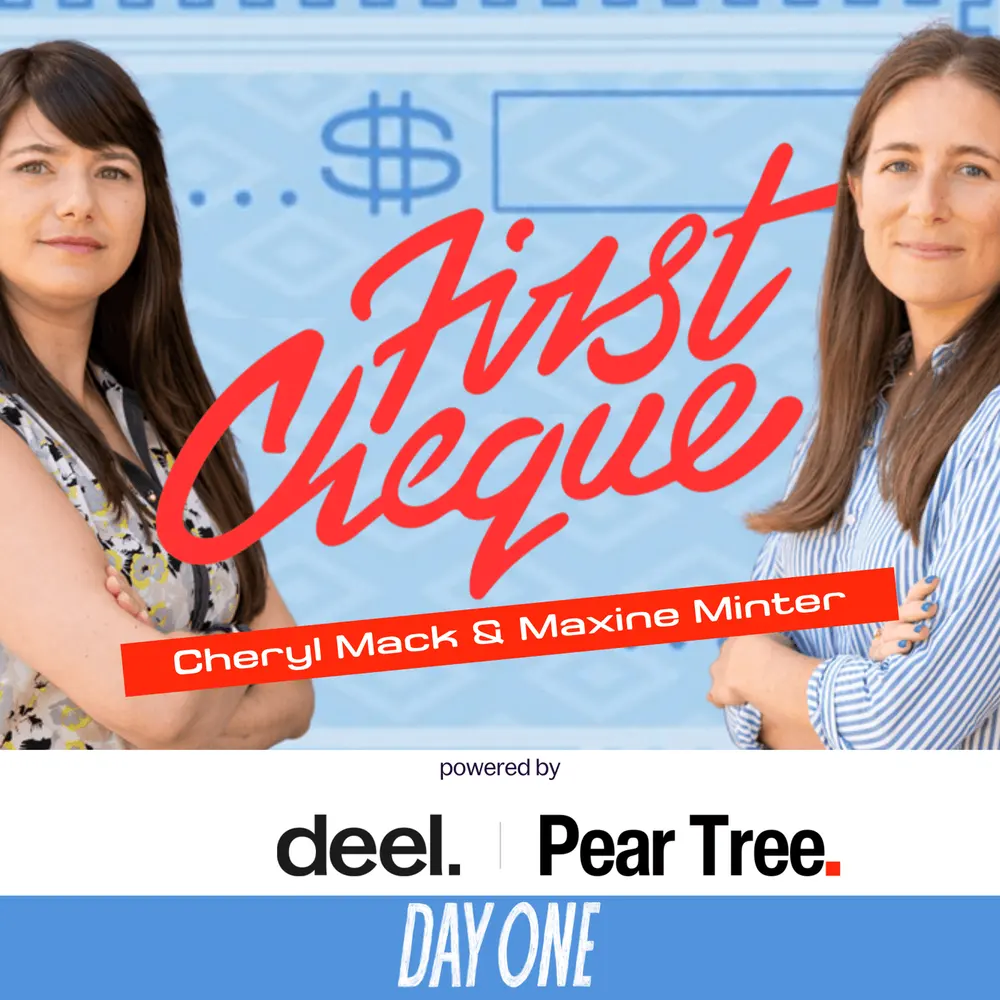 First Cheque with Cheryl Mack & Maxine Minter
Presented by Deel & Pear Tree
First Cheque with Cheryl Mack & Maxine Minter
Presented by Deel & Pear Tree 





 ▶
▶ ▶
▶ ▶
▶