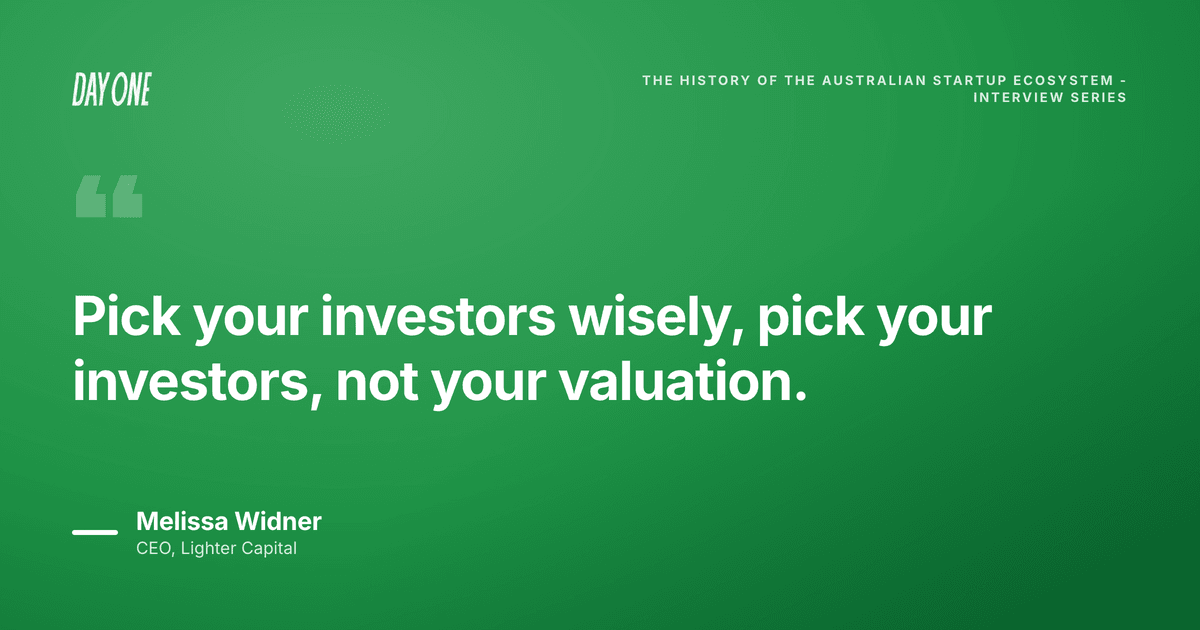
Transcript Synced · select any line to jump ▾ 0:00 Speaker: Let me tell you about our partner, Teamified. If you need to build a top-notch team quickly, Teamified is your go-to solution. They not only provide fractional CTOs, they can also do contractors and even remote team members tailored exactly to your needs. And whether you're looking for expertise in the Philippines, India, or Sri Lanka, Teamified has you covered. What's amazing is that Teamified uses a blend of AI and human expertise to cut hiring times by 50%, cent. Their platform handles everything from automated onboarding to day-to-day management and even performance tracking. You can also handle rewards and recognition, buy equipment, and order training all through their platform. Simplify your hiring process and get the best talent fast with Teamified. Check them out now and transform your team. Go to dayone.fm/teamified. That's dayone.fm/teamified. Thank you, T-E-A-M-I-F-I-E-D, and get started today. Hi, I'm Adam Spencer, founder of the Day One Network, which is bringing the history of the Australian startup ecosystem to you. I believe in founders. It's why I do everything I do at Day One and our media company, W2D1 Media. And that's why the Day One Network exists, to create helpful content for founders. We've got some great shows in development, but a large part of what we do couldn't be done without support from our partners and sponsors. And I couldn't be happier than to be working with NTP, who get community better than any other technology recruitment company out there. A Newcastle company like mine, NTP are invested in seeing the growth of the local tech community in Newcastle, Sydney, and more broadly Australia. So thank you, NTP, for helping us bring helpful content to founders and the startup community in Australia. Back to the interview. Hi, I'm Adam Spencer, founder of the Day One Network, which is bringing the history of the Australian startup ecosystem to you. I believe in founders. It's why I do everything I do at Day One and our media company, W2D1 Media. And that's why the Day One Network exists, to create helpful content for for founders. We've got some great shows in development, but a large part of what we do couldn't be done without support from our partners and sponsors. And I couldn't be happier than to be working with NTP, who get community better than any other technology recruitment company out there. A Newcastle company like mine, NTP are invested in seeing the growth of the local tech community in Newcastle, Sydney, and more broadly Australia. So thank you, NTP, for helping us bring helpful content to founders and the startup community in Australia. Back to the interview. Hi, I'm Adam Spencer and welcome to Day One, the podcast that spotlights Australian startups, founders, and the organizations that empower Australian entrepreneurship. We go back to the beginning to tell a story of Australia's most inspiring founders and how they built their companies. You're listening to a special interview series as part of a documentary W2D1 is producing about the history of the Australian startup ecosystem. On the episode today, we have— 3:18 Melissa Widner: Hi, I'm Melissa Widner with Lighter Capital. I'm the CEO of Lighter Capital, which is the pioneer and leader in revenue-based financing for SaaS companies. 3:31 Speaker: Okay, what exactly is revenue-based financing for SaaS companies? That is a great question. 3:37 Melissa Widner: So SaaS companies are software as a service, and that makes up the bulk of our customers. We've been doing this for a little over a decade now, started in the US and launched in Australia earlier this year. Revenue-based financing, it's a form of non-dilutive financing. We don't take any equity, we don't take any warrants, we don't take any board seats or control or, any financial covenants. We provide, it's essentially a loan to companies with recurring revenue, and they pay us back based on their revenue. So they'll pay us a percentage of revenue until the loan is paid off. 4:20 Speaker: Interesting. 4:21 Melissa Widner: And we model the loan to be paid off after about, after 3 years. And if they grow really fast, they don't pay us back anymore, but they just pay us back faster. So it's great, we're really aligned. You know, if they grow slow or grow out of business, we get paid back, you know, a lot slower and, or sometimes not at all if they go out of business. So it's, it's, it's a form of growth capital for startups where the founder doesn't have to take dilution or give up control. 4:46 Speaker: How, how did you get involved in this? And why did you decide to do that model? 4:54 Melissa Widner: Yeah, so I am not the founder. I became the CEO of, um, LIDR a year ago, but I feel like everything I've done in my career has kind of led to this So I was an entrepreneur. I ran a couple companies that both had successful exits, but both had to take a lot of dilution along the way. And then I worked in venture capital in the US and then in Australia. I moved to Australia in 2009. And most recently was running NAB's venture fund, NAB's, National Australia Bank's venture capital fund. And NAB Ventures invested into Lighter Capital in 2018. And I went on the board at the time. After COVID hit, we didn't know what would happen with our book. It was the first time we had seen anything like this. I mean, our loan book in terms of, you know, how the companies would fare. But we needed to bring in a new CEO, and I just absolutely love the company. And so I put my hat in the ring and applied for the CEO job, and here I am. So I went from sort of startup CEO to venture capitalist for a long time, and then I'm back in the operating role. Okay. 6:00 Speaker: You mentioned, and that's a great segue, you mentioned you moved to Australia in 2009. At that time, from your point of view, what did the ecosystem community look like? 6:13 Melissa Widner: There was nothing in 2009. I mean, really, it was, it was, I mean, you know, things were a little depressed anyway, 'cause that was right, you know, GFC, kind of the height of the GFC, But there was not a lot going on. And there were, at the time, you could count all of the funds that had money to invest, venture funds, on one hand and not even use all your fingers. So there just wasn't a lot going on. But there was things starting. So Sydney Angels was starting, which was like one of the first formalized angel groups in Australia. I think the first one in Sydney. You know, sort of 2011, you saw more activity. You saw some venture funds get funded. I went on to the federal government's venture capital committee. That was a— it was a division of the government that funded, did matching funding to get venture capital funds off the ground. So some of that was going on. And a lot has changed. I mean, it's a really big difference. I think if you go back to 2009, I think the total amount in venture dollars raised from venture capital firms was like a little over $100 million, and that was mostly government money. And now it's in the billions on a, you know, last year it would have been in the billions. So the ecosystem has changed quite a bit. And there's, you know, a few big things that stand out that really led to that change, and then a lot of little things. 7:45 Speaker: Well, I'd love to talk about those in a second, but on that hand, what VC funds did exist in 2009? 7:52 Melissa Widner: Yeah, okay, so Southern Cross, they were, in 2009, they'd just gotten some money, I think, from the IIF, and I think OneVentures had just launched at that point. And there were some other funds that were sort of '99 and 2000 funds, but they didn't have money to invest. They had already made all their investments and were just still managing the portfolio. And what was the third one? I think, I think GB maybe had some money to invest, but not many. 8:25 Speaker: Hmm, so 2009, at what point did you really start to see some momentum build, some things start to coalesce that you go, oh, this is something, something's happening? 8:38 Melissa Widner: Yeah, well, I think one of the big somethings that was happening was at LACIEN. So, they, I think they took their first venture round. They didn't take a venture round until they were like $50 million in revenue. But when Accel came in and invested in Atlassian, I think people looked around and started thinking, oh, maybe you can make money in this asset class. The thinking in 2009, '10, '11, really even some people think this today, was that, you couldn't really make money in venture in Australia, that it wasn't a profitable asset class because you could look back historically and at the times like in '87 and then again in '99, when Australia really did dip its toe into venture capital investing, that was, it was always at the peak of the market and the returns weren't great. And they, you know, in general, they weren't great globally for those vintage years, but you started seeing— 9:35 Speaker: Yeah. 9:36 Melissa Widner: You started seeing, you know, especially with one big company, Atlassian, doing so well, I think people started paying attention to maybe, you know, this is an asset class where we can invest and make money. When I say people, I'm talking about the institutions and the super funds. I think a big catalyst, which wasn't an overnight catalyst, but, you know, Blackbird, their first fund, I think it's technically a vintage 2013, but it's probably been I think they formed it around 2012. And that's just been phenomenally successful. They have Canva and other ones. I mean, they have several really good companies in there. But it's probably from a return standpoint in the 0.1% globally for that vintage year. So that I think has made a big difference and has led to investors who wouldn't typically pay attention to this asset class. I specifically mean, the Superfund starting to invest in this, invest in this area. 10:33 Speaker: So 2009 to 2012. 10:35 Melissa Widner: Still pretty slow, still not a lot going on. 10:38 Speaker: Yeah. 10:38 Melissa Widner: But some things starting to happen. 10:41 Speaker: Yeah, people tend to point to the kind of 2012 years is when things really start to pick up and people mention, inevitably it always comes up, you know, Fishburners, River City Labs. 10:53 Melissa Widner: Fishburners started, right, yeah, and we forget that We forget that Cicada, which was— what was their name before Cicada? ATP? 11:03 Speaker: ATP Innovations or something like that. 11:06 Melissa Widner: They were operating. That was really a startup hub that had been around for a little while. But yeah, Fishburners came— when was Fishburners formed? I think '11 or '12. 11:16 Speaker: Yeah, '11 or '12. 11:17 Melissa Widner: Yeah. 11:19 Speaker: It was ATP Innovations. 11:20 Melissa Widner: ATP Innovations, right. 11:23 Speaker: Yeah, what else was happening around that? 'Cause I ask people kind of, what do you think the catalyst was? Like what really kicked things into gear? 11:33 Melissa Widner: Look, what you have happening today in Australia is you have really smart people, talented people deciding to leave big corporate jobs to start companies because there is this ecosystem and there's funding available. I mean, Athena is a great example of that. So, Michael Starkey and Nathan Walsh left NAB, National Australia Bank, to form Athena, which is now a unicorn, and they were able to get funding. I think they did this maybe 3 or 4 years ago when it was founded. But, you know, in 2010, it wouldn't matter, you know, how great these guys are, there wouldn't have been the opportunity for funding. 12:12 Speaker: Mm-hmm. 12:12 Melissa Widner: So, what led to, funding because Australia's been a wealthy country for quite a long time and I think what led to it is, you know, really I think Atlassian was a big catalyst and then there are some others and it's certainly what's going on with Canva is really quite game-changing for the Australian economy. 12:29 Speaker: So that's just making investment pay attention and that is bringing money in, creating more opportunity for smart people to leave their high-paying jobs to— 12:39 Melissa Widner: Yeah, you have to have the investors, right? You've got to have investors investors in order to get these companies going. And investors aren't going to come into this asset class unless they can see that it's potentially profitable. 12:53 Speaker: Yeah. 12:53 Melissa Widner: So I think that's what you had was some, you know, I mean, first of all, it's a great space to work in. You also had a lot of government activity. But I mean, government has been, you know, governments, the Australian government's been active in the space for a while. I mean, you can go back to way before 2009. 2009, but there's been government initiatives that come and go to try and boost the startup ecosystem. Malcolm Turnbull probably doesn't get enough credit for what he was really trying to do, and he made innovation the forefront of his agenda. So, you just had it talked about much more in the mainstream. One of the things too that I can't say this has been a game changer yet, but it will be. Is that, you know, in 2009, you really couldn't issue stock options to employees. So why would anybody leave a job to go to a startup if, you know, to make less money if there's not equity upside? 13:50 Speaker: And work harder, probably. 13:52 Melissa Widner: Yeah, yeah. And there was a lot of work done by a lot of people in the ecosystem to get the legislation changed there. So you're not getting a tax bill with stock options, which is, you know, ridiculous, but that's how it was in 2009. So that's changed. And then just more money coming into it as a result of people and institutions seeing they can make money in this asset class. 14:15 Speaker: Talking about present day now, what do you see as some of the gaps that, you know, some of the challenges that we face? 14:23 Melissa Widner: Well, it's one of the ones that we're trying to fill, which is just the opportunity for funding for companies that aren't a natural venture-backed company. And venture capitalists tend to look for companies that can be unicorns. So there's a lot of great companies that are good growth companies that aren't, you know, they're maybe they're nichey, or they're not going to be, you know, they don't have the, the TAM just isn't big enough, the total addressable market is not big enough for them become a unicorn. So we, Lighter Capital, is working to fill that exact need, which is to provide funding to companies that for whatever reason, they're not, they either don't want venture or they're not venture-backable. So that's an area, you know, we're new, we've only been in Australia since the beginning of, we just launched in Australia really the beginning of this year. So that's a gap that we're trying to fill. Angels are becoming more active, but there's certainly room to So, you know, there's certainly room there, but look, the ecosystem is stronger now than it's ever been in the history of the country in terms of the startup ecosystem. 15:36 Speaker: Can you tell me about LIDAR Capital and the name? 15:40 Melissa Widner: Yeah, yeah. So LIDAR Capital actually was originally founded based on an unpublished research report by a Harvard Business School professor who said there should be other ways to get funding for these startups. Than venture. If you think venture, they fund, in venture we would fund 1 out of every 100 companies that even came across our desk, and not every company came across our desk. So it's, what are the options for companies to get funding? There's these companies, banks aren't gonna fund them. Even today, banks aren't going to fund companies that don't have hard assets or personal guarantees and that aren't profitable. And venture capitalists, only small fund a really small percentage of these tech growth companies. So Lighter Capital, the name is just light. It's not heavy, it's not a heavy burden. So because the payback of the loan is based on a percentage of the company's revenue, and it's usually under 10%, you know, the average is around 5% until the loan is paid back. It's not a big burden. It's 5% of your cash revenue until you pay it back. Mm-hmm. Until you've paid the loan back. So we had some companies during COVID that really, really got hit hard. You know, we have some companies in the event ticketing space, and they were doing really well until COVID hit, and then, you know, revenues declined. So we have companies whose revenues declined 80 or 90% as a result of COVID and the amount that they pay LIDR declines by 80 or 90% as well. So they're not stuck with this onerous burden because it's always a percentage of the revenue. So hence, light. And no financial covenants, no personal guarantees, nobody sitting on your board telling you how to run your company. So it's a very light form of capital. 17:27 Speaker: Do you have any unpopular opinions about the state of the ecosystem or maybe how we got to where we are, what's coming next? Opinions that you firmly believe, but someone, you know, everyone else is just not on the same page? 17:46 Melissa Widner: Oh, I have lots of opinions that people aren't necessarily on the same page, but let me see, in our ecosystem, look, on the employee stock options, we've come a long ways, but it's still messy compared to the US. It's still a lot of work and you still Typically have to get a lawyer involved and, you know, I mean, Australia's come a long ways because at least now you can issue them without a tax burden. But it would be good if there were a standard whereby companies could easily give all employees options. That doesn't exist yet, which is very much the norm for US startups. You know, you have every position pretty much is 'cause the expectation is when you go into a startup, you'll get some options. And the reason that's so important, I've said this a lot of times, but Atlassian was such a missed opportunity for Australia because I'm from Seattle, I'm sitting here right outside of Seattle now. Microsoft completely changed the landscape in Seattle because Microsoft gave options to everybody and it created all these, created a couple billionaires, created a lot of centimillionaires, hundreds of decimillionaires, and thousands of millionaires. I mean, everybody from, you know, the lowest level employee got options. And if they were there early, they ended up being quite wealthy. And what people from tech companies generally do when they create their wealth that way is they go create other businesses or they go other tech businesses, or they go and invest in other tech businesses. So, you know, unfortunately, because when Atlassian was getting started in the early days, it wasn't easy to give options. So you didn't have that same phenomenon. 19:31 Speaker: How was that wealth then distributed when the share options weren't in place? Like, it just wasn't distributed? 19:40 Melissa Widner: Well, no, you had two guys get really wealthy, right? 19:43 Speaker: Yeah, yeah. 19:44 Melissa Widner: Who would have loved to have given options to their employees in the early days, but it just wasn't something you could do because of the Australian tax code. 19:51 Speaker: What do you think we're doing really well? Like, looking at other ecosystems around the world, what is Australia kind of punching above its weight on, or a unique advantage? 20:01 Melissa Widner: Yeah, so one area where Australia is doing fantastic, and I mean, we, you know, we talk a lot about how well we're not doing, but in terms of funding women-led companies. So the numbers in Australia are very strong. Compared to other parts of the world, even compared to the US. I was the co— I am the co-founder and I'm the chair of Heads Over Heels, which is an organization that supports women entrepreneurs running companies with high growth potential. And we founded that back in 2010. And, you know, what's happened since 2010, it's just amazing to see the percentage of women, the percentage of companies getting funding, getting, even getting venture backing that are either founded or co-founded by a woman. I think nationally, the numbers are well under 2%. I haven't looked at these in a while, but in Australia, it's over 20%. So we're doing pretty well in that area. We're still doing very poorly in terms of women in venture in Australia. And I'm talking about women at the partnership level, women who have the ability to make investment decisions. There's still a long ways to go there. But in terms of funding women, Australia is doing great. And I think a lot of that has to do with, you know, you look for pattern recognition and what's our most successful unicorn in the country right now? It's run by a woman, run and founded by a young woman. So, you know, people don't think you can't make money by funding women now. So it's, I think that's one of the reasons that I think Canva is responsible for, you know, just a lot more activity we're seeing in this space. Yeah. In that space. 21:42 Speaker: What needs to change to get more women into those partnership or partner levels to make those decisions? 21:51 Melissa Widner: Well, putting a spotlight on it, and that has been done, which is good. There aren't a lot of venture funds anymore that don't at least have some women. They're usually at lower levels, but, you know, hopefully those ones that are at the lower levels, the below-partnership below partner will be eventually promoted. So, you know, if we don't see a lot of partners in 3 years, then there's something wrong because there's the bigger funds certainly do have women at more junior levels. But I think what really needs to happen to change is for the people, the LPs who are investing in the funds to make it one of their criteria that they're not going to invest in funds that don't have diversity at the partnership level. And as soon as that happened, you would see a lot of diversity at the partnership level. Mm-hmm. 22:38 Speaker: What advice would you have for new founders coming in? 22:46 Melissa Widner: Oh, there's so much, but— 22:48 Speaker: Just one. 22:52 Melissa Widner: Pick your investors wisely. Pick your investors, not your valuation. So, I mean, a lighter valuation doesn't matter. We don't, you know, we're not putting a valuation on companies. We're giving them funding. But I've seen, I've seen a lot of startups end up picking the valuation rather than the investors in terms of the interim valuation. And the interim valuation doesn't really matter that much. It's the valuation at exit that is really the only one that matters at the end of the day. And, you know, also how much of the company you own when that exit happens. And getting the right partners on board is going to increase the likelihood of there being a really positive exit at the end. 23:33 Speaker: Do you miss working in venture capital as opposed to now being in operations? 23:38 Melissa Widner: So, the things that I loved about venture are working with the entrepreneurs. So, I was an entrepreneur. Entrepreneurs are the most interesting, fascinating people in the world, and it's just a privilege to spend time with them. And I get to do that all day long now. So, I don't miss the best part of the job, which is helping the entrepreneurs, providing them with capital, but also helping them with other things like connections and advice. And so, no. But if I were in a software company running an enterprise software company, which is what I did before I went into venture, yeah, I would really miss it. I would miss that, just that energy. Yeah. That I get from, you know, from helping the most interesting people in the world. 24:24 Speaker: This last question, or the last kind of 5, 6 minutes maybe, is not really a question. I want you to just share something that's kind of top of mind, something that's really important, keeping in mind that I'm trying to create a documentary here that will holistically and very honestly tell the history of the Australian startup ecosystem. I want people from all corners of the ecosystem to hear this story. 24:47 Melissa Widner: Mm. 24:48 Speaker: What, message do they need to hear from Melissa? 24:53 Melissa Widner: Well, on the Australian ecosystem in, in specifically, I think it's things that we discussed before, which is one thing. There's still a lot of room to get more superannuation funds investing in this asset class. We know that this pool of capital is, what, $3 trillion plus now. You know, what if we could just get 1% into this asset class? There's still big room for growth. So, I would like to see there are some, not mandates, but some real incentives for superannuation funds to invest into this asset class. And we still do need to straighten out the stock options piece and make it simpler. It's a lot better than it was. So, So when I think about what we could do to improve the Australian ecosystem, look, if you had asked me 3 or 4 years ago, I'd have a lot more to say, but there's so much great, there's so many great things that are going on right now. If you look at what the Victorian government's doing to support the startup ecosystem, you know, they're funding a women's angel fund, they're funding a, I was just on the selection committee for a fund of funds to go out and fund 8 different Victorian-based VCs, and they're funding venture debt funds. So I mean, the government is really, Victorian government's doing an amazing job, really stepping up to get this, to get the ecosystem going. 26:25 Speaker: Thank you so much for your time, Melissa. Is there anything that I should have asked you that I didn't? 26:29 Melissa Widner: Oh, that's what I ask at the end of all my reference check questions. So that's a good one. We got to talk about the women VCs, we got to talk about funding. Look, Australia is doing a great job on that special talent visa. They're making it a lot easier for people with startup experience to get in the country. Like, incredible. I mean, now we have to open up the country, that's a different issue. But it's, you know, it's— I know people who it took them weeks to get a visa, which is amazing, to come and work in Australia. So So that's happening. Look, Australia's doing a lot of things right on this front. I wouldn't have said that 5 years ago. 27:06 Speaker: Okay, well, why? What changed? 27:11 Melissa Widner: Well, so 5 years ago is maybe the wrong, you know, the wrong timing, but you know, one, more government support for programs. The people that are managing large chunks of money investing in this asset class, highlighting and really celebrating, you know, successful tech companies. So if you went and read the AFR 10 years ago, you would never see anything about even startups. AFR loves to write about startups right now. That's a relatively recent phenomenon, but you kind of, you need to see that to, you know, to build the momentum in the ecosystem. 27:49 Speaker: I hope you enjoyed that interview. More interviews are on the way. Follow the podcast wherever you're listening right now. Stay tuned for more interviews with many, many more amazing people from the Australian startup ecosystem. Thanks for listening and see you next time.