Transcript Synced · select any line to jump ▾ 0:02 Georgie Healy: Founders scale faster on Deel. Set up payroll for any country in minutes. Hire anyone anywhere. Get visas handled fast and get back to building. Visit deel.com/dayone. That's D-E-E-L.com/dayone. 0:21 Isaac Peiris: What Duolingo did was how they positioned that was we are going AI first to reduce our reliance on contractors. So basically they tied use of AI with reduction in headcount. 0:37 Georgie Healy: Our friends at Magic Brief that we've spoken about were just acquired by Canva. Is this good for their brand or bad? 0:44 Isaac Peiris: If you play it safe, you just won't grow that awareness, you won't get attention, you kind of get lost in the crowd and maybe you have a, a business out of that that plateaus, but it definitely doesn't grow. 0:58 Georgie Healy: What's the worst brand decision you've ever made? Yourself, business or personal. 1:03 Isaac Peiris: I mean, I think that's where that brand piece starts to come in that is separate from just product and technology. It's understanding who is the end customer and, and what is the actual use case for this product. And that's where it kind of fell down. 1:15 Georgie Healy: Maybe you could summarize what is key when it comes to brand strategy and the tasks that early-stage founders need to do as a minimum. Hello and welcome to In the Blink of AI, where I talk to the brightest AI startups and innovators each week. 1:36 Speaker: I'm Georgie Healey. I'm the host of the show, and this week I'm speaking to Isaac Piaris. He's the founder of Pistachio, and who haven't they supported with their growth strategy? I'm actually pulling up his LinkedIn right now so I get the numbers right. Before launching Pistachio, he led growth at the Daily Australian, where he scaled the newsletter to 180 subscribers in just 10 months. At Mamma Mia, he grew their subscription business from over 30,000 paying customers and $170,000 in monthly recurring revenue. He's just gone from strength to strength. And why do we have him on In the Blink of AI? This sounds like a, like a marketing guest. Well, I guess if you've been listening to the show, you don't need me to tell you that the power of brand is more important than ever. Yeah. It's very easy to launch a product in market now. There's no-code tools. You don't need an engineer to get a technical product off the ground. So how do you differentiate yourself and your brand? It's through these kinds of growth strategies that we talk on the pod. We talk about even the biggest companies, uh, Google and Meta, and their huge failures, uh, when it comes to branding. Remember Google Glass and the metaverse? Uh, so there's things that anyone can learn from any part of spectrum of business. We talk about AI messaging gone wrong. Duolingo, anyone? And what to prioritize as a founder. You know, there's a lot of things to do as a founder. Where do you spend your money and how do you approach your brand messaging and on what platforms? Side note for me, you know, this show made it clearer than ever that I do actually need to focus on the brand of the pod as well. We've got about 18 reviews on the channel now. And they made me so happy. But I am realizing that there are podcasts out there with less listeners and hundreds of reviews, and it makes them appear in the, you know, Spotify and YouTube channels more readily than mine. So if you are a fan, you want me to do a shout out for any review that appears, please send in a review. Write a few words so that I can see what your handle is and shout you out on the show in a future episode. See, look, I'm practicing what I preach. So a huge thank you to Isaac for being on the show. Can't wait for you to listen and tell me what you think. 4:11 Speaker: You're listening to a Day One FM show. 4:14 Georgie Healy: Hey Isaac, thank you so much for joining In the Blink of AI. Let's kick things off with you telling us about Pistachio. 4:24 Isaac Peiris: Yeah, so Pistachio is the agency that I founded and run. Uh, we're a growth agency, so we basically help brands scale their brand awareness and consideration and build trust with their audience primarily through organic content. 4:39 Georgie Healy: Yeah, I've— I discovered you after being on a panel together and then hit you up for coffee very quickly after because I was so excited by what you do there. If I didn't know what you did, I'd want to know a little bit more about what your expertise is and what kinds of clients you work with. 4:59 Isaac Peiris: Yeah, definitely. So just before starting Pistachio, I was in the media industry. I was working at the Daily Aus news business for young people. I was the head of growth there. So my role was around scaling that audience and helping them build out other channels. So for example, the Instagram was the main channel and we kind of moved over to newsletter and helped to scale that up. And then before that, I was at another media company, Mama Man, helping with their paid subscriptions. So had a lot of experience in the media industry, but then before that I was in product management in, you know, B2B software and seeing how, you know, these big businesses can operate. And the interesting thing for me was in both of those industries, there was a really interesting common thread around understanding the end user or the audience or the customer and taking those insights and turning them into growth opportunities or products or whatever it might be. But it all stemmed from understanding the end person who you're trying to talk to. And that is ultimately what we now do. We help businesses get a better understanding of who they're talking to, what they're trying to say, and then through organic content, reach those people, resonate with those people, and turn that into business outcomes, whether that's increasing brand awareness or driving, you know, signups and other business growth objectives. 6:23 Georgie Healy: Growth and media might be my two favorite topics. I, I'd had the most fun writing these questions to ask you, but before I dive a little bit deeper, when we're talking about your clients, is it just boomers that are like, I don't understand Instagram, what's TikTok? Or is it like even really, uh, tech literate and media literate people as well? 6:45 Isaac Peiris: Yeah, it's, it's everyone, honestly. I, I think that especially younger people and younger founders have this real drive to want to be on all those platforms. So, it's honestly more those types of people because they're the ones that— 6:59 Georgie Healy: Because they understand why it's so important, right? 7:01 Isaac Peiris: Exactly. They get it. But it's very different thing from understanding I need to be doing this thing to then successfully doing the thing. And so, that's kind of the gap that we help to bridge because at the end of the day as well, you don't necessarily need to be on TikTok and Instagram and LinkedIn and Twitter. And have a podcast and have a newsletter, like, you might not need to do it all. Um, so it's helping people kind of come back to that audience-first approach and go, who are you actually trying to reach and what are you trying to say to them and where does it make the most sense for you to be to get that message across? 7:32 Georgie Healy: Yeah, it's not, it's not that simple, right? And every story, like, can be completely different and you can, you could stuff it up, right, if you, if done badly and, and waste a lot of money. 7:43 Isaac Peiris: Absolutely. 7:44 Georgie Healy: Slight tangent. Have you seen American Psycho, the movie? 7:49 Isaac Peiris: Yes. Yes, I have. 7:51 Georgie Healy: Do you remember the scene, the famous scene where they're all sharing business cards and it's kind of like this barometer of taste and like pedigree and affluence? 8:03 Isaac Peiris: Yeah. Yeah. Yeah. They're flexing on each other with the different— 8:06 Georgie Healy: Exactly. 8:07 Speaker: And like the cards. 8:07 Isaac Peiris: Like cards knowledge. Yes. 8:09 Georgie Healy: Yes. Okay, that's quite a few years old now, that movie. Couple of decades maybe. What's the equivalent to having a beautiful business card these days, Isaac? What's, what's the, like, high pedigree, high taste equivalent? 8:26 Isaac Peiris: Yeah, it's interesting because I would say, like, the digital business card might be LinkedIn. And so I think you can tell a lot about how much effort someone's put into their profile and making sure that all looks good. But At the same time, I think we've kind of gone a step beyond that. Now you've got people that have their own podcast or have their own newsletter and have these personal brand audiences that they've scaled. And I think that, that's just the next, that's the next tier above any of that. It's, you know, if you, if you have this outlet for connecting with people and kind of broadcasting yourself, and there's a group of people who resonate with that and want to like come and connect with you about it. I think that is kind of the next tier. We're seeing, yeah, individuals build media assets, which is just, you know, it's, it's wild. 9:17 Georgie Healy: I will take that as a compliment. So we're doing really well so far. Okay. This has become really popular segment of the show called Hack of the Week. You and I share, each share an AI tool or use case we've tried recently and love. Why don't you kick us off? 9:38 Isaac Peiris: Yeah, so mine is not necessarily a tool or like a specific use case, but something that I've done that's just made life so much easier when I am using AI. I've, I've started saving these context documents, so just like text files that live on my desktop, and I've got one for myself, I've got one for Pistachio, the business, and then anytime I'm using AI and I need to ask it a question, I just drag those files in and it instantly has all the context it needs about who I am, who my business is, like all our ICP, uh, you know, the media channels we have, the clients we've worked with, testimonials from clients, my career history, all this kind of stuff. And so it just means that you just skip the whole learning curve and the questions that it needs to ask you, and it has all the information it needs. 10:30 Georgie Healy: How long are those text files? Like, how deep did you go? 10:34 Isaac Peiris: I went pretty deep. I used AI to write the text files, which is a bit of another hack, which can be good. 10:41 Georgie Healy: Hacking Snaption. Great. 10:43 Speaker: Love it. 10:43 Isaac Peiris: Yeah, exactly. I find them really good because obviously you can create custom GPTs and Claude projects and all that kind of stuff, which has all the information. But I find it really useful having these because then you can use other custom GPTs that are really good at other things. So you can use it something for writing landing page copy or business accounting or whatever it might be, and you can still have the same context coming in. 11:10 Georgie Healy: I am going to try this because there have been a few times where I assume that the context window is sufficient enough that it's remembered all my backstory, and then I'm just realizing the hard way that I have to continuously re-prompt and re-remind. So I'm gonna try that. That's brilliant. Just have them on the desktop ready to go, right? 11:31 Isaac Peiris: Pretty much. 11:32 Georgie Healy: I love it. Thank you for that. That's something we can all use. My hack, I just got back from 2 weeks in Europe. Yeah, I know. What an asshole. And it was astounding because it was the first time I had been on a trip, even since December when I went away, that I've leveraged AI in everything I did in terms of vacation planning. And I've got one particular anecdote for this because of course you can use ChatGPT to ask like where to go, what to see. Great. We all know that. But when I was in Rome specifically, there was this incredible Caravaggio exhibit. I thought we would be able to get tickets. It was completely sold out. Bumped into someone at baggage claim who was coming from America to go to this Caravaggio museum, and I just had I had so much FOMO that I didn't get tickets. But the painter Caravaggio has paintings in all these churches in Rome, like so many, but you wouldn't know by looking. Now in the past, what would I do? I would Google which churches have Caravaggios, then go on Google Maps, then try and figure out. But if you just go on ChatGPT, no, if you go on Gemini, because it's integrated with Google Maps. you just say, where is the nearest Caravaggio church based on where I'm standing? And it's like, this one's in 3 meters, this one's in 10 meters, this one's in 62 meters. And no one was leveraging AI in this way. They were all going to this €90 exhibit. And my husband and I were like, there's one, there's another one. No queue, no people in front of them. Really special. I know it's a random one, but I thought that was pretty crazy. 13:19 Isaac Peiris: Curated your own exhibit. 13:22 Georgie Healy: That's very cool. 13:22 Isaac Peiris: Right? 13:23 Georgie Healy: We should have charged for it. We're like, we're doing it to do it. I've got one of those little— 13:26 Isaac Peiris: Yeah. Walking tour. 13:28 Georgie Healy: We would've paid for our lunch very easily doing that. Yeah. AI is changing the way I go on vacation, which is a fun fact. I'm so excited to dive into these questions. First segment, Brand Fails. So, Isaac, every time I've spoken to you, I want to download your entire brain, and our lucky audience gets to kind of peek behind the scenes into how your brain works when it comes to strategy and brand. And, you know, knowing why— like, behind the scenes, why did that successful startup fail or succeed, right? And here's some famous products that I want you to unpack why they failed. Okay. We're going to start with Google Glass. What is Google Glass, Isaac? 14:18 Isaac Peiris: Google Glass. That's a good one. So yeah, that was what it would be like maybe almost 15 years ago now. Google came out with the first kind of smart glasses that had the camera and the little like heads-up display that give you information. Cool technology, right? Like very, very cool technology. 14:38 Speaker: But I think— 14:38 Georgie Healy: It even looks kind of chic in my opinion. 14:40 Speaker: Maybe just me. 14:41 Isaac Peiris: Especially at the time, I'm like 15-odd years ago, was very compact for what it was able to do. Like it was technologically, it was a very impressive product. I think where that fell down was moving beyond it's just cool. Like it's just technologically impressive. But there wasn't a clear understanding of who is actually going to use this product and what are they actually going to use it for. Um, and I think that's where that brand piece starts to come in that is separate from just product and technology. It's understanding who is the end customer and, and what is the actual use case for this product. And that's where it kind of fell down. I think that that was not necessarily the objective of it. I think Google would, you know, they often try to just do cool things with technology and kind of see where it goes. But ultimately, Google Glass didn't have a clear use case and a clear customer in mind, in at least in the marketing and kind of brand aspect that they went after. 15:37 Georgie Healy: So you make it sound so obvious, but that hadn't occurred to me. Like, it failed even though we all kind of seem to agree that aesthetically it looks good, clever technology. So why would it fail? And you're right, who is this for? Like, I didn't feel like it was for me, but I don't actually know who it was for. And if you don't, like, and then why would you fork out hundreds and hundreds of dollars for something that you're like, I'm not actually sure if this is for me? 16:08 Isaac Peiris: Yeah, well, I think we're kind of seeing a similar thing at the moment with the Vision Pro from Apple, and that's thousands and thousands, not hundreds and hundreds, right, to, to get on that. But again, it's essentially a proof of concept prototype that they've, that they've got. You know, it is showing we have this cool technology, there's so much that we could do with it. I think now the job is what are the use cases for this? Who are the actual people that will use this? What will they actually use it for? I mean, the, the dream that is sold, and it was the same with Google Glass, is, you know, replacing your phone, or it's a whole new kind of way of interacting with the world, that's fantastic. For the majority of people, customers, they're not going to make that switch quickly and easily. They're really, really not. And so I think that is the kind of job ahead of Apple with the Vision Pro, and that's where Google Glass fell down. 17:03 Georgie Healy: Epic. The next one, the metaverse. Do we remember the metaverse, Isaac? 17:09 Isaac Peiris: Yearly trend cycle that came, came around and it was first, it was the kind of crypto and then metaverse and then AI and AI has kind of continued on obviously. Metaverse, yeah, kind of came and went a little bit. And I, I believe it's honestly for very similar reasons to Google Glass. It was very impressive technology for the people who understood and appreciated that, but the use case to the majority of people was not clear. It was not obvious how this improves my life in any way, how it helps me do something better or quicker or something I wasn't doing before but need to do. And so that's where it's kind of fallen down. Now, I, I think that the technology is still impressive and, and it probably will become useful at some point, but the missing piece has been the same as it was with Google Glass, where the use case is not clear to the majority. I think the thing I keep coming back to is that bell curve of adoption. You've got early adopters, which is, I think it's around like 17% of the market are these early adopter types, right? And that's people who will use things just because they are cool and impressive and interesting. And I think a lot of these new technological advancements find it really easy to capture that group because I assume a lot of the people that listen to this podcast would be in that group. Whenever they hear about a new tool or a new piece of technology, they're the first ones out there trying it out, like seeing how it works and trying to understand it. that's fantastic. But after that comes the 34-ish percent, which is the early majority group when it comes to that adoption curve. These are average people who are not early adopters. If you want to capture those people, you need to provide a very, very clear use case and reason why that product is useful to them, is meaningful to them, let alone anyone that comes after that, the late majority and, and laggard groups. Like, You need to make it really, really clear. And the metaverse as a piece of technology has been in that gap where they've captured an early majority of people. People have gotten on and had a play around and found it cool and interesting, but the majority are not yet convinced of its use to them. 19:26 Speaker: Yeah. 19:27 Georgie Healy: And businesses can't survive on, you know, 17%, right? 19:31 Isaac Peiris: No. Well, and that's, you know, that's if you capture the entirety of that 17% group. 19:36 Speaker: True. 19:36 Isaac Peiris: But realistically, you're not. And so that's where, that's where a lot of particularly technical founders that I've worked with, that's where a lot of them fall down. Like it's been very, very close to the product, which you obviously need people very close to the product, especially in instances like this where you are making significant technological advancements. But sometimes you can be too close to the product and you forget that for this to be a sustainable business. It needs to be more than just impressive or cool. It needs to be meaningful. It needs to have a use case. It needs to have an audience. 20:11 Georgie Healy: I have one more fail for you, Isaac. Duolingo, a little bit of a different one for you. Why have they recently had a bit of a fail or a stumble? 20:21 Isaac Peiris: It's interesting because Duolingo, most people would argue, is one of the most successful brands on the planet. Like their whole social media strategy going rogue on TikTok. It's one of the most famous case studies of brand that, that is out there. But recently they've definitely had a bit of a stumble, um, just after killing the mascot and reviving— and reviving Duo the Owl. 20:47 Georgie Healy: Sorry, explain that to anyone that might not be familiar. 20:51 Isaac Peiris: Earlier this year, they killed their mascot duo, the owl, which was very, very significant because he's, you know, he's the face of the brand. He's— that's what everyone loves. And then there was— they basically gamified reviving him. So the audience had to get involved and, you know, complete lessons on the app and do things on social. And, and then they revived the, the mascot duo, which was a big publicity stunt essentially, but very, very successful one. And, and was a way to kind of bring their audience in. But just after that, the CEO rolled out this memo basically about how they were going AI first. And that was really interesting because a lot of companies have started rolling out very, very similar things. There's been a lot of documents from CEOs about how their business is going AI first in terms of their internal processes and operations. What Duolingo did was how they positioned that was we are going AI first to reduce our reliance on contractors, external contractors. So basically they tied use of AI with reduction in headcount. That was the major flaw. They got massive backlash online. Their social— 22:12 Georgie Healy: People were terrified about losing their jobs. As it is, right? For a CEO to come out and be like, it's to replace people. 22:20 Isaac Peiris: It's the number one fear for people. And I think when it comes to AI especially, this is the thing that a lot of people that are really deep in it sometimes forget is there's, for every person that is so excited about the potential of AI, there is another person who is genuinely terrified of it. And sometimes those people are the same person. You can be both, right? You can be excited, but also kind of scared. It is a new world. And I think that's where Duolingo went wrong with that particular piece of communication is they tied use of AI to reduction in headcount, which is the number one fear that people have about it. And interestingly— 23:04 Georgie Healy: He didn't read the room, right? Because especially like this is a B2C. App, most of those customers are like feeling that those mixed feelings about AI, right? 23:16 Isaac Peiris: Well, and especially because they're huge on TikTok. They have a very large audience of young people who are entering the workforce and— 23:24 Georgie Healy: Oh, so bad for grads. 23:27 Speaker: Yeah. 23:27 Isaac Peiris: Entry-level work is the level of the workforce that is being replaced with AI. So that is where the fear is most concentrated. And you're absolutely right in that the, the B2C factor is important because just thinking through some of the other CEOs who have come out with similar statements, I know Shopify did the same just a few months before them. That was widely met with praise and kind of respect. Firstly, because they're a B2B brand with mostly an audience of business owners who are, you know, trying to understand how to use AI in their own business. So like the audience was, was different. And so the reception was slightly different. But they also didn't tie it to reduction in headcount. They tied it to empowering the existing employee, employees. So their statement was more around criteria for their recruitment process, making sure that, you know, they would require incoming employees to be proficient in AI use and to actively use it in their job. And before requesting additional headcount or resources or whatever, you kind of had to prove that you tried AI and AI couldn't solve that problem. And then you would get that approved. So, it was really interesting because looking at the two statements, Shopify and Duolingo, they're almost saying the exact same thing. It's just that the framing was slightly different and the audience was slightly different. And so, one was met with pretty significant backlash and the other one wasn't. 24:50 Georgie Healy: This is why people hire you, Isaac, because it's like, oh, I said the exact same thing as Fiverr, who did this recently too, Shopify. Why am I getting cancelled? It's like, Yeah, well, some distinct differences in your audience and your approach. 25:08 Isaac Peiris: That's exactly it. And it is understanding your audience and then tailoring your message to them. That's the, that's the piece that you can't copy, that has to be unique to each brand. And yeah, that's the piece that often gets missed. 25:21 Georgie Healy: We're gonna get a little bit more positive now. Thankfully, we've got 3 wins that I'd love you to unpack for us. Why did these brand strategies work, or their go-to-market and approach to, to engaging with customers work. Number 1 is Waymo. What's Waymo, Isaac, and why are they killing it? 25:39 Isaac Peiris: Well, maybe you should answer that question. Waymo is the Alphabet slash Google kind of sub-brand that has been working on driverless cars, um, for, for a very long time. And I think that that is an important thing to note when talking about Waymo, is that brand has been around for a very long time, but very much behind the scenes in development over many, many years. And that's really important because what they're doing is, is building driverless cars, which is that cool and interesting technological advancement, but also kind of scary for the majority of people getting into a car and there's no driver like that is, there is understandable apprehension about that, right? Where they've done really well is taking their time. They haven't tried to, you know, launch onto the scene and go, yep, cars now don't have drivers, everyone just get in, get on board. They've taken the time to understand that for them to succeed, they need to capture the majority. This needs to become a widely accepted, normal way of people transporting from one place to another. And there's obviously a lot of reasons for them doing it that way. I mean, the regulations city by city that they've been rolling out in are slow bureaucratic process. So, so that's been a factor. Um, but I think that they have understood that there is going to be apprehension from the general public about getting on board with their service, but they're taking their time, doing things the right way, introducing it bit by bit, and slowly rolling out and seeing a lot of success. 27:15 Georgie Healy: Such a great distinction in terms of we actually do need to capture the large majority of the market for this to work. It's a scale-like thing that we need to achieve. We can't just have the tech-native, tech-literate people interested in this. And yeah, like not being in a rush to get it out the door. It's not worth the, like an accident, right? It's not worth a headline that's terrible. 27:44 Isaac Peiris: You basically wouldn't be able to come back from that. You know, like that's, that's the reality of it. If, if there is, for them with the driverless cars, safety is the concern, right? Like that is what people are worried about when they get in the car and there's no driver. They're worried that the car's going to crash like that. That is, that is the natural reaction. 28:05 Georgie Healy: And so— Huge downside risk. Yeah. 28:08 Isaac Peiris: Massive downside risk. And so they're taking their time building a brand around safety and assurance, security. Right. I think the backing, the fact that they're an Alphabet, you know, Google-related brand helps with that. Like that's a big, reliable kind of brand that has been established. But the slower rollout and all of the research and testing and all of that, there's, there's so much focus from them on the rigor around their process, which is important because that's the thing that convinces the general public. As soon as you have one headline that says one of these cars crashed, it is so hard to come back from that. It is so, so hard to come back from that. 28:47 Georgie Healy: So beautifully said. I could do this literally all day with you, Isaac, but I have one more for you. Coming a little bit closer to home here in Australia, our friends at Magic Brief. Maybe explain who Magic Brief are and some recent developments and why you think that they're so successful. 29:08 Isaac Peiris: Basically, they work with the performance ads. So you've got like Facebook, Ad manager or whatever it might be, and you can, you know, put ads onto Instagram and people run performance ads on TikTok and whatever other social medias. This is a platform that looks at what are the ads that everyone are running and how successful are they. And so you can basically build these lists of your competitors and the ads that they're running and how successful they are. And you can start to understand what formats are working and what are not working with your particular audience and in your kind of space. And then Magic Brief, being the name, they help you turn that insight into a brief to be able to send to creators and whoever it is to make that ad or that format for your brand. 29:55 Georgie Healy: It's so genius because we see with startups, customer acquisition cost being huge for them to launch any kind of product and so expensive. 30:06 Isaac Peiris: They're an awesome, awesome brand. Just been acquired by Canva, which is super, super exciting news. Um, Maddie is kind of the person that looks after their marketing there, and she's a good friend of mine. We worked together back in the day. She was on the panel with the both of us where we met. 30:21 Georgie Healy: What a panel, I tell you. 30:23 Isaac Peiris: Yeah, it was a good group. Um, so yeah, they've just been acquired by Canva, which is, which is huge, huge news for them. I think part of what they've done really well is Again, understanding their audience, people that are in this world of performance ad creative and being able to speak to them really importantly, not through features, but through benefits of their product. So it's not about, here's our new insights feature, you know, here's how good it is and how smart we are for building it. It's, here's what you can now do. Because of this insights feature. Here's the thing that you couldn't do before that you can now do here, or here's the thing that took you days before and you can do it in 10 minutes with us. So it's the benefits over features thing for them. And I think the other thing they've done that I absolutely love, and this is, you know, a lot of what Maddie's been able to do there, is their organic content is just phenomenal. Just phenomenal. Their, their video content, she does a lot of really good piece to camera, green screen, TikTok style. Videos, which really cut through in a, in a space that is quite polished around ad creative. They've also launched a newsletter called Internet Ads Club. And really importantly, that newsletter is not the Magic Brief newsletter. It's called Internet Ads Club. It's kind of separately branded, but powered by Magic Brief. And what that does is every kind of week or so, they send out an overview of ads that have done really well and an understanding of why they did well. Different formats that are popping up across the space, which they're pulling those insights from their own product. The reason that's really smart is trying to convince people to jump on and pay for a product is a tough thing to do because the research shows that only about 5% of customers are in market actively looking to buy at any one time. So at any one time, you've got 95% of people who could be customers, who are not ready to be a customer right now. When you go out with sales material, that 95% are lost to you, right? Like they're, they're not looking to buy and so they're not interested. So you're only talking to the 5%. What Magic Brief have done through their organic content, particularly this newsletter being separately branded, is they're capturing the 95%. They're saying, we don't have anything to sell you right now, but you are in this world interested in performance ad creative. We send this thing out once a week. It has, you know, the top 3 ad formats that we're seeing. And so free value, if you're interested in that, here you go. No cost. What that gets them is a list, email list of thousands and thousands of people who are directly their ICP. And so over time they build this direct communication channel with their ICP so that when those people are ready to buy, Magic Brief is the obvious option. And that is the whole benefit of this organic content flywheel and building a brand and building trust and building relationship with these people that Maddie and Magic Brief more broadly have been able to do so successfully. 33:30 Georgie Healy: Yeah, it's like, it's not selling first, it's building the trust first and the feeling of these people understand what they're talking about and they're experts. And now I trust them in order for me to feel comfortable pulling out my wallet, right? It's, it's quite genius. I actually haven't checked out their newsletter yet, so now I'm pumped to subscribe. 33:53 Isaac Peiris: Definitely check it out. I think the, the other thing with it that's important is it's value-led. It is giving value to these people before they ever ask for anything in return. So when you go out with sales material, You're not adding value to that customer or audience member. You're asking them to give you value and pay, right? This newsletter is completely free and it just says, here's insights on what is working right now in the performance ad world in terms of formats. So that actively helps these people in their jobs. Right. That is value for free that Magic Brief are giving away. That is what builds trust. It's, it's giving value before ever expecting to receive it. And that's also what builds that relationship so that people have gotten so much value from Magic Brief before they ever consider becoming a customer. So when it does come to the time of considering becoming a customer, it's an obvious choice because Magic Brief have already given them so much value. They've already helped so much. And it's a playbook that we see around a lot of B2B businesses. I mean, HubSpot is probably doing this at the biggest scale of anyone. They acquired The Hustle. 35:03 Georgie Healy: Newsletter. 35:03 Isaac Peiris: I've got a whole podcast network of like 35+ podcasts. They have all their online free tools and calculators and whatnot. If you work in marketing, you've landed on a HubSpot blog or a HubSpot tool or listened to a podcast that is HubSpot's podcast network. They've given you some value for free. And so when it comes to, hey, I need marketing software, they're the biggest name in the game. because they've built this relationship and this trust and this credibility with all of these people. 35:32 Georgie Healy: You're such a pro, Isaac. Obsessed. I think it was really important to talk about the wins and fails from very famous companies that we've all heard of. And now what I would love to do is, in terms of AI products, what are the brand strategies that work? And if there's this distinction there. To start with, if you are an, a founder and you are building an AI company, Maybe you could summarize what is key when it comes to brand strategy and the tasks that early-stage founders need to do as a minimum. 36:06 Isaac Peiris: It's interesting because there is a lot of hype around AI now, and that hype has been pretty sustained. Like I was saying before, there was this kind of yearly cycle around new technologies that kind of came and went, like the metaverse and stuff like that. AI came and stayed, and the hype is still there. And so leaning really heavily into AI, everything can get you an initial boost of interest and users of the product and all of this kind of stuff. I think that the challenge is that that is kind of like a sugar hit, right? Like it's a real quick burst, but there is a lull that comes after that. Throwing AI into everything doesn't help with retention. Doesn't help with long-term relationship building. So I think for founders of particularly AI products, sure, lean into that and get that initial boost, do the Product Hunt launch and, you know, like get a bunch of those early adopters on board. That's great. 37:03 Georgie Healy: Get them to sign up for your waitlist. 37:05 Isaac Peiris: Yeah, all of this kind of stuff, which is important stuff to do. Don't get me wrong. I think you have to, there's kind of two things that I think should be on the checklist for founders of AI products. One is really understand the target audience. Like, who are the people who are actually going to get the most benefit out of your product on an ongoing basis? Not just on a, this is cool, I'll try it once, but on an ongoing basis, who are the people that are actually going to benefit? And secondly, how do you then reach them? Like, what is the message and the channel that you need to go through to reach them? And how do you convince them that this is the product for them? So that comes back to the trust building and the relationship building and all of that kind of stuff. So understanding target audience, their pain points, how they currently solve the challenge that you're now, your product now solves, understanding as much as you can about them and then building a relationship with them, basically building relationship, trust, credibility with that group. is kind of the biggest thing you can do. And I would say it also comes a bit back to what we were talking about before with the use cases as well, with an understanding that for the majority of people, just because something is new, that is not a reason to become a repeat active user of that product. Right. For the, for the majority of people, there needs to be a clear and concise use case and an understanding about how this product helps me in my life achieve something. Do something quicker or better or easier, whatever it is. Um, so those are the two things: understand who the audience are and then how you actually help them. 38:43 Georgie Healy: Because if you don't help them, they won't come back, right? Like, you might sell them once or for one month or for the trial period. Uh, that won't sustain your business though. 38:52 Isaac Peiris: No, exactly. And that's where there's the biggest potential with AI products, right? Because AI genuinely can help do things quicker, better, more efficiently. 39:03 Georgie Healy: Get to market sooner. 39:04 Isaac Peiris: It speeds the whole thing up. It actually can have a lot of impact, but I think a lot of people fall down in thinking that because it's AI, people will come and check it out and then they'll figure it out for themselves. When in reality, that's not really how it works. People need to understand upfront, how is this going to actually help me? And that is a question that I think too many founders can't answer well enough. 39:31 Georgie Healy: Yeah, I think you've mentioned that to me before. Like maybe they have a great idea. You need to know who your customers are and how it benefits them and will encourage them to come back because it truly does do something that they, they need your service for. Which brings me to my next question. I'm an AI founder. I've listened to you. I know who my target customers are. I know that I'm gonna deliver them a ton of value. And I've come into some windfall, uh, I've got some money from friends, family, uh, or VCs even. How do I prioritize spending that cash? Where, where should I spend money and where should I like save my money and not worry about that for the early stages? 40:15 Isaac Peiris: So I would say, I mean, maybe I'm, I'm biased here, but I do think that some kind of content engine is important these days. 40:25 Georgie Healy: But it's a content engine, Isaac. We're not— 40:28 Isaac Peiris: Sorry. 40:28 Georgie Healy: We're not all able to create content engines. 40:31 Isaac Peiris: If I take a couple of steps back, basically what businesses have always needed is awareness. They need to be able to reach people and make people aware that this is a solution that exists. And then it's basically a process of convincing those people that they should jump on board, right? That's like broadly very, very simplified, like, marketing funnel. Today, it's never been cheaper to get awareness, but it is not necessarily easy. It's simple but not easy. And so I think that traps that a lot of people fall into, especially when they do have funds coming through the door, is they go, well, let's just dump a bunch of it into paid ads. That can work sometimes, but there are much better ways. To win attention, and the, the ways that you can win attention organically actually work better on an ongoing basis in terms of sustainability. So I would be looking to turn that understanding of target audience pain points, use cases, all of that into content. Social media, for all the pros and cons of it, is just an incredible tool, especially now that most of the algorithms are going the way of TikTok and kind of less reliant on followers and it's more just around how the content resonates and whether people watch it. You can post a video from an entirely new account. If it's good content and it genuinely connects with the people you want to connect with, it will reach thousands and thousands of people in your ICP for free. Like, that is, that is an insane tool you have at your disposal. 42:03 Georgie Healy: Yeah, don't be demoralized if you don't have 6 million followers out of the gate, guys. You can still— yeah, we see it all the time, right? 42:12 Isaac Peiris: Absolutely, absolutely. So that is one option. And then the best performance ads that I've seen, or like that kind of creative space, only really comes once people have done the work on the organic front. And by posting organic content, you get to understand which messages resonate most with people. You can put two videos up, one talks to benefit 1, 1 torts to benefit 2, and this one goes viral and that one didn't, you go, okay, this is the thing that really hits with people. And it's a way to free test that before you even build the product, frankly, which is huge. And then you can kind of take that insight and then put some money behind it and run paid ads about that thing that you already have kind of validated. 42:57 Georgie Healy: Oh, I see what you're saying. So do some free, like, social media posting and see, like, these are your potential customers, right? See what they like. 43:07 Isaac Peiris: Exactly. 43:08 Georgie Healy: Exactly. Obsessed. Obsessed. Uh, one more question on this topic. Founders are cash-strapped, time-poor. They also don't have a lot of data in the early days. They haven't got years of LTV/CAC ratios, things like that. They don't know how loyal people are. They don't know the perfect pricing strategy yet. So what kinds of data points can tell early-stage founders that they're in the right direction? Is it this social media, eyes on the page, things like that? What else do you think? 43:46 Isaac Peiris: I, I think that that is a really good initial piece of validation. I mean, we've, we've seen a lot of examples of someone doing a screen record demo of a product that, that might not even actually properly work yet. It's, it's just his proof of concept. And that post then goes viral on Reddit or Twitter or whatever it is. And that's enough validation. You go, okay, there's something here. Let's actually put the time and effort into building the thing. That's fantastic. I think that sometimes part of the challenge with that is leveraging that initial traction into something else. And ultimately what that comes down to is being able to understand why that went viral or why that worked and something else didn't. And that's the skill that you need to really build to understand any of this. Obviously there's product metrics that will help around, you know, usage of the product once people are in there, but I'm kind of assuming we'll, we're parking that to the side for now. The data points that you can access before people get to that point, before you have this product usage data, is around engagement. for sure, you know, like how many comments come onto the, the video or whatever it is. But also it can be things like you can use that to drive signups to a waitlist, an email waitlist or something like that. And that is basically, people call, you call it like self-selecting, right? People are raising their own hand and going, yeah, I'm interested in hearing more about this thing. And that is a really, really powerful mechanic. to, to have. Giving people the opportunity to self-select and go, yep, that sounds interesting. I would love to learn more. Waitlists are a fantastic way to do that. They help so, so much because then you have this pool of people who actively want to try your product and give it a go. And they're, they're on board with seeing how it happens. So I think waitlists are fantastic. And that self-selection mechanism from social is, is a really, really powerful way to do it. 45:45 Georgie Healy: Isaac, how many people have signed up for your newsletter again? 45:49 Speaker: Remind, remind us. 45:51 Isaac Peiris: I think I've just ticked over 40,000. 45:53 Georgie Healy: 40,000? 45:55 Isaac Peiris: Yeah. 45:57 Georgie Healy: I think I have, um, 60 subscribers for my blog. 46:02 Isaac Peiris: Very nice. Very nice. 46:04 Georgie Healy: I think I'm going to focus on LinkedIn. 46:06 Isaac Peiris: Gotta start somewhere. Gotta start somewhere. 46:09 Georgie Healy: I'm like, effort to write one single post and I'm like, This may reach 20 of you. 46:16 Isaac Peiris: It's very true. I think it's very important to say one of the concepts that I really, really like is, I'm not 100% sure where this is from, but it's the concept of 1,000 true fans. And it's basically saying it is more valuable to you to have 1,000 true fans, 1,000 people who are very actively interested and invested in what you're doing versus an audience of 100,000 people who might not really care. Just in terms of the actual financial value of how you can monetize those two audiences, it is so much better to have the 1,000 true fans than the 100,000 kind of passive followers. And so that's something that I always try to remember is like, yeah. 46:57 Georgie Healy: Yeah. Don't get disenfranchised by, by the numbers. 47:00 Isaac Peiris: Absolutely. 47:01 Georgie Healy: So these are your advocates. You're, you're a founder, you're an AI founder, you're early stages. These, these really loyal fans of yours and your product are your evangelists that are going around saying, do you use this product? I have that happen all the time, to the point where I'm like, fine, I'll try it, I'll try it. But it means a lot more than just getting an ad for me. 47:24 Isaac Peiris: Yes, absolutely. And that is ultimately the power of brand. You're moving beyond utility value of like, transactionally, this tool does something for me and I pay for it, and That's great. Brand is moving beyond that to having people who become evangelists and say, not just here's this thing that is useful, but like, I believe in what this business is doing. And that is where it becomes a flywheel because then for every one of those people who becomes an evangelist, they're telling 3 other people who come on board. It is kind of an exponential flywheel. I wrote a newsletter article the other day about Wise, the, uh, formerly TransferWise, the bank. But something that they did really well was moving beyond just, we're a bank that has slightly lower fees than all the other banks, which is something they could have done. Like that is fundamentally what it was like, we charge you less in transaction fees, right? 48:23 Georgie Healy: Which should be a compelling narrative, but just very boring, right? 48:26 Isaac Peiris: Just very, very, very boring. And so people, when they're weighing, okay, I could do it this way, or I could go with Wise and it's a little bit cheaper. Sure. I don't really care. I'm not going to write home about that. It's like I saved a couple bucks. Sure. What Wise did was they very clearly identified a common enemy, which was all the rest of the banks. So instead of saying we're slightly cheaper than everyone else, they said everyone else is ripping you off. And that is so much more emotionally driven. Versus the very transactional utility value of this is slightly cheaper. As a consumer, if you're choosing between which is slightly cheaper, sure, that's great, but you don't really care. When you are told this person is ripping you off, that gets you angry. Like it's an emotional response. And so what they built was this movement of people who were mad about being ripped off by the other banks. They had petitions going to government to change regulations, to have more transparency around the fees that banks were charging. It was like, it was a whole movement. It was not just marketing of a slightly cheaper alternative. It was getting people so on board with the mission of the brand that they became evangelists. And I think that's the thing that is the power of brand. Obviously that's one brand strategy. There's multiple ways to achieve that type of thing, but the brand strategy there becoming like involved with a movement rather than just. Yeah. Getting a performance marketing ad around like, here's this option that's $3 cheaper than the alternative. The brand movement has so much more staying power and is, you know, ultimately the reason that they're so successful now. 50:08 Georgie Healy: I just had a lightning bolt moment. Like we just had a recent guest who showed a deepfake nude of herself in Parliament, right? 50:17 Speaker: Yes. 50:17 Georgie Healy: Which in and of itself, incredible, right? You know, that, that is headline news in and of itself. But the way I positioned it on LinkedIn, was, you know, the opening sentence was, "People said I was attention-seeking." Mm-hmm. And so I had comments like, "How dare they say that she's attention-seeking?" It was almost like this emotional response to the way I said the same story, but people are saying that she's a bad person for doing this or has ill intent, got such a more fiery response than look at this incredible statement that this person is making about an important issue. It didn't occur to me that I was doing that, but I was like, wow, this is my most viral post ever. 51:00 Isaac Peiris: And it's because it is, it is an emotional reaction, right? And I think that more broadly is what separates successful marketing from unsuccessful marketing is it taps into the emotions of people rather than just the transactional value. And so coming back even to what I was saying before about understanding the use case of your product and all of that, that in and of itself can be very transactional. It, you know, here is the use case, here is how it, you should use it, and here's how it makes life better. That can be very transactional. You need to understand the use case, but you need to understand what is the feeling that having that use case solved brings out in people. So an example for AI. Products, even just like ChatGPT, right? Use case for ChatGPT, your point around helping with travel. And I know a lot of people use it for itineraries and helping plan travel, right? So you could say plan a trip in half the time. And that might be good for some people that might be helpful. Plan a trip for half the price. Maybe that is good for some people. The emotional trigger would be— something around the point of travel is to step away from the stresses of everyday life and go and explore new places, right? 52:17 Georgie Healy: Way more compelling. 52:18 Isaac Peiris: Way more compelling. Remove the stress of that experience. Removing stress is always going to be more of a selling point than slightly lower cost or slightly quicker result. Removing stress and anxiety is an emotional— 52:33 Georgie Healy: Actually connect with your loved ones. Like, you know. 52:36 Isaac Peiris: Exactly. And so that I think is where people get lost. Even if they do start to have an understanding of what the use cases might be for their audience, it stays in that very transactional value exchange. Whereas if you can understand what is the benefit, the emotional outcome of having that problem solved, that's ultimately the thing you want to sell. Actually, an example, sorry, I don't know if this is like I'm now talking too long about this point. 53:03 Georgie Healy: No, I love it. I genuinely love it. 53:06 Isaac Peiris: The Oura Ring. 53:09 Georgie Healy: Yes. 53:10 Isaac Peiris: That, yeah, the like health tracking. They just rolled out this new campaign, which I think is really, really interesting, right? It's give us the finger because it's on your index finger and like very smart and fun. But ultimately what they've done with that campaign, all of the people that in the ads that are wearing the Oura Ring are older people. They're challenging younger people in these ads. I highly recommend going and watching them. They're fantastic. And I think that that is this emotional thing again that we've been talking about, right? Because all you look at, all other marketing of health products, and it is aspirational, fit young people. Use this health product and, and you will look and feel younger, right? Youth is the aspiration. But you can't stay young. We age. That's a fact of life. And so what Oura did is kind of flip that on its head and go, the aspiration should be getting older because that means that you are healthy. Like aging is a good thing. That is that the goal for us is to get older because that means that you're living longer. Like that is the aspirational thing. And so just flipping that on its head and, and making aging the aspirational thing. And obviously then, as a health tracker, helping people like make that connection of understanding your health and managing your health is a way to achieve this, you know, getting older, which is the aspiration. I just think that was such a beautiful campaign, um, really, really well executed. 54:39 Georgie Healy: So empowering too. Like, it is kind of this, you know, well, you're only young until you're, I don't know, 29. And I was like, oh, that's a lot of years to not be 29. And to kind of romanticize the act of getting older. I'm obsessed with this. 54:56 Isaac Peiris: That's exactly it. And it is the emotional connection, right? Coming back to what we've been talking about, there is a version of that that is purely data-led. It's, you know, you should have more information about your health. Here's our dashboard. Here's what it looks like. You can see all these different metrics. Who wouldn't want that? Right? That is never going to perform as well as romanticizing the idea of aging as the aspirational goal and then connecting their product as a way to achieving that. I saw they also, they hired a bunch of older people to get into cabs in New York and drive around giving people the finger, but the index finger with an Oura ring on it. Like, it was— there's so many different elements of this campaign that have just been really, really clever. But yeah, it is coming back to that. Emotional understanding of what this product is able to do for you. 55:48 Georgie Healy: I feel like I've had a strategic positioning and brand masterclass. This has been incredible, Isaac. Thank you. I'm not going to let you go without doing our spicy rapid-fire questions though. 56:01 Isaac Peiris: Exciting. 56:02 Georgie Healy: Just to like, just to say thank you, I'm gonna put you in the hot seat. Are you ready to go? 56:08 Isaac Peiris: Let's do it. 56:09 Speaker: Let's do it. 56:09 Georgie Healy: Our friends at Magic Brief that we've spoken about were just acquired by Canva. This also happened to Leonardo AI late last year. Is this good for their brand or bad? 56:20 Isaac Peiris: Ooh, I wanna give a quick answer, but I will say it's good for business. There's a lot of credibility that comes with Canva acquiring, like that is an implicit statement of this is a legit brand. You can trust these people. Like that is fantastic. I also think there's an element of being swallowed up by this bigger brand. Like Canva is huge, you know, and it's very easy to kind of get lost in the Canva umbrella. So I'm interested to see how it plays out. I think Magic Brief have an amazing brand. And so I imagine that that will persist, especially with the credibility that comes from being acquired by, by someone like Canva, but also it's very easy to get lost in the Canva empire. Yeah. And kind of swallowed up by that. 57:04 Georgie Healy: This is why I'm obsessed with you. You're honest. Very easy to be like, everything's great all the time. Um, what's the worst brand decision you've ever made yourself, business or personal? 57:16 Isaac Peiris: I've ever made? Yeah, well, I was at the Daily Aus, uh, when we rolled out a brand refresh, like an identity refresh, which was huge, huge project. Obviously, you know, logos and stuff are not all that there is when it comes to brand, but that is a very, very big part of it. We rolled out this, this refresh, which we were super excited about. We've been working on for months. We went through every little detail and made sure that it was, you know, it was perfect. I had meetings that were hours long about hex codes of colors. It was, it was everything. And we rolled it all out across all of our channels at the same time. And the Instagram, we started getting a lot of backlash about the font choices. People were saying they preferred the older font, and it was really interesting. Like, the audience really, really cared, which was a, which was a good thing. We had someone set up a new Instagram account called The Daily Aus Old Font, and every time we uploaded a new story to Instagram, they would recreate the same thing but in the old format. 58:19 Georgie Healy: No way, are you serious? 58:22 Isaac Peiris: It was major. And so— 58:24 Georgie Healy: What font do you use? Comic Sans? Do you use like bubble font? Assuming you do fonties? 58:30 Isaac Peiris: It was— there was this— and I think this— here's the kind of lesson from it. People don't like change generally. And so, you need to give any significant change like that a little bit of time to breathe. You can't just go, oh, well, everyone hates it. Let's go back. You need to give it a little bit of time. You wait to figure out what is the actual concern here versus people just don't like change. What is the genuine worry? And then how do we address that? And so I saw, I guess I would say that the whole font thing was a bit of a brand fail of mine, but what we did was give it a time to breathe. Didn't make any rash decisions, waited for the kind of, you know, dust to settle. and then went through and looked at what the actual concern was. And there was a couple of people who were having concerns about accessibility, readability of that font compared to the old one, which I was like, okay, well that, that is interesting and definitely something that we need to address. And so what we, we did then change, we changed the title font on the kind of COVID slide. We made the body copy font more bold and kind of played with it a little bit, made some tweaks, and then rolled that out. And so that was a really, really big learning for me around, you know, managing backlash around a kind of brand identity refresh. But ultimately staying true to yourself, not just like knee-jerk reacting and changing everything back, understanding what people are actually saying, what the concern is, and then addressing that. Um, and so yeah. We were able to kind of make our way through it. But yeah, there was, there was articles on, you know, Daily Mail, Umbrella, etc., about Fontgate. And yeah, it was a fun time. 60:19 Georgie Healy: Everyone's like, Isaac, how could you? You're like, it's a font. 60:23 Isaac Peiris: And the funniest thing is, like I said, we'd gone through all of the details and everyone internally had something to say about some other part of the brand refresh. The only thing that we all unanimously just went, yep, that's great, we don't need to do anything about that, was the font. And so yeah, I don't know. 60:40 Georgie Healy: Even the experts, even when you run it through everyone. Yeah, it's humbling though. Okay, pick one: take risks and potentially get canceled, or play it safe and never stand out. 60:57 Isaac Peiris: I, I, today I don't think it's a choice. I think you have to take risks. If you play it safe, you just won't grow that awareness. You won't get attention. You kind of get lost in the crowd and maybe you have a business out of that that plateaus, but it definitely doesn't grow. And it's just not really a viable option, especially for founders of new brands. I think the only way to do it is to take risks and you can see it paying off, you know, the success that Duolingo has had. That is ultimate, like, let's just take huge risks and, and, you know, say the most crazy things, but that does, that does work. Ultimately, where we are at the moment for, for businesses, it is an attention economy. You need to be getting attention to be able to succeed. You need awareness that then drives into usage. And that is not just for getting customers. If you're trying to raise fund, you need awareness. People need to know who you are. They need to know your mission. They need to know what's going on. And taking risks is just the only way to do that. And yes, there is inherent risk. Obviously you can get canceled and all of that. But I think that you ultimately need to be okay with some people not liking you. 62:17 Georgie Healy: Don't sell business, guys. Like, you know, like, just if you wanna work in a desk job and never take risks, that's one thing. But yeah. 62:26 Isaac Peiris: If you want to have people that love you, that passionately are in on what you're doing, you need to be comfortable with an equally weighted opposite being true. People are going to disagree with what you're doing. That is okay because that is better than having a whole bunch of people who do not care about you. 62:50 Georgie Healy: Oh, so well put. So well put. What's one successful brand that doesn't deserve to be successful, Isaac? I won't tell anyone. 63:01 Isaac Peiris: I think the first thing that comes to mind is probably a brand like Shein or yeah, like some of that like fast fashion stuff. I think that they obviously grow really big because like it's cheap and convenient. But from a brand perspective, they don't stand for anything. They actually stand against the environment. And so I think that it's brands like that, that I kind of have a bit of a problem with and probably doesn't deserve to be as big as it is because the movement that they're building, like the emotional connection that they're driving is purely based on cost and convenience, which is important for a lot of people, but it is not sustainable. 63:43 Speaker: Sustainable. 63:44 Isaac Peiris: In terms of longevity of business, and it's definitely not environmentally sustainable in terms of their practices. Um, so I would probably say, yeah, Shein or some of those fast fashion brands. 63:54 Georgie Healy: Thank you for saying. And the last question— 63:57 Isaac Peiris: Just between you and me. 63:59 Georgie Healy: Oh yeah, no, don't worry. This, no one will hear this broadcast globally across 4 different social media channels. Last question. AI, good for launching brands? Or does it kill the creative process and creative thinking? 64:14 Isaac Peiris: I, I, my answer is the same as so many other things. It's not inherent about the tool, it's how you use it. AI can be an incredible accelerator for the creative process, right? Like when you think about trying to build a brand, oh, and really any creative process, you are, it's kind of about iterating, just like building products. Like you need to have something out there, see how people respond to it. Take that learning and try something else, and then you iterate. It's exactly the same. AI just accelerates the whole iteration cycle. And so that in and of itself is amazing and it's great for brand. I think when it becomes bad for brand is just when people use it lazily. 64:54 Speaker: Exactly. 64:54 Georgie Healy: It's as bad as you want it to be. 64:56 Isaac Peiris: Yeah, that's, that's literally it. So it can be an amazing tool to, to really accelerate the creative process. Really, really good for brand, but I think a lot of people can get quite lazy with it and use it in a way that they use it to replace their thinking and understanding rather than to accelerate and kind of augment it. You know, and I think that's probably, you know, fair to say across a lot of AI use cases that that is the case. There's, I don't need to think about this because AI now thinks about it versus I'm going to use AI to improve my understanding of this thing. And yeah, when it's used well, it's fantastic. If it's not used well, I think it, it's not good for the creative process. 65:34 Georgie Healy: It's almost like a challenge, like, how can I come up with something that AI cannot come up with when I ask the same question? I try and do that sometimes, like, if I'm going to ask Isaac 20 questions, what's AI not thinking of, you know? Like, yeah, what can it not come up with by itself? 65:53 Isaac Peiris: Totally, totally. And it's, it's one of those things, like, what put into it is what you get out of it. Yeah. If you spend the time to really work with it, give it a lot of information to start with and workshop it and all of that, you'll get a really, really good outcome faster than you would have without using AI. But if you just put in a templated prompt and like copy paste the output, it's obviously not going to be as good as what someone else could have come up with independently. 66:22 Georgie Healy: Isaac, you're the king of Brand strategy. You've told us all your secrets for an hour. I'm so grateful. What would you like to shout out to the listeners? What, what do they need to know? How can they follow you? Uh, where's your newsletter? Tell us everything. 66:37 Isaac Peiris: Yeah, so I'm on LinkedIn, Isaac Puris. You can come find me there. Uh, I've also got on my LinkedIn profile, you'll see I've got a free email-based course about using organic content to build a brand. I basically just tried to distill everything that I learned from media industry about how to use content to build trust with an audience into this sequence of emails. And that's free. So you can go and grab that from my LinkedIn profile. 67:04 Georgie Healy: You're a legend. Thank you so much for being on the show. 67:07 Isaac Peiris: No problem. Thanks so much for having me. 67:11 Georgie Healy: Thank you for listening to In the Blink of AI. You can check out the the show notes for anything discussed in this week's episode, and we will be back next week. This podcast was produced by Day One with music by Dan Hansen and visual artwork by Sophie Tyrell. If you loved the episode, please tell your mates, and I love AI news. Please share your thoughts and suggestions to georginarosehealy@gmail.com.

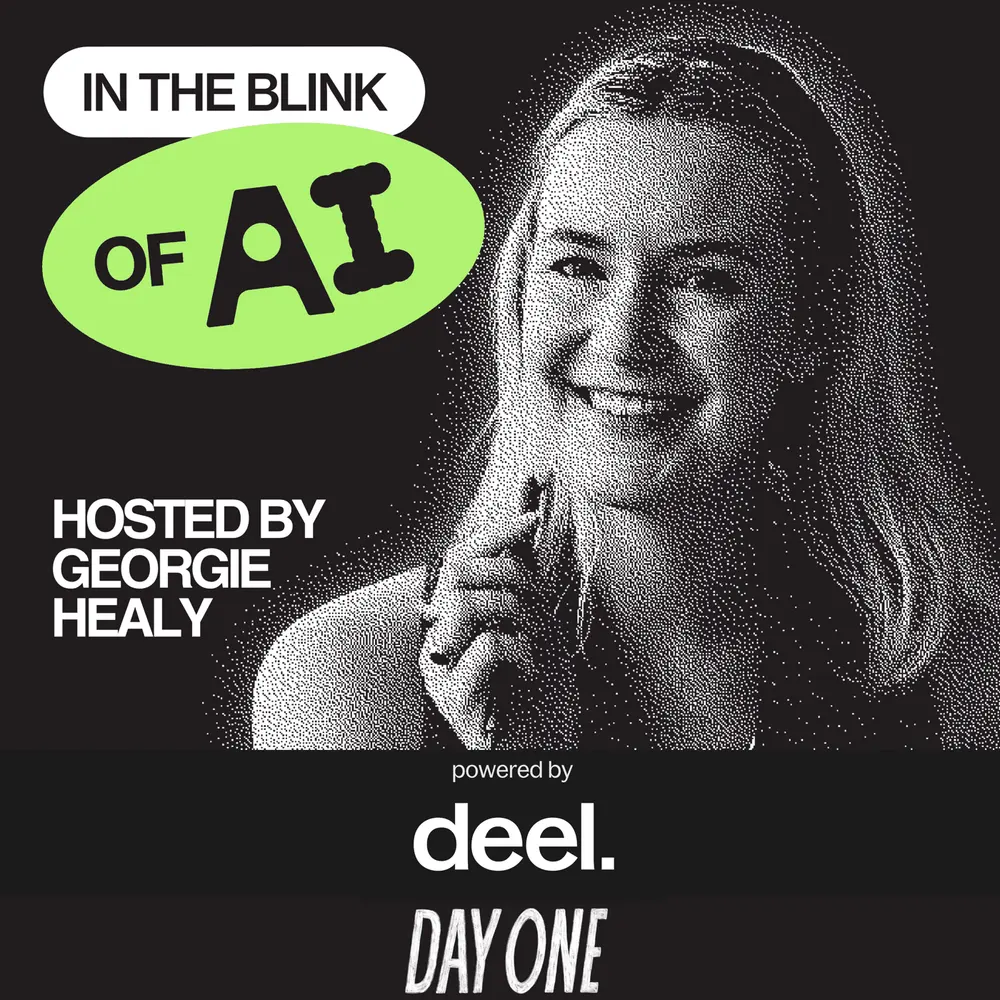 In The Blink Of AI with Georgie Healy
Presented by Deel & Stripe
In The Blink Of AI with Georgie Healy
Presented by Deel & Stripe 

 ▶
▶  ▶
▶  ▶
▶  ▶
▶  ▶
▶ ▶
▶ ▶
▶