Transcript Synced · select any line to jump ▾ 0:02 Speaker: Founders scale faster on Deel. 0:04 Speaker: Set up payroll for any country in minutes. Hire anyone anywhere. Get visas handled fast and get back to building. 0:12 Speaker: Visit deel.com/dayone. That's d-e-e-l.com/dayone. 0:22 Brennan O'Donnell: One of our biggest pieces of advice is focus, really. Like, don't try to do too many markets at once. 0:29 Speaker: Yeah, what you focus on grows, right? If the CEO doesn't focus on it, it's not going to grow. Do they have to move there though? 0:35 Speaker: I don't think of Australia as a very relationship-driven place, but then in America's eyes, we're such a relationship-driven place, like cliquey, hard to break in, you have to build relationship bottom. You see it? 0:46 Speaker: I see it, yeah. 0:47 Speaker: Also the lunches. I didn't ever realize how unusual our obsession with lunches. 0:53 Brennan O'Donnell: Wait, what's the lunch obsession? I don't know why I don't know this. 0:56 Speaker: Okay, 3, 2, 1. 1:00 Speaker: Hey, I'm Cheryl. 1:01 Speaker: I'm Maxine. This is First Check, part of Day One. 1:03 Speaker: The network dedicated to founders, operators, and investors. 1:06 Speaker: If you wanna be a better early-stage investor, this is the show for you. 1:09 Speaker: So TL;DR, if you don't wanna suck at investing, listen up. Okay, I'm super excited for our next speaker. I don't actually know him personally, but you keep getting amazing overseas investors to come on our podcast. So like, how did you get Brendan to come? 1:29 Speaker: So I know his partner William, who is an amazing investor. William was one of the founders of Frontline VC, and Brennan is his partner. Brennan looks after international expansion for Frontline. So what Frontline does is they are 100% focused on helping EU and UK companies expand from the UK and the EU into the US. So actually very similar to what we do on this side of the Pacific, uh, and kind of focus on that expansion. And as they did that a lot, they started to realize actually a lot of companies come back the other way around Series B. So what Brennan has spent his entire career doing is doing international expansion, helping companies expand internationally. And now he does it as a fund manager alongside the Frontline team based out of the San Francisco office where I am coming from today. And just is a wealth of knowledge, right? Has like done that hop over the Atlantic and a few other seas many, many times over. So we thought we would get him on to talk about international expansion generally, how to do it, how to think about it, and then nuances market to market and just generally pick his brain. He also is a growth investor and we haven't had an update on growth investing for a while. Christina Fire was the last one that gave us kind of TL;DR what's going on in the growth stage. So thought a lot has changed in that world over the last little while. So keen to have him on. 2:50 Speaker: I hope a lot has changed in that world. Like we, we're in for a tough time ahead if it's as dreary as it sounded last time we had Christina talking about it. 3:01 Speaker: 100%. I think it has, at least from my vantage point, it has. 3:04 Speaker: I think so. 3:05 Speaker: We will know. We will know very soon after Brennan gives us the lowdown. Yeah, let's find out. 3:10 Speaker: You're listening to a Day One FM show. 3:13 Speaker: Brennan, welcome. We are so excited to have you on First Check today. I have so many questions for you. I apologize in advance for the rapid fire you are about to get from us, but thank you so much for joining us. 3:27 Brennan O'Donnell: Of course. Thanks for having me. Looking forward to it. 3:30 Speaker: So we ask everyone the same question, uh, at the beginning of our chats, which is, what is the first thing that you ever invested in? 3:37 Brennan O'Donnell: I'll give it two different answers, two different ways. The easy one is kind of what was the first actual investment, um, I, I made, which was an angel investment in, uh, a company called Mode Analytics, uh, founded by Derek Steer. It was, uh, the BI team and analytics team that we had at Yammer. And at the time they kind of recognized that there weren't products in that space and they had to build all of these things internally. And so after we exited Yammer to Microsoft, he spun up Boat Analytics and they were just acquired last year by, by ThoughtSpot. I thought the more interesting answer was like the very first investment and being a little more creative. I grew up in Texas. And I was kind of on the edge of the countryside or whatever, very big yards. And so when I was younger, I said I was going to start a lawn mowing business. And my father was an entrepreneur, so he wanted me to kind of build entrepreneurial mindset. And he charged me for the gas and the use of all of our equipment and stuff like that. So I kind of had to bootstrap even though it was small, but I had to put some investment into getting that off the ground when I was probably 12 or something or whatever it was. Uh, it was a great question cuz it made me try to think back on something that was a little bit more interesting. 4:50 Speaker: Oh, I love that. I love that. Also, I mean, I lived in Texas for a little while. Uh, mowing lawns in Texas is not for the faint of heart. Like it is not cold out in those. 5:00 Brennan O'Donnell: Oh yeah. This is, this is a riding mower. Like this was not, you know, a push mower situation. You know, the, the yards were multiple, multiple acres. So it was a, it was a pretty big deal. 5:09 Speaker: I love it. How long did you run that business out of interest? 5:11 Speaker: Is there even grass in Texas? 5:13 Brennan O'Donnell: Gra— What? 5:15 Speaker: Like, I just think of Texas as like this hot, dry, red dirt place. 5:20 Brennan O'Donnell: No, it's so— 'Cause it's so big. 5:22 Speaker: I think a lot of people think Australia is like that. 5:25 Brennan O'Donnell: Yeah, I was just gonna say the same thing. It's— No, but it's so big. Like, you have so many, you know, I think it takes like 14 hours to drive across the state or something like that. So you have a wide range of topography and everything. There's definitely like desert-type places, but— 5:38 Speaker: Fair, fair. 5:39 Brennan O'Donnell: No, where I was, there was plenty of grass. 5:40 Speaker: Lots of grass. Got it. Plenty of grass. It definitely gets really hot though. 5:45 Brennan O'Donnell: This is true. Inhuman. Yeah. 5:47 Speaker: My partner, when we lived there, we lived quite close to a Home Depot and he really didn't like the lack of walkability in Austin where we were. And so he made a point one afternoon, he was building a fence and he went to Home Depot and bought a bunch of 2x4s and carried them back to our place, which was like, you know, a kilometer walk in the 40-degree heat. And I was like, this is why Australians have the international reputation that we do. Like, why would you do that? A bunch of Texans driving past in their trucks with this unhinged Australian carrying 2x4s. 6:19 Speaker: Was he wearing shoes at least? In my mind, just like, yeah. Okay. Like flip-flops. 6:24 Speaker: Yeah. Yeah. They were flip-flops. Oh man. Yeah. That's pretty stereotypical. Yeah. Yeah. Very bad. Um, well, I love that. I think that is such a great business to have started and kudos to you for buying lots. 6:38 Speaker: Thanks. 6:39 Speaker: Lawrence in Texas, although you've come a long way since then. 6:42 Speaker: Yes. 6:42 Speaker: You have done international expansion for some really incredible companies over your operating career, and now you're a partner at Frontline. I'd love if you can maybe just give us a little bit of a kind of TL;DR on what are you seeing out there at growth stage? 'Cause obviously that is the stage that you support companies do international expansion most effectively. Can you, 'cause for a lot of folks, right? Most of us are spending time at the earliest, earliest stages, and I know venture changes a little bit up there where you are. So I wonder if you can kind of give us the 101, what's happening at Growth at the moment? 7:12 Brennan O'Donnell: Yeah, it's interesting. And I'm glad, you know, one of the funny things, so I was an operator for 20 years before getting into venture and, um, it still, it, it still baffles me how people sort of talk about venture as it's like one single asset class and they usually default, they're thinking about like the very early stages, but it's like 4 or 5 depending on how you want to break it down and they're all totally different. 7:32 Speaker: It could be like 100 depending on how you want to break it down. 7:35 Brennan O'Donnell: It depends on how you want to slice it. Yeah. But it's like all the dynamics of like portfolio construction through what's going on in the market to all these like, you have to narrow in and say, okay, what's happening at this stage? Because it's just not— it's different. But, um, so I'd say, you know, so our growth fund, um, for context, we— and I'm sure we can kind of talk about Frontline overall— but, uh, our growth fund, uh, invests in Series B to Series D. So that's sort of what I'm thinking of when I think of growth. Two or three thoughts that I'd summarize what's happening at the moment. One, it's still very much a bifurcated market. I think it's been that way, um, where, you know, if something's hot or it's not hot is sort of the bifurcation that's generally AI-driven, but not necessarily. Um, and so, you know, you kind of have that applied to everything, whether it's, you know, the competitiveness of the round or the valuation or, you know, you name it, right? But it's still kind of this sort of dumbbell thing that's happening. Um, what I will say is that over the last 9 to 12 months, what we've seen is it's definitely more active at growth stage. There was like an 18 to 12, 24-month period there where it was just— quiet, like the right thing to do, you had to be very disciplined and kind of not make investments because the best companies had raised a lot of capital and, uh, you know, valuations were kind of correcting and that was working its way through, through the system and stuff. Um, so it's much more active. The last year we've been incredibly active, still kind of like a dumbbell, you know, hot or not deal. And then the other interesting thing that really excites me now is Because obviously the biggest platform evolution is happening with AI and everything that comes with it, we wouldn't really invest in the infrastructure layer. That's kind of just not where we play. But the application layer companies were all just really, really early. They're just not too early for us to make an investment. You couldn't really determine who the category leader is or anything like that. So we were focused on sort of the middle, like the enablement spots. So companies like MosaicML, which we invested in and was acquired by Databricks. RoboFlow is another great one. They're one of the largest platforms and communities for building out computer vision. And so we were kind of focused on that. Now in the last kind of 6 months, a lot of the application layer companies are maturing, and that's what's driving a lot of the activity. And that's, that's really exciting because we knew that was going to happen, but we just kind of had to wait for that to play itself out. So for example, this is more of a, I guess it's a little bit more of the, in the middle, but like we just invested in LangChain, which was really exciting. They announced around last week, but everything that we're talking, everybody we're talking to now are our application companies. 10:11 Speaker: That's super exciting. Actually, just that in itself is super interesting, right? Because as you said, like when we last had a conversation about growth on this podcast, it was 2, maybe a year and a half ago, right? And none of these companies were anywhere close to Series B scale. Firms like yours wouldn't even— 10:29 Speaker: A bunch of them didn't even exist. Yeah. 10:33 Brennan O'Donnell: Great companies. They just, they, you just had to wait for them to get to that level of maturity, right? It just wasn't a growth stage investment. Yeah. The, you know, the other interesting thing, what I will say on the slightly, so that's really exciting. Like, you know, we're entering this period, which should be, you know, hopefully lasts for years and some of the investment investing years at, you know, all stages, but now growth. Um, one thing we do still see though that's challenging to navigate is, you know, a lot of companies are getting to like just really, really impressive revenue numbers very, very quickly. But when you dig in, um, that can be highly concentrated to like one or two customers. And that's not a knock on the company because fantastic for them for having that, you know, sort of development, you know, uh, customer and partner and scaling it tremendously, but it's kind of hard to say, okay, is this, you know, does this, is this repeatable? Um, and then the other thing is a lot of them have grown so quickly that, um, you know, the durability is, is still kind of unproven, you know, you haven't hit like a full series of renewals and, and, you know, what does the churn look like? And so there's still kind of, you know, it's still challenging, I guess, in terms of making the decisions. 11:44 Speaker: Super interesting. Have you noticed any themes or milestones that are distinguishing the two sides of this barbell? Where does the top side of the barbell actually kick in? Revenue scale, can you give us a sense of the kinds of companies, obviously anonymize, that revenue scale, traction scale, churn metrics, those kinds of things, especially at the app layer, I'm hearing churn in particular is an interesting one, right? Like distinguishing between, as you said, enduring revenue and like AI tourists. 12:15 Brennan O'Donnell: Yeah, I wish there was a simple pattern, you know, like VCs like to pattern match, right? And I wish there was like an easy answer. The reality is it's kind of this like what gets the heat. And now growth, you know, growth and revenue are going to be the key drivers. But I, you know, I still see people get really excited valuation kind of gets inflated around a company that you wouldn't necessarily— they're not doing bad, but it's not like there's some number that's magic number where it's off the charts. Generally, it's tied to revenue and growth, but we also have seen great companies that are much more reasonable in terms of their valuation. So it's— yeah, I wish there was more of a pattern. 12:59 Speaker: Right. It's so tough. 13:01 Brennan O'Donnell: If you figure out what it is, let me know. 13:04 Speaker: Yeah. Yeah. I, it is, I actually heard on the grapevine that the founder of Revolut is doing like algo venture investing. So he's just like metrics-based investing for growth stage and the fund is performing like incredibly well. And I was like, what are those metrics? No, he will never tell. I'll take to his grave. 13:27 Speaker: Yeah. Where's your, share your benchmarks. Yeah. 13:30 Brennan O'Donnell: Have either of you heard any specific sort of benchmarks or anything when it comes to this? 13:35 Speaker: No, we, I mean, 'cause we play so early, right? Like we do pre-seed and so we've just had our first Series A markup in the portfolio. So you guys are at like an altitude above where we would get to spend time, which is so sad for us. Are there benchmarks that you generally index off for when a company is in an in a decent stage that you'll start looking at it, right? Are there like revenue milestones where you're like, before that's super hard to even start to think about durability of revenue? Are there like growth metrics below which you're like, it's really hard for you to put a round away? Or is it completely kind of situation dependent? 14:15 Brennan O'Donnell: Yeah, well, I guess, you know, it might be helpful to like give a little bit of context on where we invest and what we focus on. Um, because, because it's, because it's connected, right? 14:25 Speaker: So That would be wonderful, yeah. 14:27 Brennan O'Donnell: Frontline has been around since 2012. Our focus is transatlantic expansion and investing in companies that have globally ambitious founders. And so what does that actually mean? That translates into two different sister funds that we're always investing out of. So in Europe, we invest at the earliest stages, seed predominantly, sometimes it's pre-seed. We invest all across Europe and we focus on two things, helping those companies raise their Series A. We have a very successful track record in that and then helping them expand into the US, which we think they should do early. Companies coming out of Europe should expand into the US much earlier. And then the growth fund, which I co-lead, and we spun up that in 2019. So we're now investing on the second growth fund, and there we invest in US companies at Series B to Series D, and we're a strategic investor. So we don't lead rounds. Our check size is usually about $5 to $7 million. We don't take board seats, but we do one thing that nobody else does. We help those companies expand into Europe., and we're the only fund that has that strategy. So it's, so it's quite unique. But, um, but that focus on the European expansion, um, is really relevant to the, to the, to the question you asked, right? Because then it's like, so what are, what are we looking for? A lot of what we look for, um, are similar to kind of any growth stage investor, right? Um, where you're looking for category leading businesses and we kind of focus on the product and the market. We focus on the CEO and the team. Um, and kind of the maturity of the business. We focus obviously on the business performance and the financials, whether it's Series B or Series C, that's usually the first time where you're now raising off of the business performance as opposed to kind of like, have I turned over certain product milestones? And then what is the exit that we can expect and the risks associated with that? So we don't hold into public markets, very, very long being a growth stage investor. So we want to see line of sight into kind of a 5x return on the period of time that we might be invested in the company. So those are the things we focus on. In terms of the maturity of the company, it ties to, it ties to the Europe question, like, okay, are we going to be able to, um, help them in a material way, uh, at this point in time? And usually, not a magic number, but I'd say you definitely over $10 million ARR. Lots of times it's more over $20 million ARR to kind of give you a sense, but, you know, it varies. We're seeing a lot of the companies that are, you know, AI native or focusing on selling to developers, you know, they're, they're seeing global customers a lot earlier than they did previously. Um, so it, you know, it depends on the particular business, but it gives you kind of a sense of, you know, where we'd start, start talking to the founders. 17:13 Speaker: Totally. I feel like the bottom end of that revenue range has definitely come down a lot as well, right? Like, let's say in the last 4 or 5 years, because it used to be like the bottom of that revenue range was like very squarely within Series A and now it's kind of Series B folks. Like there is that like a repeatability or maturity coming into those businesses early, which is super interesting. 17:37 Speaker: But then at the same time, the line on seed has suddenly, like on a Series A is suddenly now $2 mil AR. So like what, are we just shrinking the Series A bucket? 17:48 Speaker: Yeah. We're just deleting Series A in the middle there. Let's just jump seed to Series B and then just make alphabet soup on the way up. 17:57 Brennan O'Donnell: Like I said, the other thing you're seeing is like, you know, it used to be probably a little bit easier to say this amount of revenue was Series A and this amount of revenue is kind of what you needed to get Series B, et cetera. But it's— these companies are growing so quickly, they're monetizing so quickly now that, again, the AI-focused ones, um, It'll probably become a little bit clearer over time, like what those new numbers are, but I just think they're in flux. So it's hard to just look at that in itself. 18:25 Speaker: 100%. I also think that they're like, as exactly as you said, it used to be a little bit more repeatable, especially when everyone was just doing like B2B SaaS. But actually that's not really what we're doing anymore as an ecosystem. There's such variability in the businesses that the guidance I often give founders, which I think is infuriating. I think it's like the equivalent of when lawyers, you pay a lawyer like $1,000 an hour and their advice is, it depends. And you're like, that's not an answer. That's Googleable. 18:52 Speaker: Yeah. 18:54 Speaker: It really is about the de-risk stages of the business. And you have to kind of be like first principles driven on like, have you proven out with sufficient data that the, you've de-risked, right? You have a product, the market wants it. That you can repeatedly sell it to them, that you can scale that repeatability, that that revenue has durability. Like those are the questions that investors are actually answering for themselves. And we've kind of moving further away from these heuristics, which is frustrating if you are a founder, 'cause there's not like a clear milestone. But also in other ways, I think it's probably more liberating if you're a founder 'cause there's nothing more infuriating than like, you know, you're a consumer business that's built $2 million in revenue. Yeah. And that equates to 500,000 users and it's like extremely repeatable and verifiable and you are being compared to a, you know, B2B SaaS application with like 2 customers and they've got 2 million in revenue and you're like, those are not the same. Like that's not the same thing between those two, you know. 19:52 Brennan O'Donnell: It depends is the answer. 19:55 Speaker: Yeah. The more niche companies, 'cause the reality is that those, like people are getting to those metrics without having the durability or the repeatability now. 20:04 Speaker: So true. 20:04 Speaker: And at our stage of investing, we have so many conversations. And when I say our, I mean the Maxine stage of investing, we have more conversations around like, yeah, they're growing revenue really fast, but like, is this gonna plateau? Like, can they sustain this? And you know, I think that's kind of a, a growth stage question, right? I'm kind of like, well, I'm making the bet. 20:24 Brennan O'Donnell: Yeah. I think the risk that you mentioned, I see, is actually like a really good way to think about it in pra— if I think in practice when we're having this conversation internally, right? Like, do we want bringing this company to IC or whatever. Um, it is more like what type of risk has been turned over? Like, have they moved from founder-led sales to actually like establish that the team is selling and it's repeatable? And I put $1 in and I get $1 out. And like, those are more of the things we think about as opposed to like, okay, it's at 20 million ARR because they're not necessarily, they don't always like line up. And, um, for us, the risk we want to take is the scaling risk because our thought with the European expansion. So like to put some numbers behind it. You know, at the time of IPO, companies have 30, 35% of revenues coming from Europe, right? But organically, most software businesses get to like 8 to 12% without doing anything. So you don't, you don't drive, you know, that additional kind of 20, 25% of revenue without successfully going into Europe. Never mind the rest of the, the rest of the world. Like Navant is one of our portfolio companies that they just, um, Went public. And so the, the numbers are out there now, but like they have, you know, over 40% of their revenue is, is international. But we think of it as we de-risk that by us investing and helping those founders expand successfully and capture that revenue. That's the risk we're taking because we know we're going to help them execute that. If it's before that and they haven't kind of successfully proven that they've got a repeatable go-to-market in the US, is that kind of, you know, maybe we just need to wait. That's not kind of the risk we're, we're designed to take cuz we're pretty highly concentrated fund as well. 22:02 Speaker: So wait, when you show up, are you like, you show up and you're like, hey, you've got 8 to 10% of the, uh, of your sales is coming from Europe already. We're gonna help you scale that from 8 to 10 to 25. That's like, and we've got the playbook for doing that. 22:20 Brennan O'Donnell: Can be, yeah. I mean, that's part of the pitch. I mean, every business is different in terms of like when, whether there's, what amount of revenue they're seeing from Europe. And we oftentimes are talking to founders way before they get there, but it's a little bit of a rule of thumb of like, okay, once I get past that 10 million, or sorry, that 10% of my revenue's coming from Europe, like now I should start thinking about when do I expand? There's other things, but that's like the beginning of the conversation. And they might not expand for another 12 months or something, or 18 months, but that's kind of like a good barometer starting point of like, that just happens organically. You get early adopters kind of in any software market from all over the world. 22:59 Speaker: Very cool. Learned something new. So as you are, so you make an investment, right? You're supporting these companies. Out of interest, how many companies do you invest in over the course of the year? Because generally at growth stage, right, we expect more concentrated portfolios than we do 30 out of our early stage funds. 23:16 Brennan O'Donnell: Yeah, our seed fund is similar, like 30 and above, right? Uh, growth stage, we're closer to 15. So, uh, depends on, uh, so yeah, highly, highly concentrated. 23:24 Speaker: Okay. 23:25 Brennan O'Donnell: Um, so that, you know, it— our, our investment periods are 4 years. We've extended this last one because, like I said, the, uh, you know, there's such a, um, such sort of a quiet period at growth stage there for a bit. So, you know, that ends up being, let's call it, like 2 to 4. A year depending on, you know, depending on what's going on. 23:44 Speaker: For sure. And that's a much more hands-on model, right? Like, 'cause the other thing that thinking about investing at this stage, it's much less, it's still got portfolio theory applied, i.e., you're taking, you are spreading your risk across a couple of companies, but you're also operationally much more involved, right? If you're gonna make good on that kind of value proposition of come to us at 10%, we'll help you to get to 25 to 30. How do you end up working with founders when when you invest in them? 24:08 Brennan O'Donnell: Yeah, we do work really closely with them, particularly for a period of time. So it depends, right? It's always the answer. It depends, but you know, it depends. 24:19 Speaker: The theme word for today. 24:21 Brennan O'Donnell: It's kind of, yeah, I have a bad feeling that's going to be the theme. Each company just sort of, one, you know, what's their, are they horizontal? Are they vertical? Are they selling to SMBs? Are they selling to enterprise? How much experience does the founder have? Are they second-time founder, first-time founder? So have they gone through international expansion before. How, uh, what about their leadership team? You know, does their leadership team have experience, um, going international? Because what's interesting is when we're talking to them and we're talking about Europe, it's actually the first step where they're becoming a global company. So it's easy to just think about, oh, we're expanding into Europe, but it's really the first time they're like now not just thinking about the US. And a lot of different things, um, have to just change the way they're thinking. Some are intuitive and some are non-intuitive, but the, um, the simple 4 buckets that everything kind of ultimately fits into is the timing decision. I'm happy to go in any of these, but it's the timing decision. There's a lot of things around go-to-market and go-to-market decisions, market prioritization, for example, and it's market sequencing. Talent or design is the third one. So both on the ground. So for example, in Europe, we run the community for the top kind of 200 GMs and VPs of EMEA for all the tech companies, we do regular events with them. So, we kind of have a lot of kind of talent networks and then there's also talent things at headquarters. And then location is the last one. So, you could imagine there's dozens of different ways that we work with the founders and their teams in each of those buckets, but everything tends to kind of fall on one of those 4 buckets. 25:50 Speaker: Super interesting. I will take you up on the offer to double-click on every single one of those. Yeah. 25:57 Speaker: Like, do you have a playbook for each one? 25:59 Brennan O'Donnell: It depends, Cheryl. Sorry, which did you want to like go through each of them a little bit? I'm happy to do that, yeah. 26:13 Speaker: Let's go through number 1. The first one is kind of timing, right? How do you think about timing? Is it that like 10% revenue pull piece or is there something else you think about for timing? 26:23 Brennan O'Donnell: Yeah, there's a few different things. So like, you know, is your business humming in the US go-to-market? Like I said before, Do you see the draw, like the pull from the market? That's kind of the 10% thing. What's the maturity level of your executive team? You know, do you have a strong enough executive team? Everyone always has a few gaps or hires they're looking to scale up or whatever, but you know, do you have a solid team? This is not really relevant anymore, but one that used to be really important is like, are you prepared to invest? Like, do you have the capital to like make this successful? You know, because you under— invest, it's going to fail. So you have to be prepared to make that investment. And then one or two of the biggest ones, I guess they're connected, but it has to be a CEO priority. The CEO has to make it a company priority. It can't just be something you delegate and you think it's going to be, it's all going to work itself out. I hire a GM and I don't have to think about it. And this isn't forever, but there's kind of a, let's call it 18 to 24 month period where it has to be a priority for the company if you want it to be successful. So those are the things around timing. I think that needs to be the mentality. But the interesting thing that's also shifted from when we first started doing this is it used to be the case that timing was really about, like the mistake with timing was don't make the mistake of going too early before you had all these things kind of ready to go. The European startup ecosystem is really robust. I mean, you guys would know this, right? It's not what it was back in the days of, you know, Rocket Internet and stuff where there's all these copycat companies. Like there are fantastic founders, you know, the flywheel. Yeah. Is, um, is accelerating. Um, and it gets, you know, sort of gets a bad rap lots of times from, from Americans, but like there's a really, really strong European ecosystem. What that translates to is the timing decision is now more about threading the needle. So not only don't go too early before you're kind of prepared, the things we just talked about, don't wait too late because if you wait too late, you know, there's going to be a fantastic founder in France or in Ireland or wherever, and, um, You know, they're going to build that business locally and it's going to be much harder to capture that, you know, 30% revenue that we talked about. 28:29 Speaker: Super interesting. I would love the capitalization one. You said like that isn't really as relevant anymore. I'd love to double-click there. Is it not really as relevant because these companies are raising so much money that like capitalization isn't a question or it costs less to expand? Can you say more about that? 28:46 Brennan O'Donnell: You nailed it, right? That's exactly what you said. So, you know, we all know that like these funds have,— you know, so many funds have raised so much capital, and so, you know, everybody at Gross States tends to know who the best-performing companies are, and so they have no problem raising capital and raising a lot of it. Uh, I think there's still an element that, like, being prepared to use it and, you know, put it towards expansion— so that's still a question. Um, but, uh, but yeah, that's exactly— it's like, generally, that's not, you know, that's not a problem because they're well-capitalized businesses. 29:18 Speaker: And then you said there as well, it needs to be a CEO priority. I'm really interested to understand why CEO focus actually is a variable that matters here, because often at our stage, we really think about early expansion being relevant because of the nature of the DNA that gets kind of built into, cultural DNA that gets built into the organization, so super early in the journey. I'm intrigued out of curiosity, like, is that why it matters for the CEOs to be focused on this or is it something else? Like, why does it matter that it is in the CEO focus for this to increase in success? 29:58 Brennan O'Donnell: Is it the culture? Yeah. The reason is because, so the CEO doesn't need to project manage, right? That's not what I'm suggesting. Like oftentimes, like there, you know, whether it's the CRO or the CFO,, or sometimes a head of international that gets hired. Like a lot of the day-to-day won't be the CEO, but ultimately it's a full company initiative. Like I said, you can't, you can't understate the, like, it's a third or more of your revenue ultimately. So like, where are you going to fail? You, yeah, you can, the biggest fail, failure isn't really about like spending the money and have to like restart. It's time. It's, it's not moving quick enough and like potentially losing versus your competition, which could be local or it could be another US company trying to and expand, right? And so anything that has that materiality for business should be a CEO-level kind of priority. But the reality is, it's like a lot of the decisions that are made and a lot of the execution will happen across the different teams, and it needs to be a priority for those people. And if it's not a priority of the company, it's not a priority of the CEO, it's not going to be a priority of the CRO or of the chief product officer or of people within their organizations that are maybe making a decision on a day-to-day basis, should I spend 5 hours of my day on this thing for the US or should I spend 5 hours of my day on this thing to make the Europe successful? It just has to be built into like, that's the DNA. It's a company priority and it's a big initiative. And ultimately, that comes from the CEO, right? And tiebreakers and things have to be driven by the CEO. Culture is an element of it, but I think that's really the biggest thing is if you want to be successful, it's got to be a company-wide initiative and everyone needs to know it's one. Yeah. Of the big things that you're doing. 31:39 Speaker: Yeah, what you focus on grows, right? If the CEO doesn't focus on it, it's not gonna grow. Do they have to move there though? Like, I think we always have that debate of like, no, you don't, it's, it's not something they have to like, yeah, CEO doesn't have to move there for it to be a focus. 31:54 Brennan O'Donnell: No, not in the, no, not in the case of Europe. Now, you know, if we were talking about, um, if we were talking about a company coming from Australia to the US, or we were talking about a company coming from Europe to the US, then them moving. Definitely is something to consider. I mean, you see that all the time, but for US companies expanding into Europe, no, they definitely don't. 32:15 Speaker: Super interesting. Why do you think it's different? Is it because like US is, I mean, in your math before, right? At IPO, they're 30 to 40% of the revenue. They're not 60 to 70% of the revenue. So the CEO— 32:30 Brennan O'Donnell: The US is still going to be over 50%, right? So Yeah. 32:35 Speaker: Yeah. Yeah. So it makes sense. You have to move there. 32:38 Brennan O'Donnell: And I mean, like I said, we advise our early stage companies to come to the US much earlier, you know, not Series B or C, but we, you know, we recommend they kind of come Series A or Series B. And, um, not only is it the largest, you know, software market in the world, it's, you know, where the best growth stage and beyond investors are. It's, you know, the ecosystem of founders is, is the strongest. I mean, we all know that sort of story, right? So the CEO, I think, if you, again, it comes back to like, if you're globally ambitious and want what, in whatever market you're in, you want to be the category leader globally in technology, then the US and either Bay Area or New York or whatever is probably the best place for the core leadership team to be. 33:31 Speaker: 100%. Yeah, I feel like the market is getting a little bit more convicted about this every single week, or it feels to me, right? We went through this period of like, oh, you can build great companies everywhere. And then now we seem to be going back to being like, oh, actually if you're building AI app level or infrastructure, you can't build it anywhere. You need to come and spend a material amount of time in the US, not necessarily be here 100% of the time, right? But a good chunk of your year needs to be here. 33:57 Brennan O'Donnell: Yeah. And it's not exclusive, right? Like it, I'm not saying it absolutely, you, you, there, there are great examples where there's founders in different parts of the US or different parts of the world or whatever. It's just sort of like the probability and the density and, you know, it's a, there's, you know, it's so disproportionately skewed the other way. So. 34:16 Speaker: That makes sense. 100%. Yeah. And then you mentioned a really interesting thing, which I know, like the Australian ecosystem I'm definitely starting to see it here and it sounds like you're starting to see it in Europe, but increasingly the pace at which a company starts to build in the US and that there is a highly credible, excellent team that is building the same idea for their geo, like the time dislocation between those two things is getting smaller and smaller. Right. And so— 34:44 Brennan O'Donnell: Do you mean Sergio? Do you mean like— 34:47 Speaker: Yeah. Like essentially there are great operators now in the European ecosystem and in the US ecosystem. And they are seeing earlier, they're in the information flows, they're hearing about these early stage companies, or even they're building their way to that same aha moment. And they're, you know, we're not talking about one company is started one year and then 4 or 5 years later the next company is started. We're talking like there's months between the two. 35:12 Speaker: Not like the Rocket Internet back in the day where they followed like what, 2 years, 3 years later. This is like same time everyone's discovering the same kind of challenge. 35:23 Speaker: Exactly. Exactly. Like, and so I'm interested from your side as you are thinking about like international expansion, like how do you think about strong domestic competitors when you're thinking about the second pillar here, which is like market choice and you're thinking about international expansion, choosing your next market and choosing your market sequencing. How do you think about strong domestic homegrown competitors and how to compete against them. 35:49 Brennan O'Donnell: And when you say domestic, how much do you mean, like European competitors, or do you mean— 35:52 Speaker: yeah, yeah, European competitors. 35:55 Brennan O'Donnell: I mean, I think for— well, what's interesting is for us, this is what— this is one of the reasons why when we started the growth fund, we did it within the Frontline umbrella, because there's a huge advantage to, as a firm, being, you know, investing in the early stages and seeing what's happening all across. So, you know, that ends up being very, very helpful insight and information, as you can imagine, to the founders we work with on the growth team, right? So, so, so that's actually quite, quite deliberate. It probably is mostly kind of that, like, don't wait too late moment. We've had a couple situations, various, you know, companies, you know, that they were quite interested in acquisition. So, you know, where there's companies in Europe, it wasn't the means to expand per se, but it was the means to sort of accelerate and like an acquihire type thing and going, hey, where, you know, maybe we can get some more affordable M&A to rapidly scale our team, either on the tech side or the go-to-market side, usually it's like product and tech side. And what companies, you know, are you seeing in Europe that have fantastic teams, but for whatever reason kind of, you know, aren't getting the traction they anticipated. So we've worked with some portfolio companies on that. initiative. But I think it's mostly intel. Sorry, there's not a better answer there, but it's mostly just being able to give guidance to the founders coming out of the US around, okay, you've got a bit of time because I know you see these logos, but the reality is you're 3 years ahead of them and it's okay. Or like, okay, you need to pay attention to this and maybe accelerate your investment into the European market because such and such company is really taking off. So it ends up being, I think that is sort of the practical answer. 37:40 Speaker: Yeah, super interesting. Because I also, I mean, I imagine that the landing and acquiring, I know speaking for the Australian ecosystem, which is obviously quite different here, 30% of revenue is not coming from Australia at the point of IPO. I know that there are a number of really excellent operators where their strategy is just like build ahead of companies expanding into the Australian ecosystem and then essentially like assume that you'll be acquired on that journey by the company expanding in. But I've never actually paid attention to like how effective is that strategy? Like how frequently do those expanding companies actually buy their way into markets? Or is that actually an aged concept? Do most people come in and just compete their way into markets? 38:27 Brennan O'Donnell: It's mostly the latter. I mean, there are some exceptions, but I'd say usually it's compete their way in. Now, the interesting thing, and it's almost always go-to-market. I mean, that's so much of this conversation is around that, but it's because usually it's not a sort of technology-driven expansion. That does happen for the biggest companies. It happens a bit later. So like Vanta is a great example where they're now, you know, they're putting a lot of their kind of product and engineering talent in, uh, the UK focused on, you know, aspects of compliance and regulation, stuff like that, because like the, because, you know, the European markets have been driving a lot of it. Um, so those sorts of things happen. That doesn't tend to be like the initial landing. What I will say that's unique and interesting is that in the last couple years, we've seen another model. So AI-driven, but particularly when the customer base are developers. and like open source, again, kind of, LangChain's a good example here, but there's a lot of other examples where playbook used to be just kind of go-to-market sales driven and there's different playbooks, but like, okay, you know, it's go-to-market and that's what you're kind of expanding with. With these, you know, PLG and developer products, oftentimes the starting point is more like a developer relations person or marketing go in, foster and build that community in the local market before you bring in your go-to-market team. Because that's kind of the motion that got you successful in the first place, right? And doing like kind of almost like a community-driven thing initially first has been a new one that we've seen. But again, it's driven more by like, think about who is the customer and how is that customer acquired because of the nature of the product, et cetera. So that's been kind of an interesting— 40:11 Speaker: That makes sense though. Like that's super interesting, but when you say it like that, it like, that makes sense if they built a community around their go-to market. Like if their go-to market has been around building community, why wouldn't they do that in the next place? But I have to wonder if like cultural differences then play into that. Like you come and you're like, hey, I'm gonna build a community around, uh, you know, the developers locally. And they're like, oh, I don't know. You're kind of like, surely there's cultural things that, that play into make that a little bit more challenging. How do you, how do you handle that? 40:40 Brennan O'Donnell: Oftentimes I think developers, like they will bond and have more similarities over the technology problem and the fact that they're developers. 40:49 Speaker: Okay. 40:50 Brennan O'Donnell: And so that sort of outweighs the cultural differences. And when we see this, it is, you know, it's those kind of, those products where that ends up being a good model. Like a typical, like, I don't know, let's say you were, uh, you know, some, some sort of a vertical software application, even if it was AI, but you were selling to marketers, like you're not going to go in and like do community events necessarily as like your first you know, first thing with that kind of community. So there you'd probably have, you know, more traditional differences around culture and things like that. But developers, we, I don't know, we don't tend to see that kind of come up, I think. 41:25 Speaker: That's so interesting. It must be like the stack rank of identities is like, I'm a developer first, then I'm French, then I'm, you know, whatever else you are, you know. 41:33 Brennan O'Donnell: I've never asked anybody, I've never kind of explicitly thought about this or asked, but like, that's, you know, that's kind of the intuitive, We might have to ask some people how and see. Yeah. 41:42 Speaker: Would make sense. Yeah, I think that's probably right. That's so fascinating. And so, we have only got through the first of these pillars. Actually, we might not get all through the other three. I'm interested on the next piece, market selection and then market expansion, which I think maybe was two of those pillars together. How do you think about choosing which of the markets to go into. 42:06 Brennan O'Donnell: Yeah, it's all go-to-market. There's two things, and I can kind of loop location in here a little bit. We purposely always refer to location last because there's a tendency for everybody to just be like, "Okay, where are you going to go?" And that should be a consequence of all the other decisions. The reality is that 97% of companies— We've done a bunch of research studies on the expansions of companies over the last 15, 20 years. And so we've got a lot of numbers behind this stuff. But I think it's like 97% of US companies initially go to one of three cities. It's either London, Dublin, or Amsterdam, and it's predominantly London and Dublin as their starting point. One of our biggest pieces of advice is just focus really. Don't try to do too many markets at once. That inevitably almost always is the UK and Ireland collectively because at the intersection of size of the prize and ease and speed, those are the markets that have a very, very large TAM and are most similar to the US. There's still localization things you have to do, but they're the most similar. And then after that, you kind of get into the Nordics, but they're small smaller markets, but similarities. And then you kind of think about like the next set of big markets, but that require more kind of customization and so like Germany and France, and then you get into kind of the remainder of the Western European markets. And so that tends to be like the flow that most companies go through. There's again, definitely exceptions, but usually that's kind of the sequencing. But the main thing is where we see, we have this conversation Not every single company I've worked with, but so many where they're like, okay, we're going to go to like 12 markets all at once. And we're like, timeout. That's not like, that's not going to work. That's the biggest mistake that people make. 44:02 Speaker: Super interesting. Is that like universally true? Is it one of those things that if you're like a practitioner at this space, it's like immediate red flag if someone is like, I am coming from, for 9 markets all at once. And like, here's my plan to do 9 at once. You're like, run, not, not, don't do that. 44:18 Brennan O'Donnell: Yeah. And I'll tell you why we've got this, um, we've got this concept we call success amnesia. Um, which is basically by the time we're talking to a company and, you know, you think about European expansion, things are working like they're working really, really well in the US, but it might have taken you, I mean, even with these really quick growing companies that we're talking about, it still might have taken you a few years to get to that point in time where you found product market fit, you figured out your go-to-market motion, it's repeatable, et cetera. And it's really, really easy to forget like all the things you had to do and all the trial and error that you had to go through to like build up that knowledge. And you take it and you go, great, now we've got it all figured out. We're just going to like take it in to Europe. And, you know, first of all, it's like 40 different markets, you know, 40 different countries. Oh, it's not one country. And you really have to validate like everything. So whether it's— what are some examples? Like whether it's like the marketing channels that are working for you, you know, okay, maybe those work in the UK or Germany, but maybe they don't. Maybe it's slightly different and you need to kind of figure that out. Another really good one is, is actually metrics. Like if you think back to when you're first building a sales team, like when you guys advise, when you're advising your companies and they're just starting to figure out go-to-market. Do you ever say, okay, here's the ARR revenue target you should give, you should have when you're a seed or a Series A company? No, you say go get your first 5 customers and they pay you whatever they want to, whatever they pay you. And then you'll start to figure out how to get the next 5 and figure out your pricing, all that sort of stuff. So people will go into Europe and they'll say, okay, your team has a quota of 1 million. I was Why, where did that come from? Like you haven't figured anything out yet. So instead of like optimizing for revenue, you should optimize for learning, I think, as you go into those new markets and that validation. So there's no way you can do that at 10 markets at one time. Now, once you kind of figure out, let's say like the UK and Ireland, for example, then you can maybe unlock more than one at a time. Absolutely. Um, and you can do this, doesn't mean you have to move slow, by the way, you can move really, really quickly, but you need to kind of have that mentality, because if you try to do too many things at once, it's, it's not gonna be successful. 46:21 Speaker: That's super interesting. I don't know. 46:24 Speaker: I think I do, we do see VCs in our world at least putting metrics like, come back to me when you're at this amount, or you need to get to this amount of ARR. Like I, I hear VCs say that all the time here. 46:36 Speaker: Yeah. I think what I'm learning is like, we probably shouldn't do that. Right? 46:39 Speaker: That's what I just heard. 46:41 Speaker: Like it is complete, like a completely arbitrary hurdle. 46:44 Brennan O'Donnell: Well, but I just meant, is it the first thing, right? Like when they're building the product and they haven't yet monetized at all, not a single paying customer, at that point in time, is the first thing you do give them a revenue target? 46:55 Speaker: It shouldn't be, but I've definitely heard it done. 46:57 Speaker: I think the answer is no, right? Like I think it is, I think you wouldn't, it shouldn't be. 47:02 Brennan O'Donnell: No. 47:02 Speaker: Especially in Australia, the number of VCs I hear just like university being like, I will not write you a Series A check unless you get to a million in revenue is staggering and you're like, what? That makes no sense. It makes no sense. 47:14 Brennan O'Donnell: Like there's nothing wrong with that mentality, right? Because that's sort of like, okay, what are the benchmark, what are the milestones I need to get to in terms of monetization in order to get, you know, my next fundraise off the ground? Like that's perfectly reasonable. But like if you're optimizing for that as opposed to optimizing, like do I have product market fit and is the customer, do I know who my customer is and are they willing to buy the thing and can I do that repeatedly? Like that's where you have to start before you can ever kind of think about getting to the revenue target. 47:44 Speaker: 100%. 47:44 Brennan O'Donnell: And I think most companies, even if they're getting that feedback on revenue targets, I think most of them do think that way, right? Initially. But the point is you can forget that by the time you're going into new countries and forget that like you kind of have to, you know, rewind a little bit and, and hopefully, and this time you can usually do it much, much faster than before, but you have to, you know, at least validate that the same methods work. 48:12 Speaker: Does it ever happen? And like, is it common that the go-to-market motion that they build for, say, the US is substantially different than the go-to-market motion for Europe? Like, what is the variation between markets and go-to-market motions? Are they actually like variations on a theme and like, it's like they should start like what's working for them in the US and then like iterate from there? Or actually is there like, you know, a company where they have like a strong community-led go-to-market motion in the US, and then in Germany it's like a robust enterprise outbound motion. Like, does that ever happen, or is it like your variations on a theme? 48:50 Brennan O'Donnell: Yeah, it does, it does tend to generally be the same, right? But then like the, like the big things are usually the same, but the, um, but maybe the tactics and techniques are a little bit different. The one that's actually the most different as you go into different markets is how relationship-driven the sale is, and as a consequence, how long is the sales cycle and what type of person do you need driving that sort of sale? So an ACV, when you get into Italy and Spain and those countries, those are much more relationship-driven sales. And so the sales cycle can look much more like an enterprise sales cycle, and you need a person who can run that sort of sales cycle, even if, you know, you're comparing it to the UK or the US, you're like, oh, this is like a mid-market deal. Um, and so that tends to be very different. Interestingly, um, we see that in Australia all the time as well. 49:46 Speaker: Oh yeah, I heard this. 49:48 Brennan O'Donnell: So a lot of Americans are like, oh, we're gonna go to Australia, time zone overlap with the West Coast, speak English, huge landmass, so they assume it's a big market. And don't appreciate one, it's actually like, you know, two major markets and I know there's others, but like, you know, it's, it doesn't, the market size doesn't reflect the landmass size and it's more relationship driven as a sale relative to the ACV historically. I don't know if that's changing. You guys can tell me if that's changing, but historically that's been the case. Right. So, which is interesting. So that, that's probably the biggest difference that we see is like knowing how buyers— it's a cultural thing, right? But like how they buy and then how that varies from country to country. 50:32 Speaker: Yeah, super interesting. Yeah, I've heard this about Australia. I don't think of Australia as a very relationship-driven place, but then like in America's eyes, like, we're such a relationship-driven place, like clicky, hard to break in, like you have to like build relationship bottom. You see it? I see it. Yeah. I mean, yeah, just like— 50:48 Speaker: You've seen that? 50:49 Speaker: Also the lunches. I didn't ever realize is how unusual our obsession with lunches is. But now through the eyes of American— 50:58 Brennan O'Donnell: Wait, what's the lunch obsession? I don't know why I don't know this. 51:01 Speaker: So for sales, especially go-to-market— 51:06 Speaker: Lunch, you got to take me out to lunch first. 51:09 Speaker: Yeah, they love long lunches. They do a lot of long lunches. And I didn't realize until someone pointed out and I was like, oh no, that's right. Yeah. People like— 51:16 Brennan O'Donnell: Are these long boozy lunches? Is that the— 51:18 Speaker: like you gotta, you gotta wine and dine me, but it happens to be a lunch where I get like, yeah, fairly sloshed. It's, it's great. I, please never take that culture away. 51:28 Speaker: I mean, like, especially for America, like the idea that you put this crater in the middle of your day via a lunch, you know, like starts at 12 and like ends at 3 is just like, why would anyone do that? And Australians are like, because we live the slow cooker vita. 51:44 Speaker: 'Cause have you ever gone to a long lunch, Maxine? They're fun. 51:47 Speaker: I, sure. Yeah, they are. They're fun. They're fun. I don't really drink, so I miss the boozy bit. 51:52 Speaker: I just think that you really get to know someone over that period of time, like afternoon in the sun. 51:58 Brennan O'Donnell: What I was gonna say is, is that the same for investing? Like when you're trying to win a competitive deal, do you have to take the founder out for like a long lunch or something? Or is this just related to software sales? 52:07 Speaker: Uh, I think there's a, no, there's an element, like you see the of the big VCs like flying to wherever the founder is and spending the day with them. And they'll tell you that that helps win the deal. So like there's an element of that. I'm sure there was lunch involved in that day. 52:23 Speaker: Interesting. Yeah, maybe that's a stage thing. Maybe Brendan McHugh came and started, uh, wanting to work for some of the best Australian founders. You might have to fly to them and take them out to lunch, but at pre-seed, ain't nobody got time for that. 52:35 Brennan O'Donnell: No lunches at pre-seed. 52:37 Speaker: Okay. There you go. It's so big. No one's taking anyone out for lunch. 52:42 Speaker: Okay. So I realize we didn't get to the other pillars. We might have to take a rain check, uh, on that cuz we are at time, unfortunately. 52:50 Speaker: I love it. It's like a tease. We'll get Brennan back on. Drum roll for the other two pillars. 52:57 Speaker: Well, yeah, maybe we'll, we'll get you back on. We'll get another Paul's on the growth stage in, in another, another year's time. Time, and maybe your pillars have changed then. 53:05 Brennan O'Donnell: Yeah, happy to do it. 53:07 Speaker: But we always ask the same question at the end of each podcast of all of our guests, and that is, what is a moment in your life so far where you have felt the most brave, your big cojones moment? 53:19 Brennan O'Donnell: Let's see, I was working in Chicago in 2003 for a small investment consulting firm, and I'd gotten— I'd I had studied all things technology in university and wanted to get into technology, but that just didn't pan out initially as my first job. And a friend of mine, actually Dan O'Connell, who's now the CEO of Front, a good friend of mine, started working at Google. And Google was a couple hundred people. And it was the early 2000s, so everyone was still kind of— Yeah. Licking their wounds from the dot-com bust. And so unless you were senior or you were an engineer, a lot of people were getting hired temporary. And so you didn't initially have a full-time job. So anyways, I did, and remarkably, I have no idea how I got to do this, but I did all my interviews over the phone, didn't meet anybody in person, got offered a job. I put all my stuff in public storage in Chicago. I moved out here to the Bay Area. I lived out of Dan's parents' a spare room and a rented car. And a couple months later, the temporary job turned into a full-time job. And yeah, so that was kind of the biggest bet on yourself moment that I had. 54:40 Speaker: And you've been here ever since? Have you been in the— I mean, I actually know you've had some stints all over the world doing go-to-market, but has the Bay Area been home for you since then? 54:48 Brennan O'Donnell: No, a year later I did it a second time. So we were just starting to expand. This is how— this is— we didn't get to talk about the genesis of the fund, but so we were just starting to expand Google internationally and I got tapped to go help set up our European headquarters, which was in Dublin. And they're like, "There's only one catch. You need to be there in 3 weeks." So I put all my stuff in public storage a second time, for the second time in a year, got on a plane with 2 duffel bags and moved to Dublin and I didn't end up moving back for 7 years. Oh, well, I live in London and Dublin, but what was 6 months turned into, turned into 7 years. 55:24 Speaker: Wow. I just— practical question: did you leave your stuff in public storage in both Chicago and the Bay Area? So, asking for a friend, because my stuff wasn't— 55:34 Brennan O'Donnell: It was like one of those pod things, you know, those like— I was in my early 20s, I didn't have that much stuff. But, um, no, I brought— I did bring— I, I did bring that to, to California when when the Google job became a permanent job. When I went to Europe, I put everything in storage here. When I eventually moved back, I was married and my wife was pregnant with our first child. Everything stayed in storage for another 3 or 4 years because I didn't have time to get it out. When I eventually got it out, the most interesting thing that I got out of there was— this is going to date me, but it was one of those yellow sports Sony cassette Walkmans. 56:15 Speaker: I had one of those. Oh my God, amazing. 56:18 Brennan O'Donnell: Yeah, they're fantastic. They're classics. But what was wild is like I had this moment where I was like cleaning out the public storage stuff and I had this, I was like, I listened to everything on Spotify now. But when I put this in here, I obviously thought it was gonna be something to keep. It was relevant, it was still being used. So it just was like, I wasn't expecting to be gone for, for that long, but it was a great experience. 56:39 Speaker: Yeah. Wow. It's like a time capsule. 56:41 Speaker: At that point, do you just scrap the whole bin? Like, yeah, I'm out. 56:46 Brennan O'Donnell: Most of it, yeah, most of it ended up in the bin, but there was a few gems like that, yeah. 56:52 Speaker: Incredible. I hope you still have that Sony Walkman. Brendan, thank you so, so much for joining us. This has been incredibly educational. I love the drum roll. We will be definitely getting you back for those last two pillars. I am on the edge of my seat to know. 57:05 Speaker: Absolutely. 57:08 Brennan O'Donnell: Thanks so much for having me. 57:09 Speaker: We appreciate it. Thank you so much.

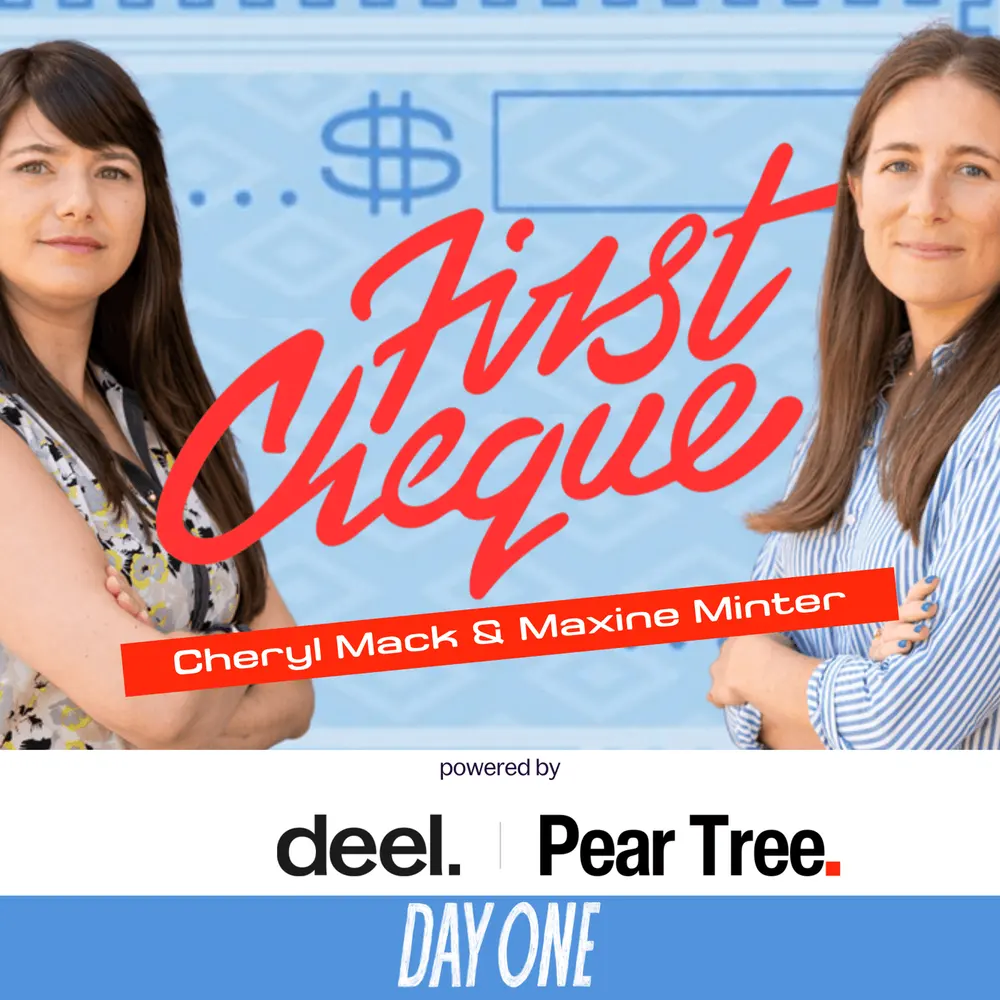 First Cheque with Cheryl Mack & Maxine Minter
Presented by Deel & Pear Tree
First Cheque with Cheryl Mack & Maxine Minter
Presented by Deel & Pear Tree 



 ▶
▶ ▶
▶ ▶
▶