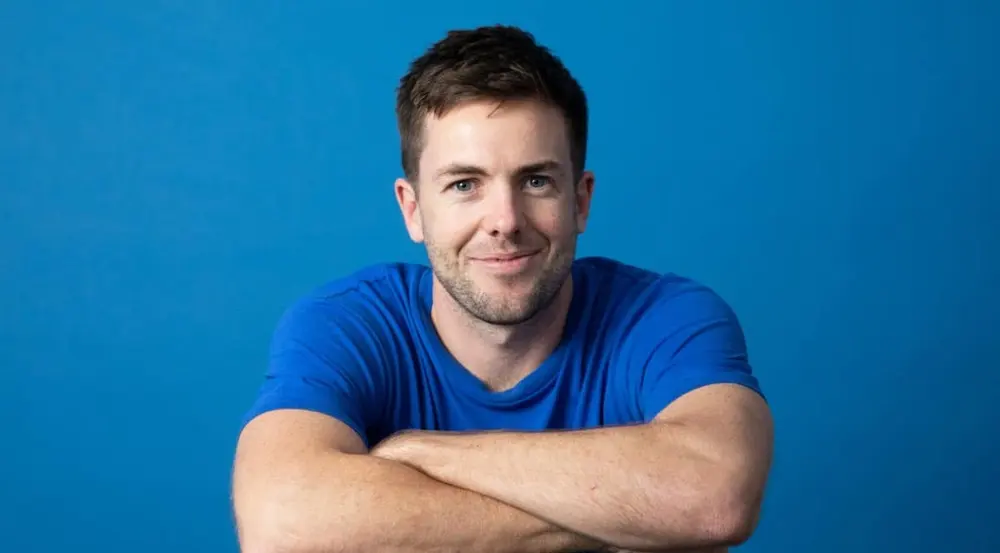
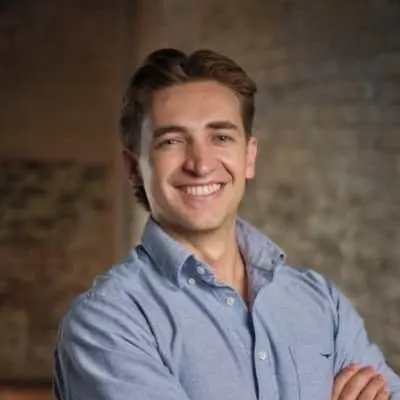
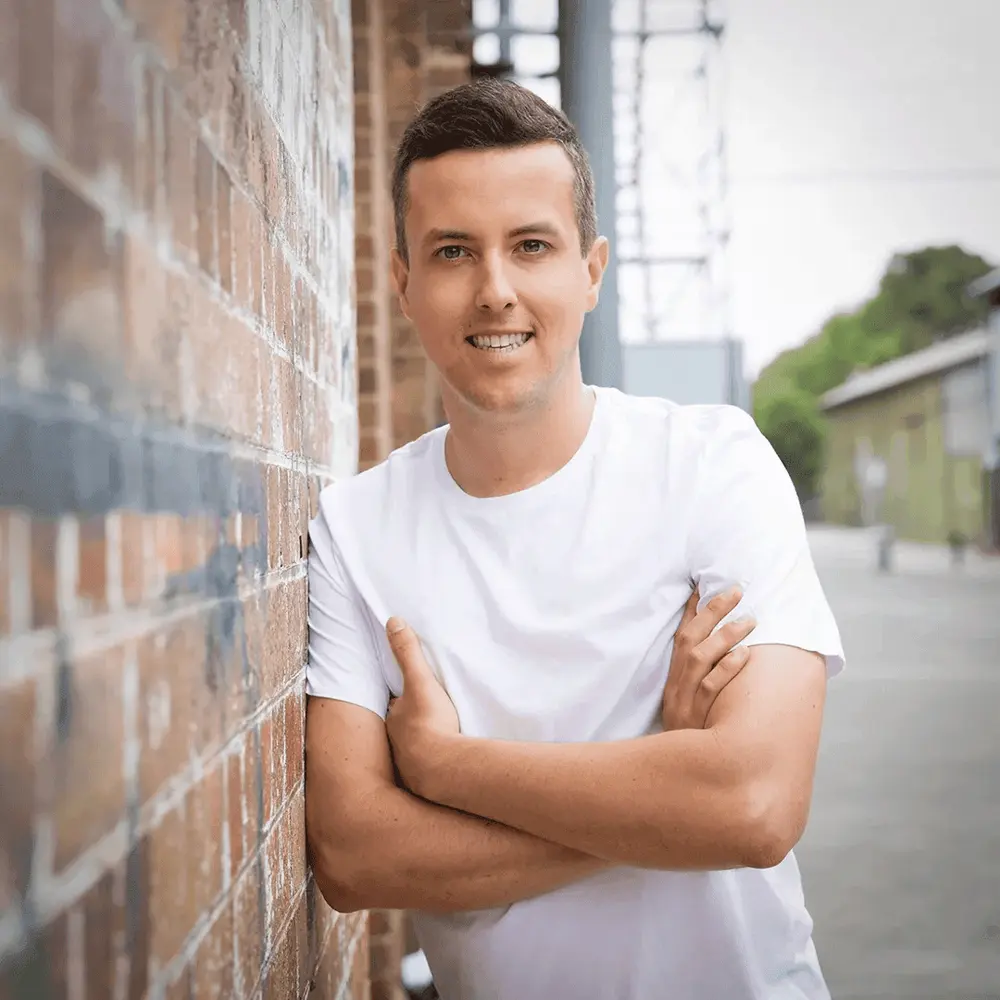
Transcript Synced · select any line to jump ▾ 0:00 Brendan Hill: I mean, what does your vision of the future look like in 10 years in terms of robotics? 0:03 Speaker: I see it as almost inevitable. We will be always in the presence of a robot in the same way that we are currently always in the presence of like a mobile device. 0:09 Michael Irwin: Right now we can hand it over to someone who's never flown a drone or never controlled a robot, and they can task a team of autonomous systems to do some really complex stuff. 0:18 Charlie Gearside: Is the long tail of jobs such that humanoid robots are the only solution? 0:24 Michael Irwin: Like, how do you filter people? What is your method to say this? This is a great person to join my team. 0:28 Speaker: I followed a similar bias in what I experienced at Eucalyptus, which was, you know, brilliant and pragmatic people are better than very, very tenured and experienced people a lot of the time. The more difficult and more ambitious the problem, the easier it is to get great talent. 0:40 Michael Irwin: A really weird thing we had going on where we had all these robots out there talking to each other over the radio. Some trucker would get on and talk to them as well. 0:47 Charlie Gearside: In natural language or their own machine language? 0:49 Michael Irwin: Oh yeah, no, they're all talking to each other, move to this position. Some trucker gets on there, "The bloody hell are you talking about?" Talking to your fleet manager. Sorry, I don't understand that. 1:00 Speaker: Come on. 1:00 Charlie Gearside: That's how conspiracy theories start. 1:04 Brendan Hill: What's up, founders and investors? Welcome to another episode of the Oversubscribed podcast, Australia's greatest startup hang. I'm Brendan Hill, angel investor and venture partner at 1013, coming to you live from a sold-out Instant Studios right in the heart of deep, deep Surry Hills, the capital of founders and investors in Australia. And today I have another 3 amazing guests on the pod. I have Michael Irwin from Breaker. He's building robots that act like humans. Joe Harris from Alloy. He's accelerating the world's path to autonomy by helping you train your physical world AI model. And a very special guest to end us off, the first ever repeat guest on the Oversubscribed podcast, Australia's fastest growing YouTuber. He's a ratings magnet. That's one of the reasons why he's back. Co-founder of Eucalyptus, and he's now helping Australia think bigger and start being the best at stuff again. Charlie Gearside, welcome back. 2:08 Charlie Gearside: Thank you. I feel quite underqualified sitting next to these guys right here. 2:12 Speaker: Looking down on us from the young rich list. 2:16 Brendan Hill: Well, I think it's a good place to start. Like you are trying to encourage Australians to build more stuff and we're sort of going into the frontier today, I guess you could say. I'd say is one of the main things that I like about angel investing. You get to peek around the corner at what is coming. And I think Michael and Joe, I think Charlie, you'd agree they're building stuff that the industries are on the frontier, maybe even building into industries that don't exist yet. 2:42 Charlie Gearside: Yeah, I reckon these guys are doing the hardest stuff, some of the hardest stuff in Australia right now. Maybe it's up there, maybe it's not quantum computing, but it's pretty bloody hard. Very impressed already. 2:56 Brendan Hill: Yeah, yeah. So mate, would love to hear the founding stories of Breaker First and Alloy and would love to hear your comments as well, Charlie, on why building hard things is important to Australians. 3:08 Michael Irwin: Yeah, awesome. Well, on that point, I might just say that I feel like all the easy problems are solved. I hate to say it. I think there's only hard problems left. But yeah, Breaker, we, There's 3 co-founders. We were all working as robotics and machine learning engineers. And we were looking at the level of autonomy that was being developed by all these companies. And it just didn't really align with our view of what robots should look like in the future. And admittedly, that view is R2-D2. That's what I think robots should be. So a robot that you can work with without needing any massive ground support station or it understands what you want to do. You can trust it to actually complete a task. So yeah, there's just no one was really solving that problem. And with the advances in transformer architecture, there was the like the key bit of technology had finally been unlocked that could actually deliver that level of autonomy. So yeah, we started Breaker and been going now for 2 years and yeah, we've kind of got the first R2-D2 kind of bit of tech working on some drones now, which is great. 4:34 Speaker: Yeah. 4:35 Brendan Hill: But give us an example of that. Like if you can pull that up, D-Lake as well, we can see some of your tech on the screen now. So I know we went, for a great tour. Thank you very much. Of Breaker at the Australian Technology Park. And it's literally like talking to R2-D2, as you said, right? Natural language to the robot and they speak back or communicate back in natural. 4:57 Michael Irwin: Yeah, exactly. And I think the main thing is that what we want to try and deliver is rather than having operator command, like you have a bunch of robots and you say, all right, this robot, go to this place, look in that direction. We want you to give operator intent. So we don't want you to think about what robots you even have or what capabilities they have. We just want you to provide your intent to that team and just say, you know, I want this thing done. And the onboard agents on each of those platforms work out how to do that. They work out what resources they have, what capabilities they have, and what the best way to execute that is. And for us, what that looks like is the system is just insanely easy to use. You need zero training to work with a full team of robots. So right now we can hand it over to someone who's never flown a drone or never controlled a robot, and they can task a team of autonomous systems to do some really complex stuff. 5:58 Brendan Hill: Can you give us an example? I think one that you mentioned, fly up to 100 feet, look for a white sedan in a 3-kilometre radius. 6:06 Michael Irwin: Yeah, yeah. Like if you think of like a security task, like let's say a security officer and he's got a whole lot of drones with them says, you know, I'm a little bit concerned about this area. Can you just go and check that nothing's happening in that area? Or, you know, can you just monitor this road and make sure that, you know, this thing doesn't happen on that road? Or, you know, if you've got another robot that you're working with and you just want something done and you just provide that intent. So the first kind of, the first industry we're going after is actually defence. It's a very mature user of robotic platforms. And in that scenario, like these kind of commands are really relevant. Like, I, can you monitor this area or look for this thing? You know, I'm worried about this in this place and that's all you have to say to it. And it looks after that task. 6:57 Brendan Hill: Before we get back to the conversation, I want to tell you about the sponsor who made today possible, Vanta. As a startup founder, you're juggling multiple priorities, from the expected, like finding product-market fit, to the unexpected, like customer requests for SOC 2 ISO 27001 certification. But achieving compliance is time-consuming, and time spent on it is time away from needs of the business. That's where Vanta comes in. 7:27 Charlie Gearside: Hi. 7:27 Brendan Hill: Vanta is the all-in-one solution for startups to become compliant quickly and build a security foundation with ease. With a combination of automation, an extensive partner network, and a security marketplace, Vanta provides the necessary tools and expertise for startups to achieve compliance seamlessly, no matter how urgent your needs are. And at every phase of growth. Over 10,000 leading companies, just like the ones who have been on the Oversubscribed podcast, like Everlab, Relevance AI, Instant, Alloy, and Atlassian, trust Vanta to automate their compliance so they can focus on growing their startup. Startup customers get $1,000 off at vanta.com/oversubscribed. 8:19 Charlie Gearside: Hey Michael, I want to understand how hard this is because I've heard the reason why we don't have an Alexa or an Apple Home version of LLMs is because it's so hard to get the probabilistic aspect of LLMs to integrate with the deterministic aspects of objectives. 8:39 Michael Irwin: Yeah. 8:40 Charlie Gearside: How have you guys progressed on that? 8:42 Michael Irwin: Yeah, this is a great question. I mean, the most difficult thing is that, right? Especially with using machine learning for decision-making, there is always, you have a probabilistic error. So if you have it on a robot that's making thousands of decisions every minute, you have an enormous chance of incorrect decisions being made. So that's kind of Breaker's secret sauce is the leveraging a small LLM, so an SLM, to manipulate a decision-making system. So you have a very dynamic decision-making system, but we kind of, we split it into two parts. So we have what we call fast decision-making and slow decision-making. Slow decision-making is manipulating the decision-making algorithms that do the fast decision-making. So we can put great checks in, make sure it's very reliable when it does manipulate those. But the fast decisions are made algorithmically, so they're deterministic. 9:39 Speaker: But the expectations of your users is going to be that the tolerance level is like 99.9999%, right? 9:47 Michael Irwin: Oh, 100%. 9:48 Speaker: Similar to SaaS when you're like, oh, my uptime is 4 nines. It's like, that's going to be the kind of conversation that's going to happen at these SLAs. 9:53 Michael Irwin: Totally. And the way we've kind of dealt with it now is by pushing back on the user. So yeah, failing gracefully is the biggest challenge. And what we do right now is like Okay, if you've asked it for something like let's say you send a drone out, it tells you about a car that you were looking for and you ask it, what's the number plate on that car? Can't detect the number plates. The system falls back. It says, look, I can't detect that, but here's a video so that you can see it. So that's kind of how we're dealing with it right now. 10:23 Charlie Gearside: At least it's honest. Yeah. 10:23 Speaker: No zone of incapabilities. 10:25 Michael Irwin: Yeah, it has to be honest. 10:27 Speaker: I think that's the— None of this hallucination of, oh, you're exactly right. Here's a made-up fact. 10:32 Michael Irwin: Yes, exactly. 10:33 Brendan Hill: Yeah. 10:34 Charlie Gearside: And it's almost like, you know, deaths, road accidents and what, how low that's gonna get with self-driving cars, right? It's like people don't understand that the robot's ability to make a lot more decisions a lot faster can counteract the fact that maybe a good chunk of them will be wrong, right? 10:53 Michael Irwin: Yeah, totally. 10:55 Speaker: Yeah. 10:55 Michael Irwin: And I mean, I think the other really difficult thing about what we are doing is we want it all on the edge. So we want to put all of this decision-making onto the edge. And it kind of goes with our view of what autonomy should be. You know, wherever you have the intelligence, you have to send the information to that place where the intelligence sits right now. If you are— if your intelligence is on an OpenAI server in LA, you got to send all that video data, telemetry data, everything to that server in LA. 11:26 Brendan Hill: Yeah. 11:26 Michael Irwin: And I mean, like when I think of us eventually having robots in our homes, like a Figure kind of robot in our home, I'd much prefer that that happens on the edge and on the device. And you have all of that locally happening where you can kind of see it and you know where it's happening. 11:45 Charlie Gearside: So for privacy reasons kind of thing or? 11:46 Michael Irwin: Yeah, privacy. I mean, in defense, the edge computing has a lot of benefits because it lets you deal with electronic warfare and a lot of low bandwidth communication, all of that kind of stuff. 11:56 Brendan Hill: But jamming essentially, right? 11:58 Speaker: You can't guarantee that you're going to have a network connection. 100%. 12:02 Michael Irwin: But we're starting in this industry and we plan to spread to commercial robotics as well. And it just kind of aligns on what our view of commercial robotics should be, which is, yeah, for privacy, you have a robot in your home, you know that that robot— 12:17 Charlie Gearside: Is your robot. It's your robot. 12:19 Michael Irwin: It's doing what you want and it's all happening in your house. Yeah. 12:23 Charlie Gearside: And does that save on compute costs as well? Is that the nice little side effect? 12:26 Michael Irwin: That's actually the secret agenda. No, no. I mean, it's way more difficult to do. The level of, I mean, the easiest, it's so much easier to just have a massive LLM sitting on a server somewhere. The complexities of putting all of that intelligence onto the edge. I've actually got the piece of compute. That's what we're targeting at the moment. 12:51 Speaker: That's very Steve Jobs. I have it here. 12:55 Michael Irwin: Just wait for the live demo. But yeah, I mean, like, we can put that little piece of compute into a lot of robots, right? Like, it's tiny. So that's kind of like, that's what we have to achieve. 13:08 Brendan Hill: And Joe, Alloy, very excited to hear about this. Congratulations on the fundraising round. Amazing news, amazing cap table, amazing supporters. But on the last episode of the Oversubscribed podcast, Charlie mentioned your in his top 3 people he's ever worked with, which is high praise. Not sure who the other 2 people are. 13:29 Charlie Gearside: No, I thought I was it. 13:30 Speaker: And you've got 3 co-founders in the previous business. 13:34 Michael Irwin: I was going to say, who's one of the 3? 13:37 Speaker: Someone got relegated. Someone got relegated. Well, he didn't say I'm not top. He said I'm top 3. 13:42 Charlie Gearside: Top 3. 13:43 Michael Irwin: Oh, could be. 13:43 Speaker: I see. I'm in the running. I'm in the running. 13:45 Brendan Hill: Perfect. Super excited to dive into Alloy. I know you've been building for almost a year now. You know, you're very highly regarded in the Australian startup ecosystem. So mate, please tell us more about Alloy. 13:58 Speaker: That's very kind. And Charlie did name his first son after me. So that's also high praise. 14:05 Charlie Gearside: Yeah, I just can't get enough of this guy. My wife is seriously concerned. 14:09 Speaker: Look, I think I've been told, I've been assured it's a coincidence, but you know, a name's a name, so. Yeah, so. I left Eucalyptus after 4 years in August of last year. So it's just gone over a year. But at that time, I just knew that it was time for me to go and start my own company, my own journey. And I hadn't exactly locked in what that was going to be at that moment. It was quite a, I guess, a burn the ships moment for me to just ensure that I didn't have a safety net, 'cause Eucalyptus was, and obviously is, an awesome company. And so it felt like I needed to sort of get out of that so that I would force myself to figure out what that next chapter was going to be. But I'm originally, it's like people kind of, I guess, know of Eucalyptus and they know of my work there as sort of growth and marketing a lot of the time. But originally I'm actually an electrical engineer. That's my sort of educational background. And I then worked in Atlassian as a software engineer working on dev tools and the ecosystem and then growth. And that was kind of the segue. 15:10 Brendan Hill: Mm-hmm. 15:11 Speaker: And so really since I've been a small kid, I wanted to work sort of on robotics and space. Those were sort of two areas I think like a lot of little kids was really, really inspiring, but was just not the time to work on that when I was graduating. My opportunities as an electrical engineer included working at Telstra's commercial office and going to work at Downer EDI programming like mining, sort of microcontrollers or working at the railway. And it just didn't excite me in that same way. And so I ended up at Atlassian, which was obviously really exciting at that time, the company to go to. And so when I was leaving Eucalyptus, I sort of knew what the next thing had to be, sort of even more ambitious. It had to make sense that I would leave such an awesome opportunity at Eucalyptus to go do something even bigger. And so I got very— 16:02 Brendan Hill: Yeah. 16:02 Speaker: I guess inspired by the relaunch of reusable rocketry that was going on and Starship and the cost of getting kilos to orbit coming down exponentially. And so it started to feel to me analogous to the Age of Exploration from hundreds of years ago where we first figured out joint stock companies, we were able to figure out the economics of getting a boat of things from one sort of continent to another. And it just led to this multi-hundred year sort of age of, you know, doubling the global GDP and so much opportunity. And that felt like the precipice of what we were on again, but now the economy is $100 trillion instead of 10. And so I was excited, I was getting into it and I was like, okay, well if we're going to space, we're going to be doing industry there. So people like Vardar, people like Fleet Space, they're doing awesome work. Obviously if we're doing that, it felt that the next thing after industry, once you go and you start growing things, you need someone to go and harvest them. And so you would have settlement come after. And so all of this was to say that I felt that if we were to settle in space, we would need a food source. And that led me to indoor farming. Because if we're going to grow it in space, you need controlled environment agriculture. And that was around the same time, if you remember, 2021 and '22, a lot of fundraising for indoor ag. '24, a lot of deaths of those companies. Eviscerate a billion dollars, sort of nothing to kind of keep going with. A lot of them pivoted. But relatively unsuccessful. And I was just super curious as to why. And it just kept coming back to this question of automation. You would think it's the power and the electricity, but the real killer cost was the labor. And they scaled so quickly to these giant footprints that they needed an enormous amount of labor to run the factory because the automation they were attempting to pull off was not at a level of this 99.999% that you would need to make it economically viable. Mm-hmm. And so I spent a lot of time, I spoke to dozens of founders of both these indoor farming companies and people who were working on the automation side of it, some people who perhaps maybe had worked at one of these and gone, "You know what, I'm going to go do the fruit picking arm because we need it," and then maybe been unsuccessful with that after 5 or so years. And a lot of very tough conversations with them about the realistic experience of building that kind of company. But it was also the confluence of LLMs bringing the cost of this edge compute down, the LLMs themselves getting more efficient and smaller and more performant, getting multimodal. There was all of these factors happening at the same time where it felt like, you know what, this might be the moment where we actually can work on robotics for the first time in a material way. And there are plenty of great companies that have built up over the last 10 years, but you're seeing this proliferation of new companies now. And I just realized if I wanted to do this strawberries in space, that I needed to solve the robotics performance and reliability issue, which ultimately came back to the management of the data. Mm-hmm. And getting value out of that data. The telemetry that we were just talking about a second ago, if it's producing many, many, many, many gigabytes of data, sending that, all of it, is like finding a needle in a haystack for the 1% that matters. And for a lot of companies, there's just no reliable way to figure out which 1%. And so that is the problem that Alloy is created to solve, helping those robotics companies figure out which 1% of their data is useful and is valuable and speeding up their rate of iteration so that we can get to that abundant future faster. 19:19 Brendan Hill: Wow. And so what does that look like for the user side? So you have customers, they come to Alloy, they use your, what is it, software or? 19:30 Speaker: Yeah, so our customer group is people who make the robots, someone like a breaker for example, and they produce a lot of multimodal data. And so they would integrate with our platform. We support sort of different kinds of deployments, but that kind of gets into the weeds a bit. For them, the data would flow in, we would give them this orchestration layer. We make it all searchable with natural language, sort of like a search engine for your data. Not just for the images, 'cause when people think of robotics, they think of perception, but a large amount of the data is also these time series, these numerical sort of graphs of things. And that's actually almost just as important, if not more important sometimes, than the vision. 'Cause you may have an issue with one of your actuators, one of your motors, but it won't show up in the camera. The camera looks fine, but the arm is not doing what you expect. And so for a lot of these engineering teams, the toolset is mostly around images and mostly around supporting vision, but there is not a huge amount of support for time series and for text logs and images all as one thing. And so that's why we want to be that first robotics-native data platform, data infrastructure, because historically there maybe just wasn't a big enough TAM. 20:39 Brendan Hill: Mm-hmm. 20:39 Speaker: But the timing of this is really perfect. 20:42 Brendan Hill: Yeah, that's awesome. Sounds like a hard problem to solve. 20:45 Speaker: Lots of fundamental machine learning, lots of fundamental mathematics. The team is a lot of data scientists, data engineering, people with like PhDs in robotics, but also PhD in maths, you know, that kind of style of team. 20:55 Brendan Hill: Yeah, that's awesome. As you know, guys, Vanta are the biggest supporter of the Australian startup ecosystem, and we have cooked up a unique event slate to finish 2025. Founder vs. Investor Panel. Which is the world's fastest growing sport for the fastest growing startups in November in Sydney. And we have 361 Angel Club in Sydney in November, where you can meet 100 investors and 100 founders all on one night. Then to end the year, we have the 1013 Runway Conference in Brisbane on the 27th of November, featuring 500 founders and investors. Simply go to oversubscribedpodcast.com www.takemillions.com/events to find out how you can apply to these events and meet the best founders and investors in Australia. So like, you know, you've got the idea for the company, you've done the fundraise. I guess for both of you guys, like I know Alex Karp from Palantir says, you know, the best engineers look for hard problems. So like how do you spot, you know, that talent and attract these people to solve these hard problems? 22:00 Charlie Gearside: You've got 8 now, right? So you've just, but you've literally just, hide your latest crop of geniuses, right? 22:08 Speaker: That's right, yeah. I mean, it's kind of— you alluded to this before, and I imagine this is a similar experience for Michael— it's actually the more difficult and more ambitious the problem, the easier it is to get great talent. Yeah, it's true. And that was part of sort of the decision-making of like, for myself, I want to do something that's ambitious and interesting, but so do the other, you know, the best people in the industry. That's what they were looking for. And For me, I'm that joining factor of being able to bring the resourcing from the funding and the network to then create an environment where we can go and push the boundaries and do this really interesting work. So I put a post up on LinkedIn just expressing that this is what we're going to do, this general direction, not even the specifics. And we got well over 300 likes on that, which got it in front of many tens of thousands of people. And so all the inbound came from that and then the referrals from those people.. And we've gotten some really excellent hires just off that one post and we're pretty set for now. 23:03 Michael Irwin: Yeah. How do you filter people? What is your method to say this is a great person to join my team? 23:12 Speaker: I followed a similar bias in what I experienced at Eucalyptus, which was brilliant and pragmatic people are better than very, very tenured and experienced people a lot of the time, especially for how changeable the startup environment is. And so I really have built a great team of both experienced people, but also I really lent into passionate people that they're doing side projects, they're shipping things, they're demonstrating that they are a driven person outside of just having stuck it in a job for 10 years or 15 years. 23:42 Michael Irwin: Yeah, yeah. No, I don't think anything beats passion. Like someone that's really passionate about the problem and is excited to actually solve it. 23:48 Brendan Hill: Yeah, I remember when we went to Breaker, very strategic investor move. You book the meeting for 5 PM, come to the office, Meeting went for 2 hours, but it was a Thursday or Friday as well. And legitimately every single person was still there at 7 o'clock. The buzz and the atmosphere, it was pretty crammed. It was like 12, 14 people in there all coding away. You've got the hardware everywhere. It was finding passionate people like that. It's amazing. 24:16 Michael Irwin: Yeah, 100%. People that just enjoy doing the work. 24:19 Speaker: Did you pay them a bonus for that? 24:22 Charlie Gearside: Excellent. 24:23 Speaker: $200 under the table. 24:24 Charlie Gearside: Brandon's coming in. Hey, Michael, what about values alignment, given that you guys, you've, you know, your wedge is defense, but I would say that your aesthetic, um, is quite defense orientated. 24:35 Brendan Hill: Yeah. 24:36 Charlie Gearside: Do you— and obviously some people on face value, I disagree with these people that like reject defense on some like ridiculous moral basis, um, and don't really appreciate where— how freedom is sort of maintained But yeah, have you had any troubles with hiring people that are mission-aligned to defence, or have you found that quite easy in Australia? 25:02 Michael Irwin: Um, look, we haven't found it to be a huge issue, to be honest. Um, I think, I think Ukraine changed a lot of people's perceptions on defence companies. Like, um, you know, when we kind of watched in real time, like, a country that looked quite similar to ours get invaded, um, I think a lot of people kind of had that realization of like, you do actually have to be able to protect yourself. And, you know, there are bad actors in the world that you have to be able to defend yourself from. So I think that changed a lot of people's perception on working in defence. And I mean, for us, like, we, we have, uh, especially, you know, we're obviously building AI in defence, which has a whole like there's a whole nother range of ethical considerations that come alongside that. So like for us, we have very clear company values. We make everyone aware of those company values and we build our product against those. And we're also just very, like very honest with people when we interview them. Like the company has to be a fit for them as much as it is like a fit for us. So yeah, just being, this is exactly what it is. If you're comfortable with this, then, you know, love to have you. 26:17 Charlie Gearside: Yeah, and you probably find people opt in. Like, Joe, I imagine similar thing with like techno optimism and like the oncoming robotic, uh, punk world. 26:26 Speaker: That's definitely a component of it, but I actually think I finished the final interview with an anti-sell because the team is so, it's so early stage in the company's life that I want to, I want them to buy in despite knowing all the warts and all, you know. It's like, this is gonna be hard. There's going to be periods where we're going to have to work quite hard. There's going to be times where we ship something, we have to unship it, delete it, throw it away, start again. Wasted work, wasted time. We have to remain humble and changeable and hear feedback from customers that we might not want to hear. And I want to tell them all that stuff up front, that it's not going to be this kind of late-stage tech scale-up where you just kind of chill, get free lunch, and clock off right away. 27:04 Brendan Hill: Yeah. 27:05 Speaker: That there are places where they can go and do that, and they should if that's what they're looking for.. And I've had that to be, and I've rejected people from big tech because of those factors where it's just felt like for them it's not the right time. It's not that they're not brilliant, I'm still, you know, I think very highly of them, but I just felt that at this stage in the company's life they were just not the right fit. 27:24 Brendan Hill: Yeah, that's a change in the last, I guess, 2 years. So obviously the Trump administration has come in, like Andrew, I know you're a big, uh, lucky, uh, Palmer Luckey fan, uh, Charlie. 27:35 Charlie Gearside: Love the bloke. 27:36 Brendan Hill: Yeah. I know you've got a few of his good shirts as well. I've even got one up here. 27:40 Charlie Gearside: Is that an actual legit Palmer Luckey shirt? 27:44 Brendan Hill: Yeah, he wore it. 27:45 Speaker: He wore it. You can see sweat stains. 27:46 Brendan Hill: That's amazing. 27:47 Michael Irwin: That's crazy. 27:48 Brendan Hill: I got that just for you. But I guess, yeah, how's it changed in the last year? Obviously Andrew, you know, Trey Stephens, Palmer Luckey raising some good capital, attracting good talent, mission-aligned people. Like have you seen, I guess Michael, in the last 2 years a bit of a shift in investor sentiment? 28:03 Michael Irwin: 100%. 28:05 Charlie Gearside: Yeah. 28:06 Michael Irwin: Even in the last year, to be honest, like when, Yeah, when we raised our first round, there were very few VCs that were interested in defence investing, especially for us where we were starting in defence. And yeah, I mean, I think those defence unicorns that came out of the US changed a lot of people's opinions about defence investing. The US is obviously incredibly bullish at the moment on investing in defence companies, and that's kind of, I think that's that's sort of bled across into Australia as well, which is great. 28:37 Brendan Hill: And you've got your co-founder Matt over in the US who's ex-Andrel as well, which must help with investors. 28:43 Michael Irwin: Yeah, no, for sure. So he's, yeah, Matt worked at Andrel before we started Breaker. And yeah, I mean, I think even the, Andrel's an awesome company, like they do really cool stuff. And even some of the connections that we've had from there have been really helpful. So yeah, it's been good. 29:01 Brendan Hill: Mate, what do you love about Palmer Luckey, Charlie? 29:05 Charlie Gearside: Dude, just look at his Twitter feed. He just says whatever. Like, he speaks so much truth, and when he comes back at people, he just like— 29:12 Michael Irwin: He's got a great mullet. 29:14 Charlie Gearside: Yeah, he's got the aesthetic down pat as well, for sure. Yeah, he's a bloke who gives zero fucks, basically. 29:19 Brendan Hill: But you went to— I don't know, you followed him for a while? 29:22 Charlie Gearside: Yeah, it was like he spoke back when they acquired, um, the Australian submarine company, which name escapes me. He was over and he spoke at the pub in the middle of the city. So I got a few closet right-leaning folks from Eucalyptus to sort of, who wants to come and watch Palmer Luckey speak? 29:42 Speaker: You said closet. I thought you meant you were going to raid his closet for shirts. Oh no. 29:46 Charlie Gearside: He's actually, yeah, he's a great speaker. 29:49 Speaker: So that was good. 29:49 Brendan Hill: And I guess the US, obviously a lot of your customers there. How do they, I know you've got Matt over in Austin, is it at the moment? What's the sort of strategic decision behind that? 29:59 Michael Irwin: Yeah, I mean, I think we realised pretty early that if we wanted to build the scale of company that we do want to build, a lot of that effort has to come out of the US. So, you know, it's an unfortunate reality of being in Australia is that if you're competing with US companies, they have access to capital and market that we just don't have here. So we kind of need to, we need to get our foot in to have some of that. And I mean, for us, we'll raise our next round in the US. We'll definitely, I think most of our work will come out of the US and we'll kind of try and cling to stay as much of an Aussie company as we can while that happens. 30:37 Brendan Hill: What about you, Joe? Do you imagine Alloy moving to the US one day or a split team? 30:42 Speaker: Yeah, I mean, we are currently, I would say, working with probably the best robotics companies in Australia. So that's kind of where we've started, go through and try collect them like the Pokémon gym badges. But they've been really instrumental in sort of the early feedback and R&D. But we will obviously hit, you know, we're going to be a venture-backed company. We've raised $4.5 million. That's a substantial wicket. There's going to be expectations that come along with that of the type of scale that we can achieve. I believe very firmly that we will. That's going to require expanding out of Australia and sooner rather than later. I sort of split my time. I go over to the US sort of every couple of months typically around San Francisco, but there's plenty going on in other areas in the US as well. And so part of that is pipeline, building up relationships, just getting more established there. Investors as well. I've noticed even as you mentioned this year, so I raised that round in February of this year and incorporated the company on my birthday in February. And so that's like— 31:42 Michael Irwin: That's a great birthday present. 31:43 Speaker: Yeah, 6 or 7 months ago now. Obviously it was like ideation phase before that, but that was when we really kicked off in earnest, first full-timer in May. And even since then, there has been a really marked shift in VC sentiment in this space. So when I did the rounds on that first check, like robotics broadly was still seen as a highly, highly skeptical, like why now? People have been saying it's coming for 15 years. Why? Is it this time going to be a big deal? And that was the prevailing sentiment of a lot of venture capitalists. And at the time, obviously it was peak agentic LLM focus. That's kind of what your business has to look like to be interesting. But then I'm already starting to see these memos come out of a lot of these big funds that are talking about the enabling layer of robotics and how important that is going to be for this next wave. But Nvidia's been preaching that for for a very long time since February, even big shift. And now it's getting quite a lot of new inbound of like, oh, what are you guys working on? Can we have a chat again? People who were like, oh, we don't really think this is happening now, coming back and being like, well, actually, could we have a chat? Preempting the next round, at least wanting to sort of get the information to decide. 32:57 Brendan Hill: That's awesome. I'm going to ensure you have a good birthday in 2026 as well. 33:01 Speaker: Yeah, well. 33:02 Brendan Hill: I've been angel investing since 2017, made over 80 investments. Many of them through 1013. So 1013 is Australia's largest network of angel investors, and each month we send out a curated list of 1 or 2 deals that you can choose to join in on the journey. These are companies like Everlab and Instant that you've seen on the Oversubscribed podcast, and other companies like Go One, Mr Yum, and Autograb. If you're interested in finding out more about the world of angel investing, I'm happy to jump on a call, share some war stories, and tell you about the exciting companies that we're currently looking at. Simply go to 1013.vc/oversubscribed and you can book a call with me for next week and we can talk about all things startup and angel investing. And what about other differences in the US? Obviously you guys are over there a lot. 33:56 Speaker: Yeah. 33:57 Brendan Hill: Not just on the defence side, but I guess the founder side, like, Do you guys get inspired over there? You're meeting people like Trey Stephens and Palmer Luckey. 34:06 Charlie Gearside: Have you been to El Segundo, is the question? 34:08 Michael Irwin: I haven't. 34:10 Charlie Gearside: So what is this? Yeah, if no one's seen that, I would say get it up, D-Lake, but it would— we'd be looking at a Google Earth, you know, picture. But it's basically a part of LA where I'm pretty sure it was like an industrial backbone of US manufacturing, but it's been taken over by startups basically. I'm pretty sure Andruil's there and like a lot of— 34:28 Speaker: Defense in space, right? 34:29 Charlie Gearside: Defense in space. And yeah, it just looks amazing. Like people just driving around in pickups and they're close to the beach and just like welding shit. 34:41 Speaker: Feels like it would have the opportunity to almost become the Shenzhen of the US, right? 34:46 Charlie Gearside: Totally. 34:46 Speaker: Like how that came from farmlands to industrial metropolis in like a couple, in like one generation. 34:51 Charlie Gearside: That's actually a good point. Like when is Australia getting a special economic zone is the question and where is it going to be? My vote's for Byron Bay. —needs a bit of a— 35:00 Speaker: I feel like that's already a special economic zone. 35:02 Charlie Gearside: Exactly. Bohemian economic zone. Maybe wherever you put your research facility, Michael. 35:12 Michael Irwin: Yeah. 35:12 Charlie Gearside: Barrell, the Southern Highlands. 35:14 Michael Irwin: Barrell, yeah. We've set up in Austin in the States, which I love Austin because it's a bit weird as well. You have self-driving cars and then Texans wearing big hats. It's just the— The mixing of worlds is great there. 35:28 Charlie Gearside: The manosphere of comedians as well. 35:30 Brendan Hill: Oh yeah. 35:30 Charlie Gearside: You know, like Theo Vaughn and Joe Rogan and all that. It kind of like matches, you know. 35:37 Speaker: Like the San Francisco diaspora. Yeah, exactly. 35:39 Brendan Hill: But bringing it back to Australia, Charlie, I know you're working on a new initiative called Build Australia. Like how do we get these certain kind of zones? How do we get, you know, people like Michael and Joe, you know, keeping them here longer, getting bigger technical teams? 35:54 Speaker: Would love to hear about it. Yeah, exactly. 35:55 Charlie Gearside: Yeah, it was like a— it originally started as a tweet. Do you like— do you mind pulling it up? It's not— it's not— yeah, you might have to scroll back a little bit, but, um, it's— if you come up, it was basically— it was a retweet, so it wasn't even— it was stolen valor, basically. But Toby Lutke, um, and a bunch of Canadian— if you go back, if you go back a little bit, there it is. There it is. Yeah. So Patrick Coulson tweeted, cool project, buildcanada.com. Would be cool to have this for Europe and Ireland. So I literally just retweeted that. We need to do a version of this for Australia. Who wants to get involved? And I think they were like, within 24 hours we had 50 or 60 really intelligent and patriotic founders, engineers, designers in a DM thread and soon a WhatsApp group of like, hey, let's actually do this. 36:58 Michael Irwin: That's when it gets serious. 36:59 Charlie Gearside: Yeah, it gets very serious. And I was not planning on— and Pasha, who's been on this pod, is heavily involved in this as well. And we were like, yeah, we weren't— he's got to start up as well in Waikomodo. And he's like, I wasn't planning on doing this, but when you get that many good people in a group, it's like lightning in a bottle. And so we're like, all right. So about 3 or 4 weeks ago, we started building a brand, a sort of like marketing arm of— the idea is to popularize ambition and Australian excellence in industries like what you guys are in. And it's not going to be a think tank, I promise you, but you will be able to buy some awesome merch and just like I don't know, it's almost like the effective acceleration movement with an Australian sort of wink. So yeah, nothing fully built yet, but watch this space really. 37:55 Michael Irwin: Is there anything from Build Canada that you liked or didn't like? What are you pulling from it? 38:02 Charlie Gearside: Yeah, well, I would say they're more of a think tank. 38:05 Michael Irwin: Okay. 38:06 Charlie Gearside: And so what I did like is that they build tools. So they have an outcomes tracker for politicians. If you go into, projects, you can see that they've done a bunch of things. I think they've done a tax calculator to just encourage people to essentially what would an enterprise, your own enterprise look like to encourage people to actually start shit. And they've got another one which is holding politicians to account, a lot more open data stuff. We've come up with our first, we're doing a tool to launch which I won't spoil what it is just yet, but something in this vein that draws attention to the fact that a lot of people think that, you know, when the great Australian thing is when someone says, oh, we should build X here, people say that it's unviable, as you mentioned earlier, Joe, because of either like energy or labour costs, therefore we shouldn't even try. And I think it's time to call bullshit on that. And yeah, we got something in that realm. Yeah. Coming. 39:11 Speaker: And I feel like that's a narrative not just in Australia but in a lot of countries at the moment, this re-industrialisation, re-nationalisation of supply chains, just having sovereign capability and not being so dependent on the network of other nations that you might have shifting tides of relationships with. 39:26 Charlie Gearside: Totally. Yeah, it's bizarre to me that people like to cost things out as if the the costs don't amortise over time of any new venture and there's no additional benefits for trying. And the government's basically been unwilling to put their thumb on the scales and give us an unfair advantage where you look at Korea and China and where their governments literally subsidise entire industries until they get set up. The unwillingness of that to happen here is really— Yeah. Frustrating. And so we're trying to shine a light on that basically. 40:07 Michael Irwin: Yeah, I think Australia always seems like we're scared to pick winners. We don't want to pick an industry that we are going to back to be world leading or we just don't seem to be willing to take big risks on big outcomes. 40:26 Speaker: Unless you're PsiQuantum. 40:28 Brendan Hill: Yeah, exactly. 40:29 Charlie Gearside: You have a billion bucks. What do you spend that on? 40:31 Michael Irwin: That has been good though. That is a good example of it. Like that is, and I mean like the Australian quantum computing is like awesome now. We're actually ahead of the game. 40:41 Speaker: It's great. 40:41 Charlie Gearside: What's strange to me though is that like, I think the pick winners thing I think is overstated because it's like, oh capitalism's this like delicate ecosystem. 40:49 Michael Irwin: Yeah. 40:49 Charlie Gearside: I don't believe that it necessarily is. But if you are going to pick winners, maybe putting money into one company is not the way to do it, but look at entire industries and ways to sort of fund individual ecosystems like defence, like solar panel manufacturing or lithium battery manufacturing. I mean, there was that article recently about the Australian battery manufacturer that went into administration weeks before a new government grant was coming out. So I think— 41:26 Michael Irwin: Wow. 41:27 Charlie Gearside: Yeah, we're shooting ourselves in the foot when it comes to that stuff. 41:30 Brendan Hill: And we'll just pull up your YouTube feed here. Like, you've done many awesome videos. What type of feedback are you getting from, yeah, the general public? Like, is this where the momentum is going to start for the Build Australia movement? 41:45 Charlie Gearside: Yeah, I think, um, the idea with the YouTube channel was basically just to share some learnings from the Eucalyptus journey and, and try and get Australians more bought in at a grassroots level that maybe instead of buying an investment property, that I would put that money into buying a business, starting a business and producing some actual value and also getting rich along the way. And the getting rich part seems to appeal to people. And those videos have done well. This was the first video about ESOP and sweat equity, which people have responded well to. A lot of people didn't really know that sweat equity is a thing. Yeah, the more macro view that this is what ownership looks like, this is actual useful pathway that maybe Australia, the fortunes of Australia can change if we all start to build more stuff and we can live a prosperous life. 42:46 Michael Irwin: Is there one industry that you guys are going to go after first? Like, is there one? Is it manufacturing? Like, what's the first thing that you guys are looking at kind of giving a bit of a boost? 42:57 Charlie Gearside: Yeah, I think manufacturing is the most salient because it's so, yeah, it's in the dumps really. And it's so visceral and evocative and can be so futuristic. 43:13 Michael Irwin: Yeah. 43:14 Charlie Gearside: Yeah, I think that seems pretty obvious, but then, you know, there's energy and all that kind of stuff. There's money. 43:20 Speaker: It's like that whole thing around you can embargo the sales of chips and you have to throttle the AI chips that go to China. But then if China's adding your entire country's energy production every year in solar, they'll just have a bigger data center. 43:33 Michael Irwin: Yeah. 43:33 Speaker: Let's have more chips. It doesn't matter if they're less powerful. 43:35 Charlie Gearside: Exactly. 43:36 Speaker: It's, yeah, playing the game on too small a scale and not seeing the picture that's coming. 43:40 Charlie Gearside: It's crazy to me that the one part of the energy equation that people seem to be, I mean, we're talking about transition, we're talking about how we bring more power online, but China is streaks ahead because they own the entire supply chain for particularly around solar. Australia essentially invented the photovoltaic cell. And we don't produce any of that here. We've got sand. 44:06 Brendan Hill: Yeah. 44:07 Charlie Gearside: We've got sun. 44:08 Michael Irwin: It's crazy. There's that photo, I don't know if you've seen there's a photo and it's Martin Green who invented the— like, he was the, you know, worked on the first solar cell. Um, and there's— I think there's 3 other guys in the photo, and I think 2 of them from that photo went on to start the biggest solar manufacturing companies in China. And like, and those guys did their PhD in Australia, you know. And there's— 44:34 Charlie Gearside: yeah, you're kidding. Yeah, I'm gonna have to do a video about that. That's— yeah, that's outrageous. But we'll have robot production lines before long. 44:43 Speaker: It's going to be necessary, right? And that's going to be the forcing function. I don't view it as like it's waiting for robotics. It's going to be the driver that pulls it into the market. Because of the fact that we, you know, the thing I think about a lot that kind of scares me and keeps me up at night is just the current rate of inflation and people expecting, oh, it will normalize, you know, come back down, affordability will come back, cyclical. What if it doesn't? People who are growing up in the future having a worse time than the people who grew up in the past is not the world that we want to be. If we're actively able to affect the future, we should be building the better one. And for me, it's not going to just come from us tweaking the rates and fixing it that way. It's always come from technology. Technology has always been the big deflationary force. And that comes with consequences and externalities that we need to manage and be proactive about around job transitions and things like that. But it is for me the only way that we can counter and address the looming affordability crisis for the future generations of not just this country, but every country. 45:43 Brendan Hill: Yeah, absolutely. Well said. I mean, what does your vision of the future look like in 10 years in terms of robotics? I'd love to hear both your takes. 45:53 Michael Irwin: I think there's going to be a lot more robots. I think there's going to be a lot more robots that do a lot of the things that In the same way that LLMs have automated very low-level tasks in industry like software engineering, a lot of those intern tasks now in any software business, it's now done by a senior engineer with an LLM. I think we're going to see a similar shift like that in a lot of basic menial tasks will start to get done by more advanced robots that are easier to work with and hopefully clever and better at processing data. Yeah. 46:30 Brendan Hill: Do you think like Optimus in every house? 46:32 Charlie Gearside: Like, yeah. Is it specialized or generalized robots? What's going to win? 46:35 Michael Irwin: I have a feeling generalized robotics is going to win. 46:38 Speaker: I think it depends on the timeline of the question, because if we're sort of being asked about 10 years, I actually think the answer is going to be it's both in the same way that, you know, we currently have, like, we are the generalized robot in our home and we use a bunch of specialized robots like washing machines and dishwashers. And ovens and things that do very specific deterministic tasks. But if you were to have specialized robots that perhaps need to be coordinated, there may be a more generalized layer, whether that's physical as a humanoid, some other form factor, whether it's digital as some kind of data orchestration. 47:09 Charlie Gearside: Yeah. Is the long tail of jobs such that humanoid robots are the only solution, do you think? For example, I was thinking about Climbing a ladder and replacing your roof tiles. 47:21 Brendan Hill: Yeah. 47:22 Charlie Gearside: That is such a niche job that you have to do once every couple of years potentially. But having something that could do it, is that sort of make that popular? 47:30 Speaker: I do see that because the world has been formed around human form that the obvious choice to initially get traction will be to be able to backwards compatible insert it in. And so I think we will see this like boom of those robots in that form factor. But it may be a local optimum. Yeah, backwards compatibility is a great way to— Right, it's legitimately what it is. It's like we created a system and now we have a new update and the new update is this humanoid robot or a robot of any kind. And the best form factor for it is to be humanoid so that it's backwards compatible. But that may not be— that's a cost efficiency to return equation, right? How quickly can I get this into the market and have it doing productive things and making me back value? But that might not be the they may retool the whole factory to be a much more optimized specialized robotic system. That's more like people talking about these robotic dreadnought factories. It's fully end-to-end measured in units created per cubic meter per second. But that will come after. You'll probably sideload in all of the humanoid robots and get the value, and then the next competitor who comes and disrupts them will rethink it from first principles. 48:36 Michael Irwin: Where do you think the the end state of it is because you still want people to have jobs, right? You still want people to have a purpose in life to go out and— 48:45 Speaker: Well, I think the latter part is the important part is to have a purpose and meaning. But we've kind of, we've entangled that to be one-to-one mapped to a job. 48:53 Michael Irwin: Yeah. 48:53 Speaker: And that your meaning is your work. And obviously getting meaning from labour is a key part of our fundamental DNA and our primal survival instincts. But I think that we've been on this curve for a long time of doing physical labor, then doing knowledge work. And then now that's like each of those is getting kind of updated. And it's like we're probably just moving up the strategy chain. Everyone's jobs look much more like playing an RTS than they do moving bricks. 49:19 Michael Irwin: Yeah. 49:20 Speaker: And think about the toil on the human body that is based on that definition of needing to go and do those, say, heavy labor as a function. It comes with a big human cost. Giving people other options, I think, is actually a good thing. 49:34 Brendan Hill: So I'm walking down the street in Surry Hills in 2035, turn right, go into my apartment. I walk in, what's it going to look like in terms of the user experience from a robotic point of view, I guess? Love to hear your takes. 49:50 Charlie Gearside: Well, it'll be a skyscraper due to— 49:54 Speaker: It'll be an underground silo. 49:55 Charlie Gearside: It'll be an underground silo. Improved housing density, no doubt, in Wentworth. 50:00 Michael Irwin: I'd love to have an Optimus robot. Sign me up. I reckon I hate cooking. If someone can do my cooking for me, I'll be so happy. 50:09 Speaker: Yeah. I see it as almost inevitable. I don't know if 10 years is the right timeline, but I think it's in the order of like 10 to 20 years. Like we will be always in the presence of a robot. 50:17 Charlie Gearside: Yeah. 50:17 Speaker: In the same way that we are currently always in the presence of like a mobile device. 50:20 Michael Irwin: Where does the VC space see it going? Like what is, I mean, what are you guys looking at? 50:28 Brendan Hill: Well, as Joe said, the VCs only think it's an attractive space in the last 6 months, so still got to develop out the thesis. But when people like Elon are investing so heavily into the Optimus, they want to make one in every single house, it's a pretty compelling proposition. A lot of the funds and angels in the US are saying it's going to make Tesla the most valuable company in the world. Which obviously already got a very nice market cap. But yeah, you definitely wouldn't bet against him to change the way we live again. 51:02 Speaker: Well, I think we've seen the bitter lesson around the main driver of improved LLM performance being more compute and more data. And it doesn't necessarily have to be specialized data, it's just more. And we're starting to run out, right? The online corpus of human knowledge We've been pushing that scaling law pretty hard and we've almost reorganized. If you think about now, all the conversations that we have with these LLMs is sort of creating that new knowledge that they couldn't train online. And so we've almost reorganized around the incentive of, "Oh, I get value when I do this." But really we're just feeding the LLM. Every person who logs into ChatGPT and has a conversation with it, we're just feeding it. 51:41 Charlie Gearside: Mm-hmm. 51:41 Speaker: And I think similarly, we originally were feeding the internet And then they used the internet and they fed it to the LLM. And now we are feeding it with these new conversations. That's why Elon's got X and that feeds right into Grok and that gives them a huge real-time corpus of information. Information breaks on X and it's fed into Grok. I just see that one of the reasons that we started Alloy was because the data from robots is so heavy because of the perception data, like vision specifically, very, very heavy data, 1 gig a minute. Pretty normal. That density also means it's very rich of information compared to text, which is quite sparse. And so I think this is the reason why you see all of these labs trying to now collect both multimodal data. They want to give you a reason to give them images and videos because it's way better for training, the next frontier. And then doing physical devices like the acquisition of I/O from OpenAI so that they can get the pendant, they can start capturing the real world. Yeah. But then you look at something like Tesla, it's already got hundreds of millions of hours, if not more, of driving data, which is really just 8 cameras pointed at the physical world. And then once there's an Optimus in every home capturing video, it's like you start to see that that becomes the game. It's like, where are you sourcing the network of data to feed the digital god that's being created? 52:58 Charlie Gearside: Yeah. How important is that, the richness that comes from the data, like cameras or mic microphones, in the real world? Because I suppose you could say that text, the corpus of text is about the internet, is a judgment or it is knowledge about something that reveals something. Whereas those other data sources are sort of like representations of reality. 53:22 Brendan Hill: Yeah. 53:23 Charlie Gearside: Yeah. 53:23 Speaker: What do you think about that? Like descriptive versus declarative kind of things. 53:28 Charlie Gearside: Yeah. It's like how useful is the 100 millionth hour of driving data? Compared to having micro— like micro images of them under a microscope, for example. 53:41 Speaker: Yeah, well, I mean, that was kind of the big battle that's been playing out over the past few years. If you're like Scale AI, for example, curating special datasets with experts, right? And then, I mean, people vote with their feet. Where is he working now? 53:52 Charlie Gearside: Yeah. 53:53 Speaker: I just think that Grok came out, smoked everyone on the benchmarks, and their whole thing was Colossus and the giant data center and the X dataset. And they just, out of 2 years, everyone had been working on this for a decade, they took the R&D from other companies, the data that they had access to, biggest compute in the world, and smoked everyone. So I do think that we have had a bias historically. It's why it's called the Bitter Lesson. So we've had a bias historically that we think that our specialized human knowledge is more important than just general information. And it might not be true. 54:22 Brendan Hill: Very well. 54:23 Speaker: And that's why it will organize around just volume. And that's why it's like, if I say that we're going to be in a presence of a robot at any time, it's like you'll be a humanoid at home or some kind of specialized robot at home. Your self-driving car is a robot. So you'll sort of leave from your house, you'll get into a car that will drive you somewhere, you'll arrive at work. You're probably interfacing with robots at work in some way because they're probably doing a bunch of the labor. Maybe then you interface with an LLM through some other form factor. And so all of that is collecting information. So super, super advanced CCTV essentially in every place in the world. This is not a value judgment. It's not something I want to happen necessarily, but it seems inevitable. I see it going just based on the incentives. 55:04 Brendan Hill: Yeah. And I guess what role does Alloy play in that world? 55:07 Speaker: For me, it's if there's going to be robots everywhere, I want them to be safe and reliable. I want them to have that 5 nines of performance so that we can have the best versions of them and that we're not having unnecessary loss of life, unnecessary bad outcomes. Because as soon as these things start getting deployed into reality, the situation right now is observability for robotics is not great in terms of the toolset. People need to very much build it themselves for each robotics company, and it's very repetitive. They're all building the same toolset. 55:35 Michael Irwin: Yeah. 55:35 Speaker: And that was the inspiration when I spoke to this cross-section of the founders and they were like, keep describing to me the same problem and their own solution. And I was like, man, this is the definition of a Cambrian unbundling. Someone needs to build this so they can have all of the specialists build the very best in class and then sell access to everyone else. Instead of everyone spending the $5 million a year of headcount that Tesla can throw at it. Other people can't afford to do that, and it doesn't make sense to do that. 55:58 Brendan Hill: How can Breaker and Alloy work together? Talk us through that. 56:03 Michael Irwin: Oh, we're chatting at the moment. We've got a lot of robots and a lot of data. We, uh, yeah, we, we do a lot of flying at the moment. So, um, and yeah, I mean, it is a, like, it is a problem. Like, you have all of this data and The problems, the relationship with different parts of the robot causing different problems is very nuanced and sometimes very hard to pull out of that data. I mean, we were talking earlier about like, you have kind of right now you can cherry pick datasets that you really like, but to ingest this huge volume of data when you have hundreds of robots flying, very difficult. Very difficult. 56:45 Speaker: And it just mathematically can't work because if you've got people reviewing the missions and then you start having, like you're going to have a 1-to-1 ratio of humans to robots in your fleet. It's just, it doesn't make sense. 56:57 Michael Irwin: Yeah. And it's interesting because, you know, like the, like we've known about this problem for a really long time and it's kind of, it still hasn't been solved, you know? 57:08 Speaker: And it's partly because it's pretty tough. 57:11 Brendan Hill: Yeah. 57:11 Speaker: It's technically quite a challenging problem, mostly driven by the fact that data is multimodal. So you've got that complexity. It's different formats and it's just so much that when we talk about context windows for LLMs, the biggest right now would be a million tokens and that's doubling every year, which is awesome, obviously Moore's Law and whatnot playing out. But when you talk about a ROS bag or a single mission file from a robot, that might be a trillion tokens or at least tens of billions because you're dealing with maybe 100 gigs of data of different kinds. Mm-hmm. Even if you assume it's doubling every year, it has to be 1,000 times. So you're probably looking at at least 10 years before the context window can fit a single mission file. And so that's why I'm like, we probably in the next 10 years can build a pretty good business around trying to solve this problem for people because they're not just going to be able to shove it into an LLM. That's why OpenAI is not going to eat our cake because it's just technically too difficult for them to get performance at that context size. 58:04 Michael Irwin: Yeah. And I think it also helps companies build their data moat. As well. You know, like if a company can make better sense of their data and make it more useful, they can actually build that moat of experience faster. 58:17 Speaker: Because I went in and I did a decomposition of where the robotics companies spend their time and like more than half of it was on data curation. So reviewing sort of missions that have happened and looking for issues, trying to root cause them. 58:28 Brendan Hill: Yeah. 58:28 Speaker: And then QA. So like we've done a training run of the model, we need to just make sure it's kind of doing what we expect. But that felt to me like the same experience I had gone through as a software developer working at Atlassian in the early days or even prior before the advent of Vercel or other tools like that that had made deployments and CI easier and Segment.io for analytics and Amplitude. These tools made things more accessible so more companies could exist and thrive. And there just hasn't been the winners in those spaces for robotics yet. 58:57 Brendan Hill: And it can't be a robotic podcast or conversation without mentioning the Skynet question. What's your answer? What's your response to the Skynet scenario? Robots taking over, Armageddon. Yeah. Arnold Schwarzenegger. 59:14 Michael Irwin: I think, yeah, it's an interesting one. I think the most scary thing in my mind is just how good very big AI models are at manipulating people. I think that's probably the scariest part of AI for me. Like, people are quite easily manipulated, and, you know, even now, like, it's really hard to— it's getting more and more difficult to tell what's real, what's not real. 59:46 Speaker: Do you mean where it sort of is sycophantic and, like, tells you you've had a great idea even when it's terrible, and you're like, wow, I'm so smart, and then you go do the terrible idea? 59:55 Michael Irwin: It could be, yeah, it could be. 59:57 Speaker: It feels innocuous, but it's pretty dangerous. 59:59 Michael Irwin: Yeah, yeah, it gases you too much. Yeah, I think there's just, there's so much capacity for bad actors to use it for things. And I feel like I don't see the Skynet kind of thing happening. I see us doing damage to each other because someone has used these systems to manipulate a group of people to their kind of their advantage. 60:30 Charlie Gearside: Yeah, and there would already be incentives within the system for the big model companies, OpenAI, Anthropic, etc., to increase retention and win users by changing the model to tell you what you want to hear. 60:45 Speaker: And it's not even— so just play out like a little thought experiment, right? It's already happening, so it's not in the future. We just mentioned, right, that their models improve through these interactions, the RLHF, like the different humans using the tool. So their incentive is already to make you interact with it more. And if you are the retention PM who's thinking about how to extend conversation length, the split test you are running is, oh, what if I ask a follow-on question? Hey, would you like me to do this follow-up task? And you go, oh yeah, please. That's exactly what I wanted. And now your conversation continues. And that as a feature that came out. 61:16 Michael Irwin: Yeah. 61:16 Speaker: That went from not doing that to doing that. And I definitely observed anecdotally my conversations got longer. 61:20 Brendan Hill: Yeah. 61:21 Speaker: Yeah. I take its idea and go, that's a good idea. Yeah, please go ahead. Why not? 61:24 Michael Irwin: Yeah. 'Cause I mean, these things are oracles, right? Like they, you ask them, they're oracles of knowledge. You know, like you go to them to find information and you believe. 61:33 Speaker: Yeah. 61:34 Michael Irwin: You pretty much believe anything. 61:35 Speaker: So just play out the social media like arc that we saw over the past 15 years. Exactly. 61:39 Charlie Gearside: It's almost like more, it's almost on steroids. So like the Facebook or Instagram PM was essentially building the, you know, the Pokey machine of modern humanity. And now these guys are doing that in a much more useful and quote unquote productive, right? Productive way. 61:57 Speaker: Yeah. I mean, that was a great analogy someone used to me actually, the Pokey analogy for using Cursor and why it's so much fun. It's like you write a prompt, you're like, hey, solve this problem in this code this way. What do you mean? Like, does it work? Does it not work? Yeah, exactly. That's exactly what I mean. It either does it or it gets it kind of wrong, but it's kind of close. And it's like the same dopamine of, you know, pulling the lever and you just want to keep going back. 62:17 Charlie Gearside: Yeah, yeah. 62:18 Speaker: I'll get it this time, I'll get it this time. Yeah. I see you spend 2 hours debugging something that would've taken you 5 minutes if you just went into the code. 62:24 Michael Irwin: Yeah, yeah, no, that is true. 62:26 Charlie Gearside: When are we getting AI Pokés? Just on that, because like, pretty big market cap, Aristocrat. What would that look like? 62:33 Speaker: What would be different about that? 62:34 Charlie Gearside: I'll leave it to you guys to sort of work that out. Brendan's in for a check. 62:40 Brendan Hill: First check. I don't do gambling, but competition I think is interesting. You're at the frontier, it's new technology, you want to see other competitors do well to a certain extent. Have you guys come across any, I know Joe, super early, but you guys come across any competition? What's it like in the industry at the moment? 63:03 Michael Irwin: Yeah, I mean, I think for us there definitely are starting to be competitors out there. So I think we had a bit of a head start, which was good. And now we're kind of starting to see some US competitors appear that are doing pretty similar stuff to what we're doing. I think our focus on making robots is really easy to work with. Is kind of a unique thing that we still have. But yeah, there's, I mean, Gen AI on robotics is starting to become a huge space and there's a lot of companies trying to do a lot of similar stuff. So voice control I think is starting to gain traction as well, like being able to talk to a platform. We're starting to see a few US companies do that as well. And I mean, yeah, for us, We just want to make sure that we're moving fast enough to stay ahead of them. 63:59 Speaker: We definitely have a number of competitors. I would say that they fit into two buckets. And I'm broadly excited that they exist because obviously it validates that it's a real problem. And a lot of these people obviously have come from maybe a bunch of years in bit working on a point solution robotics company and gone, oh, actually this should be a platform. We probably shouldn't keep repetitively building the same thing over and over again. They either are companies that have been around for 5 years and existed for a prior generation and they're now trying to bolt on AI features and figure out how to remain relevant, or they're these new startups who are in a similar sort of, have come to this realization, seen the market emerging and are doing a much more similar thing to us. So I would consider those actually much scarier than the bigger incumbents because they've made a bunch of, I've worked in companies where it's been around for a number of years and you make a bunch of decisions early on that are pretty hard to unwind. And it's not as easy as going, oh, the direction's now this way, great, we'll just throw everything away and start again. Yeah. 64:57 Brendan Hill: Well guys, we're getting to the end of the podcast. Thank you so much all for coming in. It was a great leap into the future today, learned a lot. Maybe if we ended up with a couple of, I guess, crazy robot stories, it's something I'm interested in. You obviously see a lot of cool stuff. Anything you know, you're comfortable, comfortable sharing. 65:17 Michael Irwin: We had the very, like, quite an early version of our software. We were trying to work out what radio network to use between the, you know, all these different things, and we ended up just using CB radios so they could all talk to each other over the radio. And yeah, it was just a really weird thing we had going on where we had all these robots out there talking to each other over the radio. Some trucker would get on and talk to them as well. 65:43 Charlie Gearside: In natural language or their own native language? 65:46 Michael Irwin: Oh yeah, no, they're all talking to each other, move to this position. 65:48 Charlie Gearside: Some trucker gets on there, "The bloody hell are you talking about?" Talking to your fleet of trucks. 65:54 Michael Irwin: Sorry, I don't understand that, come on. 65:56 Charlie Gearside: That's how conspiracy theories start. 66:01 Brendan Hill: Joe, seen anything interesting in the first 6 months? 66:05 Speaker: I mean, lots of interesting things. One of the most exciting parts, I guess, of working in a horizontal play in this space is that you get to just meet so many different companies working on so many different things at stages of development. One of the interesting side effects of that is despite the timeline, the length of time, I'll often now meet a founder who's in a certain stage of development in their robotic journey, and I'll have seen someone that's maybe 1 year ahead or 2 years ahead. And so I'll have quite a weird asymmetry with them. I can guess what their problems might look like in a year or 2. Yeah. So I mean, in terms of specific crazy things, I probably can't say anything about any of our active customers. It's been interesting when I go over to say the US and I go to these hack houses where people are working on either humanoids or bimodal robots with two arms and they're all folding t-shirts right now. That's kind of the thing. And working on these new sort of new age vision language models and different architectures that are different to how people approach robotics before. But it's interesting just how many are doing the exact same thing. 67:13 Brendan Hill: All right. 67:15 Speaker: And I imagine it's the same every wave. There is these local gravity pulls to the same kind of, I think at YC they call them tar pit ideas, right? You end up in the same thing as everyone else and it's a bit of a slow moving thing that doesn't quite get to escape velocity. And I'm not saying everybody who's doing that is in that camp, but it just was interesting. You go to this building and there may be 10 companies doing pretty much the same thing in the same building. 67:39 Michael Irwin: Yeah, it's wild. What about you, Brendan? Can you tell us the craziest company you've ever been pitched? 67:45 Brendan Hill: Well, the craziest robotic company, honestly, when we went to Breaker. 67:49 Michael Irwin: These guys are crazy. 67:52 Brendan Hill: It was amazing. Yeah, the pitch, come and talk to R2-D2 or CP-3O. They'll talk back to you in natural language as well. I don't know, Dylake, if you can bring up any of the Breaker videos. But yeah, just to find a passionate group of people that's building this technology right on the ground floor in Sydney is super impressive and it gives me hope for the next generation of generational startups to come out of Australia. Yeah, super excited to see where you guys go. 68:24 Speaker: I would say one somewhat crazy thing which is pretty pervasive is this I think this will change over time, but right now, maybe because a lot of robotics companies don't yet know what exactly their core thing is, they're pretty defensive over their data. They're like, "Oh, we don't want to work with any providers because our data is our secret sauce. That's how we're going to solve autonomy. So we don't want to show it to anyone, even a provider." But I'm like, "Well, where does your code live?" Oh, in GitHub. Okay, interesting. So you're okay with GitHub seeing your code. It's like, do you use Redshift? Do you use these tools? So there's this weird different mental model in this space right now that I think will shift. And I ask sometimes with certain people, what do you do with that data right now? And it's like, okay, well we don't actually look at 99% of it, but we can't share it with you to get more value out of it because that would violate the value of it that we keep, but we don't look at it. So yeah, I call it a bit of a paradox that we're currently just breaking that catch-22 at the moment. Because when we put it in front of people and we are like, hey, we can summarize this mission instantly and tell you the jump-in points that are the most interesting to jump in. You don't have to review this 2-hour-long video footage anymore, you can just jump to what's relevant. That then blows their mind, like, how do we give you more? But yeah, breaking that initially was really challenging. 69:42 Brendan Hill: So guys, I know that you are already attracting some of the best talent, but if you had to give a quick pitch to the people watching today, why should they come and work for Breaker? Why should they come and work for Alloy? And why should they come and get interested in Build Australia? 70:00 Michael Irwin: Yeah, I mean, if you are, if you love robots and you want to work on a very difficult problem with a super motivated team, you know, Breaker, we're hiring, we're doing about to kick off another hiring sprint and we're looking for great people to join the company. 70:17 Speaker: I would say Alloy is a really interesting company because of the fact that you get to work cross-sectionally with so many different types of robotics companies. Something that, you know, people come up the curve quite quickly on. They get to see maritime robotics, defence robotics, they get to see agriculture, and you get to learn a lot. So if you're a voracious learner, passionate and hungry, incredibly smart, we are also hiring. And we've raised one of the best pre-seeds in Australian history to go after an incredibly, incredibly ambitious mission. So we'd love you to be a part of it. 70:47 Charlie Gearside: And I would say to people that love Australia and are worried about Australia and want to get involved in a bit of an open source project, chuck me a DM on Twitter and we'll get you involved in the Build Australia movement. And keep your eye out for it. 71:05 Brendan Hill: Awesome, I'll sign up too. And before we go, just want to bring up, as we do at the end of every episode, we're trying to get a very special guest on the podcast. A guy called Cliff is also in Surry Hills. So the countdown time of 50 days without a response from Cliff. He's going to respond one of these days. Cliff, happy to come to Canva and record the episode there as well. You'll have a great time. We'll get some great guests on the OverSubscribe podcast. And if you want to connect with any other guys, check out any of the content we mentioned today, oversubscribedpodcast.com. Very big thank you to our main sponsor, Vanta. You guys on Vanta? Do you need the special code? 71:50 Speaker: We're already on it. 71:51 Brendan Hill: You're already on it. 71:51 Speaker: We take data security incredibly seriously. 71:54 Brendan Hill: What a customer testimonial. The best founders are using Vanta. If you want $1,000 off, simply head to vanta.com/oversubscribed. And if you want to invest in exciting companies, just like the one that we featured today, you can go to 1013.vc/oversubscribed. I'll jump on a call, happy to talk all things angel investing and startups. Until next time, thank you once again, everyone. We'll see you on the next episode of Oversubscribed. Woo!




 ▶
▶  ▶
▶  ▶
▶  ▶
▶  ▶
▶  ▶
▶  ▶
▶ ▶
▶ ▶
▶