Transcript Synced · select any line to jump ▾ 0:00 Brendan Hill: When I show this to any other health professional, or if I have to go to a normal GP, my normal GP, as soon as he saw it, he said, you know, this is the future of healthcare. This is what it's gonna look like in 20 years. He actually left his practice and he's trying to get a job at EverLab right now, which is crazy. 0:14 Rohen Sood: Knowledge is no longer a moat. You could have an expert in something, but suddenly someone that's capable, smart, and willing to learn quickly can come up to 80% of where that other expert was. And I think that person's just much more effective and useful than they were probably 5 years ago. 0:27 Marc Hermann: Every startup that looked flashy from the outside, like no matter who you speak to, absolute shit show on the inside. Agreed. Like, it's just the rules of the game. So you really need to have the right kind of people with the right mindset who are okay with that. 0:40 Gillian Findlay: Technology's great, but humans are the differentiator. And if you layer really good talent, community, and AI, it's game-changing. 0:53 Brendan Hill: What's up, founders and investors? Welcome back to Australia's number one podcast hang, the oversubscribed podcast on the Day One Network. I'm your host, angel investor and 1013 Venture partner, Brendan Hill, coming to you live from a sold-out Instant Studios right here in deep, deep Surry Hills, the undisputed capital of founders and investors in Australia. And today we have a stacked card of guests. We're going into the future of health today, which is one of the things that I really love about angel investing. You get to peek around the corner, see what's happening. Very excited. Today we have Mark Hermann, Simon, CEO and co-founder at Everlab. He's creating a new category of healthcare called autonomous healthcare, and he's one of the most intense founders that I know. So looking forward to getting into that today. One of the fastest growing companies in Australia. We also are lucky to have Jill Findlay today, Australia's leading COO. She took SafetyCulture from 1 to 30 mil ARR, from 25 to 300 people, also had stints at Immutable and Vamp, And she's back with a new company called The Third Room. Excited to dive into that today. And finally, a guy that I've been trying to get away from for 20 years. We actually used to sit together in English class at high school. We, I remember we had an assignment where we had to record something together and look at us 2 decades later, still recording stuff together in the VC sector together. He is the co-founder of Enduring Investment Partners, who invest in ETA, ex-partner at Reinventure, where he was an early investor in Coinbase, and he's also an angel investor in companies like Instant, where we are today, and Everlab. Rohan Sood, welcome to the podcast. 2:51 Rohen Sood: Not our first podcast together, I guess. 2:53 Brendan Hill: Our second podcast together. You're absolutely right. So common thread here today, we are all lucky to be angel investors in Marc's company, EverLab. It's been a wild journey over the last 2 years, but as I referenced in the intro, autonomous healthcare, what is autonomous healthcare and what is this new category of primary healthcare that you guys are building at EverLab? 3:16 Marc Hermann: Yeah, I think healthcare, one of these categories that I think weren't the most successful ones in the VC world over the last 20, 30 years. And I mean, obviously, right, with the way AI is developing at breakneck pace, it changes a lot of different industries. But I think in particular in healthcare, an industry that just, yeah, historically, I think, like, has been quite hard to navigate, hard payer systems, very expensive humans. I think now, obviously, the opportunities are endless here. And I think for us, the big bet we're going after is really to say, hey, in an AI-first world, the provider that knows you and understands you the best is going to be the one delivering the best care. And that's what we're after. I do have to say, talking about autonomous healthcare, today we have clinicians involved in our services because we do believe it is important. It's something that is requested by, I would say, most of the consumers still. But we're very high confidence that over time, if you have enough context on a human being, technology will take over. 4:23 Brendan Hill: Yeah, nice. So I was lucky enough to be an early customer in one of the early cohorts. Advantage of being an investor, I got the wonderful Dr. Steven as my GP, one of the co-founders of EverLab. So is the idea that Dr. Steven, there'll be AI Dr. Steven in the future? Is that one of the possibilities? 4:39 Marc Hermann: Yeah, absolutely. I mean, as I said, right? Like we're dealing with humans' health and I think the problems you face in any business that still come with AI, right? Hallucinations and co. Obviously that can't happen if you deal with someone's health, right? And I think in particular for us, we run a lot of advanced diagnostics. And yeah, you can't always do the classic 80-20 startup approach, but some of the solutions just need to be 100%. In that regard, yes, we do believe there's going to be a world where most of the interactions can be done with an AI doctor. But I think even with that right now, what we're noticing, right, like just having another human that shows empathy, right? Like health is a very— 5:21 Brendan Hill: Yeah. 5:21 Marc Hermann: Personal topic for a lot of people. So yeah, I think a human element, even probably in 5 years down the track, is still important. 5:30 Brendan Hill: What's your experience been like, Jill, on the EverLab protocol so far? 5:33 Gillian Findlay: Awesome. It broke my heart there a bit to think of no Stephen on the end of the video. That's devastating. He's awesome. I've had a great experience with EverLab. I suffer a bit from health anxiety, so this could have gone one of two ways for me, but it's actually been amazing. I had a full body MRI just a couple of months ago, and that just put my mind at rest for a while anyway. But I've had a great experience with EverLab. My partner, Sam, he's like, I think he's like your number one fan. 6:06 Marc Hermann: He's great. 6:09 Gillian Findlay: And he was just, this morning he was there doing his VO2 max test. He was very excited to tell me he got to 54 this morning. 6:17 Marc Hermann: Oh wow. 6:18 Gillian Findlay: Yes. He's— 6:20 Marc Hermann: Looking up. 6:20 Gillian Findlay: We are massive fans of Everlove. 6:22 Brendan Hill: Yeah, that's awesome. What about you, Rohan? I know you're an investor. 6:25 Rohen Sood: I'm an investor, but I was waiting for Mark to launch his consumer product before I use it. 6:30 Marc Hermann: He's an early-stage— Early-stage now himself. 6:34 Brendan Hill: I thought with those wide sort of young pants, he might already be seeking out longevity as well. 6:39 Rohen Sood: Look what the youth is like. 6:41 Marc Hermann: That was the young people's longevity, I suppose. 6:43 Brendan Hill: But yeah, awesome to have all you guys on as early investors, obviously. But I think from my experience as well, like even showing— and D-Lake, can you bring up some of the EverLab platform? Yeah, like when I show this to any other health professional or if I have to go to a normal GP, my normal GP actually, as soon as he saw it, he said, you know, this is the future of healthcare. This is what it's going to look like in 20 years. He actually left his practice and he's trying to get a job at EverLab right now, which is crazy. So I gave him a good intro to Dr. Stephen. 7:15 Gillian Findlay: But as you can see here, like it's just crazy, like the amount of data, completely data-driven. 7:22 Brendan Hill: You know, you can go down into that sort of granular detail of, you know, I think over 100 biomarkers now as well. Like, I guess, how did you guys come up with like the roadmap of the future of what I guess primary healthcare is going to look like? 7:36 Marc Hermann: Yeah, I mean, I still remember my first conversation with Dr. Steven, my co-founder, right? And I mean, my very, very personal story to the topic is that my father passed from a sudden heart attack in his mid-40s. And, you know, it was unfortunately the way too common case of super healthy from the outside. And, you know, just basically came out of nowhere. And you just talk about, hey, you know, it was bad luck. Unfortunately, the time was due. And I remember first time talking to Steven, him being like, hey, actually, we solved heart disease, right? Like, 99% of heart disease could be prevented. We've got all the medical know-how. We've got all the advanced technology, so to speak, to detect early signs of heart disease. Was like mind-blowing, mind-blowing conversation for me. And I think just what made me really buy into building this business. And I think that the starting point there is really to say there is a lot of great medicine out there. The problem just is that it's, A, incredibly expensive, and two, I think just not— like, there's not a high level of education out there. So the first starting point for us was basically really to say, hey, how can we actually bring technology into the play to make the level of hyper-personalized, make this, you know, luxury healthcare more accessible for people. And I think one of the first signs here is you need to be extremely data-driven. I think today in general practice, and, you know, I always tend to say I talk to a lot of GPs, and I think they usually have a pretty bad rap, but most GPs I met, like, they actually really, you know, go into practice to help people. It's not the most glamorous position in the medical field, right? But the issue is just that we have a system that makes it very, very tough for them to deliver truly personalized care. And it all starts with data. If I don't know the person well enough, and if I have a 10, 15-minute appointment, obviously, right? How will I have the deep insight? So for us, when we got started, it was really about understanding from the get-go, who is this person? What are their very, very unique risk factors? Because no two humans are alike. Maybe with my story, I have a higher risk of heart disease because it runs in my family. Rowan, it could be that— Yeah. Cancer is a problem. And then there's also the element of like you have different ethnicities, you have different lifestyles, etc. So it's really about understanding a person very, very deeply and then double-clicking into the areas where your risk is the highest. And that's basically how we approach care at EverLab. We're not big fans of one size fits all. We're also for some of the diagnostics we offer very particular and We often actually tell customers off if they come in and want a whole body MRI, but we think that the risks outweigh, so to say, the benefits. So it's really all about the personalization, and technology is just the best way to make that accessible at scale. 10:26 Brendan Hill: Before we get back to the conversation, I want to tell you about the sponsor who made today possible, Vanta. As a startup founder, you're juggling multiple priorities from the expected, like finding product market fit, to the unexpected, like customer requests for SOC 2 ISO 27001 certification. But achieving compliance is time-consuming, and time spent on it is time away from needs of the business. That's where Vanta comes in. Vanta is the all-in-one solution for startups to become compliant quickly and build a security foundation with ease. With a combination of automation and extensive partner network, In a security marketplace, Vanta provides the necessary tools and expertise for startups to achieve compliance seamlessly, no matter how urgent your needs are, and at every phase of growth. Over 10,000 leading companies, just like the ones who have been on the Oversubscribed podcast, like EverLab, Relevance AI, Instant, Alloy, and Atlassian, trust Vanta to automate their compliance so they can focus on growing their startup. Startup customers get $1,000 off at vanta.com/oversubscribed. I think we can scroll through some of the backend of Evelab now to give the viewers a glimpse of what the future of healthcare looks like. This is the main dashboard here. If we blow this up, who's this model here that you've got taking the pathology test? 12:06 Marc Hermann: It's actually a funny story because like that shooting was already, I think, was it January, January of this year. And it was funny because we had models, but obviously when it came to the aspect of drawing blood, right, the models were like, no way. So I had to jump in and, you know, do the blood scenes myself. And in the hero videos and co, you actually just see my arm and how blood has been taken from me. And then we had our designer Julian starting and he was just going through the raw material. And he was like, I love this. I love this. Picture. So yeah, now my face is all over the shop. 12:41 Brendan Hill: Looks like you're flexing there as well. This is good. 12:43 Rohen Sood: I'm pretty sure I did like push-ups before that picture as well. 12:47 Marc Hermann: No one will ever know. 12:51 Brendan Hill: But yeah, like, talk us through some of the backend here. It's had a beautiful redesign recently. I think I've got 85 biomarkers. I've got sort of 3 out of range, which has improved. I think when I started, had over 10. So it actually works. I'm on like 7, 8 different supplements now that I was never on. Biological age, here we go, minus 8 years. Wow. I'm going to be young forever. Man. Yeah, yeah, yeah. 13:14 Gillian Findlay: Awesome. 13:15 Marc Hermann: Well done. 13:16 Brendan Hill: Well done. 13:17 Marc Hermann: Yeah, I think talking about the technology and the platform, I think obviously the customer-facing side is what usually gets the spotlight. But I think it's more important to say it's probably like if you talk about the customer app, this is probably where we spent 15, 20% of our time on. And most of our time, we actually really spent more on the infrastructure layer. So I think one of the things we did that is pretty unique, I would say, even on a worldwide stage, is we said from day one, we really want to build a platform that is made for lifelong care, so to speak. So I think if you look around, there's a lot of players that run single modality testing, often blood tests because the easiest to do, so to speak, and give you the results there. We went to market with basically already offering a plethora of different services because we just kind of said, hey, we hate the idea of saying you run a few tests, you have an issue, and then turning to the customer and be like, well, tough luck, find a doctor, deal with it, right? And for that, it was incredibly, incredibly painful because we had to build into the legacy system into the legacy providers. So we spent pretty much all of 2024 on private alpha. We had every month like 10, 15 early beta customers like yourself, Brendan, trip through because my mantra is always, if you want to get real feedback, have real customers pay you real money. I think otherwise you're just not getting the full truth there. And yeah, during that time, we basically from scratch built our own patient management system, which, you know, Some people might say it was absolutely crazy because there are solutions out there already. But we just felt that proactive healthcare is so, so different to reactive healthcare that we had to custom build it. And to be honest, if I would do it again this way, a few question marks, I think it could have definitely killed. 15:09 Rohen Sood: Can I just ask on that, why did you guys do the PMS yourself choice? 15:13 Marc Hermann: Well, we looked around, we just felt like the biggest the biggest— so I think the first question is just like the surface area of the first service we delivered. And I think that's, you know, again, where I'm questioning if I would do it again like that, or if I would have started with bloods only, for example, because it would have been easier. But then again, it just doesn't give you that full-on comprehensive view of your health. And so with doing all of that, it was just that all of the off-the-shelf services were just not custom-made for what we really needed. Obviously over time, right? I think in particular this year, right? We noticed that like if you then really operate things at scale, there are new challenges popping up and so on and so forth, right? Like I think a good example is Jill just talked about her whole body MRI, right? Like if there's serious findings, like for example, with the whole body MRIs, this could be a brain aneurysm or cancer. Like you want to spot these things ASAP, right? So escalation cues is, for example, one topic this year that just like created a lot of work for us. We refer people out, right? We have MRIs. We have heart scans, we have blood panels, etc. So you kind of like need to build up your system. What are escalation ranges? What markers are truly one where we immediately need to contact the customer? So again, there's like a lot of rabbit holes here, so to speak. In the early days, it was just really that we say, okay, what do we need to do in order to really deliver this world-class preventative health experience, so to speak? And then— Yeah. What is the technology we need for that? And I think for us, for example, one of the big parts was really integrations into the different providers. And frankly, there just wasn't anything out there. So obviously we didn't build our own transcription software, for example, because there are good solutions out there on the market already. But other parts we just had to build because it just wasn't available. 17:05 Brendan Hill: You use Hearty Health, don't you? 17:07 Gillian Findlay: Yeah. 17:07 Brendan Hill: One of Australia's fastest growing startups. But speaking of fastest growing startups, like you guys are growing at a blistering pace. As you mentioned, since you came out of beta. And Jill would love to get your thoughts on this as well. I know you're helping out Everlab with hiring and a bit on the ops side as well. Like when you have that insatiable demand, like the waitlist is big, the B2B product, the Everlab corporate that we'll talk about later is going well. A lot of great businesses. I saw that you just landed Bain recently. But like, yeah, same sort of question that we asked Dr. Tom from Hearty when he was on the podcast. Everything's breaking, everything's moving so fast. Where do you even start? Like, what type of mindset do you have to get into? 17:51 Gillian Findlay: I think it's so important to focus on getting the right talent in the organization. I'm a big believer in the right people can solve your problems. And the only— I think you've got a vision, you've got a roadmap you need to deliver, and the only resource you've got to do that is your talent. So I think to me, It's taking time to find the right people for your organization. And when you start to get A-players in your organization, it just goes exponentially positive because A-players want to work with other A-players and you get a critical mass of talent. And I think founders, when they find an awesome team below them, they can just mind wipe that problem and move on to the next and keep moving and keep moving. 18:42 Brendan Hill: Yeah. So what are some of the ways that you identify talent? Because Everlab's such a hard product, you're dealing with the external providers, building your own PMS, some great underlying technology as well. You have to deal with consumers as well. How do you find these sort of, I think Dr. Tom called them damaged people. Maybe he had a better term for that, but these crazy people that they're going to work hard hours, they're going to be intense like yourself. How do you find them? 19:11 Marc Hermann: I would maybe call them obsessive people. That's probably like one of the things. No, like I think you just need to really enjoy the progress of problem solving, right? And I think you just need to be okay with feeling uncomfortable at all times, right? Like I keep saying that every Friday when we do a team retro, right? Like organizations are not made to scale that quickly. So to Tom's point, right? Like every, startup, I speak to every other founder, right? Like of hyped startups that look flashy from the outside. Like no matter who you speak to, it's an absolute shit show on the inside. 19:44 Rohen Sood: Agreed. 19:44 Marc Hermann: Like it's just the rules of the game. So again, I think you really need to have the right kind of people with the right mindset who are okay with that, right? Because there's definitely a lot of very smart people, but they just couldn't handle it. And you know, you don't want people to then like focus on the negative and complain, but you need people who are like, all right, let's let's get our hands dirty and find the solutions, right? So that's for me probably like one of the number one things when I look at people, right? Like, are they obsessive? You know, what have they done in the past? You know, like, are they intrinsically driven, right? Like, when I say that, I don't mean that the compensation and co isn't important, but I think it's really this like, do they just love the ride, so to speak? That is, I think, something that you can feel as a founder quite quickly. And, you know, a certain set of questions we ask. I would say we're also pretty direct and hardcore on the way in, so to speak. So we tell people what we expect. We're usually like quite upfront. Like if you're coming for a 9-to-5 job, that's probably not it, right? And, you know, we see it with a lot of our people, right? Like, of course, you need to have a bit of a balance in life. But I think, you know, we're very lucky that most of our people, even if they're on a Europe vacation for 4 weeks, like they check in, they look what's going, not because we asked them to, but they just love what we do and they're truly excited, right? I think that's just really super, super important on the way in. I'm also a very big fan of the mantra hire slow, fire fast. I think, you know, sometimes even with the best process, you will, you know, have situations where the applicant will not match your culture, your expectations, etc. And I think here, like, you just need to— Yeah. You need to move fast and also make the tough decisions quickly. 21:27 Gillian Findlay: I think you've got the benefit of having a product that so many people can just get behind. It's not like you have to sell working at Everlive hard. So working at some kind of B2B SaaS software is a bit harder. 21:43 Marc Hermann: No, absolutely, absolutely. That is something we have going for ourselves for sure. Like if people come in and you said, then we're literally saving like 3, 4 lives a week. Like that's obviously something where people are like, yeah. 21:56 Gillian Findlay: You're proud to tell your mom and dad you work at EverLab. 21:59 Marc Hermann: Yeah, exactly. Yeah, no, 100%. 100%. Like that's it. But I think still, right? Like it's easier for us in that like missionary perspective. But I would say still, it's true. I think the right people, if they have the right surrounding, if they have complex problems to solve, they absolutely love that. 22:14 Gillian Findlay: Right? 22:14 Marc Hermann: And for me, for example, I'm not a big big fan of the perks and co, right? Like I don't think free bananas is gonna make people happy. I think people truly enjoy building things and doing great work. And I think if you build an environment where you give that to people, where you remove blockers so they can do their best work, I think you'll have an awesome culture and a great team that moves fast. 22:37 Brendan Hill: And how do you find this cohort of people? Like you guys are hiring fast on the GP side, a lot of open positions. Have you seen this play out well in the past year at some of the companies you've been at and Rowan, some of the companies that you've invested in like Coinbase? 22:54 Gillian Findlay: I think using your network as much as possible, 'cause referrals from trusted sources are gonna be some of the best talent you can get into your organisation. So I think there's, I think a massive trend towards referral hiring. So the vast majority of the process is finding someone that you can get back channels from, or referred from people in your network that you know, and fast-tracking the recruitment process based on that. So, rather doing a, you know, obviously you do a rigorous recruitment process, but I think if you've got someone you really trust who's worked with this person before, that's going to give you more information and more comfort than any interview process that you can actually go through. So, I think, you know, rinse the network as much as possible. 23:45 Rohen Sood: So it helps with that is that, you know, if they work with that person in the past, you know, there's cultural fit as well. Because some people can be great, but then doesn't necessarily fit in the same culture that you've got developing in that company. The other thing I've seen in the past is, you know, sometimes people over-optimize on, you know, past experience and kind of pedigree, and sometimes that's a trap. And really it's more about trying to find the person's kind of like the gradient they're growing at rather than the y-intercept, if that makes sense. So somebody that was a little bit more junior but kind of progressed really quickly in the previous organization, had done something that was a little bit kind of broke the mold, that feels like they tend to be people that are happy in the environment that Mark's talking about where things are moving really quickly, things are breaking, there aren't structures and, you know, processes all in place and just happy to keep moving and moving forward. 24:34 Brendan Hill: I've been angel investing since Since 2017, made over 80 investments, many of them through 1013. So 1013 is Australia's largest network of angel investors, and each month we send out a curated list of 1 or 2 deals that you can choose to join in on the journey. These are companies like Everlab and Instant that you've seen on the Oversubscribed podcast, and other companies like Go One, Mr. Yum, and Autograb. If you're interested in finding out more about the world of angel investing, I'm happy to jump on a call, share some war stories, and tell you about the exciting companies that we're currently looking at. Simply go to 1013.vc/oversubscribed and you can book a call with me for next week and we can talk about all things startup and angel investing. And speaking of hard things, like, this is obviously a hard challenge. Like, you're a repeat founder, you had a great exit from your first startup, so Why did you jump back in to the hardest possible startup? You just had a kid, you go on holidays. I'm on calls with you, you're working in Bali, I think it was as well. I mean, why do you do this to yourself? 25:51 Marc Hermann: I think it's again, right? Like the obsessive character. I said it to someone the other day. I feel like the thing about being a founder is is you have the highest highs and the lowest lows. And you usually have them within a week, or sometimes even within one day, right? And I think the thing is just also because the lows and the punches hurt so much, the highs are just very exhilarating. And I think for me personally, there's just, I think nothing in life that is giving me more joy and fulfillment than building something from scratch and seeing it grow, right? Like it's pretty insane. We started this year, we had like one doctor working for us. I think we're now at 66. 26:30 Rohen Sood: 66. 26:31 Marc Hermann: Absolutely insane, right? Like we had 10 employees, now we're at like 65 or something. So I think just, you know, seeing that like customer numbers, et cetera, and like really making an impact is, yeah, I think just something that gives me very, very deep fulfillment. And again, to my point before, like I can get behind a lot of like interesting challenges and interesting problems and co. And to be honest, like for me, I had this this typical, I would say, like post-exit period where you're first a little bit lost. And I had it with other founders that you kind of like, I think in this mindset of where you're like, oh my God, was I just lucky, right? Like, was that just like my one shot, so to speak? And, you know, then everyone dabbles around, starts going down the angel investment round, does a bit of consulting work, right? And, you know, like just realizing the whole process like, mm. Yeah. Doesn't quite give me the kick, so to speak. And, but yeah, I think for me then really like, I made the decision, you know what, like, you know, I was like late 20s when we sold the business, I had a bit of an earnout period, so I was like then early 30s when I was fully out. I made the drastic cut for me, I don't know, it felt like I need a change of scenery and like a new chapter, so moved from Germany to Australia, which was already great, right? Because you kind of like get thrown in the cold water and kind of like, quote unquote, start from scratch. And then I made a decision, hey, you know, I want to get back into building. I want to do something new. I am one of these people that keeps like, I don't know, 100-item business idea list, so to speak. So I started working on a bunch of these. I think I also talked with Rowan about a bunch of these, like when I was in that process. And yeah, I don't know, like for me, like for some of them, actually, I had some early prototypes and talked to customers and I had like quite a few ideas more on the B2B SaaS side of things, which we talked about before, because these were the issues I had, you know, building and scaling my last business. And I don't know, just working on them, I just noticed for myself, like I need to do something a little bit more meaningful. I was just like, you know, doing pricing or marketing software now, like for the next 10 years of my life. I was like, mm, nah, I can't be really doing that. And I think with EverLab, it just ticked all of the boxes that are important for me, right? A very challenging problem. It's something that is truly meaningful to me. I have the personal connection there within an industry that, you know, was just developing, so to speak. So it just like ticked all of these boxes. And, you know, yes, it is hard. And, you know, I sometimes, sometimes my wife tells me when it's like a shitty day and I complain and she's like, I'm going to tell you that when you're out of that business eventually before you start something new. But I think I wouldn't want it any other way. Yeah. 29:09 Rohen Sood: I think the timing is also interesting when you were exploring Everlab, right? 'Cause I think there's this interesting period of like post-COVID, I think, you know, or during COVID I think everyone got more obsessed with their health. Or this is when all like, you know, Peter Attia and Sinclair and like Huberman all blew up as well. And I think other thing that was happening was like, I think there was a lot of money made in tech, particularly overseas. So people made so much wealth, the next thing they were like, wait, how can I live forever or longer? Yes. You know what I mean? Like, so you have these interesting conflicting factors coming together.. And I think that also made this kind of really ripe fertile ground for, you know, Mark and other really great founders to go, okay, what— this becomes a really interesting next kind of play to kind of work on. And I think that timing was really interesting as well. 29:52 Brendan Hill: Yeah, it's super interesting. Like you're on the frontier of many different technologies as well. And just continuing on that B2B SaaS trend that we're hammering today, like Rowan, from an investor perspective, and Jill as well, are you worried about B2B SaaS? Companies like Everlab building a much more defensible moat, like in-person blood tests, own proprietary, I guess, AI software as well, but a lot more hard things in the real world. Love to hear your thoughts on the future of B2B SaaS. 30:24 Gillian Findlay: I think B2B SaaS has had to have a wake-up call in the past kind of 12 to 18 months for sure, I think, with the rapid explosion of AI and companies' ability to build projects themselves in-house and have software up and running fairly quickly, that was the domain of B2B SaaS. I think, for sure, they've had to evolve pretty quickly, and that goes for go-to-market, how they market their software, and how AI is transforming. Yeah. That, but also having an impact on their core business as well. So, yeah, I'm kind of glad I'm not in B2B SaaS at the minute. But it'll be an interesting time for them for sure. And they've got, again, you know, really interesting companies that are going to be coming for their talent as well. Because, I mean, you've got so many amazing people who've, you know, done amazing things in B2B SaaS, you might want to be looking for something else. 31:34 Rohen Sood: I guess it's been, yeah, like, you know, Jill's hitting a lot of these points, but I suppose they're definitely in a challenging period, right? Because I guess you have the AI stuff that's going on, but also there's a kind of question that's come up even beyond AI, you know, things like Palantir and all these sort of things. And there's this whole question of, you know, trading off gross margins for moat, right? Which is a little bit goes to Everlane as well, right? So there was this obsession really with product-like growth around having 80, 89, or 85% gross margin in a SaaS business because that was really cool and, you know, was kind of all the rage. And they were getting the best multiples. But then more recently, kind of the market's re-rated a little bit, right? And people are now thinking about actually you can have trade-off that gross margin percentage and actually have better gross profit. And then you have really sticky customer bases that you can do more and more stuff with. And have more revenue, more profit ultimately, right? And that makes larger outcomes and companies. So I think that's the other thing that's going on for AI, sorry, for SaaS particularly, right? Now, will this mean the end of SaaS? I don't know. I think that's a little bit overplayed personally, because I think there'll be two different buckets of it. There'll be SaaS products which are like, I don't know, kind of single-player mode. And you know, you can probably make a cheaper version yourself. Like for example, in China, and you know, a lot of, Southeast Asian countries, there's not a lot of B2B SaaS because labor's quite cheap. So you can do all this stuff internally or you can pay developers that are relatively cheaper. But then you have other SaaS companies which are pretty entrenched that have ecosystems and have a distribution advantage. For them, the AI just becomes another feature, right? They can roll out. So I think, I don't know, it's really to be played out that what the impact of this will be for B2B SaaS companies, but there's definitely a shakeup and people looking around going, am I in a good one or am I in a, you know, one that's going to disappear over the next 5 years. 33:19 Gillian Findlay: I think to scale B2B SaaS previously, everyone thought about just adding more people, and I think that's definitely shifted. I think the doing more with fewer people is a huge trend, and you can see B2B SaaS companies definitely reorganizing, restructuring, letting people go, and just becoming much, much leaner than they were before. 33:45 Rohen Sood: And that's also probably, you know, again, post that whole kind of ZIRP ending period, people were trying to get fit, right? So a lot of the Mag Seven were shedding staff and Amazon just talked about 30,000 layoffs and stuff. So I think that's kind of, people have license now to do that as well culturally, right? There was a time where I think getting talent was so hard. One of our companies was doing, a couple of companies were doing like, you know, 4-day work weeks just so they could get people. This is like pre, you know, during the Peak Serp era, right? 34:11 Brendan Hill: That's when you sell your secondaries, isn't it? 34:13 Gillian Findlay: I think they're back to 5 now, if I know what you're talking about. 34:17 Rohen Sood: No, no, that's what I mean. But it wasn't just them. There's a lot of people kind of exploring that because talent was hard to get. Developers are hard to get. So people were just trying to find ways to get people in. But now that narrative shifted, right? I think the Twitter thing with Elon kind of helped, post-Serp helped, all these things changed. So then people are now shedding much more aggressively and expectations are higher, I think, as well, maybe for employees. And probably Mark and Jill could speak to that better than me, but that That's my read of it. 34:42 Gillian Findlay: It was definitely an employee market for such a long time, you know, and then it's definitely shifted to an employer market. I think employers now have, you know, their pick of talent more than they did, you know, a couple of years ago, for sure. 34:59 Marc Hermann: Yeah, absolutely. Like, I was most of that still in Berlin, and it was the exact same thing, and I think it was really driven by, you know, Max7, and I think a lot of these other, like, tech companies that were just throwing around ridiculous offers, right? To every kind of talent. And then it gets tricky, right? If your employees have 3 recruiter messages in their DMs every week with absolutely absurd, like I had conversations with people. I was like, if you optimize for take the job, like I can't match that, right? Like people were getting 100% more salary, like absurd, absurd numbers. 35:33 Gillian Findlay: Try working in crypto during the— 35:35 Marc Hermann: Yeah, no, 100%, right? Like it makes it very, very tough. So yeah, there's definitely been a massive shift. I would still say that the top 10% of talent can pretty much pick and choose where they go. But I think what we're just noticing that is, yeah, I think a lot of the entry-level jobs, they get automated. AI goes in there. But you really need these 10x people, so to speak. And they still can pick and choose what they want and request The up there packages, which we've seen with some of these insane meta multi-billion dollar deals happening. That's probably the peak craziness. 36:15 Brendan Hill: Yeah. 36:15 Marc Hermann: I mean, I personally believe like AI, like I think it's both. It's like, it's a crazy bubble right now, but I still fundamentally believe that it's going to be changing everything around us. So I would probably assume that, you know, just if you look at the macro, macro wins out there that we will see some kind of a correction, I think, in '26. I'm pretty convinced there. But I think overall, we'll definitely continue there. And I think tying it all back to the B2B SaaS side of things, I think for me it's a big question, how will these foundational model companies develop? I think you've already seen it now with some startups that had absolutely crazy revenue curves and they were just is solving distribution, layering a better customer experience on top of these foundational models, and then just OpenAI killing these businesses from one day to the other. So I think that is a big, big component here as well for me. 37:10 Rohen Sood: On that, I think it's really interesting, right? Because there's this interesting dynamic playing out because these guys, OpenAI and the large language models, they want to kind of keep growing revenue. But also you've got then Google sitting in the back of it that already has a business and they're funding their own kind of AI stuff. So they'll have every incentive to make their LLM completely free. So there's a pricing pressure on the LLMs themselves. 37:33 Brendan Hill: Yeah. 37:34 Rohen Sood: Then where do then they make money? They effectively just have to go downstream into the AI applications and kind of eat some of their lunch. So I think it's a really interesting and complex time to invest in AI, I think, because of that dynamic. And it'll take like years to play out, right? I mean, fast revenue growth's great, but then there's this inherent question around the retention of some of these numbers as well, right? So there's an interesting trade-off there. 37:56 Brendan Hill: Great segue, Rohan, thank you, to fundraising. One of our favourite topics here on Oversubscribed. Wait, so the Everlab seed round, one of Australia's biggest ever seed rounds, a US $10 million round led by LeftLane. Shout out to Laura at LeftLane, she's a big fan of the podcast. But this is a great round. Was, yeah, Left Lane, 1013, and a few other fantastic angel investors as well. But I'd be interested to hear the story. I know it's a great story, the sort of US versus Australian mindset or differences that you found. Because I know that you met Left Lane on a Monday, they were on a plane down to Sydney and Melbourne. A couple of days later over the Easter break, we met up with Laura for 3 or 4 hours in Sydney. I know she did a full tour, very intense like yourself, so you must get on. But yeah, talk us through that. And like, I know that you, like, I was actually surprised at, not surprised, I guess I was a bit surprised at your process that you ran. Like, you were a very fast-growing company, you were out of beta, you had some fantastic traction. You could have done, I guess, a really sort of fast round and kept moving fast, but you sort of went a bit wider to test the waters, which in the end was the correct decision, getting a fantastic investor like LeftLane. But we'd love to hear the story of the round. 39:21 Marc Hermann: Yeah, I mean, I think it was still pretty fast round, to be honest. I think from first conversations to signed term sheet, I think we're talking about 4 weeks or something. So it was still pretty fast, Brendan. Next time, I hope I can do it quicker for you. But anyway, no, I think Again, right, like for me, I only moved to Australia 3 years ago. So I feel like it's still like, you know, understanding Australia. And I think Australia is just interesting in the way that it's kind of in no man's land. And what do I mean with that? Like, obviously, right, like I come from Europe, that's where I have a lot of connections. So for me, with some of the larger funds, for example, it was a total mess because I was talking to the European partner, the APEC partner, and the US partner, and they were all like, who's who's now in charge of this whole thing, right? Because for some funds, for example, like APAC, they're focusing more really on Southeast Asia and co. in terms of the markets, and Australia is rather seen more in the hands of the US team because a lot of Australian companies then venture into the US, etc. So I think that just makes, if you fundraise from international funds in Australia, I think a very, very interesting kind of experience. So for us, we were talking to pretty much everyone, I would say, and also geographically everyone. It was not that we were married to a certain type of investor, certain type of region. I think the main reason why we in the end opted for Leftplane, I think, was just one, very, very deep knowledge of the sector we're in. They've been very, very deep in the topic in the US, and I think— 41:04 Gillian Findlay: Yeah. 41:04 Marc Hermann: For me, I was just in New York 3 weeks ago, right? Like the interesting part is because our industry is already, I would say, probably a year ahead in the US, US investors have, I think, a deeper understanding in what makes our model special because they see the market playing out. Whereas I feel like in particular, a lot of Australian investors, you kind of like were in the discussions of like, what's the TAM? Is this really a big enough market, et cetera? Where in the US, right, they saw like traction of some of these startups and then they're kind of like, ah, okay, you know, lots of these startups what I said initially coming into this conversation, right? That a lot of the players out there, I would say, are more the test wrapper, marketing wrapper companies, but not really do a deeply integrated healthcare system like we do. So I think that's just something that resonated very well with us, that from conversation number 1, there was deep sector knowledge. And I think just the challenges, the questions were just the ones that we like to hear and be challenged on. And then I think on top of that, combine this with a very aggressive, high conviction move. So to your point, after the conversation, Laura was jumping in a plane. It was Easter weekend. We met on Easter Sunday and did a whole day of pitching and stuff. And then they had the term sheet the next day. And we're basically like, I'm not leaving this country until we have a deal. So that's just a way I like to move, to your point. I like to be aggressive. I like to— Yeah. Set ambitious goals and go after it. And I think like, yeah, their whole style, their whole approach just fit the best to us. 42:41 Brendan Hill: Yeah, nice. And they're obviously based in New York. Were you worried that, you know, they would want you to go to market, like start your US go-to-market earlier than you had planned? Like what was the conversation there? 42:52 Marc Hermann: So I mean, for us, right, like from the get-go, like we always said, we don't want to build an Australia-only company. We want to build something global. Now, obviously having said that, I think healthcare is one of these industries that is a little bit harder to internationalize, right? You have local regulations, and that I think probably gives it a bit of a higher threshold to entry in certain geos. But I think that's also, again, right, talking about modes, and I think hard things usually mean deeper modes, makes it interesting for us. So yeah, we were not concerned to get someone onto our cap table that wants us to be international and wants us to move fast, because that's something we want. But in the conversations themselves, themselves, they were very nuanced. They were like, hey, there are a lot of opportunities on the global scale, but let's just toss it up and do a simple pros and cons list and decide what is the next region. And that region doesn't necessarily have to be the US, that can also be Asia, that can also be Europe. So no, we were not concerned about that. 43:59 Brendan Hill: Yeah, nice. And Rowan and Joe would love some US versus Australia stories. Maybe Rowan, from your investing experience, I know you've done a lot of investing in the US, US, maybe some of the differences between the two countries would be interesting to hear. 44:12 Rohen Sood: I don't think I've done that much investing in the US, to be honest. 44:14 Brendan Hill: What about Coinbase? 44:16 Marc Hermann: Yeah, sure. 44:17 Brendan Hill: Pre-seed in Coinbase, pre-YC. 44:19 Marc Hermann: Pre-seed, pre-YC. 44:22 Rohen Sood: I don't think I have a ton of insight into US versus Australia. What I would say is generally my experience of US investors coming to Australia, it's kind of evolved. There used to be a time where US investors were kind of like, Australia wasn't a market they were even looking at or interested in, right? Like it was just too small, didn't care too far. Getting on a plane, I mean, what just Mark described, that's obviously a recently like new phenomena, like, you know? So I think that's positive for the ecosystem and that's been a function of just all the growth success like the Australian startup ecosystem has had, that people are going hunting for things here. Generally, they're wanting to you already have revenue in the US to come forward to be relevant. That seems to be a lot of the common feedback generally that people have around US investors looking at Australian companies here. And I think the fact that you guys, Mark, were able to pull that off, right, I think is testament to the speed you're growing at, the team, and the kind of vision. Because generally those investors kind of look at it and get interested, but they're like, oh, come back to me when you have $5 million of USD or $10 million of USD revenue, right? Which maybe came up with other people, I don't know, right? So I think that's been kind of my experience of it. Overall, like the differences, obviously the US market's like huge, it's way more dynamic, there's way more just capital competition, just a lot of Darwinism, et cetera. I think Australia's come a long way over the last 10 years, but we're still kind of, I think as a startup ecosystem, still kind of like, I say emergent, I would say in a lot of ways, right? I think still like it's become cooler and more attractive to startups, but it's not fully pervasive in our kind of culture yet. 45:59 Gillian Findlay: Yeah, I think, like, 10 years ago, Australian B2B SaaS companies, for example, would want US investors on their cap table because they thought the US was the only way they'd get follow-on funding. And obviously that's changed a lot in Australia with huge funds from Blackbird and Airtree with kind of billion-dollar funds. Funds, but I think, you know, previously they just had to have US— 46:26 Rohen Sood: Yeah. 46:26 Gillian Findlay: Investors on the cap table if they had ambition to grow. 46:29 Marc Hermann: Yeah. 46:30 Rohen Sood: And actually it's interesting that like now it's almost the reverse to decline. What I mean by that is like, and this might be me projecting a little bit, but those 3 funds, their mandate is to try and deploy as much as they can in Australia. So if they have the larger the funds, the growth funds, right? So actually being an Australian company here that's in the growth phase is actually beneficial. Cause the way the LPs allocate effectively, like large institutional LPs, like super funds, they have matrices and they put their, you know, GPs or their fund managers in different matrices. So they've got like Australian venture capital in one place. So, you know, if they try and deploy in the US, that's not ideal from the LP perspective. Now Square Peg is a different bucket because they're, you know, they pitch themselves differently, but that's actually helpful for Australian growth companies, I think. Yeah. 47:13 Marc Hermann: Yeah, I feel like it's a common phenomenon that, you know, people tend to trash the country they're from. I also always talk bad about Germany, right? But I have to say, right, like, again, just moved to Australia 3 years ago. I actually think Australia has a fantastic opportunity, right? Like, I think that the startup ecosystem, sure, right? Like, you have this interesting point in time where you had some huge successes, right? You had some operators who were kind of like in the second, third row there. You have capital, right? Like you have like more just angel, pre-seed, seed money in there. You now have the bigger funds to accelerate things. And I think like it's also sometimes underestimated that like, I think Australia is a very sexy go-to-market region. I think, you know, just even if you look at like the big tech companies out of the US, they often trial new features in Australia before rolling them out to the US. So I think for us, just like the Australian consumer, of course, there's unfortunately just 10% compared to the US, but Australian consumer is very, very interesting. I think they're usually quite open to innovation, to new ideas, to breaking with what they know. And then obviously you have a pretty high GDP per capita. And I think on top of that, again, me coming from Europe, what's the one thing Europeans do absolutely awfully is rules and regulations. And I think here, of course, it's not the free-for-all that you sometimes have in the US, right? For us, for example, in healthcare, there's a lot of stuff that is is more difficult in Australia compared to the US. But I would say all in all, also the regulatory environment is quite a good one. So I personally believe like Australia could do even more and has like a massive opportunity to build a very vibrant, vibrant tech ecosystem. 48:56 Rohen Sood: And for your business, Mark, particularly what's interesting about Australia is the demographics, right? It's quite diverse. So it actually gives you a really interesting database as well relative to— 49:04 Marc Hermann: Absolutely, right? It's an immigrant nation. Very interesting. I always keep to say, right, like, and on top of it, you have a pretty good lifestyle here. So I know Australia already gets a lot of people in, but I think you could do even better, right? I would say, why is the best tech talent, you know, from India, Indonesia going to the US? I think, you know, Australia could compete. But yeah, you just need to have the right programs and incentives set up for that, right? 49:26 Brendan Hill: And speaking of Australian companies going to the US, Jill, I know you've worked with SafetyCulture, for example, Was that, was ChatGPT, right? You were there from 1 mil to 30 mil era? Yes. There you go. So, Keeyan, tell us the story of the safety culture sort of US go-to-market. I know it's an important market for them now. 49:45 Gillian Findlay: Yeah, I think, well, that was kind of one of the first jobs I had. So went into safety culture. I think I was employee like 25. We didn't really have any go-to-market. So my job as COO was just take Ioditor, the signature product, to market. So, we started off, we seeded the US, actually, with a customer who came over to our side. So, he's a firefighter, actually, a guy called Josh Ammons. So, he was a firefighter, he loved the Ioditor product, and spoke to Luke and said, "I want to come and work for you guys." And so, we built— That's amazing. Started to build a team around him. He was from Kansas City. So, we started a small team in Kansas City, but— and this is a lesson, don't always listen to your VCs, they don't always know what they're talking about. 50:41 Rohen Sood: Right. 50:41 Gillian Findlay: But we got some pressure to build out our team in San Francisco, which— For safety culture, I don't think— well, we soon learned it wasn't necessarily the right place for us. I think in San Francisco, the culture differential between true Aussie companies, and especially like a Queensland-based Aussie company, and San Francisco was quite jarring. And we just didn't find the talent that we wanted in San Francisco. And so, what we did was we built built out our US team in Kansas City, and it just worked so much better. Just like the culture worked better, we had our pick of talent, it was cheaper, it was just a better strategy than the initial strategy of building in San Francisco where you had to fight for talent and the culture differences were huge. 51:39 Brendan Hill: Yeah, wow. 51:40 Marc Hermann: Yeah. 51:40 Brendan Hill: And I guess that takes us to, I mean, I know you've been at Immutable as well and VAMP, but you've started a new company called Third Room, which is very exciting. So the other day, can you tell us more about Third Room? 51:51 Gillian Findlay: I had my launch event last night, which was lots of fun. I was like, why did I decide to do a podcast the day after my launch event? But it was good. It was good. Because I'm obviously well-behaved because I'm a Netlify customer. 52:08 Marc Hermann: That's true. 52:09 Rohen Sood: That's true. 52:09 Gillian Findlay: And we're not having any alcohol. But we had an awesome event last night. So Third Third Room, I am obviously biased, but a huge advocate of operators. And I think they're kind of the unsung heroes of Australian tech. There's so much out there for, you know, founders, and especially investors are so focused on founders, as they should be. But I saw a huge gap for a community and support for operators. So, that's what Third Room is all about. So, it's about community groups for operators, because often Operators are on their own, whether you're one chief of staff, one head of ops, and the operations teams can be quite small and it can be quite lonely. So, bringing them together to share and learn from each other. I think operators like sharing and are less maybe competitive than founders and a bit more kind of, you know. Yeah, don't compete and see it as, you know, knowledge sharing and growth for them. And I think they see how they can, you know, better the ecosystem by working closer together. So, yes. So, we're going to bring operators together, and I'm working with founders to help them find the right operators, and I'm working with founders and operators on scaling challenges, especially in operations side of things as well. So, yes, very excited about it. Had huge, huge, huge huge demand so far for it. I think, yeah, as I said, I think there's just a bit of a gap and operators were feeling a bit left out. 53:45 Brendan Hill: Left out. Amazing initiative. We'll put the details in the show notes as well. Great. So people can check it out. 53:50 Gillian Findlay: Well, the thing is you can't scale a business without operators. 53:53 Brendan Hill: Impossible. What about AI agents? 53:57 Gillian Findlay: I think with the rise of AI, I think human connection becomes even more important because, you know, As Prof G says, technology is great, but humans are the differentiator, and I actually believe it. I think if you layer really good talent, community, and AI, it's game-changing. 54:18 Brendan Hill: And how would you work with companies like EverLab that have scaling challenges? How would you find them? 54:23 Gillian Findlay: Well, I think it's about taking all the lessons that I've learned through scaling companies previously and making sure they don't do the same thing, mainly. It's like, how do you How do you de-risk scaling? You de-risk scaling by ensuring all the risky parts of scaling that have been done before are managed well and can be managed quite easily so that the only risk that Mark is dealing with is the risks that are really, really unique to his scaling. Making hiring mistakes, you're not making tech mistakes. Tech stack mistakes, you're not making. Funding mistakes, you're just making the mistakes that are specific to Everlab. So that's the objective, is like crowdsourcing all the— can I say fuck-ups? Fuck-ups. And ensuring that we don't learn them again. 55:13 Brendan Hill: One mistake, 1013 didn't get enough allocation in the last round. Need to fix that up for the next round. 55:18 Marc Hermann: We gotta be more aggressive. 55:20 Rohen Sood: You had to fly down on Easter weekend, mate. That's what's missing. 55:24 Brendan Hill: That's a good idea, yeah, yeah. I wanted to touch on the Everlab B2B product. So the corporate product, which I think is super exciting. I know we've got some footage here, Dee Lake, if we can bring up the corporate product. I saw an announcement yesterday. You just landed Bain as a customer. You've got BHP, Tennis Australia, AFL as well. 55:46 Gillian Findlay: G&T. 55:48 Brendan Hill: Oh, G&T. Amazing. 55:50 Marc Hermann: Amazing. 55:51 Brendan Hill: But yeah, I guess like the B2C products, obviously Humming, there's a massive waitlist. Talk us through that, I guess, the B2B to C approach that you're taking here. 56:00 Marc Hermann: Yes, I think Rowan said that before that, I think COVID was just one of these very transformational periods when it comes to healthcare. I would say probably if you look at the last 10 years in healthcare, if you didn't have payer subsidies, I don't really think there was a strong go-to-market opportunity, so to speak. And I think if there was one thing that COVID really accelerated, I think, is just the overall willingness to pay when it comes to healthcare, right? And I think it's also quite interesting if, you know, like, I think even today, like, you've got the medical world and you kind of have this lifestyle fitness wellness world, and they're not really talking with each other. And like, when we spoke to early customers, quite interesting, right? Like, because people are very stingy when you talk about the medical world, but they spend like thousands of dollars on this like wellness world. So so to speak. So I really do think like with COVID it kind of like transformed the consumer quite a bit and gives you the opportunity to go to market without payer subsidies, so to speak. So for us, we always looked at go-to-market kind of in 3 different horizons. And horizon number 1 was really out-of-pocket, direct-to-consumer. You can move very, very fast. And then for us, it was basically like horizon 2 is tapping in to the employer as a payee. And then Horizon 3, obviously, you know, you talk about the big insurers and the subsidies from that side of things. So yeah, it's quite interesting. I think on the B2B side of things, we went to market, you know, to companies that already have existing executive health programs. So basically, for a lot of them, it's— Yeah. Due to insurance reasons, for example, just really making sure that the executive staff doesn't have any particular health issues. But yeah, like that experience just isn't fantastic these days. And for us, it's just one of the best pitches you can have, right? We replace existing spend, we end incremental spend and do it with a 10x better product. And yeah, it's great to see the traction. Again, direct to consumer, obviously I'm like a notorious obviously an impatient person, so it's definitely a change here. And some of these larger deals, they take a little bit longer to come to fruition, but obviously once you're in there, it's pretty powerful, it's pretty sticky, sticky revenue. And I think what we find very interesting is that, you know, with some of these clients we have already, because they're seeing such, you know, great results and great feedback from their executives, they're approaching us and, you know, talking about, is there something we can spin up for the rest of our employee base. Obviously, again, different price points, lower touch, etc. But that's exactly what we're after. And I think the last thing I would say here is just two channels just work really, really well together, right? So on the one hand side, you have the consumer business that fuels the B2B deals. So we're talking about G&T and Sam, who was just a happy, happy personal private customer who was like, hey, we still have this shitty program. Don't you guys want to do that. And then on the flip side, right, we have executives that have a great experience with us and they would refer their spouse or friends and co. So it's just a very, very nice B2B2C market notion. 59:23 Rohen Sood: Is most of it, most of these corporates, like, is this a new program for them? Are they replacing an existing— 59:27 Marc Hermann: They're replacing existing programs. So it depends a bit on the firm. What's quite interesting is we have now also companies that they don't that don't have existing programs that just see it. Obviously, right, it's also a bit of a peer pressure, right? Like everything in life, like getting these first logos is the hardest, right? But like, obviously, if you announce, you know, that you're working together with Bain, right, the McKinsey employee is like, why the hell can't I have this? So, right, like I think with everything, you gotta like really get that first deal and hustle hard. And once you're in there, your engine is grooving, right? And yeah, for us, it was just it's just that we found this opportunity that there were some players that had existing spend. And that's obviously, to my point before, way easier sell than convincing someone to now fork out extra dollars for health, right? Which is just, I feel like selling into perks and benefits is very, very hard, right? Because it's just like the output is, you know, what is the benefit I'm receiving as a company? What's the ROI? Exactly. It's a very, very soft sell. Of outcome, so to speak. I think for us, what is quite interesting now and where we see a lot of great feedback is that we have such a quantitative approach to health where, you know, now we can go in and be like, hey, obviously in an anonymized fashion, we can actually show you that our program yields results, right? Yeah. And that's on the one hand side, obviously making sure that there are no serious health concerns, but on the other hand side, right, it's just also about, about giving people very tangible suggestions on how they can optimize their health, right? Like up to your point before that you see a lot of your biomarkers trending into the right direction, which then obviously leads to, you know, improved energy, et cetera, et cetera. And I think that's something that resonates pretty well. 61:10 Rohen Sood: It's actually a really good go-to-market because those executives that you're selling into, they're normally in very high-pressure jobs, you know, getting pulled a lot of directions, like client dinners, whatever it is. Really pertinent for them. So if you can get them, then obviously it goes from there to the rest of the organization. 61:27 Marc Hermann: Yeah, 100%. And I mean, it's interesting, right? You still see it quite often. These people are very, very busy and it's often the first thought is like, oh, is this really important? I even see it for myself, right? I'm actually overdue for a new set of tests for quite a while. So I am the first person. So obviously you you'd still deal with this kind of effect here. But I think like what's just great to see is like we have just a very, very fantastic word of mouth flywheel in our business, right? I think for these, and like I was personally pretty, pretty shocked when I saw the first numbers, right? Like we have like for 2, 2.5% of customers, we find something potentially life-saving. That's a very high number, right? That's huge, yeah. And I think for everyone where they had this experience with us, right? They obviously tell everyone about it. And these are just these questions. And I think, you know, Jill said it before, you're health anxious, very similar thing to me as well, right? Like when I went for my first testing, I was actually shit scared, right? I was like, holy crap, like what's hiding there? But I think once you get over that and you did the testing, it's actually like a very relieving feeling to be like, okay, actually I'm fine for a lot of these things. I can go my way. And I think a lot of people still think about us as this like biohacker, you know, like 10 supplements a day kind of thing. To be honest, me personally, I would say, quote unquote, a fit guy, but it's all about balance in life. I don't take many supplements, to be honest. I enjoy a glass of wine, right? But it's all about having the right level of balance. And I think that's just also something where I think with what we do, a lot of customers just come in and they're like, hey, I just want to have that peace of mind. And I think that is a fantastic thing for people to get. Yeah. 63:12 Brendan Hill: Shout out to Nathan, the head of corporate at EverLab, doing a great job. So people are going to have— be more productive, less sick days, and no more 4-day work weeks, which is going to be great as well. Very excited, very excited. But D-Lake, you had a question for Mark, our producer, the famous D-Lake. 63:29 Rohen Sood: All right, so what do you think about Bryan Johnson? 63:32 Marc Hermann: Yeah, very polarizing topic. So I would say, first of all, like, it's great because I think he just really, like, moved that, like, longevity topic, I think, like, out of the niches into the mass market. I think with him and looking the way he goes about things, like, it's— I often feel like he cares more about being famous than actually, like, moving the dial. Like, not saying that a lot of the stuff he does is actually rooted in science, but obviously, right, like, he always drives it into, I would say, the best headline, into the best potential headline out there. So yeah, he's crazy with what he does, but on the other hand side, it's cool to see. I think it inspires a lot of people. There's a lot of media reporting about it, and it just expands the size of the market, right? And the pie is getting bigger and bigger. It's actually pretty astonishing how quickly that longevity wellness market market is growing, right? Like it's, I would say behind AI probably right now, one of the top 5 hype topics out there. And he definitely contributed quite a lot. And that is awesome. 64:40 Brendan Hill: I actually met an investor. He recently raised, I think, $100 million or so for Blueprint. Someone that was in the investor pitch said his opening line was, "There hasn't been a new religion for 2,000 years until now, Blueprint." But yeah, it worked. 64:55 Rohen Sood: I'm pretty sure crypto was a religion for a while as well, but you know, it's a different type of religion. 65:00 Brendan Hill: It worked. $100 million in the bank for Bryan Johnson. 65:04 Marc Hermann: I think it was actually just $60 or something. 65:05 Brendan Hill: Oh, was it? 65:06 Rohen Sood: Yeah. 65:07 Brendan Hill: $100 AUD. 65:09 Rohen Sood: Yeah, there you go. Like, are you seeing any of the AI stuff leading to not hiring juniors? You know, all that kind of noise about it? 65:16 Brendan Hill: Yeah, that's true. 65:18 Rohen Sood: So is it just like, is it just like we can just get more output out of somebody that's like 3 years in and that, I don't know, that stuff that an intern is going to do? It's all right, we don't need that. We can just get that done through AI or at least time freed up through AI. 65:32 Gillian Findlay: Yeah, I definitely, I think we talked about it earlier, the slowing down of hiring and businesses looking internally to see how they can be more efficient using AI for sure. Yeah. I'm definitely seeing that. 65:47 Rohen Sood: And definitely it's coming in the juniors particularly because that's the, yeah, the least experienced people. Yeah, right. 65:52 Marc Hermann: I think it depends a little bit. Like, I don't know, these things are usually blown out of proportion. There's definitely certain workflows, I would say, which you can now automate. And as a result, you maybe don't need as many people. To our discussion earlier about hiring, I still like to hire young, hungry people with the right attitude, so to speak. But like, I don't hire them for quote unquote monkey work, right? Like, I think that's where a big change is up. I would have to say with AI, it's still a little bit hit and miss. Like we tested a bunch of like overhyped services, agents, et cetera, which, you know, raised big rounds and we thought the quality was pretty— 66:31 Rohen Sood: You wanna name any? 66:32 Marc Hermann: No, I'm not dropping names here, but like the results were pretty horrendous. And I think for us again, right? Like we're working in healthcare. So we like trust is everything, right? So for us, even if we use like customer success bots or something, it needs to be spot on, right? Like, it's like even like a 10% error rate is a disaster for us. So like, yeah, there's definitely a lot of stuff happening, but I think we still have quite a way to go. 67:02 Gillian Findlay: I think it can make, you know, I'm a big proponent of chief of staffs. Chiefs of staff, I think any founder who doesn't have a chief of staff is crazy. And I think AI, a chief of staff with AI in their hands— 67:15 Marc Hermann: Yeah, exactly. 67:16 Gillian Findlay: Is just supercharged. And I think that's the benefit. Yeah, that makes sense. Relatively young people can just be so much, their growth can be accelerated. 67:28 Rohen Sood: That's something I've seen in kind of what we're doing now is like you get someone that's really smart and high agency and the AI stuff just unlocks a level of capability because like suddenly like knowledge is no longer like a moat almost, right? Like you could have an expert in something, but suddenly someone that's capable, smart, and willing to learn quickly can come up to 80% of where that other expert was, right? And I think that fundamentally changes the type of person you, I mean, probably still you would hire that person anyway, but that person just much more effective and useful than they were probably 5 years ago. 68:02 Marc Hermann: Yeah, absolutely. 68:04 Gillian Findlay: Even a year ago. 68:05 Rohen Sood: Even a year ago, yeah. 'Cause like before you would have might have hired an expert 'cause you're like, okay, it's gonna take them 3 years to come up to speed or whatever it is, right? But now that's just not true. 68:14 Gillian Findlay: Same with engineers as well though. Like it's taking engineers a lot less time to come up to speed. 68:20 Rohen Sood: Yeah, right. 68:21 Gillian Findlay: Definitely. 68:23 Rohen Sood: Yeah, I mean, I'm not close to, one of the other companies that we were investors in, they're doing a new startup and what they're doing is just 2 of them now, and they've got like no employees and they've just got like, you know, Claude and Codex and, you know, whatever the Google one is. And just with different personas talking to each other, checking each other's work. And the feedback I was getting was that they were getting like the same output or they're getting output like 10, like of 10 developers that they were like had hired previously. Now I don't know if that's— 68:57 Marc Hermann: Yeah, I would say like in particular when you talk about rapid-fire iterating and prototyping, that's where you have a massive, massive unlock. I think if you then really move something into production, it's a bit of a different story. Like, again, obviously, like things are getting faster. But I think in particular, this like, I have an idea, I spin up a prototype that has fundamentally changed everything. So like, for example, one of the things we set up now, which is like really an absolute game changer, we basically just like have Lovable embedded for our clinicians. And we actually have like two clinicians that are are just like AI first, like a little bit younger in co. And they're just like spinning up new narratives and like, you know, really then have new widgets in co. they are using in the consults with patients. So it's actually absolutely amazing. We're not having to do like user research in the way that we call up people in co. and show them Figma files, but it's basically like real customer, real consultation, and we spin up something new. And I think that is really where I see like the biggest improvement right now. And I think also, again, coming back to the talent topic, It's just, I think there are some people now who are really like native. And I try to enforce that in our company now to be like, whenever you start a new task, like you got to start that in an AI, right? Like, and I really see that for some people, you know, who are a little bit older, I include myself in that now as well, unfortunately, right? You tend to not do that, where I think a lot of the youngsters, they're just like immediately in there. And I think it doesn't matter if it's like growth, if it is engineering, if it is operations, like you can just do so, so much and save so, so much time. In particular, if you already have like a setup where, you know, your AI actually knows you, knows your company, et cetera, right? Like for example, on the marketing side of things, it's fantastic, right? Copywriting, et cetera. It's just, you can do so, so much now. 70:42 Brendan Hill: Love to double-click on chief of staffs, Jill. Like I know Mark used to pay you out 'cause he had 4 chief of staffs. That's a lot of chiefs in the— village. But like some people, I guess, perceive the chief of staff role as more of an EA, which I know you have some views on as well. 71:00 Rohen Sood: Wow. 71:00 Brendan Hill: Scandalous. A glorified EA. 71:03 Gillian Findlay: Not that EAs are not a very legitimate position. Of course they are. It's just different from a chief of staff. A chief of staff's sole job is to give leverage to whoever they're working for. And they don't have a P&L, they don't have any direct direct reports, is all about leverage. And there's definitely a spectrum of chiefs of staff from, you know, step up from an EA right through to 2IC, closer to a COO. But the chief of staff, as I said, has no direct reports, no functional responsibility. It's all about leverage. It's an incubator for the next leaders in your company as well. You are a chief of staff, 18 months, 24 months, then you go in and run a part of the business. And then you keep rotating them through. And I think it's a great talent incubator for businesses. And you can have 4 or 5, like I think at Immutable at one point we had 5. 72:00 Brendan Hill: Wow, wow. So how do they graduate at EverLab, Mark? 72:03 Marc Hermann: Yeah, we're down to 1 now, so. Can't get some new one? Yeah, exactly. 72:10 Gillian Findlay: Anyone listening? Yeah, I think a story, one of my chiefs of staff at Immutable, she was a Goldman Sachs banker of 8 years and wanted to get out of banking. Couldn't believe my luck when she came on the screen. And she joined Immutable at a huge pay cut, not as big as if she'd gone to B2B SaaS, but big, big pay cut. 72:37 Rohen Sood: You say B2B SaaS. 72:39 Gillian Findlay: I think I'm just going on the theme. But she progressed quickly to VP of Ops, SVP of Ops, definitely on the path to be COO within a few years, for sure. 72:53 Brendan Hill: Yeah, awesome. 72:54 Gillian Findlay: And I was going to say, when anyone— we can all post, "What I learned about B2B SaaS being on the Unsubscribed podcast after this." We'll make some good short clips that'll be just trashy. 73:06 Brendan Hill: B2B SaaS. It's going to be quite good. But guys, thanks so much for coming in. It has been an absolute pleasure. Wanted to wrap up maybe with a call to arms from Mark. Why should people come and work for Everlab and solve hard problems? 73:23 Marc Hermann: Yeah, as I said, I think one, we have a team, I would say, that is very ambitious, that likes to work on very, very hard problems. I think Everyone in the company has their own reasons why they care about what we do. So I would say very, very deep mission alignment. Again, if you like to work at breakneck speed, we're the right place. And I think there's just a lot to learn every week. There's new things on the horizon. So yeah, I think it's just if you want to make an impact, I think we are the place to be. 74:00 Brendan Hill: And a big thanks to our major sponsor Vanta for making today's episode happen. Simply go to vanta.com/oversubscribe to get $1,000 off. All the best startups like Instant, Hearty Health, and Everlab, who we have right here today, use Vanta to scale their business. And Mark, we were just on a South by Southwest panel. 74:21 Marc Hermann: Yeah. 74:22 Brendan Hill: Last year now, talking about how Vanta helps Everlab scale. Any final words to the audience about why you chose Vanta? 74:30 Marc Hermann: Yeah, I think compliance, risk management are like the, you know, necessary evil topics in a startup, and Vanta just really helps streamline our compliance and certifications with ISO. 74:43 Brendan Hill: Rowan, Gil, and Mark, thanks for joining the Oversubscribed podcast. See you guys on the next one. 74:48 Marc Hermann: Thank you. Bye-bye. 74:53 Rohen Sood: Get up, and I guess because Caesar was two people, but maybe like you all kind of shake hands in a way. 75:00 Marc Hermann: Try not to make it awkward, but like just be like, "Alright." Sounds really awkward. Yeah. 75:06 Gillian Findlay: Um. 75:06 Marc Hermann: Group high five? Yeah, 1, 2, 3, high five. Do like a fist bump or something, then just walk out. So I'll get— Oh my God, that sounds terrible. 75:15 Gillian Findlay: No! 75:16 Marc Hermann: Just walk out. 75:17 Brendan Hill: This may not be easy. Alright. 75:20 Gillian Findlay: Alright.

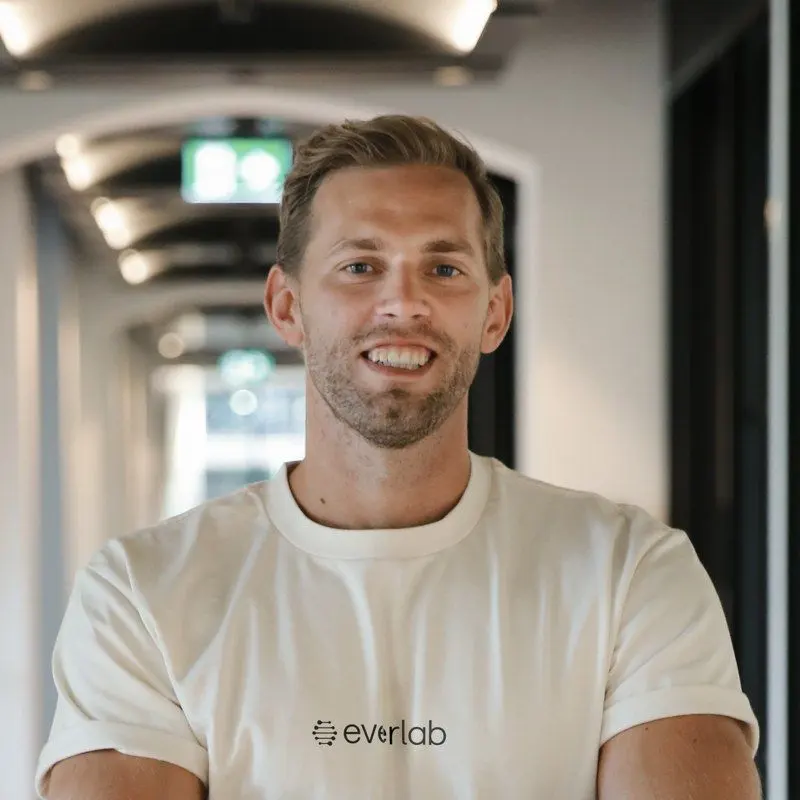
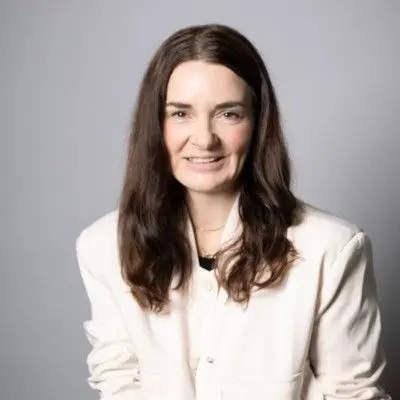

 ▶
▶ 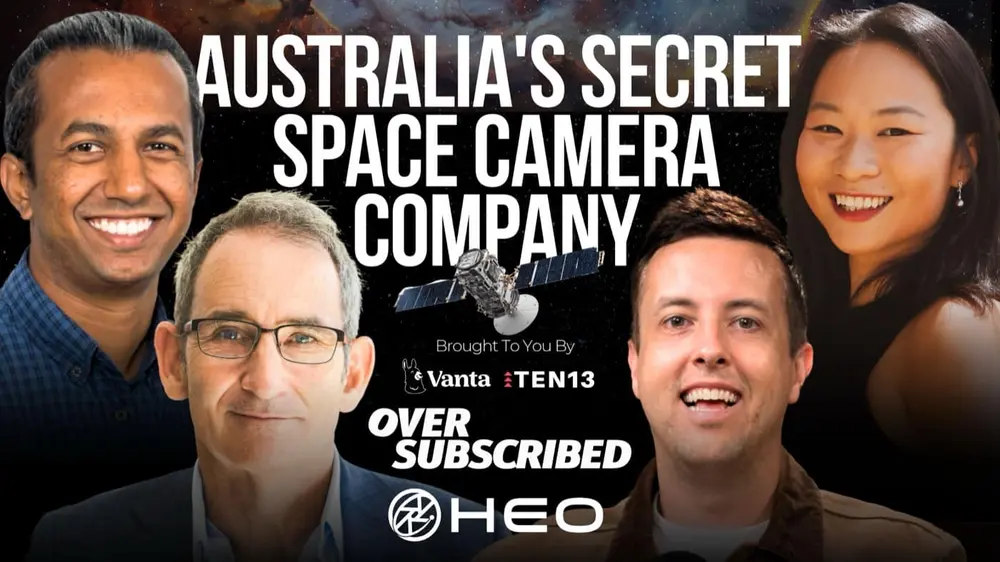 ▶
▶  ▶
▶  ▶
▶  ▶
▶  ▶
▶  ▶
▶ ▶
▶ ▶
▶