Transcript Synced · select any line to jump ▾ 0:02 Cheryl Mack: Founders scale faster on Deel. Set up payroll for any country in minutes, hire anyone anywhere, get visas handled fast, and get back to building. Visit deel.com/dayone. That's D-E-E-L dot com slash day one. Are you building a SaaS business and looking to achieve compliance with SOC 2 and ISO 27001 or other security and privacy frameworks? 0:32 Maxine Minter: Compliance can unlock major growth and build essential customer trust, but let's face it, it's usually time-consuming and expensive. 0:37 Cheryl Mack: And like really kind of a pain. That's where Vanta comes in. Vanta automates up to 90% of customer compliance tasks, making you audit-ready fast and saving you up to 85% of the associated costs. Plus, Vanta scales with your business, offering a market-leading trust management platform to continuously monitor compliance, unify risk management, and streamline security reviews. Join 7,000 global companies, including Atlassian and Dovetail, that trust Vanta to build and prove their security in real time. 1:03 Maxine Minter: And for our listeners, Vanta is offering 10% off. 1:06 Cheryl Mack: Just go to vanta.com/first. That's vanta.com/first. 1:14 Maxine Minter: Okay, 3, 2, 1. 1:18 Cheryl Mack: Hey, I'm Sheryl. 1:20 Maxine Minter: I'm Maxine. 1:20 Cheryl Mack: This is First Check, part of Day One, the network dedicated to founders, operators, and investors. 1:25 Maxine Minter: If you want to be a better early-stage investor, this is the show for you. 1:28 Cheryl Mack: So TL;DR, if you don't want to suck at investing, listen up. 1:35 Maxine Minter: I am so excited for this episode with Marvin Lau. He is just like an OG of the US, especially Bay Area ecosystem. He's also had like the most amazing multi-jurisdictional experience, even just looking at his CV, but kind of underneath that CV as well, he's done some incredible things across like almost every geo in the entire world. And has been at the front of a lot of startup ecosystem development. So I just am so jazzed to ask him all the questions about being on that journey. 2:14 Cheryl Mack: Yeah, he has been in so many different startup jurisdictions. He's actually known as the Asian Jason Bourne because he has been to all of the different countries and goes, yeah, he goes into some amazing places, discovers great alpha. He's also invested in like 400 companies according to like him/his LinkedIn, which I have questions about because I'm like, did you invest in 400 companies directly or is this indirectly through Startup, uh, 500 Startups? So I'm excited about that. And he's also a book collector, so I'm making a prediction right now that his first investment might have been in a book. 2:55 Maxine Minter: I can't wait. I'm so excited to welcome him. To talk to the Asian Dazn boi. Yeah. 3:02 Cheryl Mack: So Marvin, we're so excited to have you on the podcast today. You are one of my favorite people to listen to. I cannot believe how many, how many like talks you've done and it's still just great quality every time. Um, so really excited to jump in. The first question we usually ask our guests, and I'm excited to hear your answer because I have a little bit of a prediction, uh, is what was the first thing you ever invested in? 3:29 Marvin Liao: Oh yeah, you sent the questions to me, so I had to think about this. What was the first thing I invested in? I mean, stocks, of course, and my education, right? Just like learning, I've invested a lot of money and time into books, whether it's about history or like investing and about business. I'm a history, you know, sort of, I have a degree in history, not in business. And so I spent pretty much 2, 3 years basically like buying and reading as many business magazines and books as I possibly could, actually 2 to 3 years. You know, long story of just like, I had a chip on my shoulder because all my friends were like in business and they kind of laughed at me. Like, what do you know about business? And yeah, showed them, showed them. Yeah, you sure did. 4:11 Maxine Minter: I actually, one of the incredible things is we were kind of prepping this and Gerald was like, oh, we should have Marvin on the podcast because he is incredible in terms of your vantage point across ecosystems. And I don't think that there's a startup ecosystem in the world you haven't been active in. Is that a fair thing to say? 4:27 Marvin Liao: Yeah, I mean, I would say there's probably a couple, there's a couple folks I would say are pretty active in general, but like in general, like, yeah, I spend probably more than your typical Silicon Valley person. There's maybe 3 or 4 other people I can really point to where it's like, okay, like I run into these people, but most of the time I usually, it's usually just me. 4:44 Maxine Minter: Yeah, it's wild. So I'd love to understand that arc from you, kind of how did you, 'cause you were in the Bay Area, exposed to startups in 2014, which was way before, you know, a lot of folks were even thinking the word startup. 4:57 Marvin Liao: Actually, actually '99. So I actually moved to the Bay Area for, for joining, joining a startup back in '99. So 25, yeah, 25 years. So, um, so I actually, my first, my, I say my second gig in, in the Bay Area was actually at a startup that raised about $65 million before it imploded. And so I, I had exposure to startups back in like '99, which was a very different era and epoch. And so maybe, you know, I don't know how much of sort of the background that folks got, but I'm sort of this random weird beast where I'm Canadian, but Taiwanese immigrant parents, moved to the US when I was like 24. And what I did is I joined a startup, didn't work out very well. So I actually ended up being working as an executive at a big tech company called Yahoo back in the day. 5:45 Maxine Minter: Perfect. 5:45 Marvin Liao: Used to be a very, very important company and So I ran a lot of the international expansion. So that's sort of how I got a lot of exposure to the ecosystems. And then I left, after I left Yahoo, I took 2 years off angel investing and boards before I became a VC. And so that's sort of like how I kind of, I was just sort of this weird mongrel of sort of like startup person, big tech executive and VC. And then I ran a gaming holding company, as I mentioned to you, sort of we had 18 gaming companies split between Germany, Ukraine, and the US. And I did that for about 2 years. And I'm still, I was investing on the side as well too, through a rolling fund called Diaspora. How cool. So that's sort of the big background of just, yeah. So I do, I do a bunch of different things now. I'm more, I do mainly investing now, um, especially, you know, since the war in Ukraine sort of kicked off. But people like me are fairly normal in San Francisco. Like, it seems like very exotic, like in, I'm in Canada right now, so it's very exotic in like the smaller ecosystems. But like, people like me are kind of a dime a dozen. Um, there's so many of us. 6:42 Cheryl Mack: I would not say that you're a dime a dozen, Marvin, just for the record. 6:46 Marvin Liao: Yeah, I mean, just this profile, right? Like, this profile seems like very strange. But like here it's very, very normal. You see a lot of people who are like founders and then they, they do the startup thing, they join Google, they leave, they do the VC thing. It's just like the, the trajectories of careers are just much wider, I think, in a place like SFA area. 7:04 Cheryl Mack: I think that's true, probably. But like, I think still being at the, like you were there for the early days of 500 Startups, right? Like when you were part of that and, you know, starting to grow like the first couple cohorts and seeing those companies come through, that still must have been a fairly unique perspective. Like there weren't many people involved in 500 from the beginning, right? 7:23 Marvin Liao: Yeah, and we were probably sub-30 people worldwide. And yeah, it was interesting watching us sort of like go from sort of like nowhere to sort of being sort of like near number 2 sort of to YC. And then of course having everything implode in 2017 and kind of like fall back again. You learn so much on the way down, right? Like probably you will learn way more on the way down than on the way up of like, you know, all the key lessons that stick in my head in my careers. Like, you know, we went from— at the startup, we— I was employee number 18. We went from 18 to 150 in 6 months. And then we went like— we, we fired like about 50 people like 6 months later on because of the downturn. And so everything you learn going down that way, you know, I was at Yahoo when doing the rise from 2,800 people to just at our peak with probably 20,000 people. And then watching the company just decline like after like 6 or 7 years, but just learned so much along the way, right? And same thing at 500, just like watching sort of a company rise very, very fast and then sort of go through this turn. There's just like, there's just so many things you learn on both sides and how to, you know, how you bear with the cycles, right? The good and the bad. And I think this is one of the challenges that a lot of startup founders and a lot of even investors, a lot of VCs, like they've never seen a downturn before. And so like, you know, of course when 2022 happened, like everyone freaked out, right? And I guess for me, I'm like, oh, this is my 5th downturn, like whatever, right? Like this is what you do. And let's just like, Like, it sucks, but like, you sort of like have a playbook to sort of like operate from. And, you know, and I tell people, we're like, okay, yeah, it sucks. Like, great. You have to fire like 20% of your staff. Like, it's not that bad. Like, you know, when in 2001, like it was 99% of the ecosystem died, right? Like 99% of the companies died. And like every company was laying off people where it's like, we had companies laying off like 90% of people. So like, it's not that bad. You can survive that, right? Like, you know, you can survive this. 9:16 Cheryl Mack: As downturns go, this one's not so bad. 9:19 Marvin Liao: Yes. I mean, you know, it was, it was, I'm not going to say it was easy, but like I would say these last year and a half where I'm like, it was way worse in 2001. I'm just like, it's like companies are still hiring, you know, people, big companies are still actually going and using, like buying SaaS software in general. So like it wasn't the complete sort of like decimation, like, like what happened in back in 2001. So, or 2001, 2002. So I think you take a lot of lessons from those downturns. Like, it's not fun going through them, but kind of once you survive one or two of them, you're like, yeah, okay, I can figure this out, right? Like, it sucks, but just get through it, right? It's go through the cycles. 9:54 Cheryl Mack: I'm sure you have a playbook for like companies, but like, what about a playbook for investors? 9:59 Maxine Minter: My brain went to exactly the same thing. 10:01 Cheryl Mack: Yeah, like, what about investors? What do we do during downturns? Teach us your secrets. 10:06 Marvin Liao: Oh, I mean, you know, it's been so interesting because like, you see so much bad behavior for investors because they just panic. Um, and you know, this idea of like founder friendliness, of just like, boy, that's disappeared pretty fast in the last like year and a half. 10:20 Maxine Minter: Out the window. 10:21 Marvin Liao: It just, it's, it's almost this overreaction, right? So you're starting to see like just weird terms show up again, and, um, and you're like, I've seen this, seen this movie before. And, and so your job, I think, as an investor is to sort of try to be sort of like very calm, right? So when a founder is like too high, you knock them down a bit, right? But when they're too low, your job is to raise them up a bit. And that's kind of all I spent. I feel like I spent like most of 2022 and 2023 just like having these conversations like, okay, it's not that bad. Let's go and let's look through your cost structure. Let's go figure out like where we really are, right? And what are the things we can actually do? Should we go raise another round if we can? Or maybe we cut your cost structure a lot more. Like, let me show you, show me like your, like just who's on your team. Let's, and I just start asking some questions where it's like, do you really need this role? Right. And okay, assume you know this, you need this role. Is this the right person for it? And so just like, just asking these basic questions sort of get them thinking and, and hopefully help helping them kind of figure out how to survive. Right. And I'm like, it's not always going to be like this. Your goal is to basically, the job is to survive until the cycle turns back. 11:24 Maxine Minter: I wonder, especially because you watch those, you know, in your account, 5 downturns and recoveries as well, right? Like what goes up has gone down. Sorry, what has gone down has gone back up on the other side. 11:35 Cheryl Mack: Yeah. 11:35 Maxine Minter: And there's some theory that the reason that recessions are getting easier over time is we are getting better collectively at properly investing those cycles at like appropriately buffering economies as they go through those cycles. 11:49 Cheryl Mack: Yep. 11:49 Maxine Minter: You know, we seem to be moving through recessions much faster. Even for a lot of jurisdictions, this wasn't a recession, right? 11:55 Cheryl Mack: Yeah. 11:55 Maxine Minter: It was a small correction. 11:56 Marvin Liao: Yeah. 11:56 Maxine Minter: We never found a particularly low bottom. And then we kept going. So as you're kind of reflecting on those 5 cycles, you know, what are you building for the next one? How are you thinking about prepping and maximizing opportunity through the next correction? Because it will come. 12:14 Marvin Liao: I mean, the way I think about sort of like VC, right? Like, you know, the way you make money is, is you have to do stuff that's like uncool before it becomes cool. Right? So for example, like a good measure is just like when you, and I'll explain this a little bit more, but this is how I think about it where I think the mistake I made going into 2021, which is sort of the hype cycle, right? The peak of the hype cycle. I came off a really massive high in 2020. I had a bunch of exits. I had a bunch of companies I just do really, really well in 2020. I'm like, I'm a great investor. And then I just went nuts, like investing in 2021 when valuations were much higher, the arrogance level founders were higher. Just like, just a lot of stupidity happened, you know, on the investor side too. And I just did so many bad deals in 2021. I, I say this openly, I just did so many bad deals in 2021. I'm quite embarrassed about. And now, like, looking back on this, where I'm just like, oh, you know, now sort of like, you know, last 2022 was pretty tough, 2023 was like pretty rough, but just the quality level of just sort of, you saw a lot of investors and a lot of our LPs pulled back too. A lot of them just kind of dropped out. And I'm like, wow, like now is actually the best time to be doing this, right? Because fundraising's tough. So you, you only the hardcore sort of survive. And that's kind of what I've seen where just the quality level of the businesses I've seen coming in, the door, the quality level, the founders, um, the investors that stay, you know, like you'll see a lot of funds shut down. Like in Silicon Valley, like 45% of funds are actually inactive last year. 13:38 Maxine Minter: Wow. 13:39 Marvin Liao: As an example, right? But they don't tell anybody that, but 45% of funds are inactive. And you're going to see it. You see, I saw a lot of investors basically kind of quiet quit over the last 2 years, and I, I'm expecting a lot more this year. And, but for me, I'm just like, wow, like this is the best time to be investing. Like the level of the founders and the dedication, the level of commitment, you know, knowing that like exits aren't looking very good right now. And I think that's changing very quickly, but like in general, exits aren't looking good right now. Downstream capital, like Series A graduation rates, like went from 1 in 4 to like 1 in 10. And I think that's going to get even tougher, at least for most of this year. So when you're a founder now in early stage, why do you pre-seed? You're pretty committed. 14:16 Cheryl Mack: Yeah. 14:17 Marvin Liao: And I think I see that sort of like level dedication. I see sort of like this commitment. And I, I'm, I'm absolutely, I tell people like, I'm absolutely convinced that the deals I've done last year and this year will remake my reputation for the next like 10 years. I'm like, I'm that convinced. 14:33 Maxine Minter: That's awesome. 14:34 Marvin Liao: Enough that I'm actually investing, like I said, investing a lot of my own money now too. So it's just like, this is a, you, you need to be doing stuff when it's uncomfortable and everyone tells you what you're doing is wrong. And other VCs look at your deals and go, if most of your VCs look at your deals like, oh, that's a good deal. Then you're probably doing something wrong. 14:49 Maxine Minter: I love that heuristic. And I think it's something that the Bay Area gets so much better than in Australia. We are still a much more kind of immature ecosystem in that respect because we are, you know, we are relatively new. We're having our first fund ones on this kind of third generation of VC in Australia coming to an end and starting to pay back. So that kind of relative to the Bay Area, it's really, really relatively immature, but I'm so excited to normalize that. Dynamic, which as an investor, if you are truly investing in VC, you should be investing in stuff that you're, you have to be ready to look like an idiot. And if everyone is like, cool, that looks like a great deal, it's probably not a good sign for the overall kind of innovation that you're investing behind. I love that. 15:31 Marvin Liao: Yeah. I mean, all my best deals that I did when I was at 500, the ones that had exits and the ones that are like, you know, worth several billion now, they were very controversial. Like I got so much pushback, but just, you know, you're just like, wow, like this is such an interesting business. Like I pushed us into doing a lot of B2B stuff when business to consumer was like the sexy thing to do. Got so much pushback, but like that, that has returned in spades. And so that, that is my heuristic. So I went very early into defense tech. So defense tech is sort of like, it feels like it's sort of like the thing now. Right. But like I started investing back in 2022 because it's sort of, I guess, these insights and things I had. , you know, because of my involvement with Ukraine and things. And I'm Taiwanese. So you kind of see these things now. And, you know, defense tech is like one of the hottest areas right now in Silicon Valley, right? Like this year. Um, but it took like a couple of years. 16:21 Cheryl Mack: Defense tech. So hot right now. 16:23 Marvin Liao: Yeah. Like it's, but it's, it's so interesting. And, you know, like I almost joke, like defense is kind of like ESG, right? Like, great. I care about climate and stuff, but it's like, you don't think like I have friends of mine, startup friends and investor friends of mine in Ukraine where it's like, you don't even think about ESG stuff when you have rockets flying over your head. Right. So. And, you know, going for you and your family. So you're like, defense is ESG and we've taken it for granted. Um, and I'm, I'm glad we've kind of woken up to this. And so I'm super excited about the space, but a lot of funds still can't, can't invest in defense tech right now. 16:52 Cheryl Mack: Yeah. Oh, true. It's like in the bucket of like, oh, we can't do that because of the like ethical nature of like, well, what about weapons? 17:01 Marvin Liao: So dumb. So dumb. 17:03 Cheryl Mack: Yeah. We actually, we do have one fund here that is purely defense tech. Um, but it is focused on weapons. So questionable whether that's the right approach as well. I'm so curious though, like with your investments at 500, were you investing personally or like through the fund? And because you've got like 400 investments. 17:20 Marvin Liao: Through the fund. Yeah, through the fund. 17:22 Cheryl Mack: Okay. So you invest in the fund and then deploy that capital. 17:25 Marvin Liao: Yeah. 17:25 Cheryl Mack: What were some of the things that you saw going through that? Like seeing that many companies, wow, just must have been crazy for you. 17:33 Marvin Liao: Yeah. I mean, we were doing 70, 80, I was probably doing 70, 80 deals a year, right? 17:38 Cheryl Mack: Wow. 17:38 Marvin Liao: And so, you know, it's one of those things where just like, my first year, like, as an angel investor, I was a terrible angel investor. Like, so I came out of Yahoo, I did all right at Yahoo, and so I did like about 8 angel deals, like all write-offs. And then I did, um, my first 70 deals, I had like one winner out of that, it was Shippo. Well, Shippo and Prediction.io did pretty good, but except for that, like, yeah, like 2 winners out of like 70. I should have been fired at any other place. And but, you know, all my winners, like, I think that large sample set, you need a large sample set to understand Like if you look at most angels, like they do 12 deals and they're like, okay, I know, you know, as I know, like for most portfolios should be doing 25 to 35 deals. That's enough to sort of have enough spectrum, particularly at the early stage. And so I was very, very lucky to be able to do so many deals there. I did 414 in the 6 years I was there. All my winners came in year 2 and year 3. 18:26 Maxine Minter: That's super interesting. What do, how do you think about that when you're thinking about that kind of on-ramp for investors when they're first starting to become angel investors, they're first starting to work out how to invest in this space. You know, one methodology, if coverage is part of it, is investing via syndicates or investing into a fund. So you get to see more. And I think you now invest across all of those, right? Like you invest in some funds, you are a fund manager yourself, and then you do some direct. Yep. But when you think about sequencing and getting exposure, how do you think about investing as an LP versus going direct when you're first learning? 18:59 Marvin Liao: I mean, if I was to do this now, like knowing what I know right now, right? I would not have done those direct deals myself because I just don't know, you just don't know anything. Right? You don't know what the standard is. You don't know what's good. You don't know what's not good. I probably either would've done angelless syndicates, right? Like finding a good lead where it's like, okay, whatever deals they see, at least I can go and have an understand— have a basic understanding and write small checks into these things. So at least I can see what's good or not and have a little bit of skin in the game versus sort of what I did was like, ah, I'm so smart. I know what I'm doing. And then I was just a total wash. Right? But you do, I have to say I'm the investor I am right now because I lost my own money. Right. So on the other hand, if you treat it as tuition, it's probably helpful. But like if you, if you, if you're a little bit smaller, much smarter than I, I was, I think you either invest in a fund or you invest in these angel syndicates and then you kind of, you see a bunch of deals so you can understand what the standard is. 19:51 Maxine Minter: Man. 19:51 Marvin Liao: But for the record, there are a lot of crappy fund managers out there and a lot of crappy syndicate leads. So you also need to kind of pick very carefully. And I have friends of mine who, who run funds and I'm like, man, you should, you should not run a fund. Like you're, you're a great operator, but like you do not know how to invest. And, but I've done now 10 LP checks into different VC funds. I'll probably do another 5 or 6 more this year. So I love emerging fund managers because they're just hungrier. 20:16 Maxine Minter: Right. 20:17 Marvin Liao: But I've worked with those people. I knew these people from before. So you're like, okay, I know this person's a good investor. Um, so I know they're not going to, you're not going to piss this money away. 20:25 Maxine Minter: Right. I think what jumps out to me when I see the kind of trajectory of your career is like finding your edge or finding your informational advantage. Like you mentioned there, when you experienced, you were in Ukraine and then you kind of watched very firsthand that conflict emerging and then really realized the importance of defense tech. I think about the number of countries you have invested across. How do you think about getting an informational edge, getting kind of an opportunity to really understand how to invest that new ecosystem? How do you develop your thesis as you expand internationally? 21:00 Marvin Liao: Yeah, okay, so that's a great question. I mean, I invest a lot of time, money, and energy into just self-education, right? Whether it's like reading a lot of books, podcasts, I spend a lot of money on classes in general, whether it's like copywriting or other things, but also even like investing stuff. So for example, like I've joined a bunch of masterminds with others who are like VC folks. I go to Capital Camp, which is an amazing event, but it's not cheap either. So I go to these type of events where you kind of get exposure. 21:31 Cheryl Mack: Capital Camp. That sounds great. What is Capital Camp? 21:34 Marvin Liao: You know, it's the best event. Like, it's, it's, you should look it up. It's, it's— 21:37 Maxine Minter: So good. 21:37 Marvin Liao: Yeah, I think, I think it's actually the best event. So I've gone for 4 years in a row. It's one of my favorite events, but super smart people. The high— it's a very high buy-in, but that kind of filters out kind of the riffraff in general. And everyone's a dedicated investor, not necessarily just VC, but just like, you know, could be private equity, could be personal holding company, could be,, you know, like hedge funds. There's a lot of real estate folks, but just like everyone's just like very— 99% of the people are just super high quality. And so just every conversation you have is just really about getting good at the art of investing and understanding. I was like, oh, like that's what Private Equity does. Like just to understand sort of what they do and how they look at stuff. And it's very helpful. Um, and a lot of them are global investors too. So it's just, um, you get a very, very good spectrum of the investing landscape in general. But anyway, so the point I, I, to answer your question. You know, I would say I kind of follow where my curiosity goes. And so, you know, you kind of go down these rabbit holes. I travel a lot, so that's helpful. And, you know, I speak at a lot of conferences, but I do invest a lot of time and energy. So it's like, you know, having the prepared mind. But to say that I have a plan where it's— Oh, I just think like, it's— I kind of joke, I'm kind of Forrest Gump of Silicon Valley where I just kind of go where the thing— I have no grand plan or strategy. Like I'm the worst person to ask for like career advice because I'm like, I just kind of ended up doing this because like I thought this was interesting and it wasn't, I wasn't always chasing, you know, I would, it wasn't always about chasing the money. It was more of just like kind of scratching an itch, right? It's just like, oh, this is really interesting. So I want to go and dig in a little bit more. So you kind of read the literature on it. You sign up for a bunch of newsletters, you take some classes on it, you read some books and. Talk to a bunch of people that you have access to, whether on the family office side or friends of yours investing in that area, just have these conversations and you, you kind of develop your own sort of like point of view and thesis. 23:26 Maxine Minter: I think there's so much to be said for the prepared mind. 23:29 Cheryl Mack: Yeah, like I love that. Just, I cannot understand how you consume knowledge like that. It's just like, I think as investors we kind of need to be that type of like knowledge consuming machines. In order to understand anything you want to get into. 23:43 Marvin Liao: You have to love it. You really have to love this game to really sort of like, like, I want to do this for the rest of my life, right? Like literally for the next however long that is, like I literally want to do this for the rest of my life. And, you know, I knew I said this publicly back in 2019. This is, I was like leaving 500. I'm like, man, like there's been so many new VCs coming to this business. And you know, the universal thing was like, these are all very smart people. But they were all coming in for the wrong reason. And most of these people are out of the business now, right? Or in, in the midst of leaving the business. Because one of the big things I noticed was like, wow, like none of these people— yeah, they worked at like, I don't know, Stripe or whatever company, right? Like, and there are some good investors come out of Stripe, right? But for the record, there, there's some like Ray Tonsek and bunch of other people who are like incredible. Um, but like just in general, Stripe for me, not a good example. Like Salesforce, other places like that. And these great operators who have just come in because they're like, oh, the new gold rush of VC. But then when you ask them questions where it's like, hey, what's your favorite science fiction book? Like, none of them read science fiction. And I'm like, how can you be investing in the future of like technology without like really like liking, like loving— another liking, like loving anime, loving science fiction, right? Like not having read this stuff. Like, because that's actually how you determine sort of like the point of view or sort of like where the world is going. You're investing on that thesis of, I think this is what the world is going to look like. Right. And like. you've never read like Neuromancer, you've never read like, you know, from, from, um, William Gibson, or you've never read like any of the Neal Stephenson stuff like Diamond Age or, um, Snow Crash, which is like these classics, right? That really informed the beginning of the internet. And I'm like, how could you not? I don't know, it's weird. Or Three Body Problem is another great science fiction book, right? Like, that book is like mind-blowing. And it's just like, to not love that, because that's— they portray a picture of society in the future. Driven by technology. And it's just like, how can you not— I don't know, it's just weird. And so most of them did not last. That— and that's— I've seen that most of them have not lasted. 25:37 Cheryl Mack: So is that a heuristic you have, Marvin, to go into a new fund? 25:40 Maxine Minter: Like, you're like, if you don't— 25:41 Cheryl Mack: if you don't read anime, then I'm not investing in your fund? 25:45 Marvin Liao: I mean, they have to have some point of view, right? So for example, I have a friend, you know, I haven't invested yet, but I'm looking at this. Like, she's going very hard to focus just on consumer, early-stage consumer. Super smart, is invested, you know, she's a spin-out from other budget funds. And, but she has a strong point of view and has a good idea sort of what's happening and like what young people are doing. It's, it's fascinating. I'm like, okay, like that's the right thing. Like you're developing and, and yeah, she likes science fiction is helpful. Um, how can you not like science fiction and, and be in this business? 26:15 Cheryl Mack: All right. We have a new book list, Maxine. 26:18 Maxine Minter: Yeah. Yeah. I, um, I think it's right though, right? Like I think you actually have to form a point of view and be opinionated. In this business. And you have to form a point of view far before other people necessarily form that point of view before you. And that is something that I see, especially early stage investors and early fund managers. There is actually quite a few incentives in the wrong direction there. 26:42 Marvin Liao: Yeah. 26:43 Maxine Minter: Right? Like there are incentives that encourage you to want to kind of crowd obvious deals that make you want to kind of follow on behind fund managers or known brand names. To help you kind of validate when you're at that earlier stage. And so the kind of mental model where you're comfortable to be out there kind of flapping in the wind and right ideally in the future, I think is really important. Has that been something that is natural to you? Or has it been something that you've cultivated over time? 27:10 Marvin Liao: I feel like it's something I've cultivated over time because in the beginning, you know, you kind of go with the crowd because you're like, oh, well, Sequoia's in this deal, so it must be good. And those have turned out to be terrible, frankly. You know, ultimately, and this is not my quote, I just learned these two terms. I found them really interesting. Like this guy, Chris Dixon, he's an incredible investor, right? Great angel investor. He runs a crypto fund for Andreessen Horowitz. And I think one of the smartest guys like in Silicon Valley. Well, I think he's on New York now, but like between Silicon Valley and New York and really, really great angel investor before he became a VC. And he had this great term, which I hope your your listeners will find helpful. It's like there's really two ways of investing. It's the heat-seeking or truffle hunting, right? Like heat-seeking, which is like, oh, this is a super hot deal and you fight your way into that, right? And sometimes you have to do that as a VC and that's how you sharpen yourself, right? It's like, can I find deals and can I win them, right? And then can I help, right? The other way, which is sort of more truffle hunting. Truffle hunting is like you're finding deals off the beaten track, right? Like getting into them before, sort of like whether it's a demographic, whether it's a geography, whether it's a sector, um, or a space or business model that is like hardly unsexy, um, and that nobody wants to touch. And then it— then of course it becomes cool later on, right? And I found myself sort of like, I, I veer more toward the truffle hunting than I do for sort of the heat seeking. But it's such a great framework to think about this because I think a lot of VCs kind of get confused. Um, and ultimately sort of like, that's really the only two types of deals there are, and both work, right? Like you can do both really well, but they're very different. You know, as we tell our startup founders, like they're very, very different go-to-market motions, right? 28:52 Cheryl Mack: True. 28:53 Marvin Liao: And so you kind of have to understand your game. And for me, I prefer the truffle hunting because it's just like way more interesting. I don't have to fight as hard. And you're not in these like really sort of like heated environments, right? Because like you're literally fighting to get into these like super, super sexy hot deals. And yeah, you have to do it every once in a while, but like, I prefer not to. 29:14 Maxine Minter: That is a fascinating framework. 29:16 Cheryl Mack: I think that gives a name to what I've seen in the Australian ecosystem over the last like 6 to 12 months, because I have talked to different VCs, some of which have said like, it, like, things are hot and we are fighting our way into deals. And, and then I've talked to other VCs who were like, yeah, we're getting great deal flow and like the valuations are like somewhat reasonable. And you know, we're, it's like sober investing now. And I think that actually has come out, the latest Cutthroat Venture report, which is this report on, on the Australian ecosystem, um, that shows that the number of deals at the smaller end of town, like sub $20 mil, I think, has decreased to the lowest levels in the last 5 years, which I think shows that like there are more and more people fighting for those bigger end of, or those bigger hot deals, and those deals are getting bigger for that reason. And that's exactly what's happening in Australia at the moment. 30:04 Marvin Liao: Yeah. Those are— that's AI deals. That's AI deals in Silicon Valley right now. Like, this is why you see these, like— like, I don't understand how you can do like a $75 million pre-seed, right, in AI. Like, it makes no sense to me, right? 30:16 Cheryl Mack: Yeah, we just had our largest pre-seed into a company. It was like a— or no, we had our largest Series A and our largest seed deal of— like, I think the largest seed deal was like $12 million, and the largest, uh, Series A one we just did was like— it I can't remember the number, but it was in the like high millions. 30:34 Marvin Liao: Yeah, you know, mark my words, I don't want to be a hater, but like I've never seen these deals work out. Like they just never work out. I'm just very skeptical because I think I know I've had that with portfolio companies overraised, like, you know, raised a big sort of like seed or big A, they just get bloated and just like, so they end up wasting that money. I see very few companies have the discipline to be able to use that money well. And I just, in general, I've never seen the cash cannon strategy work well in early stage or later stage, like as we've seen in general. And so I do think that's one of the bad habits that we've learned, you know, in the startup land from like 2012 onwards. I'd say 2012, 2014 onwards where it's just like, this wasn't like, if you actually look back of sort of all the really, really amazing companies, whether it's like, okay, this is not an amazing company, but a very successful company. Like you look at Salesforce, you look at Google, or you look at Yahoo and. Yeah. EBay, like these are highly— even Amazon, like even back in the day, they were very capital efficient companies. Microsoft, like all these big giants, most of them were highly capital efficient and they'd even use most of the VC money they raised, right? I think a lot of people are using Uber as an example, and I think that's a horrible example because they only became profitable like in the last like year or something after like bleeding for like over 10 years, right? And even then the profitability is kind of like, eh, like it's not like Google level profitability. So I do think there's— we've learned— I worry that a lot of the VCs and a lot of the founders kind of learned the wrong lesson from this last cycle. 32:02 Cheryl Mack: Eh. Are you building a SaaS business and looking to achieve compliance with SOC 2 and ISO 27001 or other security and privacy frameworks? 32:12 Maxine Minter: Compliance can unlock major growth and build essential customer trust, but let's face it, it's usually time-consuming and expensive. 32:17 Cheryl Mack: And like really kind of a pain. That's where Vanta comes in. Vanta automates up to 90% of customer compliance tasks, making you audit-ready fast and saving you up to 85% of the associated costs. Plus, Vanta scales with your business, offering a market-leading trust management platform to continuously monitor compliance, unify risk management, and streamline security reviews. Join 7,000 global companies, including Atlassian and Dovetail, that trust Vanta to build and improve their security in real time. 32:43 Maxine Minter: And for our listeners, Vanta is offering 10% off Just go to vanta.com/first. 32:49 Cheryl Mack: That's vanta.com/first. 32:53 Maxine Minter: I think that's true. I actually, the most impressive management team I have seen today did this methodology, which I just wowed me at the time. And then I've just been kind of sharing with as many people as possible who are in the situation that they happen to be timing the market so well that they are in a kind of cash cannon. Circumstance. And so what this team did, they're repeat founders in the healthcare space, both of them really high, high intelligence, high credibility individuals, and really kind of generatively motivated, i.e., they are really excited to create something in the world. It wasn't about wealth creation for them. It didn't come from a place of greed. 33:33 Cheryl Mack: Yeah. 33:33 Maxine Minter: And they raised in 2020, maybe early 2021, and they essentially raised what would have been a pre, like a fat pre-seed and seed together. So they had something like 5 or 6 years runway because they were building in AI at the time. And the, see, one of the CEOs had the good sense to be like, cool, fascinating. That's a really helpful de-risk. That's going in a cash balance over there. I'm putting it to the side and I am morally committing we're not touching it until we hit these milestones. So I'm operating like I just raised a like cash type pre-seed. 34:05 Cheryl Mack: Yep. 34:06 Maxine Minter: And then he operated appropriately. He hit the milestones earlier than he had created for himself, and then he unlocked that next tranche of funding for himself. So he essentially kind of constructed a fundraising dynamic for himself to hit certain milestones, and they just raised an astronomical amount of money from some of the best funds in the world, kind of around, uh, Series B. For a period there, they were putting $10 million on a quarter of revenue. Like, they're really in kind of rapid scale. But I mean, it's just really impressive team, really, really impressive team. And I think that foresight to be like, great, we are going to make hay while the sun shines, but we're not going to let that bloat our incentives. We're not going to let that kind of bloat the way we operate, I think is a beautiful methodology, but they are so rare, right? He was literally the only person I saw do that in 2020 to 2021. 34:53 Marvin Liao: Super rare. Yeah, you do see it every once in a while, but like, yeah, it's not that common because most folks just spend it. 34:58 Maxine Minter: Yeah. Well, that's the incentive, right? 35:00 Cheryl Mack: Well, because everyone thinks whatever is happening now is going to keep happening. So like, why not spend it now so that we go and get the next raise and we can continue this trend, but the The reality is that cycles happen, right? We've now been through, as you said, 5, and we kind of have a sense of like, it's going to go up and down and you need to buffer the downs. 35:19 Marvin Liao: Yeah, I mean, I do think it's the nature of the beast because I think as founders, as a founder of a startup, you have to be like almost like a little bit like naively optimistic. Otherwise you wouldn't do this. Like if you knew actually how hard it was, you would, they would never start it. 35:34 Cheryl Mack: Not too delusional, but like, Slightly delusional. 35:37 Marvin Liao: Yeah, just that right balance. That's tough, right? That is tough. It just is so hard. And so, you know, the reality is this last 4 or 5 years, at least I can only speak for Silicon Valley. I do think it wrecked Silicon Valley, both sort of like the worker class. There's a whole bunch of senior execs that are just like burned out. And so I do think we're seeing this sort of like, just the thing that makes Silicon Valley work, that I think makes the US work really well, is, you know, it— Silicon Valley is built on sort of like the, the blood of the young and the naive. And so we saw a big wave of like young people coming in these last like 3, 4 years. So we've seen almost a complete turnover actually of the ecosystem. And that to me is just like— so you see this energy, right? And everyone's questioning everything. It's a really good dynamic. And so as an investor, and I would say an old dog over there, like it's so hard to stay relevant, right? Because you're What's this 500 thing? Most, a lot of these founders don't even know what 500 is, right? Or they know what Marc Andreessen, like they know a couple of the big names, but just in general, where it's like the turnover, it's just so fast. And so what was like cool, like 5 years ago, it's just like, I don't even know this person. And so just like staying relevant stuff, there's a lot of people with money who are very irrelevant in Silicon Valley. 36:51 Maxine Minter: Right. Yeah. I remember at the beginning of 2021 when like Gen Z started to be the dominant face I would see around the Bay. 36:58 Marvin Liao: Yeah. 36:59 Maxine Minter: And it was this, quite a harrowing moment actually to be like, oh, I am no longer part of the generation that is like the dominant person in this, in the area. Also because so many people left, those like kind of mid-career folks. 37:13 Cheryl Mack: Yeah. 37:13 Maxine Minter: They left during COVID or, and, or graduating to like, you know, having kids or whatever. 37:18 Cheryl Mack: Yeah. 37:18 Maxine Minter: And so you would be hanging around, it would just be like deep Gen Z. I definitely started wearing wider pants, that's for sure. 37:24 Marvin Liao: It's It's trippy. And you know, whatever people said about like SF, like this last year, it's booming. There's so many events going on. You go to cafes, like it is really— 37:36 Maxine Minter: 100%. 37:37 Marvin Liao: You know, for someone who invests sort of like globally, you know, my thesis has actually changed a lot. So I don't know if I've been— this is probably the first time I've, I guess I've talked about this publicly. Well, no, I talked about it publicly in Europe, which didn't make me overly popular. But I, you know, one of the insights I actually had in the last like year where this idea of sort of like remote work and every ecosystem is going to grow equally. I've actually come around to the view where I'm like, I don't think that's true anymore. That, you know, despite all the problems, US is a mess. I love the US, but US is a complete disaster and mess. But one of the things I see is that the 3 major ecosystems in the US, so whether it's like New York, LA, San Francisco Bay Area particularly, like the analogy is like, it's like a Microsoft product, right? The UX is absolutely awful. But like the network effects are so powerful that it just like sucks you in, you can't leave. And I'm just seeing the network effects are so strong where it's just like, I actually think that we are stealing talent away from Europe, from Canada. Like if you're a top tier founder and, and I like, cause I've only really kind of started seeing this in the last like 6 to 9 months. Like I was talking to friends of mine, like VC friends of mine in Canada, VC friends of mine in, in Europe and they're complaining about how terrible deal flow has been this year. And I thought about, I'm like, that's weird. Like my deal flow has just gotten way better. And I'm like, oh, wait a minute. Like they're all just coming to San Francisco, New York. Like they're just coming directly. They're not staying back home. Because, and the more and more I thought about, I'm like, this totally makes sense because if you are an awesome founder, you want to be with other awesome founders. So steel sharpens steel. And so I'm just seeing all the best founders from Europe. They're just flying directly. Like, I'm not going to raise locally. These folks suck. They don't know what they're doing. So You're starting to see like, like we're just sucking in so many new people or people come in for like 4 months leaving, then they raise some money, then they get their O-1 and they're moving over. I'm seeing a lot of that. I'm definitely seeing a lot of that. 39:28 Maxine Minter: 100%. 39:28 Marvin Liao: Which makes sense. 39:29 Maxine Minter: 100%. For the people in the back. 39:33 Cheryl Mack: One of the things that I think is awesome about both of you though is that you've, you have this perspective of like helping companies expand to the US. And I think from that, approach, it's like, well, if you're going to support companies to go global, then like having them take advantage of that network effect that does suck people in is really important. So I mean, I'm curious to hear from both of you how you approach that and what is it, what that's looked like for each of you. 39:56 Marvin Liao: I mean, the big part of it, like, to be frank, right, like you hear this from VCs, like, oh, like, we do all these things for founders. The reality is that most VCs do nothing for founders, right? Like, your job is just basically to sort of like not waste their time and make sure the check clears and be there if you can be helpful. At the end of the day, your job is just really there as a trusted advisor. And so, you know, where I spend a lot of time on go-to-market stuff, ultimately for any new sort of like market entry, right? In this case, the US, like if the founders aren't prepared to move over here, I actually won't invest in them now because most of these, you know, most of these have to be driven by founders. I've never, even a Series B or Series C company where from some other country who's like, I wanna go to the US and the founder never spends time here and they hire a team or a GM to go and do this. I've never seen it work out. I've actually literally never seen it work out because I think everything they learned back home, the playbooks that they have back home just don't work in the US. It's just such a different and much more competitive market in general. And so a big part of it has to be founder-driven. And so that, you know, we didn't do that. We didn't care about that before, but about a year and a half ago, we looked at our portfolio and we saw like the thing that actually made all— and so we focused on European founders focusing on the US from a pre-seed. All the teams that didn't move over here, they just don't grow as quickly versus like the teams that show up over here. And the great thing about it, when they show up over here, you, you don't have to spend that much time with them because like the, the network that they end up building here of other great founders, they just kind of sponge off each other. And so the conversations I have with founders based in the SF Bay Area who've moved here versus conversations I have with founders like living somewhere else, such a different level where we can have like, it's like advanced stuff you have with like the folks because like they just, get it by being in the air, right? It really is true. The Vance, other founder friends, and they just pick up these things. And I found myself going like, why am I having to explain this basic stuff to you, right? Like, you should know this, right? And like, no, why would you know this? You're not, you don't spend any time here. So I just, I think as I got older, I'm just lazier. I'm just like, ah, I used to be able to do that. And I was happy doing that. Now I just, I don't want to do that because to me it's also self-selection where just like you have to sacrifice and commit, right? Like. Yeah. If you want, you said you want to go big, how are you going to go big, like living in whatever country in Europe or Canada, just like you just can't because you're not surrounded by excellence. 42:08 Maxine Minter: I 100%. 42:09 Marvin Liao: At least I don't know. That's that. Yeah, I don't know. Yeah. 42:12 Maxine Minter: Right. So, um, that's my take. Because we just focus on pre-seed, we do a lot of that encouragement at the very earliest stage, right? Like our house view is that spending time in the US building your company for the US from day one, is the best way to do it, as opposed to kind of scaling to a certain level of scale, culture, go-to-market sophistication, et cetera, and then trying to copy and paste that into the US. It's really, really hard. At least that's my view. So I have seen it over and over and over again, right? The founders who move to the US kind of within 6 months to 9 months of raising their pre-seed, the feedback I get constantly is like, I wish I did this previously. I am like the ecosystem here, the kind of incidental interactions that you get is so different. It is just like the classic application of the economic principle of spillover, right? Knowledge is one of those materials that can duplicate by sharing, by being in an ecosystem like New York, like LA, you know, like San Francisco, where there is just that depth of spillover expertise in the ecosystem that just accelerated at an unholy rate. Also, the ecosystem of support around them is so much higher as well, like normalizing, as you said, steel, steel sharpens steel. So I think for me, the, like I think of one of the highest leverage things that I can do is just finding the kind of person that maximizes opportunity out of a resource-rich system and then trying as hard as I can to get them to step into that resource-rich system as fast as possible. If I can nail those two things, then like that is where I think I add the most value to the teams that we work for. And it's so actually just so wonderful to hear it's exactly the same as you're thinking cross-border between Europe and— kind of the US because I definitely see it Australia to the US and the best founders I know, they're really hungry to be in the US. They're really hungry to be in the ecosystems where it's going to push them all the way to the edge of their knowledge and help them develop and help them move faster. And today they are all looking at the US. They're not looking for anywhere else that will help them do that, which I think is the biggest validation that the ecosystem's not going anywhere. 44:14 Marvin Liao: It just, you know, it's something I see over and over and over again. Because I do think, like, I'll be the first to say, like, I love the US, but it's a crap hole, right? But at the same time, like, it's the best place for business. And so there is, to me, it's just like, if you're willing to sort of give up your awesome lifestyle in Europe, in Australia, in Canada to move over here, you're, you're, you're, that means you're going all in on the business. And that means, like, actually, there's not a guarantee of success, but it increases success of that business, right? And the magnitude of success of the business.. And so it actually really, really matters. And so now any founder that's not willing to move to the US, I won't, I actually won't invest in them. Um, that's, that's a core part of our, our sort of thesis now. 44:54 Cheryl Mack: Just to be like devil's advocate though, like Australia has 3+ companies that are worth like $30 billion plus. Canva, Atlassian. Airwallex. Like these are companies that built from Australia, never actually moved, like the founders ever moved to the US, particularly not in the early days. Like now they've expanded. But they certainly took that approach of like, cop, you know, grow here, um, and then land and expand in other countries. And like, UK doesn't have that. I don't know many other countries outside of the US that have, you know, more than 3 $30 billion companies. So like, could Australia be the outlier? 45:32 Marvin Liao: So, so what— here's, here's what I say, that it's, it's a great point, right? It's, it's, it's not impossible. I just think it's harder. I just think it's much harder. That's all. Maybe I'll put another example to sort of like throw this out there, just sort of growing and scaling and whatnot, where you have a pool of 3 companies, which is like not nothing. It's actually pretty impressive, but it's still limited when you think about the overall ecosystem, right? And when you think about sort of like the investor base, when you think about the scaling. So there's analogy I use all the time is sort of like there's 3 stages of companies. Stage 1, which is commando phase. Stage 2, which is the infantry phase, which is a scaling phase, right? Post-product market fit scaling phase. And sort of like phase 3, which is sort of like the IBM, HP, Google phase, right? Like the policeman, police person phase. And so they're very, very different. And so when you look at the size of these companies where it's like, okay, great. It's not just evaluation, but even the size of the companies where if you look at how many folks have like, like someone like me, I've worked at a bunch of like, you know, 30, you know, 20, 30,000 person companies, right? Like there's lots of us. Yeah. And so you see a lot of people who are able to sort of take these different sort of like scales, work at different scales. There's so many of these folks in New York and in LA and San Francisco. There's not that many in Europe and there's not that many in Australia. So that pool of being able to sort of like scale is very, very limited. 46:51 Maxine Minter: Mm-hmm. 46:51 Marvin Liao: And so I would let my counterpoint to that where it's like, yes, absolutely. That there, you know, like there are some exceptions to the rule. Doesn't mean, and there could be another 3 more, right? The next couple of years. But I think it's just harder in general versus sort of like, look at how many of the— like, look at the magnitude of the, of the size of the companies that continue to show up like every quarter in the S&P area. Like, wow, right? So you know what I mean? And being around that sort of— there's a pull that, that sort of like drags people up with that. And so I don't know, um, I just think it's just harder. Not impossible, but it's just harder. 47:23 Maxine Minter: Yeah, fair, fair point. 47:25 Cheryl Mack: All right. Yeah, I would totally agree. 47:26 Maxine Minter: I think the The nuance I would add to that is like, what does moving somewhere look like even these days? What I have seen from a lot of founders who have built successful companies from Australia is they still spend an enormous amount of time in the other places that they're building in. And so I don't know if Europe is the same, if you've noticed the same dynamic, but for the successful founders that are building, they still have enough time in those places that do drag them up, that help them sharpen their steel. That they can like get the benefits of both worlds, right? All of those examples, Canva, Airwallex, Atlassian, all 3 of them built like hybrid approaches. They were actually not full-time in any one place or the other. They were much more fluid. I think at least my thesis is like we don't need to be binary about it. We can be much more fluid. But the focus is like seek excellence and find the place that makes you the most excellent at the thing that you do. Yeah. Which I think for a while will be one of those 3 cities. 48:24 Marvin Liao: That's a really, really great point. And I'll give you examples of some of my, my own portfolio companies. So it's not necessarily hybrid. So what happens is I think the management team needs to be there and sales and marketing needs to be in the US. But what I've seen that has, the model has worked very well. So this is not a portfolio company, but Talkdesk as an example, or UiPath, right? UiPath is Romanian based in New York. Everyone thinks it's an American company. They have like several thousand people work in Romania 'cause engineering, right? So they keep the back office and engineering. Aircall, which is actually a portfolio company of mine based in New York. They have 200 people, sales, marketing, front office, 300, 400 people in Paris. Um, I have another company called ManyChat, right? So they had, um, originally based in Russia, not anymore. So most of the staff, they have a front office management team, leadership team, sales and marketing in the US, SFA area. I think they moved recently, but, um, most of the back office, like 200, 300 people in Armenia. So that model works. And so I do, I'm a believer in general, but the, the head sort of like office and the key leadership team needs to be in the US. But that doesn't mean that there are no good spillover effects for the home country because it does raise the talent pool and there's a lot of this crossover. So it's never a loss in the long run. It's sort of we all benefit. But in general, I do think sort of especially as they're scaling up, it's very, very important to be in the US. So that's a great point. 49:39 Maxine Minter: So when you're looking for those teams, when they can sit across those two ecosystems when you're thinking about the kind of person who can like thrive in Europe and thrive in America or build a company in kind of across a couple of places. How do you think about finding excellence in places where they haven't yet had the benefit of being polished in a place like SF or New York? 50:03 Marvin Liao: Yeah, that's tough. I mean, a lot of it's just sort of your job in pre-seed and seed is trying to see sort of like what their Do they have the drive, right? Do they have the learning capacity? You know, are they coachable but not too coachable, right? You know, that combination, like, can they scale, right? And when I say scale, just like, are they learning machines? And a big part of it is just sort of a very, very simple thing, just because I just have a very large data sample set. Like, every founder I meet is like, how does this founder compare against my top 10 percentile of founders that I've invested in, right? Right. The Dans of Firestorm Labs, right? Or the Loras of Shippo, the Olivia of Aircall, or like Ido of like RapidAPI. Like, how does this founder actually match up against them? And, you know, every time I've broken that rule of just like, well, they're not as good, right? Like, and I'm like, well, they're my top 25 percentile. It never works out. And so just like, it's just having that data sample set of just like, this is what an awesome founder like is, you know, like the traits, right? It just sort of like reminds me of aspects of it, sort of almost your gut, the capacity, all that other stuff. It's just like, it has almost always never, you know, when I've broken that rule, it's never worked out. And when I follow that rule, something good comes out of that almost always. 51:18 Maxine Minter: I am so intrigued to hear how you think about like founder versus market then in those circumstances. Like when you meet a company and they're chasing something that you're like, that is so cool. That will be huge. Like you can really get behind the idea, but the founder doesn't meet that bar. It seems implied in that then you just— You wouldn't invest. No, you back founder, not market. 51:40 Marvin Liao: So, so I would say all things being equal, I think both are important, right? The market and the founder is important. But if I had to have, you know, if you put a gun to my head and go, you gotta pick one, I, I'd pick founder any day because they usually end up pivoting into some market or something. They almost always end up pivoting in general. And so does this founder have the capacity to go and like figure this out, right? Have they really thought a lot? Have they, have they gone through the idea maze of of really thinking about this problem and the solution may or may not be the right solution, but at least it is very clear that they thought about it. But it's tough. And the other part, which I've also, I think, been public about saying where I'm like, I'm looking for founders, like immigrant founders. I'm looking for founders that are like kind of broken like me, right? Like driven and like really broken, like crappy family life, like just a mess. Because you chip something, you're like, I, I, my favorite quote is probably from one of the best deep tech investors, guy named Josh Wolfe. Um, I don't know him, but I'm a big fan of his work. He runs like Lux Capital. He has this great quote that I like think about all the time. It's like, you know, chips on shoulders leads to chips in pockets. And it's like so true. 52:46 Maxine Minter: I love that. That's so good. 52:51 Marvin Liao: But it's so good, right? Like, it's just like, it's so true. 52:54 Cheryl Mack: Yeah. 52:54 Marvin Liao: And so like every founder that invested in had something to prove, right? Like, you know, like I said, kind of broken, something a little bit broken inside, like me, right? Like, I'm never gonna stop doing this, right? Because I always feel like whatever you get to, you're like, what's the next thing? And you kind of want people like that. 53:10 Cheryl Mack: Yeah, 100%. I'm like, I'm so curious because for us who, you know, I don't get to spend a lot of time in the US anymore since I moved to Australia. So like, for you in terms of the type of like 10x founders that you've seen, like your top 1%, what are those characteristics that you like anchor on? 53:32 Marvin Liao: Like I said, very clearly they thought a lot about the problem, very like the idea maze, right? Like they just very clearly just spent a lot of time thinking about this. A lot of them are just like, wow, this person is just like relentless. And there's a level of just sort of like, questioning as well too, right? Like, they don't just take everything that you say, and they're not afraid of pushing back politely, like not rudely, but like politely, where I'd be like, yeah, I don't agree with this, like, like, why? And they'll push back, like, here's, here's where I disagree, but they'll do it in a very rational way. This, that tends to be fairly universal. Um, you know, founders who know it, you know, know-it-all founders tend not to do so well versus somebody who's just like, who does think about sort of what you say, and they, and they usually come back. And people who are actually responsive, like little simple things, like, because like, this is, this is maybe not always a great heuristic. You got to put all these things together. But for example, like founders who are just like, hey, I'll get back to you. I don't know the answer for this, but I'll get back to you by like tomorrow. And they literally do that right away, right? Or the response is just like you ping them. It's just like, even some of my founders, like, like Laura, for example, I text her, she runs a multi-billion dollar company now, right? And I text her and it's like literally response right away. I'm like, aren't you running a company? But it's just like the best founders and the best investors. Just like, just have their shit together. 54:49 Cheryl Mack: Get your shit together. 54:51 Marvin Liao: I think it's so important, right? Like, it's so important. Just like, if you, you know, like, how you do anything is how you do everything. And so maybe it's not fair to judge on these little small things, but I'm like, wow, if you can't even, like, if you don't say what you do and do what you say, like, just like, how good really are you? Um, and so these little small things of just like being in a place like Bay Area where it's like you'll find out very quickly like where you fit, right? For better or for worse, and what the standards are if you don't figure that out, like you just get churned out of the ecosystem. And I think that's a good thing. 55:19 Maxine Minter: Absolutely. Yeah. It's making me, I'm so excited to be back there in a couple of months. 55:24 Marvin Liao: Yeah. Let me know. I'll be around. We'll get coffee. 55:27 Cheryl Mack: Oh, I wish we could keep talking, but we are coming to the end of our sequence here. Marvin, you've been amazing. Maxine, would you like to ask our last question? 55:36 Maxine Minter: Oh, I would love to. So the question that we ask everyone at the end of a fabulous conversation like is what is the biggest big kahunas moment for you? A moment where you felt really brave in the thing that you did. 55:48 Marvin Liao: I don't know if it was really brave, but you know, I'd say the big thing, which was, I guess somewhat controversial looking back, wasn't so controversial was, you know, I left a very, very high-paying prestigious sort of like executive role at Yahoo to just take 2 years off. You know, I'd done all right over there, so it wasn't a money thing, but it's just like, And people were like, my parents are flabbergasted. Like, did you get fired? And I'm like, no, I didn't get fired. And like, why would you leave this job? And what's your plans? I'm like, I have no plans. I took 2 years off. And, and, and that, that sort of rewiring of my brain, I took a lot of classes. I started angel investing. I traveled and did all the things I wanted to do. You know, I started mentoring a lot of startup accelerators that, that put me into the career VC. I, you know, Looking back in retrospect, you know, like as Steve Jobs used to say, right? So, like, I hate it when like a Silicon Valley person's like, well, Steve Jobs used to say this, but like, it's such a great quote. It's like, you connect the dots looking backwards. You don't connect the dots looking forwards, right? And so, I didn't have any plan. And I think that was what was exciting and scary at the same time. But that allowed me to rewire my entire brain and really kind of relearn about sort of the whole world around me, particularly Silicon Valley. Particularly startup world. So all of a sudden, you're kind of coming out of a big corporate job and going into this world and like, wow, there's all this innovation, there's all these like super smart people, there's just beginning this wave of these things and just being able to see that. And all of a sudden, like that was kind of led me to VC. And so yeah, I guess like, yeah, looking back, it was very clear. But, you know, back then was just like, wow, that was a big move. Like I literally had like no plan. And it was a fast way where you find out very quickly. Who your friends are and who aren't your friends, right? Because I was a senior executive, and so of course I was known as the Yahoo guy. How could you, how do you redefine your own sort of identity, right? And your own relevance in an ecosystem like that, right? Because that's the first thing. The first 2 months was like, what am I going to tell people about who I am and what I do when I see them at a party, right? 57:51 Cheryl Mack: How do you answer the question, what do you do? 57:53 Marvin Liao: Yeah, like, and so forcing yourself to sort of like to reinvent yourself That was helpful. That was a great, that was a great thing to do. So now I'm just like, I'm Marvin. Yes, I do VC investing and stuff, but like I do a whole bunch of other stuff. I, I'm not so tied to that identity like many people in the US are, um, which I think is really dangerous. 58:10 Cheryl Mack: Wow. That's incredible. 58:12 Maxine Minter: Absolutely. I love that. 58:13 Cheryl Mack: I'm gonna quote you now. I have so many quotes from you. 58:16 Marvin Liao: Feel free to use it. 58:17 Cheryl Mack: I'm gonna be like, in the next podcast I do, I'm gonna be, well, I have to quote Marvin. 58:23 Marvin Liao: Which I'm usually quoting somebody else, so— 58:25 Maxine Minter: Perfect. We pass it down the chain. Thank you so much, Marvin. This has been incredible. 58:30 Marvin Liao: No, thanks for having me. This was fun.

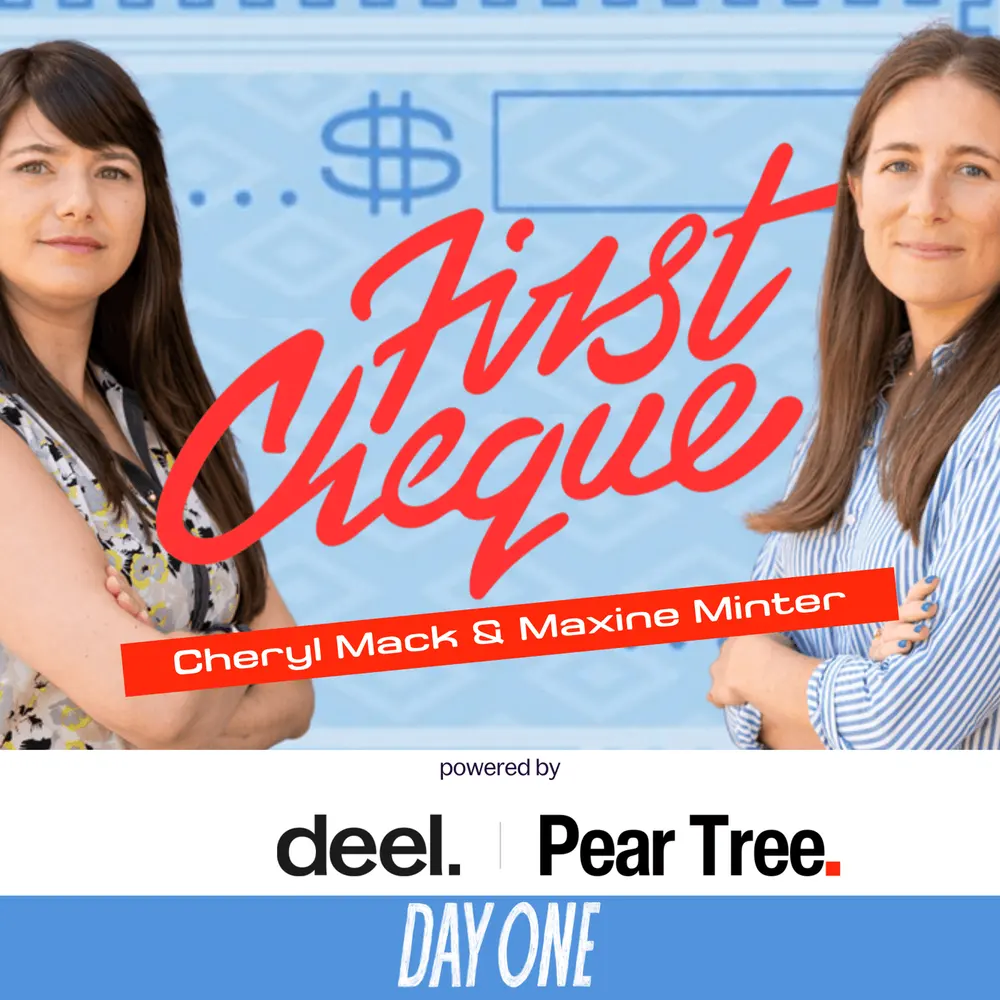 First Cheque with Cheryl Mack & Maxine Minter
Presented by Deel & Pear Tree
First Cheque with Cheryl Mack & Maxine Minter
Presented by Deel & Pear Tree 

 ▶
▶ ▶
▶ ▶
▶