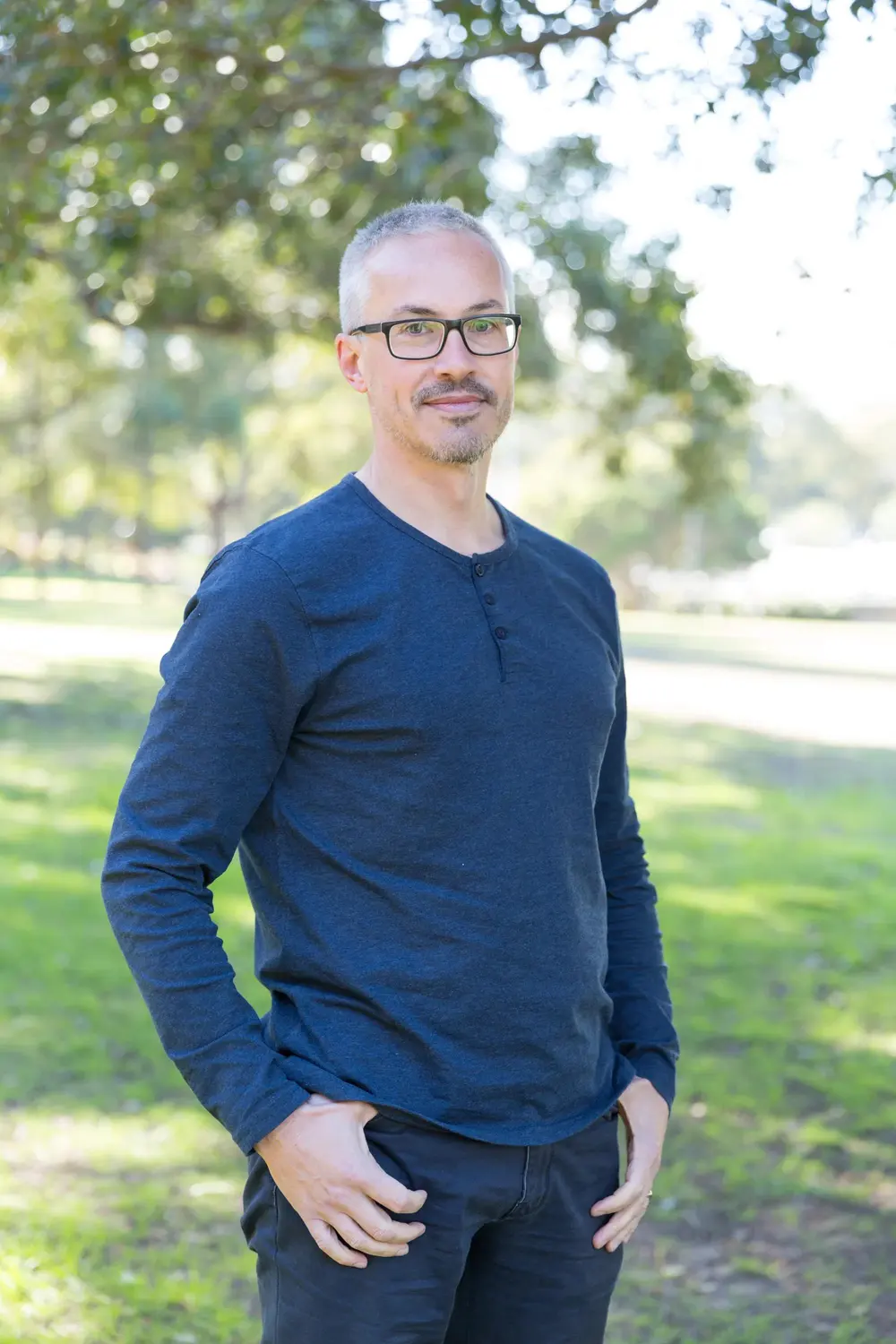
Transcript Synced · select any line to jump ▾ 0:00 Speaker: You're listening to a Day One FM show. 0:07 Speaker: Pick My Brain is the podcast where founders pitch me their startup and I try to give them some useful advice so they can connect better with potential co-founders, investors, media, and of course, customers. My name's Alan Jones and I was a founder myself for about 15 years, and after that, an angel investor for another 15 years. So yeah, old. Some of my ventures have been successful and some failed disastrously, But I like to think I've learned a thing or two along the way, and maybe some of that can help you. So if you'd like to learn how to tweak your pitch, subscribe to the Pick My Brain show now, wherever you like to listen to podcasts. 0:40 Joan Westenberg: Welcome back to the Unfunded podcast, where we tell stories of founders building impactful and independent businesses without relying on venture capital or external funding. Unfunded is part of the Day One Podcast Network, dedicated to sharing the real startup stories who inspire founders, operators, and investors. I'm your host, Joan Westenberg, and we're diving into the story of another epic founder, somebody who is going a little bit outside of the accepted mold and doing things their own way. With me today is Steve Shedding from Green Atlas. Steve, welcome. 1:13 Steve Scheding: Thanks for having me on the, uh, on the show. 1:15 Joan Westenberg: Excited to chat through this. Um, I've got a bit of a background in green tech, um, in some of the the brilliant startups that are coming out of Australia. I've worked with people like Goterra before, so I've got some kind of a handle on, I guess, agtech and that whole space. But I would love for you to tell us about Green Atlas and the core problem that you're solving. 1:34 Steve Scheding: Yeah, no problem. So we're very much in the horticultural space in fixed cropping. So really think of trees when, when you think of Green Atlas and really the problem, you know, it's like anything else. We're trying to help growers to improve their profitability. But it turns out that for horticulture, that's a pretty challenging problem because prices that growers are paid are really largely based on the quality of their produce as opposed to the quantity that they produce. So it's a very different problem to broadacre where you're really trying to maximize the output by minimizing the inputs. And instead, you're really trying to produce the highest quality fruit that's going to fetch the higher prices. And it's very, very normal to sacrifice the number of pieces of fruit to get a higher quality produce. So a classic example would be an apple where to fetch the highest prices, you want a certain size, It has to have a certain crunch, a certain amount of sugar content. For some varieties, you need a certain amount of blush, right? How red the apple turns. And if you don't hit those targets, then the prices fall off a cliff. You might only get 50% for the apple versus, you know, an A-grade apple where you've hit all the metrics right on the head. 3:04 Joan Westenberg: And does that lead to food wastage? Cost problems, that kind of thing? 3:09 Steve Scheding: So it can in the sense that, again, I'll give you an example in apples. What you really want to do is to have the tree produce the right number of pieces of fruit. Let's say it's 100 to 150 pieces of fruit per tree, but that tree is capable of producing maybe 1,000 pieces of fruit. But if you let it produce 1,000, they'll be very, very low low-quality pieces of fruit with not much sugar, not much size. And so you really want the tree to only produce exactly what is needed at the end of the season. And so anything that it's doing that is not that is by definition inefficient. So growers spend enormous amounts of time and effort, um, and money to really thin down the crop in the early parts of the season. A lot of that. is done through chemicals or it's done through manual labor. And really what we try to do as Green Atlas is to try to assist growers in doing those jobs as efficiently as they can be done. 4:17 Joan Westenberg: So what is the Green Atlas solution? 4:19 Steve Scheding: So what we have is a whole bunch of sensors that we mount on a vehicle, and, you know, that vehicle usually is manually driven, but we've also got systems out there on autonomous platforms, which is, which is pretty cool. The sensors typically are cameras. We'll have one pointing to the left, one pointing to the right. Very, very high-powered flash lighting so that we get very high-quality images all day, every day, or at night. We also have a LiDAR system, so a laser-based system for measuring the 3D structure of the trees, so we can measure things like how vigorous the trees are, are they responding to, you know, to fertilizer inputs, are they not, right? So we can measure lots and lots of different properties of the trees largely through either visual or structural information. 5:14 Joan Westenberg: What made you excited about tackling this problem? This is a pretty unique problem to approach. Did you have a background in agriculture? 5:23 Steve Scheding: I mean, the short answer for me is no, I didn't. My background, and those are the founders of Green Atlas, all of our background is in automation. We're all engineers. We've all worked on large-scale projects. So for example, in my past, I ran the Rio Tinto Center for Mine Automation. You know, we automated, you know, drill rigs, you know, large pieces of equipment. So my background is very much about automation, trying to improve the efficiency of processes, typically that are dull, dirty, or dangerous. 6:00 Joan Westenberg: Hmm. 6:00 Steve Scheding: But really the agricultural input was my business partner, James Underwood. He'd been doing, I don't know, 7 or 8 years of R&D through Sydney University with a lot of the agricultural peak bodies. So groups like Apples and Pears Australia, Horticulture Innovation, had funded a lot of the work that he had been doing. And so Green Atlas was very much the answer to the question of, you know, that research is cool, but when can we have it? 6:32 Joan Westenberg: What can we do with it practically? 6:34 Steve Scheding: Exactly, exactly. So James had always expected that given that we knew there was grower demand through the research projects, often, Growers would be sitting on the, on the funding panels. So we knew, we knew these were key industry problems and we knew that they wanted them solved, but nobody was really stepping in to say, well, how do we commercialize this research? 6:57 Speaker: Hmm. 6:57 Steve Scheding: And so Green Atlas was really the answer to, to that. Um, so James and I kicked it off now getting close to 6 years ago, you know, very much to commercialize you know, what was deemed as very promising R&D. 7:12 Joan Westenberg: So your background in automation, your background in technology, that's a massive help when you're doing something that is, I guess, hard deep tech. But there's still a great big mountain to climb, and it's not as easy as software, is that right? 7:26 Steve Scheding: Absolutely. Hardware is, let's say, less forgiving than software. 7:31 Joan Westenberg: Hardware is hard, yeah. 7:33 Steve Scheding: Hardware is hard. And I think It's, it's one of those things that's a double-edged sword. I don't think you can do the kinds of things we're doing without investing in hardware. And we're very much of the approach that you need to be down in the weeds, so to speak. And that means for us, you know, being at ground level, looking into the trees, getting very, very high-resolution data that we couldn't get from the air or we couldn't get from a satellite. And that means investing in hardware. So the downside is hardware is hard. The upside is because it's hard, you get kind of a moat for free. 8:12 Speaker: Hmm. 8:13 Steve Scheding: So it makes the barrier to entry higher because dealing with the hardware problems that you have every day, you know, really requires both a lot of expertise, but also a lot of experience. And that's something that the founders of Green Atlas kind of uniquely had. None of us were, you know, fresh out of uni. We all had a lot of experience out in the world in a lot of different scenarios, university, the corporate world, other startups. We all had that experience prior to kicking it off, and I think that was absolutely essential. 8:51 Joan Westenberg: So you had the idea, you had the notion that you were going to build this, you knew there was a need for it. But hardware is still expensive. What was your approach to getting this off the ground? 9:01 Steve Scheding: So that's where it gets interesting and very related to the topic of this podcast. 9:06 Speaker: Yeah. 9:07 Steve Scheding: Initially, we thought like most startups that you sort of have to go down the VC path and go and raise capital. 9:14 Speaker: Yeah. 9:14 Steve Scheding: And we actually spent a lot of time sitting in front of VCs. And in fact, you know, we ended up going through due diligence twice for multimillion-dollar seed stage raise. So we got quite far along with that, but at the same time, all of that is quite time-consuming. So you have to do something in the meantime. 9:38 Joan Westenberg: It's a full-time job doing a raise like that. 9:40 Steve Scheding: It really is. And so we took kind of a multi-pronged approach, which was to never assume that the raise would be successful. So that meant we looked for other sources of funding. So we were lucky enough to get a New South Wales MVP grant, which was a scheme available at the time, fairly small amount of money. We put our own money into the business, but you know, not huge amounts, really just enough to build a prototype to prove that we could build something that was going to work commercially. And so we were doing all of that in parallel to going out and trying to do a raise. And the thing that was interesting Interesting. Like I said, we got to due diligence with two different firms. They ended up not going ahead for two different reasons, neither of which on face value were us. So nobody kind of lost faith in us. One changed strategic direction, the other one just pulled out of Australia entirely. They just closed the office. But at that same time, I'll admit we got very, very fortunate And a very large corporate grower approached us. So just as, just as that kind of due diligence phase was, was winding up, a company approached us and said, you know, we've got a very specific problem. We've been trying to solve it for years. You know, we've got other companies and places like CSIRO telling us, yeah, it's easy, we can do that, but not really coming through with the goods. And so they approached us and said, look, we've seen that you've done a bit of work. 'In apples, seems to do what you say it does. Can you come and work for us?' And in this case, it was, it was almonds. And we went from essentially a pilot, you know, that got off the ground very quickly. I think within a month of first contact, we did a pilot on maybe 40 hectares. They were happy and then engaged us for 5,000 or 6,000 hectares. 11:41 Joan Westenberg: That's huge. 11:43 Steve Scheding: It was absolutely massive and it was an absolute game changer because it meant all of a sudden we knew, you know, people want this, they're willing to exchange money for something that's, you know, relatively new and they're willing to take that risk. And at the same time, the scale was big enough that we went from a struggling startup to a going concern as a business almost overnight. But really the key thing was all of that setup that we'd done in the beginning, which was not assuming that funding was guaranteed, that we were able to capitalize on an opportunity like that. And that's really the thing I guess with luck is luck is as much about your forward planning as it is about the things that just fall out of the sky into your lap. 12:33 Joan Westenberg: Yeah, you got to be ready for the good things that happen, ready for those opportunities, I guess. 12:38 Steve Scheding: Exactly. 12:39 Joan Westenberg: If you don't lay the groundwork, you won't be ready to meet them. Was there any like stress when you had that potential customer approach you? That's a massive project. Were you stressed about whether you could make that work? 12:51 Steve Scheding: Yeah, absolutely. But it wasn't really about the technical aspects. And we were lucky that they were willing to go through a pilot stage. So, we always say, you know, that the single biggest outcome of a pilot should be a go or no-go, right? Either it works or it doesn't work. And so the stresses in the pilot is really around, you know, can you make it work in the time that you have available? And we were reasonably confident, I would say that, but certainly not 100%. There were things we didn't know, like, you know, what resolution of camera images did we require? Was the lighting solution going to work in that, you know, we'd worked on smaller trees that were close to the platform, now we're working on enormous trees that are very mature. The things we're looking for are very far away. You know, can we do that reliably all day, every day? Those were the things we weren't 100% sure about, but by the end of the pilot, we were, thankfully, and it was all very positive. 13:57 Joan Westenberg: Yeah. So to commercialize this tech, did you go through things like the TRLs, technology readiness levels? Or was it much more, I guess, run fast and break things? 14:07 Steve Scheding: Yeah, it was really more the second. 14:09 Joan Westenberg: Yeah. 14:10 Steve Scheding: Again, having been through the corporate world, we're certainly familiar with the TRL levels and we always knew where we were. So, it was very much about having a good understanding of where we are on that journey and what we are capable of doing. So, To give you an example, like a lot of companies, we very much did a lot of the, let's call it the Wizard of Oz. As long as the customer gets the result they want. 14:40 Joan Westenberg: The man behind the curtain, yeah. 14:42 Steve Scheding: It doesn't really matter what happens behind the curtain. So, probably the first year, it was always the founders who were out running the platform. We had one system, we were testing things. I think every time that we went out, we were testing a new thing. It might be, you know, sometimes we'd have 3 different GPS units on there. We might have 4 different cameras, you know, so everything was an experiment, but we were still selling it as a commercial service because that was absolutely possible. The, you know, the customer didn't need to know it was an experiment to get value out of the, out of the results. And so for that first year, you know, we would go out, we would absolutely run fast. We absolutely broke things, but, but again, we had the experience to, have contingency plans in place. So if we broke something, we could generally fix it in an hour. 15:36 Joan Westenberg: Hmm. 15:36 Steve Scheding: Right? But that's the advantage of being very lean and having experience that we knew what every line of code did in our software. We knew we'd soldered every wire in the cables, we'd built the printed circuit boards ourselves. And having control like that means that you can very rapidly respond to anything you hadn't anticipated. Whereas the more you outsource, actually the less control you have. And so when things don't quite go to plan, you know, you've got less recourse to do anything about it. 16:12 Joan Westenberg: And with hardware, if things do go wrong, it's much harder to fix it in the abstract. You can't really fix it in post in the same way that you might be able to with a, a softer business. 16:22 Steve Scheding: Exactly. Yeah, no, that's exactly true. 16:24 Joan Westenberg: But with that comes the fact that it, it's it is still more expensive. Hardware is always going to be more expensive. So having, having had that first, that first client project, that success, being able to— I guess the word would be bootstrap it to that point— were you tempted to, to go back and look for funding again and say, look, we've got these, these customers, we've done these thousands of hectares, we can do this, you should invest in us? Or were you pretty set on following the path? 16:52 Steve Scheding: So once we had gotten to that point, we were much more willing to back ourselves in the sense that, okay, well, we had a bit of luck. We were able to capitalize on it by, you know, just being in the right place at the right time, good planning. And at that point, you know, when you've had a few VCs say to you, you know, come back to us when you've got more traction. Well, you go out and get that traction and why do you need the VCs, right? If you've got a sufficient amount of traction. 17:20 Joan Westenberg: Exactly. Yeah. 17:22 Steve Scheding: But the other thing that became clearer the further we went, You know, along this journey is that my belief is kind of more and more firmly cemented that for most of the things that you will do on farm, so solutions that you would deploy, you know, in reality on a farm. So whether it's IoT type sensor devices that you deploy around the place, weather stations and, and, and so on, or whether it's something like us that's a service that you deliver to a farm. I actually think those types of businesses are not really well suited to the VC model. 18:01 Speaker: Interesting. 18:02 Steve Scheding: As well as, you know, kind of not needing the funding anymore, we also more and more formed a belief that, you know, the VC model is really not the right model. It's not that you can't find backers, but you would absolutely need to find, you know, the right backers who were in it. Probably for more than one reason, you know, certainly more than just, you know, trying to 100 times their investment. 18:26 Joan Westenberg: So that hyper growth, hyper scale model, you think that's incompatible mostly with the agricultural sector, is that right? 18:34 Steve Scheding: Yeah, I mean the short answer is yes, right? The longer answer is I can absolutely see a few niches where hyper growth does make sense, but my belief is particularly with the hardware-based businesses where you're on farm, that you're just not going to get hypergrowth. You are going to get growth. And we've certainly seen that for Green Atlas year on year. We get bigger and bigger, which is absolutely fantastic. But you, what you find is that, you know, you've got multi-year essentially validation cycles. People want to kick the tires in the first year. And if I'm honest, they kind of still want to kick the tires in the second year. And it's often only in year 3 that people are then willing to go, you know You know what, I'm gonna scale this out to my, my whole business. 19:21 Speaker: Yeah. 19:22 Steve Scheding: You know, and I'm gonna say this is the way that we do things now. And then, you know, there's types of businesses where, you know, that kind of model is very compatible. There are others where it isn't, you know, they're very much, there are geographic business, geographic issues that make things work better in some geographies than others. 19:45 Speaker: Mm-hmm. 19:45 Steve Scheding: You know, in some places you've got a small number of very large farms. That works well for a business like ours. And in other places you have a very large number of small farms. And for services, what happens is that the proportion of your service that's just logistics moving from place to place goes up. 20:05 Speaker: Mm-hmm. 20:06 Steve Scheding: And so, you know, your profitability goes down in those kinds of jurisdictions. So there's lots of little nuances that until you really start down this road, you might not think about when you're just saying, well, the total addressable market is, you know, 100 million hectares and you get very excited about those numbers. 20:26 Speaker: Yeah. 20:28 Steve Scheding: But logistically, you know, how those numbers are actually arranged in reality. 20:34 Joan Westenberg: Yeah. 20:34 Steve Scheding: Makes a very big difference between, you know, can you deploy or, or, or not. 20:38 Joan Westenberg: I often find TAM is just, it's, you can get some nice numbers talking about TAM, but it doesn't always translate into reality. And especially not when you think about the incentives that you have for VCs versus founders versus customers, you know? So the customer wants a really good service in the long term with a product that they can count on. The company wants to create and build something that they're proud of. The VCs, well, they want an IPO or an acquisition, you know? Pretty much the end goal. Um, do you think your kind of long-term plan for Green Atlas, uh, do you think that would be incompatible with that VC goal? Like the acquisition IPO endpoint, is that where you guys want to go? 21:20 Steve Scheding: Yeah, absolutely. Yeah. No, I think the only difference really is the, the time frame. 21:25 Joan Westenberg: Okay. 21:25 Steve Scheding: You know, and, and also I guess the potential, the potential for the multiplier. Yeah. So I think most agricultural businesses You know, we can absolutely multiply the value in the business. But again, I think just realistically, the number of agtech businesses that are going to end up as unicorns, I think will be relatively low. 21:50 Speaker: Yeah. 21:50 Steve Scheding: And we're actually seeing that play out in the US at the moment where there were a few unicorns, but they're largely being revalued by massive discounts. That's very much a current thing that is happening is watching some of these ones that had massive VC backing, you know, went the Amazon model of trying to capture everything. And then now kind of in, you know, the playbook of, well, okay, well that didn't quite work. What's the next best thing? And the valuations are being absolutely hammered. 22:25 Joan Westenberg: Yeah, I think we've seen a lot of companies who have come in with VC funding and to get that multiplier you're talking about, they want to reinvent agriculture, vertical farms, urban farms, things like that. 22:37 Speaker: Yeah. 22:38 Joan Westenberg: Whereas it seems like a lot of the really good work in agtech is coming from people who are asking, how can we do what we're doing better? 22:45 Steve Scheding: Yeah, it's interesting, isn't it, right? Because I think there are two really predominant theses around ag and you've just hit the nail on the head, right? One is, where do I get efficiencies in the way that we produce food today? 23:01 Speaker: Hmm. 23:01 Steve Scheding: And that's very much, you know, Green Atlas fits that mold. Absolutely. And then the other side of it is, you know, how do you reinvent agriculture? And that's tough. And I don't think anyone's really winning that second one yet. You know, vertical farming still has a massive energy issue. That's kind of the elephant in the room is how do you get, you know, the, the right amount of energy to the right place in a vertical farm, right? So, you know, I'm talking about sunlight in particular, but whatever you replace it with if you can't get enough, you know, so there's that. There's also obviously the synthetic foods or, you know, lab-grown foods, similar sort of thing that there's been a lot of money. There's a few success stories of, you know, I love the, the Vow story out of, um, out of Sydney. Mm-hmm. But there's also been some pretty spectacular failures that are, you know, just starting to come out in the last year or two. 23:57 Joan Westenberg: Yeah, I think there was a rush of excitement sort of during and after COVID where people thought, hey, how do we fix supply chains? How do we fix food supplies? But I don't think there were clear theses and clear answers around that. It was more of a gold rush, but there were a lot of COVID-era gold rushes, weren't there? 24:16 Steve Scheding: Yes, there certainly were. Hand sanitizer being the key one. 24:20 Joan Westenberg: Look, on that, I'd love to ask your take. You've got a strong background in AI. What is your take on the AI funding bubble, the AI explosion of the past, I guess, 18 months? You know, we've seen some of the stats that were coming out were billions of dollars more invested just in 2023 than in some of the other years put together. I think it was something like $25 billion in 2023 versus $2 billion in 2022. What's your take on that AI funding bubble? 24:58 Steve Scheding: It's interesting, isn't it, in that a lot of that funding is around, let's say, building the tools or the building blocks. 25:07 Speaker: Yeah. 25:07 Steve Scheding: So my kind of take is, You know, that's great in that you need tools and you need the building blocks, but I think that the funding has been unfocused in a sense in that, you know, you've obviously got big companies like OpenAI who are doing fantastically well out of building these tools and they're making money from it. But really, I think the next wave, you know, is really about focusing in on how do we use these tools to solve real problems that people have? And that's what I'm, I guess, excited about and interested in seeing is how do you take these tools that are actually quite generic, but make them very, very specific to solve problems. So, you know, in ag, we're seeing things like, you know, can we customize GPTs, you know, or large language models, I should say, into being, you know, kind of proxy agronomists. And so, you know, they're like other fields, they're putting them in front of agronomic tests and saying, you know, are you at 80% on the exam now or 90%? And they're actually doing, you know, remarkably well. So the thing that's interesting, I guess, from that is, you know, are they going to be able to solve I guess industry-specific problems, yes, but I think they're going to be at that generic level of, you know, what, what percent chemical, you know, or what chemical should I use for this type of problem, uh, at what concentration. And they'll probably get very good at things like that. And what they probably won't have, that'll be a lot harder to, to build in, is the knowledge that growers have from having spent in a lot of cases, generations on a piece of land. And they know things that are extremely hard to encode into a computer system. And so that's kind of what I see as the gap. 27:13 Joan Westenberg: So there is a wealth of data out there that farmers and farms have access to. Is that something that Green Atlas would want to tap into, would want to start to access? 27:24 Steve Scheding: So long-term, absolutely. And, you know, we're building up our own, you know, large databases. We are, absolutely in the petabytes of data gathered on farms. And so there's a lot that you can learn, you know, at those kind of scales that, you know, that are very difficult to learn at the small scale. But then, like I said, the other thing, the converse is true where, you know, growers know things about their orchards or their blocks of land, you know, that are very difficult to learn from external sources. You know, a good example being, you know, a grower told me recently, Oh yeah, those trees aren't growing really well because that's where we pulled out a gum tree 30 years ago. And nothing's ever grown well in that spot. 28:07 Joan Westenberg: Yeah. Wow. Okay. And that's not something that you can just necessarily see when you look at a chart. 28:13 Steve Scheding: Exactly. Exactly. So some of those things, yeah, even from a satellite image, aren't readily visible. You might not pick them up in a soil sample because it's sort of hyperlocal. Whereas a lot of the soil sampling is sparser than that. So yeah, it, there's lots and lots of challenging problems to get back to your question as to whether Green Atlas is, is gonna look at it. Absolutely. But at the moment, being a bootstrap company, we see that at the moment has been through partnerships largely. So we try to make our data very accessible in the sense that If there's a partner of ours that does soil sampling or soil mapping, and you know, they want to understand— well, you know, Green Atlas says the trees are more vigorous in the northwest, right? We try to make it very easy to overlay our data onto, say, something like a soil map or a satellite map, so that we can start to figure out, well, what's the root cause for the differences in vigor? Is it a difference in nitrogen levels? Is there, you know, a calcium difference in the soils there? Is it just a texture difference? Maybe you go from clays to, you know, to more sandy soils. And so bringing those different and disparate data sources together is incredibly valuable. Ultimately, we probably will offer it as a single service, but at the moment, We largely do it through partnerships either with our own partners or with our partners and we enable their partnerships that they also have. And so that's very much again, kind of a bootstrapping, you know, solution to the problem. How do we get scale even in our data prior to having the, you know, the resources to be able to do it just by ourselves? 30:07 Joan Westenberg: So on the subject of the partnerships, you have partners in North America, South America, and Europe at the moment. Is that right? 30:15 Steve Scheding: Uh, yep. And New Zealand, uh, Turkey, France, uh, Italy. Yeah, quite a few places. 30:22 Joan Westenberg: And the plan is to keep on expanding that footprint? 30:25 Steve Scheding: Yeah, absolutely. 30:28 Joan Westenberg: Yeah. Would you set up— would you set up and start to expand Green Atlas, like expand your presence overseas as well as those partnerships? 30:35 Steve Scheding: So I mean, yes is the, is the short answer. We will always do You know, really the pragmatic solution, right? So what is the best solution for, you know, a particular scenario that we see? Sometimes it will be, you know, Green Atlas should establish their presence sometimes through a partner. I guess just linking that to the bootstrapping story, we actually see the partnerships as being incredibly valuable. So, you know, when we talk to VCs, there was very much a view that you had to own everything. You had to be vertically integrated. But what that ignores is that, you know, for us with partners, the partners typically already have their own established businesses. And really what they're looking for is a way of adding, you know, a new line of business to their existing business. And so we bring them that, right? So there's, and the quid pro quo is that they bring us credibility. They already have customers, they already have a market, and they're, if you like, pre-qualifying Green Atlas as a solution. So, you know, the customer might say, oh, you know, there's 3 or 4 things kind of like Green Atlas, and our partners can go to the market and say, look, we looked at all of those things and we chose Green Atlas because we think they're the best for, you know, these types of problems or those types of solutions. And so they're pre-qualifying us as a business to their customers in a new market that we've never physically been in, in a lot of cases. 32:12 Joan Westenberg: I guess that makes for a much smarter expansion strategy than anything else. And particularly if you are bootstrapped, if you are doing something like hardware, it makes so much sense. 32:22 Steve Scheding: Exactly. So the key thing, you know, like with a lot of this stuff, is to then, have credibility, right? Because how do you win those partnerships? And it's, it's simply by being credible. And you do that, you know, there's lots of different ways, I guess, you would establish credibility, but that's certainly what we find is that that's really what sets us apart and why, why partners are willing to, you know, spend their own money in, you know, starting a new market with us. 32:51 Joan Westenberg: And they, and they trust that you'll give them that support with what you're building 'cause you believe in the product and you have the right incentives and— 32:59 Steve Scheding: Exactly. 32:59 Joan Westenberg: You're not going to blow it all up in pursuit of that 100x multiplier. And that makes sense too. 33:04 Steve Scheding: That's right. And our model that we have with partners makes it very clear that Green Atlas is on the hook for, you know, keeping things operational, you know, the quality of the outputs, all of those sorts of things. Yeah, so to give our partners that peace of mind. 33:19 Joan Westenberg: What advice would you give to founders who are looking to bootstrap a company, whether in the hardware space or not? What's your kind of guidance there? 33:29 Steve Scheding: So, you know, look, looking back, I think there's a couple of things. For us, you know, particularly in that first 12 months when, you know, you're really establishing yourself as a business and you don't have cash flow yet, you know, cash flow absolutely is king. You know, I don't think that can be understated. And because of that, right, you really need to be able to bootstrap and you've got to think about what that means, right? So I think that's really important. Could you leave your current job and have 12 months or 18 months where you're not earning any money and you're waiting for the company to earn? There's a risk that it will never earn anything. Are you willing to take that risk? Can you support yourself You know, can your business partners support themselves? Those are really critical questions, but, you know, I, I guess don't get discussed very often. They're at least as important as can we build the product? You know, is the technology gonna work? Because obviously you want to believe that, and that's all about de-risking. But you still need to be able to get from here to there. Without, you know, gobs of cash coming your way. 34:45 Joan Westenberg: Yeah. 34:45 Steve Scheding: So I think, I think that's probably really the biggest decision is, am I willing to take that risk? And, you know, can I get from here to there? 34:53 Joan Westenberg: Is there anything else you'd like to share with any Unfunded listeners about the journey of Green Atlas or about your journey as a founder? 35:02 Steve Scheding: So I mean, I think I've been through really the key points, which was, you know, we, We were prepared to capitalize on, you know, a few situations that came our way, which was fantastic. So preparedness is key. I think credibility is key, trying to get, you know, respect from your market as quickly as you can. And in something like agriculture, that's a lot easier said than done. So thinking through, you know, how do you get that? For us, it was things like partnering with research institutions where they would publish papers on does our system work, right? And that is an additional layer of credibility from an independent third party. So there's lots of things to think through like that, right? So how do I get into the market as quick as I can? How do I establish cash flow as quickly as I can? I always kind of viewed it as a, like a net present value optimization problem. We always knew there was a market there, but the question wasn't, how do I tap into, you know, the largest market possible? It was much more like, how do I bring forward as much cash flow as I can to the present day? 36:19 Joan Westenberg: Right. 36:19 Steve Scheding: And so that meant saying, okay, well, there's, you know, there's 10 things we could do, but there's one thing we could do in the next 3 months that would be revenue generating. Right? And so that then starts to set how you prioritize because you, you're now prioritizing about cash flow alongside of how do I open up this, you know, potentially large future market, right? You can't, I don't think you can do both of them independently if you want to bootstrap. And that's probably the other key thing is, yeah, how do you do the product design and implementation so that you can do a more progressive rollout. And that's something we absolutely did with Green Atlas where, you know, we're 6 years in, there are product features we're only coming out with now that we knew on day 1 we had to have, but you know, they weren't the right first things in order to help us generate some revenue. 37:18 Joan Westenberg: That makes so much sense. Yeah, everything you're saying just, it kind of lines up with the stuff that I'm hearing from a fair few of these unfunded startups, but you are one of the few founders who has taken this approach with hardware, which I think is just fantastic because hardware is hard, you know, louder for the people at the back, hardware is always hard. 37:37 Steve Scheding: Yeah. 37:38 Joan Westenberg: So yeah, I think what you're doing with Green Atlas is pretty incredible. To bootstrap something like this is, it's very cool. So congratulations on that. And thank you so much for being on the show today. Where can our listeners find out anything more about Green Atlas and stay updated on your mission? 37:55 Steve Scheding: So really, the two best places to find information about us, number one is just our website. Very easy. It's just greenatlas.com. And if you want more regular updates about the kinds of things that we're doing or that our partners are doing, that would typically be through our LinkedIn. So again, just Green Atlas on our company page on LinkedIn. 38:21 Joan Westenberg: Thank you so much. I appreciate your time Today, today. and thanks for being on the Unfunded Podcast. 38:25 Steve Scheding: No problem. Thank you.