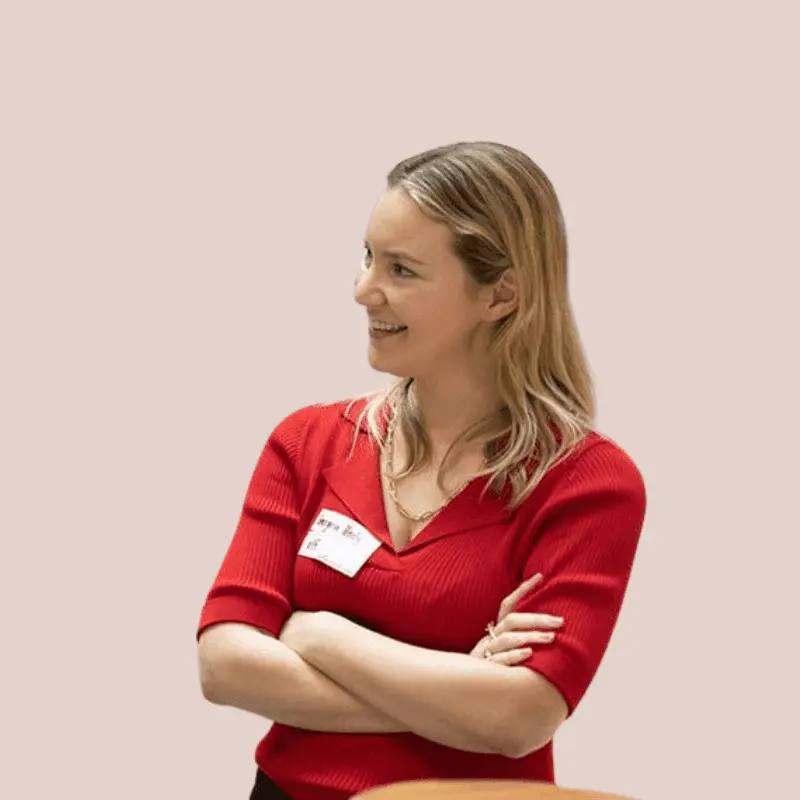
Transcript Synced · select any line to jump ▾ 0:02 Georgie Healy: Founders scale faster on Deel. Set up payroll for any country in minutes. Hire anyone, anywhere. Get visas handled fast and get back to building. Visit deel.com/dayone. That's D-E-E-L dot com slash day one. 0:23 Kevin Cheng: In this particular scenario, the AI was able to pick up a very subtle finding which turned out to be stage 1 lung cancer. And so because we picked it up in stage 1, it hadn't spread and we're able to confirm it with a CT scan straight away. And then that led to treatment straight away. And essentially this could be a life and death scenario in terms of the sliding doors moment. And she was really thrilled to be sharing her story because she just believes in the power of the technology that much. 0:55 Georgie Healy: Mm-hmm. I got goosebumps. That is incredible. Hello everyone. Welcome back to In the Blink of AI. One of our most incredible guests today. We've got Dr. Kevin Cheng. He's the Chief Customer Officer at Harrison AI, and they're one of Australia's top success stories. When I speak to the biggest AI doubters or, or haters, I guess, I like to use healthcare cases like what Harrison do. Their insights support clinicians in their diagnosis and treatment, and usually this wins people around because, you know, AI can really expedite being able to support patients. And Kevin even shared a story of a patient in the UK who had her life completely changed through the innovation of Harrison. I think you'll get goosebumps when you hear this story. To hear about that and more, and a peek behind the curtain at one of Australia's most game-changing startups. Let's dive right in. Hey Kevin, thank you for joining In the Blink of AI. 1:57 Kevin Cheng: Hi Georgie, thank you for having me. 1:59 Georgie Healy: Kevin, I know a little bit about your background and I know that you wear many hats, but today I'm so thrilled to have you on the show to talk about one of my favorite startups in Australia, Harrison AI. I'd love to hear from your words, what is Harrison AI and what's your role at the company? 2:18 Kevin Cheng: Sure. So at Harrison AI, we build medical-grade AI solutions that help automate workflows in healthcare. We have a couple of product brands, one called Analyst that works in radiology. So that's X-rays and scans of your head. And also another brand called Franklin that works in pathology, dealing with tissue biopsies and diagnosis. My role is Chief Customer Officer, and I help deploy those solutions into clinical settings. So working with radiologists and pathologists to get the most out of AI technology. 2:57 Georgie Healy: I cannot wait to talk a little bit more about radiology and pathology and those models that you mentioned. But first of all, you're a doctor by background. Why did you feel compelled to join Harrison AI, and what made this role so exciting for you? 3:14 Kevin Cheng: Yeah, good question. So a few reasons. Angus and Dmitry, who are the founders of Harrison, are friends who created a really compelling vision and business plan to really embed AI into healthcare at scale. And so I was, you know, foremost excited by the mission statement and the ability to help shape what AI adoption looks like globally around the world in our sector. I've been really passionate about solving hard problems in medicine using technology and innovative models of care. And ultimately, as a doctor, is to improve health outcomes for our patients. So I see this as a way to really do that at scale. Another factor is working with clinicians to co-create the right solutions that really help improve healthcare over time. Uh, in my travels, seeing the most successful innovations is where you can combine clinical expertise with problem solving and also commercial skills. Uh, and in this skill, I get to dabble in, in all three areas. 4:20 Georgie Healy: Yeah, incredible. I, I can't help but wonder at what stage of the journey Harrison were on where you were willing to take the leap. Were you risk adverse and you're like, I got to see this play out for a little longer before I quit my amazing day job? Or were you Were you ready to take a bit of a gamble? 4:38 Kevin Cheng: Yeah, yeah, I'm a, I'm a risk taker. So I, I left full-time clinical work, um, two decades ago. I have worked in industry, worked in consulting, I've started my own business. And so I joined the company two years ago when I sold my last business, and it's, it's been a wild ride since. 4:57 Georgie Healy: I bet, I really do. And now let's, let's, you know, just to fully get a well-rounded picture What exactly— for someone like me that has no medical background, what exactly is radiology and pathology in general, and where does AI play a role in automating diagnosis and reporting for those? 5:17 Kevin Cheng: Yeah, sure. So radiology and pathology are tests that we as doctors do when we're not sure of a medical issue. We, we take a history, we understand the symptoms from our patients, We sometimes do examinations, so listen to the heart and, um, and feel the tummy, but we also have to confirm these initial hypotheses by doing tests. So these tests are like blood tests and X-rays and scans and sometimes tissue biopsies. And our solutions at Paracern improve those tests by increasing the accuracy of diagnosis so that we reduce human error. 5:57 Georgie Healy: Mm-hmm. 5:57 Kevin Cheng: It also increases the efficiency of workflow. We're taking away a lot of the administration, and we also help clinicians in their roles by automating a lot of the very tedious tasks and reducing burnout and increasing their capacity to help more patients. 6:13 Georgie Healy: Incredible. It's funny talking to the AI naysayers, which doesn't happen to me a lot in my day job, but when I'm out in the wild, one of the things we can all seem to agree on is that Healthcare is an incredible industry to be incorporating AI, so I'm excited to unpack that with you. But what does make an AI startup in healthcare different from like a building and growing perspective than say prop tech in AI or professional services AI products? 6:46 Kevin Cheng: I'm— I'll be guessing here because I haven't built AI in other, in other industries. But healthcare has very stringent standards because we need to get it right. Sometimes it's life and death decisions, and any impact can affect patients in their daily lives. So we need to navigate a lot of rules and regulations in our industry, which are there for good reason. Clinicians are sometimes a challenge to deal with, particularly with change. They've been working in certain ways for a long time in their training and also in their work life. So the human side of the implementation implementing technology requires significant consideration to change management and how you can bring folks on a journey towards new workflows and new ways of doing things. And AI needs to be very explainable as well in our industry. When we train on large datasets, we have to put them through a lot of clinical validation to make sure that they are safe and to also pass regulatory— Mm-hmm. Hurdles in order so that they can be cleared to be sold in certain markets and to be used in clinical settings. 7:56 Georgie Healy: Are there different rules in different markets? I know when I was in automotive, there were certain, like, placements of where the powertrain versus different segments could go based on whether you were in Saudi Arabia or in England. I know that's a really random example, but I'm curious how regulation changes fundamentally in a big way from Australia to other markets you've launched in? 8:22 Kevin Cheng: Yeah, um, it's been a quite a discovery process understanding what are the different use cases that address different customer pain points in different markets. And I think fair to say there's different maturity of AI readiness in, in different markets. Some healthcare systems are really embracing AI, others are a bit more cautious and and taking a lot more activities to validate AIs before they are used on patient cases. And there are differences that we see across regulatory environments as well. So in the US, for example, the FDA has taken an approach to require validation on single findings. So if we detect 10 findings in a chest X-ray, we have to run very expensive clinical trials on each of those findings, Whereas in Europe, for example, we could do one study that covers all 10 findings. So there's different approaches in different markets as well from a regulation point of view. 9:21 Georgie Healy: That is fascinating. I do wonder how this anti-regulation government will impact that, but that's possibly a question for a future show. I would love to hear a little bit more about Franklin and Annalise. Great names. How do they differ? What do they, what do they do differently? 9:41 Kevin Cheng: Sure, so they are different models and apply to different domains of medicine. So in radiology, these are X-rays and CT scans of the head and of the chest. And we build models using computer vision as well as what we call large language models to really analyze images and surface findings that might be helpful for diagnosis and to inform treatment plans. Pathology is similar. We're also using computer vision. That's our sort of core skill. When we're blessed with a team of world-ranked, you know, AI engineers who are brilliant at what they do. But there's a different challenge with pathology because if you think about tissue samples that you have to look through a microscope to see, there's a factor of up to 100 times magnification that we have to deal with, which adds a lot of complexity to training AI so that it can look at a helicopter level, but also drill down to very sort of microscopic images to detect abnormal cells and dangerous cancer, etc. 10:47 Georgie Healy: Wow. Yeah, it's, it's such an incredible thing to think about, even for me with the non-medical background. Just having that technology on hand to help you identify things takes possibly a little bit of pressure off the clinician, right, to identify everything every time. Not have a bad day, not get something wrong. Maybe you could tell me about, you know, what happened before this technology was developed at Harris and what, what it looked like versus now. 11:21 Kevin Cheng: Of course. So the world of radiology, which has already been digitized, it's a very natural starting point for AI to be deployed into healthcare. We do need digital images to kind of train the AI and and build the product. But, you know, a lot of the work is quite manual, right? You're looking at an image, you're determining— humans essentially are determining what's wrong in an image and then playing that back to the referring doctor, a GP like myself. You would have to write a report, often through dictation, and then you can sometimes get it wrong. And so there's human error in missing findings, and unfortunately that impacts patients. 12:06 Georgie Healy: Mm-hmm. 12:06 Kevin Cheng: Uh, what we are doing with the AI solutions is really to automate some of the tasks within that radiology workflow. So when referrals come in, we can automatically process those images and suggest some of the findings and actually localize where those findings are. We can augment the findings by calculating risk scores and quantifying how much disease are on those scans., and we couldn't also automate some of the drafting of the report that goes back to the initial referrer in, in the first place. So it's really helpful by automating some of the tasks, providing a second pair of eyes, as you allude to, and that really does take the pressure off clinicians who we don't have enough of, but also are experiencing a lot of burnout because they're under so much pressure. 12:57 Georgie Healy: Yeah, that's been quite well reported, right, the amount of pressure that, that doctors and the like are under. So it's very interesting what's being developed to ease that burden. To play devil's advocate though, when, when would it not be wise to use technology? Is this, is this a field that completely makes sense, or are there still outlier cases where you wouldn't use technology? 13:22 Kevin Cheng: Yeah, I know that everyone is cautious about AI. There's concerns that AI will take over and and then maybe even jobs may be replaced. I'm a lot more bullish when it comes to us working very collaboratively with technology companies and making sure that clinical care is safe and effective. No different from when the internet or electricity or calculators were, were first invented. I don't think those jobs have gone away, but the jobs do change with a lot of tools. , that are now available. Yeah, so I think that, um, AI can be assistive, it can augment, or it can become fully autonomous. And I think we're still at the infancy of the whole AI era. And in many cases, there's certainly our solutions, they are assistive, they're helping clinicians diagnose, they're helping clinicians draft reports, but ultimately the responsibility and the decisions are made by clinicians, which is what they do best for patient care. There's a lot of context that's required to make decisions as part of healthcare, and I don't think AI is there yet in terms of taking over care. So I think we're safe from losing our jobs, but we're really excited by the opportunity that AI presents in being a tool that clinicians use as part of their toolkit to help patients. 14:47 Georgie Healy: If you had a magic wand, and I'm sure you've seen areas in, in the medical industry that you would love Harrison AI or someone to implement technology or bring a new AI model to market to help with the diagnostics? Have you thought about what you'd want to do next? What, what's exciting? 15:10 Kevin Cheng: Yeah, I mean, I feel like we're only just getting started. We're a fairly young AI company in radiology and pathology compared to some of our peers, um, but the, the first cab off the rank, if you like, is to build out our product range so that we can help more patients with more of the modalities, more of the, the cases that radiologists and pathologists would ordinarily do. So other areas of the body, other types of scans. Then I think there is a big data set opportunity where we can harness a lot of information that we capture in healthcare to actually predict risks and provide healthcare a lot earlier in, in the piece. Um, a lot of the chronic disease that's part of our aging population is actually preventable. You know, up to 80% of diabetes and heart disease, up to half of cancers. So if we can get in there early and detect issues, then we could help patients a lot earlier. And I think there will be a revolution that's already happening, which is AI will be available for consumers as well. And patients will have wearable devices, they'll have hardware at home, with AI chatbots and interfaces that allow them to better manage their own health. So my prediction of the future, or wishlist, is that healthcare is a lot more predictive, it's a lot more personalized because it actually tailors to the individual situation for that person, it's a lot more consumer-driven, and it's a lot earlier as well in terms of detecting risk. 16:46 Georgie Healy: Why does consumer-driven excite you? Is it to ease the burden on the medical system? Is it so that it's detected sooner, you don't have to wait for an appointment, that kind of thing. Talk to me about the consumer-driven technical solutions. I, I find this fascinating, Kevin. 17:04 Kevin Cheng: Yeah, it's a great question. Um, my take on it is that consumers are rising up in all industries. If you think about, um, the world after the pandemic, we're ordering groceries online, we're getting deliveries, everything's on our smartphone at our fingertips. And so healthcare is, is no different. There's been a, an emergence of telehealth models which brings healthcare a lot closer to, to a person's home. And so there's an appetite across industry for healthcare to be a lot more accessible anyways. I think the nature of disease is changing. Even in my 20, 25 years as a doctor, uh, there, with the pandemic aside, we see a lot less injury and infection and what the modern healthcare system was, was actually built on. And we're seeing a lot more chronic ailments like diabetes and heart disease and arthritis and cancer, which is part of an aging population. So I think it's really important to provide tools to consumers, as long as they are validated to be safe and effective, that allow them to also take charge of their own health, but, um, interacting with the health system at the right points in time. Uh, and no doubt it will also relieve the burden on the healthcare system where there's a, you know, significant shortage of, um, healthcare clinicians and workers around the world. 18:29 Georgie Healy: Yeah, I, I could talk to you for hours about this and pick your brain. Um, just one more question around it though, because I just find it fascinating. Sure. Um, You know, I do notice just anecdotally that the, the older generation that I know and interact with, they're, they're trying their best to look after their bodies with the food they eat, the groceries they buy. Um, but I do kind of seem to notice that they feel a little like they don't have control. So I find this, this really empowering as an idea. What, what challenges, cuz I feel like you're uniquely able to answer this with getting that older population to embrace the technology that can help them. How would you go about it? If, if you, if I put you on the spot right now and you had this device that, or hardware, software, whatever it is, you could give it to my parents that would help them detect early diabetes or cancer, how would you market it to them? How would you explain it to them? You're the Chief Customer Officer. what kind of conversations are really important to get them on board and not scared of it? 19:40 Kevin Cheng: Yeah, good question. I think I'm living with that with my parents as well, right? So a few things. One is that we can all improve on health literacy, which is what do I know about my own body, my own family history, medical history that allows me to take better care of myself as I get older. And that applies to all of us at all stages in life. You know, a lot of disease is preventable and there's a big focus on wellness and longevity these days. So with respect to seniors, you know, understanding more about their risk factors that they need to target or what things they can do to help themselves at home. A lot of chronic disease is lifestyle-oriented. The second, I think, is curating the right tools. And this is where groups like Harrison regulation, key stakeholders such as peak bodies are really important and play a role to make sure that AI tools are safe and effective and validated through proper clinical trials, which is what we go through before we actually market our, our solutions. And then a third, I think, is to create the evidence base to provide information broadly across society on what things are working. You know, there's a lot of influences in our industry as well, and there needs to be some fact-checking to make sure that what we are recommending and what consumers are signing up to, what we're doing, what your parents are doing, my parents are doing, are actually the right interventions that deliver the best bang for buck for their own health and for their own risk factors. So yeah, I think health literacy, curating and regulation for the right solutions and then creating almost like an information marketplace so that people are aware of what works and what doesn't work. 21:32 Georgie Healy: Thank you for that. That was very interesting, um, and incredible, uh, to hear from an expert like you how to, how to unpack something like that. I laughed about the influencer thing because I think probably you and I have seen some interesting things in the cupboards of our friends and family that you're like, What the hell is that and why? Oh, I saw that, you know, nightshades are going to kill me. What's the weirdest thing that you've heard from an influencer that you're like, that you can tell the listeners right now, this is not a thing. Stop doing it. 22:08 Kevin Cheng: So this might be with my Harrison hat off, right? 22:11 Georgie Healy: Yeah. Yeah. Kevin's hat only. 22:13 Kevin Cheng: Oh, look, and to your point, I'm no expert, right? So I've definitely gone through medical school, trained as a GP. Worked in a whole range of corporates and now startups, but we're all, all on a learning curve and we're proving out new things. The, the sort of corpus of medical knowledge, I think, doubles every week or so around the world. So there's always new information and research that's proving, um, what the best treatment guidelines are for what particular disease or, or situation. I think to your question, there's a lot of wacky stuff out there and and this kind of bubble of wellness and longevity that we're in, there's all sorts of people jumping on different bandwagons to try different things to, you know, biohack or to, to live forever. But I think a lot of it comes down to lifestyle. If we do the right things that are obvious— eat well, exercise, have good mindfulness, good sleep and rest, we have community around us— that's half of the puzzle solved, I think. Yeah. And then the rest is understanding risk factors pertaining to medical and family history, early screening, following guidelines where there are symptoms or disease, and then working with the healthcare team with the right technologies and tools in place to diagnose early and treat early as, as much as possible. 23:35 Georgie Healy: Yeah, and it's an unfair question because, you know, there's probably things that are working, and even if it's working because it's placebo, who am I to say that it's inappropriate, especially without having a medical degree. In my household, we have gone through 3 different ice bath options, to your biohacking point. I don't know why we don't use them, but the next one we buy will work and that will change our lives. 24:07 Kevin Cheng: Yeah. So ice baths, I think, have good evidence. Or even just cold showers or going for a swim. In fact, the, you know, good, good health benefits, even just from turning your shower from hot to cold for the last 30 seconds, I think works. But in, in, in that kind of longevity space, some wacky things I've seen is like nasal alignment, dropping methylene blue into your food, which turns you blue like a Smurf. So there are some different wacky, uh, methylene blue, like the anti-dandruff stuff, right? 24:43 Georgie Healy: Is that the same thing? 24:44 Kevin Cheng: I don't know if it's the same thing, but it's been used in like dyeing things in medical grade, um, devices and so forth. Uh, yeah, so that one came across my intro recently, so that was interesting to see. 24:57 Georgie Healy: Yeah, I'd love to see a TikTok Instagram algorithm and what's popping up. Okay, amazing. Thank you for humouring me with that, Kevin. That's super fun and interesting to get your take on. Taking a bit of a step to look at something a little bit differently now, I'd be remiss to not ask you about Harrison AI as a business and as a company in general, being one of Australia's success stories. It's got pride of place on Blackboard Blackbird's portfolio page, it was the only Australian company selected for the Global Healthcare AI Challenge Collaborative. So, you know, headlines and, you know, websites and everywhere, we can easily see very successful company. Assuming the rhetoric that only 1 in 100 startups become successful, Kevin, what, what are some of the things you think really helped get Harrison to where it is today? 25:58 Kevin Cheng: Yeah, good question. I mean, building health tech startups that are sustainable and last the distance is tricky. Building AI is super, super complex, requires a lot of investment, and hard to get right given the nascency of the industry. So I think foremost what comes to mind is amazing founders, very supportive board and investors, a brilliant team that have executed a really compelling vision and taking on this ambition of a big hairy audacious goal to scale AI across healthcare. I think not taking shortcuts, because there's been a very careful intent from day one to build medical-grade industry-wide solutions. So not just have single findings, but to have like comprehensive findings, which is akin to, you know, launching a dictionary only looking at words starting with A versus from A You said, right? So, and going through the kind of front door of expensive clinical trials, working with stakeholders and regulators to get those models right, co-creating these solutions with clinicians at the frontline because they can see the problems, but they can also help shape the solution in terms of the user interface, the workflows, how it's going to be used day to day. That's been really important to kind of get right. And that's led to us delivering market-leading solutions. We won 100% of our head-to-heads in these kind of arenas, and we managed to get a lot of traction commercially as a result of taking those very deliberate initial steps. The other thing to mention is just the cost of AI is expensive. So this is a non-trivial exercise, especially with computer vision. You're taking large datasets and it's supervised training, so you have to painstakingly label every image. So we employ hundreds of specialist doctors to label these images and compare the outputs with ground truth, which is what actually happened to that patient. And then through constant iteration and refinement, we get these AI algorithms to not only match, I guess, human performance, but is to surpass them. And they're never gonna be perfect, but we get them more and more accurate by investing so much upfront. So that's been really key to Harrison's success. 28:30 Georgie Healy: How difficult is it to get those partnerships with doctors? Are they fearful, or, "Oh, am I helping you take my job away?" Or are they like, no, this is fantastic, this is going to make my job easier? Or is it a mix of the two? 28:46 Kevin Cheng: Yeah, I think the sentiment has actually changed and evolved even in the short 5 years that the company has, has been around. In radiology and pathology is a little bit less digitized, so it's a little bit sort of a second mover. But in radiology at least, AI is definitely the the main game. And if you talk to radiologists at conferences, talk to peak bodies, it's very much understood that radiologists with AI will perform better and will provide more safe and effective healthcare compared to radiologists without AI. But there was definitely some skeptics early on. I think a credit to the founders who built those early relationships with large hospital and radiology providers. And then was a real sort of meeting of the minds. Our CEO is a doctor, I'm a doctor, we've got lots of clinicians on the team, and we're really in a partnership mode building these solutions so that they're fit for purpose. And we're looking and understanding the frontline scenarios that specialists, radiologists, and pathologists face every day, and we're taking those challenges to, to build out our product roadmap. So by the time we launch them into market, they've already been tested, they've been co-created by clinicians, they've been put through the gauntlet with super users to look at all the bugs and all the challenges and improve year on year as we update the models. So that's been really critical to adoption. 30:17 Georgie Healy: Yeah, this kind of leads into my next question. You know, early days of a startup, you don't probably have that much data to show them, like, look how much this actually could help you do your job and improve your accuracy. But you guys relying on the fact that you understand these pain points really deeply, you guys have the medical background, you can speak the same language. Um, but that's really probably helpful for some of the listeners that might be founders on the show. You know, over time that conversation probably gets a little bit easier as you've got more data. Would that be correct? 30:51 Kevin Cheng: Yeah, I think so. I think we're very product-focused, understanding, uh, the right use cases for the right customers in the early days. And then the very sort of extensive AI training and product development process has to involve clinicians at almost every step of the way. I think as we roll out, and we're now in about 12 markets, cleared in about 42 markets now around the world, We process so many cases, we hear so many patient stories, we have so many testimonials and impact on clinicians and the way they provide care every day that a lot of that, the power of those stories now promote our products almost naturally. So we get a lot of inbound traffic, but that's ultimately what the products are there for, is to deliver improvements to accuracy for clinicians, help with workflow and ultimately help patients with their health outcomes. So that's the reason we all get up and work on this. It's not easy, but yet in the early days it was having that belief. But now that we can prove it out, it's been really compelling to continue on the journey. 31:56 Georgie Healy: I know you would have so many patient stories like you mentioned that probably, you know, I do something on a much smaller scale and there are hard days, running an accelerator, but then at the end of it, when you see what you're able to do for companies or people, it's rewarding. I don't know if you can share any on the show that are publicly available. If there are, let me know. Otherwise, we'll pass right on to the next question. 32:26 Kevin Cheng: Yeah, we've got lots that are in the public arena, so I can draw from those. So a recent one, there was a lovely lady, her name is Diane, and she was kind enough to share her story on the BBC in the UK. So Diane, an older lady, she started to get a persistent cough and went in to see a GP, got a chest X-ray done. And then the way the NHS works is ordinarily it will sit in a list and wait for a recording ready for radiologist to send the result back to, back to the GP so she can understand whether there was something serious or not. And that can take days or weeks in the NHS system. In this particular scenario, the AI was able to pick up a very subtle finding which turned out to be stage 1 lung cancer. And so because we picked it up in stage 1, it hadn't spread and we're able to confirm it with a CT scan straight away. Mm-hmm. And then that led to treatment straight away. And essentially, this could be a life and death scenario in terms of a sliding doors moment. And she was really thrilled to be sharing her story because she just believes in the power of the technology that much. And we've had lots of instances where the cases had findings that were missed. It's just human error. A lot of clinicians are under pressure. There's a lot of volume out there. Mm-hmm.. And we're the second pair of eyes, and our solutions kind of pick up those findings and in many cases get patients back in for earlier treatment and diagnosis. 34:03 Georgie Healy: I got goosebumps. That is incredible. And you know, the NHS notoriously, you know, overburdened with so much work. That is such an amazing story. And how many, how many places did you say Harrison has gone to market? You did tell me. 34:20 Kevin Cheng: We're over 1,000 sites live at the moment. I think it's about 1,070 as of this month, and we're processing upwards of 7 million+ cases every year. And then our mission statement, our North Star, is really to get to a million a day. So we're still just touching the surface of what we can achieve, but we're working really hard to scale the technology to as many systems as we can. 34:49 Georgie Healy: I saw that you guys launched in India. I always see, you know, we're launching in the UK, you know, and the US. Why India specifically? 35:00 Kevin Cheng: Well, it's the biggest market by population, and that really aligns with this north star. We, we see AI as a great leveler as well. So in, I guess, emerging nations, in developing economies, there's a great opportunity to amplify the capacity of clinicians. And sometimes we see around the world that the greatest shortages of clinicians are where there's actually large populations. And so we've tried to use technology in our AI solutions to help patients who may not be able to access healthcare as quickly. 35:36 Georgie Healy: I mean, when you explain it that way, it sounds like super obvious. I think I must speak to too many— like, they have to be English-speaking nations, whereas I guess with healthcare, the X-ray is universal. It doesn't really matter, does it? 35:52 Kevin Cheng: It is. I mean, we do have to translate the user interface into certain languages, particularly like in, in the UK, in Europe, where there's different sort of settings. But for the most part, the AI is very what we call more generalizable because as we train, our datasets have been very diverse. And so we've got representation of all sorts of different populations around the world. And therefore the accuracy of the AI holds up when we apply it into different markets. I mean, one of the considerations is how do we find and build sustainable business models in different market settings? Every region is different. And in fact, our solutions look different for every customer use case as well. So the tricky thing with a startup is to, to go search for that sustainable business model in different locations around the world. And that's a big part of my role. 36:47 Georgie Healy: Amazing. Okay, I have my last question before we get to rapid fire. It's probably a Kevin Hart question, and it's my only political question of the day. Are there any front-of-mind policy or ecosystem improvements here in Australia that would make the go-to-market process easier for you as a healthcare or AI company? 37:10 Kevin Cheng: Yeah, I'll start broad and then sort of narrow down to Australia if that's okay. So we, we work with regulatory bodies, peak bodies, and stakeholders across the industry. We really see ourselves as thought leaders to help shape what AI looks like. At scale. And, and so we see a lot of differences, uh, when we engage with various stakeholders in, in industry. In healthcare, from a regulatory point of view, there are great differences. So we talked about the FDA versus in Europe where there's different hurdles, if you like, to, to go, to go through. And so one of the— my wish lists is to harmonize the regulatory regulatory frameworks so that it allows easier market access in different regions because patients all need help. They all have— suffer from cancer and infection and all these challenges that we can help with. And we are so impatient in rolling out our solutions to help as many clinicians and patients as quickly as possible. I think narrowing down to Australia there's an opportunity to really promote the adoption of AI. We tend to be a follower market, not necessarily a leader in the market as we're growing technologies. And then so supporting, you know, other technology companies to really embed their solutions in the homegrown market would be really important. And when we think about AI specifically, often there's a need to kind of lock down an AI algorithm because you have to pass through the validation studies to prove that it's safe and effective. But AI, by very definition, is a machine learning process where you're iterating and improving. So one of the— on a lot of people's wishlists is to develop dynamic regulatory frameworks so that it can validate models that improve over time rather than just a static version. 39:13 Georgie Healy: Yeah. 39:13 Kevin Cheng: That's, that's validated in a point of time. 39:17 Georgie Healy: Thank you so much for articulating that. I wouldn't know the first thing about policy, but I read some of the spicier headlines, and I think something I've read recently is, you know, adoption is increasing for AI, and it's— 2025 is going to be a big year, but there is fear around sooner or later some bad headline will happen in AI, and will it change the way policy is conducted? This doesn't require an answer. I'm just talking now. 39:53 Kevin Cheng: No, it's a great topic. And my two cents on that is often people fear the unknown, and it's just so interesting to watch. We're at that real tipping point of how is AI going to be used day to day by consumers, by providers of healthcare in our sector. And some of the fearmongering, if you like, is because we don't know, we fear the worst. But if I take the calculator analogy, you know, accountants have changed their roles. They haven't gone away. We're just using our tools in a different way and adapting to the workflow. So very much I kind of see that as the glass half full, if you like, there's a real opportunity to harness technology, and that's why I'm, I'm here. And I also think that as a, as a doctor by training, a lot of healthcare is about humans caring for humans. And so that soft skill of connecting with people at different levels, understanding their environment, their context, and then communicating and caring for them with empathy is not going to be replaced by technology or AI or robots. And so it's always going to be a human touch and humans involved, which is why I believe that humans plus the technology will be far superior, and it's not going to be one or the other. 41:10 Georgie Healy: Couldn't agree more. It's such a great point, especially when it comes to things as sensitive and as troubling as getting sick, or even, I guess, pregnancy and things like that. You want, you want a human there as well. Like, as, as amazing as the technology is and how quickly you want to get results— I didn't have a doula, but I know that people are wanting that handhold touch but also be in a hospital. So yeah, there's, there's some interesting ways that you can do both. 41:45 Kevin Cheng: Great. 41:46 Georgie Healy: Okay, the part that we've all been waiting for— the rapid-fire questions. I've got 5 spicier headlines. We're putting the Kevin hat on, and I would love to get your first impressions on each of these. Are you excited? 42:00 Kevin Cheng: I am excited. You warned me about this, so yeah, hit me up. 42:04 Georgie Healy: I did warn you. Can AI be used to create personalized medicine and treatments for individual patients? 42:13 Kevin Cheng: Yes. I mean, the power of AI is to process a lot of information and identify risk factors for individuals and then feed them into treatment guidelines to really tailor treatment plan, if you like, for that individual and their risk factors. So I really believe in the ability of AI not just to diagnose and draft reports, which is what we do today, but if we extend that into treatment, it's really going to make precision medicine and personalized medicine a lot more accessible. 42:43 Georgie Healy: Right. It's not a one-size-fits-all Will AI lead to a decrease in the cost of healthcare, do you reckon? 42:50 Kevin Cheng: I think so. The unit cost will, will come down. Healthcare, you know, 70% of a typical cost base is labor. And so if you think about automating some of the tasks, the jobs will stay, the jobs will change, and the workflows will change over time, but it will make, make it easier for clinicians to impact more patients and help more. So unit costs will come down, but more importantly, it will amplify the capacity of clinicians to help more people in society. 43:20 Georgie Healy: Is AI capable of detecting all diseases early on before they become serious? Notice I said all. 43:27 Kevin Cheng: Uh, not all. Um, I mean, it depends on what the AI was trained on, and so you need a large enough dataset and you need to have it validated. You need to have the supervised training you need to test it. But essentially, once it's performing well and it's safe and it works, then we see the consistent performance of AI often outperforming humans in all medical domains. I think when you started the podcast, the felt experience of clinicians is they get tired, you know, there's a lot of burnout, particularly after, after COVID. And actually, when we look at the performance of, say, radiologists, it actually dips during the day. You know, after lunch there's often a lull, and that happens to all of us. We're all, we're all human. 44:13 Georgie Healy: Very relatable. 44:14 Kevin Cheng: Yeah. Yeah. And so technology can really help ensure that consistent performance. 44:19 Georgie Healy: I mean, it reminds me of autonomous vehicles or, you know, cameras on vehicles. I did learn how to reverse park, was never very good at it. I love those cameras though. I really do. If I can use those and park the car, chef's kiss. Okay. Can AI help underserved countries? I'm talking, you know, people that may not have great access to healthcare in more rural areas or even lower socioeconomic areas. 44:53 Kevin Cheng: Yeah, absolutely. I think without a doubt, AI is going to be a great leveler. In healthcare access and equity. It really does automate and in a way elevate the most urgent cases, the most urgent findings to the attention of clinicians, even if there's, especially when there's limited clinical capacity. And we're starting to see that in some parts of Asia, some parts of Africa, the developing world, for example. The big question though is what is the sustainable business model? In those markets, and how do we make that work so that you can balance the economics of how you go to market with the obvious impact that you can create for those, for those populations. 45:37 Georgie Healy: And last question, we've touched upon this, but my neighbor said that AI is going to replace all the human doctors. What, what do you say to that, Kevin? 45:48 Kevin Cheng: Well, I, I think human doctors will remain I do think people as patients, when they become unwell, want to be cared for by other humans, as you say. As terrible as it sounds, if you do get cancer, you want a person to tell you that and guide you through treatment. You don't want to be talking to a chatbot, I think. So I think there's always this human touch and empathy that's required. And we learned through the pandemic that we are social beings. We need to interact. And we've proven also that social isolation is a big health risk as well. So the need for community, the need for caring through providing a team to help a person through their health journey is really important. And AI is just one of the many tools that we've used. We've had different tools over time. I carry a stethoscope, we've got ultrasound machines, we've got implantable devices. Mm-hmm. This is another thing just to add to our bag of tricks to help patients towards better health. 46:53 Georgie Healy: If you've still got that stethoscope, I've got a 5-year-old that would love to take that off your hands. They're obsessed with them and I don't know why. Kevin, thank you so much for joining me for this episode of In the Blink of AI. Genuinely, this has been such an entertaining episode for me. I know the listeners will have learned a a lot and you've unpacked a lot of the things that people say out in the ecosystem. So thank you so much. 47:19 Kevin Cheng: It's been such a pleasure, Georgie. It's been really nice conversation and some curly questions, but bring it on and love to keep in touch for next time. 47:29 Georgie Healy: Thanks so much. Bye. 47:31 Kevin Cheng: Thank you. 47:34 Georgie Healy: Bye. Thank you for listening to In the Blink of AI. AI. You can check out the show notes for anything discussed in this week's episode, and we will be back next week. This podcast was produced by Day One with music by Dan Hansen and visual artwork by Sophie Tyrell. If you loved the episode, please tell your mates, and I love AI news. Please share your thoughts and suggestions to georginarosehealy@gmail.com.

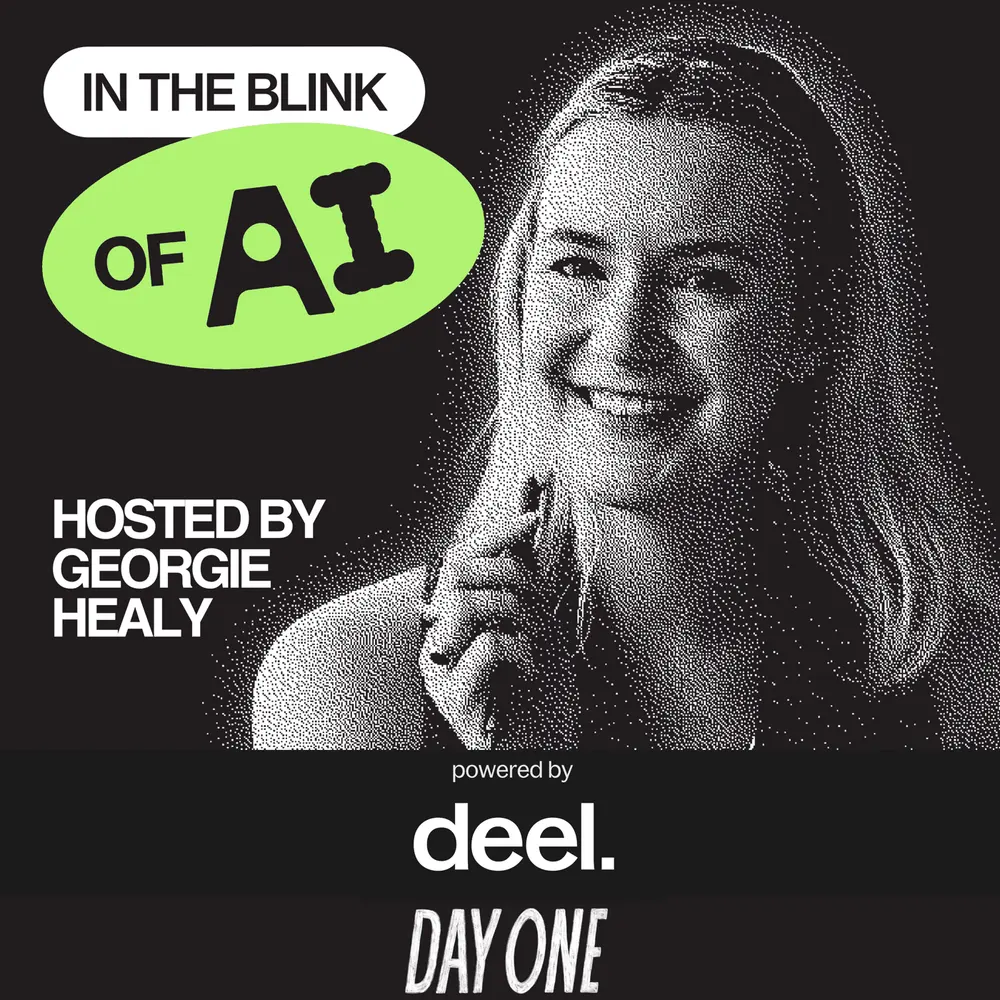 In The Blink Of AI with Georgie Healy
Presented by Deel & Stripe
In The Blink Of AI with Georgie Healy
Presented by Deel & Stripe 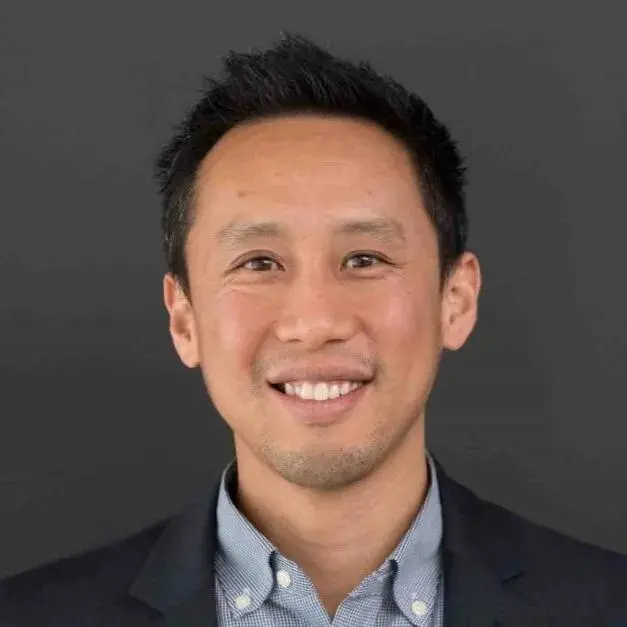


 ▶
▶  ▶
▶  ▶
▶  ▶
▶  ▶
▶ ▶
▶ ▶
▶