Transcript Synced · select any line to jump ▾ 0:02 Cheryl Mack: Founders scale faster on Deel. Set up payroll for any country in minutes. Hire anyone anywhere. Get visas handled fast and get back to building. Visit deel.com/dayone. That's d-e-e-l.com/dayone. 0:20 Maxine Minter: Okay, 3, 2, 1. 0:26 Cheryl Mack: Hey, I'm Cheryl. 0:27 Maxine Minter: I'm Maxine. 0:28 Cheryl Mack: This is First Check, part of Day One, the network dedicated to founders, operators, and investors. 0:32 Maxine Minter: If you wanna be a better early stage investor, this is the show for you. 0:35 Cheryl Mack: So TL;DR, if you don't wanna suck at investing, listen up. We did this last year. We're doing it again this year. It is the yearly wrap-up and future predictions. This year, of course, we are going to be talking about 2024, what happened, what we saw, all the things from start to finish, from New Year's Day last year to today, which is the 28th. So if something happens tomorrow after this and we don't include it, please don't come at us. And we'll also be talking about what we think might or may not— we'll be making some predictions for 2025. Maxine, you excited? 1:15 Maxine Minter: I'm so excited. Also, we should say it's the 28th of November, so if December is a complete bomb site, we had no idea that was happening. So you're probably listening to this in December. Don't kill us if something really bad happened. But I am so excited to do a recap on the year. My summary of the year is, woof, that was intense. 1:32 Cheryl Mack: I think that was your summary last year too. 1:35 Maxine Minter: I think maybe that's just gonna be my summary for every single year from here on out. Just like, oh my God, woof. But no, I think it was a cracker of a year. I think I was listening back to our prediction section of our 2023 wrap-up. 1:49 Cheryl Mack: Ooh, what did we get right? 1:50 Maxine Minter: Can I just say they were tame. We need to be more spicy with our predictions this year. Okay, okay. But I'm excited to dive in. So do you want to kick us off? What happened this year? 2:02 Cheryl Mack: I thought we were going to start with our predictions. 2:05 Maxine Minter: Oh, no. You've got to build into it. 2:07 Cheryl Mack: No, I meant comparing our predictions from last year to did we get it right? Did we nail it? 2:14 Maxine Minter: Oh, mm-hmm. I mean, look, to be honest with you, our predictions were so vanilla that I think they could have been right in any direction. The main summary of our prediction is like, we were cautiously optimistic risk appetite would build slowly over the course of the year. We would see slightly more M&A. It was mainly qualifying words. 2:38 Cheryl Mack: Which it has, and it has. 2:42 Maxine Minter: It has, and which you could probably apply to every single year since venture was invented in like 1690. So, you know, I don't think they count as predictions. 2:52 Cheryl Mack: Except for 2021. 2:53 Maxine Minter: True. The 2020 and 2021, the ZIRP era, was an aberration by all sense of the imagination. But I think, look, I think we got it right, asterisk, right? And the asterisk is we put so many qualifiers around it, I don't know that we could have actually been held accountable to it. 3:11 Cheryl Mack: Like ChatGPT probably could have gotten it right too. 3:14 Maxine Minter: True, true. 3:15 Cheryl Mack: Although I think this is the year that, like, for me, this was the year that I started using ChatGPT. Like, it feels like I've had it in my life for a very long time, but actually it has not been that long. 3:25 Maxine Minter: Did you just say ChatGTP? 3:27 Cheryl Mack: Yeah, did I not? 3:29 Maxine Minter: GPT? GTP? Grand Theft Auto? GTA? Wait, where are we? 3:37 Cheryl Mack: What is happening right now? Did I get the letters wrong? 3:41 Maxine Minter: Yeah, GPT, not GTP. 3:44 Cheryl Mack: Ah, it was close enough. 3:45 Maxine Minter: Wait, how long? I'd have to know for a moment. How long have you been out there in the world referencing ChatGTP? 3:51 Cheryl Mack: You know, you're the first one who has ever corrected me. And I'm gonna say like, it felt natural for me to say it that way. So I'm gonna say probably a while. 3:59 Maxine Minter: Brilliant, brilliant. We should do like a retro of all of your publicly recorded like panels and podcasts and just do like a summary of all of the ChatGTPs. Or actually, Sam Altman, if you're listening, Sheryl has actually rebranded your product. So it's ChatGTP from now on, if you wouldn't mind just changing all your branding. Would appreciate it. 4:20 Cheryl Mack: I would appreciate that actually. 4:21 Maxine Minter: Right? Me too. Me too. I would be wowed by the true sense of the word. 4:27 Cheryl Mack: Okay. So I mean, I think we definitely saw this year like risk appetite coming back on. 4:33 Maxine Minter: Oh, 100%. 4:33 Cheryl Mack: Which I know we like largely predicted. Like one of the examples is that while we had a whole ton of investment in Q1 of this year, like $700 million, there were very few deals relatively. So, there's only like 60 deals that happened in Q1, whereas this quarter, the last quarter that we're referencing, like Q3 of this year, for the, for anyone who is, uh, trying to keep track, we saw about the same, like around $700 mil, but over 100, I think it's 120 deals. So, that's— 5:05 Maxine Minter: Whoa. 5:06 Cheryl Mack: Double the number of deals, which tells me that we are seeing a lot more risk appetite at the earlier stages, right? Like smaller deals equals earlier stage companies, which means there are more early stage companies getting funded. 5:20 Maxine Minter: Right. Yeah. And I definitely felt that out there. I'm sure you're probably the same. Like it was busy. It felt really, really busy at seed and pre-seed and awesome companies, like some really, really cool companies being built, some incredible teams coming together to go and chase some like big, hairy, audacious missions. And so exciting to kind of, to see that happen. Although it wasn't a, I mean, a slight uptick from last year, right? But not a huge progression. I know in the US we saw— we're definitely up on '22 and '23, but it's incremental and continues to be incremental growth. I thought it was really interesting though. It's actually significantly higher than 2019. So like the ZIRP era is obviously a massive aberration, but we'll— if you kind of draw the line from 2019 to '22, '23, and now '24, it's pretty significant growth in a kind of linear fashion. It's not exponential, which— Yeah. I think is interesting because we have a pretty solid narrative that we're hearing out there in the market, which is like, you know, we're still having a correction, the market's still kind of recovering, but the data says that it's above where it was in 2019, which at the time was the local maximum. 6:23 Cheryl Mack: We're also above where we were in 2023. So like that concept that like investor sentiment is rebuilding from the crash, if you want to call it, in 2022. The end of 2022. That concept that investor sentiment is rebuilding absolutely makes sense. We are seeing a steady trend upwards from 2023, like where we are above. I think I predicted at some point, maybe not on the podcast, we might need to revisit this, but someone asked me last year, like where I thought we would land in terms of total venture capital in Australia. And we did about 3.5 last year. And my prediction for this year is that we'd land around 4. And as of September. of this year, we were sitting at 3. So that we would do another 1 bill at before the end of the year, like in this quarter, to me feels about right. 7:15 Maxine Minter: Amazing. I mean, you didn't predict it on the podcast, so on the pod or it didn't happen. You gotta, you gotta put it on this one this year. You gotta, if you're gonna be making hot, hot takes for where we're gonna get to by the end of '25. 7:26 Cheryl Mack: Okay, I will. I 100% will. 7:29 Maxine Minter: It's gotta be on the pod or it didn't happen. 7:31 Cheryl Mack: All right. 7:31 Maxine Minter: But I think, I mean, that's pretty impressive, right? That's a pretty significant amount of capital behind innovation, behind, you know, the tech ecosystem in the Australian market in that period of time. So that's super exciting. Same thing in the US, right? We saw overall capital allocated went up, round valuations went up, round sizes went up, everything went up. We're not talking about like huge percentages here, but they are all material uptick. So I think— I feel validated in that our sentiment that it would kind of continue to rebuild, but slowly over time. Was the right thing. And I think that that's still going to be true, but you have to continue to listen to listen to our hot takes at the end. I'm not going to give you one while we're in the middle of it. 8:12 Cheryl Mack: Yeah, I'm not, I'm not calling it now, team. You got to wait till the end. We got to get spicy. We're going to get spicy. All right. So what else happened this year, Maxine? 8:21 Maxine Minter: What else happened? We saw kind of on that theme of recovery in the market, we saw some really exciting liquidity come back into the market. Obviously, there's been an enormous amount of just kind of beating the drum of liquidity. LPs are asking for it, investors, kind of angel investors are asking for it, founders are asking for it. 8:39 Cheryl Mack: I think it's like every second conversation I have. 8:41 Maxine Minter: Yeah, yeah, it's honestly, if I have to hear the word liquidity one more time, I think I'm gonna barf. But I think it's, you know, something that we are all really focused on. 8:49 Cheryl Mack: I'm surprised you can still pronounce it. 8:51 Maxine Minter: Yeah, I think maybe that's gonna be my tactic. I'm just gonna pretend like I can't pronounce it from here on out so I don't have to have the conversation with people about it. 8:58 Cheryl Mack: Le-ku, le-ku-ah, like— 9:00 Maxine Minter: Liquidity, liquidity. 9:01 Cheryl Mack: Liquidity. 9:02 Maxine Minter: So Canva put just over $800 million back back into the ecosystem through their secondaries, which the majority of that I think actually came back to the Australian ecosystem because a lot of them were early investors. And then obviously through Blackbird Fund 1, Bunkrowd had a liquidity event and so distributed capital back into the ecosystem. We also had a lot of M&A. Obviously Canva went on a bit of a tear. 9:23 Cheryl Mack: Instaclustr. 9:24 Maxine Minter: Instaclustr. We saw Me&You and Mr. Yum merge. And so that was cool to see, although I wouldn't have minded to see more of that. The Australian ecosystem when it comes to M&A is pretty anemic. I would love to see more great Australian businesses buying innovative startups and getting the benefit of the products that they're building, the kind of distribution they're able to get. The US obviously is the high watermark of doing this really well. Europe is okay at it, but Australia could definitely pick up its socks there. 9:57 Cheryl Mack: I think it's important to note that early-stage M&A was at an all-time high this year. 10:01 Maxine Minter: Oh, interesting. 10:02 Cheryl Mack: Which is exciting, right? Like it's heading up. 10:04 Maxine Minter: That's wonderful to hear. I think if anyone's listening to this and they're like looking for a business to start and they come from investment banking, please, please, please start a boutique consultancy or a boutique M&A shop so that you can help Australian companies buy great Australian tech companies. There is so much opportunity there. I just wish that that existed, especially for like early stage, as you said, right? I would love to see more of that. Do you think investment bankers are listening to our podcast? No, I don't think they are. A girl can dream, you know. 10:36 Cheryl Mack: That was very optimistic of you, Maxine. 10:39 Maxine Minter: Former recovering investment bankers that are now starting companies, maybe. Maybe. But I don't think there's that many investment bankers that are starting it. But if you have a mate who is an investment banker who really hates their job and is thinking of their next thing to do, just incept this into them next time you're at the bar. Yeah, please. Or you could just play my voice on repeat making this request of them in the background so it can kind of get into their ear. Whatever you need to do, would just love to see that business, many of those businesses started, that would be great. 11:07 Cheryl Mack: We also saw what I think is an increase in the first checks and interest in angel investing. I know that you didn't necessarily see that, so like maybe we can compare notes on that one. 11:19 Maxine Minter: Yeah, I mean, I think in the US there were less investors. In '23, there was just over 15,000 active investors in the market. In 2024 so far there has been just over 11,000 active investors, which is a pretty material decrease. But as I mentioned before, right, round valuations are up, round numbers are up, uh, total round size is up. So it's kind of like the story there is less investors but more active and deploying more, which I thought was interesting because, yeah, I agree, it seems like in Australia there's more. 11:52 Cheryl Mack: In, in Australia, we're like, I'd say we're seeing the opposite. We're seeing more investors coming into the market, more angels, like the interest in angel investing, people writing their first checks is an all-time high. 12:04 Maxine Minter: Love to see it. 12:05 Cheryl Mack: Yeah. The data that we have suggests that the number of checks is increasing. And if anything, investors are writing smaller checks and increasing number of checks that they're writing, which I think actually just points to a maturing ecosystem because people are starting to understand portfolio theory better, which is a good thing. But yeah, I think we're seeing the opposite, more angel activity than ever before. 12:28 Maxine Minter: Incredible. Are you taking accountability for forcing people to do learning checks? I love to hear that there's more diversification. People are like taking into account portfolio theory. That is music to my ears. 12:40 Cheryl Mack: I think we can both take a little bit of responsibility on that one. Credit. 12:43 Maxine Minter: Yeah, I'll count it. I will take credit for that. 12:46 Cheryl Mack: Yeah. 12:46 Maxine Minter: That is awesome to hear. 12:48 Cheryl Mack: I think we coined learning checks. So yeah. 12:51 Maxine Minter: Maybe in Australia. I don't think outside of Australia we coined learning checks. Are we just like trademarking it? 12:56 Cheryl Mack: No, we coined it. I'm calling it. We coined it. You heard it on this podcast. You heard it here first. At least you heard it here first in Australia, probably New Zealand, probably APAC. 13:05 Maxine Minter: Just keep expanding the circle. APAC, you know, Commonwealth, this half of the country. I really like— that's really exciting to hear that there's more learning tests going on. I would definitely say anecdotally, I am seeing more angels out there and also really excitingly seeing more high-value-add kind of operator angels. There's a couple of them that are really kind of coming to the fore that I'm starting to see in a lot of deals. So that's really exciting to see because I think it's really important feeder into a very healthy ecosystem, right? Like experienced angels deploying actively, either they graduate to fund managers or they stay as active operator angels. Either of those versions, I think, are really excellent. Actually, both, if I'm asking, both for the ecosystem, I think is really, really excellent to see. 13:47 Cheryl Mack: I think we also saw a marked increase in the quality of angels and the bar. Like, I think we set out as part of this podcast at the start of the year to raise the bar on angel investing. I don't know if we can take credit on that, but I would say like anecdotally, that the bar on angel investing or early-stage venture has been raised a little bit this year. I absolutely think that's the case. You know what is not on our list though, that I think we probably should mention? We did see a lot more of like egregious, not so great, not so founder-friendly terms this year. 14:21 Maxine Minter: True, true, true. 14:23 Cheryl Mack: Let's just like take a moment to riff on that. What was the worst, most egregious term you saw this year? 14:30 Maxine Minter: Oof. I saw the impact of the one that I, like, I will beat this drum all day. I think expiry dates on SAFE notes are just the worst, like the absolute pits. For context, what an expiry date on a SAFE note requires is that you can convert your SAFE note into a priced round on the expiry of that expiry date. And so— 14:53 Cheryl Mack: At the val cap, right? 14:55 Maxine Minter: At the val cap, yeah. And there's no, you know, SAFEs don't have any prescribed terms. So you essentially leave up to a negotiation, all of those kind of like additional terms and rights around preference shares that would go into those shareholder agreements to the price round. And so these dates are like 24 to sometimes 36 months after the SAFE note. So you can imagine if a company is still alive and still operating 24 to 36 months out, unless they are they're just riding off into the sunset with a highly profitable company, which is very unlikely. They're probably struggling to survive. And so you force them to do an expensive conversion in the middle of when they're trying to struggle to survive. And I just think it is predatory and crap. So that was my one for this year. I hate them. I wish I didn't see them anywhere ever again. 15:44 Cheryl Mack: Interesting. I didn't know that you felt so strongly about that actually, because I've seen that several times and I didn't think that it was that egregious, to be perfectly honest. And I can explain one situation where like we see it quite often, but I'm interested because I've never really considered if it does convert, then like what are the terms it converts under and like who decides that? I guess in my mind it was just, it converts at this, whatever shareholders agreement they have currently, then those terms remain and it just converts. And you're saying that's not the case. You then have to go negotiate terms in the, in the shareholders agreement. 16:17 Maxine Minter: Right. Well, very often those original, those existing shareholders agreements don't have any preference shares in them. So they've got no rights or any expectations around pref shares. And so you very often have to enter into whole new standing documents. 16:29 Cheryl Mack: Interesting. Did not know that. Here's one of the issues though, and this is what we probably really need to fix this in Australia, because if you want to claim ESIC, you have to actually own shares. 16:42 Maxine Minter: Yeah. 16:42 Cheryl Mack: And so there is a situation where it arises quite often. I know several investors in the ecosystem that ask for an option to convert their SAFE note into shares, uh, at a certain time before a new financial year if the company, uh, is likely to no longer qualify as ESIC. Because by getting it ESIC, then like the benefit on exit is so much greater. So even if you convert at the val cap, that might be slightly higher or lower, like you might be slightly worse off by converting then instead of at the, the round in the next 6 months. But because you've done that, you've now qualified for ESIC, which means it's exempt from capital gains tax on the exit. And so I've seen a number of SAFE notes that have that clause in there that say, hey, we want the ability to elect to convert before a new financial year if it's a possibility, or if it looks like you're not going to qualify as ESIC in the next financial year. And to me, that one made a lot of sense. I'm like, that scenario makes sense, but it's also why Australia needs to fix the fact that ESIC doesn't qualify for a SAFE note. 17:42 Maxine Minter: Right. Yeah. It really, I mean, it feels like an inelegant solution to a problem that should be like better solved by giving clarity. Clarity on the ESIC legislation. But I agree, I can totally understand. 17:52 Cheryl Mack: Oh, it does give clarity. 17:54 Maxine Minter: Yeah, true. 17:55 Cheryl Mack: There is clarity. It specifically says convertible notes don't only qualify when it actually converts. So there's clarity. It's just the wrong clarity. 18:03 Maxine Minter: It's the wrong clarity. 18:04 Cheryl Mack: It's the wrong clarity. Well, my most egregious term is 8x liquidation preference. 18:12 Maxine Minter: Stop it. What? 18:14 Cheryl Mack: I didn't sign that. 18:16 Maxine Minter: No, no, no. But like, why in God's name did the founders sign that? I had no, I don't know if the founders signed it. 18:21 Cheryl Mack: I think they might have walked away, but I'm just saying that's the worst I saw. 18:24 Maxine Minter: Yeah. Yeah. Wow. That is egregious. 18:27 Cheryl Mack: I have another one. 18:29 Maxine Minter: Spill the tea. Go for it. One more. Yeah. 18:33 Cheryl Mack: One more, and then you can comment on that one too. A 2-year warrant for being able to purchase double the amount of shares at the current price. 18:46 Maxine Minter: Who from? Like, pref shares or common? 18:49 Cheryl Mack: Pref. 18:51 Maxine Minter: So they would force them to do a whole new transaction, issue more shares, and dilute everyone, or just dilute the founders? 18:58 Cheryl Mack: Dilute everyone, which is interesting because of course it's on a safe note. So then, like, it— not everyone in the round knows that this investor has that option. 19:09 Maxine Minter: Wow. The mechanics of that are just a disaster. I would imagine, right? 19:14 Cheryl Mack: Like, right? 19:15 Maxine Minter: Yeah, man. I feel like the tide goes out and people try some like really hair-raising stuff. I will say in the data we saw flat rounds are slightly up and down rounds are slightly up. So we're still seeing some of that kind of pain move through from the ZIRP era. 19:34 Cheryl Mack: Yeah. Did you have any portfolio companies do down rounds or extensions? 19:39 Maxine Minter: No, we are, ooh, extensions. Do we have anyone do? I know those ones are a little bit murky because we had a bunch of people do like pre-amps. I would say across our portfolio of which now is 23, and keeping in mind they're only, you know, it's 23 months old, there were a handful of rounds that were like what I would call messy. You know, they weren't just like straight up rounds. They were piecemeal, even though all of them were up, but they weren't really positioned as bridge rounds. They were positioned, they were up rounds. And then one of them did a seed and then a seed plus, and then I don't even know what the tranche 2 of the seed plus, like the nouns got very messy, but they were great markups. 20:28 Cheryl Mack: Messy is also a word that I think I would use to describe this year. 20:32 Maxine Minter: Yes. Oh yeah. Woof and messy would be my like two nouns for the year. So there was a lot of that kind of stuff. I'm probably shielded from it because we're at pre-seed. Seed was a pretty robust round this year. Series A continued to be the tough inflection point for founders to get through, right? I think between seed and Series A, the 36-year, sorry, the 36-month graduation rate between seed and Series A was 20%, which makes it a really, really tough graduation rate. Historical average is closer to like 30 to 40%, just for kind of benchmarking, excluding the ZIRP era. ZIRP era was like 100%. No, no, I kid. It's not 100%, but it was very high. You know, I just think that we're still feeling like that is a long blast radius from the ZIRP era, right? We're like 2 years out. 21:22 Cheryl Mack: As a quick reminder to people, ZIRP era means Z-I-R-P, which is zero interest rate period. Which is the period during which there was zero interest rates. So just— 21:32 Maxine Minter: Love it. Jargon checker. 21:35 Cheryl Mack: Yeah. 21:36 Maxine Minter: I was just complaining about the blast radius of the ZIRP era, which I think is an interesting thing for us to talk about when we think about 2025, right? Obviously we have had an election this year, a hotly contested election. That was a bumpy ride. 21:49 Cheryl Mack: Wait, wait, wait, Maxine. We're not going risky yet. 21:53 Maxine Minter: No hot takes. 21:54 Cheryl Mack: No hot takes just yet. We got one more topic on our list here, and I feel like it's a big one, so we can't really skip over it. AI just went on an absolute tear. 22:03 Maxine Minter: Man, it took it down. It was so hectic on the AI side of things. I started the year, I met 6 companies all in a row who had gone from idea to millions in revenue in less than 6 months. I saw that, that intensity of growth kind of come off a little bit over the second half of the year, but that dynamic was definitely around and well. Obviously we had monster rounds OpenAI raised another round. We have Anthropic out in market raising at the moment. So there's a lot of folks, you know, doing the rounds. 22:35 Cheryl Mack: Monster rounds. 22:37 Maxine Minter: Monster rounds, huge, which they're obviously kind of pulling up some of those averages. In most of the data I'm seeing, they're just having to like straight exclude those monster rounds because they anchor up. 22:48 Cheryl Mack: They just, they just like ruin the data. 22:51 Maxine Minter: But it was interesting coming into the second half of the year, right, there was a little bit more hand-wringing when it came to AI. Actually, most recently, people talking about, you know, are we going to see the continued acceleration of the ecosystem? 23:04 Cheryl Mack: Sorry, hand-wringing? 23:06 Maxine Minter: Like, uh, doomsday vibe. Um, lots of people saying, you know, we think that it's not going to be as rosy as we thought it was going to be. Obviously Sequoia came out with a restatement of their article in the earlier year the question kind of like, how are we going to grow into these valuations? 23:24 Cheryl Mack: Actually, though, I'm genuinely baffled by the number of people that have asked me in the last 3 to 4 weeks on some sort of like a, hey, state of the market call, like, oh, so do you think AI is here to stay? Or like, is this a fad? 23:40 Maxine Minter: What? That is wild. Really? What are you saying? I share you in my baffledness. I am baffled that that is even a question. 23:49 Cheryl Mack: I'm kind of flabbergasted when you say things like this because I, like, my response is generally like, yes, 100%. How could you think otherwise? Like, this is not a fad. This is not crypto, which also actually wasn't a fad, but like— 24:06 Maxine Minter: It's now back. It's not back anyway. 24:10 Cheryl Mack: So it's now back. But like, I'm like, this is not NFTs. Like, if you haven't been using it to improve productivity in your life, then I question that because we have literally gone through— or we are currently going through— the largest shift in human productivity due to this shift in platform. And let the fact that, like, you, you're asking me whether it's sticking around tells me that either you are rejecting it or you haven't noticed how it's been subtly ingrained in— integrated into your life in subtle ways. Like, for example, I think the best example I could pull out is, you know, all of us have been using Loom for a while, right? We use Loom, we make these videos, we send them off. All of a sudden, Loom was like, hey, here's some AI. Now we've removed silences from your videos. Now we've removed the like filler words. When I say like a lot, it just removed those for me and everyone saved 1 minute of listening to me because now my Loom video was 1 minute shorter because it didn't have all of those silences in it. But like, that is just— that was handed to us. Yeah. And who doesn't say yes to that? And I'm sure you could name 10 other examples of that, where AI has been put into your life and is objectively made it slightly better. And you maybe not didn't even realize it. 25:23 Maxine Minter: 100%. Yeah. I mean, I think like the applications that folks are already starting to see, I would venture a guess that most of the times that they're interacting or reaching out to customer service via like chat window right now, they're not interacting with a human and they probably have no idea. Right? 25:42 Cheryl Mack: But I feel like that's been around for a while. Nobody's been interacting with humans with chat windows for a very long time. I think the shift that happened this year was it went from like, if this then that to actual AI. 25:52 Maxine Minter: I've got to say, if someone coded up the version of Stripe support that I got up until the middle of this year, and that was their if this then that chatbot, like, all of those Engineers should have been fired. And then suddenly in the middle of the year, it was like, ta-da, it's actually like a conversational, helpful customer service experience. And so I'm guessing that that was AI, that actually wasn't a kind of human interface. Interestingly, obviously that is the obvious use case that we saw an enormous amount of capital flood into an enormous amount of companies start. But I think kind of all over the shop, right? I did a hackathon with Annie and Build Club. In SF in the middle of the year. And I was totally blown away by the pace at which the founders were able to build really valuable, useful products in the space of a weekend. And it was just like fun people hacking stuff together. And so I can understand your like average person may not have used this yet or know that they're using it yet. But honestly, if you are on stage and they're asking you for like tech trends and then they're asking you for like, hey, does AI hang around? I would strongly encourage them to open their computer, open any app, literally choose any app and use the AI feature and then tell me it doesn't drive productivity for you. I'm probably using one of the models 25 to 30 times a day driving like material or quality improvement in the task I'm trying to deliver in like 50% of those tasks. So I can't see a world where it goes away. I think the question is like, how impactful it's going to be. And I think that that's the presiding question we're kind of entering into '25 asking ourselves, which is like, how useful do we think AI is going to be in 2025? Which I wonder if now feels like— I've been chomping at the bit all episode— if now feels like a good time for hot takes for '25. 27:40 Cheryl Mack: Yes, yes, hot takes. Let's get spicy, Maxine. Go for it. 27:44 Maxine Minter: Yes, let's do it. 27:46 Cheryl Mack: So a certain someone became president again. 27:48 Maxine Minter: A certain someone, he that shall not be named, Yes. So we have Trump in presidency as of the second week of January, again, with lots of promises that really impact the tech ecosystem, right? You are a fool if you trust everything that a politician says, but probably some of it will come to fruition, especially with Elon Musk as a kind of key wingman of Trump stepping into office. We can expect that. I think we'll see at least some of the promises come through, and some of those key promises are about liquidity back into the market, unclogging the IPO ecosystem. I think in Q3 there wasn't a single tech IPO in the US, not one. There was 13 and they were all healthcare. And so there's a pretty significant backlog of unicorns and soonacorns that are trying to get kind of through that backlog. And that is a material amount of capital that's locked up. So I think we'll start to see liquidity back into the ecosystem. I think it'll take a while, obviously, for the government to make those shifts that they'll need to make in order to unclog that system. And then obviously for those IPOs to start to move through. But I think even in anticipation of that, once the market assumes that that's going to be happening, you might see more liquidity happening for kind of pre-IPO funds buying pre-IPO stocks again and start to see that liquidity move through, which I'm super excited about. So my hot take is I think we will have a lot more liquidity. 29:14 Cheryl Mack: Yeah, hot take. You got to get spicy. Like, give me some numbers here, Maxine. Ooh. How many IPOs do you think are going to happen next year? 29:22 Maxine Minter: I have no idea how many IPOs we do in any given quarter. That's— 29:25 Cheryl Mack: no, you got to get spicy. Come on. 29:26 Maxine Minter: I'm building. I'm building into a spicy. I've got to build. I got to build my spice. All right, build, build, build, build. So my built spice is I reckon we will see 40. 40 IPOs? 29:41 Cheryl Mack: 40. All right, you heard it here first. Maxine saying 40. 29:44 Maxine Minter: Tech IPOs. Right. Not, not healthcare, not, but 40 tech IPOs in 2021. 29:51 Cheryl Mack: And is that in the US? 29:52 Maxine Minter: In the US, yeah. Don't ask me how many we'll see in Australia. I'll cry. 29:57 Cheryl Mack: I was just gonna say, should we make a prediction? I mean, I can take a stab at it. How many? I don't even know how many we had last year. 30:03 Maxine Minter: So. I don't think we had any. I wanna say zero tech IPOs. 30:08 Cheryl Mack: I mean, are we counting? Are we counting GYG? 30:11 Maxine Minter: That is not tech. What is technical about a burrito? 30:14 Cheryl Mack: I mean— 30:16 Maxine Minter: Tech-enabled burrito? 30:17 Cheryl Mack: It was the most talked about IPO in 2024, so that's what I'm going with. 30:23 Maxine Minter: Not the same thing. Just not the same thing. 30:27 Cheryl Mack: No. Yeah, I mean, we could go into the semantics of like, what is a tech IPO in Australia? Because technically you can list at a very, you know, small caps listing. So we'll come back to that. I'm gonna call like maybe 5. We'll have 5 next year. 30:38 Maxine Minter: Love it. 30:39 Cheryl Mack: You can hold me to that one. 30:40 Maxine Minter: I think we're gonna go back to bubble behavior, at least in AI. I think with the liquidity coming back into the market, it's maybe like a built hot take, but if we do see that liquidity come back into the market, I think we're gonna scream back into bubble behavior and we will have collectively forgotten a lot of the lessons that we learned like 2 and a half years ago. So I think we'll start to see wild valuations for that kind of ignore a lot of fundamentals. Again, which will be great. Some wonderful founders will get backed with a lot of headroom to work it out. And I think we'll waste a bunch of money again in silly spaces. 31:14 Cheryl Mack: I mean, objectively or theoretically, having Trump and Musk back in office could mean more free money for the ecosystem, which could be good for founders and investors in the short term. 31:29 Maxine Minter: No, no free money.— is not a good thing. In this environment, I do not think a free money, a bunch of free money is a good thing. It might be, sorry, that's very negative girl of me. Short term, it will be very much appreciated by a lot of people. A lot of people have done it very, very tough over the last 2 years, right? In tech and outside of tech. If you look at the way that companies have performed in the US, both listed and unlisted companies, and you exclude from that the kind of top tech stocks, it's been a tough, tough couple of years, even though kind of overall the kind of major indices have all gone up. That's largely pulled up by the big tech stocks and the kind of NVIDIAS of the world. And so my fear— I fear free money because they might— 32:18 Cheryl Mack: Well, everybody likes free money, Maxine. 32:20 Maxine Minter: They do. They love free money. And that's the problem, right, is they love free money and then they go and spend it all and and we get kicked back into this inflationary environment. And as a company trying to operate in a market after the free money has been absorbed into the market, you're just in a shit sandwich, right? You are like being pushed on by your employees and pushed on by your suppliers to try it for them to try and pass on increasing costs to you. And then it's, you can't immediately pass on those increasing costs to your customer. And so, you know, any companies that are Operating in that environment is really tough. Having said that, Negi girl over. My hot take is I think we will see mass adoption into companies of AI because if we do see this liquidity, sorry, this inflationary environment happening, then companies will need to adopt AI in order to be able to get efficiencies to be able to survive in that dynamic. So I think we will see overarching some really exciting adoption and some like really cool applications in boring-ass businesses. Of AI and like tech-enabled services within businesses. 33:27 Cheryl Mack: Oh, hard agree on that. I think you're a bit negative on the like free money aspect. Like a lot of good things came out of the ZIRP era. Like yes, they created a lot of challenges, but like if we're going into another year where there's a little bit more free money and we keep the good things that we learned from the ZIRP era, and I mean, I, I think you're being a bit negative about how we're all going to forget the lessons we learned. I certainly will not. And if we keep some of those good things, a little bit of free money, this could be a really good thing. 33:57 Maxine Minter: I love it. What are you keeping? What's in with the free money and out with 24? 34:03 Cheryl Mack: I mean, definitely keeping the headway to profitability, not growth at all costs, and more sustainable companies in the sense of getting to revenue quicker. Definitely keeping lessons about bubbles and what bubbles look like. Absolutely keeping that as one of the lessons. And I think we're struggling on this last one, but like hype cycles, I learned whatever lessons we learned from hype cycles, I think. 34:33 Maxine Minter: Something, something hype cycle, something, something. 34:35 Cheryl Mack: Yeah. 34:36 Maxine Minter: If I'm choosing, and I'm not sure this is how investor psychology works, just for clarity, right? I like, if we could collectively keep the lessons— 34:44 Cheryl Mack: In a perfect era. 34:45 Maxine Minter: Yeah. In a perfect era, keep the lessons of a hype cycle, but like been deflationary environment that we go into post-hype cycle, then like, I think we probably would've. But if I am choosing the things I want to keep in another kind of free money environment, if we step back into that in a kind of Trump presidency, the thing I really missed over the last few years was the thoughtful, considered optimism that was missing, right? In one of those deflationary environments, there was lots of people that were very short-termist, very kind of looking at just surviving this week, this month, this year, and projecting and predicting that it was going to like just be bad for a really long period of time. And I think that's not true. I think that we're really early in Australian venture. And I think we have all the ingredients to be a really exciting ecosystem, both that accrues an enormous amount of value to our country through our technical innovation, but also to the world. And I think that looks obvious to me, but for lots of people just focusing on this year, like true, you're not going to deliver a generational company in a year. That is very difficult to do, if not impossible. So it's not going to happen. Right. And so— 36:01 Cheryl Mack: It's just not gonna happen. You gotta let go of that one. 36:04 Maxine Minter: Yeah, not happening. My spicy take, you cannot build a generational company in a year. 36:08 Cheryl Mack: So spicy, Maxine. 36:10 Maxine Minter: So spicy. What I would wanna keep from the ZIRP era is just the optimism, like the belief of what can be built. 36:21 Cheryl Mack: That anything is possible. 36:22 Maxine Minter: Mm-hmm. To some degree it is, provided you pick the right problem and you wrap it with the right resources. All right. My spicy take is that I think that we will get free money and then we will get all of the associated downsides on the other side. So make hay while the money is free. 36:42 Cheryl Mack: Well, there isn't free money yet. We're just predicting that. I think there will be more free money in the short term. Other predictions. What are we predicting for 2025? Actually, one bet. There's a fun bet going on. I don't know if anyone has heard this, but there is a fun bet going on between some of the billionaires in the US about when, and I'm guessing when they mean when, they mean like a month and a year, when there will be the first one-person company valued at over $1 billion. So like only one person working at the company. So Maxine, what's your bet? 37:14 Maxine Minter: Oof. I don't think that will happen in 2025. 37:18 Cheryl Mack: Ever? 37:19 Maxine Minter: No, no, just in 2025. Aren't we making predictions, spicy takes for 2025? I don't reckon we'll see that in 2025 because you need to build the enterprise value and then someone needs to value it, i.e., they need to buy it. 37:28 Cheryl Mack: All right. Well then my spicy take is that I think it will happen in 2025, probably late 2025, like September, October, but I, I think it will. 37:35 Maxine Minter: Amazing. Oh my God. I cannot wait to do a retro on these spicy takes at the beginning, at the end of this, of 2025. 37:42 Cheryl Mack: You're gonna be like, you were wrong, Cheryl. We're not even close. 37:46 Maxine Minter: Or you were so right and there is someone living the dream as a one-person billionaire. Out there in the ecosystem. 37:53 Cheryl Mack: What about highest valuation? Do you think it'll be an AI company next year? 37:58 Maxine Minter: Yes, I do think it'll be an AI company. I think it'll be one of the models, right? I think like one of the foundational models will take out the top prize and I think it will be OpenAI. I think that they will continue their lead as much as I want a little bit more parity across those models. I think it's it's like they have a big enough lead that it is very likely that they will maintain that lead, if not accelerate that lead, and command an associated valuation, which actually implies that they will also raise more capital because that's the only way that they're going to get repriced. 38:31 Cheryl Mack: I'm going to call it now. I think that there will be a high-profile AI company collapse next year. 38:38 Maxine Minter: Oof, that is a spicy one. I think you're right. 38:42 Cheryl Mack: Yeah, it's gonna happen. I think you're right. It's gonna happen. 38:45 Maxine Minter: Right. I agree. I agree. 38:48 Cheryl Mack: There's just no way that we go through the next year without a high-profile collapse, and I guarantee it's gonna be in a pretty big AI company. 38:56 Maxine Minter: Very spicy. Very, very spicy. Will we have AGI in '25, or what Dario Amadei is, is calling very powerful AI? So essentially like an AI that is capable of like Nobel Prize level thinking? 39:15 Cheryl Mack: Mm. You know, I have been reading and seeing some data that suggests that we are hitting a little bit of a plateau, and I think maybe that's where some of these baffling questions have come from. Uh, they might be reading some of the same things, so I'm gonna go no. I think that's still a little ways away, and we're likely to see a bit of a plateau over the next 3 to 6 months. In AI capabilities, like we made leaps and bounds this year. And like that level of acceleration, while possible, I think we're probably likely to see a bit of a plateau this year. 39:47 Maxine Minter: Mm, spicy. I reckon we're going to see a significant acceleration. It's not going to come from, like, I think that like individualization and personalization and like the use cases on top of it, that's where we're going to see the acceleration. But from the day-to-day like us standard users, we will experience a significant acceleration. So my hot take is I think I'm going to be using AI in 50% more of my tasks on a day-to-day basis. 40:14 Cheryl Mack: You, yeah, you already use it quite a bit. 40:16 Maxine Minter: Yeah. So I think I'm going to be using it in 75% of my, of my tasks on my day-to-day basis. Everything from phone calls through to how I do my email, to how I diligence companies. I think like 75% of my tasks, it will touch and concern AI. 40:32 Cheryl Mack: I'm not sure if I'm arguing about that. I think that's probably true. What I'm saying is that the learning capability of these models and their ability to actually reach that, what is it, super intelligence or— 40:46 Maxine Minter: AGI. 40:46 Cheryl Mack: AGI, yeah. I think that that is still a ways away and it seems like we haven't made significant improvements from ChatGPT-4 to the next model up. Did I say it right that time? 40:59 Maxine Minter: You said GTP. Fuck. ChatGTP? GPT? 41:06 Cheryl Mack: GPT. GPT. ChatGPT. 41:10 Maxine Minter: Incredible. Incredible. I'm so glad we unearthed on this podcast that you have spent the last 24 months referring to it in reverse. 41:19 Cheryl Mack: PGT. 41:20 Maxine Minter: I couldn't be happier about it. This is my highlight for 2024. 41:24 Cheryl Mack: Oh man. Um, all right. So we need to make a prediction about the amount of venture capital that will be deployed in Australia in 2025. We're definitely on track to at least surpass 2023, uh, for 2024. My guess is that it will land somewhere around that $4 billion mark for this calendar year. My thought around where we might land for 2025 is probably around the, Ooh, I'm gonna say 5.2, 5.1. 41:58 Maxine Minter: I agree, I think we're gonna go up. Hey, this is a spicy call segment, so I'm gonna go 6. 42:05 Cheryl Mack: Okay, we doing Price is Right rules? 42:07 Maxine Minter: Oh no, I think that is, that is like, this is wrong before I even say it, 'cause my other spicy take is I think it's gonna take LPs a while for their sentiment to adjust to the new market dynamics that we're in. So I actually think we will see, even though the market is hotter than it has been for 2 years, I think we will see LP sentiment, so like institutional sentiment and multifamily office sentiment, be cooler than it's felt for the last couple of years. And the reason for that is because I think it will still feel locked up. So I think I actually think we're gonna go backwards in terms of total capital deployed into the Australian ecosystem. 42:50 Cheryl Mack: Wait, so you went from going above me by a billion? 42:54 Maxine Minter: Yeah, yeah, it's complete revision, yeah. What? Yeah. 42:59 Cheryl Mack: Well, I don't know what to do with you right now, Maxine. 43:02 Maxine Minter: So I reckon we're gonna go backwards. I'm gonna go 3.9. 43:06 Cheryl Mack: All right, pick 3.9. Okay, wait, 3.9. Oh, okay, so if we end up doing 4 this year, than you think it'll be at 3.9. Wow, you are pessimistic. I'm like, we can't be friends anymore. 43:20 Maxine Minter: Who are you today? I am fairly confident I am going to regret that prediction pretty much the moment that we end this podcast. 43:29 Cheryl Mack: I'm holding it to you. 43:31 Maxine Minter: It's got to be spicy. It's got to be spicy. 43:33 Cheryl Mack: You don't get to go— you do not get to go back to 6 when we're doing this a year from now. Absolutely not. OK, well— 43:40 Maxine Minter: You know I live and die by my predictions. 43:42 Cheryl Mack: Any other predictions you want to call out or ask about? 43:46 Maxine Minter: I think I'm going to reintroduce our extremely vanilla prediction from last year. 43:50 Cheryl Mack: Oh god. 43:51 Maxine Minter: Which is extremely unspicy, but just to like end on a whimper, I think that we will see appetite actually slowly rebuild over next year. We will see slight increases across all metrics. Vaccine. And it will be a good year. I love you. Happy 2024, everyone. 44:18 Cheryl Mack: And that's a wrap, everyone. 44:23 Maxine Minter: Okay, bye.

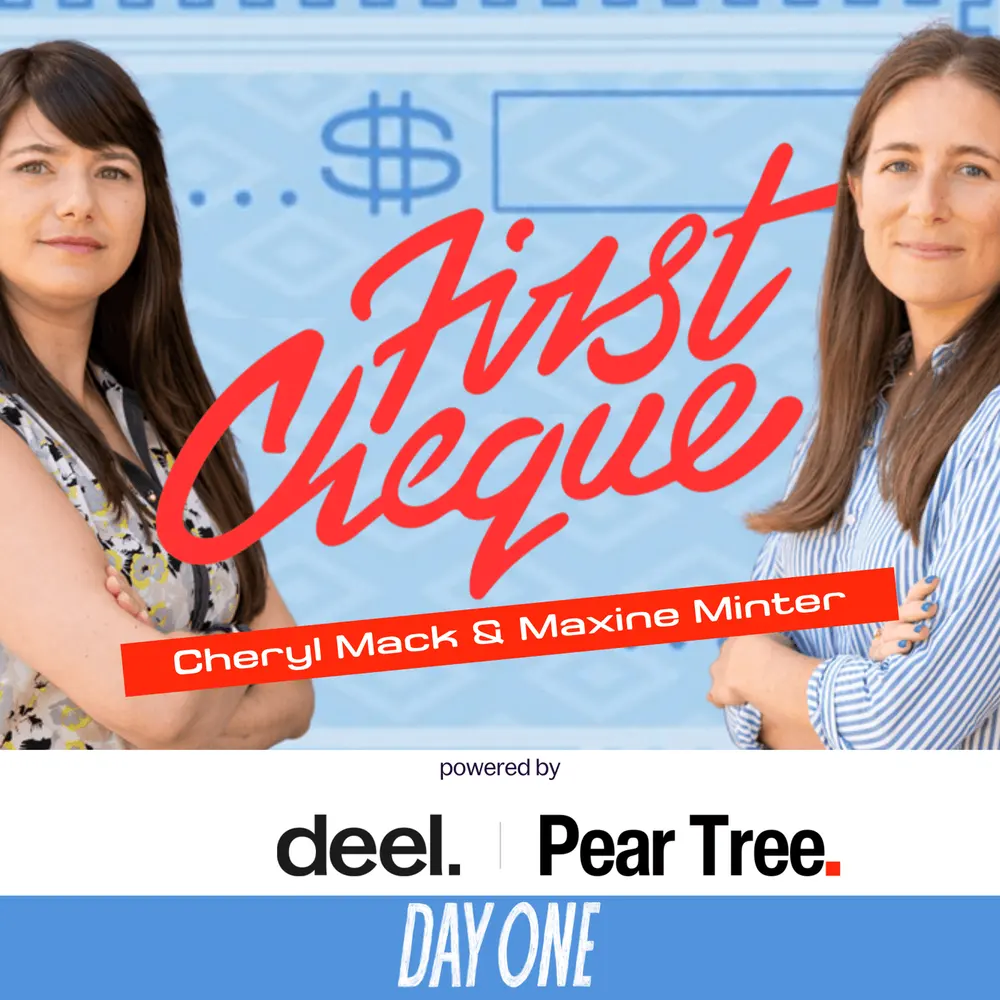 First Cheque with Cheryl Mack & Maxine Minter
Presented by Deel & Pear Tree
First Cheque with Cheryl Mack & Maxine Minter
Presented by Deel & Pear Tree 




 ▶
▶ ▶
▶ ▶
▶