Transcript Synced · select any line to jump ▾ 0:02 Cheryl Mack: Founders scale faster on Deel. Set up payroll for any country in minutes. Hire anyone anywhere. Get visas handled fast and get back to building. Visit deel.com/dayone. That's d-e-e-l.com/dayone. 0:21 Maxine Minter: I feel like this was the year that Australia like entered the chat. 0:26 Cheryl Mack: Australia has entered the chat. 0:28 Maxine Minter: Like in what world is a billion dollar round down pre-seed. You got me there. 0:34 Cheryl Mack: Like, we are seeing what valuations and up, uh, total quantum of investment on later stage was up 300%, whereas pre-seed and seed were down like 50%. It's like, what is going on there? 0:46 Maxine Minter: Yeah, honestly, Estrella, what is going on? Okay, 3, 2, 1. 0:50 Cheryl Mack: Hey, I'm Cheryl. 0:53 Maxine Minter: I'm Maxine. 0:54 Cheryl Mack: This is First Check, part of Day One, the network dedicated to founders, operators, and investors. 0:58 Maxine Minter: If you want to be a better early-stage investor, this is the show for you. 1:01 Cheryl Mack: So TL;DR, if you don't want to suck at investing, listen up. 1:10 Maxine Minter: Okay, it is almost the end of 2025. I actually can't believe that we're here. I think old people do this, right? They lament that the year has gone really quickly and— 1:22 Cheryl Mack: Are you calling us old? 1:24 Maxine Minter: I am. Yes, I am calling us old. I definitely have aged this year for sure. It has been a wild ride, 2025. 1:31 Cheryl Mack: No way. I am still in the like, okay guys, we are 26 days until Christmas phase of my life. I'm like, I just count down till Christmas like a kid. 1:41 Maxine Minter: That's a phase. I love it. At what point do you age out of the countdown to Christmas? 1:47 Cheryl Mack: Maybe like when I'm 40. 1:51 Maxine Minter: Okay, yeah, I'll accept that. I mean, I feel like I have stopped that era a little while ago. That's in the rearview mirror, so maybe I should reintroduce that. I will say I'm like definitely counting down to the end of the year, but not Christmas, to the 31st of December. Um, so I guess I earned an extra— what is that, 5 days into my calendar? 2:12 Cheryl Mack: Yeah. 2:12 Maxine Minter: But we're here, we're at the end of the year again. We're doing our third wrap-up, annual wrap-up for the year, looking back at the year that was, looking at what happened in tech and venture, how that went, and where we think it's going. 2:29 Cheryl Mack: Yeah, I remember the one last year. You started off with like, "Man, wow, this year would just like slap me around." Do you still feel that way? Like, did 2025 give you a beating? 2:45 Maxine Minter: No, 2025 didn't give me a beating. I think 2024 was brutal because it was the, like we were fundraising the whole of 2024. So I was out there, shingle out for a full 12 months trying to raise, coVentures Fund 1. And also it was like the worst capital market we'd seen in a really long time. And doing that at the same time as investing and running a fund. As a solo GP, that is a surefire way to take a few punches straight to the mouth. 3:17 Cheryl Mack: Yeah, 100%. I also, I feel similarly. I think this time last year was very much like, man, the uncertainty level is top notch. Like it's up here. Whereas I'm not sure I feel as uncertain about the future as I did this time last year. In fact, I probably feel, I mean, I'm always a very optimistic person. If last year my optimism was like at a 7.5, now my optimism is like at a 9. 3:45 Maxine Minter: Totally. Yeah, I think that's right. I think 2025 was so much easier than 2024 in so many ways. So much happened, right? I really feel like we sped up through 2025. 3:57 Cheryl Mack: Yeah, I mean, a lot of stuff still happened. 3:59 Maxine Minter: That was, it was a wild ride. '25 was still a wild ride, but it was a different kind of wild, I think, than 2024. So super excited to get into it. You're listening to a Day One FM show. What happened in 2025? What are the cliff notes? 4:18 Cheryl Mack: Oh, well, um, I mean, we had an election and all that comes along with that. I think, uh, having Labor come in, uh, as an, you know, just confirming election in Australia, Labor coming in in a landslide was not completely unpredictable, but I think the piece that maybe surprised our ecosystem is the lack of like overt support for the tech ecosystem. Startup Daily's coverage was pretty blunt, which was essentially next to nothing for the tech and startup sector in the 2025 federal budget. 4:54 Maxine Minter: Well said, well said. Yeah, it's a really interesting one. I will say like Australia, we have norm where we kind of expect our government to step in and do a lot for industry, for us, for individuals. The social contract is nice and strong. I actually think that that's a feature for us, for our country, actually not a bug. But we do look to the government for stimulus or support or engagement, and they did not show up this time around. 5:24 Cheryl Mack: They did not, but it hasn't stopped our ecosystem from compounding. A number of reports um, well, one in particular came out this year that really showed how well the ecosystem and this country has been doing. I think anecdotally, things that you and I have known for a long time, but having numbers put to that really solidified it for us. 5:46 Maxine Minter: Totally. I feel like this was the year that Australia like entered the chat. 5:50 Cheryl Mack: Australia has entered the chat, at least from the perspective of the US. 5:55 Maxine Minter: You know, like I, I feel like Australia has been like quietly compounding down here on this half of the globe and haven't really told anyone about it. And now we are very much in the chat, right? We had Canva did a secondary, which was widely known about, obviously Canva now being one of the most valuable private companies in the world. And I think a lot of people heard about that. It also did amazing things for the Australian ecosystem. I think. A lot of people went super hard. 6:28 Cheryl Mack: It's kickstarted that cycle, that rain. Is it the rain cycle where it goes in circles? 6:35 Maxine Minter: I, I think so. I'm not sure what cycle you are referencing. Maybe you are just talking about an ecosystem requires rain. 6:41 Cheryl Mack: Yeah. 6:41 Maxine Minter: Not sure. 6:42 Cheryl Mack: But like, you know, the, all of the money's been absorbed, but finally it's rained back down. Starting to. 6:49 Maxine Minter: Oh, true. Yes, true. 'Cause I think, I mean, a lot of family offices in particular, a lot of private individuals went in super heavy 2019, 2020 into 2021, right? And I think like there was a degree to which they started doing that at a moment of maturity in the ecosystem when we were like ready to start deploying. Unfortunately, they caught the back half of— 7:08 Cheryl Mack: Hmm, I don't know about maturity being the right word. 7:13 Maxine Minter: Right. Seniority? Scale, maybe? 7:16 Cheryl Mack: Scale, hype. FOMO. 7:20 Maxine Minter: All of those things. All of those things. And so it had a lot of dollars coming into the Australian venture ecosystem. Unfortunately, in the last 3 years of a like very long-standing hype cycle and all the way up to the top of the very top of the hype cycle. And then when the market corrected, I think a lot of people got caught illiquid and also overexposed. Right? They just like were too overweight venture. They didn't wanna cycle back in much to my sadness actually, because essentially what they had been doing is sitting on the sidelines, in my opinion, in some of the best investing environments, '22, '23, '24, and '25. But that the rain is falling now in your diagram. And so that capital is starting to cycle through, right? Canva was a big part of that. Also a lot of family offices in Australia. 8:12 Cheryl Mack: Here's the largest secondaries that we've seen to date. And it isn't like that, that rain has only just started. Like that's the drizzle that comes before the giant storm, right? Like Canva's targeting IPO for 2026. 8:25 Maxine Minter: Yeah. I, I mean, I think it is gonna be hard to overstate how impactful that is gonna, impactful that's gonna be to the Australian ecosystem. Like that is so much capital to flow into a very small ecosystem. So it gives us a sense, like just a first taste of what that dynamic is going to be like. But come IPO, also noting for a lot of folks, there'll be like lockup and stuff. So like, even if it happens in 2026, it might, we might not see that capital flow through, which actually what that means, lockup, usually with IPO, your key people and your key investors, you can't start selling your position. I think it's usually 6 months. 9:00 Cheryl Mack: They can't just like be like, cool, I'm out, bitches. 9:03 Maxine Minter: Day of listing. Goodbye. 9:07 Cheryl Mack: Yeah. That prevents things from crashing on day one. But I also think that there's a reality where, and like the cynics, uh, who criticize that like, oh, it's not gonna be that impactful, um, are saying things like, oh, 'cause most of that money is just gonna go into real estate. All those camp millionaires are gonna buy homes, which I think like there's a portion of that, but it's less like, it's not like, oh, it's all going to be there or go into that category. It's probably, it just will create a delay, right? People, a good chunk of them may buy homes first, but like the next asset class they'll start to look at is how do we reinvest this money to do this again? Which like for them, their experience is high-growth tech. It makes sense. So it might just be a delay. I think you're right, we probably won't see that full impact. 9:51 Maxine Minter: 100%. 9:51 Cheryl Mack: If it's 2026, then it'll be 20— end of '27, '28. Still great though. Still great. And by then, I mean we've seen more M&A as well, right? So like we are starting to see that, that trickle, the sprinkle turning into the trickle. We're just going to keep on this analogy. 10:09 Maxine Minter: Right. We sure are. I also think there is a really important point to pull out here as well, which is in this ecosystem, yes, Canva, the liquidity coming from Canva I think is going to be really material, but also the scale that Canva has got to and a collection of other companies is we're also starting to see domestic tech M&A. We've never seen that before, right? Canva bought 2 companies in this last 12 months in the Australian ecosystem. I think Leonardo was this year, as was Magic Brief, both of which, shout out to Ben and the team at SideStage, great investments from them at the early stage. And so that liquidity moment for them coming through, so, so exciting, right? To start to break down this idea that venture is this like extremely long-term illiquid market, actually in the thriving ecosystem, it doesn't necessarily have to be that way. And so starting to see that move, that cycle move through. I know, um, kind of word on the street is there is a bunch of other really interesting Series B to Series C Australian tech companies that are doing really well raising internationally. They're starting to go on an M&A spree internally into Australia. So scooping up smaller startups, uh, at the very early stage, that's super healthy for the Australian ecosystem. and unheard of in our ecosystem today. 11:25 Cheryl Mack: Yeah, it's not just Canada that's buying up either, right? Like, no, there are overseas companies that are coming in. Zoopi acquired Sydney AI storytelling startup Nunacon. 11:36 Maxine Minter: Awesome. 11:36 Cheryl Mack: A rare India-Australia tech M&A deal. But we also saw Linktree acquiring Fingertip. We also saw, um, Jolt buying Volta Network. So like, we've we're seeing more M&A. Like I would love to see if there was data out there to show like the M&A this year, 2025, compared to the last 3 years combined. 'Cause my guess would be that it's more than the last 3 years combined. 12:00 Maxine Minter: Oh yeah. Yeah. I think comfortably, I would add my guess to your guess. So that's really exciting. I think like the Australian tech ecosystem is coming like through this really interesting liquidity moment where it really feels like we're kind of starting to accelerate and starting to see kind of more of that capital cycle through. Ben and the team at SideStage also did an amazing job alongside Dealroom and the AWS team putting their State of Australian Startups out there. 12:32 Cheryl Mack: And putting Australia on the map. Hey, in terms of unicorns created, what's the exact number? Like 1.2? 12:40 Maxine Minter: Our 1.22 unicorns created per billion dollars invested, which is roughly 2 times the rate of the US. Said another way, you invest a dollar in the Australian ecosystem, you're 2 times more likely to get a unicorn than you are in the US ecosystem. That is innumerate out there. 2 times is a very large amount in venture. 12:58 Cheryl Mack: In venture it is. 13:00 Maxine Minter: It's crazy efficiency from the Australian ecosystem and really strong kind of to get a sense of looking backwards, right, over the last 12 years, how strong the Australian ecosystem has been. 13:12 Cheryl Mack: It really solidifies us as like capital-efficient, global-from-day-one ability to drive returns. And I do think part of that is the government piece creating some of that capital efficiency. But I think it really tells the story that, again, we've known anecdotally, but not actually been able to put numbers to it, 1.2 or double is a good number to put to that. 13:37 Maxine Minter: That is a great number to put to that. I also, I think the thing that, I mean, obviously a lot of these stats are backward looking, right? Like whenever we're talking about ecosystem performance, we're talking about either a quarter or multiple years anywhere in that range. I think in the Australian ecosystem, something that doesn't feel obvious or isn't talked a lot about, but is pretty remarkable that I still don't think we are loud enough about in the Australian ecosystem is how much talent is here relative to the capital that is here, right? If I think about conversations we have in the US all the time, it's incredibly competitive market, right? One of the things that happened in 2025 is we are back to peak valuations in the US at growth stage. We are back to paying very far. 14:20 Cheryl Mack: In Australia, back at peak valuations? 14:22 Maxine Minter: No, not 2021. 14:24 Cheryl Mack: Wait, sorry. Surely that's not true. You do mean we're back on average accounting for like AI companies? 14:30 Maxine Minter: Uh, well, yes, accounting for AI companies, but like the vast majority of the deal volume that is happening, Series A, Series B, Series C, and later are AI companies, right? We are now at the stage of the cycle where there are companies raising, like I think Harvey did an $8 billion, uh, an $8 billion valued round for their Series B or maybe Series C. Like we are starting to see those big valuations, the forward multiples they are paying for them. We're back in the hundreds to multi-hundreds on bullet revenue multiples for these companies. 15:03 Cheryl Mack: Well, that's probably why a solid group of people in the US are fearful of another bubble. 15:08 Maxine Minter: Right, yeah. 15:10 Cheryl Mack: Which is funny 'cause the other, we were at lunch the other day and I was like, no, not so soon. We just had the last one like last year. And you're like, dude, that was 4 years ago. I was like, wait, no. 15:18 Maxine Minter: No, couldn't have been, right? We're stepping into our 5th year of this platform, right? Or 4th, 4th year of this platform. AI having come out or GPT coming out in late 2022. 15:31 Cheryl Mack: No, that would be, we were stepping into the third year then. 15:36 Maxine Minter: True. We're stepping into the third year, but obviously they like their public launch of that was after they'd been building in that space for a while. So this tech technological kind of inflection point has definitely, it's occurred. We are building up that hype cycle and we are seeing valuations and forward valuation multiples for the best companies or the most highly valued companies at Series A, B, and C in the US back above the SERP era, which is pretty full on, right? Money is no longer free. 16:05 Cheryl Mack: Money is no longer free, which like the fact that the multiples are up there while money is no longer free is like, maybe that's concerning, but also impressive. It also though, I mean, it's hugely in contrast to what we're seeing here in Australia in the pre-seed and seed space. Like we are seeing, you know, what valuations and up, uh, total quantum of investment on later stage was up 300%, whereas pre-seed and seed were down like 50%. It's like, what is going on there? 16:37 Maxine Minter: Yeah, honestly, Australia, what is going on? Like the thing that I find so fascinating is like from the international perspective, as I said, it really feels like Australia has entered the chat, but from the local perspective, there is an enormous number of like venture and startup bears that are still in this market, right? Like it's only recently we've started talking about all of the data infrastructure that we are building, all of the kind of data center infrastructure that we're building. I know OpenAI has come out and is investing pretty heavily in data and data center infrastructure in Australia, as well as a bunch of like local companies. But it's crazy to me that Like early stage investing has gone backwards in the Australian ecosystem at the same time as globally it's gone up massively, right? Pre-seed, dollars deployed to pre-seed in the US 2021 to 2024 went up 74%. 17:27 Cheryl Mack: Which was what, $4 billion, about that? 17:30 Maxine Minter: Yeah, it was. Yep. Yeah, it was. 17:33 Cheryl Mack: Which just happens to be about the same as our total venture ecosystem last in 2024. 17:39 Maxine Minter: Yes. That all of that is true and very sad making. 17:44 Cheryl Mack: Yeah, let me just, for those in the back that weren't listening, let me clarify the numbers there. 17:51 Maxine Minter: Yeah, the total Australian ecosystem equated to pre-seed in the US. But I think, I mean, like honestly, fair. Okay. We're a much younger ecosystem. They've been at it since 1945. We've been at it since, you know, if you squint, 2000, but like properly, I think like 2011. And so we're much younger, we're much smaller from a geo perspective. But it, it's really interesting to me that we are seeing early stage compression as opposed to early stage acceleration to line up with this kind of talent acceleration that is coming out of these companies, right? There are, have there been like 175 companies that have achieved a valuation over $100 million? It's probably more now since that research was done. 18:32 Cheryl Mack: Mm-hmm. 18:33 Maxine Minter: Over the last 12 years. And we think there's probably like 190,000 people that have worked at those companies over the last 12 years. And that's a lot of people for early stage to be compressing against this talent wave that's coming. It feels like a missed opportunity. 18:49 Cheryl Mack: And yet we are still not on track for the 2030 goal of 1.2 million tech workers according to government data analysis with only 950,000 tech workers as of 2025. 19:01 Maxine Minter: Interesting. That doesn't put— wait, we were supposed to be at 1.2 by now? 19:05 Cheryl Mack: We're supposed to be at 1.2 by 2030, which means that according to, I dunno, government data, uh, we're not on track as of this year. 19:13 Maxine Minter: Interesting. That, I mean, that feels like, what is that, like a 30 to 40% increase over a 4-year period? I reckon we're gonna crash that goal. 19:22 Cheryl Mack: I'm not the government data analyst there, but apparently we're not on track. 19:25 Maxine Minter: Right. Well, as we talked about at the beginning, I think the government has, respectfully, no idea what's going on, which is why they're not funding the, uh, ecosystem in a moment when it is so well placed. Like I imagine if you took a step back and you had a look at GDP, say in 2020, maybe 2010, like 100%, you could measure and substantiate pretty significant GDP growth of those 175 companies that are tech companies that have scaled. Even if you like distilled that down and it was like Airwalrus, Canva, Airtrunk, and maybe like a handful of folks that have reached unicorn status, like just the FDI alone, the foreign direct investment of like big funds investing in those companies, you should be able to see that move. 20:16 Cheryl Mack: Oh, and we did. 20:17 Maxine Minter: We did. Yeah, we did. Like 100%. I wonder if we'll be able to add 300,000 jobs into the Australian ecosystem in tech workers. 20:26 Cheryl Mack: In the next 4 years. 20:27 Maxine Minter: I feel like that's an achievable goal. 20:29 Cheryl Mack: Yeah. I, Again, I'm, I'm not in charge of immigration. I'm not in charge of tech upskilling. So it's hopefully people smarter than me are in charge and we can do that. It feels doable, but apparently we're not on track. Um, apparently what we are on track though is data centers. So. 20:47 Maxine Minter: Oh, that's good. That is a great thing. 20:50 Cheryl Mack: Kind of, I guess, like in term— on track being like the number of data centers Australia wanted to have open, or maybe not centers, but data processing abilities, um, with AWS and NextDC, uh, committing data centers, uh, in Australia, which just like positions us as an infrastructure hub. Um, so yeah, I, again, I'm not sure what the actual stat was in terms of actually what Australia wanted to be, uh, measuring there, but apparently we are on track. 21:22 Maxine Minter: I think it's an interesting trend because as more, like the AI ecosystem sophisticates over this period of time and we look for more kind of sovereign data capabilities, sovereign data processing capabilities, it's a really important piece of infrastructure. I mean, outside of our field, but I wonder the degree to which we're ramping up electricity generation in the same way that the US is to support these data center infrastructure builds. I hope they are. 21:48 Cheryl Mack: I'm sure they've thought about it, but Well, I think that also comes back to the climate tech play, right? Like Australia has also, I think this year really stepped it up in terms of climate tech. Now some of those are not exactly tackling the electricity problem and more things like reducing the methane from cows' burps, but you know, we're, we're on the map and— 22:10 Maxine Minter: All of that matters. Less gassy cows, super valuable. 22:14 Cheryl Mack: Yeah. 22:15 Maxine Minter: We'll talk about what we think 2026 is going to hold in a moment. But I do think through moments of technological inflection point, when there's an enormous amount of capital flowing into a space, there is differences between types of bubbles. Bubble number one actually is generally accretive to the market because it causes an upfront investment in a bunch of infrastructure that then ends up being the substrate for the next generation of kind of innovation to sit on top of that, right? Think like the forward investment in telco infrastructure that was driven by the dot-com bubble and that then kind of laid the foundations for the kind of, what was mobile and cloud compute and all of the rest that we are now benefiting from. So I do think investing in data centers, but also more relevantly forward investing in energy infrastructure is a good thing for Australia. So hopefully we'll start to see more of that. We'll talk a little bit more about bubbles in 2026, uh, when we get to it. 23:16 Cheryl Mack: Um, I think on the climate tech space, we're also likely to see more balanced finance deals because of like the compressed valuations, especially in that kind of missing middle of that seed space. Uh, so I think we're, we're still likely to see more government-backed things as long as well as like debt-powered, uh, climate deals that we're seeing like blended together. 23:40 Maxine Minter: And I think generally speaking, right across the board, we're seeing a lot more like material sciences, deep tech. 23:45 Cheryl Mack: Yeah. 23:45 Maxine Minter: And also like infrastructure style climate investments coming from venture because we're starting to see actually a thing that we talked about in our last kind of end of year wrap, which is the degree to which we would start to see less capital needed to grow to scale. For these AI companies, right? The costs to build, the effort to build is massively collapsing. The cost and effort on go-to-market also massively collapsing. And so we're starting to see these AI tools do what they promised that they would do, which is kind of strip out some of these costs, strip out, strip out these complexities, change the workflows and change the value creation process in some of these core functions. The outcome being is we saw a pretty substantial drop in the number of pre-seed deals that were being done, over 2 million in the US. 24:32 Cheryl Mack: Mm-hmm. 24:33 Maxine Minter: Unfortunately, the pre-seed data in Australia is pretty woeful. Would love to see more kind of high-gran— higher fidelity, high granular detail in the Australian ecosystem, but we can kind of use the US ecosystem as a proxy for what we're seeing in the Australian ecosystem as well. So less bigger deals in pre-seed, less capital actually needed to get to those early signs of product-market fit. And then also less capital required for them to kind of zoom through those kind of hurdles. I mean, in our own portfolio, we have a handful of companies that have more than 5 years of runway. 25:07 Cheryl Mack: Wow. 25:08 Maxine Minter: They don't need any more capital. One of them has over 8 years worth of capital. We're like, maybe you should invest some of that in growing. 25:16 Cheryl Mack: Yeah, I gave you the money, grow. 25:20 Maxine Minter: Right. They're growing too fast. They don't need it, right? And I think we're starting to see that across the board, which means that venture you're starting to see venture do more of these like high capital intensity deals, high lock-in deals, which is great to see. 25:31 Cheryl Mack: 'Cause they need to find somewhere else to put that money if, yeah, yeah, that makes sense. I mean, I've talked to a number of venture investors that, you know, a year or two ago were only doing B2B SaaS deals and I'm like, hey, you just did this like sheep counting drone, what's up with that? And, and they're like, well, yeah, like deep tech makes sense where, you know, we have to expand what we're investing in in order to continue to get great deal flow. I'm like, oh, that didn't occur to me. But yeah, it makes sense now that you said it out loud. 25:59 Maxine Minter: Totally. 26:00 Cheryl Mack: But also drone counting sheep. 26:03 Maxine Minter: I, yeah. 26:05 Cheryl Mack: That like, if, if there was one like quintessential Australian deal that happened this year, it is probably that one. 26:12 Maxine Minter: I think that that one is that, yeah. Um, but I do, I mean, I think it is a great thing for the society overall, right? Like for more of that deep tech to get funded, to get explored, especially in the Australian ecosystem, we've historically had an extremely anemic science kind of monetization arm. So our spinout, university spinout and science kind of innovation monetization strategy has been pretty bad. And, but we're starting to see a bunch of really exciting new funds come up through that stage and kind of support those kinds of companies. as you said, we're seeing a larger number of more traditional B2B SaaS investors stepping into that space. Tola's been doing an incredible job there from under Blackbird. And so that I'm super excited for. Obviously not our bread and butter, right? Like it's incredibly, I just, I honestly, I don't know how you maintain the intellectual velocity to get that coverage and make good decisions across all of those things. Like someone shows up with a biotech investment and you're like, yep, no worries. I have great heuristics on how to make good investment here. Let me just tap this enormous well of information and, oh yeah, you have a cheap counting drone. I know so much about agricultural workflows. Like, let me add it. 27:26 Cheryl Mack: Yeah. Cheap drones. 27:28 Maxine Minter: Yeah. 27:28 Cheryl Mack: Crazy. I asked Tolo this question, um, at an event earlier this year, and his answer was vaguely something like, the same principles apply as long as you can get to like, we're taking the execution risk, not necessarily too much technical risk. So I was like, okay. I was like, that kind of makes sense, but like, what do you mean by not too much technical risk? And then he went on to say a very complicated answer. So I'm like, so you're still taking some technical risk, right? 27:55 Maxine Minter: Maybe you just don't see the technical risk because you are technical, like you understand the science behind, or some of the science behind it. 28:02 Cheryl Mack: No, I don't think he was though. I, I'll ask him that. I don't think his background is technical. I think, yeah. And also like Kylie, for example, they're doing Wadi Tabq, and I know her background's not technical. 28:12 Maxine Minter: I mean, Gotera, right, is standout for a lot of kind of deep tech folks, but it's bugs. It's, yeah, how one diligencees bugs as a product, I am unsure, but I'm impressed by it. 28:25 Cheryl Mack: Hey, also, like, why would you want to? 28:28 Maxine Minter: Well, I mean, if there's value for customers and value to be built in those enterprises, I celebrate it. I celebrate it. 28:34 Cheryl Mack: I have to wonder if any of their investors actually went and like counted the bugs though. 28:37 Maxine Minter: You have to ask her. 28:38 Cheryl Mack: Well, speaking of counting things and things that have gone backwards this year, the gender funding gap has not been fixed. Spoiler alert, I think it's gone backwards. 28:56 Maxine Minter: Yes, it has gone backwards. It has gone backwards. And I can't, like, it just, there are some things that are so exciting for this year, but some things that make my heart sad, and this is one of them. We have seen a kind of global pullback on DEI initiatives. Obviously out of the US, there was a fairly unfortunate ruling at the Supreme Court level that then had— means that it's not, you're not allowed to run DEI strategies. It's considered discriminatory. Plus you're starting to see that pullback across organizations and then You are also seeing less capital flow into women at the fund manager level, at the company level. 29:35 Cheryl Mack: Wait, I'm, he skipped over something there that maybe I missed the head, the US headline. The Supreme Court ruled that companies aren't allowed to do DEI? 29:43 Maxine Minter: Funds. Yeah. I don't think it was the Supreme Court. I think it was— 29:47 Cheryl Mack: Fund, like venture funds are not allowed to do DEI? 29:51 Maxine Minter: They are not allowed to have DEI-focused investment strategies. So like just invest in women or just invest in, yeah, LGBTQ+ folks. 30:00 Cheryl Mack: But like we know lots of funds that have that thesis, so how is that possible now? 30:05 Maxine Minter: Not, not anything outta the US. 30:06 Cheryl Mack: Yeah. I literally just got off the phone with Alia Via and they only invest in women founders that they're a US fund. 30:13 Maxine Minter: Hmm. Well, I mean, there is case law that, that caused funds not to be able to run that strategy anymore. So there's a lot of funds that have relocated their headquarters outside of the US to be able to continue to invest in that strategy. Well, that sucks. Yeah, I, it is really bad. So we are, are starting to see a larger group of people kind of pull back from those strategies. Culturally as well, obviously with the, what's going on in the US politically at the moment, there is a general pullback from DEI, a kind of anti-woke movement. Which is also affecting this dynamic. So it was not a good year for equality, not a good year for access. 30:52 Cheryl Mack: And do you think that is the entire reason for, like, we obviously saw a backward slide in, uh, women-led businesses getting funding. Like, do we think that's entirely coming from the US or are there other factors at play in Australia that are, that's also causing that? 31:10 Maxine Minter: Was the US the trigger point for that process or was it just like the general ebbs and flows that happen with kind of cultural norms. Like there is a principle of social sciences that says essentially like when there is an enormous amount of social progression, very often there is a social reversion before we start progressing again. So it could be that dynamic. 31:33 Cheryl Mack: Like a two steps forward, one step back type of thing. 31:35 Maxine Minter: Like that was a lot of change kind of structurally ecosystem-wise when we went from 2018 through to 2022, you know, it's a huge amount of focus and capital flowing into folks from underrepresented backgrounds relative to the baseline of what existed prior. And so it's possible that it's that as well. I mean, I think— I still think that the march continues forward, right? Like if I look around, even speaking for myself, like anecdotally, when we kicked off the fund in '23, I genuinely believed that it would be like maximum a year, wah, that I would be the only solo female GP in the Australian ecosystem. And then, you know, another amazing angel or another woman who has like been a fund manager before, or maybe a principal in another fund would spin out and start their own fund. But it hasn't happened yet. There's now though a bunch of folks in the wings that I think are pretty close to doing it. So that's super exciting. I think just the whole like macro dynamic, '23, '24, '25 poured, well, '23 and '24 poured a lot of cold water on ambitions for those period of time. And then like took some time to rebuild and now they're like stepping back into the market. So I do feel like we're like, we've turned a corner on it and it will get better again. 32:50 Cheryl Mack: I hope so. I think just my sense is that when contractions happen, the impact is felt more in smaller groups. 32:58 Maxine Minter: Probably true. Yeah. 32:59 Cheryl Mack: So like the market contracted and like it was just the impact was greater on that particular group. 33:06 Maxine Minter: I think that's a great point. Like I do also think that sadly the perception is like allocating to those groups is more a gift of charity as opposed to a great investment. Like I don't think we finished the swing on changing perceptions. 33:21 Cheryl Mack: Or it's riskier because they're less likely to get funding in the future. 33:25 Maxine Minter: All of those things, right? And I think all of those biases then come to bear in a period where people are feeling more capital constrained, more stressed. 33:32 Cheryl Mack: Yeah, absolutely. Uh, one other downer that happened, uh, this year, we saw— we kind of saw the death of like the corporate venture capital space. We saw ANZI just completely— uh, sorry, 1835i just completely pull out of— they'd invested like $100 million into Cashwards and then the next day shut it down. Um, and we, we seen a number of corporate venture capital just pull out of the market. Like, what's going on with that? I think they're— like, the sense of, uh, uncertainty and, uh, their, their lack of commitment in the ecosystem hasn't been good. But I also— I, like, I have to wonder where that came from. It was it— because it, like, if that was going to happen, I would have thought it would have happened a year ago, 2 years ago. Not necessarily this year. 34:22 Maxine Minter: Yeah, I, I'm sure it is like a complex process, but my suspicion is that like if you take us back to 2018, 2019, right? We've had a long period of relative financial stability, pretty strong balance sheets, pretty strong businesses, plus money is free. So as they are making profit, they are thinking about how are they trying to invest it, or it's like nearly free, right? Like even 2018, 2019, like interest rates are still historically low. How are they trying to invest it? Now money is not free. The public markets are doing pretty well, right? Their alternative options for investing are, they're not terrible. Also, I think a lot of corporate venture capital, similar to Australian family offices, boomed 2017, '18, '19, '20, '21 in the Australian ecosystem. And so if you look at historical fund performance, vintages '18, sorry, 19, 20, 21, like they're bad. You are like returning, I think like best in class, you are returning like 1.4, 1.2, but you've been holding onto capital for 5 years. So I think it's pretty reasonable for those CFOs to look at that and be like, guys, we've resourced an entire team to do this investing. I could just take this and invest it in an index and make you a lot more money. Should I just do that? 35:44 Cheryl Mack: Should I just do that? I still think those decisions would've, would've happened a year or two ago, not this year. 35:55 Maxine Minter: True. I think probably it takes a little while for those companies to shift direction, right? Also, a lot of them, there was this idea of like they were strategic investments they were making, so they probably needed to see the outcome of some of those strategic investments actually driving value into those businesses. 36:12 Cheryl Mack: So they held off a few years and then cut it. 36:14 Maxine Minter: Yeah, that would be my guess. What's yours? 36:16 Cheryl Mack: I do think it'll be interesting to see how that plays out. I think part of it is like just new, new leadership coming in, right? Like we went through this period of uncertainty right after the correction where we saw leadership being like really wanting to be retained. And then recently in a lot of these big corporates, we've seen new leadership come in in the last like year or so. Um, and so I think it is more a matter of wanting to do a completely different strategy. At least that seems to be the case, particularly in ANZ's. As for the others, I'd like less, less clear, but my sense, it's more just new leadership. But I also wonder what's going to happen, what that means for ecosystem next year. Like, if corporate venture capital is no longer a source of funding, it's no longer a large— like, you have to remember, these players put lots into the ecosystem, right? Like, Telstra's, um, Telstra Ventures no longer deploying, like this is, these are large amounts of money that are suddenly no longer putting that into the ecosystem. What does that mean for 2026? Especially 'cause a lot of them were operating kind of in that middle phase, uh, at that like Series A space. 37:25 Maxine Minter: Yeah. Interesting. I, that is a very interesting question. I am intrigued by what we will see happen in 2026 in relation to growth stage. But I, like, if I'm watching what's going on in the US, I think I'm hearing a lot of bubble discussion, a lot of overvaluation discussion. I think it's probable we'll start to see a lot more US venture capital in the, at kind of Series A, Series B back into the Australian ecosystem because we've had a lot of excellent Australian companies raise solid rounds and build solid profiles in the Bay Area, in the US generally. 38:00 Cheryl Mack: Mm-hmm. 38:01 Maxine Minter: Right into these markets. So you've had Max from Superpower. He's done an incredible job of raising great capital in the US. Heidi has done a num— I think they did 2 really solid rounds last year. You next did a really solid round last year in the US. We obviously have Thinking Machines raised a truly outrageous pre-seed round, $1 billion on a $10 billion SAFE. So that was co-founded by an Australian, So I think like the Australian— 38:32 Cheryl Mack: Like in what world is a billion dollar round pre-seed? 38:36 Maxine Minter: You got me there. You got, well, like actually pre-seed is a risk stage. It's not a monetary stage. 38:42 Cheryl Mack: I know we've just did an episode on pre-seed, but like, I just, I can't, I cannot marry the two in my mind. 38:48 Maxine Minter: I can't. Yeah. Yeah. I, um, we considered it and then I did the math on our average check size in fund one, which was $110 on a valuation of $10 billion and I just, I couldn't do it, you know, couldn't finish the screen. I, so I think that we'll start to see a lot more US investors start to look further afield again for great talent. And so maybe they will come and fill in some of that gap. The biggest concern I have is for the folks that are doing it at, who were active at Seed, right? Seed, I think, continues to to be a problematic stage in the Australian ecosystem, to help people get through seed and then also Series A. 39:31 Cheryl Mack: Well, I think that's where angels, syndicates, like we, we are seeing growth across the platform on Aussie Angels that it is, it, it, there has been less competition for us. And that means getting into great deals before the big Series As come in. And actually a pretty, pretty decent uplift in a pretty short period of time. Um, so I actually think that just points to the data that we have that supports that, like, we're going to see more, uh, syndicates, more deals, more angels being able to get access to those deals at that pre-seed and seed stage, and then seeing that uplift in a timely manner. 40:10 Maxine Minter: Absolutely. I feel like we're talking about 2026. Should we make the pivot? What's coming next? 40:15 Cheryl Mack: Oh yes, sorry. Yeah, let's do it. What's our predictions? Well, the, so the, the one prediction we always make each year is what do we think Cutthroat's gonna come out, uh, in terms of total funding for the ecosystem for 2025. So any guesses? Last 2024 came out at $4 billion. 40:35 Maxine Minter: Ooh. Um, where do I think we're gonna end up? As I said, I really think that, US venture is gonna come down in a heavy way into the Australian ecosystem at growth stage. 40:49 Cheryl Mack: Yeah, but it hasn't this year. 40:50 Maxine Minter: It hasn't this year. 40:51 Cheryl Mack: We're talking about 2025, right? Sorry. Yes, yes. Sorry, sorry, sorry. You're right. The report is gonna come out in like January, February of 2026, but will be about 2025. So if I had to predict a number, so I, I actually accurately predicted $4 billion. 41:04 Maxine Minter: Yeah, you did. 41:05 Cheryl Mack: Uh, last year, in case anyone, uh, in case anyone's keeping score. So, uh, my prediction is $4.6. 41:13 Maxine Minter: Interesting. 41:14 Cheryl Mack: Not a huge jump, but I think it will be an uplift. 41:18 Maxine Minter: I think we are gonna be flat. I think we had a very sluggish Q1, Q2. 41:24 Cheryl Mack: Mm. 41:24 Maxine Minter: And I think we've been paying catch up for the rest of the year. So I think we're gonna be flat '23 to '24. Sorry, '24 to '25. 41:31 Cheryl Mack: You think it's gonna be $4 billion again? 41:33 Maxine Minter: Yeah, maybe $4.1. 41:35 Cheryl Mack: That extra mil. 41:36 Maxine Minter: Yeah. Really makes a difference. An extra 100 mil, that does make a difference. That's a solid round. 41:42 Cheryl Mack: Oh yeah. Bad at math. Bad math. 41:46 Maxine Minter: That's my hot take. So where are we going in '26? 41:49 Cheryl Mack: Where are we going in '26? I think the trend of, like, we've been, you're right, we've been making up for that very sluggish first quarter or two. I think that trend of us making it up will continue. 42:01 Maxine Minter: I think that's right. 42:02 Cheryl Mack: I don't think we'll see a very sluggish first quarter this year, we're likely to see an uplift, like a fairly consistent continuation of that growth. I do unfortunately think that we're probably not out of the woods yet in terms of the gap between late stage. Like we are not seeing any signs of that slowing down in terms of the appetite for late stage. So I think late stage is gonna continue to grow while seed and pre-seed. But again, that's good for us, or it's good for us as angels at least. 42:30 Maxine Minter: Right. It's good for investors, but it's pretty shiteful for founders, right? 42:34 Cheryl Mack: It is. 42:35 Maxine Minter: Like we are already seeing this dynamic of talent, like pretty consistently outstripping capital, right? Really, really excellent teams struggling to raise sufficient capital, not because they don't have a great idea or a great business, but because there's just like not enough capital moving around the ecosystem. I'm a little bit more bullish though. I think that the Australian ecosystem if provided the macro market doesn't crap itself over that period of time, I think the Australian ecosystem will see a really strong year in 2026. I think the Canva impending IPO, and then if that liquidity does happen in '26, that's going to add an enormous amount into the Australian ecosystem. I think that we will start to see, there is quite a lot of very, very strong companies at pre-seed and seed in the Australian ecosystem that will raise very solid international kind of seed Series A and then Series B rounds. And I think that that will obviously count to the Australian ecosystem count. 43:31 Cheryl Mack: I think we'll also see this M&A trend continue. 43:34 Maxine Minter: I agree. Yeah. Airtree has fresh funds in Fund 5, and Blackbird is just about to close out their latest fund. So two very deep pools of capital. Square Peg's just about to close out their fund. And so the combination of all of those Sorry. 43:49 Cheryl Mack: And then also a bunch of the like newer mid-range funds have successfully been able to get their, their next fund off the ground. SideStage, CoVentures, Rampersand, Folklore, I think. So I like, there's really positive indications that like venture is back, baby, to quote, quote Rick Baker. And liquidity is on the horizon. 44:13 Maxine Minter: Right. And keep in mind, especially allocating to funds, right, that they're usually on call schedules. You are making a decision about capital over a 3-year period. And so provided people have some visibility into liquidity coming in '27, even they can allocate appropriately to the funds. And so I do think that that cycle is going to be really valuable for the Australian ecosystem. I also think that the thing that I'm watching really closely in '26 that gives me pause about kind of heralding a really strong year is just the tale of two cities in terms of AI and non-AI, both in the public markets in the US and in the private markets in the US. The public markets are the ones that give me the most concern just from a like short-term correction perspective. Public markets in the US, the top 10 names in the public markets have 42% of the overall stock market value. 42%. Wow. 2019, that was 19% of overall stock market value, the top 10 names. So it's like a very, very solid consolidation into just 10 names and all of them are AI darlings. So like all of them are benefiting from this like incredible tailwind on AI. That piece plus the piece that when you talk to a lot of the people that are using these AI tools, like the actual app layer at AI, the enterprise level, for a lot of them, they are doing a lot of what I would call AI tourism, right? They're just trying all 10 tools in a space. They're not actually doing like an ROI-focused evaluation and then making a decision on the tool that they're going to use. That is going to come to roost at some point. It might not happen in '26, but if it does happen in '26, I think there's like a domino effect here where, you know, management starts asking for ROI. You consolidate your spending to the one or two tools that are driving an enormous value for you. And then 8 of those tools or to 9 of those tools then lose that revenue. So we're already seeing an absence of durability in the revenue for a lot of these hypergrowth AI app-level companies. So if that falls, then that's obviously going to put pressure on the infrastructure side. And so I think it would be reasonable to see a kind of market correction if those dominoes start to fall. 46:23 Cheryl Mack: Mm-hmm. 46:24 Maxine Minter: I think the good news is, is like the reality, as I mentioned, bubbles, there's two different types. One of them which forward invest a bunch of infrastructure, and then one of them that just destroy a bunch of value, like the credit bubble that led to the GFC, right? No net new infrastructure was built, nothing kind of innovation infrastructure was built as a result of that. But if we are, and I think we are in the first kind of bubble, then those customers, like once that money comes outta the market, there might be a kind of contraction for a period of time. But at the end of the day, if you're those management teams and you then start looking for efficiencies in your business, the ability to kind of grow your business more efficiently, plot twist, what do you reach for? You reach for the tried and true AI tools because they are significantly better than the alternative and they are very, very effective. And so as a result, I think you start to see revenues come back into that space. But I do, I'm interested to see if that happens in 2026. And if it does, I think that puts our kind of jubilant estimation at risk, but we'll see. That might not happen, right? Generally speaking, you need to start seeing people talk about the rewriting of economic rules before you see a bubble. Correct. I like, no, no, this one is different. I actually do wanna buy a digital image that's completely replicable of an ape for 500 million, and that feels like the right investment for me because economics no longer matters and scarcity is not a principle that applies anymore. And on that basis, this is a great investment. 47:53 Cheryl Mack: This is a great investment. And we haven't heard anything of that nature just yet. 47:58 Maxine Minter: Not yet. So I think we need to get there before we are in like full bubble territory. 48:04 Cheryl Mack: I think my hot take is that we are the next kind of premium on valuations we are likely to see is electricity companies. 48:13 Maxine Minter: Ooh, that's a hot take. I love that. 48:15 Cheryl Mack: And like the new generation of electricity generating companies, we are seeing Bitcoin mining companies turning to GPU processing companies and skyrocketing. I think the next premium on valuations is gonna be companies in the electricity production efficiency space. 48:36 Maxine Minter: Love to hear it. I think I, I, I, I buy that. 48:39 Cheryl Mack: I buy that. You're picking up what I'm putting down. 48:43 Maxine Minter: Yeah, I'm picking up what you're putting down. There is some really interesting stuff going on in terms of like the science of energy production, cuz there's so much pressure now. We realize energy production is gonna be so crucial for us in the next, you know, 2 to 5 years. And so enormous amount of capital flowing into that space. I know the thorium reactor kind of space is super interesting for a bunch of folks right now, so Yeah, I see that. I think that's a great hot take. 49:10 Cheryl Mack: Hot takes, hot takes all over the place. 49:13 Maxine Minter: Hot takes all around. What do you reckon we'll see in terms of diversity? Do you think we will get better this year? 49:19 Cheryl Mack: I do. I feel positive. I'm like a 9 outta 10 on that. 49:24 Maxine Minter: Is it just vibes or have you got something that sits behind? 49:28 Cheryl Mack: Just vibes. I got nothing else. 49:31 Maxine Minter: Just vibes. Just vibes. Good. Okay. I have the vibes as well. I don't know that I can substantiate it, but I have good vibes as we start to like rebuild risk appetite. I think we will start to see people move back in, into the space. Also, I think like the science is real in that diverse teams, companies run by individuals from underrepresented backgrounds are well placed and very often deliver outsized returns. And so I think we'll see some realization of that again as liquidity flows. 50:04 Cheryl Mack: 100%. Well, I don't know about you, but I am excited for 2026. 50:10 Maxine Minter: I can't wait. I am chomping at the bit. I do need a holiday. I do need a holiday. But after that, I am chomping at the bit to get off to 2026 because I think it's going to be a cracker of the year. 50:20 Cheryl Mack: Amazing. Well, let's get to it. Have your holiday.


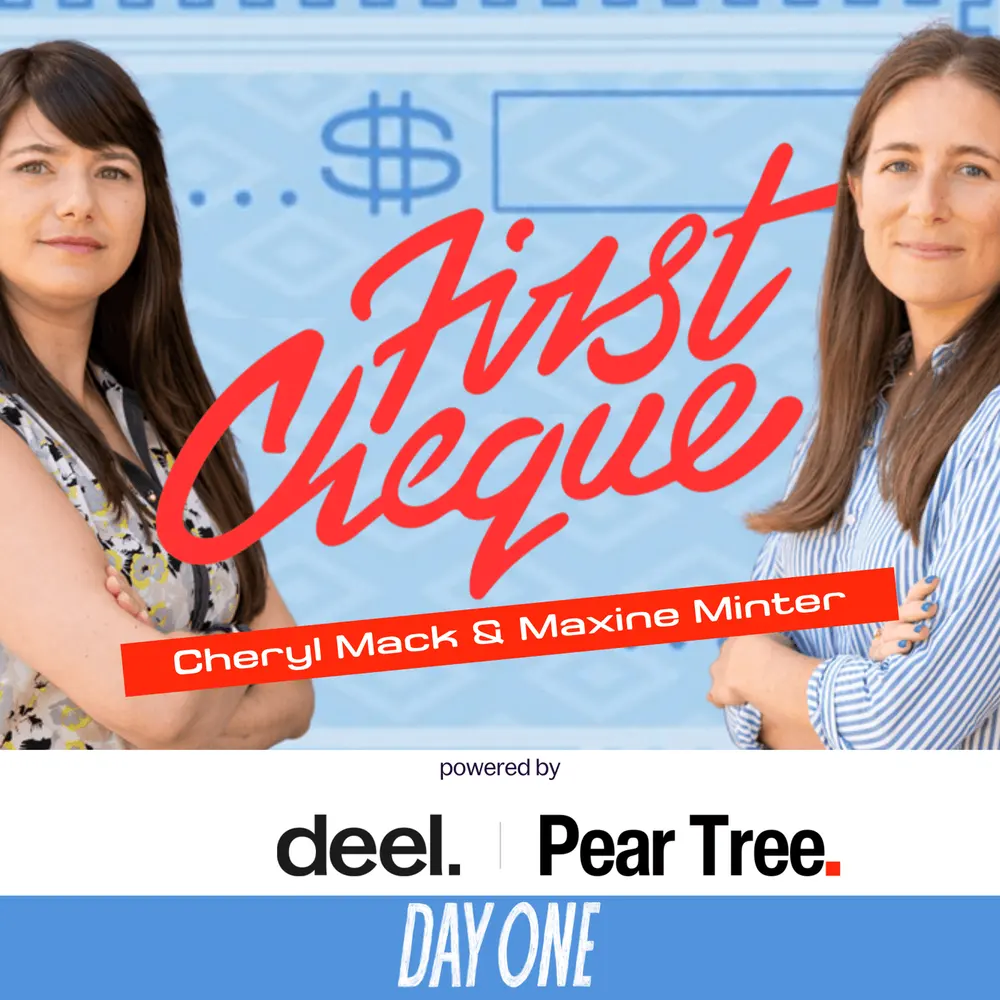 First Cheque with Cheryl Mack & Maxine Minter
Presented by Deel & Pear Tree
First Cheque with Cheryl Mack & Maxine Minter
Presented by Deel & Pear Tree 







 ▶
▶ ▶
▶ ▶
▶