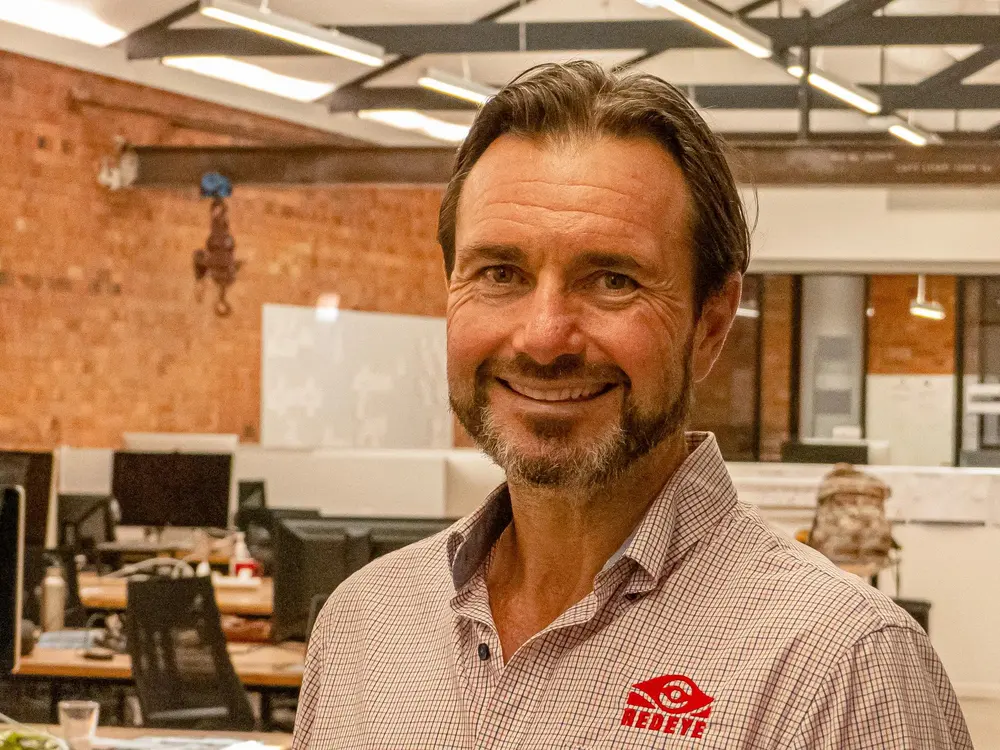
Transcript Synced · select any line to jump ▾ 0:00 Adam Spencer: You're listening to a DayOne.fm show. 0:05 Speaker: What drives you to make bold moves, to build something that didn't exist before, to live, lead, and choose life with intention? Welcome to Perspective X. I'm Pauline Fatowi, and this is not your typical business podcast. Each episode, I get to speak to extraordinary entrepreneurs and leading innovators to unpack what truly fuels their journey. Not just the wins, but the inner work, the overlooked decisions, the mindset shifts, and the personal moments that sparked something bigger. This show is about the ripple effect of choice, the kind of deep accountability that lets us respond to life rather than react to it. Because when you realize everything is temporary, and you are the creator of your own experience, you start to play the game differently. So if you're curious about how people build meaning alongside success, how they evolve through challenges and shape the world with intention, this is your invitation to listen in. Perspective X, where we go beyond the highlight reel and into the moments that changed everything. Available now wherever you get your podcasts. 1:19 Adam Spencer: Hi, I'm Adam Spencer, founder of the Day One Network, which is bringing the history of the Australian startup ecosystem to you. I believe in founders. It's why I do everything I do at Day One and our media company, W2D1 Media. And that's why the Day One Network exists, to create helpful content for founders. We've got some great shows in development, but a large part of what we do couldn't be done without support from our partners and sponsors. And I couldn't be happier than to be working with NTP, who get community better than any other technology recruitment company out there. A Newcastle company like mine, NTP are invested in seeing the growth of the local tech community in Newcastle, Sydney, and more broadly Australia. So thank you NTP for helping us bring helpful content to founders and the startup community in Australia. Back to the interview. 2:11 Speaker: I think Australia didn't really have any kind of coordinated startup ecosystem until about 2010, maybe even 2014. 2:22 Adam Spencer: Colin Kinner is the founder and CEO of Startup OnRamp. 2:25 Speaker: I remember back in, must have been late 2013, about 50 people were brought together to talk about how to make the Australian startup ecosystem competitive and help it to grow more rapidly. And at the time there were pockets of startup activity. Sydney probably had a reasonably vibrant community, albeit pretty small. Most other capital cities had very little. Regional startup communities were just nonexistent, completely nonexistent. The venture capital space was really looking pretty spartan. I know at the time when we looked at the VC landscape, there were conclusions drawn that we really didn't have a VC industry and venture capital in Australia was such a small total number of investments and total cash put to work every year that it was really a blip on an international scale. 3:08 Adam Spencer: Yeah. 3:12 Speaker: But, you know, I look now and there has just been an exponential growth phase for Australia. 3:19 Speaker: Rachel Newman is the founding partner of Flying Fox Ventures. 3:22 Speaker: And what I see now is, you know, incredible talent, more private capital than we've ever seen before, lots of entities, whether that's corporates or universities, overseas organizations trying to get involved. And so it's really exciting to see how it's coming together. And what we're also seeing is second-time founders recycling back into the ecosystem, either as mentors or investors. I always say it's never been a better time to start a startup or invest in a startup in Australia, and I just feel like every day it gets to be more and more true. 3:55 Speaker: And I think we've come such a long way in a very short span of time. 3:59 Adam Spencer: Colette Grgic is the Head of Startup Ecosystem at AWS Australia and New Zealand. 4:04 Speaker: We've done it with an amazing group of people that got us to where we are today. And when I look at what we've built out in the ecosystem now, I'm actually really proud. 4:12 Speaker: I think what we saw in the early 2000s, and then especially in that time around that 2010 in Australia, is there were a couple of things that happened, right? There was this Cambrian explosion of startups after that. 4:25 Adam Spencer: I think Cambrian explosion is a wonderful way to describe the sudden growth of the Australian startup ecosystem in the 2010s. The original Cambrian Explosion, also known as the Biological Big Bang, refers to a period roughly 500 million years ago when virtually all major types of modern animals first appeared in the fossil record. It was a sudden and dramatic event, at least in terms of geological timescales, during which the life that made up the Earth's ecosystem became radically more complex and highly evolved. Hi, I'm Adam Spencer, and this is This is episode 3 of the history of the Australian startup ecosystem. We're picking up our story at the point when Australia is about to have its own Cambrian explosion. While everyone has their own perspective on this story, the majority of the 150+ founders, investors, academics, and policymakers we interviewed agree. Before 2010, Australia didn't yet have an established startup ecosystem. And in the first half of the 2010s, there was a sudden and dramatic event during which many of the startups and much of the startup support infrastructure that still exists today came into being. 5:37 Speaker: Around 2012, I could really see a change. 5:41 Speaker: 2012, I started Incub8. 5:44 Speaker: And I could see that there was an actual ecosystem developing in Australia. 5:49 Speaker: 2011, 2012, 2013, you know, Airtree, Blackbird, Square Peg, OneVentures, they all came in around that time. I think what you what we were seeing was the real start of the rise of startups in Australia and a proper startup ecosystem. 6:01 Speaker: Startmate Australia's longest running accelerator program founded back in 2011. And all sorts of things were bubbling away in those days, you know, 2010, 2011, 2012. 6:11 Speaker: 2010 onwards, that burst of enthusiasm. 6:13 Speaker: New startup spaces, coworking spaces. More money was being put into venture capital. It really started taking off. Companies like Airtasker, which was founded in 2011. 6:24 Speaker: Startup House we formed in 2013. 6:25 Speaker: The accelerators were starting to happen. 6:28 Speaker: If I was telling the story of the Australian startup ecosystem, I'd probably see that period of 2014, 2015 being really pivotal. Just at the time when the ecosystem was starting to boom, that was where that perfect storm came in, sort of 2012, 2013, 2014. 6:47 Adam Spencer: We'll continue our story after these messages from our sponsors. The list of organizations founded between 2011 and 2015 is a long one. On top of those already mentioned, it includes the York Butter Factory and Head Over Heels in 2011, River City Labs, Melbourne Accelerator Program, Tankstream Labs, and Car Next Door in 2012, Muradieh, Startup Aus, and Zip in 2013. Startup Vic, Reinventure, Seabrin, and Afterpay in 2014, and fintech Australia CEO Stone Chalk launched Vic and the Spark Festival in 2015. In this episode, we'll be taking a close look at this Cambrian explosion taking place roughly from 2011 to 2015, and we'll be asking the question: what caused this sudden explosion of startup activity? What were the catalysts that set off this period of massive growth in which many of our most iconic startups and the organizations that support them were established? While everyone has a different perspective on what caused this Cambrian explosion, in this episode we'll be discussing what we see as 7 key catalysts. Lowering costs of entry. Maturing of venture capital. Incubators, accelerators, and coworking. Community events, government, universities, and the flywheel effect. First up, lowering cost of entry. 8:22 Speaker: The cost of doing startups have come down quite dramatically. 8:25 Adam Spencer: Terry Hillsberg is Venture Partner at InnoHub Capital. 8:28 Speaker: As opposed to when, for instance, Cochlear got going back in the '80s, it required, you know, $20 million before it even really had a very good product. So that change around 2010 totally changed things. Used to require permission to start a company. 8:46 Adam Spencer: Nikki Chivac is the co-founder of Startmate and Blackbird. 8:49 Speaker: You needed permission to start the company because you needed to raise a round of capital to buy up servers and database software and, you know, rack space in a data center. You needed $5 million to start, so the only way that someone would give you $5 million is if you built a close personal relationship with them. In Silicon Valley, and so you needed to be in Silicon Valley. AWS completely changed the ability of a company to get started. 9:14 Adam Spencer: Amazon Web Services, or AWS, is a cloud platform which provides tools for businesses operating online. Multiple guests pointed to AWS's launch in Australia in 2012 as a key catalyst for the ecosystem's sudden growth. 9:28 Speaker: Amazon and AWS letting someone get started for $10,000, not $5 million, That allowed people to start all around the world. People could just get started with their idea or with their product. You had the intersection of software as a service and AWS and so forth just starting to come around. 9:46 Adam Spencer: Matt Barry is the founder and CEO of Freelancer Limited. 9:50 Speaker: And you also had a very large labor pool in emerging markets come online. So for the very first time, cost-effectively, you could hire a programmer in India to build a website for you for $50. Work on that startup idea. And so the cost to fund these startups went from $5 million in a Series A to $20 or $40 grand. And all the stuff you needed to build an internet business was either open source or free or relatively cheap. Your operating system to build a company was free, being Linux. Your email was free. Your voiceover IP was, at the time, cheap, not free. It's free now, but it was cheap back then. Your payment system was cheap in the form of PayPal. Your advertising on Google AdWords was, you know, AdWords was starting to really come of age and you find customers relatively cheaply. You had this intersection where the cost of the startup was coming down, people were looking for work, people were going online for the first time, hiring people. You had the genesis of platforms you could use very cost-effectively and quickly to build your startup. And tech was starting to come back in vogue again. And so that's when things started to really happen. 10:53 Adam Spencer: Getting a startup off the ground was cheaper than ever, but it could still be an expensive endeavor. While bootstrapping was an option for some, most startups would still need to secure investments to be able to grow and scale quickly. This brings us to the second catalyst for Australia's startup growth, the maturing of venture capital. 11:14 Speaker: In 2006, I decided to also go out on my own and build a digital technology company. 11:22 Adam Spencer: Sylvia Pfeiffer is CEO of Coviu. Last episode, she told us about the limited support the support she received when trying to get a startup off the ground in 2006. 11:32 Speaker: So in 2006, there were a couple of VCs around, but you can count them on one hand. There were very few people that would actually provide support. It was just really difficult to do it back in the day and very expensive. By 2015, I had created another technology, this time in digital health. And this time around, the environment was just so supportive. There were VCs that wanted to talk with us. What you have happening today in Australia is you have really smart people, talented people deciding to leave big corporate jobs to start companies. 12:11 Adam Spencer: Melissa Widner is the CEO of Lighter Capital. 12:14 Speaker: Because there is this ecosystem and there's funding available. I mean, Athena is a great example of that. So Michael Starkey and Nathan Walsh left NAB, National Australia Bank, to form Athena, which is now a unicorn, and they were able to get funding I think they did this maybe 3 or 4 years ago when it was founded. But, you know, in 2010, it wouldn't matter, you know, how great these guys are. There wouldn't have been the opportunity for funding. 12:39 Speaker: Blackbird, Airtree, and Square Peg as well. Their success has kind of opened up the markets of VC here in Australia. 12:47 Adam Spencer: Cameron Adams co-founded Canva in 2012. 12:51 Speaker: And now you can quite comfortably start a startup here and only get funding from Australian funders. But back then it was an impossibility. We had to go to the United States and we ended up doing our first round was half US, half Australian, and the Australians pretty much would only come on board because the US people were involved. So you needed that stamp of legitimacy before you could even think of doing something here in Australia. The investors didn't exactly know what their model was. They didn't know what a successful team looked like. They were a bit more risk-averse. Some of the capital was moving over from stuff like mining. People moving over from other industries had to learn what a software company looked like, what a technology company looked like, and what they should be investing in. So they're very cautious in the early days. 13:36 Adam Spencer: Before the 2010s, startups often had to resort to creative means to grow their companies. The story goes that Mike Cannon-Brookes and Scott Farquhar financed Atlassian with a $10,000 credit card debt. And bootstrapped for several years before attracting any investment. 13:53 Speaker: So what led to funding? Because Australia's been a wealthy country for quite a long time. And I think what led to it is, you know, really, I think Atlassian was a big catalyst and then there are some others. And it's certainly what's going on with Canva is really quite game-changing for the Australian economy. Investors aren't going to come into this asset class unless they can see that it's potentially profitable. I do think it's probably Partly because of the Atlassian success. By that time, investors in the US were looking to also invest in Australian companies, so money was flowing in. 14:26 Adam Spencer: Again, Sylvia Pfeiffer. 14:28 Speaker: There were a number of what I would call experienced startup founders. So people that had gone during the dot-com to the US and maybe after that and had experience in the US, had built companies in the US, and then came to Australia. And became investors in Australia, and that also started changing things. 14:49 Adam Spencer: One such experienced founder was Nicky Shevak, whose startup experience began when he founded a company with his former roommate, Mike Cannon-Brookes. After several years living and working in the United States, Nicky returned to Australia in 2009. 15:04 Speaker: And really what struck me was all of the people that I'd met in the Bay Area, all of the people that I'd met in New York, compared to the people I'd met in Australia, the people in Australia were better or at least as good as all of the best people I'd met in America. And even though that was the case, people still weren't paying attention to those people in Australia. And really it was that mismatch between you had all of the right raw ingredients of someone truly special and all you needed was a group of people to invest. 15:34 Adam Spencer: Nicky co-founded Startmate in 2011 and a group of founders including Atlassian co-founders Mike Cannon-Brookes and Scott Farquhar, invested $10,000 each into a microfund to invest in the next generation of founders. 15:50 Speaker: And I think Startmate was a very important catalyst for that because it was bringing a model that was just starting to get proven out and getting traction in the US, the accelerator model, where VCs that had traditionally had to write $10 million checks as the first check for a startup to get started was able to, you know, go a little bit earlier up the funnel and have other people assume that risk at the start for a lower amount of capital. 16:14 Speaker: So I think the capital is a really important part for what drove a lot of the explosion here. 16:19 Adam Spencer: Then in 2012, Nikki teamed up with Rick Baker and Bill Barty to form Blackbird. 16:25 Speaker: Blackbird, their first fund, I think they formed it around 2012, and that's just been phenomenally successful. That, I think, has made a big difference and has led to investors who wouldn't typically pay attention to this asset class, I mean specifically the super funds, starting to invest in this area. In 2012, what happened is Blackbird raised their first fund. We had our first kind of, I would call it like US-similar type of venture fund that went, we are investing in tech startups. And that's been a long time for Australia coming. 16:56 Speaker: You know, and that was really quickly followed. 16:58 Adam Spencer: So Square Peg also launched in 2012, and then we had Rampersand Typically, venture funds don't start returning on their investment for at least 4 to 6 years, so Blackbird, Square Peg, and Rampersand didn't enjoy overnight success, but many of the startups they invested in achieved enormous growth. In December of 2021, Blackbird reported that their first fund, which invested in companies like Canva, CultureAmp, and SafetyCulture, had grown from $29 million into over $1.3 billion, a 47x return. The success of these funds helped establish Australian startups as a legitimate investment opportunity and helped attract more capital into the space. Another fund that saw great success in the 2010s was Uniseed. 17:45 Speaker: Initially, Uniseed was set up in 2000 by two universities, Queensland and Melbourne, who put up $10 million each. 17:53 Adam Spencer: Peter Devine is the current CEO of Uniseed. 17:56 Speaker: And the idea was it was set up to solve a problem, which was to bridge the gap, you know, this valley of death between an invention at a university and what we now say, you know, to a point where something's investable. 18:11 Adam Spencer: Uniseed had some big wins during the 2010s. 18:14 Speaker: It had some high-profile exits in Fibretec, which got sold in a deal worth over $500 million US. Spinifex, which was a UQ company that got sold to Novartis in a deal worth about $1 billion Australian, and then Hatchtech, which was a head lice treatment out of the Uni of Melbourne that got sold to Dr. Reddy's Labs in 2015. So that period in 2014-15 when we had those successes really changed the whole landscape and triggered a whole lot of change in Australia. 18:47 Speaker: Mm-hmm. 18:48 Speaker: Which was very positive. You had all of the right raw ingredients of someone truly special, and all you needed was a group of people to invest. 18:59 Adam Spencer: Again, Nicky Shevac. 19:00 Speaker: But I think, like, even investing money is just one form of giving belief to those people to give it a shot and to take a swing, and that was really the premise of Startmate. 19:09 Adam Spencer: Nicky makes an important point. Investing in startups is about more than just money. Which brings us to the third catalyst for the explosion of startup activity in Australia, the proliferation of support infrastructure, specifically accelerators, incubators, and coworking spaces. Last episode, we discussed some of the earliest Australian incubators and accelerators, ATP Innovations, i-Lab, and Pollinizer. Throughout the 2010s, these incubator and accelerator models continued to evolve and mature. And many more new organisations were founded. To illustrate just what a difference these organisations can make for early-stage startups, we're going to hear from Murray Herbst, Director of Entrepreneurship at the University of Technology Sydney. 19:54 Speaker: I started a company when I was 16. It was an ad-blocking company. I put a bit of software online. It was pretty terrible at the time, but people started paying for it, and that gives you a reason to figure out what you're doing. And I ran that for 14 years without referring to it as a startup at any point because this wasn't a kind of— that was '98 that I started that. So in Sydney, there was not that kind of ecosystem where that would be seen as a startup, at least not that I was engaged with. And at some point towards the kind of end of life for that company, I was introduced to— Uh-huh. Fishburners, and this was when it was one level in a building in Ultimo. 20:36 Adam Spencer: Fishburners is a coworking space and startup hub that was founded in Sydney by Pete Davison and Mike Casey in 2011. 20:43 Speaker: And I remember Patrick referred me and said, "You gotta check this place out. There's other people doing stuff kinda like what you're doing." And that sounded cool because for the entire lifespan of AdBuncher, the people I was working with were wonderful people overseas. And no people in Australia. None of the team, none of the partners, like none of it. Yeah, none of the customers were in Australia really. And so to see, okay, here's a lot of people doing things in software and technology, this sounds cool, let's get involved there. That kind of bit me a little bit with the bug, just seeing a lot of people collaborating, helping each other out, finding their own versions of success, and then coagulating into more successful teams. That lit a fire under myself. Yeah. I launched a company called ScribblePix in 2007. 21:31 Adam Spencer: Peter Brad became Fishburners' initial CEO after several years working on his startup without any formal support. 21:38 Speaker: What I was doing with my business, ScribblePix at the time, I didn't know what was available. And because of that, I probably moved a lot slower than I needed to or could've, 'cause I didn't have other people around me to learn from, to tap into, to get advice from, all the benefits that you get from being a part of a program, whether it's a company like Fishburners or accelerator programs or other community-based programs. If you're at home by yourself, your knowledge is limited to what you know. Communities like the York Butter Factory and Fishburners, these places that could become a kind of connection point. 22:13 Adam Spencer: Mark Pesci is a futurist and host of the podcast This Week in Startups Australia. 22:18 Speaker: There were these meeting points, and I think it's out of those meeting points that things began to cohere, but there was nothing that felt very informal about that. I think it's all quite accidental and quite gentle around this, and people would get a good idea and go off and do it. 22:33 Speaker: We also had Startmate. 22:34 Adam Spencer: Georgie Turner is partner at Tidal Ventures. 22:37 Speaker: Startmate became a thing. There was a path then for early-stage founders to actually try to muddle their way through that early process. 22:45 Adam Spencer: As well as Startmate and Fishburners, other notable startup support infrastructure that was founded between 2011 and 2015 includes River City Labs, York Butter Factory, the Melbourne Accelerator Program, Head Over Heels, Tankstream Labs, and Muradie. These and many other organizations that would be founded throughout Australia in the years to come would act as community hubs providing opportunities for networking, education, and collaboration. 23:11 Speaker: And what I did as CEO of Fishburners at the time was I created a platform for events. 23:15 Adam Spencer: Again, Peter Bratt. 23:16 Speaker: And at the time, if you wanted to go to an event in the tech startup ecosystem, you basically had to go to a pub. It was pretty noisy, you know, it was full of alcohol and it was hard to hear the speakers. And so what we did was we put on level 1 of Fishburners to become basically a platform, and I encouraged all those people that were running tech meetups to come and run them at Fishburners for free. The quality of the events went up significantly. The membership of Fishburners, you know, you'd always get 20 or 30 people from Fishburners coming, so there was always a crowd at the events. And that, I think, significantly changed the startup ecosystem in the Middle East, and there are many other equivalents all around Australia. But visibility is really important. People would come and all of a sudden they realized that if they wanted to quit their job, if they wanted to give it a go, there was a community that they could join, there were people that would help them, there was, you know, infrastructure around them. 24:06 Adam Spencer: Here Peter highlights the importance of the visibility of the startup ecosystem. Many people we spoke to for this series highlighted visibility as a key factor needed to bring more people into the startup ecosystem, often using the phrase "you can't be what you can't see." The success of Australia's early VC funds and the establishment of startup community organisations like accelerators, incubators, and co-working spaces helped increase this visibility, as did the fourth catalyst we'll be discussing: community events. Last episode, we discussed some of the events that happened during the early 2000s. Such as Web Directions and the Tin Shed Kickstart conferences. Between 2011 and 2015, the number and size of such events increased significantly. 24:53 Speaker: I had started a job where I was working running events and doing some marketing for River City Labs, which was a very small coworking space at the time. 25:01 Adam Spencer: Peter Ellis, who later would become CEO of River City Labs, told us about when she first joined the organisation in 2012. 25:09 Speaker: I could see the benefit of bringing, say, my marketing and business skills into a group of people who predominantly knew tech really well. So I just saw an opportunity to get involved and bring a background of having been in public relations, a lot of events, a lot of networking, into a sector to basically tell the stories of the awesome stuff that was being built and created inside a small little 500 square metre coworking space, which was really just tucked away that nobody really knew about. I do think the biggest catalyst we had was a Startup Weekend. It was the first one that Queensland had ever hosted in 2012. It was a concept that I think Sydney might have had one or two maybe, and maybe Melbourne one, but no other states had had one. Queensland hadn't had one, so we hosted the first one, which really did put a stamp on what that formula looked like in terms of people coming together to solve problems. Off the back of that, teams were formed and ventures could really be created. It drew the attention of investors becoming aware of these younger companies solving some interesting problems. So we hosted Startup Weekends, we did various hackathons tied into different industries and sectors. I brought the Lean Startup Machine event, which came to Brisbane. It was an event where you had to unlock a certain level of people before the event could run, which made the community work hard to encourage other people to sign up to register for this event. It did become something less us preaching needed to happen and getting the community engaged. And providing that space for people to host their own meetups, we would put on the pizza and drinks and they hosted the event and it enabled and empowered more members of the community to come together and do things that mattered to them. Mm-hmm. 26:54 Speaker: We first started running Startup Weekends in about 2013 here on the Gold Coast. That was delivered by an entity called Silicon Lakes that Aaron Bourke founded. 27:02 Adam Spencer: Meydan Yuren is the co-founder of the Unconventional Group. 27:06 Speaker: And so we decided to run an event where we talked about how government and industry and education could work together to support innovative businesses on the Gold Coast. And I think at the time the City of Gold Coast was investing into a vision for the future. What does what does Gold Coast 2050 look like? And so I think there was a collection of actors coming together that kind of supported the development of the early stages of the ecosystem here on the Gold Coast. 27:30 Speaker: I remember going to a Startup Weekend in 2014 here in Adelaide. Maybe that had been run once or twice before. 27:38 Adam Spencer: Wendy Perry is the Managing Director of Workforce Blueprint. When she attended the Startup Weekend in 2014, she was largely unfamiliar with the startup ecosystem. 27:48 Speaker: So even though I was well networked business and industry-wise, I didn't necessarily know about this other kind of, not undercover, but it's a little bit like that sometimes. Like it's a different network to traditional business and industry, the entrepreneurial ecosystem. And so Startup Weekend popped up, went along and participated in that. And I'm like, okay, like I really love this space. I love working with people in this way. And events were starting to pop up as well. We had some new coworking spaces opening up and moving to town. Things just started to build from there with programs and opportunities and lots of networking and education and training style stuff more around lean startup methodology. 28:30 Adam Spencer: Wendy is just one example of the many people whose first proper introduction to the startup ecosystem was through a community event of some kind. As well as those already mentioned, Other notable events that launched in the 2010s include SouthStart, Spark Festival, and StartCon. As the size and frequency of these events continued to grow, so would the visibility of the startup ecosystem throughout the broader community. The fifth catalyst that we'll be discussing is government. Before we move on, it's important to note that the role of government within the startup ecosystem is perhaps a little contentious.. And while making this series, we've heard a lot of differing perspectives. 29:11 Speaker: Government is a slow-moving bureaucracy that's, you know, it's an organisational model that's a Weberian bureaucracy from the 1930s. It's 100 years out of date. 29:20 Adam Spencer: One such perspective is that of Evan Thornley, who in addition to his startup success, has also had experience in public office. 29:27 Speaker: I mean, yes, there are a few things that obviously really matter. You know, it's very important that you have a tax system that doesn't create cash tax liabilities for non-cash rewards in terms of stock options, for example. Clearly that stuff's got to be right. And, you know, the Tech Council and folks doing important things and no doubt will be representing our community on important issues. And it's great that people do that and are of service there. But as someone who's been very active in political life in a range of different forms, as well as in startup life, I would say broadly speaking that government is spectacularly irrelevant to 99% of this stuff. Yeah. And that we would all profit by wasting less breath on debating what governments ought to do to make us into an innovative economy. 30:13 Adam Spencer: We will be discussing the role of government in Australia's startup ecosystem in more depth throughout the series. For now, we'll be focusing on the early 2010s. 30:22 Speaker: Without a hint of modesty, I would point to March 2013, which is when we convened that first Startup Oz roundtable. 30:31 Adam Spencer: Allan Noble is the founder of OzOcean. 30:33 Speaker: You know, honestly, I just thought, let's see what we can do if we can get a bunch of smart people in the room. You know, a bunch of entrepreneurs, a few policy wonks, a few investors, and just see what needs to be done to kind of kickstart the startup ecosystem. Startup Oz was an Australian-based organization. It had directors from, tried to get directors from every state to represent. 30:52 Adam Spencer: Again, that's Peter Bratt, who helped establish the startup advocacy group Startup Oz. With Allan Noble, Bill Bartee, and others. 30:59 Speaker: With Startup Aus, just so many people involved. There was 50 people that started Startup Aus in, you know, the first community event. Many of the people that committed to building the startup ecosystem in Australia, they did it for free, or they did with wages at a discount. They could certainly earn a lot more money working in corporate Australia. I had the opportunity to convene a roundtable of 50 or so stakeholders in the startup ecosystem And we asked ourselves the question, what do we think was the most pressing need for startups in Australia? We realised that there were a few key or pressing issues that we needed to tackle fairly urgently. First, we needed to dramatically improve policymakers' awareness of tech startups and the value that tech startups could bring to the Australian economy. 31:47 Adam Spencer: Once again, we see the importance of visibility of the startup ecosystem being underlined. This time in the context of government policy. 31:55 Speaker: If you spoke with bureaucrats back then, they really had precious few ideas about what a tech startup was. So we needed to change that and make sure that Treasury and other departments were on board and supporting tech startups with good policies. I definitely think the work that Startup Oz did on the policy side helped get the settings right for startups, made it easy for startups to essentially reward their employees with incentive stock options, Think about a startup. Startups, you know, in the early days, they're really competing for talent. They can't compete with salary, so they really need other ways of incentivizing their early employees, and that's why incentive stock options and such are so, so important for startups. I'm very proud of the work we did with Immigration 2 and the new entrepreneurship visas, which made it a lot easier for startups to bring in the talent they needed. In the early days, even though there was no shortage of engineers in Australia, it seems like Australia has always produced strong engineers ever since engineers existed, or even before we called engineers engineers. So there was no shortage of smart software engineers, computer science graduates. What we lacked were those other vital roles, you know, the user experience, user interface, the product managers. Those were job descriptions that weren't even considered real job descriptions back in 2013, so we worked hard to make sure that those jobs were known to immigration and were then fast-tracked because startups were crying out for that kind of talent. 33:34 Adam Spencer: As well as lobbying the government, Startup Aus spearheaded research. 33:39 Speaker: I, for my sins, volunteered to take the lead lead on authoring the first Crossroads Report for StartupAus. 33:44 Adam Spencer: Colin Kinner, who has played many roles in the Australian startup ecosystem since the early 2000s, including founder and CEO of Startup OnRamp, was the author of multiple StartupAus Crossroads Reports. 33:56 Speaker: I think Australia didn't really have any kind of coordinated startup ecosystem until about 2010, maybe even 2014, which was the first StartupAus Crossroads Report that ended up being a pretty lengthy document that looks not just at what's happening in Australia, but internationally, and said, what does best practice look like? What are the countries that are really growing their startup ecosystems very well? What are they doing? And what can we learn from that that could be replicated here? And it ended up recommending about 20 actions, some of which were pretty substantive. And I'm pleased to say that quite a lot of those have since been acted on. At least to some extent by federal government, state government, the ecosystem itself. So I think for me that was probably a pivotal point where the ecosystem leaders looked at what was going on and said, geez, we should really be doing a lot better. 34:46 Adam Spencer: As well as the work being done at a federal level, state governments increasingly played a role in supporting the growth of startup communities. 34:54 Speaker: In Queensland specifically, a small group of us got together. 34:58 Adam Spencer: Wayne Gerrard is the co-founder of RedEye and Queensland's chief entrepreneur. 35:02 Speaker: So starting around 2012, I'd just founded RedEye with a mate of mine named Randall Macon, and Steve Baxter had just come back from the US from Google and set up River City Labs. And there was iLab at UQ, and then there was CEA at QUT. And so a group of us just started getting together to try and help each other. And after a couple of years, we had the Queensland government reach out and say, "Hey, we understand you guys are getting together to kind of build this startup ecosystem. We're thinking about purposely investing to accelerate innovation and startups here in Queensland. What ideas and what advice do you have on how we could do that?" And we wrote a positioning paper, which really, if you think about it, we mapped out what would the lifecycle of a startup ecosystem look like? We looked at what had happened in a whole bunch of different startup ecosystems that were starting to become prominent globally. Here's all the programs and activities that we need to run at each stage of the development of a startup ecosystem. You know, start to attract founders, educate founders, attract investors, educate investors, help people scale globally, access to capital, all that kind of stuff. 36:22 Speaker: Mm-hmm. 36:23 Speaker: Anyway, we built this program and when the government changed in 2015, the new Premier, Anastasia Palaszczuk, was taken on a US trip and visited Josh Lerner in Harvard. And she came back from that going, "I want to really understand the opportunity for startups in Queensland." And Advance Queensland was launched as an initiative. We basically took the working paper that we'd done and that became the program that was funded under Advance Queensland. And so we started with a couple of hundred million dollars worth of funding in 2015, and we put together the Advance Queensland Expert Panel. And that were, they were people from entrepreneurs, people from universities, people representing customers, people representing the investor community and government. And we got together to build really consciously and focused effort to build the startup ecosystem right across Queensland? 37:18 Speaker: Well, from my perspective, it really was from that 2015 time onwards. 37:23 Adam Spencer: Kate Jones is an executive director of the Tech Council of Australia and former member of parliament for the Queensland government. 37:29 Speaker: At the time, I was actually the education minister. So what I was seeing was our investment through Advance Queensland was seeing new places and spaces set up across Queensland, where we were trying to create opportunities for young Queenslanders, predominantly at the time, to kind of see entrepreneurship and starting their own business or their own startup as an option for them post-schooling or even during schooling. But I do think when you're trying to create an ecosystem, and this is certainly experience in Queensland, is that, you know, when you have investment in people, in skills, in places where it can fast-track innovation, then that actually does matter and it does make a difference. 38:17 Adam Spencer: The startup community in Canberra was also growing during this time, in part thanks to support from the ACT State Government. 38:26 Speaker: My name is Peter Adamek. I'm the CEO of the Canberra Innovation Network. 38:30 Adam Spencer: Peter told me about entering the Canberra startup community. After moving from New Zealand in late 2014. 38:36 Speaker: The coworking space here, which was in a demountable on a parking lot in front of Australian National University campus. And then when I spent the first day there, it was very cold and because it didn't have proper heating and there were other tech entrepreneurs who were kind of in their jackets and it was very surreal compared to something that was happening already back then in New Zealand. So I was thinking, wow, this is early stage. But then I was wrong. I was wrong. As I was discovering more and more and met other people in the ecosystem through this entry, I figured that there is venture capital, there is angel investors, there was companies in making. So it was exciting to see it unfold. And it was about when the ACT government was looking at what is the next iteration of the ecosystem here, and they set up the Canberra Innovation Network as a new model. It's a not-for-profit company, was set up in 2014 by 6 foundation members at that point that included the major academic and research institutions that are present here in Canberra. We have funding from the ACT Government to coordinate, support, and accelerate growth of the innovation ecosystem in the ACT. 39:55 Speaker: Sebring, I think, was an important catalyst for really developing up the innovation ecosystem, startup ecosystem here in Canberra. 40:07 Adam Spencer: That's Zoe Piper, who has worked in a variety of roles in Australia's startup ecosystem, including as Director of the Canberra Innovation Network, or Sebring. 40:15 Speaker: I wasn't involved in the establishment of Sebring, but I think some of the people involved had quite a lot of foresight into what was happening and what was needed. And it was a really good collaborative effort across the different sectors here, I think. It's a very big part of what Launch Vic was set up to achieve, is to really promote the ecosystem, put in place programs, and we've proudly supported over 125 programs to come into being. 40:40 Adam Spencer: Kate Cornick is the CEO of Launch Vic, which was set up by the Victorian government. 40:45 Speaker: So there is, I think now, a lot more support out there, and you can Google what support is there and come up and find things, which back in 2013, 2014, you couldn't do so easily and you really had to know the ecosystem to engage with it. But I do think it's still a problem and we need to really shout from the rooftops that there is a huge amount of support out there. And if you have a great idea and you're toying with the idea of setting up a startup, that there are places to go to really help you. And there's investment capital out there and there are opportunities to grow and mentors who will support you and talent to help your company scale. scale, and all those things that in the early days were points of stress. Hi, I'm Rachel Yang. I'm a partner at Giant Leap. I also wear a hat as the co-chair of Startup Victoria. So we're a not-for-profit member-driven organisation that is one of Australia's largest. So we have a reach of 60,000 and we're very much about helping founders to succeed. Launch Vic is the government body that supports Startups and innovation. Startup Vic and Launch Vic work closely together to build the ecosystem in Victoria. 41:53 Adam Spencer: We'll continue our story after these messages from our sponsors. The sixth catalyst we'll be discussing is the role that universities played. The role of universities goes way back to the very beginning of Australia's tech startup history. In episode 1, we discussed how companies like Cochlear, ResMed, and Teletronics, which created innovative medical device technology in the '60s, '70s, and '80s, could be considered Australia's first startups. This wouldn't have been possible without cutting-edge research from Australian universities. 42:31 Speaker: We wanted to go right back to the beginning. The medical device industry here in Australia is one of the early catalysts for the whole ecosystem we see around us today. The medical device industry has been built on the back of incredible research out of Australian universities, incredible medical research. 42:47 Adam Spencer: However, like other sectors, the visibility of startups throughout Australia's universities was inconsistent and still relatively limited at the start of the 2010s. 42:56 Speaker: My name is Baden Yuren. 42:57 Adam Spencer: We heard from Baden earlier. As well as having co-founded multiple startups, Baden previously had an almost 20-year career as an academic. At Bond University in Queensland. 43:07 Speaker: 2008, I'd taken over responsibility for entrepreneurship curriculum at Bond, and I was looking to shake things up. In my view, it was very old school. It was still teaching 40-page business plans with 5-year cash flow projections, and I had seen in practice that's not how things were happening. So I was trying to innovate and make more relevant the education that was happening at the university. So I went and I just, I picked out some international exemplars and went and spoke to them and figured out what was happening and then brought that back. So 2012, I started Incubate, which is one of the first student-focused university-based accelerator programs in Australia. 43:44 Adam Spencer: James Alexander is the co-founder of Galileo Ventures. 43:47 Speaker: There was essentially only two at the time. Now every university has something, or every major university I should say, has some sort of program. So it's completely changed in that regard. It's grown a lot over the last 10 years and it's still growing today. And I think in 2014, we first ran our first pre-accelerator. We partnered up with the Incubate program that, that USYD had developed and ran that. And yeah, there was a lot of momentum happening sort of around that 2013, '14, '15 space. 44:17 Speaker: I finished my undergraduate degree and started working for a small biotech firm, as it was called then. 44:23 Adam Spencer: That's Dharmika Mistry, who today is Director of Diagnostics and Industry Engagement at MTP Connect. Her story is an excellent example of the way universities can support a founder at the beginning of their startup journey. 44:35 Speaker: We discovered the biological mechanism behind that technology of X-raying hair and finding, being able to detect breast cancer. So we discovered that there was perhaps a biomarker that was able to create this change in a person with breast cancer, and this could be used to develop another type of test, such as a blood test for breast cancer detection. Now, as a scientist, that eureka moment was the most exciting part. It's, hold on, I think we've found what is causing this, and perhaps we can elucidate some more interesting things from this and develop something really impactful. 45:07 Adam Spencer: Dharmiga and the two scientists she was working with made this important discovery in 2010, but wasn't aware of any support organisations that could help take the discovery and turn it into a business. 45:18 Speaker: There was no startup, there was no incubation, acceleration wasn't a thing in Australia in 2010. Maybe it was, maybe I wasn't aware because I was living in my little scientific bubble at the time. 45:29 Adam Spencer: But throughout the 2010s, many new initiatives were being created to support people like Dharmika. One of these was led by Cicada Innovations, formerly ATP Innovations, which had been founded in 2000 with key support from 4 Australian universities. 45:44 Speaker: Cicada and New South Wales Health were running the Medical Device Commercialisation Training Program. The first year, it was in 2014. I hadn't even heard about it then, and you know, that's the pilot year. But 2015, the second year, someone had thrown that across my desk and said, "Hey, maybe you should think about doing this," you know? And it was for people that were really green, to be honest. So clinicians and researchers that had just come up with an idea. I'd been doing BKAL for about 5 years by this point, but I still had lots of gaps in my skills. So for me, that was the, I guess, the forcing function to come and apply for something like this, put myself out there and have a go. And it was one of the most profound, wonderful experiences to this day I've ever had, because it's done a lot of things. It obviously filled some of my skills gaps, but also opened up my networks. And I think what happened around that time is we really that the ecosystem or stakeholders, whoever, including government, saw that we had gaps between, you know, academia and industry, research commercialization. And those gaps came through skills gaps, right? Like, people had ideas, excellent ideas, but we weren't seeing that translation. What was stopping it was there was no support mechanism for that. And so they started to build those out, and, and it was obviously the right thing to do at the time. I sort of started and dove into startups in 2013, and that was in Adelaide. 47:10 Adam Spencer: Emily Rich, who today is Director of Microsoft for Startups, was also supported in her startup journey by a university initiative. 47:18 Speaker: And for those of you who don't know, Adelaide is quite small in population. The startup community was very small. We spent time at the Innovation and Collaboration Centre, which is in Adelaide as well as part of the University of South Australia. We actually won a grant of $50,000 from University of South Australia from their commercialisation department. We were also given space as part of that prize. The grant that we received changed our world. And you think it's such a small amount of money, but it's so meaningful to us to be able to develop. And it was so much money to us at that point in time. You know, we didn't have any revenue, but we had this great technology. And still to this day, you know, we did some things with that technology that were first in world, as far as we know. Yeah. For a couple of those things. So that support meant so much. 48:25 Speaker: Historically, you know, universities were really focused on research and teaching, which is appropriate. 48:32 Adam Spencer: Again, Peter Devine. 48:33 Speaker: A lot of people started saying, hey, you know, we can make money out of early-stage innovation. And universities themselves saw students as more of a strategic asset and started to put incubators and accelerators into place, you know, and we had programs like Incubate at Sydney and Cicada Innovations and On Program at CSIRO, but every research organisation is now affiliated with an incubator or an accelerator. 49:01 Adam Spencer: The seventh and final catalyst we'll be discussing is the flywheel effect. The concept is based on mechanical flywheels. Picture a big heavy wheel. At first, you need to apply a lot of force to get the wheel to spin even a little.. But over time, momentum builds and the wheel spins faster and faster. 49:23 Speaker: Well, I think Australia is doing well at producing great companies. 49:28 Adam Spencer: Kate Cornick is the CEO of Launchvic. 49:31 Speaker: We are a tiny nation, a long way from the rest of the world, and yet we are producing some really great companies. We have got great founders, the Atlassians, the Canvas, the Aconexes, the Airwallexes, the Afterpays, et cetera, that are proving that you don't have to jump ship, move to Silicon Valley, and go and grow your business overseas. The fact that headquarters aren't jumping ship and moving to the US or the UK is really fantastic. It's fantastic for the startup sector, it's fantastic for the founders, it's fantastic for the people that do well, whether it's a founder exiting or an employee with a piece of equity who then exit, who then come back as often very experienced staff into new startups or invest into the ecosystem. So I think we're starting to see that flywheel kick off, and that's really a great thing for the community. Thank you. 50:22 Adam Spencer: We are using the term "the flywheel effect" to refer to the way successes compounded to create the Australian startup ecosystem. The 6 catalysts we've discussed so far all contributed, but ultimately it is the startups themselves, the founders taking risks and building innovative companies and creating value, that are at the heart of the startup ecosystem. 50:46 Speaker: So I think there's always going to be this situation in a— let's call it a new place, right? 50:52 Adam Spencer: Lars Rasmussen, angel investor and co-founder of Google Maps, worked in Google's Sydney office during the 2010s. 50:59 Speaker: Where there isn't yet the kind of thriving ecosystem that exists now in Australia, and everyone is trying to make that first thing happen, the first seed that turns into a real tree, like Atlassian. Or maybe the Maps thing that turned into the Google office there. And that just creates— it accelerates things greatly because now people hear the story that yes, it was possible right here with the people here, with the environment, with the ecosystem, the infrastructure that's here. Yes, it was possible. And then it both inspires a bunch of people, also teaches a bunch of people how to do things. The way communities are built are from the bottom up. 51:42 Adam Spencer: Again, Nicky Shevac. 51:43 Speaker: From the founders who create successful companies passing on their knowledge and investing their money into the next generation and helping them succeed. Really, that's the flywheel. The other thing that happens, and this is critically important, is people that work in those early success stories then know what a successful company looked like and go off and found their own. 52:01 Adam Spencer: Again, Evan Thornley. 52:02 Speaker: That's happened for decades in Silicon Valley. You know, most people don't found their first company out of nowhere. Most people who are good founders actually started in other companies. We saw a lot of that, obviously. You know, Martin Hosking was, you know, Martin was, I think, employee number 3 at LookSmart and really a core part of the founding team. And, you know, then went on with Redbubble and his role in Aconex and other things. And, you know, similarly, people came out of Seek and came out of REA. And so you really then get that second generation that flows from that. And then of course you get the founders and the early venture investors who've made serious money in those early startups are then looking for the next generation of founders and the next generation of companies to invest in. 52:43 Speaker: There's almost no way of somebody not to give back. 52:47 Adam Spencer: Michael Batko is the CEO of Startmate. 52:50 Speaker: It's almost like if somebody reaches out a hand to you to help and you change your life, it's almost inevitable for you to want to give back to the community. We've seen it time and time out again at Startmate over 10 years now, where founders go through the accelerator program, get so much help, come back as mentors, invest their personal money back into Startmate, and we see the same things in fellowships. It's almost like that flywheel which just never stops. 53:17 Adam Spencer: Many of the people we spoke to for this series credited Australia's startup ecosystem them for being a collaborative and supportive environment. 53:25 Speaker: I do feel like we share really well. 53:29 Adam Spencer: Again, Cameron Adams. 53:30 Speaker: I hung around San Francisco a lot and had a lot of friends who were working in startups and in tech, you know, throughout the last 2 decades. It always felt a bit more combative over there, like your idea had to fight someone else's idea for funding, for oxygen, for airspace, for talent, And over here in Australia, it feels like we share a bit more and like everyone's in it together and everyone wants to help each other. So I mean, that's one of the real great strengths. 54:01 Adam Spencer: By the end of 2015, no one could deny Australia well and truly had a startup ecosystem and a whole host of new startups. Canva, Afterpay, Sendle, Buildkite, Airtasker, Shippit, Affinity, Coview, and Car Next Door are just some of the notable startups that were founded between 2011 and 2015. So far in this episode, we have focused on the catalysts for this huge spike in startup activity, but it's important to note that despite all this positive growth, the ecosystem also faced its fair share of issues and challenges, and still does to this day. We're going to briefly touch on two of those here. The first of these is a lack of diversity within the startup ecosystem. 54:46 Speaker: When I first started at Launchvic, you know, I went to a lot of the community events. They were very beer and pizza. They were very predominantly white men. 54:57 Adam Spencer: Again, Cade Cornick. 54:58 Speaker: And we've worked really hard to build diversity and inclusion into our journey. So I think very early on there was this propensity to be a bit of the bro culture that you've seen in Silicon Valley and other places. Sort of, it was almost like we were replicating that. I started covering the space around 2013. 55:19 Adam Spencer: Yolanda Redrup is a senior journalist at the Australian Financial Review. 55:24 Speaker: I guess impressions of it at the time were that the majority of investors back then were male. Equally, most of the founders I wrote about were male who were out there raising capital. 2013, there was certainly no emphasis on funding women entrepreneurs or creating any particular support for women founders. 55:48 Adam Spencer: Susan Oliver is the chair of the Alice Anderson Fund and co-founder of Scale Investors. 55:53 Speaker: There was very few places you could go to which were truly venture capital. Angel investing also had been It was certainly present. Melbourne Angels was active and [FOREIGN LANGUAGE] then, but it tended to be a place for a solid set of males all gathered around a table. It certainly didn't seem like a place that I could go to. At the time, less than 2% of all of the funding in early stage was going to female entrepreneurs, to women entrepreneurs. So we launched Scale Scale finally in 2013, and so Scale has focused on developing women to be investors as well as being recipients of that investment. 56:39 Speaker: So it's both sides of the equation. One of the things I'm kind of passionate about, I'm Indigenous, so I kind of feel there's a really big opportunity to push our Indigenous entrepreneurs and and get them a bit more represented in the ecosystem. 56:57 Adam Spencer: Darryl Lyons is the Entrepreneur in Residence at James Cook University. 57:01 Speaker: I know there's a lot of people doing lots of different things, and that's becoming a little bit more topical. I think there needs to be more momentum and support for that. 57:12 Adam Spencer: Diversity within Australia's startup ecosystem is a large and complex issue, and one we're only going to touch on briefly here. Work was already being done to try and increase diversity in the early 2010s by organizations like Scale Investors, which was founded in 2013 to bridge the gender gap by investing in and supporting gender-diverse teams. We will be touching on some of the other organizations that have worked to increase diversity throughout the rest of this series. Most people we spoke to on the topic agree that while important work has been done, Diversity within Australia's startup ecosystem remains an issue to this day. 57:54 Speaker: I am really tired. I'm tired of looking at the stats on how little funding has gone into women founders. 58:02 Adam Spencer: Annie Parker is Executive Director at TechCentral at the Greater Cities Commission. 58:07 Speaker: And not just women-led, I do include, you know, people with disability, the incredible community of Indigenous founders, I know that it's almost zero investment dollars that goes into Indigenous founders. The statistics for founders with a disability is just woeful. It makes you want to cry. Oh, here's the other thing. It's not just Australia. This is globally. And the part about this, and this is a mantra from Microsoft, actually, and it's one I've stolen because I really love it, which is how can you ever serve the world if you don't represent it? Yeah. I might represent women in technology, but that's where my representation or intersectionality stops. If I want to build a solution that works for a person with a disability or a person from the Indigenous community or a person from the veteran community, how am I supposed to know what that should look like? I need to engage them. I need them to be included in the design. I need them to be included in the testing. I need to employ them. 59:12 Adam Spencer: The second major issue we'll be discussing relates to a theme we've touched upon throughout the series, the visibility of startups. 59:22 Speaker: I think in 2015, startups weren't mainstream. 59:25 Adam Spencer: Cheryl Mack is the CEO of Aussie Angels. 59:28 Speaker: For the average person, there was no vocabulary around it. Nobody was thinking, oh, I'm gonna graduate university and join a startup. It wasn't like they even said, "I'm not gonna join a startup." It just wasn't a thing that anybody talked about. I think the way the startup community is viewed by the broader community is really interesting. 59:46 Adam Spencer: Again, CEO of Launch Week, Kate Cornick. 59:48 Speaker: 5 years ago when I started this role, 8 years ago when I founded my startup, startups were really niche, kind of nice to have, bit of innovation theater, yep, we've got one of them, yep, I know a startup kind of attitude. And it was a very nice to have, but it wasn't taken seriously as a sector. 60:05 Adam Spencer: Despite its rapid growth, Australia's startup sector was still relatively small and its visibility throughout the general public was still limited. This was an issue because, as many of the people we spoke to said, you can't be what you can't see. 60:20 Speaker: For the both of us, to be honest, neither of us had sort of grown up really knowing what an entrepreneur was, let alone thinking that that was a viable career option or a thing that we could do. 60:33 Adam Spencer: Here, Christina Delay is referring to herself and her Altina Drinks co-founder, Alan Say. 60:39 Speaker: We'd always just seen our careers as, yep, finish school, you go to uni, you get a job, you work your way up the corporate ladder, you have a happy life. 60:47 Speaker: We've got this whole system in Australia. 60:49 Adam Spencer: Matt Barry is the founder and CEO of Freelancer Limited. 60:53 Speaker: It's a gamified leaderboard for your final mark from high school, and that gamified leaderboard says medicine and law is at the top. You know, growing up, especially coming from an Indian background, entrepreneurship wasn't really something that we discussed at home. 61:07 Adam Spencer: Rohit Bhargava is the founder of Playbook Ventures and host of the Startup Playbook podcast. 61:14 Speaker: Definitely wasn't a career path that, you know, we either discussed or was even in the realms of thinking that's, you know, what I would spend my life doing. 61:23 Speaker: We are in the entrepreneurial ecosystem systems, so we kind of, we get it, right? 61:28 Adam Spencer: Zrinka Tokic is the Australian eChallenge and ThinkLab Manager at the University of Adelaide. 61:33 Speaker: But I still speak to parents of students that will come on campus and they still don't get it. They want their kids to be lawyers, accountants. By 2015, you know, there was a renaissance of the tech scene and it was totally bustling in San Francisco. 61:49 Adam Spencer: Rachel Newman is the founding partner of Flying Fox Ventures. 61:53 Speaker: So for me to come to Australia, I kind of felt at that time that I was going back maybe 10 years or so to when things were just kind of recovering from the bubble bursting. There were certainly amazing talented people who were having a crack at companies, but it still wasn't, I think, a mainstream viable job option for, you know, young smart folks coming out of school. 62:19 Speaker: The one thing which Australia still needs to change a little bit is the mindset of taking risks. 62:26 Adam Spencer: Michael Batko is the CEO of Startmate. 62:29 Speaker: Other countries just have it more inherently as part of their culture, whereas in Australia that's just not the norm yet. And that kind of change in mindset of actually trying something that's not banking, consulting, being a lawyer, etc. And going outside of that is actually something that just needs to change and showing people like this is genuinely a career path. And if you can change that, then it kind of elevates the entire startup ecosystem again. 62:56 Adam Spencer: Like diversity, this issue of limited visibility remains to this day, though its reach would expand in the years to come. One event that would contribute to this happened in September of 2015 Malcolm Turnbull, a man with a history of technology investment and an eagerness to put innovation at the forefront of his agenda, was elected as Prime Minister. 63:21 Speaker: I do feel that the most important thing I did in many ways was talking about innovation, you know, and talking it up and legitimising it and just generally, I don't know, making it a hot topic. Malcolm Turnbull would come into power, and I think there was a little bit of hope that there was someone who knew something about tech in government. 63:44 Adam Spencer: On the next episode of the history of the Australian startup ecosystem, Malcolm Turnbull unveils the National Innovation and Science Agenda.










 ▶
▶  ▶
▶  ▶
▶  ▶
▶  ▶
▶  ▶
▶ ▶
▶ ▶
▶