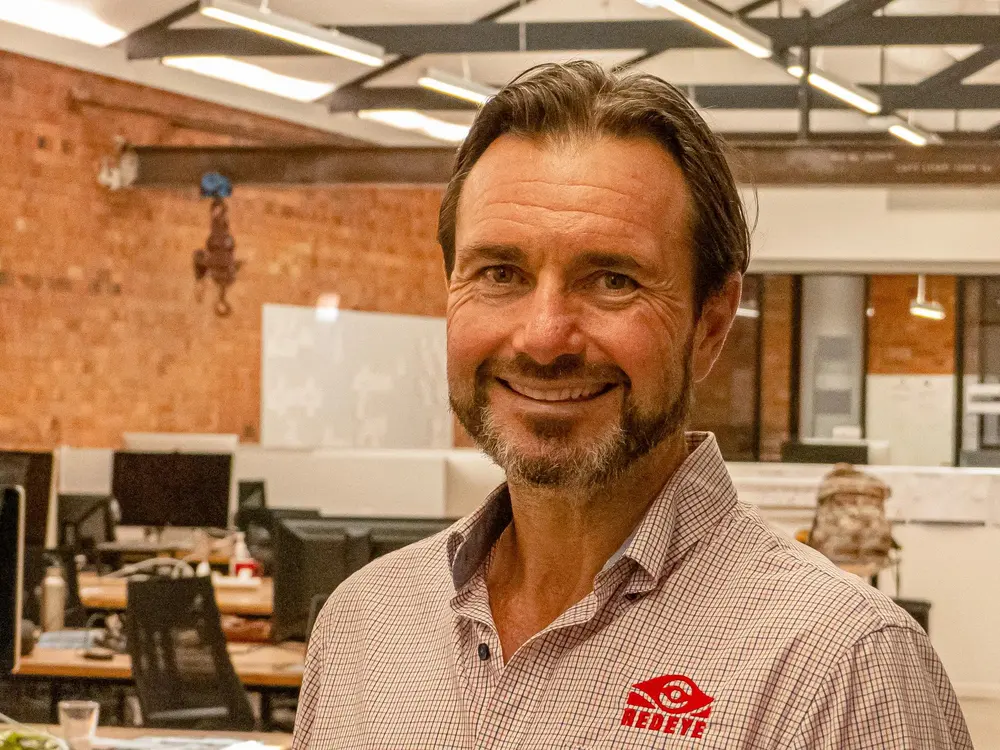
Transcript Synced · select any line to jump ▾ 0:00 Adam Spencer: You're listening to a DayOne.fm show. 0:05 Speaker: What drives you to make bold moves, to build something that didn't exist before, to live, lead, and choose life with intention? Welcome to Perspective X. I'm Pauline Fatowi, and this is not your typical business podcast. Each episode, I get to speak to extraordinary entrepreneurs and leading innovators to unpack what truly fuels their journey. Not just the wins, but the inner work, the overlooked decisions, the mindset shifts, and the personal moments that sparked something bigger. This show is about the ripple effect of choice, the kind of deep accountability that lets us respond to life rather than react to it. Because when you realize everything is temporary, and you are the creator of your own experience, you start to play the game differently. So if you're curious about how people build meaning alongside success, how they evolve through challenges and shape the world with intention, this is your invitation to listen in. Perspective X, where we go beyond the highlight reel and into the moments that changed everything. Available now wherever you get your podcasts. 1:19 Adam Spencer: Hi, I'm Adam Spencer, founder of the Day One Network, which is bringing the history of the Australian startup ecosystem to you. I believe in founders. It's why I do everything I do at Day One and our media company, W2D1 Media. And that's why the Day One Network exists, to create helpful content for founders. We've got some great shows in development, but a large part of what we do couldn't be done without support from our partners and sponsors. And I couldn't be happier than to be working with NTP, who get community better than any other technology recruitment company out there. A Newcastle company like mine, NTP are invested in seeing the growth of the local tech community in Newcastle, Sydney, and more broadly Australia. So thank you NTP for helping us bring helpful content to founders and the startup community in Australia. Back to the interview. The 78-year-old man from Perth has become the first Australian to die after being diagnosed with COVID-19. 2:21 Speaker: Following yesterday's decision by the World Health Organisation to declare the COVID-19 outbreak a pandemic, Prime Minister Scott Morrison has announced a $17.6 billion stimulus package. 2:32 Speaker: Departing international flights have been suspended and all non-citizens and non-residents have now been banned from entering Australia. 2:40 Adam Spencer: Hi, I'm Adam Spencer, This is episode 5 of the history of the Australian startup ecosystem. We'll continue our story after these messages from our sponsors. We're picking up our story in 2020 as the coronavirus pandemic dramatically impacted the lives of people around the world. 3:06 Speaker: So obviously 2020 was a pretty awful time for everybody. 3:11 Adam Spencer: Samantha Finnegan is the founder of Maidbox. 3:13 Speaker: We'd just come off the back back of all the horrible bushfires, which completely decimated a lot of small communities around Australia, and then we go into a pandemic. And with all of the lockdowns that were then hitting multiple states, especially Victoria, I was worried about how all these small businesses are going to survive. 3:34 Adam Spencer: As lockdowns and other measures were enacted throughout the country, different markets and industries were affected in different and sometimes unexpected ways. Some tech companies, especially those providing services on the internet, saw their revenues grow to record heights. However, other companies, such as those with business models that relied on bringing people together in physical spaces, saw sharp declines. 3:59 Speaker: So we had some companies during COVID that really, really got hit hard. 4:05 Adam Spencer: Melissa Widner is the CEO of Lyda Capital. 4:07 Speaker: You know, we have some companies in the event ticketing space and they were doing really well until COVID hit and then, you know, revenues declined. 4:16 Speaker: So we have companies whose revenues declined 80 or 90% as a result of COVID We won't possibly be able to cover the many ways the pandemic affected Australian startups, especially given the pandemic and its impact is ongoing and the full story is yet to play out. But we will be taking a look at a few of the key ways Australian startups were impacted, starting with the impacts of frozen immigration. 4:38 Speaker: If you look at what happened during COVID we slammed our borders shut. 4:41 Adam Spencer: Rachel Newman is the founding partner of Flying Fox Ventures. 4:45 Speaker: It is really hard to get talent in when we have a completely closed border. So again, it just means that we lost a lot of momentum for 18 months not having talent come to Australia. 4:57 Speaker: You do need some level of imported talent and imported executive leadership, and perhaps that is probably the biggest risk area. 5:05 Speaker: At least currently with the way that COVID is affecting the community. 5:09 Adam Spencer: I spoke with Nicky Jevac, the founder of Startmate and Blackbird, in 2021 while immigration was still extremely limited. 5:16 Speaker: That not being present, the importing of talent, presents a risk for those rapidly growing companies. 5:24 Adam Spencer: COVID forced companies globally to reconsider their attitudes towards working from home. Many see this shift as positive, which we'll discuss later in the episode, but the change also brought new challenges to Australian startups. 5:38 Speaker: So I think COVID and remote work is potentially a solution, but it's also potentially a threat in that it's now a global playing field for talent. 5:48 Adam Spencer: Samantha Wong is a partner at Blackbird Ventures. 5:51 Speaker: And so other companies are actively, you know, trying to hire in the Australian market. 5:56 Speaker: We will have a challenging environment moving forward if COVID's endemic in society. 6:01 Adam Spencer: Matt Barry is the founder and CEO of Freelancer Limited. 6:05 Speaker: You're not gonna be able to get people in the office to work together that easily. They're gonna be working online in remote locations. Then people are like, well, if I'm working remotely, do I wanna work in Sydney or do I wanna work in the country or do I wanna work somewhere else or do I wanna go home to Dubai or do I wanna go home to Canada and work from there and I'm working from home. So there are a lot of challenges moving forward. 6:23 Speaker: People, you know, are sort of physical beings still. 6:27 Adam Spencer: Tim Fung is the co-founder of Airtasker. 6:29 Speaker: And the fabric of sort of the metaverse of like, video calling and all that sort of stuff, it's just not yet able to replace what physical connection does. So, you know, we're in a bloody funny place right now because of the COVID stuff. But once things normalize, I do think people are gonna wanna have, you know, a lot more time in physical spaces together. And so I think density will matter again, albeit it's not 5 days a week for sure. 6:57 Adam Spencer: I discussed the importance of coworking spaces with Bruce Tullock, co-founder of Bitscope Designs. 7:02 Speaker: Now it's been really seriously challenged by COVID, and the idea of physical coworking spaces is something that needs to be, well, reinvented. 7:11 Speaker: It's still very important to have it. 7:13 Speaker: In fact, it's critical, but then it needs to be tied into a broader online virtual. And that's why things like The Guild, things like Venture Cafe and other online resources becoming more important, but they're still very fragmented. 7:26 Speaker: It's looking much harder in COVID. 7:28 Adam Spencer: Mick Lubinskis is the CEO and co-founder of Climate Salad. 7:32 Speaker: The way we did it with Pollinizer, Mirrody, and Startmate was just get people on planes. Like, you just have to. The amount of times I've taken people massively reluctantly to the US and then have them 2 weeks later be like, oh my goodness, why didn't I come here earlier? So that is harder to do without being able to, you know, I haven't been to the US for 2 years now. And that's negative, right? Because it helps you go and get to that much significantly bigger market. And for climate tech, Europe is massive 'cause it's significantly more advanced more advanced. Asia is a big opportunity for Australia given the proximity, but getting on a plane I think solves a big part of that. And there are Australian programs, federal and state level, which you can offset your costs, but again, if you can't just get on a plane because of COVID that doesn't really help that. 8:15 Speaker: If you look at COVID and the impact it's had, not so much in the startup space, but in the corporate space, you'll see that the impact for women has been more significant. 8:23 Adam Spencer: Danielle Owen-Whitford is the founder and CEO of Pioneera. 8:26 Speaker: Women have lost more jobs, women have, you know, picked up the bulk of the family duties, which has had some impact. I know some customers we're talking to are particularly concerned about how women will go back to the workplace if they have the bulk of the family caring responsibilities and they need to get back to the office. They're worried about how women are going to juggle that. 8:45 Speaker: With COVID women who sometimes tend to have lots of demands on their time during these lockdowns and have been forced to take the lion's share of, you know, duties at home. 8:56 Adam Spencer: Again, Rachel Newman. 8:57 Speaker: Whether that's homeschooling or looking after parents, family, and just like the energy and time and physical, you know, space is just not there to start companies. But I've asked my peers and we are all consistently seeing the same thing, that just the number of female founders that are coming through the top of our funnel has kind of dried up. So, what's unfortunate is that I think that we were making some really good progress. And I feel like, we have gone back 5 or 6 years in just the numbers that my peers and I are seeing. Now, I hope that, you know, with schools back open, and hopefully they stay open, and with the return to normalcy, hopefully we'll see that change. But the problem is, is that I invest in the super early stage. So that means that if companies right now, if women aren't starting the companies, we're going to have an impact of that missing— Impact. Birth rate for a few years down the track. 9:55 Speaker: In the pandemic, the statistics got really difficult for women particularly, and I imagine other underrepresented groups, but it's very hard to find the data. 10:05 Adam Spencer: Annie Parker is Executive Director at Tech Central at the Greater Cities Commission. 10:10 Speaker: Because VCs started to kind of go, well, instead of doing lots of smaller deals, I'll do smaller amounts, but I'll do them bigger. And of course, when you're doing bigger deals, you want even less risk. So, you know, if you want less risk, you're going to go to well, I wanna invest in something that's probably got a founder at the helm of it who's got 3 or 4 laps around the block, perhaps has got a couple of successes under their belt, and again, they're always gonna be, in the vast majority, white guys. We can't waste any more time. The statistics that came out of the Folklore VC report earlier in the week said we increased by 1 percentage point in the volume of women-led companies that Australian VC invested in in the last 12 months. 1%! That's not good enough. But then if you look at the total volume of dollars, it actually went down. So it's just— ah, it makes me want to cry. 11:09 Speaker: You know, it's a very personal issue because every family is run differently and every household will manage themselves in a different way. 11:18 Adam Spencer: Again, Danielle Owen-Whitford. 11:20 Speaker: Most organizations now are looking at some sort of flexible working, so working that enables people to juggle multiple things, as we've always had to, but it's almost like on steroids now. So, you know, some of the commentary now is talking about people that are working from home and working in a hybrid way will miss out on promotions and maybe miss out on pay rises because they're not visible. So if we're going to give people the flexibility to work from home, we need to make sure that they're not then penalized by not being in the office. 11:49 Adam Spencer: The pandemic has undoubtedly caused an enormous amount of grief in Australia and around the world and continues to do so to this day. However, many people we spoke to expressed that this dark cloud did have a silver lining and pointed to various ways the pandemic has positively impacted Australia's startup ecosystem. 12:08 Speaker: So COVID, I think, changed the way everybody thinks because they were forced into a change that would have happened, but it would have happened over a period of time. So it was a very violent change in terms of speed of uptake. 12:20 Adam Spencer: Steve Grace is founder and CEO of the Nudge Group. 12:23 Speaker: I'm talking about companies that were still using on-premise servers suddenly had to go into the cloud because their staff were no longer in the office. I'm talking about people suddenly having to buy things online, nearly everything online. I'm thinking about people working from home. You know, these things were happening, but they were, they were really crawling along. And then suddenly, over really a period of that first 6 months, once we kind of got past the initial fear of the pandemic, which I think was very much a case for the first 3 months, no one actually knew if we were going to survive as a human race almost. I think once we got past that, everyone started to have this ability to, to think differently because they had no other choice. And when you're violently pushed into thinking differently into the greatest part of your life, which is your work life, um, you suddenly start to apply that to other, other areas. And there was more time trying to work out how to live life, which made them look at everything in their life, I believe. And that accelerated us particularly, but I think the world as well, 5, 10 years in terms of what it might've taken us to get where we are now. And look, there was a lot of negative and still are a lot of negative things coming out of that. You know, the mental health issues that have come out of that change and people being forced to do it. But overall, I think it's been a very good thing, even though there's been a lot of, I guess, downsides to it that have affected a lot of people as well. 13:40 Speaker: We've been busier than we've ever been since the onset of the pandemic. 13:44 Adam Spencer: Megan Sebbin is the Kickstart Program Manager at CSIRO. 13:48 Speaker: And I think there's this real understanding now that we need innovation. Innovation is good, it's important, it's going to keep us competitive, it's going to help us solve some of these global challenges, even if we're focusing on a local scale. Like, we, we need to be investing and creating and doing things differently so that we don't encounter these same problems in the future. And I think there's been this real willingness to engage in research and development, whether it be to take your initial business or business idea and maybe pivot it in a slightly different direction in response to current events, or perhaps the day-to-day operations of the company was slowed down because of lockdowns, and so you've actually got time to go and do some R&D on maybe an idea that you've had sitting there been there for a while but haven't had the opportunity to explore. I feel like there's this appetite to collaborate, to work with expertise, to really explore some new and interesting ideas, and to actually, yeah, to innovate. 14:52 Speaker: What we're starting to see is, you know, with the Great Resignation, as the pandemic has kind of taken over, it's, it's made people really rethink what's important and what they want to work on and what motivates them day to day. 15:07 Adam Spencer: Rachel Yang is a partner at Giant Leap and chair of Startup Victoria. 15:12 Speaker: And I think that we are really going to see the move of employees kind of deciding where they want to go based on that aspect of mission. 15:23 Speaker: We've seen that through COVID. It's been an incredibly tough time for a lot of people. 15:26 Adam Spencer: Kate Cornick is the CEO of Launch Vic. 15:29 Speaker: But we also recognise that more people are stepping up and saying, "I don't want this job that I've had," or, "I don't have that job anymore, and therefore I'm going to be an entrepreneur." And also, we've seen a number of startups do exceptionally well, and in Victoria, we've got a 10.75% growth rate in jobs from the startup community, which is way higher than the broader economy. So, you know, this sector is doing well. 15:52 Speaker: Yeah, I think some of the barriers that might have existed previously have been lowered as well. 15:57 Adam Spencer: Again, Megan Sebbin. 15:59 Speaker: Telehealth, for example, that's something that was made available during the pandemic, and it looks like now it's here to stay, and that's going to make a significant impact in the lives of a lot of people who maybe struggle to have access to a regular GP, and whether it be remote or other reasons, these shifts in things that initially were maybe challenging, you'd have to be very committed to want to go down that sort of path, to now having more opportunities open up because we know that we need to take new approaches. 16:26 Speaker: So the future is changing around us. 16:30 Adam Spencer: Arthur Sinodinos is the Australian Ambassador to the US. 16:33 Speaker: Look at the way the pandemic has accelerated digitisation and the opportunities that that opens up for us. 16:39 Speaker: We've got a digitisation strategy, but we've got to keep accelerating the pace across all the areas of the innovation ecosystem. 16:49 Speaker: The business I'm building could not have existed without the effect of COVID on people's attitude. 16:55 Adam Spencer: Peter Tippett is a co-founder of Body Mind Life, which provides yoga, Pilates, and wellness classes online. 17:02 Speaker: Pre-COVID, only 5% of teachers believed they could teach yoga and wellness online. COVID, now over 90% of them can do it, and they believe it can be done. That's the change. We as a people now accept online, like you and me doing an interview. Normally we would have been sitting in a room together face to face and doing this. Not doing it over an internet connection. 17:24 Speaker: When COVID first hit, you know, I think I wasn't unlike a lot of people that I felt a bit like, you know, the coyote when the Roadrunner had run by, you know, it's just sort of spinning around going, "Eek, you know, oh shit, what do we do now? 17:37 Adam Spencer: How's this gonna affect things?" Andrea Gardner is the CEO and founder of Geelix Ventures. 17:43 Speaker: The US investors that weren't comfortable investing without meeting people, and I was the same pre-COVID, I wouldn't have dreamed of investing investing in a founder that I hadn't met. But since COVID I've invested in plenty that I've only met over Zoom, and they're becoming more comfortable investing in Australian startups that are doing well over Zoom without coming over here. And so the competition's hotting up. 18:07 Speaker: I think something that's accidentally worked really well in Australian startups' favour is the pandemic. 18:12 Adam Spencer: Ben Hallett is the co-founder and CEO of Vigo. 18:16 Speaker: The pandemic has forced global VCs to now really accept startups from anywhere. It's all online, so it can't be this handshake, in-person café deals, you know, that much anymore. So that's worked really well in Australia's favour. 18:31 Speaker: We're definitely seeing a number of, you know, the world's leading innovative tech companies attracting staff wherever they're located. 18:39 Adam Spencer: Wayne Gerrard is co-founder and CEO of RedEye and is currently Queensland's Chief Entrepreneur. 18:44 Speaker: You know, look at Atlassian's policies on recruiting staff wherever they are. We're definitely gonna see this spread of people working all over the place. This morning, for example, I was having a conversation with my own exec team talking about our benefits program and our flexible working relationships. And we're thinking about how do we let our staff, say they want to work from Bali for 3 months, as long as they can and as long as they're available, then is that an advantage? Yeah, I think COVID's definitely going to, I think it has actually changed the way that we as an industry think about employing people. And I think people in our industry definitely have high expectations around work-life balance, the ability to work remotely, and those kind of things. With COVID we're seeing a lot of people say, well, I don't need to and don't want to be in the city any longer. 19:43 Adam Spencer: Colin Kinner is the founder and CEO of startup on-ramp. 19:47 Speaker: So I think we're gonna see that continued trend of really smart people deciding to be based in regional rather than capital cities. 19:55 Speaker: I guess definitely COVID has dramatically changed real estate in Cairns. 20:00 Adam Spencer: Darrell Lyons is the Indigenous Entrepreneur in Residence at James Cook University. 20:04 Speaker: A lot of people have kind of moved up here to work out how good it is, and remote work is obviously not an issue compared to what before. So, people could create their startup up here. They could have regional workforces with tech talent that they might not be able to source here. It's a great environment for tech talent to actually move up here. Cost of living is a hell of a lot cheaper. There's kind of lots of positives, and I guess COVID's actually, you know, making it a lot more enticing. 20:33 Speaker: We really expected a whole lot more carnage and crashes. 20:38 Adam Spencer: Trevor Folsom is co-founder and chairman of Investable. 20:42 Speaker: We invested in companies that are in sport tech and in travel tech. Yeah, they really relied on events and venues being open, and to see them being closed for so long, it's amazing that they all still survived through that. And so credit to them, all those founders that again showed that resilience. 21:02 Adam Spencer: While the pandemic has certainly brought a lot of grief within Australia and around the world, Ultimately, people, communities, and companies have adapted to shifting norms and new challenges. In the rest of this episode, we'll be looking at other developments in Australia's startup ecosystem in recent years and bring our story, finally, to the present day. 21:23 Speaker: The state of maturity in the innovation ecosystem in Australia is such that back in 2012, 2015, it was all things to all people. 21:32 Adam Spencer: Chad Renando is the Managing Director of the Global Entrepreneurship Network Australia. 21:37 Speaker: River City Labs was for anyone starting a business. Fishburners, even Fire Station 101 when I started it, you know, we didn't have our verticals per se. And then over the next subsequent years, you saw things double down into specific industries, into specific community groups, female entrepreneurship, indigenous entrepreneurship, into specific regions and getting out to the regions and into what we refer to as the periphery. So what we have now in Australia is you have regions that are known for something. You have, you know, from health and biomed down in Melbourne and some of the gaming sectors down there. You've got fintech out of New South Wales, a lot of agtech out of Queensland. You got some space happening down in South Australia as well as some satellites and some hydrogen up north in Darwin, Northern Territory. And of course, resources over in WA. WA, and of course all of them have smatterings of the other bits as well, but we're really getting to be known for something in the regions. And you also have dedicated programs for people that might have been missed out in the beginning, such as Indigenous or female entrepreneurship or youth entrepreneurship or mature-aged. 22:44 Adam Spencer: As Australia's startup ecosystem has grown and matured, different regional areas have developed their own unique identities and areas of specialty when it comes to the types of startups they are producing and supporting, and many people we spoke to saw this diversification as a positive thing. 23:00 Speaker: I think every organisation needs its own identity. 23:04 Adam Spencer: Again, Wayne Gerrard. 23:05 Speaker: That helps that organisation to differentiate itself and stand out with its customers, stand out with its investors, stand out from its competitors, et cetera. I feel the same with each individual state's startup ecosystem. I don't think you can actually make a startup ecosystem. You can't force this stuff. Really, founders are going to do what founders do, and it's about creating an environment where collaboration happens. And I think all the states are doing that their way. Each ecosystem kind of develops an identity and gets known for something, and different ecosystems have natural competitive advantages, natural strengths, just like different economies do. You know, there's an opportunity to continue to better refine what are our natural strengths and what are our natural competitive advantages. And for example, in Queensland, we have a stack startups, innovators, tech companies, whatever word you want to use, that focused on more of the, I guess, of the business-to-business kind of opportunities, focused in agri-tech, focused in health tech and biomedical science and devices and things like that. Where if you go to Sydney, you've got a lot of fintechs and you've got a lot of solutions like Atlassian focused on servicing the IT community and so on and so forth. So I think that as our ecosystem in Australia matures over the next couple of years, we're gonna see each of the ecosystems kind of find their own differentiation, their own value proposition. And I think that will be really helpful because then if you're a founder, you can look around and go, well, if I wanna do a fintech, for example, maybe the best place for me is in Sydney. Or if I wanna do a solution for government, maybe the best place is in Brisbane. Or if I wanna do agri-tech, maybe the best place is in Toowoomba, for example, or Gladstone or Mackay or whatever it is. 25:12 Speaker: Yeah. 25:12 Speaker: I think in 2019, I probably would have said, "Look, we're starting to understand the things that we're really good at." Mark Pesce is the host and producer of This Week in Startups Australia. Some of it's a little fintech, some of it's a lot of robots, and, you know, agritech and mining tech and things like that, regtech. You know, it felt like we were finding things that we were good at and starting to go after them. To expect that we're going to be good at everything, is, I think, probably not wise. But we're gonna have certain things that we are clearly quite good at, and then we're gonna have certain standards like a Canva or an Atlassian or a Culture Amp, things like that. We're gonna have specific instances. Sports tech as well, Catapult, who were an early guest on the show, right? So there's really good specific instances of things that Australia, because of its culture and its history, are gonna be really good at, and it makes sense to lean into those things to the degree that we can. Mm-hmm., and it felt like we were getting good at that. 26:09 Adam Spencer: Throughout the series, we've already discussed some of these specialist areas, such as in episode 1 when we looked at the early days of the medical device industry as far back as the '60s. We won't be able to explore all of the specialisations that Australia's startup ecosystem has developed, but we will briefly look at a couple, starting with ag or agritech, short for agricultural technology. 26:31 Speaker: Hi, I'm Nancy Shellhorn from RapidAIM, pest forecast Pest News and Alerts. I'm the CEO and co-founder of a startup that helps growers reduce the risk of loss and cost from insect pests. I think for the agtech space, if we just look at what's happening, I think there's some really very exciting, you know, Evoke Ag is a great example. 26:53 Adam Spencer: Evoke Ag is a conference and digital platform funded by the Australian government that aims to connect the agri-food innovation community in Australia and throughout the world. 27:03 Speaker: An event that's startup-focused, that's innovation-focused, that's connecting Australia to the overseas markets, very new and innovative and exciting. 27:14 Speaker: Yeah, I see the next decade and two decades as a huge opportunity for Northern Australia. I think there's a huge untapped potential. 27:22 Adam Spencer: Darryl Lyons, who we heard from earlier, is also the entrepreneur-in-residence at the Agri-Food Incubator. Farmers to founders. 27:29 Speaker: And I think agri-tech's gonna play a huge part about increasing production in Northern Australia. And I also see an area that's just untapped yet, and that's around our Indigenous entrepreneurial spirit in Northern Australia and how we can start to work out how we can unpack that and then create that and see there's huge opportunity to get people involved in that. My grandparents were in ag and farmers. My parents are, my traditional side of the family, I believe, that, you know, practiced sustainable agriculture for tens of thousands of years on our traditional country. We've got such a diverse country with lots of different areas. We have our unsubsidized farming system. So basically all our producers have been entrepreneurial to succeed over the last few hundred years. And our Indigenous population had to be entrepreneurial to flourish in, you know, some tough environments around the country for tens of thousands of years. So I think that breeds into that spirit of finding a problem, working out how to solve it. And I guess any application we build in this country is definitely usable right around the world. And I think with our clean food, which will go to— it'll breed more sustainable regenerative agriculture systems, which kind of brings in a lot of clean tech. We can get into a lot of food value-adding tech. We've put in sustainable, really healthy food which the world wants. The tech required to make all that work is, is such a huge opportunity for us. 29:02 Adam Spencer: FinTech, or financial technology, which refers to companies using new technology to innovate financial services, has been a real strength of Australia's startup ecosystem for years and has produced companies such as Afterpay, Half2Pay, Airwallex, and Athena, to name a few. 29:20 Speaker: We do fintech really well. 29:22 Adam Spencer: Cheryl Mack is the CEO of Aussie Angels. 29:25 Speaker: And that's really good for us because we do have a lot of banks, and banking and finance tends to be an area that is more widely accepted by the mainstream, which is a good thing. We also have this unique environment where we're, we're kind of a bubble enough into ourselves that Australia is a fantastic place as a sandbox to test things and to drive new innovations before they can be impacted by other factors that would make it really difficult to establish as whether this is viable or not. The fintech ecosystem growth is really quite phenomenal. 29:55 Adam Spencer: Lauren Kaplan is ecosystem manager at AWS Startups. 29:59 Speaker: When I joined Reinventure, they were the only primarily fintech-focused venture fund, and in fact, they cropped up in the absence of an appetite for investing in fintech across the venture capital ecosystem. 30:12 Adam Spencer: Lauren joined Reinventure in 2015. 30:15 Speaker: There was about 30 companies involved and the regulatory environment was still very challenging, and it was through the formation of things like FinTech Australia, which I was involved with, really focusing on building out the enabling environment from a policy perspective, but also just generally gaining the well-deserved awareness of what fintech founders and fintech businesses across the ecosystem were achieving. I think fintech is one of those industry verticals where there has been a lot a lot of success. 30:46 Adam Spencer: We'll continue our story after these messages from our sponsors. As well as specific industries such as fintech and agritech, another subset of Australian startups we're going to look at briefly is social enterprises. 31:03 Speaker: Yeah, so social enterprise, people wonder what that really means. 31:07 Adam Spencer: Moira Weir is a startup founder and mentor with decades of experience and is founder of the Hen House Co-op. 31:13 Speaker: From my point of view, a social enterprise is an enterprise that's doing good and with purpose and can actually align their purpose with a good outcome. 31:23 Adam Spencer: While there may not be one definitive definition of what makes a social enterprise, broadly speaking, we're referring to companies that have a social good at the heart of their mission. 31:35 Speaker: I think a lot of companies and startups now are driving towards impact and doing things that make the world better. 31:46 Adam Spencer: Phil Ireland is the co-founder and CEO of Hone Carbon. 31:50 Speaker: So I actually think a lot of entrepreneurs are socially entrepreneurial, and I think even for companies and startups that aren't doing that, they try and sell themselves as doing that. So I think it's a big gray area, actually. 32:03 Adam Spencer: Because the line between a social enterprise and a conventional non-for-profit company isn't always so clear-cut. Some methods of externally measuring the impact of these organisations have been created. 32:14 Speaker: If you're really doing good as a social enterprise, there are some external ways that can be verified. 32:21 Adam Spencer: Again, Moira Ware. 32:23 Speaker: So some people will choose to get certification through Social Traders, which has a certain number of, you know, you get points according to what it is that you're actually being able to deliver and get returned into the business. So there has to be some social outcomes for that. And the other one that's quite well known are B Corps. So in the B Corps, you're trying to do things for planet, purpose, and people. And again, you get a certain rating and a classification that you can call yourself a B Corp. Those two external validations are often out there for people to say that's how they define themselves as a a social enterprise, but a lot of people just use that language to describe the way they do business, which is giving a social outcome, a social return, not just a commercial return. 33:10 Adam Spencer: While not all social enterprises are startups, many Australian social enterprises have adopted a startup model. We spoke to founders of a wide range of social enterprises, and the extent to which they felt social enterprises were part of the broader startup community varied. 33:24 Speaker: My name's Daniel Flynn. I'm one of the co-founders of Thankyou, a social enterprise that sells consumer products to help end extreme poverty. I would say when we begun years ago, back in 2008, we were just in our own bubble. You know, we saw a problem, a solution, potentially, you know, using business to, you know, help solve a social issue, and we just started running after it. And so I would say we didn't really get too involved with, different communities, startup community, even the social kind of enterprise community, which turns out at times kind of sits a bit separate. They're getting closer and kind of more interwoven, which is cool. But it wasn't until years later, 2011 from my recollection, we found ourselves spending more time and maybe fitting better in the social enterprise type environment. At the time, a group called Social Traders were gathering a lot of people in this space, both interested or, you know, really well developed, or, you know, like some businesses much further developed than we were. And it did feel quite separate to the traditional startup rounds of funding, get investors, let's go. Like, it did feel different some maybe good, maybe some not good in that. Yeah, we did, we kind of felt, I would say we felt probably a little out of place at Thankyou in a traditional kind of startup community because simple things like we didn't, as founders, have any equity in what we did and that was, yeah, it's a different concept. 35:02 Adam Spencer: We also heard differing opinions on to what extent social enterprises are adequately supported. 35:08 Speaker: This idea of social business, it was described early on to us that Australia was 10, 15 years behind the UK and their thinking in social enterprise and their kind of prevalence of it in society and tax law and, you know, a whole bunch of other areas that sort of just opened up more and more people getting into the space. And so I would say that there've been a few moments where, yeah, I wonder if we're as far along as a society in Australia as we should be. 35:40 Speaker: Mm-hmm. 35:40 Speaker: I've been trying to forge with the work that we're doing solutions for mental health, community wellbeing, and a whole bunch of different bits and pieces using a business framework. 35:52 Adam Spencer: Sam Jockle is founder and CEO of Parent TV. 35:56 Speaker: We're doing some amazingly innovative things, but it's really challenging because sometimes we have to interact with some of these, like, historical government systems and those processes. I understand why they exist. Exist, but there absolutely needs to be more value and understanding put on the work that we're doing and how critically important it is from an innovative point of view because the world is moving so fast. And those big legacy systems and organizations, they just actually can't keep up with what's needed. And they have to learn to trust business and trust innovators. Yeah. More because we do actually bring to the table solutions and our intent is actually really good. And a lot more listening needs to happen and a lot more belief that intent is good as well. And I think sometimes those two things get missed and business has historically been seen as maybe something where someone just wins and they don't really care about the bigger picture. 36:58 Speaker: Mm-hmm. 36:59 Speaker: But I think business is changing and the leaders of those businesses are changing. And yep, there is that element there, but I don't know, there needs to be more listening and more trust, that I know. 37:12 Speaker: There are grants around if you dig for them, but I don't think there's a certain, there's not so much security around, I'm gonna start a social enterprise and this money is potentially accessible. 37:23 Adam Spencer: Eloise Hall is the co-founder taboo. 37:25 Speaker: Very much, you really have to fit the bill and the bill is very different depending on where, which state you're from, even how state governments view social enterprise. A lot of people who would typically, for example, businesses who might offer charity discounts, they're starting to incorporate social enterprises into that, I guess, qualification of receiving that discount. So yes, the The conversation is very much picking up. So in the last, probably last 5 to 10 years, particularly in South Australia, we've got a very strong, and it's growing and growing all the time— 38:01 Adam Spencer: Again, more aware. 38:03 Speaker: —the way social enterprises and social entrepreneurs in particular are being valued and being supported by the whole ecosystem. And equally, startups are looking to the social and environmental spaces for, you know, for ideas and also for inspiration. And, you know, if we look at what's getting funded and supported and we're heading into big international conversations about climate, the environmental movement, renewables, startups that are building health and biotech and in the climate space are really taking the world by storm. I'm feeling very optimistic. There's certainly a public policy environment is growing in some states more than others. Victoria and Queensland and a little bit in New South Wales is certainly, I think, ahead of the game and leading that. I mean, investing in particular in Victoria, investing, you know, millions and millions of dollars into trying to build the social enterprise sector and to support industry-led and community-led initiatives to make the economy, you know, more just and equitable. We've got some way to go here in South Australia, but, you know, there are really good signs on the horizon. that this is starting to shift. 39:16 Adam Spencer: We asked Phil Ireland whether he felt it was difficult to secure funding for a social enterprise. 39:21 Speaker: In my space, which is the climate space and the drawdown space, there is so much capital at the moment floating around to support good climate ideas. A case in point is obviously Mike Cannon-Brookes and their foundation, but there's a lot of capital there. 39:35 Adam Spencer: In 2021, Mike Cannon-Brookes, co-founder of Atlassian, and his wife Annie Cannon-Brookes set up a $1.5 billion fund to support efforts it's tackling climate change. 39:45 Speaker: The only feedback we've ever had, or I've ever had, is that I need to be more impact-focused and more climate impact-focused because people want to see really tangible long-term impact and outcomes for their investment. I think it might be different for other types of impact, but at this point in time in the climate space, there are people throwing money behind ideas just to reduce emissions and to draw down greenhouse gases out of the atmosphere regardless of long-term profitability. I think impact investors are a group of heroes that I think need calling out because the nature of investment is shifting and the way people want to use their capital is shifting. And I think there are some really positive trends. And I think people, some investors are being more courageous than they would have been in the past and values-driven. And I think that's I think that's wonderful. 40:37 Speaker: I think social enterprises are the table stakes of the future. 40:43 Adam Spencer: Dee McAvoy is the co-founder of Tech Sydney. 40:46 Speaker: And what I mean by that is that if you're a company that's not actually improving the world in the future, you won't survive. I think the days of these corporate juggernauts raping the world and milking it for all its profits is a construct that just won't exist in the future because the great talent won't want to work for those kind of companies. The great talent will want to work for the companies that are having a positive impact on this world. They'll divert their energy into those. So if you're not a company that has a positive social impact, you're screwed. And I think that's a great world we're heading into. And if companies can't see and think like that, if they're constantly making trade-offs balance between how they affect the environment or the people in this world, they're not going to be the big thriving companies of the future. And the reason why is because the great talent just won't want to work there. 41:40 Adam Spencer: After the initial shock of the pandemic eased, 2020 and 2021 saw a time of increased tech investment and soaring valuations of Australian tech companies, with some calling it a bubble. In 2022, valuations throughout Australia's tech sector saw sharp declines in what some are calling the tech of 2022. 42:00 Speaker: The 2022 tech wreck will have an impact. 42:04 Adam Spencer: Peter Devine is the CEO of Uniseed. 42:07 Speaker: I mean, we're already seeing some of that recently with, you know, a lot of the downgrade of, you know, valuations of large companies, you know, such as Canva. 42:17 Adam Spencer: In July 2022, the venture capital firm Blackbird reduced the holding value of Canva from $40 billion US to $25.5 billion —an enormous 36% decrease. Many other companies have seen similar reductions in valuation throughout 2022. 42:34 Speaker: I think that it should flow through and impact on valuations going forward. I think valuations have been pretty high based on the, you know, the hubris in the startup ecosystem in recent years, so it probably will have an impact, but in some ways that that, you know, may provide opportunity for investors, you know, to get into if the companies have sound fundamentals, you know, to invest in them, you know, make good returns on those. And we've seen in the past that after downturns, that's really a great opportunity for investors to get in. And a lot of the big successes come out of that period. 43:13 Adam Spencer: Just like earlier stock market crashes we've discussed in this series, like the 2000 .com crash, generally the people we spoke to about the 2022 market decline downplayed the impact they felt it would have on Australia's startup ecosystem long term. 43:28 Speaker: My thoughts on the 2022 tech wreck. So I don't think it is a tech wreck. 43:34 Adam Spencer: Aaron Burkey is the co-founder of Tribe Global Ventures. 43:38 Speaker: I mean, by what measure is it a tech wreck? Good companies are still delivering value to their customers. What we're seeing is a recalibration of the investment climate, the economic climate. So what we are seeing are valuations being retraced back closer to more traditional investment valuations. I actually think it's incredibly healthy that we have this retracement. I feel sorry for venture capital funds that deployed a lot of cash during 2021 because I think they deployed capital at a time where valuations were incredibly high. So I think there's going to be a be some big impacts for venture capital funds. I think there's gonna be a lot of funds that deployed a lot of capital in 2021 that will struggle to be able to show any return or any decent return. But I think that's healthy. I think this is a healthy part of the life cycle. I actually think times like now are the best time to be investing. So 2022 into '23, '24 are where you want to be deploying the most amount of capital. This is where the companies that are delivering real value will survive. Mm-hmm. Those that aren't will die. And that's, that's actually a healthy process. Failure is not a bad thing. Failure in innovation is a critical element. 44:50 Adam Spencer: We'll be finishing up this episode by briefly looking at a few of the other notable startups and organizations founded in the last few years, starting with the Tech Council of Australia, which was formed in 2021 and has taken on the responsibilities of Startup Oz, a startup advocacy group we've discussed in previous episodes. 45:10 Speaker: Now was the time for us as an industry to be taken seriously for the economic contribution we're making to Australia, now 12% of GDP. 45:22 Adam Spencer: Kate Jones is an executive director of the Tech Council of Australia. 45:26 Speaker: To be at the main table with, you know, the Prime Minister, a federal cabinet, and the opposition, so it's a very apolitical called body, but it's a body where we have some of the largest startup companies that are huge success stories now in Australia, including Atlassian, Afterpay, Canva, CultureAmp, Different. And of course, the chair is Robin Denholm, who is the chair of Tesla globally and is based in Sydney. So, you know, we are talking about, you know, major employers, not only in our country, but globally that were Australian startups. Startups Yeah. that have been able to scale up and are now, you know, global leaders in their tech. So the genesis of the Tech Council of Australia was really about acknowledging that this ecosystem had matured enough in our country that we actually needed a body that was advocating at the highest levels for the right regulatory framework, the right policy settings to create more opportunity opportunities for more startups and that pipeline of growth over the next 10 years to keep those jobs here in Australia and to create opportunities for the next generation. 46:34 Speaker: I mean, the Tech Council is a great example of entrepreneurs jumping in and saying, "Okay, so we can see a gap here." Sarah Pierson is an investor, board director, and advisor. Government's not doing everything we'd like them to do, so let's set up the Tech Council and work with the whole ecosystem, and they've got a whole bunch of really great partners that they've brought together to try to drive some policy changes. I think that piece is really good. 46:59 Adam Spencer: As well as those already mentioned, some of the notable startups and support organizations founded between the start of 2020 and today include Harvest Bee, the Guild of Entrepreneurs, the Studio Founders Program, Flying Fox Ventures, Aussie Angels, and Playful Purpose. Next episode, we will be looking forward to the future, but first let's take a moment to appreciate how far the Australian startup ecosystem has come in a relatively short amount of time. 47:28 Speaker: There has just been an exponential growth phase for Australia. 47:32 Adam Spencer: Rachel Newman is the founding partner of Flying Fox Ventures. 47:36 Speaker: And what I see now is, you know, incredible talent, more private capital than we've ever seen before, lots of entities, whether that's corporates or universities, overseas organizations trying to get involved. And what we're also seeing is second-time founders recycling back into the ecosystem, either as mentors or investors. I always say it's never been a better time to start a startup or invest in a startup in Australia. And I just feel like every day it gets to be more and more true. 48:06 Speaker: Well, I think it's really important to sort of go back to what it was like in 2011 and 2012. 48:12 Adam Spencer: Peter Brad is the CEO of The Beanstalk Factory and was the initial CEO of Fishburners. 48:17 Speaker: In terms of the timeline, Fishburners, which is a coworking space, we registered Fishburners in September 2011. And again, we launched Startup Oz in 2013. And at the time that we launched Startup Oz, they leveraged PwC to write a report. In that report, the headline statement was, "The Australian tech startup sector has the potential to contribute $109 billion or 4% of GDP to the Australian economy." economy. The Australian Tech Council, their report when they launched— so this is in 2021, so only 8 years between these two reports— they report the Australian tech sector has become a critical part of the economy, contributing $167 billion to GDP, which is 8.5% of GDP, not 4% as PwC had predicted, right? And they're predicting it could employ over a million Australians by 2025, not 2033. And so I remember being around when that PwC report was written and, you know, I was the CEO of Startup Oz and I was talking to media about it. And this is the figure that we would, you know, get on Sky News and I'd talk about the potential. And if you look at the potential of 4% versus 8%, $109 billion versus $167 billion in half the time, I just think it's been an outstanding, amazing success story of what we've been able to do. Yeah, I just think it's is sort of phenomenal. 49:37 Adam Spencer: The growth of the Australian tech sector, especially in the last decade or so, has been phenomenal and has massively exceeded the ambitious expectations set by the StartupAus report of 2013. The tech sector is now Australia's third largest industry, and companies like Atlassian, REA, Computershare, Cochlear, Seek, Canva, Afterpay, Airwallex, CultureAmp, and Carsales are all worth billions of dollars, and they all began as startups. While global companies like these are flagships for Australia's tech sector, as we've seen throughout this series, the Australian startup ecosystem is made up of so much more than just its biggest successes. 50:18 Speaker: When you kind of think about startup ecosystem now, people mention Atlassian, they mention Canva, they mention SafetyCulture. 50:24 Speaker: Again, Tim Fung. 50:26 Speaker: But actually, there's this like whole long tail of people who are building some really cool stuff and contributing to this ecosystem in various different ways. Some of those companies didn't scale, some of them completely went kaput, others just became small businesses, etc. But I think it is worthwhile sort of like recognizing all of those smaller companies and stories that sort of contributed to this because it isn't just like Canva and Atlassian and safety culture equals startup ecosystem. It's all the people that are out there giving it a crack, getting the $25,000 angel check, hiring 2 people, doing some interesting stuff, maybe selling their company to somebody else, you know, rather than scaling it into some big thing. And actually, I find that like, that's why the coworking spaces are this kind of great, almost like central hub of life. And when you go to these coworking spaces, and you go to, you know, the Thursday night beer night. That's kind of really the beating heart, I would say, of the startup ecosystem in Australia. 51:26 Adam Spencer: After 5 episodes tracing its history, in our 6th and final episode, we will at last be turning our eyes forward and tackling the question, what does the future hold for the Australian startup ecosystem?