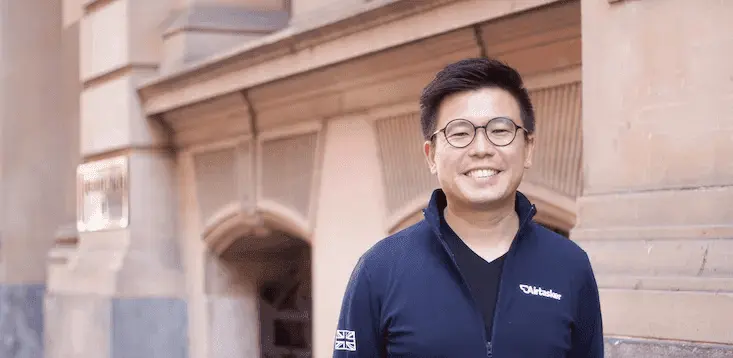
Transcript Synced · select any line to jump ▾ 0:00 Adam Spencer: You're listening to a DayOne.fm show. 0:05 Speaker: What drives you to make bold moves, to build something that didn't exist before, to live, lead, and choose life with intention? Welcome to Perspective X. I'm Pauline Fatowi, and this is not your typical business podcast. Each episode, I get to speak to extraordinary entrepreneurs and leading innovators to unpack what truly fuels their journey. Not just the wins, but the inner work, the overlooked decisions, the mindset shifts, and the personal moments that sparked something bigger. This show is about the ripple effect of choice, the kind of deep accountability that lets us respond to life rather than react to it. Because when you realize everything is temporary, and you are the creator of your own experience, you start to play the game differently. So if you're curious about how people build meaning alongside success, how they evolve through challenges and shape the world with intention, this is your invitation to listen in. Perspective X, where we go beyond the highlight reel and into the moments that changed everything. Available now wherever you get your podcasts. 1:19 Adam Spencer: Hi, I'm Adam Spencer, founder of the Day One Network, which is bringing the history of the Australian startup ecosystem to you. I believe in founders. It's why I do everything I do at Day One and our media company, W2D1 Media. And that's why the Day One Network exists, to create helpful content for founders. We've got some great shows in development, but a large part of what we do couldn't be done without support from our partners and sponsors. And I couldn't be happier than to be working with NTP, who get community better than any other technology recruitment company out there. A Newcastle company like mine, NTP are invested in seeing the growth of the local tech community in Newcastle, Sydney, and more broadly Australia. So thank you NTP for helping us bring helpful content to founders and the startup community in Australia. Back to the interview. 2:12 Speaker: You've gotta recognize that we're living in a time of very rapid change. So how do we deal with that? Well, we deal with that by being agile, innovative, and take advantage of these disruptions and rapid changes so that we can stay at the front of the pack. Simple as that. 2:34 Adam Spencer: At the beginning of episode 1, we posed the question, what does the future hold for the Australian startup ecosystem? After 5 episodes focused on the past, this episode will finally be tackling the question and looking towards the future. We'll be hearing from a variety of people discussing what they see as Australia's unique weaknesses and strengths, and the key challenges and opportunities that the startup community faces today and into the future. We'll continue our story after these messages from our sponsors. We'll kick things off by discussing one aspect of Australia's culture that many guests brought up. 3:20 Speaker: Australia does tend to have some tall poppy syndrome. 3:22 Adam Spencer: Tall poppy syndrome. 3:23 Speaker: Tall poppy syndrome. 3:24 Adam Spencer: Tall poppy syndrome. 3:25 Speaker: I think it's where all of us need to be spending more time is as the humble cheerleaders to every other founder out there. 3:35 Adam Spencer: Aaron Bourkeby is the co-founder of Tribe Global Ventures. 3:39 Speaker: And what I mean by that is, you know, we have tall poppy syndrome here in Australia. We can't big note ourselves. It's not part of our DNA. It's not part of our culture. We're very different to the US in that sense. So we need to do it for each other. We need to stand up and say, "Hey, check this person out. Look at the amazing business she's built. Look at this company." And we need to make that relatable to the punters, to the mums and dads, to the voters. 4:04 Speaker: I think a lot of our founders are very humble people that don't speak up. 4:09 Adam Spencer: Kate Cornick is the CEO of Launchvic. 4:11 Speaker: As a result, you can't be who you can't see. So it's that classic analogy with sports people where we put them on pedestals, we really know who our sporting heroes are. As a community, I don't think we do that enough with our startup heroes. And these are people who have done exceptionally well from a business perspective, But we forget that they're also the people that are building the economy of the future. They're the people that are supporting disruption, but it's disruption so that Australia's economy remains advanced. If we don't disrupt, we will get mowed over by other economies who are innovating, and we will simply become purchasers of other technology. So I do think there's a real thing about the tall poppy syndrome. We don't profile people strongly enough in the ecosystem, and I think that is a sad thing? 4:57 Speaker: Well, I'd say like one of the biggest things behind like building any sort of ecosystem or movement is that you've got to believe. 5:05 Adam Spencer: Tim Fung is the founder of Airtasker. 5:07 Speaker: You've got to talk a little bit ahead of where things are actually at today. You know, if you think about Silicon Valley and San Francisco and all that, part of the reason why their hub and their ecosystem is so amazing is because they shout it from the rooftops. They keep telling us most smartest people in the world, Silicon Valley, this is where it's at. They're making movies about it, they're talking about it, their government talks about it. I think we need to do that in Australia. I think we tend to be a little bit more humble and like, "Oh no, no, no, it's just, you know, don't talk it up too much." You know, rather walk the walk than talk the talk. I think talking the talk is kind of important. And I think that if we can convince more people from around the world that Australia is a great ecosystem and that, you know, lots of stuff is going on here, then it's sort of self-fulfilling. So I think we've got to start talking a little bit ahead of where we're walking. 6:02 Speaker: Hi, I'm Alex Carpenter. I've been working to encourage and support entrepreneurs in their earlier stages for the past 10 years or so, and I do that in all sorts of ways. Through the Guild of Entrepreneurs and through various university engagements as well as through high schools. Yeah, I think role modeling is a huge gap. And we're getting better, we're getting so much better in the recent couple of years. And I think people like, you know, Mike Cannon-Brookes and Mel Perkins are just doing just amazing work in this space because kids can't be something they can't see. And until recently, there was no famous Australian entrepreneurs that kids saw in the newspapers. And it's a really important point. Like, you know, I saw a recent study that showed the most, you know, desired job for the next generation is to be a YouTuber. And you know, that's great, cool. But like, man, there's so many bigger problems to be solving, guys. Like, can we tackle something slightly larger than, you know, making mass content for Google? And there's nothing wrong with that. But yeah, man, we should be aiming bigger than that. But that's only because they want to be what they can see and they're spending so much time on TikTok and YouTube. They're like, man, Man, that looks like a great job. I want to do that. And sure, it might be a great job, but really we're not showing them, we're not exposing them to enough of these role models who are ambitiously, you know, tackling the problems that we're facing in today's society. And so, we need to be doing a better job of that, I think, and keep doing more of that, getting it into schools more and more. 7:34 Adam Spencer: Another aspect of Australia's culture we heard many people discuss is a relatively high level of complacency and risk aversion compared to other parts of the world? 7:44 Speaker: I think we have economic laziness. 7:48 Adam Spencer: Colin Kinner is the founder and CEO of Startup OnRamp. 7:51 Speaker: I think, you know, as a nation, we have had massive success for a very long time, largely based on a resources boom. I think that has led to a pretty relaxed attitude towards building businesses and building the economy. And I think that's been a massive disadvantage in terms of having urgency around tackling some of the things that that we need to get better at. 8:12 Speaker: The biggest differences I would say at a broad brush between the US and Australia is probably the appetite and openness to risk, failure, and success as well. Jodie Fox is an entrepreneur and author who founded Shoes of Prey in 2009. I think that historically we've also had a little, you know, a bit of kind of shame and concern around testing and failing at something, but you know, when you're breaking ground on something that is disruptive and new, that's just part of the process. And so I think that attitudes and fears around that in Australia certainly, you know, could use a lot more development, discussion, and positivity. 8:58 Speaker: I also think that we are a little bit too rule-bound. 9:01 Adam Spencer: Susan Oliver is co-founder of Scale Investors. 9:05 Speaker: I think there's this sort of playing it safe. We'll often mean that we don't take a step outside of a procurement rule to have a look at something else. So a mixture of things. I think it's changing in that sort of startup sector. I think there's some really exciting stuff happening in fintech, but I do think that the deep fundamental transformational technologies are still getting a pretty raw go here. 9:33 Adam Spencer: Another important aspect of Australia's startup community is the degree to which it is a collaborative and cooperative community. This is something we heard a variety of perspectives on. Some felt that the community could be better integrated and that further collaboration should be encouraged. 9:51 Speaker: A lot of people talk collaboration a lot more than they really want to participate in it. 9:56 Adam Spencer: Craig Swan is the event director of SouthStart. 9:58 Speaker: I think that's just part of the culture here. There's very much, I think, a bit of a zero-sum mindset here where, you know, instead of growing a pie, people are more concerned about the ability to hold on to the biggest piece that they can. And I think a lot of that comes to the fact that at least up until until now, so much of this has been based on government support. So if you're not learning how to raise money by getting customers or finding your own investors or angels or someone to fund your business, you're relying on grants and the government to do that, which is a zero-sum game. 10:31 Speaker: The other thing I think that really is holding us back is all of the operators tend to suffer from having unsustainable business models. And part of the reason for that is everyone's fighting over the same pieces, like the same crumbs on the table. 10:45 Adam Spencer: Again, Aaron Burgby. 10:47 Speaker: In Australia, everyone pitches for every government grant or every piece of funding that's up. We're all running to the same doors to get funding to do the same things. And anytime there's a new funding bucket, we all spin up a new program to do it. And we lack the collaboration piece. David Cohen's comment was, "You guys need to stop fighting over pieces of the pie and be in the business of building pie factories." As an ecosystem, I think the leadership layer should stop competing and stop annihilating each other and collaborate more. Let's not keep reinventing the wheel. If you're spinning up something new, before you do that, go and ask the 15 people already doing it how you can partner with them. 11:24 Adam Spencer: However, many people we spoke to felt that our startup ecosystem was in fact far more collaborative than other areas of the nation's economy. 11:32 Speaker: One of the most common things I actually hear is from people that have gone down that corporate route and spent, you know, 5 or 10 years in corporate land or any industry. 11:40 Adam Spencer: Again, Alex Carpenter. 11:42 Speaker: They come into the startup ecosystem and they're just so confused. They're like, I don't get it. Like everyone's so nice. It's weird. It's like, is someone gonna, you know, shiv me at some point? Why is everyone so freaking nice? It's just so unusual. And if you've been indoctrinated into another corporate culture, that makes sense. This totally makes sense. But we have to figure out how to on-ramp them to go, okay, you've got to leave your cutthroat banking business behind because one, you're not going to get very far because it's hard to do this on your own, and two, we're all here to help you. Like, we're wanting to encourage and support you anyway. We don't want to steal your, your stuff. So, you know, drop the attitude, be humble, and let us help you, and we genuinely will. 12:27 Speaker: I think there is a high degree of motivation across the ecosystem for that concept of a rising tide floats all boats. 12:36 Adam Spencer: Lauren Kaplan is Startup Ecosystem Manager at AWS Startups. 12:40 Speaker: We do have the tall poppy syndrome as a cultural phenomenon in Australia, but I think the startup industry is one of those places where it's the least visible because we know how somebody else's success has this knock-on effect for the rest of us. 12:54 Speaker: Basically every startup founder has only made it, has only been successful by having the benefit of other people before them sharing their time. 13:02 Adam Spencer: Again, Colin Kinner. 13:04 Speaker: So there is a very strong give-first mentality in the startup ecosystem in Australia. And I think people have recognized that the pay-it-forward thing actually does work. And I've yet to see really any example of a successful founder declining to give back in that way. So I think it's an absolute given as you move up the ranks and build successful companies that there is an expectation of giving back. 13:26 Adam Spencer: Many also felt that the Australian community was more cooperative than startup communities in other parts of the world. 13:33 Speaker: I've seen a lot of really competitive behaviour in the US where startups might be fighting against each other. I haven't seen any of that in Australia. 13:42 Adam Spencer: Sylvia Pfeiffer is CEO of Coviu. 13:45 Speaker: We compete, but it's not like we actively destroy each other, whereas I've seen some really aggressive behaviour in the US, so That doesn't happen here. 13:54 Adam Spencer: In previous episodes, we've touched on the fact that while Australia is a world leader when it comes to quality of research, we are lagging behind when it comes to research commercialisation. 14:05 Speaker: If you look at the OECD, you know, these numbers are probably slightly off, but, you know, they're close enough. We rank about the third highest in the OECD for research and about the third lowest for commercialisation. 14:16 Adam Spencer: Wyatt Roy is the executive director of the Tech Council of Australia. 14:20 Speaker: Culturally, for whatever reason, in Australia, there's a lot of focus on research for the sake of research, which, you know, is not to negate that as a concept, but it does hurt us when it comes to commercialization. So, you know, if you said to an Australian researcher in an amazing institution, what does success look like? They would often say, it's getting my research published and it being out there around the world. If you go to a place like MIT or Stanford or, you know, Technion in Israel, and you say to a researcher, what does success look like? They would say, "I want my research to be turned into a product, a business, a service that changes the world for the better." It's a very different kind of mindset. And then I think the way that those institutions in Australia have interacted with industry just frankly have a pretty bad history of it. You know, we're not particularly good at it. And there are a number of small things that sort of pile up to impact that. But I think wherever we can create an environment where there are the right incentives for industry and research to interact, you know, to the benefit of both, I think that there's a lot that we can do there. So I think there's a cultural problem and there's just some, some actual sort of hard policy problems that should be fixed. 15:28 Speaker: I think there are too many deep tech founders that optimize for grants rather than investors. 15:37 Adam Spencer: Alfred Lowe is the co-founder of Harvestbee. 15:40 Speaker: We've always had really great academics and researchers and deep tech minds in this country. We punch well above our weight in that space. And we talk about how we suffer from not being able to commercialize technology. And it's true, right? And, but, you know, in my time in deep tech, I've spent over 2 years at Cicada Innovations. I met a lot of entrepreneurial deep tech founders, but, you know, a lot of them were optimizing for grants rather than investors. And I think we really miss a trick. Yeah. There, and it's a real cultural— it'll take some time to change that. But you compare it to other markets around the world where deep tech gets well funded, Australia really struggles in that respect. And I know just, it's not just the founder's side of things, I think there's still a market failing in the investment side of things to fund these types of opportunities and types of businesses. 'cause it's, it's not well understood. 16:43 Speaker: And then you've got all this intellectual property that's been funded by the federal government in research institutions like universities, et cetera, which don't see the light of day because academics are terrified about losing tenure and leaving to start up a startup. 16:55 Adam Spencer: Matt Barry is founder and CEO of Freelancer Limited. 16:59 Speaker: So at Stanford, all the guys that taught me had gone out and built a billion-dollar business and come back. Mark Horowitz, who taught me by design, did Rambus. John Hennessy did MIPS. Silicon Graphics and so forth. So you had all your lecturers had gone and built companies, your professors. In Australia, that doesn't happen. They are paranoid about losing tenure. 17:16 Speaker: I've got a— 17:16 Speaker: there's a professor I know, he's a genius. He's figured out how to make effectively ammonia, you know, just from air, which is a completely innovative process. He is terrified about giving up tenure and going and starting a business that, you know, I could help him raise the money, it would be a billion-dollar company in no time and revolutionize the production of things in this country, but just terrified. 17:37 Adam Spencer: Another challenge facing our startup ecosystem is the need for people with the right skills and experience. 17:44 Speaker: We're all challenged by the talent war at the moment. 17:46 Adam Spencer: Trevor Folsom is co-founder and chairman of Investable. 17:49 Speaker: And it's not unique to us as early-stage venture businesses, but it is particularly challenging when a lot of the activity is in capital cities like Sydney and Melbourne, and they're expensive cities to live in, so when you're Got a talent war going on and a lot of employees need a cost of living, and so starting the ecosystem or having a focus around the capital cities is really challenging. 18:14 Speaker: I think one of the real challenges that we have at the moment is the war on talent. 18:21 Adam Spencer: Brendan Hill is an angel investor and syndicate lead at Logan and Wayne. 18:25 Speaker: So there's obviously so much money going around, so many startups getting funded, Every single startup is hiring engineers, and we have to compete against, you know, companies like the Big Four banks. ComBank just came out recently that they're hiring 650 engineers, and they're paying top dollar. A lot of early-stage startups really can't match those salaries. And I have a portfolio company called Tilitha, and they're hiring 30 engineers, and You know, sometimes I wonder, is there 30 quality engineers in Australia to go around? It's a real shortage of talent. 19:03 Speaker: I think one of the things that is potentially not that spoken about is the zero-sum talent acquisition space. 19:11 Adam Spencer: Again, Tim Fung. 19:12 Speaker: Which is that we're all here to help each other until it comes to the fixed zero-sum nature of talent acquisition. And that's where there's definitely a lot of argy-bargy going on between different companies. I think it's actually not a bad thing at the moment because it's actually benefiting employees and making sure that people get paid at the right levels and what they're worth. So I think that's a good thing, but it's probably not a very often spoken about topic is how much infighting there is actually to acquire the best talent. 19:41 Adam Spencer: While there may be a shortage of talent, the standard of Australia's founders and their teams were undisputedly considered world-class? 19:50 Speaker: Probably the biggest thing I'm excited about is just the people. 19:52 Adam Spencer: Again, Wyatt Roy. 19:54 Speaker: Again, Australians love to talk ourselves down, but you know, pound for pound, an Australian entrepreneur is as good, if not better, than any entrepreneur anywhere on the face of the planet. I mean, we are just good at this. And, you know, I'm really fortunate in, you know, the different roles that I've had that I get to meet hundreds, if not thousands, of incredible Australian entrepreneurs. And I think that gives me enormous hope for the future in this country, and I think that they will be, you know, the things that really drive us forward. 20:22 Speaker: Here's the other thing about Australian entrepreneurs. 20:24 Adam Spencer: Peter Davison is a serial entrepreneur and co-founder of Fishburners. 20:29 Speaker: Because it's so tough and it's such a capital-scarce environment, you've got to be an actual entrepreneur to be successful. In other words, you've got to be resourceful, you've got to hustle, you've got to really seek out, sniff out where the opportunities are. And Australians, because of the capital scarcity, I think you see a greater prevalence of that here. And so that's a great environment to get on the internet with and start sniffing around low cost, trying to make money and trying to bootstrap, you know, don't get co-founders and contracts and everything, just, just try to make something work. 21:00 Adam Spencer: While it has improved significantly in recent years, many people believe that there are still gaps in the investment funding available for startups. 21:09 Speaker: The clear glaring gap that's growing is in the seed funding stage, you know, professional investing. 21:18 Adam Spencer: Andrea Gardner is founder and CEO of Geelix Ventures. 21:21 Speaker: There's some good evidence in the AIC's last report that while there's a lot more venture capital funds under management in Australia, there's less professional investment going in at the seed and pre-revenue stage. And that's creating a growing gap in the market, and I think that there's a very serious risk that that will undermine the pipeline for these big companies, the big venture firms, which obviously ultimately has the risk of impacting on economic growth in Australia because startups are providing, you know, a big provider of jobs and economic growth. 21:59 Speaker: We have very few true pre-seed funds. 22:01 Adam Spencer: Cheryl Mack is the CEO of Aussie angels. 22:04 Speaker: The VC funds all might disagree with me on that one, but we have very few true pre-seed VC funds, and I, I think the angel investment space hasn't matured enough yet to provide enough funding to the ecosystem for what it needs. And so we're seeing a lot of companies that are struggling to build that momentum in order to reach the point where they are justifiably investible from a VC point of view, and I think that's hurting us. 22:29 Speaker: One thing, there's still a lot of room to get more superannuation funds investing in this asset class. 22:37 Adam Spencer: Again, Melissa Widner. 22:38 Speaker: We know that this pool of capital is what, $3 trillion plus now. You know, what if we could just get 1% into this asset class? There's still big room for growth. I would like to see some, not mandates, but some real incentives for superannuation funds to invest into this asset class. 22:58 Speaker: And look, I think certainly the risk appetite within the investment community is probably not as high as it is in Silicon Valley. 23:07 Adam Spencer: Nicole O'Brien is the former CEO of Fishburners. 23:10 Speaker: But look, having said that, there's a lot of investment money out there and we've seen a huge growth in superannuation funds. And so I think there's definitely a a much stronger appetite now for putting some of that money in riskier ventures and also in ventures that are really creating sort of those innovations and those new ideas and products and services that we need to drive our economy. 23:39 Adam Spencer: The final area of challenge and opportunity we'll be looking at is one we've discussed throughout this series, the need for greater diversity and inclusion. 23:48 Speaker: Hi, I'm Les Della Force. I'm a Gumbayngir Danggadi man from the Mid North Coast of New South Wales originally. I'm the Indigenous Entrepreneurship Director at Mindaroo Foundation Generation One and have been involved in the startup ecosystem for the last 6 to 8 years. So from raising capital with startups to scaling, exiting, and everything in between. So we in Mindaroo Foundation Gen One, we launched a report earlier this year and we went out to hundreds of Aboriginal entrepreneurs across the country We had focus groups across the country. We commissioned a report into Indigenous entrepreneurship. And what interestingly, what came out of that was the lack of networks or the access to networks, access to capital, financial literacy, and lack of intergenerational wealth. So for example, for a lot of Aboriginal people that have come from nothing, growing up in Kempsey, you didn't necessarily have much, but once you got a job, you'd hold onto it. 24:44 Speaker: Yeah. 24:44 Speaker: 'Cause you don't know what's going to happen next. And that lack of intergenerational wealth to take a risk and throw it all in for a startup is, for a lot of Aboriginal people, is very unlikely. So there's a number of barriers. And certainly that's what I experienced, especially looking around and going, I'm raising capital with all these VCs. I've never done this before back in the day, but who can I talk to? What other Aboriginal person has raised venture capital? And couldn't find anyone. 25:11 Speaker: Yeah. 25:11 Speaker: So we didn't realize at the time we were one of the first Indigenous startups to raise venture capital. And then eventually it's then it's imparting our knowledge onto the next generation. There's a lot of different programs out there supporting Aboriginal entrepreneurs, how to become investor ready or ready to invest in. Some amazing groups are there. So from the likes of IndigiTech over in Sydney, the coworking spaces that are shifting into In the GINAW, you've got with the WIRA Hub over here in WA, you've got the Yarra Hub, New South Wales Indigenous Chamber of Commerce, also KINAWAY do an amazing job. Then at the university sector, you've got a number of programs. RMIT have Ngami, Melbourne Business School have Murra Masterclass, and I was an alumni of the Murra Masterclass, but it's been driven predominantly by this grassroots approach for Indigenous entrepreneurship. 26:02 Speaker: Thank you. 26:03 Speaker: What Les is doing with what I expect may be a world first as a national program to attract not just Indigenous entrepreneurs but Indigenous investors. 26:12 Adam Spencer: Chad Renando is the founder of Global Entrepreneurship Network Australia. 26:17 Speaker: Because if you walk the logic through for what we typically try and do with Indigenous entrepreneurs, if that investment is still the establishment, then the value from the Indigenous entrepreneurs goes back out to the establishment and potentially to the white fella and to traditional funding. And so we're still yet another extractive industry of the innovation ecosystem. And so by then creating investment within the Indigenous community, we're keeping that funds in there for them to reinvest in Indigenous perspective. So I see a lot of value in that as well. 26:54 Speaker: The other gap that I see, and we're similar to other countries western countries all over the world is the gender gap. 27:02 Adam Spencer: Again, Cheryl Mack. 27:04 Speaker: We simply do not have enough female founders. And the reason, one of the reasons, a number of reasons, but I think a large reason is because we don't have enough female funders. So women who are writing the checks, women who are sitting around the IC table, that's changing a bit. And some players like Airtree and Blackbird have absolutely taken steps towards doing that, which is great. But it's just simply not enough. We're kind of in this cycle where most of the founders tend to be skewed towards male. And, you know, when you go to raise, who do you go to? You go to your friends, right? So naturally, you can't blame them. Of course they're going to go ask their friends who tend to be male. And then of course, when they go to raise that next round, those male early investors tend to also have male friends who then tend to get introduced to the founder. And then you are pushing them along to to the next stage where there tends to be more men around the IC table, and then they're more likely to get funded because they've already got good backers. And then of course, the company exits ideally, and everyone gets rich, and the whole process starts all over again because then you've got the next generation of founders who were able to make money on the deal that they invested in earlier. And that's a very, very— I've generalized. That's a huge generalization there, but there is a cycle, and we do need to break it, and there's a couple of things I think we need to do there. But— in general, like, we're just simply not doing enough with the gender gap. 28:26 Speaker: Hello, my name's Dr. Megan Sebbin. I'm the program manager for CSIRO's Kickstart program. I know there's a lot of attention, I guess, being paid to this. There's initiatives to try and increase the participation of women and minority groups in STEM. I think these are all really good things, But from a personal perspective, I think a lot of this starts way before we get into a school. It starts way before we get into a university or a job environment. This is culture and conversations that we have in the house. You know, small children already identify a scientist, for example, as being an older male figure. And we can impact this, I think, really early on. Mm-hmm. In the conversations we have, the environments we create in our homes and our communities. You know, I've regularly told the story about a toy Barbie doll I had as a child who made comments about, "Maths is too hard, let's go shopping." You know, and I'm playing with this Barbie doll well and truly before I've started school. So there's this subliminal messaging there from a very early age. 29:39 Speaker: Yeah. 29:39 Speaker: Turns out I quite like maths and I hate shopping, so it didn't get me in the end. But, you know, I think that we can do more, but I think it's a very grassroots acknowledging that we have a lot to learn. 29:58 Speaker: There isn't one silver bullet. It's a series of small, little, kind of incremental changes that needs to happen all at once in beautiful orchestration. 30:08 Adam Spencer: Annie Parker is Executive Director at TechCentre. At the Greater Cities Commission. 30:12 Speaker: We do need to see access to childcare. So yeah, perhaps if I was building a big old startup accelerator program now, I'd be looking at whether or not we could build in childcare or could we give discount vouchers? So similar to how a lot of places give discount vouchers to the gym, why not include childcare in there? I would look at perhaps having flexible hours around whether or not we would do say Monday to Wednesday, and then Thursdays and Fridays could be hybrid and you could dial in. You're just giving that flexibility so that it makes it easier for people who do have greater demands on their time, whether it's childcare or the other thing that women end up typically taking as well, is carer duties. There's that side of things. And then I think it's also about celebrating and making those case studies of other women or other— Yeah. People from underrepresented communities and giving them that limelight to help them share their story so that other people who can resonate with that story and go, "This person looks like me, I can do it too." We need relatable heroes. 31:21 Adam Spencer: While undoubtedly further work is needed, important work has been done to increase diversity within Australia's startup ecosystem. In recent years, and generally the people we spoke to felt that progress is being made. 31:34 Speaker: I've done a bit of work over the last number of years in tracking the diversity of the ecosystem. 31:41 Adam Spencer: Yolanda Redrup is a senior journalist with the Australian Financial Review. 31:46 Speaker: And it's been great to see that there are a lot more women in investing roles within VC now, which is good. Certainly nowhere near equal, 50/50, but you know, people like Sam Wong and Michelle Deaker and Jackie and Melissa Widmer and Sarah Nolan and Kim Jackson, there's some great women who are creating pathways, I guess, that others can follow in their footsteps into the ecosystem. Very early on, there was this propensity to be a bit of the bro culture that you've seen in Silicon Valley and other places, sort of, it was almost like we were replicating that. 32:17 Adam Spencer: Again, Cade Cornick. 32:19 Speaker: I think that's changed over time. And I think on the country now, you go to events and they're certainly everyone we work with in Victoria is so mindful of multiculturalism. When we could go to events, events before COVID rarely would it be beer and pizza. It was often cheese and wine and beautiful nibbles from all over the world. And people really thought hard around all aspects of their program in the context of diversity and inclusion and making sure that the doors swung wide open and no one felt uncomfortable, whether it was attending event or program or whatever it might be. 32:49 Adam Spencer: So far this episode, we've explored the challenges and opportunities which face us as a community moving forward. Now, we will delve deeper into the different roles that each of us can play. 33:00 Speaker: I'm a huge fan of everyone doing their thing. 33:05 Adam Spencer: Again, Alex Carpenter. 33:07 Speaker: And it infuriates me so much when, when like the government tries to do something that, you know, the university should be doing and the university tries to do something that the fund should be doing and the schools try to do something that the government should be doing. And it's like, guys, like we need We need everyone playing at their absolute optimal point in order to make this really move. And so, we've got to be more collaborative and do more partnerships because it's the same, like in basketball analogy, it's kind of like the defender trying to shoot all of the goals and you're like, guys, like, have trust and faith in your other teammates because they're better at that stuff than you are. That's why they're doing it. So if you are, you know, you're the defender, just be really freaking good at that role and stay out of everyone else's role. And if everyone kind of has that attitude of like, I know what I'm good at and I'm just going to stay here, and we all get pulled into like the most illustrious looking thing, but that does a disservice to the whole ecosystem. We need to figure out where our lane is and then just get really freaking good at that. Yeah. And just keep doing it. 34:18 Adam Spencer: For the remainder of this episode, we'll be focusing on some of the key roles within the ecosystem: investors, educators, government, corporates, and the entrepreneurs themselves. We'll be hearing people's perspectives on what each of these stakeholders should be prioritizing, pitfalls they should avoid, and how we can each best contribute to the growth of the ecosystem. Firstly, We'll look at investors and VCs. 34:43 Speaker: I personally feel that the funding environment in Australia is entirely too slow. 34:49 Adam Spencer: Again, Cheryl Mack. 34:51 Speaker: You look at what's happening in Silicon Valley and the UK and just the speed of deals that get done. You simply don't have time to ponder the what could go wrong. All you could think about is what can go right. And the speed of money that gets deployed allows a lot of really, really interesting things to get funded and to build up an ecosystem where people are thinking about what can go right rather than what can go wrong, and focusing on the founders and how to pick and find the right founders rather than all of the potential issues in their business model. 35:26 Speaker: I think you need to bring the community along. 35:28 Adam Spencer: Andrew Nunn is the current South Australian Chief Entrepreneur. 35:32 Speaker: You know, funds that spread the risk over startups. And so I can invest in a fund that's spread over a number of startups because not every startup's gonna scale and be unicorn, obviously. And so the ability to spread over a range, I think, is really important. And so, you know, we're having discussions here about, you know, startup funds and how do we make funding available or funds available, investable funds available for mum and dad investors to get involved and be part of the ecosystem. Yeah. 36:01 Speaker: The idea that the investor needs to be the expert or the teacher. 36:05 Adam Spencer: Nicky Szvák is the co-founder of Startmate and Blackbird. 36:08 Speaker: I think that's actually a dangerous thing where if the investor knows more than the startup about whatever problem that they are solving, that is like a danger signal rather than a good signal. And people always sort of insert their ego into it of like, I will only invest in startups that I can help. The best startups need no help and the best startups will succeed anyway. And so you're inserting this artificial handicap onto the decision to say, could you help the startup or not? Doesn't matter, it's your ego. It's not whether the startup will ultimately succeed or not. So I think investing in people with no business experience, investing in things that you know nothing about, again, all of the best investments we've made are where we are the student, not the teacher. And that's always like a good test as to if something is fresh and new and interesting on some level. If you already know it, it's not new. And so for something to be unique, it needs to be new. Mm-hmm. And again, you know, you're not trying to be the expert. 37:03 Adam Spencer: Next, we'll be looking at the role of educators. 37:08 Speaker: There's a huge role to be played at universities. 37:11 Adam Spencer: Phil Hayes Sinclair is co-founder and CEO of DropBio Health. 37:16 Speaker: Particularly in undergraduate courses and in TAFE and in other vocations to help people understand what it means to create a product or a service that people love. To be able to sell well, to build relationships and create, as opposed to going to study a vocation. So obviously you need to know skills, you need to know what it is you're going to go and sell. But if you asked any doctor who was going through med school, how will you run your practice? You'll be greeted with a complete blank look on your face. They're not taught what it means to do business in medicine, even though medicine is a massive business and industry in and of itself. Mm-hmm. Ironically, you could go and ask an accounting and commerce student, "So what will you do to start running an accounting firm or to make the economics of a big food company work?" They won't know. They'll just know how to read a balance sheet. So all of these, the ability to make this skill set known across every vocation is super, super important. There's a massive opportunity for that. 38:18 Speaker: I think the role of the universities, there's a couple of roles they play. 38:22 Adam Spencer: Alan O'Connor is Associate Professor of Enterprise Dynamics at the University of South Australia. 38:28 Speaker: There is a straight education side of things, and it's not only a business degree, it is any degree with inside the university, because entrepreneurship can start from any discipline. It's not just a business discipline. So I think the role of the universities in that sense is to make people aware as they're progressing through, say, if they're doing engineering or medical science or whatever it is, to make them aware that there is a pathway for entrepreneurship and that entrepreneurship is a positive contributor to the development of our communities. There's also the opportunity to provide those safe places through which people can grow or grow their entrepreneurial ventures. And, you know, universities often have you incubators, accelerators, or those types of programs sitting within them. Once you're in these, you are certainly learning at the same time, but it isn't like a necessary degree qualification that you're getting. It's a different kind of real, real-life learning that you're getting, but it also gives you a safe and low-cost environment to try some things, be supported, and actually graduate, if you like, into a growth venture from a university. So it's a stepping stone role as well, and I think the universities can actually play a role in getting people started and reducing the risk so they can take those first steps. 39:51 Adam Spencer: We'll continue our story after these messages from our sponsors. Next, we'll be talking about the role government plays in Australia's startup ecosystem. There are some that feel that government's role is limited, such as Evan Thornley, who has experience as both a founder and a member of parliament. 40:13 Speaker: And I would say broadly speaking that government is spectacularly irrelevant to 99% of this stuff, and that we would all profit by wasting less breath on debating what governments ought to do to make us into an innovative economy. So look, look, I thought some of the policy settings in the Turnbull agenda were good. And hopefully they've made differences at the margins. And again, the last thing I want to do is criticize the good people who are working hard to try and make sure government policy is as good as it can be. That's important work and it's great that people are willing to put that effort in and then make those changes. I'm just saying, if you calibrate that as one of the levers of change for our ecosystem, I wouldn't calibrate it very highly. 40:57 Speaker: Mm-hmm. 40:58 Speaker: We don't need to wait for the politics to catch up. 41:01 Adam Spencer: Again, Sarah Pearson. 41:02 Speaker: I mean, you know, it's really helpful if you have got a government that works for you. I've seen the impact of that in the Indo-Pacific. For instance, Vietnam is phenomenal, what's happening over there because the government's got so much support. But still, I think something we forgot about in Australia is that it's actually not about government. I mean, government absolutely has a part to play, but they're only just one part of the puzzle. 41:24 Speaker: I think it's a misnomer to say that government shouldn't get involved. 41:30 Adam Spencer: Again, Alfred Lowe. 41:31 Speaker: You look at the founding of, you know, tech mecca, Silicon Valley, there was a lot of government involved in the formation of that sector 50-odd years ago. You look at Israel and their startup nation, if it wasn't for government policy and their intervention, it wouldn't be what it is today. I think government needs to try things, but it also needs to stop doing things that don't work. And if you could adopt a mentality kind of like what startups do, you know, make decisions, try things, find out if they— they're experiments. If they fail, stop it. Try something else. If it works, great, keep on doing it, right? I think governments and the bureaucracy find it hard to work on that cadence. 42:17 Speaker: Mm-hmm. 42:18 Speaker: To be able to admit that something's wrong, but also to change policy quickly. And I think that's part of why there's always friction, 'cause startups move so fast, right? Therefore, the community moves so quickly. And you can say that about the Australian startup industry. It's unrecognisable from what it was in 2011 to what it is in 2021 compared to any other sector. 42:45 Speaker: Yeah. 42:45 Speaker: You talk about mining, banking, telco, you know, they're all pretty much the same industries. But ours is so unrecognisable and you need to move quickly to keep up with it, right? So I think government will always lag and that's part of the challenge. How can they help more? 43:05 Adam Spencer: How can government help more? To try and answer that question, let's break the question down into a number of areas starting with funding, startup infrastructure, and a wide variety of startup support programs. 43:19 Speaker: Government plays a role as an enabler. 43:22 Adam Spencer: Again, Leslie Delaforce. 43:24 Speaker: So if you look at the funding New South Wales state government's provided Sydney Startup Hub, or Victoria, the state government has provided Launch Vic, is massive, and they could create significant change. And you're seeing some incredible progress and programs projects and outcomes in Victoria and obviously in New South Wales, particularly in WA, we're certainly seeing a lot more support and it's startup WA, thanks to the state government, we're running a number of programs for regional founders, female founders and Indigenous founders as well, trying to keep this talent here and grow that ecosystem, but it should be an enabler but not getting in the way of innovation. Having worked in the public sector and worked for government for 8 years, and I can certainly see how government can stifle innovation, and innovation certainly happens outside of government, without a doubt. 44:12 Speaker: So there's definitely a role for government at a federal level, and there's definitely a role for government at a state level. 44:17 Adam Spencer: Wayne Gerrard is co-founder and CEO of RedEye, and is the current Chief Entrepreneur of Queensland. 44:23 Speaker: Every state's different, obviously, and there's some great examples of where the states are investing, and in fact, every state in Australia has invested in and continues to invest in building their local innovation ecosystems. In a state like Queensland, where we are so large and so geographically dispersed, there's a really important role for government to play in ensuring that regional Queensland has the same kind of opportunities as the southeast corner does, or the major metropolitan areas do. And so investing in infrastructure whether that's broadband infrastructure or, you know, co-working spaces in the region, there is definitely opportunities for government to play a role. 45:05 Speaker: The ecosystem needs to be supported, it needs to be nurtured, it needs to be invested in. 45:11 Adam Spencer: Again, Nicole O'Brien. 45:14 Speaker: Most entrepreneurs, unless they're serial entrepreneurs and have exited out of successful companies, you know, are bootstrapping. And so in those, you know, initial early stages, they need as much support as they can possibly get, whether that's through access to incubation space and resources and, and all those things that, you know, the incubators and the accelerators provide, or whether it's access to, you know, grants and funding to help them bankroll those ideas and getting them off the ground. So, you know, the role of government is really critical in, in fostering that and creating The ecosystem, really contributing to the ecosystem because it takes a whole community of players to really raise a, you know, a successful startup. And that's from the VCs through to the, you know, the incubators, the accelerators, the talent and the funding that's available and, yeah, to support that. 46:08 Adam Spencer: As well as providing support through funding and support infrastructure, governments at the local, state and federal levels can help grow the startup sector by purchasing products and services from Australian startups. 46:20 Speaker: You know, there's a bit of a saying, and the saying is, "Customers, not grants." Again, Wayne Gerrard. In order for a startup to truly get traction and become successful, it needs customers, right? Customers create revenue, customers create that pressure and environment where the startup has to grow and implement appropriate systems and processes and really learn how to manage customers. And so, Our startups need more customers, and it's ideal if we can get government, which is really the largest procurer, purchaser of anything in Australia, if we can get them to be consciously wanting to become customers of startups, of local startups, then really what they're doing is helping those local startups to get product-market fit, get references and case studies, get testimonials, and that gives them the ability to then scale both nationally and internationally. 47:17 Speaker: One of the best levers I think government's got, and you know, this is at all levels, local, state, and federal, is their procurement policy. 47:26 Adam Spencer: Moira Weir is a startup founder and mentor with decades of experience and is founder of the Hen House Co-op. 47:32 Speaker: So if you want to procure things, make sure you're put in your procurement policies some attention, you know, a minimum amount like 10 or 20% of procurement needs to go to social enterprises. I mean, our state here in South Australia, the Department of Transport have really done that beautifully. They've started to look at how they can build into all of their contracts a portion of that for social enterprises. And that's fantastic. You know, I'd like to see more and more of that. 48:00 Adam Spencer: So procurement is one lever, Former Prime Minister Malcolm Turnbull believes government has an important role to play by investing in research. 48:09 Speaker: I think where the government should be putting more money is in pure research. You know, I do think we need to spend more on pure science, deep science if you like, and that's obviously mostly done by universities, CSIRO and so forth. So I think we need to spend more there, but clearly you've got to make sure you're getting, you know, the first-class output for the investment. 48:31 Adam Spencer: On top of everything we've already discussed, there are a variety of other ways government can incentivize innovation. 48:39 Speaker: Right now, investors need to be sophisticated as a definition, which means they need to have assets over $2 million or income of $250,000 per annum. And I think that that— I understand why that policy is in place, but I think it's the wrong hurdle. 48:55 Adam Spencer: Again, Rachel Newman. 48:57 Speaker: There's discussion right now of them actually increasing the bar for sophisticated investors, so increasing the means test, and that's just the wrong direction we're going, and we need to get more and more people to smartly and safely, but we need them to participate as early-stage investors. In Australia, we're only investing about $3 per capita in early-stage companies, versus the US is putting about $25 per capita. So we just have this huge funding gap. And if we know this and we need more and more people to become investors, we should make it easier and not harder. We should allow people to educate their way into the asset class rather than having to have, you know, a certain amount of money. Having money doesn't mean that you know what you're doing, right? Right. So I just I just hope that we make some small policy changes that are in pursuit of what we're trying to achieve, which is mobilising more capital and more interest and more energy into this sector. 49:54 Speaker: Also creating the culture is another one. 49:58 Adam Spencer: Again, Moira Weir. 49:59 Speaker: So that we begin to support and talk about and make visible those people who are those kind of leaders. So again, a South Australian example of that is we have the Office of the Chief Entrepreneur here, and there's an advisory body, the Entrepreneurship Advisory Board, and I'm a member of that. So that gives me an opportunity to make visible social entrepreneurs and impact investors and impact investment and drawing attention to those things. So that's a very— a really simple way to start to build some of the cultural infrastructure. And then supporting big movements and national festivals and so that you can showcase these things and people get to see, oh, I can do that, or I could support that. So just again, with the South Australian example, SouthStart, which is an incredible national event that we host annually. 50:52 Adam Spencer: And before we move on from discussing the role of government, there's one last factor we'd like to highlight: the need for consistent support. 51:02 Speaker: I think one of the problems, I guess, we have with short election cycles is we get a bit of stop-start, and that's problematic in trying to, especially in regional areas, to just kind of keep momentum going. 51:15 Adam Spencer: Darryl Lyons is the Indigenous Entrepreneur-in-Residence at James Cook University and co-founder at Eskavox. 51:22 Speaker: In our Eskavox journey, we were lucky enough to be a recipient of the Accelerating Commercialisation Grant, but when that goes into election cycles, that whole area in AusIndustry when they announce caretaker in whenever it is in the next month or two, that whole area of grants will be going on hold and it's in doubt to what's going to happen if there's a change in election, which could be totally ripped out or changed. So, you know, is it 2 years before they put something similar out there? That's just an example of a really successful program. 51:56 Speaker: Yeah. 51:56 Speaker: You know, for Escovox, we had a million-dollar grant from that which enabled us to develop our system, and we track food all around the world. If that's continuous, it just allows a continual flow of grants for people to keep going on rather than it kind of stop-start kind of mentality. 52:13 Adam Spencer: Next, we'll take a brief look at the role that corporate business communities can play in Australia's startup ecosystem. 52:22 Speaker: I think certainly, you know, the corporate sector has a role obviously to play there. 52:28 Adam Spencer: Again, Nicole O'Brien. 52:30 Speaker: The corporate sector has certainly— is investing in incubating some of its own innovation and startups. We've seen quite a bit of that, for instance, in the fintech space. Yeah, look, I think it's definitely those incentives. There needs to be that encouragement there because it's a big— it's It's a journey that you need to undertake and anything that's provided to make that less risky and easier and financially feasible, I think is obviously a really good thing. 53:01 Speaker: And then corporates, apart from some exemplars, corporates just don't know how to play. 53:06 Adam Spencer: Baden Yuren is the co-founder of the Unconventional Group. 53:10 Speaker: When I go across to Israel and see the way in which multinational corporations intricately and intimately linked into the overall startup ecosystem in Israel, we have a lot to learn about how larger organisations can be a proactive contributor to the Australian innovation ecosystem. Apart from some exemplars, and there are some good players in the Australian ecosystem, but generally speaking, our corporates just don't know how to play. 53:33 Speaker: Yeah, I think the corporates should be doing a lot more than they are. 53:36 Adam Spencer: Again, Sarah Pearson. 53:37 Speaker: And I think they should be realising that Australia Australia is a fabulously safe place to have staff and to innovate, that Australia is this amazing knowledge base, and I would love to see corporates really stepping out much more than they are right now to think about Australia. And last but not least, we will discuss the role of the entrepreneurs and their I think the entrepreneurs are doing a good job, and the Tech Council is a great example of entrepreneurs jumping in and saying, okay, so we can see a gap here, government's not doing everything we'd like them to do, so let's set up the Tech Council and work with the whole ecosystem, and they've got a whole bunch of really great partners that they've brought together to try to drive some policy changes. So I think that piece is really good, and of course, the serial entrepreneurs are really good at investing in in new ideas. I think of Steve Baxter here in Queensland and the great work he's done for many years investing in the ecosystem. But, you know, entrepreneurs, serial entrepreneurs could do more of that and be great mentors as well. I think something we're missing in Australia is we need many more mentors to help these early-stage ideas. 54:51 Speaker: I think another really important thing is that you've got second-time founders reinvesting their time and expertise and money into the sector. 54:59 Adam Spencer: Again, Andrea Gardner. 55:02 Speaker: And I think that's probably the biggest and most powerful and important change is that we now have lots of second, third time founders or successful founders that are reinvesting their, their time, their expertise and their money into the sector. You know, you just have to look at Scott Farquhar, Mike Cannon-Brookes and a ton of our investors. 55:23 Adam Spencer: Of course, one of the roles of an entrepreneur is to create startups that solve problems. And change the world. 55:31 Speaker: I think that we need to stop solving small problems. 55:33 Adam Spencer: Colette Grgic is Head of Startup Ecosystem at AWS Australia/New Zealand. 55:39 Speaker: There are so many giant, big, catastrophic problems that we need to solve in the world, whether it's in health or in climate or, you know, in equality, and the repercussions of the second-order problems that if we don't solve who don't solve those first-order problems, or in education, for example. And I think we need to stop playing small. The time for yet another photo app, as delightful as they are for wasting time on, I think we need to challenge ourselves to really step up. And it, it takes courage. It takes courage for somebody to go, "Yes, I'm gonna tackle this big problem," because the stakes are so high. But that doesn't mean that we get a pass for not trying. And I think that's something that— Yeah. There's this ember burning inside founders where they know they have to and they know they can. And then it's just about shutting out the rest of the world that tell them that they can't and just go for it. Let's tackle some big problems and let's make some big changes and let's set ourselves up for the world that we want to live in. 56:44 Speaker: Climate tech would be another obvious one given how much we're impacted by it. 56:47 Adam Spencer: Again, Sarah Pearson. 56:49 Speaker: It's a no-brainer for Australia, I think, and really disappointing that we have left it behind for so long because we could be leading the world right now. But anyway, blah, blah, blah, we can still press on now with that. 57:01 Speaker: I think there's a conversation that we should start having very, very clearly around renewables and clean tech. 57:07 Adam Spencer: Again, Annie Parker. 57:09 Speaker: Not only is it something that we clearly need, yeah, in Australia, whether it's obviously renewable energy in the form of solar panels or batteries that can hold that energy, being able to grow food in difficult climates. We need this stuff, you know, this is country imperative for our own safety and longevity, let alone the fact that that is equally as, yeah, needed in many, many countries around the world and will increase significantly be so. So I think we do need to do more on just kind of convincing everyone that this is the right thing to do. 57:48 Adam Spencer: Before we wrap up this episode, we want to underline one final key point: there is a place for people of all backgrounds in Australia's startup community. 58:00 Speaker: The thing that I think could set Australia's ecosystem apart, if we do this right, is that real acknowledgement that the startup ecosystem is for everyone. 58:11 Adam Spencer: Again, Lauren Kaplan. 58:13 Speaker: What we're really trying to do in Australia is make everyone feel like they have a role to play. We actively want different viewpoints, different backgrounds and experiences. Like, I always like to talk about the fact that I'm a creative writing and theatre studies major who has found a place in this ecosystem, and I, I take it very seriously that people with those kinds of creative backgrounds have an important role to play, but it also extends to how we think about who's investing and how we think about who's hiring and building and all of those sorts of things. We need to make sure that it is a representative ecosystem. So however we can disseminate that message and, you know, keep the barriers low to participation in whatever form, even if you're just an evangelist and a fan that's okay, even if you're not a builder or, you know, an investor. There's so much that can be done, and I think the worst thing we could do is keep building up walls and, you know, increasing the participation barrier and making people feel excluded or outsider. So I think, yeah, everyone from policy to entrepreneur to investor has a role to play in keeping that clear. 59:26 Speaker: There really is a role for everyone in the Australian startup innovation ecosystem. 59:37 Adam Spencer: Again, Wayne Gerrard. 59:38 Speaker: We're gonna see a lot of innovation introduced into Australia that is going to really enhance the way the Australian economy works. I just think about, for example, my own business. We've literally got people who used to sell cars, we've got people who worked at David Jones, we've got people from the mining industry, the oil and gas industry, the water industry, the power industry. We've got people from all different walks of life in my company and, you know, importantly, we've also got lots and lots of amazingly talented new Australians or migrants and there's such a rich migrant community in Australia that I sometimes feel like those people don't know how to plug in. And I look at the skills and the passion and the energy of those people, and I think that truly is an untapped market for Australian startups and innovators. So attracting talent into the innovation, the startup, the scale-up ecosystem here in Australia is absolutely mission critical for the success of this industry. You know, our industry, the innovation industry, the technology industry, the startup industry, whatever you want to call it, really is one of the largest jobs growth industries in Australia. Our companies grow faster, we employ more people, we create typically higher paying jobs than a number of other industries, and we're very sustainable. The potential to build really high-value, long-term companies that can have a great social impact is what we're building. 61:24 Adam Spencer: That brings us to the end of this docuseries. From where we began this story in the '60s with Australian pioneers innovating innovating well before the term startup was in use, to the highs and lows of the dot-com boom and bust, through the Cambrian explosion of the early 2010s, and right through to the present day. While our story is over for now, no doubt Australia's startup community is just getting started. A huge thanks to you, the listener, for sticking with us with us this far, and to our sponsors who made this project possible. And of course, a huge thank you to everyone who took the time to speak with us for this series, both on and off the mic. This project wouldn't have been possible without your support, and throughout the almost 2 years of production, the dayone.fm team have been consistently blown away by how supportive and collaborative Australia's startup communities have been. We continue to be so inspired by the work being done by the founders, investors, academics, and policymakers, and in all corners of the ecosystem. While there is so much we weren't able to cover in these 6 episodes, I and the Day One FM team really hope you feel we've done this story justice. This is your story. And it's It's been our privilege to tell it.