Transcript Synced · select any line to jump ▾ 0:02 Georgie Healy: Founders scale faster on Deel. Set up payroll for any country in minutes. Hire anyone anywhere. Get visas handled fast and get back to building. Visit deel.com/dayone. That's d-e-e-l.com/dayone. It wasn't because of how incredible you had been as a previous founder. It wasn't because of your early traction. It was all about your age, Liam. Was that? Frustrating? Were you like, can we please talk about what I'm actually building? 0:35 Liam Millward: It was exceptionally hard to raise capital. Even accelerators, for example, like, you know, we got rejected from Startmate, and the rejection letter still sits on my desk today. When we got our first customer and then when we raised our first round from Blackbird, it was then at that moment that it was exciting because it wasn't only a narrative that we proved people wrong, but it made us stand out. 0:55 Georgie Healy: What might people not know if they're not paying attention that you're doing to increase their loyalty to brands. 1:01 Liam Millward: We help a brand to remember you as a shopper forever. Whenever you come back to the website, we will know who you are. And Instant then helps the brand to email you or bring you back. 1:10 Georgie Healy: You were a B2B SaaS platform. Apparently they're dead now. Are they dead now, Liam? Would you invest in a B2B SaaS platform now? 1:18 Liam Millward: Even companies like Lovable, for example, I'm not entirely bullish on the long term of that company. 1:24 Georgie Healy: Regardless of age, what would you tell to founders listening that have had dot point after dot point why their business idea their idea will not prove out, or they're not the right person to solve the problem. What would you say to them? Hello and welcome to In the Blink of AI. I'm Georgie Healy, and today I have entrepreneurial royalty, Liam Millward. He's a CEO and founder of Instant. You've heard of him because at the age of 17, he raised the largest pre-seed round in Australian history. He's just about to leave for the New York City office, and we've caught him just in time. In this episode, talk about whether B2B SaaS is dead. We talk about his advice for the increasing slew of teenage founders. We're seeing 13 and 14-year-olds all over LinkedIn with VCs. His predictions for LLM leaderboards— who's going to win? Uh, what tool he has mandated his engineers at Instant to be using, and what year the majority of internet traffic will be AI agents. The dangerous buying habit we have in Australia. What it would take to keep Australian talent the best of the best not leaving for the US, and so much more. Thank you guys for being so amazing and sharing the show with your friends. This is a great episode to prove to you all that AI is not boring. It's actually really entertaining. And I couldn't be more thrilled to have Liam on the show. Let's dive in. You're listening to a Day One FM show. Liam, what is your hack of the week for us? 3:01 Liam Millward: Well, thanks for having me on. I'm excited to be here. I feel like this is a long time coming and you hit me up in Queensland at the 10:13 event, and I'm glad that we've made it happen before I go over to the US for the year. I don't know, like, my AI hack is probably fairly simple. I use Anthropic connected with my calendar pretty commonly to do deep research before I do interviews with people. And there's so much you can find out, interesting things about, you know, what people have worked on, projects that they've shipped, etc. 3:32 Georgie Healy: Yeah. 3:32 Liam Millward: Even just comments they've made on, on other people's posts before you interview them, and you're able to ask really specific questions. I found that I was always asking the same questions, and I've spoken on so many podcasts and so many articles, etc. And over time, people have learnt the questions I ask, and so they come into the interview very prepared. And I needed to find a way where I could always get new things out of people. but also unique things to understand them properly. And so yeah, that's what I've been doing recently. 4:03 Georgie Healy: So clever. As a founder, and we'll get into this, but how much of your time is spent just in that talent prospecting stage? 4:13 Liam Millward: I think it varies throughout the year. For the space that we're in, being e-commerce and working with e-commerce brands, commonly Q1 is our slowest sales period. However, scary, in a scary way, we do most of our hiring in our slowest revenue growth period of the year. And so for most companies, they're like, you know, you don't want to be spending money because you're not growing as fast as you commonly would. But we take the risk and know, you know, for years now we've, we've continued to grow very, very, very quickly across Q2, Q3, and Q4 of every year. And so the amount of time that I spend on talent, I would say, varies throughout the year. Q1 now, majority of my time, but come Q3, Q4, when consumer spending is really high, we're onboarding the most amount of brands, it probably skews towards we don't grow the team much over that period because we don't want to, we can't afford the distraction. 5:04 Georgie Healy: Fascinating when AI is used to actually have a deeper human connection with someone and craft like out of the box thinking. 5:12 Liam Millward: That's really cool. Well, I really, I really like using it because at this point I'm very, unless I do my own outreach, I'm very rarely on interview one. Very rarely on interview 2. And so the worst thing is when a really smart person, or you're trying to figure out if they're smart, comes to interview 3 or interview 4 with me and you're asking them the same questions as the last 3 interviews. You know, what's your story? You know, blah, blah, blah. And so now I just ask, alright, give me a quick 60 seconds on your story and I'll ask some questions along the way. And we just start having a conversation. That's what it's enabled me to do most. because otherwise interviews are just full of, what's your story? What'd you do here? What project did you work on? Boring. 5:53 Georgie Healy: Couldn't agree more. Couldn't agree more. And even if it's not a hire, at least it's a more interesting conversation for them as well, right? 6:01 Liam Millward: Absolutely. 6:02 Georgie Healy: Yeah, I think that's meaningful. My hack is a little different. I love this ridiculously expensive fragrance by Tom Ford. 6:13 Liam Millward: Okay. 6:14 Georgie Healy: The last thing I need is another fragrance, Liam. Like the last thing. I'm in podcasting. Like, what's the point? But it's $300 and I'm like, I know the top notes, I know the base notes, I know the middle notes. Let's chemical engineer a dupe for this using an LLM. So I got ChatGPT and Gemini and I was like, these are all the fragrance notes. Find me a dupe for way cheaper. Right? 6:40 Liam Millward: Right. 6:41 Georgie Healy: They went off and I said, put in a table, like show me the comparisons, the price differences, how much it costs to ship, everything. And they're like, we nailed it for you. Exact same notes. Really, it's called Vanilla Fatale, right? So it should smell like vanilla, one would assume. Nailed it. Everything's perfect. It arrived in the mail. It doesn't even smell like vanilla. It was a complete fail. 7:07 Liam Millward: So it's not a hack. Why, it doesn't smell the same at all? 7:08 Georgie Healy: Not at all. All. Like, yeah, I saved $250 and I have a fragrance that smells nothing like what I even want. Does it smell good at least? No, not even good. Not even good. It's terrible. So it is amazing, but it, it was way too sycophantic. It's like, we nailed it, buy it. 7:23 Liam Millward: On websites, do they have the fragrance notes for each? 7:27 Georgie Healy: Sometimes, not always. Sometimes they are a little bit, and you don't know the quantities. 7:32 Liam Millward: So I would have been surprised if they gave away the recipe, right? 7:35 Georgie Healy: Yeah, I think it's like, um, we can tell you that it's got this flower and this scent and this, this, but we can't tell you how much of each. 7:43 Liam Millward: Mm. 7:44 Georgie Healy: Okay. But there's people around there that, that will just figure it out. AI cannot figure that one out. 7:51 Liam Millward: Not yet. 7:52 Georgie Healy: I want to get straight into what you do. Your face is quite prolific on the tech scene in Australia and the startup scene. I remember I first knew about you and met you at a 10:13 drinks years ago, and back then you had a B2B SaaS platform, and now you're so much bigger than that, I would say. Paint a quick picture of what you're doing at Instant now, and then I want to ask you something. 8:22 Liam Millward: Yes. So today, I guess in simplest terms, we're trying to build the first AI-powered marketing manager for an e-commerce brand. We want to power a brand's marketing stack on autopilot, so Basically, we're starting with all of their retention marketing. So all of the marketing that it takes to bring their lost shoppers back to convert, and majority of people that land on your website obviously don't convert. Brands spend a significant amount of money with Meta or TikTok, et cetera, driving people to their website in the first place. However, majority don't purchase. And so we really want to help brands to increase their revenue significantly by improving their retention marketing. So across things like email, SMS, etc. We kind of have the vision to be just as important, or if not more important than say Shopify and Meta to an e-commerce brand. Meta today would drive about 30 or 40% of an e-commerce brand's revenue majority of the time. And today Instant, when a brand adopts all of our features and is what we call like a full adoption or elite adoption, we will drive 30% of their annualized revenue, which is pretty amazing. And looking back, we started as a checkout, then we moved to our second biggest product, which was audiences. And now today, over 50, 60% of our portfolio of brands, thousands of brands, use Instant AI to power their retention marketing. 9:47 Georgie Healy: I'm a big online shopper, obsessed. I was telling everyone on the Australia Day long weekend how Lelo Active is my favorite new brand. It's like an athleisure brand that I love, and I finally kind of gone for Blue Lemon. 10:02 Liam Millward: They're Perth-based. They're a customer of ours. 10:03 Georgie Healy: Are they really? Yeah. 10:04 Liam Millward: And the founder there, he flew over to LA with me and spoke on stage. Are you serious? Yes. Sean. 10:12 Georgie Healy: They're an incredible brand. 10:13 Liam Millward: Very fast growing. They're awesome. 10:15 Georgie Healy: Yeah. I bought my first item on the Boxing Day sales last year and I am fully bought in. What are you doing to make me so loyal? Like, okay, great fabrics, great quality. Love everything that they're doing. What might people not know if they're not paying attention that you're doing to increase their loyalty to that, to brands? 10:37 Liam Millward: What we do is basically help a brand to remember their shoppers indefinitely. So when you land on a website for the first time or a repeat, you know, thereon, a website commonly forgets who you are. So you complete a purchase or you sign up to the newsletter form, whatever it may be, you enter in your information. Somewhere and you come back to that website in say a week's time, a month's time, 2 months' time, a year's time, that website has forgotten who you are. And that's your email address and your phone number. And remembering you as a shopper to a brand is like one of the most critical pieces of information to remember because when you go back, one, they probably don't need to give you another discount code, so you'll purchase anyway. So that's saving margin. Yeah. But more importantly, if you abandon your cart or you abandon purchasing an item, it's really important for that brand to be able to bring you back because retention marketing will be about 30 to 40% of their revenue annually. And so what we do is we help a brand to remember you as a shopper forever. Whenever you come back to the website, we will know who you are and Instant then helps the brand to, to email you or bring you back. And we do this through. Not relying on cookies because of the cookie apocalypse. 11:52 Georgie Healy: I, in my inbox recently, we got, uh, recently had, you left something at checkout, or I even got from Lilo, we've got another color coming out and the thing you just bought. And frankly, I love it. I'm like, what color? Tell me more. Is that you guys behind the scenes a lot of the time? And how much do you need AI to do that for you versus we could have done it, but it would would have been less efficient in the past. 12:17 Liam Millward: Yeah, so there's been retention marketing platforms forever, and I think MailChimp probably led the way here. Then more recently, platforms like Klaviyo, for example. What we do is a little bit different. So yeah, we, we send the email, you'll abandon your cart and then you'll get an email or a text or whatever. However, our retention marketing is personalized and unique to every shopper. Um, so with most platforms, the brand would set up generic communication. Like it wouldn't even use your first name a lot of the time. It'd just be like, hey there, saw you left this item in your cart. Here's 10% off. Come back to purchase. And it won't include anything about the product that you viewed. It won't include anything if you've purchased from them before. Um, you might get the email at a random time of day, et cetera. Whereas what we do is we personalize every piece of retention marketing to you as a shopper. So. The subject line will be different to every shopper. The coupon code and the discount percentage will be different to every shopper based on if you've purchased before, how loyal you are, your purchasing history across the internet. It will be different. The colors of the email may be different. The types of items that we show in the email may be different. We send the email at the optimal time that you've purchased previously. So a lot of the time a shopper will have a purchasing behavior on a specific brand. 13:35 Georgie Healy: 9 PM at night. Yes. Yes. 13:36 Liam Millward: So we'll send an email then, or we'll send you a text message then. Rather than just sending an email, you know, half an hour, an hour after you've had your lunch break, swiping online. We will also conduct experiments. So we will consistently, rather than a human needing to sit down and A/B test certain subject lines or certain emojis in a subject line, like you'd be so surprised at how certain emojis in a subject line for different brands convert better. It's not worth a human's time, but it is worth AI's time. And these little increases of revenue make huge differences to really small businesses just getting started all the way through to, you know, massive, you know, $100 million plus businesses today. I think that's the most exciting thing is, you know, we are a very revenue growth obsessed business, but I think more recently what's got us most excited, or me specifically, is matching that revenue and growth obsession with building a product that is extremely meaningful. And I think to so many businesses, they want to grow their revenue, they want to be bigger. And doing that with AI has, has never been possible before. 14:48 Georgie Healy: So let me get this straight. You are always revenue obsessed, but you know, it comes at a price. You don't want to be adding all these emojis and wasting all this time if the conversion's not that real. But with AI, you can have both without suffering your like time and energy and capital. 15:05 Liam Millward: Exactly. So a, it forces instant now. I would say we're becoming very dominant in the e-commerce space here in Australia and we're very focused on that now in the US as well. And what it's doing is forcing people like agencies, for example, to become AI first, kind of similar to when Canva launched. Every digital agency, digital marketing agency, creative agency hated Canva. They thought it was coming for their business. Now, only the best digital marketing agencies use Canva. And I think that's happening with particularly agencies in e-commerce or retention marketing or any type of marketing now is that only the best agencies will win. And agencies that use AI for their customers will, will become the winners. And what this is meaning is that brands no longer need to spend hundreds of thousands of dollars every couple of months to refresh all of their marketing because AI is doing it for them all the time. And most of the time a brand would sit down at 10 PM at night the day before they launched their Black Friday, Cyber Monday sale and go, fuck, like we haven't updated any of our marketing or any of our creative. They've— 16:17 Georgie Healy: Sure. 16:17 Liam Millward: They've thought about Meta, but what about everything else? Whereas now I believe in, in the world of e-commerce, your website is, is very quickly becoming the source of truth for everything. If you update your website, well now with Instant, all of your attention marketing is updated automatically. If you update your website, now ChatGPT is recommending something different. And so the website is becoming the single source of truth again for the internet. And so it's just giving brands superpowers. They no longer need to have 10 marketers. They can have one really solid marketer, two really solid marketers. And even they're outperforming the best marketing teams in the world. 16:55 Georgie Healy: Ooh, I've got so many questions about who's going to be ingesting that information. But before we get into that, you were a B2B SaaS platform. Apparently they're dead now. Are they dead now, Liam? Would you invest in a B2B SaaS platform now? 17:09 Liam Millward: I don't think they're dead, but I do think that it's being so great at product has never been truer. I think there was a period there where you could You know, in our case, like we, we would build a really simple product, say e.g., Audiences, one of the products that we had incredible growth and we grew that product from, I think it was like $0 to $6 million of revenue in 12 months. And we were a growth machine. Whereas I think now you must be a growth machine, but you must be even better at product. And being even better at product has never been easier. But it's also never been harder in, in many ways. Speed always wins now, and that, that's the hardest part. But I don't think it's dead. I think that it's the businesses or the startups that actually have a revenue impact to their customer, particularly in the B2B world. I mean, consumer's very different, but I would say today only platforms that have a revenue impact to their, to their customers are the ones that are winning. 18:09 Georgie Healy: Anyone come to mind when you say that? When you talked about product, the first company I was thinking of is Laura Kate and the founders of Laura Kate. Very product-focused and strong product background. Uh, B2B revenue-based, like revenue-supportive businesses that you really admire? 18:27 Liam Millward: I mean, Laura Kate's a perfect example. They drive revenue for— they drive revenue from with their customers, but they also provide some type of efficiency which saves cost. And so that's a, that's a huge win for their customers. I mean, there's, there's plenty of businesses out there, even companies like Lovable, for example. I mean, I'm not entirely bullish on the long term of that company. I am not saying that they'll lose, but I am not bullish at the moment. But still they drive a revenue impact for their customer. They enable you to start your business. They enable you to launch a product. They enable you to not spend money. Whereas I think that there's plenty of businesses out there that are nice to haves. And something that I think is a nice to have, for example, is building a company that is some type of reporting tool or a dashboard. I think those types of SaaS businesses now are really, really, really hard to win. I still think there's the possibility to win, but I think it's hard because— Well, dashboard is just, it's just showing me something. 19:31 Georgie Healy: I could probably build that myself. We've still got Pen and Paper, we've still got Excel. 19:34 Liam Millward: I could just build that myself, you know? It's never been easier to build those types of businesses yourself. And so I think, yeah, like that would be my example is some type of reporting tool or some type of basic dashboard. Those types of businesses that maybe would have got traction previously, today, probably not. 19:52 Georgie Healy: Let's talk a little bit about your journey for someone who might not know. I remember when you first burst out onto the scene. Uh, it wasn't because of how incredible you had been as a previous founder. It wasn't because of your early traction. It was all about your age, Liam. Was that frustrating? Were you like, can we please talk about what I'm actually building? Or were you kind of like, look, if it helps get momentum, I'll take it. Like, how did you feel at the time? 20:17 Liam Millward: Yeah, it was interesting in different areas of my life. And when I say in my life, like just being at Instant in terms of hiring really exceptional talent, I found it hard because I think that as a young founder, it's just naturally hard to inspire older people, more experienced people, and get confidence. Once you have it, it's, you know— 20:42 Georgie Healy: I can't imagine you're not confident. Sorry, but— 20:45 Liam Millward: No, get the confidence from the people that you're trying to hire, the people around to work for you. Um, uh, so I think that it was really hard in the hiring space. I think it was even harder to do our early sales. I think it was exceptionally hard to raise capital. I mean, when we, even accelerators, for example, like my most common story on this front is, you know, we got rejected from Startmate and the rejection letter still sits on my desk today. 21:17 Georgie Healy: Oh yeah. 21:18 Liam Millward: And you know, every dot point, 'cause we did 10 10-minute interviews and every dot point is like, it's not this founder's life's work, too young, you know, big competitors, like blah, blah, blah. He needs to go and do, you know, get some experience somewhere else, et cetera. And so it got rejected there. However, on the flip side, it did enable Instant to get a lot of attention. It did enable Instant to start, like we, we, we used it once we did raise to, to stand out. And then I think it actually became most powerful when we started to prove people wrong. Like when we, when we got to our first million dollars of revenue, when we, when we got our first software engineer, Patrick, who joined us from Uber and, and, and moved from San Francisco back to Australia, when we got our first customer, and then when we raised our first round from Blackbird, that was when it, when the age thing became exciting, um, because we proved, and Will, my co-founder, was incredibly young as well. It was then at that moment that it was exciting because it wasn't only a narrative that we proved people wrong, but it, it made us stand out as, you know, Instant potentially being a really exciting company in, in the next couple of years. 22:30 Georgie Healy: Regardless of age, what would you tell to founders listening that, um, have had like point after dot point why their business idea will not prove out or they're not the right person to solve the problem. What would you say to them? 22:46 Liam Millward: I think we took a lot of that advice, particularly from like accelerators. I mean, Startmate's one example, but there was plenty. I think we got a lot of confidence when we just started small. And you, you know, you read these press articles on LinkedIn or X or whatever. And it's like, you know, X company just raised $30 mil and X company just raised $18 mil by X, you know, VC. And you forget, or they just never tell you about the years and years of stories before they got their Series A. In our case, we raised $200K from a couple of Singaporean angel investors who just gave us a go. And we used that money to go full-time into the business and hire our first software engineer. Then we raised the $2.5 mil from Blackbird, and it was at that moment we, we started to become a little more out there. But we didn't go straight to that round, and a lot of people, like, we never spoke about the $200K round. That was the hardest round I've ever raised. And so I think it's, you really got to start small and just not believe everything you read. You also just see a lot of articles like, this company went from zero to $100 million of revenue in the last 6 months. 23:58 Georgie Healy: Yeah. 23:59 Liam Millward: It's just not true. Just go onto the CEO's LinkedIn and they've been at it for 6, 7 years half the time. And so I think starting small and, and really understanding that it's a journey, I think is, is important. But it does prove that you need to be obsessed with proving people wrong. And it does prove that you need to be obsessed with growth because if you don't have those two things, you'll just die. And I feel like that's it, no matter what stage of the journey. 24:27 Georgie Healy: It's funny you say that. When I did do a bit of ChatGPT research on you, the first thing it said with it was that you were famous for being revenue obsessed. So clearly you, you kind of knew what you were after early on. On that pre-seed round with Blackbird, it was the largest pre-seed round in Australian history when you were 17 years old. Any downsides to raising that much capital either at that age or that early on in the startup journey or? 25:00 Liam Millward: Yeah, absolutely. So when we raised that first round, oh, the second round, but first real round, $2.5 mil from Blackbird, huge round, sweating going into that meeting. It was almost coming to the end of COVID times and it was scary. We'd never really, pitched a VC before, and they were giving us a shot, and it was equal part exciting, equal part like, this is the, this is the point the company changes. I think that when we raised the round, we then spent too much time being obsessed with perfecting the product rather than getting customers, being dominant in the market, winning the game of awareness, grow, grow, grow, hiring exceptional people. Yeah., and we were just focused on product, but we didn't know what to build because we didn't have any customers. Um, and I remember going to a lunch with Nicky Chivac about 6 months in after launching. 25:55 Georgie Healy: Oh, we were at Blackbird. Yeah. 25:56 Liam Millward: And he, you know, we were, Will and I were so excited. It was Nicky Chivac and Max Meyer, and we were so excited about all the things we'd done in product. And we spoke about it for about an hour and we got to kind of the end of that lunch and Nicky said something like, you know, like, great. Great job with the product, but I've got one piece of advice. You really should get some revenue. And it sounds so simple, but that was really the turning point in, you know, another turning point in the company's history where we walked away and we're like, Fuck yeah, we actually need some customers. We didn't have much burn. We had a couple engineers and we just became so tunnel, so tunnel visioned on, on just product, but what did product mean? Because we didn't have any customers to give it to. And we figured out quickly that, you know, we, we, we just weren't building a startup. The capital enabled us to pivot and hire exceptional people and not have the fear of dying. But equally, it did slow us down in the early days. And I think that that's the biggest thing when you see a lot of these companies go and raise absurd rounds straight out the gate, particularly with young founders. I think it's a little bit different maybe if it's an experienced founder. because they, they know what they're doing and they know, they know where to go. They've done it before. But I think for a young founder, you really need that. You need to, you need to have pressure. You need to have speed. And you lose both of those things when you all of a sudden have an unlimited runway. Um, and I think that having a limited runway in many ways falsifies urgency to get customers quickly. 27:33 Georgie Healy: Such an honest take. I do remember years ago, people would blame young founders of just buying pool tables and like doing ridiculous things the money. You guys clearly were not doing that. You were very conscious of where the spend was going, but very interesting that you weren't urgent on bringing more capital in at that stage, because you had capital. 27:53 Liam Millward: Yeah, we had heaps of capital. We didn't have many people. We had great investors that would back us again. We were in a very exciting space. We had made progress on product, and at that time, product was the most important thing. And Yeah, that's just what we were thinking about. But I'm glad that it was 6 months in and not 2 years in, because I think that is the point of death. Um, and you know, we caught up very quickly. We went from $0 to $1 million of revenue in that 6 months, the later 6 months of that year. So we took it very seriously in the end. And you know, we have raised a lot of capital over time. Like, you know, I think we're up to $35 mil of venture capital now. Uh, our biggest, 2 biggest VCs are Blackbird. And Hummingbird, who is the best performing VC in the world. They, I think they only backed 2 companies since Instant, and that was a year and a half ago. 28:43 Georgie Healy: Where are they based? 28:45 Liam Millward: London. They were the first investor in Lovable. We have raised a lot of venture capital, but we haven't raised an absurd amount, and we do that because we want the urgency to execute. 28:58 Georgie Healy: There's an influx on younger founders in my LinkedIn, posing with VCs, excited to be building, but the age is younger than 17. There's 14, I'm seeing 13, and, um, I don't know if it's because I got two small kids, I'm like, oh God, what are they doing? They're babies. What would you say from someone who did raise capital young, has been building businesses from a young age, what's the great things about it? What, what would you caution them against? 29:27 Liam Millward: Yeah, I think it's incredible. I mean, seeing such young talent is is so exciting, especially here in Australia. I think it's been common in the US for a very long time. You know, people go to college and that's what they're doing the entire time they're at college, high school. It's so common there. Whereas here it's fresh, it's exciting. I, and I think it's super encouraging for the tech scene here in Australia. I think though that it's again, like on my point of just starting small, I think is, is really important for young founders. And before I started Instant, I had another business called Navigate Australia, which was a free digital travel magazine, basically focused on everything caravan, camping, travel in Australia. I grew that to 50,000 readers in 12 months. Each issue was making like $30 grand. And I think I was like 15, 16, I think at that point. and no venture capital, and it was just all me. Then COVID hit, the magazine shut down, and then I went to uni and studied business and marketing, and one of my marketing assignments was looking into the growth of e-commerce towards the middle of COVID We had to start a Shopify store, and it kind of went from there. But we didn't go out wanting to raise venture capital, and in fact, I had no idea what venture capital was until Will and I, my co-founder, we were sitting there and we just We were just dreaming about having another software engineer on the team. It was just our dream to have another software engineer. We never thought we'd have a team as large as we do today. We never thought we'd need it. Actually, we looked at other companies like, why do they need so many people? And it just kind of stemmed from there. But we were already building our first version of the product. We were already building our first features. We already had our first customer before we even did that. And I think it's, you know, where do you start? In my mind, you can basically do everything for free when it's your own company, particularly if you're young, still living at home, no expenses, basically everything's free to start a business. I don't think you need venture capital out the gate. And I particularly don't think you need venture capital as the starting block. So to see so much attention from young founders hanging out with VCs and VCs hanging out with young founders. I personally think it's a waste of time and I think you should just get started with your business and the VCs will come knocking if you build something great. I would actually use the time that you're spending hanging out with VCs to put that effort into things like content online. Make a huge buzz about yourself, get in the press about a huge customer you've closed, attend, you know, whatever. Make a big buzz online and the VCs will come knocking to you. when it, when the time is right, rather than you needing to go to them. Equally, it's really hard to just then distribute that cash when you're so early and you're going to waste a lot of it. It's very hard, I think, as a young founder to— and young, I'm talking under 18, because there's so many great founders who have been successful, but— Maybe under 16. I think it's really hard to inspire incredible talent to join you. It's really hard from a legal perspective. It's really hard. It's just hard. 32:46 Georgie Healy: When you say legal, just because I— 32:49 Liam Millward: Well, my mum was the director of the company when I was 17. Really? 32:52 Georgie Healy: And was she like, fine, I'll have a tech business. Like, like, is it hard to even get your parents to be like, come on? 32:59 Liam Millward: Blackbird actually didn't give us the money until I turned 18. 33:01 Georgie Healy: Okay. Okay. 33:02 Liam Millward: And so I don't know if that's changed now. But yeah, they didn't give us some money until I turned 30. 33:07 Georgie Healy: I can't imagine my mum if I was like, I'm doing a B2B SaaS business. She'd be like, a what? 33:12 Liam Millward: So it's just hard. Like, I just, I just, I don't know if it's the point that I'd be starting out of the gates. And I think a lot of founders, you know, and it's exciting to raise capital and it gets you out there and, you know, it can be the difference between, you know, a business that's slow and a business that's really, really fast growing and you should use it as fuel. But I think that a lot of founders, even older founders, use it as an ego boost and use it because it's the thing in the, in, in the book to do. 33:46 Georgie Healy: I was guilty of that. I just wanted VC capital because it was the most extreme form of like— 33:51 Liam Millward: Validation. 33:51 Georgie Healy: Yeah, exactly. Pressure testing an idea. These very clever people think it's clever, so I must be clever. So, um, I remember, I don't know where in Sydney you're from, but around the east coast, the Bondi to Coogee walk, there was this young guy. I never know ages between, I don't know, 9 and 16, but he was young. He was maybe like 12 or 13. And he had this like esky of ice cold waters and ice blocks on the hottest part of the walk. And everyone's just sweating after the hill. And that's where he set up this like esky. He was charging like $10 for like an icy pole and we're like just handing him cat. I couldn't have been more impressed. I'm like, he's gonna go start— 34:36 Liam Millward: Business. 34:37 Georgie Healy: That's awesome, right? Yeah, love that. Okay, you're about to head off to New York City. Are you super excited? Um, tell us about it. When are you going? 34:46 Liam Millward: Yeah, I'm really excited for New York. We have an office over there, probably about 20 people now in New York, which is exciting. Our office is on 21st Street in Brooklyn. 34:58 Georgie Healy: I don't know why I ask. 35:00 Liam Millward: Flatiron. It's in Flatiron. 35:01 Georgie Healy: Yeah, yeah, yeah. 35:01 Liam Millward: Great. 35:02 Georgie Healy: Yeah. 35:02 Liam Millward: I have spent a lot of time there. Yes. 35:04 Georgie Healy: You're like, I know it. 35:05 Liam Millward: I know it. We just moved recently. I am excited to be there full-time. I think that wherever someone is, is where they, where they focus. When I'm in Australia, I just fall into the habit of focusing on Australia or this region of the world. You know, you're in conversations with the team in person. You have a lot of ad hoc conversations. You're just in the environment. And so it just naturally happens. That's what you work on. So I'm excited to be in New York because, or the US specifically, that's our fastest growing region. It's our region of mass opportunity. If we can have the same dominating awareness and presence in that market, we will be a very large company. If we can go into that market strong, which we have the team and the capital to do, we will win. And major— unlike Australia where the majority of our growth is sales-led, the majority of our growth in the US is inbound. Um, we close millions of dollars of revenue through inbound opportunities every month in the US. And if we can continue to scale that, that will be the most exciting. And so we kind of have the, the vision, you know, Australia will remain a very important go-to-market hub, that it'll be a very important product and engineering hub. you turn up to the New York office and it will be very go-to-market heavy. And that's where I spend most of my time in the business. And so I'm excited to spend a lot more time hiring exceptional people in that region. And I think there's no better way to hire exceptional talent when you show them that you're really serious about the region and you've relocated there. 36:40 Georgie Healy: So one-way ticket. 36:42 Liam Millward: I'll be back here a lot. I would say that it's a huge myth that you can sustain traveling back and forth. I don't know, last couple of years I've done over 100 flights, you know, domestically or internationally, and it's super fun initially. Then you quickly realize that it's a huge distraction. And traveling is really important. Of course, you have to travel to your customers, to events, see the team, blah, blah, blah. But traveling too consistently becomes a huge drain on productivity. And a huge drain on just like your mental state. And so I think I'm gonna be a lot more purposeful about, all right, I'm gonna spend 3 months in New York. I'm gonna go spend a month in Sydney. I'm gonna go back to New York for 3 months. 37:21 Georgie Healy: And why not SF? Like you've touched upon like the interest inbound interest there. Specifically there or US in general? Why, why New York City? 37:31 Liam Millward: US in general. I think the US is still very remote heavy in a sense. There's talent distributed everywhere. And we are adamant about an in-person culture. And, you know, everyone's in the office, whether you're in Sydney or New York, you're— we're in the office together. And that's been really important for our culture. It's been really important for moving at speed. It's been really important for identifying incredible talent. It's been really, really important for pushing through the hard times. And it's just way more exciting. I mean, being able to do team events and being able to know someone and being able to have a, you know, a random conversation, a laugh, like you never laugh on Zoom. And New York is incredible culture, incredible energy, incredible hustle, incredibly good talent. And the reason why we chose SF, sorry, New York over SF is because those 4 things, but it's equally the home of so many e-commerce brands in the world. And that's where a lot of e-commerce brands are headquartered. And so it just makes sense for us to be there. Either had to be New York or LA, and then selfishly, I just like New York better. 38:42 Georgie Healy: If I was to speak to you in a year's time from today and you've got one client on your books, who is it that you'd be obsessed with having? 38:50 Liam Millward: This year we're really focused on trying to establish our enterprise growth engine. We've always been really good at SMB. Type deals growth. However, if you look at the best AI companies in the world, sure, they're growing in those segments, but majority of their growth is coming from huge enterprise contracts. Like ElevenLabs, majority of their revenue growth comes from enterprise. And so enterprise and large business is really important for us. So we want to start closing deals like Macy's or Lululemon. Mm-hmm. You know, Nike, huge brands like that, that would be really exciting for us, I would say. 39:31 Georgie Healy: I'm manifesting it for you, Liam. I can see it happening. Look, we're just at the pointy end of the interview. As a founder, do you care about LLM leaderboards? Are you watching them closely? Are you like, err, Gemini this week, ChatGPT? Or are you kind of like, look, that's noise. 39:48 Liam Millward: That's noise for me. I think it's irrelevant and I'm personally, I think our engineering team, maybe me personally, no, I'm not really that interested. 39:57 Georgie Healy: So you don't tap them on the shoulder and be like, we're switching. 39:59 Liam Millward: Like, no, but we have made the bet that Google will win. And so we've, we've just invested a lot into that bet. Really, we, we rely on Google. 40:09 Georgie Healy: This is not sponsored, but I have made that bet. My partner who's an investor has made that bet. I want to know why you made that bet though. 40:16 Liam Millward: I think that their, their progress has been amazing. I think that for the types of products that we build, we've seen the best results. I think that their support, I don't know whether that's unique to us or not, is, has been incredible. Their investment into staying ahead is now becoming, you know, super apparent. And I think that they have the distribution to win. Um, primarily I think that they, they almost have to win to survive as a company. And I think that that pressure— 40:50 Georgie Healy: Love the hustle. 40:52 Liam Millward: That pressure, I think, will make them win. I don't know why. I don't think, well, I don't think Meta will win. I don't think xAI will be, will be very prevalent, but I don't think that they will necessarily win Groq. I think that OpenAI will definitely be up there, but I don't think they'll necessarily win forever. And Anthropic, I mean, and Perplexity, they will be, they will be remaining important. I think Anthropic more so. So if I had to rank it, I think Google and then Anthropic in many ways will be towards the top. 41:23 Georgie Healy: Yeah, very interesting. 41:25 Liam Millward: Anthropic I'm most, most interested for. I think Google, I mean, they've proven themselves over and over again. I think that they have incredible distribution, they're incredible at technology, and they have the cash. They don't have any cash constraints. To make it work, whereas almost every other company on the list has cash constraints to be the winner, and I think that'll hold them back. 41:46 Georgie Healy: A lot of respect Anthropic for that reason, right? It's like Google has ads and, um, like all these other areas in which they can, you know, keep themselves afloat while pushing for AI and bleeding cash. I really admire Claude Code and like how incredible that is, right? 42:04 Liam Millward: Yeah, it's amazing. I mean, it's Claude Code, I think, has been definitely their breakout product, and it's by far the best tool. You know, our entire engineering team uses it today. We moved from a model where engineers could pick what tool they were using to now we just mandate Claude Code. Everyone's required to use it, and it just brings superpowers to an engineering team. You know, we used to spend so much time where engineers would be reviewing each other's work. It's the common practice, right? It has to be done. Whereas now you can do majority of that work and pick up mistakes faster than ever and ship faster than ever by using that tool. I think it'll be interesting to see if they're able to have the same impact in the consumer world. I think that's where Google will win long term, is that the consumer world is by far bigger, and that's where Google has the distribution. I think though that if Anthropic can figure out the consumer world similar to OpenAI, that would be huge for them. And I think it'll be interesting to see if Anthropic gets acquired from some type of company. I reckon it would be super interesting if Apple acquired them, for example. 43:15 Georgie Healy: Ooh, he's talking. 43:16 Liam Millward: I don't know if they will. 43:17 Georgie Healy: Yeah. 43:18 Liam Millward: But I think that Apple has Siri. I mean, they're relying on OpenAI at the moment. 43:25 Georgie Healy: Google now. 43:26 Liam Millward: Google now. So they switched. 43:28 Georgie Healy: Yeah, they switched. 43:29 Liam Millward: So it's very interesting, right? I think that Claude is local first and Apple, and they need the hardware and Claude has, or Anthropic has huge cash constraints and supply chain, whereas Apple obviously doesn't have any of that. They have incredible hardware. 43:46 Georgie Healy: Are you still an Apple fan? Do you have all the Apple products still? 43:51 Liam Millward: Huge Apple fan. 43:51 Georgie Healy: Locked in? 43:52 Liam Millward: Yeah, locked in, completely locked in. 43:53 Georgie Healy: I never got locked in. And now I'm finally vindicated, Liam, because I've had like shitty Samsung phones and like crappy Chromebooks and everyone's like, loser. But, but now the Google phone, the Pixel, is like people starting to respect it a little bit more finally. But yeah, I think, I think I might lose the battle. 44:15 Liam Millward: Apple's incredible. 44:17 Georgie Healy: They're great products. Are you ready for the rapid fire to finish with? 44:21 Liam Millward: Go. 44:21 Georgie Healy: Let's do it. What year do you predict majority of internet traffic will be AI agents? 44:30 Liam Millward: I think as early as next year, they, it will become majority of traffic. 44:34 Georgie Healy: 2027. 44:36 Liam Millward: I think things on the internet will never move faster than they are now, and especially moving into the later half of this year and next year. And I think that not only agents will become incredibly prevalent. I think robotics will be the next big thing and the tech bubble won't burst. 44:54 Georgie Healy: Obsessed with that. Are there any brands that you have said no to partnering with or having as a client? 45:00 Liam Millward: Yes, I won't name any names, but I think a lot of people buy technology, especially in Australia, and this is why it's so much different in the US. In the US, brands and customers are obsessed with experimentation. They are, they want to be first. They want to experiment. Whereas here in Australia, we have a really dangerous buying habit, which is buying from people that you like or buying from people that you're friends with. And in the e-commerce world, everyone knows each other. And so some brands have these, you know, buy from people that they like or they're friends with rather than buying the best piece of technology. And so they end up being painful and half the time we just walk away from that. 45:42 Georgie Healy: Is there ever a world where you would introduce a hierarchical structure into Instant? So you go to the New York office and you're like, you know what, pyramid again, I'm top of the pyramid. 45:54 Liam Millward: We care more about progress and momentum and speed more than anything. And if we feel like to achieve those things, we need some type of hierarchical structure, we would do that. I think for now though, we probably don't, we just need We more focus on a structure where people are obsessed about one or two things at any one time. So rather than having people flying around everywhere, different things working, you know, everyone's a generalist and not making any progress. We instead shape teams where people are obsessed about one thing. And a good example of that is that you might have a couple of customer success managers and a couple of salespeople. And maybe an operations manager, and that team is formed to obsess about upselling a new product that we've launched. So we care more about obsession and progress, and we keep a— we— our leadership team is just 3 people, which is crazy for a company our size, but it's worked well. And, you know, we're starting to hire more leaders. 47:03 Georgie Healy: Final question. Why is Australia losing its best talent to the US? And is there anything that we could do better to have kept you here? 47:15 Liam Millward: I think that it's, it's a really hard problem to solve because the market is just way bigger there, which makes it incredibly exciting. And people want to feel like they're on the forefront of technology. I think that people, the best people want to go and do their best work. The best people want to go and do their best work with other really incredible people. And so, I think it slowly is changing here in Australia. I think that we've, we have incredible talent in this country today, and I would argue that we, we, we aren't losing them as quickly as maybe what the press says, but sure, like we do lose some great people, but we also gain a lot of really awesome people that move to the country as well. So yeah, not, not a politician's answer, but I think that we just need to start more companies from Australia. And I think we need less pressure from VCs to immediately jump into the US market. And if you're an Australian business getting, getting going, there's plenty of business here to get to your first $1, $2, $3, $4, $5 million of revenue before you need to explode overseas. 48:23 Georgie Healy: Beautifully said. Thank you so much for being on the show. Where can listeners find you? What— where should they follow you? And, uh, anything we need to be looking out for? 48:33 Liam Millward: And thanks for having me on. As I said, it's a long time coming. Excited to continue to share the journey. And, you know, thanks for starting this podcast and having so many great guests. You can follow me on LinkedIn or on Insta, wherever. 48:45 Georgie Healy: We'll have links in the show notes. Um, you're gonna get me a discount code to Lilo Active, right? 48:51 Liam Millward: Yeah. Sure. 48:52 Georgie Healy: Yeah. Okay, awesome. 48:53 Liam Millward: Got it on the recording. 48:53 Georgie Healy: Thanks Thank you. 48:58 Liam Millward: Thank you. 48:59 Georgie Healy: Thank you for listening to In the Blink of AI. You can check out the show notes for anything discussed in this week's episode, and we will be back next week. This podcast was produced by Day One with music by Dan Hansen and visual artwork by Sophie Tyrell. If you loved the episode, please tell your mates, and I love AI news. Please share your thoughts and suggestions to georginarosehealy@gmail.com.

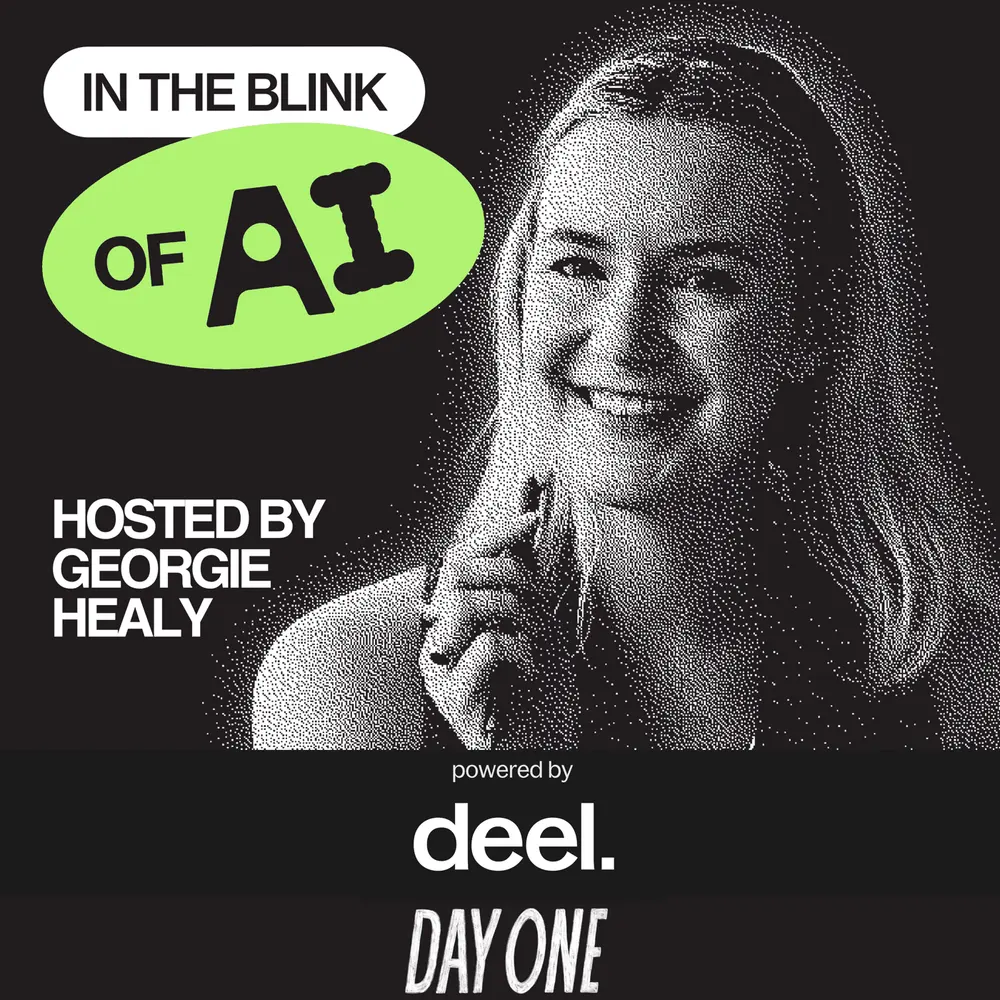 In The Blink Of AI with Georgie Healy
Presented by Deel & Stripe
In The Blink Of AI with Georgie Healy
Presented by Deel & Stripe 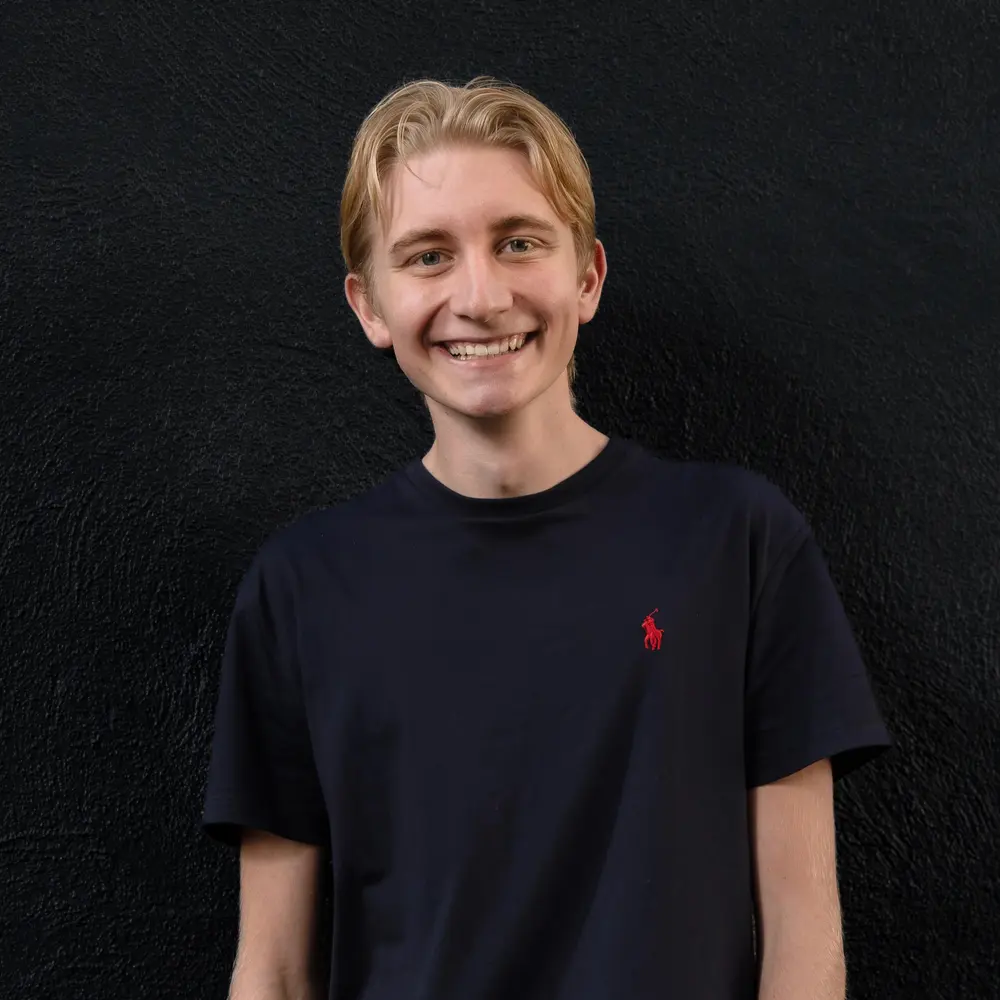


 ▶
▶  ▶
▶  ▶
▶  ▶
▶  ▶
▶ ▶
▶ ▶
▶