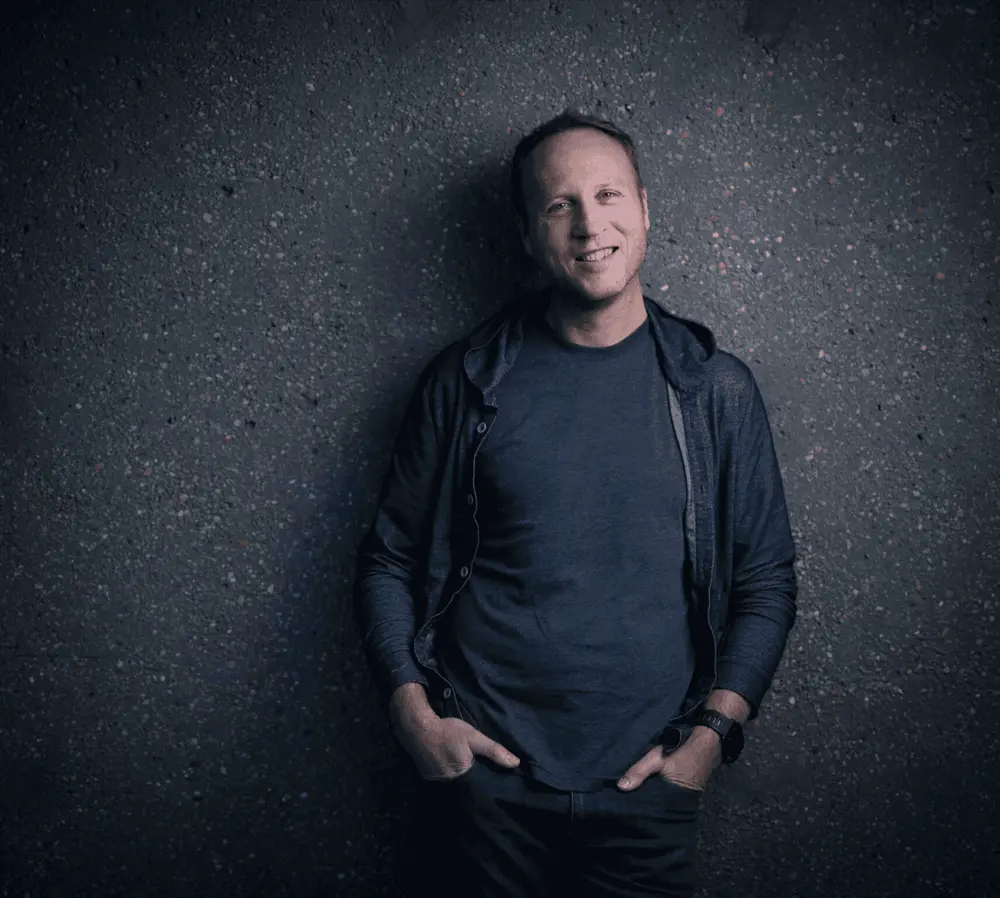
Today you’re going to hear from Alan Jones – The Nice One.
Alan Jones is a startup entrepreneur, a mentor to other startup founders, and an angel investor who is building a venture fund.
Let’s meet Alan Jones.
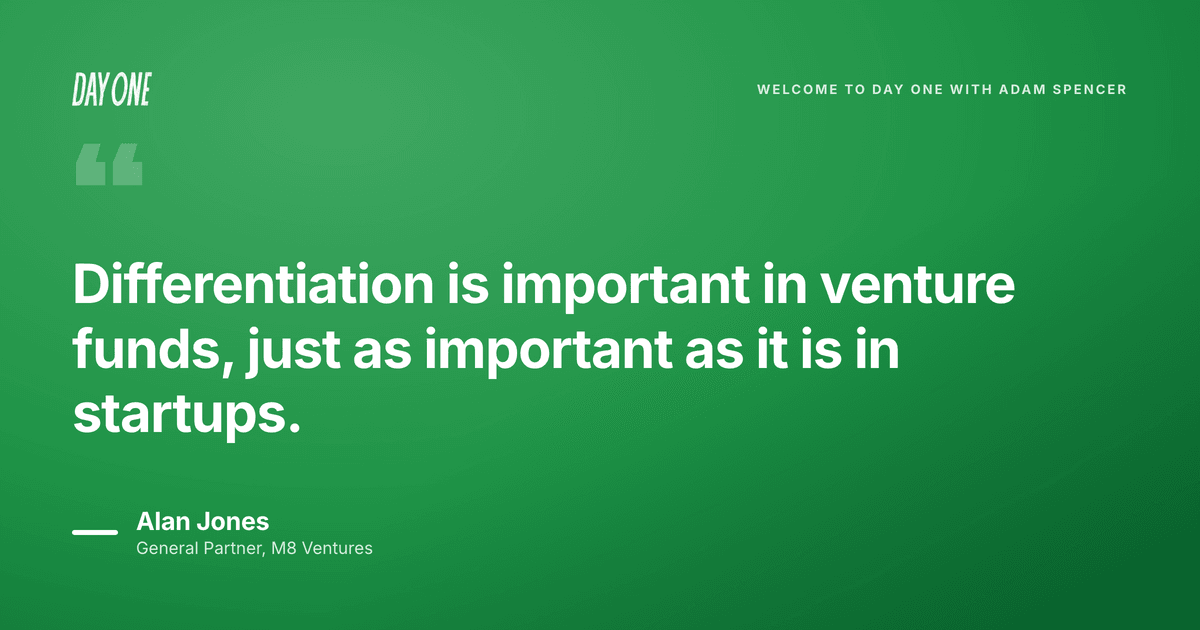
Transcript Synced · select any line to jump ▾ 0:00 Adam Spencer: You're listening to a DayOne.fm show. 0:05 Speaker: What drives you to make bold moves, to build something that didn't exist before, to live, lead, and choose life with intention? Welcome to Perspective X. I'm Pauline Fatowi, and this is not your typical business podcast. Each episode, I get to speak to extraordinary entrepreneurs and leading innovators to unpack what truly fuels their journey. Not just the wins, but the inner work, the overlooked decisions, the mindset shifts, and the personal moments that sparked something bigger. This show is about the ripple effect of choice, the kind of deep accountability that lets us respond to life rather than react to it. Because when you realize everything is temporary, and you are the creator of your own experience, you start to play the game differently. So if you're curious about how people build meaning alongside success, how they evolve through challenges and shape the world with intention, this is your invitation to listen in. Perspective X, where we go beyond the highlight reel and into the moments that changed everything. Available now wherever you get your podcasts. 1:20 Alan Jones: Differentiation's important in venture funds, just as important as it is in startups. 1:27 Adam Spencer: Hi, I'm Adam Spencer and welcome to Day One, the show that goes back to the very beginning to share the stories of incredible Australian startups and the organizations that support them. Today's episode was made in part by the support of New Economy Media, Publisher of the New Economy News. Innovation news without the jargon. Read more at neweconomy.media. Today you're going to hear from Alan Jones. The nice one. 1:55 Alan Jones: My name is Alan Jones and I'm a startup entrepreneur, a mentor to other startup founders, and an angel investor who aspires to be a VC. 2:07 Adam Spencer: This is a special episode between me, the other Adam Spencer, and the other Alan Jones. Usually Welcome to Day One shares either the stories of startups and their founders or organizations that help startups. But sometimes when we get the opportunity to speak to an ambassador, an advocate, a champion of the Australian startup ecosystem, we take it. In this episode of Welcome to Day One, we are focusing on investing and the main challenge the Australian startup scene faces moving forward. We start off this episode with Allan explaining why he and business partner Emily Rich named their to-be venture fund M8VC. 2:50 Alan Jones: M8 Ventures, letter M, number 8. 2:54 Speaker: Yeah. 2:54 Alan Jones: And that's because we think that relationships with the founders in our portfolio are really important. At the early stages of a venture-backed company, money is important to the business, but also connections and advice and strategic help, and you're just more likely to help people if you really like them. So we think it's important for us to build a portfolio of startup founders that we look forward to seeing so that when they fall on hard times and need help, you know, we're ready to rush forward 'cause they're mates. 3:25 Adam Spencer: What makes Mate VC different to other venture funds out there? 3:29 Alan Jones: Differentiation's important in venture funds, just as important as it is in startups, right? And so we both come from a product and technical background. Emily's a skilled CTO with a successful exit on a company that did machine vision as a service. And I'm an ex-product manager originally. We are two scruffy nerds in jeans and t-shirt. [LAUGHTER] And a lot of investors in Australia don't come from the tech startup industry at all. And those that do come from the tech startup industry are much more likely to come from sales and CEO track or legal or finance. So we think our unique superpower is to be able to go in and look at the quality of the product that's being built and the quality of the team who are building it. We think it's possible to become a large successful company one day by starting off with a shit product and then later on when you're really big, investing a lot of money and making it a really good product. 4:33 Speaker: Yeah. 4:33 Alan Jones: But we just think it's a heck of a lot easier if you start out with a world-class product and a world-class product and technical team working on it. So that's what we focus on. 4:43 Adam Spencer: Allan is a mentor to startups and an investor who has been involved in the Australian startup scene from the very early days and is in the process of getting a brand new venture fund going. So he's in a good position to speak about funding in Australia. We begin by asking Allan, why is pre-seed funding important in Australia? 5:03 Alan Jones: That's a really good question, and I think it's only of, so it's particularly important in the Australian industry right now. It hasn't always been as important as it is now, and there may be times in the future where it won't be. But broadly what happens is the earliest stage of funding for any startup is probably the founder's own time and money. 5:26 Adam Spencer: Yeah. 5:26 Alan Jones: You know? And then when you've maxed out your credit cards or you've taken your own risk as far as you can go, ideally you'll go out and try and do a friends and family round. 5:35 Speaker: Yeah. 5:35 Speaker: So you'll go to Auntie Doris, you'll go to your ex-boss, you talk to some of these people, And they're invested, they are investing in who they believe you to be and what they think your capacity is as an entrepreneur. They're not necessarily able to score the likelihood that your startup may succeed, but they're backing you as an entrepreneur. 5:53 Speaker: Yeah. 5:55 Alan Jones: The next round after that might be filled by an accelerator program like the Remarkable or Murudhi or Collider or Startmate or BlueChilli, those sorts of programs. They'll work with you for 3 to 6 months, maybe up to a year. And they'll invest some money in the business at that stage. There may also be one or two angel investors that you might come across through one of those programs that might write an early angel check into the company to give you a little bit more runway. 6:24 Adam Spencer: Yeah. 6:24 Alan Jones: And then typically in Australia, there comes a stage where a company can be valued at around about $2 or $3 million, where it raises what we call a seed round. 6:33 Speaker: Yeah. 6:34 Alan Jones: Excuse me. And that seed round in Australia at the moment is largely filled by angel investors. And there's a few challenges as a startup founder, particularly one coming out of an accelerator program in raising a seed round from angel investors. I guess the first problem is that you probably only have 3 to 9 months of runway remaining when you graduate from the accelerator program. And how accelerator programs finish up in the US, in programs like Y Combinator or Techstars, is, there will be 20 or 30 companies at that demo day that are approached by investors right there. In the drinks stage, you know, the conversation stage after the pitches, they'll come up and they'll say, hey, you know, I'm really interested in this. I'd really like to explore investing, participating in your round. That doesn't happen in Australia. 7:24 Adam Spencer: No. 7:25 Alan Jones: So it's more like a 6-month to 18-month journey for an Australian founder to raise a seed round. Part of that is because a lot of our angel investors are just as new at this as our startup founders are. They haven't, they may be making perhaps their third or fourth investment in a startup, but probably haven't done much more than that. It's very likely they'll be making their first startup investment, so they're naturally gonna be much, much more cautious about it. And also in general, an angel investor doesn't really have, they don't have any third-party accountability. Mm-hmm. So as a venture fund manager, I have, the fund has an investment hypothesis. This is our focus. This is how long we're going to be investing in companies. This is how many of them we'll do follow-on investment in. We might have a particular focus on an industry or a set of industries that are related or perhaps particular kinds of technologies. 8:20 Speaker: Yeah. 8:20 Alan Jones: But all of that is public and all of that is known. So you can go to Airtree or you can go to Blackbird or you can go to Right Click Capital or Rampersand, all these great funds and you can, couple of minutes on their website and you can see what kinds of companies they're looking for. And so you know who to approach. And then if you choose to approach the other ones as well, you know at least it's an outside chance. 8:41 Adam Spencer: Yeah. 8:42 Alan Jones: Angel investors, on the other hand, don't, generally aren't that explicit about what they're looking for. And they may change their mind about what they want to invest in next, you know, like that. Sometimes it's as simple as one of their previous investments is looking a bit shaky at the moment and they decide to take some time out of the market. It might be, you know, some of us out, you know, your marriage may fail and you may need to set aside half of what you thought was yours to give to your ex-partner, right? Or it might also be, you know, sometimes an angel investor will think, well, I'm investing in blockchain because blockchain's the next hot space. And then I'll start reading that blockchain's not cool anymore. And then I'll think, oh, drones, drones, I'm in drones now, you know? Mm-hmm. So it's very difficult for a startup founder who's trying to grow a business and hire a team and make that last bit better run, might last as long as it can. To also be going out there and doing the research about these angels who are changing their mind all the time and dropping in and out of the market. 9:39 Speaker: Yeah. 9:40 Alan Jones: And there's not very much competitive tension to actually close around in Australia. There's much more capital trying to get into far fewer deals in San Francisco than there are in Sydney. In Sydney, most angel investors can afford to take the time. And essentially, the longer they wait before they actually write a check, the more of their risk that they have been able to reduce. You know, oh, the company, you know, I thought they only had 9 months of runway left and 12 months later they're still going. Well, that's, you know, that's even better for me as the investor. So, a pre-seed venture fund doesn't behave like an angel investor. So a pre-seed angel fund says, if you're this kind of company, we pretty much have to make this many investments over the next few years. 10:24 Adam Spencer: Yeah. 10:25 Alan Jones: So if you're one of the best companies we see in this space, then come talk to us and it's in our interest as well as your interest to get that deal done quickly so that we can move on to our next investment and our next investment. 10:36 Adam Spencer: To wrap up this episode of Welcome to Day One, and I know it's been a short one, I wanted to ask Allan what he thinks the biggest challenge the Australian startup scene faces moving forward. 10:48 Alan Jones: I think the main challenge is macroeconomic for Australia. There are many other nations out there that have understood that the world's economy is turning into a technology economy. Mm-hmm. That, you know, resources will always be important and agriculture will always be important and services and banking and telecommunications, all of those industries aren't going away anytime soon. But most of the future potential economic growth is definitely in the technology industry and more and more in the software that runs all of the things, you know? So the great advances we've made in the last decade, obviously the hardware that powers our phones and our cars and all those sorts of things, that's become much, much more powerful and capable of many more things at faster speeds. But the huge advantage has been in our ability to make those devices do more things better through software because software doesn't need to be unplugged and— And— replaced with something else that comes from another part of the world and stuck back into that machine. 11:53 Speaker: Mm-hmm. 11:53 Alan Jones: So an electric vehicle or somebody's smartphone, you know, we can ship out an update to that and make it much, much better. So Australia's always been an export-focused economy, you know, and we have export, exported primarily agriculture, resources, and services. All of those industries will continue, but if we want to participate in most of the economic value of the next 100 years, it's going to come from excuse me, being a world leader in developing the software that powers the hardware. One challenge about that for us as a nation is that we're used to people working in groups and those groups of people working together in the same room. I meet startup founders all the time who are learning lots of hard but really valuable lessons on how to work with a remote distributed team over tools like Slack and Zoom and Jira and Basecamp. And all of these tools are helping us actually work together as a team remotely, but the communication processes and the way we agree on how to move forward and the way we record what we've done so we don't make the same mistakes again, all of that changes dramatically when we're working in a remote team. We're a tiny, tiny nation of 20-something million people, and so there's a tremendous future potential for us if we can strike the right balance between working together in the same physical space some of the time so that we can network and get to know each other as real people, But then in the rest of the time, becoming the world's best at working remotely as part of a remote team. Because although most of our population is up and down the eastern seaboard of Australia, it's still a tremendously large eastern seaboard. I drove from Sydney to Coffs Harbour, which isn't even halfway up the coast of New South Wales, a couple of weeks ago to go meet the tech startup community there. And that same drive would take you halfway across Europe. 13:43 Adam Spencer: Yeah. 13:44 Alan Jones: Through 3 or 4 countries. So this is our opportunity to be in a zero export cost industry. We can ship software and have it in every global market in local currency and local language overnight. At the click of a button, it gets pushed out to an app store and it gets approved and bing, there it is, right? 14:02 Adam Spencer: Yeah. 14:03 Alan Jones: So we have an opportunity to stop putting live sheep on ships and we have an opportunity to stop putting iron ore on ships and coal on ships and waiting for it. To get to market in 11 weeks' time. And we can actually be participating in that global software economy. The faster we invest in skilling up our workforce, training young people to have the skills in order to be able to do that, and us as founders recognizing that, you know, we have a responsibility to our shareholders and to our team to stop using remote working as a, as like a stopgap measure or a workaround for now, but to start thinking of it as a competitive advantage. We have no choice but to get great at it, but then once we've got great at it, let's be world leaders in that. 14:47 Adam Spencer: Thanks for listening to this short and sweet episode of Welcome to Day One featuring Alan Jones. If you'd like to support the show, you can do that by rating and reviewing the podcast by going to Ratedayone.com. And thank you for giving this episode of Welcome to Day One your attention. This episode was created by me, Adam Spencer, Interview conducted by me, Adam Spencer, and a big thank you to Alan Jones for taking the time to be involved. Music by Lee Rosevere, full attribution on our website at welcometodayone.com. This episode was produced and edited by me, Adam Spencer. Thank you and see you next time.




 ▶
▶ ▶
▶ ▶
▶