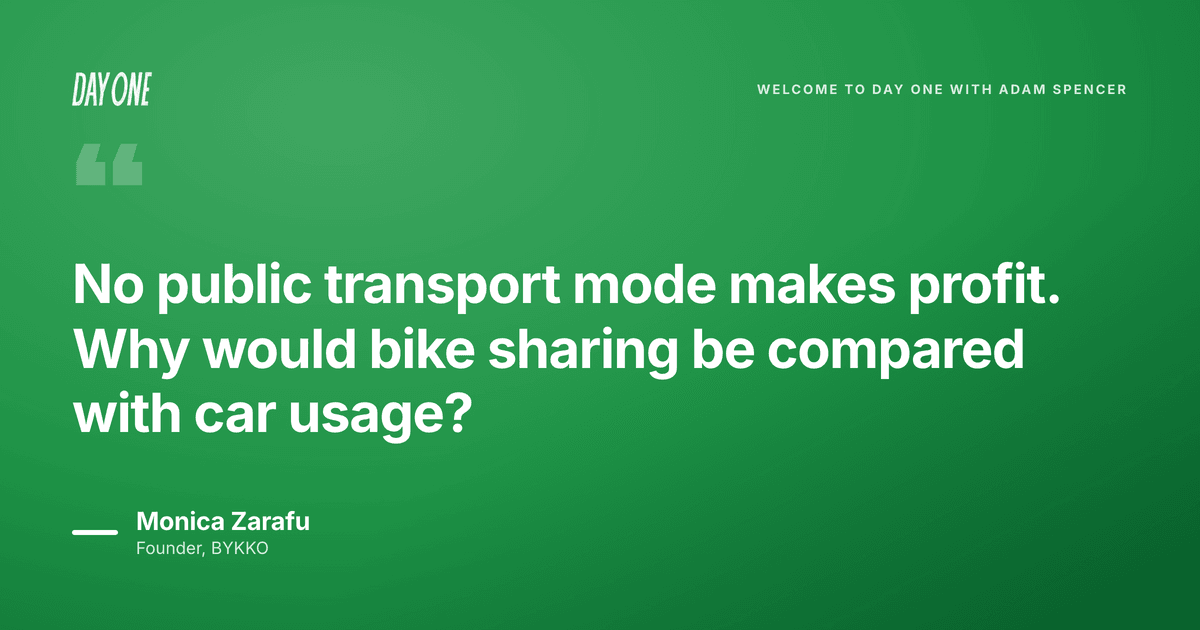
Transcript Synced · select any line to jump ▾ 0:00 Adam Spencer: You're listening to a DayOne.fm show. 0:05 Speaker: What drives you to make bold moves, to build something that didn't exist before, to live, lead, and choose life with intention? Welcome to Perspective X. I'm Pauline Fatowi, and this is not your typical business podcast. Each episode, I get to speak to extraordinary entrepreneurs and leading innovators to unpack what truly fuels their journey. Not just the wins, but the inner work, the overlooked decisions, the mindset shifts, and the personal moments that sparked something bigger. This show is about the ripple effect of choice, the kind of deep accountability that lets us respond to life rather than react to it. Because when you realize everything is temporary, and you are the creator of your own experience, you start to play the game differently. So if you're curious about how people build meaning alongside success, how they evolve through challenges and shape the world with intention, this is your invitation to listen in. Perspective X, where we go beyond the highlight reel and into the moments that changed everything. Available now wherever you get your podcasts. 1:22 Monica Zarafu: This will be a game changer in the entire urban landscape because people will be encouraged once they try. 1:32 Adam Spencer: Hi and welcome to Day One, the show for regional startups and the organizations that support them. My name is Adam Spencer, and today I'll be sharing with you the story of Monica Zarafou, the founder of Baiko. And just a quick note, since sitting down with Monica, To record this interview and the process of putting the episode together, Bikeo announced some exciting news. They have a new CEO, Mark Arendale. 1:54 Monica Zarafu: Hello, I am Monica Zaraffo, Managing Director of Bikeo. 1:58 Adam Spencer: And what is Bikeo? 2:00 Monica Zarafu: Bikeo is an electric bike share company. It was the first of this kind in Australia. We started in 2014 with push bikes, and then in 2016 we moved to electric bikes. So we provide a platform for electric bikes with docked-based systems. So you can dock the bike and recharge the bike through, through the docking terminals. 2:26 Adam Spencer: Born in Romania, Monica moved to Australia in 2010, motivated by a need to mitigate the threat of climate change and seeing the mass adoption of bicycles in parts of Europe Monica is aiming to build more than just a successful business. With the lofty ambition of reshaping the way we think about transport in Australia, Monica has been working 100-hour-plus weeks to build Bikeco as a proof of concept, with the hopes that an electric bike sharing model could be adopted by governments and used as part of an integrated public transport system. But before we dig into the details, of how Monika believes electric bike sharing can change transport in Australia, first we need to go back to day one and learn about the research Monika undertook which ultimately led her to believe that, as she says, bikes are the future. 3:17 Monica Zarafu: I am a transport engineer, but in 2010, when I came to Australia, and I was very lucky to meet Dr. Gary Glazebrook. One of the best urban planners, transport planners we have in Sydney. So I started a master by research with Gary. So this brought me 3 big achievements: a scholarship from CSIRO looking at climate change mitigation from a transport perspective. Then, yeah, my research also got an award, the first Martin Lawson Award from Advanced Transit Association, so it was my chance to visit Silicon Valley, and I got a job at City of Ryde. 4:09 Adam Spencer: So Monica's research for her Master's degree helped bring her 3 big achievements: a scholarship from the CSIRO, the Martin Lawson Award from the Advanced Transit Association, and a job as a transport engineer at the City of Ryde. While working for the City of Ryde, Monica continued her research and increasingly believed that bikes could play a major role in reshaping Australia's transport systems. While bike-sharing ventures had been tried in Australia, they had mostly been considered unsuccessful, but Monica has seen these systems work in Europe and believed that they could work in Australia too. 4:49 Speaker: In Europe, if we just go to Europe for a second, because you're from— 4:56 Monica Zarafu: Yeah, I've been born there. 4:58 Adam Spencer: Yeah. 4:59 Speaker: In Romania. Where were you born? 5:00 Monica Zarafu: In Romania. 5:00 Speaker: In Romania. What, like, is that the perfect vision of what bike sharing could be? Like, if you go to Europe, what does it look like over there? 5:11 Monica Zarafu: It's a really good picture, to be honest, because Every major city has a public bike share scheme. Some of them, they even have more and more systems. And not only the government supports bike sharing, but also railway agencies or other public transport agencies subsidize bike sharing as, you know, additional transport mode to expand their services, you know, by rail, by bus, by light rail. Okay, so we need to look at different models for something like this to work in Australia. What I believe is bike sharing should be integrated with other public transport modes. 6:00 Speaker: Right, why? 6:02 Monica Zarafu: Because it's a perfect solution for short distance trips. And not only short distance trips because now with electric bikes, and this is why I introduced the electric bikes, they can reach up to 25 kilometers per hour with power assistance. So you can actually reach not only CBD but other suburbs easily. 6:25 Adam Spencer: One thing that Monica believes is holding bike sharing back in Australia is the way we expect that bike sharing should be a profitable business as opposed to a public service like public transport. 6:37 Monica Zarafu: And where I see the problems and I wanted to prove wrong is that bike sharing is public transport infrastructure. No public transport mode makes profit. Why would bike sharing be compared with what, with car usage? It doesn't make any sense. So if we don't consider failure light rail, or, you know, with much more investment that bike sharing, why still bike sharing in Australia was considered a failure. And I still, I think it's a wrong perception of bike sharing and we try to do in our way by proving that a properly planned bike sharing system can work. 7:22 Adam Spencer: So Monica set out to change people's perception of the role bike sharing could play in public transport. Her research and the accolades it brought her had given her access to a network of people working in local councils and state government, and so she started talking to them about the potential of bike sharing. 7:41 Monica Zarafu: And I started going to meetings and conferences and talking to people about, you know, what bike sharing would be. Then we decided, okay, let's do something, because I thought things are going too slow for me. I wanted to be a bit more dynamic, and then is when I started the business, and I say, "I will do something. I will prove the concept." I was working at City of Ride in Sydney, and I told my husband, "We should start a business with bikes." We didn't know what kind of business, but I saw the movements in Europe mainly, because I did research in Europe and United States. And I say this will be huge, you know, bikes are the future and they are a viable option, you know, for short trips. 8:31 Speaker: Okay, when you, and 2014 was when you started the business? 8:36 Speaker: Yes, yes, yeah. 8:36 Monica Zarafu: We started with a few self-serve bike hire stations and we installed the stations at a few hotels in Sydney, Newcastle, and Hunter Valley. And we, you know, it was a side business and a small business. We, as I told you, we were looking to buy a bike shop at the time, but then we realized the competition from online sales will be fierce. And we saw in Sydney a lot of bike shops closing down because of the online sales. And then we said, no, no, no, let's do something bigger. And I I wanted more, so we started with a few stations for hotels, but I wanted more. I dreamed of having a bike station at every new residential building and office buildings in Australia and go global. 9:32 Speaker: Was it always in your mind to launch a business, or was it you just got to a point where you're like, "Well, I have to do this," because— No. 9:39 Monica Zarafu: It was pretty much this, I have to do this, I have to do something. 9:45 Speaker: Right. 9:45 Monica Zarafu: And I did it. 9:47 Speaker: So 2014, you launched the business. Was there any big kind of launch around that? Was there media attention? 9:55 Monica Zarafu: No, no, nothing. We just found some off-the-shelf solutions, you know, with push bikes, so stations, self-serve stations, and it was pretty much bike hiring. 10:09 Speaker: On day one of the business, like when you've decided we're gonna do this, you go and register the company, what do you do next? Like what's the most important thing that you decided that we need to do to make good progress? 10:24 Monica Zarafu: At that time it was finding good locations because you know that business model is based on revenues from bike rentals. And we started looking at touristic areas. This is how Newcastle came to our attention. We didn't know much about Newcastle at the time. We were living in Sydney for many years. 10:51 Speaker: Right, okay, because earlier on I think you said you launched the business in Newcastle, but at this stage when when you were deciding we're going to start a business, you were still living in Sydney? 11:00 Monica Zarafu: In Sydney, yeah. So we, in fact, we launched the business in Sydney because we had stations in Sydney too. So, and we are living in Sydney and then we moved everything to Newcastle and even myself and my husband, we moved to Newcastle. 11:18 Speaker: What was the main reason for the move? Just because Newcastle was the most ideal location to test this? 11:26 Monica Zarafu: It was business related, but we also fell in love with Newcastle. 11:33 Speaker: It is a beautiful city. 11:33 Monica Zarafu: It's a beautiful city, and it was an unexpected discovery. You know, people in Sydney, even today, they, you know, they don't get it. 11:44 Speaker: Yeah. 11:44 Monica Zarafu: We love, you know— 11:45 Speaker: It's just a perfect balance. 11:46 Monica Zarafu: It's a perfect balance. 11:48 Adam Spencer: Yeah. So out of a sense of having to do something, Monica and her husband started their business with some off-the-shelf self-service bike rental stations. They set them up at a few hotels, first in Sydney, then in the Hunter Valley in Newcastle, where they eventually relocate after falling in love with the city. These first rental bikes were old-fashioned pushbikes where you could only go as fast as you could pedal. They were somewhat successful as a proof of concept, but they were only bringing in a small amount of revenue. This was not the grand vision of a bike-sharing solution integrated with public transport that Monika envisaged. If they were going to change the way Australia got around, they needed to move faster. 12:34 Speaker: You said it took a lot longer than you wanted it to. You put a couple of stations around, but that wasn't happening quick enough. So what did you do to speed things up? 12:44 Monica Zarafu: I spent a few good years just presenting the concept, okay? But then at the cycle show in Europe, I tried an electric bike and that was the wow moment. 12:58 Speaker: Ah, right, because right still you were doing just pedal. 13:01 Monica Zarafu: Just pedal bikes, trying to convince the government to invest bike sharing with no success at the time, you know. I tried an electric bike and I said, my God, this will change the game. Because if I am happy— I am not fit, you see me, I am not really unfit, but I am not a fit person. I wasn't into cycling. I love the, you know, riding the bike, but I didn't feel confident enough on a pushbike to go on the main road. Roads, you know, because I had this queue of cars behind me. And I tried an electric bike and I say, my God, this is wow. And I thought, if it's so good for me that now I can feel confident, you know, to go shopping, to go, you know, to do errands, to go to meetings without getting all sweat and, you know, I say this will be the game changer for other people. People like me, especially women. And that was the changing moment. Everything changed in our business. So from that moment forward, we say, okay, we will stop what we do now. We will start investing in developing an electric bike share system. 14:16 Adam Spencer: Monica experiences the added confidence that an electric bike can bring to a cyclist on the road. And she believes that this technology could move them towards their goal much faster than old-fashioned pushbikes. The vision was still to integrate bike sharing into public transport, but with the pivot to electric bikes also came a new target client: residential property developers. 14:45 Monica Zarafu: Okay, so we got interest from residential developers. We had said Forbes, the Art Group Residential Developers, they really— the project director was, you know, he loved the idea and he said, yeah, I want to be an early adopter. I love what you are doing. 15:06 Speaker: Can you tell me more about that? Did they reach out to you or did you reach out to them? 15:13 Monica Zarafu: No, I reached out to them. 15:15 Speaker: And had you decided We're going to, like, as a strategy, we're going to reach out to property developers? 15:22 Monica Zarafu: Yes, as a strategy, we started approaching real estate developers, especially these, you know, the new developments with a lot of new amenities. 15:34 Speaker: What did you say to them? What were you saying to them to make them go, "Okay, that's interesting"? 15:40 Monica Zarafu: I told them that This is the future gym or pool of a building, an electric bike share station. And I told them that, and I still believe this, it's a great selling tool for them. 15:59 Adam Spencer: In 2016, Bikeho scored their first customer for an electric bike sharing system, a residential real estate developer. It's a relatively small contract 10 bikes in a residential building, but it's proof that there are people out there interested in their vision for electric bike sharing. And in the same year, Monica comes across an opportunity to test out their dream project, a public bike sharing system. The opportunity is the Make Your Place grant from the City of Newcastle, which allows them to set up a 3-month trial in Newcastle West, where members of the community can register to use the shared electric bikes for free. Mm-hmm. 16:36 Monica Zarafu: We won that City of Newcastle Make Your Place Community Grant. We installed a station. At the time, we had an office space at Rethink Financial Building. It was a shared office space. And we said, it's a perfect place. It's kind of isolated from the city. And we put a station there. And people started going in lunch breaks to the beach. Posting photos and then people contacted us, ah, bring a station at Wycombe, bring a station at Ferry, bring a station in Hamilton, you know. 17:11 Speaker: How important was that to you and the business? 17:13 Monica Zarafu: Very important, very important because it gives us the opportunity to test the model. Right. 17:20 Speaker: Did money come with that? 17:21 Monica Zarafu: Well, very little. 17:24 Speaker: Very little. 17:24 Monica Zarafu: So, yeah. 17:25 Speaker: It was, so what was the benefit of it? It was just the ability to test it. 17:29 Monica Zarafu: Just the ability to test and get some data and prove, you know, the model. Show that actually people are using electric bikes given the opportunity. 17:43 Adam Spencer: And then in 2018, BikeO is awarded a contract by Transport for New South Wales to install 19 electric bike sharing stations across the city of Newcastle. And from there, Baiko's growth continued to pick up the pace. 17:59 Speaker: Can you wrap some numbers around where the business is today? You don't have to talk about revenue or specifics, but just some things that you measure your success by, your milestones. 18:12 Monica Zarafu: We are actually quite proud of our achievements considering that, you know, we are a small, still a small company, and bootstrapped company. 18:22 Speaker: Yeah. 18:23 Monica Zarafu: So we started with literally 25 bikes in 2014, and now we have programs running in Newcastle, in Perth. We just launched in Perth the program with RACWA and University of Western Australia. We have in Canberra, we have now installation soon in Sydney, Sunshine Coast, coast, Nusa. It's a big, it's a huge growth. 18:51 Speaker: How many bikes in total are out there on the roads? 18:56 Monica Zarafu: Currently around 300, but by the end of the year we will double the numbers. 19:03 Speaker: Wow. What's been the biggest challenge for you, like, in running Biko? Why is— 19:09 Adam Spencer: has there been something What's the hardest thing about it for you? 19:13 Monica Zarafu: To create a market for our product here in Australia. I think this was the biggest challenge for us, to create a market. I think we were a bit ahead of the times. It was too new. Bike sharing is not new, but in Australia it was a bit new. And even the concept of residential bike sharing It was absolutely— no one knew. So people in Australia, they don't take risk easily. And it was good for you. It's a very different environment compared to Europe or United States. There you have to be the first always. And I came with this attitude, let's be the first, but it's much harder here. 20:02 Speaker: I think perhaps you picked the— Newcastle is notorious for, you know, being hard to get things going. 20:11 Monica Zarafu: Everyone told us that if we succeed in Newcastle, the market will open. I didn't understand exactly what they wanted to say. We understand now. It's a bit difficult. 20:26 Speaker: So the biggest challenge is has been creating the market. How have you been trying to overcome that? How have you been overcoming that challenge? 20:39 Monica Zarafu: 100+ hours work per day, per week. 20:43 Adam Spencer: That was going to be my next question. 20:44 Speaker: How many hours are you working? Yeah. 20:46 Adam Spencer: 100+ hours. 20:47 Monica Zarafu: 100+. No weekends, no holidays. I don't know when the day starts or ends. So you invest whatever you have if you believe in an idea. This was our belief. I was so determined to prove that, you know, and I still believe, you know, imagine if every developer will provide bikes for free for residents. This will be a game changer in the entire urban landscape, because people will be encouraged once they try. Do you know how many people we have, users here in Newcastle? They send me emails thanking for, for the system and telling me that they bought electric bikes after a few months of using our bikes because they discover how great they are. 21:42 Adam Spencer: A huge thanks to Monica Zarifu for taking the time to speak with me. This episode was produced by me, Adam Spencer, with scripting and audio editing by Andy Jones. Amazing, amazing work. Information about everything mentioned in this episode can be found on the show notes page at welcometodayone.com. Music by Lee Rosavere, full attribution on the Welcome to Day One website. If you'd like to support this show, please consider leaving us a review or supporting us on Patreon. I'm Adam Spencer. Thanks for listening.