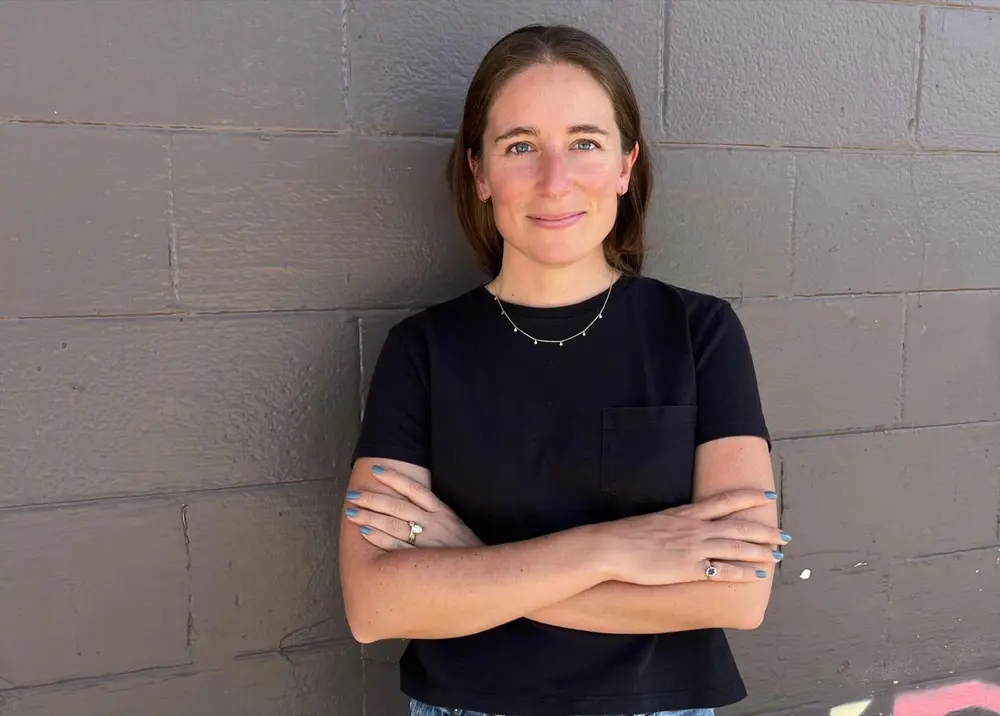
Transcript Synced · select any line to jump ▾ 0:02 Speaker: Founders scale faster on Deel. Set up payroll for any country in minutes, hire anyone anywhere, get visas handled fast, and get back to building. Visit deel.com/dayone. That's D-E-E-L.com/dayone. 0:21 Speaker: Are you building a SaaS business and looking to achieve compliance with SOC 2 and ISO 27001 or other security and privacy frameworks? 0:32 Maxine Minter: Compliance can unlock major growth and build essential customer trust, but let's face it, it's usually time-consuming and expensive. 0:37 Speaker: And like really kind of a pain. That's where Vanta comes in. Vanta automates up to 90% of customer compliance tasks, making you audit-ready fast and saving you up to 85% of the associated costs. Plus, Vanta scales with your business, offering a market-leading trust management platform to continuously monitor compliance, unify risk management, and streamline security reviews. Join 7,000 global companies, including Atlassian and Dovetail, that trust Vanta to build and prove their security in real time. 1:03 Maxine Minter: And for our listeners, Vanta is offering 10% off. 1:06 Speaker: Just go to vanta.com/first. That's vanta.com/first. 1:14 Maxine Minter: Okay, 3, 2, 1. 1:18 Speaker: Hey, I'm Sheryl. 1:20 Speaker: I'm Maxine. 1:20 Speaker: This is First Check, part of Day One, the network dedicated to founders, operators, and investors. 1:25 Maxine Minter: If you want to be a better early-stage investor, this is the show for you. 1:28 Speaker: So TL;DR, if you don't want to suck at investing, listen up. 1:39 Speaker: Welcome. Today we have Annabel Lippincott-Paksoy on the pod, and I am so, so, so excited to have her here. We've been friends for a very long time, and I have been inspired by her from the day that I met her. I am just wowed by her as an angel investor. She was actually my on-ramp into investing through a community that she put together in SF, many, many years ago, which I'm excited to dive in and talk about community with her. And watching her angel invest, she's just like incredible at developing networks and communities that are super high signal, really wonderful humans as well, and just kind of wonderful thought partners to help be better investors. And she's done some really cool stuff. She is now a partner at 43, which is a really cool pre-seed fund based in the Bay Area. And also a partner at Council and just a wonderful human. So, so excited to dive in today and talk to her about all things early-stage investing, pre-seed, and, and community. 2:39 Speaker: That's awesome. I don't know Annabelle personally. I'm excited to get to know her a little bit more today, but anyone who started a community for female angels to get together and learn more is A-okay in my books. And I'm also really excited to learn more about pre-seed investing cuz we don't have very many true pre-seed investors in Australia. So, Yeah, really excited to hear Annabelle's thoughts around pre-seed investing. So welcome, Annabelle. 3:03 Anabel Lippincott Paksoy: Welcome. Thank you so much. It's a treat to be here with you guys. 3:07 Speaker: Amazing. So the first question that we ask everyone who comes on is what is the first thing that you invested in? 3:13 Anabel Lippincott Paksoy: I think if I really have to rack my brain, it's gonna be a couple CDs. 3:17 Maxine Minter: Incredible. 3:19 Anabel Lippincott Paksoy: Likely something like an Avril Lavigne CD, you know, in the early aughts. If I have to, I think, and If I was smart, I would have hung on to those, but because I think they're gonna be a relic someday, but no, they've made their way into landfill at this point. 3:37 Speaker: Oh, that's unfortunate. I heard those get auctioned off for lots of money now. So like you— 3:42 Maxine Minter: Yeah, right, right. If you're anything like me though, my like early CDs, my early CDs, I took them everywhere with me and I scratched them up something fierce. And so especially my favorite songs would be like really glitchy by the time. You know, I was ready to part ways and send them into landfill. 3:57 Anabel Lippincott Paksoy: Oh yes. Theater Boy is completely unlistenable at that point. Totally. I was just gonna say, I wonder if like a Discman would ever have the like cachet that a record player does, but I just don't think the technology holds up the same way that vinyl does. So unfortunately I think, you know, CDs are in a bygone era at this point. 4:18 Maxine Minter: Yeah, sadly. 4:19 Anabel Lippincott Paksoy: Unfortunately not a great investment. 4:21 Maxine Minter: Right, not a great investment. 4:22 Anabel Lippincott Paksoy: Do not judge me on that. And let's talk about animals investing now. Yeah, I'm really good at the early stage. 4:32 Maxine Minter: I just don't know that you could these days convince someone to wear a Discman on their belt in the way that we used to. Remember we used to carry them around like a, it was almost like a discus, like huge chunky thing. I mean, the headphones are back. You're looking amazing with your headphones, but like— Thank you so much. The like big handheld, like takes up a whole part of you. It's, yeah. 4:52 Anabel Lippincott Paksoy: Oh yeah. 4:53 Maxine Minter: Yeah, I don't think we could do that. 4:54 Anabel Lippincott Paksoy: I mean, we, the whole like, you know, iPod Mini or whatever, the iPod, like that whole thing, it just like when you think back on one of the fun things I think about our generation, like the true millennial, not the like cuspy, you know, Gen Z generation, but like we literally were their like first smartphones like in their coming of age years. And I think that journey is like pretty cool. 5:16 Maxine Minter: Yeah. 5:16 Anabel Lippincott Paksoy: I'm happy that we're in our like, golden years professionally now, you know, kind of entering into your like mid-30s to early 50s is like when you can like actually, you're like the, you know, you can kind of reference it and it's like still a little bit nostalgic, but at the same time it's like, nope, you're still kind of current at the same time. So I'm having a little fun aging, I have to say. You're making me excited. 5:41 Maxine Minter: I'm like, I'm right there with you. This is great. 5:43 Anabel Lippincott Paksoy: Yeah. No, I'm ready. I'm like ready for my Eileen Fisher, like baggy clothes moment. So that's where I'm at. 5:50 Maxine Minter: Perfect. Perfect. I'm here for it. Definitely a nostalgic moment in terms of like, there were like culottes and baggy jeans and those like huge, like Echo shoes that I used to wear that I was like pretty embarrassed having been through that fashion era for like a solid 20 years there. And now I'm seeing like the coolest people, like Gen Z is wearing those outfits again. And I'm like, wow, yes. Okay. I don't feel as bad for those horrible fashion moments. Yeah. We're back in it. 6:17 Anabel Lippincott Paksoy: Totally. 6:17 Maxine Minter: Yeah, I'm happy for it. I'm right here for it. 6:19 Anabel Lippincott Paksoy: Same. 6:20 Maxine Minter: So I, one of the things, as I mentioned in the little kind of intro, is my observation of you kind of over this part of your journey has just been, you've just been incredible at building community. Maybe for our audience, Annabel was the first people hire at Opendoor and went on that journey with the team and then stepped out and joined a female-first coworking space called The Assembly, which sadly doesn't exist anymore. RIP Assembly. And built the community there and just did like an incredible job of building really high signal, really wonderful human group together in this, this physical space. And then built The Council, which is a female-first investing group in, in the Bay Area and now all over the US. Right. Got members in all four corners of the continental US. So I'd love to just hear how you think about building communities. Why do it? What are some things that you've noticed about what works really well in communities? What destroys them? I'd love to just kind of hear your thoughts on community generally, and then maybe we can dive in a little bit deeper. 7:26 Anabel Lippincott Paksoy: For sure. Well, thank you so much for the kind words. And Maxine, you've always been a huge champion and like member of, of the communities that I've been able, privileged to be a part of and help build. And it's been folks like you who've kind of stepped forward and like highlighted what's special about it that even like gives us the chance to reflect on what is it that we are building here and like what is that special sauce? Yeah, I wish that, I think like we would not be suffering from a loneliness epidemic or pandemic, whatever, right? And I think we'd all be very rich if we knew how to if we had a blueprint for building community that was repeatable and if we could monetize those two things. And I think I say that because I think that a lot of times when we talk about community, people end up wanting to know like, how, how can I like go and build a community? Like tell me how to do it. Or I wanna make a business out of a community. And I think those two things are super nat— like, of course, like who doesn't love the feeling of belonging? Yeah. That comes from a great community. And then why shouldn't that be something that you could turn into like a successful business? However, I think one of the annoying, frustrating/magical parts about true community is that it's not quantifiable. It's not exactly, it's kind of like cooking versus baking. I like to say like, it's a little of this, it's a little of that. It's like why I like to cook and I'm not a baker, right? It's like, You're never gonna make the same recipe twice. And you know, you can follow the guidelines, but ultimately what makes each community special is really, really about the members. And I think I, I'll stop waxing philosophical for a moment and just say explicitly that yes, some of the communities that I've been a part of, specifically the Assembly, like obviously that was a business in that it's, it was a coworking space centered around like building community. Mm-hmm. The Council is now a community that is trying, you know, like has a paid membership and is also has a venture fund that spun out of it. So I'm not trying to suggest it can't happen, but if, you know, when we look back on some of the like precious early moments, and this happens in companies as well, like we like, oh, we like, we reminisce about the early days and et cetera. I think it's that like je ne sais quoi, like the kind of like the thing you can't really put your finger on. is something that I think is this weird, like, unspoken social contract that happens as you're building a community, which is really, it's kind of nothing except for a group of people who are either, like, implicitly or explicitly agreed to show up, be in each other's, like, company and presence, usually around a shared either goal or interest or purpose. And really your job as a community builder is to try to identify what that common goal is and shared purpose, and then really just hold space and design the container for that. And what I mean by container, I mean operating principles, so to speak, of how do we talk to each other, how do you join, what are we asking of each other? And then I think the other thing in terms of holding space is that you really need to ensure that people who are a part of it are contributing in some way to the community in order to feel like truly bought in. So I'll pause there because I can go on and on and on and on, but I think community at its core is like, it's hard to design. Yeah. 11:04 Maxine Minter: Yeah. I have so many threads. I mean, I love that baking versus cooking analogy, 'cause it really does feel like those early communities and even like huge scale thriving communities, there is almost like an organic system to them, kind of like a garden or something that is iterative and is kind of growing over time, and your work is that kind of curation as opposed to the construction of it. And this kind of idea of creating the container for it. One of the things, especially in investing and especially in the pre-seed, seed, and maybe even kind of further along, is building a community of people that are high signal that send you interesting deals. And so thinking about how do you construct that maybe more amorphous community that they might not share a kind of identity as a group, but how do you think about constructing that community of folks that send you really great, great deals? Do you thoughtfully construct it, or is it at this point something that just like is your natural game? 12:07 Anabel Lippincott Paksoy: So I think the council, which is the We used to call it like a consortium. Essentially, it was a group of other women who were interested in investing as angel investors. And the goal of the council was just to get together and share deal flow. We did not invest as a group. There was no shared investment vehicle. It was not even like a formal entity. It was literally just a group of people who were sharing deal flow and talking through deals as like a learning exercise. 12:38 Maxine Minter: And it was amazing. 12:39 Anabel Lippincott Paksoy: Yeah, it was amazing. I think the reason I offered that context is because I think that, and, and it still exists today, again, it's a little bit larger in scale, but I think the reason I offer that context is because at the early days when I was learning how to invest, the, I didn't know how to invest, but I knew how to build a community and I knew that I didn't wanna invest on my own. And so I was like, okay, let me build a community as a learning platform for myself. Now I would say it's a little bit building the kind of network and you're like deal flow, flywheel, et cetera. That is more and more second nature to me. 13:20 Maxine Minter: Mm-hmm. 13:21 Anabel Lippincott Paksoy: But it's because of like this mu— the muscle that I built through creating that more intentional like group to share deal flow. The thing I wanna say about that is it doesn't mean you have to go off and create like a group every time you wanna like cultivate your network and ignite it to, to be this like powerful referral engine. I think the thing that I needed, and again, this is like, it's interesting how like trends have shifted too. Like even in 2018, it was like, which is 5 years ago at this point, like it was a little bit new for operators, female operators who were not like, already super independently wealthy to think about deploying capital as independent investors into startups. That's not to say that people didn't do it, they did. But part of the reason why I started The Council was because it actually was just frustrating to me that the dudes around me were just talking about deals and sharing those deals with each other. And that, that wasn't a conversation topic in my peer group. Mm-hmm. I am here for girl talk. Me too. And like, again, I was like, part of the Assembly, which was like, a women's wellbeing space. We were talking like, woo-woo astrology, you know, birth control, should I be a parent, you know, am I gonna rent the runway, which I'm a big believer in. But the point is, is like, we were having all those conversations, but for me it was like, a yes and. I wanted to also talk about this other stuff that felt like I felt out of place asking my male counterparts. And so, that is why the council, I just wanted to surround myself with those people. So, I think if you find yourself in a place where you just have a little bit more confidence to talk about it with people, that's the number one thing I would say around just putting— I'm a big believer in energy and just putting the energy out there like, "I'm open to this." I wanna talk about this, send me your stuff. Like just literally saying that in conversation and naming it is a big step towards cultivating that like micro community around you. 15:35 Maxine Minter: 100%. 15:36 Speaker: That's so interesting. I feel so many similarities between my experience just like a few years later that when I started angel investing, there was very few female angel investors in Australia in general, and the very few communities that existed were somewhat gated. And I really struggled to, to find other people that were willing to like let me in and, you know, include me in the conversation when it came to angel investing. And so I, I started a, like an angel group as well called 361 Angel Club. 16:04 Speaker: Cool. 16:05 Speaker: And that turned into a more formal community. But at the start I really struggled. And so I hear so many similarities there and I love that you— 16:14 Maxine Minter: I hate that you experienced the same thing, but I— 16:16 Speaker: it really resonates with me. And maybe you get this, like one of the things that I get now that I'm, you know, somewhat experienced a few years down the road is that I often have new angels coming to me asking like, hey, how do I get involved in this angel thing? Like where do I go? What do I do? And I'd love to, like, what's your answer to that question when people come to you and ask you that question? Where do you direct them? What do you share with them? What are the, some of the first things that you make sure they know? 16:40 Anabel Lippincott Paksoy: Yeah, great question. I think Maxine knows this. I'm a bit of a cynic. Even though— so I like to— what I like to say is like, I like to bite the hand that feeds me in that I often like shit on startup land, even though that's like my livelihood. But the point is, is that I think not dissimilar to the process— I've never converted to Judaism, but I know you're supposed to be dissuaded a few times before you convert. I do like to remind people when they come to me asking like, how should I angel invest, that it's inherently a very, very high-risk asset class and should not be participated in unless you are aware of that and essentially willing to lose the money. The reason I bring that up is that I think that now as it becomes increasingly like trendier, I think people might think that it's somehow like a must or like it is a way to like flex and like professionally. 17:40 Speaker: Mm-hmm. 17:40 Anabel Lippincott Paksoy: And that all may be true, but it's not the only way to do this. And so I think when people— I like helping people feel more comfortable angel investing, but I never want somebody like to participate in the council or make an investment that does make them feel uncomfortable, like at their core. I'm okay if it's like a little scary, but it's like if they really are doing it for the wrong reasons, air quote. 18:04 Speaker: Yeah. 18:04 Anabel Lippincott Paksoy: Because they feel like they must. That's something that I think is important to vet right off the bat. So That's definitely one of the first things I say. I know Maxine, you and I have talked a little bit about this idea of like angel investing can be treated almost like tuition, like a learning budget, right? 18:23 Maxine Minter: Yeah, absolutely. 18:24 Anabel Lippincott Paksoy: Insofar as like the budget that you allocate towards investing, you can be prepared to lose it and that's okay if you are doing a lot of learning along the way. So I'm curious, do you still talk about that or is it, do you guys think of it that way at all? Oh, absolutely. 18:40 Speaker: Maxine, give them a name. 18:41 Anabel Lippincott Paksoy: Yeah. I am. We call them learning checks. 18:46 Maxine Minter: Nice. 18:46 Speaker: Learning checks. 18:47 Maxine Minter: Yeah, because I had this conversation 2 times yesterday and I've had it like maybe 50+ times over the last month. 18:53 Anabel Lippincott Paksoy: Yeah. 18:54 Maxine Minter: Because so many people are, as you said, it's getting trendy. More people are looking at angel investing as a way of building wealth, but also learning, getting access, etc. There's a whole bunch of potential reasons that people are investing. And I think normalizing that, you know, for that first probably year, maybe two, like you've got so much learning to do to be able to actually like confidently start to write those checks. And so being able to write the smallest possible check, so maximal learning for minimal downside, I think is really crucial. I'm not sure if you're aware, Annabel, but we actually, Cheryl started the AngelList for Australia, and it's only a couple of years old. So to give you an idea of kind of ecosystem maturity in Australia, we are really new to this version, like to having syndicates, this like fractionalized access to angel investing. So it is almost universal in Australia that most of the people I meet, they think to be an angel investor you need to deploy $500K per check, as opposed to the like $1,000, $2,000 per check you can actually start angel investing in. Mm-hmm. And so it is much more possible today, like to get a lot of learnings and do that kind of 10 to 15 checks per year for a much lower entry price, right? So yeah, it's a very exciting time for the Australian ecosystem, but I think that's right. Like normalising this idea that you should, this is a long-term game you want to learn. And so thinking about what's the best way you can learn from those early learning checks. 20:25 Speaker: Totally. Yeah. Oh, I was going to say like to give you an example, like Maxine's learning check was $2,500 and mine was $20K because you simply couldn't invest less than that when I started angel investing. 20:35 Anabel Lippincott Paksoy: Totally. 20:36 Maxine Minter: That's a really interesting point. 20:37 Anabel Lippincott Paksoy: Yeah, I started out with a $10K check size. 20:40 Maxine Minter: Yeah. 20:40 Speaker: Yeah. 20:41 Maxine Minter: I think, I mean, as a reflection, 'cause at the time I started learning in the US and you started learning in Australia, and at the time in Australia, like $20K would've been the like absolute bare minimum. Whereas I think that in, you know, the US you could get into, because of products like AngelList, you could get into deals at a much earlier stage. But I do, I like, I do think that that fact alone is one that, that not everyone knows in the US and almost no one knows in Australia. So one that's definitely worth evangelizing a little more so folks understand that they don't have to be writing those huge checks to start off with and that they can be maximizing their learning. 21:17 Anabel Lippincott Paksoy: Totally. I think one other thing that we found at the council is that we had a lot of people who, one of the reasons they wanted to get involved in angel investing was actually to contribute to the founder's journey. And that was actually like something that I think was pretty universal as like a why for folks, which is that they didn't just wanna write the check, though there were some of those folks and we need those people too, right? Like not every, not every founder wants all of their investors to be like weighing in at all times. But the point is, is that I think I like to remind people that like your check, I used to say like my checks are small but mighty, right? Insofar as like I might be deploying a small check, but it comes with me and a lot of my effort and you can also like sell yourself as an advisor who wants to put your money in alongside of their time. And I think that was something that in the early days of the council when we were getting women comfortable with just like getting involved, deploying capital, and actually like pitching themselves to a founder, which I think as an investor you have to start like getting good at that. I think pitching themselves as like investor plus or like advisor who's gonna put some money in. And I think that is a really good way to put small checks in. 'Cause you could essentially say like, look, I'm putting in $5K or less, right? But I'm gonna give you time, my time as well. And I've actually even suggested and for myself, like asked for like, hey, I'm gonna give you $10K, but I want $20K of equity, right? 'Cause I'm gonna like give you, my woman power alongside of that. And so that's like a good way to kind of amplify the actual dollars, I think, in the early days as well. 23:05 Maxine Minter: Yeah, absolutely. And I've seen a few folks do that. Actually, Dustin, who is your partner at 43, was our first pre-seed investor at Fairshake. 23:13 Anabel Lippincott Paksoy: Yes. 23:14 Maxine Minter: And he did a very similar thing, right? 23:16 Anabel Lippincott Paksoy: Yes. 23:16 Maxine Minter: He wrote the check and also negotiated advisor equity on top of that. And like, man, did he earn that equity. He was so useful and such a wonderful partner to us as we were building the business. So I think it can be a really, really powerful model. 23:30 Speaker: Are you building a SaaS business and looking to achieve compliance with SOC 2 and ISO 27001 or other security and privacy frameworks? 23:39 Maxine Minter: Compliance can unlock major growth and build essential customer trust, but let's face it, it's usually time-consuming and expensive. 23:44 Speaker: And like really kind of a pain. That's where Vanta comes in. Vanta automates up to 90% of customer compliance tasks, making you audit-ready fast and saving you up to 85% of the associated costs. Plus, Vanta scales with your business, offering a market-leading trust management platform to continuously monitor compliance, unify risk management, and streamline security reviews. Join 7,000 global companies, including Atlassian and Dovetail, that trust Vanta to build and prove their security in real time. 24:10 Maxine Minter: And for our listeners, Vanta is offering 10% off. 24:13 Speaker: Just go to vanta.com/first. That's vanta.com/first. 24:21 Maxine Minter: One thing that jumps out to me here as we're talking about this, and when I think about you, you're just always kind of the right step ahead of the curve, right? You're not so far out ahead in trends that you like build things before— Octavian. Yeah. That you build things and then like they wither on the vine. But I mean, just the like angel investing example, the kind of community building example, you're just the right amount kind of ahead. I wonder, And this is maybe purely selfish, but what cool things are you seeing in terms of innovation in the angel investing space, innovation in the fund structuring space, innovation in the investing world generally? Have you seen anything cool recently? 25:02 Anabel Lippincott Paksoy: Yeah, I mean, I think I'll have to talk a little bit about my current project. 25:06 Maxine Minter: Yes, please. 25:07 Anabel Lippincott Paksoy: Which is 43. It's a pre-product fund. Dustin, the investor that Maxine was just referencing, is my partner in the fund. And Maxine was our, was our matchmaker. So major props to that. What I mean by like talking about my current project is I think that as I was kind of happily kind of bopping along as an angel investor, I didn't actually envision professionalizing. And by that I meant like I just deploying other people's capital did not feel like it was really something that I would be like, would want. And a part of that is because I think there's a lot of autonomy and power in like making decisions on your own. And the idea of having to kind of go and like join a firm with a thesis that's not yours and, you know, have this idea of like consensus-based partner decision-making was just like not appealing to me. That being said, like it takes money to make money. And so, you know, it's, it's hard to imagine becoming like having this be like a real financial, like, you know, positive outcome when you're deploying a total of $100,000 versus, you know, like, you know, across years, right? 26:22 Maxine Minter: Absolutely. 26:22 Anabel Lippincott Paksoy: And so I think that one of the things that we're doing at 43 that I do think is really impactful for the space, and I think this space like needs it, is this idea of professionalizing the angel check. And what that means is, is, staying independent, as in staying kind of as a conviction-based decision maker, and capitalizing angels. Now I think that idea is not new. It's been around for a while in the US. And this idea of like things like scout programs, which are where like funds offer small budgets to well-connected folks, you know, for a lot of really different reasons. And, you know, AngelList itself, you know, kind of started a program around this. But I think the thing that we're working on now is this idea of actually wanting to think about becoming a relatively like full-time angel investor. So not somebody who is doing something on, on the side, but actually honing it as a craft, as a professional skillset. And when I say a professional, when I say that, I mean someone who's like really in the weeds as at the individual level in the company building work as an investor. And that is, I think what like the, the term angel originally kind of means is this idea of somebody who's like taking a bet on you, who's out in like the wilderness of social proof. Like no one else is like, you know, there's not a ton of signal here. They are writing a check for you early and they are along the ride with you. And they're, you know, they're not your board member, they're the call before the board member call, right? And so we are currently trying, raising a fund against this thesis, this idea that we should be able to capitalize full-time professional angel investors. Mm-hmm. And that idea of really like giving that craft itself the time, space, and money to like become like a financial, you know, financially viable solution is kind of this idea. 28:39 Maxine Minter: Yes, yes, yes. I am so there for this idea of like being out there in the wilderness of social proof. I've just like, I hope you don't mind, I'm just gonna steal that terminology. It is just incredible because I do think that that is what pre-seed is supposed to be, right? Like, pre, like the very, very early stuff, what I think of as like American-style pre-seed is kind of out there in the wilderness prior to social proof. And I meet a lot of companies in Australia where they are like very much in the social proof now, and they're still kind of being considered pre-seed companies, but they have a product, they have early traction, they have early customers, etc. And to me, I think we are really missing in Australia that like true— a professionalized group of people that are doing that kind of true out there in the wilderness prior to social proof. Well, at least we were missing that, and hopefully co-ventures can deliver on that promise to founders. But I do— I shouldn't say there's no one there. I'm out there. 29:33 Anabel Lippincott Paksoy: I was going to say you're there. 29:36 Maxine Minter: Yeah, but there's— and there's a kind of a handful of angels that are willing to do that work. And there's a handful of people that do it. 29:44 Speaker: And I think part of it has been that, like, we are traditionally more risk-averse. But part of it is also just like, like most founders here, I think, are less willing to put up their hand and say, hey, I'm working on this until it gets to like that social proof. So I'd be curious to see like, or I guess ask, how, how do you go about finding them? Are you searching in the wilderness for these companies or are they just more open about it in the US? 30:07 Anabel Lippincott Paksoy: I don't know the comparison, Maxine, you probably have to speak to that. I think that I would say yes. There is a lot, even with, like, there's been like this natural downturn in the market, right? We, I know we've all experienced that globally. So in the very like recent past, but I would say the, especially I keep referring to startup land. I think I mean really like the kind of Bay Area and the coastal communities of like kind of tech dominated workforce and like kind of millennial Gen Z folks mostly. 30:40 Speaker: Mm-hmm. 30:40 Anabel Lippincott Paksoy: The idea of being a founder and like working and hacking on your startup is definitely, I would say, like making its way to the mainstream to the point where people are doing that, talking about that a lot. I do think that a lot of people never kind of get off the ground with those ideas. And that, like, that is not because there isn't a lot of money available to those people right now for what we are, what we're talking about, right? Where like, yes, pre-seed may be earlier in the US than it is in Australia, But even so, like, you know, funds and professional investing has been shifting like later and later, which is why we're talking about the white space of the early days right now. One of the things that I think is important to me, I don't have like a mandate personally to like seek a certain profile founder, like demographically, but I find that you find a lot more different types of founders when you're willing to write an early check. Because otherwise you are only really able to invest in founders who can afford, for lack of a better term, to float themselves while they have, while they build their company. 31:50 Maxine Minter: Mm-hmm. 31:51 Anabel Lippincott Paksoy: Or are building their companies while working full-time, which is just not like the velocity that you typically want to see. And so I think that is part of why I like this stage is that the goal of my check is to allow the founder to go full-time on their idea and amass their founding team and like set up their first kind of learning experiment. And that's pretty much it. And so you really are kind of living on a prayer at that point. Like we're talking very, very, very early, that the checks that I'm, that I'm writing. And I think that, that gives me a lot of freedom to leverage my background in people operations as my core decision-making framework. I like to joke that I would not make a great professional growth investor because I'm not a finance person, but I think I make a pretty good founder-oriented founder selection investor, which is really what you're talking about when you're talking about the earliest of stages. 32:53 Maxine Minter: Absolutely. I mean, I think like your background in the people space, you see it being such a core strength in the wonderful investments you make and the kind of founders that you find. And I think there's probably a thread there from your, like, community days as well, like your ability to, like, find amazing folks, vet them really well, and then, like, invest at that super, super early stage. So could you say more about what you look for? Like, what are the kind of founders that you are, when you meet them, you're just like, heck yes, I'm so excited to kind of back you to make this, this first step out of your full-time job or full-time into this idea? 33:28 Anabel Lippincott Paksoy: Yeah. I learned actually, like the concept of a decision diary is not new. This is this idea where you kind of like proverbially journal as you make your decision. But I do have to give props to Maxine as one of the most thorough like decision diaries and great frameworks that I like. And you also were kind of like a Notion evangelist. So it was like in Notion, which like felt fancy at the time 'cause there was like toggles and stuff. Anyways, the point is, is that Of course there is. Yes, exactly. So I would say that I've like honed the formality of this over time as I've professionalized. So I wanna say like, I think before we dive into this decision-making thing, I just wanna name like, this is another area that we see early investors get like nervous about, which is how do I build conviction and actually how do I know And I'll talk a little bit about how there's like a gut feeling and whatever. And again, I wanna say angel investing is highly risky. And so there is gonna be a moment where you just like jump in, like off the deep end. And so that's a little bit why, like thinking why those like learning checks, you giving yourself permission there and stuff. Like at a certain point you're never gonna get to, like if everyone knew what was gonna be great from the beginning, like there wouldn't be such a thing as like this, this whole space. 34:54 Maxine Minter: 100%. 34:54 Anabel Lippincott Paksoy: So I just want to suggest that like there is always going to be a lot of unknowns when you invest, especially early stage. But I think for me, the things that I know that I look for in people, yeah, as you said, like I want to surrounding myself with people and the things that I look for in founders when I think about supporting them. Is some kind of like deep, deep, deep, deep why that they're doing what they're doing. And I read a business case about how like HR tech is like the next big space is not what I'm talking about, right? But like, oh yeah, I grew up around my family business, which was, you know, this and, or I, you know, from since the first job I had, I noticed that there was like, these customers that we were servicing and they were missing this big thing in their life that could really make it better. Or I've been validating this hypothesis from within my operational roles for a long, long time. Or, you know, my child is experiencing this thing and I need to like, whatever, right? So I need like a deeply personal and like deeply like authentic for like, I know that's like authenticity, but like I need a deep— A deep why that really is like, defendable to the person. And I, 'cause I think that being a founder is not that fun when it comes to shove. And so they need to have like a purpose-driven reason that they're solving this, this problem. And to that end, I think like obviously grit and resilience are really critical. And I think what I wanna see around vetting that is, are they super married to the idea of like how they're gonna solve the problem? Or are they, you know, can I see that they would like pivot? 'Cause I think the idea of like pivoting is actually, I love a pivot. Like I think it, it shows that like you are building like a rapid learning engine. And the last thing I'd say is something that I like to call followership. I think ultimately to be a founder, you have to be a leader in some way, shape, or form. And leadership can have a lot of different like flavors, but I, people need to like follow you in, in again, into this wilderness, right? Because like startups are like that too. And so I want to feel that conviction and there's no way to vet that. That's where it gets super personal. What I like to say is like, could I fall in love with this founder? And I don't mean romantically, I mean like, would I actually go work for them? You know, is this person gonna be able to attract top talent and investors around them? And like, are they, do they have like that thing that you can't really put your finger on the pulse of that is their kind of like leadership? And that's something that I call followership. And so those are like the core kind of founder selection tools. The other thing I always say is like, can I explain the business model to my husband? 37:53 Speaker: Depends, what does your husband do? 37:55 Anabel Lippincott Paksoy: Right, no, he's like a pretty nerdy like engineer who's like relatively,, you know, risk-averse. So it's helpful to me to like, I don't need to deeply understand like the space as much as the founder does, but I do need to be able to at least explain it to somebody who's gonna ask me tough follow-up questions. 38:12 Maxine Minter: Mm-hmm. 38:13 Anabel Lippincott Paksoy: I wanna understand it. I don't need to go diligencing everybody I know who's in that space. Like I need, I need to at least be able to like really feel confident and able to explain it. So those are the, like some of my kind of decision diary points. I love that. 38:28 Speaker: Oh, I love those. I'm so curious, like, how much time do you spend with a founder to get to that stage in order to determine whether they're, you know, have the followership, have the, the, the deep why? 38:38 Anabel Lippincott Paksoy: Yeah, I would say like shockingly not that long. So, um, I would say always a 30-minute meeting at the start just to be like, is this at all like someone that I wanna keep talking to? Kind of like a first drink state, so to speak. And then like the second date, the second meeting is like an hour long. Tell me your life story. And, and I mean that literally, I'll be like, so where were you born? Like, what's like, tell, then what happened? Then, then what happened? You know, like a real deep dive into who they are. Um, and if they have a co-founder, then I, I wanna meet that co-founder and understand the same things and also wanna understand their relationship pretty carefully. So that will often be like a follow-up. Conversation. And then I usually have a third conversation around like the actual experiments that they're planning on running. So like the kind of, obviously like the traction that they might have or have not, but then what are they doing? Like what are they gonna do with the money essentially? Like what, what are they actually planning on doing? And, and I'm not talking about like what's their big vision. It's great to hear that, but like what does your next 3 months look like? What do your next, you know, 12 months look like? 39:46 Maxine Minter: Mm-hmm. Very cool. 39:47 Speaker: Very interesting. 39:48 Maxine Minter: It never ceases to amaze me because I think like your, the way that you think about pre-seed investing and the way that you think about kind of backing that early founder, I haven't found anyone in Australia who speaks about it in the same way. And that was my experience living in the Bay or still living in the Bay, you know, like the willingness to like really go to the human level as opposed to try to manufacture some like investment case on a business model that is so far from being built yet. It's really refreshing to hear and be reminded, like, how important that first human evaluation is, that kind of who are they as people, where do they come from, what does their story tell you about their likely trajectory from here. Um, and you are obviously one of the best people in the world to make that evaluation, right? Like, you come from that people background and, uh, like, have a wonderful instinct and a honed instinct over time of picking really wonderful people for chasing really hard problems. And it's so obvious in the kind of way that you've built 43. It's super, super cool. So when you think about where you're excited about stage, I mean, industry-wise, do you develop theses about, you know, we think there's going to be some interesting stuff in this space, or we want to see a change in this world, or do you just totally focus on the founder? 41:09 Anabel Lippincott Paksoy: I have started to see some patterns in my own investing, but those are, it's almost like, I was about to say chicken or egg, but that doesn't apply 'cause that means we don't know which came first. But I would say that I'm starting to kind of retroactively pattern match a little bit. And so I think what I mean by that is like I'm drawn towards people who are really like been in the guts of like bit of companies and problems that are, very, very unsexy and understand that they want to like bring SaaS innovation to it essentially, right? So we're talking, you know, real estate, freight shipping, supply chain acquisition of building materials. And that's definitely one part of it. The other thing that I find myself drawn towards is people who— Mm-hmm. Are trying to solve problems for niche communities. So I think that's another like thing that probably like fires like a little bit of my background. But I, um, a couple projects that I'm excited about right now are, are people trying to solve problems for podcasters or trying to solve problems for micro influencers. Um, meaning folks that are, um, have like a followership naturally and they want, and people wanna transact within that group. Um, and so like helping them kind of facilitate transactions within their within their like micro community. You know, folks that are, who are a part of like the freelancing community and they wanna like solve problems for the freelancing community, things like that. So I would say that those are not, those are all like broadly different spaces. Those are gonna be different approaches and different business models. But I find myself thinking about how, why they're attracted to the problem and that whether or not the problem itself is something that I think is how they've made a decision that this is a problem is kind of what I, is what I'm saying. So yeah, I guess that what that means is like, I'm not opposed to investing in Web3, like which, you know, crypto and stuff. I'm not opposed to investing in AI, but I'm not gonna, I'm not gonna go at my sourcing with that constraint and filter. It's gonna be potentially businesses leveraging those technologies to solve of a different problem. 43:25 Maxine Minter: So cool, so cool. I mean, I just feel like I could chat to you all day. 43:29 Anabel Lippincott Paksoy: Always, yeah. 43:30 Maxine Minter: And every time we chat, I just feel like I leave just totally inspired. 43:35 Anabel Lippincott Paksoy: That's so generous. 43:36 Maxine Minter: I will say I have been so inspired by your— constantly inspired by your bravery and your ability to see trends early and front-run. So I'm super excited to ask you our standard closing question for these conversations, which is, Yes. What is your biggest big cojones moment? A moment that you have done something really brave? 43:55 Anabel Lippincott Paksoy: Probably like becoming a parent. 43:57 Speaker: Fair. 43:57 Anabel Lippincott Paksoy: But I think related to what we're talking about right now, I think, I think writing that first check, honestly, it, that's a big, that's a big thing. Um, and essentially doing that with, uh, like all the conviction in the world that I want this product to exist. And I'm okay if it doesn't, you know, meaning like I'm okay if it doesn't work out, but I wanna be along for the ride. And you know, spoiler alert, like that investment has gone to zero. So, and I don't regret it. So I think that is— 44:29 Speaker: That's such a great thing to hear though. I feel like as a first check writer as well, like you also, this is the First Check podcast. I don't know if Maxine mentioned, but like— 44:38 Speaker: Yes, yes. 44:38 Speaker: You know, to have someone come on here and say that they absolutely do not regret in any way, shape, or form their very first check that they wrote is really great. Yeah. 44:47 Maxine Minter: That's the best. 44:48 Anabel Lippincott Paksoy: Yeah, no, yeah. And again, I lost all the money just to reiterate. Just to be super clear, you lost the money. Got it. Yeah. 44:56 Maxine Minter: Duly noted. 44:57 Anabel Lippincott Paksoy: Yeah, exactly. Well, thank you so much, guys. This was really fun and exciting what you guys are doing with this space. And I love, I giggle every time I read first cheque with the Q-U-E. I'm always like, ah. 45:11 Maxine Minter: I love it. That's amazing. 45:14 Speaker: I love it. 45:16 Anabel Lippincott Paksoy: And I'm always like, oh, cute. 45:18 Maxine Minter: Well, thank you so much for joining us today. And as always, this has been such a pleasure. Thank you. 45:24 Speaker: Thank you, Annabelle. 45:25 Anabel Lippincott Paksoy: Yeah, talk to you soon. Bye, guys.

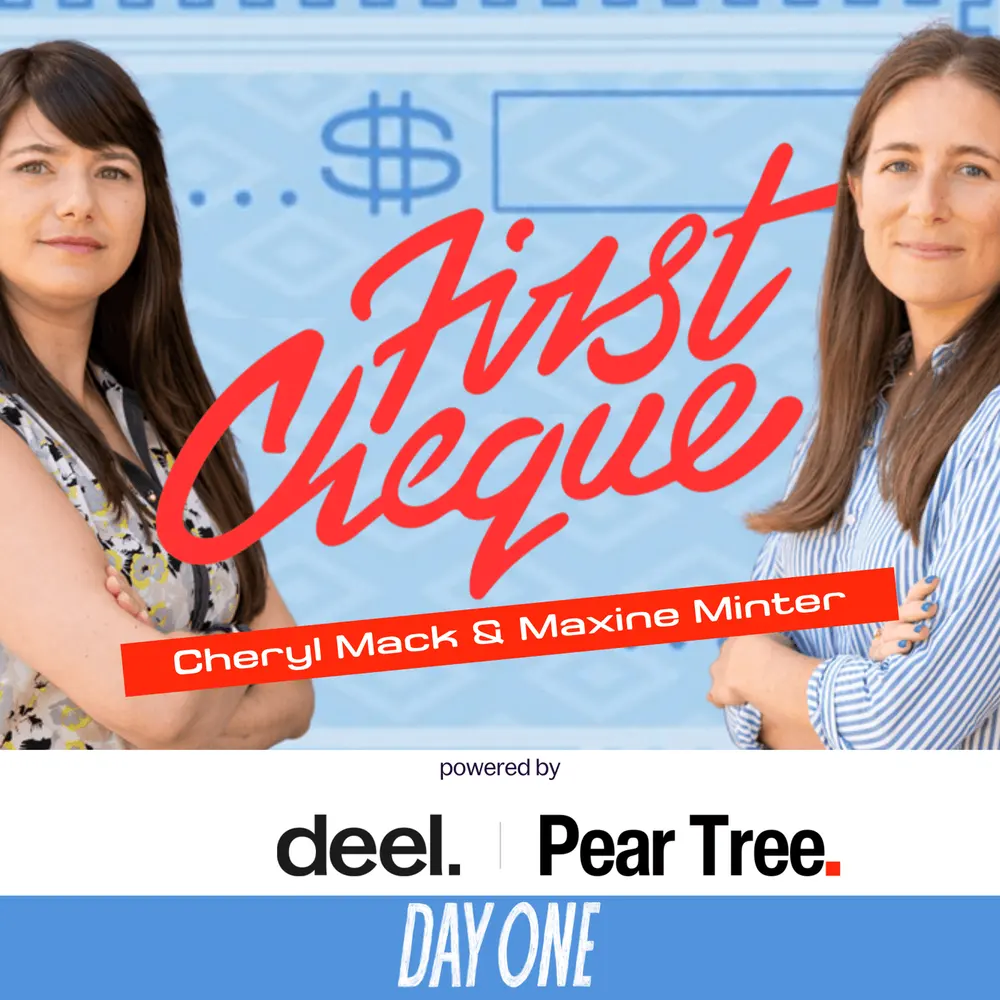 First Cheque with Cheryl Mack & Maxine Minter
Presented by Deel & Pear Tree
First Cheque with Cheryl Mack & Maxine Minter
Presented by Deel & Pear Tree 

 ▶
▶ ▶
▶ ▶
▶