Transcript Synced · select any line to jump ▾ 0:02 Speaker: Founders scale faster on Deel. Set up payroll for any country in minutes, hire anyone anywhere, get visas handled fast, and get back to building. Visit deel.com/dayone. That's D-E-E-L dot com slash day one. 0:23 Speaker: Are you building a SaaS business and looking to achieve compliance with SOC 2 and ISO 27001 or other security and privacy frameworks? 0:32 Maxine Minter: Compliance can unlock major growth and build essential customer trust, but let's face it, it's usually time-consuming and expensive. 0:37 Speaker: And like really kind of a pain. That's where Vanta comes in. Vanta automates up to 90% of customer compliance tasks, making you audit-ready fast and saving you up to 85% of the associated costs. Plus, Vanta scales with your business, offering a market-leading trust management platform to continuously monitor compliance, unify risk management, and streamline security reviews. Join 7,000 global companies, including Atlassian and Dovetail, that trust Vanta to build and prove their security in real time. 1:03 Maxine Minter: And for our listeners, Vanta is offering 10% off. 1:06 Speaker: Just go to vanta.com/first. That's vanta.com/first. 1:14 Speaker: Okay, 3, 2, 1. 1:18 Speaker: Hey, I'm Sheryl. 1:20 Speaker: I'm Maxine. 1:20 Speaker: This is First Check, part of Day One, the network dedicated to founders, operators, and investors. 1:25 Maxine Minter: If you want to be a better early-stage investor, this is the show for you. 1:28 Speaker: So TL;DR, if you don't want to suck at investing, listen up. We have Judy on the show today, and I'm really excited about the fact that we get to talk to Judy because when I met Judy, it was 3 or 4 years ago, and Maxine, Judy, and I were both in the very first cohort of the Airtree Explorers, which is a fantastic angel investor on-ramp, and we got to know each other through that program. Uh, and then in the last year or so, both Maxine and Judy invested in my company, Housing Angels. So I feel like this is just such a perfect trio coming together, and I'm really excited to talk to Judy today. What about you, Maxine? 2:13 Maxine Minter: Yeah, I can't wait. I am just like bursting at the seams with so many questions. I feel like, you know, everything I've watched Judy do has just been so impressive. It's so thoughtful. It has all of the threads kind of perfectly tied up together. And one of the topics we're gonna talk about today is her DDE list. And I feel like that is a physical manifestation of the way that her brain works. Like all of the threads tied off, it's all kind of compounding on each other. It's like a beautiful synthesis of really great strategy. I just, it blows me away every time I kind of lift the lid on any of the things that she does. So really jazzed to dive in there and learn more about kind of how she's thought about building Euphemia alongside Dom Pym, how she thinks about DD and how she thinks about kind of leading from the front. And also just like so down to earth. I had the enormous privilege of listening to her present about what Euphemia is building recently. And it's just like, oh, we're just low-key changing the world. But like, no biggie, this is more about you guys than it is about us. And it's just incredible. 3:08 Speaker: That is so totally her personality. It's very low-key, like, we're doing this amazing thing, but I'm not bragging about it. I'm just out there trying to improve the world one, like, investment at a time. Right. And I absolutely love that about her. 3:23 Maxine Minter: Yeah, yeah. Just a factual statement. I'm changing the world. Moving on to the next topic. 3:27 Judy Anderson-Firth: How embarrassing. I mean, it's awesome. I'll try to live up to those expectations for anyone listening who doesn't know me today. But thank you both so much for having me. Like, it's such a, such an honour. Like, I'm joining from the Wurundjeri people of the Kulin Nations land where I'm living at home, and just want to extend that respect to anyone who's listening wherever this content may be reaching. Like, I don't want to date this podcast too much, but like, we're coming up to a referendum, and I just think like it's a really great time to just think a little differently about the meaning of place. And, you know, a big part of Euphemia's thesis is to go big and grow home. And we're just so passionate about the Australian startup ecosystem and making it a place where anyone can be successful. And, you know, like, speaking of success, like, in our preamble, I was just saying how, like, I would say this is a room of 3 of the most ambitious women in the Australian startup ecosystem, all working tirelessly. Like, if I got the chance to do a reverse intro of each of you, it would probably be 3 times as long and 3 times as impressive for each of you. So I'm just— 4:30 Maxine Minter: Too kind. 4:31 Judy Anderson-Firth: Yeah. Grateful to be here. I love the work that you're both doing for our ecosystem. So thank you so much for having me. 4:36 Maxine Minter: Oh, wow. Well, it's very mutual. Yeah. 4:39 Speaker: We'll have to come back to that at some point. 4:41 Maxine Minter: Yes. Yeah. I do want to take this moment. I'm coming from Gadigal land today and do think it's a very important political moment in Australian history as we come up to the yes vote, or hobot, or hopefully be the yes vote. One of the topics I'm really excited to dive in with you is about this idea of leading from the front and kind of how do you think about influencing change in the ecosystems that you're in. But before we dive in there, a question we ask at the beginning of all of these conversations, because, you know, First Check is about us as investors and thinking about how we level up. What was the first thing that you ever invested in? 5:17 Judy Anderson-Firth: The first thing I ever invested in, I'll start with my personal one and then I'll talk about the first deal that Euphemia did. So my first ever personal investment was at the local hardware store in the Blue Mountains when I was about 7 years old. I went down and I bought a whole bunch of little pot plants, like little plastic pot plants. My parents would give us like $2 pocket money a week and my sister and I could spend it on whatever we want. And I was like, I'm going to go down to the hardware store and buy these little plastic pot plants. And then I'm going to go into my mom's back garden and I'm going to, you know, take out some soil and clip some, you know, little flowers and I'm going to plant them. And then I'm going to pay my sister 20 cents a pot to paint them because she was quite the talented artist at 9 years old. And then I went door knocking around the neighborhood selling these pot plants for $2 each. So I was making like a $1.70 profit. I was pretty impressed with myself on every pot. Wow. Wow. So that was my first investment to try and, you know, 10x my pocket money. 6:15 Speaker: Baller. 6:15 Judy Anderson-Firth: And I would say— 6:16 Speaker: What was the ROI on that, Judy? 6:19 Judy Anderson-Firth: I think I wasn't really like passionate about it. It probably lasted like 2 weeks. I don't remember it being a very long-running business, but I think it got me to the next couple of weeks. 6:29 Speaker: 7-year-old, 2 weeks, that's like an eternity. 6:31 Judy Anderson-Firth: Yeah, exactly. Time is relative. But Euphemia, to be honest, we did so many deals in our first year as Euphemia, so it's kind of hard to pinpoint exactly which one the first one is. I'd have to look back at our database, But I mean, Dom's been an active angel for over a decade. And so like the first investment of Euphemia is well before my time. Like, you know, it's 'cause Euphemia's portfolio includes all of those companies that Dom backed really early in his day as an entrepreneur when he was living and working in Silicon Valley, in London, and in Singapore. So I'm not quite sure which one was first of Dom's. I mean, but a really early one is Spreedly. So that's now like a US unicorn fintech company. Mm-hmm. Who Dom invested in early days. I think our first one together was in one of the funds. 7:18 Maxine Minter: Mm. 7:19 Judy Anderson-Firth: So Possible Ventures, which is an early-stage fund that focuses on like new science and new innovation and new technology, both hardware and software anywhere in the world. And also Galileo Ventures, which is a new emerging seed fund managed by Hugh and James. And we just loved the work they were doing. Hugh was one of my members at Startup Victoria in my previous role, and, you know, I had, you know, the joy of like observing him as an operator, um, from a membership point of view. And I was like, yep, Hugh is obsessed with success, um, I think he's a good one to back. Yeah, as an emerging fund manager. And one of our first directs was actually into a company called, uh, Billkite. Great investment. Yeah. Um, so Billkite, yeah, software company serving software companies. They're awesome. Yeah, becoming very quickly an Aussie startup darling. And Builtkite was actually built from one of Dom's earlier companies. Keith used to work for Dom, and then he's like, I have this idea for this like product. Can I just drop to part-time and start building that? And Dom was like, okay, you know, have to support entrepreneurial— 8:25 Speaker: As long as you invest. 8:26 Judy Anderson-Firth: Exactly. But he had a conflict. He couldn't invest from day one. Uh, but then Dom went on to build a different company, um, and he was no longer Keith's employer. And then he did invest, uh, at that point he did a, a small secondary round, uh, and then as Euphemia we did, um, uh, a significant check, uh, into their Series B that was happening last year, uh, and we ended up introducing Keith to Airtree and they went on to lead the round. Wow, awesome. 8:55 Maxine Minter: Very cool. Wow, what a selection of firsts. 8:58 Speaker: That is actually a really cool selection, you're right. 9:00 Speaker: For those of you listening at home, Euphemia is Dom Pym's family office and Judy manages that. So just context around what we're talking about. 9:10 Judy Anderson-Firth: Ah, yes. Maybe I should do— I'm going backwards. Quiz spiel. No, no, no. Yes. Euphemia is the family office for Dom Pym, who, if you haven't come across him before, he's an Aussie fintech entrepreneur and investor. He's most well known for building Up, which is Australia's most loved digital bank. He's fintech leader of the year 3 times in a row last year from 3 different Peak Buddies and C-Suite Leader of the Year at the Paws Awards. Um, he's a great guy. Uh, 20 years of hard knocks as a founder and entrepreneur, has built several businesses before Up, PIN Payments, um, and Clear, just to name a couple. And prior to teaming up with Dom, I was the CEO of Startup Victoria, which is now known as the Startup Network. That's Australia's largest startup community for entrepreneurs. It's got over 60,000 people in the network. So my job for many years has been to help founders go from, I've got a great new idea, to an exit and everything in between, whether you're bootstrap, venture-backed, you're growing slow, you're growing fast, you know, you're serving a local market, you're serving a global market. Like, that was It is the place to go if you need to get support as a founder growing your company. 10:05 Maxine Minter: So good. 10:06 Judy Anderson-Firth: So yeah, in Euphemia, we invest in fintech to try and help fix money, climate tech to try and help fix the planet, women-led startups, or really any founder from a disadvantaged background who hasn't had equal access to opportunity, and startup infrastructure, which for us is like a niche corner of the B2B SaaS market. It's like companies like Buildkite. You're a high-growth tech company whose customer is a high-growth tech company. There's more, but I won't bore you with it. That's the highlights reel. 10:31 Maxine Minter: Very cool. Honestly, that's a masterclass in how to pitch like complex concepts or complex businesses. You just nailed two there. Like totally get it. 100% know exactly what, what you guys are chasing and were chasing at the Startup Network. 10:44 Judy Anderson-Firth: Awesome. 10:44 Maxine Minter: So I do want to double-click on the family office piece. I mean, I think we're stepping into an era of the Australian ecosystem where we're starting to see lots of exited founders and people, sort of early team members that join them on that journey that now have significant capital that they took off the table along the journey or got through an exit. And my observation of the way that you and Dom have been building Euphemia is, as I mentioned at the top, just so thoughtful. There's all of these elements of it that are compounding on each other and also influencing the ecosystem to be more advantageous for the, you know, for everyone as well as the portfolio that you're working with. So I just love to kind of understand from your perspective, How did you start that journey to work out what should your strategy be? What should your positioning be? Where is the kind of dent you're looking to make in the world? And how did you determine what that would be and what your strategies would be behind it? 11:37 Judy Anderson-Firth: Yeah, I'm gonna try and sneakily bring up my Miro board, um, because every decision we've ever made, um, it lives in our Miro board. 11:46 Maxine Minter: Wow, incredible. Truly incredible. 11:48 Judy Anderson-Firth: But like a lot of strategy sessions A lot of time spent in the early months, like just thinking, asking questions, reflecting, challenging each other, like any sort of normal strategy process. Like, you know, there will be like a dozen questions in this Miro board, which it's not loading. So I'm going to have to use my memory. But, you know, things like, you know, what do we love about the family office world? You know, like this part of an industry that exists, what do we love about it? What do we think we could do differently that's better? Why would that be awesome? What's our purpose? You know, what's our timeline here? What should we do? What shouldn't we do? All of the normal things when, like, you're setting a strategy where it's really just about deciding not just what you are going to be, but more importantly, what you're not going to be. And for us, one of the main things, like, both of our experience, like Dom as a founder raising capital in his previous ventures and me sort of like acting as a representative for the founder community, something that we both experienced and observed was that typically a family office was a little bit more opaque, harder to find, sometimes by design and sometimes just because they're, you know, intergenerational beasts that like, they have more like bloat than an enterprise in terms of how much like red tape they can be. 13:04 Speaker: Right. 13:04 Judy Anderson-Firth: And privacy, you know, like for good reason, you know, for the individuals within that family. But for us, like we wanted to build something that was kind of the opposite of that, something super accessible, super transparent, like you knew where the front door was and it was open and you could walk in. And even if we didn't write a check, we'd hopefully deliver some value, you know, in some way for you. So that was sort of more around like our vision and our mission and like, you know, where we wanted to play and why, you know, Australia became really obvious. You know, it's where we live, it's where we work. There are more mature ecosystems elsewhere. We've both had friends and colleagues like leave, you know, like Maxine, you spent a lot of time in the US and, you know, Cheryl, like you're the exception where you've come to Australia from a more mature ecosystem, but— 13:48 Speaker: I came to help. 13:49 Judy Anderson-Firth: Thanks. Yeah, it's great. It's great that you're here. Like, but we need more, like, people coming to Australia to help mature the ecosystem. But Australia was an obvious choice. Um, we think our proximity to Asia has a geopolitical advantage in the decades to come. Um, we think our greatest export should be our ideas, our ingenuity, our innovation. We can lead stage, and I think Jax has mentioned this in a previous session that we've recorded with her, like we're uniquely positioned to be leaders in climate, but we're not yet. Yeah. And we should be. 14:21 Speaker: That is so true. 14:22 Judy Anderson-Firth: So Australia became obvious. And then the thesis is— the thesis was easy. It's what are we good at and what do we care about? You know, Dom is really good at money, like he's a fintech guru. So, you know, he has an unfair advantage when it comes to access to deal flow. He knows everyone. And he can do exceptional DD, like very quickly because he just knows everything in fintech. So like it becomes a no-brainer that we want to invest in fintech. Climate tech is like, there's a real sense of duty there. Like I think if you have wealth, you have a responsibility, you know, to be solving some of the biggest problems in the world with that wealth and how you do it is up to you. But for us, yeah, investing in climate tech is one way we can do that. Again, investing in diverse founders and trying to balance the ledger for women. It's a no-brainer. And I think we make a pretty decent pair being like— 15:12 Speaker: You definitely do. 15:12 Judy Anderson-Firth: Dom is like a middle-aged white guy with a beard working in tech for 20 years, you know, and then me being like a slightly younger, you know, queer woman in tech. Like, we can kind of go into any room in this industry. And so it gives us like a position of privilege to be able to, yeah, do some more strategic work to try and, try and balance the ledger. And then startup infrastructure, like, that's just such a passion play for me. Like it's, yeah, been my whole life's work. And so anything that can help our ecosystem go through those maturity loops a little bit faster. 15:46 Maxine Minter: Mm. That's super interesting. 15:48 Speaker: That's so interesting. I love the questions that you asked there. Like, what do we, what do we get at and what do we care about? Like that, you just distilled it down to two questions that are so valuable for any investor to ask themselves. I'd really love to understand a bit more about like, 'cause you invest in both funds and companies directly, and that strategy I think is super interesting because you could get just as much diversification and achieve the same goals just by investing in funds, but you obviously invest in both. Like, how do you think about that split, and can you share with us what the split is? 16:17 Judy Anderson-Firth: For sure. Uh, so if you go and speak to a, a normal wealth advisor, like an LGT Crestone or a Goldman Sachs or a KKR, um, they would tell you that we are crazy. Uh, so if you picture like a normal pie chart, you know, and you have all of your different asset classes in that pie chart, you've got like some cash, You've got some property, you've got some listed equities, you know, like shares on the various stock exchanges. You've got bonds, you know, you've got, you know, what they would call alternatives. And within alternatives, you know, private equity, venture, and maybe some direct investments. Normally that sort of alternatives little slice of the pie chart is like maximum 20%. That's if you've got a really high risk appetite. Our pie chart for alternatives is like above 80%. Like, it's pretty wild, but it's where we're comfortable. Like, you know, like, that is our risk appetite. But we also feel like that risk is somewhat curtailed, um, because of our, like, careers working in this space. Like, I think if you were someone who had come from wealth in property or in another space and you'd never— you just weren't familiar— like, there's just a slightly steeper learning curve to get into venture. And so going into funds as a starting point before going into directs. If you have a low risk appetite, makes sense. Like, that's good, diverse financial advice from, you know, like financial advisors. But for us, like, we're happy to go direct because we have an unfair advantage. We have exceptional networks of founders and we know what a great deal looks like when we see it. So why wouldn't we play to that strength? So yes, our asset allocation across the group. So for Euphemia, that pie chart is broader than venture. It is a significant portion of our strategy. So at the moment we have about 50 direct investments in the portfolio across those themes that I mentioned. We have over 20 funds that we've invested in, both here and abroad, across pre-seed up to private equity. And then we also have a property portfolio, which is sort of half commercial, half residential. We have a share portfolio, which is mostly US tech stocks, and we do have a foundation as well, which is to help people in need. So sort of think about it as venture is the biggest followed by property, followed by shares, and then the foundation kind of underpins the whole thing. 18:33 Maxine Minter: Very cool. When you did— when you were kind of building that and maybe drawing back to that Miro board, which it's open now, so if you want to know the questions, I do have them. I just am so impressed that you even like recorded each of the questions. Most people do that strategy day and don't. To what extent did your kind of strategy session influence kind of which groups that you allocate in? Because I think for a lot of folks that are listening to this podcast, they're thinking about investing or scaling their investing activities in early stage as well as other groups. And I'm wondering if you have any kind of tips or tricks to how to think about what your segment of the pie chart mix should be. Should you kind of be thinking about, yeah, like, what am I really good at? What am I— What do I love, I think, were the two kind of foundational questions you asked, or is anything else that you found really helpful as an elucidating question as you were exploring that for yourself? 19:28 Judy Anderson-Firth: Yeah, the only new question I would add is like, what do you want to learn? That's one. It doesn't play a huge role in our thesis, but it's something that I really, it really struck me when I was speaking to other family offices. So part of this, you know, part of our early strategy work was also to talk to other family office peers who we admire, who are a few steps ahead of us. And understand like what process did they go through. Like we don't need to reinvent the wheel. Like there's some stuff we can do on first principles. Like Dom and I have set a lot of strategies before. Like we know what we're doing, but it's like, you know, like there'll be other strategies out there. Like let's just do some research before we just build our own. And Adam Milgram from the Triple Family Office was someone that we reached out to, and that was one of his key things. It's like they invest not just for impact, they're really like an impact-focused family office, but like what do they want to learn? Like it's 3 siblings. Mm-hmm. You know, what kind of technologies do they find really curious and interesting. And I'd say that's the one part of our thesis. Like, if I look back on some of the exceptions to the thesis, because there are always those in a family office because we're not managing other people's money at the end of the day, it's dumb dollars. So sometimes there'll be things that just don't match the strategy no matter how much work we put into it. The things that they have in common are things that, like, I would say Dom is very curious about, like space, you know, fascinating, interesting, like so futuristic, you know, sometimes things come up. Like he just sent me something today in Slack that was like, oh, I hope you don't mind. I just accidentally invested in this Kickstarter that's like building Mars rover tires for bicycles. Like— 21:01 Speaker: Accidentally is the best word that I heard right there. 21:04 Judy Anderson-Firth: And then like, yeah, the other one is just like, it's just really awesome. Like either the person or the project is just so good, you know, we couldn't really say no. Like, an example of that would have been JustFund, which actually was a Startmate cohort company. And so we were indirectly invested in them anyway as Startmate investors, but we'd end up doing a direct check as well because JustFund provide finance for people who are going through family court. And so typically it's like a divorce scenario, and typically it's representation for the person who doesn't have an asset base to pay for lawyers and all the like solicitor fees that come with going through court systems. And then that loan is then repaid from the settlement. So like, how awesome is that? Like, that's typically women who are in a disadvantaged position. So yeah. 21:56 Maxine Minter: Yeah. So good. 21:57 Speaker: Yeah, for sure. I think that question's so important because for angels who are just starting, learning is a huge piece. Like, You have to learn so much when you get started in angel investing. Why not pick things to learn about that you're actually really interested in? Like, that just makes sense. So I really love that you brought that question in, even if it's not as important for you. I think that's really important for angels, and I've gotten to learn so much just by— 22:19 Speaker: we, Maxine and I, actually call them the, the first checks you write are learning checks. 22:23 Maxine Minter: Yeah, absolutely. Like, the first year to year and a half of angel investing, the advice I often give is to invest through something like Aussie Angels, invest through syndicates, or invest the smallest possible check you can while you're learning so that you can kind of get those reps out and build that touchpoint effectively as you're kind of learning, okay, this is how I make that decision. This is how I get excited. These are the kinds of founders I really want to back. Especially while you are out in market, kind of public as an angel investor, you start to see a lot more decks obviously and meet a lot more founders than you can invest in. And so it's just the best, best learning journey to go on. And I think really valuable as a way to kind of learn how to be a great investor as well. I do, one of the things I've observed you, Euphemia, and also you do really, really well is kind of compound the strategy and compound the impact for the founders that you work for. So little things like, or actually not that little things, like thinking about how you can connect people in your portfolio to who can like sell to each other or lift each other up, kind of find those strategic synergies across your portfolio. There's obviously Dom, right? You've done a wonderful job of building strategic synergies with the things that he is excellent at and the unique access that he gets in the ecosystem. I'd be interested to know kind of how you thought about that kind of cross-synergy piece, almost like the connective tissue across your entire synergy, as opposed to just the kind of linear strategy. 23:48 Judy Anderson-Firth: Yeah. 23:49 Maxine Minter: How did you identify those, and how do you think about building them? 23:52 Judy Anderson-Firth: This is a topic I could talk about for like months. Yeah, so I would talk about this as like the network effect. And I would say we are like a network-powered family office as an investor. There's a lot of overlap and it's also, it's definitely in my wheelhouse of what I know how to do really well in terms of building communities, right? Like, you know, I was part of building Australia's largest startup community and so— 24:14 Maxine Minter: Mm-hmm. 24:15 Judy Anderson-Firth: So much of that is just about knowing where the interconnectedness is across that ecosystem and then firing off people to the right information or the right person or the right answer at the right time. So we're definitely looking at bringing a lot of that into what we would just call like portfolio success. I would say a lot of our plans aren't yet live, but we have a few cool things that are in the works. So for example, like the position that we're in as a family office is quite unique in terms of the amount, just the sheer volume of investor updates that we get. 24:47 Maxine Minter: Mm-hmm. 24:47 Judy Anderson-Firth: So we get investor updates from all of the funds, from all of the direct investments.. And then not just from the funds, but then we're also learning about each of the companies within the fund. So like the indirect portfolio is like hundreds, um, if not thousands of like companies. And so from a data point of view, we've actually got a really interesting insight into like what's the average TVPI, like total value paid in, of all of the funds from like year 1 to their current vintage, and how do different funds compare based on their focus or their stage or the team or how big the fund is, like We can just pull really interesting things from that data. 25:25 Speaker: I would love to learn more about that data in particular, if you're willing to share. 25:29 Judy Anderson-Firth: Yeah, well, I think— 25:30 Maxine Minter: Look, Cheryl's eyes immediately sparkled. 25:32 Judy Anderson-Firth: Yeah, I do think there's a way that we can de-identify some of that information and start sharing it because, yeah, and the project that we're actually working on right now is how do we use a lot of the AI tools that are being developed now around knowledge models, LLM tools, etc., to then basically scan all of that information, whether it's an email or a document or a link to, you know, a RegistryDirect portal, whatever it is, like how do we scan that information for the things that really matter, pull that into, you know, a working memory system, and then from that working memory system, query it or have it send us things that we've told it are interesting to us. You know, it's, it just takes the admin out of it. And the good news is like we're not the only people in the world trying to solve this. Like everyone in the world wants what we're calling a euphemia brain. Everyone wants one for their own data. Yeah, we've actually invested in a company that's building this as well. But so once that's ready, we're building just an MVP version, which is just a shitty Airtable. But when it's ready— 26:34 Speaker: Perfect. We'll plug the model into Aussie Angels because we've got tons of data as well. 26:38 Judy Anderson-Firth: We will share it for sure. But in terms of connecting founders, there's so much we could be doing. I think the balance is we don't want to recreate what already exists, you know, like the peer-to-peer models, etc. There's so many of them. And if we were going to build one for all of our founders in the portfolio, like, it would just— 26:57 Speaker: Hmm. 26:57 Judy Anderson-Firth: It would just have to be significantly better or different than everything that's out there. Like, if you're a founder, you can sign up for, you know, a membership with the Startup Network and connect with founders at a similar stage to you, you know, and talk shop on a monthly basis and get access to education, mentors, advisors, etc. So it would have to, you know, you can do that in any sub-community like Airtree has one, Blackbird has one, Startmate has one, Innovation Bay has one. So like everyone has one. So if we were going to build something at Euphemia, it would have to be better than all of those. And I think I'm still not sure whether we want to just direct founders to the best of what exists and help uplift everything that already exists rather than recreate our own. I'm not— Yeah. Decided yet. 27:40 Speaker: I think the cool thing about what you do though is around like compounding the value across the portfolio. So when you think about an investment and think about the value that you can add, it's not just like what can you and Dom add, it's about, well, how can we de-risk this investment by connecting something within the portfolio? And, and as a portfolio company, I feel like I've been exposed to that, but I would really love to understand Like, how, how do you think about that when you're looking at a new investment? How do you bring in what value can compound in order to de-risk that potential new one? 28:12 Judy Anderson-Firth: Yeah, I think just knowing who's in our Rolodex as well. Like, I think because, you know, Dom and I have both built businesses before, like, we know who we go to whenever there's a problem that we can't solve. And so, like, we have a go-to list of, like, if you're doing M&A, here are the, like, 4 different people that, like, you have to work with, you know. You can pick which one, any of them are good, like, whatever your preference is, but just talk to these 4 people. You know, same for talent, right? Like, okay, you're going down the talent pathway. Here's some self-service stuff if you just need talent pools and resources. But if you actually want a recruiter, here are the, like, the best 3 that we recommend. Like, so we've always got those go-tos in our back pocket. But in, like, one thing that is important is we never want to be the type of investor, and I think this is important for angels as well, because you see a lot of it go really badly. And sometimes it can be awesome, but like where you are doing just more like ad hoc mentoring and advice, And I think you do have to be really careful, even though Dom and I are like experienced, like, you know, people, we're not an expert at everything. Like, I'm more of a bit of a, like, generalist. I know a little about a lot and Dom knows a lot about a lot. 29:18 Speaker: Enough to be dangerous. 29:20 Judy Anderson-Firth: Yeah, yeah, definitely. But we are very conscious of when the answer comes from us versus when the answer comes from someone else who is actually the expert in that field. And not just that, like, we never force our presence on any founder. It's very much opt-in. So like when we've just invested with a founder, we sort of have like an informal kind of kickoff where we just talk about like what kind of cadence of support do they want from us? Like what are their expectations? How can we deliver on that? Sort of just setting some like unofficial rules, you know, like, you know, I remember Cheryl and me, you know, sort of first did the investments like, cool, do you want a board? Do you not want a board? Like, do you want like a regular catch-up? Do you not want a regular catch-up? Like it's very much decided by the founder. Like, what do you want from us? Like, we can do anything on the spectrum from we'll sit on the board as an advisor all the way to just text us when there's something wrong, you know. And I would say most founders sit somewhere in the middle of like either a quarterly or a bi-monthly regular catch-up in the calendar with either Dom or myself. But we have had the midnight text from time to time. 30:21 Speaker: Yeah, I think I text you all the time. 30:25 Judy Anderson-Firth: It's good. 30:26 Speaker: I'm definitely in that bucket. 30:27 Maxine Minter: Yeah. 30:29 Speaker: Are you building a SaaS business and looking to achieve compliance with SOC 2 and ISO 27001 or other security and privacy frameworks? 30:37 Maxine Minter: Compliance can unlock major growth and build essential customer trust, but let's face it, it's usually time-consuming and expensive. 30:42 Speaker: And like really kind of a pain. That's where Vanta comes in. Vanta automates up to 90% of customer compliance tasks, making you audit-ready fast and saving you up to 85% of the associated costs. Plus, Vanta scales with your business. Offering a market-leading trust management platform to continuously monitor compliance, unify risk management, and streamline security reviews. Join 7,000 global companies, including Atlassian and Dovetail, that trust Vanta to build and improve their security in real time. 31:08 Maxine Minter: And for our listeners, Vanta is offering 10% off. Just go to vanta.com/first. 31:14 Speaker: That's vanta.com/first. 31:20 Maxine Minter: I think it is really valuable as an investor who's not investing other people's money. So like as an angel investor or as a family office, you know, recognizing that there are these kind of ranges of support you can provide and being, you know, aware of the fact that of the informational asymmetry between you and the founder and being careful not to kind of be too heavy-handed as you can lean in on support. 31:44 Judy Anderson-Firth: Totally. 31:44 Maxine Minter: I see a lot of people navigating that line unsuccessfully. And recognizing, you know, having some empathy as a founder, it's really hard to say no when your angel investor is like, hey, can I intro you to this person? Or can I do this thing for you? Or like, you know, you kind of have to feel there's a moral obligation or sometimes perceived to be a moral obligation to say yes. And recognizing that that like power dynamic might not actually serve the founder. So I love that as a methodology, just like an open catch-up saying like, how would you like me to support or ask to support depending on how you're investing? Mm-hmm. 32:15 Judy Anderson-Firth: Yeah. 32:15 Maxine Minter: Here's a menu. Feel free to point here, here, and here, and then we will deliver on those things. 32:21 Judy Anderson-Firth: Yes. And also just like, it's not set and forget. 32:23 Maxine Minter: For sure. 32:24 Judy Anderson-Firth: One of the founders in our portfolio, it's like we had a quarterly catch-up in the diary and then, you know, like that worked, I think, for the first year. And then like their business just like took a total right turn in the right direction. And they're so crazy busy with their US expansion. That it's just like not even feasible, like, to be having a quarterly, like, catch-up. So, but rather than— you can just tell, or you always know, like, because you have to have that in the back of your head, that no matter what, as an investor, there's always an element of, like, impression managing going on, whether it's conscious or unconscious. And so, like, to be the one to always offer the off-ramp, you know, like, so every time, every time, like, even if it's just casual, like, hey, just checking in, does this cadence still work for you? You know, do you want to change it? Do we need to can it? Is it still useful? Like, just like always checking in. And so we ended up canceling those ones. But then we just catch up like ad hoc when it's needed. 33:17 Maxine Minter: That's so cool. So I'd like to take a little pivot here and talk a little bit more about your DD checklist and how you think about saying yes to a founder. Another kind of really thoughtful place I've heard a lot about from folks of the both delivery of your checklist, but what it looks like on the had a backend. 33:36 Judy Anderson-Firth: And Cheryl's laughing because she's seen it. 33:39 Speaker: I know. And I'm like, I'm gonna add some more color there because I had the pleasure of supporting Judy in one of their investments that they ran, and she shared their DD checklist with me. And at first I was like, holy crap, wow. Like, there's some really great insights here. 33:55 Speaker: And then I was like, wait, the structure of this is just absolutely psycho. 34:01 Speaker: Like, it just like, such good content, but it just gave me like this, like little insight into the way that Judy's brain works. And I was just so glad. And then the best part about it was I was like, your checklist is amazing. Structure is just baffling. And she's like, well, I didn't think anybody else would see it. I made it for me. It's only my brain that had to read it. And then proceeded to share it with all of the syndicate members. 34:23 Maxine Minter: And I was like, this is why I love you. Yeah. 34:26 Judy Anderson-Firth: Yeah. I mean, people can figure it out. It's not that complicated, but basically. Also, DD should just be relative to, you know, the stage of deal, right? Like, that's obvious, right? Like, you know, there's only so much data you can assess, you know, when you're at a pre-seed or a seed stage deal. And so all you're really assessing is like, have they got the sort of basics covered that this is, you know, they know what they're doing, they're responsible, there's good governance, like there's the right things there in terms of setting themselves up for success. Things have been set up, set up for the best chance if everything goes well. And if everything goes badly, you know, they're protected, investors are protected. So, you kind of just at the early stages, you're really just looking for the guardrails there, right? And then from there, it's really just your belief in the founder and the founding team in their ability to execute. And then also you have to believe that the market or the opportunity or the timing is like they've got tailwinds rather than headwinds. So— 35:21 Speaker: Mm-hmm. 35:21 Judy Anderson-Firth: Like at a high level, that's really all we're looking for. The structure is good. The founder and the people are good, the timing of the market is good. You know, like you just kind of want to set them up for success in the early— like there's nothing else to do. You can't really look at historical spreadsheets of before. You can't— you don't want to— you don't want to be like interviewing like their customers, you know, because they're early adopters and you might risk them like lose— like, you know what, you just want to overkill and overengineer and also over-resource. Like we are a small team, like it's just myself, Dom, and a bunch of outsourced lawyers and advisors and accountants. So we don't have time to do a huge amount of DD on early stage deals. When they're later stage deals, it's a different thing. Like, you know, if you're doing sort of Series A and above, there's a lot of data to look through. You know, there's information you can pour through, you can run different tests and blah, blah, blah. But a quick summary of what's in it. I do have it open. So yeah, look at the opportunity. So market analysis, competitor analysis, you know, their forecast financial model, customer pipeline, any comparable information on capital raises, including revenue multiples from similar companies. And of course, like the pitch deck, the IM, you know, what's their cost of customer acquisition, lifetime value if they've got that data, anything on churn, etc. We look at corporate records, so constitution, articles of incorporation, shareholders agreement, subscription agreements, you know, the cap table, the corporate structure, if there's any like ASIC certificates, you know, if there's board meetings, like the minutes of them, just like sort of that corporate section under the team category, like org chart, who's who, who's doing what, where the responsibilities lie, and is their equity position reflective of that appropriately? You know, roles and responsibilities of folks, employment agreements, IP assignments, you know, does the company own all the things that it needs to own? Are the employment agreements correct? Like, is everything sort of hunky-dory there, making sure it's all legal and incentives are set up correctly? And then any like proposed increases on line items under people, like for the other side of the cap raise and just checking that's fine. And also, details of any ESOP, making sure that those option schemes are in line, like, with best practice. On the financials, like, financial statements for the company, tax filings if there are some depending on how early they are, details of, like, R&D credits or financing, any loans to the organization. I could go on, like, there's a commercial section, a technical section, you know, looking at product infrastructure, IP, insurance, legal. I won't go through the whole thing. But if you're curious, to learn more. So good. And you want to see more, you can just reach me on socials. I'll be happy to share. 37:53 Maxine Minter: I, I mean, even just that, right? For anyone that's kind of stepping into the investing world for the first time or where their investing needs, you know, some polish on the way that they're doing DD, I hope they were taking notes. Then you can just keep replaying that section till you get the list of all of the, the open questions to make sure you tick off. Super valuable. Yeah. So what kind of investments at the moment are you getting super excited about using this DD checklist? What kind of stuff that comes across your table that just almost can't help yourself. 38:21 Judy Anderson-Firth: Yes, I would be remiss before I move on from the DD checklist if I didn't give a shout out to Giant Leap. So again, like building on the shoulders of giants, like when it came time to like create a DD checklist, I was like, cool, we can have our own variables, you know, and they're in here, like things that are unique to Euphemia that like only we would really care about. So for example, like one of those variables, it's a softer variable, but like when we're investing in people, it's not explicit, but with the way that we're running the family office and the way that we've chosen to do it, we're hoping to inspire the next generation of family offices that are created out of tech wealth to follow, you know, in our footsteps and to be transparent and to invest back into the Australian startup ecosystem. 39:04 Maxine Minter: Hmm. 39:04 Judy Anderson-Firth: So that's important. So when we look at the founders and who's in the teams, like, What do we think the likelihood is that they're someone who likes to give back? Like when they make it rich and they sell their company and they can go buy an island or they can never work again in their lives. Like, what are the chances that they're going to invest some of that money back into the Australian startup ecosystem? Like, that's something that's kind of unique for, you know, Euphemia. 39:33 Speaker: Hmm. 39:34 Judy Anderson-Firth: But so much of this DD checklist actually comes from Giant Leaps. DD Checklist, which it's an investment fund of ours that we've supported. And Rachel Yang, who's, you know, like a friend, and she was the former chair at Startup Victoria during my time there. She's one of, again, one of those friendly phone calls you make to appear, be like, hey, I'm building our checklist, what's yours look like? You know, what's in there? And just being able to sort of just see what other people are doing, take the bits that resonate for you and leave behind what doesn't. 40:00 Maxine Minter: So cool. Yeah, really cool. 40:02 Speaker: I love that. So thank you, Giant Leap, for supporting. 40:04 Maxine Minter: Yep. 40:05 Speaker: Judy to get here to then share it all with us. 40:07 Maxine Minter: Exactly. I also, I just think it's where progress is made for humans, right? It's like standing on the shoulders of the people that have done it before. And like, that goes two ways. I love the fact that you actually actively soft filter, but still filter for the probability that someone is going to give back into the Australian ecosystem. Because I think that both peer-level acceleration and then intergenerational acceleration is so valuable if we are going to increase the pace of growth, innovation, the impact that we can create as an ecosystem. If everyone is doing that, it just keeps speeding up and speeding up in a really super exciting way. 40:43 Judy Anderson-Firth: And that was an easy one for Aussie Angels. It was like built into your business model. 40:47 Speaker: So it was. I was just thinking that. I was like, we must have got like a 10 out of 10 score on that one. 40:53 Maxine Minter: Yeah. 40:54 Speaker: Actually though, I've decided I think I like the island option. 40:57 Judy Anderson-Firth: Yes. You could do both. 41:00 Speaker: Okay. All right. Fair enough. I will buy an island for somebody else. That's giving back. Brilliant. 41:04 Judy Anderson-Firth: You know, technically Australia is an island. I'm just saying. 41:07 Maxine Minter: Right, right. 41:07 Speaker: I could buy all of Australia and just fix all of the ecosystem challenges in one go. 41:12 Judy Anderson-Firth: Oh my gosh. 41:14 Speaker: Speaking of ecosystem stuff, Judy, you spent quite a while at Startup Vic, which is now the Startup Network. And actually you were there when we met. Yeah, would love to understand a bit more about like your time there. What were some of the trends that you saw and like where do you think we are going in the future? 41:30 Judy Anderson-Firth: Yeah, what an amazing chapter of my career. Like I would say that, yeah, my time at Startup Vic changed my life completely. And it was just fricking amazing to be a part of like a community where everyone is just trying to help everyone like succeed. 41:46 Maxine Minter: Mm-hmm. 41:47 Judy Anderson-Firth: An interesting trend I saw was the change in the gender ratio of founders. So when I first joined the organization in 2018, we would track metrics on like attendance at events. And member metrics, it was about 1 in 25 of our founders were women in 2018. And when I wrapped at the end of 2021, it was 1 in 5. Wow. Huge congrats. Well, it has nothing to do with me. It's just like a reflection of the ecosystem. 42:16 Speaker: I'm sure it had something to do with you, Judy. 42:18 Judy Anderson-Firth: No, we just had so many awesome, like, new people entering the market, like particularly during COVID Like we had so many people at home who had either been made redundant, dropped to part-time, and like the startup community has never been louder, has never been more accessible, has never been this cool, you know, for like the next gen to come into. And it's a viable career path. So, we just had so many new people rocking up and willing to take a risk. It's like, what have I got to lose? The world's burning. Why don't I just like try that idea? 42:49 Speaker: You know? It quite literally was at the time. 42:51 Judy Anderson-Firth: Yeah. So, we saw a huge spike in new startups coming into the ecosystem. That was awesome. Another big spike was just the general maturity of the ecosystem. So during my tenure, Victoria was named as one of the fastest growing startup ecosystems in the world, top 10 ecosystems in the world. So we're growing really quickly compared to other cities and ecosystems of our size. And I would say that's also reflective across the country. Another big trend was just how many accelerators now exist. Mm-hmm. 43:24 Speaker: Yeah. 43:25 Judy Anderson-Firth: Like it has never been easier to start a company. Like, and not just from accelerators, I'm talking from like no and low-code tools. Like, you know, like 10 years ago, if you wanted to start a tech company, you either need to have some money to hire a developer or you need to know how to write code. Whereas now, like the barrier to entry is significantly lower. So, that's another awesome trend. Oh, I could go on. I don't wanna bore everyone with all the trends, but there's lots. 43:50 Maxine Minter: No, this is not boring at all. I would be interested to kind of draw those trend lines, right? The things that you watched happening at now the Startup Network and kind of project out to where do you think those trends intersect? Kind of where does that take us as an ecosystem in Australia? If you feel like you have some views on where we are going next, let's say in the next kind of 2, 4, 5, 10 years. 44:16 Judy Anderson-Firth: Yeah, I think from a venture point of view, the landscape's getting more competitive. I feel like every other month I talk to another American or Singaporean or like Indian or someone from— or European, like someone from another part of the world that is from a much more mature ecosystem where it is much more saturated. Capital is cheap, it's flowing freely, and there's a great source of deal flow as well. But there's now almost like more, you know, if you just think about it like a scale, there's more coins on one side of the scale than there are founders and companies to invest in that look like sort of like venture return. Yeah. Turnstile companies. And so, these funds are now looking elsewhere in the world for like, where else can we find great talent? And Australia so far has been a relatively underestimated market, but we have some of the best technical talent in the world. Like, if we just take Jack Dorsey as an example, you know, like founded Twitter, founded Square. When it came time to set up Square's APAC office, scoured the, scoured the region, where can we find the best technical talent? And it was in Melbourne., and he chose to set up the office in Melbourne. And a lot of the things that are built in terms of fintech infrastructure behind Square, like, these are tools that serve the rest of the world that aren't even available in Australia, and they're built in Melbourne with Melbourne technical talent. So— 45:32 Maxine Minter: Wow, I had no idea. Yeah. 45:34 Judy Anderson-Firth: And that's just one example. Like, there are so many others of where funds and companies who are looking to expand— yeah, like, they're looking at Australia, and it's been relatively underserved. And they look at the maturity of our market, and they look at the size of our funds, and they go, how we can, like, nail it. Like, it'll be so Easy to just come in. And so what that's going to do, like I'm talking like the A-16s of the world, A-16s, like, etc., you know, your Tigers, they're all coming here to scout talent. And what that's going to do for our local ecosystem is breed more competition. So we're going to see all of that. Like, we're going to have to see check sizes get bigger. We're going to have to see more institutional capital come out of the super funds and into the funds. We're going to have to see more high net worths directing their capital into venture and changing their pie charts. We're going to have to see more angels investing in seed and pre-seed deals. Like, to remain competitive on the global stage and not see those companies be forced to flip up and go into other regions and remain Australian companies, like, we're going to have to see that competition increase. And also in terms of the portfolio success that's provided, all the value adds that should be coming with getting a check, you know, um, that has to improve as well over time with competition. So— So it's a good thing. 46:46 Maxine Minter: Yeah, that's very exciting. 46:47 Speaker: That's a very good thing. 46:48 Speaker: I also see that as well. 46:50 Maxine Minter: Oh, absolutely. 100%. Like I think with the competition coming, I think it also, the other kind of element I'd add there, I think it adds to the innovation of the kinds of funding models and the kinds of value add that I think we'll see in the ecosystem kind of with that competition, which is super exciting. I think kind of re-baselining the entire ecosystem on, it's all about serving the founders, right? It's all about how can we best serve them. As, you know, our customers as investors. And the more competition drives better value to the customer. So I'm super excited for that day. Totally. 47:21 Judy Anderson-Firth: We're so, so lucky to be a part of these companies' journey. Like, we play such a— the power dynamics are weird with investing, honestly, because like there's this weird power that's held in writing a check, right? But like, like we're not the ones that are changing the world. 47:37 Speaker: No. 47:38 Judy Anderson-Firth: Like the founders are like the it's the entrepreneurs and the people working there. 47:42 Speaker: And we're not the ones really generating the big return. The founders generate the big return for us. 47:47 Maxine Minter: Right, absolutely. Yeah, yeah. 47:48 Judy Anderson-Firth: Like, we're just lucky to be along for the ride. And I think that's an important message to keep remembering. Like, without the founders, there's, there's no business here. 47:56 Maxine Minter: 100%. 47:57 Speaker: There's no ROI. 47:58 Maxine Minter: Yeah, no ROI. Yeah, I think it's— and I think that as an ecosystem globally, we've kind of collectively, selectively kind of forgotten that for the last year and a half. And it's been really sad to see how quickly we let that kind of vision fall away a little bit and saw some behavior that didn't reflect those dynamics. But I must say, I'm seeing lots of green shoots coming through the ecosystem, kind of a return and a reminder that that is actually, you know, what matters. That is our jobs. We work for the companies that we invest in. We are a way to give them leverage and support, if at all, like if there's anything we can do. That's our job. And so I'm excited we head back in that direction. 48:39 Judy Anderson-Firth: Yeah. 48:40 Speaker: Yeah. 100%. So as we start to wrap up, Judy, one of the questions that we ask every guest that comes on our show is what is, what is your biggest big kahonas moment? So something that you did was outsized in a brave way. 48:55 Judy Anderson-Firth: I think stepping into this role, honestly, like stepping into the investment landscape in, especially in the, in the family office world. Like I have no right to be the group CEO of a $70 million investment global portfolio. Like I am not an investment banker, I'm not an accountant. Like I'm not, like I am a startup founder, community diehard. Like I know how to run a company and I know how to grow ecosystems and I know how to work with, like I know this space and the sector inside and out, but running an investment portfolio is not something. Yeah. You know, that I have the credentials to be doing. I'm so grateful to be working with someone like Dom, who that's not the thing that matters when it comes to building Euphemia. Like, we can get wealth advice, we can— we have great accountants and like, you know, we can make sure that they give us all of the right things to make sure we're protecting the assets and the people that matter the most. But that was pretty much— Yeah, that was a big cojones moment because I really had to like back myself, you know, and like, I am learning-oriented and I am like growth-oriented. And so I was like, I can— like, it was almost like, how? I don't deserve this opportunity is how it felt. 50:09 Speaker: Mm. 50:09 Judy Anderson-Firth: You know, it's like, holy shit, like this is an incredible learning opportunity, an incredible impact opportunity. Like Dom and I were so aligned on like the mission, the vision, the values, what we could do, but then sort of like backing yourself to be good enough to do a good job. That's probably the scary part because a huge part of our portfolio, like the direct investment portfolio, venture's a little bit de-risked, but the huge part of the venture portfolio, like I won't actually know, and I've spoken to Jax about this before at a trip, I won't actually know if I'm any good for a long time. 50:43 Maxine Minter: Yeah. 50:43 Judy Anderson-Firth: And that's pretty scary, but that's okay. You know, that's just part of the job. 50:48 Maxine Minter: Yeah. I'm so glad you took the job. You're absolutely nailing it, you know, and taking a really, fresh approach, approach that is not common in the ecosystem and just doing it so well. So I think that kind of big kahunas moment, taking that risk and kind of being, leaning into the way that you are different and now building that into a strategic strength, it's just poetry in motion. I'm loving watching it from the sidelines. 51:12 Judy Anderson-Firth: Ah, thank you. I mean, there's lots of little micro kahunas moments like, you know, with the job, right? Like there are lots of hard things, you know, about like, I think a lot of this this conversation has been pretty like positively focused and aspirationally focused, but like there are some really hard parts to this job. Like when— 51:28 Speaker: Prove. 51:28 Judy Anderson-Firth: You know, when a founder is calling you in tears because like they can't make pay run and they have to decide which staff to fire and like they don't want to fire any of it. Like that's a really hard conversation to have when, you know, you're talking with founders about like the fact that they have to, you know, put their company into liquidation and like, you know, like that's what has to be done. And like, there's no light at the end of the tunnel here. This is like, now we're having a conversation about the art of a graceful dismount and protecting your fiduciary responsibility. Like, those are difficult conversations to have and they do require grit and courage. And, you know, like, again, you're still in a service mindset. You're in service of that founder doing the right thing by themselves, doing the right thing by their employees, doing the right thing by their investors, doing the right thing by everyone involved. Particularly in a regulated environment because we are doing a lot of fintech. It's a heavily regulated environment. And so you have to know your shit and that can be pretty, pretty tough. But again, like just lucky to work with so many great founders who like on the hardest of days, they just wake up and they're like, okay, game time. And they just get it done. And it's incredibly impressive. And even when companies fail, like the founders are still people that we would happily back again to go on their next journey with them because that— and I think that's an important message for this time in the market because I'm seeing a lot of companies dying quietly. And I just wonder how much of that is driven by the fact that they want to, you know, save face and, you know, no one wants to fail and all that kind of stuff. But like for me, a failed founder is an experienced founder.. And that's someone that, that like in terms of DD checklist, like have they built companies before? Like I don't care if they've had exits before, like if they've had exits before, they probably don't need us, you know? So I just, yeah, if there are, if there's a chance that any founders are listening, like yeah, experience and failing, you know, sort of hand in hand, if you can make sure that you navigate it on the way down with grace. 53:35 Maxine Minter: 100%, I would plus one or maybe plus 100 to that statement. 53:39 Speaker: Plus 1,000. 53:40 Maxine Minter: Like I think Australia, Yeah, Australia is not doing a good job at the moment of celebrating and facilitating founders to— I love that phrasing. The graceful— 53:50 Speaker: Gracefully exit. 53:51 Maxine Minter: Yeah, the graceful dismount is so good. It's so important because a big part of this, of success in this category is the ability to find it fast or fail fast and then try again and move on to the next idea. And so if we make that easier, more respectful, more allowed, and even better kind of celebrate the benefits of that process, I think we'll move much faster as an ecosystem. So plus 1,000 to that point. 54:18 Judy Anderson-Firth: Yeah, I've had thoughts of like the anti-accelerator. Like what if we built an accelerator that like the whole goal was to try and kill the company as fast as you could? Not in bad ways, but like, you know, like success. 54:30 Speaker: No calls. 54:31 Judy Anderson-Firth: Yeah, yeah. Success was measured by like, you know, we're trying to get to these targets, but the sooner we realize that those targets aren't achievable, you know, we've tried every pivot, you're actually rewarded with another check to do your next idea. And if that is the next idea, I wonder what that might look like. 54:45 Speaker: That's so cool. We could, we could model it out at some point for sure. I love it. 54:49 Maxine Minter: Yeah. Well, thank you so much for this chat. I, true to form, I feel like I've learned so much and I've just loved catching up and hearing about how you think about this ecosystem, how to build, how to show up as a leader. It's been awesome. 55:03 Judy Anderson-Firth: Yeah. Can I sneak in one quick plug for our Syndicate? 55:07 Maxine Minter: Oh, of course. Yeah. Plug. 55:10 Judy Anderson-Firth: So, you know, in the journey, like, of Euphemia over the last, like, year and a half or so, we've had a lot of people, like, other investors, other family offices, other fund managers, angels, etc., sort of ask us along the way, oh, what deal are you doing next? Oh, well, what have you invested in the last few months? What's in your pipeline? Like, how do we get involved? Can we co-invest alongside you? What does that look like? And last year we were running so fast, like, we shipped over $20 million, you know, in our first 12 months that we were spinning so quickly that we didn't even have time to pop up for air and like invite other people to come along for the journey and to share some of those deals. And so we've now taken a breath, slowed down a little bit, and we've now built the Euphemia Syndicate. So if you like our thesis, you know, fintech, climate tech, women-led startups, diverse founders, and startup infrastructure, you can join our syndicate on the Aussie Angels platform, which of course Cheryl runs, and we'll share our deal flow. Not all of the deals, because some deals might just be Dom getting really excited about about space bikes. But the deals that we think are really awesome, that match our thesis, that we're happy to sort of put our name to as a lead, if you will, those will go out through the syndicate. It's opt-in, you don't have to participate once you sign up, but that will give you access to the deal flow. We had our first deal go through the platform last month, which was Future Super Series C round. So we let a small allocation into that. And the types of deals like we're trying to bring there are the ones that you wouldn't typically have access to otherwise, like because we're in a relatively privileged position and as a family office, we kind of get some unique deal flow, like some interesting secondaries or, you know, like a round where the minimum check size is not really accessible for an angel investor. And so, we can bring those deals lower than minimum check size and share the love. So, please check that out. I'm sure there'll be a link somewhere on the internet. 56:54 Speaker: Absolutely. 56:55 Maxine Minter: Yeah, we will include a link in the show notes and maybe to your DD checklist if you're willing to share it publicly. 57:00 Judy Anderson-Firth: Yeah, I'll create a better structured version. 57:05 Maxine Minter: Wonderful. Thank you so much. And check out the Euphemia Syndicate. I think a really differentiated opportunity to get some access to stuff that most people in the ecosystem don't get to see. So yeah, super exciting. 57:20 Speaker: Plus 1000 on that. 57:22 Judy Anderson-Firth: So good. Thank you for having me. And like, obviously, like, I know this is getting too long now and you may You can cut this out if you want, but I just think like the world needs to, I don't know how many of your guests will like reverse, you know, spruik like the work that you're both doing, but it is absolutely incredible. Like, you know, Sheryl, you're building like an incredible platform, like a piece of financial infrastructure for the startup ecosystem to unlock capital that would otherwise not be going into deals, to educate aspiring angel investors to get into the startup ecosystem, to help founders fill their rounds and get some really interesting people and a diverse set of investors on their cap table. You know, like, that is just freaking awesome. And I'm so excited about the prospect in the future of what Aussie Angels is going to be, you know. And Maxine, like, with Covince is like so awesome, like truly leading the way in the pre-seed market in Australia. Just a very thoughtful fund. The caliber is very high in terms of like your relentless focus on it must be the best, like your pursuit of excellence is something that's really impressive. If you're interested in early-stage and pre-seed deals, like, yeah, Maxine's fund is the place to go at CoVentures. So thank you so much for having me. 58:29 Speaker: Thank you, Judy. 58:30 Maxine Minter: Thank you so much for coming on.

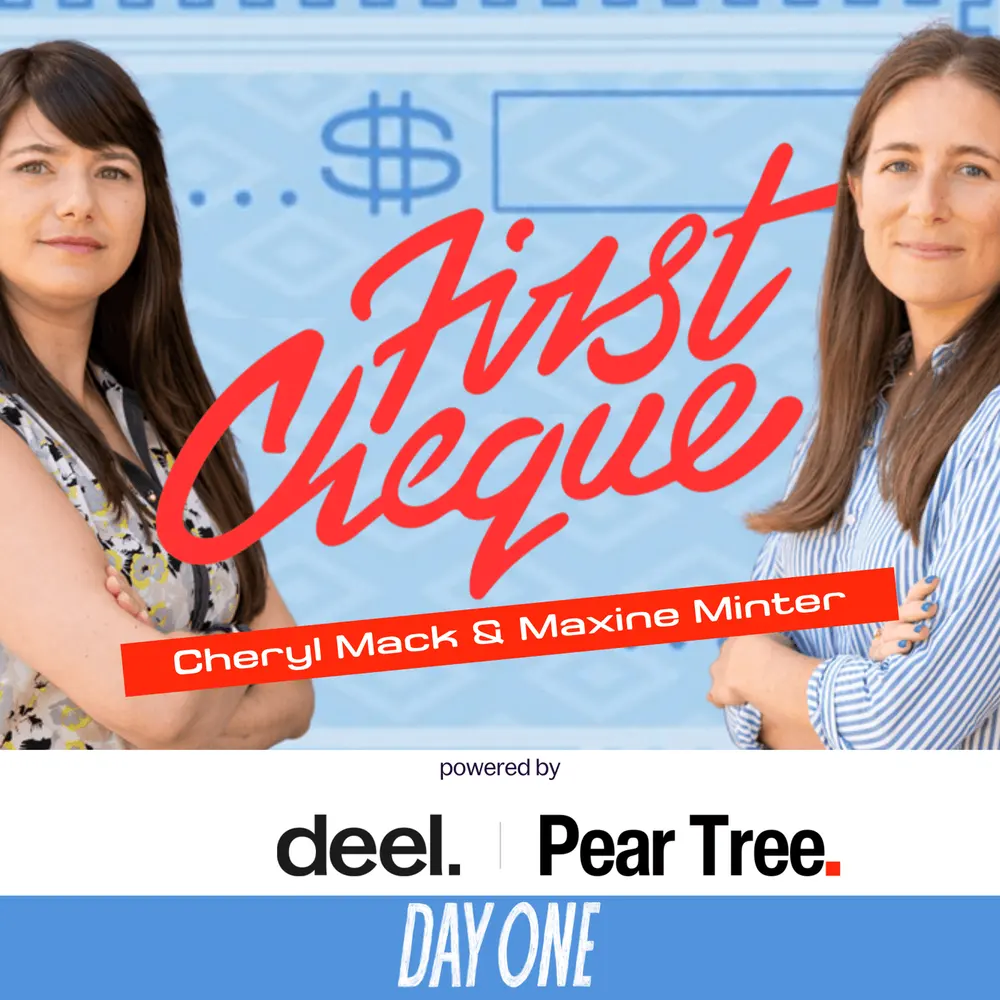 First Cheque with Cheryl Mack & Maxine Minter
Presented by Deel & Pear Tree
First Cheque with Cheryl Mack & Maxine Minter
Presented by Deel & Pear Tree 


 ▶
▶ ▶
▶ ▶
▶