Transcript Synced · select any line to jump ▾ 0:00 Speaker: If you're a male white founder and you ask your investors, like, are you a member of Equity Clear? Do you track your diversity data? Like, that tells so much important information about how the ecosystem values diversity, even if it doesn't affect you. Like, think about what you want the ecosystem to look like and be an active participant in that. 0:21 Maxine Minter: If there was just like a magic wand that I could pull out of my pocket and wish into existence, I would just like, ta-da, 50/50 angel investors from all demographics. Change doesn't happen if we don't invest, right? 0:33 Noga Edelstein: And so I think that is a big part of why this problem has not been solved in Australia, or we haven't made great inroads, is if we're not willing to invest in the solution, we can't expect change. 0:44 Maxine Minter: Okay, 3, 2, 1. 0:48 Speaker: Hey, I'm Cheryl. 0:49 Maxine Minter: I'm Maxine. 0:50 Cheryl Mack: This is First Track, part of Day One, the network dedicated to founders, operators, and investors. 0:54 Maxine Minter: If you want to be a better early-stage investor, this is the show for you. 0:57 Speaker: So TL;DR, if you don't want to suck at investing, listen up. Well, our next guest is a longtime friend. I've had the pleasure of co-investing, co-mentoring, co-VP venture partnering, and probably a number of other things with this person. So I'm very excited to chat with her about all things diversity and equity. 1:27 Maxine Minter: Yeah, she has had her fingers in so many pies over this period. She was founding companies way before it was in the zeitgeist in the Australian ecosystem. Actually, when I was reading through her CV, I was like, oh, I had no idea. Oh my God, she's been part of so much stuff. And so super excited to have her on just to talk about what she's watched with the ecosystem, but also to talk a little bit about what are we seeing today and what do we hope we will see in the future in terms of who gets to participate in this asset class at the founder level, at the investor level, at the LP level, at the participant level. So, so many different layers to it. And so excited to have Nova on. 2:01 Ad: Her Founders scale faster on Deel. Set up payroll for any country in minutes. Hire anyone anywhere. Get visas handled fast and get back to building. Visit deel.com/dayone. That's D-E-E-L.com/dayone. 2:23 Cheryl Mack: LinkedIn basically reads like she has just had so much influence over so many companies, or a little bit of influence over so many companies in the Australian ecosystem over years. We are of course talking about Naga Edelstein. She is currently the lead at the Equity Clear Initiative, which is one of the things we're going to talk about today. So let's jump into it. 2:45 Maxine Minter: You're listening to a Day One FM show. 2:49 Speaker: Thank you so much for joining us, Naga. We are very excited to chat. Before we dive into very important topics for today, we would really love to ask you, what is the very first thing that you ever invested in? 3:02 Speaker: Hey Cheryl, hey Maxine, so happy to be here. Big fan of your podcast. I was thinking about this question and was workshopping it with my family because my answer is really dorky. Um, I remember, and it shows my age, I remember when I was in primary school, we used to get like savings accounts in UK. The school would like set them up for us and they were called dollar mite accounts. I don't know if that rings a bell to you guys. 3:29 Maxine Minter: Oh yeah, yeah, they were in Australia as well. 3:31 Noga Edelstein: The dollar might save me. And so my— I used to go every to school every week and we would put our dollar or $2 into our dollar might savings accounts and we would have savings goals. And I think that's a thing that's missing in like childhood education now, that sort of regular savings and teaching kids how to do it. So that was my first investment. 3:50 Maxine Minter: That's a great investment. 3:51 Cheryl Mack: Yeah. It's crazy to me that financial literacy isn't mandated in schools. 3:56 Noga Edelstein: Yeah. 3:57 Maxine Minter: 100%. Also, you are maybe the first person that has reminded us that savings is a form of investment. 4:03 Cheryl Mack: Old school. That is true. 4:07 Maxine Minter: Actually, I actually think that is so important, especially for like younger generations, like our generation and the ones coming after us. Like savings behavior is not great. And so I think like actually how valuable that is to re-remind us like Savings is actually a really important, really, really, really, really important part of investing. 4:27 Noga Edelstein: Yeah. I mean, I've got teenage boys and like their friends are into crypto and these, you know, it's very risky investing. It can pay off of course, but actually like just if they just put regular money into their bank account every month and don't take any out, they get like a crazy amount of bonus interest for a kid. Like that's just the best type of investing. Like just You know, diversification. That's the lesson, isn't it? Yeah. 4:53 Cheryl Mack: Diversification. Yes. Diversification. Wait, are you saying they're getting better interest than us 'cause they're kids? 5:02 Noga Edelstein: I don't know. It's, I mean, for them, $50 a month is a lot of money for doing nothing, right? 5:06 Maxine Minter: For sure. For sure. Especially based on pocket money. I actually don't know what the going rate of pocket money is today, but $50 feels like a lot. 5:13 Noga Edelstein: Well, they get what, like $13, $14 an hour at Maccas where they do their casual work. So. You know, it's half a day's work. Anyway. 5:20 Maxine Minter: That's half a day's work. Oh, I love it. Um, I actually, uh, I don't know if you guys have been tracking what's been going on in the US in terms of these kind of investment accounts for all kids under 18 that they're going to be kicking off next year. They are, I'm trying to remember the name of them. I think it's like Invest America accounts, but essentially the government will put a certain amount of money into a savings account. I think it's a couple of thousand dollars early, like maybe in the first year of life. And it is in that account for 18 years before they can access it. 5:49 Noga Edelstein: Yeah, right. That's great. 5:52 Cheryl Mack: That's cool. 5:53 Maxine Minter: Incredible way for you to— I mean, if for example you wanted to demonstrate that capitalism was a wonderful thing, I can't think of a better way to do that. But also to like set up the financial health of your kids, right, coming through. Because this generation now coming through is going to be the first generation ever where, as based on the projections that they've got, they're going to be financially worse off than the generations beforehand. And so they're trying to think about like ways that they navigate. 6:19 Cheryl Mack: Well, isn't that always the case since the boomers though? 6:22 Maxine Minter: Uh, I don't know. I'm not sure that's a good question. I mean, the boomers weren't that far away, right? Like they're still very much with us, still very much invested in those assets. But yeah, I think that's probably true. 6:33 Cheryl Mack: Yeah. But there's been like 3 since, right? Like Gen X, Gen Y, Gen Millennials. 6:41 Noga Edelstein: There's a few. 6:43 Cheryl Mack: Gen Z and an alpha. Yes, there's been like 4. 6:47 Maxine Minter: Yeah, yeah. I wonder if that's true that they're all worse financially than the boomers. Categorically, I'm not sure, but I think it's an interesting thing to show, like, also to have it nationally administered so that every single child coming through— I think they're rolling it out next year, so anyone who's under 18 will get this grant. But you can imagine if you're zero, like you were born in 2026 and you get $1,000 and that sits in a bank account and compounds for you by the time you are 18, that is a material amount of money and you haven't been able to touch it. Plus you've got to like watch it grow over that period of time. 7:20 Noga Edelstein: It's like backwards super. 7:23 Maxine Minter: Yeah. Yeah. I, I think that would be a wonderful thing for Australia to do. 7:28 Cheryl Mack: That is going to be such an interesting experiment. It would be even better, uh, experiment-wise if they did it to like if they rolled it out state by state or like had a control group so that you could compare the effects over time, like, you know, to see, okay, well this batch of kids didn't get access to it, then they started like saving more. Like that would, oh, just the like the data. Yeah. 7:54 Maxine Minter: I wonder what's your hot take? What do you reckon will happen if you could like batch test? Let's say half of California got it and half of it didn't, and you're like cutting fully down the middle. So it's not like, you know, LA gets it where there's a large amount of wealth and et cetera. And then like Redding, California doesn't get it. Like if you just cut it down the middle and you split it, split it equally. 8:16 Cheryl Mack: I don't, I don't want to be like pessimistic, but I think it's going to follow a similar trend of the like wealthy or highly educated communities will educate their children on what compounding interest is and why this matters. And, uh, areas that are less educated and lower income will just see it as free money when they turn 18 and probably not pay attention to it. Because for this to be successful, you're going to have to show, like, have your kids educated on what's actually happening. So unless the government's planning on doing that— so I'm not familiar with this, but it is— if the government is planning on like also including education with it, then hell yeah, I think that's— that will be super successful and will teach a whole generation of kids about how to be financially responsible and savings. 9:02 Noga Edelstein: And there might then also be a whole generation of kids that have money to afford education that didn't before. If that, you know, depending how that tracks over time. But what would be the compounding interest on $1,000 by the time you're like, surely it's not $100 grand a year to cover education. 9:19 Maxine Minter: Not in the US at least. Maybe if they go up to Canada. I don't know. I think if you put it as like, if you, I'm assuming they put it into a diversified portfolio. Right? So let's assume it like diversified, it compounds at 10% per year. Over that period of time, you're gonna have like, your principal is what, like $18,000? And so you're gonna end up with like maybe $60,000. 9:42 Cheryl Mack: Yeah, but that's covering like one, one year of American college. 9:48 Maxine Minter: Not at the state schools, like not at the univers— like the state universities. 9:53 Cheryl Mack: True. State. 9:54 Maxine Minter: Which some of those are amazing, right? Like UT, like the University of California network. Anyway, we're off track, but I think it's a really interesting thing that would be cool for the Australian ecosystem. I know we've got some private market substitutes for this, right? SpringMe and Alex and the team do an amazing job for these products, but state-mandated, I think would be cool to see. Anyway, love that savings was your first investment. I actually think that that is deeply cool, not deeply uncool. 10:25 Cheryl Mack: There you go. Maxine, I don't wanna, I don't wanna tell you that your math was wrong, but ChatGPT, which obviously has never gotten anything wrong, says— 10:34 Maxine Minter: GTP. 10:35 Cheryl Mack: That $1,000 compounded at 10% annually for 18 years, only $5,500. So that's not covering any university. 10:43 Maxine Minter: What? No, no, I mean the like composite amount. You only get $5,000 in interest over that period of time compounded. That's extremely wrong math. That math doesn't math. 10:53 Noga Edelstein: That math doesn't math, people. 10:54 Maxine Minter: That's what— GPT for the fail. 10:59 Cheryl Mack: Chad GPT. I'm calling it Chad GPT now instead, because I've heard someone say that. 11:05 Maxine Minter: So Naga, you, speaking of things that compound amazingly for ecosystems and for groups of people, you have founded and launched what I think is one of the most important initiatives in the Australian ecosystem, which is the Equity Clear initiative. I'm wondering if you can please educate us a little bit on what it is and why you started it. 11:24 Noga Edelstein: Absolutely. I wish I could take credit for founding it, but Equity Clear was actually founded about 3 years ago by 3 incredible investor groups. So by Giant Leap, by Alberts, and by Scale Investors. And it started with the objective of having investors measure their pipeline diversity data with the intention that transparency would be a key lever of change. So I guess in the same way as transparency around gender pay gap has incentivized companies to do better because it's public, the aim would— was that driving transparency around actually, you know, not just measuring how many diverse founders ultimately get funding, but you know, who is applying, who is getting meetings, and who is getting to IC, and, and, you know, that full pipeline would drive investors to do a better job. So they started about 3 years ago. They did an incredible job at building momentum in the ecosystem. I think around 65 investors signed up to be members of EquityClear. But what happened over time was that not that many were reporting. And there's a few reasons for that which we can go into, but I picked it up this year because I started, you know, I've worked in various roles in the ecosystem and gender, you know, closing the gender investment gap has been a core focus of mine for some time. And everything kept coming back to data and the lack of data. And it seemed crazy that we would get you know, every year this final number of like 2% of funding went to women, which was terrible. This wasn't shifting over time, and yet we didn't really have any insight into what was happening within the pipeline beyond that headline number. And how do you design interventions to address these barriers and to address these inequities if we actually don't know where specifically they're manifesting? Mm-hmm. That is where I've picked it up. And so I was really intrigued by the Investing in Women Code, which was launched there 5 years ago, which was focused on getting investors to participate, sign up to a code, 3 core commitments. One, you would care about diversity. Two, you would put someone in charge of it. And three, you would report on your pipeline metrics annually. And what happens when you focus on data as the lever of change rather than specifically transparency. So the value in the aggregate set of data you can get across the ecosystem is you really start to understand where diverse founders are falling out of the pipeline and an instruction manual of where to begin to fix it. Um, and so that's what I set out to do, um, as the next phase for Equity Clear, which is to agree what is the data we're going to measure. So bring in a level of consistency, convene the ecosystem to agree a common data standard so that we can start to track over time this question of pipeline diversity across the spectrum of investors. So this is certainly not just about venture, this is about all types of capital deployment. So angel and family offices, accelerators, government grants, venture debt, you know, even like debt as a general— Yeah. Tool as well, you know, all of those instruments have a pipeline. And if we want to solve for this challenge of getting capital to diverse founders, we need to really be considering that entire spectrum of capital. So. 15:02 Maxine Minter: I love it. I mean, I feel like this is going to be obvious, but I think it is worthwhile asking the question, which is why does this matter in, especially in VC? Right now? 15:11 Speaker: Look, diversity matters for so many reasons beyond just the general principle of equity, right? Like everyone deserves to have equal chance of having their business come to market and be funded and commercialized. This is a significant issue for Australia right now in terms of economic imperative. We are facing the biggest productivity challenge since World War II. Productivity has been flat for a decade. It is continually reinforced by the Productivity Commission and others that the solution lies in innovation. And yet we're not utilising 50% of our innovation potential when we don't fund, you know, women in particular. And I, I talk to those founders because, you know, that goes well beyond just gender, but, but gender is 50% of the population. And so we start there. And you know, it's been estimated that there is $135 billion contribution to be made to the Australian economy if we were to fund women's innovations at the same level as men's. Like, that is, you know, a significant economic opportunity for Australia that is just being ignored. And then I think the other part of the why now is really around this transition we're making, this transformation around AI, because what is happening when AI is being built with a male gender lens and by men for men, you know, to solve their problems and with their perspective is that bias is being baked into our future, to everything that we are going to be using AI for over the decades to come. And that is really quite terrifying. And so it is really essential that diversity is a core consideration into the way the country plans to scale its innovation in the future. 17:09 Maxine Minter: For sure. I actually, I mean, I even think that like, if I look at the field that I'm watching out there, like a whole bunch of the previous structural barriers that kind of hang over from a very different kind of the zeitgeist has really shifted since the mid-'90s. I don't know if you guys have gone back to watch mid-'90s Disney or any of the movies you've watched in the mid-'90s. Can I just say they are so shocking to watch, like, the gender norms that are baked into them. Especially because, I mean, I grew up in the '90s, and I know I watched those, and I remember being like, you're so cool, like this character. Like, for example, Princess Diaries, being like, wow, she's amazing, isn't it amazing the transformation she makes? I'm watching it now, I'm like, um, she just had like bad eyebrows and was smart. What a crime. And then they were like, no, you have to be pretty and rich. That actually is what you're supposed to be. And I was like, oh my God, this is horrifying. It's like truly horrifying. 18:13 Cheryl Mack: Yeah. The number of like makeover movies in the '90s where it's like, oh, let me just take your glasses off and like do your makeup and boom, now you're cool. 18:23 Maxine Minter: Yeah. Like implicitly saying, and now you'll be successful cuz you look good. Yeah, yeah, totally. Implicitly saying like you need to be hot in order to be good, like directly straight into the brains of those like young women growing up. 18:41 Noga Edelstein: Gross. I mean, social media does that now, doesn't it? Like that is, you know, that hasn't gone away, I don't think, unfortunately. Yeah, we don't even need them to watch movies. 18:49 Cheryl Mack: They just watch TikTok all day long. 18:51 Maxine Minter: Yeah. 18:53 Noga Edelstein: Yeah. 18:54 Maxine Minter: So I think as we make this, right, historically there was a big gender difference on who could actually, like the STEM graduation rates to be able to build some of these more deeply technical products. But my, for me, my why now is that a lot of that structural barrier has dropped because it's never been easier to build a product. It's never been easier to scale a product. And so entrepreneurial people from all walks of life, be they women, people from immigrant backgrounds, rural backgrounds, non-white backgrounds, like all of these things, it's never been more possible to build a company. 19:34 Noga Edelstein: Mm. 19:34 Maxine Minter: So increasingly I am finding the like, oh, we don't have the right STEM kind of pipeline of talent being a moot point, right? That doesn't, I don't think that that stops great builders stepping into market. 19:50 Noga Edelstein: Yeah, it is interesting because you're right, like the playing field has been leveled in that respect, and yet we're not yet seeing a shift in those metrics. And you would think they would start to come through, it's certainly like the pre-seed or early stage at least, and that's not happening. I mean, the latest data is showing pre-seed funding to women is at its lowest level ever. 20:10 Maxine Minter: It's gone backwards. Rah, it's so frustrating that it has gone backwards. 20:15 Cheryl Mack: I think there's an element of the like pattern matching that's happening at the investor level that is still based in that historical, like this is what we've seen done well. And so we're looking for things that look similar to what's being done well in the past and what's been done well in the past happens to be male-oriented. 20:34 Noga Edelstein: 100%. I mean, a lot of this is certainly archetype driven and This is why the pipeline measurements are really important, right? Because it starts with like, who's at the top of your funnel and who is actually doing the review of those. So who's going out to find the startup founders. 20:56 Cheryl Mack: The top of funnel, who's filling the funnel, yeah. 20:59 Noga Edelstein: Who's filling the funnel and then like, as they come through, who's filtering them out. And so this is about tracking the pipeline at the founder level, but also the gender of the funder and how that correlates. There's some really interesting learnings there. And the sort of tagline I've been using on this is anecdote to evidence, because I think we know a lot of this stuff anecdotally. But as you guys will know as investors, and I've certainly learned as a founder, no one acts unless there is data. Um, and so Having these metrics which tell us what is happening, I think we'll be able to start pointing to direct policy interventions. And also, I think, well, I know, I mean, this has been happening in the UK for 5 years now, and certainly, you know, the funds that are tracking locally are finding this. The mere fact of doing the work of tracking your own pipeline drives better outcomes. So in the UK, co-participants outperform the wider market. And it's interesting, like I think it's a fun exercise to ask funders to estimate these metrics. Like tell me how many, you know, just what, what do you think is the top of your funnel? And then go back and actually look at it and people chronically overestimate. Like they think, oh yeah, we're pretty good. I think it's probably probably, you know, 30 to 40%. And then they look at it and it's like, wow, actually no. And so what happens is, you know, like, I need to do a better job of sourcing top of funnel. Like, I need to put some effort. How do I do that? And so it forces you to ask those questions and go out and do the work. 22:42 Cheryl Mack: Yeah, it's kind of like the saying, like, you don't— you can't improve what you don't measure. So if they're not measuring it, and if you start measuring something, then it's inevitable if you care about it, it's going to grow. 22:52 Maxine Minter: Yeah, that's exactly right. Because I think, I think we can all agree, like, we care. Right? We don't want the demographics of the company, of the portfolio that we work for or the companies that we work for to be significantly skewed. It's rare if ever I have the conversation with someone. 23:10 Cheryl Mack: Yeah, I don't think I've ever met anyone. 23:13 Maxine Minter: Yeah, who's like, nah. 23:14 Cheryl Mack: Yeah. Where they're like, nah, I wish my portfolio had more men in it. I'm super happy with it being 99% men. 23:24 Noga Edelstein: Well, I can tell you that we, the way we're starting with this is like, this is very much an industry-led initiative and we want to build this data standard with industry. And so the first step we're taking is running a series of roundtables across the country, Sydney, Melbourne, Brisbane, Adelaide, Perth. We've got state governments in every state involved in this. Everybody is on board. And the ecosystem is like, everybody's put their hand up, like Sydney is sold out. We have really got a good level of interest from across investor types, across the ecosystem. So I 100% agree with you, people want to do better and they are looking for a way to do that. So this is not a question of like making people care, it's a question of like, what can we do? And that was what drove me was, you know, I feel like I'd been a little bit of an armchair critic writing articles and going, we need to move from words to action. And yet I was still sitting at my computer. And so, for me, this is like a concrete action that can drive outcomes. And I think, you know, to your question, Maxine, about why now, I think that's a big part of it too. I think like the ecosystem in general is at that point where they're like, we know there's a problem, we can't see it improving, we keep doing the same things, what should we do? What can we do to make a change? And I, you know, really believe this will give us that kind of playbook of what, what do we do next? 24:49 Maxine Minter: Yeah, 100%. So I'm interested, um, it sounds like you're kind of doing a renewed push to try and work out how we collect this data. Maybe just kind of from a curiosity perspective, like, why, why is it hard to collect this data? Like, that doesn't seem obvious to me. 25:07 Noga Edelstein: Well, I mean, you're right, it's not hard, but it feels hard to people. So things like, um, How do we even, how do we ask people these questions? How do we ask them what their gender is or what their age is or what their ethnic diversity, like, are people going to be uncomfortable if we ask them? And how do we track it? Like, you know, and actually, if you think about it, most funds in Australia are fairly small. They're very lean. They're very overworked. It's just not top of the list of things to figure out. And so sometimes you just kind of need that push or that burning platform or like the you know, here's how you do it. And so Blackbird and Airtree have been reporting every year. They are two funds which have a human whose job it is to do this work. So, you know, they have been able to put in the time to figure it out, and they're both going to be sharing what they do, and as is Giant Leap at our sessions, being very willing to be open and help the ecosystem upskill. And like, I think of this this as a bit of a startup itself. It's an MVP. Like, we're not waiting for one big bang where we go, okay, everyone, like, starting guns going off, start tracking. Like, we want to demystify it and people to come out of those roundtables going like, well, actually, it's just a few extra fields in our CRM. It's not actually that hard to do. 26:29 Cheryl Mack: I think the hard piece is not wanting to mess it up, right? Like, this is one of those topics that tends to be sensitive. And so, when you have people who are trying to do the right thing, but the penalty for getting it wrong feels bigger than maybe it actually is, but it feels big, then you have people who would rather do nothing than actually act. So I think things like standardizing a lot can, you know, can be a good step in the right direction. 26:58 Noga Edelstein: And I think the other element here is in the, Historically, the way EquityClear has operated is around transparency, as I mentioned. Interestingly, the UK initiative has been anonymized data, and so I think that is a debate that we will need to have here. Like, is the value in getting the data itself outweigh the transparency element? And, you know, potentially if it's going to drive participation, I think that there is a strong argument. For at least at the beginning that this is, you know, what happens in Australia is the media hammers funds when they get it wrong, as you say, like we've all seen those articles and I think that is really unfair and it doesn't really achieve any outcomes. So if we want to get the data across the ecosystem and we want participation, I think there is a strong argument that let's focus just on the data. Look, it may not be perfect, we know that, but we need to start somewhere. Like, you know, as I say, it's an MVP. But certainly if we're all collecting the same types of data, and I should say as well, we're going to be aligning with international standards. So we're aligning with Diversity Data Alliance, which has been doing this work in the US and in the UK for several years. And so this will be in line with best practice, but also give local investors the opportunity to benchmark themselves to global standards as well, which I think is really interesting. 28:32 Ad: Founders scale faster on Deel. Set up payroll for any country in minutes, hire anyone anywhere, and get visas handled fast so you stay focused on scaling. Deel takes care of onboarding, HR, IT, EOR, benefits, and compliance. Compliance so your team can grow without borders. It's why more than 40,000 fast-growing companies trust Deel to move fast. Visit deel.com/dayone. That's d-e-e-l.com/dayone. 29:08 Maxine Minter: Well, I mean, as you said, the UK has been at this for a little while, right? What have you learned by watching other ecosystems? Kind of both collect this data and then I'm hoping, right, based on those insights, start to implement different ways that they approach things. Is there anything for our ecosystem to learn? 29:31 Noga Edelstein: Yeah. And look, and this is also like where it's like that anecdote to evidence thing, because I'm sure a lot of the insights they've learned are equally applicable here, right? And so that a core part of this work is going to be around once we get those insights, how do we actually ensure they're acted upon? And that's why I'm really determined to bring the policymakers along this journey, have them in the rooms, actually start to implement the Common Data Standard themselves so that they can see that they're also part of the problem in the way they're allocating funding because we need those insights to be acted upon. So the kinds of things like I was really interested in this year actually, and relevant to you guys, they tracked this year where having a— Yeah. Found a female decision maker, so a female funder in the pipeline makes the most difference. Because again, we keep hearing you need women making investment decisions and they're being hired into investing roles, but not necessarily into decision-making roles. And so the two places where having a woman in the investment process is making the biggest difference is in an angel group. So where an angel group has at least 15% women, they invest in 10x the number of women-led companies, which is like mind-blowing increase. And so like, what should we be doing about that? Like, we should be investing in capacity building for female angel investors. Like, that is going to have a 10x improvement in pre-seed funding. Like, um, and the other places on the IC, so a 50/50 gender, at least 50/50 gender balanced IC, um, I think it's about a 6 to 7% percentile improvement in decisions. And so again, like, it's great to hire women into investing roles, but we need a track for them to get to— 31:17 Cheryl Mack: Partner level at the IC table. 31:20 Noga Edelstein: Decision— like, senior partner, decision maker. Otherwise, as we've seen in the media this year, like, they churn out, um, and we're not seeing the impact on the diverse founders. So there's some interesting insights. The other one I thought was really interesting, and again, anecdotally we know, but, um, they're starting to track the lead source for different founder types. And so women disproportionately tend to use cold inbound as their primary source of reaching an investor. And that is the least successful in converting to an IC deal. And so how do we— Yeah. Build networks for those women, make sure that actually the investors, it's their role to actually find the women and the diverse founders. I like an interesting, like a different analogy I use to this. It's like Australia's a big country, right? If you are a Perth-based startup, you could sit in Perth, but the Sydney-based investors or the Melbourne-based investors, they're probably not gonna bother going to find you even though you might be amazing, 'cause they've got so much deal flow coming out of their local ecosystem. And so, but there are some hidden gems all around Australia. If, if you go out and you actually make an effort to go and find those hidden gems, you're at an advantage. You're going to find deals that no one else is finding. And it's a little bit like that. Male investors have a network. They're getting plenty of deal flow. Often there's not much incentive to go beyond their network to go and find deals, but they're missing out on this great opportunity to find these hidden gems that don't know how to reach them otherwise. 33:00 Maxine Minter: Totally. Yeah. Can I just say, I have never felt more seen, like as a female decision maker, right? For our fund, for Fund 1, our rate of investing in 100% female founders, right? So teams where they were either solo female founders or all female teams, 17x the national average at pre-seed. 33:23 Noga Edelstein: Wow. Well, there you go. Yeah. 33:25 Maxine Minter: Wow. Like a sale. And I had this to add my anecdote to your data. Also, we had this accidental experiment that we ran, which is our website broke and the form on our website for filling in like people reaching out to us, 'cause we respond to 100% of the people that reach out to us. If they come through our website or if they come into my inbox or even my LinkedIn DMs, although I will say I'm slower there, we ask them to fill in a form. As a way of collecting this data. And the form on our website broke, but we didn't know that. And so we had like a quarter and a half where I was looking at our pipeline and being like, what is happening? Where are all the women? Because our fund, Fund 1, I think we were like 47% mixed teams and then 17, 18% all female. And so we were like our pipeline is fairly mixed, right? It's not just one-gendered. And then it was for a quarter and a half, and I was like, what is happening? Where are all the women at? 34:28 Noga Edelstein: So interesting. 34:30 Cheryl Mack: Because they were doing cold outreach more so. 34:32 Noga Edelstein: They were doing the cold outreach. Yeah. 34:34 Maxine Minter: Well, yeah. So then the thing is, is then my team very, well, like something is going on. And then they found almost 100 people who'd applied to talk, to pitch their companies to us, but these leads were just sitting, they hadn't come through into our CRM. And I was like, oh, I found them. There are all the women. 34:54 Cheryl Mack: There's all the women. 34:56 Maxine Minter: There they are. It was crazy how big a percentage that was. So it really solidified for us, like it is so important that we have a very open, very easily accessible front door because we are not getting network referrals, even though our network is fairly well balanced. We're not getting network referrals of diverse teams, right? We're fairly like mono-gender. 35:19 Noga Edelstein: So interesting. 'Cause like if you ask established VCs, I would say in general they would say, ah, you need to have a warm connection to us or we won't even look at the deal, right? And so that is just a simple strategy you can use to broaden your funnel of diverse founders 'cause they don't, they're not gonna come in those doors. Yeah. 35:37 Cheryl Mack: I look, I think it's also an attitude shift. 35:39 Maxine Minter: Yeah, super interesting. 35:41 Cheryl Mack: Uh, a lot of VCs will say things like, yeah, we totally look at all cold inbound as well, but I, it's best if you get a warm introduction. We definitely pay attention to those more. 35:53 Maxine Minter: 100%. 35:55 Cheryl Mack: And I think if we're using this as a strategy, then it's shifting the mindset of those investors to say, well, actually, like, you know, in terms of generating diversity in, in your pipeline, you should regard those two things the same rather than like, oh, these are the second tier founders. We'll look at them eventually. 36:12 Maxine Minter: I think it takes two to tango. I don't know if you've ever seen one person tango by themselves, but it's pretty devastating to watch. You like, also for the women, if you are building a company, bravery is a super important skill to foster. And so be brave, try and find the intro to the person that you actually want to talk to. Right? Don't wait for them to come to you. You are a really exciting prospect building an amazing company and you should outbound the people who are most strategic for your cap table accordingly. I will say as a fund manager, I still am practicing that muscle. Like I find myself, I'm like some of the people that I am most excited to pitch about the fund or like share what I am building, I procrastinate on the most and like don't reach out to them and don't, and then when you reach out to them, it's very often a really valuable conversation. Not necessarily they're going to say yes, but like people want to know the cool stuff that you are building, even if it's not a fit for them. Absolutely worst case scenario, they just leave you on unread and you feel minorly heartbroken, but you will be fine. 37:20 Cheryl Mack: Get over it. 37:22 Maxine Minter: What else are we learning from those other ecosystems about maybe how to collect this data or structural stuff that actually makes a difference to change the number or percentage of people participating, if we know yet? Also noting like infrastructure doesn't convert to change straight away. 37:39 Noga Edelstein: Well, so what I've learned about the UK initiative is that for the first few years it was super manual, it was super MVP. In fact, like to the extent that they just got investors to collect over a period of time and extrapolated that out over the year. I don't think that's necessarily the right way to go about it, but they just did what it took to get people on board. And now they're at the point where actually, you know, we talk about this question of transparency and anonymization. They're now at the point where not being a member is a black mark against your fund. Right. And so that's where we want to be. That's cool. Yeah, that is really cool because, you know, I think to that question of like, how can the broader ecosystem, even if you're not an investor, how do you help improve like helping to make investors do better, it's by asking those questions. And actually, just like, if you're a, if you're a male white founder and you ask your investors, like, when you're pitching to them, hey, are you, are you a member of Equity Clear? Do you track your diversity data? Like, that tells so much important information about how the ecosystem values diversity, even if it doesn't affect you. Like, think about what you want the ecosystem to look like and be an active participant in that. When we can have LPs asking those questions, like, are you a member of Equity Clear? Are you tracking your diversity? Like, that is when we'll start to see the burning platform for investors to have to sign up and do better. 39:11 Cheryl Mack: Yeah, it's the LP level coming down. Like when the money is asking you to do something, I think that's going to have a huge impact. 39:19 Noga Edelstein: Yeah. And it's just a few questions, just Like it's not hard, just ask what they're doing. 39:24 Maxine Minter: Totally. Yeah. I think I would be, 'cause I know that the demographics of kind of female allocators is way worse than the underlying portfolio companies, right? The number of female-led funds, the number of minority-led funds. The Australian data is particularly— 39:43 Cheryl Mack: Even the number of female partners. 39:45 Maxine Minter: Yeah. Like the Australian data is particularly opaque there, but even in the US where it's better, it's bad and it's going backwards. And so I, I do also think like it's exciting that you guys are measuring all the way up the stack because if we rely on that pressure to come from LP down, I think that's actually probably, I would imagine one of the like harder levers to pull because of the demographics of the folks around that table relative to VC, like the actual VC level, while not great, trending on bad. It is better than the level above. 40:21 Noga Edelstein: Look, the way I'm thinking about this is we're building the infrastructure. Like, this is actually— data is infrastructure. 40:28 Cheryl Mack: Totally. 40:28 Noga Edelstein: And we are starting with venture because there is engagement and, you know, there is a desire to do better. But actually, like, this idea of a common data standard and having it as infrastructure, it's very scalable. Like, once we have the system in place, it can, as I say, go through government. It can actually, like if, you know, I think a big part of this challenge is answering the questions of what kind of businesses are diverse founders wanting to build? 'Cause not all of them will fall into venture capital, right? Like venture, as we know, is suitable for a very small proportion of companies anyway. And once we understand better what types of businesses they're looking to create, we can start to think about like what type of capital suits that. And we should be measuring like just general, like financial institutions loans. Like, you know, this is certainly not, um, just a venture problem, but like that is where we start. And so I'm really drawn to this idea of like, let's build the infrastructure, let's make it easy, let's figure out what it looks like in the group of willing participants, and then we figure out how to scale it, you know, and what other data there is that we can start to correlate with. And that's where it starts to get really interesting, I think. So I should mention, um, we're partnering also with the University of New South Wales Centre for Social Impact. Um, they're very focused on gender equality and innovation, and they're helping us to ensure this, um, you know, there's integrity and trust in the data and the infrastructure that we're building. Um, Investment New South Wales has backed this, and we've got a really incredible coalition of partners and funders across the ecosystem that are backing our roundtables across Australia. Equity Clear itself, still not a funded organization. Like, this is still very much a not-for-profit initiative. I'm like, full transparency, I don't get paid for this work right now, but we— 42:27 Cheryl Mack: We pay you in love and appreciation. 42:29 Noga Edelstein: Pay me in love and appreciation, in passion and Can take it all the way to the bank. Exactly. Yeah, I'll put it in my Dolemite account. That, I guess the point is like change doesn't happen if we don't invest, right? And so I think that is a big part of why this problem has not been solved in Australia or we haven't made great inroads is if we're not willing to invest in the solution and to pay people to do the work and all of those things, like we can't expect change. So, you know, the, this, the goal very much is as part of this, we'll be delivering a roadmap, which will hopefully have funding allocated. And that's part of my job right now is to bring those, you know, having those conversations as well. And I think, you know, we've got certainly a good amount of interest. But if there's anyone out there listening that is interested in being part of that, very much would like to talk to you. In the UK, the big difference was this was government-backed. Like— 43:23 Cheryl Mack: Mm. Mm. 43:24 Noga Edelstein: This was run by the British Business Bank, the largest LP in Britain. Um, government put alongside the funding for the code, like, they built a fund for women, £250 million, like, you know, and that is what we're lacking here. We're starting to see some green shoots, but, you know, quite frankly, in Australia, the government's still focused on keeping women alive. Like, we have many other crises that are far more pressing for women. Um, getting them into jobs has been a focus, and I think the shift needs to be that actually understanding the huge trickle-down effects that getting women— like Nicola Hazel, who you may know, has been a real inspiration in this space. She uses the framing of like women from getting them from the passenger seat to the driver's seat of the economy. And when that starts to happen, you have these huge trickle-down effects because women will hire more women into senior roles, women will get exposure to technology, and they'll build their own wealth. They'll get shares, they'll get equity, they'll be able to invest, they'll be able to start their own companies. And so actually one of the best ways to get women into jobs and give them security is to enable them to build wealth and build their own, build their own businesses and create that security for themselves. So that's sort of part of the conversation we need to have with government as we build this out. 44:47 Maxine Minter: I think in particular venture, like, as you were saying that, I was like, I really do, both from my own experience but also just from the like basic math of it, right? Like venture is one of the fastest ways to build wealth for a younger generation. I don't know if you've looked at the 30 Under 30, like the young rich list in the Australian ecosystem, but like look at it over the last 5 years and that, like how that wealth was made has substantially shifted. 45:16 Cheryl Mack: Yeah. 45:17 Maxine Minter: And with it, the demographics of who is holding that wealth. And I think there's a really interesting anecdotes and data coming out of the US ecosystem that folks that build their wealth in the tech ecosystem invest that wealth and spend that wealth in a very different way, right? Like the, for example, we now have a number of family offices in the Australian ecosystem that are built from founders having exited their businesses or partially exited their businesses. And if you look at the way that they're allocating those investments, you know, a lot of them, for example, are trying to create a terminal value of zero. They're not looking to propagate privilege generation on generation or substantial privilege generation on generation. They're looking to like reinvest into the ecosystem and foster that next generation of ecosystem. And so I do actually think, while I think it's excellent to build across asset classes, if what we're trying to do is create, you know, move women from the passenger seat into the driver's seat, then actually venture I think is an incredible way Yeah. Anecdotally, I'll say even in the kind of 8 and a bit years now of being in the Bay Area, I came to the US knowing like a single person on the continental United States and I didn't really know her that well, you know? So like knew no one here, started angel investing 2 and a half years after having got here. That group that I first started angel investing was a, with, was a group called The Council and I was one of the founding members. There was 8 of us. Maybe 9 of us. And of that group now, more than 60% of us have our own funds or are senior partners at funds. That period of when I arrived in the US to when I joined that group, I raised 2 rounds of capital. In both of those rounds of capital, it was a, like an actual knife fight to find someone who wasn't a white dude for our cap table. Like it was very, very hard. And then since that point in time, I went to dinner with a group of them recently and there are now like 186 women who are partners at venture funds. At the time there was 4. That period, that was like 5 years. And I was like, oh yeah, that's right. Venture compounds between 30 and 75% per year. Like if you compound that over 5 years, Cheryl, I guarantee you it's less than 5 grand on a 60, on an $18,000 pay. 47:36 Cheryl Mack: Right. 47:37 Maxine Minter: Like it is, Like, turns out compounding is a true superpower. And so if women are participating early, we actually don't have to wait that long before they step pretty meaningfully into the driver's seat. And once they're there, they do some pretty amazing things. And so like just getting more women allocating capital, getting more women founding companies. Back to the point that you were mentioning before, like the why now for me, right, is it feels urgent because there are so many generational companies being founded today, whether they're venture-backed or not. By using AI to fundamentally reimagine industries. And so as this platform shift is happening, the more women that are founding those companies and people of color and people from non-urban backgrounds, right? And people who are vets at like all of these things, the more diversity we have of builders, the more interesting companies are going to get built sooner. And then that compounding flywheel can start to compound behind us. I just, if there's anything I could do, like if there was just like a magic wand that I could pull out of my pocket and wish into existence, I would just like, ta-da, 50/50 angel investors from all demographics. 48:44 Cheryl Mack: I mean, we're, we're giving it our best go here, Maxine. 48:47 Maxine Minter: We are. 48:48 Cheryl Mack: Anecdotally, or not even anecdotally, we, we are seeing data that we have a higher percentage of women investors on the Aussie Angels platform, and we have a higher than the, uh, Cutthroat report. So ecosystem average of, um, of women founders in our, in the broader portfolio across all the syndicates. So we do have data that supports this. And can show that like we are increasing the number of women angel investors in this country. 49:13 Maxine Minter: Whoop whoop. I love to hear that. 49:15 Noga Edelstein: You don't have to have a gender lens, right? You guys don't have a specific gender lens and yet you, you are investing in 17x, I think you said, the number of women-led companies and you're attracting angel investors. And so when I hear funds say there is a pipeline issue, this is the thing that rattles me because You might have a pipeline, like they might have a pipeline issue. Like women may not, like diverse founders might not be applying to their fund. 49:41 Maxine Minter: Both can be true. 49:43 Noga Edelstein: Both can be true. Why is that? And you know, the media is constantly now, we went from a point where we needed to get the word out about this problem that women were not being funded. The word, certainly in our echo chamber of world, the word is out, right? And now actually what we're doing is we're just discouraging women from applying. I can't tell you how many Conversations I've had with female founders where they've gone like, I'm not even gonna, like, why would I? Like, it's just, I'm never going to get funded. 50:12 Cheryl Mack: Yeah. Why would I try for VC? It's just going to be a waste of time. 50:16 Noga Edelstein: Yeah. Then it's just going to be a waste of my time. I'm going to bootstrap. I'm just like, you know, and they build these incredible companies on their own or they apply to somewhere that they feel that there is a welcoming response that they have a shot and Putting— and that's where like I think funds are missing a trick as well, and inspecting their pipeline is going to be really instructive— is like have a welcome, like somebody that is clearly likely to consider them, have a good conversation. It doesn't have to be a woman, but somebody who, you know, a place where they can feel safe in and confident that they're not just going to have their time wasted. That, you know, their pipeline may amazingly start to grow. 50:59 Maxine Minter: Yeah, would you look at that? Turns out if you listen to them, they'll, they will actually want to share stuff with you. Who knew? 51:07 Cheryl Mack: Yeah. I will just say one, one of the threads there that I, you mentioned earlier that I just think is worth pulling that like, uh, many founders aren't necessarily great for the VC-backed model. And, but it's really interesting one because they talk about pipeline, right? And VCs will often say, well, the types of women that come into our pipeline tend to not have businesses that are not VC-backable. And so I think that's an interesting point to pull out that like, well, you know, how do we help increase the number of, uh, types of companies that VCs do back that are backed by women? So I kind of get that from that perspective. Like a lot of the women that do come to me are, are more like lifestyle businesses or e-commerce businesses, which are typically difficult to back as a VC. Mm-hmm. And maybe that comes from your earlier point there, Maxine, you know, looking at some of these like ingrained, uh, what is it, heuristics or just like historically we are seen as like, oh, you have to be beautiful. So like we tend, women tend to then be like, well, I have to start a makeup company. So I think a lot of it is like built in. So how do we break some of those molds on both sides, right? Like it's not just up to VCs, it's not just up to founders. It like, you're right, it's two to tango. How do we break those molds on both sides that like, You can start different businesses that might be more boring, but you can also consider businesses that aren't necessarily VC-backable in different funding models. 52:30 Noga Edelstein: Here's an interesting comment on that, which is, let's just take your example of a makeup businesses. There's some bloody massive makeup businesses out there, right? 52:41 Cheryl Mack: Yeah. So I mean, break the molds on both sides. 52:44 Noga Edelstein: Yeah. So one of the interesting things is is if we talk about archetypes, a typical archetype of a male founder straight out of uni, no responsibilities, can live on ramen noodles, all of those things, right? And so the archetype of a female founder is quite different, I think. And again, this is anecdote, but mostly I find women start businesses when they've just had a kid. But I don't know why, but that seems to be a common archetype. They're midlife, maybe they're disillusioned corporate, and that is a challenging time to live on ramen noodles. But there are ways that you can level the playing field. And so as Ada Ventures, I actually went yesterday, Chek Wardle was in town. She was giving a, talking about how they invest and they obviously have a focus on diversity. One of the things they've done, and she said like it was mind-blowing that nobody else does this, is if you're a parent in their fund, a founder in their fund as a parent, they will give you 40 hours of, they'll pay for for 40 hours of childcare a week. 53:43 Maxine Minter: That's cool. 53:44 Noga Edelstein: Very cool. And all of a sudden, like, that childcare responsibility that is disproportionately shared by women is not the burden that is stopping you from being full-time devoted to your company. Um, and so there are ways that you can level the playing field. I think one of the challenges is we expect— like, men and women are different. There are different expectations and they have different challenges in their lives, but we can adjust for that to level the playing field. I Sport is a great example of how we've done that. Competitive sport, um, the Matildas a couple of years ago, you know, came into the limelight. All of a sudden, all of Australia was behind women's football, and it felt like overnight we had this cultural moment where we all started to believe in women playing professional sport. But that was the result of a decade of investment and systemic shifting and getting women around the decision-making table to make that possible. Yeah. And things like paid parental leave and pay equality for both genders was a core part of that. And so these are the little systemic like tweaks that we need to be thinking about when we say the women that are coming to us don't have the ambition, they don't know how to turn their makeup business into a billion-dollar industry. Like, you know, there are ways we can help them to do that that don't necessarily involve the same playbook that work for male founders. Yeah. 55:10 Maxine Minter: I just want to say out loud here, I know that the story has been they build different businesses and they need structural differences. And I think that that is true on average, but I also will say we work for 31 teams. That's 58 founders in that group. And as you said, we don't have a gender lens. All of them are incredibly ambitious. All of them are building huge businesses. All of them are doing whatever it takes to make those businesses grow. All of them are navigating the sticky, interesting, hard, scary bit of trying to live a life and build a company at the same time. Like I actually, I would put Cheryl in one of these categories, right? Like Cheryl, we, I angel invested twice and then warehouse that investment into the fund and she was one of the first women to appear openly pregnant on a national media publication about having raised a round. She like— 56:12 Cheryl Mack: While pregnant. 56:13 Maxine Minter: While pregnant. She raised her first round while pregnant. 56:16 Cheryl Mack: Visibly pregnant. 56:17 Maxine Minter: Extremely visibly pregnant. Uh, and that wasn't, you know, none of that was even remotely relevant. To her, the ambition that she saw for Aussie Angels and the company that she has built, right? It is probably the best investment you could possibly make in Australia if you want exposure to venture. You get an index of literally most investments in venture in Australia. Like that is a huge vision, both for Australia and regionally. So I think, I don't know if that is a helpful statement, but I feel compelled to say it out loud, which is in this moment where we are talking about like we're seeing a lot of women leave venture and we're seeing, you know, like the stats are not in your favor. I think to your point, Noga, like if that's me, like if I dwell too much on the fact that, you know, 2% of venture capital firms are run by women and on that basis, like that mountain is incredibly hard for me to climb. Like I'm, I'm not climbing it. Whereas what I focus on is like, I work for Sheryl. I work for I work for the Marloo team. I work for the Adora team. I work for the Story Tribe team. All of them are incredible operators who are building amazing companies. And some of them are women and some of them are men, and they are very, very ambitious. And I'm like, yeah, to be behind them. And I think like if you anchor on that, then the rest of the stuff will compound in our favor. 57:37 Noga Edelstein: I think compounding is the word of the podcast today. I like it. 57:44 Maxine Minter: Yes. VCs love the word compound. 57:47 Cheryl Mack: Yes. Compounding. Get it embroidered on a shirt or something. 57:51 Maxine Minter: I feel like I could rant about this for hours and weeks and days, but I feel like we probably need to let you go back and do the great work that we have been talking about. So I would love to ask you the last question that we ask the guests that join our podcast. What is the bravest thing you've ever done? Your biggest big kindness moment. 58:13 Speaker: This is a tough question. Look, I think it's probably, you know, I have done many things in my career. I was the general counsel at Yahoo back in the day in Australia. It was a big job. I absolutely loved it. 58:27 Maxine Minter: That is a big job. 58:28 Noga Edelstein: I actually, interestingly to this conversation, I was made general counsel while I was heavily pregnant as well. So I was backed by my bosses, but I got to the point where everybody was leaving to do startups and companies, and I'd never done that before, but like, I felt like, hey, I've been a lawyer, how hard can that be? It turns out it's really hard. It's a lot harder than being a lawyer. But I quit my day job and I went all in with a newborn baby and, um, just connected with one of my ex-Yahoo colleagues and, and started a company and went from, you know, secure employment, full-time pay, um, to having, uh, in fact, I spent my maternity leave looking at like, what, what kind of businesses do I want to start and just going all in. Um, I think, you know, that was a big, for me, it was a big call. Um, never looked back, totally changed my career. Can't imagine being a lawyer again. And it's just opened up. It was a, like, what a rollercoaster ride that was, but it's just opened up so many doors. Into this new world of innovation and startups that I've absolutely loved. So yeah, it was hard. Would I recommend it for others? I don't know, but I would do it again. 59:48 Maxine Minter: Totally. I mean, that is, it is such a big, big kahunas moment, just starting a company, like stepping out of that path and starting a company takes an enormous amount of bravery and doing it at the same time as having having a little one. You're essentially taking on two big jobs in parallel. But I am very grateful that you did, otherwise you wouldn't have built all of the amazing things you've built for the Australian ecosystem so far. 60:11 Noga Edelstein: Oh, well, thanks, Maxine. Really appreciate it. It's, yeah, it's been great to chat. 60:15 Maxine Minter: Thanks so much for joining us.

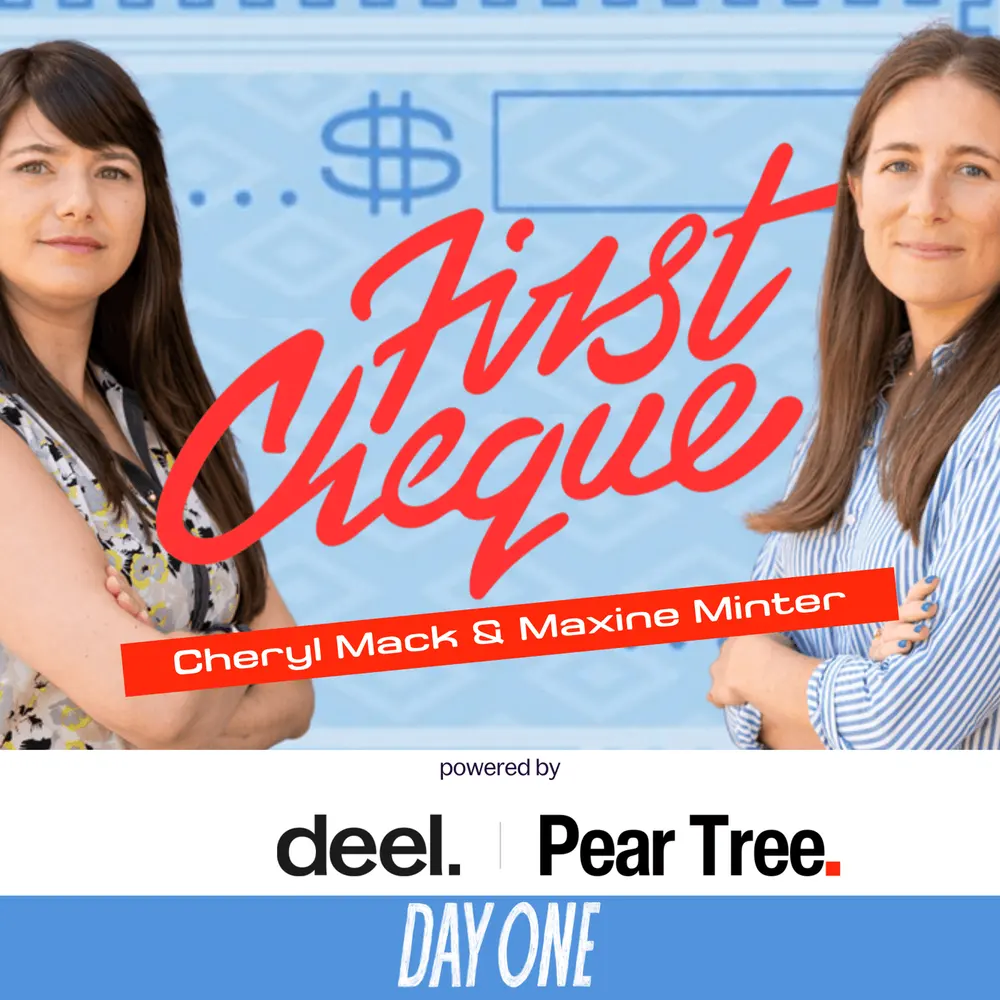 First Cheque with Cheryl Mack & Maxine Minter
Presented by Deel & Pear Tree
First Cheque with Cheryl Mack & Maxine Minter
Presented by Deel & Pear Tree 




 ▶
▶ ▶
▶ ▶
▶