Transcript Synced · select any line to jump ▾ 0:02 Maxine Minter: Founders scale faster on Deel. 0:04 Cheryl Mack: Set up payroll for any country in minutes. 0:07 Maxine Minter: Hire anyone anywhere. 0:09 Cheryl Mack: Get visas handled fast and get back to building. 0:12 Maxine Minter: Visit deel.com/dayone. That's d-e-e-l.com/dayone. 0:24 Speaker: Are you building a SaaS business and looking to achieve compliance with SOC 2 and ISO 27001 or other security and privacy frameworks? 0:32 Maxine Minter: Compliance can unlock major growth and build essential customer trust, but let's face it, it's usually time-consuming and expensive. 0:37 Speaker: And like really kind of a pain. That's where Vanta comes in. Vanta automates up to 90% of customer compliance tasks, making you audit-ready fast and saving you up to 85% of the associated costs. Plus, Vanta scales with your business, offering a market-leading trust management platform to continuously monitor compliance, unify risk management, and streamline security reviews. Join 7,000 global companies, including Atlassian and Dovetail, that trust Vanta to build and prove their security in real time. 1:03 Maxine Minter: And for our listeners, Vanta is offering 10% off. 1:06 Speaker: Just go to vanta.com/first. That's vanta.com/first. 1:14 Maxine Minter: Okay, 3, 2, 1. 1:18 Speaker: Hey, I'm Sheryl. 1:20 Speaker: I'm Maxine. 1:20 Speaker: This is First Check, part of Day One, the network dedicated to founders, operators, and investors. 1:25 Maxine Minter: If you want to be a better early-stage investor, this is the show for you. 1:28 Cheryl Mack: So TL;DR, if you don't want to suck at investing, listen up. Today we have Craig Blair, so excited. He has been investing in like the VC market since like 2002, which is totally OG. 1:47 Maxine Minter: OG, old guy, or like original guy in— 1:51 Craig Blair: Original guy. 1:52 Maxine Minter: Original guy in the ecosystem. But I do think it means that he brings this like incredibly sage voice. Every single one of my interactions with him, I've just been blown away by how thoughtful he is across those areas and like really anchors us in what's important in our ecosystem. 2:08 Cheryl Mack: He's also just like totally an original thinker and I think his ability to like take strategic risks has really come through the ecosystem. 2:16 Maxine Minter: Yeah, 100%. I mean, I think he does it in all parts of his life, right? Isn't he like an avid e-boiler, ocean swimmer? 2:21 Cheryl Mack: Yes, also a very risky activity. 2:23 Maxine Minter: Right, right. He's also put together a really strong, fun strategy team. Yeah, I've heard this. I think Actually, I think if we zoom out, his investment decisions from what I've watched is really good at taking these like clever, extremely unusual investment decisions at the time might seem crazy, but really play out both in the way that he has operated Airtree, but also like in their investments like Pet Circle. I think when he did it was pretty non-consensus, but amazing. Yeah, absolutely. Who would've thought, right? At the time, pet subscription stuff, no thanks. 2:52 Speaker: I mean, I don't have a pet, so I wouldn't know. Cool. Well, let's welcome him to our podcast today. Welcome, Craig. It's so great to have you on. The first question that we love to ask our guests is what is the first thing that you've invested in? 3:07 Speaker: I would say the first sizable investment I did was effectively the Yahoo of the Czech Republic. 3:13 Speaker: Whoa. 3:14 Craig Blair: So I invested a lot of money. I was about to go to business school and I took my entire first year's business school fees and put it into this company that I thought was going to be the next best thing. In the Czech Republic. And I think I got about 10 cents in the dollar for it. 3:29 Maxine Minter: Did your parents know about this? 3:30 Craig Blair: Well, I was my own person then. No, they don't. They didn't. But I just, I guess I learned a lot from how not to invest from that first experience. Yeah. 3:38 Maxine Minter: Yeah. Amazing. Well, out of interest, what happened to your business school fees? Did you end up going to business school and just like scrimped and saved for the first year or? 3:46 Craig Blair: Yeah. I mean, I was unusual. I mean, I know what your experience was, Maxie, but many people at business school either were paid for by the company they were working with before or had a loan. I had my own company. It was an engineering company in the Czech Republic, and I sold that for enough money to pay for 2 years of not working and 2 years of business school. So I sold a business and plowed it back into my own education. 4:10 Maxine Minter: Very cool. I actually just think that that is so archetypal of the amazing story that you lived. I feel like every time we have this conversation, I find out some amazing other facts. I didn't know that you had an engineering business in the Czech Republic before all of this. I mean, I know that you had kind of entrepreneurial background, but like that in particular is incredible. 4:29 Craig Blair: Yeah. 4:30 Maxine Minter: How did you decide, I mean, maybe just to take us off peace for a moment here, how did you decide engineering in the Czech Republic? Like what was your journey to developing that? 4:37 Craig Blair: I, that, that, that could take way longer than this podcast, but I, I ended up taking on a project in the Czech, in Prague to build a new It was called the, Bonton was the company. Bonton was a big technology company and they were building new music megastore. At those times, music megastores were a big thing. So I was on Wenceslas Square, which is the main square in Prague. I was building this 4-story building. I was 26 years old. I was an engineer, so I knew the engineering part, but I had to deal with hundreds of people on site. I had to deal with Russian mafia with machine guns outside. I mean, it was like, it was wild. Wow. Uh, and that company went bust, so I bought it out, took it over, and ended up with other projects and sort of just happened through a series of like strange events. I always felt out of my depth and I always felt I didn't know what I was doing. And I feel like I needed to get an education around business, not just engineering. This is why I went off to business school. 5:29 Maxine Minter: Yeah, very cool. 5:30 Speaker: Wow. 5:30 Maxine Minter: I do. I mean, I feel like my observation, at least, you know, I obviously have got to watch from the outside a bunch of the investments you've made and kind of heard. About a bunch of the businesses you've built, including Airtree, right? Like as one of the premier investment funds now in Australia, how do you think about developing theses that you chase? Do you like develop areas that you invest in? I know you guys do this at the fund level at Airtree, but when you are thinking about like, where do I want to invest? How do I want to invest? Are you doing like pre-thinking about these areas and then executing when those opportunities become available? Or Are you like on the fly being like, wow, that sounds like a good opportunity. Like, how do you think about thesis development? 6:10 Craig Blair: Yeah, I wouldn't have called it thesis development until maybe last 5, 10 years. I think that I usually have, I'm naturally contrarian to a fault sometimes. Like if everyone's going left, I'll go right and vice versa. So that tends to be annoying because it's always doing the opposite of what all the people are doing. So that's the first thing. Like if everyone in venture, for example, is going into something right now. I don't want to be there. I want to be somewhere outside that. But then it's like a question, if you're too far outside that, you just never get something. So I'm trying to fight just on the fear of the outside of the norm where it's going to work in the next 5, 10 years, not next 20 years, but it's not going to be the same thing everyone else is doing. So that's what I— That's what I did in my first startup and it was an online travel company in the UK, um, in the dot-com era. And online travel is pretty boring now, but at the time it was it just felt like the first use case of the internet where you can actually buy a ticket online, book a flight online, all normal stuff now. But music was going to happen. I had friends in music, but it was happening— it turned out to happen 10 years later. Yeah, e-commerce happened, but it turns out, you know, pets are 20 years later. So I think I was lucky to find something which is a little bit contrarian but not too contrarian, and it worked. 7:21 Cheryl Mack: Does that mean you're not going after AI right now if all the other VCs are? 7:25 Craig Blair: Honestly, biggest gripe when it comes to all of this hype we get into. Yeah, I have this thing, I say, VCs, we're all, we're all contrarian together. But yeah, fact, you, you can't make an offer if you follow the crowd, so you got to have to do something different. 7:43 Cheryl Mack: 100%. Fair enough. And so you guys, you know, speaking to the team each year, that you develop different themes each year. Really curious to understand, like, how do you do that? You sit down as a team, you Do you like go through what's going on in trends? Like talk us through some of that theme development that you do. 7:59 Craig Blair: Yeah, I think it happens fairly organically. I mean, our first premise is we do develop theses, but our first belief philosophy is that founders will find the best ideas. Like our job is to be scouring the market, understand where the best and brightest are thinking, you know, and as you meet people, you can see something's going on in a sector. So yeah. It's very much a founder-driven thesis. But that said, there's probably a couple of ways we land on a thesis. One is, is something's happening at a horizontal level. AI is a good example. We want to go on the stack and just think deeply about, okay, how's it going to play out? Who's going to win? Who's going to lose? That's usually a big piece of work done by somebody in the team. They present it back. We sort of thrash it out and land on a position. Like this is the areas where we think is interesting. There's a— Could be interesting. Everyone else is going to be there. This is the areas going to go to Cummins. And then the other way could be verticals. Actually, we might find like hotspots of activity again. Something's going on over there. We need to like build a thesis around that. And that could be in like industry verticals. It can be things like agtech or aged care, NDIS. There's a bunch of things like this. Something's going to happen in there. What's the role of technology software? We have both vertical and horizontal view of thesis. It's just more of a way of thinking about the segment. 9:08 Cheryl Mack: And like how much you use those themes to filter out or filter in companies? 9:12 Craig Blair: Uh, we don't. It's more to let us to have a view on when we look, seeing companies, we say, you know, in these, we've seen 3 companies in that space where our view is that space there is interesting today, but over time it's going to get competed out by the incumbents or so. I think in that, in that sense, we'll meet companies, but we'll have a view going into a meeting, a great team, but we can't see this space as being a long-term defensible area, for example. But it doesn't mean we don't meet people. We just have that sort of thought process, which we're prepared to change because we're learning all the time. 9:40 Maxine Minter: Hmm. It reminds me of the anecdote of at least Bill Gurley's backwards looking, how did we find Uber? 9:48 Cheryl Mack: Yeah. 9:48 Maxine Minter: Right. They like did a whole bunch of work on marketplace businesses and network effects. 9:54 Craig Blair: Yeah. 9:54 Maxine Minter: And he had particular theses in relation to like ground transportation. And so when he met Uber, he was like primed and ready to get it before everyone else. 10:04 Craig Blair: Yeah. 10:05 Maxine Minter: And so he did that work. Then something came into his crosshairs and he was just like, bang, like, this is my wheelhouse, I'll nail this. And like, I think we can agree, at least on enterprise value basis, like, nailed it. Do you guys think about it in the same way? You like do that work so you're prepped if you meet someone kind of in that space, but you're also kind of opportunistic as you meet founders? It's like, damn, that's a great idea. 10:27 Craig Blair: Yeah, well, we'll have a, we'll have a view for sure. So I do sometimes think some of these theses, Drew, but sometimes it's Sometimes there's great content, but I think it might be reverse engineering, but a serendipity. 10:38 Cheryl Mack: Like how true is it really? 10:41 Craig Blair: Yeah. I mean, I know Bill, like he's amazing investor. So, but I just, I think from our perspective, we go into a sector, we might, we might be, for example, looking at a data infrastructure layer in Gen AI and here's how we think it's going to play out. But when we find the one in that space, we go, okay, we've got a way to think about that. And we probably have, hopefully have more intelligent questions, which makes them feel like we could be partners. And sometimes they're wrong. Sometimes they persuade us, ah, you're wrong. There's another area, another way to look at this thing. But at least we come in with a, with a view. 11:10 Cheryl Mack: It also makes me think about how you track the patents that Apple puts in and like why you do that around, well, if I'm looking at companies that might be doing something in this space in the next 10 years, like how is that going to play out? I think there is something there about like you have to do the research in industries that you want to play in. Otherwise, like how are you going to make investment decisions? 11:30 Maxine Minter: 100%. Like I think a very sage friend of mine gave me this framework to think about being a great investor, which I really loved, which is like you have to see the deal, then you have to win the deal, and then you have to learn from the deal. Because this is such a long-term, investing is such a long-term activity, the extent to which you have better information at the table, you're going to make better decisions in the long term. And so, I mean, I think about this strategy as a, like you just make sure that you have better information on particular verticals or particular horizontal opportunities or like moments. So that if you come into contact with an opportunity that intersects with the area you're focused on, you're more able to see it, win it, like get it and learn from it. Yeah. 12:11 Cheryl Mack: Yeah. I feel like there's a middle one in there you missed. Like you have to understand the deal 'cause you could see it and not understand it and then why would you even win it? 'Cause, and like that's the piece where like the research means that you understand it. 12:21 Craig Blair: Also learning how to manage your biases. Like you're not gonna get rid of knowing what they are and when they emerge and whether you, understand things or you misunderstand things, just being really honest with yourself about what are you likely to get wrong or right here. I think that's where a team can help you because often they'll see things you can't and vice versa. And hopefully through, if you've really got a nice transparent and open conversation, you can get the wisdom of the crowds rather than one person's bias. 12:46 Cheryl Mack: 100%. That's such an interesting comment there. 12:49 Maxine Minter: Yeah, like I wonder for, I mean, maybe this is self-serving, but I also think for the folks that listen to our podcast, like a lot of them are angel investors. They don't have teams and they're not planning on building teams around them. Have you— How do you manage your bias? Right, like have you any tips or tricks on how you manage your bias as an individual? 13:07 Craig Blair: Yeah, so I, well, I could tell you my biases. I used to probably, I used to probably do too much work on early stage and try and over-index the analysis. That sounds strange thing to say, but what I mean by that and I see it happen now all the time is you're looking at a seed deal, 30-page IC paper doesn't make the thought process any better. I think that I used to mistake and people can mistake amount of work for quality of the thinking. And it's hard. The second thing, you know, there's some areas which I don't understand. I didn't, I missed, I missed Afterpay. 13:43 Maxine Minter: Hmm. 13:44 Craig Blair: I just couldn't conceive of why you wouldn't use a credit card. It just wasn't my generation. I joke now that if you've got to, invest in a product where you have to swipe. I'm not your kind. I didn't grow up swiping, okay? 13:56 Maxine Minter: My finger doesn't work that way. 13:58 Craig Blair: I mean, it's a bit silly, but there are things you go, I just know I won't be the person who gets it, right? And the last one, which is a problem for when you're doing it for a while, is you've almost certainly seen that thing before and it hasn't worked. So your tendency could be, I've seen that before in certain years, it didn't work for certain reasons. But everything works at some point in time. It might not work before, but why would it work now? 14:20 Speaker: Super interesting. Yeah. 14:21 Cheryl Mack: It reminds me, I don't know who said it, but they said like, in my experience, almost anything is possible technologically. It's just whether or not you can make the other factors work. 14:29 Craig Blair: Mm-hmm. 14:30 Maxine Minter: Yeah. It's a humbling experience to see like, see a company and be like, oh, it's not gonna work for these reasons. Or like, it hasn't worked in the past and therefore it's not gonna work again in the future. 14:39 Craig Blair: Yeah. 14:40 Maxine Minter: And then it like really works in the future, right? The like anecdote there is, It's really easy in hindsight to be like, Google was a great investment, but at the time it was the like 9th to market in a very crowded search environment. 14:51 Craig Blair: Totally. 14:51 Maxine Minter: And all of the investors that looked at it were like, why would Larry and Sergey win when everyone else has failed? And like by the time it became obvious on the numbers, right, it was too late. 15:01 Craig Blair: Yeah. 15:01 Maxine Minter: I do wonder how you think about intuition in investing in that perspective. Like something that actually my executive coach and I were talking about recently was the role of intuition in decision-making. And his kind of framing was, if you could, especially for early stage, like pre-seed and seed, if you could know 100% it was going to work on the numbers, VC wouldn't exist in the way that it does, right? There's like an enormous amount of intuition that comes into decision-making. I would love your thoughts on that. 15:32 Craig Blair: Yeah, I think it's important. I agree with your distinction between the difference between late stage and early stage. I think they're very different. Areas. You're right, if it was easy as knowing the numbers and knowing things, we wouldn't have a job. So there's always going to be a bit of gray area and so a bit of intuition in there. And you have to acknowledge the role of luck, right? So you're just trying to like force Lady Luck just to bend a little bit your way. Examples of areas, and again, I'm going to say things here, my team will just shake their head because I freeze easily. Tam analysis, right? I find Tam analysis to be some of the most irritating. Reductive thinking in investing. 16:08 Maxine Minter: Interesting. 16:08 Craig Blair: The reason is that I feel like, and I used to do it all the time, and I bet as business school, I could do a spreadsheet which would make you the TAM look amazing. But it was almost all entirely wrong. And it's because there are so many answers, garbage in, garbage out. There's so many answers. My spreadsheets looked amazing, but it ignored the fact that you just didn't understand in that. Also ignored future states. So you're dealing with something today, things change in the future. You know, dynamics change in the future. So you've got a market that might be growing, but the dynamics might be changing. And good founders can often just, they don't see market constrained by spreadsheets. They just see opportunities. So, so I think there, there's an opportunity to at least have a sense of how big the market is, but don't be constrained by the spreadsheet. Like you need to think, have a gut feel, this could go somewhere, it could build somewhere. You know, Uber is a great example. I do think there's a lot of intuition. But I think it's, if it's just becomes a gut feel and you're just throwing darts at the dashboard, that's not going to end either. So it's got to be sort of thoughtful, thoughtful analysis with a bit of intuition. 17:10 Cheryl Mack: So do you even look at a founder's like market size TAM slide or do you just like totally discount that? Do you think founders should not even bother doing them then? 17:18 Craig Blair: Well, again, I'm probably a bit out. I'm more interested in how a founder's thinking about it. If a founder puts a TAM down, I think that's the answer. Then that makes me question that judgment. If a founder puts something down and said, here's an answer, but, you know, they understand the ambiguity and complexity future, then that's great because that's the world, that's, that's the real world. So yeah, more about how they phrase it. I love it when founders say, I don't know. 17:44 Maxine Minter: Yeah, it's rare. Yeah, right. Yeah, 100%. 100%. Actually, I mean, I think it is one of those divisive topics, right? Like there's people on one side of the fence that are like, TAM analysis really matters. And then other side of the fence that it like really doesn't matter. And it's probably both are right. You know, and I think that nuance is it's about the way the founder is engaging with that information. 18:05 Craig Blair: My only challenge is like, assume there's a world where TAM analysis is right. Okay, fine. Then you come back to where's the alpha? Because you can run the same numbers everyone else. What's the insight, right? So if TAM is going to be an important factor in your decision-making and you think you, you've got to find what's your angle that the next analyst is just as smart as you has on their same spreadsheet. 18:27 Cheryl Mack: Yeah, because we're all getting the same numbers at the end of the day from the founder. It's like, do you believe them or do I believe them or does nobody believe them? 18:33 Maxine Minter: Yeah. Yeah. 18:34 Cheryl Mack: So you've been doing this a long time and I think that kind of shows, uh, you know, just the way that you, you talk about some of these things. But I think it'd be really interesting to get a sense of like what it was like growing a VC fund from scratch during a time where there really wasn't many or any when you first started? Can you walk us through that journey a little bit? 18:52 Craig Blair: Yeah, I mean, look, you know, you've both done this as well, so you'll have your own journeys to share. I'd love to hear. I mean, I think I started Edge3 10 years ago and I've had almost 10 years experience at a fund before that. So I wasn't coming in fresh, but I think the first thing I'd say is like, it's like starting a business. I've had to start a lot of software businesses. It's the same thing. It's like, it's really, really hard. The odds are stacked against you. Lots of reasons to fail. Plenty of doubters out there. So you really have to have a sense of conviction and belief in a world where everyone's saying, don't do it. Back then, now it's more obvious, but back then it wasn't obvious. And I guess that forced us to thinking about really, really crisp on what our thesis was. Why do we think it was a right for VC to thrive in Australia? And if so, what was the right model in VC. And for us, it was a multi-stage, regionally focused VC that had full service offering. Yeah. And it's not rocket science. It's a model you've seen work in other markets pretty well. Yeah, you've got to find product-market fit, right? You've got to find a vision and a land. You've got to raise money from people who really have no reason to believe in you. You've got to convince a team to join you when you don't have anything. So, um, you know, we were lucky that the suede investors have come on board. 2 of the people who joined in the very first week are still with us right now. 20:14 Maxine Minter: Wow. 20:15 Craig Blair: So that's it. It's like a seed fund. It's like a seed investor, pre-seed, you know, business. 20:20 Maxine Minter: 100%. I actually, I remember when I was raising the pre-seed round and the seed round for my last venture-backed business. And because pre-seed and seed is overdominated with emerging funds, we spoke to a bunch of emerging fund managers at the time. And I remember them being like, we raise capital too. Therefore, life is like you. And I remember being like, It's not the same. It's so not the same. Like this is so different. And then now I'm in it, I'm like, it's actually surprisingly similar, right? There's like lots of similarities, but I try not to talk about that with founders 'cause I remember how deeply I just like, you don't get it as a founder when I was talking to fund managers. But actually like I didn't get it at the time. And there's so many parallels that you're building a business here. 21:03 Cheryl Mack: Yeah. 21:03 Maxine Minter: That has all of the features of building a kind of early stage unproven business. 21:07 Craig Blair: Yeah. 21:08 Maxine Minter: And even some like other weird elements to it, right? Like it's almost like an enterprise sales motion in that you lock in a certain amount of revenue and it's like yours for 10 years and then you like lockstep up revenue jumps. 21:20 Cheryl Mack: Yeah. 21:21 Maxine Minter: But you get busier up behind them, you know? So you've got like set revenue, but then you get busier and busier up to a point. We haven't got to that stage yet, but like actually the growing of the business behind your like interesting revenue structure, I think is something I'm definitely kind of learning about. I also— 21:38 Cheryl Mack: There's a lot of parallels there. 21:39 Maxine Minter: There's a lot of parallels. Yeah. I, I relearned recently that the graduation rate from fund 1 to fund 2 in the last couple of years has been about 30%. So actually the death rate for like fund 1 to fund 2 fund managers is higher than like pre-seed and seed stage companies, at least. 21:57 Craig Blair: Yeah. 21:57 Maxine Minter: Yeah. 21:57 Cheryl Mack: What's the death rate between seed and Series A? 22:00 Maxine Minter: I think it's about 50% in the US. I don't know. Have you seen any more recent data? I know some people have said recently it's closer to like 25 to 50 graduation rate from seed to Series A in the US. 22:11 Cheryl Mack: Yeah. 22:11 Maxine Minter: Do you know what it is in Australia at the moment? 22:13 Craig Blair: Uh, I'd say the same, same. Otherwise, so it has what it should be. It should be 20 to 50%. It has been much higher than that. 22:19 Maxine Minter: Yeah. 22:20 Craig Blair: But I think we're going to find the failure rates have just been extended, which we're finding now. 22:24 Maxine Minter: Yeah. 22:24 Craig Blair: But I think the, the, The better sort of point I agree, I think you're making, which I agree with, is VC failure rates are about the same as startups and they fail for the same reason. That's not product market fit, the economics didn't work, or the team blew apart. They're the same things that break in VC, break a startup. 22:41 Cheryl Mack: Can't raise the next round. 22:43 Maxine Minter: Yeah. Right. Yeah. You can't raise the next, next, next— 22:45 Cheryl Mack: Fund round. 22:46 Maxine Minter: Fund round. 22:47 Speaker: Fund round. Are you building a SaaS business and looking to achieve compliance with SOC 2 and ISO 27001? Or other security and privacy frameworks? 22:57 Maxine Minter: Compliance can unlock major growth and build essential customer trust, but let's face it, it's usually time-consuming and expensive. 23:03 Speaker: And like really kind of a pain. That's where Vanta comes in. Vanta automates up to 90% of customer compliance tasks, making you audit-ready fast and saving you up to 85% of the associated costs. Plus, Vanta scales with your business, offering a market-leading trust management platform to continuously monitor compliance, unify risk management, and streamline security reviews. Join 7,000 global companies, including Atlassian and Dovetail, that trust Vanta to build and improve their security in real time. 23:29 Maxine Minter: And for our listeners, Vanta is offering 10% off. 23:32 Speaker: Just go to vanta.com/first. That's vanta.com/first. 23:41 Maxine Minter: I'm wondering from your, I mean, you've obviously done this progression twice now, right? Like you ran a venture fund prior to Airtree and then now you've done it again. You kind of scaled two funds. What is it like to take those steps from like Fund 1, those early believers? I love the fact that you're like still so close to some of your early LPs that they're hanging out at your house right now. Um, like what did you learn in those steps up from Fund 1 LPs to Fund 2, Fund 2 LPs to Fund 3? 24:12 Craig Blair: Yeah. Well, that, I mean, that's, that's been a fascinating journey. I think, uh, well, yeah, our first fund was a $60 million fund. We actually raised close to 80, about 80, but we felt that was too much money. Scaled it back to 60, which is tiny by today's standards, but at the time it was a big number, right? It was a really big number. And we got there because we had, well, we had a track record, which helped. We generated DPIs. We'd had a pretty good network of people we worked with before. But the main thing was they were looking for like some sort of proof points of track record and they want alignment. And this is where The curly, this concept of GP commit, I know it's a sensitive issue because it can be icky, particularly for early managers. So I don't want to brush over that. It's an issue we need to resolve as a sector. We want to find managers coming in for sure. But I guess from our perspective, it was a very good way of saying we've done this before and we made money out of it and we're prepared to put it back in. And secondly, the alignment point was really important for me personally. Like, you know, I was It's really important that I was able to look my LPs in the eyes and say, if this doesn't work, I'm going to hurt way more than you are. It's no free option here. And so that made for some tough conversations with my wife, you know, mortgage my house, try and have a crack at this thing called VC, which by the way has never worked in Australia. Your point earlier, it hadn't worked before. Thankfully she believed and trusted me, but I think they were— They were the big, big statements and big— signals that we had to show that we were confident and aligned and we couldn't afford for this not to work. That was how we raised the first fund. We said a family officer through just alignment and our own kind of like momentum. And these, some of these are friends of mine and friends I'd worked with before, friends that are family officers that I'd grown up with. So, and then the transition for the second fund was interesting because that's when prior to 2000, our second fund was 16. And up to that point, VC was really on the nose for institutional investors. Uh, in fact, there were superannuation funds. I remember meeting one CEO, CIO, who said he was only two asset classes he was forbidden to take into IC. One is Japanese junk bonds and the other one is Australian venture capital. So, because it just hadn't worked before. 26:25 Maxine Minter: That's great. 26:27 Craig Blair: '16, it changed and they started knocking at our door and and it was a totally different experience. Yeah, they're $100 billion plus funds. They want to write big checks. They didn't really understand venture, frankly. They understood PE. They thought it was kind of similar to PE. Uh, the DD process was just next level. You know, frankly, our operations DD was really, really hard because we weren't really there, to be honest. So we had a lot of leveling up, a lot of learning to do on operations, risk, technology. Uh, we had it, we had the track record, we were making money. But the other parts of the business just weren't quite there. So that was a big learning curve for us in that second part. 27:02 Cheryl Mack: And there's just, maybe I'll jump in there 'cause we have had some feedback from our listeners that we tend to use a little bit of jargon in our conversations. So there's a couple terms there you used that I'm gonna define really quickly, but there was one that you said that I'm gonna ask you about. So one of the things you just said was DD, that stands for due diligence, which is just the investigation that VCs or investors tend to do on startups before they invest. You also mentioned PE, which just stands for private equity. That's kind of the bigger end of town that tends to come down and invest in funds even when they don't understand it, like you mentioned. And another one that you mentioned was GP commit, which essentially is just the amount of money that you have to, as fund managers, commit to the fund itself. It signals to us as LPs that you are committed to the fund and that it's your money on the line as well. And then there was another term that you used, and I might've heard it wrong, but you said we generated DPR or DVR at the start. What was that? 27:59 Craig Blair: Yeah, that's DPI is basically the capital returns. TVPI, total value paid in, and DPI, which is distributed paid-in capital. And as fund managers, the only way, the only thing that our investors care about is DPI. Ultimately, they give us a dollar on day one and they hope to get $2 or $3 back in real cash at some point. And so it's liquidity. 28:22 Cheryl Mack: Yeah. Awesome. Thank you. I learned something today. 28:25 Maxine Minter: I love that. I was, as you were answering that question, I was watching Cheryl like take notes of the list of defined terms. It reminded me so much of being like a baby lawyer and then a baby investor where you just be like, mm-hmm. Yep. Mm-hmm. What does that mean? Writing down words, then going in Investopedia and being like, what in God's hell? What is a DPI? 28:46 Craig Blair: But that, speak too fast, I use too much jargon, it's blasted through that thing. 28:51 Cheryl Mack: It's okay. I knew 3 out of 4, so I'm calling that a win. 28:55 Maxine Minter: Yeah. Yeah. 75%. I'll, I'll count that. I would, I would say like on the GP commit point and on the like track record and DPI point, I think it is such an area that I think we need to solve as an ecosystem. 29:09 Craig Blair: Yeah. 29:10 Maxine Minter: If we want to change the demographics of the people deploying capital because just for the kind of context here, the industry norm for GP commit, so the amount that fund managers are asked to put into their fund is somewhere between kind of 1 and 2%. So if you're raising a big fund and you aren't independently wealthy, you have those conversations. If you're lucky enough to kind of have a mortgage with equity in it, like you're having conversations with your loved ones, like, hi, I would like to bet the house I can pull this off. 29:38 Craig Blair: Yeah. 29:38 Maxine Minter: But if you're not in that situation, kind of not yet at that position, one version that I've seen in the US here is cashless commit, which I actually believe I've done in my fund for a portion of our commitment. And we use a company called Boutique as our back office. And in our early conversations with Tim at Boutique, I was like, I would like to do cashless commit for like this portion of our investment. And he was like, go on, what is cashless commit? 30:04 Cheryl Mack: Right. 30:04 Maxine Minter: And so it's like a new thing to the Australian ecosystem. But I do think that that's a really exciting opportunity, which for context here is essentially you forego management fees. And then you take the kind of equivalent of that. So you are still aligned to it. You are not taking revenue to kind of run the business. 30:20 Craig Blair: Yeah. 30:20 Maxine Minter: That's, I think, a really exciting option. And on the DPI piece as well, like you have to be fairly far along in your career just because of the nature of the timelines of venture. 30:29 Craig Blair: Yeah. 30:30 Cheryl Mack: Show DPI. 30:30 Maxine Minter: To show DPI. 30:31 Cheryl Mack: Right. 30:32 Maxine Minter: Right. Like you have to hold a whole fund or like the majority of a fund to start to like return that, return that back. Do you have any theories on like, how we break out of that cycle, or does— is it just a structural requirement that means that you have to be further along in your career to be able to be a fund manager? 30:47 Craig Blair: Um, I, I don't have a magic bullet, but I think I agree with you. It's, it's— you need to spend time on this. I think it's also breaking it down as component parts. What are you trying to achieve? The first bit is alignment, and foregoing management fees is one way to do that. That— when we do it, when we back founders, we ask them to do the same thing, right? We say we want you to earn next to no salary and we want you to invest your shares before you. So we're doing, we're asking our founders the same thing we should do. They set themselves for other people. That feels like a, that feels like it's solvable through capital commitment. The actual cash-in DPI story, I think that's a slightly separate point. And I think it really, it just comes down to what you're pitching, right? If you're pitching first-time manager, then you won't have, you can't pitch track record. So that's the, you're going to have, it's a different thing you're pitching, right? If you're pitching a track record, which we were, you can't pitch track record and then not put money. So I think it's, it depends what your product. And then it comes down to, okay, well, where's a product market fit or a fund market fit for an early stage fund without a track record? Because they've got an interesting thesis in a market or a different angle on the view. That's, that's, that's fine. It's like a pre-seed investment in some ways. It's riskier. 31:54 Maxine Minter: Mm-hmm. 31:54 Craig Blair: But it might be better than backing it, you know, invest as an LP than backing yourself into a, established fund that's doing the same thing, 8 funds in. 32:02 Maxine Minter: And there's some really interesting data on performance of fund 1, like fund 1s and fund 2s to a lesser extent of emerging managers actually statistically outperform later funds, but they're generally smaller. So I think like it kind of aligns to that, that comp you make there, like pre-seed investment versus a seed stage investment versus like you get compensated. Ideally you get compensated for the risk you take and you see a better kind of return profile. On those funds. Yeah. Obviously controlling for like market dynamics and those kind of things. Yeah. I think it's going to be pretty tough to return at an excellent fund one if you launched in August of 2020 and did two years of deploying '21 and '22. Like that's a tough, a tough macro to be returning out for. 32:44 Craig Blair: Yeah, 100%. And that's, and that's where timing is everything, right? But it's, again, it's the same for our companies. If you raise a seed round in '21 or A round 21, chances are probably not worth the value you were then. So you're scrambling to try and build up, build your value back up to whatever you promised back in 21. What's to say the funds like? 33:04 Maxine Minter: 100%. Yeah. Actually, that raises a question for me. One of my takeaways from that period, let's call it like middle of 2020 through to even to 23. One of my takeaways is the importance of like clear communication. Of the incentive structure in which you're operating. You know, a terminology I've been using for our fund is like, we are a two-sided marketplace. We have customers on either side. 33:27 Speaker: Yeah. 33:28 Maxine Minter: And being very clear with the founders that we work for that like we have other sides, the other side to our marketplace that we have to serve. 33:34 Craig Blair: Yeah. 33:35 Maxine Minter: And I found that to be a kind of a useful way to recognize the reality that like the customers on the LP side of our marketplace inform the decisions we can make and what we can invest in and how we operate on the founder side of our marketplace. 33:49 Craig Blair: Yeah. 33:50 Maxine Minter: I'm wondering from your perspective, what have you, kind of over your time of investing, how do you factor in the incentive structure that is having LPs whose capital you're investing into the way you think about investment decisions? How do you square those two and communicate it? 34:06 Craig Blair: Yeah, I think there's two things there, sort of incentives and then communications. I think on the incentives, I think it's, I mean, the reason they're called limited partners is they should have limited liability. The reason they have limited liability is they shouldn't get involved in decisions and good investors understand that. So I think it's very dangerous that you start morphing your investment plan to suit your LPs. I mean, you promised them an investment thesis and investment plan when you took their money at the start of the fund, but then they would trust you with their money to deliver on that plan. So I think we just haven't found LPs who want to get involved because they know the reason they gave us the money, they trust that we're doing a good job. They know they've got an opinion that's probably not as well informed as ours are. If they get it wrong, it's kind of going to come back at them. So it just doesn't come, it just doesn't come into play for us. That said, there's probably a couple of things that you do feel from LPs. One is DPI, distribution paid in. 35:01 Speaker: Mm-hmm. 35:01 Craig Blair: Yeah, there's a sense of how, as you know, the venture community has been working for incredible boom for the last 10 years, but some of the earlier funds have not figured out how to return capital to investors yet, DPI. And that really matters because it's a proof point that the valuation, holding valuations are actually what they say. It's also part of your promise to LPs. They've given you a dollar 10 years ago. They deserve to get their money back at some point. So I think just understanding how they think about DPI and the need to give back DPI is something we're mindful of. We don't get pressure from it. We talk a lot about here's how we're thinking about, we communicate how we think about exit plans, liquidity plans in our portfolio. The second thing that it's not really how the— doesn't affect investments, but it affects fund size is this, it's going to sound like a total privileged problem to have is large investors want to write big checks. And so the temptation is, especially in the last 5 years, is, oh, can you take a $100 million line, or, and you can get your, your funds can get bigger than you, you need to be. And I think, I think we've always taken the view that we want to size our funds bottom up and top down. We want to do some careful work about what's the right size of the fund, given the market we're seeing, the space we're going to play in, the team's capacity. And we don't want to go too much more than that. But it's fair to say with, you know, large institutional investors, you can get beguiled into taking more than you should. And that, that could be a real problem. I appreciate that's a nice— could be seen as a nice problem to have. 36:31 Maxine Minter: Yeah, for some. I mean, I think that that tracks also to companies, right? Like, Kim Teo just blows me away. I am persistently amazed by her. One of the moments I have been particularly amazed by her is in the heady environment of 2021, or maybe, yeah, 2021, when Tiger came knocking on that door. They offered them, Tiger offered them a significantly larger valuation and a much bigger check size than they took. 37:00 Craig Blair: Yeah. 37:00 Maxine Minter: And Kim and the team in their infinite wisdom were like, no, we're gonna have significantly less. And I believe at the time the fund manager who led it was like, what? 37:10 Cheryl Mack: Even on valuation? 37:11 Speaker: On valuation. 37:12 Cheryl Mack: Like they took less money and less valuation. 37:14 Maxine Minter: Yes. Yes. Yeah. 37:14 Cheryl Mack: How did they, I would love to talk to them. Maybe this is, we get her on the show. 37:18 Maxine Minter: Yeah. Yeah. 37:18 Cheryl Mack: Like I would love to understand like at what quantum did they go, cool, you're offering us 100, We'll take 75 of that or like we'll take 8. Where do you find that was the right number? 37:27 Maxine Minter: Right. But I think like Craig is an example of this, but he's doing it at a different topic, right? Yeah. It's like you are offering me $100 million, but actually I have the discipline to know my investing plan and I know $100 million breaks my model. 37:39 Cheryl Mack: Yeah. 37:39 Maxine Minter: And I'm like not gonna give into the greed of like, excellent, that's 2x the management fee I could take on that. Or like kind of move away from that. From that discipline. So maybe, I mean, I would love to have Kim on the show. Kim, if you are gracing us with your ears, like please come on the show. But Craig, I'd be interested in your thoughts. Like what is the mental discipline for you to be like, thank you, no? 38:00 Craig Blair: Well, I think it is just having confidence in your investment plan. This is how many checks we've got to write. This is the size of checks we think we're going to need to get the stake we need. So we've got a plan we believe in. In our case, we've done it 4 times now. Like we know We've got a fairly good idea about what this plays out. So if you take more money, you have to change things. And like, that's just dangerous. Any model is working well, particularly in this market. But the second thing is like, why do you take this money? What are the things that make you take more money, you think? Well, it's usually like, hey, it's pretty flattering, right? 38:33 Maxine Minter: We all be flattered. 38:35 Craig Blair: Yeah, exactly. I was just acknowledging that. It's real. Like, hey, bigger check. Maybe the front page of the AFL looks better. You know, you maybe make more management fees, or in Kim's case, you have a longer runway. But long term, is it really that good for you? And I think, you know, as we found out at the company level and the fund level, it can be really bad for you if you take too much money. And I think we're certainly seeing that at the company level. Kim's an exception to that rule. And I think you may see at the fund level, if funds who took too much money and they just have to stretch their investment thesis, write bigger checks, go harder, I think it's just a money to work, and that can be very dangerous. 39:11 Maxine Minter: Yeah. 39:11 Cheryl Mack: Speaking of the AFR, we— there was an article recently around, you know, larger checks attracting founders and whether that's a sustainable model. And I'm curious, you know, what are the thoughts there and how that impacts things? 39:25 Craig Blair: Yeah, I think I know the piece you're referring to. I don't— I don't— okay, my view is that we should all care about the ecosystem. We want to see more founders back. We need to see more startups get capitalized, whether it's us, any other fund doing that, it's a good thing. If someone wants to pay more money for it to get in early, I think that's not a bad thing. That's a good thing for the ecosystem. I think, uh, so I, I'm not sure that, I'm not sure that story hit the market. I think it misunderstood how venture works. If you can get into the best companies and pay a little bit more early on, which we did the same thing, and you find the next employment hero, or you find it to go on. 40:00 Maxine Minter: That's a great strategy. Yeah. Sage voice. Sage voice. Yeah. Yeah. 40:05 Cheryl Mack: We were talking earlier, like Craig's the sage voice in the like drama of the tech scene sometimes. 40:11 Maxine Minter: 100%. Just like anchor on, on the realities of it, right? Every day, if you gave me the opportunity to buy, like, as you said, Go One, Canva, any of these at a, you know, $20 mil valuation. Yeah. 40:24 Cheryl Mack: Yeah. I'd do it all day. You'd do it. 40:25 Craig Blair: And then, and then when you've done this, sound like the wise old man, but if you've done it enough, you would have seen that work well. Yeah. Those examples at those sort of numbers, like that's a really, that works out really well for you. Right. We also assume you've missed things because you didn't pay enough or you didn't write nice. Like that's just the silliest reason to miss. So we never want to miss a deal because of valuation or check signs in the early stage. Later stage is a whole other, it's really, you've got to do some serious analysis. Yeah. A lot of thinking. And that's a much more different discipline, but early stage, getting into it and paying a high price is a totally sensible strategy. 41:00 Maxine Minter: Yeah, I totally agree. 41:02 Cheryl Mack: So do you compete on valuation then if you're like, the founder wants a higher valuation because they're getting it from someone else? If that's not something you want to miss out on a deal from, do you actually compete on that? 41:11 Craig Blair: Well, I think we accept we have to pay market. We won't notionally bid the price up because of the previous conversation. We actually think sometimes we can damage the the company, if the company takes our money or somebody else's money at too high valuation, checks too size, and it's going to take them longer to do what they need to do in that Series A, they're going to have a problem in 18 months' time. So you're looking for the Kims of the world to go, ah shit. It doesn't always work, but there are reasonable amount of cases where we're able to get into companies at a lower valuation, less check, because they're thinking long term, but they're not thinking about optimizing this round. 41:46 Maxine Minter: The psychology of valuation is so interesting. Like I'll say for my own investing activity, like I noticed that influences like my gut level reaction and I have to counteract that gut level reaction. 41:58 Speaker: Yeah. 41:59 Maxine Minter: You know, someone like an amazing founder building something really cool comes to me with like an unreasonably low valuation. I find myself being like, oh, why? Like, you know, what does that say to me about the information flows you're in? Like what does that say to me about the like quality of the founder? And I have to check that and be like, Yeah. There are so many reasons why that might be the case. And similar on the other end, I don't, I think it's very important not to lose sight of the, like, we are humans, we're not computers. Like, there's like so much psychology around valuation that also matters. 42:28 Craig Blair: Yeah. 42:28 Maxine Minter: And I think having discipline around it is really valuable. 42:31 Craig Blair: Yeah. 42:31 Maxine Minter: I do wonder, you know, you have watched such an amazing progression of things in the Australian ecosystem, right? Like, I think your first fund was 2002 from memory. You've watched this incredible journey. Is that right? Or were you in market prior to that? 42:47 Craig Blair: '05 was the first one. Yeah. '05. Yeah. 42:49 Maxine Minter: '05. Okay. So like, I mean, you are an OG of the ecosystem, old guy slash original G of the ecosystem. Like you've watched some amazing things happen in this world. I wonder if you can kind of be the voice of history for us and share what do you think are the trend lines you're watching into the next stage of the Australian ecosystem? 43:12 Craig Blair: Yeah, I think that time series gives you perspective of just how far we've come and then how far we have to go. If you see how far we've come, we used to see 500 investments a year, even just 20 years ago, and make 2 or 3. We see 3,000 now and make 15, 20. Most of the companies we saw were either pretty derivative ideas, There were caves and global wines, but it really wasn't, it wasn't the ambitions anywhere near the ambitions you see now. But you didn't have these showcase companies like Canva or GoWine showing that's what a global, it's a multi-billion dollar global company looks like. Um, so ambitions increase. We went from no funds, so VCs there, to no VCs, to VCs starting again in the second, in this next epoch, starting in around '14, to now there's hundreds of VC funds. Both your examples, you know, different diversity of capital coming in from different sizes of funds and types of capital. It's a totally overseas world, but the ecosystem is working. Like, you can just see it's knitting together, that you can't— your talents coming in from universities or jumping out from the— most of the child startups. Yeah, angel investors are becoming more sophisticated. Hopefully, you know, shows like yours help that. You know, seed funds, multi-stage funds, and sure, we compete sometimes, but I think one of the hallmarks of Australia, which we should not take for granted, is it is actually genuinely collaborative. I think genuinely, sure, we're going to compete when we need to, and that's the right thing to do for our founders. But in general, we want, everyone wants each other to succeed because we're trying to lift this whole thing up. I think we shouldn't take that for granted. You don't find that in Israel or Canada or UK. It's much more cutthroat. You certainly don't in the US. 44:58 Maxine Minter: So, certainly not. 45:00 Cheryl Mack: Yeah. I just learned that there's no VC conference in any other country. Like we're the only country that like gets all the VCs together in one room every year. 45:08 Maxine Minter: Right. I think that might be more about scale than it is about collaboration. Like you can fit all of the VCs in Australia in a room. I don't think you can do that in the US or it's like Madison Square Garden, you know, like it's big. Yeah, I do. And we're coming to you, the reason we're sitting together today, which is unusual, is we are very rarely in the same part of the world, but we're currently in Perth for West Tech Fest. 45:29 Speaker: Yeah. 45:29 Maxine Minter: And I think my takeaway is just like how collaborative you can be when it is a small-knit community. I think that, you know, as we continue to see this growth trajectory, there's gonna be a point at which Australia, like we can't all fit in the same room physically or like theoretically. And so thinking about how we hold onto that collaborative roots. Even while we scale into an environment where we kind of do have to bifurcate or the cells kind of have to split, how do we make sure we still collaborate? I think it's really important. I do think that the Australian culture kind of lends itself to that. 46:04 Cheryl Mack: It absolutely does. Yeah. I think we're coming up to our last question, Maxine. 46:07 Maxine Minter: Yeah. I'm really excited to ask you this, Greg. So what is the biggest big kahonas moment you've ever experienced? A moment where you felt really brave. 46:17 Craig Blair: I do a lot of adventurous things. I do a lot of, in my previous, well, probably still do a lot of crazy stuff. I love risk. I love understanding how far you take risk. I have no interest in dying. I really don't want to die, but I'm happy to risk almost everything else. So I won't bore you with that. I think maybe, maybe you go back to bravery. So I think I go back to maybe when I was at university, I was in my first year of university studying engineering. And I had a stroke and I was paralyzed down one side of my body and I couldn't speak and I was at hospital for this pretty frightening period. And it was just before my final year, first year exams, about this time of year actually. And I obviously didn't do exams. I was in hospital for a long time. We didn't know whether I'd walk or speak. And so I had to learn all those things again. And then I just, and I, I, I was pretty uncertain future. I know I just decided, well, I'm going to go back and do these exams, all these exams in February. I had to have a special room and I couldn't really think properly, but I just did the exams, probably not very well, but I got through the exams. And then, then went straight back into competitive sport as fast as I could. I couldn't really run properly, but it all came back pretty fast. And within a year, within 6 months, I was playing, yeah, pretty competitive sport again and was I passed my first year's exams, which is a nice thing. So I think that was probably a moment where I could have gone the other way. I could have sat back and taken a year off. I could have, you know, just wallowed a little bit, but I didn't. I sort of just got stuck in and did it. 47:50 Maxine Minter: That's amazing. 47:51 Cheryl Mack: Wow, that is very brave. Like, that is— you kind of made it seem like you weren't going to come up with anything there. Yeah, and then mic drop. 47:59 Maxine Minter: I actually, um, My partner had a stroke a year and a bit ago, and so I watched firsthand what that's like to rebuild. And I don't, I just really want to underline the bravery element there because it is, at least from what I've watched, is like effing terrifying for your brain and body not to work. 48:16 Speaker: Yeah. 48:17 Maxine Minter: When you're used to being what I'm assuming is a like very capable outdoorsy engaged person. And like the choice to be like, nope, I'm not letting this stop me. I am gonna, you know, be embarrassed, be kind of wobbly, say weird things. Yeah, you know, dribble slightly, all of those things as your body is recovering. Yeah, I think that's incredible and speaks volumes of the bravery that you brought to that. 48:42 Cheryl Mack: Wow, wow, wow, that's incredible. Thank you so much for sharing that with us and for sharing everything today. Just, I think we've learned so much. Amazing conversation. Thank you for bringing us into your home. 48:52 Maxine Minter: Yeah, this has been the best. Thank you so much, Greg. 48:55 Craig Blair: Thank you so much. 48:55 Maxine Minter: Thank you so much. 48:56 Cheryl Mack: Very much. Thank you.

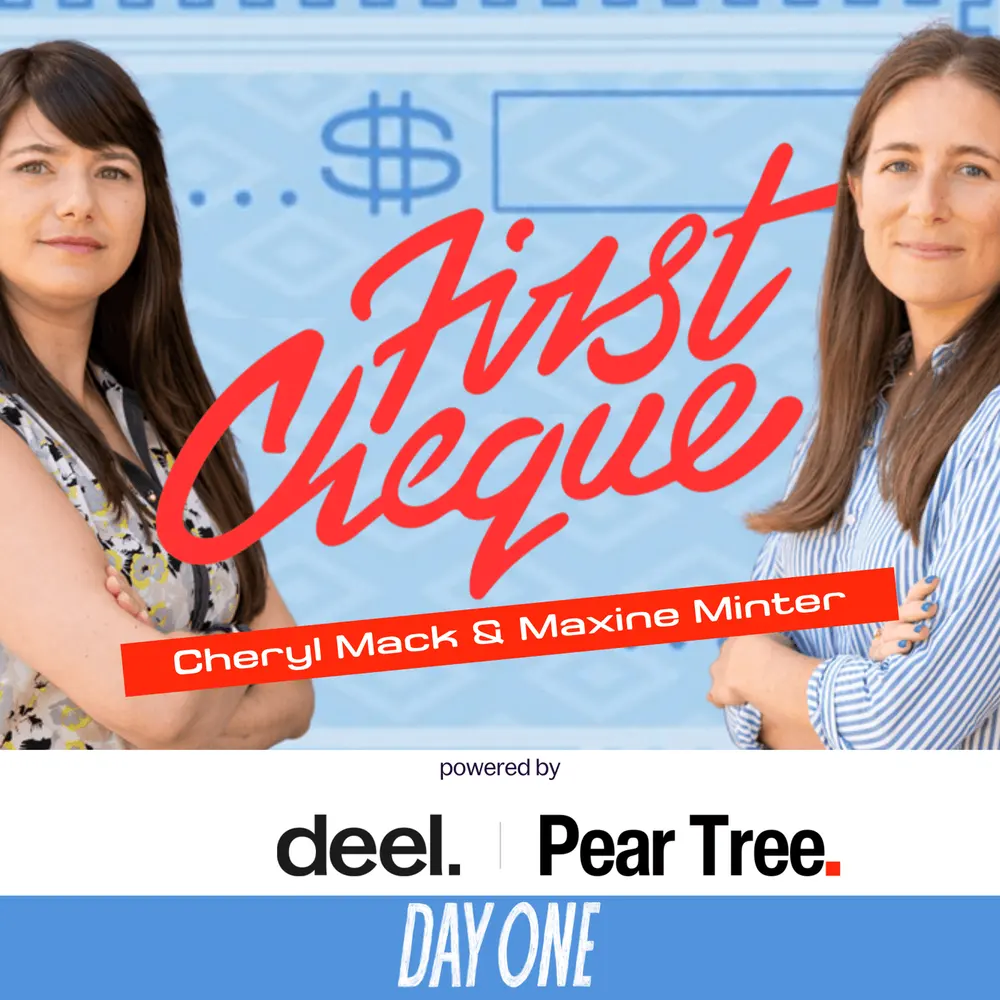 First Cheque with Cheryl Mack & Maxine Minter
Presented by Deel & Pear Tree
First Cheque with Cheryl Mack & Maxine Minter
Presented by Deel & Pear Tree 


 ▶
▶ ▶
▶ ▶
▶