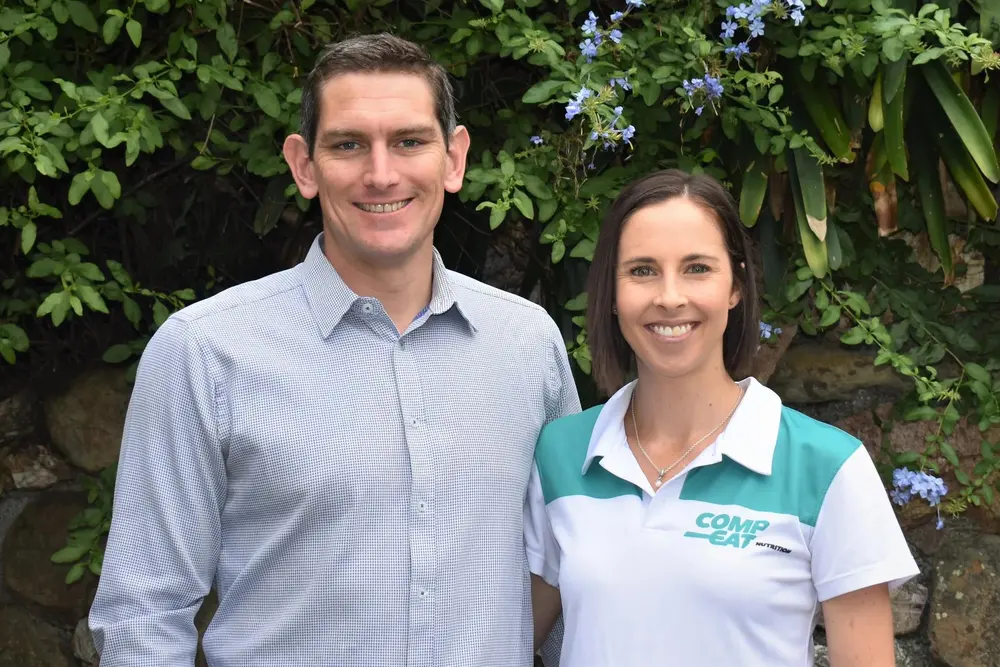
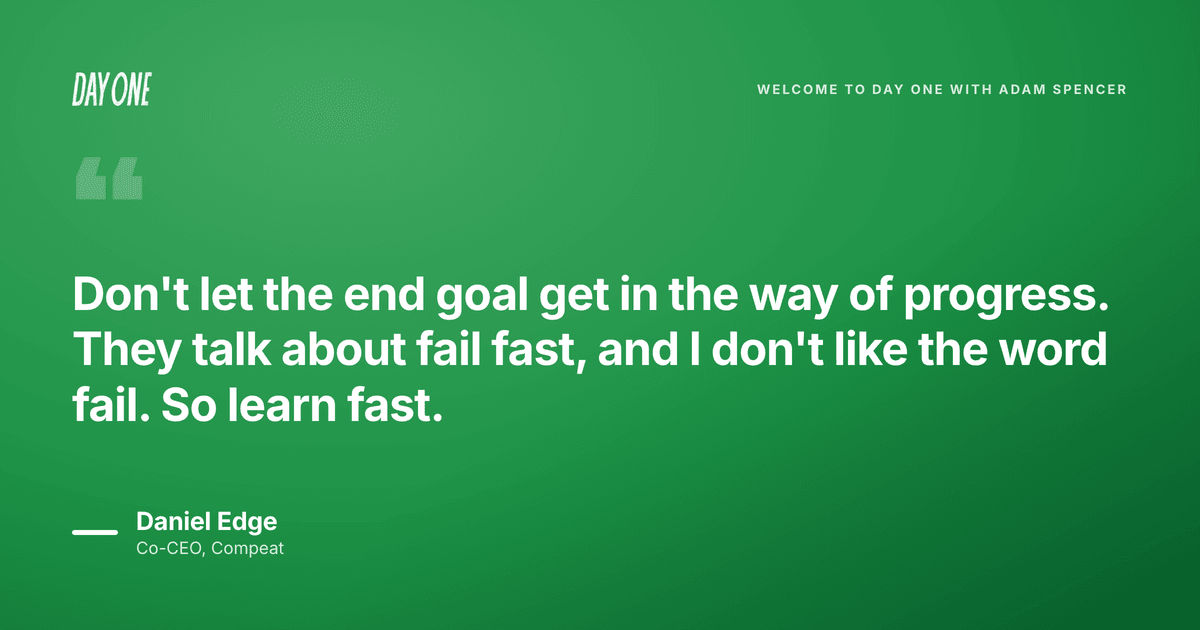
Transcript Synced · select any line to jump ▾ 0:00 Adam Spencer: You're listening to a DayOne.fm show. 0:05 Speaker: What drives you to make bold moves, to build something that didn't exist before, to live, lead, and choose life with intention? Welcome to Perspective X. I'm Pauline Fatowi, and this is not your typical business podcast. Each episode, I get to speak to extraordinary entrepreneurs and leading innovators to unpack what truly fuels their journey. Not just the wins, but the inner work, the overlooked decisions, the mindset shifts, and the personal moments that sparked something bigger. This show is about the ripple effect of choice, the kind of deep accountability that lets us respond to life rather than react to it. Because when you realize everything is temporary, and you are the creator of your own experience, you start to play the game differently. So if you're curious about how people build meaning alongside success, how they evolve through challenges and shape the world with intention, this is your invitation to listen in. Perspective X, where we go beyond the highlight reel and into the moments that changed everything. Available now wherever you get your podcasts. 1:13 Alicia Edge: I am a completely different person than I was 3 years ago. I'm pretty much living with my mentor, like, and I know that sounds really ridiculous, but in terms of like the business side of things, my confidence and my ability to push through my comfort zone has been all due to him, and I'll try not to cry, because I don't know how many points in time I would have had where I'd be like, We'd be on the bed crying, just wondering what the hell we're doing. 1:54 Adam Spencer: Hi, I'm Adam Spencer, and welcome to Day One, the show that goes back to the very beginning to share the untold stories of incredible regional startups and the organizations that support them. Today, you're going to hear the story of Alicia. 2:08 Alicia Edge: Hi, my name's Alicia, advanced sports dietitian and co-founder of Compete Nutrition. 2:12 Adam Spencer: Daniel. 2:13 Daniel Edge: My name's Dan, not an advanced sports dietitian, but also co-founder of Compete Nutrition. 2:19 Adam Spencer: And Compete Nutrition. 2:22 Alicia Edge: So in terms of Compete Nutrition, we are all about performance. So it's about bringing performance into the lives of the everyday active individual all the way up to the elite athlete. And that performance focus can be performance in sport or performance in life. 2:38 Adam Spencer: The concept of Compete first planted itself in Daniel and Alicia's mind in 2016. Since then, they've bootstrapped it themselves for quite a while and invested a lot of themselves into bringing this amazing company into existence. They eventually went through the ICON Slingshot program at the Newcastle University's Integrated Innovation Network, and all while raising a young family. 2:59 Daniel Edge: Yeah, this is Reuben. Reuben, you wanna say hello? 3:03 Alicia Edge: Into the microphone? 3:04 Daniel Edge: Say hello. Hello. 3:07 Adam Spencer: Reuben, do you know what Mummy and Daddy do? 3:11 Speaker: Fix something? 3:13 Adam Spencer: Fix something. 3:14 Alicia Edge: Oh, that's good. 3:15 Daniel Edge: We're trying to fix something. 3:16 Adam Spencer: Daniel and Alicia are trying to fix a real problem, and it's a two-sided problem. 3:21 Alicia Edge: So there's the industry problem in terms of the dietitian side, and then there's the client user problem as well. 3:27 Adam Spencer: And Compet Nutrition are well on their way to solving the problem with their first product to market. 3:32 Daniel Edge: We're on target to turn over nearly $200K in revenue, and we currently have around 300 active users. 3:39 Adam Spencer: 300 active users, and they've been very successful in the last 12 months in proving their assumptions around scalability. We'll cover all of that and more, but for now, let's go back to day one where this story begins. 3:58 Alicia Edge: All right. In terms of our story, I guess the starting point would be 2015 where I was at the AIS in Canberra as a sports dietitian and being pregnant with our first bub, it was a little bit too far away from family support really. And so the concept of Compete started in probably early 2016. Just through a need of me needing to hopefully be able to still advance my career no matter where I was geographically based, but also seeing the funding model of sport in Australia changing to a much more decentralised model and also seeing athletes being anywhere in the world at any time. 4:42 Adam Spencer: Alicia was working at the Australian Institute of Sport in Canberra as a dietitian. 4:46 Alicia Edge: So I did AIS as what they call a fellowship, so it's 2 years on a lower pay grade to basically just launch your career and knowledge as a sports dietitian. Now, one of the big issues is, and they've known this for a really long time, was that once that 2 years is up, there's no opportunity to really stay unless you're filling a maternity fill. No one leaves the AIS once you've got a job at the AIS. 5:09 Adam Spencer: But Alicia was going to leave the AIS to start a new family closer to family support up north. And Daniel was a process engineer who had an excellent career underway as head of infrastructure asset management in the utility sector working for Icon Water in Canberra. But as we just heard, Alicia was pregnant with their first child and really wanted to be closer to family. 5:31 Alicia Edge: We just made the decision to move north, but moving north also meant that I lost my career in the sense that I also lost all the hub of athletes that I had access to at the AIS, 'cause it was very centralized at that point. 5:42 Daniel Edge: When we moved to Forster, I took a role as the head of all engineering and asset management for the utility just north of Newcastle, which is now Mid Coast. 5:52 Adam Spencer: But just because they moved north to be closer to family, to start their own family, Alicia and Daniel didn't want that to end Alicia's career. 6:00 Alicia Edge: Dan was very firm in not allowing that to happen. He's like, no, you don't get to just stop your career just because we moved for my job or just because you had kids. Like, there has to be a better way. And the financial model of what a dietitian did in the private practice setting is very broken. 6:15 Daniel Edge: I sat down and sort of asked Alicia, I was like, well, just just run through how you would work in your own private practice. And I said, so you would see this many clients and then you would charge them this much. And I was like, how is that feasible? How are people making money out of that today? And I was like, there just has to be another way to solve this problem. 6:34 Adam Spencer: There has to be a better way to solve this problem. So what is the exact problem that they were facing? 6:43 Alicia Edge: The earning capacity of a dietitian is quite low compared to how much training and professional development we have to put into being a registered dietitian. So in the appointment-based system, we're very time-sensitive, so we can only make money when we're seeing a client. And so our hours are very long in terms of trying to make whatever we can out of it. 7:03 Daniel Edge: I think if you talk about the team sport environment, the dietitian's there, but I mean, the common thing is, oh, we ask the players, "Well, what does the dietitian do?" "I don't actually know, I think they're here for the food." for the kit kind of thing. 7:13 Alicia Edge: That is actually something athletes have said to us. 7:17 Daniel Edge: But then the other one is that they're trying to access the athlete in that training environment when they're training, they might be recovering, so you're trying to pick them up, they don't want to talk to you then. 7:27 Alicia Edge: And also we're very invisible, we've got an image problem, we're not innovative or disruptive in that space where what you would probably call a pink collar, so lots and lots of females, and you know, you pause very often to have kids and that's not very friendly in the private practice market because people are coming to see you, and when you take a pause, then so does your business. 7:50 Adam Spencer: The earning capacity is quite low. It's a completely face-to-face appointment-based model in a world that was becoming more and more decentralized, having athletes all over the world. So that's the dietitian side of the problem. Here's an example of the other side of the problem, the athlete's side, with one of Compete's partners, the Australian Women's National Soccer Team. 8:10 Daniel Edge: So, means the Matildas? With being able to support any athlete anywhere in the world. Through a centralised model, you can't support them, you can't see them, because the athletes just simply aren't there. So by having a platform where we're integrated into their life, we are now their integrated support partner. So say from, an example is the Matildas, is that they might come together for a camp twice a year outside of the World Cup. Yeah. But what is the— what is the FFA— what access do they have to ensuring that their investment is being looked after when they're not in that environment? 8:47 Adam Spencer: So what's the solution? 8:48 Alicia Edge: An app? 8:49 Adam Spencer: There's an app for everything, right? Makes sense that that would be the first solution they thought of. 8:53 Alicia Edge: I don't think we ever had like the "let's build an app" moment. 8:56 Daniel Edge: I think the mantra is that don't build a product and then find a way to use it. Find a way of solving a problem or a solution or a process and then automate it through technology. Unless you know what you want it to solve, it's very hard to build a piece of technology that's going to work for you and for your business. So what we did is we went through and broke down each of the steps in that servicing model and said, okay, well, if we're going to digitize this process, what can we do? How can we automate this? 9:25 Speaker: Mm-hmm. 9:25 Daniel Edge: So we went through the whole thing, and I mean, I pulled all algorithms and stuff together and automated the entire process. I was like, cool, we can basically create, automate this entire solution. 9:37 Alicia Edge: Yeah. 9:38 Daniel Edge: But then what we realized is by building the, by just taking the dietitian out, then it created a lot more restrictions. So building something that allowed them to be more efficient in the way that they worked, but while leaving the professional there, what we were doing is we were creating a product which the consumer, which was much more consumer-focused, was accessible when and where they needed it, but also was agile and supportive enough to give them the immediacy of information and access to the support when it was required. So to have that support there, which is that interpersonal relationship, adds so much more value than just say, like another tracking app or something like that. 10:19 Alicia Edge: Yeah, yeah, or do this because it's a 12-week program. 10:22 Adam Spencer: We're about ready to talk about the actual launch of the business, but first athletes are all over the world traveling, training, competing, so we need a solution to serve them and add value to their lives no matter where they are. Technology is the best option, but it would have been a mistake to go too far down that path and completely remove the human element from that equation. So Compete have integrated the dietitian into that process, allowing a professional dietitian to be there when the athlete needs them. We have the what, but why is this the right solution? 10:53 Alicia Edge: It's no longer just about the what to do, it's about the why and the how. 10:57 Daniel Edge: I mean, I went from engineering into management and then the last sort of 6 years spent a lot of time reflecting on a lot of human behavior. I got to the realization that we only ever do anything that we do in life because of other humans. Now when you talk about base human theory, it's like that Maslow and his deterministic needs theory. 11:14 Alicia Edge: Mm-hmm. 11:15 Daniel Edge: So it's all about sort of how that hierarchy works and then gaining control and then having that ability to self-actualize and take ownership. So what we're looking at, the way we service is it's not just about, say, providing a plan. It's around helping them to make cognitive decisions through that support. So the dietitian will be there and then they're starting to build the behaviors through interacting and working with us through a means which they, they have to actually make a choice while the support's there. 11:49 Alicia Edge: So an example is some clients that we've got who have binge eating disorder. So You know, you can kind of predict the days or the weeks that are going to be harder for them, and previously in that consult model, they may have been on their own in those really tough days, or red days as we call them, or, you know, tough weeks, and having to think about and write down questions for their next appointment. But in this role where we're actually integrated into their lives, we're actually there when they're having hard times and able to coach them through decisions and opportunities and you know, even reflect back on what may have happened. So change behaviour takes a lot of time. We may know what we need to do, whether it be exercise or, you know, food for health, and most of us can tell us what they should be eating. The question is why not, and what can we do to allow that change to happen in a way that's actually achievable for you and sustainable for you and fits you and your lifestyle. 12:41 Adam Spencer: Before Compete was even an idea, both Daniel and Alicia were embedded within the athletic community, and having those relationships, those Friendships really helped not only kickstart Compete in terms of word-of-mouth referrals, but long before there was even a product, it really helped Daniel and Alicia understand what the problem was that they were trying to solve. And I think that coalface understanding of the community because they were part of it and the problems that they were facing was really, really imperative. 13:10 Daniel Edge: We both played hockey and then did triathlon and I mean it was fortunate enough to represent Australian country in hockey and then played professionally in Europe for a little while before retiring at the end of 2011 and then took up triathlon fairly competitively, which gave us a lot of insight, I suppose, into— we obviously had a good understanding of team-based sports and Leisha's experience, I suppose, with AIS and servicing at that elite level, but we also had experience with performing at that elite level. Mm-hmm. But also then the individual-based sports as well and understood the dynamics of those individual-based sports as well. So it's, I mean, understanding the market that we're looking at is obviously also a big one. 13:51 Alicia Edge: And also opening those connections as well. Like between the connections we had through the individual-based, you know, cycling, running, triathlon. Yeah, so it was more the connections as well that was driven from that that really helped us build the start of Compete and at least start that word of mouth that allowed for that early adopter setting to come through. Very much a soft launch in the way of just utilizing the people we already knew, and it simply just allowed those early adopters to come through with our first little rendition of what Compete could be, and then inform what our next evolutions should be. And so really doing things quite slowly in the sense that it— Also allowed us to create a product that we knew people wanted. 14:35 Adam Spencer: Because of those connections and insight from being a part of the community they were serving, Compete were able to build a great solution. Network really is everything. With no marketing, Compete had a national cyclist sign up on their brand new website. 14:51 Alicia Edge: Yes, so it was a referral from someone they knew. So yeah, we're very— in health, it's very word of mouth. We had a national cyclist come through check out without any nurturing or contact beforehand. So we're very early days, we had a sale and we're like, Do you know who this is? 15:12 Speaker: No, I don't know. 15:13 Alicia Edge: Hang on, look at his email signature. And yeah, sure enough, it was a national cyclist. So that was like the moment of really realizing that we're being seen, we may have a product here that people want. And it was just that moment that really kind of just increased, well, my confidence definitely. 15:33 Adam Spencer: So Cyclist X signs up on the Kompeet website and downloads the app. What happens next? 15:38 Alicia Edge: So once someone registers, we start to get to know them. So we go through and that's on their, like their side, they'll be filling in different preferences, goals, food diaries to get to know their eating habits and preferences with eating. It's really about not judging that, but rather just getting insight into how they're currently living, what's valuable to them and what they're struggling with. 15:59 Speaker: Yeah. 15:59 Alicia Edge: And once that's done, the dietitian is ready to roll in terms of being in contact, starting that journey, really prioritising the goals of that athlete or active individual moving forward, and starting to coach them through that change. So they will be able to access their— depending on what membership they've chosen, they'll be able to access their menu, recipes integrated with that, weekly shopping lists, and then additional to that, videos and different opportunities for resources. 16:30 Adam Spencer: How long does that initial onboarding phase take? 16:33 Alicia Edge: Very quick actually. 16:36 Daniel Edge: So think of what you would normally do in that, your experience with that consult, is that we, what we do is we've taken the dietitian out of that and just allowed people to do it at a time that's convenient for them. So we just automated that and the customer customer comes in, they pay, and then they do all that fun-up work that you would normally do in a first consult, so that when your interaction with the dietitian eventuates, the dietitian has all this information and that interaction is much more valuable. Rather than saying, "I'm going to collect all this information, then come back and see me and I'll give you something." It's, "Hey, we'll collect all this information and then off we go." And also, like, as the dietitian can then look at all that data and information about a client, they can then probe really directly on some areas of focus. 17:20 Alicia Edge: So you're not spending the first session— this is not appointment-based, by the way, but, you know, usually that first session is all about getting to know them. 17:27 Daniel Edge: The first interaction. 17:28 Alicia Edge: Yeah. 17:28 Daniel Edge: First interaction. 17:29 Alicia Edge: Whereas now it's very much more direct, like around, these are your actionables and these are things that are going to really provide a positive, whether that be a performance focus or a behavior change empowerment focus. 17:42 Adam Spencer: It isn't just a stock standard cookie cutter approach either. 17:46 Alicia Edge: Changes all the time. All the time. Yep, so there's always a dietitian. 17:50 Daniel Edge: This is where it comes back to where we realize that you can't take the dietitian out of it. 17:54 Speaker: Yeah. 17:55 Daniel Edge: Because everything's, everyone's different, everything is different. You don't know what's gonna happen tomorrow and you need the agility in service. 18:01 Adam Spencer: The dietitian, the human element is a big part of what makes this approach so powerful. The dietitian is there at your fingertips. You don't have to go to a physical location at all to meet your dietitian face-to-face? 18:13 Alicia Edge: So we're contacting them through the platform. Yeah. Uh, and that for the majority of our clients has been absolute perfection. Yeah, it's been really, really cool. Uh, and yeah, people don't necessarily want phone calls anymore. 18:26 Daniel Edge: It's what we've actually found, that the relationship between the practitioner and the client is 4 or 5 times stronger than it would have been otherwise. Because you take— what you're doing is you're breaking down the barriers to communication. You're sitting on the lounge at night, you're sort of having things going through your head. Now I've got that opportunity just to ask that question or to send that bit of information forward. And so that— and then obviously then that relationship just grows and grows and gets a lot stronger. 18:50 Speaker: Mm-hmm. 18:51 Daniel Edge: As opposed to, I have to sit here across the table from a professional who I feel is already going to judge me for being here. 18:57 Alicia Edge: Mm-hmm. 18:58 Daniel Edge: And so I'm already going to have all these walls up before we even start the conversation. Well, we just eliminated all of those. 19:04 Alicia Edge: With athletes who are on the road all the time, they're often working full-time plus training 2 to 3 times a day, has improved because they're talking to you when it's good for them. And that means a whole lot in terms of their anxiety levels, their appreciation for our role as well. You know, even just a message yesterday was like, Yes. "I just really appreciate your time and knowing that you're there." And it's that, ability to have someone that is keeping you accountable in a really safe place that you can turn to anytime. 19:39 Adam Spencer: The Compete team, Alicia and Daniel, have been going for a little over a year by this stage. They have a product, they have customers. It was time to take the next step. 19:49 Alicia Edge: Yeah, so that goes back to being accepted into the Slingshot Accelerator Program. 19:53 Daniel Edge: ICON. 19:54 Alicia Edge: ICON, yeah. So that was late 2017. Pitched when I was 37 weeks pregnant, started the program when I had a 2-week-old. It was good times. 20:05 Daniel Edge: So we were right in the thick of it. I was still working full-time at that point. We didn't know what a startup was. So literally 2 days before we were asked to put in a deck, about 3 days before the initial selection pitch. And yeah, we just thought we were solving a problem. We were like, oh, let's just invest some money. I mean, we just invested a fair bit of our own money to try and solve this problem. And then, oh, you guys are a startup. What's a startup? 20:33 Alicia Edge: And what's an accelerator program? 20:37 Daniel Edge: But yeah, so obviously we had the connection with Enim. 20:41 Adam Spencer: Alicia and Daniel, as you just heard, were pretty new to the startup world and they wanted to learn quickly. Connecting with people and building new relationships to learn as quickly as possible really helped. There wasn't a better place to do that than the I2N, Newcastle University's Integrated Innovation Network, where the Slingshot Accelerator Program ran. 20:58 Daniel Edge: I mean, when I say about networking connections, I think a lot of people downplay the value of that. It's all about relationships. Everything is all about relationships. I mean, it's just the way Australians do business. Around the world, relationships are a bit different and business transactions can be different, but definitely in Australia, having strong relationships, and even when you're talking to investors or anyone, there has to be some sort of trust, and that takes time. You can't build relationships without networks and connections, and for us, the real value has been that network of people that the iTwin has brought together and how they've supported that. 21:32 Alicia Edge: Well, yeah, even through the network, that's how we found our dev team for the next phase of development, really. 21:38 Adam Spencer: Compete were accepted into this Slingshot Accelerator in 2017, and that gave the team a boost and set them onto a trajectory that we heard about at the start of the story with their 300 customers and $200K in revenue. 21:51 Alicia Edge: They gave us purpose and confidence, I think. Like, we were in a really fuzzy point, right? Like, we had a newborn, Dan was full-time, so in terms of time capacity to spend on Compete, we were very low on both the, you know, energy personally, but also financially. We were really just focused on surviving that point in time, so to be doing a really direct course and program in that point of time and being mentored through and given such beautiful direction and purpose meant that we were able to get you done really. Yeah, we got the GSD Award of the program. Because we were confident in our decisions and we had the backing of our supporters. 22:34 Daniel Edge: I think the other thing, in terms of, if you were to pinpoint one thing One specific, one key difference is that I don't think we would have, the major failing would have been scale capability. 22:45 Speaker: Yeah. 22:45 Daniel Edge: We wouldn't have thought about scale. We would have just still been trying to solve that problem and been probably frustrated about knowing that we needed to, I mean, scale was probably, I mean, the way that's talked about in the startup ecosystem and as well as building business and scale business is that you don't, if we hadn't have been in that environment, I definitely would not have considered that. So I think if there was one thing, is that thinking bigger and how to make it bigger. Yeah, and obviously there's a lot of stuff that comes along with that. 23:14 Alicia Edge: Yeah, and every week they really pushed us to aim higher than ever before. 23:19 Adam Spencer: Compete are currently working with and developing partnerships with a lot of organizations. Now, in order to make a bigger impact, from Anytime Fitness to F45 Training to the Professional Footballers of Australia, the PFA, and the Football Federation, of Australia, the FFA. 23:34 Daniel Edge: So we had someone who was a senior footballer who knew what we were trying to achieve, knew that there was a problem in that space, and he said, "You guys should talk," and that's where it sort of started. The FFA contract didn't happen with the FFA to start with, it happened with the players association, so Professional Footballers Australia. So we came in and we were talking to Bo, so to the head of player development, and We're sort of sharing a little bit about how we're evolving, and I think our first conversations we were just sort of talking about the idea and the first step of the platform. And then it's evolved now to the point where we have access to all these knowledge and resources. 24:14 Alicia Edge: But it was also, like, it's probably important to note that it didn't happen straight away. Like, the first few meetings it was really about knowing what they wanted, as Dan said, but also knowing that we weren't ready either. Yeah. And taking the time to go, okay, I can see I can see the gap in the market here. I can see what you need as a big association. Let us, like, take the time to solve this problem and we'll come back to you. And so yeah, it was a long time. It was like 18 months. 24:41 Daniel Edge: Yeah, 14, 18 months. So we were talking with the PFA before, around about the same time that we got accepted into Slingshot, which was in 2017. Yeah, that was it, yeah. 24:49 Adam Spencer: So what's next in this endurance marathon for Alicia and Daniel on this journey of building Compet Nutrition. 24:56 Daniel Edge: Current phase was to just validate all of our assumptions and hope, make sure that what we were doing as a business model was going to work. And then obviously use that as a means to then raising capital to build out our global scale platform. So we haven't been trying to grow. 25:14 Alicia Edge: Very controlled growth. 25:15 Daniel Edge: We've been very controlled and very strategic about the way we've gone about building the business. Just to ensure that, okay, well, we're assuming these things, let's make sure that they're correct, because we want to validate. 25:26 Alicia Edge: Yeah, yeah, absolutely. Validate our assumptions. There's a really good reason for that. 25:28 Daniel Edge: Before we invest millions of dollars. 25:30 Alicia Edge: It's a lot of money. Yeah. 25:31 Adam Spencer: Alicia and Daniel are very passionate about the problem that they're solving. 25:35 Daniel Edge: I say this often as well, is that take your time. In some areas, yeah, sure, you've gotta sort of keep going, but I mean, if you're always continuing to make progress, don't let the end goal get in the way of progress. They talk about fail fast, and I don't like the word fail. So learn fast. So try something, if it works, great, but then how do you improve it? If it doesn't, why didn't it work? Then how do you improve it? 25:59 Speaker: Mm-hmm. 26:00 Daniel Edge: And what you'll find is the market will tell you what— the direction you need to go, and I think that that's very true. Even with small numbers of customers, it'll allow you to then point your product in a direction that's the market wants to see it. And we've been very lucky. This definitely is not over. I think I mentioned to someone yesterday, I said, well, you're here today, would you have seen yourself here 3 years ago? I said, I would not have even dreamt that the product would look like this, or our solution would look like this 2 years ago. I mean, I wouldn't have been able to see it. So it's sort of, yeah, don't let the restrictions of today let progress of tomorrow sort of get in your way. 26:38 Speaker: Yeah. 26:41 Adam Spencer: Thank you for listening to the story of Compete Nutrition with Daniel and Alicia Edge. I hope you enjoyed it. Everything that was mentioned in the episode today is on the show notes page on welcometodayone.com. Next time on Welcome to Day One, the Startup Express. What is the Startup Express? Meet Steve Waite, the CEO of the business center. 27:04 Speaker: The Startup Express began like many things with a small idea. About how can we better get an appreciation of what type of innovation we witness and see every day in our region, but connecting that innovation and those innovators up to what we have to acknowledge are the more sophisticated capital markets and research capabilities that do exist in metropolitan centres, but by reverse, to also attract some of those investors and people that support innovation back out to the opportunities of the region as well. Plenty of good innovators and good ideas and entrepreneurs have always been in the regions. 27:57 Adam Spencer: Ratings and reviews help to keep us going, and they help more people discover our stories. You can rate the show on most podcast platforms by going to Ratedayone.com. That's Ratedayone.com to leave a rating on the podcast. And thank you for giving this episode of Welcome to Day One your attention. This episode was created by me, Adam Spencer, interviews conducted by me, Adam Spencer. A big thank you to Daniel and Alicia Edge for taking the time to be involved. Thanks also goes to the University of Newcastle's Integrated Innovation Network for partnering with Welcome to Day One to bring you this story. This script was written by me, Adam Spencer. Music by Lee Rossevear. Full attribution is on our website at welcometodayone.com. This episode was produced by me, Adam Spencer, and edited by Natalie Holland. Thank you and see you next time. 28:47 Alicia Edge: Bye.