Transcript Synced · select any line to jump ▾ 0:02 Cheryl Mack: Founders scale faster on Deel. Set up payroll for any country in minutes, hire anyone anywhere, get visas handled fast, and get back to building. Visit deel.com/dayone. That's d-e-e-l.com/dayone. 0:21 Maxine Minter: Okay, 3, 2, 1. 0:26 Cheryl Mack: Hey, I'm Sheryl. 0:27 Maxine Minter: I'm Maxine. 0:28 Cheryl Mack: This is First Check, part of Day One, the network dedicated to founders, operators, and investors. 0:32 Maxine Minter: If you wanna be a better early stage investor, this is the show for you. 0:35 Cheryl Mack: So TL;DR, if you don't wanna suck at investing, listen up. All right, so this episode's gonna get a little technical, people, so bear with us. We will try to keep it as fun and as interactive and as interesting as we can for a conversation about Maxine? 1:01 Maxine Minter: Legal terms, legal structures, and how you invest in startups. I actually reject the premise that it's boring. As a recovering corporate lawyer, I actually find this stuff super interesting. I nerd out on the mechanics of deals. And for the nerds out there who love this kind of stuff, I think it's super interesting to think about how the machines of how you get money into businesses, how you get them out, the protections that you put around them work. But I recognize I am in the far, far, far minority that love this kind of stuff. So for the folks that are not super nerdy in this corner of their interests, strap in. For the ones that are ready for some serious legal nerd out with me, also strap in. We are going to be talking about SAFE notes, CON notes, and price rounds, the terms that you usually see within them, some tips and tricks on making your way through them, some things that you can expect to see, what is founder-friendly, what is investor-friendly. And then if we have time, maybe some spicy terms at the end that we've seen floating around. So should we dive in? Sheryl, you want to set us up with some definitions? What is a SAFE? What is a CONNOTE? And what is a price round? 2:06 Cheryl Mack: Yes, yes, yes. Meanwhile, I'm on the other side of the fence where like, I didn't even ask what SAFE stood for until like probably the third or fourth one that I had signed. So, you know, that's me over here. 2:18 Maxine Minter: That's sacrilege. I am shocked. I don't even know what to say. 2:24 Cheryl Mack: If you are In the same bucket as me, team, don't worry, we got you covered in this episode. First of all, it's important to note that like when startups are raising, there are two buckets. There is equity and debt, and there is structures that are within one and structures that are within the other, and then there's one that's kind of in the middle. So, I'm gonna go through the four kind of main structures that startups usually raise with. So, first is priced equity, and that is essentially I, as the investor, give the founder money, and they give me a piece of paper that says I get a certain number of shares at this time immediately. The second one under that equity bucket is the SAFE note. And if you don't know what SAFE means, I do now, it stands for Simple Agreement for Future Equity. That one is, I give the startup money and they give me a piece of paper that says I will own some shares at some point in the future. And the some amounts and times are variant depending on a few factors that are in that SAFE. Mm-hmm. SAFE note agreement. There are two subversions of the SAFE, which are the pre-money and the post-money, and we will get into those. Now, on the other side, on that debt side, we have your, like, your standard loan, which is I give you money and you pay it back to me. And then the one that's kind of overlapping in the middle is this convertible note, or shortened to con note. And that is essentially I give the founder money and the founder gives me a piece of paper that says I will either get some shares in the future at some point in time, or they will pay me back with interest. Now, I say that it is kind kind of in the middle because it is written like debt, but it is generally the intention or the purpose is generally actually to get equity. So, they're kind of overlapping there. So, those are the 4 basic buckets of how startups raise and what you can invest in via a structure. 4:09 Maxine Minter: Love it. You would never know that you didn't nerd out on these topics. You speak about them so eloquently. 4:16 Cheryl Mack: Well, when you create a course all about this, and we have a whole section on the Angel Academy course, then yeah, you get to know it pretty well and feel a lot more confident about what SAFE stands for now. 4:28 Maxine Minter: 100%. I love that it's the course creation, not the investing, that got you over the line on that. 4:33 Cheryl Mack: So true. 4:35 Maxine Minter: But so I think something to kind of anchor in on fundamentals, right? You said it there at the beginning, but I really want to repeat this. There are two ways and only two ways to put your money into a business. One is to buy equity. So to buy shares in that business and contribute to the equity of that business, or two, to lend it money. As a shareholder, so someone who owns equity in a business, you are part of the capital stack, which means you are part of the owner group. As someone who lends money to the business, i.e., as a debtor, you don't own the business. You have a purely contractual arrangement with that business that you have given them money and they will give it back to you on some terms, usually interest. And so we are, as investors, talking about the process, even if it's kind of in a wiggly way via debt to buy shares in a business, either via buying them directly in a price round, buying them indirectly via a SAFE, which is essentially an agreement that you will get equity at some point in the future, as you said, or we kind of hedge our bets. We either take debt or equity depending on how badly it goes. Actually, have you ever seen a startup where they have converted the debt side? 5:51 Cheryl Mack: Yeah. 5:51 Maxine Minter: As opposed to the equity side? I've never seen it. 5:54 Cheryl Mack: Yeah. Definitely later stage startups, for sure. 5:58 Maxine Minter: Ah, yeah, yeah, okay. So they use CON notes between, like for bridging rounds, and then they use it as debt. 6:02 Cheryl Mack: Yeah. 6:03 Maxine Minter: Interesting. Yeah, I've never seen it. It's one of those phantom figures out there in the ecosystem that one day, hopefully, I will see. 6:10 Cheryl Mack: Well, when you get to see as many deals as I do, yeah, we see it. 6:14 Maxine Minter: Right, absolutely. So let's go one by one. Let's start with equity, because I think that that's a really, so price rounds. 6:20 Cheryl Mack: Well, I feel like we don't need to do too much on the loan side. Like loans are loans, right? Like you guys all know. Yeah, yeah. 6:25 Maxine Minter: Yeah. We'll put loans in the bin. 6:27 Cheryl Mack: Yeah. Put loans in the bin. But let's start with equity. 6:30 Maxine Minter: Cause I think that's a good place to start because the other two are what we would call kind of derivative forms of equity, meaning you are buying a right to this fundamental thing sometime in the future. So let's start with equity. 6:41 Cheryl Mack: I think we call them convertible instruments. 6:44 Maxine Minter: True. They are not derivatives. That is very true. 6:46 Cheryl Mack: Come on, Maxine, legal terms. How am I the one telling you the proper legal term for SAFEs and CON notes? Convertible instruments. 6:53 Maxine Minter: You are the expert. You're the expert in the room. Again, recovering corporate lawyer over here. So let's start with the price round. So what is the instruments that we usually use? What are the documents we usually use to buy equity in an Australian business? And we should say this is largely Australian, although noting that the SAFE does come from US origins. So what are the usual documents we're using to buy shares in a business? 7:19 Cheryl Mack: This is such an interesting one because genuinely it is confusing and we get this mixed up, I think, as investors all the time. I'm 5 years into my angel investing journey and it's taken me creating a course on this to actually really understand the lineage between what's connected because I still will get investors saying, "Oh, I haven't signed the SAFE note or haven't signed the SAFE agreement yet." And I'm like, "You're investing in a price round. There is no SAFE." Womp. But okay, you want to draw some direct lines here? Okay. So, a priced equity round is basically the term that we use to describe the round. And then the document that you actually sign that gives you the actual shares is generally a document that is called the subscription agreement. Now, it gets a little complicated because the SAFE is a SAFE note. So, we call it a SAFE round or SAFE structure, and then it's just a SAFE note, and that can be split between a pre-money SAFE or a post-money SAFE. And then the same with the CON note, we tend to shorten it to like CON note, like that's the structure of the round I'm using. The actual agreement you sign is the convertible note. So that's the, like, if you want to go straight lines down, they're somewhat confusing because a lot of people tend to think, oh, well, the SAFE note is the thing that we sign all the time. And I'm not sure how that got into our verbiage, but just putting it out there, it is not the thing you sign all the time if it's a priced equity round. 8:42 Maxine Minter: Or if it's a convertible note round. 8:44 Cheryl Mack: Or if it's a convertible note round, correct. 8:46 Maxine Minter: You will only sign a SAFE if you are investing on a SAFE round. If you think you're investing in a SAFE round and you get a subscription deed, you're not investing in a SAFE round. 8:55 Cheryl Mack: Correct. The other thing with the priced equity round is you are often also signing a new shareholders agreement. So you are often signing two documents if you're doing a priced equity round versus if you're doing a SAFE round, it's usually only one document, which is that SAFE note. 9:09 Maxine Minter: Absolutely. You also might get two additional documents as part of a priced round. One is the constitution. So you'll get a copy of what the constitution is and the two documents that govern you as, or the main documents that govern you as a shareholder is your shareholder agreement. So the thing that you signed and your constitution. It's helpful to note here kind of what is generally in these documents as an overarching principle. I'm obviously not going to go into nerd alert and talk about all of those pieces. But a couple of things to name that are in these documents, they broadly cover who can manage the organization, right? What the directors can do, how many of them there can be, how they need to meet, how they need to make decisions, how the shareholders can meet, what they need to make decisions on, how many of the shareholders there can be. Sometimes it also generally governs how the company is supposed to be managing certain key activities. And then you will also see in there, if it gets more complex, things around each investor's— a whole bunch of other complex stuff. But crucially, especially for the angel investors on this call, really understanding the mechanics of how this business is going to be run and commitments that either all of the directors are making or also the owners are making together on what they can do and what they can't do and the circumstances in which they need to share information with each other, the circumstances in which they need to sign things, the circumstances in which they need to agree to certain things. Mm-hmm. All of those rules of engagement will be in your constitution and in your shareholders agreement. The fourth document that you might see floating around or that might be out there is something called a side letter. 10:45 Cheryl Mack: Maybe let's just go back to constitution for a moment. 10:48 Maxine Minter: Sure. 10:49 Cheryl Mack: Because in Australia, I have met and invested in a number of startups that don't have a constitution, and I never read one before. In fact, I still really haven't read a constitution, guys. I have lawyers for that. But Probably the first 4 or 5 companies I invested in, no constitution was handed to me. We don't necessarily actually have to have one in Australia. I don't know about the US if that's a thing, and maybe you can comment on that. But if you don't have a constitution, your constitution just defaults, if you're a company, to the Australian Corps Act. What are your thoughts on, like, do you think startups need to have a separate constitution? And if so, at what point? Or like, is it from the beginning? Like, is it a red flag for you if they don't have one? 11:29 Maxine Minter: Yes, but light. It's like an amber flag if they don't have one. There's a lot of standard terms. So they're called the replaceable rules. They're contained within the Corporations Act. So if you want to nerd out, you can just Google them and it will show you the section of the Corporations Act that has all of that information in it. It's an amber flag for me because there's a lot of rules or kind of default terms in the constitution that are not super fit for purpose when it comes to startups. But more importantly, there's a whole bunch of stuff around, like the way that the company is governed, clarity on, you know, who gets to decide what and when that we see built into the constitutions when they are written out, clarity on, you know, what do we do if there's a bad lever, for example, what do we do in the circumstance where we might have someone who is incapacitated, What do we do with their shares? 12:24 Cheryl Mack: Isn't that all covered in the shareholders agreement though? Like bad lever, good lever, those are generally covered. 12:30 Maxine Minter: Yeah. So across these two documents, right? Both of them will be, all of these terms are either covered in one or the other. The two should be read together as your like rules of engagement. They're not in the replaceable rule. Sometimes you'll put them in the constitution and there won't be as robust a shareholders agreement. And sometimes there will be in the shareholders agreement. 12:47 Cheryl Mack: So would that turn to a green flag for you if the things that like you feel aren't well covered in the Corpse Act are covered in the shareholders agreement and they don't have a constitution? 12:57 Maxine Minter: Yeah, that's it. Yes, it would turn into a green flag for me. It's an interesting legal question. I don't know. And maybe any of my fellow legal nerds out there in the ecosystem can comment here. I have a small kind of law school bell going off, something to the extent that there's some hesitation about terms going in the shareholders agreement, which is a contractual agreement. Versus going in your constitution, which is covered under the Corporations Act. There might be kind of different ways that you're protected, but that is too deep legal nerd for me to go into. But it is also an indication— the other reason that it is an amber flag for me, it's also an indication that their team is kind of not paying appropriate attention to the importance of these foundational documents of their organization. It usually means that they are raising a round without any legal support at all, which is not something that I would suggest. There's loads of legal providers that will do a very cost-effective legal support for a safe round. And so would encourage you to at least have a single conversation with a lawyer about those fundamentals. 13:59 Cheryl Mack: What are you talking about? You often, you invested the like earliest pre-CD, C. 14:04 Maxine Minter: Oh yeah. 14:05 Cheryl Mack: Like before the company's even formed. What are you talking about? Of course, like don't you invest before that exists? 14:11 Maxine Minter: Yeah, but I wouldn't suggest that you go through incorporation without any conversation with a lawyer as someone who has no legal background. 14:18 Cheryl Mack: So you're fine if it comes later? 14:20 Maxine Minter: Oh yeah. 14:21 Cheryl Mack: You can invest as long as it comes later, okay. 14:24 Maxine Minter: I can't invest into a company that doesn't exist yet. It needs to be incorporated for me to put money into it by buying said shares that we're talking about. So I'll commit. 14:32 Cheryl Mack: Right, okay. 14:34 Maxine Minter: Prior to that. But in order for me to finalize my investment, I need an entity to buy. 14:39 Cheryl Mack: Right, right, right. 14:42 Maxine Minter: Cool, cool, cool. Yes, buying shares, got it. Fundamentals, you cannot invest in a company unless you buy shares. Otherwise it's just debt. 14:49 Cheryl Mack: No, safe. 14:51 Maxine Minter: Well, or right to future shares. 14:52 Cheryl Mack: Or right to future, yeah. 14:53 Maxine Minter: Right to future shares. But there is still something you need to be able to buy. 14:57 Cheryl Mack: Yes. All right. So the other thing that you may or may not get/sign in a deal. 15:03 Maxine Minter: A side letter. So these are contracts that float around to put certain contractual terms between key people or key members of the deal. So you'll often see a side letter with the major investor And the company, but not necessarily terms that are shared with everyone else. And so I think this is worthwhile naming. You will see a side letter alongside a SAFE note and also alongside a convertible note. There's no reason you can't enter into a side letter with a company as part of an investment for any of these style of investments. And essentially it is a either one-to-one or just a handful of investors are all signing up to certain additional terms on top of the core investment terms. I will say here, we saw a lot of these float around in '23, '24 for actually growth stage rounds. There are some side letters out there that vary the terms that everyone else is investing on quite materially. So you'll often see ratchet or double ratchet clauses going in on the side letter as opposed to going into the core documents. And they're just being applied to a single investor as part of a round as opposed to— 16:10 Cheryl Mack: Which is kind of scary, right? Like as an investor for me not to know what Terrifying, I think, is how I would describe that. Right, okay. Good to know my fear is justified. But like, to not know what other terms are out there, like, it makes me think possibly should have like requested to know like what other side letters have you agreed to with other investors. And if you enter into another side letter after this, that you have to tell me. 16:37 Maxine Minter: The after-the-fact bit is interesting. I'll come back to that in a second. But for, I mean, for our diligence checklist, for example, is a question we ask what you know, prior contractual arrangements, as well as prior investment arrangements. Have you already committed to on behalf of the company? And so that we know kind of what the terms are that are floating around. After the fact, you don't really have any ability to ask them to tell you what's coming in. With those double ratchets, I think they apply on top of you in the capital stack. And so they wouldn't necessarily dilute you down. I actually don't know. That's an interesting question. The mechanics of that, again, If there is any legal nerd listening, we would love you to comment on this. 17:15 Cheryl Mack: I think a lot of this stuff matters in later rounds though, right? 17:18 Maxine Minter: These are later rounds. Yeah, these are growth stage terms. 17:20 Cheryl Mack: Yeah, these are growth stage terms. We're not going to be seeing startups having these terms in their safe pre-seed, seed rounds. 17:27 Maxine Minter: No, good God, no. 17:28 Cheryl Mack: So it's not something that, I'm not saying don't worry about it at all, but the risk is a bit mitigated by investing earlier stage. 17:35 Maxine Minter: Correct. But we do see certain terms frequently pop up. Inside letters. 17:40 Cheryl Mack: Inside letters. Yeah, absolutely. Pro rata. I see that one in the side letter all the time. And most favorite nations sometimes will be in that one as well. We also, like, as a trust, we have like a limit of liability that goes into the side letter. 17:53 Maxine Minter: Yep. Often there are information rights, right? 17:57 Cheryl Mack: Oh yeah. 17:57 Maxine Minter: I think that is often one that pops up. So for the bigger funds, they need the ability to be able to disclose key information back to their LPs and for compliance reasons. And so they will put that in a side letter as opposed to put that in your Actually, I think often they do put this in the constitution or in the shareholders agreement if there is one, or in the subscription agreement if there is one, or in the later ones or in the SAFEs and the CON notes, they will put it in the side letter. So I wonder if you want to tell us a little bit about pro rata. What is it as a term? Tell us a little bit about most favored nation. What is it as a term? 18:31 Cheryl Mack: Pro rata applies to both priced equity as well as SAFE and CON notes. Although it's worth noting that technically because you don't own shares at the time with SAFE or CON notes that pro rata is kind of debatable. And so that's why it sometimes will go into the side letter to specifically say the next round you do, any round regardless of whether it's priced or another SAFE or whatever we get them. But yeah, pro rata is essentially just saying, and also in Australia it's often called preemptive rights. I'm not sure where they got that one from, but pro rata, preemptive, and there's probably one other version of it. But it essentially means that you as an investor have a a right to maintain your equity ownership in a future round. So let's say the startup raises $500K and you invested $100K of that, which is 20% of the holdings. And then you now own 5% of the company. You know, don't math my math, but— 19:28 Maxine Minter: I'm using my calculator over here. I'm ready. 19:31 Cheryl Mack: For this example, using for simplicity purposes, then let's say the next round they go and they raise $1 million. And in that example, they are giving away, let's say, 20% of their business, you would have a right to purchase up to a certain amount that would allow you to maintain that 5% of equity that you currently own. Sometimes that is a lot, sometimes it's just a little. It really depends on the round size and the terms. But pro rata just means that you are able to maintain your equity. 20:02 Maxine Minter: Great. Also commonly known as anti-dilution provisions. 20:06 Cheryl Mack: I knew there was a third one. 20:08 Maxine Minter: You are trying to make sure that you don't get diluted down as more capital comes in over the top. And so it is the pro rata amount that you will hear investors like us talk about having kind of follow-on capital ready to go. Sometimes you have opportunities to do a super pro rata, i.e., buy more ownership over time. And you will talk— hear some investors talk about that strategy, right? They seek to write a FOMO check or a learning check in at the beginning, and then they actually want to buy more of the business as they go. And so this actually is the strategy that sits behind why you see bigger fund managers seeding smaller funds, because it gives them a diversified learning check into a bunch of companies, and then they will try and lean in and buy more of that company over time. You will see either pro rata or super pro rata in those side letters that you essentially is allowing those investors to maintain their dilution, offset it slightly or buy even more of the company as they go. What about Most Favored Nation? Shortcut, it's not the UN. 21:14 Cheryl Mack: So Most Favored Nation, or it's sometimes shortened to MFN, is something that only applies to Safe Notes or CON notes. And it basically says that if I sign a Safe Note with you and then you go and sign another one with someone else that has better terms than what I got, then my terms default to that. What's interesting there is that it is something that protects investors. There's also a presumption that the investors that ask for it are basically saying that, I believe that you may go and give another investor better terms than you're giving me, and I want to preempt that. There are lots of situations where this comes up naturally, but the thought process of saying, I kind of don't trust you to keep the terms the same, I think is a really interesting version —of like, hey, let's sign a prenup. Like, that's the negative version of looking at it. It is definitely more investor-friendly. And so, we tend to see it come out more during times when it is more difficult to raise. And that is also just a factor of if it's more difficult to raise, you might be more likely to agree to more favorable terms to a different investor. I think what happens— I don't know if I've ever actually seen one play out where like they— I'm pretty sure it would come to light during the conversion. So then you would like, you know, they might not know it until it goes to convert and then that would kick in and they would all like both safes, for example, if there were two of them, would convert at the better one. 22:46 Maxine Minter: Yeah, I think that's right. You— everything comes out in the conversion, right? Once you know that price per share, everything is revealed. I actually think that the most favored nation clause— true. If it's— I mean, if it's coming purely from a face— a place of like not trusting odd, but I think there is some very real reasons why you would include a most favored nation in the circumstance of stacked safes. And I can understand that it is more popular during tough times because in a stacked safe scenario, if you say enter in at a 10 mil pre and then they aren't able to raise and they go and raise at a 5 mil pre, the dilution on you is savage. Savage. And so what it allows for is to try to protect against that kind of essentially a down round later on. It's definitely an investor-friendly term, but I think it's not just about, oh, you're going to kind of stitch me up, raise on an outrageously high valuation, and then go and like sell it to all of your mates for a much lower valuation. That's the kind of low trust interpretation. But I think the higher trust is more like— It's kind of like the safe equivalent of a liquidity preference. To make sure at least in the next round you don't get fleeced. 23:57 Cheryl Mack: You know what I think is interesting is that YC, which is the accelerator that originally invented the SAFE, they originally, the very first one they came out with was just a pre-money SAFE, and they updated their template documents that they provide to the world and all of us. Thank you, YC. Excellent. 24:13 Maxine Minter: Thank you, thank you. 24:14 Cheryl Mack: They updated theirs, oh, I don't know, what is it, like 4 or 5 years ago? And one of the, so it used to be just the pre-money SAFE, now there's 3. It is either val cap, no discount, discount, no val cap, or— and this is interesting for this MFN conversation— the third one is just an MFN, no discount, no val cap, which is interesting in the scenario that you can say, all right, well, I'm just going to invest and give you money and let someone else set the terms. So here, take my $100K, and the only thing we'll have in there that will determine how much I get in the future is this most favored nation clause that says, when you go set terms with someone else, I will get those terms. Yeah. 24:54 Maxine Minter: Wow, I actually didn't know that that was the third. It was like the ugly stepsister of the other two. I've never seen that out there. 25:02 Cheryl Mack: I have seen that though. I have, I've seen it. 25:05 Maxine Minter: You've seen it? 25:05 Cheryl Mack: Yeah. 25:06 Maxine Minter: Wow. 25:06 Cheryl Mack: At one of my portfolio companies, I got investment from a prominent angel something, and with the understanding, they're like, well, you're probably gonna go raise the next round, so just like give me whatever terms they have. 25:18 Maxine Minter: Interesting. I would imagine the only reason that you would do that if there's no discount and no cap, the only reason you would do that is you are wanting— actually, this is probably a useful point to talk about. One of the major benefits of both a SAFE and a convertible note is they are much easier to be able to execute because you literally have the document that you have got from YC or some of the lawyers here in Australia from Airtable— I was going to call them Airtable— Airtree. 25:47 Cheryl Mack: Airtree or AIC. 25:49 Maxine Minter: AIZ, those standard documents, it was much easier for you to get started. 25:54 Cheryl Mack: Yeah, you're only negotiating like 3 things. 25:56 Maxine Minter: Yeah, so, and then you can roll that capital into the company, meaning you can roll SAFEs, you can close SAFEs and bring that capital in at the same time as you are closing more SAFEs. The only time I would imagine that a most favored nation would make sense is if you as an investor are expecting this founder to do a kind of rolling close you are literally one, the first or second person to write a check. If you are thinking that they're going to hold onto that, say for like a year at a time and then close someone in a year, that would make no sense because you get absolutely no compensation for the like period of de-risking that they have done. So I would imagine hopefully it's just those ones like operator angels looking to like get early capital in. 26:35 Cheryl Mack: And to get in before a round gets filled, probably. 26:38 Maxine Minter: Yeah. Yeah. Very interesting. So last bit on priced rounds. And then let's talk about SAFEs, because we've kind of previewed them. The last thing I'll say on price rounds is one of the major downsides— we've kind of hinted to it there— is you have to close it all at once. You can sometimes do two closes, but this idea— because it's essentially all of these documents are being signed at once, so all of these investors all have to sign at once, all of the money has to come into the accounts at once— which means it is much more to coordinate to happen all at once, and is also kind of single point point of failure. So when you hear people's rounds falling over or, you know, rounds being pulled at the last minute, this is what they're talking about. They're doing a priced round and everyone's ready to go. And then someone key pulls out and then someone else key pulls out and then everyone pulls out and then it's a really bad situation for the team. So priced rounds, you have to close all at once. You have to, as an investor, you have to be ready to sign in a window to be able to do the close for the company as opposed to the SAFE and the convertible note where you can sign and roll that money into the company? 27:42 Cheryl Mack: I think from an investor perspective, it's helpful to understand why founders often will push for SAFEs. Because obviously, if given the choice any day of the week, I'm going to say, "Yeah, I'll take a priced round over a SAFE note." But I understand that for founders to essentially pull a priced round together, there's more to negotiate, it takes longer, there's more cats, there's more herding, there's more coordinating, and there's just more. And so, if you're an early stage— 28:12 Maxine Minter: There's also more lawyers. 28:13 Cheryl Mack: There's more lawyers. 28:14 Maxine Minter: Which means it costs you a lot more. Don't forget those lawyers. We charge like wounded bulls. 28:21 Cheryl Mack: I've never heard that term. Yeah. So, as an investor, you have to understand why founders want to take your money on a SAFE note, because you can sign and send money that day and no one else needs to be involved, theoretically. You might still want to get lawyers involved, but it's a lot less work, which in turn is good for you as an investor. It means that they can spend more time on running the company rather than wrangling a bunch of investors to all sign at the same day. 28:51 Maxine Minter: Right. Yeah, absolutely. Especially at the pre-seed round. I often suggest to founders when they come and say that they're planning on raising a priced round for their pre-seed, especially if it's kind anywhere between $500,000 to $750,000. The rule of thumb is you're spending like somewhere between $50,000 and $80,000 on legals for a price round. And so you don't want to be raising $500,000 and then passing $80,000 of that back to your lawyers. Like, that does not make sense. 29:15 Cheryl Mack: Really? I— that sounds high. I, I would say the average is more like $30,000. 29:21 Maxine Minter: Oh, interesting. That's the price in the US. Maybe it's come down since the last time I had to try and engage a lawyer, but it's not cheap. Right? It's still a significant amount of capital. 29:30 Cheryl Mack: Now, still, $30 grand is— 29:32 Maxine Minter: Going out the door. And if you're only raising $500K, it's a material percentage of the amount raised. Whereas in Australia, I'm seeing lawyers do it anywhere between 10:5 and 10 for a SAFE or a CON note. So, you know, it's much more cost-effective, and percentage of capital going into proving out the business is much higher if you do it via a SAFE or a convertible note. So let's talk about SAFEs. What are the structures of them? What are the key terms that you would expect to see in one? 29:56 Cheryl Mack: Yeah, SAFEs are fun because like I said, there's only a couple terms you really need to go negotiate, and depending on which one you choose, then like even less. So, like I said, there are two versions of the SAFE now, which is the pre-money and the post-money. Maybe we'll quickly dive into those. So, pre-money is basically you and I, me being the investor, you being the founder in this scenario, you and I decide on what the company is valued at. Before any new money comes into the business. Pre-money, right? Before money comes in, pre-money. Post-money is we decide what the valuation of the business will be after all the money has come in. So post-money coming in, right? Fairly simple. Sounds simple until you try to do math around it. If we're talking about which one is— so you'll probably hear terms like founder-friendly, investor-friendly a lot, right? I don't know if there's a neutral-friendly, but— 30:50 Maxine Minter: Everyone-friendly. We all win. 30:53 Cheryl Mack: Everyone friendly. 30:54 Maxine Minter: The rainbow term. 30:56 Cheryl Mack: Friends. No, we can be friends after we do the deal. Anyway, the post-money is more investor-friendly. So, often I will hear from investors saying that they prefer to do the post-money SAFE because it means that they get more certainty around how much equity they are going to get. It does mean that there is more dilution for the founder. Which is why it is considered less founder-friendly, versus the pre-money is more founder-friendly because it means that the founder gets a bit more clarity around— actually, why is it more founder-friendly, Maxine? 31:33 Maxine Minter: It's just less dilution for them. 31:35 Cheryl Mack: Oh yeah, less dilution. 31:36 Maxine Minter: Because what will happen, let's say you have a pre-money of $5 million, if you raise $500,000 or if you raise $1 million on top of that, all of the dilution is coming in to the investors. So the dilution that the amount of the— that the founder is taking is kind of set, and then the investors take the rest of that dilution. Ultimately, the founder will be diluted because when it converts in, that whole thing is diluting everyone down. But you're essentially— think of it like a stack on where who's getting diluted when, at the point that all of this prior contractual agreement converts into equity in the business. 32:12 Cheryl Mack: That's one of the things you have to decide, is Well, actually first pre-money, post-money, then the next thing you have to decide is like what that valuation is, regardless of whether it's pre-money or post-money. Then the next one or two things you need to decide are, and they're basically the only two key terms of a SAFE note, which is either a discount or a valuation cap. Sometimes we see both. Actually, no, a lot of times in Australia we see both, which is interesting because in the US, especially with those two YC SAFEs, they don't have a template that is both. It is either or. 32:43 Maxine Minter: This feels like double dipping for me. This gets me hot under the collar. To see and talk about. But yes, let's talk about them and I will become hot under the collar. 32:52 Cheryl Mack: All right. Well, let's, let's first, let's define, let's define the val cap. Go. 32:59 Maxine Minter: Essentially the val cap is the, they call it the implied valuation. So it's essentially the investors saying, we think that this is how much the company is worth. And if we, if you raise at your next valuation, so the price round, is this or higher, we are only going to convert in at this price. So tactical example, the $5 million post-money I mentioned before. So you have a SAFE round, the val cap agreed is $5 million post-money. Let's say in a year and a half, that company then raises at, say, a $20 million post valuation, just for the niceness to my mental math here. Then those SAFEs are going to convert in as if they bought shares at an enterprise value of $5 million. And then they will get diluted by the additional capital coming in. And then they will get priced up to the new $20 million valuation. So that is your val cap. You're essentially saying that is the cap at which I am converting in. In the scenario where the next round the company raises at a valuation of say $3 million, so it's a down round, you no longer have the benefit of the cap. I.e., you're not going to be converting in at $5 million when new investors are paying $3 million. So as an investor, you just convert in at that $3 million price, or if you have the discount. So as you mentioned, it's either or in the US. So, or if you have the discounts or the terms, you're just getting a 10% or 20% discount on whatever that next round is. So if you have the discount term in, then you would have a scenario where you're— let's say it's a 10% discount— then instead of having the benefit of the $5 million cap, you might have the benefit at that discount. So you get in at $2.7, say, on a $3 million round, and the new investors are coming in at $3 million, and you're just getting that discount difference. I wonder if it's a helpful jumping off point for you to describe what is a discount. 35:05 Cheryl Mack: Yes, so the discount is basically a percentage amount. And in documents, fun fact, you may see discount rate, and that is basically the full amount that you'll get versus the discount, which is the percentage off the full amount. For example, let's say I'm investing in a company and the discount is 20%. Then let's say they raise under the cap, or there was no cap, and the valuation at the time that they are doing a priced round is $5 million, and my discount is 20%. Then my equity holding would convert into shares at a $4 million valuation, and I would get essentially additional shares, 20% more shares than the investors who are currently buying in. Now, in that scenario, the discount rate is 80% and the discount is 20%. We actually, I have seen more terms than I think the founders would like to admit of where that has been mixed up and the founder has reached back out to us and been like, "Hey, can I actually edit that document? Because it says discount at 80% when it should have said discount rate." And of course, any sane investor's like, "Yeah, obviously." We, you know, we all kind of knew what that was meant to say. But it is a bit confusing. 36:28 Maxine Minter: Yeah, that is super confusing. So I will say I've seen out there as well. I mean, in Australia, as you mentioned, the Australian investors, and I think this is set by the AIC, I think that the AIC kind of normalized this, that investors get kind of both downside and upside protection because they put them both in there. It's like either or, whereas in the US you have to choose at the outset. You either get the discount, so you're locking in a 10 or 20% discount, or you get the cap. And so you gotta hope that you are gonna clear that cap when you raise that next round. But do you wanna explain? 37:01 Cheryl Mack: Yeah. Whereas like I'd say the vast majority, like 90% of the SAFEs that we've seen in Australia tend to have both, as in they have a val cap and they have a discount, which to be honest, I think is kind of a little unfair on the founders. But I mean, good for me as an investor. Personally, I think that will fade away and we will be more aligned to having to choose one or the other from the outset. But typically what we see is that there is both, which means that investors get a reward for investing early, regardless of whether the founder invests at the, above the val cap or below. I think the scenario where the founder ends up raising under the val cap later on, and then gets the additional dilution because investors get a discount, especially when it's at a higher discount rate, like 20 to to 30, I think that makes it really tough to keep the founder motivated in the long run because of the dilution that they're taking. And so, I think the concern there for me as an investor, if they're offering both and then in the worst-case scenario, they end up raising a lot less, raising an evaluation that's a lot less in the future, then I think it hurts the chances of that company being successful in the long run, which is why I think it's important as an investor to be conscious of— Yeah. Those numbers. And it's not necessarily always about getting the best deal because that doesn't necessarily equal the best outcome in the long run for you. 38:26 Maxine Minter: Right. Which I mean, Anne-Marie Ko is credited for a bit of advice that she kind of shared around the ecosystem, which I think is really interesting, which is at the very earliest stage, so where Floodgate invests, there's no such thing as a good deal. There's just great companies. And so, you know, focusing on making sure you're not kind of nickel and diming at this early stage and really focusing on where that this company is building kind of an exceptional idea in an exceptional space with an exceptional team is much more important than thinking, you know, you're getting a steal and should be focusing on that. 39:01 Cheryl Mack: That's an interesting one. 39:03 Maxine Minter: Controversial. 39:04 Cheryl Mack: There's no good deals, only great companies. Like, I don't know, I would, I would like, I would maybe devil's advocate that one a little bit. Like there are deals that I would do. And then there are deals that like, yeah, I believe in it, but I just don't think that that valuation is worth it this time, but I think you're a great company. Actually, no, opposite. Because you know what? Fair enough. In that scenario, especially at the early stage, it's like, if it's a really spicy valuation, but I still think it's a great company, then like, why wouldn't I at the earlier stages? But I think on the opposite end, if it's a company that I'm a little bit unsure of, but it's a really good deal, as in like, it's a decent valuation, it's their first round, like super risky, I'm not so confident on the founder, they're a little bit of a wild card, there's like some, you know, maybe the founding team doesn't have as much as I'd like them to have, or I can't quite see a path to a huge market, but there's something there, but it's a good deal, I'd probably still take that. 40:02 Maxine Minter: Yeah, I mean, I think like the rational part of me is like, yeah, that makes sense. You feel like you're being compensated for the additional risk you're taking, right? You're like, you're taking execution risk, for example, if it's the first company that the founders ever built, or you're taking market risk if it's like a particularly harebrained idea, you know. So I think provided you have the discipline there, having said that, I think it can be a real kind of psychological trap to say, oh, I don't have conviction on this company, so I'm just going to pay less for it. 40:31 Cheryl Mack: Yeah, I see that. 40:32 Maxine Minter: And therefore it will be a better company. The guidance is like, that's not— that's very unlikely to materialize. The other thing that I would say is that from what I've seen, especially for us, right, obviously at co-ventures, we're really focused on accelerating companies internationally. So ideally, and most of the time, the investors that follow on after us, and sometimes even the investors that are coming in alongside us, are US-based investors. And it is a red flag for them if the founder has sold too much of their company at too low of a valuation. Because it makes them ask the question, kind of, how sophisticated is this team? Are they peers with the group of people that we look to back day in, day out, i.e., kind of US-based and definitely West Coast-based teams? Are they plugged into those ecosystems? Are they having those conversations? Essentially, why aren't they able to raise from those funds? Now, you and I both know that that is not the right way to be thinking about it, but it definitely comes up. So I will hear quite frequently investors in the in the US ask me the question, they'll do the kind of conversion from AUD to USD, and then they'll be like, hold on a second, they raise a $3 million USD post-money for their pre-seed, and now they're out in market in the US looking for, you know, a nice spicy $25 to $30 million seed, like— 41:56 Cheryl Mack: Which if we got in, I'm into it. 41:59 Maxine Minter: Right, they're like, kudos to you for being in, but like, that feels like a big jump, like what? What are we missing there, etc.? Like, for Australian investors that are looking to support companies as they grow internationally, and for Australian founders who are raising domestically, an interesting tightrope walk you have to make is how this valuation looks both domestically but also internationally to other investors. 42:22 Cheryl Mack: The key point here is that, like, it's not always about getting the best deal for yourself and current investors because it doesn't always work out for you in the long run. You have to walk that tightrope. 42:31 Maxine Minter: Absolutely. 42:33 Cheryl Mack: One other thing I might just say on the SAFE notes, what's really interesting is that last year's Cutthroat Ventures survey found that 44% of startups, Australian startups, sorry, had SAFEs on issue versus a startup survey that was conducted by Cores in 2018 found that only 8% had SAFEs on issue, which is a huge jump. 42:53 Maxine Minter: Wow, that's huge. 42:54 Cheryl Mack: So, like, this is a security that has gone up like crazy in the last, what is that, 6 years? 43:02 Maxine Minter: Yeah, that is— wait, did you say 2008 or 2018? 43:04 Cheryl Mack: 2018. 43:06 Maxine Minter: Wow. That is a material— I would also expect it's going to accelerate. I reckon there's probably a bunch that stepped into the ecosystem in '24 as well. I think a lot of bridge rounds were done on some of these. And that's just SAFE nodes, right? That's not convertible nodes, or is that both? 43:20 Cheryl Mack: No, no, this is just SAFEs. 43:21 Maxine Minter: Wow. Wow. That's incredible. 43:23 Cheryl Mack: Yeah, con notes have gone down significantly. I don't know the exact number, 'cause the other survey didn't quote those, but like anecdotally, I can tell you that we have seen less and less con notes over the years. 43:36 Maxine Minter: Yeah, I find them a fairly awkward, like if you were choosing between SAFE and con notes, I just, as a founder, I just don't know why you would go for a con note over a SAFE. I struggle to come up with a single reason. Other than your investor insists on a con note because of the debt portion. 43:54 Cheryl Mack: Yeah. I still know a few investors that insist on con notes because they don't trust SAFEs. 44:00 Maxine Minter: Boo. So the last thing to say on SAFEs before we move on to con notes, but this is the case for both of them, is that they are not the purchase of equity and therefore they do not qualify you for the ESIC stuff as an investor. 44:15 Cheryl Mack: Yes, yes, yes. The unsafe adventures of SAFEs in that you only get the early-stage innovation company tax benefits when you actually acquire those shares and buying, investing via SAFE or CONNOTE, you are not actually buying shares. You are buying the right to future shares. So if the company qualifies at the time when you invest on that SAFE, it doesn't actually matter. They do the test when you actually acquire those shares, which can be really shitty. We kind of covered this in another episode. So if you want to dive into what ESIC is and what those tax benefits are, then please jump into our Tax Benefits ESIC podcast episode. I don't know if that's the name for it, but— 44:58 Maxine Minter: I hope it's not. I really hope that is not how we marketed that, but we'll link to it in the show notes and you can find it there. 45:06 Cheryl Mack: It's in the list. Cool. Connotes. I don't think we've got to go super deep into connotes because personally, I'd rather get onto what's investor-friendly versus not investor-friendly and we're running out of time here. But I think connotes is basically just like, it's the old school, old white guy version of the SAFE note, which just has an extra term, which is a maturity— has two extra terms, a maturity date and and a interest rate. 45:34 Maxine Minter: Yeah, exactly. So kind of on the technicality side, it means that at a certain point, if you haven't raised another round, so it hasn't converted through, then instead it just turns into a form of debt and you have to start paying that debt at a pre-agreed interest rate. 45:49 Cheryl Mack: Yeah. I have seen some SAFEs with maturity dates, by the way. 45:52 Maxine Minter: Oof. You know my thoughts on these? I think they stink. 45:57 Cheryl Mack: I was gonna say, now that we're getting into like founder-friendly versus not not versus investor-friendly. A maturity date on a SAFE note is decidedly investor-friendly. Maxine? 46:11 Maxine Minter: I just don't even, I don't think it helps anyone. I think it is such a dumb, dumb term. Please, for the nerds out there, anyone please tell me the scenario in which this serves either the investor or the founder. 46:24 Cheryl Mack: There is a company in the US that raised one round on a SAFE and has never raised again and just pays out dividends to the very small number of founders/one or two other investors that went in directly. Or actually, maybe not at all. They just pay out dividends to the founders. The SAFE has never converted to shares and blatantly have said, "We're not going to. We use the money to grow and become profitable and y'all can go get stuffed." That is savage. 46:58 Maxine Minter: And I mean, I can understand it as an investor protection, but I would say like, how many deals did we do in '23? I think I saw somewhere there's something like 2 million companies, software companies, like startups globally that are under 10 years old. And we can name a single time that this has happened, right? The alternative, which is the vast majority of circumstances where I have seen this play out, is you put a maturity date on the SAFE. Something that we actually didn't double-click on, the key term of a SAFE is its conversion clause. So essentially, in the scenario that the company raises future capital, these terms, so these either a SAFE or a CONNOTE convert into equity using the inputs to a formula, i.e., the cap or the discount. So if that doesn't happen, Thinking about raising a pre-seed or seed, very few companies are coming into profitability anytime before that conversion happens. And so what it means is if the company hasn't raised another round within that maturity date, then in theory, those investors can force the company to have to convert those SAFEs into equity, which means that company then has to incur all of the legal costs of putting in place the shareholders agreement, you know, the constitution if they need to do their own one, the subscription agreement, et cetera. Plus they have to negotiate from a position of weakness because there's no round new investor coming in, kind of setting terms. And so they have to negotiate, kind of push and pull on each of these key terms in these documents with the investors. And it just gets very messy. No one can force a certain timeline. There's very rarely a timeline set to these clauses. So, it's just like you have to convert, go do, and it just gets messy relationships breakdown. And to be honest with you, if you've put a maturity date on that SAFE and the company hasn't been able to convert that SAFE in 24 to 36 months, like the probability that there is anything even worth converting into is extremely low. And so, I think it just creates an enormous amount of pain and friction. Mm-hmm. Unnecessarily, and you're better off just recognizing the investment is what it was, which is, you know, this is a very risky asset class. We expect 50% of the companies we invest in to go to zero. If your company hasn't converted within 36 months, sometimes 48, sometimes 56, like it's probably not converting. 49:29 Cheryl Mack: Interesting. I mean, I have actually seen maturity dates on SAFEs in Australia fairly often. Like I have a more romanticized view of it, In that, like, where we see it typically is like, it just says it will convert at the val cap that is listed, like straight. So no discount on that, just it converts at the val cap and no changes to the shareholders agreement. So it presumes that there is a shareholders agreement in place already, and that the investors are already happy with it, and that the founder and investors also agree that that valuation cap that was set is the right valuation sometime in the future. So like in that, Scenario, I feel I don't feel as strongly about this as you do. 50:15 Maxine Minter: I feel better about it. 50:16 Cheryl Mack: You feel better about it? Yeah. Okay. 50:18 Maxine Minter: Yeah. If it's like a nice clean mechanic, right? Like the if this, then that, I'm not going to force you to the negotiating table. I'm not going to force you to like change terms. Fine. But if it's like, I'm going to force you to the negotiating table when I have all of the leverage and when you're probably in the most vulnerable part of trying to survive. I have big problems with that. 50:38 Cheryl Mack: And this is where I think Australia's government didn't quite think through a number of the mechanics when they came up with ESIC. But the argument that I very much agree with is because of that trick where you don't actually get the ESIC benefit until it converts. If a startup is about to trip the wire on not being an ESIC qualifying company anymore over the financial year, It can be more beneficial for an investor to say, hey, can we actually convert from the SAFE to shares right now before we go into the next financial year and before you become not eSAFE? Because I believe that you are valued at what we set the cap at, and you're going to raise it something similar to that in the next 12 months anyway, and I would much rather get my CGT tax benefits and be CGT free in the future when you exit, that will be much more better outcome for me. So I see the argument there. And I don't know how— I'm not sure how the Australian government, other than actually what they should have done is just account for SAFEs. But some rules around forcing that in a nice way could have been accounted for. I don't know. That's the scenario that I see that it plays out. 51:54 Maxine Minter: Yeah. Yeah, I can see that scenario. As well. 51:58 Cheryl Mack: Yeah. Other founder-friendly or non-investor-friendly versus founder-friendly terms that you see? 52:06 Maxine Minter: Um, over '23 and '24, I saw a few ratchet clauses or liquidity preferences. So those are popping up in side letters, essentially. I actually don't see them at pre-seed, I saw them seed and later. So essentially the mechanic on those is if the investor gets kind of pre-locked in, at a certain degree of return. So if there's a, say, a 2x liquidity preference, they're investing $1 million, then they get to take $2 million out of the company in a liquidity event. So a sale or an M&A before anyone else gets to participate. And so they guarantee that they will get at least a certain return. And then everything above that is gravy. That is, can be a disaster for founders and sometimes means that founders and the ESOP walk away with nothing when a later investor has only come in fairly recently. So, that one is particularly investor-friendly. 52:57 Cheryl Mack: I think the ones that we kind of covered them a little bit earlier, but like worth noting that like pro rata rights, information rights, MFN, like these are all more investor-friendly terms, primarily because they create more admin work for the founder, which again, anytime you're creating more admin work for the founder, it means less time they're focused on the company. Puts restrictions in place that mean that their options for keeping the company alive are less? 53:25 Maxine Minter: To be honest with you, I find the whole ecosystem very trust-driven, right? Most of us are pretty repeat players. It's a very small ecosystem. So if you behave like a jerk, everyone finds out about it pretty quickly and they avoid you like the plague. And so I find most of these negotiations to be very civil. I find most of these negotiations to be very reasonable on both sides, especially at the early stage, right? We're all aligned on the future value of the organization as opposed to, you know, trying to nickel and dime over a single transaction at the earliest stage. So while we do see these investor-friendly and founder-friendly terms, ultimately they're still within like a reasonable range. 54:04 Cheryl Mack: They are, yeah. I think the last one to call out is that a higher ESOP is more investor-friendly and the lower ESOP is more founder-friendly because in the event that any unallocated ESOP goes back to shareholders, it can mean a bump in equity for everyone, including investors. 54:24 Maxine Minter: Yeah, great call out. Great call out. Well, I think that's it. 54:28 Cheryl Mack: Yeah. 54:29 Maxine Minter: We made it to the end. Hopefully you're still with us. Hopefully that gives you a good running start to the year. 54:34 Cheryl Mack: If you are thinking of investing this year or you just want to brush up on your fundamentals, But at the same time, we know that many of these concepts are complex and it can definitely help to have visuals and be able to read through real-life examples. So if you do want to solidify your understanding, or if you're looking at a deal at the moment and want to sense check some of those terms, we definitely recommend doing the Angel Academy course. There's a whole section on deal structures and terms, including lots of examples and diagrams of things that match other things and tables of founder-friendly versus investor-friendly. So go on over to www.venture.academy for that angel investing course. 55:14 Maxine Minter: Enjoy the nerd out, everyone, and we will see you out there.
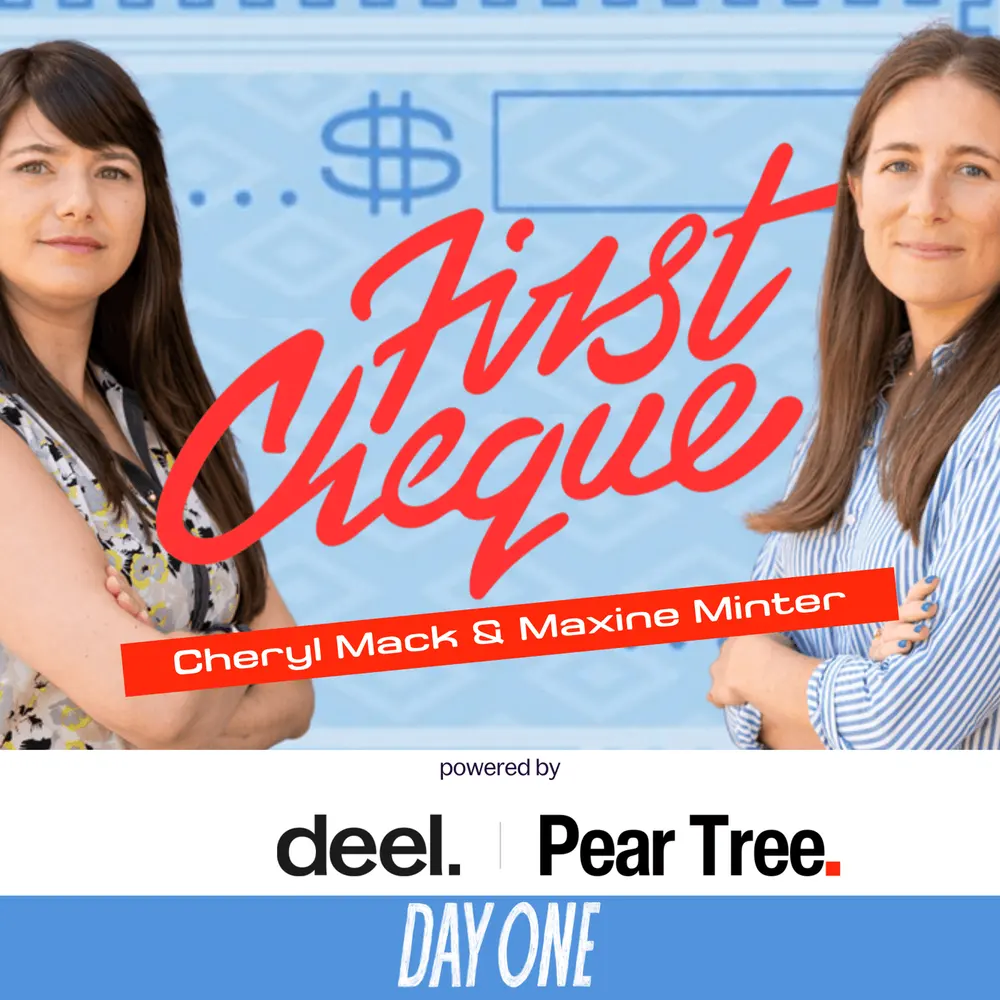 First Cheque with Cheryl Mack & Maxine Minter
Presented by Deel & Pear Tree
First Cheque with Cheryl Mack & Maxine Minter
Presented by Deel & Pear Tree 
 ▶
▶ ▶
▶ ▶
▶