Transcript Synced · select any line to jump ▾ 0:02 Cheryl Mack: Founders scale faster on Deel. Set up payroll for any country in minutes, hire anyone anywhere, get visas handled fast, and get back to building. Visit deel.com/dayone. 0:15 Maxine Minter: That's D-E-E-L dot com slash day one. 0:23 Cheryl Mack: Are you building a SaaS business and looking to achieve compliance with SOC 2 and ISO 27001 or other security and privacy frameworks? 0:32 Maxine Minter: Compliance can unlock major growth and build essential customer trust, but let's face it, it's usually time-consuming and expensive. 0:37 Cheryl Mack: And like really kind of a pain. That's where Vanta comes in. Vanta automates up to 90% of customer compliance tasks, making you audit-ready fast and saving you up to 85% of the associated costs. Plus, Vanta scales with your business, offering a market-leading trust management platform to continuously monitor compliance, unify risk management, and streamline security reviews. Join 7,000 global companies, including Atlassian and Dovetail, that trust Vanta to build and prove their security in real time. 1:03 Maxine Minter: And for our listeners, Vanta is offering 10% off. 1:06 Cheryl Mack: Just go to vanta.com/first. That's vanta.com/first. 1:14 Maxine Minter: Okay, 3, 2, 1. 1:19 Cheryl Mack: Hey, I'm Sheryl. 1:20 Maxine Minter: I'm Maxine. 1:20 Cheryl Mack: This is First Check, part of Day One, the network dedicated to founders, operators, and investors. 1:25 Maxine Minter: If you want to be a better early-stage investor, this is the show for you. 1:28 Cheryl Mack: So TL;DR, if you don't want to suck at investing, listen up. Okay, so I am so excited. Our next guest is just a seasoned investor in the biotech space, so I am so super excited to learn about that because I genuinely— Maxine, what I'm telling you, I have no idea about any of it. 1:55 Maxine Minter: Me neither. I am such a noob when it comes to biotech investing. It's why it's an express exclusion out of our fund. It's just— but it's such a fascinating space and it's so impactful. I think it kind of really zoomed onto everyone's radar during COVID and kind of realizing how much innovation is happening in that space, how big those markets are. But that is pretty much where the end of my knowledge is. And I'm so, I'm so glad we've got Paul coming on today to school us on the 101 of biotech investing. Um, he's obviously an OG. He's been a physician himself. He's been in the Australian ecosystem forever. I think he's— one of the OGs, or old guys, from the kind of previous era and is still operating today and still investing today. And I think they just raised a fund as well, which is super exciting. So they've got fresh powder, fresh theses. And so I can't wait to dive in and just hear what he's got to say. 2:47 Cheryl Mack: Yeah, I'm really keen to see how many synergies and similarities there are between biotech investing and like the type of investing that you and I do. I suspect that there won't, that it'll be quite different, but I could be wrong and I'm open to being wrong. But he's just, yeah, he's taken so many companies from zero to to 100 in that space. So yeah, let's dive into it. 3:07 Maxine Minter: Yeah, let's do it. 3:11 Cheryl Mack: Awesome. So welcome to the show, Paul. One of the first questions that we love to ask all of our guests is what is the first thing that you invested in? 3:19 Paul Kelly: I think the most significant thing I invested in, which is probably the first really, is when I invested in myself and making the transition out of medicine, what was quite a stable, secure teaching hospital career to go and explore starting my own biotech company and moving to another country. That for me was an investment of my career despite all the risks, 'cause it was a terribly risky time, but that was my first investment. 3:45 Cheryl Mack: Yeah, you can never go wrong investing in yourself. 3:47 Paul Kelly: Well, hopefully. So that was, for me, that was my significant investment. 3:53 Maxine Minter: And my, how it has paid off. Yeah. 3:55 Paul Kelly: It's been a great journey. 3:57 Maxine Minter: Good return, high ROI. 3:59 Cheryl Mack: One of the things that I am super excited to get into today with you, Paul, is biotech investments. I'm not even sure that the vast majority of investors, myself included, actually know what biotech is. So I'd love to start with like, what is biotech and what does like the return profile for biotech investments look like? 4:19 Paul Kelly: Yeah, it's a great question. We throw around biotech investing as though assuming everybody understands what that is, but it's actually Biotechnology in itself is a very broad area, the intersection of biology and technology strictly. But in, in, from sort of the investment nomenclature, it's really about investing in discovery of therapeutics, drugs, and diagnostics. Human biotechnology is about the discovery and commercialization of diagnostics or therapeutics that will impact human health. You can have plant technology, agricultural tech. But I think traditionally biotechnology is really about health and wellbeing, particularly therapeutic discovery and development. 5:02 Maxine Minter: Interesting. So interesting. It's such an interesting area. It's really ballooned in the last couple of years. But what have you kind of seen be the changes in the ecosystem that you've been in, say, over the last— well, actually, since you started investing in it? 5:15 Paul Kelly: My big moment was when I left Medicinebahad to go into biotechnology. As it was in the mid-'90s. And this was just before the sequencing of the human genome, which you probably won't remember. But it was— I'm sorry, the early 2000s when that came out. And that was a $1 billion exercise to sequence one human genome. And it was a multi-center collaborative effort. Now you can sequence a whole genome for $1,000 or less. 5:40 Maxine Minter: Wow, really? Is that true? 5:42 Paul Kelly: That's true. 5:43 Maxine Minter: Oh my goodness. 5:45 Paul Kelly: It was the genomics boom of the early 2000s. And that was a bit just lagged behind the tech boom at the same period. But it came with a whole lot of promise that finally we can unlock this mystery of the human genome and unlock the mystery of human disease. We'll be flooded with new therapeutics and all sorts. That didn't precisely turn out that way because you realize that just having the phone book— showing my age— of all the different, uh, codes in the— in DNA is not enough, right? It is so complex how that code of human life is transformed into how the body works and how it sometimes dysfunctions and the origins of disease and how you can develop new drugs. But what's changed— so there was that initial enthusiasm and then a bit of disappointment that we weren't getting discovery and innovation as quickly as we would hope. But what's really changed over that period of time, and it's really, it's fascinating to see it, is this confluence of advancing in genomics with advances in information technology and how we analyze data, computing power. Mm-hmm. 'Cause ultimately analyzing things like genomic information or human physiological data, it's all data. And so the ability to mine data faster, more accurately has really transformed medicine. So you've got a huge number of discoveries now coming out of that data analysis, but also with the advances in computing power, you're able to do a whole range of different things at the same time. And at the same time, there've been sort of innovations that have enabled some of that genomic information to be translated into discovery, particularly in, say, synthetic biology, which is where you're able to, to change the way nature is by engineering genes. And gene editing, for instance, is one good example as a recent innovation. Tremendously powerful tools that are now being developed, and particularly over the last 10 years, it's been partly because finally, you know, we're able to do things at a much faster much lower cost and learning. Again, all biotechnology and all science really is on the shoulders of those before you. And so they're able to take the innovations that have happened in the last 20 years and now start converting them into very, very exciting discoveries at a pace that is just breathtaking. And which is one of the real challenges for biotechnology investing is the pace of innovation is extraordinary. It's global. It's not just limited to the East and West Coast of the United States or areas of Australia or Europe. It's global. And, um, you have to be really mindful that, that, that pace of innovation is, is something you could be mindful as, as an investor in what you're investing in. And is it really competitive? How does it compete globally? What, what else is going on? 8:23 Cheryl Mack: That's so funny, because if you had asked me, like, you know, what do you think of biotech and how quickly do you think it moves, or like research and science and, and healthcare in general, I probably would have told you, like, I think that's a pretty slow-moving beast. Like, I would not think that this is an ecosystem that is incredibly fast-paced. 8:42 Paul Kelly: Well, it is very fast-paced to a point, right? So if you're developing a therapeutic, right, things like AI have improved, are showing that they can have a huge impact on is what we call preclinical drug development or discovery. This is all the stuff that happens before you start putting drugs into people and see whether they're safe or effective. That path from safety and efficacy through to having an approved product is a long path. And so, uh, this is one of the big differences between, say, biotech investing and tech investing. Biotech investing is a long game. And from sort of seed investing or very early, uh, innovation investing, which is where a lot of angel investors and small investors invest, you have to be prepared for 10, 15 years plus before you actually see something on the other side. And then that's only if it's successful, and the success rate is very, very low. It's less than 1 in 10. So there's a high failure rate, a high attrition rate, but what's happening is the speed of innovation in sort of culling out pre— what we call preclinical drugs, uh, before they get put into humans to see whether they— are they— have they got a higher probability than not of being successful or safe? Are there any toxicity issues here that we can't predict or that we should be able to predict? Data mining, AI, and sort of more intelligent use of all the data that's accumulated over the decades is really helping at that end. But at the end where you've got to go laboriously to— not laboriously, but for all the right reasons, right, for safety and effectiveness, you've got to show it's safe and effective. And there's a well-trodden path that is many years in the making, in the following through, and has a very high risk associated with it. 10:19 Maxine Minter: I'd love to continue that thread. I mean, I think I would have the same instinct as Cheryl, right? Like, oh, it's a fairly slow-moving pace, et cetera, which I think is a great case in point. Invest in things you don't understand, because I think probably both of us are not experts in this space, clearly. So I'm wondering if you can kind of hold our hand a little bit and give us a beginner's guide to what are the kind of basic rules in biotech investing? How long are the hold periods? What are the return profiles you can expect in that space? Like, how do you even approach the space? Does it make sense to do super early investments, or do you actually have to wait until they get to a certain level of like de-risk before it makes sense to invest? 10:56 Paul Kelly: These are great questions and ones that we as fund managers sort of struggle with all the time as well. When you're raising a fund and investing, do you go early or go later? It's all about risk and return, right? The highest return goes with the highest risk. And this is a very risky initiative. And so if you're investing early in biotech, you need to understand that, or should understand, that it's a long game. It's very risky. It costs a lot to get there. And so your seed investment of a, it's $100,000, $50,000, whatever it is, ultimately, if this is going to be successful, there are hundreds of millions more dollars need to go into this, and that can either go through equity investing or through partnerships or whatever. But there's a lot more money required. Firstly, if you're looking at investment, who's around the table? Have you got deep pockets or deep enough pockets to be able to follow through with this investment? And take it on? Who are the partners who are investing in this? What's their experience? Are they all newbies as well, or have they got experience and got the scars of where things haven't worked? And then understanding that that path to ultimate product is a very, very long one. Not going to be selling any product until such time as it's approved product, which is 15+ years away. Rather than leading by the heart and saying, this sounds fantastic because it's going to be affecting someone that I know of closely, or almost like a passion investment. Be curious about the background of the people, the background of the scientists. Why are other people interested? Why are other people maybe not interested? You have to have, as I said, a good syndicate. Is this solving a big problem, right? Because when we look at investment opportunities, it's got to be solving a global health problem, a big unmet medical need, because that's where you'll get the big exits. If you're successful in solving a big problem, And again, the success rate's very low. If it's successful, you can have companies that have— that are asset acquisitions that have had early-stage clinical proof of concept selling for billions of dollars because the ultimate payday for the pharmaceutical industry is a billion, multi-billion-dollar product. And so that's what you're hoping for. So, but to get to one of those, and we generally assume that if we've got a portfolio of, say, 10 investments and we've put, say, $10 to $20 million to play in each of those, we can expect that 3 of those are going to work out. 13:15 Cheryl Mack: It's actually better than VC, isn't it? 13:17 Maxine Minter: Yeah, it is. It's better than VC. 13:20 Paul Kelly: Yeah, but if you're an angel investor and you're looking at a small number of investments in biotech, it's like, chances are most of them are going to fail. So you need to have then a portfolio approach. Look at the team that's doing it. Have they done it before? Speak to people about it. Speak to experts in the area. Don't go in sort of uneducated in a way. Make sure you've got— you've sought some education about what you're doing. And ideally, investing with a knowledgeable fund or syndicate is really helpful. That will do your due diligence. And don't fall into the trap of backing someone because they seem like a really cool scientist. That seems to be doing really cool work. Ultimately, what you're investing in is the opportunity to be part of a product that's going to be developed and sold and impacting people's lives. So you've got to be thinking about it in those terms because there's a lot of really cool science. Doesn't mean it's going to be a good business. It's going to be a commercial product. And so I think that's one of the challenges that people can get almost seduced by the science and it's just, this is fantastic stuff. Gee whiz, this is amazing. Then there's this, well, so what? Where's the product here? Right? And if I'm an investor, I need to be able to see this one day will be a product that will be sold and that I will get a return. And so just take a portfolio approach. Don't just pick up one or two. And be part of a team of investors is probably the best way of doing it. Look for proof of concept. If an innovator is saying to you, look, I think this particular compound or this approach has the following outcomes, well, show me some data that supports that and someone that will support that again. And also, what's the fail early experiment, right? And the big trap is that people will continue to invest. Oh yes, that experiment didn't work out so well, but we'll try something else. We'll try something else.. But what you want is something, if it's going to fail, fail fast so you're not throwing good money after bad. And then you can say, okay, we know these things are highly risky. It failed. You did the right thing. Now let's move on. Right? So those are the sort of things that we look at very carefully. Proof of concept, big unmet medical need, syndicate partners around, high-quality science is a— you just have to have it. And the real path to an approved product, because ultimately it has to be a product. Yeah. What's the path to being an approved product here? That's really important. 15:31 Maxine Minter: Oh yeah, I was just going to say, like, on that, on that fund construction piece, what does a good fund return look like when you do a good job of kind of portfolio construction and balancing that risk, recognizing kind of that you're putting in there, and you know, what, what's the range, right? Because I know in all funds management there's a range. 15:51 Paul Kelly: Yeah, there is a range, and I think biotech investing is is very different to tech investing or investing in SaaS businesses. Biotech funds tend to have a quite long and deep J-curve, if you like, which is where the fund is not in profit. It's, it's actually spending more and not actually generating any returns because what you're hoping is that you'll weed out the failures early and be supporting the companies that are performing, that are hitting milestones. And ultimately you'll have those coming out the other end that have hit their milestones and performed well, but you haven't followed on to the ones that weren't. So you'll have early failures, deepens that J-curve, and that you come up the other side and the other side is generally at 5 years plus of the fund, you'll start to see the returns. And you can have— we all aim for 25% plus IRRs, but hopefully that, you know, you'll exceed that. You can get super returns in some instances, but you'll generally find for most funds it's one or two companies that have really hit it out of the park. That's the risk game you're playing, right? If you're not having failures in your fund, you're not taking enough risk and therefore you won't get the super returns. 16:55 Maxine Minter: I think it's something that's like so valuable to get used to. 16:59 Cheryl Mack: I'm not sure what I was expecting, but I wasn't expecting so much of that to be very similar to how we invest. Like, make sure you understand if there's a problem, get to know the scientists. I like, don't fall in love with the science. And in our case, like, don't fall in love with the technology or product and like be curious. They're like, and even the J-curve part and seeing returns after 5 to 10 years, like that is all very similar. I feel like I was expecting you to say something like you have to really understand the science or like you have to go to a lab or something that is just outside my realm. But most of that actually sounded very similar, right, Maxine? 17:36 Maxine Minter: Yeah, totally. Yeah. 17:37 Paul Kelly: Some of the diligence we do is, and that's why I'm making the point about the diligence, we will actually go to the lab. 17:42 Maxine Minter: Okay. 17:43 Cheryl Mack: So you do go to a lab. 17:45 Paul Kelly: And that's what I'm saying. If you're an individual investor, an angel investor, or a small syndicate, have someone do the work, right? Even if it costs you a bit to say, okay, I want someone to go in there, due diligence, show me, have a look at the lab books, the claims that are being made, can they be substantiated and validated? Are they prepared to have that experiment repeated in another lab? So you actually do get a bit down and dirty in the lab and do the diligence to be able to say that, yeah, this is worth backing and the science stacks up. And it's worth going forward. I think the difference with tech funds versus biotech funds now is that with, say, SaaS businesses, where, for my— correct me if I'm wrong, I'm sure you will— is that speed to market is a lot faster than in our business, right? We're talking 15 years plus. You guys, it's all about, you know, product market fit, speed to market, marketing spend. And so the risk of having that deep J-curve is a lot less in tech SaaS businesses than it is in biotech because you can get a product out there, start generating revenues, maybe get an early, early return. We look at especially global markets because the Australian market is like 3% of the global pharmaceutical market. And so we will often see opportunities where someone says, look, particularly saying digital health, right? I've got a digital health application here that might be useful in this particular part of the Australian ecosystem. Well, unless you can actually address issues on the global stage, particularly in the US market, which is the biggest market, then it's not something that we would invest in. There are other funds who would, right, who do do that and have an expertise in that, but the, uh, the market challenges there are enormous. And I think that's where we're seeing a lot of settling down of that early enthusiasm for things like digital health. 19:28 Maxine Minter: Yeah, it's really interesting. I mean, I think the There was this kind of boom before the ZIRP area, I want to say 2018, 2019, and then like definitely in 2020 and 2021 with COVID and everyone realizing that, hey, there's actually all of this activity and like innovation going on. A lot of folks investing in tech companies, what they thought were tech companies but actually were digital health, right? And they had FDA approvals and medical devices and those kinds of things they had to get through. And I've been seeing a lot of them kind of coming out the other side with a lot of very haggard-looking tech investors, you know, having haven't navigated FDA approval and being like, that was just no part of our diligence, right? Right. Or they didn't navigate them and, and those kinds of things. So I think like that seems to be the Venn diagram between the two. How do you go about evaluating FDA approval? 20:18 Paul Kelly: Yeah, well, sorry, I'll just come back on that point that you've made is about the wave of tech enthusiasm, you know, tech, digital monitoring, wearable devices, uh, AI as a medical device, and There's a paper recently published that looked at this, and there's about— there's several hundred AI-based technologies or devices that have been approved by the FDA, right? Very few of them are actually generating any sales. And they looked at this by looking at what they call the code for reimbursement. And very, very few of them. And it sort of clusters around those that are related to particularly diabetic eye disease, where you can predict whether someone's going to get that and intervene early, and coronary artery disease. Everything else is Zombieland, right? So I think— 21:07 Maxine Minter: Wow. 21:07 Paul Kelly: So just because something gets approved doesn't mean it's going to be a valuable product. It has to be reimbursed, and then reimbursement through insurers, and then it's got to be used. One of the problems with tech innovation in healthcare is that the bulk of the users of health assets or health resources over the age of 65 and in lower socioeconomic groups who on average might take 12 to 15 medications a day, are not technologically savvy, don't use smartphones, may not have access to the internet. And so there's a bit of a disconnect between this— there was this disconnect, a surge of enthusiasm for telehealth, and then the reality hit that actually most of the people who could benefit I'm not going to use it. And so that's not to say eventually it's not going to change, but I just think there's, like with a lot of things, that early enthusiasm is now being tempered by the reality that ultimately, at the end of the day, the product has to provide value to someone who's willing to pay for it. And healthcare is really tricky in that regard because the payer is not necessarily the customer, not necessarily the user. 22:13 Cheryl Mack: That sounds so risky though. How do you account for that? Like, that so many of those risks are just like out of your control. You have absolutely absolutely no say or like, like forecast around that? Like, how do you do— how do you think about de-risking that? 22:28 Paul Kelly: Look, at early stage investing, when you're investing in perhaps a preclinical drugs or set of drugs that are way away from the clinic, you will look at it and say, okay, of this sort of drug, have any been approved previously, or have any been completely knocked back by the agency, by the FDA? 22:47 Cheryl Mack: Is this approvable? And then used, and then like the assurance has to accept it? 22:53 Paul Kelly: Well, there is a precedent for approval in this area, or we don't see any significant roadblocks, although it's going to be years away. And then as you're progressing, getting towards the clinic and trying to do clinical trials, you'll say, okay, so what's the— what we call the target product profile? What is— what's going to say on the label about this drug? What's its use, and how's it going to compete with anything else that's on on the market. But the best sort of assets, the ones that we call either first in class or best in class, as it's the first time there's ever been a drug in this particular area and we know how it works, or there may be others in this area, but this is better than that. And then you look at reimbursement in the US market. Is someone willing to pay for this? And it might be worth— might be great to have a drug that, that has a particular effect that can have a significant impact on people's lives. But if it costs millions of dollars to manufacture that and you're going to be selling it for, you know, you have to sell it for a substantial amount of money and no one's going to pay that for a condition like that. Yeah, there's no point in developing it. Uh, you think, well, this, this might be good, it might work, but who's, who's going to be able to afford to pay for that, this particular place, even the technology where it's currently at? Yeah. Uh, and that's more of an issue when we're getting to later stage investments where things have got strong proof of concept in the clinic. We know it's probably safe. Well, we know it's safe, it probably works. Question is, is that going to be sufficient to get approval and then reimbursement? Is that reimbursement going to be something that's attractive to have a sustainable growing business out of that product? 24:22 Cheryl Mack: Meanwhile, we're over here like, ah, they'll just pivot. 24:27 Maxine Minter: Yeah. I mean, I imagine that any novice investor looking at a new space that has a lot of risk to it, right, that has the 1 in 10 kind of loss profile. I mean, I know I did before I ever built a company looking at like investing in these companies. Like, how do you pick? Companies that are going to be successful or not. And what strikes me as you're talking through this is a couple of things. First is it sounds to me like there are over many seasoned investors, like developed heuristics or risk moments that you are evaluating, essentially hurdles that they have to get through. And I would venture a guess that there's like funding inflection points that sit behind each of those inflection points. So as the risk goes down, the value goes up, but you kind of participate and see those markups in a similar Jacob. I think what else is really interesting is that, you know, at first blush, as probably is demonstrated by Cheryl's outrage by the risk profile, is like, you look at it and you're like, that just seems like compounded risk, right? Like, how could you possibly take that risk? But actually it's a very like systematic approach where you're thinking about like, okay, what is the first hurdles I have to get through? And then what's the death rate of those? And then great, if they get through that, then I'm willing to fund them in this valuation range, thinking about that profile. I think it's one of those ones where like funds managers are so important, you know, for the reason that number one, if you sent me into a lab, I'd break things and leave with zero insight. And two, that if you like ask me to invest in some of these companies, I just wouldn't even know where to start. Whereas as fund managers, you kind of develop, and seasoned investors, if you're looking to kind start to angel invest in this space. Actually, it sounds to me like there's even more importance of kind of upfront investment in learning the craft before you start deploying capital. 26:11 Paul Kelly: Exactly. And look, I think, Maxine, you make a really important point that there are value inflection points and there are known sort of risk pivots, if you like. I'll use that expression. So, you know, you get into the clinic, all right, you've got a certain percent probability of passing the Phase 1 test, which is really just seeing whether it's safe. Right? Chances are, you know, 1 in 5 will be safe. But the big hurdle is getting through Phase 2, where you actually show, is it not only safe, but at various doses, is it effective? Effective enough to go into what we call a pivotal trial, which will then be proving that it's actually, uh, safe and effective in the way it's supposed to be used for the treatment of this particular condition. And there are value inflections at each point. The biggest value inflection would be if you've shown positive outcome in the Phase 2 trial, going to Phase 3, that's a huge value uplift because most drugs fail in Phase 2 if they get to that point. And so, at each stage, right, the value goes up. And it, and it really goes up when you've got really high-quality data in an area of high unmet medical need, where you've got a best-in-class or first-in-class drug, and then you've got a clear path to, to what the outcome of the clinical trial would look like. And particularly, if you've got a pharmaceutical partner in place. Because the chances of success of a biotech company with a pharmaceutical partner is about 28 to 30%. Without a pharmaceutical partner, it's about 15%. And that's— 27:39 Cheryl Mack: Wow. 27:40 Paul Kelly: Independent of all the other sort of factors. So having that partnership is really important because it gives people a sense that, okay, well, these people must know what they're doing. And secondly, you can leverage off their expertise as you're going forward and seeking to develop the drug. And often they will become— the partner will become the acquirer of that asset. What you're hoping to do as an early-stage investor is see that as the company's successful, each time there'll be a value uplift, and so you won't be as heavily diluted as you would be if there wasn't that happening. But— and you're hoping that there are some early, early milestones that will show whether you're on the right track or not. And there is that chance. Oh yes, but only if I could do this experiment a different way. No, no, no. You told me this was the kill experiment. You killed it. That's great. There's no shame in doing the experiments. It's going to show we're not going to follow through on this. That's actually a good thing. You're saving investors a lot of money. Let's think about the next thing we're going to do together. 28:36 Maxine Minter: I love that framing, the kill experiment. I might, I'm going to experiment with that and see if any of the founders that I work for will go for that. You know, this is the thing you're going to try and if it doesn't work, it's the kill experiment because it's so hard to quit. Like we are biologically wired not to quit. And Annie Duke has written some really interesting stuff about how hard it is to quit. But I think the kill experiment is a really wonderful construction of like, hey, we pre-agree. 29:00 Paul Kelly: Pre-agree. 29:02 Maxine Minter: That if we get a negative outcome here, DOA, it's dead. 29:07 Paul Kelly: Exactly, exactly. 29:08 Cheryl Mack: This is like zombie apocalypse level, like you're not making it out of the city. 29:13 Paul Kelly: That's right. People have a fail fast experiment is probably a more delicate way of putting it, but I like to call it the kill experiment. 29:19 Maxine Minter: I'm with Gil. I'm on Team Gil. 29:22 Paul Kelly: Get a t-shirt, mate. 29:24 Maxine Minter: Right. Yeah. I can't imagine how that's going to go down. Imagine walking around with a t-shirt that said, I'm on Team Gil, especially in America. I don't— I'm intrigued to see whether I would survive San Francisco. 29:36 Paul Kelly: Yes. 29:37 Cheryl Mack: Or like, I survived the Gil experiment. My startup survived the Gil experiment. 29:42 Maxine Minter: Yeah, I think that one. We're getting there. 29:44 Paul Kelly: We're getting there. Getting there. 29:47 Cheryl Mack: Are you building a SaaS business and looking to achieve compliance with SOC 2 and ISO 27001 or other security and privacy frameworks? 29:55 Maxine Minter: Compliance can unlock major growth and build essential customer trust, but let's face it, it's usually time-consuming and expensive. 30:00 Cheryl Mack: And like really kind of a pain. That's where Vanta comes in. Vanta automates up to 90% of customer compliance tasks, making you audit-ready fast and saving you up to 85% of the associated cost. Plus, Vanta scales with your business, offering a market-leading trust management platform to continuously monitor compliance, unify risk management, and streamline security reviews. Join 7,000 global companies, including Atlassian and Dovetail, that trust Vanta to build and improve their security in real time. 30:27 Maxine Minter: And for our listeners, Vanta is offering 10% off. 30:29 Cheryl Mack: Just go to vanta.com/first. That's vanta.com/first. 30:38 Maxine Minter: I think about, you know, when you're talking about the kind of progression here, obviously as investors, there's a bit of like white-knuckling that goes on at that early stage. As tech investors, we're used to using kind of revenue metrics to get comfortable and also provide some cover, right? Money as the ultimate commodity can then be traded for more options in the future if you work out, hey, the thing you're building isn't quite right, we're gonna pivot it. And also for founders, you know, if they can get to some of those key revenue metrics pretty early in their journey, even ideally kind of cash flow positive, they actually, you know, buy their freedom, so to speak, and can kind of take the business where they're looking to take it, you know, if they work out that the direction they're planning on taking it wasn't the plan. What about for founders in biotech, right? If you're like 15 years before revenue and you've built this thing through like a few of those inflection points, what happens? Are there— is there residual value in that asset, or is it like a zero-one thing. There's no value until there's value. 31:34 Paul Kelly: It tends to be binary. 31:35 Maxine Minter: Wow, interesting. 31:36 Cheryl Mack: Tends to be binary. Wow. Why would any founder do that? 31:41 Paul Kelly: Why would any founder do it in the first place? Speaking as a founder of companies myself, why am I doing this? But, um, anyway, but they do it because the binary outcome is always the, you know, the thing that we're chasing. We want that good result, and if we can get that good result and validate the potential impact down the track can be enormous because every drug that's on the market was once an idea in someone's head that was a preclinical thing that someone thought, you know, maybe I'll try that. And it ends up— may take 20 years, but someone's got to be successful. In many ways, it's the challenge. You know, there is a stepwise progression when you say, okay, well, that, that passed, so we get to the next stage and we get to the next stage. Feeling comfortable with that, being able to navigate through that, I think it's one of the hardest things for the scientific founders particularly is when they think, well, this is my baby, how can you tell me it's not worth something? Well, it's worth something, but maybe not commercially worth something. It's good science, but it may not be a good product. And I think that's one of the challenging things. But I think, Maxine, you make a really good point, is that, so the tech companies with, you can use multiples of EBIT or whatever you want to use to value them, and everyone's happy with that. In our business, in biotech, particularly drug development, and I'm speaking a lot about drug development drug discovery in this discussion. There's a whole separate discussion about medical devices and diagnostics and things, but I'll stick to drug development as biotech, is that it's more looking at other transactions that have happened, precedent transactions, what the market's looking for, where pharmaceutical companies are seeing value. You don't generate sales until you've got a product, and that's after you've got an approved product. And so one of the sort of real white-knuckle characteristics of this business is it's always dependent upon the capital market. In some way, you're always dependent upon someone else, whether it be a pharmaceutical partner funding one of your programs. It's the public capital markets, the private capital markets, and these are capital-intense businesses. So you've got to be able to show that you are progressing down that path to value, to be able to substantiate attracting capital either from the public markets, the private markets, or from pharmaceutical partners who are supporting your programs. Most drug-developing biotechs don't sell anything really except the promise that their discovery is going to be worth a lot of money at the end of the day. 34:02 Maxine Minter: Fascinating. There are listed companies though that are still in the promissory period, if I can use that term. 34:09 Paul Kelly: Oh, absolutely. 34:10 Maxine Minter: You can actually like list and start to see liquidity and things for these companies inside of that period. 34:16 Paul Kelly: Yeah, most of the listed biotech companies are pre-revenue. 34:19 Maxine Minter: Oh, interesting. 34:20 Paul Kelly: During the boom of the— of 2021 was a particular boom year. You had companies with preclinical assets that hadn't actually been put into a patient or subject listing substantial valuations all on the promise that this was going to be. And it was at that, at that period, everyone could see the power of biotechnology as it was used in the COVID period and think, wow, this is fantastic. And so there was a lot of enthusiasm, which then died down seriously the year later, and we had one of the worst biotech markets in 30 years. And because of that, because of that dependency on the capital markets, that's— yeah, you can have a year that's tremendous and people can, can list, uh, preclinical assets, then the following year it's just, it's a desert and no one's interested in investing in anything. 35:06 Cheryl Mack: Has anyone from that vintage done well? 35:08 Paul Kelly: Yeah, yeah, some have, but a lot of them after listing went deeply under in the water and have delisted or gone out of liquidation. So it's been a very, very difficult period. We're starting to see some green shoots coming out of it now, but 2022, '23 were very challenging. But yeah, those companies, just to your point, Maxine, those companies are listed usually with— you may have a Phase 2 or series of Phase 2 assets or generally a pipeline of drugs being in development at various stages. And the closer you get to those stages where you're, you know, closer and closer to a product, well, as you would imagine, your value goes up because you're closer and closer to revenue. 35:47 Maxine Minter: Yeah. 35:49 Paul Kelly: Um, but normally those, as they get to, say, at the end of a Phase 3 trial or the mid of a Phase 3 trial, will then get acquired by a pharmaceutical company. It'll take that asset on because their expertise is in, uh, marketing, selling, and distributing drugs. And so companies generally at that point want to be able to sell their assets to a pharma company. 36:09 Cheryl Mack: Right, so they don't actually have to go through that risky period of like making sure that there's a code that they can get reimbursed and— 36:18 Paul Kelly: Yeah, yeah, and they've got, they've got teams that know all about reimbursement. They can do all that. 36:23 Cheryl Mack: Yeah, okay, so there's a bit of a like early exit for the founders there then. It's not like they have to go through that whole thing. 36:30 Paul Kelly: Well, if you're a founder and you've made the early discovery, Right. You have to accept your exit's not going to be at least for 10 to 15 years if you're successful. So it's a long haul. Then you get to that, what's the role of the founder as you're going through all these different changes? And does, as the company's becoming more commercial, does that founder's role change? Can they change with it? Most founders struggle to do that, particularly if they're coming from a science background. And, um, yeah, that, that whole, has a whole other range of issues that have to be dealt with. 36:58 Maxine Minter: That's a tough transition. But also, I mean, we see it mostly between kind of, you know, pre-seed and Series B, you know, most acutely between seed and Series A, right? They like start that journey and it's a really— but they've got, you know, if they start doing that work in pre-seed and they've got to Series B, they've got like a good 5 years of kind of building themselves into that. 37:18 Paul Kelly: Yeah, it's also— yeah. 37:20 Maxine Minter: You know, more polished CEO. 37:22 Cheryl Mack: Scale-up founders. 37:24 Paul Kelly: And also it depends on the, on the, on the quality of the mentorship around them, right? And the— True. And if you've got a good board or a mentor, if someone's willing to be mentored, and then, um, yeah, you can, you can transition them into that role. 37:39 Maxine Minter: Yeah. Does that mean there's lots of coaching and support services around these CEOs in biotech, like specifically around folks doing that transition from being technical backgrounds? 37:49 Paul Kelly: Yeah. 37:49 Maxine Minter: That's great. I mean, that kind of support network is so valuable. 37:53 Paul Kelly: Yeah, and that's my background. I didn't come into VC as a finance person. I came in as I started my own company. I listed it and then started a couple of other companies and was on the CEO. So I've been on that side of the desk, if you like. I've been there and I know what it's like. And I think CEO of a startup company can be the loneliest place in the world. 38:11 Maxine Minter: Amen. Absolutely. 38:13 Paul Kelly: Being able to support people as they're going through that is incredibly important. 38:16 Cheryl Mack: Yeah, absolutely. And you were on another desk as well, right? The doctor desk first? 38:22 Paul Kelly: Yeah, I was. Yeah, yeah. I still practice a bit, but yeah, yeah, I'm still certified. 38:28 Cheryl Mack: You have time in between all of your risk evaluations. 38:33 Paul Kelly: I actually find it very comforting to get back into that, that environment of the doctor-patient relationship and that, that world. And it helps you understand what all this is about in the end. Uh, it's impacting people's lives. 38:47 Cheryl Mack: Yeah, I'm sure that brings it home for you to actually see the patients. 38:51 Paul Kelly: Yeah, it does. 38:52 Maxine Minter: It's interesting, I've actually been meeting— I've met quite a few— oh, that's probably an overstatement— at least 2 other doctors who have then gone on to start, in your case, biomedical companies, but in these case, tech companies. But they kept practicing, like they really just loved the work so much that they continued Yeah, actually same, Maxine. Yeah, Vu Tran from Go One is a doctor. He still runs a practice. 39:17 Cheryl Mack: Yeah, Vu Tran is one of them. 39:20 Maxine Minter: Yeah, it's, um, I think it's actually quite a beautiful thing. Like, as a former lawyer, there is no world where I am maintaining a legal practice. 39:29 Cheryl Mack: You don't do a bit of lawyering on Thursday afternoons at 4? 39:34 Maxine Minter: I don't. I definitely don't. I like, I liked being a lawyer. I really did. But there's no world where I'm running a, like, cute side practice in transactional law. I think it's a real statement for the profession that so many people, even drawn into these, like, really fast-moving, very demanding, exciting, ideally lucrative places, are still carving out that time for that practice. Fascinating. So as you are looking at the kind of biotech ecosystem at the moment, you mentioned at the, at the kind of top of this conversation, you know, you're starting to see this acceleration using AI tools for kind of preclinical trials. But if you're kind of looking at the landscape today, where are some of the bright spots that you're really excited about, the changes that you think are happening in the ecosystem that you're, you know, watching closely? 40:18 Paul Kelly: The impact of technology on drug development and discovery is potentially huge. Some estimates that it could improve the efficiency and the time development by 25 to 50%, which doesn't sound a lot when every year a drug is not— is there's a clock ticking on the patent life, right? And if that's worth— that's worth a lot of money. The sooner you can get into the clinic and the sooner you can get that thing approved, the sooner you can exploit that patent protection for that particular asset. So anything that speeds that up. And so seeing the intersection of, of tech, data mining, genomics, clinical medicine, the same— with all that excitement and all that innovation, the challenge ultimately is, uh, you have to have a product that's safe and it's effective that people use, that you can get reimbursed for. And there's, there's a lot of fantastic, exciting science, but how do we make sure that has a meaningful impact, equitable impact, so that we don't drive a wedge into the inequity in health delivery? Because with a lot of exciting discoveries are great, but they cost a lot of money to deliver, and only a certain proportion of the population will be able to afford those. And so— And I think this is one of the real concerns that I've been reading about recently about AI. And the quality of the data that goes into some of these analyses, where that comes from, and is it going to drive divisions in equity for healthcare provision or make it worse? So there are sort of ethical equity questions that are arising, but that's what makes the field even more interesting. It's not just about the science, it's about the impact that that science will have on our society and what sort of society do we want to we'll live in. But certainly this intersection of tech and biotech healthcare devices, uh, remote monitoring of devices, is a really exciting time to be in. 42:12 Maxine Minter: Yeah. What do you think about the trend of personalization of healthcare? I feel like sitting here in San Francisco, there's just so many people that are deeply obsessed with like biohacking and like, you know, the rise of folks like Peter Attia and I mean, Tim Ferriss to a lesser degree. 42:29 Cheryl Mack: And like microdosing. 42:30 Maxine Minter: Yeah, exactly. 42:32 Cheryl Mack: Anything that gets you like that extra 1% improvement in any type of bodily function. 42:39 Paul Kelly: Yeah. Look, we could do a whole separate podcast on personalized medicine. 42:43 Maxine Minter: Right. 42:44 Paul Kelly: And the, and the challenges that it provides. The, the opportunity to just drive a wedge through equitable health delivery. And because a lot of You know, a lot of people in Australia, for instance, there are a lot of people in remote communities who can barely get access to standard treatments for malignant conditions, and they are spending $30,000 to personalize their anti-cancer therapy. This is not an option. The health dollar is not a magic pudding. There's only a limited amount of resource, and we have to be mindful that we're using that appropriately to serve all the needs. But personalized medicine has is having its biggest impact in oncology, in identifying tumors that will respond better to one form of therapy over another, where there is a clear value proposition to the, to the patient that you will respond better if you get this treatment rather than the standard of care, which is that treatment. But in other areas, there's a real challenge from a health economic standpoint is it might sound good, but really, is there a real health economic benefit? Mm-hmm. Or is there value to doing this above and beyond an individual's perceived value? And again, this is one of those things that will be teased out, but always have to be thinking about the health economic impact. And what we do now in a number of our companies we've invested in that are in later-stage clinical development is make sure we get a health economic study done of if this works in the way we say it will work, what is the quality of life and health economic impact? Because that's what the payers will look at. Um, but I just think it's a good idea. 44:16 Maxine Minter: Yeah, interesting. I wonder for the audience and also for me, could you help me understand the concept of health economics more? Like, how do you think about it? 44:25 Paul Kelly: Health economics is just cost-benefit, right? 44:29 Maxine Minter: Oh, interesting. Okay. 44:30 Cheryl Mack: But cost to who and benefit to who, considering like insurers pay the patient? 44:36 Paul Kelly: Cost to the community, cost to the government, cost to the insurer. And what's the benefit? Is there an economic benefit to this? Is there a social benefit? But it's generally about, is the burden of cost of— and it's not only the cost of the drug itself, it's everything that might go on around that. The burden of that cost worth the outcome for the community or for the payer? So if the payer's the government, that's what they care about. If the payer's the insurance company, that's what they care about. But it's a really important consideration. Yeah. 45:08 Maxine Minter: It sheds a new light on a conversation I had a couple of years ago with a friend who is an ICU doctor, and they were recounting a tough day, you know, over dinner and a glass of wine, and they were saying their patient, um, had a bunch of lifestyle diseases, was able to get a pacemaker, but because Australia is a big single-payer system, i.e., our government, you know, there's a lot of that, uh, health economic evaluation that goes on in terms of these very expensive apparently very expensive pieces of equipment that were going into this patient. So at the time, you know, the evaluation was, is it worth it, essentially, from an economics perspective, to invest placing this pacemaker in this patient where we think it will save them, but they are further on in life and they have all of these other risk factors, versus hold it and then invest it in someone else? Um, and they had made the decision to invest it in this person. They had done the surgery and invested it, and the person had died. 2 weeks later, and she was recounting the extreme frustration of, you know, how tough that decision is, knowing the kind of trade-off that they had made, etc. And I remember being really struck again, you know, being a lawyer where my trade-off is like this contract or that contract, like how tough that ethical consideration is, like standing there looking at a living, breathing human with their entire life in that position at the time, kind of making the call. But it's interesting to hear that that's happening kind of top to tail. in the medical profession. 46:33 Paul Kelly: As, as I can attest to my previous medical careers, as doctors, you, you're generally not helped that— well, back when I was practicing, at least— your, your decision is all about what's in the best interest of that patient, and it's up to others to worry about costs, right? And, and normally in more sophisticated medical environments, though, you will have the support of ethicists and other people who will help in those decisions, and it won't be solely yours because you don't want to be that person who's making a decision based upon it. 47:01 Cheryl Mack: Can't imagine the person who made that decision. 47:05 Paul Kelly: Yeah. And it's so, it's not, so I think that's, that's something that you generally, uh, immune from, unless in exceptional circumstances. 47:12 Maxine Minter: And so, I mean, you made the journey from physician into investing. I mean, I think Australia does an excellent job of educating. 47:20 Cheryl Mack: And founder along the way. 47:22 Maxine Minter: And a quick tour on a couple of founders, actually. I think you like low-key dropped in there, you know, I started a couple of companies and then by the way, I started these next things. I mean, in Australia we have a really high base rate of both doctors and also other professional services. You know, we do end up educating, you know, a large pool of them. Um, and then they, some of them end up in venture and investing. And so what is your advice for folks coming from science and medicine and similar places as they're thinking about a career in investing? How do they get started? you know, what should they be thinking about? 47:55 Paul Kelly: Yeah, look, it's a great question, Maxine. When I did it in the mid-'90s, I was a specialist at a major teaching hospital here in Sydney and on staff at the university and all this sort of stuff, so doing all the things you're supposed to do. And I turned around and said, I want to go and do this biotech thing. And I was like, you don't do that, you don't. And so it was very— there was no one to go to as a mentor or to ask advice because I was treading an un— a rarely trodden path. Fortunately now it's somewhat different. It's not like it is in the US where it's very customary for people to go in and out of commercial enterprises or startup companies and back into academia or back into their clinical work or to do both, have a leg in both camps. But at that time it was very difficult. And what I would have valued is mentorship, support, people you can talk to about the transition, the ability to maybe do— have a foot in both sides. Mm-hmm. And I think if someone's thinking about doing it, just reach out to people like myself or others and say, look, what's it like? What should I be wary of? What are the things to be concerned about? What are the risks? Because at the time, the risk to me was that, well, you've left medicine, you're not coming back. I don't think you're coming back to this place. But yeah, I think it's different. But reach out and use the resources around you and particularly call on people who've been down that path. Go and talk to them, maybe work with in a consulting capacity because a lot of the venture firms are always looking for people who can help them and advise them on investment opportunities, work with Agile groups and look at what they're doing. And so sort of understanding what's involved. It's a hard job, right? Because most of the stuff we do ends up failing. But it's a hard job, but you, you know, you hopefully you're backing winners when you see the winners and particularly what we're doing here. It's, there's nothing more inspiring to think that what you're working on today could change patients' lives or the world and change how medicine's practiced. Doesn't mean that every one of them will do it, but there's a couple here that will. That's why I got into it, was that I, I realized that actually medicine's great impacting people's lives one-on-one, just in that little room you can have an impact on that person's life. But there's this other thing that I could do where I could do stuff and it could impact people— millions of lives if it's successful. Yeah. Have a greater impact. And I was just really curious about it, and it sounded like a lot of fun. 50:13 Cheryl Mack: So, so, so, TL;DR, even in biotech, angel investing is still a team sport. 50:17 Maxine Minter: Yeah, I think that is a great takeaway. I, I mean, on that point that you mentioned there, right, you like entered into this space in the '90s, um, and have kind of been building in an era of investing and kind of venture investing for a very long period of time. The Australian ecosystem is very new, right? We've got— we're relatively new, you know. I don't know a single investor, maybe other than you, who's been in the ecosystem investing since the '90s. I think the kind of— 50:46 Paul Kelly: I wasn't back then. Sorry to interrupt you, but I wasn't investing in the '90s. In the '90s, I started my own company. 50:52 Maxine Minter: Oh, okay. 50:53 Paul Kelly: And then I, I listed it in 2000 on NASDAQ and then sold it a year later, then started another company, and then I was CEO of another company. So, I actually started as a venture investor in 2010 with OneVentures when we started. I was doing my angel investing when I was in Boston, started a couple of other companies, and had that hard lesson of learning not to invest in something I didn't understand, but I decided to invest in a semiconductor company. But, um, ow. So, um, it sounded like great science, but, uh, anyway. 51:25 Maxine Minter: So, the venture investing ecosystem actually, especially in this space, in Boston, I think is a really interesting place to start your venture investing career, be it angel investors investing even into semiconductor businesses. As far as I understand, the kind of US claims to be the start place of venture, and it came from whaling, right? That same activity where you're funding these people that go out and just disappear into the sea, and then sometimes you get a ship with a whole bunch of goodies in the hull, and sometimes you never see those people again. Thankfully, we have more communication with companies at this stage. Um, but I think that's really interesting that that's where you started your angel investing career and kind of that's informed your investing. 52:07 Paul Kelly: It was— it's a good point, Maxine, because that was actually— and what I found was there were a lot of people around who were really good mentors. Because when I sold my company, I thought, what am I going to do? This is— Boston's a really great place to be in biotech. There were so many people willing to advise and mentor and to sort of learn from being in that ecosystem there. And I think they have a much greater appetite for risk in this industry because they've had many successes, uh, lots of failures too that they don't talk about that much, but lots of successes. Whereas here we're just on the cusp of getting some of those successes out in Australia, in biotech particularly. But we had some big successes in companies like So ResMed and Cochlear and so on, but they've been decades in the making, as happens in this business. But there are others now coming through that have been, you know, showing to be really successful, that we can do it and it's worth taking the risk. And, but yeah, the Boston and the Bay Area venture community understand that much better. And we've fortunately, which is really why we as a firm, as a fund, we often syndicate and we'll reach out to our international colleagues in Boston and on the West Coast, getting their insights and their input and syndicating with them, getting the benefit of their learnings and their experience as well. And that's tremendously helpful. It's one of the things that I think is— One of the things I love about doing this job as well is you get to meet and work with some incredibly talented people who are quite happy to share their experiences to, uh, to us down here. 53:39 Maxine Minter: Yeah, that's awesome. So from that period, 2009 to now, I mean, just doing the math on the average hold period, it sounds like very interestingly your, your industry is going through a very similar moment as the kind of broader venture ecosystem is going through, which is the maturity of kind of the first generation of companies that have had the benefit of this, this backing. So as you look at the Australian ecosystem, you know, what has changed? Since you entered into investing and where do you think it will go next? 54:07 Paul Kelly: Yeah, look, since 2008, 2009, when we raised our first fund was in the dark days of the global financial crisis, which was brutal. Before we launched, there were a couple of, there were some other funds in Australia, but the Australian government, we were beneficiaries, one of a couple of funds of beneficiaries of a scheme to try and attract new venture venture managers into the Australian ecosystem. And that was sort of 20— yeah, 2009. And there were very few venture funds around. Again, we were fortunate to be mentored in part by a couple of individuals who were the founders of the first venture capital fund in Australia in the '70s. They were really helpful to us. But since then, it's been the number of funds that have come around. The, the, um, not so much in the biotech space area because there's only really about 3 or 4 of us. Who are dedicated biotech fund investors, but particularly in early-stage seed, angel investing, angel syndicates, tech investment funds have just gone crazy in terms of the number and size. And it's all good. I think it's, it's, it's, there's a lot of money available. And also what I've seen is a significant state and federal government commitment to supporting innovation and understanding that the sort of knowledge economy is really what Australia is all about. We can only get so far digging stuff out of the ground. We really got to be supportive. So the amount of support for high-tech innovation— and you've seen that more recently with the National Reconstruction Fund and its initiatives— and it's bringing us to invest in technology levels is really important. That's been a dramatic change. The hurdles are still there. It's not as though it's, it's, it's, it's no easier. It's just that there are more sources of support. 55:56 Cheryl Mack: 100%. Yeah. 55:58 Maxine Minter: Across the ecosystem in general, I wouldn't say we get a consensus that Australia could be a knowledge economy and some of the most valuable assets we export could be, you know, insights and companies and, you know, what that does for the Australians. So for the folks in the back, actually the venture ecosystem, both biotech and traditional tech, is really valuable and potential source of like huge GDP growth. Both because of FDI, foreign direct investment into those companies headquartered into Australia, but also wealth creation from a jobs perspective and those kinds of things. You know, we will eventually get the folks in the back. So the question we ask everyone to wrap up our chat is what is your biggest big cojones moment? A moment where you felt really brave? 56:42 Paul Kelly: Well, it was It goes back to what was my first investment, which was I guess taking the risk, investing in myself and saying, you know what, at a time when the company that I was, had co-founded and I was leaving Sydney to go and live in Cambridge, England and take my family at the time up there with, we had like $100,000 in the bank and no visible line of sight to additional capital. But I thought, no, this is the time. I'll do it. And so that was one of those sort of pivotal moments where I look back and think, yeah, I was prepared to back myself and take that risk. And, um, that was— yeah, it was, it was brave in hindsight, but it's been a fantastic journey. 57:27 Cheryl Mack: Amazing. Love that. 57:30 Maxine Minter: I think it's so fantastic. I mean, nothing ventured, nothing gained. I think it's— it takes an enormous amount of bravery to go and step out, especially moving family. Right? We have some founders we work for who have moved family, you know, to go and chase their vision. And it's a whole separate thing. I mean, like, I don't have a dog or kids. Me and my partner, we're relatively mobile. It's really easy for me to just book a flight and be like, yeah, I think there's something cool happening over there. I'm going to go over there. It's really different if I have to convince, you know, 3 people under the age of 5 and my life partner who has an entire life centered in one spot. Like, that's, that's a lot. 58:02 Paul Kelly: That's a lot. Yeah. 58:03 Maxine Minter: Awesome. This has been the best. I feel like I have learned so much about a space that like one of those classic educations where I, in the process of this conversation, started to realize how much I don't know that I don't know in this space. So I am— consider me warned and very impressed by what you guys do. 58:20 Paul Kelly: That's a good point. I think one of the secrets— if I just be aware of what you don't know, and there's— and, uh, yeah, it's a secret to biotech investing. 58:30 Maxine Minter: Thank you so much. 58:31 Cheryl Mack: Thank you, Paul. 58:33 Paul Kelly: Thanks for hosting Thank you. 58:35 Maxine Minter: Bye-bye.
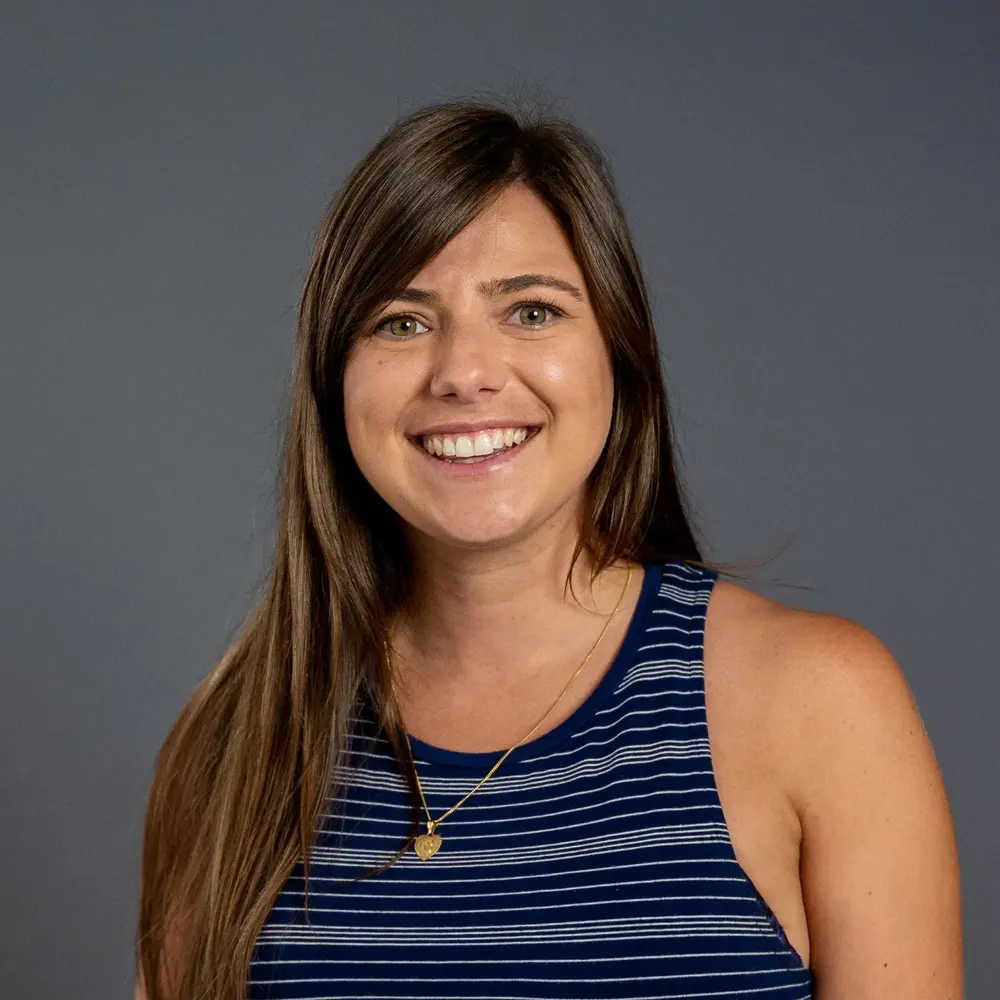
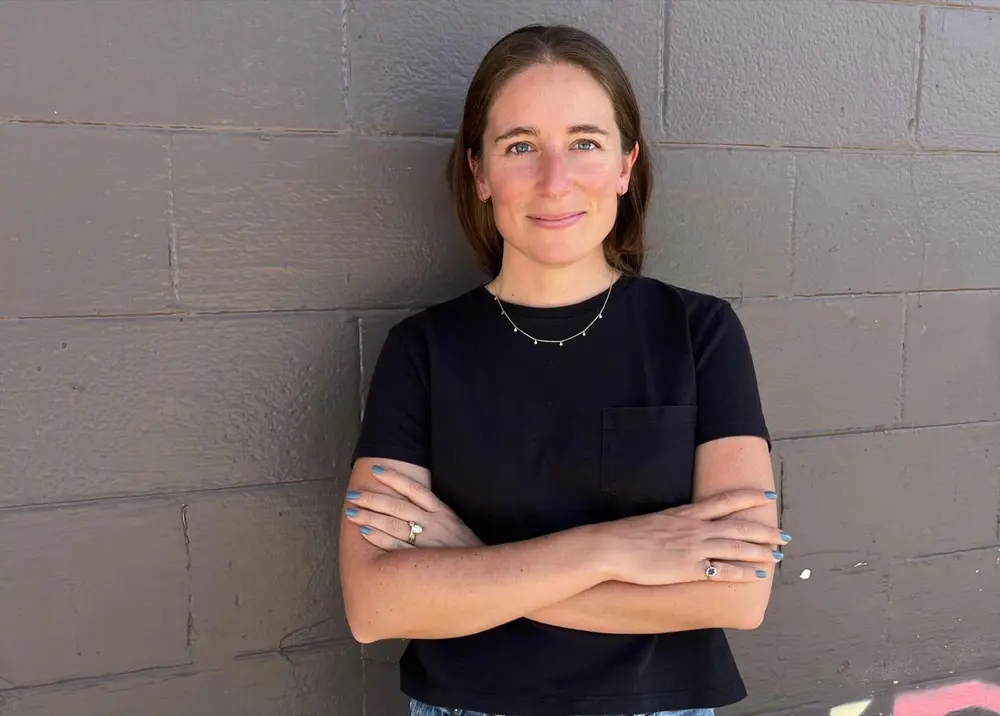
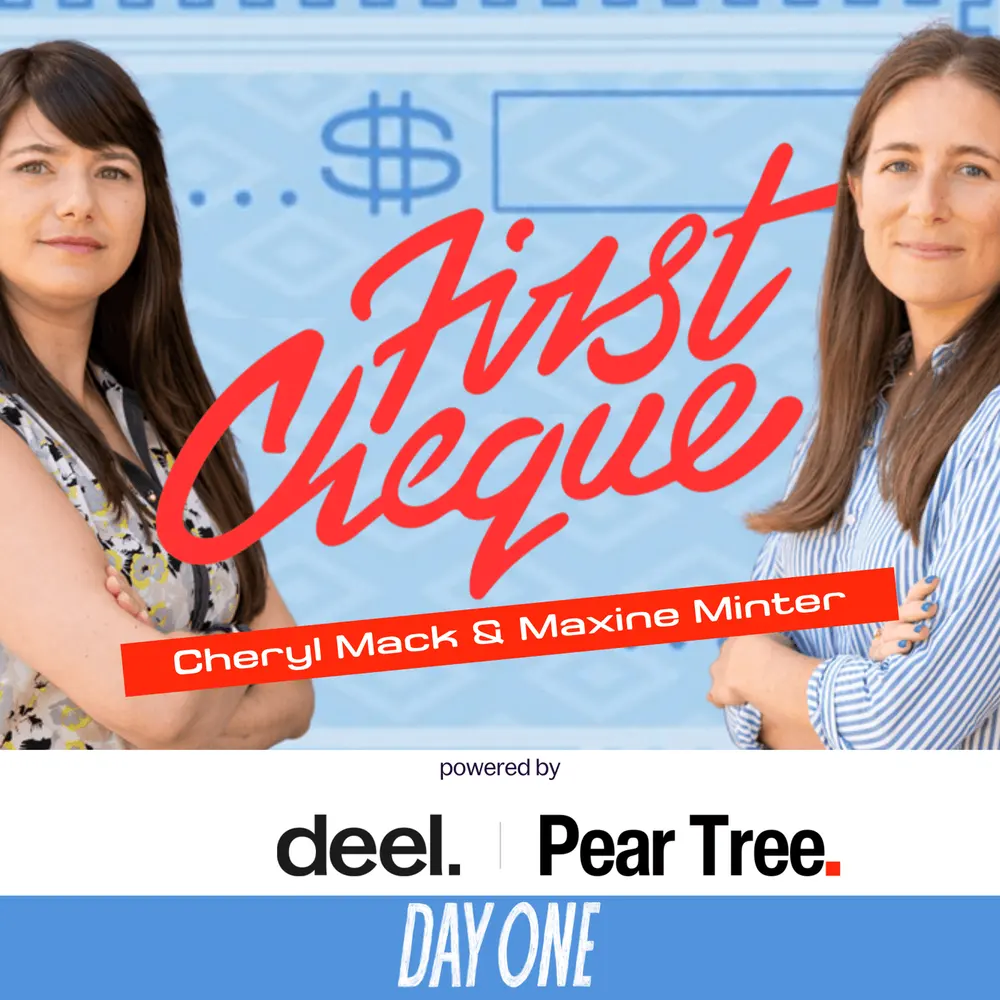 First Cheque with Cheryl Mack & Maxine Minter
Presented by Deel & Pear Tree
First Cheque with Cheryl Mack & Maxine Minter
Presented by Deel & Pear Tree 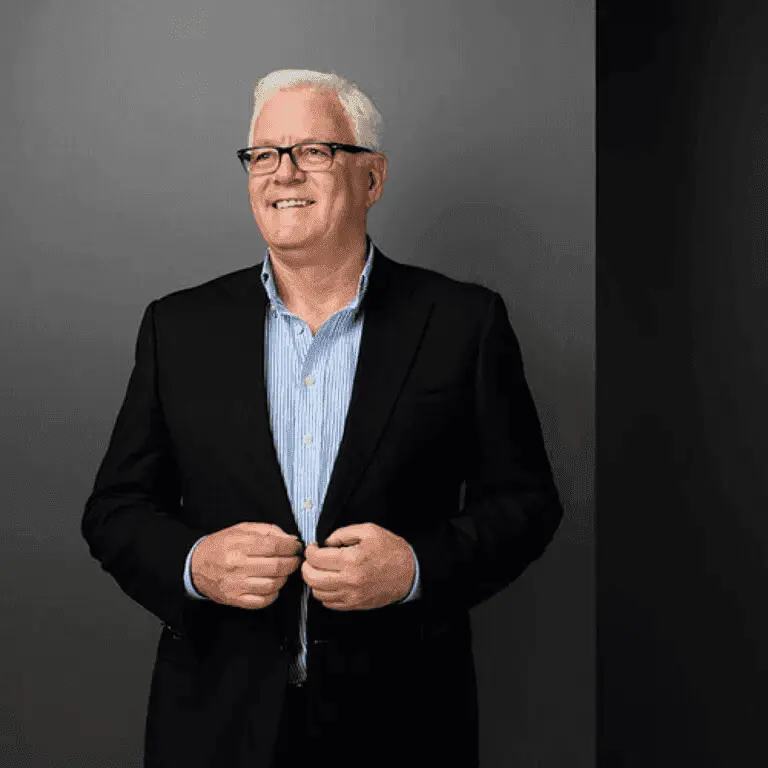
 ▶
▶ ▶
▶ ▶
▶