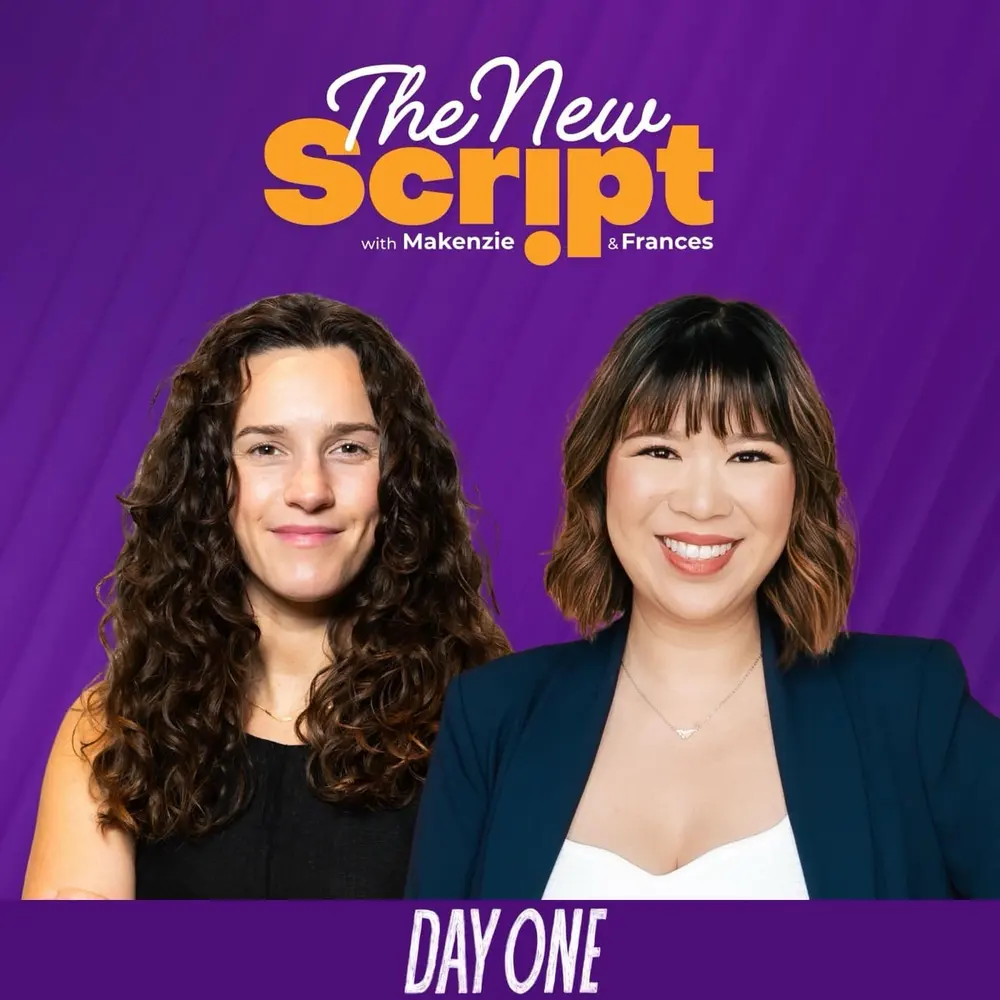
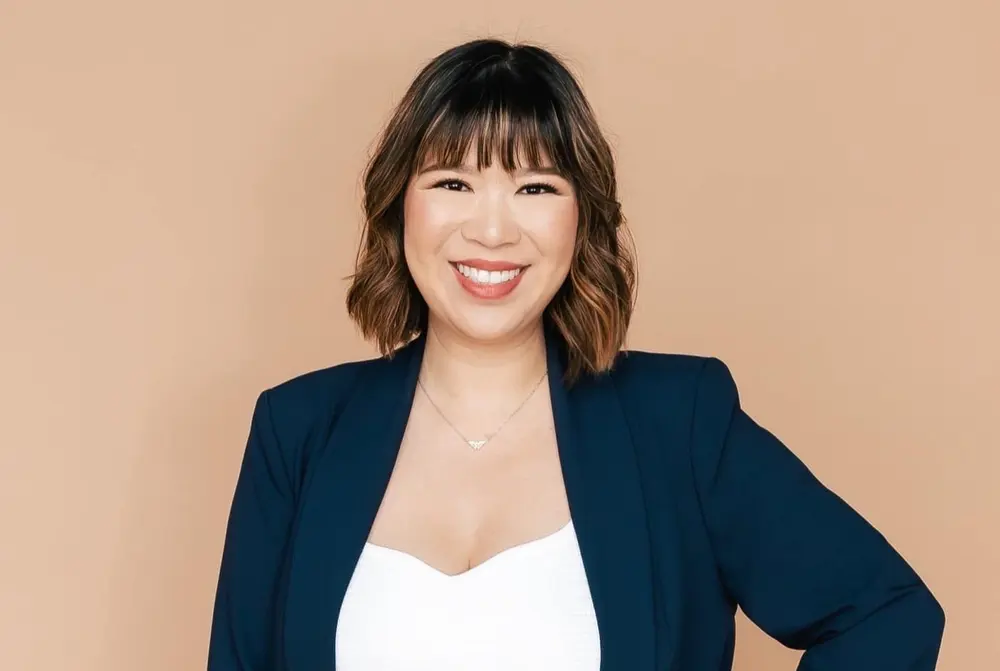
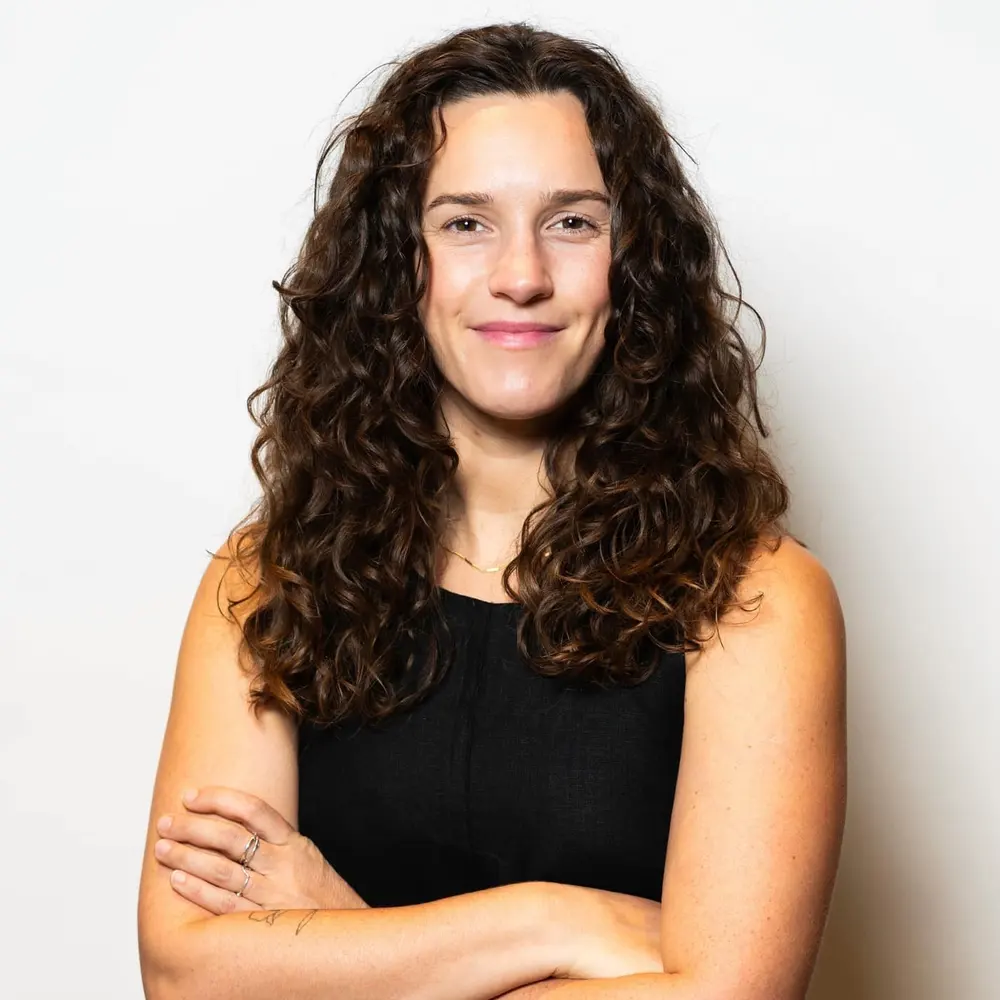
Transcript Synced · select any line to jump ▾ 0:00 Frances Goh: We acknowledge the traditional owners of the land on which we record and pay our respects to their elders past and present. We recognise their continuing connection to land, waters, and culture. 0:10 Makenzie Thomas: The NUScript is a podcast created for educational and awareness-raising purposes only. The conversations you'll hear are not intended as medical advice. Please speak with a qualified healthcare professional for any personal medical concerns or decisions. 0:25 Mayra Hurtado: Right now we only know maybe 50% of the puzzle because we only studied male physiology. So there's questions that we don't know right now. Like, for example, why are women more prone to autoimmune disease and men more prone to autism? We don't know. We know that's, uh, the stat— what statistically it says. We know it could be because of gender or sex, or it could be because of hormones, et cetera, et cetera. But because we haven't studied the other 50%, we cannot help either. 0:55 Frances Goh: Mm-hmm. 0:56 Mayra Hurtado: To have better outcomes. Working in women's health is talking about gender parity and creating enough data and education and information and therapeutics and outcomes for both genders from a social and from a healthcare perspective. 1:18 Makenzie Thomas: Hi everyone, and welcome back to The New Script, the podcast where we uncover innovations, advances, and technology transforming women's Health. 1:28 Speaker: I'm Mackenzie. And I'm Fran. 1:30 Frances Goh: In this episode, we talked with Mayra Hurtado, founder of Hormoni, about her journey into women's health, why hormones have been overlooked, and how Hormoni is changing that. 1:40 Makenzie Thomas: Yeah, it was a really interesting conversation, um, with Mayra to talk about not only like menopause as one point in time, but everything that happens around that, from perimenopause right through to life after menopause, and how data is really shifting the way we, we work with our health at that point in time. So we hope you all enjoy. Dive right in. 2:00 Frances Goh: You're listening to a Day One FM show. Today we are so pleased to welcome Mayra Hurtado, a powerhouse blending two decades of global business leadership with a personal mission to transform women's health. She's held senior roles at Adidas Southeast Asia, led global marketing in biotech, and now heads Prelude Health, a Singapore-based startup tackling hormonal health with their flagship product Hormoni, the first rapid at-home saliva hormone test for women navigating perimenopause. Co-founded with Dr. Sarita Kumble, Prelude Health is now gaining global recognition across Asia, the UK, Europe, and the US. Myra brings not only a wealth of experience but also deep purpose to her work, believing every woman deserves to feel well and thrive at every stage of life. Myra, that's our version of your bio, but, uh, how would you describe yourself in your own words? 2:55 Mayra Hurtado: Hmm, good question. I think, uh, what I would say is that I'm, first of all, very curious, deeply passionate about holistic health, and very interested in bringing back to the community all the amazing blessings I have through my life. So I would keep it actually quite simple. 3:17 Makenzie Thomas: Amazing. And well, let's take it back then, uh, to where it all began, uh, because we would really like to know, how did Hormoni start? Was there an idea beginning, uh, that really sparked and kicked things off. Where did, where did you begin? 3:32 Mayra Hurtado: Well, uh, it was a few years ago. Um, I actually didn't know it was starting. Now thinking back, I think that it was a series of events that connected through my career, everything from being interested in understanding holistic wellness, my family's own healthcare journey until eventually, I guess the point of time where everything come— came together is when I was maybe in my late 30s at the peak of my career, working for a fantastic brand, having a fantastic team, and still having a bit of issues with my health where I was tired all the time. I had trouble sleeping. And you know, one of the amazing things is that in Singapore where I'm based, we had access to all kinds of doctors. So I saw them all. I even, in fact, had an MRI at some point because I had migraines. And I just couldn't nail it until it was one nutritionist that basically spent the time to understand it, run through my whole medical history, and send me to do a lab test. And that's kind of where I realized, after she explained to me, what hormones are and she made a plan for me, I realized what the potential could be. Eventually I met Dr. Kumbhley and when we started talking about her experience and my experience through our own journey, you know, I did what every marketing people do. We go and do a business plan, we do our market research, we start talking to possible consumers, we get into the data. 5:14 Frances Goh: Mm-hmm. 5:15 Mayra Hurtado: And to me, the data was just so clear. There was a huge gap, there was a huge need, and there were women ready to embrace any solution. And they were already spending so much money on it, but still we didn't have a proper way to support them. And that's exactly the point of time where we realized that aside from the gap, this gap brought tremendous opportunity and we are at the right point of time where technology was finally really mature enough to create this solution. And yeah, and that's how, uh, Hormony was born. Um, and it's a whole different story after that. 5:58 Frances Goh: Amazing. We can't wait to delve more into it. I'm curious, Maya, why do you think we're just starting to look at hormones now? Can you help us understand how this area of women's health has been treated in the past or historically? 6:10 Mayra Hurtado: It has been a progression. Or when I mention it, I mean, it was a shocking, shocking data for me, and people usually get shocked when I talk about it, but it wasn't until 1993, 1996 that women were included in medical research, which meant that before that, most of research has been done either on just men or male mice or male cells, which meant that most of the medicines that we are currently taking at this day and age has never been studied in women. Mm-hmm. Obviously, that brings a series of problems, like 8 out of 10 medicines that get taken out of the market is because they were most harmful for women. And, you know, I can make a whole list. And I guess to go back to your, your question, part of it is that we just did not know. It was historically done like that. It was what we had accessible in terms of technology. So yeah, series of conditions that came together and created this problem. 7:09 Frances Goh: Yeah. 7:09 Mayra Hurtado: The great news is that, again, along with the technology, we have a lot more people, including a lot more women in this field that are now interested in solving a problem that they're living through. So it's like the perfect product-market fit. You have a problem and then you have the consumer looking for a solution to solve their own problems. And, This means that in the last few years, this industry has accelerated dramatically. And also we have a lot of people that are not necessarily scientists looking into this space, like me, for example, and also men that are part of making a difference in this space. 7:54 Makenzie Thomas: I'm really eager to hear more about, um, what Hormony does, but before we do, I wanted to ask one question, uh, for all our listeners who might not know a little bit about perimenopause and menopause. So could you take us through those two elements of a women's health journey and how hormones are impacted by those stages of life? 8:18 Mayra Hurtado: Yes, and to be very honest, this was a learning experience for me. Menopause was never a topic that was discussed either at school or at home. It's just, it was a taboo, and my mother never really spoke about it until now when I bring it up. They're like, oh yeah, I had that. Let's start by this. One shocking fact is that menopause is one day in a woman's life, but we only know it 12 months after it happened. So until a woman hasn't had her period for 12 months, then she can officially say that probably she's in post-menopause and her menopause day was 12 months ago. So the really interesting part and where we can make the most impact in a woman's health is Between 7 to 15 years before that day, when we start seeing changes in, little changes, it can start with little things, like maybe the, our skin could be changing, our hair could be changing, it could be our, our weight could start fluctuating, and then it starts progressing into sometimes maybe more let's say dramatic symptoms like hot flashes, which is the most common, or maybe other problems in your digestive system. So anyway, there's like over 30 different symptoms. The way I would explain the symptoms is that during this time, our body is going through a transformation, moving from our stage of fertility to a new stage where a woman is preparing to be what I call the Master Yoda of the generation, where her role is more about guiding the new generations, teaching the new generations, building community. And as such, the body has to adjust. But going through this adjustment, and because of our lifestyle and the environment, that kind of throws off our body, and that starts throwing off our hormones. We have also over 30 different hormones, and they all work like a cocktail, you know, like a melody where you need to have different musical notes all playing in harmony for them to have a good tune. And when one of these is out of tune, then it starts throwing off all the other in the melody, and that starts making, let's say, symptoms or alarm bells. And the issue is not that. The issue is that if we don't listen to when our body is going out of tune or is having these symptoms, later on, the song starts to become very awful. And in our case, it's when we start having or heading to chronic disease. So what is really, really important in this age, especially now we talk about longevity or we talk about actual healthcare and prevention rather than sick care, is to really listen to our bodies and try to figure out what it's telling us so we can address it and have healthier aging. 11:39 Frances Goh: Amazing, Laira. And actually, I love that story you just told. Is that why it's called Hormony? Because it's about your hormones being in harmony? I just got it. 11:48 Makenzie Thomas: Amazing. 11:51 Frances Goh: Amazing. Amazing. I'm glad I was able to make the connection. Can you walk us through what Hormony does and how your solution is uniquely positioned to solve the problem it's solving and run us through how it works in practice? 12:06 Mayra Hurtado: When we're looking at this harmony of music, what we wanted to— well, because there's over 30 different symptoms and we have over 30 different hormones, Specifically, we're looking at the female hormones or what we call female hormones, which is estrogen, progesterone, but also testosterone, LH and FSH, and cortisol. We need to understand which ones of this is going out of tune to understand which one is causing each symptom. Usually when you go to a doctor, what happens is that they will ask you a series of questions and you depend a lot on that doctor having the expertise. And you knowing what to answer. So if a doctor never asked me about my headaches, I would've never mentioned it because I probably never thought that was relevant. So the first thing is we want to create awareness. I think women, we need to become more educated on our bodies and also we need to be responsible of our own health, not leave it on the hands of someone else. 13:11 Frances Goh: Yeah. 13:11 Mayra Hurtado: And then in addition to that, what we do is based on rapid saliva at-home test, we can pinpoint which are the hormones that might be moving out of synchrony. And on the basis of that, do what my nutritionist did, except now using technology to prepare a personal plan with nutrition, supplementation, and exercise. That can help women go through this transition and not feel alone through the process. 13:46 Makenzie Thomas: And so you're leveraging a lot of data points then to provide insights to your customers and users. So what elements do they have to do outside of, um, the use of Hormony? Are they going to their nutritionists and then seeking that advice? Are they, you know, changing their exercise plans? What are some of the changes that they're going to be making on a day-to-day level with these insights? 14:12 Mayra Hurtado: Yeah, that's a really important point. You know, the thing is that often when we go to the doctors, they will tell us eat well, sleep more, exercise more. And that's a bit challenging because first of all, what does that mean? What is eat well? Because it means something different for every person. Sleep more. Hey, if it was that easy, I wouldn't be here. You know, it's not like I just go to bed and then I fall asleep. Exercise more. Right, but I'm tired all the time because I cannot sleep at night. So first of all is understanding what are the things that we can use naturally from nutrition. Or even lifestyle changes. Like, for example, I need to make sure that my meal is not much later than X hours before I go to bed, or potentially I need to introduce certain supplements, or I need to stop certain type of food altogether, depending of my needs. So that's the first part, to create a plan, a plan that is designed for you. The second part is sustaining the plan because adopting a new lifestyle change or a new way of life, it can take up to 180 days. So just because if I have a plan doesn't mean that I'm gonna stick to it. So the next thing we do is have this kind of like guide that holds your hand through the process and gives you reminders and nudges on what is next and what is for today. I think one thing that often is overlooked when we are giving women recommendations is that women are very busy. We have families, we take care of our parents, we take care of our kids, our partners, our work. So if you're gonna ask me to make a meal plan, but my meal plan is gonna be different than my family's meal plan, that's extra work that you're giving me. 16:10 Makenzie Thomas: Mm-hmm. 16:11 Mayra Hurtado: So I think we need to understand very well what the, lifestyle of that woman is and adjust as much as possible to that as we go along the process. So for that, we use, uh, well, first of all, understanding the user, but secondly, cognitive behavior theory, and, uh, as simple as tiny habits, day by day, one additional tiny habit. 16:36 Frances Goh: So fascinating to hear about all this information and the wealth of knowledge that you have. We'd love to ask you now about your life as a founder and the lessons you've learned. I understand you've come from a clinical background, so we'd love to know what's it been like stepping into the founder role. 16:57 Mayra Hurtado: So my background is in marketing and business, basically. So I'm actually trained in operations, finance, and product development. For me, what has been really interesting is to learn about the, the scientific side to that. And what really helps to that, obviously, aside from studying, is we have a really good team. So my 3 partners, Dr. Kumble, as a start, my co-founder, she's a biochemist by training. She has a postdoc from Stanford. Her previous business, she built an ELISA machine, small machine in her, her garage in New Zealand and eventually build a company with her husband in— it's based in New Zealand. The company is over 20 years old, uh, by now. So that was the first thing that she did. Then my other partner, he's a former athlete, has been working with saliva testing also for a couple of decades. And finally, our CTO who's just joined. His expertise is in data visualization, behavioral economics, behavioral science, building health programs for sustainable change. So I think what really has helped as a founder is to have a very diverse team that you can fall back onto, and everybody has a very clear role on what we're bringing to the table. 18:22 Makenzie Thomas: Absolutely. And I mean, with such a diverse team, it sounds like you do have a great set of skills across what you're building. So Me and Fran are based in Australia. You're based in Singapore, but I know also you spend some time in Mexico as well, where you're from originally. And then you've just also mentioned Dr. Comblais has done a lot in New Zealand. So you're, you're starting from a global position already as a team. So what kind of markets are you targeting? How do you kind of build this team to operate globally? 18:56 Mayra Hurtado: Right, I think one of the advantages of the post-COVID world, if you would, is that you have access to the best brains across the world. And now we're very used to doing things like this where we can talk literally across the pond. That gave us access to that. It is challenging in the sense that time zones are strange, but it's also a great opportunity. I think that while working across all these geographies also has allowed us to understand, first of all, the needs by geography. And the most important thing that we understood is that this whole situation about the gap in women's health is universal. 19:36 Frances Goh: Mm. 19:37 Mayra Hurtado: There is countries that are ahead, probably like the UK in the sense that they already looking at how to solve it. Australia as well, by the way. You've been really, really working hard the last few years and developed some good initiatives. But at the end of the day, the need is universal because women's needs are universal. So as a first step, we're covering Asia. So we are looking at launching soon in Asia. Eventually, we've also looking at Mexico as the next market, hence why I came here. We have a huge opportunity opening up here, and we also obviously see opportunities in other places like North America, Europe. specifically, especially interesting places where remote care is hard to— or where care is hard to access, and that's when remote care becomes more relevant. 20:33 Frances Goh: Wow, that sounds like an incredible journey ahead. We're so excited for you. And speaking of journeys, we'd love to touch on the capital raising journey. As a founder of a women's health company, what has experience like been for you? 20:53 Mayra Hurtado: From my perspective, I think that there is, I mean, statistically, I'll talk statistically, the numbers say that female founders raise, in women's health, they raise about 2 to 3% of capital. It has been changing. So there is clearly an opportunity there to improve it, especially considering that according, this is all statistics, so it's all published, it's not me saying it. Statistically, they have better rates of success. Like we were talking about product-market fit, we tend to build great communities that follow our products. So I think there's a huge opportunity to put more money here if we want real returns, not only from the side of economic returns, but also social returns. And I mean, it was last year where the World Economic Forum mentioned that for every $1 that we invest in women's health, we get $3 back into the economy. So I mean, statistically it just makes sense. Me personally, I think the biggest challenge is that what I've seen also from my cohort of, uh, FemTech founders is that many of these companies don't necessarily fit the checklist that, uh, traditional venture capital looks like. because sometimes there are clinical developments that take time. Sometimes there are products that are in between medical but consumer focus. So is it one or the other? Or sometimes the development times, yeah, maybe too long or maybe too short. So all sorts of combinations, I would say. Me personally, what has worked very well is that we have built a community of supporters. Initially, a lot of women because women understand the need and they're like, yeah, I've been through that. And every time you share the story, there's always someone that will tell you, oh yeah, by the way, this, this is my, and they get interested. So we've been, we got a lot of those kind of supports, but also there's a lot of men that have become interested in the project and they have supported us as angel investment. 23:09 Frances Goh: That's incredible, Mara, to hear the support that you're getting. And thank you for sharing so openly about your journey. We definitely are familiar with the dire statistics around the funding gap around women founders specifically, but I love that you're sharing these wonderful statistics with the audience. We definitely know that women-led startups perform 63% better than their male counterparts. That's, that was in a report done by First Round Capital. And we also know that founding teams that are ethnically diverse outperform, again, their counterparts by 30%, according to the Kauffman Fellows Research Center. 23:47 Mayra Hurtado: And there are so many more statistics around that. 23:50 Frances Goh: So I love that you're sharing them with us here and educating the listeners in the incredible opportunity that is, that is women-led founders. So amazing. 24:00 Mayra Hurtado: You have it like in the tip of your hands. That's so good. 24:05 Makenzie Thomas: One question I had, Mara, following off that note, is you mentioned, uh, the, the community of supporters. And so I'm curious about that community piece, uh, particularly around hormone health and, and female, um, health in general. Are you finding you have to educate investors that you bring on board? And also, is there an education component as well for the community that you're serving? So educating women who are either kind of perimenopausal or starting to, you know, recognize all these symptoms that are popping up, um, How does Hormony approach that education piece, um, on both ends, investors and then general users as well? 24:48 Mayra Hurtado: Right. So when we initially started about 3 years ago, it was very challenging because first of all, it's a word that we've never, that usually we don't hear much of. And then when we do hear about it, it just sounds so scary. So it was really a huge effort in education. The last year has been fantastic. If you go to Google Trends and you search for menopause or perimenopause, you can see that there's a 4-time increase in search. A lot of this has been driven by famous personalities that have talked about it. The first menopause documentary, which by the way, for those healthcare providers that watch the documentary, they get continuous education credits. So that has been huge. So that has helped a lot to move the needle. So I think it's very much going back to your question, it's a community effort of more and more people talking openly about it and scientifically about it also, no more like myths around it. For us particularly, it's our turn to get into the granularity of what that means. So yes, now we're more educated. Now we know perimenopause is coming. Now it's demystified, but How do we address it? What are the things that are scientifically proven and what are not? And that's where Harmony would come in, where we use actual science data from the public knowledge, but also from your own body with your own biomarkers. 26:17 Frances Goh: That's so fascinating. I'm percolating and digesting all this good information. And while we're on the topic of your founder journey, Maira, I'd love to ask a bit of a juicy question, which is, what is your favorite failure, or what's something that didn't go to plan but taught you something incredibly invaluable? 26:37 Mayra Hurtado: Oh, I feel like this, uh, the founder journey is a constant up and down. I, I mean, just anything from some time, many times where I've been to a pitch, I'm like, dang, that was not the best way to explain it. Or, uh, that product feature maybe was not the right time. Maybe that contract should have been drafted differently. Uh, so I just feel like there's no one thing, but there's many learnings. Also, what I've learned is that, um, and this is very specific when being a founder, because you encounter so many of this, that what you learn is that it's not really failures. They're like redirections where you try one thing, didn't work immediately, you change to the other and then. You keep trying and keep changing the tune. And each one of those are like data points that you start taking into your brain computer and start then making new calculations. That not to say that it's hard. I mean, from things that are very visible when you go pitch in a very public space and you don't necessarily get the results that you want, that's you could say a very public failure and maybe a little bit of a heartbreak. And at the same time, it's interesting because even those moments, there were opportunities where we talked about the topic, we might have educated new people about it, we might have made space for the conversation to happen. And it somehow, it comes back to us in a way or another. I see it now more rather than failure, more like redirections. 28:13 Makenzie Thomas: Yeah, I love that you're listening to the feedback that you're getting. I feel like I could adopt some more redirection language in my work on a day-to-day basis, especially if their failures come up. Mara, I'm wondering, what's your number one thing, like your non-negotiable thing that you always do that you won't compromise on for your health? 28:35 Mayra Hurtado: I always compromise. This is horrible, but I think I would say two things. Sleep. I realized that if I don't have a good sleep, I break down. I will definitely break down. And the other thing is I really try to make space for mental health connection, mental-body connection in the sense that at the very, very least, have a gratitude, uh, moment throughout the day and a start of day just to kind of realign. And the second thing is, uh, I try to write a journal, uh, questions and just stuff. So this is not to say that I do it well, but it is something, it has helped so much and I would recommend everyone to spend time. In fact, there's a program I did in Sydney by coincidence. Well, in Byron Bay by coincidence, when I started this journey, it's called Hoffman Process. Hoffman Process. And honestly, that system has been one of the frameworks or like foundations that had really helped me manage what it means to be a founder. So. 29:47 Makenzie Thomas: That's fantastic. Well, I love that. I'll definitely be going to look that up afterwards. 29:53 Frances Goh: Thank you for sharing, Mayra. I know that was a tricky question because what we say versus what we do sometimes, but as you said, you know, The juggle is real. The juggle is real. 30:05 Mayra Hurtado: Do as I say, don't do as I do. 30:10 Frances Goh: And we've talked about so many different topics today. We've covered quite a real variety. I'd love to know, in your field, what's something people aren't talking about enough? 30:20 Mayra Hurtado: I think exactly that, uh, mental health. It's just so connected. On one side, hormones are connected to so many parts of our body, they absolutely impact our mental health. And I mean, my background, I've studied a lot of holistic health and psychology as well. So I'm a meditation teacher and yoga teacher. So to me, when somebody's going through health issues, we need to address at every level, obviously the physical level, but also the mental level, the mental side of it. Mm-hmm. In the sense that you cannot tell just someone, oh, go to a psychologist or go to therapy and you're not taking care of the body, or you cannot take care of the body and then say, hey, you need to go get— go talk to someone that can help you go through it. So I think that holistic part is not talked about. And now I see it also from a hormone perspective. And at the same time, going back to being a founder, I think more founders need to be open about the fact that it's really difficult to put yourself through so many rejections or just the pressure or knowing that you need to make sure that your team has their salary covered, et cetera. I mean, there's so many different scenarios for founders that they go through and they rarely talk about it and about what it means to take care of their mental health. 31:47 Frances Goh: I think— 31:48 Mayra Hurtado: Female founders, we're a lot more open, and I think that's one of the beautiful thing about women's health founders or femtech founders, that our community tends to be very connected and we talk to each other and we help each other a lot. And I just hope that every founder could find a community like that to support their mental health, and that will make them so much, uh, more effective in leading our team. 32:12 Frances Goh: Beautiful. Thank you for sharing. 32:14 Makenzie Thomas: One of our— we're heading into our last few questions, but before we do and ask our signature question, I want to ask, why is your work so important, not just for women, but for the healthcare system as a whole? 32:28 Mayra Hurtado: Going back to the statistics from the World Economic Forum is that women are such an integral part of the economy and society that having healthy women is a no-brainer. For us to be better societies. I think we established that. The other thing that, uh, we really need to understand as well is that there's— right now we only know maybe 50% of the puzzle because we only study male physiology. So there's questions that we don't know right now. Like for example, why are women more prone to autoimmune disease and men more prone to autism? We don't know. We know that's the— what statistically it says. We know it could be because of gender or sex, or it could be because of hormones, etc., etc. But because we haven't studied the other 50%, we cannot help either to have better outcomes. Or a great example is we often think about women being the ones that get breast cancer, but men can get breast cancer and actually they have worse outcomes because they're not aware were not prepared for it, and they tend to find out much later. So I think a lot about working in women's health is talking about gender parity in health and making and creating enough data and education and information and therapeutics and outcomes for both genders from a social and from a healthcare perspective. 33:57 Frances Goh: Yeah. 33:58 Makenzie Thomas: Yeah, absolutely. 34:00 Frances Goh: I love that. 34:01 Makenzie Thomas: And that's definitely what we want to see more of, especially more research funding going towards women's health, which in turn will benefit all in the long run. 34:10 Frances Goh: Amazing, Myra. You just dropped so many incredible pearls of wisdom, nuggets of gold, and I think information bombshells on people who are not aware of the impact that innovations like yours have on society as a whole, because I think that it's been underserved for so long. And as you say, this moment and hopefully momentum that's created by the growing amount of data and information is going to get us close to that gender parity and equality of availability of service and positive outcomes for everyone. 34:51 Makenzie Thomas: Right. 34:52 Frances Goh: So thank you, thank you so much for the work that you do. We're really excited to hear more about the trajectory and future plans that you have for Hormony. What are you most excited about in the next 12 months? What does that look like? 35:07 Mayra Hurtado: You know, when we have opened our website and we get comments there, and sometimes I go back and read them, and one of the— we have all kinds, but there's some that are along the line of, I've been struggling, I need help. What I really am looking forward to and cannot wait for is to be able to deliver test kits to women and they can, at the very least, get some sort of sense that they are seen. That's my minimum, very minimum. And what we ultimately wanna make sure is that every women around the world can understand their body better. Mm-hmm. And have the tools to reconnect with it and get back in tune. 36:00 Makenzie Thomas: Absolutely. Those insights are so crucial, um, and validating as well. Like, you're not going crazy. You're not just sweating for no reason, right? Uh, you're actually going through something that's happening to your body. Uh, it's not just all in your mind. 36:14 Mayra Hurtado: That's it. 36:15 Makenzie Thomas: Uh, well, we have one final, uh, signature question. So if you could rewrite the script on women's health, what would be one thing that you would change? 36:28 Mayra Hurtado: I think I would like women to get information about— women and men— information about the female body much earlier in their life. So the same way we teach little girls to— that they're going to have their period and they can get pregnant, I think we should teach them about the every stage of their life's journey, the beauty of it, and also teach men so when they're going through these stages, they can have better understanding of themselves and also the other person and have better communication and maybe be better connected to themselves and, and to others. So that's the one thing I think, and it's not a hard one. I mean, this is something. this is an easy one to do. So I think that is a dream for women's health. 37:24 Makenzie Thomas: Absolutely. If we all knew kind of what was ahead, rather than just, um, if you have sex you'll get pregnant and that's the end of the world, uh, as a young, you know, person to be told that's quite, uh, confronting. But if you could actually see the full cycle of what it would be, um, what it is to be a woman and how that changes over time, that's very empowering. And from an early age Yeah, exactly. 37:51 Frances Goh: Absolutely. Well, Myra, thank you so much for taking the time out of your very busy, hectic, full of juggles day to be here with us and share your wisdom and the amazing work that you're doing. Mackenzie and I are so grateful to you for joining our podcast, The New Script, and thank you again. 38:10 Mayra Hurtado: Thank you. I, I just want to say one last thing. It's because of platforms like this and people like you that we're able to get the message out there. So we are very, very grateful for this space and we're very grateful for your time. So thank you for having me. 38:28 Makenzie Thomas: Thanks, Mara, so much. We appreciate it. We loved having you on for the conversation. 38:33 Frances Goh: Thanks for listening to The New Script. If you enjoyed the episode, make sure to follow or subscribe wherever you get your podcasts and leave us a review if you're feeling generous. 38:42 Makenzie Thomas: We'd love to hear your thoughts, feedback, or guest suggestions. Drop us a line at hello@thenewscriptpodcast.com. 38:49 Frances Goh: This podcast was proudly produced by Day One, the podcast network for founders, operators, and investors. Learn more at dayone.fm. Until then, keep rewriting the script.