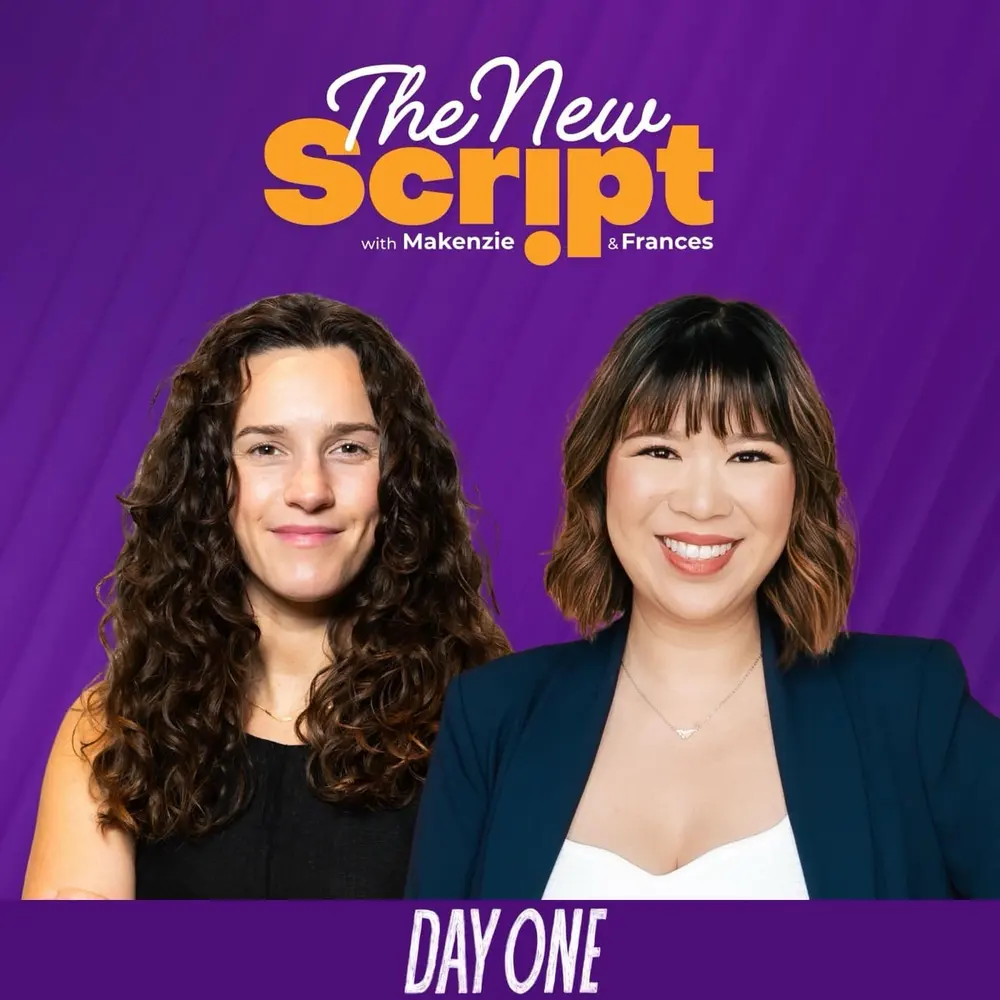
Transcript Synced · select any line to jump ▾ 0:00 Frances Goh: We acknowledge the traditional owners of the land on which we record and pay our respects to their elders past and present. We recognize their continuing connection to land, waters, and culture. 0:10 Makenzie Thomas: The NUScript is a podcast created for educational and awareness-raising purposes only. The conversations you'll hear are not intended as medical advice. Please speak with a qualified healthcare professional for any personal medical concerns or decisions. 0:27 Ariella Heffernan-Marks: Women were fearful of the healthcare system, so they'd been dismissed, marginalized, often misdiagnosed, and so we're going to family and friends rather than their healthcare provider. And this was leading to lower health literacy and this rise in chronic health conditions. So in Australia, 56% of Australian women over the age of 15 already have at least one chronic health condition, and by 65, that's 87%. And I remember the lightbulb moment. I'd been doing baby checks, you know, in New South Wales it's the blue book, which is that you track the child's development. Every state has a different colour. And I thought, well, why don't we just have that for women? And then we can integrate all their data. They can keep that as something that empowers them, but at the same time we could actually collect that data and feed that back into research. 1:08 Frances Goh: Hi everyone, and welcome back to The NuScript, the podcast where we uncover the innovations, advances, and technology transforming women's health. I'm Fran. 1:23 Makenzie Thomas: I'm Mackenzie. And today we talk to the fantastic, uh, Dr. Ariella Heffernan-Marx, founder of Ovum. And we discuss really how often women are dismissed and misdiagnosed throughout their healthcare journey. And particularly in Australia, we know the stats can take as long as 5 years to get a diagnosis for chronic conditions. 1:43 Frances Goh: Yes, so often we discuss the challenges women face without yet having a solution, and it was so wonderful to see how Ovum is solving for this and so much more by collecting the data-backed evidence, tracking health across life. We hope you enjoy the episode. 1:57 Speaker: Yeah, and dive in. You're listening to a dayone.fm show. 2:04 Frances Goh: We are so pleased to welcome Dr. Ariella Haffenden-Marx, a medical doctor, award-winning researcher, and the visionary founder of Ovum, a platform transforming women's healthcare through an integrated lifespan approach. With clinical experience from the Prince of Wales Hospital and a deep commitment to innovation, Ariella is on a mission to merge medical expertise with cutting-edge technology to radically improve healthcare outcomes for women. At the heart of Ovum is her passion for creating a system that serves women across every stage of life, powered by science, empathy, and impact-driven leadership. Ariella, thank you so much for joining us on The New Script today. I know I've just shared your bio and would love to hear about how you introduce yourself these days. 2:50 Ariella Heffernan-Marks: Yeah, well, you probably introduced me better than I introduced myself. That was amazing. Thank you so much. Well, I'm Ariella. I'm the CEO and founder of Ovum AI. The first holistic AI health assistant for women. It is allowing to integrate their longitudinal health data in a way that's empowering, really empowering through health literacy so they can advocate for themselves in clinical appointments. But at population level, what we're doing is collecting the largest women's health longitudinal dataset to feed back into research, address the biases in research, but also in artificial intelligence. And so— Our mission is to transform every woman's experience of healthcare and to close the gender health gap, which is costing our global economy $1 trillion annually. And so that's my little elevator pitch. Happy to jump into some of my credentials, but you've kind of already done that. So— 3:34 Makenzie Thomas: Amazing. No, that's super interesting. And I love the integrated and the data approach that you have, Ariella. Could you take us back to where it all began and where the idea for Ovum first started and how things started to emerge as you transformed from an idea into a business that you are today? 3:54 Ariella Heffernan-Marks: Sure, so it was just over 3 years ago now, I'll say 3 and a half, it's getting crazy. Um, and I was in my third year of medical school, so it was during COVID times. So we were meant to be going overseas, but instead we ended up in Australia. So I was going between regional and metropolitan kind of primary care ward-based settings, ED, in Queensland, New South Wales, Victoria mainly. And what I saw was that women were fundamentally completely disempowered with their healthcare regardless of socioeconomic status. And it was due to 3 main reasons, which are now coming out in, you know, government surveys. But at the time, this is really what I was seeing right in front of me, and that was that women were fearful of the healthcare system. So they'd been dismissed, marginalized, often misdiagnosed, and so were going to family and friends rather than their healthcare provider. And this was leading to lower health literacy and this rise in chronic health conditions. So in Australia, 56% of Australian women over the age of 15 already have at least one chronic health condition, and by 65, that's 87%. Mm-hmm. Previously to medicine, I'd done reproductive biology, or actually done law and reproductive biology, which is where I found my passion for women's health. And that allowed me to see that also our approach to women's health was really siloed and fragmented, despite our physiology being really cyclical and integrated. And this was leading to longer diagnostic times. So in Australia, it takes on average around 5 years for any Australian woman to be diagnosed with a general health condition. And as I'm sure you know, something like endometriosis, which is quite complex 7 to 12 years. But thirdly, what I started to realize is that we had this massive longitudinal data gap. So we were just starting to talk about the fact that women had not been equally represented in clinical trials for decades, meaning not only our treatments, but actually the way that doctors are being trained was not actually representative of women. So we weren't actually able to diagnose women as easily as we were men. And obviously the classic example of that is heart attacks. And I remember the lightbulb moment where I was driving to placement and I'd been doing baby checks and children's checks as part of my women's health placement. And, you know, in New South Wales it's the blue book, which is that you track the child's development. Every state has a different color. And I thought, why don't we just have that for women? And then we can integrate all their data. They can keep that as something that empowers them. But at the same time, we could actually collect that data and feed that back into research. And it was literally one of those moments where I was like, wait, is this what I'm going to do the rest of my life? Surely not. Like, I was still in medical school. You know, I've always acted on intuition and I followed that. And I think, thank God I did. Um, and here we are 3 and a half-ish years later, which is pretty crazy. 6:22 Frances Goh: That is phenomenal, Ariella. Wow. And I'm so glad you had that light bulb moment and that you followed your intuition and decided this was the thing, you know. 6:32 Ariella Heffernan-Marks: Me too, actually. 6:34 Frances Goh: Me too. So can you walk us through exactly what Ovum does and how your solution is uniquely positioned to solve this problem that you just shared with us? How does it work in practice exactly? 6:45 Ariella Heffernan-Marks: Yeah, no, I always do like to kind of explain it through a case study because I think it really highlights the many features that we are trying to offer through OVEN, which really, as you highlighted, is creating this lifestyle approach to women's healthcare, changing the definition of women's health from reproductive and pink and silo to actually holistic and integrating all the other things that women disproportionately suffer from, um, and integrating that with reproductive health. So if we take 45-year-old Isabel, who's going through perimenopause, often she's experiencing quite individualized symptoms, going to family and friends, usually not getting any answers, going to numerous doctors, having numerous tests, again, still not getting any answers, trying to do all the lifestyle changes to be better, but is completely overwhelmed. And so she can download Ovum, and she's met with this really compassionate, um, and personalized onboarding experience where Ovum is getting to know her and her health journey. And so she already feels more listened to and heard than she has in any clinical appointment ever. And what Ovum is beginning to do is generate this longitudinal memory, which will help Ovum provide a more personalized health and wellness plan for Mary to guide her through— sorry, Isabel— through her health. And so when she onboards with Ovum, she can then integrate her Apple Health data, so any biometric data from any wearable device, any previous cycle tracking data. And she can also feel really safe because we're prioritizing safety and security. She then starts on day 1 of her health journey with Ovum because this is a new health experience and a health journey, and that's really what we're trying to create with this experience with Ovum. Mm-hmm. And Ovum will guide her through the various features that are on offer, but fundamentally it will help Mary track and understand 7 key aspects of her health. So diet, exercise, medications, appointments, general symptoms, cycle tracking, and if relevant, pregnancy. What she can also do is upload all her medical reports and generate doctor's summaries from her discussions with Ovum so she can share that before her clinical appointment, actually get out of it what she wants. But at the same time, what Ovum is actually doing is collecting all of this individual data and creating this longitudinal memory of her health to help her engage more in her body, in her health, and therefore advocate for herself in clinical appointments. But at a population level, what we're doing is we're collecting all that longitudinal data and creating this, as I mentioned before, um, the largest women's health longitudinal dataset to feed back into research to address the biases that we know exist, perhaps spoken to as well. 9:10 Makenzie Thomas: Mm-hmm. 9:11 Ariella Heffernan-Marks: And so we hope that by getting this into the hands of millions of women, we can begin to close the gender health and had economic impacts that allow women to be at work for longer, have less missed days at work, feel better in themselves, and feel more engaged in the healthcare system because it's just more equitable. 9:28 Makenzie Thomas: Well, that's fantastic. What an interesting approach. I love it, the step-by-step take for Isabella there and how she can navigate her health journey. I'm curious to ask, with all of that data that you're collecting, and particularly around the, um, the reports that can be generated and that someone could take into their appointment— and I am going a little bit off script but— 9:47 Ariella Heffernan-Marks: No, we're— 9:48 Makenzie Thomas: What work is Ovum doing to make sure that the doctors and clinicians will actually take on those insights? Because I think that's an uphill battle that women often face as well, is actually, you know, running through their symptoms. This is what I've been feeling. This is, this is my personal data and experience that I've taken on board, and now I want you to take it seriously. So what's Ovum doing in that space to facilitate that? 10:12 Ariella Heffernan-Marks: 100%, and it's one of the biggest barriers, right? What we're doing is even in the design of the summaries, they, you know, they summarize the key things. And obviously I'm a doctor, so I know when things get verbose, I know what doctors want to see, and I'm working very closely with the design team to ensure those reports are very clear and they get across the key messages that your clinician would want to know. My opinion is that if a doctor doesn't allow you to show something like that before the appointment, they're probably not the right doctor. And I think it should be used as a vetting system where if a doctor allows you to send that report, they're the, they're the right doctor. They're listening to you, they're respecting the fact that you've actually gone away, you've tried to educate yourself, and you're coming and you're showing up to that appointment. And that's what shared decision-making is, right? How can you achieve shared decision-making if there's a power imbalance like this, which is what you are describing? And so if the doctors see there's a tool that can bring into this, they should allow that to happen. Mm-hmm. But not creating something so verbose that the doctor's sitting there for 20 minutes before their appointment. It should be a quick, you know, read that in 2 minutes, okay, I get what she wants to talk about. And so we are working with a lot of clinicians beyond obviously myself. So we have Dr. Talat from Women's Health Road, who's the advocate for digital health pathways and improving that especially for women. And we're doing trials in clinical settings, getting doctors to actually use it in that way and give us feedback about how we could improve it. And you know, down the track, we'd love to look at integration. But, you know, very long sales cycles and it can be quite difficult. But another way that we're trying to validate Ovum is I'm actually doing my PhD on Ovum at the moment. So we're doing clinical trials at two leading women's hospitals through the George Institute for Global Health and UNSW. And so we're actually validating it in a hospital setting as well. So we're getting these clinical validation data points early so that that's already on these hospitals' minds. Oh wait, this is working. It's actually helping patient flow. It's actually helping doctors. And I think that's what needs to be communicated. 12:10 Makenzie Thomas: Yeah, that's fantastic. That's really exciting and really interesting approach as well, doing a PhD. That's really impressive. 12:16 Ariella Heffernan-Marks: I'm a researcher at heart and I love data, so why not? 12:20 Makenzie Thomas: Why not? Why not do a PhD? 12:23 Frances Goh: Double doctor. 12:25 Ariella Heffernan-Marks: And it's on what I love anyway. I got to write my whole project, so why not? 12:30 Frances Goh: Love that. And based on the data that you've been collecting and seeing and reviewing, what are some of the breakthroughs or surprising insights that have come from your work so far? 12:39 Ariella Heffernan-Marks: I think firstly is actually women's attitudes towards AI is actually very welcoming. Like, I know everyone thinks everyone, women would probably be scared. It's actually the opposite because what OVUM— I'm sorry, not OVUM, but AI actually, not just in OVUM's case, but in numerous case examples offers is this non-judgmental space where whoever's using the AI to have this kind of conversational I guess, flow of through their health is that it's actually somewhere they can ask the stupid questions, right? It's somewhere they can say whatever they want and not be worried that the AI is in a bad mood or that they've got some underlying— I don't know, I guess there is some biases that you're trying to evolve on through Ovum. But I think that I've been surprised at just how welcoming and actually what the literature has shown on studies that have already been done. And actually there were some studies that came out of Google article, um, literally a few days ago looking at conversational AI and how it's really beneficial, um, in a clinical appointment and how not just women but patients are really engaged in using AI for, for almost like a motivational interviewing is what we call it. I think also, you know, in a lot of my ideation surveys, I've also done a lot of focus groups. This is more communities, this is outside of the PhD, and even in very small cohorts women, the amount of women that have been misdiagnosed, sent away with very life-threatening conditions like appendicitis, has been shocking to me as a doctor, shocking to me as a woman. Because these aren't, you know, I wasn't speaking to thousands of women. This was like, you know, we had 30 women through this focus group and 7 had the same story. And I'm like, wow. You can imagine this if we actually spoke to like a really large subset of women. And so that was pretty— yeah, I think it's like everyone really knows it, but when the stats come out and something like that, you're like, that's just— especially in the Australian healthcare system where we're notoriously meant to be pretty good. So you can imagine the stats globally as well. Um, I would say those are probably the two like biggest things. And then I guess under that would be, you know, even in our beta, which was quite a basic version of Ovum, like the love and the empowerment that was created from that interaction between our users and Ova was just insane. Like, we were already getting feedback that the women felt like they had autonomy over their health data. They felt empowered, you know, things like, this is all women ever needed to look after their health. I was like, wow, this is just our beta. And it just made me so excited to actually, you know, you work on something and you put so much effort, and then to get that feedback is just— it's so rewarding. Yeah. Especially when I'm also contrasting that with the stories I'm hearing and how disempowered. And that, you know, obviously that was quite emotional for me to hear that, also training in the healthcare system. So it's really nice to, to feel that my solution was actually doing something. 15:30 Frances Goh: That's huge, Ariella. Well done, seriously, congratulations. It's so exciting. 15:36 Makenzie Thomas: Yeah, it's a really interesting approach as well, looking at how you can integrate those healthcare insights and then empowering people to like be in an app where they want to be providing their own healthcare data and feeling like they're being heard in some kind of way. I think there's a lot to that, that approach. One of the things we love about your work is how it embraces what's called like an integrated lifespan approach to women's health, which is the idea that women's health should be looked at holistically across every stage of life, as you said, from menstruation right through to menopause and then beyond. So it's not isolated in parts. Why is that approach so powerful, and what changes when we view women's health through this lens? 16:15 Ariella Heffernan-Marks: You know, similar to what I touched on before, which is that women's health, if it's so long, has been defined as fundamentally like fertility, pregnancy, and our cycles. And I don't think is a correct representation of, of this, of women's health, right? Like, we disproportionately suffer from headaches, cardiovascular disease, Alzheimer's disease, musculoskeletal conditions, like the list goes on. And actually what you find in each of these subsets of things that we disproportionately suffer from is it's actually related to our hormones, right? Um, for example, cardiovascular disease, like estrogen is cardioprotective. So when we go through menopause and our estrogen goes down, our risk of cardiovascular disease goes up, and it's the biggest killer of women, you know. So why are we looking at menopause just as menopause, or why are we looking at hypertension in pregnancy, which we know has risks on cardiovascular disease later on in isolation. We need to be putting this all in one place and we need to be collecting all the data around this in one place, but also providing women with information about these things at these early points, like in pregnancy. For example, women who have gestational diabetes or preeclampsia, that's hypertension during, or high blood pressure during pregnancy, is— Mm-hmm. You should already be thinking about these are risk factors for you to be developing heart disease later on in life. But it's hard when you just have one pregnancy app that's only with you during pregnancy, but not even addressing the fact that these complications are actually going to have to be thought about later on in life. And so that's why it's so important that we have something like Ovarian Witch puts all of that in one place. So that's not only collecting that data from a research perspective, so that doctors and researchers and whoever else wants to create new medications or diagnostics for women with this information, but actually women with that information so they can then take it upon themselves to start engaging in these preventative health goals, which Oak also helped you set. 18:07 Makenzie Thomas: Yeah, no, that's fantastic. And Fran, I'm going to jump in with another question to follow on straight off that. Can you talk us through the research component, which I think is so interesting that there's going to be, like you said, a longitudinal data capture of all this information that we've never had access to. And hopefully women do actually— they're using Ovum right from, you know, the first menstrual cycle right through to, you know, post when they have their first child or second child or whatever that is, whatever their health journey looks like for them. And you have those touch points and you can map that over time. So tell me about what's going to happen with the research or how you provide that data or how we're going to see Ovum operating in that space. 18:48 Ariella Heffernan-Marks: So fundamentally, first of all, um, we are minimizing collection of personal identifying information. So we actually don't want to know who you are. Um, we want to protect your privacy and confidentiality. That, that is one of our, um, top priorities. Um, so all of that data is anonymous, it's aggregated, and it's encrypted. Um, and we're storing that for now, you know, everything's in Australia because they're Australian-based app. And when we do launch overseas, we'll have data storage in those specific countries, but fundamentally you'll have the choice to opt in or opt out. So because you are using Ovum, you don't have to be part of that. But from all the occupation surveys they found, so speaking to 350 women, 96% of women said that they would share their data for research as long as they were anonymous. And that's because the benefit of giving that data back to women's health is so much greater than I think the risk of potentially a data point being shared, which is unlikely, very, very, very, very unlikely to be linked back to you. Um, because we don't wanna store that data. And so the way that will work is we're actually creating another AI which will structure unstructured medical data in a way that no one's really been able to do before. And we're working with the, um, Gender and Sex Equity Centre through the George Institute to help guide us on like, what is— how do we structure this? What is it that researchers want to access and how do we make that accessible? And then we'll have non-commercial and commercial, um, pathways. So working with non-for-profits and distributing that data for free. And then obviously, you know, for larger organizations that may want to translate that into a new medication, there'll be very clear metrics around what's your impact, what's your study, what are the outcomes, where is this going. Um, and that's something obviously that's not, you know, right now we need to generate the data, but it's in years to come. But also coming back to transparency, right? So when you onboard with the 3D app, um, we outline very clearly all of everything I've just explained to you. We'll have a section in the app where you can see all of the partnerships that we're engaging in, so you know, exactly where your data is going. Because I think the biggest thing with data sharing is transparency and communication, and people just want to understand. And so very much that's another value for us at Rover Means that clear communication and transparency. 20:55 Frances Goh: Love that. And we've heard about lots of different parts of your journey now. I'd love to turn to the fundraising part of your journey. You recently raised $1.7 million in pre-seed capital. Well done, congratulations. And we know the stats when it comes to female founders being funded are pretty dire. We know that globally women receive less than 2 to 3% of available funding. And so success stories like yours are incredibly uplifting. And I make a habit that every time I mention one of the dire stats, I try and weave in a more uplifting stat as well. So we also know that according to BCG, women-founded startups generate 10% more cumulative revenue over a 5-year period. We know from research by Goldman Sachs that female-founded startups also achieve faster exits with higher returns. We would love to know, what was your fundraising experience like? And also, what advice do you have for other women founders going out to raise capital? 22:01 Ariella Heffernan-Marks: Yeah, and you know, you're very right. I think that, you know, I feel very grateful. Like, I've, you know, I'm a percent of 2% because I'm a female raising for a female-based company, right? And we know that Within the femtech space, actually more male founders are getting funding, which is just so ironic but also classic. And I think that I'm very aware of that. And I, you know, my fundraising journey obviously wasn't just the pre-seed. The pre-seed, I have to say, actually went pretty smoothly. Like we started raising in October and we were closed by December. We oversubscribed. I think, you know, there's something to be said about the right solution at the right time. Run by the right founder. And, you know, I have also gone back and, you know, tried to source that feedback so that I can actually go and help other female founders with maybe where they're struggling, where they're finding gaps, and why maybe they're getting that from investors. Um, prior to that though, I also did manage to get like early bits of funding from, uh, Walamai and Nakatomi, so Nakatomi Venture Studio, who've subsequently kept on working with me me and developing OVMs through from prototype to MVP and now to the commercial version. And it's a very interesting— like, no one's really done that. And also VCs don't typically invest in setups like mine, but they did. And I think they're actually very grateful that they did. Um, but I did get that validation quite early when I just had an idea, and I think that really gave me the belief in myself and what I was doing. And in some ways, it's like ignorance is bliss because I was met with like early funds pretty early on, I think that I didn't fully understand how difficult it was. And then I did try and start raising again. I did start to realize there was definitely biases, you know, when it comes to raising from women's health companies, especially before the Gender Health Gap Report came out. So there wasn't really numbers on it. So people would say, well, how is this commercially viable? How is this a global product? You know, why can't women just go to the doctor? And it was infuriating. Like, I was like, like, what do you mean? Um, and then when the gender and health gap report came out, definitely helped, right? Because I could say, well, it's costing our global economy $1 trillion annually, so it's quite clear why the— why this is needed globally, but also why this is commercially viable. And all the surveys have been coming out with the government showing what women need, showing that they're experiencing biases in the healthcare system. So now, you know, by the time I was raising this amount of money, a lot of this data was out. And that's what I was talking about, right time, right place. It was kind of the world was ready for it. And I think that that's kind of lended to the success that I've had. I think being a female founder, but also being a doctor, being a young woman. So I'm kind of an expert both from like the user, but also like as the creator. So that's also just lended, I think, to it as well. But I think my advice to other female founders is is, you know, obviously it's a bit cliché of like, don't give up. Um, I know as you touched on, there has been like a lot— there is a lot of negative press. Women founders don't get funding, there's just no hope, that you've got like 2% chance of getting any funding, and depending on your industry, even less. And sometimes, you know, it's great that we're aware of it, but at the same time it can also be really disheartening. And I think there's a point of— I just didn't even really listen. I'm just like, I'm going to get funding, I'm going to get funding, I'm going to get funding. And it was telling myself that every single day and literally not believing anything else. And I think that that's really important, and I don't think that's just important with fundraising. I think it's— you're building a business, and success and goals and all that, it does come to mindset. And you're literally telling yourself and envisioning it every day. And I do believe in that. You know, some people say it's woo-woo. I have seen it work. So, you know, I do think that it is a bit of— don't— you're gonna have some bad experiences, you're just going to. You can have people that make you feel really crap, and you just need to walk out and be like, it's their loss. They just don't know. Okay, so I think it's amazing, female founders doing amazing things. And I think we're starting to see a shift as well in industry. I think slowly, I mean, there's awareness. I think there needs to be more action, but it's also, I think people are lost to like, well, what can we do? Because inherent biases, I don't think even people consciously are aware of sometimes. Those are for us female founders to just keep fighting. 26:21 Makenzie Thomas: Absolutely. No, I love that. And, uh, yeah, it's definitely not woo-woo. Um, I think you've got to be your own biggest champion as a founder. And so if you're not going to do it, is an investor at the end of the day probably not either? So you've got to be the first person to show up, um, and cheer yourself on. I want to ask a bit about your experience as a— going from being a clinician to a founder and how you've found— and also, I mean, I guess we can throw academic in there as well because you do— you're in the midst of a— um, completing a PhD. So how has that journey been and what have been some of the things that have surprised you along the way, maybe some things that have delighted you in making that transition. 27:02 Ariella Heffernan-Marks: Yeah, and it was really interesting. I, you know, I didn't jump straight out, so I obviously did both at the same time for about— would have been like 2 and a bit years because it was third year, fourth year internship. And honestly, I found like doing both, you know, sometimes, you know, I find for me personally, like doing a few things, I'm actually more productive because I'm kind of, you know, my, my mind is experiencing diverse challenges. And so I found that it was kind of my hobby outside of medicine. It was something like a little passion project, and I was learning. I was saying, oh, it's commercialization and things. I was risk validating as well, like, is this my path? Is, is it not? Like, where is it going? And it wasn't until internship, which I loved— and I actually love clinical medicine. I would say I'm actually, um, quite a good doctor. I think I'm quite a good people person. As I said, I'm intuitive, and we need more doctors that are that kind of empathetic, intuitive creative type, and I love surgery, and I think I could have still stayed in it. But I loved what I was doing in Overmore, and I saw the need, I saw the traction there, um, and my gut really told me, like, no, you have to go and give this a go. Um, and so then I did make the leap out of clinical medicine at the beginning of last year, and I actually got a business coach, um, pretty much— I think it was a few months before I left. So knowing I was going to be this transition into this completely new, unstructured life. I'd gone from law science to medicine, and in between it was like studying for the GAMSAT. So my life was like boom, boom, boom. 10 years pretty much of this professional— not that this isn't professional, but very structured and rigid life. Every next milestone already planned out for you. In some ways I found that quite suffocating. I didn't like that my whole life was planned out. For me. I didn't like that I had— for medicine, fundamentally, if anyone doesn't know, you have different training programs that you're trying to get into and you have different points, and those points are made up of different tasks like research and things that you need to do. And I just felt that that just wasn't, you know, what I wanted. But I also didn't expect to also then come out of that and be like, wow, I have so much time. And for someone who's so organized and disciplined, I'm actually finding this really difficult. Like, every day I'm in charge of my day, like it's completely up to me. Mm-hmm. And when you're also in a really early, early-ish point when you don't necessarily have a huge team, like you don't have that structure really at all, it's pretty much just you showing up and creating that goal and creating your next task. I found having a business coach really helpful. Um, so she really has helped me. I still use her, um, and I actually found her through an event. It was a learning about, um, San Fran and the startup ecosystem and how we bring that here. And, um, a few founders, they were saying, we— everyone in San Fran has a, has a business coach. Everyone. I'm like, okay, well, I probably need one. And honestly, it's been game-changing for me, like, just keeping me accountable. Whether that's— we do weekly plans, we do daily plans, we do a lot of energy work, we work on cognitive biases. All the things that, especially when you're working alone as a founder and can be quite isolating and you're very in your head, are really important to address when it comes to motivation, discipline, showing up, and really success. And it does take time, but I think that, you know, it's been a really fun journey and I've learned so much, but it's definitely challenging at times, especially for someone from a clinical background. But I do also speak for AusCEP, which is the Australian Clinical Entrepreneurship Program, which is teaching clinicians about why they should go into innovation. Is it actually— and I know this from medical school— is we have a portfolio, right, of like domains that we we need to excel in throughout our 4 years. We even have an interview at the end of our 4 years talking where we can improve, where we've done well. And it's fundamentally the characteristics are like communication and working in a team, evaluating evidence and coming up with rational decisions, clinical diagnosis. So that's actually looking at a situation, identifying problems and coming out with an outcome. It's like these are all core characteristics which played really well into making a good founder. Also dealing with high stress situations. Really, you know, and organization and time management. And I found that actually my clinical skills— and I think a lot of doctors would have the same— has actually allowed me to be an entrepreneur, a better entrepreneur. And I think we need more clinicians coming out of the healthcare system because they see the problems, they know the problems, they know the pain points from the patients, from the admin, from every allied health, from the doctors. From the nurses. And so they're the best position to then found these companies rather than, I guess, um, just the tech guys who come in and say, yeah, we're going to solve this, but have no understanding and often don't do the research either. 31:45 Frances Goh: I couldn't agree more. And I think the best innovations and most innovative solutions often come at the intersection of two very different things. So to have all those skill sets that you just mentioned come together, combine, is really quite a powerful mix, which is a really optimistic thing to look forward to in this space. 32:03 Makenzie Thomas: Yeah. 32:03 Frances Goh: And so we've heard from you around a few of the challenges, and I'm wondering, do you have a favorite failure or a memorable lesson where something didn't go to plan but taught you something quite invaluable? 32:18 Ariella Heffernan-Marks: We were trying to build this technology without AI because AI wasn't commercially available, and really give credit to the guys at Nakatomi. He went, yeah, sure, we'll try build this crazy piece of technology that we have no feasibility to build, but we'll try. But we were kind of stuck at like, wow, like this is going to cost us so much money. And at this point I did not have that. And it was kind of this intersection where, um, AI suddenly became available. So OpenAI was— it literally just launched. And they suggested to me like, here's a few souls. And one of them was like an AI like now what we're using Ophirn to do. And at that point I was like, I'm really nervous. Like, I'm in the healthcare space, so, you know, this stigma was even more heightened than the community. But my gut, again, I was like, this is— I think this is it. I think this is what we're going to do. And then we pivoted into AI, and this was before, you know, everyone was doing AI. So yeah, I don't know if it was really a failure, but it was definitely a challenge and something that we needed to kind of it was a big hurdle, and pivoting into it at the time was a scary thing, um, but it's been really obviously game-changing for our company. 33:26 Makenzie Thomas: Yeah, that's interesting. And so you didn't have the AI component when you initially came up with the idea, as you said, as you were driving out to clinics? That came through some of your collaborations, and it was kind of built into the product over time? 33:41 Ariella Heffernan-Marks: Yeah, exactly. So we were saying same technology you can imagine without any AI. 33:48 Makenzie Thomas: Yeah, okay. And then you wouldn't have the research component as well, I guess. And, uh, or was that always part of it as well? 33:53 Ariella Heffernan-Marks: Yeah, it was always part of it. So always thinking like, how can we collect data, longitudinal data, and then use that for research? I think it was more like the chat conversation wasn't so much a thing, but it was still all about uploading medical reports, integrating, and all aspects of health. Like, that was the kind of overall concept, and like giving resources and more education around now, then AIOps is put to a whole new level. 34:18 Makenzie Thomas: Amazing. Um, and so I guess coming back then quickly to— and it doesn't have to be from your coach, but like, what is some of the best business advice you've ever received, or maybe like a coaching insight that you've really loved and that's really stuck with you? 34:31 Ariella Heffernan-Marks: I wouldn't say it's like necessarily business advice, but as I spoke to earlier, was I have had a few people just turn around and be like, I believe in you, like, I believe in what you're doing. And I think that, you know, these are from people I deeply respect who have— who are experts in their career. And it's something that I always turn to whenever I'm in those situations where I'm doubting myself. I'm like, I'm not sure what I'm doing. I mean, imposter syndrome kicks in. It's like I just play, you know, that I believe in you, we believe in you in my head from the people that I respect so much. 35:07 Frances Goh: Love that. No, definitely. That's, that's so helpful. And I want to pick up on something that you mentioned earlier as well in a similar vein, You mentioned the word energy. So as a founder and CEO, how do you prioritize your health and your energy? 35:22 Ariella Heffernan-Marks: Yeah, no, that's really interesting. So for me, and I do a lot of work with my business coach on this as well, is, you know, I'm a perfectionist. I'm a, you know, obviously overachiever, like to push myself. But what I've actually learned and I've done a lot of work on is working stupid hours and pushing yourself to the point of like literally not being able to get out of bed and burnout isn't success. And I think that there's this kind of idea that every founder needs to be working 24/7, not sleeping, not eating, not looking after themselves. But actually, that inhibits your creativity, it inhibits your innovation, it inhibits your ability to connect with people. And I actually think it's the completely wrong approach. So I personally make clear boundaries. You know, I use schedulers, I set my work hours, and I don't work outside of them. Mm-hmm. And I will never, you know, push my team to do that either. Like, of course, happy if you send me an email out of hours, but I will not respond to it until the next day. And the same if I send them an email. Weekends are weekends unless they really need to be pushed, pushed into, because I think there's such an important— There's so much value actually in what you can give to your company if you actually take that time to just be with your family, be with your friends, be you. I always every morning start my morning with exercise, like whether that's a walk, whether that's gym, that's just for me. It's like a good 2 hours, it's just for me and it's not to do with my, my business. Um, and yeah, I think it's really having identity that's separate to your business as well. Um, obviously I'm a doctor, so I, you know, trying like— I'm very healthy with exercise and diet and mindfulness and doing all those things, but also doing that deep, um, kind of spiritual work. So I do a lot of that with my business coach, like acknowledging those cognitive of biases and working through them, because I don't think you always realize the kind of impact on your health that can have if you're berating yourself every single day, if you are the perfectionist type, which, you know, um, some founders or entrepreneurs definitely can be. Um, and so I think it's really that kind of mind-body approach, and also not trying to live this like hustle and grind life that just actually isn't aligned to being the most successful, best best entrepreneur you can be. 37:35 Frances Goh: That's such an important message. I think that's the important reminder that we all needed to hear today. So thanks for the mini pet talk as well. That was beautiful. 37:44 Makenzie Thomas: Yeah, you've given us permission to not feel like we need to be on the hustle and grind train, which often I think in the startup world feels— it's very prevalent. Everyone seems to be doing things, everyone's always really busy, everyone has side hustles. And so it's nice and refreshing to see a founder, uh, setting boundaries and staying within that, and also bringing that to their team as well. We don't often see that happening. 38:08 Ariella Heffernan-Marks: Yeah, no, I, I hope so. And like, obviously, you know, I think it also speaks to, hey, we build about you, like, everyone works hard, but the people around me also know, like, we also, you know, hang out outside of work and have like just nice friendships. I mean, that's like really important as well. Like, we're all people separate to our work, and so I really do bring that into like the culture but I don't— we are a health tech company, so it wouldn't have made sense. I wasn't allowing my employees to prioritize themselves in their lives. But I think, yeah, there is in the startup world, there is this kind of like, how busy can you be? And I, you know what, for saying you made a set, like, how much can you be doing? Like, how many extra research projects? How many hours do you stay back? And it's like, you know, you're only like, what, what trophy are you trying to be? Like, you know, you're only kind of, you know, affecting your own health and actually probably losing at the end of the day. That's just my motto. And, you know, hopefully you can say I'm doing my PhD, I'm running a company, um, I still, you know, anyone who knows me knows I still have a social life, I care about my family and my friends. So you can do it. I think it's just you have to be planned, you have to be organized. 39:18 Makenzie Thomas: Absolutely. And I guess I want to zoom out a little bit now and Uh, talk a bit about what impact, um, your work will have, not only just for women but for the healthcare system more broadly. I know we sort of touched on the research, but I'm thinking about the actual, um, conversations that people will start to have when they've got Ovum in their hands, they've been tracking all those, um, symptoms and all the things that they want to track in Ovum, and then they take that to their doctor. What are some of those bigger impacts we can see on the healthcare ecosystem? 39:49 Ariella Heffernan-Marks: I hope fundamentally that we'll begin to see like integration of health data, or at least communication of that integration in a way that allows doctors to pick up on things earlier. So earlier diagnostic times for women, hopefully reduce biases. So by leveling that playing field that I was talking about, women begin to feel less of these systemic biases that we know they're feeling. Like the federal government did a survey on gender biases throughout Australia, and women— it was two-thirds of women in, I think, 3,000, 3,500 women reported feeling bias in clinical appointments, and 80% of caregivers witnessed that as well. So it's not just women feeling that, it's actually people observing that. So I'm hoping that by giving women a tool, um, it actually levels that, that playing field. I hope in some ways it also supports doctors and gives them a resource, because I think that doctors actually do want to help women. I don't think that they don't, it's just they just don't have the tools. So I hope by creating a tool that, um, in some ways actually allows doctors to give better care to women— we support what doctors feel they can give. I think from like an economic point of view, I guess it's like less on the, the health system, but we're actually— so we're not just direct-to-consumer, actually going into corporates. So corporates will be able to pay for Ovum as a health and wellbeing service for women. So trying to get these subsidized for as many women as possible, and we had a lot of interest Um, and they'll also be able to pay it forward. So women can pay it forward to vulnerable communities, but corporates can also pay it forward as well. Um, and looking at giving corporates that give a certain amount of subscriptions badges showing that they care about the gender gap. And so in doing that, I really hope that we can begin to influence enough women also in the workforce to feel comfortable talking about their health, talking about how it's impacting their work, getting the support that they need, and maybe in some ways then accessing the healthcare system when they actually need it, a point before things become so acute and chronic that they then tap out of their career. Because we know the impact that women's health is having, and that's why we're seeing these annual costs of $1 trillion. So I think— I hope to not just have impacts on the healthcare system but actually economically on our, you know, our global world. Yeah. Workforce because women are over 50% of the population. So I guess those are some of the big ones. 42:15 Makenzie Thomas: Yeah, absolutely. No, that's so interesting and widespread too, which is what we love to see. 42:20 Frances Goh: And so looking forward as well, what's next for Ovum? For example, maybe the next 12 months, what are you most looking forward to? 42:26 Ariella Heffernan-Marks: Definitely launching our commercial version. It's very exciting. Um, we're going to be doing some new campaigns coming out in the next 2 weeks, which is all our new branding all of our new designs for our new commercial version. So website's changing, socials will be changing, still the same vibe, but just, you know, the team have worked so hard and created some really cool content and just really building, yeah, building our consumer base, building our community, getting this into the hands of women. So we'll have soft launch in May, hard launch June, and then probably, you know, run it in Australia and then look at global markets pretty quickly. 43:03 Frances Goh: Yeah. 43:03 Ariella Heffernan-Marks: We know I've had so much interest from the US, so I think, you know, you'll probably see us pop up there. And we've got some really other interesting things on our product timeline that people are showing interest in, so you'll probably see that in the next 12 months if it all goes the way that I'm planning. I'm really excited. Commercial partnerships that I also hope that I'll be able to announce as well. 43:26 Frances Goh: Love that. It's all happening. 43:29 Ariella Heffernan-Marks: Yes, there's a lot of growth, but also it's period skin time. 43:32 Makenzie Thomas: Yeah, yeah, sounds, uh, busy, but I mean, I'm sure you'll, you'll set the boundaries right and make sure that it all gets done, um, and it goes off with a bang. So we like to end each episode with a question, um, and that question is, if you could rewrite the script on women's health, what would be one thing that you would change? 43:55 Ariella Heffernan-Marks: I think it would be like fundamentally size of the impact that gender inequity has had on women, not just in healthcare but in numerous industries. I think it's just so big and it's, it's really been insidious in so many different aspects, and it's something that, you know, in some ways should be so easy to fix um, and it's been around for centuries. And I just think if I could rewrite— there we go— the impact that it's had, I would do that. 44:33 Makenzie Thomas: Yeah, the world would look a lot different if, um, even part of that was done and achieved. Um, well, thank you so much, Ariella, for joining us today on The New Script. It's been really interesting talking to you, hearing about Ovum, what you're building, your founder journey. So we're really excited to see your product, um, come to life. 44:55 Ariella Heffernan-Marks: Perfect, perfect. No, thank you so much for having me. I've loved the chat. 44:59 Frances Goh: Amazing. Thanks, Ariella. Thanks for listening to The New Script. If you enjoyed the episode, make sure to follow or subscribe wherever you get your podcasts and leave us a review if you're feeling generous. 45:12 Makenzie Thomas: We'd love to hear your thoughts, feedback, or guest suggestions. Drop us a line at hello@thenewscriptpodcast.com. 45:19 Frances Goh: This podcast was proudly produced by Day One, the podcast network for founders, operators, and investors. Learn more at dayone.fm. Until then, keep rewriting the script.