Transcript Synced · select any line to jump ▾ 0:02 Cheryl Mack: Founders scale faster on Deel. Set up payroll for any country in minutes. Hire anyone anywhere. Get visas handled fast and get back to building. Visit deel.com/dayone. That's D-E-E-L.com/dayone. 0:21 Elizabeth Yin: I think of investing a lot like surfing is my analogy where you're trying to spot waves that are small right now, but can grow to be big in 5 because I think that's kind of one of the few ways that you can get around this problem. Like everyone overlooks this market because it's not a market today, but you hope in 5 years it'll swell into this huge thing and you will have the head start on the wave by getting there earlier. 0:46 Maxine Minter: Okay, 3, 2, 1. 0:50 Cheryl Mack: Hey, I'm Sheryl. 0:51 Maxine Minter: I'm Maxine. 0:52 Cheryl Mack: This is First Check, part of Day One, the network dedicated to founders, operators, and investors. 0:56 Maxine Minter: If you wanna be a better early-stage investor, this is the show for you. 0:59 Cheryl Mack: So TL;DR, if you don't wanna suck at investing, listen up. 1:03 Maxine Minter: I am so excited for this one. This is going to be so good. We have got Elizabeth Yin from Hustle Fund coming on. So for folks that don't know, Elizabeth is the founder of Hustle Fund. She has built it from fund 1, 2, 3, and now 4. They are also pre-seed, so love them to bits and pieces. We've co-invested, and she has been an incredible mentor as I have been thinking about building our fund, but also just like she has supported so many founders at this stage. She was a partner at 500. She was an early employee at Google and then had built a bunch of businesses prior to that. And so she just has had an incredible amount of operating experience and lives and breathes that early stage. 1:49 Cheryl Mack: Yeah, I remember when we were brainstorming different ideas and I was like, oh, I'd really love to talk to somebody from Hustle Fund. And you were like, I actually know Elizabeth. I was like, hell yes, that would be my ideal person from Hustle Fund. Please, how have you not mentioned this sooner? She's just like such a rock star. So I'm excited to meet her. 2:08 Maxine Minter: Totally. Well, she is in the flesh with us right now. So welcome, Elizabeth. You're listening to a Day One FM show. Welcome, Elizabeth. We are so excited to have you on. As you guys just heard Cheryl and I fangirling, Elizabeth is incredible and a little bit actually of an idol. I think she's done some incredible stuff at Pre-Seed. And so super excited to have you on. 2:32 Elizabeth Yin: Thank you so much. Thank you for having me. I'm excited to be here. 2:35 Maxine Minter: So we always ask people the same question straight out of the gates. What was the first thing you ever invested in? 2:40 Elizabeth Yin: Oh my gosh. Probably like Coke stock on the, in the public markets when I was about 10 years old. 2:47 Maxine Minter: Oh my God. Amazing. I love it. What got you to conviction on Coke? 2:51 Elizabeth Yin: Like Coca-Cola? Yeah. Like Coca-Cola, the drink. And I bought 3 shares. I had saved up enough money to buy 3 shares, which was a lot cheaper back then. But the company still mailed me, you know, the glossy booklet and everything, which I'm sure cost them a lot more to make than— 3:08 Cheryl Mack: Than the 3 shares that you bought. 3:09 Elizabeth Yin: The 3 shares I owned. In fact, actually, eventually, a few years later, I got this notice saying that they were going to force me to sell my 3 shares because I was not a big enough shareholder to continue justifying this. 3:20 Cheryl Mack: Aww. 3:21 Elizabeth Yin: Yeah, this— I mean, this was back in the day when everything was done with, you know, paper and not really an electronics means, so. I can't understand that, but it was so cool like that you could, I don't know, I don't think I quite understood what it meant to buy shares, but it was really cool to get the glossy booklet. And I think in particular because Coke was, you know, expanding internationally, that was how they were growing their revenue in the, call it late '80s, early '90s. I'm dating myself here. And so you would see these people in these exotic locations. It was like a travel book really, drinking Fanta or whatever. 3:56 Cheryl Mack: Yeah. 3:57 Maxine Minter: That feels like amazingly young to have known to buy shares. How did you— did a family member or a loved one like suggest that you buy shares or were you just kind of prescient at the ripe old age of 10? 4:10 Elizabeth Yin: Oh, I was not prescient. A family member mentioned that investing is the way to make money. I didn't know what investing was, and honestly, I didn't really know what it meant to buy these shares, but I was like, okay, I'll buy these shares. And honestly, I was also a little bit disappointed because you do get dividends, but when you have only 3 shares, it was not like a lot of money. Like honestly, I think the dividends are, you know, 5 cents, 10 cents, something like that. And so I was a little bit disappointed in the whole experience, but it was actually kind of cool seeing that whole glossy book. I think actually in retrospect, the way to teach children, and this is a total aside, about investing is actually through the lens of how do you build a business? Like, how do you build a startup? I think that's much more intuitive than what does it mean to own a fraction of Coca-Cola when you really cannot understand what that means. Does it mean I own this one can of Coke? Does it mean I own this like little area of their manufacturing plant? 5:12 Cheryl Mack: Yeah, it's a pretty abstract concept. 5:14 Elizabeth Yin: Yeah, it's, it's too hard for, for a 10-year-old. 5:19 Maxine Minter: I mean, I think also for everyone, right? Like I think a lot of people, the concept of the way that value is built in a business is not obvious, right? And like just straight in investing through the public markets, it's kind of like learning to sail on a superyacht, you know? Whereas actually you should try learning to sail on like the Laser, you know, those like little dinghy things with the single, you know, and that's kind of like the earliest stage of a company. Very fundamental. Like you need a product, you need a customer. You need to sell it to them for a profit. Like, that's interesting. I hadn't really thought of it like that. So impressive. 10-year-old straight out of Yates with the Coca-Cola stock. 5:56 Cheryl Mack: Yeah, I love that. 5:57 Maxine Minter: How did you, how long did you hold it for? Because I know like Buffett, et cetera, are holders of long-term Coke. 6:04 Elizabeth Yin: Well, they forced me to sell it after a few, like maybe 2 or 3 years. Oh, rude. Yeah, I know. 6:11 Cheryl Mack: Like why let you buy it in the first place? That's so mean. 6:14 Elizabeth Yin: I know, it would've been nice to have compounded. Poor 13-year-old Elizabeth is like, hmm, I have to give up my 3 shares. Yeah, well actually, you know, now that you're bringing this up, it actually frustrates me that they made me sell it because if I had compounded, you know, I'm now in my mid-40s, if I had compounded this thing over the last, I don't know, like 25 years or so, compounded the dividends, my 5-cent dividends here and there, like that could have been fairly meaningful. 6:43 Cheryl Mack: And put it back into Coke, you'd be pretty, you'd be sitting pretty well now. 6:48 Elizabeth Yin: Yeah. Not, not enough to retire on, but it would be nice. 6:52 Maxine Minter: Yeah, for sure. Damn, damn them. Um, and so since then, obviously you have continued your investing career. You have built Hustle Fund. You are now on Fund 4, which has been incredible to watch. I'm wondering kind of first off, do you wanna give us a little bit of a sense of what you are investing in at the moment at Hustle Fund, right? Where do you invest? How do you think about it? 7:13 Elizabeth Yin: Oh, it's such a good question, Maxine, because it's, I think it's an interesting time for investors. 7:18 Maxine Minter: Sure is. 7:19 Elizabeth Yin: Sort of the best of times where actually think compared to perhaps the late 1990s, like this truly is one of the most influential times to invest. More than cloud, more than mobile. Like I think you see companies just growing to a billion dollars in revenue overnight, literally overnight. If not like one-person shops doing multimillions of dollars per year in revenue profitably. So it, it's a very interesting time. I think this is something that we're constantly refining, to be honest. Like, I'll give you a concrete example. 5 years ago, I would've told anybody, if you got to $10 million AR with a SaaS product, you're, you're pretty golden. Like, you'll just keep that going and that, that's like great. Mm-hmm. But now I'm seeing companies that get there and then they lose all their revenue overnight because competition is so fierce and people are willing to switch AI products and try this and try that. And, and you see competition coming from everywhere globally, right? Some of the top biggest companies are no longer from San Francisco. Lovable is from Europe, which so many VCs kind of poo-pooed for a long time. So I think. It's an interesting situation where there's so many great things that can grow. Like if you can have productivity, and we're looking at a lot of vertical SaaS, but it's starting to get crowded. Um, then you have interesting opportunities to grow, but at the same time you have this competition nipping on everyone's heels. Even the largest players like OpenAI and Anthropic have large competitors, you know, commoditizing each other. So it's an interesting world. But yeah, vertical, I would say vertical SaaS is an area we've always looked at, and in this day and age we're still looking at. That for sure. 9:05 Cheryl Mack: So funny, 'cause Maxine was like, we have to get to questions 10 through 13. I really wanna cover this particular topic. So I'm like, Maxine, do you wanna just like jump over to those questions? We can come back to the like funby questions after. 9:19 Maxine Minter: 100%. Yeah. I mean, like the, the thing that I am particularly amazed at for you guys is that you are obviously pre-seed lovers, right? Uh, and absolute You know, evangelists of pre-seed as a stage, also one of the early investors into that space. But I think unlike a lot of other funds, especially in the US, you are global pre-seed investors, genuinely invest all over the world. And so I'm interested to start off there, right? Like, how do you think about sourcing high-quality companies in markets you're not physically present in? How do you go about doing that? 9:53 Elizabeth Yin: A combination. So one is amazing co-investors such as yourself. Uh, like we, we have a number of friends globally in a variety of different places who also like this stage. And I would actually say that it has been advantageous to us, like these relationships are so cooperative because honestly there are not as many investors in many of these locations. In San Francisco, truth be told, like we have a lot of friends here, but rounds get picked up pretty quickly. And so there's less sharing, not necessarily because people don't want to share, but rather the opportunities to share is fewer, um, than abroad. So that is actually a reason we do invest abroad because there, you know, there's in some sense less competition both on the startup side. This, this dichotomy that I was just explaining about how there's always competition nipping on your heels, if you're going after a more local, uh, market, that could actually be advantageous from this perspective. Um, the flip side though is, uh, there are fewer investors. So for a founder to raise money, it means they may have to go outside of their ecosystem. And so that is where we have the opportunity to pick up a lot of great companies. So that's why we do it. The second way outside of co-investors is we, we write a lot of content ourselves. Um, we constantly write our blog, we're on Twitter, we're on LinkedIn, et cetera. And a lot of companies globally are reading content everywhere. And so we do often get either referrals from our founders in these other locations, uh, who refer their friends who read our content, or even just people directly emailing us saying, hey, I read your content and, and I would like. Yeah. To take a look at Hustle Fund. So those are kind of the, the two ways. 11:34 Cheryl Mack: That's interesting though, that one thread that you mentioned there, that like there's less competition if you're building locally, because oftentimes startups here will be told like, oh, you know, you have to go overseas first before I believe in you, before I wanna invest. You have to prove out the market, prove that you can get customers outside of Australia first. Like often that's the narrative that startups here are told rather than like, yeah, there's less competition here. So like build the market here. Um, do you see challenges around— like, do you look at companies and go, well, you know, you need to flip up to the US, or we need to see some traction overseas? 12:08 Elizabeth Yin: Yeah, it really depends on the market opportunity. We are okay going into opportunities that will stay local and will never be global. A couple of examples of that, we have a company in Vietnam called Dat Bike. They're an electric bike company. What a great name. Pretty straightforward. We actually don't want them going into other countries. It's very competitive in China. It's very competitive in other parts of Asia because of Chinese competitors., but in Vietnam, because of the conditions with their own tariffs of imports coming in, it's actually a great, um, dynamic and they can be the best local player and win that market and the Vietnam market too. So that's an example of that. That's something we want to stay local. Another one is we have a, a fintech company in Africa called Honeycoin, um, and started in Kenya and they basically are doing, you know, cross-border commerce, if you will, uh, with Stablecoin Rails. So, you know, that one these days there's a, a lot of activity there. We also have other companies in the stablecoin area globally, but I think focusing on Africa, that's still a huge problem. It's obviously a lot of people and they have edge there. So, So those are examples of where I like it local. Of course, if you're building, I don't know, a SaaS business, like some software that can be applied to lots of people's problems globally, then it may make more sense to go globally, and we're not averse to backing the international version of that, but know that there'll be US competitors who are probably better funded going after the same opportunity. So, so that's something we keep in mind when we back those global-first companies, uh, outside the US. 13:45 Cheryl Mack: But like, is DatByte going to return the fund? 13:48 Maxine Minter: Such a great name. 13:49 Elizabeth Yin: Yeah, I, I, I, I think that they very much could. Good. Vietnam has so many people and they all ride a motorbike. Um, and so, and the incentives these days to switch to electric is huge, just like everywhere. So, uh, they, they very much can. Okay. All right. Oh, and the other thing I would mention is internationally, often the valuations are lower. So when you get in at a lower entry point, then the multiples are higher, even if the exit is not like a $10 billion company. 14:18 Maxine Minter: Yeah, super interesting. I think like what makes it so fascinating to be able to do that and do it really well, and I think you guys are like one of the only examples I can think of, of a Bay Area fund that does international exceptionally well and has done it through the cycles. 'Cause there was a bunch of folks that stepped into kind of international investing, '19, '20, '21, and then have kind of pulled back for geopolitical reasons, but also for return reasons is getting up to speed quickly on good in these markets. And I think what's like particularly impressive is finding great founders in these markets, right? Traditional wisdom would say like ramping to get a sense of like who are the best operators on the ground in each of these ecosystems is super hard. I'm wondering, as you're thinking about these spaces, do you have like a mental checklist you do or like a way that you think about like, oh yeah, like Dat Bike, That's super cool for these structural reasons, or is it like, I just want an excuse to say dat bike, or is it the DNA, like the way that you think about founder quality and actually it's just like your pattern matching to excellent operators? Like how do you get up to speed and do it so well internationally? 15:32 Elizabeth Yin: So I think more broadly, the way I think about investing is kind of Two parts. One is team and the other is the idea. So on the team side, when we're trying to do our pattern matching across founders, I think that is the same and consistent across all founders regardless of who they are, where they are. Um, there's a certain, I guess, bar on what we're looking for in a founder. Certainly one is sort of what I call founder market fit. Like, do they know a lot about this thing, whatever this thing is, the problem, the solution? You know, their experience, et cetera. And, and like, what is sort of their nuanced insight into this problem and how they're going about it? Uh, of course other things matter too, like their frugality, their scrappiness, um, recruiting a good team together, all that stuff, all that stuff that other investors are looking for, we're looking for as well. And I think— Perhaps having backed a lot of founders, the good, the bad, the ugly over all of these years, we have like a stack ranking. And so when we are interviewing people, I'm looking for where are you in this stack rank? It's not perfect, but that's generally kind of, I think, how I think about people. And then on the other side, uh, the idea, I think this is the part that can be tricky with international, which is— I think actually the idea matters a lot. And specifically, competitive markets are really hard for pre-seed investors like us in that we're not writing big checks, so we cannot support the company forever. Like we're, we're not like the big folks who can put in $5 million and keep you alive until you figure it out. We are putting in $150,000 check and we need to know that you are going to be kind of the best people for this opportunity. I have to have seen a lot of other people chasing after this opportunity. I have to believe this opportunity is not too competitive because competition by definition drives customer acquisition costs up, right? Your customers are now evaluating 10 other players, so they're gonna think about it longer. It takes longer to really get to them either with a salesperson's time or ads or whatever it is. 17:32 Maxine Minter: Mm-hmm. 17:32 Elizabeth Yin: And then the other dynamic is that if it's a competitive market, then every investor has a horse in the race. And so it is gonna be harder to raise money for as well. So you have this like double whammy of it's hard to raise money for this idea and it costs you more money to get a customer. That's the problem with competitive markets. So when I'm looking at, let's say, an opportunity in another country, and I have to feel like I understand enough of the dynamic in that local market about those things, um, before I make the bet. Because if we don't see enough, then I think we're just too ignorant to make that bet. So, so that I think is the part that is hard about international compared to what many investors say. It's like, oh, I don't know these people, fraud issues, or I don't know this market, or, or whatever it is. It's actually not your job to know the market. You're not the one selling it. You have to have belief in the founder that they know the market, and I have to have that strong belief that these are the people who really know it as opposed to the 10 other competitors who will come up tomorrow. 18:32 Maxine Minter: That's super interesting. How do you think about that, the like noisy piece? 'Cause I haven't heard it like as crisply articulated as that, but it's so true, right? Competitive markets, they are follow-on capital risks and they are also like CAC inflators. And the combination of those two things means like it's hard to build a big business. Have, do you just avoid noisy spaces? 18:54 Elizabeth Yin: Generally. 18:55 Maxine Minter: Altogether? Or, yeah, interesting. 18:59 Cheryl Mack: Okay. But like, isn't AI the most noisy space in the world right now? 19:02 Elizabeth Yin: Well, you have to break, you have to break down the specific opportunity. So it's like AI for X, whatever that X is. It's not AI generally. So an example might be, uh, an AI sales copilot, very noisy. AI cat drawings for teachers. Yeah, right. Like, I haven't heard that one. Yeah, exactly. So, so that's, that's it. Like, what is the specific opportunity? It's not even what is the industry, but what is the specific opportunity within that industry? That's what we're looking at. 19:37 Cheryl Mack: So industry and use case and bring those two together. And if it's not super— 19:42 Elizabeth Yin: Yeah. And then of course all the other things apply. 19:44 Maxine Minter: Right. 19:45 Elizabeth Yin: Like, is this a good business and is the customer acquisitions gonna be easy or hard or blah, blah, blah. Yeah. 19:52 Cheryl Mack: Do they have founder market fit? 19:53 Maxine Minter: Yeah. 19:54 Elizabeth Yin: Yeah, exactly. 19:55 Maxine Minter: Actually, I'm interested, have you always avoided noisy spaces or is that a learning that you've had from fund one to today or like in your own investing journey? Was there a period where you would back companies in noisy spaces and like try to pick winners or have you like structurally been like, we won't win in noisy spaces because of fund construction, so we're just avoiding that and we're going after different strategies. 20:17 Elizabeth Yin: So when I was at 500 Global previously, I did back companies in noisy spaces that had a fair bit of traction. So as, as part of the accelerator, we were looking for companies with traction and we were also asking for, you know, accelerator valuations. So that was a, I think a hard thing to convince people of, and the kinds of companies we could get access to were the ones in competitive spaces where there were not many VCs who wanted to, to back that. And I think my lesson learned there is it's not actually terrible. Um, I mean, even within Hustle Fund, we have some companies in competitive spaces, either because it was competitive and we didn't realize it, or the competition came later, which is happening more and more with everybody these days. But— Um, where the founders win is when they are scrappy and don't need to raise a lot of money. And you may wonder, well, how is that possible? Because the customer acquisition costs go up and you can't raise any money. So how does that work? Well, I think there are just some founders who are really good at kind of like hacking the, the distribution, and also I guess are willing to stay lean and, and, and grow a little bit less quickly. But like once you're in it for a while, then at some point it kind kind of kicks in where you are off to the races. And so get to— getting to profitability somehow in some shape or form allows you to kind of extend your runway. I don't want to say forever, but almost forever. So, so those companies— I mean, I've seen some of those companies win as well. Um, but not everyone wants to be that lean, right? 21:57 Maxine Minter: It's also really hard to pull off, right? Like, especially in an environment when there is like maybe 1 or 2 big category winners and then there is a like competitive 3rd to 10th spot, you know, and like trying to stay alive in that chunk I think is, is super interesting. It's an interesting idea though, like especially right now, I feel like I'm meeting lots of people who are building businesses where obviously the costs of building, but also the costs of running are rapidly declining. But with that, I assume there is going to be some kind of like price compression or price collapse for a lot of these. services industries that are having AI come for them in a really heavy way. Think like accounting, legal, consulting, et cetera. It's like an interesting question to ask ourselves, like which will happen first? Can you get to profitability faster than the price will collapse or the inverse? You know, it's like, it's like racing for this compression point for some of these businesses. That's super interesting. 22:55 Cheryl Mack: So isn't it also like a balance? Between like finding places that aren't so noisy but also have a big enough market? Because obviously if there's a big enough market, then it's gonna get more competitive and then it's gonna get more noisy. So like, how do you draw the line there? Do you have like a, if it's this noisy, uh, then we don't like it, but also needs to have a big enough market? Like, do you have a line? I'm just curious how, where is your heuristic there? 23:19 Elizabeth Yin: I think of investing a lot like surfing is my analogy, where you're trying to spot waves that are small right now, but can grow to be big in 5 years because I think that's kind of one of the few ways that you can get around this problem. Like everyone overlooks this market because it's not a market today, but you hope in 5 years it'll swell into this huge thing and you will have the head start on the wave, um, by getting there earlier. So, um, an example of this that I like to give is we have a portfolio company called Sidecar, uh, which I don't know if you guys use them or familiar with them. 23:53 Maxine Minter: Great company. Mm-hmm. 23:55 Elizabeth Yin: But, um, when we backed them, I would say that There were certainly not as many VCs as today, and they basically ha— so they are programmatic SPVs for the VC industry, and they have grown because the number of VCs has grown. I think for a long time the VC industry was a cottage industry, and if you got the timing wrong on that one, then it wouldn't be that big. But they got the timing right in starting the company when they did, and we backed them when VC wasn't as big as it is today, and they've just ridden on that VC market growth. 24:28 Maxine Minter: Yeah. Fascinating. They are, they are a great company. I hear their name all around these days when you're thinking about kind of sidecar, at least in the US. Like they're not, they're not as big internationally, but in the US they support. 24:39 Cheryl Mack: They don't have the infrastructure to support Australian compliance, unfortunately, which is why we exist. 24:46 Maxine Minter: Not yet. So I feel like we dove deep into your investing thesis, kind of where you invest, but I want to zoom out here for a moment and think about the business that you've actually built, right? Under Hustle Fund over that period of time. So I said you were one of the early kind of entry or participants in the pre-seed market, kind of building a thesis on community-driven VC, but, and also at pre-seed. I'm super interested kind of how you think about growing your business over time, right? You're now on fund 4. And you have progressed that fairly quickly. What have you learned since you started Fund 1 to today? 25:29 Elizabeth Yin: Oh, so many things. On the, on the investing side, we've had, we've had a number of learnings. I mean, I think I could summarize that to be lower valuations is key, at least for us. Um, because you know, the product market fit risk is the same whether you're pre-seed, seed, pre-A, or the A even, I would say there's no product market fit at any of those stages and it's all the same risk. So we like the lowest valuations possible. Uh, and then I think, um, putting as much money as you can actually at that lowest valuation is a learning that we've had and honestly have learned a little bit the hard way as well. We previously did a lot more in follow-on. Uh, we've, we've pared that back a lot. So those are probably the two biggest learnings around the investing. Um, as far as running the fund and running the business, uh, so many learnings there as well. Um, I think that You know, so I had been a founder for a long time. So in some sense, like many of these learnings, I, I learned many years ago when I had my startup. Namely, I think the, the lessons around fundraising are things that often first-time fund managers are learning for the first time if they had not been a founder. But for us, we had, we had fundraised before for our respective startups and is, it's identical. You just can't run out of leads. You just try not to spend time with the ones who are not converting and are taking too long, and you just try to keep finding new leads. And then it really does end up becoming like a traditional marketing problem. Like, how do you widen the funnel? How do you get more leads, et cetera? And I can tell you for where we are now, like, we actually get a lot of leads inbound. People, LPs, not just founders, read our content and people reach out and they're like, we really like the fund. Or even if they don't directly email us, like, people have read our content before, read what we believe about investing. And so when we do meet them through a warm referral, we are familiar to them. They already understand a lot about our thought process, and that actually helps filter people in or out. Like they already know what we think, for better or for worse. And so that means that most of the leads we're meeting generally tend to be warmer than colder because if they don't like what we're doing, they just kind of filter out immediately. So I think we spend a lot of time as a result actually on marketing, much like a regular product company might as well. We think about it very much like a lead generation problem. Like how do we get top of, how do we get more top of funnel? How do we qualify people faster? And then how do we close? And those are the things that we spend a lot of time working on. And we have a 30-person broader team, 4 people on the investment team, but we have a large media or marketing team at Hustle Fund working on content. Wow. Events. We've run about 40 event, 40+ events a year. Um, so things like that to get our name out there for, for investors and founders. 28:20 Maxine Minter: Yeah. I mean, I've heard incredible things about Camp Hustle. It is like loved, widely loved. 28:27 Cheryl Mack: What's Camp Hustle? 28:29 Elizabeth Yin: It's an investor conference that we hold every May. It's, uh, it's in the woods in Saratoga, California, which is in the Bay Area. It's in the woods. It's in the woods. 28:38 Cheryl Mack: Like actual camping? Like, you know, when we went to like camp in the summer when we were kids? 28:44 Elizabeth Yin: That was the inspiration. And actually the initial version, we did want investors to camp in tents, although I don't think anyone would've signed up for that now that I think about it. 28:54 Cheryl Mack: No cabins, you know, bunk beds in cabins. I remember that experience. 28:59 Elizabeth Yin: Yeah. Well, so we don't have that camping part, but it is in the woods. And the whole theme is camping, even though people go back to their hotel. 29:10 Maxine Minter: Oh, I love that that was like the bit you were like, let's all camp, and they were like, no, no, that is a non-starter for us. We're happy to come, but we will not camp. 29:19 Elizabeth Yin: Yeah, yeah, so some lessons learned there on that camping side, but— 29:25 Cheryl Mack: So what are you doing in the woods before going back to the hotel? 29:28 Elizabeth Yin: You know, we have content, like we bring in great speakers, just a lot of socialization over s'mores, over cornhole. 29:38 Maxine Minter: Nice. 29:38 Elizabeth Yin: We even bring out startup demos. Like, we ask a number of founders to come and demo, you know, their products or whatever in the middle of the forest. It's a little bit of a logistical challenge because they have to get access to electricity, but we make it all work. And so, all of that basically is, it's like a conference. There are a lot of fun elements. It's like a conference in, in the woods. 30:01 Cheryl Mack: Great. That sounds awesome. 30:02 Maxine Minter: Great way to be at a conference. Yeah. Yeah. You said a couple of things that I'd love to double-click on. One, in terms of like what you learned on the investing journey, right? Because for a lot of the folks that listen, and also for ourselves, right? We are at the very early stages of building our funds or building our investment strategies. That valuation piece is one that I think is really interesting. And Cheryl and I have talked a lot about this. I think Ann Marie Coe is quoted as saying, there's no such thing as a good deal. There's just good companies. But it sounds like actually your kind of approach to valuation differs from that. Did that come from learnings from kind of backing maybe seasoned operators that were raising at a higher valuation and that actually not materializing? I'd love if you can kind of say a little bit more about the nature of the risk you're taking pre-product market fit. 30:48 Elizabeth Yin: I think every investor has a different perspective on this. I have a lot of friends who don't believe valuation matters and If you're like Anne and you got Lyft, then yeah, valuation does not matter. 31:00 Cheryl Mack: And you got Lyft? 31:02 Elizabeth Yin: If you invested in Lyft. 31:04 Cheryl Mack: Oh, Lyft, like the company. Sorry, I thought you meant like valuation uplift. Oh, okay. 31:08 Elizabeth Yin: The company, which, which she did. So valuation, I don't know what valuation she got in at, but it does not matter. But that being said, most companies are not like Lyft. So I, then for those companies, valuation does matter. Like it is a difference between potentially getting 20x multiple versus 100x multiple, which can make or break your fund. It depends on what kind of game you want to play. For us, you know, we're looking for 100x multiple on every investment we make, uh, regardless of, you know, where the company is geographically. And this is where valuation comes in. So if you are investing in an emerging market and you're getting in at a super low valuation, you can still make that math work. Like, even, you know, if they are not— like, if they're not— certainly if they're not going to be a billion-dollar company, you can still make it work. But even like low hundreds of millions, if even lower. So depending on the valuation, I think the problem is if you are investing too high and that market can't support that valuation, then you're just not going to make the numbers work. So for example, I often see a lot of US investors dabble in international, but they're willing to pay US prices and the market is just not gonna support that outcome, like then that's just not going to work. So you, you don't wanna like conflate strategies. 32:34 Cheryl Mack: Mm-hmm. 32:35 Elizabeth Yin: And I think you have to really know what game you're trying to play. Like I have friends who are playing the go big or go home game, underwriting companies to $10 billion. That's fine. You can play that game and maybe you're really good at the game. I would say for us, we're underwriting to about a billion dollars on average, and it depends a lot on geography. Certainly in San Francisco, the bar is higher, but you know, in emerging markets, that bar is way lower. So we're always looking for that 100x, and you actually don't have to be this like rockstar founder to grow a company, to call it $100 million market cap or effective market cap. Um, in many cases, uh, obviously product-market fit needs to be there, but that's different from founder quality, so to speak. Mm-hmm. 33:19 Maxine Minter: Super interesting. Yeah, I think the argument you often hear for those like higher valuations for in-verb commas, like founder quality, is you're essentially taking lower risk. But it sounds like actually from your point of view, you're not effectively taking lower risk because you are needing to underwrite the degree to which they can get to product market fit. And then once they've got to product market fit, like at that point, actually founder experience probably matters. 33:44 Elizabeth Yin: That's a great way to put it. I think said another way, I think the biggest risk is getting to product-market fit, and that's a problem for everybody, including successful serial entrepreneurs who are going up to bat again. I think it was Todd Saccardoti who had mentioned this on LinkedIn the other day, that that is, that risk is always there every time you go up to bat and start a new company. And that I think is the biggest problem today because it is so hard to find a business that will get you to product-market fit. After you get to product market fit, then I think the rest is operations and, you know, how do you grow this business to be super big or whatever it is. And then maybe more of the founder, uh, you know, experience or sophistication kicks in. But that first rung is the product market fit rung. And so many companies, serial entrepreneurs or not, here in SF or not, like don't get there. Mm-hmm. 34:39 Cheryl Mack: Hmm. I'm so curious, what's the makeup of your portfolio overseas versus US and how does that, like, how do you think about that in terms of portfolio construction? 34:49 Elizabeth Yin: It is still largely US. It's 80% US. Half of that is San Francisco Bay Area. 20% is international consisting of literally everywhere else, including Canada. So— 35:02 Cheryl Mack: Go Canada. How much Australia? 35:06 Elizabeth Yin: We have a handful of companies in Australia. Yeah. Okay, great. I love it. 35:10 Maxine Minter: I love to hear it. Well, I will say, like, as you were talking before about that kind of like graduation, that conflating strategies, you know, like US investors investing internationally, but by paying prices that make it really hard for that company to grow in domestically. I think one of the things that makes Australia so exciting as a place to invest is very usually those companies are not planning on staying domestically. So for the kind of international investors, they actually provided the strategy for that company is to grow into the US. You enter at an international price in inverted commerce, but you actually still have the opportunity for kind of growth into the US. There's a lot of examples of companies that have done that, and I think that's what makes Australia fairly unique. Like that flip-up in inverted commerce is actually more, more effective. 35:56 Cheryl Mack: And often that price is still cheaper. Than if they were a US company. So it's kind of, it's high US prices, but still on the low end. So like there's still arbitrage there. 36:07 Elizabeth Yin: Yes, 100%. 36:09 Maxine Minter: Yeah. I think average valuation delta between Australia pre-seed and US Series A is a 9x, right? At current, which is like pretty astronomical if you think about the like nature of the risk that you're taking. Mm-hmm. 36:24 Cheryl Mack: You don't think it's a 9x risk? 36:26 Maxine Minter: I don't think so. No. I mean, but that, it wouldn't be a like one for one, right? It's not like you are paying, 'cause there's other vectors of risk that you're de-risking between pre-seed and Series A. It's not like market expansion is the only risk you're underwriting between pre-seed in Australia and US Series A. But I, I still don't think, like you're probably taking like 2 to 3x valuation difference between those two. 'Cause I think the average valuation increase between pre-seed to Series A, just staying in the Australian market is, I think it's like a 4x. And so you're effectively taking like a 2x additional uplift, but I don't think you're taking 2 times the risk by backing an Australian founder who has plans to move to the US and like expand to the US and— 37:11 Cheryl Mack: Would agree. 37:12 Maxine Minter: At least, yeah. That is obviously a belief that we hold in what we do. 37:18 Cheryl Mack: It's not like your whole fund thesis is based on that or anything, right, Maxine? 37:22 Maxine Minter: No, that is not the case. And then I think the kind of additional piece that you were sharing there on like actually growing your business over time, I think that's really fascinating, right? It's like, I think a lot of people when they look outside in on VC funds, they kind of forget that they're a standalone business in and of themselves. And that's an amazing ratio of investing headcount versus non-investing headcount, right? How do you think about that? Like actually growing the business and how did you think about growing at Fund 1 to Fund 4? Like what was the way that you grew non-investing around Fund 1 to Fund 4 growth? 38:01 Elizabeth Yin: Oh gosh. Growing AUM. I think going from Fund 1 to Fund 2 was honestly the hardest for a few reasons. Fund 1, you know, we were fortunate and grateful to a lot of our friends and people in our inner circles for taking a bet on us. Fund 2, we raised the minimum because we also wanted to raise a bigger fund. And many of our friends, you know, they're not, they're not rich billionaires, so they, they couldn't even necessarily afford Fund 2 at the same, you know, amount that they put in for Fund 1. And so we were essentially going to completely new people for Fund 2. Mm-hmm. Because most of our friends were pretty tapped out on Fund 1, and it was like, like raising a Fund 1 again, but with a whole new set of people that you had to kind of cultivate. And I had been fortunate enough to hear this from other fund managers ahead of us, that Fund 2 was gonna take a long time. So we started building relationships for our Fund 2, 3 months after we closed Fund 1, just to start meeting people. And even though our In technical time of fundraising was 9 months. In practical time, before we had the docs drafted and everything, we were out there fundraising as well. So probably a good year and a half of fundraising. 39:21 Maxine Minter: Yeah, I think you gave me the guidance, which I think that like open source here, 'cause I found it really, really useful, which is a couple of things. One is, as you said, right, Fund 2 is one of those, like one of the hardest funds to raise, a dynamic that I didn't realized fully, but definitely lived, which like the first close on fund 1 feels like that's going to be the hardest thing. And then you do it and then you're like, oh my God, that was the easier part. Actually funds, there's a similar dynamic, right? You like raise fund 1 and you're like, good God, like that was so hard. I can't believe I got there. And then— 39:55 Cheryl Mack: Fund 2's got to be easier, right? 39:57 Maxine Minter: Right. But like exactly as you're saying, it was fund 2 is like actually so much harder because you're generally growing AUM, right? Like somewhere between 3 to 4x. But actually a lot of the early believers are like, great, we're already in. What do you mean there's more that we could invest in? You know, and then having to be like, oh yeah, actually you invest like across the vintage, like that education journey and that just kind of capital tapped out for your like relationship building for fun too is crazy. And then the other amazing piece of advice you gave me is, I don't know if folks listening, but for me, a lot of the advice I got from people in the ecosystem was like, you find a cornerstone similar to the way that you find a lead for your round when you're a founder, and then you like fill in the back half. And you were like, ah, maybe if you're a select, very lucky few, that's how you raise funds. But for the rest of us, actually, it's like power law almost, right? You've got like early believers that come in on that first close. And then I think you said something like 80% of the capital is coming in and that last close is like wave of capital. at the end, and it was so helpful to normalize that because I think for Fund 1, I was like, anyone else out there like hustling with this like crazy overweighted— 41:08 Cheryl Mack: Where's my cornerstone? 41:09 Maxine Minter: Yeah, right. Like, I'm like, my cornerstone is my like $50K early believer. Thank you so much for being in. That doesn't feel like a cornerstone. Does that persist? Fund 1, 2, 3, 4? Like, do you just expect that dynamic to continue or like does that shift over time? 41:27 Elizabeth Yin: Yes and no. So for Fund 2, it definitely did. We needed to kind of party round it in the beginning to get the momentum and then get momentum going for the larger checks. We had to do that for Fund 1 and Fund 2. Now where I am with Fund 4, um, at this point we have, you know, folks who are institutional or institutional-like where they'll sign up for multiple funds. And so they are the anchor, like they, they say, okay, we're in. But that being said, you still have to raise the rest. Like, uh, unless you have lots of institutionals who can kind of fill most of your fund, which we do not. Um, we've had to essentially do a hybrid of, okay, we have our institutionals and we're still party rounding it a little bit to get that momentum going. And then, you know, closing at the end. I actually think it's pretty akin to selling tickets for an event, actually. 42:24 Cheryl Mack: Yes. You get like 50% of your ticket sales in the last 2 weeks before the event. And up until then you think like, no one's coming to my event. 42:31 Elizabeth Yin: Right. So you have your earliest believers in the first tranche and then it's just a lull in the middle. And then it's like, okay, the event is almost here. Buy your ticket now or never. And then there's a bunch of people, there's a barrage at the end. Same thing. And then if you do the event again, then it's like, okay, you have some anchor customers who are coming back, they buy your tickets, but then again, you have that lull and then you have, then you have when you're closing. So it's, I, I think it has that same dynamic. Um, and probably all the way up until you have fully an institutional fund. Like if you're like Sequoia, you just snap your fingers and everybody comes in. 43:07 Maxine Minter: Oh, wouldn't that be fabulous? Oh, that's interesting. I, it's kind of like a, as you said, like a conference. I wonder if there's a similar dynamic where I feel like when I go to a conference, they're selling me next year's ticket while I'm still on the high of having just like— hopefully it's a good conference, right? Being like, "Oh, that was so valuable. 43:25 Cheryl Mack: This is so wonderful." And they're like, "Bam, buy another ticket." Early bird tickets launch the night of the conference ending while you're having drinks at the after party. They're like, "Hey, buy your early bird ticket." Interesting. 43:36 Maxine Minter: I wonder whether like BCLP, equivalent of that is. 43:40 Cheryl Mack: Equivalent of that is, it's probably when you get your first return, maybe like, hey. 43:46 Maxine Minter: Yeah. There is a fund in Australia that took that strategy. I won't name names, but they did their first, they like started doing payouts on their first fund and they knew it was coming. And so they planned the launch of their, I think it was fund 3 or fund 4 raise, right? Like they literally paid the ticket out and then immediately, sorry, paid the ticket out, paid the investments out, and then started being like, and would you like to give it back to us? In fact, you don't even, we don't even need to give it to you. You can treat it as a return and then we'll just take it right back and invest it again. 44:19 Cheryl Mack: It's all paper money anyway. It's all digital. It's just numbers moving back and forth. 44:24 Elizabeth Yin: Yeah. Right. 44:25 Cheryl Mack: We talk so much about graduation rate though, and it works really well for them. Which, um, which fund would you say, like which stage of which one was the hardest to graduate to of the 4 of them? 44:37 Elizabeth Yin: Oh, definitely Fund 1 to Fund 2. 44:40 Maxine Minter: Yeah. Okay. I, I can imagine either of them though, right? Like, 'cause you generally don't expect to have DPI really. Mm-hmm. Like you haven't proven that you can effectively take a dollar and turn it into 2 in real money, not just Monopoly money until really, like if you're really good Fund 2, but probably more like Fund 3. Like that's the point at which you can actually show that this cycle goes. 45:03 Elizabeth Yin: Yeah. Um, depending on where you are in the stack, I can tell you for us at Pre-Seed, like we're, we're just gonna take the whole time. 45:10 Cheryl Mack: You're still waiting on Fund 1 DPI. 45:13 Elizabeth Yin: Yeah. I mean, we have a little bit, but like, I think my belief is like, if you have big winners, you should hold onto them as long as they continue to grow. And in our case, actually a lot of our big winners are profitable, so. They are not raising more money, they're just growing. And so what, like we will just wait. 45:33 Maxine Minter: Amazing. Either way, are they distributing back dividends or are they reinvesting that profitability into growth? 45:40 Elizabeth Yin: No, they're reinvesting into the business. Yeah. 45:43 Maxine Minter: Super fascinating. Yeah, I really, I just feel like some of the like fundamental rules of venture are changing as we start to see this like AI wave come through and like the pace at which companies get to profitability and the way, as you said, like the durability of that revenue and the pace at which they get to those revenue scales. I feel like we could have a version of this conversation many times over. There are actually like so many more questions I have to ask you. Like I want to know about how you think about exits. I want to know how you think about like, what if a decent percentage of our portfolios end up being profitable, but we have already taken almost an hour of your time. My God, that's gone so quickly. So I'm going to earmark a bunch of questions. 46:22 Cheryl Mack: Maybe we can do like a, a Q&A style with you later on. Come back to us in 6 months' time and we'll just do like rapid fire Q&A follow up. That would be amazing. In the meantime though, we do need to wrap this up. So we love to end all of our episodes with the same question, uh, which is what has been your bravest moment? Uh, your big kahonas moment. 46:43 Elizabeth Yin: When I was starting my company, I was totally clueless and there were so many things that, well, so many mistakes I made, but, but so many things that I was unaware of in terms of the dynamics of how things work in the ecosystem. So I think even just kind of starting that company was probably the big brave thing. Like one thing in particular that happened to me as an example is I was pitching this angel investor at a Starbucks and, and so I, I was pitching him and then at the end I asked him, so what do you think? Mm-hmm. And he said, "I don't want to say the wrong thing and call you a meek Asian woman, but I question how you'll lead a team of 100 people." Oh my God. 47:29 Maxine Minter: Wow. 47:30 Elizabeth Yin: Wow. And I was just so shocked. Like, nobody had ever said that to me. And well, the first thought that went through my head was like, "Did I hear that correctly? That can't possibly be right." And then the second thought that went through my head was like, I was like, oh my gosh, I need to come up with a good response right now because otherwise he will think I'm a meek Asian woman. Well, which he already did. But throughout that journey, like, there were so many— that was probably the most glaring thing, but there were so many small things that showed up as part of the journey of starting a company. And, um, so, you know, when, when people talk about how female founders have a different experience, I guarantee you that experience has probably not happened to any man. 48:14 Maxine Minter: 100%. 48:15 Elizabeth Yin: Mm. And so those, those kinds of little micro expressions or of other people would happen all the time. So I, I think that was very, uh, that was, that taught me a lot actually and has shaped a lot of my thinking around how to run this business, even though obviously this is a different business. I mean, there are there are many female VCs who run into these issues. I would say that on this business, I, I haven't run into any of these issues. And in part, actually, I think it's because of the change in the power dynamics. When you write a lot of content and you have a large following, nobody messes with you. 48:57 Maxine Minter: That's super interesting. I hadn't thought about that dynamic. 49:00 Elizabeth Yin: So I have not had that experience with Hustle Fund, uh, but I definitely had a lot of those experiences with with LaunchBit, my company. 49:09 Maxine Minter: Oh my God. I think it's an interesting point to make, but I think such a true one, right? Which is if you come from an underestimated background, the degree to which you just have to show up with a higher baseline bravery is really true. 100%. Right? Because on the daily, weekly, monthly, you have to show up with moments of being like, how do I be erudite and assertive and furious and respectful all at the same time to this incredibly offensive, naive comment. 49:42 Elizabeth Yin: Yeah. 49:43 Maxine Minter: Yikes. Well, I am so glad that you are in the ecosystem showing that in fact you are none of the above, an incredibly effective investor, incredibly capable builder. So hopefully less people have to field those kinds of questions in the future because of you. 50:00 Elizabeth Yin: Well, I hope actually with the rise in, you know, this was a long time ago, so now there are a lot more female founders, which I hope hopefully helps with this problem. Like it normalizes who can start a company. Like hopefully this is, this becomes a non-issue. And also with the change in the number of investors, I think one of the, one of the good things about the rise in number of VCs is like you, you see a lot of new people and faces to the table. And I, I think that's a good thing. So I think all of that helps hopefully, and, and that we see less and less of this. 50:33 Maxine Minter: 100%. Well, thank you so much for sharing your wisdom with us. This has been a delight. I'm definitely taking you up on that Q&A at some point in the future. I have like a list longer than my arm of more questions I want to ask. Thanks so much for joining us. 50:47 Elizabeth Yin: Well, thank you for having me. 50:48 Cheryl Mack: Thank you, Elizabeth.

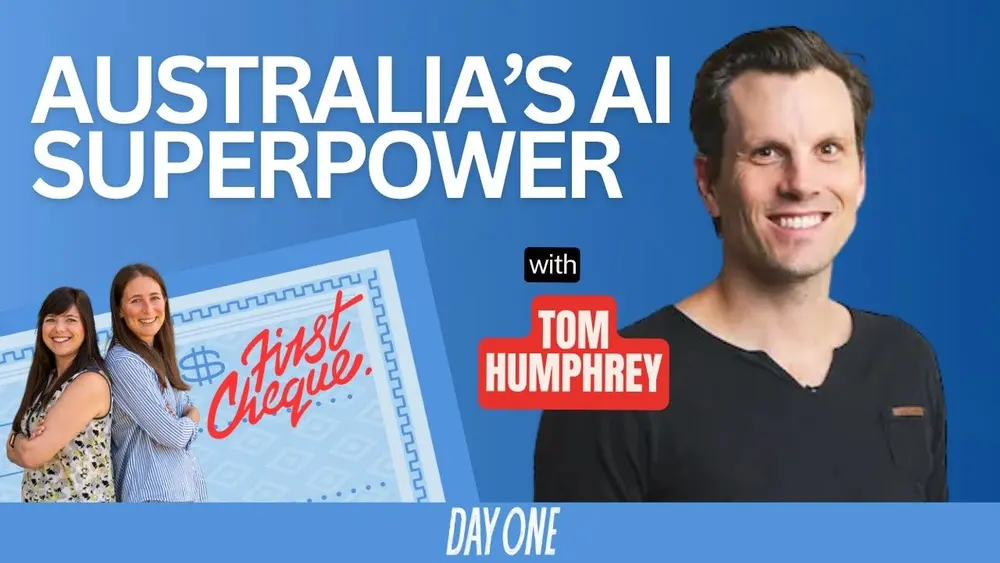
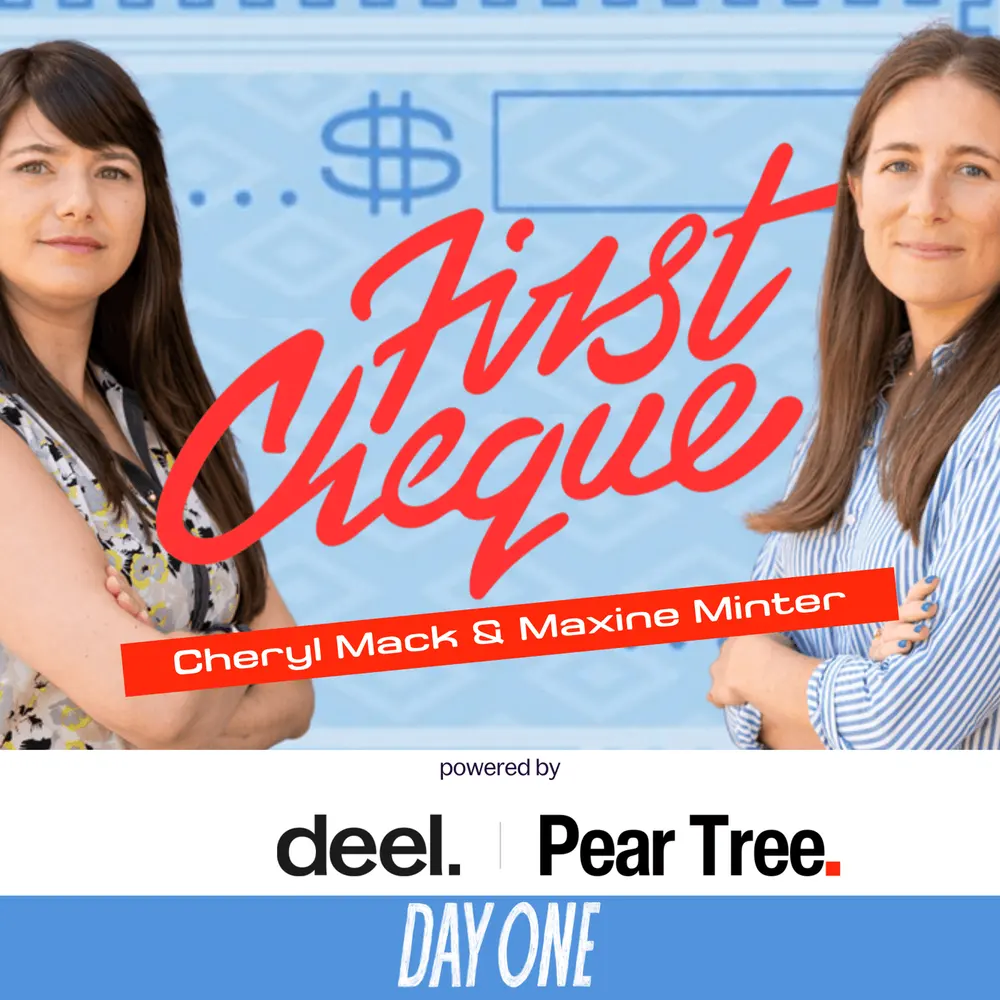 First Cheque with Cheryl Mack & Maxine Minter
Presented by Deel & Pear Tree
First Cheque with Cheryl Mack & Maxine Minter
Presented by Deel & Pear Tree 
 ▶
▶ ▶
▶ ▶
▶