Transcript Synced · select any line to jump ▾ 0:02 Speaker: Founders scale faster on Deel. Set up payroll for any country in minutes. Hire anyone anywhere. Get visas handled fast and get back to building. Visit deel.com/dayone. That's d-e-e-l.com/dayone. 0:19 Speaker: Ultimately, I decided that I didn't really want to join a big firm. I wanted to start one. 0:28 Speaker: So cool. 0:29 Speaker: Why is that? What was the— 0:30 Speaker: you were like, I've been jaded by all of these big firms? 0:34 Speaker: No, I mean, I feel like I'm definitely just an entrepreneur at heart. 0:39 Speaker: It's actually, it really took me by surprise how similar but also how different building a venture fund was as a business, right? For example, I had never operated a business with a cash flow profile where you like lock it in for 10 years and it just stays at the same amount for that period of time. 0:55 Speaker: I was trying to figure out sort of If I'm starting a fund, what am I investing in? And I sort of looked back at my track record as an angel investor, as a venture capital investor at 500 Startups, as a venture scout at Lightspeed, all of these deals that I had done. I was like, what is the through line here? What am I trying to say? What am I saying to the world? 1:17 Speaker: I tell people, I'm like, if you're here to make money and like, you know, just invest in Facebook once and get that like, 2,000x return, like, I promise you there are easier and simpler ways to make more money. 1:29 Speaker: Okay, 3, 2, 1. 1:33 Speaker: Hey, I'm Cheryl. 1:34 Speaker: I'm Maxine. 1:34 Speaker: This is First Check, part of Day One, the network dedicated to founders, operators, and investors. 1:39 Speaker: If you want to be a better early-stage investor, this is the show for you. 1:42 Speaker: So TL;DR, if you don't want to suck at investing, listen up. Okay, so I met Monique at West Tech Fest in WA last year, and we were speaking at the same event, and when she sat down and started talking about her journey, I was just absolutely blown away. She is such an impressive person. 2:06 Speaker: Oof, I can't wait to have her on. I mean, I think I have heard about her in the ecosystem for a really long time, so really excited to meet her properly through the Fest Trek, but also as we were prepping for this episode, same thing, like I just look at what she's done and what she's built and the thesis she has, and it's just just so, so exciting to hear how she thinks about being a solo GP, how she thinks about building a pretty differentiated thesis and kind of threading that needle between differentiated thesis that's wide enough that you can catch really interesting companies, but narrow enough that you have a right to win them. So super excited to lean in on how she thinks about strategy, how she thinks about building a fund, how she thinks about raising a fund. 2:43 Speaker: And being a solo GP. 2:44 Speaker: Yeah, yeah. I mean, that's obviously one close to my heart, right? Prepare for a nerd out on solo GP. As soon as I heard that, I was like, oh, Maxine and Monique, we gotta meet. 2:55 Speaker: We gotta get her on the podcast. 2:57 Speaker: Like, you two are just gonna nerd out together. 2:58 Speaker: So I, I am excited. 3:00 Speaker: Me too. Me too. I can't wait to get into it. 3:03 Speaker: You're listening to a Day One FM show. 3:07 Speaker: All right. So very excited to have Monique on the podcast with us today because Maxine and I got to meet her while we were both over in WA, but I am so excited to get into your background. But the first question that we always ask our guests, it's one of our favorites. We always get interesting answers is Monique, share with us, what is the first thing that you ever invested in? 3:28 Speaker: So the first thing that I ever invested in was not a private company. It was buying individual stocks on the stock market. I probably, you know, put my first money into the stock market when I was still probably like 19 or 20 or so. And I grew up like reading, this is back when like the stocks were in the daily paper. You know, my grandfather would be reading the rest of the newspaper and he would give me the stock pages. And I would go through and I was just really fascinated by like, these represent companies and you can actually put money into the stock market. And so my first purchases were probably individual stocks. 4:11 Speaker: Do you remember what companies? 4:13 Speaker: I know, I'm trying to remember now which companies. I think then I was really into sort of, you know, the companies that you saw all the time around your house. Like I had some stock from, I guess Betty Crocker which is maybe General Mills and things like that. So it was very much like household things that I was familiar with that I would see my mom cooking with, you know, Betty Crocker cake mix or, you know, or we were using something from like a Unilever or something like that. So those were my first company picks, my first investments. 4:53 Speaker: So cool, I'm so impressed. When did you, like, in that story, I'm imagining you, you're quite young hanging out with your granddad, him giving you the sections of the paper. Like, do you remember how old you were when you made your first stock investment? Or I assume your parent made it on your behalf because you weren't able to do it yourself? 5:11 Speaker: Yeah, I was probably, no, I made them on my behalf. 5:16 Speaker: Wow, impressed. 5:18 Speaker: So I was sort of like just browsing when I was a child It's just kind of like, you know, getting into the habit of like looking at all of these numbers that I didn't really make any sense of yet. And then when I made my first investment in the public market, I was probably 19 or 20 or so. 5:36 Speaker: That's so impressive. That's like quite early. I was thinking about the first stock investment, like public stock investment I ever made, and I would've been like mid-20s. I remember being terrified of investing up until that, that point. Which is bizarre. 5:48 Speaker: As a girl, I was like, "Yeah, I know." I remember convincing my mom to buy stocks for me when I was like 14 or 15. 5:53 Speaker: So impressive. Yeah, I was late to the game. I did have a family member buy stocks for me to try and demonstrate the incredible thing that is compound interest, and it just went straight over my head. Not an effective strategy. 6:10 Speaker: Zero of those original stocks now. Probably sold them at some point. And I don't know that I was necessarily like great at picking things at that point. Right. I was just picking things that I remember seeing logos of around the house. But I think it really got me into the like mindset of an investor and, and wanting to like have ownership of things. 6:35 Speaker: Yeah, totally. I think that's so powerful to have just even started to turn your mind to that dynamic so early in your life. And so paint the picture for us, kind of how did you build from kind of hypothetical stock picking as a child, actual stock picking as an early adult, through to launching your first venture fund, right, in the last couple of years? Can you tell us that journey? How did you first start to invest? 6:58 Speaker: Well, that's a very long journey. 7:02 Speaker: Give us the highlights. 7:05 Speaker: That's a very long journey, and there are a lot of stops on the way. But I've been in tech and startups most of my career. I started a company, back then it wasn't even called starting a startup. It was just, you know, starting a company. And I sort of always was into entrepreneurship. My family were small business and sort of rural entrepreneurs. My grandfather was a farmer and, you know, had a bunch of farmland. My dad, he had a fish market when I was growing up in high school and I used to have to work at the fish market after school every day. But then I was also really into technology and really into computers. And in the very nascent early days of the internet, started building things and then started a media company first when I was like just leaving university, you know, was doing a lot of affiliate marketing stuff. And then I— I moved to San Francisco in 2000. 2008. And that's where I started my second company, which was when the, in the early days of the Apple App Store. So I was always sort of like exploring like the new platforms and the new, new ways of building technology. And then I started a community of founders when I was here in San Francisco. And I think that's really what led me onto the investor side of the table. I was introducing, you know, founders that I knew to the Sand Hill Road VCs that I knew. And I realized at some point I was doing a lot of the work of a VC without the actual fund behind me to make investments. 8:44 Speaker: Or the reward for it. 8:46 Speaker: Exactly. So I decided to move on to the investor side of the table, and that was, that was a very windy road. But my first job in venture was at 500 Startups, and I invested out of their San Francisco seed fund and also did a little investing globally, mostly in Sub-Saharan Africa. And that's really when I started, you know, my venture capital investing journey. I was at 500 Startups for a few years and then I left 500 and I was trying to figure out what I was going to do next. And I started Scout Investing at Lightspeed. And I also worked with SoftBank on standing up their Emerge Accelerator for the Vision Fund. And then ultimately I decided that I didn't really want to join a big firm. I wanted to start one. 9:36 Speaker: So cool. Why is that? What was the— 9:39 Speaker: you were like, I've been jaded by all of these big firms? 9:43 Speaker: No, I mean, I, I feel like I'm definitely just an entrepreneur at heart. And so for me, starting a venture capital firm is just like starting another type of business. It's starting another startup. It's just a, venture capital startup? 9:58 Speaker: It's actually, it really took me by surprise how similar but also how different building a venture fund was as a business, right? For example, I had never operated a business with a cash flow profile where you like lock it in for 10 years and it just stays at the same amount for that period of time. I imagine if you did kind of like very large enterprise sales motions or like a B2G motion, you'd be used to this, but I'd always built kind of personal services businesses for consumer-facing businesses. And so had kind of had been used to that dynamic where revenue scales as you get busier. 10:32 Speaker: Mm-hmm. 10:33 Speaker: You're kind of rewarded for extra work by more work kind of thing. Whereas venture, it's kind of an inverse relationship, right? You like get revenue at the top end and then you kind of grow into the revenue behind it, which I, it really took me by surprise. So we are now kind of in the back end of our deployment period and I'm like, oh right, we just get like infinitely busier and our revenue these days. It's a really interesting journey. 11:00 Speaker: Yeah, it's a very specific and unique type of business, but at the end of the day, it is still, you know, building a business. 11:08 Speaker: 100%. Yeah. So, I mean, it sounds like you've built loads, right? And you spent a lot of time around entrepreneurs and building alongside them. What has surprised you around what has surprised you about the business of venture capital and what was exactly what you expected? 11:24 Speaker: I mean, not much has surprised me about the business of being a fund manager because I did have the experience of having seen, you know, the insides from another fund, another, at another firm first. So there was a lot less, a lot fewer surprises there. I think what has always surprised me is how much of a barbell effect everything is. You, especially at Seed, you will have, you know, a number of companies doing really well and you will have companies who are, you know, not doing well. And, you know, at the end of, you know, a 10-year cycle, you would look back at your portfolio and realize that actually only 1 or 2 companies actually, returned the fund or made a significant difference in the fund. And so I think that that is the most surprising thing about venture in particular that I think everyone gets surprised by. 12:27 Speaker: The eternal power law. It doesn't matter where you are, you just have to worship at the altar of the power law. We've talked about this a lot. 12:34 Speaker: Yes. It's unavoidable. It's the all-knowing, all-seeing omnipotent God. It's unavoidable. 12:40 Speaker: I like that, worshiping at the altar of the power law. Yeah. We're saying a lot of prayers, we're lighting a lot of candles. 12:48 Speaker: Yeah. Please, power law gods. We sure are, yeah. I would really love to understand, I mean, your fund is focused on a thesis of demographic change, and I'd love if you can tell us a little bit more about the thesis for Cake, and then how you came to it. Like, how did you develop that thesis? 13:06 Speaker: Yeah, so the thesis behind Cake is that I invest in companies that accelerate at the intersection of technology and demographic changes. And demographic changes are things like— I'm going to use some US-centric numbers here. 13:21 Speaker: Oh, go for it. 13:22 Speaker: Just for the sake of, you know, simplicity. But for instance, last year, the number of people over the age of 50 outpaced the number of children under the age of 15. So that is a demographic shift. We are seeing rapidly declining fertility rates in a lot of nations like the US, Japan, those are demographic changes. Right. And so I invest in companies where their growth will accelerate based on those kinds of demographic changes. And so for the purposes of CAKE, there are 3 big layers of demographic change that I focus on. The first one is aging and longevity. The second is the increased spending power of women or the trillion-dollar female economy. So women now as consumers being able to drive companies to billion-dollar-plus outcomes. And then third layer of the cake is the US shift to majority-minority or rise of a new majority where people of color become the majority in the United States and are already the majority in some of our, you know, biggest and most economically viable states like Texas and California. I came to sort of this demographic change thesis when I was trying to figure out sort of, if I'm starting a fund, what am I investing in? And I sort of looked back at my track record as an angel investor, as a venture capital investor at 500 Startups, as a venture scout at Lightspeed, all of these deals that I had done. I was like, what is the through line here? What am I trying to say? What am I saying to the world? And I realized that I had always been investing in demographic change. And my first investment in an aging-related startup was in 2016 when I invested in a company called Silvernest. My first investment in a company that was sort of like along the rise of a new majority or shift to majority minority was a company called Blavity. Which was my very first investment at 500 Startups. I also had invested in sort of female-centric consumer brands, like beauty brands like Minted Cosmetics. So I had always had sort of these kinds of investments in my background, and I really thought I didn't see anyone doing that as a firm strategy. 15:51 Speaker: No, you're on like a whole other level there. Like, we're over here being like, I invest in fintech, and you're like, I'm investing in demographic change, that like, these are the 3 layers of my cake. And we're just, we're trying to keep playing catch up here. 16:08 Speaker: And so I, I really felt that because there was no one doing it, doing something, you know, that was, that they were at least articulating as demographic change, or that I felt was really leaning into these massive changes to the internet user base, because that's ultimately like what this is, is changes to the internet user base and TAM expansion events. And I didn't see anyone doing that. And so I felt that that could be a really scalable thing to build a firm around, because I really want to build something that is— I want to build a firm that, that will outlast me. I retire and become, you know, the emeritus, and other people can, you know, can continue on. I mean, I always tell people, like, I'm not trying to build a small firm, I'm trying to build Sequoia. I thought that demographic change gave me a good platform to have a lot of leeway in the types of companies that I invest in, but also gave me, you know, something that was very unique and not really being done in the market yet. 17:17 Speaker: Absolutely. Yeah, I think, I mean, as Sheryl mentioned, there's a lot of generalist strategies, right, out of Australia, which, I mean, you are aware of. But in the US, and I think this is something that the Australian audience very often takes a little while to get your head around, but just the scale of the business in the US relative to Australia, and the business here, I mean, is venture capital, right? Like, as a reminder, at least 2022 stats was that Australia invests 1/17th of the amount of money into venture capital controlling for GDP as the US, and Australia is actually quite a lot wealthier per person than the US. And so the industry of venture capital is so much bigger in the US than it is in Australia. 18:01 Speaker: But we have room to grow. 18:02 Speaker: We have got so much room to grow. 18:05 Speaker: Yes. We have a 17-factor room to grow. 18:09 Speaker: Yeah, comfortably, right? And I think that, um, I don't think you could say in the US even you have 100% saturation of allocators using the full amount of their like 8% alternatives rule into like appropriately into venture. And so I think in both markets there's room to grow, but I do think as you're thinking about, for a lot of the audience in Australia, it might be kind of a demographic thesis or a demographic change thesis might feel niche, but actually I would venture a guess it is. Mm-hmm. Huge in the US, especially because of the amount of societal change that's happening in the US. So I wonder, and I, I wonder if you can kind of educate us a little bit on like how you realize the space, like the volume of the space that could be captured within this thesis and still develop a thesis where you're comfortable that the, you know, god of the power law is going to be kind. 19:07 Speaker: Yeah. 19:09 Speaker: But that you can still be targeted and thematic in the way that you invest. How did you think about kind of scoping that out sufficient that your thesis would still get you outlier returns, but was sufficiently targeted that you could— 19:23 Speaker: And also how you explain that to LPs who are used to more, I guess, simple types of like, yeah, we invest in fintech over here. A simple, yeah, nice simple generalist fund. 19:34 Speaker: Nice simple generalist fund with no alpha. 19:37 Speaker: We have this like 3 layers. 19:41 Speaker: I think the beauty of what I do is that we are generalists and Cake Ventures is definitely a generalist fund. We just have a point of view about the world and the thesis that we believe is happening in real time that we are able to invest on top of. And so, you know, we have the 3 layers of the cake that I just talked about, but within those layers, we invest in things like digital health, Sorry, healthcare is 17% of US GDP. Massive, massive tailwinds around healthcare at end of life, massive tailwinds around women's health, massive tailwinds around chronic diseases and longevity. So these are all areas that have the ability to hold multiple venture-scale billion-dollar-plus businesses. I invest in fintech and insurtech, also a massive category. I invest in consumer tech. And of course, like everyone else, I invest in AI. I mean, these are all like really important categories and important technologies that definitely fit the demographic change thesis. It's really just a matter of like, what is the lens that we— Yeah. Put on the world and how do we think these companies accelerate based on the fact that people are changing. And at the end of the day, it is the people who use technology and the ways that we can help these companies grow as, you know, the internet user base changes and shifts. I think LPs are, I don't wanna speak for any LPs, but I think a lot of times they are, tired of hearing, you know, we invest in like the best founders at seed and pre-seed. Like, okay, what does that mean? Yes. 21:38 Speaker: Yeah. 21:39 Speaker: I swear that is the tagline of like every VC fund in this country. 21:42 Speaker: Right. But also more relevantly, how do you win, right? 21:46 Speaker: Exactly. 21:47 Speaker: We're not talking about the first person to market. We're talking about, I mean, in the Australian context, in some circumstances, like the 56th to market, right? How do you say like, no, but you don't understand, I, with my brand that no one has ever heard of, I'm gonna get cut through with the best founders because dot, dot, dot, I don't know. 22:06 Speaker: That's right. 22:07 Speaker: Right? I think, but whereas your thesis actually is like quite pointed and it's pretty clear how you get access to interesting deals and how those kind of ecosystems compound around, and drive alpha ideally. 22:20 Speaker: Exactly. And, you know, yes, we invest in the best founders, the most exceptional founders, but also we, I believe, have something to deliver to founders around our lens on the ways that their companies might be growing over the next 10 years, that if they haven't thought about it, it's a different lens to put on top of like what they're already doing. 22:47 Speaker: Yeah. 22:49 Speaker: One of the things though that we talked about when we were on that awesome boat in the middle of the WA harbour, Perth harbour, that was definitely work. 23:04 Speaker: Definitely work, working really hard. 23:07 Speaker: On a boat. 23:09 Speaker: That was 100% work, yes. I mean, there was lots of venture capital talk and we consider that work. 23:18 Speaker: There was. 23:19 Speaker: I think there was some deal flow sharing too. So, but speaking of deal flow, one of the things that I asked was like, that's a really broad mandate that applies to companies all over the world. And you shared that you only invest in North American companies. So, like, how do you balance, I guess, I mean, having, and I think you did mention that you'd love to invest overseas where you have maybe some personal convictions, but how do you align that kind of personal vision with what LPs want to see? 23:44 Speaker: Well, I think especially in the earliest days of a firm, it's really important to be focused and not be all over the place with what you're going to do. I think if I had come out and said, I am going to invest in, you know, companies that, you know, fit our demographic change thesis, and we're gonna do it on a global level, I think it would've been too much for us to wrap our arms around and too much for LPs to think that we could actually do that. So when you're starting your first fund or even your second fund, I think it's really what can you execute on that can prove this thesis out and prove out the way that you think you will deliver alpha for investors. And, you know, I think there's a lot of really interesting stuff happening all over the world, but I think having constraints constraints is actually really good for investors. And one of those constraints being geographic, you know, just, I think it makes you a better investor. It makes you, you know, better able to help companies and help them grow. And, you know, it just keeps you focused. 24:54 Speaker: I wonder, you and I are both solo GPs and there are not a lot of those in Australia. How did you decide to be a solo GP? Right. And how did you think about that as you were thinking about strategy formation? 25:09 Speaker: I think there were a handful of people who I would've started a fund with, and no one was at the exact same point and ready to like jump out of a plane together without a parachute. But I think partnerships are hard. I think we're seeing a lot of partnership I don't know, should we call them breakups? A lot of partnerships in venture capital are in flux right now. 25:39 Speaker: Diplomatically said. 25:42 Speaker: I think it's better to have the right partner than just have a partner, right? And at the time when I was going out to market, it was just ahead of the time where a lot of solo GPs were coming up and coming behind me. And luckily it wasn't too far ahead because I was able to like have that like wave of solo GPs catch up to me. And so by the time I, you know, went in and pitched a lot of LPs, they were like, oh yeah, great. We've seen, we've seen this before. We've seen a lot of solo GPs. And so I think I came along at the right time where it didn't look strange to LPs at all. I've always been really clear that I'm not building Cake to be a solo GP forever, or that it's going to be a one-person show. You know, I'm actively hiring a venture partner with healthcare experience right now. I'll be hiring another investor to the team later on this year. So, you know, my perspective on solo GP was definitely solo GP, but let's build a team and let's build a bench and then let's try to grow this into like a proper like a large firm. 26:55 Speaker: 100%, yeah. I think it's kind of an open secret if you spent time around venture, what a challenging structure it can be in a partnership where you don't have the right partner, right? I 100% agree that like ranked priority is like— 27:10 Speaker: It's the same as co-founders and startups. 27:12 Speaker: Exactly right. And I actually don't know what the stats are for funds, but in startups, right? 27:18 Speaker: GP breakups? 27:19 Speaker: Yeah, and GP breakups, I think. 27:21 Speaker: Right, we talk about founder breakups all the time. I've never heard of a GP breakup. 27:25 Speaker: We need to put some stats together on GP breakups, 'cause I feel like the number has really accelerated this year in particular. Like maybe this early this year, and then, you know, last part of 2024 is when we started to see all of these, you know, massive GP breakups of people who have been working together for a number of years. And all of a sudden there's a Twitter announcement that so-and-so is moving on to do new things. 27:51 Speaker: Right, right. Yeah. But I mean, it would've been a pretty tough couple of years, right? Like those funds, a lot of them would've formed in '21, '22. They've gone through the, probably one of the toughest fundraising markets, probably one of the best deployment markets, but some of the toughest fundraising markets. And that's gonna put pressure on any partnership. But I think the thing that's not obvious from the outside, and I think it's worthwhile kind of highlighting this on there, on in our conversation, which is like in a lot of partnerships, if you think about the structures around partners in a venture fund, right? Best case scenario from a relationship perspective, there's some kind of consensus you need to get to, to get into deals, but you share economics. Worst case scenario, it's completely like eat what you kill, but you still share economics, especially at early stage, right? Like there, it is not obvious that these things are going to be amazing. And for you don't make a lot of management fee on Fund 1, Fund 2, Fund 3. So it's all upside oriented. And so very often if kind of behind closed doors, the partnership dynamics are quite stressed. 28:52 Speaker: Yeah. 28:53 Speaker: As they are trying to make tough decisions and push productively on each other, but sometimes kind of go astray. And so that kind of ranked priority of like amazing, amazing partners is the best. And then solo, and then any other partnership, you know. 29:11 Speaker: Exactly. 29:11 Speaker: And the goal is to find your way up to those amazing partnerships. But I think it's really smart that you're kind of using venture partners and other ways of sourcing those relationships and making sure that, you know, you work really well together, you have that really powerful partnership so that when you make them a partner, you can fully commit to that long-term, you know, partnership. 29:28 Speaker: Exactly. Yeah. 29:30 Speaker: And I think obviously Sequoia is the high watermark of really high, well, you know, high quality partnerships. They definitely do legacy very well. 29:38 Speaker: It's a bar, right? 29:39 Speaker: It's a high bar. Yeah. 29:41 Speaker: Yeah. We definitely don't have as many of that. Like most of the venture funds here that we see are part like GP partnerships and very few of them even have like a venture partner structure. So I think when we look at like, well, what does good look like here? We tend to see this structure of like, there's 3 to 2 to 5 GPs and like just a team beneath them. Um, very few, like, I think it's becoming a little bit more popular, like 2 or 3 funds now that I know have venture partners, including yours, Maxine. 30:12 Speaker: Yeah. 30:12 Speaker: But we probably need to like push the narrative a little bit more that actually this is, this is totally normal. You can build a great fund with great outsized returns by building as a smaller GP team, either 1 or just 2, and then, and building out a team around you. And that could look like venture partners. Like it's a great model. I love the venture partner model. 30:30 Speaker: 100%. Yeah. Especially if it like, it gives you an opportunity to test investing together as well, depending on the nature of the venture partners. Right. 30:36 Speaker: Yeah, true. 30:37 Speaker: It can be a really wonderful sourcing funnel for future partners, but also just like sourcing funnel for you. 30:42 Speaker: Especially if you're like looking for very specific expertise. For instance, my, the venture partner I'm sort of interviewing and hiring right now is a healthcare-focused venture partner. Right. I don't have domain-specific healthcare experience. I've gotten good at healthcare investing because I've done quite a bit of it. But, you know, as a GP of the fund, I at some point need to like rise up to the next level of like, you know, trying to hire people who have very specific expertise and then focus a lot on the firm building. And I think having venture partners is a way to get that very specific expertise, whether it's whether it's something around healthcare or whether it's AI or, you know, whatever it is, I think that's a really interesting model to get expertise in the door. 31:35 Speaker: Yeah. And it's something that I think as a solo GP, obviously you're not splitting carry in the same way. And so on those funds, it can be an interesting way to like bring in that expertise to a greater degree, almost get kind of wider spread. The other thing I would say is that especially in the Australian market, I mean, in the Australian market, but also everywhere all over the world. VC is well known for like burying their dead in quiet. So actually I think quite a few partners have exited these funds, but like quietly. 32:01 Speaker: True. Yeah. 32:02 Speaker: It's not the Twitter announcement, hey, I'm moving on. But if you think about it, like most of the funds have had partners come and go that just are quietly no longer on the website, right? I think the US does this better. They move to board partners, which is usually like, you know, the indication that they are no longer a partner of the fund. Firm. But I think it's an interesting thing, whereas, you know, in startups they're a little bit more open that co-founders come and go. It would be quite cool if it was a bit more normalized, but I think the nature of venture is that you commit for 10 years at a time. So if you're exiting stage left somewhere in the middle there, it's like not a good thing. 32:36 Speaker: Yeah. And I think, you know, LPs look for stability and sometimes, you know, certainly having a partner leave is not ideal when an LP is evaluating your firm and thinking about, okay, well, who is going to be around for, you know, the next 10, 12+ years? I mean, I always tell people, this is like, this is my last job. 32:59 Speaker: Hopefully. 33:01 Speaker: I mean, hopefully. I mean, I don't anticipate anything happening other than continuing to raise funds. Right. But that's the way that I approach you know, Cake Ventures. Like, there is no other job that I'll have other than this. 33:16 Speaker: Yeah, this is what I want to do for the rest of my life. 33:19 Speaker: Yeah. And I think it is both a statement of your commitment to the asset class but also like the timelines. 33:24 Speaker: Yeah. 33:25 Speaker: That you have to operate on and think on when you are building one of these businesses, right? A funds management business, because they're so long, right? Like, prior to this, at least for me, I had never committed to anything that went for 10 to 12 years at a time. Without really any exit paths, right? Being like, cool, I'm like locked in for the next 10 to 12 years, but also I'm kind of locked in for the being a novice, novice at this in everyone's minds for the next 10 years. And then I will start the portion of my career where I'm going to be like par for the course, right, in terms of like maturity and age, but in this asset class. And it's just, it's a, it definitely was a shift for me of like, great, I am building now for to be the last thing that I ever do. And I'm building, kind of thinking about how that future is gonna look like, but it is definitely, definitely a shift. 34:16 Speaker: Yeah, especially though, if you want to continue having a salary, you have to raise more funds. And so every time you raise a new fund, that's another 10 years that you're committing to. 34:24 Speaker: Yeah, yeah. 34:27 Speaker: Right, it's almost infinite, right? Until you get to that 10-year phase, which could be like, by year 10, you could be on like fund 4 or 5 and still be like, yeah, I'm a novice. I'm just getting my returns now. 34:39 Speaker: Right. Yeah, it's wild. 34:41 Speaker: Such a weird dynamic. 34:42 Speaker: Venture capital is not a get-rich-quick kind of business. 34:48 Speaker: It really isn't. Even in the angel space. 34:51 Speaker: It really isn't. 34:52 Speaker: Like I tell people, I'm like, if you're here to make money and like, you know, just invest in Facebook once and get that like 2,000x return, like I promise you there are easier and simpler ways to make more money. 35:04 Speaker: Yeah, there are a lot of easier ways to make a lot of money. Venture capital, I think you really have to truly, truly love it and love what you do. And yes, I mean, the ultimate goal of a fund is to return capital and make money. Like, let's not be, you know, let's not be ridiculous. 35:25 Speaker: Lots of money, yes. Yeah, yeah, this is not a charity. 35:30 Speaker: But it just takes a while. Yeah. Yeah, exactly. 35:34 Speaker: The, the rich quick bit, quick bit is the problem that we have an issue with. 35:38 Speaker: It's long-term rich. 35:40 Speaker: Yeah, long-term rich, right? Which I think is actually an excellent way to think. So with that long-term mindset, you're coming, I think, close to the end of Fund 1 and starting to ramp for Fund 2. How are you thinking about what have you learned in Fund 1 that you're going to be bringing forward into Fund 2? What are you evolving? That you did in Fund 1 through to Fund 2, how are you thinking about ramping into that next vintage, that next 10 to 12-year commitment? 36:07 Speaker: Yeah, that's a big question. I mean, so I just invested in my 24th company out of Fund 1 a couple weeks ago. Woop woop. Nice. And I'll, you know, do maybe 3-ish more companies. Out of Fund 1, but I am starting to have conversations for Fund 2. Fund 2, I'm expecting to be— I raised a $17 million Fund 1. I expect Fund 2 to be significantly bigger. And so that means bigger checks going from an average check size of half a million dollars to an average check size of somewhere in the $750K to $1 million range. So just kind of like stepping up on ownership, stepping up on check size and stepping up on sort of our, our leadership role on the cap table, let's call it. 37:05 Speaker: Very cool. 37:06 Speaker: Yeah. So I'm excited about that. I think, you know, some of the learnings that I've had from Fund 1 to Fund 2 are, are truly about how I want to build a firm. And, you know, really putting in the work and the effort to hire great people and to, you know, mentor great investors and, you know, help them become as great as they can be under the Cake Ventures umbrella. That's one thing. And then I think, you know, we are still going to be investing in this demographic change thesis. I think there are areas that we are excited to continue exploring. I think, you know, the rise of deskless work is an area that we are spending a lot more time in these days and also putting a lot more effort into our digital health investments. So I think that these are all areas where, you know, we'll see a little bit of growth evolution, doing things slightly differently than we did in Fund 1. 38:09 Speaker: Super exciting. Yeah. And as you think about the process for fundraising, I mean, I know it's been a pretty tough market out there in '22 and '23, which was probably your kind of last cycle. How are you feeling about the market in front of you from an LP perspective? What's it like in the US at the moment? 38:30 Speaker: Cautiously optimistic, maybe. 38:33 Speaker: Oh, good. Great. 38:35 Speaker: I mean, fundraising is always hard. I've heard from friends who are out raising that it's pretty brutal right now. I think we have great underlying assets in Fund 1 and that there are great companies in the portfolio who are, you know, raising money and seeing markups and executing really well. I think all fundraising is hard, to be honest. So, you know, it's that saying, you pick your hard. And so raising a Fund 2 is hard. It's probably going to be slightly easier than fund 1, but I expect fundraising to be hard. I don't expect it to be easy. 39:14 Speaker: 100%. I really like that framing. 39:17 Speaker: Yeah, all fundraising is hard. Even like for your portfolio companies, right? Like it's still, it has been a challenging market and it is still a challenging market compared to recent years. Like how are you thinking about that for your portfolio companies and how do you think that affects how you are making investment decisions? 39:35 Speaker: I think last year was actually harder on portfolio companies. I think this year the biggest challenge is getting VCs who can be a little myopic and only wanting to look at, you know, quote unquote AI companies to get excited about something that is not infrastructure AI, right? AI infrastructure. All of the companies in the portfolio are using AI in some way. They may not describe themselves as AI companies, right? Or they are focused on application layer AI. And so I really think it's the biggest challenge is how do you get time and attention from VCs who are spending most of their time in AI? 40:20 Speaker: Yeah, it's super tough. 40:22 Speaker: How are you doing that? 40:23 Speaker: Yeah, I know. 40:26 Speaker: Tell us your secrets. 40:28 Speaker: Great question. I don't know that I have any secrets other than be prepared to talk about the ways in which you do use AI. I'm not saying that every company now needs to be a .ai company or, you know, now suddenly describe themselves as an AI company. But I do think you need to have a discussion about what the AI strategy is within your company and how you've seen it either accelerate your operations? Like, have you been able to scale with fewer engineers? Or you need to be able to say, well, we've been able to implement AI in these ways and we've seen, you know, our, our customer base grow because of it. So I think there are things that founders need to be thinking about and talking about and being able to articulate that are genuine things without just saying like, okay, now we're an AI company. 41:21 Speaker: Right. I'm thankfully starting to see like the, you know how VC always say we're contrarians and then we behave like lemmings. And I'm thankfully now starting to see the like contrarians come through and they're like contrarian position is, oh, it turns out not every single company should be an AI company. And there's still like a whole bunch of value that is being created in software businesses that are delivering more traditional software. Like as you said, they are, are heavily accelerated with AI, right? And it's baked into the way that they're operating, but it's not a .ai company. And so actually, even in the last couple of weeks, I've met quite a few investors who are like, oh yeah, my contrarian bet is I'm just not investing in AI companies. And I was like, I'm not sure that that is truly contrarian. Maybe it is. 42:08 Speaker: That's gone a little far, a little too far off the other end. 42:11 Speaker: Right, right. Yeah, yeah. You swung too hard. You swung too hard, my friend. 42:16 Speaker: Go back, go back. How about we go to the middle, just a nice moderate position of some companies can be AI and some companies are not. 42:25 Speaker: Right. Yeah. And remembering that like AI is actually just a technology. It's not a vertical, it's not a sector. It's not, it's not really a category in itself. Like we never said, oh, you know, IoT as, as a thesis, but for some reason this like one technology came out and now we're all making it a category. 42:43 Speaker: It's sort of like back in the day, back in my day, Back in the day when mobile was new and you had all these like, oh, we are a mobile fund and we are only investing in mobile companies. And now if someone said that, you'd be like, what? 42:59 Speaker: You'd be like, that's weird. 43:00 Speaker: That's, that's so strange. Everything is mobile. What are you talking about? Right. I think we're at that point in AI. And I think in, in a number of years, I hope people will chill out and just realize that this is, you know, another new technology and a new way of building things. You don't need to sectorize it. You don't need to have an entire sector for it. It's just technology. 43:28 Speaker: I think people will chill out on this, but they'll probably lose their minds about some new thing. 43:33 Speaker: Oh, it'll be something else. 43:34 Speaker: Yeah, it's only a matter of time. It's only a matter of time. I wonder what it's gonna be next. Wouldn't that be great to know at this stage? So a lot of the folks that listen to our podcast are angel investors or soon-to-be angel investors. For the ones that are angel investors, a lot of them are doing it as a progression into VC, and a lot of them come from operator backgrounds. And I think you gave us a really amazing rundown of all of the things that you have built in your career to date, right? This Cake being the last of the businesses that you will build. Do you have any tips for operators making the progression from building companies into angel investing and/or investing as a career? 44:11 Speaker: Yeah, I think, you know, I think often people who are sort of moving from either being an operator and moving into investing or being, or, you know, being an angel investor and thinking that they might want to move into venture capital, I think over the last few years, the immediate jump has been, oh, let's, I want to start a fund. And I think a lot of people have to think about the fact of, do you want to invest or do you want to run a firm? And those are two very different things. And I think if you want to invest, there are way easier ways for you to do that. 44:50 Speaker: Plus one. 44:52 Speaker: If you wanna build a firm and if you wanna start a fund, you also have to really think that you wanna build a firm. And if you wanna just invest, then you should do it in a different way. There are so many things in my day that are not investing and not talking to founders. And on a day where I get to talk to founders all day, that is a great day. 45:17 Speaker: Mm-hmm. 45:18 Speaker: But those are very few and far between. You know, there's the operations of, you know, building a firm and hiring a CFO and talking to the CFO and you know, looking at financials and all of those sorts of things. And so— 45:34 Speaker: The boring admin stuff. 45:35 Speaker: Boring admin stuff that has to be done if you want to build something important. But I think that, you know, a lot of people should probably think about what kind of investor they are really trying to be. 45:46 Speaker: I think that's such an excellent point about the difference between being an investor and building a fund because— and I haven't actually heard anyone make that point before. So I think it's one that's really worthwhile amplifying, which is that those two things are actually really different. It's the most common frustration. 46:06 Speaker: It's also one that I hear all the time is a lot of young people these days, instead of wanting to be investors or founders, like I swear every university grad would be like, yeah, I'm going to start a business. I want to be a founder. I want to be an entrepreneur. A lot more now are saying like, I want to be an investor. I want to be a VC. 46:21 Speaker: Yeah. 46:22 Speaker: And I went through my own progression of that where when I, I, I, after I built a company, I was like, oh cool. Yeah. I wanna be a VC. And I talked to a number of VCs about like what that entailed and realized that like when you start as, you know, an analyst or a junior associate or even a junior partner, like a lot of your day is actually just like spending time researching things, doing DD, um, writing IC papers that don't go anywhere. And I was like, actually, you know what? That doesn't really sound like my cup of tea. So, if the piece that you want is actually the investing piece, like people think it's so much fun to just meet with founders, write checks, and the amount of times you meet with a founder and don't write a check, like if you're trying to build a good VC fund, is exponentially much larger. And it can be very like demoralizing, I guess. So, I, and I've built up to that. Now, of course I do it, but when I first made that, I like leap. I didn't realize how much of even just being a VC was stuff that I actually wasn't going to enjoy doing. 47:25 Speaker: Exactly. Or just realizing that it's not gonna be, you know, just out here writing checks all the time, you know. 47:33 Speaker: And sitting on boards. 47:35 Speaker: I mean, I've got, there have been times where I've gone months without writing a check because I didn't find what I was looking for. I didn't find, You know, a company that I felt was a good fit for the portfolio. And so I think having like the discipline and the willingness to realize that your job is, it's not to deploy money, it's to deliver returns. And deploying money is a way to get to the returns because you do actually have to invest in companies at some point. But like, the deploying the money is not the job. 48:13 Speaker: 100%. Yeah, right. I mean, it's, it is the most common lament I hear from emerging managers, which is just like, I'm not spending enough time investing. It's like, yep, that's because you're building your business. Like, and that's what you're supposed to be doing. And the degree to which you can graduate from Fund 1 to Fund 2, from Fund 2 to Fund 3, from Fund 3 to Fund 4, right, is the degree to which you can actually build that business. And I think the last stats I saw, if we exclude graduation rate in the last 2 years, because it was fairly anomalous coming off the like, ZIRP era, I think graduation from Fund 1 to Fund 2 is like 20%, and Fund 2 to Fund 3 is like 20%. So it's actually roughly like just lower than half of the graduation rate of startups from that same like stage of initiation, right? Pre-seed to seed, seed to Series A. Those supposed to be 50% graduation rates. So, which I think people don't usually realize, right? And then it's like, oh, ta-da, you have to build a business around the like core product you're offering. And people are like, what? Hold the phone. I did not sign up for this. 49:16 Speaker: I just wanted to write checks to founders and give them advice. 49:20 Speaker: Yeah. Yeah, excellent. You should have been an angel investor. 49:22 Speaker: All right. 49:23 Speaker: Shout out to angels though. Like that's, it is a fun way of just writing checks. For the most part and doing some of the fun parts of it. 49:33 Speaker: It's fun if you do it well. It's extremely upsetting if you do it badly. 49:38 Speaker: Or it's fun if you have enough money to not do it well too, or if you have different motivations. Like, I talked to so many angels over in New Zealand this week who are just like, yeah, it's like, I only invest in New Zealand companies. I'm like, do you think that's going to generate best returns? Like, yeah, I'm not really focused on that. Like, it should generate good returns, but maybe not the best. I'm like, okay. 49:56 Speaker: Yeah, I love that. Gosh, I feel like we could just like nerd out on investing, on angel investing and building those businesses for hours, but I don't know how much longer you will give us your amazing time. And so we always ask the same question of guests at the end of our interviews, which is what is the biggest big cojones moment you've ever had? A moment that you felt super brave. 50:22 Speaker: I think that would be leaving my first job in venture, which I worked really hard to get and not having a plan. Yeah. Like I didn't have another job lined up. I didn't have like another thing I was leaving to do. I just felt that it was time for me to explore what was next. And I was willing to like, walk through that uncertainty in order to get to whatever was the next thing. You know, I think some people really are not willing to take the risk to basically jump out of a window or, you know, jump out of a plane again with the metaphor without having a parachute. It could have very well ended up that I never had another job in venture. 'Cause venture is very difficult to get a job in. And so if you are in a job in venture, maybe you should stay there. That may be how you feel. But, you know, if you feel like you have something bigger to do and you want to go figure it out, then, you know, that's a risk that you can take. And so I think that was the biggest risk for me. Mm-hmm. Is that I was leaving something that I knew what it looked like. I knew what my day was. I knew how to do that job. And, you know, it was very certain. And now I was going to like jump out of a plane and try to figure out something on the way down. 51:56 Speaker: Amazing. Takes a lot of bravery. Takes a lot of bravery, especially in the US, right? Like so much of your life is tied to your job, especially in the Bay. So I'm That's so impressive to do. And boy, did you find something to do on the way down. 52:10 Speaker: Yeah, I may have flown too close to the sun here. I girl bossed a little too hard. 52:20 Speaker: Only time will tell. 52:23 Speaker: Only time will tell. I'm very confident it'll be worth it. Thank you so much for joining us. This has been fabulous. 52:28 Speaker: Thank you so much for having me. Thanks.
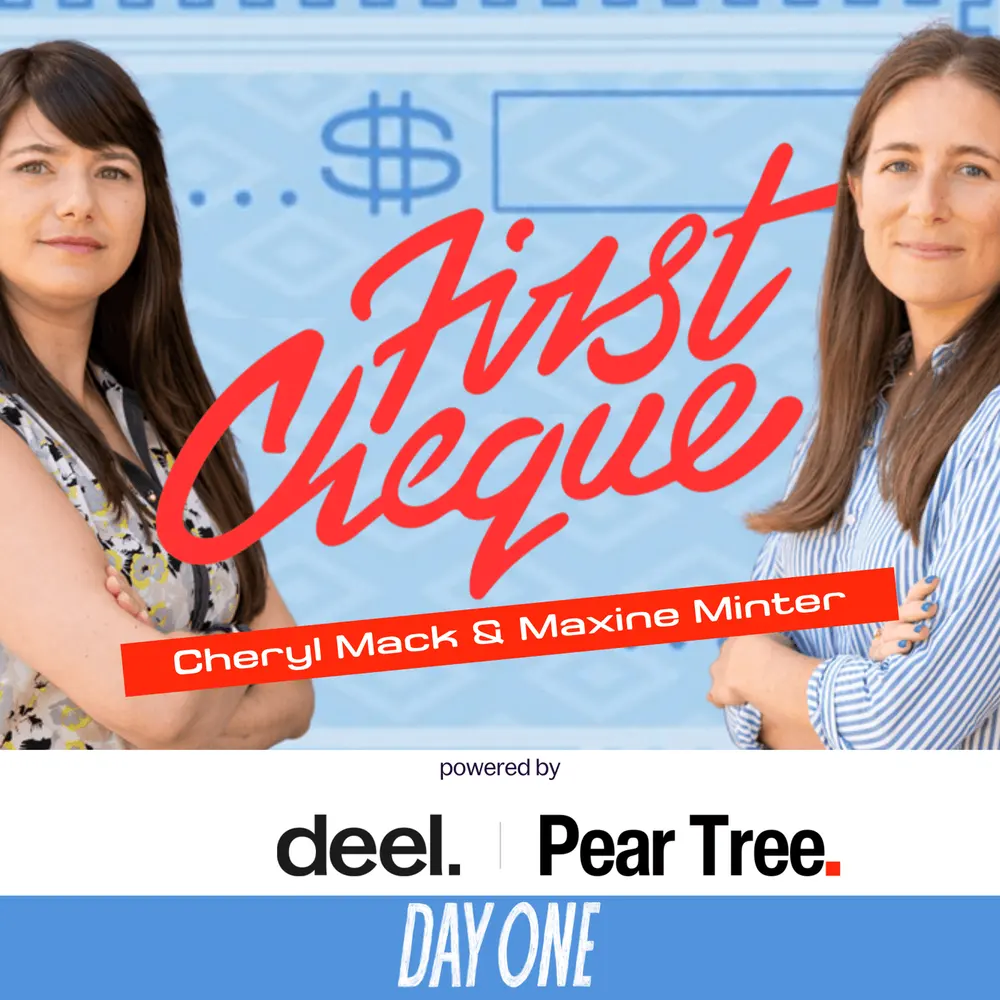 First Cheque with Cheryl Mack & Maxine Minter
Presented by Deel & Pear Tree
First Cheque with Cheryl Mack & Maxine Minter
Presented by Deel & Pear Tree 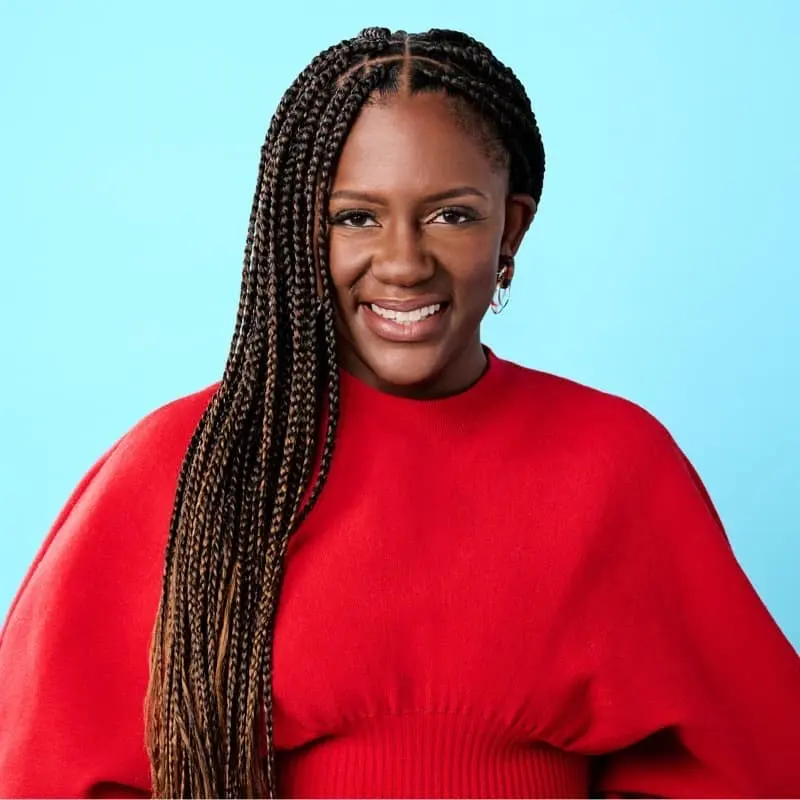
 ▶
▶ ▶
▶ ▶
▶