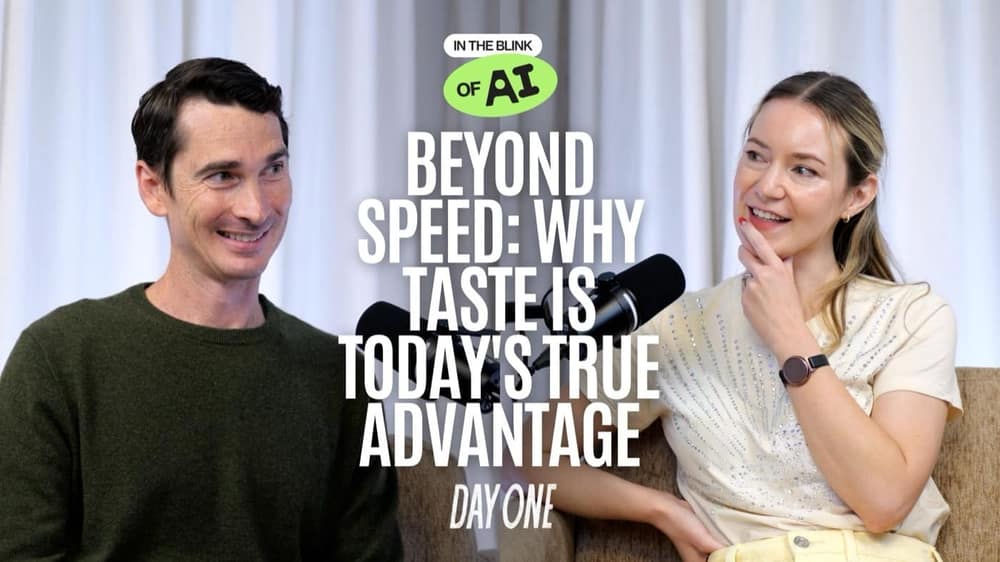

Before he was a VC-backed founder, Harrison Kennedy was walking for Louis Vuitton, Saint Laurent, and Tiffany & Co., a teenager from the Gold Coast suddenly living a global modeling career. When COVID hit, that world stopped. What began as a mental health podcast with a friend became Really Mental, a media company backed by Amazon, reaching 25 million people and hundreds of millions of collective followers. Now, Harrison’s building ReFresh, an emotional intelligence platform that helps companies detect how their people are feeling. Using AI models that analyse tone, text, and behavioural signals across tools like Slack and Google Workspace, Refresh helps organisations measure mental wellbeing, burnout risk, and compliance, all while keeping employees anonymous. In this episode of In The Blink of AI, Georgie Healy and Harrison talk about the evolution from creator to founder, how AI can be used to understand humans rather than replace them, and what it really means to build a values-driven company. Harrison shares lessons on patience, communication, and curiosity, and why in a world that’s more “connected” than ever, loneliness is still one of tech’s biggest unsolved problems.
🙋♂️ Harrison Kennedy: https://www.linkedin.com/in/harrison-kennedy-81b7171a1/
💡 ReFresh: https://www.refr-esh.com/
🎧 Really Mental (Podcast): https://pods.to/reallymental
Transcript Synced · click any line to jump ▾
Georgie Healy: Founders scale faster on Deel. Set up payroll for any country in minutes, hire anyone anywhere, get visas handled fast, and get back to building. Visit deel.com/dayone. That's D-E-E-L.com/dayone. 20% of adults report daily loneliness. Do you think that that's in part due to this time and technology and being on our phones more and things like that.
Harrison Kennedy: Because when you break down how humans are, we are meant to be in a tribe, we are meant to be surrounded by people. So when we're isolated, it's a very, like, unsettling, but it's become the norm because we're always on our phones, we're always on TikTok, we're always on Instagram, we're always just in front of our laptops and we're not out and about going and like interacting with other people.
Georgie Healy: Why throw yourself into this VC-backed startup AI space, which is incredibly hardcore?
Harrison Kennedy: We've built an algorithm that can detect how humans are feeling based off text-based analysis and audio-based analysis. In an anonymous way based off Slack, Teams, Google, all these types of things. Like we bring in a ton of data and then we could figure out how people are feeling.
Georgie Healy: H&M, they're using digital twins for modeling campaign. How do you feel about this as a tactic? What if they had an AI version of you and they were using it in campaigns? You might get a cut of that, but it's not actually you posing.
Harrison Kennedy: Um.
Georgie Healy: Hello and welcome to "In the Blink of AI," your front row seat to the AI revolution. I'm Georgie Healy, and I've been working in tech for 15 years, but there has never been a more exciting time in this space. What I'm really passionate about though, is unpacking the stuff you actually need to know when there is endless headlines and AI product releases going on. That's why I get the experts on the show to unpack the headlines based on their experience and their deep domain understanding, which is why we have Harrison Kennedy of Refresh. They're an AI VC-backed startup that leverages on his many years of experience in the mental health space on, in a number of different avenues. He's an ex-ING model. He has a built-in media empire, which he sold to AWS, but now he is unpacking for us the loneliness epidemic and AI in advertising. And what is taste in AI anyway? It was a really interesting and frankly unique conversation that I'm not hearing anyone else talking about right now. I was thrilled to have Harrison on the show to unpack this for us. Let's dive in.
Harrison Kennedy: You're listening to a Day One FM show.
Georgie Healy: Hey Harrison, thank you for joining in the Blink of AI. I couldn't be more thrilled and excited to have you as a guest. Normally I actually don't talk about guests' backgrounds, but yours is too cool to not share. Give us a little bit of a history of what got you to where you are right now.
Harrison Kennedy: Yeah, it's been a journey. I would say, like, I would say I started as a model when I was 15, still in high school, was traveling around the world working with brands like Saint Laurent, Louis Vuitton, Tiffany Co. And got to do some really, really cool opportunities doing that. And then COVID hit and I was seeing a lot of my friends were really struggling and I was seeing that like I wasn't really traveling and I wasn't working for a bit. So I ended up chatting with a friend really closely and we jokingly were like, let's start a podcast and let's start like a media company. So we pitched it to Sony at the time or like a subsidiary of Sony. And they were like, yeah, this is really sick. And then we ended up landing a deal with Amazon that ended up funding the whole company and project and built that out to reaching over 25 million people.
Georgie Healy: Wow.
Harrison Kennedy: Had a total following of all guests over 400 million. It's called "Really Mental." Had a distribution deal with Seven here and ran it out of the US and Australia. And then after that, I took a little bit of a break and was really trying to figure out where I wanted to go next. And then was thinking about what the problems we saw in the podcast and the media company were. And it was that we have a fundamental flaw in the way that we're measuring how people are feeling. So started Refresh. I met my co-founder and we, we're here today. Yeah.
Georgie Healy: It sounds like such a, you know, big pivots in your career— modeling to podcasting to VC-backed startup, which you don't just accidentally become a VC-backed startup. It's quite extreme. But there does seem to be a bit of a through line, especially in the mental health space. Have you always been passionate about it, or was it kind of something that, that grew over time?
Harrison Kennedy: Yeah, I think like my— the passion around it came from my own personal experiences. I think moving from the Gold Coast to Sydney at 15, having and make a whole new friend group, then going straight into modeling and then trying to navigate that journey as someone who can be very anxious and has had like a history of depression as well and had to overcome that was definitely a thing that motivates us. And also the team that we have around us as well has their own unique experiences when it comes to like mental health and wellbeing that drives them to building a successful company.
Georgie Healy: Sidetracked, why are so many models from Gold Coast? Like I feel like all the most attractive people are from the Gold Coast. You don't have to answer that.
Harrison Kennedy: I actually have no clue. Now that you say it, like I notice it, but I did not. Yeah, yeah, they are. Most of them are actually, yeah.
Georgie Healy: Yeah, I thought Sydney had a problem, but I will not be going to the Gold Coast. Okay, early on in the show we do AI Hack of the Week. We share a tool or a use case or just something that you've played with that you like. Would you like to kick us off on your Hack of the Week?
Harrison Kennedy: Yeah, so I've been focusing a lot of time on how do I automate all the operational systems in the company. So even this morning, like I was trying to build out a framework work that, um, you know, we have all of these like automated like email responders that like kind of look at stuff. And I was thinking, like, how can we do one that's in-house that like is an LLM or a system that's got all of the knowledge that I have, or the— all of the like company knowledge that feeds into all of our emails, and then also links into like what's going on in our HubSpot and all of our different tech stacks. So it actually has all the knowledge of what's going on. So it drafts me a response as I'm replying to the email, but it has all of the context of what's going on, our pricing, our systems, so it can help on the sales and on the operational side. So trying to build out that workflow has been something I've been really focusing on that can automate some of those processes and allow me to like, I guess, think less.
Georgie Healy: Yes. And if you could do it in-house and not pay someone else, not board them and see all your emails.
Harrison Kennedy: I think it's also like you have a level of control around like what you can feed your system and the knowledge you want it to have and all like these mini agents and the knowledge you want them to have. So I think like we're really trying to build out our own internal systems just so we can manage them properly in the way that we like to operate the company.
Georgie Healy: Oh, it's so funny you say that. That's my hack of the week as well, is kind of a more personalized agent. I actually don't want to onboard to a third-party product or anything like that right now. I have ChatGPT searching the internet for me for Oasis standing tickets in Sydney. I've got seated. I don't want seated, Harrison. I want to be standing.
Harrison Kennedy: Same.
Georgie Healy: Am I gonna search every day for standing tickets? No. So on ChatGPT, GPT. I, I literally created the prompt, you know, every day search the internet, find me a standing ticket. And it's really clever and good at this. It hasn't found me one yet, but it saves me doing it, right? And I've also got another one looking for— I'm a weird bird person, you know how there's some weird birds?
Harrison Kennedy: Yeah, yeah, yeah. What type of bird?
Georgie Healy: Like, all birds except pelicans. I'm anti-pelican.
Harrison Kennedy: What about like ibises? You like an ibis?
Georgie Healy: I'm anti-ibis.
Harrison Kennedy: Okay, okay. Pigeons?
Georgie Healy: I think they're misunderstood.
Harrison Kennedy: Okay.
Georgie Healy: Yeah. Yeah. Like a white pigeon, I can—
Harrison Kennedy: But is there like a go-to, like favourite bird?
Georgie Healy: Yeah. Yeah. The ones that really like, I'll like stop in the middle of the street to look at are like the crazy parrots, like the lorikeets. They're always up to something.
Harrison Kennedy: Yeah.
Georgie Healy: Always acting crazy.
Harrison Kennedy: Yeah.
Georgie Healy: Like cockatoos, like big parrots and things like that. I get the sense you're really into birds as well.
Harrison Kennedy: I have an understanding of birds. I don't think I— I don't— I would never have a pet bird. Like I did at one point, like I was like 10. I tried to convince my parents to get me a macaw. It's probably a great decision they didn't. The most expensive bird. And the most— the one that lives for like ages.
Georgie Healy: So, I still have it now.
Harrison Kennedy: So, I'm glad they talked me out of that at the time.
Georgie Healy: My poor parents have been through this so much too.
Harrison Kennedy: They were like, no, we're not getting a bird.
Georgie Healy: Did you get something else instead?
Harrison Kennedy: Nothing.
Georgie Healy: Nothing?
Harrison Kennedy: Just no bird.
Georgie Healy: They're like, how about nothing?
Harrison Kennedy: Yeah, just no bird for you. My son wants a bearded dragon.
Georgie Healy: And we've got this rule of like when you're 10, you get a bearded dragon, hoping that by the time he turns 10, which is in like 5 years, he's over it.
Harrison Kennedy: But what if he says that he wants the bearded dragon?
Georgie Healy: We have to, we have to—
Harrison Kennedy: You should be, no.
Georgie Healy: You have to honour it, don't you?
Harrison Kennedy: So, you're just gonna get him a bearded dragon?
Georgie Healy: Literally, I'll have to, like—
Harrison Kennedy: What are you gonna do with the bearded dragon?
Georgie Healy: Well, I was saying before the show, I'm quite lizard temperatured myself. So, we just heat the whole home.
Harrison Kennedy: Yeah, okay.
Georgie Healy: And have like a bunch and we just all become lizards.
Harrison Kennedy: Just a bunch of lizards that surround—
Georgie Healy: And me.
Harrison Kennedy: Roaming around.
Georgie Healy: Under the heat lamp.
Harrison Kennedy: Yeah.
Georgie Healy: I could talk about birds forever, but I actually genuinely am excited for this chat because you've done so many different things and there's so many different headlines that I would love you to unpack for us just based on what you're seeing. You know, with Refresh, you're breaking down the universal issues young adults face coping with mental health, identity, and self-esteem. I immediately start thinking how to use tech to help with that or to support that. Is there any KPIs you can look for, um, and how do you know that you're doing a good job of it?
Harrison Kennedy: Yeah, so like, I'll break it down to like a pretty simple framework of what the way we look at things. So what we believe we do really well is we can tell you where your people problems lie. The second thing we can do is we can link those to a risk assessment. So looking at compliance, looking at like attrition burnout risk, looking at a range of different things around what the risk is. For the business. And the third area is we've got a range of solution providers that we can bring in that are hyper-personalized solutions to the problem the business may be having. So those three areas is how I like to break it down. Now, how we do that is first, it's like if we start with the detection side of things, we've built an algorithm that can detect how humans are feeling based off text-based analysis and audio-based analysis in an anonymous way. Um, so we aggregate to groups of 10 as a minimum. And then we look at based off Slack, Teams, Google, all these types of things. Like we bring in a tonne of data that can, we kind of clean up and then we could figure out how people are feeling based off that. And we look at metrics like, for example, let's say your calendar's really, really busy and your tone of voice in a certain message is like XYZ. And then you are working after hours really late, like 4 hours after late. We've got different metrics that can combine all these different types of things into one. That can figure out how someone's feeling. And then for privacy reasons, we aggregate it into 10 people and then we redact it and/or de-identify the information so no one can actually be linked towards one direct thing.
Georgie Healy: Very interesting. Do you notice any specific areas are really like red flag? Like, is it the time working outside? Like, is it the overwork or is it the tone or is it— we're still figuring that out. This hasn't been done before.
Harrison Kennedy: I think it depends on the role. So, I think it depends on the company and the role and the age and where they are. Like, there's so many, like, humans are complex.
Georgie Healy: Yeah.
Harrison Kennedy: So, like, there's not one thing that fits one person. It really depends on, like, the person's baseline, right? Are they usually more chatty? Are they usually more introverted? Are they, do they usually work later or do they usually work earlier? So, we have to look at all of these different considerations when we're trying to think about how we're measuring how someone's feeling, 'cause each individual person is different. So, it's really hard to say like one metric is above the other because one metric for you might be above another metric for me. And they're kind of— that's how we have been looking at it is a personalised approach to every single human but in a whole organisation.
Georgie Healy: Yes. You were just saying before to me, you're working the public holiday, but then you said just afterwards, "Yeah, I'm actually really excited. It's going to be a big week for us." You were happy about it. And I was like, "Ah, I need that public holiday so badly." And very different. Different work weeks, right? But different feelings around it. That's quite interesting.
Harrison Kennedy: Yeah, I think it's just like what the normal is for each human, right? Like one thing that we find when some humans and like some people talk a lot, right? Like they are very active. They like to talk on Slack. They like to talk on Teams, all these types of things. Other people just like to do their work and they're very like execution orientated and they don't like to communicate it as much. There's really different types of ways that people like to interact with each other. And, but we look at it across the whole tech stack and we kind of evaluate it like our AI ML model evaluates it automatically.
Georgie Healy: As a startup founder, you are juggling multiple priorities from the expected, like finding product market fit, to the unexpected, like customer requests for SOC 2 or ISO 27001 certification. Achieving compliance is time consuming and time spent on that is time away from the needs of the business. And that's where Vanta comes in. Vanta is the all-in-one solution for startups to become compliant quickly and build a security foundation with ease. With a combination of automation, an extensive partner network, and a security marketplace containing 385+ pre-built integrations, Vanta provides the necessary tools and expertise for startups to achieve compliance seamlessly. No matter how urgent your needs are and at every phase of growth. Over 10,000 leading companies, including Cypherstash, Handle, and Indebted trust Vanta to automate compliance so they can focus on growing the needs of their business. Here's the important part. Startup listeners of the show get $1,000 off if they go to dayone.fm/automatecompliance. /blink. Amazing. I read a study by Gallup, very reputable, and it shows that 20% of adults report daily loneliness. Do you think that that's in part due to this time and technology and being on our phones more and things like that? I'm curious what, what you might attribute that to. It seems to be a number that's increasing over time.
Harrison Kennedy: Yeah, I think that Loneliness for humans, and this is just my perspective on it, is fundamentally because we're the most connected we've ever been with each other, but the least connected as well.
Georgie Healy: Yeah.
Harrison Kennedy: Because we're constantly connected through a device, not through in-person communications or engagements. And I think that is something that's so important is to have that like in-person kind of impact within each other. So, I think for humans, the way that we're approaching it right now. And they're like, the system right now is going to increase loneliness basically because we're always on our phones, we're always on TikTok, we're always on Instagram, we're always just in front of our laptops and we're not out and about going and like interacting with other people. And also, I think the level of the, like the idea of community now has dwindled a lot as well. It's really hard to find community nowadays. And I think individuals overall are so isolated nowadays. And I think that's where you see people veering towards. And I'm not religious, by the way, but this is where you see people veering towards things like religion or to sport or to different types of things because they want to find that place of community. And I think that's the thing that's driving loneliness right now.
Georgie Healy: Politics, right? You're seeing people get really into politics. You're like, I didn't know you were even remotely into that.
Harrison Kennedy: I think it's a community thing, right? To try and fight this element of loneliness. 'Cause when you break down how humans are, we are meant to be in a tribe. We are meant to be surrounded by people. So when we're isolated, it's very unsettling, but it's become the norm.
Georgie Healy: That is great nuance to that topic. You've lived many lives and you're not that old. Why throw yourself into this VC-backed startup AI space, which is incredibly hardcore? Like, it's not easy. What appeals to you about where you're working at the moment?
Harrison Kennedy: I like doing hard things.
Georgie Healy: Yeah.
Harrison Kennedy: I think like the nature of how I am is just very intense. So it's like, how can— everything I do is at 100%. So how can we build the most elite team to go and really like fix this problem that we see is there and we see that the demand is there around how people are feeling and linking that to compliance and linking that to also solutions. And for me, it comes from all those personal experiences that I spoke about earlier. I really saw the problem in the last business that I ran. And yeah, I think the nature of how I am is venture-backed. Like, that's just, just there was no other option.
Georgie Healy: Yeah. Let's scale it. Let's make it massive.
Harrison Kennedy: Let's really solve a problem. And the team is the same. Like, my co-founder Taylor is the same. Like, we always talk about how this is like life's work. This is a business that is meant to be a multi-billion-dollar business very, very quickly. It's not the type of thing that's just gonna be a fun little project.
Georgie Healy: Yes. You've been in the creative space and you're now in a very, um, my view, you're juggling, uh, soft skills and technical skills and business skills. Do you think that being so AI-driven, using LLMs, will take away that creativity?
Harrison Kennedy: Like, for—
Georgie Healy: I had a guest last week and she's in design at Canva and she's like, in the AI space, but kind of almost fighting against the machine, trying to inject original thought in because she's so in the AI LLMs and the algorithms that are just kind of a boiled-down distillation of what exists. I know that you're not creating new designs and things like that, but you've got a creative background. And I'm just curious if you're like, I'm losing my creative side by leaning into this more.
Harrison Kennedy: Yeah.
Georgie Healy: Or not really.
Harrison Kennedy: Not really yet. Like, 'cause I think like, I actually had a really interesting conversation with someone a while back around this. So they were a designer, they're like very big fashion designer, like quite big like name in that space. And we spoke about creativity. And I think creativity is always looked upon as like someone who's like an artist or a musician, all those types of things. But I think like teachers are also creative.
Georgie Healy: Yeah.
Harrison Kennedy: And like doing the creativity is in any job 'cause you could be creative in your approach. Creativity is about problem solving, less about, not like the output of the work. And I think that that's something that a lot of people don't really realize or think about. Like, I think teachers are one of the most creative people because they have to come up with innovative solutions for their students all the time. And the same with running a company or doing anything like that. Like, you have to be creative because that's just basically problem solving.
Georgie Healy: Yes.
Harrison Kennedy: So I don't think I've ever lost any of that. I think that that creativity that's come from fashion and come from entertainment has kind of just manifested itself in a different way because it's just always solving problems.
Georgie Healy: Yes. Okay. AI algorithms are creating models and creating filters, right? They've been doing this for a while. They make my face more symmetrical, more beautiful. Do you think AI will make people more self-critical over time? People, not you.
Harrison Kennedy: You kind of ready filter. Yeah, yeah, yeah. Yeah, for sure. Like, I think that social media has done it as well. Like, it's— you've already seen with all of these, like, filters that are on —on social media apps like Snapchat, all that type of stuff, like kids using them, it leads to high levels of body dysmorphia, or at least to high levels of issues within their own self-esteem and the way that they're viewing themselves. So for sure, I think that there's a lot of fundamental issues and norms around like morphing our body and our face into certain things that is not accurate, to kind of make ourselves be perceived as more beautiful in the eyes of whoever defines beauty—
Georgie Healy: Yeah.
Harrison Kennedy: —um, on social media and those types applications.
Georgie Healy: Yeah, I'm really guilty of this. Like, even in this podcast setting, the quality of the camera is really high, and I'm— the app I use most is Instagram. And so, it is really confronting being like, "Oh, that's what I look like." Like, you're kind of used to— even my Google Pixel phone, sometimes I'm like, "I swear there's a filter on this," like just point-shoot that I've done, and I can't remove it almost. It's starting to get a little bit Uncanny Valley.
Harrison Kennedy: I think like, I think for the social media part of things is like, we're constantly going on social media, seeing all of these different people that are showing their best, that are also Photoshopping themselves or like changing certain things in the image that are also not being like their full, like transparent self. And they're posting all these images. So, you end up comparing yourself to this unachievable version that's not even real of someone else. So it becomes like this weird game of, and this weird kind of challenge that everyone's trying to always compete in a sense for, oh, I need to look pretty, I need to look prettier, I need to look more attractive, all that stuff. I think it's more probably on the female side. I don't really know, like I know not many guys are as much like that. At least none of my friends are really like that. But that's what I've seen with a lot of like my girlfriends.
Georgie Healy: It could be really gendered. It really could. I'm definitely seeing it in my own behavior, my friend's behavior. I'm curious 'cause I know that you're focusing on the workplace and in businesses, but I feel like we bring it with us to the workplace. Like those insecurities kind of— I heard during COVID the plastic surgeries, I don't have the stat on me, but the number of people booking surgery after COVID because they were looking at their face in camera for like 2 years, that created a lot of like, yeah, self-esteem issues.
Harrison Kennedy: Yeah, I think like a lot of things we bring into work is still very personal. I, but I also think that that is a little bit powerful because that's like our unique experiences that define the way that we work as well. Like, I think if everyone was just the same cookie cutter, it wouldn't be a very interesting workplace or like society.
Georgie Healy: Yes.
Harrison Kennedy: I don't think that these insecurities are great, but I think insecurities do define your uniqueness and to not lean away from them. And I think that's where all of these like, these like those AI tools you were explaining, they make us lean away from those insecurities that we have instead of actually facing them and processing them and dealing with them and questioning them and asking, "Why do I feel this way? Why am I viewing myself in this way? Is this true? Is this a false lie?" Like all of those types of things.
Georgie Healy: Yeah, agree. There's this amazing Substack called Working Theories. I just recently read their post. It's kind of like looking at our industry as a whole and looking at how taste plays into all of this. Like, we've got AI and, and AI companies, and they're a dime a dozen now, right? Like, everyone's AI, dot AI, whether they're using LLMs or not. Um, with your background and your exposure to designers and, and creative thinkers and yourself, is taste factored into the product you're building?
Harrison Kennedy: Like design taste or like—
Georgie Healy: I think it's bigger than that. I think taste in terms of perceived quality and vibes.
Harrison Kennedy: Yeah.
Georgie Healy: Like that's bad taste. Is it? Like it's kind of a vibe thing, right?
Harrison Kennedy: Sure. Like, yeah, my— Taylor and I definitely spend a lot of time.
Georgie Healy: Really?
Harrison Kennedy: Yeah, 100%. Like he's similar to me in that sense. Like we want something to be beautiful, I think.
Georgie Healy: Okay.
Harrison Kennedy: Like, and like we have emotions around the way that we want it to feel. And like we view a lot of these B2B SaaS companies as like very boring, bland. The design is not very like forefront usually. There's no emotion around it. It's kind of just like very optimized for like usability. And like we want to allow like Refresh to be optimized for usability, but also have emotions attached to it more like what a consumer application has, even though it's not a consumer application. It's kind of the mesh of the two. Is where we view it. And I think it's just a natural thing that happens. But something I have noticed is like a lot of the successful CEOs I talk to are very like integrated into culture. Like they are always talking about philosophers. They're always talking about art, music, culture. They're very rarely talking about tech.
Georgie Healy: Wow.
Harrison Kennedy: And they run some of the biggest tech companies in the world, but their focus isn't always on tech. Like their day stuff is, but what they talk about and what they experience afterwards that impacts the tech is all of these other areas.
Georgie Healy: Are you starting to be more philosophical? And if so, like, do you have any favorite philosophers that are guiding your thinking a little bit?
Harrison Kennedy: Yeah, I think like the way that I view it is not an individual thing. It's more of like a worldview that we're always, I'm always evaluating and always adjusting over time. And I think it goes back to like all the things I kind of spoke about, which is how can you be impactful in what you're doing? How can you be a better person and patient around that as well, whilst also like executing effectively? So that's across like everything in my life and bringing emotion towards it. Like, I don't think— I think I don't— I used to veer away from emotion, and I think nowadays emotion is actually a very unique strength where you can bring it into the workplace in a positive way, and it can actually bring everyone else up. And, and like the, the role of a CEO and the role that I have is to really fill everyone's cup up.
Georgie Healy: Yeah.
Harrison Kennedy: Like, bring everyone up in a sense of like motivation and have space and hold space for the whole team to be really, really motivated and execute effectively. And if I'm not there, then they won't be there. So that's something that I'm really like, I focus on a lot that allows our team to execute more effectively because they see and they're surrounded by leaders that are giving them that space too.
Georgie Healy: And showing them what it looks like, I guess, as well. I have so much to ask you based on that. So number one made me think, do you use your tools internally as well? And how do you—
Harrison Kennedy: We test them. Like we test them internally. Like we're not really, our company is not really our ICP we sell to. Like we're like, we sell to more like scale, like scale to enterprise clients mostly. So usually around that kind of like 200 to 250 to 10,000 staff kind of thing.
Georgie Healy: You need a lot of data.
Harrison Kennedy: So yeah, we bring it in. We're a team of like 12.
Georgie Healy: Yeah.
Harrison Kennedy: Like, it's not, we're a pretty small team, but the way that we do it is I think we take like the core principles of all of these areas and we kind of bring them in when it comes to our small team.
Georgie Healy: Yes.
Harrison Kennedy: And allowing everyone to work effectively. Like, I really believe in autonomy. Like the team, each individual person has the ability to make their own decisions and everyone can just like talk about it very openly within Taylor and I or the different other team members. We kind of, group teams into little teams as well within it to be able to like work on their own little projects, but they have full autonomy over those projects as well that we're working on and looking at shipping. And it's just pretty open conversations. We kind of always chatting with each other, even if it's in a work sense or a casual sense. Like, and like I talk to my co-founder, we probably call each other like 20 times a day. And then I like each of the members of like the team as well. I probably talk to each of them at least once or twice a day.
Georgie Healy: Yes.
Harrison Kennedy: On like just a quick phone call.
Georgie Healy: Yeah, you don't need the data to tell you how things are going.
Harrison Kennedy: Yeah, so we're pretty good at all communicating. With each other very quickly.
Georgie Healy: Yeah. And just to take you back to this like consumer vibe, but for an enterprise customer, like I've noticed Canva almost feel like that. Like it feels very personable and consumer, but I know they sell to businesses and things like that as well. You're not Canva, but like what kind of, how do you add your brand or taste or flair or vibe into the product? Like, are there any things you can share that you're like, like that's very signature Refresh, you know? Like it's not something that you would see elsewhere.
Harrison Kennedy: I think like I haven't done, it hasn't been conscious. Like I think a lot of the, when you build a company, a lot of your DNA goes into it, to be honest. Like a lot of how you are kind of goes into that, what that company is. I think one of the things that we've really focused on is how can we get a lot of complex data and turn that into very simple things?
Georgie Healy: Yeah.
Harrison Kennedy: So the way I really like to explain stuff is in very simple terms. I don't like to overcomplicate things ever. I think that people that overcomplicate things don't truly understand them half the time. So, what we try to do really, really, really well is get a ton of really complex data and really complex things that we've done and build it into a really simple user interface so that anyone that's using it, whether it's a 10-year-old, understands, "Oh, Mum, they're feeling good." Or, "They're not feeling good." Like, it's as simple as that. And then they're feeling good, they're not feeling good, what do we have to do about it? And I think that simplicity has been something that we've really tried to bring within the platform. So it's very easy to use, but doesn't lose any of the like effectiveness of it. It's kind of the balance of two. And I think that's something that's probably very me. I'm quite simple, but also like just as long as it's effective as well in the way that I speak and the way that we do things as well.
Georgie Healy: I can't tell you how many AI-related websites I've seen. No matter how many times I read it, I'm like, I still don't get it.
Harrison Kennedy: Yeah, you wanna know what we do, right? Like half the time I don't know what half these companies do. And it's like, how can we make it as simple as possible? I also think like around that is also bluntness. Like I'm, as a person, I'm quite blunt at a lot of points, very straightforward, very blunt. And the way we run the company is very like that. Like it's, we always wanna know if something's going wrong, it's not a problem. Like that's normal. We will never, if you make a mistake, that's praised. But like how can we build that within the platform as well? So the platform's very fun to—
Georgie Healy: Know where you stand.
Harrison Kennedy: Yeah, where the company stands, if the company's at risk, if it's not at risk, how the people are going, if the people are going well or not and how to help them. Like it's as simple as that.
Georgie Healy: Okay, frivolous question before we go to headline news. Why do all the AI companies have logos that are just like a little black and white squiggle? They all have a black and white squiggle logo.
Harrison Kennedy: Yeah.
Georgie Healy: Oh my gosh, I can't tell you how many, I created like this ecosystem map the other day, so that's why I'm like, are they getting the LLM to design the logo for them or whatever? How did you guys think about your refresh name and the logo? I'm just dying to know.
Harrison Kennedy: So the actual name and the logo came from the previous company before we pivoted.
Georgie Healy: Really?
Harrison Kennedy: So when we were in DD, like we pivoted, we did like, so for context, we were in 5 weeks of DD with our VC, 2.5 weeks into the DD I pivoted the whole company from, again, like my background more being in media, from being like a wellbeing streaming company, like a wellbeing media company.
Georgie Healy: Yeah.
Harrison Kennedy: Again, to like an emotional intelligence system. I'm not technical. I just met my co-founder. Like we were literally just scrapping everything together. In a week we had gotten like a bunch of LOIs, basically like paid clients wanting to use it.
Georgie Healy: Letter of intent, guys.
Harrison Kennedy: Yeah, sorry, LOI, letter of intent. We'd built the whole product. V1, we'd built out a team like all in a week post that. And I think that was where the VC was like, okay, this is really, really impactful. Your speed to execution is crazy. But Refresh came originally because one, I wrote down 100 potential names and I was looking at domains to be honest initially. And then the, like, that's the honest truth as well.
Georgie Healy: There's the bluntness.
Harrison Kennedy: Like, we were trying to figure it out and I was like, I don't know what to name this thing. Like, we'll just name it this. This is like, oh, this is kind of cool. And then the dot, which is the logo, was actually 'cause like the RE, like a recording symbol, like initially, like when you're recording, like imagine like a dot flashing and it was like the REC, but that gives RE, 'cause it was originally meant to be a media company. So that's where the logo comes from and we just kept it 'cause we were like, yeah, this works.
Georgie Healy: We like it.
Harrison Kennedy: And we just kept it.
Georgie Healy: Yeah.
Harrison Kennedy: And so that's where it comes from, but it didn't, it has nothing to do with the business we do now.
Georgie Healy: That's so cool.
Harrison Kennedy: I could come up with some elaborate story, but that's actually just the truth.
Georgie Healy: I love that even more. It's kind of like, it's kind of like we liked it and we kept it because we like it.
Harrison Kennedy: Yeah, now it may change over time. We don't really know, but like that's what we're sticking with.
Georgie Healy: That wasn't like your key focus at the time.
Harrison Kennedy: Yeah.
Georgie Healy: Okay, dying to ask you this one. H&M, they're using digital twins for modeling campaigns. So you've got your model and then you create a twin, an AI twin of that person to keep model consistency, save cost, save time. Let's be honest, it's to save cost, save time. How do you feel about this as a tactic? What if they had an AI version of you and they were using it in campaigns? You might get a cut of that, but it's not actually you posing.
Harrison Kennedy: I think like it would depend on the financials around it.
Georgie Healy: Yeah.
Harrison Kennedy: I don't think it's a bad thing. I think it would give models the chance to be global and in 20 places at once to be able to like license their face for distribution as if it was a digital product. And I don't think it's a bad thing. I think it has a long way to go. And like the commercials around it, I'm not too sure. That's probably the part that I would want to understand more is like, what's the license agreement? How does that work? What's the length of it? Is there a trail around it? Do you get a commission? Like how, how is it working around the commercials when it comes to these licensing deals? I don't think they're a bad thing. I think they allow you as a model to like scale really quickly. If you look at it as like a business, for example, like let's take away the like, all the emotional side of it for a second, I know.
Georgie Healy: Mm-hmm.
Harrison Kennedy: But let's look at it just from a sole business perspective. You're an individual, so you can only do as much as you can do as an individual with travel, with all that stuff. But if you're able to license your, I guess, identity or face or whatever it is for campaigns with limitations around it, you're able to actually be shooting in Japan, Tokyo, you'll be able to shooting in the US in New York or in Milan or in Paris, those types of things. All at the same time, and you don't actually have to be there. So it does give this element of scale that could work really well, pending on how those commercials work, around like safety around that as well, identity, what that looks like, all that.
Georgie Healy: Yeah. From a model's perspective, I see that as awesome. I had a guest on the show once that I found out afterwards we couldn't release the show because they'd been on another podcast that had this clause in that they can't be on another show within this much timeframe, 'cause it might,— what's it called? Like cannibalize their viewership or whatever, which I don't have in mind, but I feel like maybe companies would have to start looking for that, right? Like if your digital twin is shooting 10 other things at the same time, you're like, hey, I didn't know you were also—
Harrison Kennedy: Yeah, they've got that already. Like when you're modeling for stuff, like, well, you can model, it's like basically called exclusivity. Basically when you're doing, say you're doing a runway or a campaign or anything like that, like that, you do like an exclusive shoot that means you can't compete with any of the other competitors. It's very rare. They have to pay you a lot more for it as well. Like let's say it's H&M versus Zara, right?
Georgie Healy: Yeah.
Harrison Kennedy: You're shooting an H&M campaign. It's probably very likelihood that you're not gonna shoot Zara 'cause there'll be an exclusivity. But with that exclusivity, they're probably paying you like 2 to 3 times more your rate because, well, think about it. They're gonna be limiting you from other jobs you can do within this sphere of competitors. Yeah. Example, but that it does happen. It's very rare because companies usually don't want to spend the exclusivity, and the likelihood of you getting booked on a campaign from a competitor is probably a little bit lower unless you're a very, very popular model. Or they do it more with like celebrities and those types of things because they don't want like X celebrity to do one campaign with them and then do it with their direct competitor.
Georgie Healy: Wow. Okay, another headline news for you. Less than 2 months ago, a fully generated ad for a fashion brand You know it, Guess, was featured. So an AI model, purely AI model, and it was in Vogue. And how do you feel about that? Like from a business standpoint, do you think that AI models are good, bad, indifferent, gray area?
Harrison Kennedy: Yeah, gray area on that one. I think they—
Georgie Healy: Surprise.
Harrison Kennedy: Probably just not like a full— I think for me, like just a full AI shoot probably loses a little bit of creativity within it still. Um, I think that the element of like, there's just so many people on a shoot usually. You have the photographer, you have the lighting, you have the makeup artist, you have the hair, you have like the, um, like the assistants of the photographers, you have like all these things. And if it's an ad, you have audio, you have like, there's so much stuff on it on a shoot, right? And then you have the models, like the talent, you have like all of that, right? Um, depending on if it's video or like just a photo. So, there's so much creativity and intentional thought that goes around every single thing that I think AI probably isn't still able to do at this point in time. Eventually, I think it will be able to, and I think we're going into the space where we'll be seeing eventually the first like AI movies, right?
Georgie Healy: Yes.
Harrison Kennedy: And stuff like that.
Georgie Healy: Yes, people are talking about this a lot.
Harrison Kennedy: But I think like right now we're still not fully there, especially around like the human side of like, of shooting. So I think it's, it's cool that they're testing it and they're trying all these things, but I still think like traditional shoots will be around for a little bit longer.
Georgie Healy: Yeah.
Harrison Kennedy: I think like the speed of how technology is going though is it'll be harder and harder to figure out what's human and what's not when it comes to production.
Georgie Healy: I wonder if they'll have to start putting in a clause or not, or—
Harrison Kennedy: Yeah.
Georgie Healy: Because obviously that model was a stunning model, but it wasn't real.
Harrison Kennedy: Yeah. But models— How did people react to that? Do you know?
Georgie Healy: It was mixed.
Harrison Kennedy: Yeah, okay.
Georgie Healy: It was mixed. I think people are funny about cheapness, if I'm honest. Like, there's almost like, oh, were you doing it to save money? And people don't like that. And models advocating for the models, they're like, you know, models already don't get paid enough for what they do, and now you're taking their jobs. So that— I saw that negative side of it. But on the other flip side, I guess, like someone's making money out of that. Someone's getting jobs out of that. It's just not the model or necessarily the team behind it.
Harrison Kennedy: Well, yeah, the whole team. Like there would've been probably for a guest shoot, that'd be hundreds of thousands of dollars they're spending on that usually, yeah.
Georgie Healy: Yeah, I'm surprised Vogue featured it without, like maybe that was part of the branding is like our first ever.
Harrison Kennedy: Yeah, maybe. I don't know. Like that stuff is like, yeah, I think everything to do with all of this is very polarizing. And it's really hard to just have a set view because I don't think the tech's there yet.
Georgie Healy: Would you watch an AI movie, like a feature-length film that's purely AI?
Harrison Kennedy: I watched like the AI TikTok ones. They're kind of funny.
Georgie Healy: Oh, like the cat that's like making memes?
Harrison Kennedy: Yeah, like the gorillas.
Georgie Healy: I haven't seen the gorillas.
Harrison Kennedy: Yeah, the gorillas. Like there's a bunch of different like AI TikTok videos that are like 1 to 2 minutes long. I've seen some of those.
Georgie Healy: Yes, I've seen the one that's an orange cat that, but it's very morbid. It's like a Chinese company that makes them, and it like makes friends with an animal, drugs the animal like a chicken or a pig or whatever, makes friends with them and then kills them and then eats them. But it's all adorable.
Harrison Kennedy: Is it like images or is it videos?
Georgie Healy: It's like videos. It's like photorealistic videos, and it's super viral.
Harrison Kennedy: I've not seen that.
Georgie Healy: We'll put it in the show notes.
Harrison Kennedy: Yeah, that's wild.
Georgie Healy: It's really like disconcerting.
Harrison Kennedy: A whole feature. Like the issue with AI video still is like humans I don't look that real. Like they—
Georgie Healy: Agree.
Harrison Kennedy: They're getting realer, but I think it's still not fully there. You can tell it's AI. Maybe I'd watch like a 10-minute one, but like I wouldn't watch a full probably 2-hour film. I'd probably get bored unless it was like really good.
Georgie Healy: Yeah, I would need all my friends to tell me to watch it. Like K-pop Demon Hunters.
Harrison Kennedy: Or it would have to be just really funny.
Georgie Healy: Or really funny.
Harrison Kennedy: Yeah, like really dumb funny.
Georgie Healy: The only reason I'm watching K-pop Demon Hunters is because people will not shut up about that show. It's not AI. It's like a cartoon. It's gone completely viral. It's on Netflix. Everyone's watching it because it's genuinely funny and genuinely cool and great. There's no way I would have watched that otherwise. It's like a cartoon. Kids.
Harrison Kennedy: Yeah, kids.
Georgie Healy: Yeah, it's for kids. But you should watch it.
Harrison Kennedy: Okay.
Georgie Healy: Not on the public holiday because you're working.
Harrison Kennedy: Yes.
Georgie Healy: To finish the interview, Harrison, we've got our hot takes. Are you ready? Let's get into it. Okay, I don't know one person that could honestly say they wouldn't wanna genetically be blessed enough to be a paid fashion model, myself included. But can you be a fashion model and not have self-esteem issues, do you think?
Harrison Kennedy: Yes.
Georgie Healy: Really?
Harrison Kennedy: Yeah, 'cause, well, I can only talk on my experience, but I know like for me, I didn't really have any self-esteem issues when I was modeling, but I'm also a dude. So again, I will preface that like it's a little bit different. But in saying that also, I'm the personality type that doesn't really, I'm very stubborn. So I would never be, even if I get told to do something, I usually am not like as good as this was like, eat this type of food or do this type of thing. I'm just kind of like, I'll do whatever I want.
Georgie Healy: Yes.
Harrison Kennedy: But I think a lot do, a lot have their own insecurities or like the lifestyles that are really unhealthy. I would say for me, I didn't just because I was raised in an environment which was like, you have your like morals and values very, very quickly. And those can kick in where you're like, okay, I'm not doing this, I'm gonna— I'm okay doing that, I'm not doing this, I'm okay doing that, around like eating food and having like a healthy view on your body.
Georgie Healy: Thank you so much for sharing. That was, that was very personal, and, and thank you. Um, yeah, I grew up in the era of Victoria's Secret models and then the fallout from when they actually shared how miserable they were afterwards. It's like everyone wanted to be them by everyone. Women wanted to be them, and then seeing that, it was like, oh, it might not be so fun. Um, with self-esteem, uh, and the world of startups, we do notice it's a high-paced, hardcore pressure cooker of like expectations and things. Do you carry any specific values with you? You said like you were raised in a way where you've got strong moral compass. is there anything that is holding you through and that you can recommend to any of the operators and founders that are listening and it's quite hard?
Harrison Kennedy: Yeah, I think that like, okay, I'd probably say 3 things. First thing is like meet people where they're at. That's probably the first thing. Not everyone's gonna be at the same stage as you. Not everyone's gonna be the same like period of time as you, but trying to meet people where they're at is really, really important. The second one that I'm learning to do a lot better is be patient. What, like it's patience whilst also executing. It's like, 'cause when you're not patient as well, you end up kind of going into a fear mentality, which is driven by anxiety. That's like, oh my God, I need to get this done. Like, oh my God, why are they not replying to me? What do I have to do? All that stuff like that, that kind of messaging, like slowing down a little bit in your thinking, not in your like execution to be patient and take that step back. I say like, that's really the second one or like second value you could kind of say that I'm always trying to be conscious of. And I would say the third one is just like, be respectful and nice, like kind. I think a lot, a lot of people aren't always respectful, um, or they, they believe it, like, like pushing and pushing and pushing and pushing. And I think that, like, yeah, it's important to execute, but also it's important to build relationships. And I think relationships are really important across selling, building a team, and building an overall company as well.
Georgie Healy: Uh, when I was briefly a VC, I kind of lost sight of values a little bit, you know. I think I did it to people-please I was, look, I'm an investor, that must give me value, right? I was miserable in the role and I forced myself to write down values and I really encourage everyone else to know what your values are and to think about them because you will make decisions and then be like, that's such a weird decision to make. I don't know why I made that. And I don't, I'm not comfortable with that after the fact. So—
Harrison Kennedy: Yeah.
Georgie Healy: If you make a decision or you say no to something, but you stay with your values, feel like you can't go wrong, right?
Harrison Kennedy: Yeah, I also think like in early stage like venture or startups, there's this kind of hierarchy system that's like really weird that I don't kind of, I don't really like to entertain.
Georgie Healy: Yes.
Harrison Kennedy: And I think just being really conscious of that as well and kind of like sticking to your own is like really important. Like I kind of, the way that we operate as a team is we don't really like the outside noise of anything and we just focus on like how do we execute on our roadmap, that's it.
Georgie Healy: How does the tech industry do in terms of mental health and mental health advocacy to you? Do you think you need to go in there and sort some people out?
Harrison Kennedy: Probably. I think there's a lot of people that have burnt out. I think the nature of like at least early stages, like it's gonna be hard.
Georgie Healy: Yeah.
Harrison Kennedy: Like I think you're not gonna be in an environment that's calm and chill and you're not working a lot. Like you're building an early stage company, like the, like the, prerequisite is it's going to be a lot of hours, it's going to be a lot of time, it's going to be very hard, it's going to be very stressful. You're going to be considering burn. There's not going to be as much job security. Like, you're going into a place that's unknown but also very fulfilling in the fact that you learn a lot. You'll be able to increase your networks. You'll be able to just build and skip periods of your career that you wouldn't if you just stayed at a big corporate company. Um, and that's for early stage. Like, for big tech is like a different kind of thing.
Georgie Healy: Yes.
Harrison Kennedy: But for early stage, it's going to be stressful. There's going to be things things that will go wrong, but I think having some of those things that I mentioned earlier set in stone is really, really important to being able to bring clarity and calmness to something that's very chaotic.
Georgie Healy: A rhetoric I'm noticing more and more and feeling it myself really acutely is AI is moving so quick, I already feel behind, I don't understand all the new products, technology, I can't code, I'm gonna be, you know, useless in this new world if I don't catch up and quickly. How do you feel about AI specifically at this time?
Harrison Kennedy: Yeah, I think that the, like, getting caught up in all of those different things is probably not going to be useful. Like, we don't really, even with hiring, we don't really look at if someone's a specific, like, AI expert in one area. What I look at is, like, curiosity. So, I think if you're curious to learn and your ability to be able to shift and move fluidly in a time of unknown where things are always just changing and happening, that's like the best skill set to have is how curious are you to learn things and just like, like, yeah, stay on top of it to an extent, but also like not dive deep into one subsection of it because it will probably change. And I think that that's where like I sit is like, how can I be the most curious when it comes to just trying things and testing things and always consistently learning instead of just getting stuck trying figure out one thing.
Georgie Healy: Do you find it sticks better when you're more curious, like you approach it with curiosity?
Harrison Kennedy: Yeah, curiosity and like just being fluid in like your learning.
Georgie Healy: Yeah.
Harrison Kennedy: That's like the way that I do things. It's like you're never like set in your ways. I think when you get too set, especially if you're playing in this space of like AI and new technology, you can fall behind really quickly. Or you can just like just go in it with like enjoying learning. That's kind of the thing.
Georgie Healy: I need to listen to that. Last question. I was looking at your Instagram page for your company. Not yours.
Harrison Kennedy: Both.
Georgie Healy: Yeah, both. I'll be honest, both. There were a lot of important messages around the mental health space and great quotes, like really, really words to live by. One was, "Let it go, the worry about the future," to the point you just made. And, "Progress is a process." I love these. If you were to pick one that, front of mind for you or that you think listeners could take away today in hectic tech AI times? Is there one that you always refer back to that you love?
Harrison Kennedy: I think like not a specific quote. I think that there's probably two things that I refer back to. One is the patience piece. And this is personal to me. It's like, okay, take a deep breath. Like think about it for a second before you execute. Like there's a split, like few, like one second before executing is like really important. Actually makes such a big difference in the quality of like that execution. Of whatever I'm doing or whatever I'm about to say. I would say the second thing is communication. So, really focusing on how I'm communicating, if I'm communicating effectively and how that's coming across as well. So, I think those two areas, they're not like a quote or anything, but I'd say—
Georgie Healy: That's okay.
Harrison Kennedy: Those two areas are like the things that I'm always taking with me when I'm doing stuff.
Georgie Healy: Yeah, focus on two things, guys. Like, there's a lot of things we could be doing at any given time, We had Frank Grief on the show before. He's got a big following in terms of podcast views and stuff. And he said like he focuses on communication as well. Like that's what he has control over, what he says.
Harrison Kennedy: Yeah.
Georgie Healy: Can't control everything else, can you? No.
Harrison Kennedy: So— Yeah, I think you can only control like how you're— like as long as you're presenting yourself and the values that you hold and what you believe, then that's the most important. You can't control how someone interprets that. You can't control anything else that goes on in the world except for what you do.
Georgie Healy: Harrison, this has been such a joy. Thank you so much. Before I let you go, um, what would you like to shout out to the listeners? Where can they follow you? Um, what should we be looking out for? And yeah, board is yours.
Harrison Kennedy: Um, I would say for anyone listening, if they're interested in ever understanding how people are going and feeling and looking at things like psychosocial risk or looking at risks, potential risks within people in the business, that's our bread and butter, and that's what we do very, very well. It's Refresh on LinkedIn and on all this stuff, so it's pretty easy to find.
Georgie Healy: We'll link below.
Harrison Kennedy: Yes.
Georgie Healy: Thank you so much. This was a pleasure.
Harrison Kennedy: Yeah, thank you for having me.
Georgie Healy: Thank you for listening to In the Blink of AI. You can check out the show notes for anything discussed in this week's episode, and we will be back next week. This podcast was produced by Day One with music by Dan Hansen and visual artwork by Sophie Tyrell. If you loved the episode, please tell your mates. And I love AI news. Please share your thoughts and suggestions to georginarosehealy@gmail.com.