Transcript Synced · select any line to jump ▾ 0:02 Georgie Turner: Founders scale faster on Deel. Set up payroll for any country in minutes, hire anyone anywhere, get visas handled fast, and get back to building. Visit deel.com/dayone. That's D-E-E-L dot com slash day one. 0:22 Speaker: Are you building a SaaS business and looking to achieve compliance with SOC 2 and ISO 27001 or other security and privacy frameworks? 0:32 Speaker: Compliance can unlock major growth and build essential customer trust, but let's face it, it's usually time-consuming and expensive. 0:37 Speaker: And like really kind of a pain. That's where Vanta comes in. Vanta automates up to 90% of customer compliance tasks, making you audit-ready fast and saving you up to 85% of the associated costs. Plus, Vanta scales with your business, offering a market-leading trust management platform to continuously monitor compliance, unify risk management, and streamline security reviews. Join 7,000 global companies, including Atlassian and Dovetail, that trust Vanta to build and prove their security in real time. 1:03 Speaker: And for our listeners, Vanta is offering 10% off. 1:06 Speaker: Just go to vanta.com/first. That's vanta.com/first. 1:14 Speaker: Okay, 3, 2, 1. 1:18 Speaker: Hey, I'm Sheryl. 1:20 Speaker: I'm Maxine. 1:20 Speaker: This is First Check, part of Day One, the network dedicated to founders, operators, and investors. 1:25 Speaker: If you want to be a better early-stage investor, this is the show for you. 1:28 Speaker: So TL;DR, if you don't want to suck at investing, listen up. 1:36 Speaker: Hey Maxine, are you excited for our next guest? I sure am. 1:41 Speaker: So today we've got Georgie Turner from Tidal. I am so, so excited to have her on to just pick her brains about all things early stage. Obviously her strategy is really close to our heart. They invest cross-border and so excited to nerd out there. And also just kind of nerd out. She's been in the ecosystem for a while. She's been at two funds, right? 1:59 Speaker: This is, Tidal is now her second fund. Yeah, she's a little bit of an understated OG and super brave. I was talking to her at lunch the other day and she was like, "Yeah, I did the worst thing. I left Belador and gave up all this carry and then started my own fund, which is a super long cycle until you actually get anything back." And I'm like, "You're a rockstar." Yeah, yeah, we all know building a fund is a punish and there is a long lead time before you see that dollars. 2:26 Speaker: But yeah, I mean, I think she's just brave. I think hits the nail on the head, right? She's like a front runner in a whole bunch of ways. And so I'm so jazzed to get her on today to learn all about her career today and all about where she's going next. 2:38 Georgie Turner: Yeah, let's do it. 2:39 Speaker: Awesome. 2:40 Georgie Turner: All right. 2:41 Speaker: Well, Georgie, we are so excited to have you on today. This is very exciting. Well, the first question that we always ask our guests on this show is what is the first thing that you have ever invested in? 2:54 Georgie Turner: Ooh, thanks so much for having me. So good to see you both. That question is a bit hard 'cause I, I don't have the best memory recall of the specific things I was investing in when I first started making my own money. If I'm going to just narrow it down to one thing, it was probably good old-fashioned Australian property. You know, once I had sort of saved up enough for a deposit, bought myself an apartment, a little apartment in Neutral Bay. You know, I used to be in an office with some really great property investors and they would always say, you know, property just returns 8% per annum in Australia. Like it's just a, you know, you hold it for a really long time, it's always gonna be 8%. Just assume 8%. And I had the lovely experience of selling my property right before the Australian property market had a 40% annual increase. 3:51 Speaker: No. Did you get your 8% at least though? 3:56 Georgie Turner: Yeah, I got my 8%. I got my 8%. But yeah, I missed out on the, the once in a generational property boom in the Australian or the Sydney market. And yeah, it just never come to me for timing on property. It's my advice. 4:11 Speaker: Dang, that's so rough. 4:14 Georgie Turner: But anyway, look, I'm back in the market now. It's fine. It's brutal. There's mortgage cliffs left, right, and center. Well participating in the leveraged version of our young homeownership. 4:26 Speaker: Perfect. Perfect. When Sam Wong came on the podcast, she was telling us her first investment was also property. I think it's like a common one, right? But she ended up, I think potentially she participated through that 40% growth period and then plus the leverage that comes with a mortgage, she made bank. She was like, you know, essentially like cash-on-cash returns was similar to venture by investing in— 4:49 Georgie Turner: Oh yeah. 4:50 Speaker: Real estate. And I was just like, wow, I'm jealous. That is not my experience of home ownership at all. 4:56 Georgie Turner: If you were in it prior to that boom that we had and you were sort of like, it's part of your upgrading, it's hard if you're upgrading or downgrading really, but if you were sort of like in the same market, then you would've done extremely well. But yeah, I unfortunately reentered the market just before the little crash that we had post. But I'm still basing my decisions on the high quality of the asset that I've purchased and my north-facing aspect and the size of my block and the quality of the suburb and expecting my 8% per annum to You know, maybe I'll beat that at like 10% per annum or something like that once interest rates come back, of course, which we all hope. 5:42 Speaker: Yeah, fingers crossed. 5:43 Speaker: Yeah, fingers crossed for you. 5:45 Speaker: Yes. And so on the venture side of things, we obviously are all early stage investors. You are a partner at Title, which is an early stage fund based out of Australia with a cross-border strategy. I'm wondering if you can tell us a little bit more about the fund, what the strategy is. Kind of where you like to invest. 6:03 Georgie Turner: Yes. So we are a seed-focused venture fund, a technology investment firm really. So we think of ourselves as technology investors first and foremost, rather than necessarily stage-specific. But having said that, our strategy is to kind of run these small seed funds with relatively high conviction strategies. So we're not making lots of little bets out of the funds. We're doing lead check sizes. Limiting the fund size. So this next fund that we are investing at the moment, our third fund, we'll do about 20 investments out of that fund, and we're writing checks of $2 to $3 million to lead a $3 to $4 million seed round. We have always done B2B SaaS, has always been quite core to what we've done really well in, in Fund 1 and Fund 2. So we're going to continue with that angle. But we do have an AI focus. We have a what we would call like an active management approach, which really just means that we tend to have board directorships on all of our investments. We tend to have relatively high proportional earnings. We, we often own the most next to the founder or the co-founders. We are looking for cross-border investing mostly. So most of our Australian founders in our second fund are now in the US. Majority of them go over there. We do tend to exhaust our full 20% allocation out of our ESV CLP structure. If people don't know what that is, it's a government incentive around early stage investing. The fund structure that we run is an early stage venture capital limited partnership, an acronym fund. 7:35 Speaker: Oh, you nailed that. Yeah, look at that. 7:39 Georgie Turner: You can tell I say it a lot, which has a great tax incentive for our LPs. And so as part of that structure, obviously we're really focused on supporting Australian businesses. Uh, but 20% of the fund can be invested in offshore entities from day one. We do tend to exhaust that 20% allocation in the US. We sort of run a slightly different strategy in the US. Um, with that 20%, we'll look at more pre-seed stage, and we have a, a venture partner based over there who looks at those companies for us. It's a super, super useful part of the strategy that enables us to sort of see that difference between the Australian market and the US market, which you know well, Maxine, as well. So we, we get that exposure to both markets at all times, and we can see the quality levels and compare them and, and understand each of them, because I think they're super interrelated. We have got quite a lot of operational expertise in the team. So between the three partners, we have, you know, built companies, run companies, scaled companies, exited them, have a good bit of venture capital experience running funds, but really have come from more of an operational background in terms of our roots. That's not to say that we— I, I don't like the word hands-on. Like, obviously if you're not a founder, you're not running the company, that you're not really hands-on in the business. But what I would say is we, we bring a perspective that we hope is not damaging to the, the founder. I think a lot of investors can actually have the opposite effect. on the business. And so we, we focus on actually being able to sort of elevate the founder and be that sparring partner at the investor level rather than, you know, someone who's going to be a bit of a burden to them the whole way through. And really that just means seeing around corners. Like if you're, if you're sort of sitting across a portfolio of, you know, 5 to 8 companies per partner and they're all at similar stages and they're all doing the same stuff entering a certain market, then you do have quite a lot that you can bring to the table in terms of insights and just improving, just that little 1% extra improvement on the execution capability of the team, I think is where we focus, which can be the make or break. 9:47 Speaker: You tend to see the cracks before they happen. 9:49 Georgie Turner: Yes. And that's not to say that there's like a cookie-cutter mold because like there's nothing about this that scales, right? And there's nothing about one company that is the same as another company. Like playbooks and mental shortcuts, I think, are a bit of a trap in investing. You know, when you've seen a movie before, that happens over and over again. And you can see it when you have a founder that's, you know, a second-time founder or a third-time founder. Like, the execution does improve. There is some kind of benefit to experience. Yeah, that's what we, we hope to bring to that relationship. And being a seed investor is great because You know, we are the closest thing you can really get to that co-founder relationship from an alignment perspective. One thing that I've really learned about this market is that when you have misalignment between the founders and the investors, that's when the wheels really start to fall off and you start to get a lot of confusion around the execution of the company. We've constructed our approach in the market such that like a good outcome for us should be a good outcome for the founder. And you know, we are returns focused and we do think about returns from a portfolio construction perspective, but we think by running these kind of smaller funds, we're able to align the outcome of the business to something that works for the founder and works for us at the same time. 11:14 Speaker: I think you and I both have a cross-border approach, right? We get to see the US and we get to see the Australian ecosystem. And I think this, my observation is it pops up a little bit more in the Australian ecosystem than I hear it popping up and I see it popping up in the US ecosystem. But I'm hearing a lot more of this kind of heavy-handed investor in the Australian ecosystem destroying value. And I think a lot of people talk about it in those generalized terms, 'cause it's obviously a fairly sensitive topic to think about. But I'm just wondering, like, have you seen any themes or trends or like gotchas for investors on this call that might be with the best of intentions trying to help, but actually are being heavy-handed in a way that they're destroying value as opposed to supporting value and is there differences there between what you see happen in the Australian market versus the US market? 12:02 Georgie Turner: Not region specific. I still think you're going to get the same type of investor in the US market. That's a bit of like a net destroyer rather than a net value adder. The thing where I think it gets really challenging, right? And this is why I think alignment is important, right? You show me the incentive and I show you the outcome. When people's incentives are misaligned, and when I, when I say that, I mean like, to be super frank, if someone has priced a company at a valuation that is not representative of what the company valuation really would be at a liquidation opportunity, they are now misaligned so that they now have an incentive that's a synthetic kind of incentive that has been created for them in that they are trying to generate a return on top of a made-up value that's not necessarily reflective of market value. And that creates misalignment with the founder and the early investors in the company. Because if the business is worth $100 million and the latest investor says it has to be worth more than $300 million, then you have a problem. And so this is why I think some of that overhyped capital markets do create these scenarios, right? And a lot of people are dealing with this right now, and it's there's not a right answer or a wrong answer. It's just that individuals have different incentives. And you get bad actors, of course, like you get bad actors all along the way, and people have to make good decisions about who they choose to do business with. But it's no one's fault, it's just the incentives are misaligned. And I think a really key part of what we're here to do, like, and what we want to do when we work with these founders, you know, sometimes for 10 years at a time, because we don't really like to be misaligned with them. You know, we want the outcome to be life-changing generational wealth for the founder and their family. Like, we care about that. We're an emerging fund, you know, people like me, you know, coming up in the fund, wanting to make good outcomes, wanting to show track record, wanting to show what we can do consistently. That is important to us. That doesn't have to be a $10 billion outcome. Businesses can make changes and transform industries and disrupt and create value for shareholders without needing to be a billion dollar plus in, in value. But you just have to be really careful who you choose to have around the table. 14:30 Speaker: You can talk a bit more, a bit about like how you do the fund construction there. Um, 'cause I know we were talking about this the other day and how you structure the fund and look at like allocation and where you see the returns coming from. Like my understanding of your traditional venture model is that like power law, right? You get like, you invest in 20, 30 companies and there's one that makes everything back and the rest pretty much fail, right? Like, that's your, your standard power law. So what does that look like for you guys, and why do you think, um, you can run a different perspective than that? 14:59 Georgie Turner: I think that the, the power law kind of rule most certainly is— has always been the rule of venture. At the end of the day, like, all we do is we have created a financial product that is appealing to investors, LPs of different backgrounds and different strategies. I just think about fund construction more purely from the perspective of what generates a great return for the LP base and less about necessarily needing to have these kind of outsized expectations. I think generally venture as a category hasn't returned the sort of expectations that it sets out to return. And probably the reality of it is that There are a lot of companies that get somewhat mismanaged or left behind along the way just purely because the sophistication of the market hasn't evolved to take into account the fact that not every company— and markets will change and things will evolve— not every company should be a really, really, really big company. And that the reality of doing business is that there are many options that happen along the way that can also create good outcomes. An example of this, I was I was talking to an investor today that does sort of like platform play, baby P roll-up. You know, these businesses are often trying to find founders that have bootstrapped, that have profitable companies. And he was saying, you know, we would be quite happy with 10% year-on-year annual growth for a business that has a good margin structure. Uh, and I was just thinking like, how is it that there's a, you've got a venture market over here that's not happy with anything less than 100% year-on-year growth, and then you've got this other option over here that's 10% is pretty good. Like in reality, there's a whole spectrum in between. And I don't think that, you know, the strategy of the fund as an active manager, from our perspective, we like to think of ourselves as being a little bit more proactive in this sense. So if, if we've got all our bets right upfront and the execution has been solid and the market feedback is such that this business can grow 100% year on year, and often with these businesses that do really fly, It's almost in spite of the product, in spite of the execution, like the product's not even ready yet and it is flying. Like, you know, when you've hit something really interesting from that perspective, those businesses are rare, really rare. And they tend to be a really good fit for VC growth equity because they can usually sustain the kind of valuation uplift and the returns profiles that are required at each stage of the Series A, B, C journey. You know, when you're talking to VC fund managers, like they talk about this power law and they talk about that diamond in the rough and the needle in the haystack and how hard it is to find. And that is a really, really specific way of investing. We do have that mentality. We do expect to have one or two really, really top earners out of the fund, but we have deliberately kept our fund size small so that the actual relative proportion doesn't need to be completely outsized. We can still build a really good company and sell it to a big incumbent and make a really great return. We can make 5x our number with that kind of an outcome. We don't need to get all the way to an IPO. And I think we're a lot more conscious these days with the capital management in the business that it shouldn't just be that you're working towards the next round as a matter of course. Mm-hmm. There might be different equity options or financing options that are good for the company at different stages of their journey. And if the company is going through a bit of a, a patch where maybe the market feedback or the organic growth rate is not really 100% year on year plus, and the sales and marketing investment isn't really returning the sort of growth that it should be returning. And if you were really to drill down on the unit economics of it, is it actually a good use of capital? then you shouldn't shy away from having a conversation with the founder, with the other investors around the table that, you know, 30 to 50% year-on-year growth is actually not a bad business. It's a great business, particularly if the margins are good, particularly if the product is strong. And so let's have a think about other funding options or other ways to manage the business through a period whilst that is the growth rate, or if we want to see an opportunity and double down. It, it's interesting, like you think that all of the bets get made at the beginning, but most of the really interesting bets get made when the company's already got the investors around the table and you're sitting around and saying, there's an opportunity to invest in this product or this strategy. Should we raise money to do that? Should we enter this market? You are actually constantly making bets when you're sitting around the board table on this stuff and you have to keep reassessing, do we raise capital to do that? Do we really believe that story? Rather than like, we should convince investors. How do we polish this up and show it to a VC to try to get the money at the best valuation? I think good capital management and good founders and good boards sit around and actually question ourselves on this stuff all the time. 20:03 Speaker: And you sit on a lot of boards. 20:05 Speaker: Yeah, you've seen it many times. I, I think it's an interesting thing that we like kind of collectively forgot there that, you know, during the ZIRP era that we were capital allocators. Like not just in an investment round, but all day, every day. And I say we here being like company operators, right? Like both as board members, but also as the management team. There was a lot of just kind of being like, oh, I think we should do it, so let's buy it. As opposed to like, and so what are we not going to do when we don't have that capital? And what is the return on that allocation? And then I think collectively everyone was like, in '22 was like, oof. We just bought a lot of stuff and now we don't know how to make this stuff make more stuff. Yeah, this is like a big pile of stuff, both employees and like, you know, other businesses and like growth channels. 20:52 Speaker: Did anyone take inventory on all that stuff? 20:54 Speaker: I didn't. Yeah, like I had the distinct experience with a lot of founders, like essentially walking into a warehouse of stuff and being like, does anyone remind, remember buying this elephant? I don't think we have a need for an elephant. Like this is, you got why You know? Yeah. And I think it's nice to hear that we are collectively moving back to a little bit more of a like, oh yeah, that's right, we're investors through and through. If you are a CEO, you're an investor. If you are a C-suite, you're an investor. As an employee, you're an investor, right? With ESOP in these businesses, with super funds, you're an investor. And so kind of thinking about allocation of both your focused attention and your capital and for return and starting to get like a little bit more frugal and disciplined in the way that we're allocating our capital and our time. The thing that obviously kind of our strategies are slightly different in that I do hunt people and companies that are building outsized returns, right? Like our model is more of those kind of billion plus businesses that we're trying to lean into because for the investors in the US that we are kind of plugged into, that's what they look for. So it's kind of like our buyer, so to speak, that will fund that next round. That's what they're looking for. So I'd love kind of an education on how you think about supporting that kind of $200 to $400 million enterprise value business. Do you select differently? Do you help them build differently in that ramp along that journey? And what does that look like in terms of how you think about selecting companies, supporting companies, and running that fund structure? 22:29 Georgie Turner: It's probably worth me— this is evolving thinking, right? And it's somewhat capital markets related. In terms of what's happened in the market, like the way I'm sort of thinking about this and reframe— trying also trying to reframe the narrative of early stage investing for LPs as well, and like for the whole market, because there is no one way to do things. Just because you're a venture capital fund, it doesn't mean that you need to have one strategy. There could be multiple strategies and multiple different ways to skin it. When we go in and make an investment, we always have the outsized return in mind. I will look at the CEO, founder, and I will be asking myself, is this a $100 mil ARR CEO? Or is this CEO gonna tap out at $5 mil? I'm still asking myself what's act 1, 2, and 3 of this company. I'm trying to figure out like what is the market takes all scenario. I'm trying to work out what is the ultimate goal here. We talk about the product currency, the value-based metric that the product ties itself to, whether it's revenue enhancing, whether it's whether it's TAM expanding or whether it's like taking on incumbency or not, whether it's cost-saving, automation, productivity, a lot of that stuff around AI at the moment, which has been challenging our thinking on some of this stuff. As venture investors, like at the heart of what we do, we are looking for super, super large disruptive outsized outcomes. So I wanna make that like very clear. What I'm talking about is like from a founder perspective, that's not always going to be the outcome that you get. And there's going to be a point along the journey where a call is going to need to be made on the, the capital strategy of the business. Really what I was saying before is like, you know, it could be VC growth equity one day and it could be PE buyout the next day, and then it could go back to VC growth equity. Like, it could be that you're dilly-dallying between all of these different options at all times because maybe the market timing was just slightly off, for example. Maybe it wasn't right product, right time. In reality, like, we always set out to build for the big outcome, but things happen along the way, and not every business ends up in the best position. And so what I'm trying to kind of educate founders a little bit more on is like the proactive capital management of the business, independent of what the— like, the train that you're on. You might think you're on the VC train Think about your ownership, think about your dilution, think about how much of this company you wanna own by the time you get to the end of it, and think about how true your belief continues to be in the market that you're in and starting to have more realistic conversations about where the home for the company is. Do you wanna build this business for more than 10 years? 10 years is a long time. It is so grueling to do these things for more than 10 years as a founder. Takes a really long time to get to those big outcomes. And there's not many people that can sustain that energy level for a really long time. And so I just want to, I want to improve the perception of the industry such that people can think of a $200 or $300 or $500 million outcome as a great outcome, particularly if the fund has made a 3x return plus, and the founder continues to retain ownership and gets like life-changing wealth transferred to their family. You know, the, the stories that don't get reported in the newspaper because they're just not exciting enough. And I think if people can sort of start to like value the quality of the businesses that are being built rather than the dollar value on the raise size, that we start to change the culture a little bit around that. Now, every founder that I invest in thinks that they're taking on the world from day one, and we believe it. Like, that day that you get it approved at IC and you go to the first board meeting and you are pumped, like, you see the outcome, the trajectory. But, and maybe this is just because I'm coming up to 10 years now having done it, I think I know the reality. I still want to be able to walk away feeling good from those mid-sized outcomes and feeling like the industry values them. As well. 26:35 Speaker: Absolutely. I mean, it's— I always have a, almost like a reality check moment when I'm having conversations with founders, obviously at the pre-seed stage. Like, we talk to a lot of folks who are at the idea stage, right? They're still trying to work out, like, this thing that I'm tinkering with, do I believe it can be really big? Do I think that's the right thing for this business? Or actually, do I think this business is just like a really solid million-dollar-a-year business, $10 million-a-year business, life-changing money, life-changing, you know, financial access, but like not a good fit for venture. I love the way that you put it, like about incentive alignment. And I always have these like pinch myself moments where I'm like having conversations with people. I'm like, hold on, can we just like time out here for a moment? Like if I gave you $5 million today, like would that change your life? And they're like, yeah, 100%. And I'm like, it's a very large amount of money. You know, like, like $200 million, if you walked away with even like half of that, like it would change anyone's life, most people's lives. 27:39 Speaker: Yeah. 27:40 Speaker: But we kind of eventually kind of like lose track of that reality that like these are still really valuable outcomes. This is an enormous amount of value to produce as a founder from nothing, right? To like come up with an idea and build like $100 million of enterprise value, $200 million of enterprise value. Like all of the customers that that serves, all of the people that that gives jobs to, you know, all of the compounded benefits back into the community that that produces. It's a bizarre wormhole that we find ourselves in, being like billion or bust. Nothing else is valuable. 28:11 Speaker: I have actually told founders before that they're like, yeah, like I, you know, I think we could really sell this for like $200 million. And I've literally said the words like, that would be a bad outcome for me. 28:22 Speaker: Actually like that. 28:25 Speaker: Are you building a SaaS business and looking to achieve compliance with SOC 2 and ISO 27001 or other security and privacy frameworks? 28:33 Speaker: Compliance can unlock major growth and build essential customer trust, but let's face it, it's usually time-consuming and expensive and like really kind of a pain. 28:41 Speaker: That's where Vanta comes in. Vanta automates up to 90% of customer compliance tasks, making you audit-ready fast and saving you up to 85% of the associated costs. Plus, Vanta scales with your business, offering a market-leading trust management platform to continuously monitor compliance, unify risk management, and streamline security reviews. Join 7,000 global companies, including Atlassian and Dovetail, that trust Vanta to build and improve their security in real time. 29:05 Speaker: And for our listeners, Vanta is offering 10% off. 29:08 Speaker: Just go to vanta.com/first. That's vanta.com/first. 29:17 Speaker: Do you qualify it afterwards or like stone cold? No, stone cold. Just, that's a bad outcome. Sorry, not interested. That's 9 figures, not good enough. 29:30 Georgie Turner: This is where the spectrum starts to come in, right? Like it's a bad outcome if you own 0.5% of the company maybe, and like your fund size is you're trying to return like a $100 million fund, like but if you own 20% of the business and that's one of several outcomes in your $30 million seed fund, like, it's a— that's great. And, and also what it does is it creates this liquidity in the ecosystem that we're really— like, the liquidity issue is huge, right? You've got founders locked up. Like, there's not enough secondary capital available. People are like dealing with like macroeconomic rising costs, can't buy houses. And like there's all of this on-paper wealth sitting around. LPs wanna see liquidity. Like we just need more cycling of capital. And so that's why I think promoting that outcome is something I'm trying to do. I know that there's a lot of mid-market private equity interest in the market, but most of the outcomes feel like bad outcomes for venture investors because of the, the pricing structure tends to be completely different. to how we value companies because we are valuing them on the big outcome generally. 30:37 Speaker: I probably need to reevaluate that. 30:42 Speaker: Speaking of reevaluation, actually, at the risk of hard pivoting us, but just on that point of like needing to reevaluate your business, I think this is especially relevant because I know Tidal has kind of explored pre-pre-seed stage, now is like consolidating much more to seed stage. And so like you're actually quite responsive to the market in the way that not all funds are. So East Meets West, the COTU conference happened a couple of weeks ago, and one of the big takeaways from the conference is, you know, they're showing data of how many unicorns are stuck, right? They're not going through IPO. They're at more than a billion dollar valuation. There's a good chunk of them that probably, like, if they were marked to market today, that they wouldn't be at a billion dollar valuation, right? It reflects a frothy free money environment, but there are a good portion of them that can defend a billion-dollar valuation, but they're not going public. And they presented research that suggested that the actual value to kind of rationally go and do an IPO is actually $10 billion in enterprise value, not $1 billion in enterprise value. 31:45 Georgie Turner: That is a 10x. 31:48 Speaker: 10x different, materially changes the venture game, materially changes the venture game. And I think it's an open question, right? And still the US, capital markets, and specifically the public markets in the US, are the ultimate buyer for venture globally. 32:04 Georgie Turner: Yeah. 32:04 Speaker: Right. Either because they are large public tech companies that are the only ones that are buying these M&A opportunities at $500 million plus. It's really rare that you see a tech M&A above that number that is not being bought by another tech company. And so ultimately that capital's coming from public markets or via IPO. So if the reality here is we are entering into an era where the mental models that a lot of us are benefiting from were developed in a period that was a decade or two ago when money was free, that it's actually very different now. The clearing price is $10 billion. It absolutely changes the way that we run venture. As a business. I don't have an answer there, but I think it's like definitely a question I'm noodling on. Like, first of all, how do I get better at selling, right? Because as an early stage pre-seed fund, I probabilistically am not going to find a lot of $10 billion businesses. And second of all, like that's 25 years or something until they get to that. I don't know that I'm still going to be in it. I have a lot of energy, but I don't know I have that much energy to still be in it at a $25 billion But presumably as a pre-seed fund, you have to think about your liquidity options along the way, right? Absolutely. Yeah. 33:24 Georgie Turner: Like you have like options X, Y, and Z. And this is what I mean when I say like, I think about, whilst I am thinking about $10 billion when I invest, I am also thinking about options X, Y, and Z along the way. Who is the likely acquirer set at the $500 mil takeout? M&A just happens when M&A happens. You don't usually get to pick when it happens. So you gotta have that in mind and have your option value. Do I stick around and wait for 10 bill and I'm gonna be old? 33:54 Speaker: I'll do one M&A please. 33:57 Georgie Turner: And presumably saggy liquidity before that, right? So we need options, right? 34:04 Speaker: Absolutely. I'm hopeful that a lot of those options will get built over this next cycle. I think it was like, cool, we're at consensus. Like liquidity is a problem. It's gonna continue to be a problem. Time of hold is going to be a problem. It's going to be, continue to be a problem. Do you see any trends between the Australian and the US ecosystem? Like, what do you notice is different between those two ecosystems? You've been investing across those two ecosystems for a really long time now. Like, what are the similarities and what are the things that are different? Maybe when it comes to liquidity or, but also just generally. 34:33 Georgie Turner: The market is just way bigger over there. That goes without saying. The sophistication of the customer set in terms of what they're willing to buy in from a technology standpoint is way greater. Willingness to try new technologies, way greater customer set. A lot of people say the talent pool, you know, a lot of people really tout the talent pool over there, but I think that to me just gets unfortunately negated by the cost to find people. I'm not sure if the cost and, um, quality ratio quite matches up. Like, I still feel as though hiring an Australian engineer and taking my R&D rebate definitely outweighs hiring a US engineer and paying what you have to pay for them. So, you know, hustle culture generally is good for our founders in Australia. We are humble by nature. We push ourselves a lot harder over in that market for sure. Competition's higher. That country, what they do for business building is You know, it's the pinnacle, right? The innovation, the pace, the work culture. They are— the intensity of it is something that we just do not like. You just— I don't care who you're talking to. We just do not have that here. And whether it's cultural or whether it's just what, born of the fact that it was a smaller market down here. And— As a result, investors have much higher expectations. They expect the outsized outcome. You've gotta be quite aggressive on the outsized outcome. Australian investors are very conservative. By comparison, they're generally looking for the downside protection. They are probably more interested in talking about that mid-sized market exit story than a US investor. You want to sort of temper that conversation depending on who you're speaking to. But culturally, it has been really interesting. And we have founders who— great quality founders, really great quality businesses who have big addressable markets, great logo growth, really good economics. like they've, they've performed, outperformed from a quality standpoint. But over there, the quality of the founder, like, that's coming out of some of those existing tech companies that have seen that high level of executive management, that, you know, you've got to compete against that as an Australian founder who, even if you've built a great business, you're still going to be pitted against, you know, some pretty high-quality execs over there who are starting companies and So yeah, it's good. I love it. I, to me, it just elevates everything that we do here to have that relationship with that country and those funds and the investors over there and customers. 37:08 Speaker: Yeah, I mean, I couldn't agree more. I think a big thesis for our fund, because I deeply believe it to be true, is you take the best talent in the Australian market and you put them there in the resource environment and the competitive environment of the US, and they just like grow like an axolotl in a swimming pool, you know? It's really cool to see. They, Bitch reference, but accurate. 37:31 Speaker: Yeah, I have no idea what you're talking about, but I assume some of our listeners will, so I'll let it slide. 37:37 Speaker: Axolotls are this incredible amphibian. Ooh, reptile? Question mark? Not sure if it's a reptile. It's definitely an amphibian. My biology isn't good enough to know. 37:50 Georgie Turner: Are you talking about those little toys that are this big and you put them in water and they grow? 37:55 Speaker: Is that what you're talking about? 37:57 Speaker: No, it's an actual animal, but I think that the toy is the, like, toy equivalent of the animal. No, it's a— they're called axolotls. They've got this kind of, like, they're amphibians, so they're like out— they can go out of the water and then in the water. And there's certain genuses of the axolotl that grow to the pool the size of the body of water that they live in. And so you can put them in a really large bottle of— body of water, and they will actually expand to like many, many meters in size. But they, if you put them in a pond, they're only like, you know, 4 centimeters across or something. It's really, it's the kind of reference I love where just no one gets it and it really just doesn't fit and it requires a long explanation. Not the vibe I was going for, but hey, we're here. 38:44 Georgie Turner: The analogy fits, definitely. I can, I'm thinking of my founders now, like explaining exploding outwards, right? 38:52 Speaker: They just— you just watch them grow, right? Like, lean in. Every single challenge is an opportunity for growth. Every single new network that they can tap into, they just absorb the opportunity out of it. I think it's just— it's such a privilege to get to watch them do that. It's not easy. Sometimes it's not even fun, right? It's like, I can be quite hard and challenging and scary that, you know, especially when they first land on the ground and they're like, oh my goodness, I have so much growing to do to even be like middle of the pack in this group, and I'm not going to get through the gate unless I of like top 10% in this group, but they rise to the occasion, which I think is super exciting to see. I do think that it's still a challenge though of kind of helping the US market see value in some of the things, like especially the humbleness, especially in this market right now. Like, I'm not sure I'm seeing humbleness cut through in the investor group. 39:44 Speaker: Um, investors aren't putting a price on that just yet. 39:47 Speaker: No, no, no. That was a small window at the beginning of 2023 when they were, but I'm seeing it recede very sadly for us. 39:58 Speaker: Yeah. One of the things I was really hoping we could touch on during this session was how much you guys invest in AI and, you know, the, the robot space. So maybe we could just quickly jump in on that for the next 5 minutes. 40:12 Georgie Turner: Yep. 5 minutes is perfect for me as well. 40:15 Speaker: Oh, good. I'm sure you can give us a whole AI education in 5 minutes, right? 40:19 Georgie Turner: I can definitely do this in 5 minutes. Oh my God, that is a really hard task. Okay, so 100%, we invest in AI. I've been thinking about this a lot, right? Because it's hard to explain it to people and it is evolving so quickly that honestly, I'll probably— this podcast will not age very well. The things that AI changes are really, you know, the tech stack, obviously the data capability and the product interface. It is gonna be like something that is gonna be completely overhauled by this technology. The delivery and the business model is something that's gonna be completely overhauled. The things that it doesn't change are the problem to be solved still needs to be really complicated and hard to do. And we are looking for those really complicated and hard products that are hard to solve. And that's where the defensibility comes in. This is where you create really, really big, big valuable companies. And the, the importance of the team. So the founding team has always been really, really important, but it's never been as important that the founding team is visionary and really thinking about where this technology can take us because it will change so quickly. And the domain expertise of the team needs to be stellar. It's always been the case in, in SaaS investing that the domain expertise, if you're doing vertical SaaS, for example, should be really, really highly valued. But with the complexity of these models and some of the, the competitive advantage of the business really being based on the founder's ability to surface the right data, train it in the right way, and make it useful. Mm-hmm. That's been more important than ever for sure. I think competition is going to increase a lot with this technology as well. And so again, you know, subpar founding teams aren't going to make it. You know, we are really strong proponents of— SaaS has morphed now into AI. I don't, I don't really think about it as SaaS versus AI because SaaS is kind of a delivery model of software, but we think about these companies as being AI in their in their tech infrastructure, in their business model, uh, in the way that they're using the technology to think about their product interface and product delivery. So yeah, those things are incredibly, incredibly important to us. 42:38 Speaker: Incredible. That was the most impressive sprint at a topic in a very short period of time I've seen in a while. Nailed it. So the question we ask all guests to wrap up is, what is the biggest big cojones moment you've had, a moment where you felt really brave? 42:57 Georgie Turner: I'm really bad at answering these questions. I just think that this job is really not normal and that everything we do is a bit brave, to be honest. It's not very logical what we do. It's not really logical what our founders are doing. You do have to be like quite an optimistic person who doesn't get stressed out easily. In order to do it, and you have to feel really strongly about the future. And I just think that that is the brave part about what we're doing. Yeah, I think that's important to keep in perspective, you know, when you have a hard year or a hard investment. That's really the reason why we're here. We could be doing something else that's a lot more logical and probably even more lucrative. 43:40 Speaker: Yeah, but where's the fun in that? 43:43 Georgie Turner: Exactly, right? We like being the underdog. We like expecting something better, something different. And I think that's brave. 43:49 Speaker: Love that. We are brave and illogical. 43:52 Speaker: Love it. Thank you so much for joining us. This was the best. 43:56 Georgie Turner: Thanks, guys. So good to see you both. Thanks for your time.

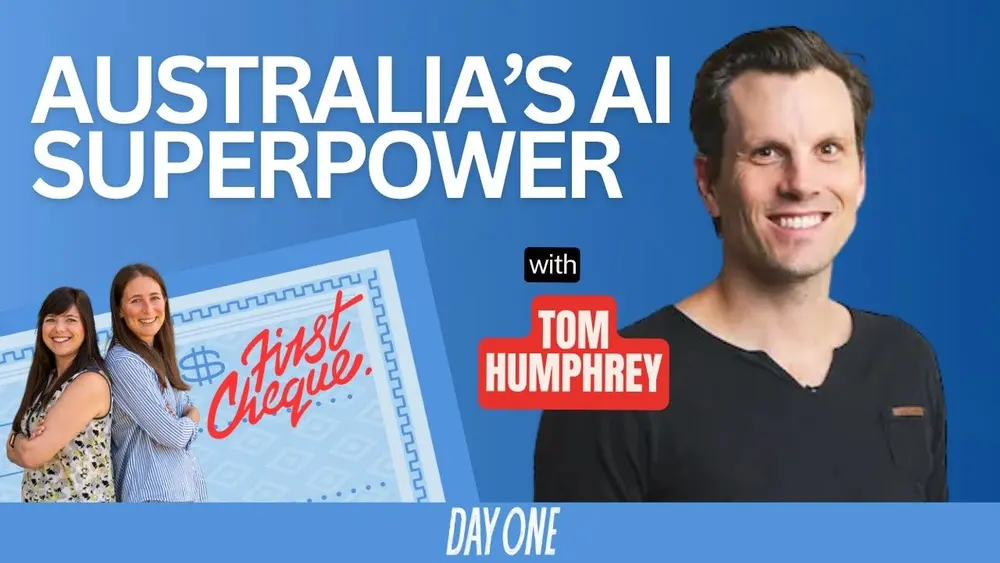
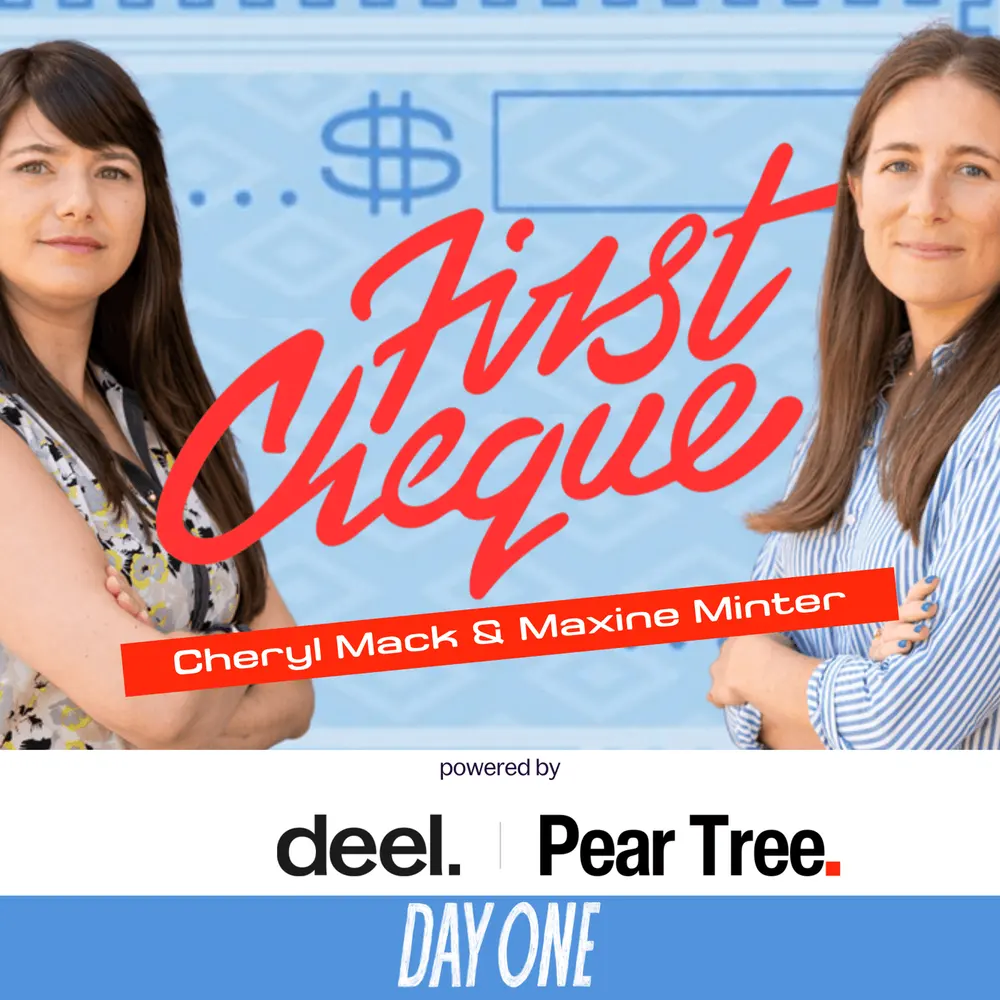 First Cheque with Cheryl Mack & Maxine Minter
Presented by Deel & Pear Tree
First Cheque with Cheryl Mack & Maxine Minter
Presented by Deel & Pear Tree 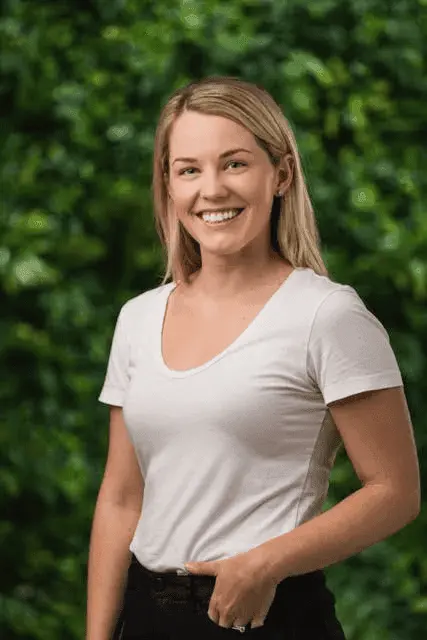
 ▶
▶ ▶
▶ ▶
▶