Transcript Synced · select any line to jump ▾ 0:02 Speaker: Founders scale faster on Deel. Set up payroll for any country in minutes, hire anyone anywhere, get visas handled fast, and get back to building. Visit deel.com/dayone. That's D-E-E-L.com/dayone. 0:21 Speaker: Are you building a SaaS business and looking to achieve compliance with SOC 2 and ISO 27001 or other security and privacy frameworks? 0:32 Speaker: Compliance can unlock major growth and build essential customer trust, but let's face it, it's usually time-consuming and expensive. 0:37 Speaker: And like really kind of a pain. 0:39 Speaker: That's where Vanta comes in. Vanta automates up to 90% of customer compliance tasks, making you audit-ready fast and saving you up to 85% of the associated costs. Plus, Vanta scales with your business, offering a market-leading trust management platform to continuously monitor compliance, unify risk management, and streamline security reviews. Join 7,000 global companies, including Atlassian and Dovetail, that trust Vanta to build and prove their security in real time. 1:03 Speaker: And for our listeners, Vanta is offering 10% off. 1:06 Speaker: Just go to vanta.com/first. That's vanta.com/first. 1:14 Speaker: Okay, 3, 2, 1. 1:19 Speaker: Hey, I'm Sheryl. 1:20 Speaker: I'm Maxine. 1:20 Speaker: This is First Check, part of Day One, the network dedicated to founders, operators, and investors. 1:25 Speaker: If you want to be a better early-stage investor, this is the show for you. 1:28 Speaker: So TL;DR, if you don't want to suck at investing, listen up. This is a very exciting episode. For the first time ever in First Check podcast history, which is a brief history, but a very fun one. The first time in our very long history, we are doing an episode that is purely audience questions. So we partnered with a couple of newsletters recently, including the Overnight Success and Capital Brief newsletters, fantastic ones, by the way. Please do read. And we solicited questions from their audience members, uh, that we are now going to ask— answer, sorry, we're not gonna ask them. We are going to answer those questions and, uh, and we're gonna read them out and give you a chance to, uh, get all of your questions answered here. So, uh, Maxine, are you ready for the first question? 2:22 Speaker: I am so ready for the first question. 2:24 Speaker: Amazing. 2:24 Speaker: All right, so Chris from Sub Eleven would like to know, what are your views on secondaries and the role they will play with reinvestment of funds back into the ecosystem? 2:33 Speaker: I think this is so important for our ecosystem. Like so, so, so, so, so, so, so, so important for our ecosystem. I am super excited for the episode with Christina Farr. I think it is going to come out before this one, I believe. And so, you know, I think she is incredible on that topic and really helpful to understand like how do funds invest in secondaries, how can they use them. But for folks in the audience, what is a secondary? A secondary is where you, it's not a primary issuing of stock. So in a venture round, when a company is raising capital, it will usually issue new shares, which investors are then buying and giving the company capital in return for those additional shares. And that transaction is a primary. The other alternative is you can have existing shares that are already owned by either the founders, the employees via ESOP, or, other investors, and they can sell them in what's known as a secondary transaction. So the company doesn't actually get the benefit of that cash changing hands. It's a way for early team members, um, and early investors to take cash off the table and/or for founders to get some liquidity. So I think there's probably the two buckets that I think it's super impactful in the Australian ecosystem and ecosystems generally. I think first is founders being able to take some money off the table. Along their journey. And this one's a particularly controversial one because over 2020 and 2021, there was a few situations where founders took a lot of money off the table and created kind of quite a big incentive challenge. But the majority of times that founders took a lot of money or took money off the table, it was just to kind of give them a bit of financial security and be able to make sure that they don't have to focus on, you know, making ends meet so that they can just focus on upside. And so the argument for this, and which I think is really compelling, is that in venture, you are, for most venture capital funds, you are playing for the outliers. So you are taking really ambitious risk, well-adjusted risk, but really ambitious risk to make a huge dent in the world. And so you don't want the circumstance along the journey, let's say founders have been building for 5, 7 years, they've only been taking a minimal amount of cash off the table. And, you know, at some point their partners in their lives or their circumstances are such that, you know, if they get a pretty good acquisition offer, it starts to become really attractive. That incentive goes away if they have already got their kind of base needs filled. Let's say they've taken enough cash off the table, they don't really have to worry about cash anymore, and they can just focus on the impact that they make in the world. And I think this is a really, really important thing. Also, what you see anecdotally is that for a lot of those founders, when they take money off the table, they actually go and do things that are ecosystem building. So a lot of our LPs actually are founders that fall into this group. They took some money off the table in the early growth rounds and they are investing it back into the ecosystem, into funds like ours and also into angels. So I think it's really, really powerful. One, the kind of next category is early team members. So ESOP. That one's a little bit tougher. Because, you know, in the same way that founders are locked up for that long period of time, early team members are also locked up for that period of time. And it's a little bit more complex because generally founders are taking what's known as common stock, so they don't have an exercise cost. They're just selling them kind of at their base. They already own them. Whereas with ESOP, you often, you have to exercise the option because they are options. You have to exercise the options, so you have to pay some money. Before you can then own the stock to be able to sell it. And so that can create some complexities. So there's actually, I think, an enormous amount that still needs to be built in terms of secondaries for early team members. And I think it completely changes the incentive and the opportunity to invest— sorry, to work in early-stage venture. If you can, you know, be an early team member, join teams really early in their journey, and then not have your capital locked up for, you know, 5, 10 years, um, like we've just seen with a bunch of the early Canva employees. And then there is the early investors that can get, uh, capital off the table and the early funds that can get capital off the table. That I think also is really exciting because a lot of the challenges that, um, you know, especially right now in this macro market for a lot of bigger investors. So, um, super angels and, uh, family offices and actually even like big institutions, what they're really struggling with is that venture is an illiquid asset. And a lot of their other options to invest in are liquid assets or near liquid assets. So they're things like private debt or they're things like, you know, listed positions, like in the public markets on the stock exchange. And so venture has to perform quite significantly higher than say the 13 to 17% that private debt is paying at the moment, or the kind of average between 8 and 15% that the listed market generally performs at. Those are all kind of general numbers. Mm-hmm. To justify being locked up for, you know, 10, 12 years. And so it completely changes because generally venture returns something around the kind of like average 30%. And if you are locked up for 10 years, okay, you're compensated for that risk. But actually, what if there were secondaries for you to be able to, you know, pay that back into the ecosystem, get some liquidity as an early fund, or get some liquidity as an early investor. and then invest that back into the ecosystem. So that was a huge rant, but I think they are so important and there is so, so much that needs to be done still. So for a lot of entrepreneurs out there, there's like so much that could be built in the stack of facilitating secondary transactions, both from like fund strategies through to like actual products. And I think it is hugely important. What do you think? Do you think it'll be impactful? 8:24 Speaker: Oh, absolutely. I think Australia is still like, fairly nascent in its journey on that secondaries path. Because if you think about the number of like opportunities there are to take money off the table for any number of the people that you just named, I actually think that they're still quite limited when you compare it to say overseas counterparts in the US or the UK. We don't have nearly as many like just secondaries funds, for example, or even like markets where you can sell and trade secondary shares like there are in the US. And so that type of thing, I think we still have so far to go and how how much of a, like, I think it will change our ecosystem so much as we start to grow into those and, you know, put our big girl panties on and, and actually execute some of those, um, some of those strategies that are really, really helpful. Um, and a couple things to call out are that, like, when it comes to angel investing and early, early stage investing, like the earliest stages of this asset class, um, you're waiting so long and the expectation of getting, of being able to get cash off the table is not necessarily built in. So, like, I have seen people having to ask at that, like, Series B or C round to say, like, hey, just so you know, like, I'm happy to take some money off the table. Um, I do know it happens. Like, there are investors at that Series, um, kind of B onwards round that will reach out to early angels, but also I'm not seeing it happen nearly as, like, by default. Mm-hmm. That I think I've seen that, or maybe you've probably seen that in the US. So that I think just needs to be normalized here. And once we start to see that, like, we actually haven't been through that many cycles, right? Like, Blackbird's first fund was 2013. We just had the first, like, major, like, there was earlier secondaries for Canva, but like the recent was like the major one that just happened. Mm-hmm. This type of, like, cycle through money actually is so necessary for a really healthy ecosystem. So that I would say that this is kind of like the, the beginning of, of what could potentially kickstart our ecosystem. And now I understand that like the vast majority of that Canva money that came back into the ecosystem is probably actually not coming back into the ecosystem. Um, it's probably going to like real estate and, and some other things, which is totally fair and fine, but it still will create opportunities for those people to potentially invest in themselves as being founders, um, or like feel more secure to, to go and take risks in other stages and other ways. So even if it doesn't come back, uh, wholeheartedly into like direct early stage investment, I think the impact of this, um, will be felt. And as we continue to see this, it's, it's, it's going to change our ecosystem drastically, I think, over the next 5 to 10 years. Because Yeah. Blackbird's fund is just the very first one even, right? Like first fund one is just starting to return. You think about that, like that's, it feels like they've been around forever, but actually like this is the very first like full 10-year cycle of those initial funds. Blackbird, Airtree, Square Peg. Um, I think One Ventures was earlier, but still like we're, we're basically just entering in that into the second 10-year cycle. 11:35 Speaker: Yeah. Yeah. It's a wild thought, isn't it? Like 10 years. I don't know, maybe I'm loopy, but 10 years doesn't feel like that long in the future. But if 10 years in the past feels like so long ago, right? I do. And I just like, I get really excited when I think about that infrastructure being built. I will say that at least looking to the US, they've really struggled to build out robust, like truly robust cycles. EquityZen, Forge, you know, all of those products that are like the markets that you can, buy and sell secondaries on. Yeah, they're still like not super robust, even though Forge— Forge is listed. How old are they? I want to say Forge is like 9, 7 to 9 years old. EquityZen is like similar vintage. Okay. Um, Carta has tried it 3 times. Their third attempt was like extremely disastrous and got them almost canceled as a company. 12:29 Speaker: Yeah, I didn't know they tried before that though, like Were the first couple of times them calling up investors behind companies' backs as well, or? 12:37 Speaker: No, I don't think so. I think they were a little bit more above board the last 3 times, 2 times. But yeah, that got out with that. And I think it's like really damaged their brand. But I think it's like we're talking about it here like it's so important, but it's actually really nuanced because, you know, for a lot of these shares, they come with a lot of, especially for the investors, they come with a lot of power. And so, you know, founders don't want just, you know, a random person to be able to come in and like easily buy up a whole bunch of shares in their company and have a whole bunch of, you know, maybe they have board seats attached to them. Maybe they have like a whole bunch of really impactful rights attached to them. Also same thing on the ESOP, right? They might not like the ESOP is structured there to be a long-term incentive. So you probably don't want your key people all being able to kind of cash out all at the same time. That creates a huge flight risk. Now, I think there's a debate to be had there, right? Like of, you know, well, if it's just golden handcuffs that have people working in your company, like you should probably have a good, long, hard look in the mirror. But I think it is still a worthwhile conversation to have. 13:44 Speaker: I think you can also examine the, like the same principles that apply to like wanting a founder to feel that, like some base level of security also applies to your employees. Like your employees are not going to be helpful people if they're stressed about their mortgage.. So like that same thinking or same principle I think can also be applied to employees to an extent, right? 14:03 Speaker: Yeah, yeah, 100%. And so I think it is a really cool thing to be built for the Australian ecosystem and for the ecosystems generally, but it's still like, I'm not aware of any ecosystem in the world that has like nailed this. I think an amazing stat coming out of our conversation with Christina was that, you know, something like 3% of positions in PE is being transacted on the secondary market. But in venture, it's something like 3% at any given time. 14:30 Speaker: At any given time. 14:31 Speaker: Or maybe it was like 2.2, but it's like an order of magnitude different. And I think that is— 14:36 Speaker: Yeah. 14:36 Speaker: Kind of highlights the opportunity that actually exists to build some infrastructure here. I think the other thing, there was some discussion of this back when money was free, that AngelList would start building this because like behind the entity structure, you can like transact. Interested, I think, in a much easier way in a syndicate structure than if you're like transacting the initial position. So yeah, I don't know. I think it's coming. I'm looking at you, but I— 15:03 Speaker: I know, I know. We have the same thing where like angels who invest via syndicate on Aussie Angels have the same opportunities that every other angel that invests directly does, which is, you know, if a later stage investor wants to buy your shares, absolutely. And when there's IPOs or acquisitions, like, totally. But because it is all under the one trust structure, exchanging units between, um, between members, uh, is, is absolutely possible and can be facilitated. So we have that like extra— if you invest in a syndicate, at least through ours, um, that you have that like extra option, um, optionality around potential early liquidity. Um, but yeah, we still have a long way to go. Alrighty, should we jump on our next question? 15:44 Speaker: Yeah, let's do it. So we've got one from Mike, Michael from Startmate. He asks, what have you learned from your anti-portfolio? 15:51 Speaker: Yeah, you're probably better at this than I am. I have to say that I do not spend a ton of time, uh, thinking or reviewing, uh, or reflecting on my anti-portfolio. I do it on a much more like ad hoc basis. So I, if I see a company that is doing really well, that kind of rings a bell, then I will generally go back through my list and I, and review. So I, I do keep track of all my deal flow and where it came from and everything. So I'll go back and, and look. All right. So yeah, I did meet with them or they came through and I just said no to the pitch deck. And then I'll read my notes on why. Typically if I say no to a pitch deck, I probably don't have notes on why it was a no. I, I'll probably remember. Uh, but if I actually met with them, I'll have, I'll have notes around that. And so I'll usually go back and read and, and I think for me the biggest thing is like, examining your biases as to why you said no and determining whether, given the information I had at the time, I would still make that same decision. And if the answer is yes, then I'm like, I feel pretty comfortable with that. If the answer is no, then that's not so great. And then I probably need to examine like what was the bias that led me to make that decision at the time and how do I make sure that that doesn't happen again? 17:02 Speaker: Yeah, yeah. I think it's, you know, it's really tough with, especially with the volume of deals that you get to see at this point. Right? Like being just a solo investor is really tough to kind of build infrastructure around that. What have I noticed? My— well, I think there's probably one thing to name here where there was a big difference between my— the size and complexity of my anti-portfolio when I was an angel investor versus now that we're a fund. And so I am hoping and expect my— the insights to come out of my anti-portfolio view as a fund to be much more statistically significant and also impactful because, you know, we get to see anywhere between kind of like somewhere between 1,000 to 2,000 deals a year, of which we only— 17:46 Speaker: Meanwhile, I'm over here at like probably 500. 17:48 Speaker: Right. Yeah. And so like we have a bigger pool that we're going to say no to because we're still going to only invest in like roughly 10 a year. Um, and the other thing is like the sophistication with which we ingest that data now is much better. So I'm super excited for what the— my anti-portfolio reviews are going to look like in the future in some ways. In some ways I'm also like incredibly daunted about the activity of putting that together. We've got our first one coming up in July. 18:16 Speaker: And what if it reveals something like, oh man, that our whole approach was wrong? Like that's what I'm scared of. If we, if I was to like examine that, like it could turn out like, oh, actually I could have been a better investor if I'd looked at this sooner. 18:29 Speaker: Yeah. I think that's, for me, I would prefer to learn now than on like fund 4 and be well, shit sticks, you know, like that's really bad. 18:37 Speaker: Oh, 100%. 18:38 Speaker: But I think what have I learned from my anti-portfolio reviews mostly as an angel, right? The majority of the data is as an angel. There's a couple of like really obvious ones, which is like, don't ever run out of money. And so be really thoughtful about the way that you are pacing deployment so that you don't get like too hot in some circumstances. Cause some of my like biggest misses were folks that I— 19:04 Speaker: You just didn't have enough cash to deploy at the moment. 19:06 Speaker: Yes. And it's so painful. Yeah. 19:09 Speaker: Ugh. You know what the other ones are super painful? 19:13 Speaker: The other one that I think is super painful is the ones that I couldn't get into because my check size just wasn't big enough. 19:18 Speaker: Yes. 19:19 Speaker: I'm like, ah, no. 19:22 Speaker: Size. 19:22 Speaker: I've got a few of those. And I'm like, that's tragic. 19:26 Speaker: Truly tragic. 19:27 Speaker: Tragic. Yeah. 19:28 Speaker: That's definitely one. The next one that I've learned is, I think this is like a composite one, but there's been a couple of times when I'd be like, that's really like a very crowded space. No one's going to win. Or like, you're not going to win. And I actually think that that was really lazy thinking, right? My like first year or two of angel investing, there was lots of like, oh, I don't invest, I didn't invest in any spaces where I thought my notes were, it's crowded, like not clear why they're going to win, blah, blah, blah. And I actually think I could have done more work to work out like, well, like do you have a unique insight in this particular market or do you have an advantage or do you have like a different way that you're approaching the market that I think would be really impactful there? 20:10 Speaker: Yeah, we talked about this recently, right? Like we were talking about how if you are only looking from a perspective of, oh, I've seen this so many times and I just don't think it's gonna work because everyone else has failed and that's the only, metric you use to whether to dismiss that deal or not. I think that that's really— we were talking about how this is, that can be really problematic, right? In terms of missing companies because you're biased about the other ones that haven't succeeded. 20:35 Speaker: Right. And I think this is, for me, it's like a particularly biased-filled place because you can be like, oh, I saw a bunch of them already and they haven't worked. And/or even harder, I invested in something that didn't work, but something has changed in the market or the timing or the way that you're approaching it that means that this one will work.. And so I think that's a really one, like a tough one to manage biases around. I haven't had the version yet where I've invested in a space, said no, and then something like invested in a space, lost money or it wasn't successful, said no. And then that one was successful. I haven't been at it long enough yet. I think for that. 21:10 Speaker: No, I can't think of anything either. 21:11 Speaker: Yeah, I don't, there's nothing in that category for me. I've learned that I have a bias for like highly, like fast talking, high energy, high charisma. Founders. 21:23 Speaker: No way. 21:26 Speaker: Surprise. I think this is probably a common one, but like conflate that with credibility. 21:30 Speaker: To absolutely no one's surprise. 21:33 Speaker: Right. So now I have a bunch of questions to try and like flesh out the other side of that so that I can balance out that bias with some like, how are they thinking about risk? How are they thinking about their, like the actual like content of what that is they're building? Like help me understand, like on the kind of education side, that's been really helpful. I think I'm learning something from the— be interested to see in our next anti-portfolio review, but like up until now, I'm learning something about my— I really want, really, really, really, really want it to be true that I find just as compelling founders that reach out to me cold as come through referrals. 22:12 Speaker: Mm-hmm. 22:13 Speaker: Because like it's a fundamental premise that we have that like good ideas and good opportunities can come from everywhere. That doesn't necessarily mean that they're going to be like already in the startup network. And like, I have a lot of friends in the US who literally have never responded to a cold outreach. We respond to every single cold outreach, and there is some like extremely off-base pitches we get. But like, I look at every single one, right? 22:38 Speaker: Oh man, what is— I bet I have one to top yours, but what is your most off-base pitch? 22:43 Speaker: Uh, ooh, I mean, I just get a lot of that's like for restaurants and like you know, like brick-and-mortar businesses that are just like so far not a tech company. But that's like not particularly spicy, right? I've had some like, some great ones that probably shouldn't be talked about on public air. Are you sure? I feel like you've got one that you're like already chuckling about. 23:08 Speaker: I do. I actually have two. 23:09 Speaker: So one was the restoration of a, some sort of like vessel boat thing up somewhere near Airlie Beach, maybe, I want to say. I don't know. It was this historic thing that was failing. 23:26 Speaker: And they were like, yeah, we want to restore this boat. And we want you to invest. I was like, love the idea. Absolutely not. And another one was a personal pasta— 23:38 Speaker: fresh pasta maker that you could have on your counter, just like an espresso machine. You would have a personal— 23:43 Speaker: Prost. Fresh pasta maker that you would just like click a button and it would spit out, you know, linguine noodles. Amazing. 23:52 Speaker: I might buy that. We use our KitchenAid all the time to make fresh pasta, but like, interesting. But I would definitely invest in that. Yeah. So I get a lot of that kind of like wide range of stuff. Yeah. But to be honest with you, it is rare, extremely rare that I meet a company through that methodology that is really compelling. And so that means I have some questions to ask myself, which is like, does it change the way that I'm evaluating this company? And there is lots of research to show that investors, that happens, right? If it comes through a warm lead, even if it's not a company in their thesis, they will look at it and spend more time with it. And then maybe even invest in that company to a greater degree than if it comes through cold outreach. And actually sometimes they have ideal investments for them which they still don't invest in if they came in through cold outreach. So it's a very bias-filled method of looking at companies. But yeah, I think those are my, those are my big takeaways. 24:51 Speaker: I've got one that's like somewhat positive. I, I learned pretty— I wouldn't say early on, maybe like halfway through my angel career, um, to date, that I, I am not a very good consumer investor, like B2C investor. And every single company that I got really excited about in the consumer space and was like, "Yeah, I would totally invest in this," but was like, "No, you know what? I'm not going to because it's B2C and I just, I don't think I'm a good judge of that." And every single one that were the ones that I got really excited about are not doing very well currently. And the ones that I was like, "Nah," Some of them are actually doing pretty well. 25:33 Speaker: So I have learned that actually this is a pretty good strategy for me based on my anti-portfolio. 25:38 Speaker: Oh, that's so interesting. That's so interesting. I wonder why you have such differentiated tastes in consumer products. 25:45 Speaker: Right? 25:46 Speaker: I think that just says that I'm not a normal consumer, basically. 25:49 Speaker: Yeah, I mean, that's obvious. 25:51 Speaker: Oh, right. 25:52 Speaker: I feel like very obviously not. Cool, cool, cool. Confirmed. 25:56 Speaker: Oh, right. Yes, yes, yes. Valid. 25:59 Speaker: That's so interesting. 26:02 Speaker: Are you building a SaaS business and looking to achieve compliance with SOC 2 and ISO 27001 or other security and privacy frameworks? 26:09 Speaker: Compliance can unlock major growth and build essential customer trust, but let's face it, it's usually time-consuming and expensive. 26:15 Speaker: And like really kind of a pain. That's where Vanta comes in. Vanta automates up to 90% of customer compliance tasks, making you audit-ready fast and saving you up to 85% of the associated costs. Plus, Vanta scales with your business, offering a market-leading trust management platform to continuously monitor compliance, unify risk management, and streamline security reviews. Join 7,000 global companies, including Atlassian and Dovetail, that trust Vanta to build and improve their security in real time. 26:41 Speaker: And for our listeners, Vanta is offering 10% off. 26:44 Speaker: Just go to vanta.com/first. That's V-A-N-T-A.com/first. 26:52 Speaker: So, we've got our next one. And maybe this dovetails between Michael's question. But so, we've got Annabelle, she's from KPMG High Growth Ventures. And she said, I'd love to hear more about how they are working, they being us, I assume, working with women-led companies, slash how the Australian ecosystem is addressing the gender gap. 27:12 Speaker: I mean, generally, I think the Australian ecosystem is doing a pretty, excuse my language, piss-poor job of addressing the gender gap. I think We are advancing in baby steps and sometimes taking two steps forward and one step back. I don't know personally, and maybe you can address this, I'm not sure how we're doing and if we're doing any better or if we're faring any better compared to other ecosystems around the world. But I, yeah, all I can speak to is the fact that I think that we're not doing a very good job at actually moving the needle. 27:42 Speaker: For sure. I think, So I think generally the startup ecosystem took quite a few steps back over the last few years, like especially while the market contracted. We made a lot of headway, say like 2019 to 2021, and we took a pretty solid step back. So I think first of all, working with women-led companies, there is Samar and the team at Scale are doing a wonderful job, and also Lisa from Alberts, and I think a few others. Are spearheading an initiative called Equity Clear. It's really awesome, like data-focused initiative where they're encouraging funds to report their gender metrics and the metrics that they are— everything from their, like, top of funnel. So, like, companies that they see all the way through to companies that they invest in. Um, and then there's some talk of them doing also at the kind of LP level. So there's lots of discussion actually on the gender dynamics in female-led companies, there is less discussion and a much worse dynamic than at female-led funds and funds management. So, I mean, I could rant and rave about that all day, but to give you a sense, it's kind of an order of magnitude worse. So in startups in Australia, I think it was about 22, 23% of companies that raised venture capital had at least one. female in the founding team. And I think at the funds management level, it's something like 2% of capital is managed by women, which is a very sad, sad stat. But in terms of how are we working with women-led companies, I think like for us, we don't have a gender lens, even though you would be amazed, or maybe not amazed, by the number of people that assume that because I'm a woman we have a gender lens. Like, the number of people who send me companies and they're like, I think it'll be a great fit for you because it's a woman founder. And I like really want to be like, sorry, can you explain that? Like, just explain to me why. 29:45 Speaker: Like, that's actually not one of my criteria, but thanks. 29:51 Speaker: But thanks. Um, so, but it does, it definitely helps us from a like deal flow perspective because obviously we really want to make sure that our portfolio is balanced. So yeah, I think like making sure that our sourcing funnel is, you know, as wide as possible. Things like making sure we respond to cold outreach. So we make sure that we're not just like biasing existing privileged networks, but also like meeting people from a wide range of places. I think also like thinking deeply about, you know, how you ask questions, little things, which I think is like quite normalized now. But little things like there's a lot to show that for women founders, they get asked a lot of questions that is about risk protection. 30:35 Speaker: And negative. 30:36 Speaker: Yeah, exactly. 30:36 Speaker: Negative gearing, like, "Oh, but what about if this bad thing happens?" Yeah, whereas guys tend to be asked like, "Oh, well, have you thought about this potential market expansion?" Or other very positive leading questions, yeah. 30:48 Speaker: Yeah, exactly. 30:49 Speaker: That one I think is easy. I feel like we as an ecosystem have gotten way better at that. Like, I don't get reports from female founders very often anymore. I, over the last, you know, 6, 7 years that I've been asking founders questions about their conversations with other investors, and I'd say that instances of women coming back to me and saying that they got really negative-geared questions from investors has decreased exponentially. So I mean, like, that's what I mean. We, we do— 31:15 Speaker: we are taking steps forward, um, just, you know, not quick enough and sometimes going backwards. 31:20 Speaker: Totally. Yeah. I also think there's a bunch of stuff that folks are doing that is really valuable. So I think it's been like effectively identified that there are some structural barriers that make it harder for, or traditionally have made it harder for women to be in a position to get funded by venture. And that's everything from having like a STEM education all the way through to like knowing that operating startups is even possible through to like actually getting in front of funds and like having the right networks to get a warm referral into funds. And there's a whole bunch of initiatives that are being put in place there, kind of everywhere along that, everything from initiatives to help, you know, kids in high school get involved in STEM through to— 32:04 Speaker: Like the Giant Worm intro, for example. 32:06 Speaker: Yeah, exactly. Or like the Pioneers from, from Airtree, and even the Explorer program, they like, they had a— 32:12 Speaker: They have a gender lens. 32:14 Speaker: They have a gender lens. I don't know. Do you know if First— I was going to say FirstCheck— the FirstBelievers? 32:20 Speaker: FirstBelievers. I think they do have a gender lens, absolutely. 95% positive. 32:25 Speaker: Yeah. 32:26 Speaker: There's an interesting concept around, like, if you are building something, you tend to reach out to your friends. And we call it the friends and family round, right? So you tend to reach out to your friends. And in general, men tend to have more male friends, and women tend to have more women friends. It's just, it's fair, we, right? It just kind of is that way. But when you reach out to your friends and family, you're reaching out to like the person who is most likely to be your same gender. And it creates this like cycle of, well then when that company does well, then all of their friends and family get rich and then they're in a better position to actually start either best like starting companies or deploying. So that cycle of funding, I think, We need to break that. And that's the type of thing that I think if we start to examine why there are systemic, systemic like barriers in place for this type of thing, then I think we can actually start to move the needle there. And that's something that I think is easier to do. Like even as a founder, I think about, I talk to founders about like, be purposeful about building your cap table, right? Think about who do I want on my cap table and make space for gender diversity and diversity in general. Mm-hmm. But you're absolutely right. I think they're like— who is it? I think Jesse, I read one of her posts. She was like, the gender diversity problem is an extremely complex problem, and there is no single solution to this. It will come from a huge number of different initiatives across the spectrum, all the way from kids, all the way up to the IC table. And I think we all need to play our part, right? Like, we all need to be looking at our own stats and thinking about what is, like, what is your ratio of female founders to not? Like, personally, I'm not super happy with my ratio and I'd love for it to be better. And I need to be doing more activities that attract female founders to me. So, maybe I just need to tell more people that send me female founders because I am a woman. You know what I do think is interesting though? Like, I have never gotten an email that says, Hey, this is an amazing male founder. But if it's a female founder, every single email I get about a female founder always includes the fact that they are female. 34:41 Speaker: And I don't know whether that is good or bad or— 34:43 Speaker: Yeah, that's not great. That's not great. I did actually get one today being like, hey, do you talk to male founders? And I was like, yes, I do. Yes, I do. What? 34:55 Speaker: That is such a random question. Was there any more context? Or just you talk to male founders? 35:01 Speaker: I think the person just assumed because I'm a woman, I invest in women. Mm, right. 35:06 Speaker: Do you also talk to male founders? 35:08 Speaker: Yeah. Anyway, but I also think something that the ecosystem spends a lot of time on is everything up to the IC table. But I think that this issue is much further than that. And just rant warning, I'm just about to go on a very long rant about this topic. 35:26 Speaker: Oh dear. I was just going to say we We were like 3 questions in and we're supposed to get through 6. 35:32 Speaker: I know it's gonna be tough. Anyway, rant, which is that the funding ecosystem does not stop at the IC level. It just doesn't. Right. And the, there is so much data to show that we are more inspired by, we are more engaged with, we are more likely to reach out with, to, and be vulnerable with people that we identify with. So if you have no people deploying capital, who are from underrepresented backgrounds, or, and/or the people that are deploying capital come from a homogeneously similar group, the probability that they back, support, accelerate a generation of founders that are from underrepresented backgrounds goes down precipitously. It goes down like— 36:17 Speaker: Geez. 36:17 Speaker: It is like putting downward pressure on what we are trying to achieve. So I think it is extremely short-sighted to just think about funding that part of the process, I think it is, would be very valuable to measure and think about who is actually deploying capital all the way up the stack. And so there are so many exciting things that are happening on that side. I think there is this huge wealth transfer that's happening to majority women, either because women outlast men and so are starting to take over, you know, family offices and significant wealth and are looking to invest that back into the ecosystem. But also you now have a generation of angel investors who come from underrepresented backgrounds and are starting to build sufficient track records and sufficient stats to show that they're really excellent investors. They see differentiated deal flow and they invest in differentiated companies and they're starting to build funds. For example, our portfolio, 50% of our portfolio has at least one founder who is a woman, 50%. In fact, we've got to verbal terms with a company. So, we're just about to tip over so that the majority of our portfolio have at least one female founder. It is like so obvious to me that that is partly contributed by the fact that I am a woman and I see opportunity in companies and in women in a different way because of my background. I have biases as well. I have very strong biases in some circumstances. And so I am more likely to see opportunity in people that, you know, are chasing a particular space or, you know, doing a particular area or are, you know, representing in a certain way. So I think it is crucially, crucially important that we think about diversity of perspectives, not just at the operator level, but also at the fund manager level, also at the LP level. So thinking about like institutional level LPs, if it is just a culturally homogenous group that are deploying on behalf of big institutions, the probability that they fund, you know, fund managers at a certain level goes down and then all the way up. So I think I am very excited for the moment when we start to think about this in a little bit more of a holistic way, as opposed to just at the kind of symptomatic end of the funnel. Okay, rant over. Appreciate you listening to the rant. 38:47 Speaker: I loved your rant, Maxine, and wholeheartedly agree 100%. I am on board. 38:54 Speaker: I am up on the soapbox with you. Don't worry, I am, I am with you. Great rant. 39:00 Speaker: Okay, should we move on to the next question? 39:03 Speaker: Yes. So our next question is from Adam from Day One. How important beyond the numbers is the relationship between founder and angel? That's an interesting question because I wonder if he means in terms of like getting into the deal or actually like getting a return from the investment. 39:24 Speaker: Yeah, I think you could cut it in so many different ways. I mean, I think absolutely it's crucially important in terms of getting into the deal, especially, right? We were talking before about the fact that there have been deals where we haven't been able to get in because our check is too small and there have been deals when I've been able to get in. 39:38 Speaker: And even I had a good relationship with the founder. 39:44 Speaker: Out. But sometimes relationship is enough to get you over the line, you know? And so I think that's an interesting interpretation. I also think that in terms of just like the partnership that you guys build, working alongside the founders, working for the founders as they're building their companies, like a great relationship is really important. I also think you could cut it in the direction of like, it's really important to have a great relationship because especially as an angel investor, you heavily rely on referrals. Like founders to refer you other awesome founders. 40:16 Speaker: Yeah, and also I've had founders do reference checks on me as well. They'll ask other founders that I've invested in like, hey, how is it to work with Sheryl? And man, I get nervous on those ones. 40:27 Speaker: Because you want the founder to be like, yeah, you want that investor on your cap table for sure. 40:33 Speaker: Like, I think the relationship piece is probably one of the most like overlooked things because it, like, when you, when you're as a founder, you're like, yeah, I really want money, right? And when you're raising a round, your main goal is like close the round, finish raising the round and get the money in. Um, so there's a lot less thought that goes into, or at least my experience for with founders, that there's a lot less thought that goes into like, who is this person that I'm actually now going to have a relationship with for the next 5 to 10 years? Mm-hmm. And I've seen that play out countless times in really poor ways where that investor then has like blocked future raises or like forced clauses or forced like founders into like potentially building boards before they're ready or like making them convert things. I'm like, I'm just pulling examples that I've kind of heard out of the void here, but I'm sure there's, this is a non-exhaustive list. But that piece, I think, you know, when we talk about being founder-friendly and how we want to like build good relationships with founders, I think is often not considered on the other flip side from the founder perspective. And as investors, we have to be extra thoughtful because of that. 41:45 Speaker: Yeah, absolutely. I think what I've actually observed is repeat founders care about this much more than first-time founders. Like I've seen repeat founders in circumstances able to close the round at the amount that they were aiming for. They just take less money as opposed to taking capital that they don't want. Because I think it is something that if you have ever experienced an investor on your cap table who is a pain, like you just never want to go back ever. Like you will literally pay money to not have to deal with that again. And so I think it is actually like a sign of experience that the founders really look for like high caliber folks on the cap table. 42:23 Speaker: Yeah, it's funny, the vast majority of founders that come to us at Aussie Angels to help group their investors together in like their current ongoing upcoming round are almost always second-time founders who have raised, or at least founders who have raised previously and generally have some experience of like, yeah, we had this investor on our cap table that we didn't want. Or they're like, I currently have this one, can you get this one off? And I'm like, I can't fix that for you, but next round. 42:55 Speaker: I'm gonna at the very least give you an entity that shields you from potentially future ones. That's the best I've got for you. 43:03 Speaker: Yeah. Yeah. 43:04 Speaker: Yikes. 43:06 Speaker: Cool. Should we jump to our next question? 43:07 Speaker: Yeah, let's do it. Okay. Question from Michelle from the Etree Explorers. How do I know if a valuation is too high? If I'm only going to own 0.0001% of a company, savage, is it even worth it? 43:24 Speaker: That's such an interesting question. I think, that this comes up because a lot of the time when you listen to other investors talk about deals, and we do this a lot, right? Like when you and I are at a dinner or at an event and we're talking with other investors and we talk about like, why we didn't invest in something, often the reason that I hear that comes up is, oh, you know, I, we really liked it, but the val was too high. And I think if that's all you'd heard, then you might think that there is some like ceiling, maybe some sort of glass ceiling that we just won't invest if, if it, if the valuation is above this. When actually the context I think that's missing there is we, when we say that, we actually mean the valuation is too high for the current traction or the type of company that this is, or some other metric that we measure, like whether, like what, what we think is a reasonable valuation or not. And there is in fact, as an investor, there's, there actually is no like hard cap. There's no like, oh, Oh, if it's above this, it's just absolutely not worth it. A really good point to make is that like the Canva secondaries that just happened, that happened because somebody somewhere, or maybe a bunch of somebodies thought that that valuation was reasonable and that they could still make a good return investing at this current valuation. So there is actually never a valuation that is too high. It's just a matter of like personal preference. And, um, there's something that Rain said, uh, a while back that kind of stuck with me. I don't always, uh, use this as a rule of thumb, but I think it's a helpful rule of thumb to share. And, and he was asked this question once, um, and, and he said, I, he's like, I don't pay attention to what the val is. My, my like, um, evaluation is, do I think they can still double the valuation in the next round? So whatever it is, do I think they can double it in the next round? And if, if I think that they can, then I'll invest. 45:18 Speaker: Mm-hmm. Huh. That's a really interesting rule of thumb. Cause I think like ultimately valuation is like your entry price and then you are doing a calculus about exit price, right? So yeah, you are thinking about, okay, how long am I gonna have to hold this for? 45:36 Speaker: Yeah. What's that meme where there's like math equations and— 45:39 Speaker: I knew that was the exact thing you were just doing. Also, anyone that's listening to this won't have seen your hands. So for all the listeners, I tried to visually like gesture out the meme where all of the math moves around the person in the meme. It's got like a brownish background. Sometimes it has the Doge Doge on it. Just for anyone who's not actually visually watching this. Really incredible. 46:04 Speaker: I love that you do exactly what I was gesturing though. 46:07 Speaker: Spends too much time on memes. So yes, like you are doing a math equation where you're thinking about, okay, if I enter at this valuation, I need to see a certain amount of growth over a certain period of time for me to make a return. That means that this is a good investment of my capital relative to the other places I could potentially invest it. Now, as I mentioned before, you know, especially right now in this market, like the stock exchange, private debt, like all of these other places, real estate. Savings, they all have pretty attractive returns right now. And so if you're going to invest in venture, you need to be doing a calculus of like, okay, this is the entry valuation. I believe it can grow to this. So if you are investing in a company today and it has an inverted commas spicy val, you have to believe that it can grow quite significantly and quite quickly. And I think that's the— Rain's heuristic there is like really beautiful because you're essentially saying like, by the next time that you raise money, will you have grown significantly from where you're at? Yeah, like I think, didn't xAI just raise at a $6 billion valuation? It's like their first round or second round. 47:13 Speaker: Like probably. 47:15 Speaker: So like, you know, there's lots of crazy valuations out there. 47:19 Speaker: Yeah, 100%. I think the way that I look at it is like, do I believe that I can get a return out of this that fits with my return profile? 47:28 Speaker: So I think the other part to this question, right, is that if I only own a tiny, tiny, tiny percent of this company, does it make sense for me to be part of it? I think it can get confusing when you think, okay, I only own a tiny slice of this company. Like, why would I need only a little bit? But similar to listed market, right? You actually only, like, if I went and bought $1,000 of Woolworths shares tomorrow, I'd only own like a tiny, tiny, tiny slice of Woolworths. But what I actually care about is you know, there is no world I'm buying like a control, controlling stake of Woolworths on the listed market. 48:00 Speaker: No worries. 48:00 Speaker: I have a look. 48:01 Speaker: Some, some alternate universe maybe. 48:03 Speaker: Maybe. Yeah. But I think even then, statistical, like probability, it's very low. So like owning a tiny bit of a company doesn't mean that you can't generate a great return, right? Even if you own just a tiny, tiny slice of a company that does very, very well over time, that tiny slice will grow in proportion to the overall pie, which if you've invested at the right valuation for a company that's going to build a lot of value, then that investment is still worth, or potentially worth, a really great position. So the actual percentage of the company that you own as an individual angel investor is less relevant. It can be relevant for funds. Like you will hear from funds that they look to own a certain percentage of the company, and that's more because of their fund. math, right? They were trying to make sure that when they have a certain level of checks that they're going to write, if they write one check into a company, that that check has the possibility of paying back their fund plus some. And so it wouldn't make sense for a fund to own 0.111, sorry, 0.0001% of a fund, just because they would deliver as much support probably to that company as if they, you know, wrote their full ticket size. But they wouldn't get the same return profile. 49:15 Speaker: Yeah, I think that's an interesting— 49:17 Speaker: Woo! 49:17 Speaker: Yeah, I know. I think that's an interesting point there that like, as angels, I can't tell you how much equity I own of any given company in my portfolio, but as funds, you typically do track that. So that's probably an interesting like divergence between funds and angel investors that isn't like, I don't know, talked about that much, but is an interesting split there. Cool. I think we're at the end of our questions here. And we want to invite anyone who listened to this episode to submit a question. And we will start a new tradition of answering one audience question maybe on each episode that Maxine and I do together. So we invite you to answer— or to send us a question. And to do so, you can leave a voicemail question by going to firstcheck.fm/message. 50:10 Speaker: That's firstcheck.fm/message. 50:13 Speaker: Can't wait. Send us all of your voice messages. I'm looking also forward to some ranty ones. 50:19 Speaker: Yes, ranties. Ranties are great. We might play one. 50:23 Speaker: Yes. Oh my God, that would be great. Don't be afraid.

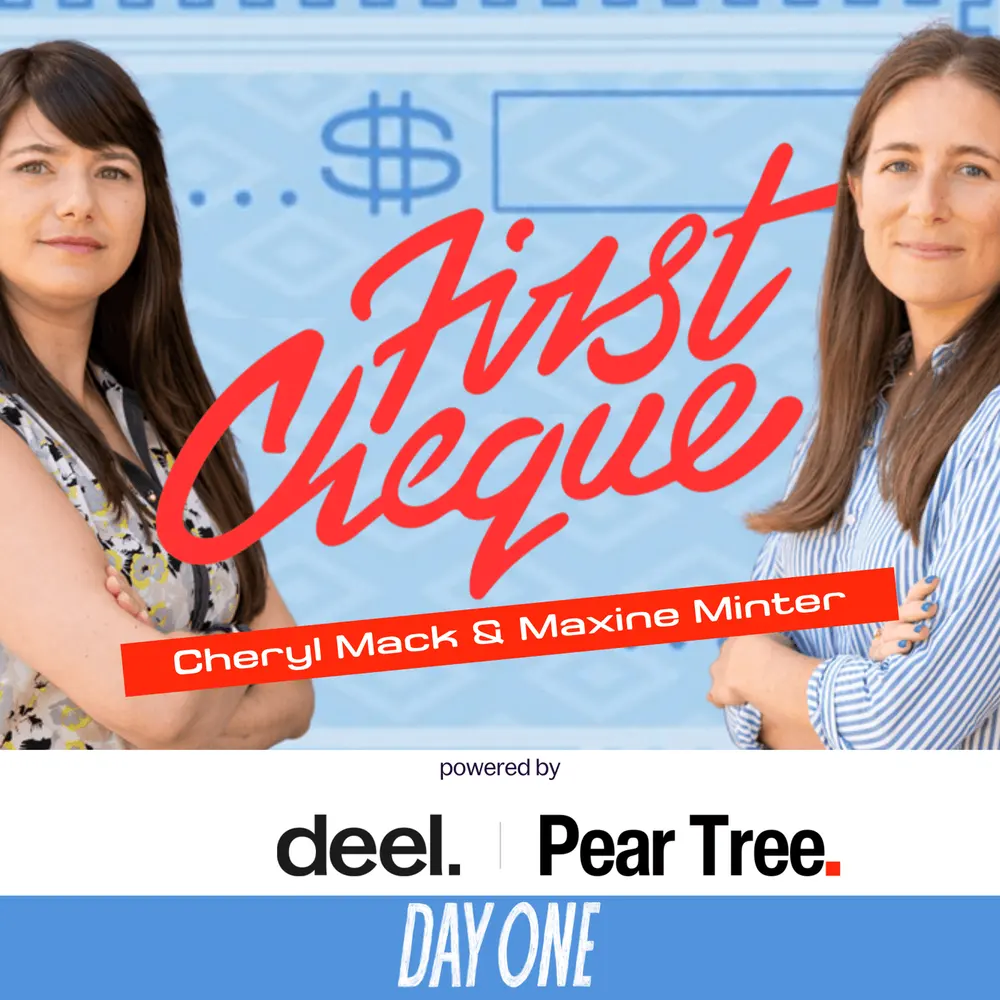 First Cheque with Cheryl Mack & Maxine Minter
Presented by Deel & Pear Tree
First Cheque with Cheryl Mack & Maxine Minter
Presented by Deel & Pear Tree 
 ▶
▶ ▶
▶ ▶
▶