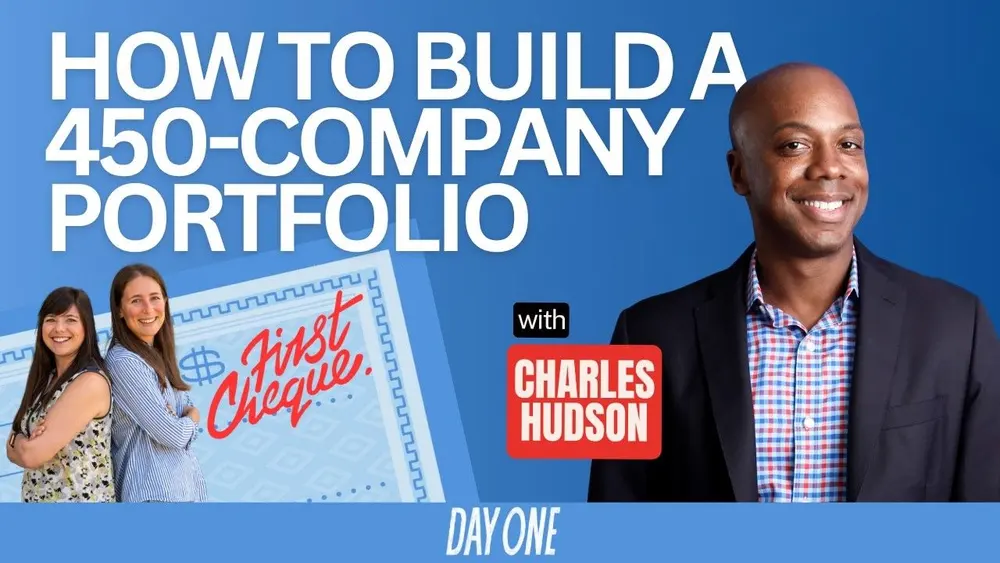
Transcript Synced · select any line to jump ▾ 0:02 Speaker: Founders scale faster on Deel. Set up payroll for any country in minutes. 0:07 Speaker: Hire anyone anywhere. Get visas handled fast and get back to building. Visit deel.com/dayone. 0:15 Speaker: That's d-e-e-l.com/dayone. 0:21 Charles Hudson: We've made about 450 investments in the last decade. About 270 of them are still active. 0:29 Speaker: Good God. Yeah, how do you invest in that many companies. 0:33 Charles Hudson: I'm willing to tolerate moments of awkwardness. Like I have founders in our portfolio who called me and said like, I want you to invest in my next round. I've said, I'm not investing and here's why. And as you can imagine, you don't have to imagine, you know this, Maxine, like they're not thrilled. 0:46 Speaker: No, they're definitely not thrilled. Okay. 3, 2, 1. 0:52 Speaker: Hey, I'm Sheryl. 0:53 Speaker: I'm Maxine. 0:53 Speaker: This is First Check, part of Day One, the network dedicated to founders, operators, and investors. 0:57 Speaker: If you want to be a better early-stage investor, this is the show for you. 1:01 Speaker: So TL;DR, if you don't want to suck at investing, listen up. 1:09 Speaker: Super excited for this one today. We have Charles Hudson from Precursor VC on the podcast. Charles is like literally an OG of the US ecosystem, but also a global allocator, which is a fairly rare combination. So Charles is the solo GP of Precursor Ventures, which I actually think that he might be the most successful, most scaled sold solo GP yet. I believe they just closed Fund 5. It is a $60 million fund. I believe he's allocating to like 100 companies out of that fund. He's done this high-volume strategy for quite a few funds now. And let me tell you, as a solo GP, that blows my socks off. Socks are gone. Like, that is incredible what he's been able to do. 1:50 Speaker: Yeah. I mean, I can't, I can only imagine how excited you are to talk to him as another solo GP. And I think we were just talking about how we don't have a high-volume VC play in Australia. So— 2:01 Speaker: We don't. 2:01 Speaker: Getting to a little bit of an understanding of how does he even do that, let alone being a solo GP doing it. I'm also keen, I'm so excited to chat to him about the pros and cons of doing this strategy, right? Like I think it's tough to convince LPs that like, yeah, I can totally do this on my own for so many funds. 2:19 Speaker: Yeah. Let me tell you, it's not easy to convince people that they, you can do it on, on your own. And I think what, What blew me away about Charles actually is the range of investing that he has done, right? Started his career at In-Q-Tel. He was one of the first employees at Uncorp, which is a very successful fund out of the US, and then obviously has built Precursor over the last, over a decade, has invested in some incredible companies along that journey. And so I think has some really interesting insights investing kind of across the map of different asset classes. But what I really loved as well is he was investing in kind of underappreciated founders. From way before it was a trendy thing to do. And he still is committed to that even in today's society where there is that kind of strong headwind around DEI type investments. That's not his focus. But I think if you look at his track record, he really is truly investing in underappreciated and underrepresented founders and doing it very, very well and accelerating those people to huge success. So I can't wait to dive in here with Charles and nerd out. on solo GPs. 3:25 Speaker: Yes, let's do it. Let's nerd out. Let's get started. 3:28 Speaker: You're listening to a Day One FM show. 3:32 Speaker: So Charles, welcome to First Check. We are so excited to have you. 3:38 Charles Hudson: Thank you for having me. It's a real honor. 3:40 Speaker: What's the first thing that you've ever invested in? 3:43 Charles Hudson: The first thing I remember investing in was actually a stock. When I was in high school, I worked at a brokerage back when like brokerages were like analog, not digital. And I worked at this brokerage and I bought stock. The first stock I remember buying was actually, I'm, I don't know, this is probably not great in this era. I bought stock in ExxonMobil. 4:03 Speaker: Wow. Okay. We won't hold it against you. 4:06 Charles Hudson: Yeah, I bought, I bought gas at Mobil near my house and I was like using the Warren Buffett, this is a stock I understand. I give these people money every week to put gas in my car in high school. And I'm like, it's a pretty stable stock. And I bought it actually not through the brokerage. I bought it through their direct stock purchase program where you paid no brokerage commission, but you had to like mail in a check to buy the share. It's very, very analog. That's like a whole— that tells you how old I am, Maxine. But that was like the first stock I really remember buying and I've never sold it. So like I still every year get this little statement in the mail. 4:37 Speaker: Oh my God. Stop. Maxine. 4:39 Speaker: Really? Wait, did you buy one? Like, did you— 4:42 Charles Hudson: No, I think I bought like 10 shares. I think I bought like 10 shares. 4:45 Speaker: Okay. That's incredible. You still have it. 4:47 Speaker: I feel like at this point though, you can probably get rid of that. Like, I don't hold it against you for buying it in the first place, but maybe that's not something you wanna hold anymore. 4:54 Charles Hudson: It turns out logistically selling the stock in this direct stock purchase program is actually quite complicated, which is the main reason I still hold it. But like, that opened my eyes to stock and then— 5:06 Speaker: Okay. Okay. Fair enough then. 5:08 Charles Hudson: I bought a lot of other things that are much better for the environment later in my career, so. 5:11 Speaker: Right. I will say though, I quite like the story of like buying it direct and like handing it down generation to generation, right? 5:19 Speaker: That's not really a thing anymore. 5:21 Speaker: I mean, we and our listeners can all know it's mainly logistical, but you can like create like what? You can't hand stuff down. Of course you can to generation. Oh, you mean like actually owning Exxon? 5:32 Speaker: Like a physical thing, right? Like I think my grandma gave me one back in the day, and I'm not even sure where it is, but like the, the idea— 5:41 Charles Hudson: Like a physical, she gave you like a physical stock certificate. 5:45 Speaker: Yeah, exactly. It's probably in a safe somewhere at the bottom of my parents' house back in Canada. But I'm just saying that's not a thing anymore, right? Like you don't hand down a physical sheet of paper that says, here's the stock I own that you're like transferring physically to your grandkid. 5:59 Speaker: Totally. That's true. I didn't even know that was a thing. I more meant just like, like from a story perspective, but actually having a piece of paper person to person is a whole separate thing. So Charles, in the direct program, did you get a piece of paper? Is it also sitting in a basement somewhere for you? 6:16 Charles Hudson: No, every year. And the funny thing is I haven't figured out how to change my address, so it goes to my mother's house every year. And every year at tax time, my mom is like, I got your little statement again. You should probably— that's a longer statement about the state of custody for these kind of things and like how how difficult that world is. But like, yeah, I, every year I'm like, I gotta fix this. And every year I don't fix it. 6:38 Speaker: I love it. Oh, that's so good. This is maybe the best one ever. I don't know that we've ever had like the physical direct owning of stock. So good. Okay, so now I'm like let off the leash. I'm ready to ask all my questions about solo GPs. So as I said, you are probably one of the most successful solo GPs and definitely the the person that has most successfully scaled this model. I'm wondering for our audience, if you can give them a little education on what is a solo GP fund, how are they structured? What are the benefits? What are the cons of it? How do they have for them to think about it? 7:14 Charles Hudson: I just have to say like, I, everyone stands on the shoulders of somebody else. And while I have had a great run as a solo GP, it wouldn't have been possible without some people who came before me. So I think about Steve Anderson at Baseline. I think about Manu Kumar. At K9 and Tim Connors at Pivot North. Um, and also the irony, Maxine, is when I joined Uncorked, which was then Softek, Jeff was a solo GP. So in a lot of ways people go, well, how'd you figure this out? I'm like, well, I had the luxury of partnering with someone. And when I joined Softek, it's still hard for me to say Uncorked, even though I know I'm supposed to. When I joined Softek, Jeff didn't even have an assistant. Like the whole fund was run out of his inbox. Wow. 7:59 Speaker: That's crazy. Wow. So you were it, you were essentially the assistant. 8:04 Charles Hudson: Yeah. Like, I mean, like a solo GP firm is a firm with a single partner. And I think once upon a time, solo GP equaled one person. And we could talk about this later. We've moved to a world around a solo GP typically means you have a single investment decision maker at the firm. And increasingly there are solo GP firms that are supported by larger teams. So Precursor Ventures is still a solo GP firm, but we have 14 people who work at the firm, including me. 8:34 Speaker: Wow. 8:35 Charles Hudson: So I'm the only partner, but I'm not the only person. And for a long time, solo GP meant single decision maker, but also single person. And I will tell you what I perceive to be the benefits. As I joke with my LPs, the probability I will ever get in a fight and break up with myself is very low. And so I, I personally believe one of the biggest long-term risks to venture capital firms, not individual investments, but firms, is actually partnership dynamics. And if you think about it, like I've been doing Precursor for 11 years, I am not the same person I was 11 years ago, but I'm not in relation to anybody else. And I think the probability that I would have partnered with somebody 11 years ago and we would still have the same quality of relationship through all the twists and turns of life strikes me as fairly low. 9:25 Speaker: So low. 9:27 Charles Hudson: So one nice thing is there's no team breakup risk because the team is one person. Second, there's no attribution issues about who's actually making the investments that matter for the firm. There's no palace intrigue, there's no rivalry. Um, and also I think performance is easy to assess. Because every, as I tell my LPs, every company in our portfolio that you love, I picked it. Everyone that you're not thrilled about, I also picked it. So however you feel about the portfolio, that's how you feel about me and my selection. And I think there's a, um, uniformity of culture that you get from having a single decision maker. And this is something I don't usually talk about, but because you and I have had many conversations before this podcast, I really do think founders value knowing that you're gonna get a consistent experience when you touch a firm. And if you have 5 different people with different personalities and different styles, your experience with that firm could actually be a function of the partner at that firm that you work with. And I'd argue in very, with very few exceptions, most firms do not have a uniform culture where your experience with that firm will be the same no matter which person you touch. 10:36 Speaker: Oh, I see that all the time. 10:38 Speaker: 100%. 10:38 Speaker: When I send founders to a particular, VC, I'm like, "Oh, you had a bad experience, but did you talk to this partner? Because like, yeah, that, I'm not super surprised." Yep. 10:51 Speaker: Right. Also the kind of orphaning of companies, right? Like I think we talk about firms as a monolithic group, but it's, you know, these are humans that join an organization and they often leave an organization. 11:01 Speaker: Yeah. 11:02 Speaker: And with them moving on, they then kind of orphan a company into that fund. And that, as you said, right, the probability that a partnership stays together for 11 years, it's actually not super high. 11:13 Charles Hudson: And I think it's become even more pronounced because the big firms have become very, um, institutional and industrial, which means you have junior people writing checks and making 7 to 10 year commitments to companies where their tenure at the firm might be 2 to 3 years. And I tell people like, if you take money from Precursor, you're taking money from me. I'm not going anywhere. Like, I, I'm not going anywhere. You, for better or for worse, you will get to deal with me for the remainder of your time as an active portfolio company. I have one company, Maxine, where I'm on my third partner from the firm that made the original investment because the first person who made it left, the person who inherited it left. Mm-hmm. And now we're on our third, and the third person is perfectly nice and capable and has zero context on like the previous iterations of the company. And based on my expectations for that company, there will probably be a fourth and a fifth person in that seat before it's all said and done. 12:15 Speaker: Wow. 12:16 Charles Hudson: Which isn't great for the founder. 12:18 Speaker: And they're like on the board and like actually practicing. I think that's tough. Like if you're going to do that, then at least like don't take a board seat. 12:26 Charles Hudson: And these people are doing the best they can with what they've been dealt. They were, they got a battlefield promotion and someone said, hey, so-and-so left, you've gotta take on this board seat. It's a company where you have no connection to the founder. You had no involvement in making the investment. You have no sense of, but they show up and they do the best they can. And I really respect— 12:44 Speaker: And go. 12:45 Charles Hudson: Go and go. Exactly. And go. 12:48 Speaker: Right. Yeah. And I mean, I think like, especially for you guys, cuz if you write your first check, but you seek to kind of stay involved, take board seats, like be quite an active supporter along that journey as well, which, you know, for a lot of leads, that's the case. And so as you're adding leads through Series A and Series B and you're working with these multi-GP funds, it is a risk that you take on, right? That you're going to end up being connected to the firm, but not connected to the partner in the long term. 13:12 Charles Hudson: I've never really phrased it this way, but what you said just struck me. Part of being a solo GP is I think you have to be much more intentional about the architecture of the relationships and expectations you create with founders because there's only one of you. 13:26 Speaker: Mm-hmm. 13:27 Charles Hudson: So what I tell people is like, I don't take a lot of board seats because there's only one of me, but when I take one, it's super serious. But I'm probably gonna have to come off that board at some point because I have such limited capacity. So I will not be your forever board member. And second, my goal is to be of greatest value to you at the time where I am most valuable. And what I tell people is like from the pre-product market fit, like kind of think post-idea to like product market fit stage, I can do a lot to help you. When you're a Series C company thinking about some crazy venture debt instrument or some like weird mezzanine, like I, I'm not the best person to help advise you on that. And so what I tell people is like, I'm gonna like try to front load the value I provide to you. In those first 2 or 3 years where I'm probably one of your largest shareholders and most active investors, I'm gonna do everything in the world I can for you. And then you're probably gonna drift away from me more than I'm gonna push you away because you're gonna have new investors and more people on your team. You're not gonna bring me the same set of problems. And while I'm always here for you, my experience has been people don't think about me as much when they're at Series C and D. Now it's not, they don't think about me at all. I just, Spent a big chunk of last week talking to some of my Series C and D companies, but like I'm not the primary person. There's somebody else who's like the lead and I'm like, my job is to help get you from zero to one. 14:49 Speaker: Super interesting. I, um, something that we spend a lot of time thinking about is just the product of what we are selling to founders, right? The like service that we are providing and the point at which we are onboarding, but also the point at which that service changes exactly. Yeah. As you've just talked about. At what point, as you kind of built this fund, because you were, as you said, you worked at Uncorked for many years, you saw those reps, but I didn't actually realize you'd worked at In-Q-Tel and you'd worked at a bunch of other places prior. Also, like, an outrageously long operating history. Just side note for a moment, I did have the, the moment when I was reading what you have done being like, wait, hold on a second, how old is this guy? I thought he was fairly young. He has done so much. People always ask me this question and I find it so rude. 15:33 Speaker: Back at us all the time. 15:34 Speaker: Like, mostly it's the other way around, people asking us how old we are. Right. I'm like, it's, it's actually never happened to me that I've read someone else's bio, but I, let me just say, so impressed by the just incredible operating history you've had and investing history you've had. It's incredible the amount of things that you've done. Diverting back to my question is, you know, as you think about how that evolved for you from Fund 1 to Fund 2, Fund 2 to Fund 3, how did you think about the product you were, you were delivering to founders and talking about it? 16:06 Charles Hudson: Again, something I've rarely been asked. So I've told you this, I think I have a coach that I work with who helps me think about what is the product of Precursor. And most of our sessions go like this. This is the experience I want to have. I wanna deliver to founders. And he's like, how well do you think you're doing on that right now? I'm like, not that great. He's like, okay, cool. Let's look at like, what are the tension points? And in the beginning, Maxine, I offered people an unbounded, I will meet with you forever with the initial cadence because it didn't cost anything to make that offer. And because I didn't have a big portfolio and I was like too naive to think about, well, what happens? You make this for 50 companies. What happens when you have 200? And, and two things happened. One, I realized like I cannot in good conscience make an unbounded unlimited support offered to our portfolio companies anymore. It doesn't, it doesn't work. It mostly doesn't work because when I started Precursor, pre-seed to seed was like a 2-year journey. Now it's a 4-year journey. But you know what's more, what was more revealing to me was the power of inertia. And what I realized is I would never check in with people like, do you still need to meet a month? I'd put a month on, it would recur forever. In the calendar. This is like, whatever, all this violates all like good rules of meeting hygiene about the forever recurring meeting. And I'd have these things and then, and people would show up dutifully and we would have a meeting. And then my coach was like, what if you just ask people, do you still need this meeting? And what I realized is the dynamic of a lot of the founder relationships I had in the beginning, people were so grateful for the help in the beginning. When they outgrew it, it was awkward for them to say, You've been helpful, but like, I don't want this anymore. So now what I do is usually once or twice a year for every founder, I'm like, hey, this is what we've been doing. We've been meeting every 4 weeks. Do you still want this? And no is an okay answer. And I'm bringing this up because if I don't bring it up, I'm putting the burden on on you to opt out. And a lot of founders are like, well, now that you bring it up, maybe we could do every 8 weeks. And that worked for a while. And then at one point I was like, well, I usually have an opinion of what I think, so why make this, why not be a little more prescriptive? So that evolves into like, hey, we've been meeting every 4 weeks. My sense is based on what you have on your plate, you need me once a quarter, not once a month. I'm happy to keep it at once a month. I'm happy to go to something between once a month and once a quarter. But my sense is like once a quarter is what you need. If that works for you, we can change it. If you want to keep it where it is, we will keep it. 90% of people take my recommendation, and I think it's because they are feeling the same thing I'm feeling. And the 10% who don't, we just keep it. And I found that like the power dynamic between investors and VCs is there's some things that are much easier for me. And this, this has like a cascading across many things. The meta lesson for me was there are many things that as the powerful person, relative powerful in quotes, more powerful person, there are many things that are less awkward if you bring them up than if you wait for the, your portfolio company founders. So we also do an NPS survey after everybody successfully closes a round, which is like, how helpful were we? And we mostly get 5s, but we don't always get a 5. 19:33 Speaker: I mean, like, how helpful would you be during a round anyway though? Like you're trying to invest, but also like drive a lot of value? 19:40 Charles Hudson: This is for follow-on rounds. For follow-on rounds. 19:43 Speaker: Oh, okay. That's bold to do it in your initial. 19:47 Charles Hudson: Nah, I'm not, we're not that bold. We're, we're not that bold. And sometimes people tell me things that have changed the way we work. They're like, I wish you had done this or this intro, or like, and sometimes people tell me things and I'm like, well, that's a problem I can't fix. Like, I understand that you gave me a 3. Because you wanted me to like have identified somebody who would lead you around. I'm like, well, I made like 30 intros for you and those people didn't bite. This, like, I can't make them. I'm okay with the 3, like, but that's like good feedback. It's the product I want to have is I want people to say Precursor Ventures and Charles Hudson were very instrumental, important investors to me for the early part of my life. And I hope that every one of my founder friends gets the chance to work with them. If you reverse engineer from that, like, what does that experience need to look like? It means you need to like not be a jerk. It needs to mean to show up within 3 to 5 minutes of when your Zooms are supposed to start. It needs, it means you need to remember what you talked about last time. And it means if you agree or offer to do something for founders, you should more often than not do it. And if you're not gonna do it, you should tell 'em why. 20:55 Speaker: Those are pretty basic. 20:56 Speaker: Right. That feels like a doable thing. 20:58 Charles Hudson: The last thing is I think you have to also decide what kind of long-term relationship do you want to have with founders? And this is related to your question, but it's a little roundabout. We got to a point around 2022 where I was like, we're not gonna have follow-on dollars for every company in our portfolio. And how do we want to approach these conversations? Do we want to be honest with people? And tell them we're not investing and here's why? Or do you wanna give them the VC triple bank shot? Well, if Sequoia leads it, I'll do my pro rata. Duh. That's like, that's like a not a yes. And I was like, well, I want long-term trusted rela— I want people to trust me and, and believe in me, which means I'm willing to tolerate moments of awkwardness. Like I have founders in our portfolio. Who've called me and said like, I want you to invest in my next round. And I've said, I'm not investing and here's why. And as you can imagine, you don't even have to imagine, you know this actually, like they're not thrilled, they're not happy. And I'm like, I know you're not happy. 22:02 Speaker: No, they're definitely not thrilled. 22:05 Charles Hudson: Are you not happy? 22:07 Speaker: No founder's like, yes, you're not coming in after I just asked you to follow on. 22:11 Charles Hudson: You're not investing. Yes. I'm so thrilled. 22:13 Speaker: Awesome. 22:14 Charles Hudson: I'm just like, this is why. And it stings. And usually that next check-in after I've told them no, it's not the most fun meeting we've had. But oftentimes one of a couple things happens. They close the round without me and they're like, you should have done it. And I'm like, maybe I should have. They don't close the round and they're like, wow, actually everybody else told me the same thing you told me about their reservation. So now I have context, or the— And the company fails. And then a year later they're like, you shouldn't have given us money. Now that I'm like out of the fog of war and I have distance, we weren't a good company and you actually like made a good decision and you were one of the few people who was actually direct and honest with me that you weren't investing and gave me some context as to why. But you have to be like long— I tell my team all the time, we want long-term friends. Yeah. And long-term friends can get in fights, can have disagreements, cannot talk for a while, and you get through it because you've, you're gonna be friends for a long time. And I think there's a lot of temptation in this business sometimes to do the easy thing, to avoid saying or having a difficult conversation. I've told my team, we're just not gonna be one of those funds. We're gonna like deal with people that we care about in all honesty, because the things we tell them, other people are probably gonna tell 'em the same thing too. 23:35 Speaker: Or even worse, not tell them and just act on it. 23:39 Speaker: Not tell them. 23:40 Speaker: Yeah. Right? Like not just be like, "Oh, love you, love the company, ghost." Yes. 23:47 Speaker: You know, and you're like, "Hold on." Yeah, that's more gobbledygook. 23:48 Speaker: "Can I have the feedback of why? Where are you? Like, are you going to invest? What's happening?" You know, I think actually having the bravery to give that feedback in those conversations, taking that social risk is gift. 24:02 Charles Hudson: I told someone today, they're like, what's going on with the run? I go, it's you. He goes, wow. I go, no, I don't think that. 'Cause I'm already an investor. I was like, I can't tell you who, but I've talked to enough people who've passed. The consistent feedback I've gotten is people, it's you. It's not that you're doing anything wrong. They just, they don't think you're a killer. And I was like, I don't think that's a fair assessment of you, but this is the word on the street. I've heard it from enough people. And like something about the way you're showing up in these meetings is making people think that you don't have what it takes. I obviously disagree. I don't know what you should do differently. I'm just telling you this is the impression you're leaving people with when you meet with them. And like, it's getting in the way of you fundraising. It's not getting in the way of you operating the business. 24:47 Speaker: That's pretty honest. Like brutally honest. If I was a founder, I'd be like, okay, so I suck, but I don't know how to fix it. And thank you for telling me. 24:57 Charles Hudson: And he, but it ended up, so he ended up talking. Well, he started asking me, he is like, have you seen any of these? And I'm like, I haven't, but let me tell you a version of you that I can imagine might show up in a meeting that people, and I kind of told him, I was like, and he's like, oh, I now can sort of see what you're saying. He's a very understated, matter-of-fact founder. And I was like, some people will interpret that as a lack of ambition and they're gonna discount it. And he is like, oh, I didn't really like, he's like, hearing you say this, I don't agree with the assessment, but I can see how that might show up for other people. And I hope it's, I mean, this happened today. I don't know what's gonna outcome, but I hope it was helpful for him to hear something uncomfortable, but from someone who he knows only wants the best for him. Mm-hmm. And this is the other parallel, like long-term friends, you have to have trust first. I have all these like dumb aphorisms. Mike Cina, I was like, trust for like, trust has to come first. Everything you wanna do, everyone's like, I wanna be able to tell people the truth and be honest. I'm like, well, you need trust first. So first you must build trust and then trust gives you the permission to open the door to say things that are more difficult. And that's the difference between it being well received and people thinking you're a, you know what. 26:13 Speaker: Trust first, then mean feedback. 26:13 Speaker: I'm sorry, say that again? You need the trust first. 26:18 Charles Hudson: You've got to build it up. It's like a bank. You've got to build your balance. 26:22 Speaker: You do, yeah. Maxine actually talks about this a lot. Yeah, that trust battery or that trust kind of the bank account, your trust bank account, right? Those conversations actually do take from that trust bank because people want to negotiate with themselves on that topic, right? Where's that coming from? Is Charles just having a bad day? Blah, blah, blah. But actually in the long term, as you said, maybe a year later, they'll realize that that was actually really valuable feedback. But that doesn't mean in the moment it was great to hear or it makes them trust you more in that moment. And so I think that's really elegant. 26:57 Charles Hudson: I think that that's the hardest thing I find when I'm talking to people who are earlier in their career, whether they work at my firm or not. I'm like, If you're doing a— it's funny, I went to an LP meeting and we were talking about founder NPS and this LP was like, any VC who has 100% founder NPS isn't doing their job. And I was— thought about it. I was like, you're totally right. At any point in time, if you're really doing your job as a fund manager, there's somebody who's disappointed or angry with you because you've made a financial decision that they're not happy with.. And the person's like, look, if your NPS is 20, I'm concerned for a different reason. But the person was like, yeah, I have all these, uh, these GPs who come in and tell me they have 100% NPS. I'm like, oh, so you never tell anybody any— you never tell 'em the truth. You like never do anything hard. That's why everybody likes you. And like when the person said it, I was like, oh yeah, like that's a much better articulation of like what I've been trying to articulate to my own team and, and to our founders, which is like, I want everyone to like us in the long term, which means in the short term there'll always be some people who wish I had done something different to help them. 28:07 Speaker: I think it's a really interesting distinction between likability and trustability, right? And I think that the, especially in VC and especially in like as risk appetite is rebuilding in the ecosystem, the ecosystem seems to default to likability at the expense of trustability. And I feel like we are experiencing the repercussions of that kind of 2018, '19, 2021 where the ecosystem was long likability, just like all founder first kind of mentality, no tough conversations, no kind of some of those moments where you identify, hey, there's a real like learning gap you need to close or there's something kind of you need to work on. Then on the other side of it, when all of those chickens came to roost, And funds weren't doing follow-ons when they said they would've. They're turning around on a dime and being like, hey, remember the last board meeting when I said, you said go all growth? Well, actually, where's your austerity measures? You know, all of those moments like that has a serious blast radius for those operators. You know, I'm meeting a lot of operators who are, I'm not touching VC with a temple pole ever again. You know, I think that probably will change for them over time, but right now they're like, they've lost a lot of trust for the entire industry, which it's an interesting question. How do we get better at building trust without just falling into the trap of likability? 'Cause likability is so much funner, it's so much nicer. It feels short-term valuable. Everyone wants to be liked. No one wants to be like, I'm a jerk. 29:44 Speaker: Everybody wants to be liked. Yeah. Actually, I'm probably not gonna follow on on your company. Let me just like, like obviously funds wanna say that. 29:54 Charles Hudson: I think we're in a moment where deals are very competitive again. And like being like, a lot of people are like, I don't wanna be challenged. I want people who are gonna let me do what I wanna do and they're gonna sign off on all my decisions. And so being the person who's like, no, I'm actually gonna hold you accountable. I'm gonna like be hard on you. It's like a coach in any, like that's a coach you want, but probably not the coach you would choose. On the one hand, you're like, well, I want the coach that like will let me come late to practice and like skip practice and play in the game. I'm not gonna get better, but that's easier. But deep down, most people are like, I actually want the coach who's gonna hold me accountable and who's gonna like tell me when I'm not playing hard and is gonna sit me if I skip practice. That's what they really want. But, but nobody like wants to choose that person, but they know that's what they need. And so I think likability wins on the front end and trustability wins in the long term. But if you're just like, I'm only focused on winning the hot deal, then you're like, what's governance? Governance, ah, you just, you control the board, do whatever you want. Like I might make a suggestion every now and so I think part of what's happened is in a desire to win competitive deals, people have gone beyond likeability to capitulation and have just said like, I will surrender all, I will unilaterally surrender all of my rights in order to be on your cap table. And if I were, and there's a set of founders who are like, this sounds great. I get your money and I get. No control. Great. 31:21 Speaker: Yeah, excellent. I think it's an interesting thought bubble as well as you are thinking about, I mean, I know for your funds being very much focused on kind of what I would call out-of-network founders and you know, you are a big part of your alpha is being able to identify folks who are, I think you use the framing kind of, there are the fundable founders, right? The people that every, all of the funds can easily spot like 100% you are going to be successful, whether that's true or not is a separate thing, but that mental model and you are focused on helping the folks out of network access those networks even though they're excellent operators. 31:56 Charles Hudson: Yeah. 31:56 Speaker: And I think a part of that is a lot of this kind of like unspoken culture and this kind of cultural coaching they get from being in network is absent, right? And so for the folks who are out of network, helping them understand the norms, those unspoken rules, I think is really interesting as a way that you add value to them, but also to the companies that you work for, right? That like informational asymmetry between the two. I'm wondering if you can talk us through a little bit on, just for the audience's context, what is your thesis at Precursor, right? What is the area that you are looking to invest in? 32:34 Charles Hudson: We have no market or sector thesis. I don't think I'm smart enough to predict where things are going. There's a couple of things we believe. One thing I believe is that, and this is maybe like getting a little meta, not, not, not Facebook meta, but like meta meta. I think most people's jobs are horribly over-constrained and like corporations structure jobs to limit the negative impact that individuals can have on a company. Like if you're— Yeah. Google, you don't want a junior product manager accidentally taking down Gemini or Search. 33:09 Speaker: True. You don't want that. 33:12 Charles Hudson: So you like dramatically constrain what that person can do for, for good reason. And I'm like, but like running a company is an unconstrained problem. Like nobody tells you, it's the opposite. Like no one tells you what you can do and you can actually tank your startup at the blink of an eye if you're not careful. And so I'm like, well, who are the people who are like chafing under these constraints? Oftentimes they're like not great employees because like they're trying, they're like actively fighting against whatever box or constraint the company's put them in. 33:45 Speaker: So you're just out there being like, hey, do you suck at your job? Come build a company and I'll invest in you. 33:51 Charles Hudson: Yeah. And it's like, there's like, are, do you suck at your job in a good way? 33:55 Speaker: In a good way. Cool. Shut up and take my money. 33:59 Charles Hudson: Yeah. Which, which makes referencing, sure though, it makes referencing people hard because sometimes I'll do references and people are like, well, this person was like not a great employee. I'm like, wonderful. I'm like glad to hear that. I'm not, I'm not hiring. So what I tell my LPs is like, I'm hiring people to be first-time CEOs. So my job is to figure out of all of the people who want the job, who's actually gonna be good at it. So a couple things. One is like, does this person have a good barometer for talent? And oftentimes I look at two things. With whom have they chosen to found the business if they have a co-founder? And are they realistic about that person's skills and abilities? So the worst thing is someone who's like, this person is the very best engineer I've ever worked with. And I'm like, I believe that. You are 24, you've worked with 4 engineers. I believe that this person is the best of the 4,, but they're not like the best in the world. But like the ability to attract talent and the ability to like assess talent is like a big thing. Second is like you have to opt into chaos as a zero-to-one founder. And I meet people sometimes and like, you seem very happy with the structure you have at Adobe or Amazon, or like you're gonna have none of that. Mm-hmm. And like one of the like moments that seared in my brain, I funded two guys from Facebook who did a company and they wound it down and gave me my money back. And in our last check-in, one of the founders said, I learned a really important lesson in doing this company. I said, I'm curious, what is it? He goes, well, everything that made me successful at Facebook is useless in this startup. I'm like, what do you mean? He goes, managing up, being able to command resources. He's like, oh, I was good at all of these things at Facebook. He got me to director. And none of these things like are useful skills in my current situation. 35:48 Speaker: I'm like, that's bang on. That's bang on. 35:52 Charles Hudson: You're right. You taught me something. You just articulated something that I've been struggling. And so I also find though, in general, these people have other things in their life that they've done where they've like been a novice or they've like gotten off the beaten path, it usually shows up somehow. It could be a hobby, it could be a job they took, it could be a cultural experience. And I just find it really hard to back people who've never been at a zero-to-one startup and who've always taken the safest, most attractive career prospects available. I'm like, I'm not saying you won't be successful, but like nothing you've done before has prepared you for what you're about to do. And, uh, I also just believe in meeting a lot of people. And I think my LP is like, how do you pick these teams? I'm like, well, if you meet a couple thousand teams a year, the 30 or 50 that really stand out, stand out. Now, the ones that stand out to me could be different from the ones that stand out from you, but volume is actually like a pretty good way to level yourself and figure out like, well, what are the things that spike for me and why do they spike for me? 37:01 Speaker: 100%. Yeah, I think that's really interesting. I mean, especially the volume question, right? Because there is a degree to which you are investing kind of relative to the pack, right? Noting that power law, Church, noting that we cannot get away from that religion, right? In this asset class, it is the thing that drives so much of the way that we operate our funds, the way that we source deals, the way that we invest, the way that we support, blah, blah, blah. And so as you are thinking about like, actually the best 50 in the 2000 that you see, I think probably is the best 50 in that stage, in the kind of geo that you cover. I think what's really unique about what you've been doing is you've been investing outside of the US in those kind of non-obvious markets for a really long time. I'm wondering, can you tell us a little bit about how you started? 37:51 Charles Hudson: For a long time I was like, we're just going to do US because it's easier and I don't want the headache of explaining to my LPs why we're doing something different. And so for the first two funds, I was like, we're just gonna keep this very simple. We're gonna do US only, a little bit of Canada 'cause I'd done Canada on Kork. And then in Fund 3, one of my friends from YC was like, hey, I have this like Nigerian payments company you should meet. I was like, I don't do that. He's like, it's YC. You can do kind of— 38:22 Speaker: Nigerian prince? 38:24 Charles Hudson: That was ironically the first thing my LPs were like, are you sure this isn't a scam? Like, no, no, no. It's like a real Delaware C corp. The company's doing actually quite well. And he was just like, this is YC. Like your LPs will understand if you do things through YC that are— now this is a great sales pitch from him about YC. And he's like, you, you can like experiment here. And I did it and I was like, oh, this is a great company. And it was a fintech company. And I was like, oh, how do you think about Visa or MasterCard? He's like, I don't, they're not here where I am. I was like, oh. And that opened my eyes. I'm like, oh, well, fintech might be a very nice way to try international investing because money is global and local at the same time. And so that was the entree into We've made probably almost a dozen investments in African fintech companies. 39:19 Speaker: Wow. Cool. 39:21 Charles Hudson: Couple of which are doing quite well. We did some things in LATAM, a teeny tiny bit in Southeast Asia. 39:28 Speaker: Any Australian? 39:30 Charles Hudson: Uh, close, but we haven't got anything done yet. 39:33 Speaker: You come that far across the world. 39:37 Charles Hudson: We'll, we'll, we'll, we'll get, we'll get something done there. 39:40 Speaker: Well, we'll help you make your first. 39:42 Charles Hudson: Yeah, you, you find it for me. I'll do it. And then I started meeting all these other people like Accion, all these other people who were doing global fintech investing. I'm like, oh, I'm not that original. Other people have the same thesis. And I realized that like money is a very good way to get to know a country and an economy in a way that like, I think social's much harder. So we haven't done like, and then like social to me feels like you need more cultural context versus money. I'm like, well, everybody wants to move money digitally, like, and most people are gonna build products for their own market. So we've, it's probably 5% of, 5 to 10% of what we do per fund will be things ex-US. More than that, I'd probably tell my LPs, this is becoming such a big chunk that we need to have a bigger conversation about it. And I haven't felt compelled to do more than that. 40:31 Speaker: Yeah. Super interesting. 40:32 Speaker: And how have your LPs reacted to that? 40:34 Charles Hudson: Well, Sheryl, we made all these investments first and explained them later. 40:40 Speaker: And they did well by the sounds of it. I love that approach. 40:44 Charles Hudson: So I think if I'd gone to them and said like, how do you guys feel about us investing in Africa? They would've said, don't do it. And we made a couple investments. I was like, hey guys, we've made a couple investments in Africa. They're working great. They're like, cool, don't go crazy, but great. Glad it's working. 40:58 Speaker: All right, good approach. Good approach. 41:00 Speaker: I love that. And I mean, it's working, right? Like those investments do well. I think what's really interesting is right now, obviously 2021, 2020 and 2021, the ZIRP era, there was lots more investing ex-US from the US funds. But it seems like the US funds are refocused back on the domestic market, which is, has been super interesting, right? I've definitely across the companies that we work for, more of the investors that we invest alongside who are in the US are asking for or Delaware C-Corp, substantial presence in the US, or, and/or that the founders have an intention to kind of relocate to the US. Are you seeing the same thing across your portfolio? 41:38 Charles Hudson: I think a lot of people saw like Rappi, Revolut, like they saw a bunch of this stuff work and they piled into it and then it got hard and a lot of people are like, this isn't, the juice isn't worth the squeeze. And a lot of people I know were just like, well, we're done. But I think this is interesting because I think about the other market that was dead for a while was consumer fintech. And consumer fintech is back now in the moment that we're recording. And I'm like, some of these things, you just have to stick with them long enough for them to come back in favor. And when you're a generalist with a large portfolio, at any point in time, I have sectors that are like deeply out of favor. And the people are like, what can we do? I'm like, your only problem is everybody hates your category. It's actually not your company, it's your thematic category people don't like. Like, don't take it too personally. And then we have things where people have irrational enthusiasm and I'm like, also like, you're not that great. Like you're, like you're buoyed by a good tide and you should take advantage of it. So I was joking with one of my LPs, like the best AI investment we'll probably ever make at the fund was an investment we made in 2018, before AI was even a thing. 42:52 Speaker: 100%. Yeah, cuz you probably get a, got a good price for it then. 42:58 Charles Hudson: It'll be the best one. I think, I'm pretty sure it'll be the best one we've made. And I think, I think it's worked because they started just as AI and LLMs were starting to get good enough. They weren't good enough, but they're starting to get good enough. And it was before I, I don't know. I've told a bunch of people themes kill returns because like once the thing's a theme, people don't exercise the same level of judgment. They pile into it and they tell themselves that the 8th best company in a given category is gonna work. And I'm like, most themes only yield 1 or 2 great companies. So as a pre-seed investor, the job is to be like ahead of the theme. So we have all these women's health companies, people like, wow, how'd you know? I'm like, oh, I didn't. They were just good founders. And I was like, well, women's health seems underfunded. We're gonna do a bunch of these investments and like hopefully some of them will work out. And they have. And now I'm like, well, being a women's health company isn't a differentiator because most people think that's an investible theme, which means whatever you're doing, you will have good competitors because it's an investible theme. So I did a dog ranch company. And one of my investors is like, that's out there. I'm like, no, pet is an investible theme. Dog ranch pet boarding is like the frontier of the investible theme. So this is like a good thing. 44:17 Speaker: Surely that's like, where is the tech there though? 44:21 Charles Hudson: You, if I told you the whole model, and I won't because they haven't publicly launched, there's actually a decent amount of logi— uh, logistics and tech around, uh, the way that they're moving the dogs. 44:35 Speaker: Okay. Yeah, I believe you. 44:37 Charles Hudson: But some of these things, like one of our best companies, Cheryl, it's an, it's a baby formula company and the tech is in the formula. It's Bobbie Baby. Like, yeah. 44:45 Speaker: Okay. 44:46 Charles Hudson: And so I tell my LPs, like, my job is to, to find things that are interesting where I think venture dollars can get you a venture scale return. Most of them will look like software, but not all of them will look like, some of them will look actually quite different. 45:00 Speaker: Like, do you just have that much credibility in the market because of your experience that you can just go to LPs and be like, hey, so I'm a solo GP, which has its benefits, but also has a ton of like key man risk. Uh, and like, I can't be across all of my companies long-term, so like bit of control risk there. Also, I'm picking founders at the very earliest stages. That are not good employees and, uh, are first-time founders. Like, I'm just trying to understand how when you go to pitch LPs that that sounds like a great, yeah, you son of a bitch, I'm in. 45:38 Charles Hudson: For many people it doesn't sound good. It's a short answer. And what I've told them is like, there's a unifying theory here, which is like, I'm fairly humble about the level of impact and influence we can have on the trajectory of the companies. And I tell my LPs, I'm like, I'm gonna talk to people 12 times a year. When we look back on that year, there will be 2 or 3 conversations that were important and impactful, and the other 10 were trust-building relationship development. And the founder's like, you're too modest. I'm like, but this is what it feels like from my point of view, which is like, I'm gonna help you with a couple of really important decisions you'll make. In the first couple of years, and the rest of the time we spend together is us getting to know each other. But I actually don't know. I would tell 'em, I can tell you at the end of the year what I think are the 2 or 3 most important conversations we had. And the wild thing is sometimes people will tell me that conversation we had changed our company. And I'm like, I literally don't remember what I told you. Or I have a vague notion of what I told you. I, it did, it just, it's, and it's not 'cause I don't remember, it's, it just didn't feel that impactful. I have someone where I gave them, like, at the end of the call, the last 5 minutes, it was like, I just have this like random thought about your business model. Like, we've been talking about this for a few months. There's something that suddenly occurs to me having thought about all of our conversations. I just want you to sit with this. And we ended the call and 2 calls later they're like, you have no idea. Like, we were stuck. And the thing you said, like, totally unlocked us. I was like, the thing I said at the end? They're like, yeah. I was like, I didn't think it was that profound. They're like, it was what we needed to hear. 'Cause we were stuck on the thing you highlighted. And I went back to my team and told them what you said. And that's how we got to where we are now. 47:34 Speaker: It's, it is pretty amazing, isn't it? Especially if you can like get to see reps. Right. I don't think in VC as an investor, I don't think it is possible to underestimate how valuable being a very high volume repeat player in a market where most of the other, like the founders in this market, they're doing it one time, two times, maximum three or four. Right. But your portfolio now, you are what, hundreds? 48:02 Charles Hudson: We've made about 450 investments in the last decade, about 270 of them are still active. 48:09 Speaker: Good God. Yeah. How do you invest in that many companies? 48:14 Charles Hudson: They're all different. They're all, and look, some of them are like, I want nothing from you. Not 'cause you're not a nice person, but like you're $100K of a $5 million round. I don't have any expectations. Others are just like, I expect a lot from you. You're half of my pre-seed round. And you know, we have some companies that like hit the ground running and graduate quickly, and we have others that struggle and it takes a lot of architecture to figure out how to stay in. And we're not perfect. There are companies where I feel like I wish I were spending more time with them and due to travel and other circumstances, I'm like, those relationships aren't where I want them to be. And we have other companies where I'm just like, I feel like we're overdelivering. For their expectations and I feel great about it. And on average, I feel okay. Not so frustrated that I wanna like redo the whole thing, but annoyed enough that every night I go to bed, I'm like, God, I need to do better for these 5 companies. Like, I'm not, I'm not happy with my level of contribution to making them successful. I'm not, I don't feel like I'm doing enough for them. But in the end, I'm always like, they're the judge. And I found that like, like I said, there's a few things we can do to really help people. And if we consistently do those things, like I tell people, if you're having a serious co-founder issue, if you're struggling to raise money, if you're thinking about selling or you're thinking about pivoting, I have almost infinite time for you to work through those issues because helping you Edit copy on your website is a low-value activity that you could get from somebody else. You don't need me for that. The things I just mentioned are things I'm like, I think we have unique perspective and value-add relative to most founders in that very narrow set of issues. So probably I tell people like one of the most inspiring documents I ever read was, um, David Lee, who was my boss for a little while at Google when he worked at SV Angel wrote this post called The Inflection Point. And when he says, he's like, basically he's like, look, SV Angel, he's like, look, we're like a surgeon. You don't go to a surgeon when you scrape your knee, you put a bandaid on your knee and you like, but when you need surgery, you go to a surgeon. And when I talk to the people who took money from SV Angel over the history of that firm, the one thing that stands out is almost every founder I've met who loves that firm can tell you a single, a story or two of a time where Ron Conway or someone at SV Angel went to extraordinary lengths at a really important moment. They can't tell you anything else. They can't tell you about like, oh, they, he said good job on all of my monthly updates, but they can tell you there was a moment in time that was very important for my company. And Ron used his network and his access or his insights to help me. And I think that's all founders really care about. 51:25 Speaker: Right. Definitely the stuff that stays with them. 51:28 Charles Hudson: That's what stays with them in those really important moments where you have asymmetric power, influence, or insight. Will you use it on their behalf? 51:36 Speaker: Yeah. I think that is a really, a really great way to frame it up. Cause I think for a lot of investors and for the angel investors that listen to our podcast, but also the fund managers. Like, the constant challenge is time management. The constant challenge is like prioritization across being split in many directions. And I think that that's a beautiful framing of it. I feel like I could— I would like to do this for another 2 to maybe 4 hours. I'm confident this is not going to be the last time we have you on the podcast. We're coming almost to the end of our time together, and I am dying to ask this question, which is, what is your biggest big cojones moment, a moment that you have felt really brave? Because I feel like I watch you and you are brave day in, day out. So I'm keen to know on your parameter, what's your bravest one? 52:25 Speaker: Which one's the biggest? 52:27 Charles Hudson: I honestly think it was deciding to leave Uncorked, which was not an easy decision. And I left Uncorked after we had closed Fund 4. Collectively as a group, we've done the hard thing. We got through Fun 3. And like, now we're at Fun 4. Things should get better and maybe even, dare I say, easier. Also, I had been at that point when I decided to leave, I'd been— I was like engaged, but not married. And I'm like, I have to go explain to my father-in-law that like, I'm giving up a very safe, highly compensated job that's about to become like both more safe and probably better compensated. I'm giving this up to start a venture fund that collectively all of my friends in the industry told me is like a bad idea. People I really respect were like, you should not, you should literally not. Yeah. Like, are you familiar with the two words adverse selection? 'Cause that's what you're gonna get. 53:35 Speaker: Wow. Blunt. 53:39 Charles Hudson: My first day independent post Uncorked was April Fool's Day, 2014. 'Cause it happened to coincide with the end of the quarter. And if you know anything about, you know, the way VC accounting front— accounting works, it's easiest to end things at the end of the quarter. And my wife was like, this is a little auspicious, don't you think? It's 2014. And I was like, I'm trying not to dwell on that. 54:02 Speaker: She's like, is this the punchline? 54:05 Charles Hudson: Yeah. I was like, I'm trying to dwell on the fact. And like, I do, because Jeff is gracious and kind. I was able to be a venture partner for quite a bit of time while I got Precursor up and running. But I, you know, my kid was born around the time that I was the middle of Fund 2. And I was like, what have I gotten myself into? I've like turned my whole world upside down. I went, I have a wife, I'm expecting a kid, and I have like a little teeny tiny $15 million fund and I'm trying to scrape my way to getting the second fund done so that I can like support my family. Like this is objectively, I'll never forget, there was one day my wife was like, so you pay money to go to work, right? I'm like, oh no, 100%. Like, Not only do I not make money, I write a check to the firm every day. I am paying money to go to work. And she's like, how long do you think you're gonna do that? I'm like, 5 years at a minimum. 55:01 Speaker: Most likely 10 to 50. 55:03 Charles Hudson: And that's about, yeah, it's a good, but it took about 5 before I'm like, we're even. The gozinta and the gozada are like kind of in balance, but— 55:14 Speaker: I bet she'd like it to not be even though, to maybe be more skewed the other way that like funds coming home is greater. We'll get there. 55:22 Charles Hudson: We'll, we'll get there. We'll get there. 55:25 Speaker: Eventually, right? 55:28 Charles Hudson: But I think the one decision I made was once I left Uncorked, I had some people who reached out like, hey, maybe you should come join us. I'm like, I can entertain no option other than starting my own firm because if I have these conversations, there will be a day. That's a low day, a low confidence day, and I'll be like, you know what? Joining some— I tried, it didn't work out. Towels thrown in. Let's go get a job. And I'm like, if I don't entertain those options, I won't end up there. I'm gonna end up in a worse place, but I won't end up there. 56:04 Speaker: 100%. I, um, I so resonate with that. Definitely on, on the bad days when someone has offered you a job recently, it's so easy to be like, oh, that would just be so nice to go and like take a salary and clock in and clock out. Wouldn't that just be absolutely lush? But my— to your point before about coaches making obvious statements, my coach pointed out to me, he's like, I think you're post-employment, right? I don't think you could go back work with someone else. I'm like, I think, I think you're right. 56:38 Speaker: That's like one of my biggest fears though. Like, now that I've done this for long enough, I'm just like completely unemployable. F. 56:46 Speaker: Yes. I think we are. I think we are. 56:50 Charles Hudson: It has a way of focusing the mind. 56:53 Speaker: Yes. Oh, Charles, this has been the best. Thank you so, so much for the time and all of those insights. 57:00 Charles Hudson: Thank you for having me. 57:02 Speaker: Really appreciate it. 57:03 Charles Hudson: This was so fun. Thank you.
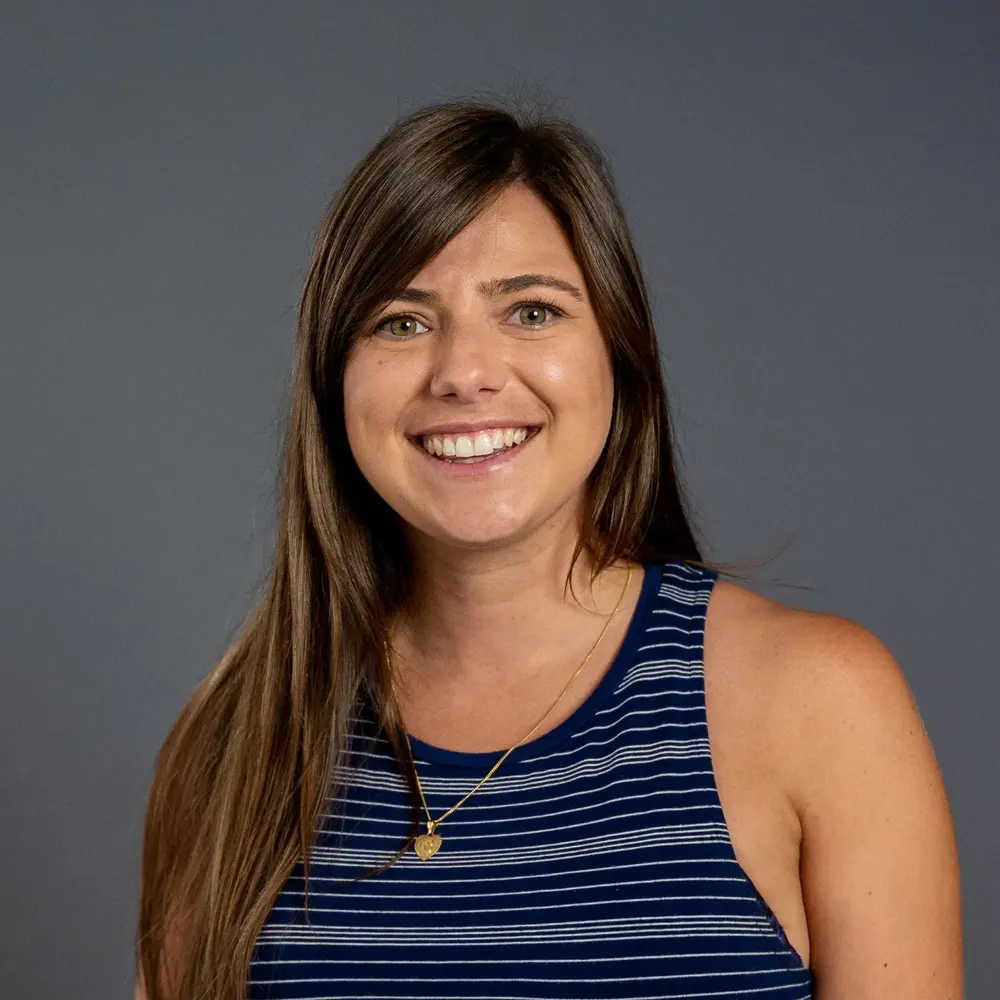
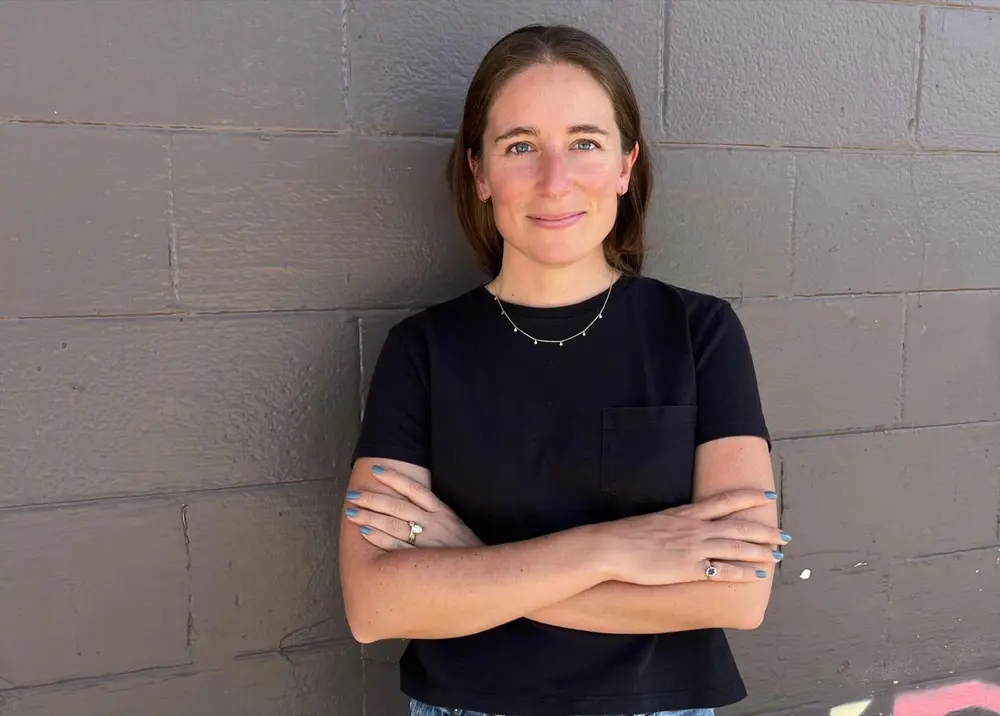
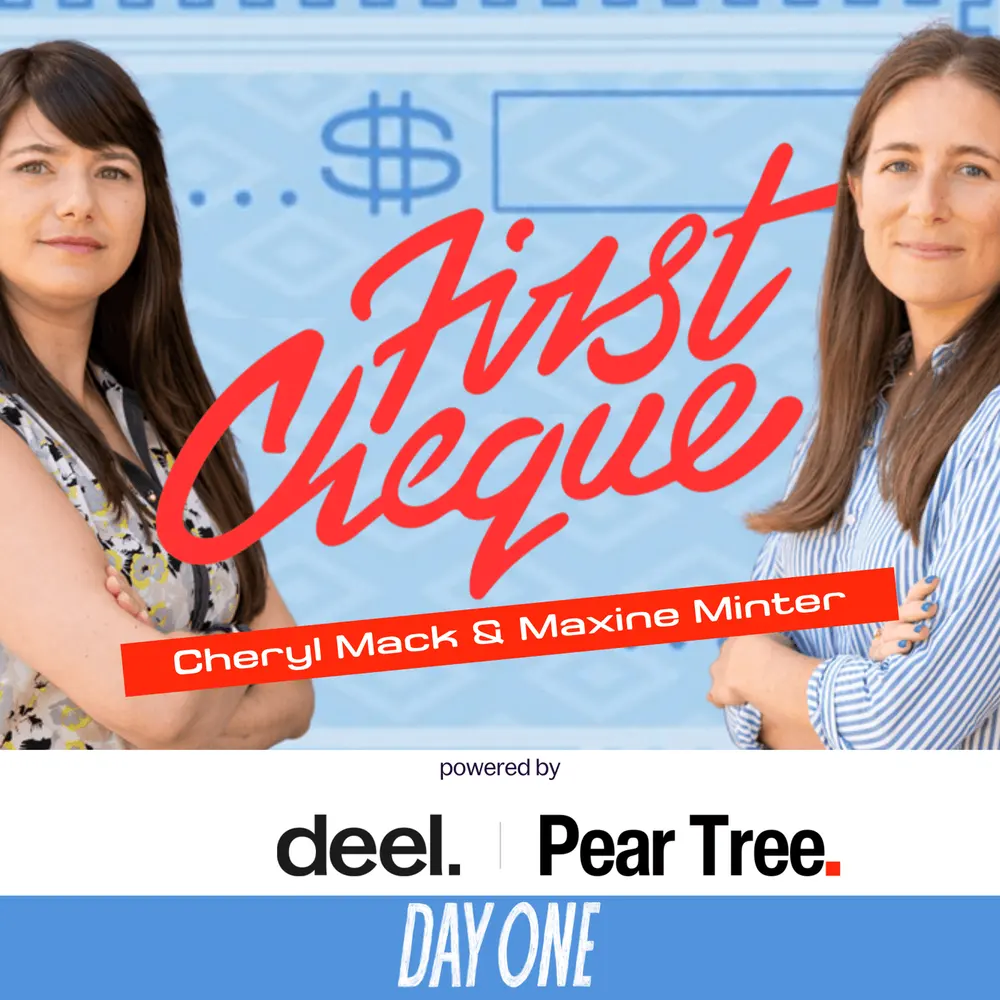 First Cheque with Cheryl Mack & Maxine Minter
Presented by Deel & Pear Tree
First Cheque with Cheryl Mack & Maxine Minter
Presented by Deel & Pear Tree 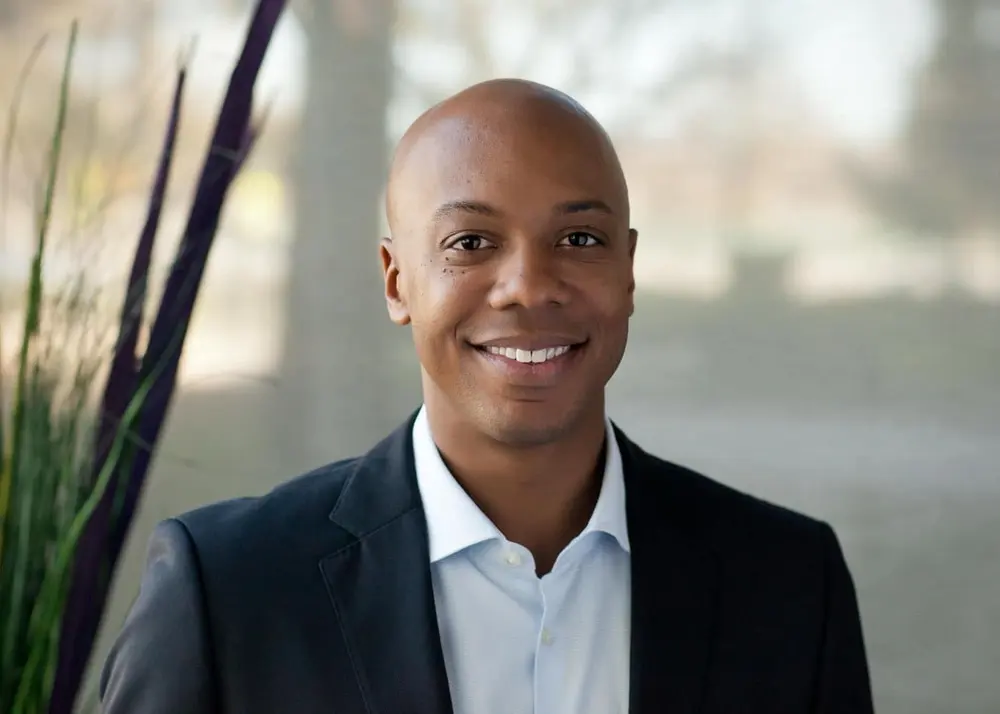
 ▶
▶ ▶
▶ ▶
▶