Transcript Synced · select any line to jump ▾ 0:02 Speaker: Founders scale faster on Deel. Set up payroll for any country in minutes, hire anyone anywhere, get visas handled fast, and get back to building. Visit deel.com/dayone. That's d-e-e-l.com/dayone. 0:23 Speaker: Are you building a SaaS business and looking to achieve compliance with SOC 2 and ISO 27001 or other security and privacy frameworks? 0:32 Speaker: Compliance can unlock major growth and build essential customer trust, but let's face it, it's usually time-consuming and expensive. 0:37 Speaker: And like really kind of a pain. 0:39 Speaker: That's where Vanta comes in. Vanta automates up to 90% of customer compliance tasks, making you audit-ready fast and saving you up to 85% of the associated costs. Plus, Vanta scales with your business, offering a market-leading trust management platform to continuously monitor compliance, unify risk management, and streamline security reviews. Join 7,000 global companies, including Atlassian and Dovetail, that trust Vanta to build and prove their security in real time. 1:03 Speaker: And for our listeners, Vanta is offering 10% off. 1:06 Speaker: Just go to vanta.com/first. That's vanta.com/first. 1:14 Speaker: Okay, 3, 2, 1. 1:18 Speaker: Hey, I'm Sheryl. 1:20 Speaker: I'm Maxine. 1:20 Speaker: This is First Check, part of Day One, the network dedicated to founders, operators, and investors. 1:25 Speaker: If you want to be a better early-stage investor, this is the show for you. 1:28 Speaker: So TL;DR, if you don't want to suck at investing, listen up. So one of the things that I think is so interesting and that I've spent a lot of time thinking about recently is the process of getting to conviction and how different investors go from the, "Hey, this is something cool," to, "Yes, I actually really want to invest in this. Here's my money." And I feel like that is different for everyone, but there are some things that we can share and similarities. And for anyone who is thinking about their own getting to conviction process, this could be a really interesting topic. 2:10 Speaker: 100%. Yeah. It's actually like when you lift the lid on this topic, it's pretty phenomenal, the variety of ways that people get to conviction and how that is different if you're an angel investor versus a fund, the similarities there, the differences. So super excited to dive into this 101 on getting to conviction. 2:26 Speaker: Yes. 2:27 Speaker: So Tell me about the first way that you ever got to conviction. What was your process, if you had one? 2:33 Speaker: Oh man, it was super loose. Yeah, I mean, process is probably a very loose term there. It was very much like, hey, oh, there's an opportunity to invest. I've worked with you. Yeah, I'm in. There was not a lot of thought process there, and not to say that that is a bad way of investing, but now that I've had a lot of other opportunities to get to conviction, it's not my preferred way. Totally. Yeah. What about you? What was your first? 3:05 Speaker: Mine had absolutely no process at all. I'd never really even thought about the like concept of getting to conviction on an investment. I had just started my angel investing journey. I met this incredible person building this incredible, like what I thought could be really big I was an operator at the time, and so I was like really thinking hard about like, like what would actually be involved to pull that off. But at the end of the day, my conviction was just like, I think she's amazing. I think the space is amazing. I think it's a really clever idea. And so I'm in. Yeah, there was no diligence really. Like, it wasn't a very robust process at all. 3:40 Speaker: I think I've heard you use the term reckless. 3:42 Speaker: Yeah. Oh, it was reckless. It was financially reckless. It was personally reckless. There was like absolutely nothing. 3:48 Speaker: No seatbelt whatsoever. 3:49 Speaker: No seatbelt, no seatbelt at all. But I learned a lot and I think definitely have spent a lot more time since then thinking about the process of getting to conviction. Obviously the like process of maturing as an angel investor and then like building a fund, that really is a pause for thought as you're thinking about kind of how you get to a yes and what the criteria are for a yes. Which I think one of the things that stood out for me was the big difference between angels and the way that they get to conviction and what they need to kind of see to get to a yes, um, and for a fund. 4:20 Speaker: Yeah. 4:21 Speaker: What do you get to see at Aussie Angels, like the difference between those processes? 4:25 Speaker: Well, it's funny because actually most of the like investors that are on Aussie Angels are kind of halfway in the middle. So like we have syndicate leads and syndicates run this, you know, process of they decide to invest. In a sense they're angels, right? Because they're investing their own money. But in another sense they're kind of in this like VC bucket because Often, you know, even though they're not managing other people's money, but often when they invest, a whole bunch of people follow alongside them. And so they're kind of in that middle ground of like not quite angel, but not quite VC. And even for my own personal, like I run my own syndicate on Aussie Angels. And I remember that moment where I said, hey, I'm investing in this. And a whole bunch of other people to the tune of $151,000 also decided to invest alongside me. And I, I remember thinking like, Wow, what if like, you know, these people followed me into this deal? Like, what if I didn't do enough DD? What if I didn't do enough like talking to the founder or research on that market piece? Um, and like, great company, excited and glad that one, uh, went well. But I think I definitely on the second, third, and subsequent deals have been much more conscious about that. 5:33 Speaker: Mm-hmm. 5:33 Speaker: And we do see that once people go from that step of like, I'm only personally investing my own money to actually now I wanna run a process 'cause if somebody ever asks me and, you know, I wanna talk about this, I, I want to feel comfortable that I've done enough. And so I feel like that is a pretty big jump when you start, when you move from just your own personal money to other people's money in any way, shape, or form. What do you see? 5:55 Speaker: Yeah, I think that's exactly right. I think from what I've seen from the angel stage, like the ways that people get to conviction is so varied, right? I like spoke to someone earlier this week where their way of getting to conviction was just like, I like the founder. 6:09 Speaker: Great. 6:09 Speaker: And that's the extent of the evaluation. And you know, like as an angel investor, that's all the, like, that's the extent of the evaluation you might need to go to. Where I know other angels that have a really robust process, you know, they have— 6:20 Speaker: Yeah, like 40 hours of DD is required. I've heard that. 6:23 Speaker: Right, yeah, yeah. And they have these kind of like mental models on how much research they need to do. And actually I think that can be quite challenging because they have a kind of minimum amount of information they feel like they need to collect to get to a yes. And very often as angel investors, you get like 1 to 3 conversations with the founder and then maybe access to their data room. And so, you know, you run the risk with a more robust diligence process of actually missing out on some great opportunities because you're not able to move fast, or you have a kind of too rigid process. And I think so within the angel kind of trajectory or the spectrum of angels, there's actually just like in that group a really wide process. I have seen angels with a more robust process than like many funds, and then— I've seen angels that have like absolutely no process at all. 7:06 Speaker: Have you seen any funds with no process at all? 7:09 Speaker: Uh, no, thankfully not. 7:11 Speaker: Thankfully, yeah. 7:12 Speaker: Thankfully not. I'm sure they exist, to be clear. I'm sure they exist, but I, I haven't come across them in, in my travels. But I think double-clicking on this idea of getting to conviction, uh, it is the moment at which you feel like you have collected enough information to get to a somewhere on the spectrum of yes to hell yes. 7:32 Speaker: Yes. 7:33 Speaker: Right? And— To writing the check. To writing the check. But I think what's really important, especially for those folks who are listening who are kind of early to investing or, you know, haven't maybe written their first check yet, it's really rare, if ever, that you get to a, you know, definitely yes, always, no questions. I'm like all 100% sure that I should write this check. The nature of especially early stage investing is that it's risky. You're getting compensated for risk. 8:03 Speaker: There's always risks. 8:04 Speaker: And so something I hear from a lot of early stage, you know, angels and people that are early to the investing journey is also just like, how do I know when it's enough to get to conviction? So how do you think about what's enough for you to get to a yes? 8:18 Speaker: Yeah, I get that question all the time. Like, how do I know? How do I know it's a yes? And It's not a simple answer. Like you kind of have to figure out what your, your bar is and, and then work out a process of like, where does, where's my bar and what do I need to get to the bar? And then an interesting thread, uh, that you mentioned as well is like check size versus, um, versus time that you're spending with the founder. 'Cause often when you're writing early stage checks, yeah, you, you like reasonably get 1 to 3 meetings with the founder and maybe a data room. So yeah, if I had to answer your question, like how, how do I know? I, I know because I have thought about what are the key questions that I need yeses to in order to feel confident to make that decision. And for me, it's founder. So like, do I feel that this is the right founder for the, for the right market problem space? And also, do I feel like this is the founder that this is a founder who could in the future, um, lead a, lead a huge company. Um, I don't need to feel like the founder in their current form could lead a huge company, cuz often that's just no. Like there's very few, I don't know, maybe you've run into them, Maxim, but I, I don't meet a lot of founders at that very early stage where I'm like, yeah, if I popped you into a 150-person company tomorrow, you'd be solid. Um, but I need to feel like they could get there. And that they'd be open to coaching and that they're like self-reflective and, um, like have a desire to learn enough to get there. Um, so that's one is the founder. Um, the other one is the, like the problem space and how painful is this? I need to feel like it's a genuine problem for a group of customers that are gonna be willing to pay for that problem to be solved. Mm-hmm. So for me, that actually excludes some things. Like, I would never have invested in TikTok or Instagram because, like, is the problem of seeing photos scrolled through endlessly really a painful problem? No. That's entertainment. And I'm— I guess maybe I'm more of like a utility-oriented person because to me, I like— I probably would never have seen that and been like, yeah, that's a painful problem. Yeah. And maybe that means I miss out on those things. And then the last one is market size. I need to believe that this could be a huge market. Um, they could be solving like a small portion of it right now, but I need to believe that there is huge market opportunity. Often that means global. Um, but it doesn't have to, like if every single person in Australia experienced the problem, then like I could still get to conviction that way. Um, so for me, like those three things. Are— if I get— if I can get to a yes on all three things, then it's probably pretty likely to be a yes for investment for me. 11:10 Speaker: Yeah. 11:10 Speaker: What does yours look like? What do you think? Actually, give me feedback first. 11:16 Speaker: Well, no, I think— I think this— what is really interesting about it, and I think it, like, relevant for this, for our audience, is, like, it's a process. 11:24 Speaker: Yeah. 11:24 Speaker: I'm— I would put money on the fact that that wasn't actually Yes, I would put money out because you just told me that that wasn't your process when you wrote your first check, right? Like, it's just kind of a little bit more intuition-based, a little bit more like, I think it's a good idea, I'm going to write this check. But over time, you kind of like end up iterating, or what I see a lot, especially for angels, is you end up iterating towards a like set of criteria that for you that have correlated to success in the past. And I think what's really interesting about angel investing is it's not, there's not like one set of criteria, right? Yeah. It's not like we all find our way to these same checkboxes. And once those checkboxes are a yes, like, we write that check, as you just said, right? Like TikTok, you would have passed on TikTok at pre-seed because you're like, don't get it. Why do you need to be sucked into something for on average 48 hours per month? 12:11 Speaker: You know, like, what's the problem here? Do you need that? 12:14 Speaker: And the answer was probably no, but do you want it? Yes. Like, and so I think what's really interesting is though, like, we iterate our way to a really like our set of criteria that we write checks on. It's actually at the risk of a small soapbox moment, which is, but like is why it's so important that there is a really deep ecosystem of angel investors and early investors, because when it is at this like theoretical stage in this idea stage, if you only have a very homogenous or a very narrow group of people investing, the likelihood that they all like conglomerate around some key sets of criteria for success is highly likely. And then ta-da, you have an ecosystem that only funds like B2B HR tech that has like a certain kind of go-to-market motion, and then like TikTok doesn't get funded. And like, I just think it's a net negative for the entire Australian ecosystem if we have that narrowness of ecosystem, but also shallowness of ecosystem. And so actually going through that process to like develop where you think you see opportunity, develop your individual thesis is really important. 13:18 Speaker: I would already say just on that point, Maxine, I would already say that like Australia, is, is not as broad as it could and should and hopefully will be in the future. Like already we are probably too concentrated on like B2B SaaS. 13:30 Speaker: 100%. 13:30 Speaker: And that type of like go-to-market motion. And we do, like if you're, if you're an angel thinking about, or an investor thinking about like what my potential conviction process is, like don't be afraid to use your own background 'cause it's likely that you have a different background from what we currently have and you don't have to conform to what we currently have. 13:53 Speaker: Oh, 100%. Actually, the outsized returns are, you know, for those folks that don't conform to what we currently have. 14:00 Speaker: True. 14:00 Speaker: I think one of the challenges that I see in the Australian ecosystem, and that like exists in any smaller ecosystem, is like you need follow— for a lot of these companies, you need follow-on funding for this company to be successful. So you might be non-consensus at that earlier stage, but you know, if you don't have follow-on funding, that can be a real challenge. Having said that, like for us, for our fund, we actually do a fair amount of consumer investing because we do cross-border. So the US is much better at funding consumer businesses than the Australian ecosystem. So we can actually, you know, find really interesting companies in the consumer space and accelerate them to the US. And so we don't have that follow-on funding risk, but I didn't know that when I first started angel investing. And it took like iteration over time. A thread that we kind of left hanging there that I want to come back to is how this differs from fund. Investing. And a good friend of mine actually this week was describing this dynamic to me, which I think, you know, to shout him out, Dustin Doganough, 43, has some really eloquent thinking on, you know, the difference between funding and like getting to conviction as an angel investor versus getting to conviction as a fund. And is a fund— most funds kind of can be categorized in two different buckets. You've got conviction funds and then you've got consensus funds, meaning the way that the partners of that fund make a decision. So obviously if it's a solo GP fund like us, this is not relevant because I just make my decision in the way that I make my decision. I don't have to seek consensus from myself, or maybe in some ways I do, but like— 15:32 Speaker: Oh, you do though, and I'd love to go into that a bit more. 15:36 Speaker: Right, but like, but so at the fund level, they're able to have, um, you know, different, uh, ways of making decisions. So if you're a founder interfacing with that fund, worthwhile working out like, are they a conviction-based investor or a consensus-based investor? Because what happens is once you have convinced one of the investors, one of the partners, they then have to be your kind of spokesperson internally and get everyone else to a yes if they're consensus-based investor, or, you know, at least one other person to get to conviction-based investor. Wait. 16:08 Speaker: Yeah. Can you get clear? So there are, so funds generally either make decisions one of two ways. They either have everybody has to agree or two people have agree? Is that, that's the conviction versus consensus? 16:21 Speaker: Yeah. So it's a continuum. It's not a dichotomy. So the continuum, the conviction would be like the extreme end of conviction is just like one person has to make a decision regardless of fund size. But that's pretty rare. You know, you then usually lose the benefit of having other investors around the table, but like Floodgate would be an example of that. Right. 16:40 Speaker: So just one partner has to— 16:42 Speaker: Yep. Can make a decision. And yeah, then on the other end would be a consensus-based decision. I, a lot of later stage funds are like some degree of everyone. Um, the earlier stage funds don't usually require that. And there's a really interesting piece of research from Harvard, um, that looks at the kind of success of funds that require consensus versus conviction and find that for the earlier stage stuff, if you force consensus of some degree on decision-making at early stage, you actually underperform because by very nature they are like non-consensus bets, that's where you see the opportunity. So if you force consensus across the partnership— 17:19 Speaker: You won't make those bets. 17:20 Speaker: You won't make it. You won't make the bets. But the consensus then can be like anything from no detractors, like no vetoes, through to like, you know, everyone has to get to a decision. And then there's all kinds of variations in between. There are like one hell yes and one like, I'm with you. It's all of the partners are yes and at least one hell yes. It's, you know, two of the partners at ES, no vetoes. There's all kinds of different models on how that group of people come together to make this collective decision. And then once they've made the decision, there's all kinds of models on like how behind the company are we, i.e., like if one of the partners makes an investment and it's a conviction-based investment, if that partner then retires or moves on, which actually happens like at a pretty high degree, well, in a mature ecosystem, like that company is then kind of orphaned within that fund. So they don't have an advocate. That company's then coming up for, you know, their next stage of funding, for example, like their spokesperson within the organization is gone or disinterested. And then it's kind of hard to get that access. Whereas in a consensus-based model, if we've all got to a hell yes, then like even if one partner leaves, everyone's still kind of behind you. Mm-hmm. And so it can be kind of anywhere on that, on that spectrum. And the kind of ways that those groups get to conviction is much more kind of like internal politics is involved, a lot more kind of documentation and kind of aligning everyone behind it. Yeah, to make that decision. So it really, like, it's, it's kind of wild how wide the decision-making process can be from an investing perspective. 19:00 Speaker: At every level. At every level. Yeah, like angels but also funds. I'm so curious though, like, so what is your process look like now? 19:07 Speaker: Right. So as I mentioned, mine started at like a negative process. It was nothing. My process now has a couple of buckets. It's still me making the decision, but kind of seek input from various parties to kind of round out my decision-making. My first kind of set of buckets is all around like founder market fit, dynamics of the market, you know, similar to you, do I believe there's the this market is one where huge business can be built. Um, you know, like a very probably overly trite example of this would be like, it doesn't— it probably wouldn't work for me to invest in like a D2C lipstick company where they specialize in shades of purple. Uh, it's just too— in Australia, right? Like it's too niche a business. I can't get the conviction you can build, you know, billions of dollars of enterprise value in that, in that vertical, whereas, you know, investing in, you know, to be very zeitgeisty about it, but like AI tooling, right? Like it's pretty likely that that market is going to continue to grow from today until 10 years from today, which is the fund, you know, the lifecycle of my fund. And so, um, that has some pretty significant tailwinds behind it. And so I can believe that there's a huge business to be built in, in that category. And so. do I think that the founder is a perfect fit for this? Do I think that there's dynamics in this market that can make for a really, like, a huge company? I actually, I think something I would say on those huge markets, competition really matters here as well. So like a very established huge market with very fragmented players, I would think of that differently. And like my assessment on how likely a company is to get to huge scale in that market is very different than like a small but really rapidly growing market where there's like one one person or like a handful of people that are just starting to establish themselves, you know, the probability that you could build a huge business in that market is very different. 21:05 Speaker: You think it's more probable? 21:06 Speaker: I think it's more probable. Yeah. A very established market with like known demand, known kind of buyer behavior that is like extremely fragmented. The reason I would spend a lot of time thinking about like, why would this company come and eat all of those smaller companies and or like, why is the market today very fragmented. Similar thing if it was like, it's similar, like analysis for markets where there's like 3 big giants in there, right? In Australia, the obvious one would be like banking or grocery. Yeah. Like it's really hard to build a new grocery, as we all found out with Milkrun, in a like a very consolidated market. 21:47 Speaker: Yeah. That's, I mean, that's what I was going to ask is like, what about those situations where they're like old incumbents and clearly opportunity for innovation, but also seems very hard as we saw with Milgram. 21:59 Speaker: Right. Yeah. It's definitely, they are not like definitely nos, they're just the nature of my consideration is like, what do I have to believe for you to build a big enough business in this space, right? Are you going to have to go toe to toe and compete with some of the like best funded companies? But maybe you have like an incredible insight or like structural advantage. That allows you to run really fast at an opportunity that they're not going to be able to run at, right? Like a core tenet in early stage innovation, the thing that we win at as early stage companies that the big incumbents don't is speed. 22:34 Speaker: Yep. 22:34 Speaker: So if there is a kind of an upcoming trend, something that is, you know, really exciting to catch, there's a really wonderful opportunity for a startup to be the one to catch it and kind of ride that wave the whole way up. 22:45 Speaker: Yeah. 22:45 Speaker: And so yes, that's my first set of considerations, right? Like, market dynamics, founder fit dynamics. 22:51 Speaker: Yep. And there's a whole other bucket. 22:53 Speaker: There's a whole other bucket. 22:54 Speaker: Of course you have a whole other bucket. 22:59 Speaker: Are you building a SaaS business and looking to achieve compliance with SOC 2 and ISO 27001 or other security and privacy frameworks? 23:07 Speaker: Compliance can unlock major growth and build essential customer trust, but let's face it, it's usually time-consuming and expensive and like really kind of a pain. 23:14 Speaker: That's where Vanta comes in. Vanta automates up to 90% of customer compliance tasks, making you audit-ready fast and saving you up to 85% of the associated costs. Plus, Vanta scales with your business, offering a market-leading trust management platform to continuously monitor compliance, unify risk management, and streamline security reviews. Join 7,000 global companies, including Atlassian and Dovetail, that trust Vanta to build and improve their security in real time. 23:38 Speaker: And for our listeners, Vanta is offering 10% off. 23:41 Speaker: Just go to vanta.com/freshoffered. 23:46 Speaker: Banta.com/first. 23:47 Speaker: That's Banta.com/first. My second set of considerations, and actually like those, that first bucket is my threshold question, but my, the second bucket is my conviction question, which is the founders themselves. And what I have to believe about those founders is that they are just learning machines, right? That they are incredibly gritty. They're capable of pushing through. You know, truly superhuman hurdles to get to an outcome, that they are growth— they have a strong growth mindset, that they learn really, really rapidly. And that's based on kind of how they have approached the world today, and that they are totally obsessed with this problem or a problem in this space. You know, I'm not as interested in working for founders who are kind of mercenaries chasing an opportunity in the market that is like, cool and will be interesting for a while, but like take it or leave it if it's a problem that they want to solve. I'm really interested in the ones that are like either intellectually or personally fascinated and like deeply committed to the problem that they're chasing. Because the combination of those things is you point someone who is high-rate learner, really, really hardworking, and really obsessed with the problem into a really big market. And it, for me, has the high probability ingredients of kind of unlocking something really interesting in that market. very far from a certainty to just underline that. But that if I can get to, if I can get to a yes on both of those buckets, I'll get to conviction. And then the last bit, which is different than an angel investor, is there's portfolio construction and like selection criteria that come as part of a fund. So, you know, I might see 10 really interesting like e-com enablement products. It's not the right thing on behalf of the investors that invested in me, my LPs, to give them a portfolio of 30 companies, of which 50% of them are e-com enablement, right? Like, it's just like a structural exposure. That's not my job. 25:40 Speaker: So if you already found 2, you just can't, can't, even if it's a hell yes on every other bucket, just no. 25:45 Speaker: You can't. Yeah. Yeah. Right. So actually one of my most wise friends, a woman called Cass Mao, suggested this to me the other, well, actually a couple of months ago, and it's really kind of stuck in my brain. It's living kind of rent-free in there. At the moment, which is like, I have to get to conviction that this, the founder building that company is the best person I could find building in this space in the next 5 to 7 years, which the timescale thing like changes my evaluation, right? 26:16 Speaker: But your deployment period is 3 years, so it should be the best person you can find in the next 3 years. 26:23 Speaker: No, 5 to 7. 26:24 Speaker: Why? 26:25 Speaker: Because even if the founder doesn't materialize in those 3 years, If a better person materializes in 5 years, they're going to build a company that will outcompete the company that I've invested in. 26:35 Speaker: Man, I feel like if you add that question to my repertoire, it's too close to just going to be like a no because I just don't meet everyone. 26:45 Speaker: Yes. 26:46 Speaker: And then you just don't make the bet. 26:47 Speaker: I mean, I think you just have to believe in what's possible, right? 26:50 Speaker: Yeah. I don't like that question, for the record. I'm not adding that one. 26:55 Speaker: Let the record show. 26:56 Speaker: Yeah. 26:56 Speaker: I am not adding that one in. Yeah, I— No. I mean, I think my job is to see everyone. 27:01 Speaker: True. As a fund. Yeah. 27:03 Speaker: My job is to, as a fund, my job is to look at every company. So if I, if my answer to that question is, oh, I just don't see everyone, then like I'm not doing my job. Whereas as an angel investor, you know, for the purposes of thinking about conviction, like you don't see everyone, you see a subset of the market. 27:18 Speaker: Yeah. And I can never, yeah. And I know that I can't. I think one of the interesting questions that you, that you said there, that you're like, "If I'm gonna go to work for this person—" And it reminds me of what we were just talking about with Baco, and he was like, "We ask our mentors to ask the question, 'Would you work for this person?'" So is that a question that you ask yourself as part of your process to get conviction? 27:43 Speaker: It's not a formal part of my process, but it's definitely a question that pops up in my mind. I learned that from— and actually, I wonder if it's a Blackbird thing, but I learned that from Sam Wong. 27:53 Speaker: It probably is a Blackbird thing then. 27:55 Speaker: Yeah, she mentioned it to me a couple of years back, and for me, I was like, oh, that is such a great filter. I do think that there is— I think it's a great question to ask yourself. I don't know if it's like programmatic yes for me, because there are some founders that I wouldn't want to work for because I like working in a certain way and that they're not a good fit for how I would like to work, but they're a great fit for their strategy and their business, and they will build a really productive business behind it for the fund. 28:22 Speaker: Like, it's got to be a good investment. 28:23 Speaker: Yeah, exactly. Whereas like as an angel investor, 100%, I could apply that filter. 28:29 Speaker: Yeah. I like that question. 28:30 Speaker: Yeah. It's a wonderful question. 28:31 Speaker: I will add that one to my repertoire. You know what's interesting though, is I feel like I, and I'll preface this by saying that I know that you and I are similar in our investing styles, but a lot of the ways that you approach that, like getting to conviction, resonate with me in different ways. I'm like, yeah, we both talked about like how do we feel about the founder? We both talked about market size, but in different ways. Like your approach to market size was a little bit different from mine, but there are broad categories that I feel like we, we still address together and similarly. And if anything, I have expanded some of the ways even just in this conversation. I'm like, yeah, that's, maybe I should think about that as well. I like your buckets. I'm curious though, like, um, in addition to those buckets of things, actually, maybe it might be interesting to just dive into a little bit like What are some of the things that you do to answer those questions for yourself? Like, you know, I spend a lot of time researching my thoughts on like the market size, which I can't just decide that, right? So it's, I spend a lot of time really researching that and then having it my own like kind of internal battle as to like whether I think that research supports or disproves the founder's view and whether I agree with it or not. What about you? 29:44 Speaker: Like what kind of information do I collect to— 29:47 Speaker: Yeah. 29:47 Speaker: Yeah. I think there's, I mean, obviously I rely very heavily on the founders to educate me on the space that they're chasing. What I'm really looking for is they have a unique insight into the market, that they've got something that the rest of the market doesn't already know. I think I can say that the market has already worked out that you can prompt and produce written text. That's not an insight. But maybe 10 years ago, the people that knew that that technology existed, that would have been a real insight.. So I kind of look for that there is like a unique insight. But so I heavily rely on the founder to kind of like educate me about their space and their unique insight. I then spend time researching, like if I'm in my, in my like market evaluation, market dynamic evaluation, like spend time researching the space that they're in, you know, who are the other competitors? Again, because we focus on kind of cross-border, I spend a lot of time thinking about like the expansion market that they're going into, like who's operating in that place. 30:47 Speaker: Who are they going up against? 30:48 Speaker: Yeah, which is really, I think what's really valuable is I have quite a wonderful network of folks in the US. A lot of companies have kind of like built or started to build in the space and then like moved on. It's also one of the benefits of being in market for a while now. I've seen a lot of companies kind of like start in one place and like iterate to a new place. And so like the benefit there is I can kind of tap my network and be like, hey, has anyone seen something similar to this in this space? Like what what are the dynamics that you've seen play out? Like, where are the bodies buried, essentially, is the question I'm asking. And so we'll do a lot of that. And then also, when I get to the kind of founder evaluation piece and I'm asking those, like, more personal questions, I do reference checks and, like, off-book reference checks. Because for all of the good intentions in the world, asking someone to self-narrate how hard they're willing to work, self-narrate how gritty and growth-oriented they are probably doesn't drive high-quality data on whether that's true, right? Like, I'm asking the question whether they meet my bar, not whether they meet their own bar. And so I ask them to self-narrate, but I also spend time, you know, talking to other people that have, if I can, talking to other people that have worked alongside them. There are definitely some founders that are completely out of network for me, meaning like, I don't know anyone who's worked alongside them. I don't know anyone who knows them. or don't know them well enough to be able to do that off-book reference. And so it's not a criteria of mine. And I actually thought a lot about this because, you know, for angel investing it was. I was like, I want to validate that this is, that they are the caliber that I would expect. 32:24 Speaker: Yeah. 32:24 Speaker: And then I realized that inherently was saying that I would only invest in people who were like 1 to 2 degrees removed from me. And I don't think that that's where the best opportunity comes from. So I've kind of relaxed my bar there. 32:37 Speaker: Do you do on-book references then? Do you ask, if you don't know anyone, do you ask them, can you provide any reference? 32:42 Speaker: No. 32:43 Speaker: No. So then do you ask different questions then? 32:45 Speaker: For the on-book references? 32:47 Speaker: No, if you can't do any references at all, do you ask the founder different questions to try to get a better sense of their own self-narration is up to your bar or nope? 32:56 Speaker: No, I don't ask them. They ask them all the same questions on those more personal-focused ones. For me, the questions get the data, which is like what they— where they think they score on those things. And like their narratives on what hard looks like, their narratives on what like, you know, some of the hardest stuff they've done. I ask some questions about that, but it doesn't, you know, that information is going to be the same. 33:21 Speaker: Yeah. 33:22 Speaker: The question is not whether— like, I don't believe I can get from them whether they in fact meet my bar or not. It's a question of like, where they meet their bar and where their bar sits relative to mine. 33:34 Speaker: Yeah. What about previous investors? Like, I, again, I, because I'm an angel, I tend to invest in people who are only a degree or two of separation. So I, I have the privilege of being able to do that. But like, do you call up people on the cap table already? Or I guess you, you're always first check-in. 33:51 Speaker: Yeah. 33:52 Speaker: So what, like, what are your thoughts on that? 33:54 Speaker: I think it's worthwhile. Right. I think like, again, my filter for this is you're collecting data and you have to form your own opinion from the data. I think it's really, you have to be very careful to just consume someone else's opinion and then build opinion on opinion. 34:12 Speaker: Mm-hmm. 34:12 Speaker: But if you can talk to the founders, sorry, talk to the previous investors and like collect data from them, right? Like what did they say they were going to do? What did they actually deliver? Why didn't they deliver? If there's a delta, what did they learn from that? Like, how close were you to that journey? Those kinds of questions. Then I think it's like really valuable. And I have lots of investors that do that to me when they're looking at investing in companies that I've already invested in. 34:38 Speaker: Well, yeah, if you're first check-in, that would make sense. They're calling you up being like, hey, what are your thoughts on this? 34:43 Speaker: Right, right. Yeah. And the ones that I'm most impressed by, it like, they grill me. They like just go absolutely ham. It's actually like borderline uncomfortable, but I think it's the right way to do it. Interesting. Interesting. Are there any other actions that you do as part of that getting to conviction process? No, that those are my— oh, and then there's my decision diary, which like you're probably sick of hearing about at this point, but— 35:07 Speaker: We'll do a whole episode on that one day. 35:09 Speaker: Yeah. Then there's my decision diary. So kind of putting the data all into a format that like pushes me to make sure I'm like checking my biases and like checking my blind spots that I'm not just like heuristic investing. And then, yeah, I get to conviction, and then I do the— probably the most painful part is like getting to conviction and being like, and I'm still not going to invest because you are my fifth e-com enablement business, and I'm not— 35:36 Speaker: Oh, why would you even do all of that then if you couldn't? 35:41 Speaker: Uh, I mean, it's kind of like done in parallel, right? Like, they are— sometimes I will like screen them out at the beginning. But very often I like don't know that they're going to be like a potential conflict until I like have really spent time and been like, yeah, I actually, I'm a yes on this company, but a no on this opportunity. Interesting. Interesting. 36:03 Speaker: How much does your gut play into it? Like, do you ever get to the end and can't like get to conviction on paper, but like your gut just tells you yes and you YOLO it anyway? Like, I hear that there are some investors that we may or may not have had on this podcast who often just YOLO it. 36:17 Speaker: Yeah, there is one fund that has a whole YOLO fund. Yes. Although I think this is a constant discovery for me in that I think you need to be doing this like 20 to 30 years to get the right to be able to just listen to your gut. And so I, in my decision diary, I track my emotional sentiment in relation to the decision. Because what I'm trying to learn for myself over time is like, how right is my gut or not? As an angel investor, there have been multiple companies where as an angel investor, I 100% would have made the investment, even if I couldn't get there on the like rationality part of it. There's like a significant amount of intuition, but I haven't done out of the fund because— That's not the way that it works. But yeah, there are some that, like, I think it would be naive to pretend that gut has nothing to do with early stage investing. A huge amount of it is intuition. And so I would say it influences every single stage along there. What about for you? Do you feel like it pops up for you? 37:22 Speaker: Oh, absolutely. I never really lost that. Like, the first couple investments we did was like, yep, I like the idea. 37:31 Speaker: Like, the founder, you son of a bitch, I'm in. 37:33 Speaker: Like, But I, I definitely have not lost that. And there have been times where I have taken a look at something and I'm like, on paper, like, I'm not sure this makes sense, but my gut is that like, this is the right founder. And like, it's usually when market size isn't big enough, but I just have a sense that like, they'll figure it out. Like, I just believe that this founder is the kind of person that like, I can't get there on the numbers with market size, but I think if they figure it out, that they'll figure out another market, um, or open up something else, or the market will change. Like, who the hell knows what's gonna happen in the next, like, 5 years, let alone, like, next year, right? Like, something could happen that changes things. And I also believe that, like, I'm a fairly lucky person. There's been a lot of things in my life where I've just, like, gotten very lucky. And so I also just believe that, like, there's got to be luck that plays into it. And yeah, I believe that I will get lucky. 38:30 Speaker: I'm a very optimistic person, as you can tell. Right. Yeah, yeah, very optimistic. I mean, I do think especially at early stage, there's a lot to be said for just underwriting the person. 38:40 Speaker: Yeah. 38:40 Speaker: And there's lots of like whole funds that will just underwrite the person and it's like less about the space, right? You're like underwriting a person's ability to go and find something interesting. And actually it's like something that I feel quite torn about frequently where there's like an amazing person chasing a space that's not a fit for us., and I really wanna back them because I believe they're gonna build something huge. But as a fund, I— 39:02 Speaker: But you can't justify it. 39:04 Speaker: Right. Yeah. As a fund, I've made promises about the space we'll invest in, the kind of companies we'd invest in. Whereas as an angel investor, you can get to conviction behind just the person. You don't have to get to conviction behind the person and the company necessarily. 39:17 Speaker: Yeah. 39:17 Speaker: And there've been quite a few where I haven't backed them because they're not a fit for the fund and they end up pivoting into something else, like actually quite interesting. And it's just like, I think it's the right decision-making process, but like a bummer of an outcome. 39:33 Speaker: Yeah. 39:33 Speaker: In that particular application. 39:35 Speaker: I think it also pulls a thread on like the idea of even as an angel, there is still portfolio construction to think about. And angels have a little bit more flexibility there where like I can look at a deal and say, well, You know, over the last year I've made a bunch of like safe investments that really fit with my like angel thesis. And you know, if I go off piste with this one and make that bet on this person, then like that's okay because my portfolio construction and the goal, right? The goal here as an angel or an investor is to like create a portfolio of companies that are going to create outcomes. And never do you think that like, well, this, this one in particular is definitely gonna be the one. You're just, you're trying to make informed bets. That are going to create this outcome for you. So having one or two of those in there when I've already made lots of safe— I use that as a very relative term, but, uh, aligned. Maybe we'll use the word aligned. 40:32 Speaker: Aligned. Yeah, aligned. 40:33 Speaker: I've made— I've already made a lot of aligned investments this year. We can, we can go ahead and like just go with our gut on this one, and that's totally okay. 40:41 Speaker: Yeah, I mean, like, just to validate you there, there are like some of the best funds in the world have EIR programs, right? They like essentially just underwrite a founder and be like, whatever it is you want to build, we want to be part of it. Then there are funds where they have like specific allocations, which are just like great people bets. And so they have like aligned with their LPs. We are not going to, like, we have this portion of the capital that we're going to invest behind like really awesome people, essentially for the scenario I just described where like we fall in love with the team. 41:11 Speaker: Interesting. 41:11 Speaker: We don't, we can't get to conviction on the thing that they're building, but we want to be part of it, whatever it is that they're building. Then there's the kind of like more mature funds where a lot of investors are making investments in companies to buy options on the next company that that founder builds. 41:24 Speaker: Yeah. 41:25 Speaker: At like, we are so far from that, but like, I think that there is, there is some wisdom to that, right? 41:33 Speaker: Yeah. 41:33 Speaker: Like if you back a founder early in their journey and you are really high value add. 41:38 Speaker: They're going to remember that. 41:39 Speaker: They'll remember it. Yeah. And so when they go and build their next thing, they go back to the same investors and build the same like cap table again. Like then you got first look at a company that you would not otherwise have got to see. So I think it's a long-term strategy as LPs, you know, if you're LPs, you really have to like align that you can, it's okay for you to do that. But like, it does make sense. 41:59 Speaker: What if your fund was like, hey, yeah, no, we invest in this company. Totally don't think this is the thing it's going to be successful, but don't worry. The next one. And like, we're just pre-buying several— 42:10 Speaker: Yeah. 42:10 Speaker: Companies ahead. 42:12 Speaker: I honestly have often wondered, I obviously have never had that conversation with my LPs, but like, if I was on the other side of the table and I was writing an LP check into a fund and they were like to me, we are gonna spend your money to buy an option for our future fund. 42:27 Speaker: Yeah. 42:27 Speaker: And the only way that you get a benefit of that investment is then you have to invest in the next fund. I'd be a bit like, No, I have not yet decided to fund your second fund. Like, unless you've locked me in for multiple funds, like, that's not— yeah, I'm not down with that, you know. 42:47 Speaker: Better not. 42:49 Speaker: I don't know how to say this nicely, but like, absolutely not. That is a nice way of saying it, actually. 42:55 Speaker: You could have been like, just f off. 42:57 Speaker: Yeah, that's true, that's true. It could have escalated quite a lot. But I think the point that I'm trying to make here is that like for folks who were trying to work out how they get to conviction, to work out like how they get to a hell yes, the spectrum of like yes to hell yes for a company. There are so many different ways of doing it and so many different timescales to be considering on like the way you make that investment, who you are investing in, kind of the risk profile you're taking at different stages of the journey. So I think this is hopefully one of the takeaways you're taking from this 101 is just like an invitation to iterate your way to a successful process. And you like, we're just continuing to measure yourself. Like, is this working for me? And like iterate as you continue to go. 43:39 Speaker: Yeah. 43:39 Speaker: Angel investing and investing in startups is by its very definition a long-term sport. And so like taking that mindset to it. 43:45 Speaker: Yeah. I think another point to just call out before we jump off is like, there, another way of investing is like following people that you trust. And so it is perfectly okay to say my conviction process is if this fund is investing, I'm in, or if this syndicate is investing, I'm in, or if my friend Charlie Brown is investing, I'm in. Like, that is also a perfectly acceptable way of saying, this is how I get to conviction. I follow people that I trust and like, that's, that's my process. That is a perfectly acceptable process. It doesn't have to be any more complicated than that. Um, similarly, if your process is, I like the founder and I talked to them once and I'm in, like, that is also a perfectly acceptable process. I think our point here is that we just want to share lots of ways and help you expand your way of doing it. If you're happy with the way that you're doing it, then carry on. 44:37 Speaker: Yeah, I love that. Please carry on, keep investing. 44:40 Speaker: Yes. 44:41 Speaker: Excellent. Thanks so much for joining. Love talking about getting to conviction with you. 44:46 Speaker: Are you at conviction, Maxine? 44:48 Speaker: I'm at conviction. 44:48 Speaker: I think I'm at conviction on this podcast. Yeah. 44:51 Speaker: Yeah.

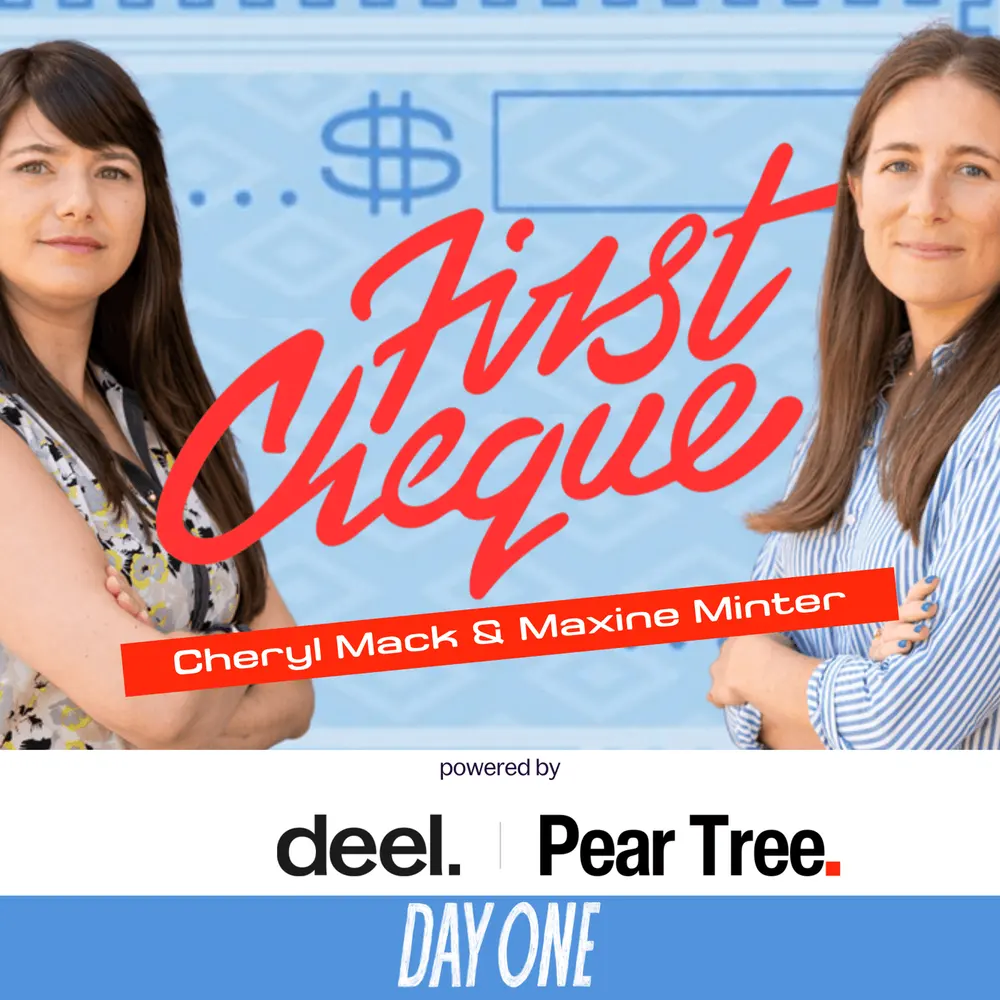 First Cheque with Cheryl Mack & Maxine Minter
Presented by Deel & Pear Tree
First Cheque with Cheryl Mack & Maxine Minter
Presented by Deel & Pear Tree 
 ▶
▶ ▶
▶ ▶
▶