Transcript Synced · select any line to jump ▾ 0:02 Cheryl Mack: Founders scale faster on Deel. Set up payroll for any country in minutes, hire anyone anywhere, get visas handled fast, and get back to building. Visit deel.com/dayone. That's D-E-E-L.com/dayone. Are you building a SaaS business and looking to achieve compliance with SOC 2 and ISO 27001 or other security and privacy frameworks? 0:32 Maxine Minter: Compliance can unlock major growth and build essential customer trust, but let's face it, it's usually time-consuming and expensive. 0:37 Cheryl Mack: And like really kind of a pain. That's where Vanta comes in. Vanta automates up to 90% of customer compliance tasks, making you audit-ready fast and saving you up to 85% of the associated costs. Plus, Vanta scales with your business, offering a market-leading trust management platform to continuously monitor compliance, unify risk management, and streamline security reviews. Join 7,000 global companies, including Atlassian and Dovetail, that trust Vanta to build and prove their security in real time. 1:03 Maxine Minter: And for our listeners, Vanta is offering 10% off. 1:06 Cheryl Mack: Just go to vanta.com/first. That's V-A-N-T-A.com/first. 1:14 Maxine Minter: Okay, 3, 2, 1. 1:18 Cheryl Mack: Hey, I'm Sheryl. 1:20 Maxine Minter: I'm Maxine. 1:20 Cheryl Mack: This is First Check, part of Day One, the network dedicated to founders, operators, and investors. 1:25 Maxine Minter: If you want to be a better early-stage investor, this is the show for you. 1:28 Cheryl Mack: So TL;DR, if you don't want to suck at investing, listen up. Hey, so today we're talking about follow-ons. To follow on or not to follow on? 1:44 Maxine Minter: That's a great question. I think a lot of companies and founders and funds are all constantly thinking about follow-ons, how they make them, how they garner them. It's crucially important for lots of companies to get follow-on. For a lot of funds and for a lot of angel investors, they're constantly thinking about how to follow on or not follow on. So excited to dive in. I think we also disagree on this, which is— I'm excited to tease out the ways that we are different. I'm not necessarily disagree, right? Like our fund, we don't follow on and you seek to follow on that. So I'm excited to kind of dive into those two. 2:18 Cheryl Mack: Yeah, for sure. That was why we picked this topic because I was like, I think we could have an interesting kind of debate about it. You know what's funny actually? I just thought when I first started angel investing, I remember that the question of like how much to reserve for follow-on was probably the number one question that I was like trying to figure out and like would always ask other investors. And then like fast forward a couple years and I get that question from people all the time. But you know what, it turns out it actually doesn't matter that much. Like I didn't really need a set number of like, oh, you have to reserve 40% of your dollars for follow-on rounds. It actually just ended up being way more fluid than that and just didn't matter as much. And so I think it's a really interesting conversation to have. But at the same time, I just wanna point out that like you really don't need to get to a number, especially if you're an angel investor. Funds probably do, they need to have something set, but as an angel investor, it didn't end up being that important of a question. 3:15 Maxine Minter: Yeah, that's super interesting. I actually never developed a follow-on strategy as an angel 'cause it was just from a dollars perspective, like not tenable. I also like, as we're talking about this, I find myself wondering like, is there different strategies for angels or funds or is this one of those like unique opportunities or those unique topics where it's kind of the same, right? The like math is the same, the considerations is the same. I don't know, I'm excited to tease that out. 3:41 Cheryl Mack: Yeah, I think it's different. My view is that it's different, but you know what we should start with? We should start with explaining what follow-on. 3:47 Maxine Minter: True. 3:48 Cheryl Mack: What a follow-on is, what follow-on funding is. 3:51 Maxine Minter: Yeah, do you wanna hit 'em with the definition? 3:53 Cheryl Mack: All right, so I'll give them like from an angel perspective. Actually, I think it's the same from an angel and VC perspective. Basically, follow-on funding is not the first time you fund a company. So if you decide to invest again in the same company, that is a follow-on fund. Follow-on funding? Follow-on investment? Follow-on investment. There we go. 4:14 Maxine Minter: Fund, funding, fund. Yes, that's a follow-on investment, right? Essentially, you're investing, you're doubling down, is also terminology that we use. You're essentially investing again in the same asset. Usually at a different price, I think, is the other thing to name there. So ideally you are investing again at a higher price. In the last year or so, there have been circumstances where you are offered an opportunity to invest at the same price. I don't know anyone who's doubling down at a reduced price, right? Where there's a down round and they're coming in again. 4:48 Cheryl Mack: I'm sure it happens though. 4:49 Maxine Minter: They probably should. Yeah, they probably do, right? Like if they still have conviction and they're writing that check, then I'm sure it does happen. So yeah, you're essentially buying more investment, more shares in a company at a later stage, usually at a different price than what you originally invested in. Well, the thing I'd say is that it seems to me that there are kind of two religions. One religion is never follow on. The other religion is follow on, on your winners. Do you want to dive in a little bit for folks on why would you follow on your winners? Because that's your camp. To the extent that we are diametrically opposed, but it's not that. 5:27 Cheryl Mack: Yes. 5:28 Maxine Minter: It is not actually that diametrically opposed, to be honest. I think there's much more gray in this, but for the purposes of today, why would you follow on winners and what does that strategy look like? 5:38 Cheryl Mack: Yeah, so I think conventional wisdom has always, or at least the wisdom that I've always been told, and probably until I met you actually, was that you want to reserve follow-on money in order to double down on your winners. And I think there's also an interesting like thread to pull there on like what does doubling down actually mean to different people. But for the moment, I will focus more on like why would you want to double down on your winners, right? 6:04 Maxine Minter: Mm-hmm. 6:05 Cheryl Mack: So, ideally, if you could write a small check in the beginning when the company is most risky and learn for the next 6 to 12 months as to the quality of that company and then see if they're doing really, really well. And if they are doing really, really well, then be able to put more of your money on that company. And theoretically, you would— you're kind of buying that, right? So, um, you know, maybe we'll talk a little bit more about pro rata rights, but like theoretically, if you invest in their first round, then you have the right to invest in their next round. Whereas maybe another investor who sees that company is doing really well, they might not have that right inherently, or— just, um, naturally to invest in that company. So if you could find, like, pay a little bit to learn about the company and then actually place the big bets on the ones that are doing well, then that would be a really good strategy. And so I think that's where a lot of us aim to go, is to write small checks in the beginning and then put the money on the ones that we know are doing well. I know in practice it doesn't always work out as perfectly, and maybe that's where you come from when you say, you know, from your perspective, you know, does it work out like that? 7:17 Maxine Minter: Yeah, I mean, I think the way that I think about it, right, the like reason to follow on and build a fund or build a personal annual strategy that has follow-ons is as an application of this idea that with more information we make better decisions. And so the idea being that you have significantly less information at your first check, so you are taking a bigger risk from an information perspective. Usually companies are more risky at that stage as well. And so you are taking that risk, but what you're looking to do is kind of learn about the space, learn about the team executing, learn about the kind of the opportunity space, maybe the thesis that they are bearing out, and then get an opportunity to invest. The thing, as you mentioned, is pro rata, right? In not in all circumstances, but in some circumstances, investors secure pro rata of that first investment. And so you seek to exercise that pro rata. 8:11 Cheryl Mack: And pro rata is the right to invest. 8:14 Maxine Minter: Yes. 8:15 Cheryl Mack: Again, so the right to follow on, actually, to use our first term, pro rata, right, is the right to make a follow-on investment. 8:22 Maxine Minter: Right. It literally means same amount. So you are given the right to defend the same investment. You had ownership percentage in that company that you had in that future one. 8:32 Cheryl Mack: And for the record, in Australia, it's also called preemptive rights. 8:35 Maxine Minter: Right. Oh, interesting. Because you get to buy, like, when the shares are available again, you get to buy the same amount to maintain your same ownership percentage before anyone else gets to buy it. 8:46 Cheryl Mack: Yeah, I find that in, in Australia we tend to use preemptive instead of pro rata. 8:51 Maxine Minter: Fascinating. So I think there's probably a couple of other reasons why people run a pro rata— sorry, a follow-on strategy, right? One is that for a big fund, it is not possible for you to invest the full amount in the earlier stages, right? Like you can imagine. 9:09 Cheryl Mack: Yeah. 9:09 Maxine Minter: With Blackbird. 9:09 Cheryl Mack: Funds have this like ownership stake thing, right? Where they're like, I have to own at least 10% of a company. 9:14 Maxine Minter: Right. 9:15 Cheryl Mack: But like, how do you own 10% without taking out enough of the, like buying, by buying enough of the company in that first round? 9:23 Maxine Minter: Right. Well, yeah, it's definitely that there's on downside, but for the big funds like Blackbird in Australia, I think their last fund was about a billion dollars. If they took that billion dollars and they didn't have a follow-on strategy, they'd be having to invest like, what, $66 million in every first check. And if they want to invest early, like, that doesn't work, right? They're buying more than the value of the business. The math just like does not work. It just doesn't work. Yeah, right. There is like a follow-on strategy that makes a big multi-stage fund possible. So there is one reason is the de-risking over time. Second reason is it allows you to build a bigger fund, but still participate in the early stages. The third reason that people talk about is, as you mentioned, to kind of defend their ownership stake, right? Yeah. Like you want, the theory is you want to own as much of the best companies as possible because of the reality of the power law. If you don't own enough of your top 2 companies, your fund can't be successful. And your top 2 companies have to be really successful for you to make like venture scale returns work. Actually fascinating. I was looking at Koffman's data. Oh, sorry. No, Sapphire's data on funds in their portfolio that had been successful. Sapphire is a big investor into funds. So LP or fund funds into funds. And they were saying for their top performing companies, so their top performing funds in the funds portfolios, the top company on average returns 90x average. 11:06 Cheryl Mack: Wow. 11:07 Maxine Minter: 90x. That's wild. 11:08 Cheryl Mack: Yeah. But if you don't own enough of that company, right? 11:11 Maxine Minter: This is the argument, right? If you don't own enough of that, that company, then it's really hard to make the rest of your fund work. Their second best company. In the average portfolio is a 25x. So it's like almost a fourth of the size. Wild, the delta between those two. And then— 11:30 Cheryl Mack: That's the power law at work. 11:32 Maxine Minter: Right. And then every, like the companies, like number 3 and below, if you average them, they're 1x. 11:40 Cheryl Mack: That is like, that is the perfect example of the power law working like— 11:44 Maxine Minter: Wild. 11:44 Cheryl Mack: And so this is the point, right? Like if you don't own enough of the 90x and the 25x, then when they exit, how is that ever going to return your fund? Right. And like, if you don't have a follow-on strategy, then you're just going to get diluted out to not owning enough of that company. 12:02 Maxine Minter: Yes, that is the argument for running a follow-on strategy, right? Is to like defend your position all the way up. I believe Blackbird has done an excellent job of maintaining most of its ownership, if not all its ownership, the whole way up as well. So that's what makes Canva such an incredible investment for Blackbird. So those are the reasons that you invest at that stage. There's also the like bias that with just a little bit more time, a little bit more effort, someone might be able to be successful. And so, you know, just with a little bit more time, a little bit more effort, companies might be given an opportunity to become that first one or two, as opposed to being somewhere in that averaged 1%. Yeah. So that's the theory. 12:44 Cheryl Mack: I think on that point though, like we kind of know that like founders are pretty bad at estimating how long it's going to take them to get somewhere. And so us as investors being like, okay, well, you know, you raised for this much runway and then they get to like, you know, 75% of that and realize that they're not going to hit those milestones. Like we actually, like that's pretty normal. It's pretty common, right? Like I feel like we should, we should know that that is likely to happen. We're all pretty bad at that. And so, investing a little bit more to help them actually bridge that. So, like reserving a little bit of money in order to help some of those companies that are promising but haven't necessarily hit the milestones in order to raise that next round. It could be a good strategy because otherwise it's, well, you know, the company fails, right? So, if we normalize— 13:31 Maxine Minter: Right. 13:31 Cheryl Mack: If we agree that it's normal for founders to be bad at that, then saving some money to, bridge that to me makes sense. 13:38 Maxine Minter: Yeah, exactly. I mean, like, it can help you keep more companies alive, but what it does mean is that you spend more money on your losers. So it dilutes your IRR, it dilutes your overall return as a multiple of invested capital because you've invested more, but you haven't got materially more out the other side. So the reason that I find a follow-on strategy to be challenging, right? I think something that we haven't built into our fund is for a couple of reasons. One, for our strategy where we're investing only at pre-seed, we want to own as much of the company as early as possible and to deploy all of our firepower into that first check because I think we can all agree on average, the price per share at pre-seed is less than the price per share at seed, and it's— which is less than the price per share. 14:35 Cheryl Mack: And so on. 14:36 Maxine Minter: And so on. Yeah. Right. And so if we can buy the majority of our position at pre-seed and not, you know, reserve money and hold it for that next 18 months waiting for seed to come around where that, um, entry price is going to be higher, then we will have a much higher return on our investment. We are taking more risk. 15:01 Cheryl Mack: On that point though, like, wouldn't you, couldn't you also say that you're spending more money on your losers? Like, Power Law would say that you, that most of those companies you're investing those first checks in are also going to be losers. So couldn't I also make the argument that you're spending more money on your losers? 15:16 Maxine Minter: I think not relative to a follow-on strategy. Right. Because we wouldn't be, that would be the same if we were deploying the same amount. So if we were running, let's say a $30 million fund where we deployed, you know, $600 to $700K per check or a $200K check up the front or a $150K check up the front and then a $450 to $500K check. At seed, right? That would be what would be necessary for us to buy the same ownership percentage on the average pre-seed and seed round, right? Because on average you go up 3x. 15:54 Cheryl Mack: Yeah. So like, would you say this only works at small funds? Like once your fund is past what, a $20 mil, do you have to have a follow-on strategy? 16:02 Maxine Minter: Right. That is one of the reasons why it is almost universal, right? Is because it is impossible or it is inadvisable to deploy more than $30 million into, actually probably at $25 million is probably the maximum fund size before, at the current average pre-seed valuation, before you would have to start doing a follow-on strategy so that you didn't just like disadvantage founders by investing into them. And as a reminder, the business model for funds is a 2 and 20 model. So you get 2% management fees on committed capital. That is the money you have to run the business So there is like an incentive to have very big funds so that you have more people to support the companies that you work for and to help you manage the funds. 16:47 Cheryl Mack: Right. So, so it's not that you're like just totally against follow-on. 16:52 Maxine Minter: No. 16:52 Cheryl Mack: It's just that right now that this is the best strategy for your fund because you're targeting pre-seed with a small fund. 16:59 Maxine Minter: Right. Also, I would say my argument is it's the best strategy for any fund that is doing this, wanting to maximize IRR. So the trade you're making here, there isn't— it's a false setup because they are— there's not one right answer, right? Like, all— like lots of things, there's not one right answer. But for a strategy where you were looking to maximize IRR, so maximize the percentage return you get per year, you want to buy as much of the ownership of companies as early as possible. Because even if you say bought 12% of a company at pre-seed and on average dilution, you would still own about 6% of it by seed and spend no more money doing that. Whereas if you invest a tiny amount as a learning check in the first one, let's say you only buy like 5% at the beginning and you want to build back into it, even after dilution, you still end up around that kind of 3 or 4%. So you're much better off deploying your capital at that first check and buying significant portion of the business. If what you're trying to achieve is ownership and like cost-adjusted ownership, you're much better off buying as much of the company upfront as possible than trying to build your way in. The other thing that I think is challenging with a follow-on strategy, so if you're thinking about building it for your angel portfolio or for your fund, is how you make sure that you don't put more capital into the, you know, third place and below in your fund. The only way that this strategy gets you a better IRR than deploying all of the firepower in that front end is if you only double down on number 1 and number 2. 18:46 Cheryl Mack: Yeah. 18:47 Maxine Minter: But as a decision-making framing for that, it's really hard. 18:50 Cheryl Mack: Because the average across the rest of them was 1. 18:52 Maxine Minter: Was 1. Knowing that you are investing in number 1 and number 2 at Series A is really hard and is fraught with all kinds of kind of loss mitigating, sunk loss, sunk cost fallacy decision-making influences. And so thinking about how to build a system to make sure that that's not the case. I think that's doable to be clear, right? Like we run a syndicate where we make our pro rata if we do have any and follow-on opportunities available to our LPs. And to our community syndicate. And so I do, I'm not saying that there is no value in the second, third, fourth, fifth opportunity to invest at, I'm definitely not saying that, but if you want to maximize IRR, then it's deploying all of your capital in that first check. But if you're wanting to maximize dollars returned, not as a function of how much you originally invested, but maximize dollars returned, then you have to run a follow-on strategy. Because you can't deploy enough capital into pre-seed and seed rounds to run a big $50+ million fund strategy. 19:58 Cheryl Mack: What about like the signaling, right? Like if you're a fund who invests only first checks, or even an investor like as an angel, and even if you tell them like, look, it's not in my portfolio strategy, like even as an angel, if you're like, look, I don't follow on, I still think it creates this like negative signaling risk for you as an investor, I guess, in general. Because if the next investors say, "Oh, well, they're not following on," even if you explain to them, which often you don't have the chance to do and the founder is doing on your behalf, there's still a bit of like negative signaling risk. Be like, "Oh, you're like your main investor or like this high profile, like as an angel." You know, I sometimes am called high profile if a company is like, "Oh yeah, our biggest angel isn't following on." Mm-hmm. That can be totally a signaling risk. And then for you as an investor, how do you factor that into the risk of like, well, I'm creating this risk for my companies. 20:56 Maxine Minter: Yeah, I think it's a really interesting question, right? Like because follow-on is so ubiquitous in the ecosystem and not a lot of people have spent time thinking about like why follow-on, right? Like it's part of the received wisdom we all get given when we first start investing, right? 21:10 Cheryl Mack: Correct. 21:10 Maxine Minter: Thou shalt follow-on, thou shalt reserve. 21:15 Cheryl Mack: Reserve money for follow-on. Reserve money for follow-on. Say it after me. 21:20 Maxine Minter: Right, right. And so the only— and we use that follow-on to double down on our winners. Of course, the like logical conclusion then for everyone else that is digesting that received wisdom is like, they didn't follow on because they're not a winner. And so I think there is a market education that has to happen of thinking about, well, like actually that's not true. And I will say there's lots of funds in the US and lots of angel angels in the US that don't do that, right? Like, I don't know that it's— and in the UK and EU, right? Like, I don't know that it is as gospel over there as it is here. 21:54 Cheryl Mack: Well, maybe it's just here. Yeah, I think it is here though. Like, until that changes here, yeah, I think it does create signaling risk if you're not— if you don't even— if you don't have a follow-on strategy, right? Regardless, you're still kind of creating that signaling risk. 22:08 Maxine Minter: Yeah, it's interesting. I mean, I think for us, we're just like, We're happy to talk to any investors that you might be like chatting to. They want to chat to us, like why are we not following on? Very often though, the LPs that we work for in our community syndicate, they take up pro rata. 22:24 Cheryl Mack: Mm-hmm. 22:24 Maxine Minter: So for all intents and purposes, the Cube Ventures community is going along for the journey, right? They're like doubling down. They've watched these companies operate, they've watched them, you know, do their bit and they're really excited about the opportunity and they want an opportunity to invest again. Yeah, it's just we don't do it out of the fund and for the IRR reasons and the decision-making hygiene reasons that I mentioned before. So that probably softens the blow. 22:51 Cheryl Mack: And I, yeah, I think, and that kind of addresses the next thing that I think is a reason to follow on, which is like if you, if you're talking to founders and they're like, well, do you follow on? And you say no, often you run the risk of losing the deal because they want investors who are happy to keep deploying checks. So I think as an investor, like following on is really important because of that. Ability to, you founders generally want, even if sometimes later on they don't actually want your follow-on, they want to know that you can follow on when they're initially taking your check. 23:19 Maxine Minter: Totally. Yeah. And I think for founders, and there's a bunch of funds in Australia that do this, right? I think Airtree is one of these where like essentially if they invest once, they're investing again, right? They expect to invest in like 2 rounds. From their first check. And so that's really valuable to know that you have that next round de-risked. So I think you kind of anchor back on investors are essentially delivering different products for founders and they're optimizing for different things, right? I don't, you couldn't ever work with an institutional, like big super fund and run a $25 million strategy, right? It's just like not gonna work. 23:59 Cheryl Mack: Yeah. 24:00 Maxine Minter: And, but their strategies, right? They're like $700 million with their last fund. That's their, their strategy. They need to do follow-on and they can build ownership in companies over time and it works really well for them, right? Like Australia has some of the best performing funds in the world. The best funds in the world have follow-on strategies. And so I think it's more the kind of hope here that folks will get is that they will think more deeply about their follow-on strategies, think more deeply about like why follow-on, what circumstances will they follow on? You know, one way of doing this is you just follow the lead. Some of the best follow-on strategies in the world, that's what they use. They don't net new, make the decision. 24:40 Cheryl Mack: Actually, yeah, Startmate's— 24:41 Maxine Minter: Yeah, Startmate does that. 24:42 Cheryl Mack: Yeah, Startmate's continuity fund, they just, as long as they're the lead investor in the round, then they will follow on. So that absolutely makes sense as a strategy that you could also run as an angel as well. You could say, cool, I'm gonna follow on. If there is a lead investor. 24:58 Maxine Minter: Yeah. 25:01 Cheryl Mack: Are you building a SaaS business and looking to achieve compliance with SOC 2 and ISO 27001 or other security and privacy frameworks? 25:08 Maxine Minter: Compliance can unlock major growth and build essential customer trust, but let's face it, it's usually time-consuming and expensive. 25:13 Cheryl Mack: And like really kind of a pain. That's where Vanta comes in. Vanta automates up to 90% of customer compliance tasks, making you audit-ready fast and saving you up to 85% of the associated costs. Plus, Vanta scales with your business, offering a market-leading trust management platform to continuously monitor compliance, unify risk management, and streamline security reviews. Join 7,000 global companies, including Atlassian and Dovetail, that trust Vanta to build and prove their security in real time. 25:40 Maxine Minter: And for our listeners, Vanta is offering 10% off. 25:42 Cheryl Mack: Just go to vanta.com/first. That's vanta.com/first. One of the other threads that you pulled earlier, that you mentioned earlier that I wanna pull is you said I didn't, you didn't run a follow-on strategy as an angel simply because the funding was just untenable. But like maybe let's think about it for a second, 'cause like to me, I think there's two ways as an angel to run a follow-on strategy. One is this like concept of doubling down. So you invest a small check and then the next check that you follow on with is double or triple or sometimes even quadruple the amount that your first one is. So let's say you invest $5 grand, then your follow-on check is $25 grand. And that makes a lot of sense if you absolutely know that that's your winner. Um, I'm in the same bucket as you. I don't have enough funds to run that strategy, but my, my follow-on strategy is to maintain my equity. So that's the other option if you're— if you do run a follow-on strategy as an angel, is you can just maintain. And so when I follow on, I'm just maintaining— I'm investing enough to maintain my equity for as long as possible. At some point in their rounds, you know, when they get to the Series A, B, C, and all the way down the alphabet, then oftentimes I cannot invest enough to maintain my equity, but I will do so if I believe in that company for as long as I possibly can. So what if you, let's say in your early days, what if you had unlimited funds? What strategy would you have implemented if you could have had a, if you had enough for a follow-on strategy? 27:10 Maxine Minter: I mean, that's a super hard counterfactual to run. Like back when I was a complete novice, I had no idea what I was doing. Like I probably would've followed received wisdom if I had had infinite dollars. I think It's definitely a question we get asked all the time, right? As a fund, like, do you have follow-on? Why don't you have follow-on? Like, thou shalt have follow-on, but you're not doing follow-on. And so like, what's wrong with you? And it will be something that when we kind of come up to fund too, like it's gonna be a question I think that we get as well there. And I don't plan to build a follow-on strategy for the kind of investor that I wanna be, for the way I wanna work for the founders that we work for. I want to have the courage of my convictions and put all of my firepower behind that first check so that I am there 100%, no options, no kind of get out later on kind of dynamic. And I think it works for our strategy and what I'm planning to run as strategy for Fund 2, like that, that will be the plan. But that doesn't mean, again, like that doesn't mean it's a bad strategy, right? There are, you make the majority of your dollars on the bigger check. I could, you know, if I was to rebuild a personal angel strategy, would I want to do follow-on? I don't know. I'm like pretty convicted, as you can probably tell, on this, um, on this strategy. But you definitely could. Like, and people run really effective strategies in that way and like build really profitable personal angel investment portfolios and fund portfolios. You know, if you have a larger pool of capital that you're looking to deploy, it can be an excellent way to get in early. I think one thing that I struggle with as a decision-making dynamic is the risk of adverse selection bias in that strategy, in that every hot follow-on round I've ever been part of, there has been a discussion of not taking your pro rata, not taking your preemptives to make enough space for great investors to come in at the later round. You mentioned, and this to kind of explain that a little bit, like most funds have ownership minimums that they're buying. So for us at Pre-Seed, or, you know, when I used to invest as an angel investor at Seed to Series A, you would invest at the round that you would invest in and you would then have an opportunity to double down potentially, like a legal right to double down in the event that they raise again. Mm-hmm., but the company might want to only sell 20%, say, of their company in that next round. You have two great funds that want to join. Each of them have a range of 10 to 20% ownership minimums. You know, commonly it's that kind of like 10 to 15% for both of them to join. They might dilute down and take, let's say, 8% each, leaving just a tiny slice of additional cap table for other people to take. All of the other previous investors that have pro rata are trying to compete for that piece. And so what ends up happening is the founders negotiate with the previous investors to, for them not to take their follow-on. And so very often by the time you're getting to the traction points of less OC, but Series A, Series B, it starts to become clear who's breaking out from the pack. And so your company number 1 and company number 2 become more and more obvious the further along you go and harder and harder to participate. Participate in. And so a follow-on strategy where it becomes harder and harder for you to participate in number 1 and number 2, by its very definition, trends you to the circumstance where you just put more in at a 1x, an average 1x, which as a growth stage strategy isn't great. 30:56 Cheryl Mack: So if I understand what you're saying, it's like your follow-on strategy doesn't mean shit if you can't actually get into the follow-on rounds that are the ones that are going to break out and be the 1 and 2s. 31:07 Maxine Minter: Yes. 31:08 Cheryl Mack: And you're unlikely to get it if they are really the position 1 and position 2 of the fund. But as an angel, like, yes, I, I have also been asked to waive my pro rata rights. Um, so I can say that like, that is, that is absolutely something that happens. But if your check is small enough to squeeze in there and you've added enough value, then theoretically you get to come back in. So, and I think this also raises another point as well as to like, you know, should investors get pro rata rights by default and doesn't even matter, right? Because even though you have them, sometimes you get asked to waive them anyway. And if your choice is between waive it and, you know, Sequoia comes in or don't waive it and Sequoia doesn't, then the company dies 6 months later, then like obviously you're going to choose to waive your rights. Yeah. So should, do you think investors should get pro rata rights, especially in the early days by default, or do you think it doesn't matter anymore? 32:04 Maxine Minter: Spicy. I, it's such a like interesting question, I think, for the ecosystem, 'cause it's so default, right? For most big funds, like they require pro rata rights and they will fight hard. We don't, like we don't have a, it would be weird for us to require pro rata with no follow-on, right? Like that would be weird. 32:24 Cheryl Mack: No follow-on strategy. 32:27 Maxine Minter: Right. So that probably goes without saying. I didn't need to declare that, but like, just in case it wasn't clear, we don't require verrouillerates. I think it's one of those ones where it's a helpful tool to have in your toolkit in the circumstances where the founder is in that negotiating position, right? Like the default position is you have the right. So I think that the default position is it gives you an opportunity to play and at law you can enforce that, right? I think LPs feel better about it. I think fund managers feel better about it. I think in practice, in every early stage deal I've seen, and I get this question all the time, which is like, how do you make sure that you don't get squeezed out over time? In practice, what I've seen, the only thing that stops you from getting squeezed out over time is adding enormous value and having a great relationship with the founders. That's the only way. 33:22 Cheryl Mack: Yeah. 33:22 Maxine Minter: Law. 33:23 Cheryl Mack: 100%. 33:23 Maxine Minter: Legal work. 33:24 Cheryl Mack: That's the only times I've ever been fought for as an investor is when the founder has said to that lead investor, like, ah, I can squeeze some of them out, but like really need this person. 33:34 Maxine Minter: Yep. Yeah. And I think that's a wonderful incentive, right? Like at the end of the day, we venture, not angel investing, but venture is two-sided marketplace and the founder is one side of that marketplace. Marketplace. The companies that you work for, they are your customers. And so the incentive there is to deliver great value for them so that you can continue to earn the right to participate. I think it does set up like this norm of pro rata rights does set up friction for the best companies as they're transitioning into that next round. I think I have seen many circumstances where investors like really go to the mat to fight for their pro rata, 'cause that's kind of their job for the other side of their marketplace, which is LPs, and do a lot of damage to the relationship, you know, with the founder over that period. And it's a tough dynamic, right? Like it's really tough incentive structure to set yourself up for. But I also don't think there's any solve for that. You know, if you run a follow-on strategy, which you have to, if you want to run a big fund, then you have to fight for those pro rata rights. And you will have downward pressure on those pro rata rights in your best companies, but it is actually crucial for the strategy. That you participate in those follow-ons. So I just think it's like a pitch and people just need to kind of keep a gullet as they go through it. 34:50 Cheryl Mack: I heard that YC tells the YC companies now to not include pro rata rights as default and to tell investors that they have to earn it. Do you know if that's the case? 35:01 Maxine Minter: I don't think that's right because YC takes pro rata. I have heard of many circumstances where YC has actually tanked a follow-on deal because they refused to flex down their pro rata. They take it every time. Interesting. But I'm actually not sure. 35:13 Cheryl Mack: Maybe they just, it's like rules for thee, but not for me. 35:16 Maxine Minter: Yeah, could be. Maybe. Yeah. Yeah. That kind of situation. Maybe. I mean, I think it is in a founder's interest not to commit to pro rata rights. It is one of the topics of negotiation. 35:29 Cheryl Mack: Yeah. And for investors to like earn it instead. Yeah. Yeah. Do you know what's also interesting? In Australia, it's not included in the standard safe note that AIC provides. Like if you look at that document, it is not default included. So actually at Aussie Angels, we— so we see tons of companies, and especially they'll upload their draft like safe note, and we will, we'll end up seeing what those terms are. And oftentimes those rights are not included. 35:56 Maxine Minter: Interesting. 35:56 Cheryl Mack: Because they've just pulled the AIC document. And so we cannot include pro rata rights on the deal note as a term that's actually included. And people will be like, but why? The founder said that actually they do want to, you know, give us pro rata. And it's like, well, it's not in there because it's just not in there by default, and nobody thought to like actually negotiate that yet. Usually by the time the round closes, then somebody thinks of it and it gets added in. 36:17 Maxine Minter: Interesting. 36:17 Cheryl Mack: But a lot of time when the deal launches, it, it's not. 36:20 Maxine Minter: Yeah, very interesting. Do you, do you guys track the stats of like in what percentage of companies Burari is included, or would you have that data? I guess you would. 36:28 Cheryl Mack: We would have the data. Yeah, we would have that data, but I haven't actually looked at it. Let me, I'll come back to you. I'll look at, I'll look at it and come back to you. We can do like a subnote on the podcast. Yeah, amazing. One other thing I wanted to cover on this was The, like, let's say we are running a follow-on strategy, and let's pretend for a moment that you are as well. Um, how do you decide? Like, you know, there's got to be metrics, right? And you said that you agree that there are ways to run a good follow-on strategy. And actually, Rainn is probably a good example. We did a podcast with him where he— his whole thing is like doubling down, right? He invests small checks in lots of companies, sees which ones are the breakouts, and then doubles down or even quadruples down on the winners. So Like, let's talk a little bit about how we decide if we were to do that. 37:10 Maxine Minter: Yeah, I think it's an interesting one because there's a defensive element to it and an offensive element to it, right? The defensive element to it is that like defending your existing ownership position in companies. You know, if you only, if you don't own enough of the big winners, then your fund is going to fail or your investment strategy is going to fail, right? If you're investing as a seed investor. 37:32 Cheryl Mack: Angel portfolio. Yeah. 37:34 Maxine Minter: Yeah. Sorry, angel investor. So I think there's like the math of how much do you have to invest to maintain your ownership through 1 to 2 rounds, depending on kind of how you do that. And then I think that works, as we just talked about, like starts the moment you make your first investment. And then there is the kind of offensive piece, which is you are making a net new investment decision. In theory, you should have enough information or better information than other investors at the table. To make a good investment decision. But I think there is, I think a good follow-on decision looks like making a net new investment decision. 38:13 Cheryl Mack: Ooh. 38:14 Maxine Minter: And try as best you can to break out that, of that sunk cost fallacy and not make the decision based on your previous investment. I think what I have seen is like mental models where you watch for moments that you say, I think you know, they can do just a little bit more, or if they just had a little bit more, they would get there. If you hear your brain say that to you, I think it's a red flag for you to ask the question, like, just a little, just a little, you know, those 3 words, just a little, just a little. 38:47 Cheryl Mack: It's like that, um, episode where the doctor's always like, just a little, right? 38:52 Maxine Minter: Right. I think it's, uh, from a fundamentals, as I said, I've never run this strategy, so I'm kind of just like opining on what I think good decision making would be in that context. But from what I've seen, right, like making it as a net new investment decision, making it, trying to break out of like previous biases. So for some funds, the strategy I've seen them run is the decision-making hygiene around a follow-on investment looks different than a decision-making hygiene on the initial investment, right? Maybe you need more yeses to get it over the line. You know, we, Michael Batko talked about like we only follow, we don't try and make that lead decision because of the incentive of price and share inflation and the complexity of making that decision. Yeah, I think those are the big ones that popped in my mind. What have you seen as someone who runs this strategy? What does good look like? 39:47 Cheryl Mack: Yeah. So for me, I've got a couple of things and this is coming at it from an angel perspective, right? So I don't have the complexities of, like fund construction portfolio strategy to manage, but I have my own portfolio strategy to manage. So like, first of all, evaluating performance is the main thing. Like one of the things I, you know, I heard Rain saying is like, you really, you know when there's a company that's doing really well. So what I look at is like, you know, have they doubled, you know, or tripled, right? Like it's the growth that you want to look for is like the kind of that rule of thumb is like 3-3-2-2 or 3-3-3-2-2, which is triple, triple, triple, double, double, double. 40:26 Maxine Minter: Mm-hmm. 40:26 Cheryl Mack: So I'm really looking for that, like, are— have they tripled that growth? And that, like, really exponential, like, up into the up, right? Right into the— it really should be right and up to the up instead of up into the right, because up into the right could easily be like this. We're looking for the right end to the up, that kind of hockey stick growth in whatever metrics that is really important for that business. It doesn't necessarily— for me, especially at the earliest stages, right, like, I'm investing pre-seed, they often don't have revenue. So if we're looking at, like, exponential user growth, and that's okay too. Um, so I really need to feel like, one, is their growth going crazy? Two, um, have they said what— have they done what they said they were gonna do? And if not, and sometimes that's the case, like, do they have a good reason? Um, if they haven't met certain metrics, then like, what has been the reason, and do I think that that's reasonable or not? If those are like big yeses for me, then the next thing is like evaluating the valuation in terms. I really have to believe that I'm still going to get outsized value from this valuation further on. So like if it's, you know, if it's a valuation that's triple what I invested in, do I still believe that that company is going to generate enough value in the future for me to get my money, like to get my return? But now it's like a weighted average between the two because I have the earliest investment, which is. awesome, but then this one, so then you kind of have to weigh it between them. So it's not just this one. And I think a good rule of thumb that Rain also said that I sometimes follow is like, do I still think they can double the valuation from here? And like at the next round, not just ever, but at the next round. And then also I look at like who's, who is the lead investor and, you know, do I trust them to set the right terms for where this company is at? And then the other, I think for, and maybe this is relevant for funds as well, but like I also have to evaluate, like I only have a certain amount of money in my angel portfolio and often it is coming from income. So I can only make a certain number of investments in a certain time period. Like I couldn't, you know, I make 10 investments over an 18-month period. I can't make all 10 of them in one month. I can only make one every like month or two. So I have to look at what are my opportunities, this like reinvesting, following on in this one or a net new one. And if there's a really exciting net new one that month, then I might want to— I just have to make that call. Whereas I think a fund doesn't have to do that because they, their job is to deploy a certain amount of money in a certain, say, 2 years. But they could, they technically could deploy all of that money in a 2-month period if they found all of the amazing companies only in those 2 months. Whereas like I have to be more cash flow optimized, I guess, as an angel. So I have to evaluate that follow-on against other opportunities. And sometimes actually they're also follow-on opportunities. So sometimes something might lose out simply because there is another follow-on that's better at the exact same time, or another net new investment that's better at the exact same time. And not because I didn't want to follow on, but simply I just don't have the funds to do all three at the same time. 43:33 Maxine Minter: Right. I actually think that it, that is a wonderful forcing function for high quality decision making. Because the reality is that the power law operates in our industry, right? And it is a relative statement. It is that like, you know, we aren't talking about finite resources, finite market appetite for certain things, finite capital to go around across all of them, right? There are like winners that most of the opportunity accrues to over time. And so there is, there are maybe unfair but reality that like you need to make resource allocation trade-offs and it's not necessarily a one-for-one trade-off, right? Like you might find there is an opportunity for you to invest at a net new and invest in a follow-on and they should be made as net new decisions. And so actually evaluating them net new against net new is a better way to think about it as what I think is a better way to think about it than net new versus— like doubling down. So it's probably a great thing. 44:35 Cheryl Mack: Yeah. So I often ask founders, I'm like, what's your timing on this? Like any chance you've got like an extra month? 44:43 Maxine Minter: Yeah. Yeah. I think it's an interesting question. Well, I think hopefully that was educational for folks as they're thinking about building their own follow-on strategies, both as angels and as funds. I think I would love to hear from the ecosystem, what they think. 44:59 Cheryl Mack: Yeah, that'd be great. Or just send us like 2 to 3 lines on what your follow-on strategy is and we can learn and get a whole bunch of input and get it like weighted average of what the average follow-on strategy is in Australia. 45:11 Maxine Minter: I love that. 45:12 Cheryl Mack: Actually, that'd be great. Can everybody, everybody please just send us like 1 or 2 lines on your follow-on strategy if you have one, or just send us and say nope. 45:20 Maxine Minter: No, no, no. 45:21 Cheryl Mack: Maybe subject line, follow-on strategy. Bunny, no. 45:27 Maxine Minter: Great, excellent. Amazing. Thanks. Thanks so much. 45:31 Cheryl Mack: Thanks everyone. Thanks, Maxine.

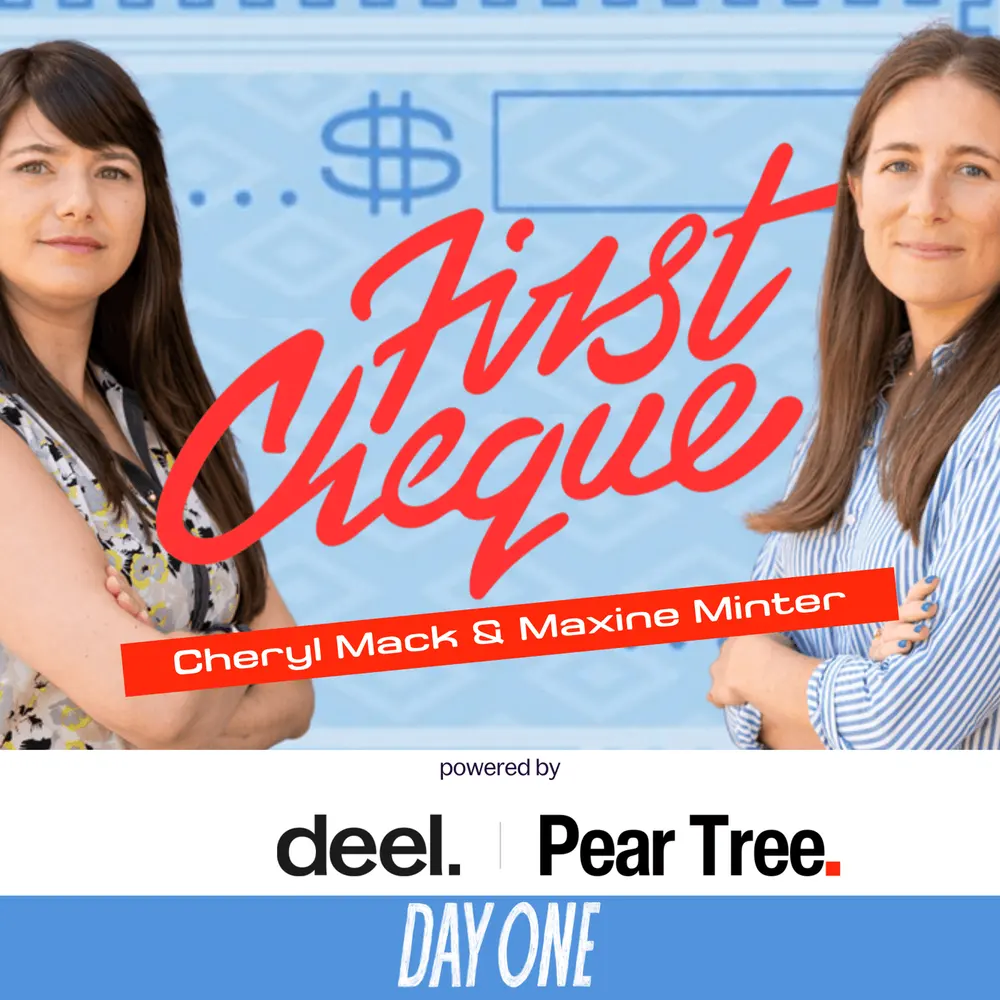 First Cheque with Cheryl Mack & Maxine Minter
Presented by Deel & Pear Tree
First Cheque with Cheryl Mack & Maxine Minter
Presented by Deel & Pear Tree 


 ▶
▶ ▶
▶ ▶
▶