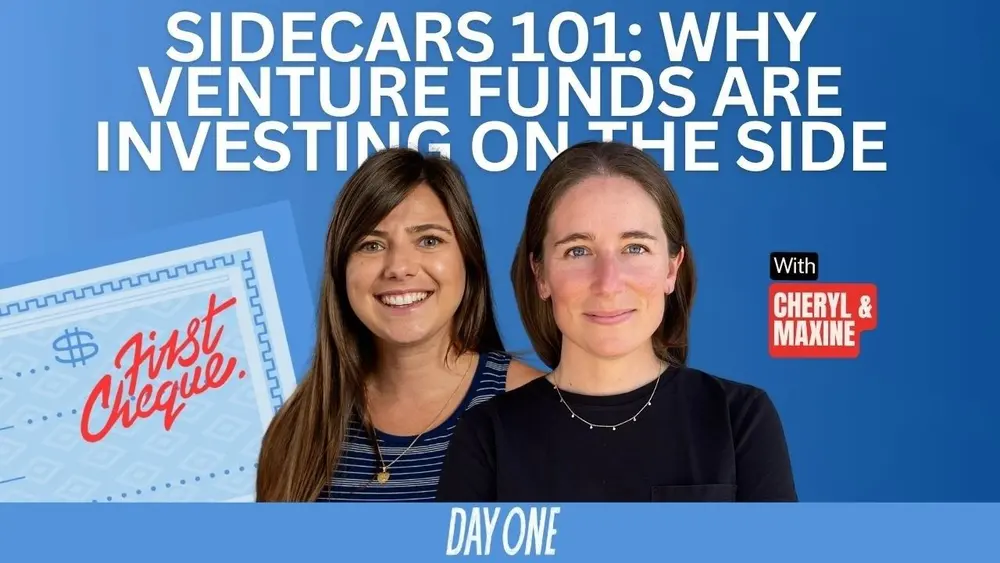
Transcript Synced · select any line to jump ▾ 0:02 Cheryl Mack: Founders scale faster on Deel. Set up payroll for any country in minutes. Hire anyone anywhere. Get visas handled fast and get back to building. Visit deel.com/dayone. That's d-e-e-l.com/dayone. 0:20 Maxine Minter: Okay, 3, 2, 1. 0:26 Cheryl Mack: Hey, I'm Cheryl. 0:27 Maxine Minter: I'm Maxine. 0:28 Cheryl Mack: This is First Check, part of Day One, the network dedicated to founders, operators, and investors. 0:32 Maxine Minter: Investors. If you want to be a better early-stage investor, this is the show for you. 0:35 Cheryl Mack: So TL;DR, if you don't want to suck at investing, listen up. All right. So this next episode I am super pumped for. This one is for all of you emerging fund managers, first-time fund managers, and thinking about raising a fund. 0:55 Maxine Minter: Yeah. Soon-to-be fund managers, whether that's this year, next year, the year after, in 10 years' time. I think this is a really helpful background, but also for entrepreneurs, you know, people who are working with fund managers as their key stakeholders, as investors, understanding their incentives, understanding the environment they're operating in so that you can understand how that might impact their ability to invest in your company to start off with, to follow on if they're already investors, or why it's really hard to get them to respond to a call in certain times of the year. 1:26 Cheryl Mack: Yes, 100%. And I think this is a good time of year to be publishing this one. Start of the year, sentiment's rebuilding. 1:33 Maxine Minter: Yeah, new year, new you, and/or new fund. 1:36 Cheryl Mack: Excellent, let's jump into it. So, actually we haven't even told people the topic, we just, you know, said who it's for. 1:43 Maxine Minter: Yeah, let's just get right in. Just get right in, just dive right in. You can guess what the topic is based on what we start to talk about. No, no, I'm kidding, I'm kidding. 1:52 Cheryl Mack: Okay, so topic is fund cycles. What are they? What do you need to know about how the cycle of a fund works? When do you raise? When do you close? You know, lifespan, everything. We're kind of giving it this like broad headline topic of fund cycles, but if anyone can come up with a more interesting title for this after you listen to it, please send us an email. 2:12 Maxine Minter: We promise to edit all of the headlines across all of our socials and the links to them. But yeah, so overarching, as you said, talking about the mechanics, the meat and potatoes of raising funds, deploying funds, raising your next fund, and thinking about how you structure those. 2:31 Cheryl Mack: You know why I think this is really interesting? And one of the things that I was listening to something else and was like, hey, I think we need to talk about this, is because we see these headlines sometimes where it's like, you know, Fund XYZ is raising this much to deploy into this category. And until I understood fund cycles, to me, I read that as in like, okay, cool, they've got that amount of money, they've raised it, and now they're going to start deploying. But often that initial article that goes out in the AFR or Startup Daily or whatever it is, that article is usually the kickoff of them saying, hey, we're going to start to raise. And that to me isn't intuitive. 3:11 Maxine Minter: No, totally. And I think also what isn't clear is sometimes there is those kickoffs and then they fail to raise. We saw a lot of this in '22 and '23, less in '24, but also some of that. And people kind of announced that they would be raising funds and then the funding market was really, really tough and they couldn't get them away. And so they weren't actually in market. So as entrepreneurs, using those announcements as an indicator that you're deploying capital or that a fund is deploying capital can be indicative, but it isn't necessarily that they are out deploying yet. So maybe that's a good kickoff. How do you start the process of raising a fund? 3:45 Cheryl Mack: There's this interesting concept in Australia where you kind of have to choose between raising what we call an ESB CLP, which is an early stage limited venture capital fund partnership. I almost got there. I almost got all the letters. 4:03 Maxine Minter: ESBCLF question mark. 4:06 Cheryl Mack: I almost got all the letters. Come back to me on that one. But that is a much more in-depth process but comes along with some tax benefits, and I think we did do a whole episode on that. 4:15 Maxine Minter: We sure did. 4:16 Cheryl Mack: So if you want to learn more about that, jump into that episode. But as a fund manager in Australia, you do need to kind of make that choice first of all. I don't think we'll go too much into it, but that's like a first one to think of is like, well, do I want to do this like more tax beneficial one, but has a lot more admin requirements, or can I start small and build up a really good quality fund without necessarily taking advantage of those tax benefits? But it is a lot easier to get started and get deploying and therefore get into market and therefore potentially earn returns. 4:45 Maxine Minter: Absolutely. And just as a Cliff Notes, if you don't listen to a whole nother episode on tax, the main tax benefit is that returns via your fund to your LPs are tax-free. There's some qualifications and stuff there, but consider it as a— well, actually it comes in as your, as income, right? It's tax beneficial and you also get a tax credit. 5:06 Cheryl Mack: So as a fund manager, it comes under capital account up until a certain amount. And then as an LP, it comes under, like it's tax-free. 5:17 Maxine Minter: Yeah. Yeah, that's right. Excellent. Love the expert in the room. Yeah. When you are thinking about kicking off, as you said, there's that consideration of, do I go ahead and register as an ESVCLP? And get these benefits for my LPs and myself, or do I kick off something smaller? I think a material thing that I would name here is I'm seeing a lot more micro VCs step into the ecosystem. So sub $10 million. So for an ASVCLP, you need to be raising $10 million or more. And so if you're raising less than that, then the decision is made for you. You won't be eligible for an ASVCLP. But you can actually start deploying once you're conditionally approved as an ESVC LP, if you haven't raised the entire thing, but you have to be pretty sure you're going to get to that $10 million. Otherwise LPs will invest expecting tax benefits and they will not accrue to them. So it will be pretty, a pretty uncomfortable conversation. 6:10 Cheryl Mack: Yeah. It's also interesting that the conditional and unconditional status of getting the ESVC LP as a fund, they give you 2 years to do that. So there is an underlying assumption there that it could take you 2 years to raise a fund. What are you seeing in market? Like I've seen some funds who who told me they were raising 10 years ago and are still raising said fund. 6:29 Maxine Minter: The US, at least from the data that I've seen, top quartile is 4 months. So from initial raise, and that's in the US ecosystem. So the US ecosystem has a similar process. They measure from first close. So first money in, in your first close to final close, last money in, in your final close. And that's 4 months, which is like outrageously fast. 6:50 Cheryl Mack: Oh, interesting though. I'm thinking about like anecdotally the funds I've heard who have said, hey, we're raising, until final close, not from first close. I'm thinking like the first time I heard them say, hey, we're raising, here's my IAM. 7:02 Maxine Minter: I don't, obviously, I mean, I only have anecdotal data on those ones as well. I would say like April Underwood did it in 12 in the US, I think, for Adverb Ventures. I'm sure there are others that have raised much faster than that. 7:19 Cheryl Mack: Somewhere between 12 to 24 months is kind of my, guesstimate there. 7:23 Maxine Minter: Sorry, 12 months is in the middle of the bell curve. In the US, you have to raise in 18 months, so it's a pretty precipitous drop-off. 7:29 Cheryl Mack: What happens if you don't raise? 7:31 Maxine Minter: Just, you don't get the necessary confirmation, like SEC confirmation. So once you start raising, kind of, you have to close within 18 months, and so you just close at whatever price you've got. 7:42 Cheryl Mack: But their version of once you start is first close, right? Not once you say. 7:47 Maxine Minter: First money in, in your first close. So if you do like a rolling first close, let's say it takes you 3 weeks to finalize checks, it's when the first dollars hit your bank account, I believe, is when the timer starts, which can catch some people. Whereas in Australia, we don't have that. As you said, there you can be raising. 8:06 Cheryl Mack: It's just when you're conditionally registered, if you're doing an ASVCLP. 8:10 Maxine Minter: Right. Or if you're not doing an ASVCLP, if you're using a kind of traditional trust structure, you can just keep going. 8:16 Cheryl Mack: Yeah, which is really interesting. 8:17 Maxine Minter: So yeah, between 12 and 18 months is the usual that I've seen. 8:20 Cheryl Mack: Which kind of begs the question around like, well, if you, if you want to start deploying in 6 months, then is it realistic to be able to raise that fund in that time? Probably not. Right. And then also if you're thinking about doing a second fund and your timeline around, usually I'd like, from what I've seen, usually funds will be deploying the capital. So once they've done that second close, they'll deploy the capital within 2 to 3 years from that time. Right. 8:47 Maxine Minter: Correct. Yeah. So fund deployment periods, you usually have to commit to in your fund docs, and there is some flexibility there. They're not, you know, hard and fast, but it's not like we'll deploy in 2 and you deploy in 4. And the reason for that is a big part of funds management and investing in this asset class is vintages. We've talked a little bit about that on this podcast. And so if I'm investing in a 2023 vintage fund, and I'm expecting that fund to be a collection of investments over the years '23, '24, and '25, if I then bundle into that '26, '27, '28, that's not really not really the diversification I was hoping for. Or alternatively, if you say to me you're investing in '22, '23, and '24, then you deploy all of your capital in 2022. Also not really the thing I was investing in. 9:30 Cheryl Mack: Also not what I was aiming for. 9:33 Maxine Minter: There's some flexibility on the edges, but not a material amount. So anywhere between kind of 2 to 4 years is the deployment cycle that you've seen. I would say in this current market, I'm seeing lots more 4s than I'm seeing 2s. 2s was a very kind of 2021, 2020 2022 era thing to do. 9:49 Cheryl Mack: Lots of good deals, deploy, deploy, deploy. 9:51 Maxine Minter: Deploy, deploy, deploy. Oh, turns out they weren't such good deals. But '23 and '24, I'm seeing people extend out those deployment periods. And this is all subject to negotiation, right? You can start deploying on a 2-year fund cycle and then determine, hey, that's not going to be the right thing for me. And if you can renegotiate those terms with your LPs and your, you know, the folks that invested in your fund, then you can extend it out to 3 or to 4, or you can build that flexibility into your deal documents. 10:15 Cheryl Mack: First comment, I love that we have adopted wine terminology on fund cycles in general. Just vintages is fantastic. I have actually gotten a few like wines from funds that I've invested in with the year on them, which is kind of cool. 10:30 Maxine Minter: Oh, that's cute. I like that. 10:32 Cheryl Mack: Second comment, or it's more of a question. You say this is negotiation, but like let's say you've got 50 LPs in your fund, are you going to go back to all of them and be like, hey, actually, this isn't working, I want to deploy over 3 years instead of 2, do you get them all to like sign a yes, you're good? Or like, is it just conversation? Like, what does that actually look like? 10:53 Maxine Minter: That's a great question. I've actually never seen the meat and potatoes of how you actually deliver that. I know anecdotally folks just negotiate it with their major LPs and there's sometimes like a defined term major LPs in their LPAs or in their issue documents in Australia. Sometimes it kind of depends on how many LPs you're working with as well, right? Like if you're working with 50 LPs, and you're planning on changing it from a 2 to a 4, I would argue that that's a fairly material change and would imagine that you need to get kind of re-executed documents from everyone. 11:24 Cheryl Mack: Buy-in from everyone. Yeah. 11:26 Maxine Minter: Where if we're talking about, you know, 3 to 3.2, it's probably not something that's material enough for you to need a documentary change, but it is still worthwhile having a conversation with LPs. 11:37 Cheryl Mack: Or at least an email heads up. 11:39 Maxine Minter: Yeah. 11:40 Cheryl Mack: And an explanation. 11:41 Maxine Minter: I mean, at the very minimum, If you can't have a verbal conversation with your LPs about a topic like this, the only way to get in front of them is an email, then I'd seriously consider deepening that relationship or finding new LPs for fun too. 11:55 Cheryl Mack: That or, like, I do know a few funds that have 100+ LPs, and many of them are small checks, and it's probably just not, like, you just don't have the time to give every single one a call. Yeah. So I could see like, you know, the bottom 20 of them just getting an email. But yeah, I think that makes a lot of sense. I have not personally gotten that email, though I will say anecdotally, a lot of the funds that I'm invested in are deploying very slowly to the point where like my capital calls are like 5%. 12:26 Maxine Minter: And I'm like, perfect. 12:29 Cheryl Mack: Yes, let me send you in the thousands. 12:34 Maxine Minter: Oh dear. So I think, I mean, that's a really important point as you're thinking about, for those folks who are thinking about raising a fund. Either Fund 1 or Fund 2, is having a serious think about what is the deployment pace that you want to meet. When you are raising faster, i.e., you're doing 2-year deployments and you're raising every 2 years, there's not a lot of break between fundraisers depending on how long it takes you to raise a fund. 12:56 Cheryl Mack: That's what I was getting at is like, well, if I do the math, I'm like, all right, it takes 18 months to raise a fund. You deploy in say 2 to 3 years. And then this kind of brings us back to this concept of like, don't run out of money as an investor, fund manager. 13:11 Maxine Minter: Super important. 13:12 Cheryl Mack: Don't run out of money. So like you kind of have to start raising the next fund when you close the first one. 13:20 Maxine Minter: Which is a tough thing to pull off, right? I would venture a guess that anecdotally, the number of fund managers who are deploying out of 2-year funds also correlate to the number of fund managers who are raising funds sub-6 months, right? They strike me as like fast raise, fast deployment strategy. So you might be doing smaller funds, for example, or you're Naval. 13:41 Cheryl Mack: Or you're just, you're just that person. 13:44 Maxine Minter: You're just a boss. Yeah. And so you have, you know, pretty limitless access to capital and can pretty quickly raise and then be deploying behind that strategy. Whereas, you know, if it's taking you 18 months to raise, then you probably are not in a position to be doing 2-year deployment periods because you'll likely be having conversations with LPs ahead of a new fund pretty much while you're still closing those same LPs on fund 1, which is a pretty tough conversation to pull off. 14:14 Cheryl Mack: Yeah, it's a bit awkward. Like, hey, great, you just invested in this one. I've made zero investments. Uh, you good to go into fund 2? 14:21 Maxine Minter: Right, right, exactly. 14:22 Cheryl Mack: Oh, and the nav is negative because we took out management fees. 14:26 Maxine Minter: Oh yeah, by the way, did I mention that you've gone backwards before you went forwards? 14:32 Cheryl Mack: Wanna give me more money? 14:34 Maxine Minter: Exactly. Tough conversation to land, as you can probably imagine. So most funds, and especially in this market, most funds are doing 3 to 4. So they're raising for, you know, 12 to 18. 14:44 Cheryl Mack: 3 to 4 years deployment period, and then raising every like 2 to 2, yeah, 2 years. 14:51 Maxine Minter: Pretty much, yeah. So the rule of thumb is you start raising the next fund when you are roughly 75% deployed. 15:00 Cheryl Mack: Ah, look at that rule of thumb. 15:02 Maxine Minter: Rule of thumb. So some people do it earlier, right? If it's been tougher for them to raise. So in this market, you would expect more people are doing it slightly earlier. Maybe they're two-thirds of the way through their fund. So 66% of the way through their fund. It's tough to do it any earlier than that because once you start having those conversations, it's similar to a founder. Having conversations about fundraising means you're fundraising. And so, you know, once the momentum kicks off and you really want to foster that momentum in your raise, that you need to be ready to kind of run at it. So you need materials and data rooms and all of those kinds of things. 15:35 Cheryl Mack: Just like a startup. 15:36 Maxine Minter: If you're raising fund 2, you want some pretty juicy nav numbers. You ideally are anywhere between kind of 1.8 to 2x nav by the time you're raising your next fund. If you're raising from institutionals, they generally look at 3x funds ago. So you can imagine if you were an emerging fund manager. 15:55 Cheryl Mack: Hey, I'm first fund. 15:57 Maxine Minter: Yeah. Fund 1 minus 3 equals no funds for them to look at. So you're not raising from them. But if you are raising from family offices or those folks, they can sometimes be comfortable, or the bigger institutional family offices, they'll sometimes be comfortable to look at kind of Fund 1 and Fund 2. And that's the point at which you start talking about to those institutions. 16:15 Cheryl Mack: So what about this concept of like, I think angels get told this concept of don't run out of money. A lot. And we talk about that as angel investors, like don't run out of money. How does that apply for fund managers? Like that's still a really important concept, right? Like you don't want to run out of money as a fund manager because it still means you can't deploy. But yeah, what are your thoughts on how that applies to fund managers? 16:35 Maxine Minter: I mean, I think that the best analogy that I can think of when people talk about this in fund management is imagine a scenario where you are a business owner and you have nothing to sell. Like you're a supermarket, you just got no food to sell. Like, what do you think is going to happen? People are going to not come to your supermarket anymore, right? They're not going to come to you to purchase the product. So depending on how long you are in market for without anything to sell, it becomes kind of performative for you to meet founders. Now, sometimes fund managers will still take those meetings if we're talking about a month or two, that's kind of bridging that period. I think that that's reasonable, but there's a point beyond which it starts to become you know, slightly disingenuous that you're meeting founders that you're actually not able to invest in. You're wasting their time, you're wasting your time. And so you need to make sure that as a fund manager, you always have enough capital. There's also a fund construction reality, right? We keep beating that drum on this podcast of the importance of the power law. I actually don't know the month of the year that Canva raised their first round. Let's say it was somewhere between July and October. Of that year. If you just happened to have no money in that period of time— 17:43 Cheryl Mack: And you saw them, you could have invested. 17:46 Maxine Minter: And you didn't invest, like that is a sucky way to miss one of the best success stories out of the Australian ecosystem. So there is a reality that, you know, you have to have that surface area with luck by having deployable capital so that you can deploy when you meet really interesting companies. Also from a fund perspective, you don't want to have a situation where let's say you're investing over a 3-year period, you run out of money at 2.5, and you're just not deploying for that second half. Because then again, your LPs are not getting the diversification, the time-based diversification that they are paying for. 18:20 Cheryl Mack: That they thought they were getting. It's kind of like your supermarket's empty, but you're on the street corner still asking people to come in. 18:27 Maxine Minter: Correct. Yeah. Yeah. You're still like hawking on the street corner being like, step right up, tomatoes on special with the flippy sign. 18:35 Cheryl Mack: You know, you're out there like spinning a sign. 18:37 Maxine Minter: Yeah, exactly. Like, it just is a bad dynamic for everyone. 18:41 Cheryl Mack: Good analogy. I like that. 18:43 Maxine Minter: If you're raising Fund 1, this is obviously not something you have to be thinking about. If you're an angel investor, it's something to think about, right, to make sure that you don't run out of money. But if you're raising Fund 2 or you're planning to raise Fund 2, then it's something really to think about, especially as you are kicking off Fund 1 and ideally are going to raise fund 2 in a couple of years. Deployment pace really matters. Check size really matters. The right math around reserves really matters so that you don't run out of dry powder before you get to that, like, in range for that deployment period. 19:18 Cheryl Mack: Next fund. 19:20 Maxine Minter: Yeah, for that next fund, and then get stuck in a situation where you need to raise capital early or not be able to raise. Because you need to give some time for your nav to grow sufficiently that you're an interesting fund to invest in for Fund 2 or Fund 3. And then you are, you need to make sure, you know, you're really in a tough spot. 19:39 Cheryl Mack: It makes me nervous, honestly, when I think about stuff like that, because I'm like, this is, this is the scary things about raising a fund. And this is why I don't want to do it until I'm like absolutely certain. Because the other thing is like, this is a 10-year thing, right? So each time you commit to raising a new fund, you're committing to another 10 years of doing this. 19:59 Maxine Minter: Yeah, to 12. Yeah. Most of them have 2-year extensions, so 12-year commitments. 20:05 Cheryl Mack: 10 to 12 years. What do you— do you know what you're doing 12 years from now? 20:08 Maxine Minter: I don't know. I'm operating this fund. Oh, right. Yes. I've already committed to it. Actually, for 10 years, 10 more years. 20:16 Cheryl Mack: You know what I think is interesting though? I think the micro funds do have a bit more flexibility in that. That way. The microfunds that I've seen have been able to say, okay, we're raising a fund, we'll deploy into 20 companies over 2 years, and then we'll decide. If we run out of money, that's fine because this is a specific purpose of what we're doing this for. So I do see microfunds having a bit more flexibility on that. Would you agree? 20:41 Maxine Minter: I would totally agree. Yeah. And I think it's one of the arguments for running a couple of syndicates and then microfunds before you step up into building a bigger fund, like an MVP fund, you know, first of all, testing out your investment thesis is really important and that you can like build a brand behind what it is that you're looking to deliver. But second of all, you know, it's something where you have flexibility, right? Like if your micro fund is $1 million, if you invested over 1 year or 3 years, depending on your LPs, there's probably a lot more understanding there. 21:11 Cheryl Mack: Yeah. 21:12 Maxine Minter: You can do it at the same time as your still operating, you know, there is an ability for you to have much more flexibility. No one's going to get annoyed if you don't start raising Fund 2, you know, when you are, you've deployed $750K. 21:26 Cheryl Mack: Where's the next vintage? 21:27 Maxine Minter: Yeah. Yeah. You know, it's not, it's not as intense. And so it allows you to kind of play around with it. It's kind of the equivalent of doing your learning checks, you know, deploying smaller check sizes when you first start off. So you can kind of run some water through the pipes and then kind of build from there. 21:42 Cheryl Mack: Yeah, 100%. One of the other things that I see or have heard anecdotally, curious to get your thoughts, is that funds tend to, and maybe this is with the bigger funds, but funds tend to deploy into smaller, like smaller checks into earlier stage, more riskier companies at the start of their deployment period, and then later stage, bigger checks, slightly less risky in our world, companies near the end of that cycle of the fund deployment period. Is that something you see? 22:15 Maxine Minter: Super interesting. I, I have heard it narrated anecdotally from the fund managers, but I haven't seen it in their behavior. And from what I can see, the emerging fund managers, they're more conservative investing out of like when they're deploying and raising at the same time. Because there's almost more scrutiny on investment decisions coming in, because they're looking at the portfolio that's coming into that present fund, then looking at the, the fund overall. Whereas when you are a larger fund manager, let's say you're on Fund 4 or Fund 5, you have sufficient track record that they can look at the stacked funds and make a call across that track record, as opposed to what's specifically going into that fund. 23:00 Cheryl Mack: See, I think it tracks though, because if you think about like, let's say it's a 4-year deployment period and your fund lifespan is 10 plus 1 plus 1s, you know, potentially 12. 23:11 Maxine Minter: Yeah. 23:11 Cheryl Mack: And you're at the end of that 4-year deployment period, you're going to be looking for companies that then need to be able to possibly exit by within 6 to 7, maybe. Max 8 years. So, it makes sense to invest in slightly later stage companies because you're looking at a shorter exit time horizon. I also think that anecdotally I've heard things like, well, at the start of the fund you're excited, you're like, "Yes, amazing, super great idea, early stage stuff all the way." And then by the time you're getting to the 4-year deployment, you've kind of got 3 to 4 checks left and you're starting to think about the next fund and you're looking at that NAV number and you're thinking, "Oh, Maybe I need a safer bet. 23:58 Maxine Minter: Shoot. Yeah, I think that's a wonderful point. I do think you definitely see folks deploying to later stage companies if they've got a multi-stage strategy, but that's more a thoughtful fund construction as opposed to like a trending psychological state over time, right? It's more, yes, absolutely, they're lower risk because they are later stage, but that's because, as exactly as you said, right? When you need to make sure that they're paying out or that they have a likelihood of exiting in that time period. You don't want to be in a situation, or ideally don't want to be in a situation where you're distributing back shares when you're closing the fund at year 12. Yeah. Or being forced into a situation where you're having to kind of liquidate positions that you think have more value to be accrued. It does happen. 24:46 Cheryl Mack: And at huge discounts usually, right? 24:48 Maxine Minter: Right. Yeah. Well, yeah, if you're selling them at secondaries or even kind of selling them as part of a transaction,, you know, but forcing the company into a transaction to try to kind of get those— that liquidity back into the fund. That's not pretty. So yeah, I think that's absolutely the case, right? For folks that are running multi-stage strategies, there is something to be said for that kind of having lots of cash recently raised, kind of ready to be deploying. I can definitely see a psychological state where you're more likely to make more risky investments. Within your investment strategy when you're first deploying out of that fund. So I guess that is a mental note for the entrepreneurs listening to this. If you happen to be raising something particularly speculative in your stage, try and hit a fund as soon as they've raised, as opposed to on the back half of their deployment. You might be more lucky. 25:35 Cheryl Mack: Hey, you just raised, we're super risky, go, go. 25:41 Maxine Minter: I wonder for you, I mean, I think you get to see some really interesting micro funds, right? Like an amazing vantage point across the microfund ecosystem. Do you see these dynamics anecdotally across that group or do they have less of the pressure of fundraising cycles? 26:00 Cheryl Mack: I think they have less pressure. Microfunds tend to have more flexibility, I think because people aren't writing millions of dollars into— like if $20 million fund, you've got at least a couple $5 million checks in there, at least a few 1 to 2 millions. Microfunds generally don't have anyone who are writing over like a $500K check, right? So, you know, maybe in terms of the— what that means for the wealth is still similar, but I think it's just a smaller amount of money. And so people aren't as scrutinous about it, if that's a word. I think microfunds also by nature have to be more thematic and niche. And so that dynamic comes into play more rather than like, oh, let's just find big bets and exciting stuff. It's like, well, we've said that we're going to be investing at the like seed stage, pre-revenue, you know, tiny 2-person company in the medtech and healthtech and digital health, big AI data space. It's like, well, that's a very specific group of companies, right? And you can do that because if you're only raising $5 million, then like there probably is $5 billion worth of investment deals that are great out there. And so if you're sticking to that thesis, then I think the rest of it doesn't matter too much. 27:23 Maxine Minter: It's true. I mean, I think that you get a lot more flexibility when you are operating a microfund as someone operating a microfund versus, you know, taking that step up where you do have quite significant and often much more kind of mature capital allocators. 27:38 Cheryl Mack: Sophisticated LPs. Yeah. Once you start getting supers involved, then there, it's a whole other ballgame. 27:43 Maxine Minter: Yeah. That's a whole other ballgame. That's a whole new kettle of fish for fund managers. 27:49 Cheryl Mack: We should get someone on to talk about what it's like to take super money into your fund. 27:53 Maxine Minter: Oh, we should. Fun fact, I've heard this anecdotally that the superman, the supers haven't added any net new fund managers since 2019. 28:01 Cheryl Mack: Yeah. I think they've only deployed to the top 3. 28:03 Maxine Minter: Yeah. Wild. That means they held back 2020, 2021, 2022. They didn't invest in any of any net new fund managers coming out of that, which I can kind of make sense. I can kind of understand because, you know, they're risk averse. So they're probably investing in funds 4+ and there's just only a handful of funds that are anywhere near that maturity. And so that sounds like they're investing in like 3 or 4 of the funds that are at that level of maturity. 28:30 Cheryl Mack: Yeah. And it's not just maturity, it's size, right? Like ESPCLP funds have a mandate that no one LP can own more than 30% So, you need a fund that is mature enough for them to consider it, but also large enough that when they write their really large checks, because SUPRs have to write really large checks, like they're not getting out of bed for a million-dollar check here. So, then it asks, they want to write their really large check, but it can't be more than 30% of the funds. You have to have a big enough fund to be able to accommodate that. 28:56 Maxine Minter: Right. Which is a pretty normal dynamic across a lot of institutionals, right? And the reason they don't want to be more than 30% of the fund is it's skews behavior. Well, theoretically it skews behavior of the fund managers. 29:07 Cheryl Mack: Yeah. That's actually a regulation for ESG CLPs. 29:10 Maxine Minter: Oh, interesting. 29:10 Cheryl Mack: Okay. Yeah. So it's not, it probably is a desire from the super as well, but there may be a scenario where the super is like, oh, well actually this is perfectly on theme for us. Like, yeah, we'd love to be your anchor. Cool. We'll give you $30 million. Oh, but you're only raising $50 million. Crap. Okay. 29:27 Maxine Minter: Yeah. It looks like you're raising a $90 million fund. 29:31 Cheryl Mack: So I could see a scenario where the super might want to do it, but no, the SVCLP regulation doesn't allow it. 29:37 Maxine Minter: Hmm. Yeah. Very cool. Or not actually not that cool for the emerging manager ecosystem. 29:41 Cheryl Mack: No. 29:42 Maxine Minter: I don't think we've done a good job in a lot of larger ecosystems. The super funds have partnered with fund of funds or actually with fund managers and done kind of emerging manager programs where they invest in the fund of funds and the fund of funds invest in the emerging managers and super fund gets to invest in the emerging manager that's like top of the grade for that, or the managers top of that grade for that, that fund of funds. But I think our ecosystem is probably too small. It would be tough and too fee sensitive. 30:10 Cheryl Mack: I think our ecosystem and the incentives we've placed around fund managers are good, but absolutely due for a refresh. 30:22 Maxine Minter: Absolutely. 30:22 Cheryl Mack: They have been designed with a lot of good outcomes in mind, but we have outgrown them pretty quickly. And I think that's a testament to how quickly our ecosystem has grown over the last 10 years, but we have outgrown them. And so, they are now holding back some of these dynamics that should be helping our ecosystem progress to being a more mature ecosystem that has some of those things. But I think the current regulations, especially around the ACVCLP, are holding them back. Now, I do know, and I will give government credit, I do know that they are open to suggestions. And I know there are some players, including the big, the big three and some law firms that work for them that are pushing some of these changes to improve the system. But personally, I don't think it's quick enough and, you know, we can always do better. 31:05 Maxine Minter: Right. Yeah, absolutely. 31:07 Cheryl Mack: One of the other things I think is, uh, really interesting to cover is around the fund size relevance and why it matters. And often what I see is that this like kind of $40 to $50 million cutoff. So when I look at funds they will usually be somewhere between, they'll be like, well, we're raising between $25 to $50 or $40 to $50 or $10 to $50 or like $10 to $40, right? So like, I feel like there's this invisible line at the $50 million mark and I'm actually kind of unclear as to why. 31:38 Maxine Minter: Oh, interesting. I would imagine those funds, I'm assuming they're all early stage funds. 31:44 Cheryl Mack: Yes, but even like, I, Then the next bucket up is like, okay, well, we're raising $50 to $75 or $60 to $80. Or so, like, I don't think I've ever seen a fund that says we're raising $40 to $75. Like, nope, there seems to be this line there. 32:02 Maxine Minter: I would imagine that that line probably represents the realities of fund sizing that you do, right? And kind of similar to, for founders when they're thinking about how much How much do I need to raise for my company? It's a similar dynamic for funds. You're having to think about how many companies can you deploy to? What kind of ownership positions can you buy in those companies, right? You can't deploy a $3 million— well, you can, you can, but it's inadvisable to deploy a $3 million check into an idea stage company at a valuation of say $30 million. It's done, but it's not, not a great outcome for the ecosystem. There is a certain number of companies that you can support, right? For a super concentrated fund, that's often around the kind of 5 to 7 mark. And you'll see that at growth stage. At the very earliest stage, it's, you know, anywhere between— well, it can be up to 100, but mostly you'll see funds around the kind of 20 to 40 mark doing early stage stuff because it's much more hands-on and there's a certain amount of support you need to give them, but you need diversification. . So you're trading off the ability to support them, diversification, how much you can meaningfully invest into those companies at current and predicted market rates. And then lastly, the reality of the venture ecosystem or the venture fund model is that you, your revenue for your business is 2% of the committed capital to your fund that you take as management fees. So you can imagine you have an incentive to increase funds under management. Increase the amount of capital that's in these funds because you're taking 2% of that number as your revenue. But also if you raise too much, you can't actually meaningfully deploy it into the companies behind the strategy that you're chasing. So I would imagine at a $50 million fund number, that's kind of the upper max for the size of check you can write in, plus the number of companies that you're looking to invest in over that period. Whereas if you're doing growth stage, you may be doing slightly less companies, but you are doing a kind of a larger check size. Obviously for these funds at the $50 million mark, those people are usually doing a primary fund and then an opportunity fund. So primary fund being the company, the fund that you invest in, probably your initial check, maybe your second check after that, sometimes even a third check. And then you have an opportunity fund or like a follow-on fund. So you're maintaining your positions. Over that period of time. 34:30 Cheryl Mack: Yeah. We tend not to see first or even second fund managers doing opportunity funds though. Typically, we see like you'd start with a core fund and it's not until like what, fund 3 or 4 that we start to see fund managers going, okay, maybe it makes sense for us to do an opportunity fund now where that— and for anyone who's following along at home, the definition there is like it's a fund dedicated to just investing in the follow-on rounds of your initial investments because their stage at which they've gotten to is too later stage for the thesis of the current fund that you're deploying, but they're still great investments and your fund has pro rata rights, which means that you are essentially foregoing the potential value there because it doesn't fit into the fund thesis that you have, but you have the ability to invest. So a lot of funds will then raise an opportunity fund or a follow-on fund or continuity fund. I'm sure there's 6 other names that I'm forgetting. 35:26 Maxine Minter: Those are the main ones, I think. I don't know that I've heard any others. Out there. 35:30 Cheryl Mack: Uh, again, we'll just like, just call it whatever. It's just going to get totally— 35:36 Maxine Minter: Yeah. 35:37 Cheryl Mack: That, that fund is designed to then take advantage of those pro rata opportunities and to double down into, uh, into those winners essentially from the first fund or first or second fund. And often I think the opportunity fund will, uh, invest across. So like both, if let's say a fund has a Fund 1 and a Fund 2, the opportunity fund would not discriminate between the two. You wouldn't do an opportunity fund just for Fund 1, you would just do one opportunity fund that would invest into companies that are doing well from both of those, uh, vintages. 36:06 Maxine Minter: Yeah, the little lulls from the word vintage every single time. It's also a methodology that I'm seeing a lot of people use to kind of benefit from the fact that companies are staying private for longer. So you can imagine, as you said, right, Fund 1 you don't really raise an opportunity fund because none of the companies you invest in there will be mature enough for the opportunity fund to have anything to invest into. Fund 2, that's probably also true, right? Depending on the stage that you start investing, you know, you're usually coming in 2 rounds after that. So it's 3 to 5 years. Kind of after your initial investment, but by Fund 3, you then ideally have a group of investments that you are in a position to follow on behind that you have fully capped out your follow-on capacity within the existing funds. But it also is a good circumstance, like we're talking about before, in circumstances where companies are private for longer. Some funds are starting to sell their primary positions to their opportunity funds. 37:01 Cheryl Mack: Thereby generating those returns for their initial fund LPs. 37:06 Maxine Minter: Yep, correct. And often not necessarily like— there is overlap in those LP groups. It's not a one-for-one, but there is overlap in those LP groups, and they do it as part of a transaction. So there's no kind of untoward valuation dynamics. So they do it as a part of a transaction. They sell part of their position to their opportunity fund and their opportunity fund holds it for another couple of years before that fund matures. 37:27 Cheryl Mack: And theoretically you could, if you wanted a less risky, risky relative to our asset class, keep in mind all of these are extremely risky relative to the broader investment market, but less risky in our world, then you could only invest in an opportunity fund and theoretically it would be only investing in those winners and have better access than if you were to invest into a later stage fund is a thesis. 37:55 Maxine Minter: Right. I think often for the kind of top quartile funds, they actually only allow existing LPs into their opportunity fund for that reason, you know, to try to diminish the number of people that just want to cherry-pick, so to speak. Having said that, the majority of your returns come from your first check in your winners. And so sometimes you have underlying funds that perform on an IRR basis to a higher degree than your opportunity fund because you hold it for longer and you come in at higher valuations. 38:25 Cheryl Mack: I think though, if you were already invested and you decided not to go into, like, let's say you went into Fund 1, Fund 2, and then you were like, hey, I'm not actually down for Fund 3, but I'll do your opportunity fund. I bet the fund would be like, yeah, yeah, okay. Yeah, yeah. 38:38 Maxine Minter: No, I think they'd let you in. 38:41 Cheryl Mack: Yeah. One thing that's not talked about too much, or actually in our world is probably talked about a lot, but I think isn't covered in the broader investor LP landscape, and especially for emerging fund managers, is this concept of when do you start trying to generate exits, right? Everybody loves to raise a fund, everybody loves to deploy, but when it actually comes to that 7 years down the road, exits don't just materialize. I think when we were talking to Georgie, that was one of the things that she was talking about. They put a lot of focus into working with the companies to generate those exits. So, in terms of our fund cycles, if you're an emerging fund manager thinking about, "Okay, well, I'm— here's my period of raising, here's my period of deploying, here's my period of raising second fund." Where in that cycle do we put the start working on exits? 39:33 Maxine Minter: Right. Well, for some folks, they say start working on it kind of the year after your deployment period. If you're sitting on a 10+2 and your deployment period is 3, kind of year 4 is when you should be starting to think about exits. And, you know, the first exits that you will be facilitating will be to acquisitions, right? They're companies where the thesis didn't prove out or the market conditions didn't materialize in the way that you thought they were going to, or there was execution misses, and the outcome being that it's very unlikely the company is going to be able to get to where it needs to get to. And, you know, they might not be able to raise again. So you're starting to see kind of for years 4 to 6, you're starting to see the middle of your pack start to need— 40:14 Cheryl Mack: Yeah, it's the mediocre ones that like got somewhere but not all the way there. 40:19 Maxine Minter: Correct, right, exactly. And so for that group, you're probably starting to work on relationships, starting to work on strategic partnerships and those kinds of things to get them into an acquisition position in that period of time, kind of for anywhere all the way through to kind of year 12. That's the majority of the work that you end up doing in that period of time. It's actually, side note, why it can be so disastrous for a company if the partner that invested in them originally ends up leaving the firm. Then that company, when it comes to exit time, it can be a really bumpy transition transitioning to a different partner. Because the partner might not know the business that well. 40:58 Cheryl Mack: And getting their buy-in. 40:59 Maxine Minter: Exactly. 41:00 Cheryl Mack: Yeah, 'cause it's a lot of work. I mean, the way Georgie described it. 41:03 Maxine Minter: Yeah, yeah. I mean, also a lot of these early M&As, they are tough, right? For the founders. 41:11 Cheryl Mack: Yeah, 'cause there's no clear winner. It's not like, hey, you're nailing this, give it to me for $10 billion. It's like, ooh, we might buy it. 41:19 Maxine Minter: Right, and which over the last couple of years, the answer was we are not buying it. 41:22 Cheryl Mack: Yeah. 41:22 Maxine Minter: We're not doing that. And this is the kind of lament that you've been hearing from the Valley for the last couple of years, which is no one's buying. And by the way, you're making it much harder from an M&A regulation perspective for even the middle of our pack to be bought because you've changed the amount of overview that you are giving these M&A. TBD with Trump in what's going to happen there. But it was a kind of big, big challenge, the middle of your, of the venture portfolio, it was really tough to start to see exits from that group. So you're getting not a lot of liquidity through. And as a fund manager, if you're getting to fund 5 and you've got no DPI, which is distributed paid-in, i.e., you started to actually pay back that fund, it's really hard for you to stay in business even by fund 3 to 4. 42:10 Cheryl Mack: I'd be surprised if you got to fund 5, right? Like fund 4, I feel like you'd still be looking at like, even if it was 0.6 returned. 42:18 Maxine Minter: Yeah. 42:20 Cheryl Mack: Like, I'm— surely you're not raising Fund 4 with zero DPI. 42:23 Maxine Minter: Well, I think it depends on how much your TVPI is looking at, especially over the last couple of years, right? There's a lot of people where their DPI is pretty woeful on Funds 1 and sometimes even Fund 2 because of the M&A environment. And I think LPs, that is what's sitting underneath the frustration that a lot of LPs have had. Which is they're just not seeing that liquidity back. So I think fund 5 is like, you're dead in the water. 42:47 Cheryl Mack: Similar with angels though, right? Like, I look great on paper. 42:50 Maxine Minter: Right. 42:52 Cheryl Mack: Not so much in real cash. 42:53 Maxine Minter: Right. Not real cash. So I think when you're thinking about this as a fund manager or you're planning on being a fund manager, planning liquidity over that period of time can be really useful. There's not a handful of folks that are doing secondaries, but they can be valuable to develop a relationship with as you start to go along that journey, just in case the M&A environment is tough to navigate. Although all predictions are that it's going to be an easier year this year. 43:17 Cheryl Mack: And if you want a deeper dive into why M&A health matters, I think we also have an episode on that. So jump into that one. 43:25 Maxine Minter: Yeah. Us nerding out on liquidity dynamics. You'll love it. 43:29 Cheryl Mack: Spoiler alert, it's not all doom and gloom as I was worried it might be. 43:33 Maxine Minter: Right. No, it's great. You get money back. Liquidity, it's the best thing. 43:38 Cheryl Mack: Yay. Anything else we need to cover in fund cycles? I feel like this has been a pretty educational session. 43:45 Maxine Minter: Yeah, I think we've covered most of it. I think the last thing to say is it's impossible to get it 100% right, right? As you are planning on a fund 1, or maybe planning a fund 2 or fund 3, just try to be diligent and try to plan ahead. Ideally, plan it as you are building the fund as opposed to planning it at the end. So that you can set yourself up for success at the end. And the number of people that haven't fully planned out their deployment period is problematic. 44:11 Cheryl Mack: Yeah. You will see it in a deck, right? Like the fun deck will be like, yeah, 3 years deployment period. I'm like, yeah, okay, great. And then they get to the end or get halfway through and they're like, we're not on track. 44:22 Maxine Minter: Right, exactly. This has been awesome. 44:26 Cheryl Mack: Amazing. Thank you, Maxine.


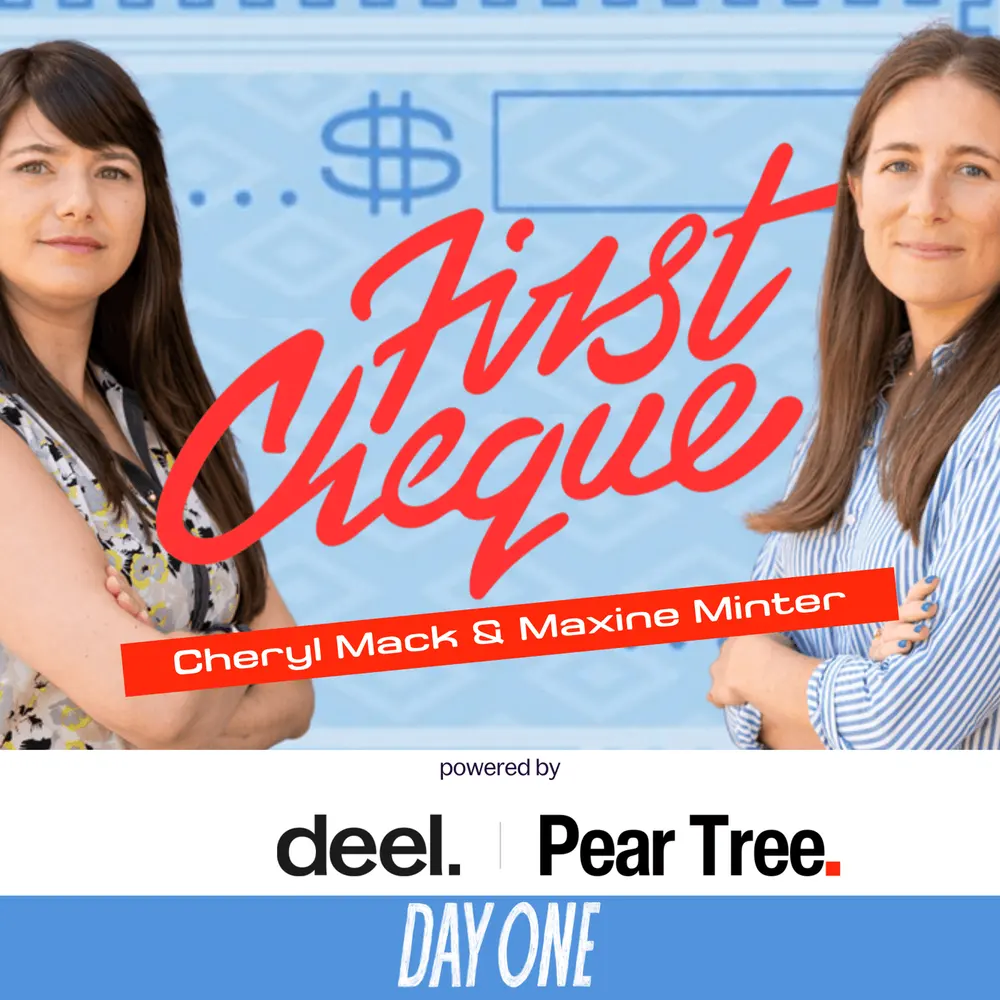 First Cheque with Cheryl Mack & Maxine Minter
Presented by Deel & Pear Tree
First Cheque with Cheryl Mack & Maxine Minter
Presented by Deel & Pear Tree 



 ▶
▶ ▶
▶ ▶
▶