Transcript Synced · select any line to jump ▾ 0:02 Speaker: Founders scale faster on Deel. Set up payroll for any country in minutes, hire anyone anywhere, get visas handled fast, and get back to building. Visit deel.com/dayone. That's D-E-E-L dot com slash day one. 0:23 Speaker: Are you building a SaaS business and looking to achieve compliance with SOC 2 and ISO 27001 or other security and privacy frameworks? 0:32 Speaker: Compliance can unlock major growth and build essential customer trust, but let's face it, it's usually time-consuming and expensive. 0:37 Speaker: And like really kind of a pain. 0:39 Speaker: That's where Vanta comes in. Vanta automates up to 90% of customer compliance tasks, making you audit-ready fast and saving you up to 85% of the associated costs. Plus, Vanta scales with your business, offering a market-leading trust management platform to continuously monitor compliance, unify risk management, and streamline security reviews. Join 7,000 global companies, including Atlassian and Dovetail, that trust Vanta to build and prove their security in real time. 1:03 Speaker: And for our listeners, Vanta is offering 10% off. 1:06 Speaker: Just go to vanta.com/first. That's vanta.com/first. 1:14 Speaker: Okay, 3, 2, 1. 1:18 Speaker: Hey, I'm Sheryl. 1:20 Speaker: I'm Maxine. 1:20 Speaker: This is First Check, part of Day One, the network dedicated to founders, operators, and investors. 1:25 Speaker: If you want to be a better early-stage investor, this is the show for you. 1:28 Speaker: So TL;DR, if you don't want to suck at investing, listen up. 1:40 Speaker: Happy holidays! We made it! We're at the end. Christmas is around the corner. 2020 is over. It's over, thank God. 1:50 Speaker: What a crazy year. 1:52 Speaker: Yeah, wow. Honestly, I feel like I'm crawling over the finish line. My fingers are on that white line and I'm so ready to get over the finish line. And what a year. Right? How crazy was '23? 2:04 Speaker: Like so many things happened this year. I just, I felt, I feel like I have whiplash from going, what, what, what, what happened? What now? 2:12 Speaker: Yeah, totally. I mean, I really like, I'm just trying to think back to the beginning of '23. Like I really thought that we were, it was going to be marginally better than '22. Like remember the back end of '22 was— 2:27 Speaker: Yeah, I felt optimism. Like going into '23, I was like, yeah, surely like '22 was nuts and that was a tough year. Let's, let's, I'm ready for '23. Like this is gonna be great. And then so many crazy things happened that it just kind of felt like the tech world was falling apart and putting itself back together again over and over again. And we were just on this rollercoaster ride. 2:49 Speaker: Right. 100%. I will say, like looking back on the year, I think Ingenuity was a real theme. But I'm excited to dive in today. Obviously, 'tis the season to be reflecting, looking back on the year. I thought, jump on the phone and chat about, you know, what happened in '23, a year in the rearview mirror. What happened? What didn't? What saved us? What sunk us like a stone? And look forward. 3:17 Speaker: Yeah, I mean, like, speaking of how tough of a year it was, I feel like we saw a lot of shutdowns. And we saw a lot of companies struggling to get that next round, some, a lot of down rounds, like probably the most down rounds I've seen in a number of years. So many, like, so many things that just, it was a really tough environment for founders to be building in, to be, for funds to be raising in. 3:42 Speaker: Mm-hmm. Yeah, man. It was like the toughest market to raise in, I think since 2012 on the data that I saw, at least for the US, right? They're like net new funds. Was the lowest it's been since 2012, which is kind of wild if you think about that. And I was just blown away by the founders in this ecosystem and the founders in this market, like the ingenuity they needed to show, the resilience they needed to show, just every single day chewing on glass. You know, I actually, I spoke to one of, a founder in my network early on in the year, and I have this distinct memory of kind of catching up with him and being like, how are you doing? And he was like, I am in a daily knife fight. And I was like, okay. 4:28 Speaker: Wow. 4:28 Speaker: I think that summarizes it. So there's that. Yeah. Okay. Okay. But I think that that's accurate, right? Like if you look at the headwinds that they had to face and what they had to endure through and the difficulty of getting capital away, the difficulty of closing revenue, sales cycles were longer, contract values were smaller at the same time as costs were rising because the inflationary environment. Founders this year lived through that kind of classic economic cycle, but reading it in the textbook and living it day to day where you're getting squeezed from both sides, just, it's savage. 5:11 Speaker: The founders that survived this though are the ones that like we are so excited to back as investors. And I think we saw a lot of that from founders this year of like that just sheer resilience, perseverance, determination to survive through. Like the number of times I had conversations with founders who were like, I'm thinking about just closing the door, shutting it down, or like looking to get acquired. 5:34 Speaker: 100%. 5:35 Speaker: And then on the flip side, the number of conversations I had with founders who were like, we know, like we just need to cut costs. We need to like create layoffs. We need to extend runway. We need to cut our burn. And like, we know how to do that. This is how we're going to do it. I'm just like, amazing. Like, I'm so impressed with the founders who were able to show that resilience. 5:58 Speaker: Absolutely. I mean, and some of the companies are coming out the other side of this like so much stronger, right? I think about the Employment Hero round, which I think took out top of the pops in terms of size around, right? 6:10 Speaker: Yeah, $263 mil. And they were one of Australia's newest unicorns in 2023. I actually don't know of any other unicorns that were minted this year, but Employment Hero Hero is one of them. Do you know of any others in Australia? 6:23 Speaker: No, I don't. I mean, there's surely there were, right? Like if you look at the data in '21, I can't imagine we went from as many as we did down to one. 6:32 Speaker: 6 new in '21? 6:34 Speaker: Yeah. 6:35 Speaker: 6 or 7 new in '21. 6:36 Speaker: Interesting. 6:37 Speaker: Uh, about the same in '22. Hmm. Interesting, actually, from like 2018 or so to like 2020, we minted like one or two a year, and then from 2020 onwards, it was like 6 to 7 a year. Like, we really jumped up. Um, don't quote me on those exact numbers, but I remember somewhere around like 2019, 2020, we went from like 1 or 2 to like 6 or 7. 7:00 Speaker: Oh, that's fascinating. 7:01 Speaker: I'm really interested to see what the numbers come out this year as to how many, but the one I know of is Employment Hero with the largest round of $263 mil. 7:09 Speaker: Yeah, I wonder if— I mean, that would be an interesting trend line, right, if we went back to 1 or 2 a year. And I wonder what that says about '21, '22, and, you know, not '23. I also— I mean, one of the trends we saw in this year is a tentative re-entry of international investors into the Australian ecosystem. You know, I started to meet a lot more folks that are Australia curious, I think is the way that I would phrase it. So especially big regional funds starting to spend a little bit more time down here after having pulled back pretty solidly in 2022. 7:47 Speaker: Oh yeah, for sure. Like there was zero to very little competition, um, the previous two years, whereas I think the investment space is clearly shifting gears from defense to offense now when it comes to international investors and we're starting to see them being squeezed out again. 8:04 Speaker: Hmm. Yeah. Yeah. I don't, we didn't really see a correction in valuations at the earlier stage. Um, we saw it in the later stages, but in the earlier stage we didn't see a huge correction. There, of course there was— Well, huge. 8:16 Speaker: There was I think it was more that like, there has been and has started to be less of a gap now between like founder expectations with regards to valuation and what is realistic. I think the biggest gap is like the top founders still were— 8:35 Speaker: 100%. 8:35 Speaker: Still getting great valuations at the earliest stages. Whereas I feel like the gap between like the top founders or the hot deals versus the average deal. Widened. And that's, I think, where we're starting to see less of a gap now. But the gap at the start of this year was still huge. 8:53 Speaker: 100%. I actually, I mean, like top founders, I would actually double-click on that. And my phrasing of that is like consensus founders. 9:02 Speaker: Yeah. 9:02 Speaker: That's why I said like hot deals in quotations there. Like hot deals is subjective, right? Like something can be hot just because Blackbird decides to go in, right? 9:15 Speaker: Like, doesn't mean they're a great company. Doesn't mean they're a game maker. I know, right? But I do, I think it was really interesting. It felt really reminiscent to like middle of 2020 when there was a lot of uncertainty in the market and that kind of flight to consensus creating that huge gap between the like haves and the have-nots. Like I was looking at some pre-seed deals getting done at that like, you know, 18 to like $20 mil USD round. So at the current conversion rate, that's like a $30 mil pre-seed deal. And like, those teams were amazing and they're chasing like really consensus spaces with like very ingenious approaches to it. But those are like big valuations for pre-seed, right? They're big for the US market and relative to the Australian market, they're huge. 9:59 Speaker: Yeah. Oh, I saw a few of those. Do you think they'll continue though? Like, I'm not sure that's going to slow down. 10:04 Speaker: I don't think so either. Right. I don't think we will see a correction at that end of the market because I do think that venture overpays for consensus, right? This is like, you know, our interview with, with Tony Blair, Craig Blair. 10:20 Speaker: With Craig Blair. 10:21 Speaker: We haven't interviewed Tony Blair yet. With Craig Blair and this kind of idea of being like contrarian. I just, I totally agree with him. I don't think we really are contrarian. You're like, early and right, but not contrarian. Well, the other thing that he talked about— 10:36 Speaker: Yeah, absolutely. And the other thing that he talked about was like, if you can over— like if you can get into a round by buying more of it early, then like overpaying isn't the end of the world. And like, you know, he, there has been some judgment on bigger funds doing that, but like at the end of the day, you have to do what's right for your fund. So like, does it not make, does it, how does it not make sense to do that if you can? And given the amount of money that is still like dry powder in the ecosystem, I don't think that's going to slow down. 11:05 Speaker: Right. I mean, that's another trend for this year. Australian tech became firmly in the crosshairs of Australian media. Australian media really did a 180 on how they felt about Australian tech and like came after them hot and heavy. 11:22 Speaker: Hard. Yeah. We like, we went from the you know, being the darlings and always getting favorable, uh, news articles to not so much this year. And what do you think that was like? I kind of felt it the most after Milk Run went down, but do I feel like maybe it had started to turn pre that? 11:41 Speaker: I think it had started to turn pre that. Um, when did Milk Run close? Early Q1? Uh, Q2? 11:47 Speaker: Uh, just before June, I think. Yeah. Okay. Or in June. 11:52 Speaker: I, yeah, I mean, I feel like there was some disquiet in Q1. Maybe the SVB thing was the catalyst. 12:01 Speaker: Yeah, 'cause when did SVB collapse? 12:03 Speaker: March. 12:04 Speaker: Actually, that was— 12:05 Speaker: Mid-March. 12:06 Speaker: I think Milkrun was just after that. So maybe Milkrun was like April, May actually. 12:11 Speaker: Mm-hmm. Yeah. 12:12 Speaker: And because I remember we went from like a lot of panic about that to— I think that was the turning point. SVB might have been the like official turning point and then it went down from there. 12:24 Speaker: Well, I mean, there was the like sentiment readjustment on crypto prior to that, right? FTX was November the previous year. 12:33 Speaker: FTX was over a year ago. Yeah. 12:36 Speaker: Wow. Sentencing of Sam Bankman-Fried happened like almost to the year of that fraud being exposed. 12:46 Speaker: Damn. 12:47 Speaker: Yeah. So that doesn't technically make it into '23, but it definitely felt the reverberations. 12:52 Speaker: We felt the reverberations. 12:53 Speaker: We did. We sure did. I think what was super interesting to me was to watch the movement of capital tightening through the stages. I feel like we watched that over— it started in '22, but it moved through '23. And it slowly came for the backend or the like early stage investing because the growth stage got compressed earlier, which I thought was super interesting. I mean, there was a lot of industries though that were fairly protected from those dynamics, right? Like we still saw a lot of activity in climate tech. We still saw a lot of activity. 13:28 Speaker: Yeah. In, dare I say, AI. I feel like climate tech and AI just completely propped up our funding industry for 2023. 13:40 Speaker: I think that's right. Yeah. Like if I think about— 13:42 Speaker: Not that it's a bad thing at all. I'm just saying that like we need that to continue or we need the next thing. And my money's on climate tech and AI continuing to prop up 2024 while supporting the rest of the stages or industries to come through. 13:57 Speaker: Right. I think that's right. I mean, I think that both of them, they have so much promise. Well, AI has so much promise and in terms of a technology adoption curve is the steepest we've ever seen. Right? They got to a million users in like, what, the first week? 14:14 Speaker: They got, they went from 0 to 100 million users in just 2 months. Sorry, when we say they, we mean ChatGPT. 14:21 Speaker: Yeah, yeah. But I mean, as like an adoption curve for a new technology, like unparalleled. And I think what that did is engage a whole bunch of folks that were either tech curious that didn't that kind of like stepped off the field, or that wholesale hadn't invested in there before. I mean, like, damn, it even got lawyers off the bench, which, like, if you've ever spent any time around legal tech, getting a lawyer to innovate is like pulling teeth. And for them to produce like Harvey AI in that period of time, and then mass adopt it, like— 14:57 Speaker: Crazy. 14:57 Speaker: Just crazy. For me, that's the like most standout data point that like AI enlivened the imaginations of like the most, you know, uh, Luddite industry that exists. I tried that to be diplomatic. I think I missed. 15:11 Speaker: Yeah. They're also building as well. Like you, you see, uh, law firms who have traditionally been like the PDF people who are actually building internally AI, which again, like is just nuts. And, and it's not just, it's not just builders, it's investors. Like we saw people who didn't invest in tech. Or even like, let alone early stage tech, but coming out of the, you know, gates and saying, oh, well, hey, let's, let's take a look at this space because of AI. Because when you go from zero to $100 million in that quick of a space, you capture the attention of really big investors who typically don't look at this space. And so, we've seen more money coming in because of this. 15:53 Speaker: Are you building a SaaS business and looking to achieve compliance with SOC 2 and ISO 27001 or other security and privacy frameworks? 16:00 Speaker: Compliance can unlock major growth and build essential customer trust, but let's face it, it's usually time-consuming and expensive. 16:06 Speaker: And like really kind of a pain. 16:09 Speaker: That's where Vanta comes in. Vanta automates up to 90% of customer compliance tasks, making you audit-ready fast and saving you up to 85% of the associated costs. Plus, Vanta scales with your business, offering a market-leading trust management platform to continuously monitor compliance, unify risk management, and streamline security reviews. Join 7,000 global companies, including Atlassian and Dovetail, that trust Vanta to build and improve their security in real time. And for our listeners, Vanta is offering 10% off. Just go to vanta.com/first. That's vanta.com/first. 16:43 Speaker: Yeah, I think that's right. And I think that really propped up like overall sentiment. Like I think it had ripples into the overall ecosystem, but definitely a portion, right? Like if I take us back to Q1 of '23, the number of investors I was talking to who hadn't deployed a single dollar, actually even to Q2, right? They were looking at the first half of the year and a lot of folks in my network hadn't invested in a single company. It was some of the tightest capital environments, Q1 and Q2 of this year that we've seen in a very long time. 17:16 Speaker: Yeah, I think that's right. Like, again, well, I invest at the earlier, earlier stages. So people in the angel space and the people in my network who I talk to are generally deploying, but —like not at the cadence that AI brought out. And the conversations, I think we all kind of reached a consensus that AI is something and we all need to be paying attention to it. Like the number of conversations that we were having about it over the year just skyrocketed. 17:44 Speaker: 100%. 100%. And I mean, I don't get as much exposure to the climate tech space, but I do feel like it was a similar theme there. Although I feel like some areas have cooled off a little bit. Right? Like, I feel like we were catching the back half of increased sentiment in climate tech and kind of found a new equilibrium for it. But I do think it kind of went down a little bit. At least that's what I heard anecdotally from a lot of the founders who were building in that space. 18:07 Speaker: I don't necessarily agree. Like, I think there are definitely niches within climate tech that slowed down a bit, like carbon. Carbon is probably one where I feel like it slowed down, but the other spaces, like, absolutely are still heating up. And it's probably like the newer innovations. That we see. 18:23 Speaker: Yeah. Yeah. 18:24 Speaker: In, in the climate tech space that I think has captured everyone's attention and will continue to, because the thing is, it's not just like, it's like AI is the technology, whereas climate tech is actually the sector. And there's a lot of technologies that can be applied to climate tech to fix climate. So it just has a much broader scope and has the ability for different, like different technologies, different business models within climate tech to kind of wax and wane. 18:52 Speaker: Yeah. One of the things that I was blown away by— I went to Web Summit, I was a speaker at Web Summit this year. And I had never really spent time in the EU prior. Definitely in the EU ecosystem, obviously been there for holiday, but like never been there from a professional perspective. I was blown away by the number of funds and fund of funds that were focused on climate, at least that as a, like a segment of the market. And I really wonder if we'll see more climate funds In Australia? 19:18 Speaker: Absolutely. We, we've like, we've already got an exponential number of climate tech focused syndicates. And if we follow the trend of like syndicates turn into funds, then I see an additional like 5 to 6 climate tech focused funds over the next little bit. Maybe 2 to 5 years. 19:36 Speaker: Right. Yeah. 19:37 Speaker: But even still, we already have more climate tech focused funds and funds that are already existing, but now focusing more of their investment dollars in climate tech. That alone, I think, shows how much interest there is in this space and will continue to. Like the dry powder that has come into climate tech alone is significant in the last year or two and continues to. 19:59 Speaker: Yeah. I mean, like 5 to 10 new funds over that period of time is like a 5 to 10% increase on overall funds in Australia. For 5 to 10% of the funds to end up as climate tech funds, not by value, but by number of funds, I think is pretty amazing. 20:16 Speaker: Yeah. Which also brings a point that like of the two categories between climate tech and AI, like do we know of any AI-focused funds? Not really. 20:27 Speaker: There's one, Yash, out of Canberra. Okay. All right. And there's a bunch of accelerators, right? I think Aura and Annie are driving an accelerator in AWS. Yeah. 20:42 Speaker: Yeah. 20:43 Speaker: Which they usually like predate the raising of a whole fund, right? 20:48 Speaker: Yeah. I guess my point is that like we've seen an acceleration of our ecosystem because of these two trends. And one of them has already, like, I don't think I've seen a niche market generate so much dry capital this quickly before. 21:04 Speaker: That's fascinating. That's really interesting. I wonder, controversial opinion. But does Australia have a competitive advantage in AI? That's not an opinion. Sorry, that's a question. My opinion is that I don't think we have a competitive advantage. 21:20 Speaker: In AI. 21:21 Speaker: In AI. 21:21 Speaker: Whereas I do think we have a competitive advantage in climate. 21:24 Speaker: I think that's right. Yeah. So I actually think the absence of an AI-specific fund would make sense if that assumption is true. I don't know if that assumption is true, right? I think I would need to double-click on I would need to double-click on kind of like who's coming out of the best universities here and like what's the quality of their programs. But I wonder if we will see more AI-focused funds next year. Possibly. That's another thing. 21:48 Speaker: What else did we see this year? 21:49 Speaker: Yeah. Another thing that I saw was the creativity in funding. Like in those environments of compression, there was a lot of creativity that was driven through those constraints. So I feel like I watched a whole bunch of people raise funds, scale their syndicates, change the way that they're investing. Like Tract had— 22:11 Speaker: Smaller funds, longer deployments. 22:15 Speaker: Yeah. Tract had a bumper year because I think we saw a need for ingenuity in the way that we were funding companies. 22:26 Speaker: They didn't, and they made the fast list. 22:30 Speaker: Oh, I don't know if it's called the fast list. 22:33 Speaker: I think it is. 22:34 Speaker: Yeah. Okay. Cool. Cool. Cool. 22:36 Speaker: It's definitely got fast and list in it. 22:38 Speaker: Yes. I, I was actually interested when I read that list, um, how few of them were tech companies. 22:45 Speaker: Would you, I guess you wouldn't classify Tractor as a tech company. They're like tech enabled. 22:49 Speaker: Yeah. 22:50 Speaker: Yeah. It's also an interesting point, uh, that like Tractor funds these like tech enabled companies that aren't always tech companies as well. 22:59 Speaker: Yeah, they have a wider customer base for sure. But yeah, I mean, I feel like we watched a real proliferation of more professionalized fund management. I don't think that was because of the macro dynamic, except for the groups that were raising, like running syndicates or raising funds because they came to the end of their personal powder. But I think we saw a lot of people, like a stage of maturity of the ecosystem where more people were looking to raise funds or kind of get to the stage of their execution or their deployment experience that they felt like they were ready to raise. I think we'll see more of that in '24 as well. I feel like we're just at the beginning of that ramp. 23:39 Speaker: Yeah, absolutely. I think that's right. And speaking of funding and optimism, female founder funding has reached an all-time high. We female founders have received 23% of all funding for 2023 so far, and all-women teams have now gotten a whole 5% of the total share of capital in Australia. 24:00 Speaker: Okay, that's not so amazing. 24:01 Speaker: We're, we're seeing green shoots here, I think, and like we can be optimistic that we're on, we're on the right trend. Obviously not great, but like if you subscribe to the theory that— and actually, um, Elaine, who wrote a fantastic article on Startup Daily recently, uh, Elaine Stead, who was on our cast earlier, if you subscribe to the theory that like without bias, money should be deployed as equal to the population demographics in that industry. So like actually getting 20 to 23% of funding may or may not like come close to where we stand in terms of just the number of female founders that there are compared to the number of men. Like it might match, we are getting closer to matching the population demographics. 24:44 Speaker: Yeah. Yeah. Interesting. I, yeah, that's an interesting thought. I know the stats for fund managers is 2% of capital is deployed by women-led funds in— 24:56 Speaker: That's globally though, right? 24:57 Speaker: But that's globally. Yeah. That's not, I don't know what the stats are. We actually, we don't have good data in Australia. 25:01 Speaker: We don't. 25:01 Speaker: Be fixed, but we don't have good data in Australia. But I do think, I mean, you're right. The trend line is going in the right direction. It's like one of those bittersweet stats and trend lines. It's like, oh good, we're moving. We're moving in the right direction. But we are so far from where we need to be. So much more work to be done there. 25:23 Speaker: Absolutely. 25:24 Speaker: So it's been a pretty cracker year in many respects. I think the kind of big themes for me, if I zoom out, are, like, I think optimism and holding on to a sense of optimism won this year, pairing it with creativity, also really effective. I watched the best investors I know entered this year with a sense of thoughtful risk-adjusted optimism and picked up some really impressive assets. And this is kind of across asset classes, right? They like are still betting on growth in the future. I think that's probably why we saw— You know, early stage be cushioned to some degree from these headwinds, whereas kind of later stage wasn't. Like, I think we as an ecosystem, we wanted to be optimistic. And when we see ecosystem, we mean Australia. 26:17 Speaker: I feel like Australian is— we are also like slightly more optimistic and also cushioned from the like global macro trends sometimes. And absolutely held on to our optimism, myself included. I'm a very optimistic person. 26:31 Speaker: Right, likewise. I kept seeing us, like both you and I, but also the ecosystem, like every time we started to see green shoots, everyone was like, like, are we back on? Can we keep going? And then like SVB would collapse and they'd be like, no, not yet. 26:43 Speaker: Not this one. All right, cool. And then like 2 months later be like, oh yeah, is this it? Are we good? Keep playing. 26:50 Speaker: Yeah, yeah, yeah. It was a bumpy year in that respect. Like I think it was an emotional roller coaster. But I do, I do still think that, you know, if we look back on the cycles, you know, 2000 to '08, '09 to 2012, even through to today, like, I think what wins is like cautious, thoughtful optimism. And I feel like I watched that DNA in our ecosystem this year, for sure. 27:16 Speaker: Yeah. And I think where we're sitting right now in terms of like total funding for Australian tech startups or venture funding, where like the race is on for 2023 to beat 2020 levels. Obviously we're not getting back up to 2021 or 2022, but I feel like that will play a little bit into like how we go into 2024. If we are able to surpass our 2020 levels, then like 2021 and 2022 were like outliers, right? But as long as we're growing better than 2020, I think we're going to look good. 27:47 Speaker: Yeah, I think we will look good. I think 2024 is looking cautiously optimistic. 27:54 Speaker: Cautiously optimistic. 27:56 Speaker: Hesitant to say it reflecting on the end of '22, but I think I actually— I know, you say it and then something collapses tomorrow. Fingers crossed, please nothing collapse. 28:05 Speaker: One day, one day left before Christmas. Nothing collapse tomorrow, please. 28:08 Speaker: Yeah, please, please. But no, I'm feeling good about '24. I do think we have our work cut out for us though. Like I think '24 is not going to be an easy year by any stretch of the imagination. 28:18 Speaker: No. 28:18 Speaker: I think we have a lot of work to do as an ecosystem in many different threads. I also think, you know, a big theme for the latter half of this year was a, you know, actually Elaine kicked off a moment where we all looked in the mirror and asked ourselves like, like, you know, what is the standard of behavior we expect for this ecosystem? And, you know, what is the standard we will make sure we don't walk past so that we— it's clear that we don't accept it. And I think we are still grappling with that, and I think it is a theme that will continue into '24, which I can't wait for, to be honest. Yeah. I think it's so exciting to be at a moment in the development of the ecosystem where you have I think pretty much consensus that a certain quality of behavior is expected, and we're not going to let anyone dip below that bar. And I think it cuts in many different ways. There's obviously the harassment and bullying element to it in relation to gender, but I think there is also, you know, this applies in many different vectors, and I'm excited to see that theme continue to develop into 20— into '24. 29:25 Speaker: Yeah, absolutely. And I feel like 2023 was really the first year where that conversation has been had seriously in Australia and been taken seriously. Whereas, you know, that maybe happened a couple years ago in the US and globally. 29:37 Speaker: I think it was 5 years. 29:38 Speaker: I was being generous. 29:40 Speaker: Yeah, I think it's about time, right? That we like had that conversation and we moved that ball forward. It's a long path and I think it's one for all of us to be on and I, I'm really excited to do it as a community. 29:53 Speaker: Yeah. 29:54 Speaker: Right? For all of us to kind of lock arms and change the way that we behave, re-educate the way we think about, you know, a lot of these circumstances. And so, um, yeah, that's super exciting. So I am like, I'm very optimistic for 2024. 30:08 Speaker: Optimistic. 30:09 Speaker: I think, I think there are, uh— 30:10 Speaker: Are you cautiously optimistic, Maxine? 30:12 Speaker: I would say cautiously optimistic. Yeah. And please, No crashes by the end of the year, please. 30:19 Speaker: Amazing. Well, that is us going into 2024 feeling cautiously optimistic. 30:25 Speaker: I can't wait. See you in '24. Yay!


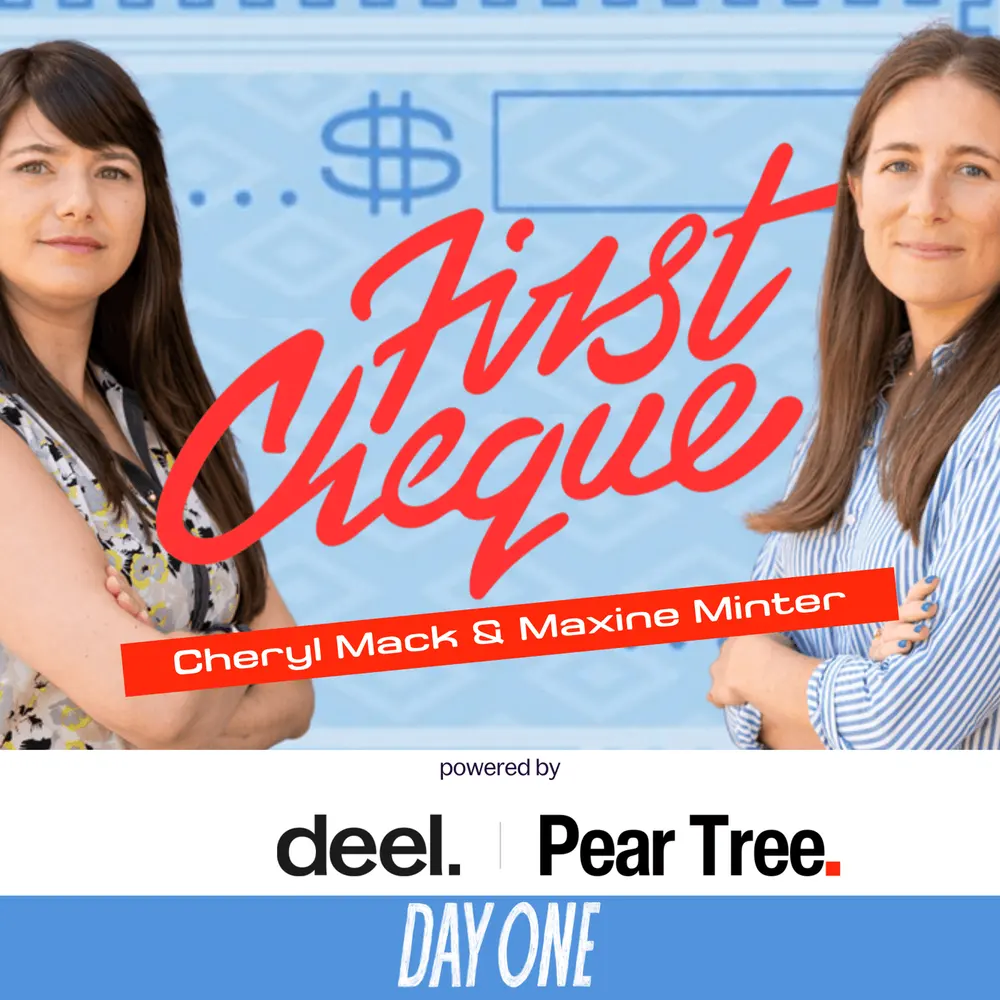 First Cheque with Cheryl Mack & Maxine Minter
Presented by Deel & Pear Tree
First Cheque with Cheryl Mack & Maxine Minter
Presented by Deel & Pear Tree 

 ▶
▶ ▶
▶ ▶
▶