Transcript Synced · select any line to jump ▾ 0:02 Speaker: Founders scale faster on Deel. Set up payroll for any country in minutes, hire anyone anywhere, get visas handled fast, and get back to building. Visit deel.com/dayone. That's D-E-E-L dot com slash day one. 0:23 Speaker: Are you building a SaaS business and looking to achieve compliance with SOC 2 and ISO 27001 or other security and privacy frameworks? 0:32 Speaker: Compliance can unlock major growth and build essential customer trust, but let's face it, it's usually time-consuming and expensive. 0:37 Speaker: And like really kind of a pain. That's where Vanta comes in. Vanta automates up to 90% of customer compliance tasks, making you audit-ready fast and saving you up to 85% of the associated costs. Plus, Vanta scales with your business, offering a market-leading trust management platform to continuously monitor compliance, unify risk management, and streamline security reviews. Join 7,000 global companies, including Atlassian and Dovetail, that trust Vanta to build and prove their security in real time. 1:03 Speaker: And for our listeners, Vanta is offering 10% off. 1:06 Speaker: Just go to vanta.com/first. That's V-A-N-T-A.com/first. 1:14 Speaker: Okay, 3, 2, 1. 1:18 Speaker: Hey, I'm Sheryl. 1:20 Speaker: I'm Maxine. 1:20 Speaker: This is First Check, part of Day One, the network dedicated to founders, operators, and investors. 1:25 Speaker: If you want to be a better early-stage investor, this is the show for you. 1:28 Speaker: So TL;DR, if you don't want to suck at investing, listen up. So, Maxine, you got Trang to come on our podcast. Super excited. 1:44 Speaker: I did, I did. I know, I can't wait. Poor Trang, I've like been hitting her up recently for so many opportunities to talk just because I find her so fascinating. It's probably gonna be like 3 sessions that I get to pepper her with questions in a 30-day period. 1:58 Speaker: Hopefully she doesn't get bored of you or annoyed with you. 2:01 Speaker: Oh, I think she will. But more importantly is I am not bored of her and her content. So excited to have her. That is is much more important, clearly. 2:11 Speaker: She, uh, her portfolio is absolutely crazy. Like, the fact that she invests in funds of funds— I think she has more fund investments— 2:18 Speaker: Wild. 2:18 Speaker: —than I have direct investments, which makes her indirect investments in the thousands. 2:23 Speaker: Yeah, like orders of magnitude of our portfolio for sure. She's got like 50 fund investments, and that wouldn't include like all of the funds that she would get to look at along her journey. She also has 36,000 LPs in her like broader community. She used to run an LP community. And so like she just has this amazing vantage point like to LPs. So like the people that invest in funds or invest in funds of funds, and then this incredible vantage point, you know, into companies all the way down. So it's just like— 2:55 Speaker: I've heard they call it the, uh, the LP crystal ball that she has, and she spoke about that at Web Summit. So I really wish I could have been there. 3:03 Speaker: She— yeah, yeah. She's like totally incredible. I also, I think it's really easy to like, from that vantage point for her to be quite consensus thinking, right? Like she would get so many data feeds, so to speak, from her LPs and the community of LPs and the companies that she invests in. But I think this is like one of the most impressive things for me for her. She's just such a differentiated thinker. You know, so frequently she has kind of seen a trend or invested in a trend way before it's become even like part of the early adopters. And she'll talk about that on the podcast, I'm sure. So yeah, she's just totally incredible. I'm such a fangirl, the poor thing. You know, I should probably stop peppering her with my excitement at this point. 3:43 Speaker: Well, for now, uh, we'll welcome her on the podcast and we can think about maybe you stopping peppering her later. 3:50 Speaker: Right, right. Yeah, absolutely. So, so excited to have her on. And, uh, welcome Trang. 3:57 Speaker: Yeah, let's jump into it. So one of the first questions we always start off with is what is one of the first things that you ever invested in? 4:05 Speaker: The first thing that I ever invest in, like thinking of like an investment, like where I actually like think a lot about is actually Tesla. 4:14 Speaker: Wow. 4:15 Speaker: And as you know, like a lot of people actually laugh at me when I bought Tesla because that was, I bought the company when it went IPO, I think in 2011 or 2012. And the stock of Tesla, I believe it was flat for a good 5 to 7 years and it did not take off until, you know, just in the last, you know, 12 to 24 months. But I think the reason for me to invest or make that investment is, you know, I just fundamentally believe in Tesla as the business model and I believe in Elon Musk and I never sold my stock. You know, so that's how to date has done well for me. And that's the way I think about the investment. It's like, I think very long term and, you know, I can be completely wrong. I think you heard the story, you know, like Apple, I mean, at some point Tesla almost went out of business and, you know, it was offered to Apple and Apple should have bought it, but they didn't buy it. Right. So there's a lot of crazy story, but I think. Whenever I make an investment, I always remind myself of what did I do when I invest in Tesla when it went IPO. 5:24 Speaker: That's amazing. I don't think I've ever met anyone who invested in their IPO. As you said, it was like a very non-consensus bet for a very long time. 5:34 Speaker: Yeah, exactly. For a long time. Yeah. 5:37 Speaker: How did you first hear about it and like what got you to conviction early? If I can take you back to like And like, what, 13 years ago? 5:45 Speaker: Yeah, that's when 2011 and 2012, right? That's when it's when IPO. So it's obviously like over, I don't know, 10 years ago. I get involved in ventures earlier than that. And I do know, you know, investor who invest in Tesla on the private side. And a lot of these investors actually burn out, if you remember, because Tesla is such a capital-intensive company. So even the seed investor in Tesla didn't make money. But you know, when IPO is open to public investor, I just believe in the vision of the company as a whole, and I just believe in the founder. And that's kind of the reason why I invest in Tesla then. I believe in Elon Musk. I invest, I believe in, you know, the vision of the companies were very far-fetched then. But just like everything else, right? That's why we invest in quantum computing in 2017, right? Scenario, it can go to zero, but you know, if it's work now, you know, it's potentially can return multiple times the fund. You know, I think so the whole things, I think like when I look at our investment thesis is about identify, you know, the future venture, right? Which is we need to take risks. You know, when you invest in venture, you need to take risks. And we do that in terms of, you know, working or investing in fund managers or companies as well. Because otherwise you should go and do buyout, you know, or something else, or buy real estate. You get like very good returns buying real estate too. 7:19 Speaker: That doesn't sound nearly as fun. 7:21 Speaker: Yeah, yeah. But I'm just saying that venture by definition, you need to take risks, right? So. 7:26 Speaker: Absolutely. And what a cracker of a first investment. Yeah, no kidding. That's gonna be up there with, one of your best performing investments? 7:33 Speaker: Which one? 7:34 Speaker: The Tesla buy. Is that one of your best performing investments both on PA and like on your personal investing and in the fund? Or have you surpassed that? 7:42 Speaker: Personal investment? I don't know. I don't know. I think like we have, you know, better investment than that. That was just my first investment. And by the way, for the very long time it was flat. So was not supposed to be return driver, right? So that's what I mean is that even when you look at fund managers, right, for a long time, some of the fund may look like really bad and then it was just taking off completely, right? And there's certain funds that take off early on and may not do well in the long run. So that's just something to, I think it's more like a lesson for me. It's not even like about the investment returns. It's about, you know, like kind of like how I think about kind of like investment thesis and investment belief. It's not even like Tesla in terms of returns. It's the fact that I invest in Tesla, I was flat for almost 10 years and then it take off. And the reason I believe— invest in Tesla, because I believe in Elon Musk and the vision of the company. 8:40 Speaker: Yeah, I think that really speaks to like the, the like having to believe in the vision of the founder, because you're essentially picturing a world that doesn't exist right now and saying, yeah, I believe in that future that you see. I may not see it, but I believe that you see it and that that could be the future. And especially it's— if it's nowhere close, like 5 to 7 years before anything started to take off, like I can't picture what's going to happen 2 years from now, but you believe in a founder and their vision for something that's going to be a thing in 10 years. It really speaks to like the type of investment that we do as venture investors. 9:14 Speaker: Yeah, I think like a lot of the time people forget is that the best founders, they create, you know, like new market, right? Look at Facebook, look at Amazon, look at Google. The best founders, they create new markets, right? So sometimes people just analyze too much on, you know, market, but I really think You know, sometimes you just need to bet on the people, you know, at the end of the day, venture is also, you know, the people business, right? Mm, yeah. Look at Slack. Slack was a video game company and, you know, we become something else. 9:47 Speaker: 100%. Was it? 9:49 Speaker: Slack was a video game company? 9:51 Speaker: Yeah, exactly. You didn't know that? Yeah. 9:53 Speaker: No, I did not know that. 9:55 Speaker: Yeah. Who did people invest in it then or did they only invest once it became what it is now? 9:59 Speaker: They did. No, no, they invested in it then and then Slack was the internal communications tool that they built as they were trying to build the video game company, and then they realized they weren't going to get traction on the video game side. And then, correct me if I'm wrong, they exited or like asked all of their team to leave, like a team that they loved. It was just the two founders and one person, so they went into like hibernation mode. 10:20 Speaker: Yeah, yeah, two founders, Stuart Butterfield and, and his wife. 10:25 Speaker: Yeah, right. Yeah, that's right. 10:26 Speaker: Oh, his ex-wife. Yeah, yeah, it's amazing story. Amazing. But I mean Is that my point? Like, you know, sometimes you just need to bet on the founders. The same with Brian Chesky. Like, do you think Coinbase would, you know, be Coinbase? Like, they would be a crypto exchange company in 2012? I don't think so. 10:45 Speaker: Yeah, yeah, yeah. It actually, I mean, it kind of, you walking through the way you think about that Tesla investment makes it so clear to me why you built Transpose and kind of how you think about the generating these venture funds and supporting these venture funds. 10:59 Speaker: Yeah, it doesn't make it clear to me. Fill me in. 11:02 Speaker: No, no, we'll dive into that in a moment. 11:03 Speaker: Yeah, that's why we had to dive in. Yeah. 11:05 Speaker: Yeah. What's really interesting for me is like your context and that you've been thinking in this way for a very long time. So I wonder if you can kind of educate us a little bit on like what it is that you're building at Transpose and like how you came to conviction that this was worth building and what your journey has been to date. 11:22 Speaker: Yeah, no, that's a very good question. And I think like that Tesla was really kind of like our investment belief and our investment thesis. And that's what made it today. So when we, I mean, obviously both, you know, my co-founder Alex Bangash and myself, um, had history pre-day Transpho, right? But in 2015, when we formed Transpho, we had one goal is that we want to help ambitious entrepreneurs to change the game of venture capital, right? So to think outside of the norms, like, you know, just like the Tesla investment, right? To think outside of the traditional thought of creating first or second time fund, but really create a breakthrough in ventures that enable us to, you know, some of the most prominent venture investors call us like the Y Combinator for proven entrepreneurs, because it's highlighting our commitment to enables, you know, the entrepreneurs to, you know, different stage of their journeys, right? So we enable a lot of entrepreneurs, founders, and operators to create funds, you know, create platforms like an accelerator. So we involved with Y Combinator very early on. We also back, you know, studio at scale, like for example, Entrepreneur First. We also like enable entrepreneurs and usually like identify entrepreneurs even before they have funds. So some of the funds that we have anchored to date, we work with entrepreneurs 2 years before they have funds, right? And then from that, you know, when we anchor the funds, we also work with them more than just, you know, a financial partner, but also a thought partner so that they can create an institutionalized venture firm. And then we invest in companies from that. So to date, you know, chance forward, say we have back over 50 GPs and most of them are like first or second time GPs and, or they don't even had tech before, you know, we talk to them. We invest in 76 companies directly and we actually incubate one company named Happo Network, which is a satellite connectivity device company with a seasoned entrepreneur who had taken company public before. So that's kind of like our thesis is that we really want to you know, identify entrepreneurs like Elon Musk early on. We wouldn't back them in whatever structure. It can be a company like Hubble Network, right? Or Tesla, so on. You know, it can be in a venture structure like a venture studio where they can incubate multiple companies. It can be an accelerator, right? Or, you know, it can be a venture fund. But the one thing that we really want to work with these entrepreneurs is that We don't just want to back, you know, a venture fund. We want to back entrepreneurs who have ambition to set up the Amazon, the Apple, the Google of venture capital, right? I mean, why we, why, when I look back, why I back Tesla, because he's such a visionary, right? He didn't, he just, he want to create Tesla, which is, you know, number one electric company, right? And then that's how we feel about venture capital. Once we look at managers that we want to back, we want them to have ambition of create a brand that is bigger than themselves, right? A brand where like, if you look at Y Combinator today, right? Jessica Livingston and Paul Graham, the two co-founders, had created a brand that bigger than their personal brand, right? And we want to find those type funds, you know, where we think that's the future of venture capital, you know. 15:09 Speaker: That's so interesting. Yeah, absolutely. Yeah. 15:12 Speaker: How do you pick the— how do you identify emerging fund managers that you want to work with? Like, what really makes them stand out to you? You've obviously worked with so many. What are the first things that you identify within them to decide if you want to work with someone? 15:25 Speaker: Yeah, I think that's a very good question. So, you know, going back, right, so For us, if you look at the type of funds that we invest before, like Y Combinator or, you know, SaaS, you know, like Area 10 or Entrepreneur First and so on, we really focus more than just financial returns, right? Even in this process, sometimes we identify first or second time fund that generate 10x or 100x, right? But our goal, again, as I said, like we want to find the venture capital equivalent of giants like Apple, like Amazon, you know, like Google and so on. So, you know, that's kind of like our aim. And in order to identify those entrepreneurs we want to work with, a lot of that, like, you know, when you make a direct investment in, you know, seed companies, right? So I don't, when we make an investment in emerging managers, we think of that like startups. It's like, you know, a seed investment, right? In a venture fund, fund 1 and fund 2 is like a seed investment. And then you find, you know, product market fit, that's your fund 3. And then, you know, whether you can create the, you know, Apple or Amazon, that's when you kind of like go public, right? That's when you create like YC. YC, if you look at YC is exactly the same. If you look at YC history in 2012 to '15, that's when they find product market fit, right? And now they really take off and create their own brand. So what really sets these managers apart, and we don't look at TVPI and DPI and, you know, one of that metrics, it's good. But I think like if you create a brand and if you can create a solid firm, like just like on the startup side, the return will come, right? Like when you make an investment in a startup, similar concepts, right? It's not so much on TVPI. You bet that this company can potentially go public and go can become a $10 billion, multi-billion-dollar company, or even $100 million company, right? So it's the same thing. We don't look at, you know, DPI, TVPI, IAS, because I think the returns will come if the venture capital firm can create a brand for themselves. So we really look for managers who can provide value to the startups, and therefore, you know, they can create a brand. in the ecosystem, right? Like, for example, Y Combinator and Saastr, those are platforms that have significant brand for startup, right? 17:58 Speaker: That's so interesting. 17:59 Speaker: Makes me wonder if we're not thinking big enough here in Australia. 18:02 Speaker: 100%. We're not. Like, I, I find myself listening to you, Trang, and just thinking, like, how many people do I meet in the Australian ecosystem who, even if they are visionary, right, they have, like, a very clear vision of what they want to build, feel able to communicate it to the Australian market without being penalized for being kind of unrealistic. I imagine a world where younger Elon Musk goes to market in Australia on, you know, his first business, or even like that. I don't think he would be able to get funding away for something like Tesla. I know. So I think that's something for our Australian ecosystem to really level up our thinking on. The other thing that really jumps out to me there is, as you're talking about it, the kind of DNA of the successful emerging fund manager who can kind of build that platform, that kind of Apple, Amazon style, and the successful entrepreneur who can build the Apple, Amazon actual business. 19:04 Speaker: Yeah. 19:04 Speaker: Is it the same DNA that you look for in someone? Is it the same skill set, or is it kind of conceptually similar but actually tactically different skill sets? 19:13 Speaker: That's a very good question. I think it depends on whether you view, you know, the venture capital firm as a corporation or you just view them as fund managers, right? And I think, you know, they would be a unit innovation, right? So if you look at historically, when you evaluate venture managers like, you know, Sequoia, Accel, Andreessen, you look at the partnerships. You look at, you know, whether the partners has, you know, operating track record, whether they can add value to the portfolio companies. And then whether they, you know, has the brand with the entrepreneurs and so on, right? But, you know, as you evaluate like some of these firms, you look for what is a new high? What's the generation change? Can they maintain, you know, the same, you know, brand reputation and investment acumen as, you know, the earlier GPs, right? But then when you look at the newer models in venture capital, like the Y Combinator or the Entrepreneur First, it less so much on investment acumen. It's about like whether it's a solid corporation or not, right? Because you look at models like an accelerator, it's like a Y Combinator or an Entrepreneur First, right? They create startup or they are almost like a factory of startup at scale, right? So YC graduate,, you know, 450 companies per year to 500 companies per year, or, you know, 2,000 companies, um, in the next 4 years, right? Even more, right? So the way I'm looking at Y Combinator, I'm looking, so I see like a Toyota, Honda, and so on. So I— 20:56 Speaker: Reliable. 20:56 Speaker: Some, yeah, I evaluate, you know, I evaluate a fund managers like that, like a platform size that, you know, so when I look for these managers, I looking for business innovation and I evaluate the business innovation, the structures of the business itself, the models itself. So when I evaluate a lot of these new venture models, I evaluate them more, you know, like the company. So it would be identify entrepreneurs who can create, you know, a firm, you know, a corporation, right? 21:30 Speaker: Mm-hmm. 21:31 Speaker: And, you know, I think And when you evaluate a corporation, it's very different than, you know, even evaluate a GP because in a way it's not so much on the track record of these firms, right? Because again, the track records will come if you own 7% of high, good quality products and you consistently produce, you know, good companies of the day mode and so on. Like, so a lot of the time it's really depend on the quality of the entrepreneurs that they can attract to the program. And how well the program can run, right? So that's, that's the way to look at that. So you are right, for these new models, a lot of the time we want to find, you know, the Elon Musk of venture capital or the Steve Jobs of venture capital. 22:16 Speaker: It does sound like it's pretty similar though. 22:19 Speaker: Yeah. Yeah. It strikes me as kind of like a marketplace business, no? 22:22 Speaker: Marketplace for, ah, for the venture firm. Yeah. No, I don't think so. It's like, it's a corporate, it's like, it's a manufacturer. Toyota, Honda, it's just like when you invest in Honda and Toyota from the beginning, but this is with startups. And guess what? These wins. 22:39 Speaker: But you also get a little piece of each car as well. 22:42 Speaker: Yeah, exactly. And that's why it's great, right? Because you know, the value of the corporation, you know, the value of the corporation is the value of the companies that they create. So it's the same thing. If you create fantastic products, so their products right now is a startup that they produce, right? If you create like fantastic startups, then you will generate great returns. 23:03 Speaker: Hmm. 23:04 Speaker: So it's a little bit different. Like, do we look at the track record? Yes, we look at the track record over time because eventually, you know, after 10 years, if you have great brand with the entrepreneurs, your track record should reflect that in some way. You know, you should have some good companies coming out from that. 23:23 Speaker: Yeah. 23:23 Speaker: But it sounds like you're really focused on like the people to begin with, right? Like if they don't have a track record, that's not why. 23:28 Speaker: Yeah. I mean, first and second time fund managers. Exactly. You don't look at TVPI. You can't look at TVPI and DPI until like terminal value because the TVPI can be manufactured too. How many funds that even by FTX? 23:42 Speaker: I don't even know if accelerators track that. 23:44 Speaker: No, but I'm, I'm just talking about just Think of the TVPI. How many funds when FTX was $40 billion, you know, so FTX like, oh, Hopin, Hopin is a great example. Maybe not FTX because it's an extreme. Hopin was $7 billion. How many funds out there that has a return of 10x based on Hopin? 24:03 Speaker: A lot. 24:04 Speaker: $7 billion and it's got acquired by, you know, for $50 million valuation or something like that. Right? Yeah. So that's my point. Like you can't look at TVPI and DPI early on. You need to look at the brand that these ventures firm build with the entrepreneurs because the return will come if you have a high quality brand, right? 24:26 Speaker: Absolutely. 24:27 Speaker: It's the same thing. 24:28 Speaker: Yeah. 24:28 Speaker: Apple is amazing company, so return will come when you invest in Apple stock because the company fantastic. 24:35 Speaker: Yes, they make really good product. 24:37 Speaker: Yeah, they made really good products, yeah. 24:39 Speaker: I'm hooked now, I can't leave Apple. 24:41 Speaker: Yeah, exactly. And I think like going back to the Australian ecosystem, What I see is that, so when I look at, you know, some of these global accelerators, they have the best founders from different geographies like LATAM, right? Which is similar. They don't have like, you know, I mean, they don't have the same ecosystem like Silicon Valley. So same with Europe early on, right? And sometimes the best founders, they move to the US. So there's, I believe that, you know, if I look at Australia, there can be opportunities even closer to Europe, like 10 years ago. That's when you start seeing some of the funds like Index, Local Growth, you know, these are very great firms, right? Or, you know, PointEye, they start in Europe like maybe 12, 15 years ago. And, you know, there's a gap, right? Because a lot of the entrepreneurs who move to Silicon Valley or, you know, go to YC from these different ecosystems, they need to go get to a certain matrix before they can get to the program. And I think that they're a good, great gap in terms of capital and investors that can deploy, you know, what I call pre-seed or seed before post-seed where they move to Silicon Valley, where, you know, they would be like local venture capitalists, you know, who can enable the startup to grow to a certain— , you know, certain stage before, you know, they can go to Silicon Valley. 26:11 Speaker: Absolutely. 26:12 Speaker: So I think that's where I can see like, you know, great funds, you know, can form from these regional, you know, ecosystem, right? Same thing, you know, like now Europe has become more mature that, you know, you start to see, you know, multi-stage firms in Europe, right? And you see, you know, companies actually stay in Europe. Right. But early on, even the Collison brothers, founders of Stripe, right? They moved from England to San Francisco because there was no capital, there's no VC, you know, nothing that can fund them in Europe, right? So if there was a fund that can fund, you know, Stripe in Europe, then they would have stayed before they moved to Silicon Valley, right? So I do believe there's a gap there in every single regional ecosystem. Especially at early stage. 27:03 Speaker: Are you building a SaaS business and looking to achieve compliance with SOC 2 and ISO 27001 or other security and privacy frameworks? 27:11 Speaker: Compliance can unlock major growth and build essential customer trust, but let's face it, it's usually time-consuming and expensive. 27:16 Speaker: And like really kind of a pain. That's where Vanta comes in. Vanta automates up to 90% of customer compliance tasks, making you audit-ready fast and saving you up to 85% of the associated costs. Plus, Vanta scales with your business, offering a market-leading trust management platform to continuously monitor compliance, unify risk management, and streamline security reviews. Join 7,000 global companies, including Atlassian and Dovetail, that trust Vanta to build and improve their security in real time. 27:42 Speaker: And for our listeners, Vanta is offering 10% off. 27:45 Speaker: Just go to vanta.com/first. That's vanta.com/first. 27:54 Speaker: Yeah, you're preaching to the converted, right? 27:56 Speaker: I think that's your whole fun thesis, isn't it, Maxine? 27:58 Speaker: Yeah. Yeah, that's my fun thesis. There you go. But I mean, I totally agree, right? I think that there is like geo-specific, because there's only— also there's only like a handful of people who can move or who are as geographically mobile to kind of move to Silicon Valley on an idea. 28:18 Speaker: Yeah. 28:18 Speaker: Right? Only a a handful of people have the personal capital or the personal flexibility to be able to do that. Yeah. Then I think that if you build a system where it presumes that, you know, self— people can self-fund that stage to be able to get those traction metrics, then you are saying only the wealthiest people or the most connected people can build meaningful businesses. And I think I reject that as a premise. I don't think that that's a good strategy. 28:42 Speaker: Yeah, I agree. Yeah. 28:44 Speaker: I also think that for, you know, my experience in the Bay Area is that for folks that are coming kind of to the Bay Area outside of network, so to speak, so they like don't know a lot of people in the US and are not kind of a known commodity in the US, they need more metrics to show that they've got something of value and that they're worth backing. 29:02 Speaker: Exactly. Yeah. 29:03 Speaker: You know, there's obvious diversion paths here, right? Like you can go through YC, and then if you get into YC and then are successful there, it's a way to kind of drive that value. But yeah, I, yeah, I absolutely think that that's true. So when you're thinking about, you know, you're meeting all of these fund managers, what's amazing to me in your history is the kind of vantage point you get across LP positions. I mean, the fact that you have 50, you know, fund positions, 76 directs, suggests to me that you have seen thousands and thousands of funds over your life to date, and you kind of get a visibility across your LP ecosystem, which, you know, I think Our stats I saw was kind of anywhere up to 36,000 institutional LPs that you've seen. 29:46 Speaker: No, no, that's crazy. You have more fund investments than I have direct investments. 29:50 Speaker: Yeah, it's wild, right? Like truly incredible vantage point. Mm-hmm. 29:54 Speaker: Firm investment. But remember, your indirect portfolio must be huge. Uh, yes, exactly. Thousands of companies. Yeah. 30:02 Speaker: Yeah. So what do you notice for fund managers that are that, you know, initially promising but then maybe aren't able to make the graduation from Fund 1 to Fund 2 or Fund 2 to Fund 3, or in kind of, in your analogy there, kind of get that early product market fit and then through to the ability to scale? What, what are the kind of failure modes that you notice for those fund managers? 30:24 Speaker: Yeah, so I think, like, as I mentioned to you, and you, I love it because you say like product market fit, because you're right. Like, when I look at, you know, first or second-time fund managers, it looked like a seed investment for us. It's like you made a bet on a seed company, it may take off or it may not take off. So one of the things that, as I mentioned earlier, is that when we invest in fund managers, we want to look for ambition, right? And we want to look for entrepreneurs or fund managers who want to— Establish a lasting venture franchise that's bigger than themselves. Right. And one of the key thing is, you know, it's really difficult to build a firm and platform, right? Than making investment. And some people may be good investors, but they're just not good at building platform or firms. And that is not sustainable over time, right? Because if you look at Andreessen, like Andreessen today, because they was able to build a platform that they can create values for company at scale, right? And that's why that's an indelible firm over time because they have a brand with entrepreneurs. So I see a lot of the fund managers is number one common is just the ambition is not there. It's really hard. It's really hard to build a firm or the platform, right? Because I would buy A fund manager, just like how you do a seed investment, obviously the entrepreneurs or the fund managers should go and have this pitch about, because obviously we don't look at TVPI and DBPI and we most likely know this person potentially can make a good investment judgment or not because they usually had an angel portfolio before, right? Or they may be good operators or entrepreneurs in their Prior investment career, but you know, they would go and pitch an idea like, you know, they're going to create this brand or platforms to, you know, scale the firm. But what end up after first fund, after the investment period, there's no firm building. There's no platform. There's no brand with, you know, the entrepreneur, especially after two funds. The returns may be there. But that was it. You know, they can't scale out of their personal brand and some of them don't, just the ambition is not there because not everyone is Elon Musk. Like, because you might be a seasoned entrepreneur before you had a successful exit before and you may want to invest as, you know, your part-time hobby or something, but that's not the kind of like people we want to back, right? We want someone who's serious about creative. Yeah. Investment firm and building companies were difficult. So a lot of people just give up. So I see some of our managers have, you know, 5x or 10x, and I don't want to name a name, but you know, some over 100x, but that was just one 100x fund and they never returned because, you know, sometimes people are too rich. Some of the managers are just too rich. The ambition is just not there anymore. 33:36 Speaker: Sometimes people are too rich, man. To have that problem in my life, why can't I be one of those people? I want to be one of those. Oh, bye. She's too rich. 33:46 Speaker: She can't— can't— I'm curious though, like, what do you mean by platform? Like, when you say they can't build a platform, what do you mean? What are they— what do you want to see? 33:55 Speaker: Yeah, so if you look at Y Combinators, they build a platform, right? Because, you know, they accept you know, like 30,000 or 4,000, maybe 30,000 applications per year, per batch. And then from that, they screen out 250 companies, right? And they have, you know, this platform where, you know, people go online, apply for that, you know, and there's a 3-month— 34:21 Speaker: Okay, you mean like an online platform? 34:23 Speaker: Not online platform. I'm talking about like providing service at scale. 34:27 Speaker: Okay. 34:28 Speaker: So think of Y Combinator. People go to YC is almost like getting in the brand of YC and then try to, you know, they help you with pitching, right? They help you with finding, you know, fine-tune the product market fit phase so that, you know, you have, you know, scale their revenue very fast. Oh, if you look at First Round Capital, right? They have platform because they have, you know, they had like, you know, hiring where they have, you know, startup hiring or help with products and so on. Same with Andreessen. That's what I meant. Platforms is, you know, almost like where you go and like, it's almost like a startup university where, you know, you provide values to the startup at scale. 35:13 Speaker: Okay. Got it. 35:14 Speaker: Yeah. That's what I mean. So if I look at, maybe I look at this, if you look at SaaStr, right? I mean, obviously, you know, SaaStr conference. 35:22 Speaker: I know the conference. 35:23 Speaker: Yeah. 35:23 Speaker: Yeah. But I don't view the conference as a conference. I view the SaaStr conference as a platform. Why? Because they had the conference for SaaS founders, 10,000 founders go to that conference. Jason Lemkin also has his content on SaaStr as well, where he advised, mentored SaaS founders and talked about his experience with Ecosign and with starting his SaaS companies before. So the way I view those are like platform. That's what I mean by platform. 35:58 Speaker: Got it. 35:59 Speaker: Whether you can provide service to the startups, it can be software, it can be offline, but you know, I think if you can create a software platform right now, it's so important because there would be just more and more companies, right? You know, the time when Steve Jobs go to, you know, Apple and Sequoia to ask money to raise money for Apple is not the same. There's only a handful of Steve Jobs. Right now, there's just more companies. And I think like there would be millions of startups being created with AI because it's so cheap to start a company right now. 36:32 Speaker: Absolutely. 36:32 Speaker: See, I think it's better to have software. Yeah. 36:34 Speaker: Yeah. I think what jumps to mind for me is the like counterpoint to this, right? The like the version where a fund manager isn't building a platform. And as you highlighted, you know, there are some funds that build incredible returns, maybe 1, 2, 3 funds. You know, examples of this that jump to mind for me would be like Lockie Groom's fund, or like individual investors that are building like a standalone fund where the value proposition to the founder is like, I will work directly with you as a fund manager. Whereas if you compare A16's strategy, which is— it is about the fund manager, but it's more about the kind of suite of services that they deliver to the companies that they work for to help de-risk that company. 37:18 Speaker: Exactly. 37:19 Speaker: So Like A16 was, you know, kind of, if I think about the history of fund management development and fund development, A16 was kind of the first one to make that platform strategy really built out. 37:32 Speaker: At scale. 37:33 Speaker: Mm-hmm. You know, and they, so they think about like, what are the key risk areas for these businesses? How can we help these businesses de-risk those key risk areas that are like commodified and not differentiated? Finding good talent, go-to-market very effectively, finding good PR. So they have, you know, standalone teams that add that value to the customers— sorry, the customers— to the— well, they are the customers, right? To the entrepreneurs and to their teams, right? To help scale them. In First Round's example, um, it was awesome having that platform that they provided around the table with us. 38:05 Speaker: Yeah, exactly. Yeah. 38:07 Speaker: My last company was backed by them, so I experienced that platform firsthand and everything they did around connecting you with great people, customers. Yeah, customers, having network, which was their kind of internal hiring. Yeah. Process as well of their like internal platform so that you could go on there and have a look, you know, like it was kind of like Quora/LinkedIn/like AngelList altogether. So they had data products, they had like a whole like kind of grab-and-go product set that you could take to— 38:35 Speaker: Yeah. 38:36 Speaker: Kind of de-risk those key areas. And I mean, I totally agree. I think those key areas, it's really valuable as a company working in that context and with one of these backers behind you because you get this whole extra bucket of value that helps you deliver. More effectively. 38:49 Speaker: Yeah, and Maxim and Cherry, like building platforms right now is more important than the past, right? In order for you to generate high returns. Because as an investor, as an LP, this is the way I look at it. You can be a good investor, but I'm not just backing, if it's just a traditional partnership like Maxim or Cherry, right? I'm not just backing, when I invest in you, if you don't have a platform, I'm not just backing you whether you have a good investor, I need to buy, like you are lucky. Because there's just many more companies nowadays. 39:21 Speaker: I am incredibly lucky, Trang. I am the luckiest. 39:25 Speaker: I know, but I don't want in the business of backing. 39:28 Speaker: I'm talking to you right now. 39:30 Speaker: No, I don't want in the business of betting people who's lucky. 39:33 Speaker: Totally. 39:34 Speaker: I mean, it's good, but you know. 39:36 Speaker: No, I get that. 39:37 Speaker: I rather have more shot on goal. It's just like more companies now being created. That's why you need to have platforms so that you have visibility in more companies and then you have first check in more companies. 39:51 Speaker: Yeah. 39:51 Speaker: And from there you can double down on, you know, your winners. But I don't think, I think it's really hard to kind of build a traditional venture firm where you invest in, let's say if you have 4 partners, each partner invests in 8 companies and just work at those companies. It's really hard. I mean, yes, you can still get the good returns, but I I don't think you can scale over time. And then even that, I had to think about generation change, right? Because I had to think like, okay, what happened after Maxime and Cherry, right? The next person, you know, that matters on themselves, right? Versus if I back a platform like a corporation, so I'm going back to the example like Y Combinator or, you know, like Toyota, Honda, you know. Toyota, Honda. This platform has built a brand that's bigger than, you know, the GPs or founders themselves. And that is very important. You see, that's why I wouldn't get consistent returns over time. And I'm not betting on someone who is being lucky and I don't need to think about generation change and all of that, you know. 40:55 Speaker: You know what's really interesting, Maxine? I don't know if you've noticed, but like in Australia, I, I seem to see that like some of the funds that have fantastic returns, but aren't as well known. Aren't, uh, either maybe they're raising their next funds under, under the radar, but I don't see them announcing that they've raised their next funds, or that they've— or even some of the ones that I know of aren't raising a next fund at all. And it kind of brings to mind, like, I wonder if that's because they're less well-known and haven't been able— or haven't been as successful at building that platform here. 41:28 Speaker: Oh, they could have made like a billion in carry and decide you know what, I'm good at billion in carry and I wouldn't retire. That's true too. 41:37 Speaker: And I'm out. Just too rich. It is a fund that's a 10-year commitment. 41:43 Speaker: It is a long time. So fair enough. 41:44 Speaker: If you made a billion in carry, like, sweet. Yeah, yeah, yeah. Officially on the beach. Yeah. What comes— what jumps out to me though, and I think the brilliance of Trang's model is that like it's tiring and a long-term thing to build 3 funds, right? They're like 2 to 4 years each. If you build 3 funds in succession, for some people that's like a decade of work. And so it's possible that they're just getting to the end of their kind of value creation period. And to kind of underline this point, I think there is value created in that strategy. Of course there is, right? Like, they're like— carry and fund returns are reflected there. 42:17 Speaker: Of course. Yeah. 42:18 Speaker: Yeah. But what I think is interesting is Trang's strategy is more about like long-term, like really long-term thinking, which was fascinating looking at your first investment decision, it's really built in there. I maybe just like, I'm personally curious. I feel like with that long-term thinking and the bias that you have to be able to think across that long term, you kind of dropped a little Easter egg in there that millions of companies are going to be started in this kind of new AI world. From your vantage point and through your lens, what do you think the startup ecosystem looks like in say, 5 years in 2028? What do you think it's going to look like? 42:56 Speaker: Yeah, I think those are very good questions. Now interest rate has not come down, so it's not, there's a lot of tourists, investor has gone out. So at least, you know, I think like there will be more quality, high quality founders. But one of the things that I see, well, we recently backed an AI accelerator where AI is your co-founder of the startup. 43:18 Speaker: Technical co-founder? 43:20 Speaker: Yeah. I mean, how do you gonna do the, well, they do the cap management, you know, they can co-create, you know, co-pilot the coding. They can go through their emails and that will get better over time. But, you know, the first thing is that, you know, they can do like a lot of these early stage stuff, you know, like not just technical, but like maybe like technical and operation co-founder. You know, like a lot of— 43:46 Speaker: Does the AI get equity? How much equity does the AI get? 43:49 Speaker: How do you, how do you determine that? 43:52 Speaker: No, that's the beauty of the model, right? The AI would not get equity. 43:55 Speaker: Yeah, right. 43:56 Speaker: But the people who create the accelerators that create that AI, who was a co-founder of the startup, wouldn't get equity. 44:02 Speaker: Oh, interesting. See, there's the model. 44:04 Speaker: Yeah. 44:05 Speaker: So the accelerator delivers the like co-founder who is an AI. 44:09 Speaker: AI. 44:09 Speaker: Because I mean, I'm like, I have seen products that do like AI for go-to-market, AI for customer validation. Like, that's a really, like, a super fascinating model. I do, I do think we are at the beginning of an era of multiple $100 million to even, you know, maybe a billion-dollar company with only a handful of team members that uses AI to scale. 44:35 Speaker: I think so too. The only thing that I had to say is that I would like to think so, and I believe it. I just thinking of Yes, you can create a company, but remember, as I said, to be enough customer buyers as well. So I do see technology going advanced. What I haven't seen, especially in SaaS, is a SaaS sales cycle. 44:56 Speaker: Done with AI. 44:57 Speaker: You know, it's still like take a very long time, right? The sales cycle for SaaS products still take a— like you can create an amazing product, but you need to have customers. That's my point. 45:07 Speaker: Right. Yes, of course. 45:08 Speaker: Or you could just have a bunch of AI customers. Maybe AIs are gonna need software eventually. 45:13 Speaker: Yeah. Yeah. And where's the capital come from? 45:15 Speaker: Yeah. Right, right. 45:16 Speaker: How do you value the companies? Yeah. 45:19 Speaker: Yeah. I do think it poses an interesting question for investors because traditionally, as you said at the kind of outset of this conversation, is like venture, you have to take risk. 45:29 Speaker: Yeah. 45:30 Speaker: That is the nature of venture capital. 45:31 Speaker: Yeah. 45:32 Speaker: And increasingly, as you're co-founding maybe with an AI co-founder, or you are using AI to scale. 45:41 Speaker: Mm-hmm. 45:41 Speaker: I don't know how deep that loss-making period is before you are able to unlock upside and therefore how much capital you need to fund that, that valley. You know, yes, at scale, on average, 30% of your revenue goes to growth if you're trying to grow at that trajectory. But that also might be something that is no longer true in, in a world where companies have a whole bunch of agents or a whole bunch of AI that is delivering it. So I do think there's a kind of open strategic question for us as an asset class. 46:11 Speaker: Yeah. 46:12 Speaker: Of, in the future, will we continue to take the depth of risk that we have in the past? And if not, can we, like, do we have a place here or do we need to find a different place to start investing? You know, I've already seen kind of a trend towards deep tech, which I think is an interesting question. An open kind of area for curiosity for me is right now, especially in the Australian ecosystem, but kind of across the world, we're fairly bearish on venture. You know, you kind of hear it kind of across the LP group, but also, you know, with angel investors and even founders. And I think that's why you see only the most convicted founders kind of building their companies. You have, as I mentioned, this incredible vantage point, both across fund managers, direct companies, but also through LPs. I'm wondering, what are you hearing out there? What are people talking about in terms of venture an asset class. So where do you think it will go? 47:03 Speaker: Yeah, I think most of the LPs right now, the reason why they skeptical in investing in venture, it's not so much on they don't believe in venture because I think ventures is impacting all of our asset class. 47:15 Speaker: Mm-hmm. Agreed. 47:17 Speaker: I really, if you, as long as you have tech in your portfolio, I don't care buyout or public equity or, you know, debt, as long as there's a tech component, that's your venture exposure. Right. And I do believe that LP still fundamentally believe in venture as an asset class. So we think that difficult for them to deploy capital right now is because of liquidity crunch, right? Because, you know, there's a period of 2021 where we had the best venture market, right? IPOs have raised over $600 billion or some crazy number, $645 billion, right? And then, you know, everything was marked at 100x multiple, right? Then, you know, you look in 2022, you had the worst IPO market ever, right? So there's not a lot of liquidity back for the LPs. In 2023, there's like, we talk about many times, my student, but there's like 3 good tech IPOs, like solid. And those are very solid companies that go IPO. 48:18 Speaker: Tragic. 48:19 Speaker: Yeah, it's like tragic. So LPs, on the one hand, they still overweight a lot on venture and they didn't get any liquidity, right? And they really overweight because a lot of the companies are still at paper valuation or has not mapped out to the public comp, right? Look at Instacart, amazing, fantastic company, but it was $40 billion in public market, I saw a private market and $10 billion in the private market. Right. A lot of the fund managers, especially some of the brand names, has evolved from being a venture capital firm to become multi-stage firms, multi-assets, and, you know, an asset manager, period. Right? I don't want to, you know, say out loud, but they're not going to get your venture return. But the whole point is they have so much dry powder that they can keep doing bridge rounds for their company. So you don't see these companies go down as well. So then LPs have these overweight, hyper, you know, paper valuation on the venture portfolio. So it's way overweight. And that's the reason why they cannot deploy in new managers or venture. It's not because, you know, they think that, oh my God, the return is so bad. No, it's not. 49:32 Speaker: Hmm. 49:32 Speaker: It's because they are very overweight in venture. And then, you know, some of them has invested in tourist investors and obviously get crashed and burned on that.. But I think most sophisticated investors didn't invest in those, those two asset managers. 49:46 Speaker: I think what's really interesting for me there is I hear from Australian LPs and I actually, I wonder, this is probably a shoot myself in the foot moment, but like I wonder if they're actually looking at the outside of that industry and seeing big international LPs not deploying to venture, not understanding the driver of it. And the takeaway is that they, like, LPs are not strong on venture. They're not as excited about it as an asset class. And then what's driving their behavior is they also are kind of starting to pull back from venture, not because they're overweight, but because they think it's kind of not in vogue. I hear that feedback from quite a few wealth management platforms and some family offices, which is kind of our LP base, which I think was, which is really interesting. Actually, it's the inverse here. Yeah. It's like they're so bullish on it that they're overweight on it and now they actually can't. 50:37 Speaker: Mm-hmm. They still overweight. 50:38 Speaker: Yeah, exactly. Yeah. From a construction perspective. 50:40 Speaker: From the asset location and liquidity constraint. But I'm here in Arizona. I was at this conference that there's hundreds of LPs in the US and everyone, the whole conference is about venture. Venture is the most important asset class now. If you think tech, look at that, tech is impacting everything in your life and AI is impacting everything that you do. Right. Yeah. So how is that, you know, vent— like if you not invest in ventures, you not invest in the future of asset management. Venture is in every single asset class. 51:19 Speaker: Right. Just for the folks in the back. Yeah. If they need to hear that again, should we repeat that? 51:25 Speaker: I, it's so funny that like, that's so obvious to you, but in Australia, that's not like the average person that you talk to is like, tech doesn't have any influence in my life. 51:35 Speaker: Yeah. Which is absolutely not true. Absolutely not true. 51:38 Speaker: Yeah, it will influence agriculture as well. 51:41 Speaker: 100%. 51:42 Speaker: You went and see. 51:43 Speaker: Yeah, yeah. 51:44 Speaker: And if you not, the thing is like if you don't invest in that, you're gonna get behind, you know, and someone replace you. 51:51 Speaker: You're already behind. 51:52 Speaker: Yeah, yeah. 51:53 Speaker: So yeah, once again for those in the back. 51:55 Speaker: Right, right. Even that mindset. 51:56 Speaker: Yeah. 51:57 Speaker: Yeah, yeah, absolutely. 51:59 Speaker: I really think venture, I mean, look what, I mean, I can't tell the name, but one of our clients at one point Uber is a whole position Whoa. Driving 60% of their entire endowment returns. 52:13 Speaker: Whoa, whoa. 52:14 Speaker: Because they was in the managers that seed Uber very early on and they have very big position in that manager. But that's my point. 52:21 Speaker: Holy moly. 52:22 Speaker: Everything you do is tech, everything you do is venture. It's just whether you recognize or not, you know? 52:29 Speaker: Right, yeah. 52:30 Speaker: And one of the things that people don't recognize, let's say if I'm an early investor in Tesla, right? Like you invest in a fund that, you know, seed Tesla early on. When Tesla went IPO, you don't need to go and sell it for cash. If you bullish on Tesla, you can keep holding that position. So then you still have this public position in your portfolio. Why should you ever sell Facebook or Apple or Amazon, right? When you get distribution back from your venture managers. 52:59 Speaker: 100% fair. 53:00 Speaker: Yeah. So I think it's not about venture, it's, it's more about Identify the tech companies, and if that's a good tech company, hold it in your portfolio. It doesn't matter whether it's private or public. 53:12 Speaker: 100%. 53:13 Speaker: That's my, you know, that's my belief. Yeah. 53:16 Speaker: It's really interesting. We see a version of this at the moment. Obviously Australia is very heavy, heavily weighted to Canva's success from a bunch of different vectors. You know, a lot of wealth was created for the early venture fund managers. 53:29 Speaker: Yeah. 53:30 Speaker: By being in Canva. You know, our big funds, all of them are in Canva. And then there's a lot of employee kind of equity upside that's in Canva. And so its liquidity or absence of liquidity, you can see it in the Australian venture ecosystem. And so there's a huge push at the moment for a lot of folks, I think, because for that overweighting reason to try and like get liquidity from Canva. And you'll see Goldman Sachs kind of doing that secondary in Goldman— sorry, in Canva. But it's an interesting counterposition here from you being like, hey, like if you think they're a great company and they have some great elements to them, like you should be holding that stock for as long as you think that that's the case. 54:08 Speaker: Exactly. 54:09 Speaker: Especially for sophisticated investors. 54:11 Speaker: As long as you think that it is the case. Yeah. Especially like if you had large pool of capital, right? If you had a smaller, you know, pool of capital, I understand you need liquidity. It's fine. And maybe if you are in Canva seed, sell on secondary may be good so that the LPs can deploy, you know, get some distribution and deploy new managers and so on. 54:32 Speaker: Mm-hmm. 54:32 Speaker: If you are like a sovereign wealth fund or big pool of capital, I genuinely believe if you have good companies on the private market and so venture capital distribute to you, you should just hold it in the public market and it wouldn't do well for you because if you sell it and then your public managers pick it up, You are just paying fee to hold the same position. 54:54 Speaker: Truth. Truth. Yeah. It makes me think of Block. I think Sequoia says that they really wish they had held Block through IPO because more value was created post-IPO than it was prior to IPO. And so that was a very painful position. I didn't put two and two together that for the LPs in Sequoia, like they ended up paying it twice because their public market managers bought it again and then, you know, held it for the rest of the period of time. I just feel like that has zoomed. I feel like I've just looked at the clock and we are way over. And so I am so grateful for this chat. There's the kind of last question we always ask everyone, and I'm super excited to hear your thoughts here, but what was the biggest big kahunas moment you've had in your journey today? That moment where you felt super brave for what you were doing. 55:42 Speaker: So still today, we back an AI accelerator where the co-founder is an AI agent instead of a person. And I think like when we present this idea to a lot of LPs, they, I don't think like, I think 99% of the people don't believe in it. And that's kind of like our key investment thesis, right? We identify the future of venture capital and we basically say, you know what, what we really think by now is the future of capital. AI would be your co-founder. So we, you know, that's the, you know, I think like we always think outside the box, right? And I really think when, if you look at YC, YC wasn't a copy of Sequoia. When we back an entrepreneur first, EF wasn't a copy of YC as well. I believe that in order for you to generate outside return and alpha, you just need to go and look really stupid in front of a lot of people for a long period of time. Like the Tesla example. Yeah. 56:45 Speaker: Perfect. On it. 56:47 Speaker: I love it. What a wonderful way to wrap it up. That's the key takeaway, everyone. Just be comfortable to look really dumb. You just need to look really stupid for a long period of time. Yeah. Yeah. Love it. Thank you so much for joining us, Trang. This, like always, has been an incredible conversation, and we're so grateful for your time. Awesome. Thank you so much. Thank you so much. 57:09 Speaker: Okay, take care!

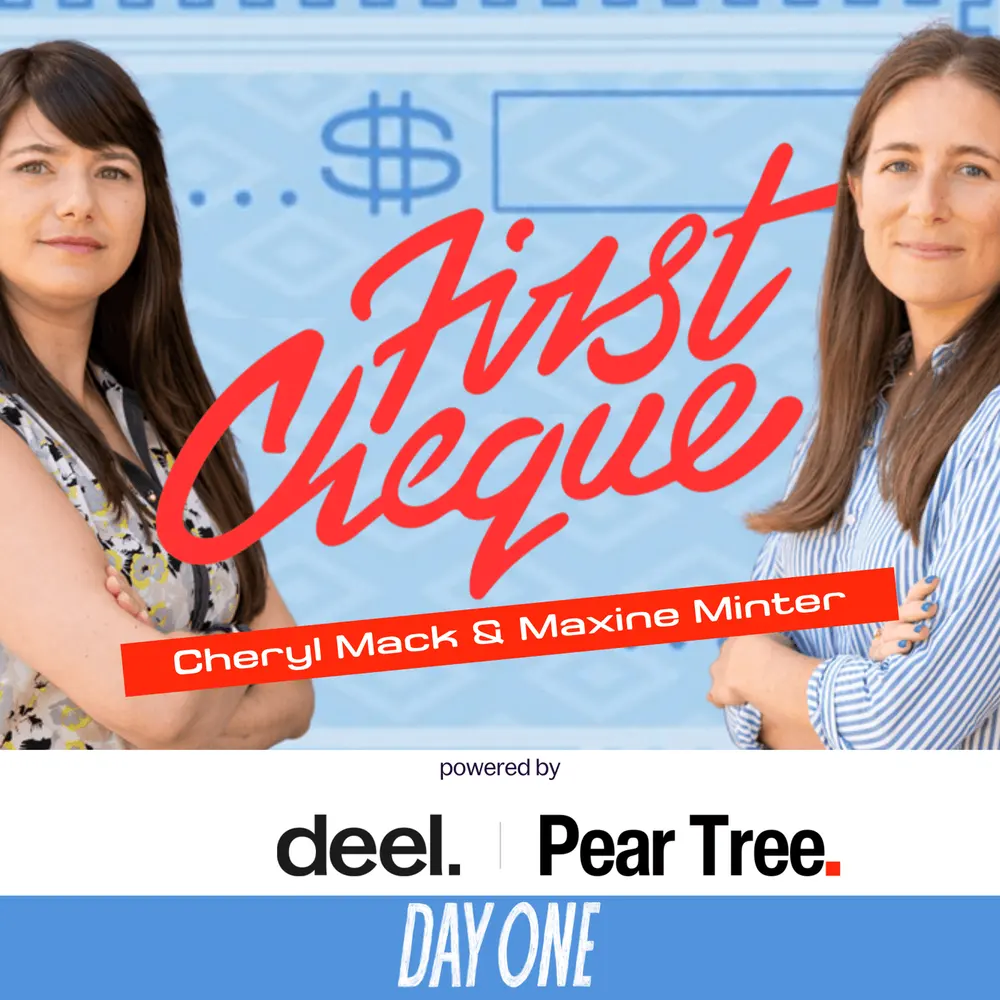 First Cheque with Cheryl Mack & Maxine Minter
Presented by Deel & Pear Tree
First Cheque with Cheryl Mack & Maxine Minter
Presented by Deel & Pear Tree 
 ▶
▶ ▶
▶ ▶
▶