Transcript Synced · select any line to jump ▾ 0:02 Cheryl Mack: Founders scale faster on Deel. Set up payroll for any country in minutes, hire anyone anywhere, get visas handled fast, and get back to building. Visit deel.com/dayone. That's D-E-E-L dot com slash day one. 0:23 Maxine Minter: Are you building a SaaS business and looking to achieve compliance with SOC 2 and ISO 27001 or other security and privacy frameworks? 0:32 Maxine Minter: Compliance can unlock major growth and build essential customer trust, but let's face it, it's usually time-consuming and expensive. 0:37 Cheryl Mack: And like really kind of a pain. 0:39 Maxine Minter: That's where Vanta comes in. Vanta automates up to 90% of customer compliance tasks, making you audit-ready fast and saving you up to 85% of the associated costs. Plus, Vanta scales with your business, offering a market-leading trust management platform to continuously monitor compliance, unify risk management, and streamline security reviews. Join 7,000 global companies, including Atlassian and Dovetail, that trust Vanta to build and prove their security in real time. 1:03 Maxine Minter: And for our listeners, Vanta is offering 10% off. 1:06 Maxine Minter: Just go to vanta.com/first. That's vanta.com/first. 1:14 Maxine Minter: Okay, 3, 2, 1. 1:18 Cheryl Mack: Hey, I'm Sheryl. 1:20 Maxine Minter: I'm Maxine. 1:20 Maxine Minter: This is First Check, part of Day One, the network dedicated to founders, operators, and investors. 1:25 Maxine Minter: If you want to be a better early-stage investor, this is the show for you. 1:28 Cheryl Mack: So TL;DR, if you don't want to suck at investing, listen up. Today we are going to be talking about fund of funds, which if you don't know what that is, don't worry, we're going to get into that as well. I'm not even 100% sure, so I'm probably going to be learning a lot from Maxine in this episode. 1:54 Maxine Minter: Yeah, it's a new format for us to experiment with. We're going to try doing some primers. We've got some feedback from you all that's really helpful as we do kind of deep dives on particular topics. We got a lot of great feedback about the kind of intro to angel investing. And so please keep that feedback coming. You know, if there are topics you want us to do an unpack of, do a primer on, let us know. We have a couple of ideas in mind, but this is our first experimentation. We suggest consuming this in parallel with our session with Trang from Transpose Partners, because she gives you a great example of how she applies it, but excited to dive in and talk about funds of funds. Yeah. So Cheryl, should we start with what is a fund of funds? 2:36 Cheryl Mack: So like, help me understand here. A fund of funds is basically where somebody creates a fund. Like if I go out and I'm like, hey guys, or hey LPs, I'm raising a fund, but instead of investing in companies, I'm going to go invest in funds. And to be clear, not the company that's running the fund, like not the management company, but actually the fund. I'm going to give that fund money. And I'm going to do that with a bunch of them. Like, how many would a fund of fund typically invest in? Is that right? 3:04 Maxine Minter: Yeah, no, that's right. That's right. So I think they invest anywhere between kind of like 10 funds, and the biggest one I know of per fund has invested in 100 different funds. 3:12 Cheryl Mack: Whoa. 3:13 Maxine Minter: So like big, you know, multi-stage. I think, so the first thing, maybe a couple of reminders here just to make sure we're kind of anchoring in what this ecosystem looks like. So first reminder is the structure of a venture fund. So the structure of a venture fund is, think of it like separate buckets. You have a bucket, which in the US is called the GP co or the general partnership company. In Australia, we have different legal structures, but we kind of use the same terminology. So we have a bucket or a company that is the GP co, that is like Coventures Pty Ltd. It is the entity that runs the venture fund. So the like actual company. And then there is a separate entity, a separate bucket that is your actual investors. Investing fund. In Australia, we use a kind of range of different vehicles. In the US, they use limited partnerships, which is why we have that kind of terminology of LP. But you have kind of different entities which represent each individual fund. So let's say in CoVentures Fund 1, that is a standalone bucket, and that bucket will invest in 30 different individual companies. Actually, in our case, 33 individual companies. And for that investment, we will receive shares into that bucket. So into CoVentures Fund 1, and our investors will invest into that bucket. So you can imagine, you know, a large scaled fund like Blackbird or Sequoia. They have multiple of these buckets. So multiple funds, and each of these funds has its own set of investors that invest into that bucket. And the companies that that bucket invests into. Now it gets more complex because over time, investors in Fund 1 might invest in Fund 2 and Fund 3. So you might have the same investors into each of these buckets, but as a structure, it's actually separate from the— Like the entity that does the running of the venture capital firm and the entity that does the investing into the companies are two separate things. So a venture, a fund of funds is this structure, but instead of investing into the company, it invests into these buckets like CoVentures Fund 1 and is an investor into that bucket. Now there's complexity into the ways that they invest, but generally speaking, that's what a fund of funds is. So they construct a portfolio of these funds anywhere between kind of 10 and 50 of them— sorry, 10 and 100 of them. Mm-hmm. And they run the strategy very similar to a venture fund runs their strategy into the directs. The kind of second reminder is that the startup ecosystem and returns in the startup ecosystem over the last 30 years have consistently been shown to be driven by outliers. So this is the thing that you will hear a lot of investors talk about and a lot of managers talk about. Which is this idea of a power law. The power law is a statistical terminology. It refers to the fact that where there is a distribution of returns in the underlying startups and/or the fund managers, your, the majority of your returns are driven by, you know, anywhere as little as 10% of the actual investments you make. Venture funds being an indexation of the underlying assets. So a venture fund invests in, in our case, 33 companies. Our success is driven by, you know, an outlier in our portfolio. Similar, similarly, the venture funds themselves, their returns perform on a power law curve. So there's only a handful of funds, venture funds that will deliver outlier returns to their investors. Actually, the majority of venture funds return less than 1x capital. So they just straight lose money. 7:07 Cheryl Mack: Hmm. Isn't that interesting? Because, well, I can't remember who we were talking to, but one of our other guests said that like the jump from Fund 2 to Fund 3, I think, was one of the hardest. And that like you can kind of raise Fund 2 on the like paper value of Fund 1, but by the time you get to Fund 3, they're kind of looking back at Fund 1 and going, okay, well, what did that actually happen? It kind of seems like that's part of the reason, right? If most funds actually fail, you're going to know that that fund is failing by the time you get to start to raise to fund 3, which is really interesting. So, it would be basically like me starting a fund and saying, "Okay, you guys invest and I'm going to go invest in Blackbird, Square Peg, Airtree, CoVentures, Black Nova, Archangel, and every other VC fund that I can name in Australia or globally," basically. 7:57 Maxine Minter: Right. Yeah, yeah. 7:58 Cheryl Mack: But as an LP, Why, why would you want to do that? Like, why? If I can invest in a fund that's going to invest in those funds, surely I have enough to just go and invest in those funds. 8:09 Maxine Minter: Yeah, I think there's a really interesting reality here in the end, like the kinds of investor that invests in a funds of funds. So I know, I mean, I think especially for kind of angel investors or operators, this is, it's kind of a whole world that is fairly opaque and like hard to see into. But very interestingly, You know, for example, in Australia, the super funds, they are deploying so much money, right? They have so many assets under management that to invest $200,000 of their billions of dollars in assets under management into a fund that is raising, say, $10 million just isn't worth it. The amount of time, the opportunity cost for them to source that opportunity, write that check, and then like manage that asset, it's just not worth it. And they don't want to write a, say, $2 million check into a $5 million fund because then they are too overweight for that, that manager. 9:06 Cheryl Mack: Yeah. 9:06 Maxine Minter: So that manager then has, they're too overweight with that one LP, and so they actually create risk in the underlying LP. A thread that I want to pull there, you kind of mentioned the like failure to graduate from fund 2 to fund 3. Is driven by the potential underperformance of Fund 1. I think what's interesting, at least as I understand it, the failure to graduate from Fund 2 to Fund 3 sometimes is driven by the complete failure to deliver returns, but more frequently is the failure to sophisticate your fund, like the venture firm, the actual business, the management company. 9:44 Cheryl Mack: Uh, the management company. Yeah, that's what Trang was talking about that, like, you know, she looks for firms that are actually developed and have a platform for the startups that they're supporting. 9:55 Maxine Minter: Right, right. So I want to kind of unpack that a little bit because I think it's relevant for fund of funds because similar to venture funds where we had the, you have venture funds that have like an early stage mandate and venture funds that have like a growth stage mandate. You also have funds of funds that have emerging manager mandates, meaning the manager is on fund 1, 2, or 3, or they have established manager mandates. So I'll come back to that in a moment. But the kind of failure for our funds to graduate from Fund 1 to Fund 2, Fund 2 to Fund 3, is actually very similar— or as a way that I understand, is very similar to the failure for startups to make it to scale. 10:33 Cheryl Mack: From like seed to Series A. 10:35 Maxine Minter: Yep. Yeah. So, so interesting. Yeah, it's fascinating, isn't it, how the way that it kind of like mirrors down to the stages. Um, so The failure to graduate from Fund 1 to Fund 2 and Fund 2 to Fund 3 is, you know, you fail to make money. You invest in a bunch of companies that don't make money. You fail to keep your partnership alive. So partner breakup in early stage fund managers is a very common reason that they're not, you know, the companies are not successful. Sorry, that the funds are not successful. To kind of anchor here though, interestingly at the fund manager level, the timeline for success is way longer. So Fund 1, Fund 2, and Fund 3, you are treated as an emerging manager, which is a nice way to say like you're essentially a rookie. We don't know whether you're any good at this or not. 11:23 Maxine Minter: Like pre-revenue. 11:25 Maxine Minter: Yeah, yeah. So like we will treat you as a novice for this. And Fund 1, well, like general fund deployment periods during 2021 and like 2020 and 2021, they got down as low as 2 years, but they're mainly like 3 or 4 years. So we're talking about a period of time you're treated as a novice that's anywhere from like 9 years to 12 years. 11:50 Cheryl Mack: Could you imagine doing something for 12 years and being like, "Hey guys, I'm a novice"? 11:54 Maxine Minter: Yeah. I mean, like, yes, I can imagine it because it's what I've just signed up for. It's like— 11:58 Maxine Minter: Right. 11:59 Maxine Minter: It's kind of a wild experience. 12:01 Cheryl Mack: But imagine if you were like skiing and you're like, "Yeah, I've been skiing for 9 years." still a novice. 12:06 Maxine Minter: Yeah, yeah, still a novice, like a complete rookie. So there's also the kind of element where funds of funds that invest in kind of experienced managers, or not emerging managers, they're essentially— they have anywhere between 9 and 12 years worth of fund track record and usually, you know, a number of years of angel investing track record. And so Over that period, given the nature of this underlying asset class, you should be able to show that you, number one, can invest in interesting companies. You can find them, you can win them, and you can invest in them. You should start to see some distributed capital back out to investors. So you should start to see some, what they call DPI, you know, the amount of money distributed versus the amount that was paid in, distributed to paid in. So you should start to see that DPI back to investors so that they can, they can look at that essentially like at the underlying company level. It's that validation that, hey, you actually built a company that made money. And then also they fail to make that graduation from Fund 3 to institutional level because the company that they've built, the kind of management code that they built isn't ready for scale. And so you can imagine if you're a big super fund or a big pension fund, you need a level of sophistication with your fund manager. That is above and beyond just the ability to find and invest in interesting companies. You need certain security requirements. You need, you know, in these days, certain ESG requirements. You need a certain level of finesse and sophistication on your actual investment process. You know, you need to be able to report to them in a really scalable way, a whole bunch of information about your portfolio companies. You need to also be able to show that track record. So you're like, as an investor, de-risked. reminding that these fund managers— or sorry, like these big pension funds— like they need to report to their investment committees to be able to say like, this is a, you know, quality, highly capable investment fund manager. 14:08 Cheryl Mack: But you talk about this in the sense that like you're saying— it kind of sounds like you're saying that only big institutionals or supers are investing in funds of funds. Like, surely other people like you know, the way that Trang was talking about it, like she talks about it, that there are individual LPs, surely there are family offices and even individuals like me, like would it, would there be any value in what if I wanted to invest in a fund of funds? Let's say, you know, I had an extra million dollars lying around and wanted to throw it into a fund of funds. Is that like, am I just not the target market or individuals not the target market for this? 14:41 Maxine Minter: Oh, absolutely. Yeah. I mean, I think they usually have a, you can imagine because a fund of fund is investing in a larger number of funds than if you were investing directly. They're fairly big funds, right? They're like— yeah, 20— I've seen kind of $50 mil plus. 14:57 Cheryl Mack: Because like, couldn't my million dollars go a long— a much further way, right? If I put it— if I went to 4 funds, give them $250,000, or I went to a fund of fund and gave them a million bucks and they put that into 50 funds, or, you know, even more than 4, at least. 15:10 Maxine Minter: Yeah. 15:11 Cheryl Mack: Would that get me a better outcome though? 15:13 Maxine Minter: Like Well, I think it depends, right? So like, to answer the first question, absolutely. As an individual, there's nothing that stops you from investing in a fund of funds other than the buy-in being like the minimum check size being very large. The value proposition for investing in a fund of funds is a couple of things. One is, um, there's the kind of folks of like, they sell access, so they have allocations in funds like Blackbird or Sequoia or Airtree or any of those like big, very established, successful funds. Those fund managers don't want to have to deal with the long tail of investors. They want to herd cats of a bunch of individuals in, and so it can be more valuable for them to work with a fund of funds than, you know, into like individually directing— into direct investing. And so sometimes, right, if today even if I had $20 million, I can't call Roloff Boffa and be like, hi, I'd like to get into your next fund. He'd be like, sorry, we're fully allocated. 16:07 Cheryl Mack: Right, so it's getting access to funds. Yeah, okay. 16:11 Maxine Minter: Yeah. And so that is like one model, right? The fund of funds sell access. The second is diversification. So there's, I think I mentioned there, there's some funds of funds that invest in funds 1, funds 2, fund 2, and maybe even fund 3. So they are emerging manager funds. By investing in a fund of funds, you allow yourself to diversify across emerging managers as opposed to being exposed to a single underlying asset in the same way that you invest in a fund to diversify. Across startups. 16:42 Cheryl Mack: So you're mitigating that risk for the funds that aren't going to survive. 16:45 Maxine Minter: Correct. Yeah. And so, you know, emerging managers consistently are in the top 10 performing funds of every single vintage. For the last, you know, 15 years, they've been anywhere between 40 to 80% of the top performing funds of every single vintage. Emerging managers are more capable of finding kind of underexploited opportunities in the ecosystem because they're generally investing out of smaller funds, they're also generally kind of closer to the opportunity set than they were previously. So, sorry, than a big, like, large fund like a Sequoia. And so interestingly, they can continue to deliver higher percentage returns. But the challenge is, is that, you know, let's remind ourselves of the drop-off rate. Their success— 17:31 Cheryl Mack: Yeah, I was going to say, like, that's such a conflicting view between, like, most of these funds don't survive, but also they're more likely to find the winners. Like, that makes no sense to me in my brain, right? 17:42 Maxine Minter: I think it goes back to, you know, the ability to survive and build the business around the fund that you're driving. Let's remind ourselves of the structure of the venture capital fund, right? You have a management co, and so as a fund manager, your job is to build that business. So that is the kind of CoVentures Pty Ltd in Australia. And then you have the actual fund that you build, CoVentures Fund 1, And so that co-ventures fund 1, you might find 3 or 4 amazing companies in that group, but your ability to sophisticate the management co to the point that institutionals will invest in it might not be there. Or you might, like, let's say you have a 3-year period where, because you have particular, one particular insight in the ecosystem, or there's a particular moment for alpha, you might deliver this incredible fund 1, but fund 2 sucks. Or you just don't get lucky, right? 18:34 Cheryl Mack: Or, or you make such a good investment that you, your carry is like a billion dollars and then you're like, well, why do I even bother? 18:41 Maxine Minter: Right. Yeah. You know, I think all of those things are possible. And so there's many reasons that a fund manager doesn't graduate fund 1 to fund 2, fund 2 to fund 3, fund 3 to fund 4, and institutional grade that is, that are not correlated to the success of the funds that they actually run. 18:57 Cheryl Mack: Do we have any funds of funds in Australia? Do you know any? 19:01 Maxine Minter: I don't think so. I don't think so. So I think I, I can't think of any off the top of my head. You have a bunch of family offices that run— 19:10 Cheryl Mack: Yeah, they invest in multiple funds. 19:12 Maxine Minter: Yeah, yeah, yeah. And then you have a bunch of like multi-family offices that invest, like maybe pool capital together and then invest in a bunch of funds. But I wouldn't think of that as a fund of like a traditional fund of funds. 19:25 Cheryl Mack: No. Usually they're doing that through like a wealth manager rather than like a fund manager, right? 19:33 Maxine Minter: Yeah, you usually— there are some examples of a multi-family office, like multi-family office. So they've got like one entity that a couple of families will invest into. Yeah. And then that entity invests into funds as well as directs. Um, but I wouldn't think of that as a more traditional fund of funds. No, a more traditional fund of funds would be like Trang, right? She like builds a vehicle. She gets a whole bunch of investments into that vehicle. 19:55 Cheryl Mack: Yeah. 19:56 Maxine Minter: And then that vehicle goes and invests behind a particular thesis with a particular, like, support mechanism for a particular kind of asset. And she manages that asset, and then she distributes capital back to her investors. 20:08 Cheryl Mack: Yeah, which in her case is finding exceptional fund managers, backing them, supporting them, and then getting the returns from those. 20:17 Maxine Minter: Yeah, on Fund 1 and Fund 2. Yeah, so she is an example— Transpose Partners is an example of a fund of fund that has an emerging manager thesis, whereas like HarborVest, which is a huge asset manager, multi-stage asset manager, they have an emerging manager strategy, but they also have fund of funds that sell access. So they are in like Accel, Sequoia, etc. 20:43 Cheryl Mack: There seems like there'd be an opportunity in Australia to build something that would invest in, in at least some of the more emerging funds. 20:51 Maxine Minter: 100%. 20:52 Cheryl Mack: Right. If we have this thesis that, or we have data that backs that they are more likely to find some of the, the bigger outliers. 20:59 Maxine Minter: Yeah. 21:00 Cheryl Mack: In the next generation. Right. And if, if, you know, we're going into this new period of possibly looking like the, you know, the kind of '08 to 2012 period where some of the greatest wealth creation in history was, was created and we're going into another period of that. You know, looking at some of these early funds are coming up now, like co-ventures, and assuming that they are probably going to find the next, the next Canvas of the world, you know, maybe we should convince someone to start a fund of funds. 21:27 Maxine Minter: Yeah, there's a couple of people playing around with it in Australia in various versions of it. Like a venture firm, there are, there are like multiple ways you can chase this strategy. And so like multiple different ways that you deliver the business of getting access to emerging fund managers. 21:44 Maxine Minter: Are you building a SaaS business and looking to achieve compliance with SOC 2 and ISO 27001 or other security and privacy frameworks? 21:52 Maxine Minter: Compliance can unlock major growth and build essential customer trust, but let's face it, it's usually time-consuming and expensive. 21:57 Cheryl Mack: And like really kind of a pain. 21:59 Maxine Minter: That's where Vanta comes in. Vanta automates up to 90% of customer compliance tasks, making you audit-ready fast and saving you up to 85% of the associated costs. Plus, Vanta scales with your business. Offering a market-leading trust management platform to continuously monitor compliance, unify risk management, and streamline security reviews. Join 7,000 global companies, including Atlassian and Dovetail, that trust Vanta to build and improve their security in real time. 22:23 Maxine Minter: And for our listeners, Vanta is offering 10% off. Just go to vanta.com/first. 22:29 Maxine Minter: That's vanta.com/first. 22:32 Maxine Minter: I do think So something to name with the fund-to-fund model. So a reminder, venture capital firms generally operate on a 2 and 20 model. 22:43 Cheryl Mack: Yeah, I was going to ask about the fees, like how— 22:46 Maxine Minter: Yeah. 22:46 Cheryl Mack: Are there fees on fees here or— 22:49 Maxine Minter: Yeah, there are fees on fees. And so the challenge I think in the Australian market is, and across markets, but for this strategy is you have the underlying fees from the venture fund, which is 2% of committed capital per year. In management fees. So for the venture, for the fund manager to actually run the venture capital, like, business. And then you have a 20% carry. So that means of the profit that a venture, like, the actual fund makes, the fund manager, so the CoVentures Pty Ltd, gets to take 20% of that success rate, with some more complex math underneath that, but they're going to generally That's how it operates. 23:31 Cheryl Mack: Yeah. 23:31 Maxine Minter: So that's commonly known as the 2 and 20 model. So you can imagine as a fund of funds, you have the same needs, right? Like you need revenue to be able to run the company that does all the sourcing, that does all the evaluation and all of the support. So there has to be some fees on the capital that is allocated. And also you take carry. Now they generally, because it is a less actively managed asset, they generally take less fees and less carry. So I've seen anywhere between kind of a 0 and 30% model through to a kind of 1 and 10% model. 24:02 Cheryl Mack: Zero being— 24:03 Maxine Minter: No management fees. 24:04 Cheryl Mack: No management fees, but only 30% carry? 24:08 Maxine Minter: 30% carry. 24:09 Cheryl Mack: Okay. 24:09 Maxine Minter: Yeah. So you can imagine 30% carry stacked on 20% carry starts to be extremely expensive on the success. 24:15 Cheryl Mack: Yeah. 24:16 Maxine Minter: So the way that that makes sense from a returns profile perspective is those investors into the fund of funds are thinking about, okay, what's my return profile net of fees? So you are thinking about de-risking here versus how much, you know, return you are getting for it. So maybe it's for those folks that are running a kind of wider strategy. For some in the US, it's very common for the like big pension funds to run an emerging manager strategy as essentially a sourcing vehicle for them. So it comes out of a different allocation pool than it comes than from the kind of direct investments. But it is, you know, it's still an expensive model to run. So as a manager of a fund of funds strategy, you need to be very thoughtful about the way that you structure your fees and stack your fees so that it's still net of fees, meaning the return that an investor gets after the fund manager has taken all of their fees, it's still an attractive option for those fund allocators. 25:12 Cheryl Mack: And you really need to think about it in terms of like, are you really going to get that? Like, theoretically, you, if you're more diversified, right, like You invest in a fund so that you can get more companies. You invest in a fund of funds, you can get exponentially more companies. And, you know, Trang has thousands. But like, do we have to buy in? You would need to buy into the thesis that more diversification equals better returns, right? 25:36 Maxine Minter: Well, risk-adjusted returns. The nuance there is risk-adjusted returns. So you would— more diversification means technically you're taking less risk. Because you're not exposed to a single fund or a single startup. You are exposed to anywhere between 10 and 50 of them, and so you are more likely to find that fund that returns, you know, like Blackbird Fund 1 is like on a 45x or something. Like, it increases the probability you find something like that. 26:06 Cheryl Mack: Yeah, but like, can you really do the math on that to say, I, I believe that because I'm 10x more diversified that I will have what, a 10x better return and that justifies— it's not 50%, right? So it'd be 20, it would be 20% carry on and then 30% on that. So like it would equal out to, you know, I can't do the math on that, but— 26:32 Maxine Minter: I think the math you're doing here isn't like I'm investing in 10x more companies and therefore I need 10x the return profile. The math you're doing is the probability. So for example, if I chose to invest directly myself into a bunch of companies versus invest in a single fund manager versus invest in a fund of fund strategy, at each of those layers, what's the probability that I find the outliers? Because ultimately that's what we're trying to do here, right? Like we're trying to find the outlier return. We're trying to find those like 10 to 100x. 27:06 Cheryl Mack: 1000x returns, the CANBAs, right? 27:08 Maxine Minter: The canvas. Yeah. So we, because, because we're investing on a power law, I think it's important to remember that we are like thinking about both the long tail and how long that long tail and how negative that long tail is and how that counterbalances the success. So in the underlying companies, you have a bunch of zeros, whereas at the fund level, you probably don't have a bunch of zeros. You might have a collection of 1x's. Maybe you have a zero, but you have a collection of 1x's. 27:44 Cheryl Mack: Yeah, like most of your funds return at least 1. 27:48 Maxine Minter: Yeah, yeah, correct. And so the fund construction is different from a fund of funds perspective than it is for a portfolio construction perspective. So as an investor into a fund— 27:58 Cheryl Mack: So it is less risky. 28:00 Maxine Minter: It's less risky, yes. It's 100% less risky. 28:02 Cheryl Mack: Yeah. 28:02 Maxine Minter: But it also runs the risk of In the same analysis you would do with the underlying portfolio, you also run the risk of it being less value creating for you, right? 28:12 Cheryl Mack: Yeah. 28:13 Maxine Minter: You might not find that, that outlier, but because you're taking less risk, you shouldn't expect a higher return, right? Return is a function of the risk that you are taking to be compensated for that risk. So, 'cause you're taking less risk, you should expect to have less return. 28:31 Cheryl Mack: Yeah. I mean, well, that's, that's why we invest, right? Like, hmm, you, I could go and invest in an ETF or I could go and invest in individual stocks or bonds, but I choose this and— 28:43 Maxine Minter: Yep. 28:43 Cheryl Mack: This is just a slightly less risky version of the same type of venture investing, right? Like we're just sliding up the scale, still same asset class, but actually sliding up the risk scale, which I think is actually an interesting approach if you were more risk averse, but wanting to still invest in this asset class, doing a fund of funds model. Means that you probably will get— you have less chance of making like, you know, the 1000x return that I'm going for when I invest in an individual company. But you have a higher percentage, you have a higher chance of, you know, not losing all of your money like I do when I invest in an individual company. So I could see that being a driver of wanting to invest in fund of funds. 29:20 Maxine Minter: Yeah. I also, I mean, like, it is also a reflection. So for a lot of the people that invest in fund of funds, They are large institutional asset managers. 29:28 Cheryl Mack: Yeah, but individuals must do as well, right? 29:30 Maxine Minter: They do, but it's a smaller percentage of it, right? Yeah. Like you can imagine if you're raising like a $50 to $100 million fund, you know, for a lot of them minimum check size is a million dollars and there's only a handful of people in the world that have, you know, portfolios of $50 million of investable assets and, you know, 10% of that is going into— 29:52 Cheryl Mack: Can put 10% of that into alternative assets. 29:55 Maxine Minter: Yeah. Alternative assets, right? So like we're talking about an asset class here that is only available to the ultra wealthy, which is why there's not a lot of information about it. 30:06 Cheryl Mack: Well, that's why we're having this conversation, right? So we can share more. I think what's interesting for our group of investors out there who are emerging managers or early angel investors or even just angel curious is just how that, um, relationship between like funds and other funds work and what that means for the, the downstream effects on the types of companies that you invest in, right? Like knowing that, uh, if you invest alongside, you know, say CoVentures and CoVentures has a fund of fund that's invested in them, what does that mean for the potential success of the company later on down the road? Does it mean more money for them? Does it mean more support? Does it mean— Mm-hmm. Less support? Like, does it mean anything? 30:50 Maxine Minter: Yeah, that's, I think, a really interesting question. I think there's probably a nuance I would add here in that the Australian fund of fund ecosystems is largely like a fund of funds business that is coming out of a bigger asset manager. So like a super fund or a like big bank, they are investing in the venture capital ecosystem for those venture— those VCs to invest directly. And that differs from who is investing in the US, or who are the big kind of anchor LPs in the US. The big anchor LPs are endowment funds. So the kind of Yale and Harvard endowments are the ones that— 31:30 Cheryl Mack: And the Ontario Teachers' Pension Plan. 31:32 Maxine Minter: Yeah, yeah, yeah. Like CalPERS, the Californian pension for— I think they're like, I think they're medical professionals or something like that. Anyway, they've got these big But those— I mean, Ontario and CalPERS and those folks are slightly different, right? They operate very similarly to a super fund because they are pension funds, right? So, okay, the nuance here is, as a pension fund— 31:56 Cheryl Mack: wait, what's an endowment fund then? 31:57 Maxine Minter: An endowment fund is the universities. So universities in the US are big asset managers because they get an enormous amount of endowments, so gifts from their former students to the university to be able to fund the university's continued operations. And they're investing like billions and billions and billions of dollars of assets to then have a return on those assets. And they use the return on those assets to fund university activities. So the distinction here is that as a pension fund, you've constantly got people buying units, right? Like every single month. Mm-hmm. In Australia, you have payroll run, and every single payroll that is run, 11% of that goes into a super fund. And that 11% of monthly payroll in Australia, you are purchasing units in your super. So you are buying the then-present value of the assets that a super fund can deliver to you. 32:56 Cheryl Mack: That is so interesting. Do you think— I mean, I certainly never really thought about the fact that actually each month, technically, I am investing in a fund. —yeah, that is managed by a fund manager. Yeah. And growing my own wealth that way. Like, I just don't think about it. You think, oh yeah, I'm saving for retirement, but— right, no, it's actually every single month I'm buying in, I'm buying more into a fund. 33:21 Maxine Minter: Yeah, that's, that's true. I have, like, as a side note, not to get too distracted on this, but I get quite frustrated when I talk to people and they're like, oh, I'm not an investor, I don't know how to invest. And I was like, actually, incorrect. You are. If you earn payroll in Australia, like, you are passively investing. The fact that you've never thought about it. And the fact that you have like not engaged in that concept of being an investor, like that's a separate thing. But like the fact of the matter is you are making an investment, you made an investment decision when you decided your super fund. 33:51 Cheryl Mack: And you are consistently— 33:52 Maxine Minter: And you are passively making an investment. 33:55 Cheryl Mack: Yeah. That's pretty cool to think about though. Like what if we could mobilize people to understand that a bit better and then be more engaged in the way that they invest just based on the fact that, hey, you're already investing. 34:05 Maxine Minter: Hmm. Like, I think it would be amazing, even just a small step of looking at your super construction. Like, most super funds will give you a nice little slider to say, I want to take more risk or less risk, and maybe even like checkboxes of the kinds of products that they run that you can— A nice little slider. Just slide that little bugger over. Slide me over. 34:28 Cheryl Mack: Super risky, lose all my money side. It also begs the question, like, If these super funds continue to grow and grow and grow, how does that affect the venture space? Right. Let's bring this back to our space, right? Like, how does that affect our venture space? 34:45 Maxine Minter: Mm-hmm. Well, I wanna come back to that, but the nuance that I wanna add here, cuz I think to answer your question, why does this matter as a fund manager, is as a fund manager, you are holding an asset that is priced every 12 to 24 months. Right. The revaluation moments are when there are new investors that come into venture, but you know, through one layer of abstraction, the biggest investors in this entity are getting priced every single month. And so what we saw over this period is a lot of pressure from the pension funds and the super funds to their fund managers to reprice their private assets because they were holding a bunch of assets that hadn't been repriced because there was no further valuations. 35:30 Cheryl Mack: Rounds. Yeah. 35:31 Maxine Minter: Because startups weren't raising rounds. Correct. So they were like overpriced relative to what the super funds believed them to be and proved out to be, right? Like, if I think Canva got up to $62 million— sorry, sorry, $62 billion. 35:45 Cheryl Mack: There were some revaluations. Yeah, yeah. 35:47 Maxine Minter: And then it got revalued. Yeah. So you saw Blackbird do that revaluation, and then they're gonna, etc. Whereas in the US, there wasn't that same push because as an endowment fund, no one's buying units in your endowment every month. Ah. And so The biggest pressure that I see, or difference in pressure and how kind of big institutionals matter for your underlying investments, is that kind of how they are reporting the value of your assets. And the second is vice clauses. So vice clauses, as a fund manager, you sign a contract with your— the company, sorry, the fund of funds and individuals and the institutions that invest in your fund. And you essentially say, I am committing to invest in this kind of company with these kinds of processes over this kind of time period. And then you make a bunch of commitments not to be a psycho or fraud or, you know, etc. And also in that contract you say, I will not invest in XYZ. And these are vice clauses. They are very commonly, you know, sex, drugs, alcohol, things of addiction, etc. 36:52 Maxine Minter: Ah, like vice tech. 36:53 Maxine Minter: Yeah. So those vice clauses essentially say to the fund manager, you can't invest in anything that looks like this. So practically, we're seeing this be a real problem for anything in sex tech. A lot of Australian super, you know, anything in the sex tech space, you know, trends too close to those vice clauses, so fund managers won't touch them. 37:15 Cheryl Mack: Yeah. 37:16 Maxine Minter: Anything in the kind of addictive substances space. So in the US, there's like the cannabis ecosystem is a real problem here. 37:21 Cheryl Mack: Yeah. 37:21 Maxine Minter: Also, I believe you still can't transact an IPO with a cannabis company on the NASDAQ or any of the big stock exchanges in the US. So vice clauses are really relevant here, but other than that, it shouldn't change how a fund manager manages and invests in companies underneath. There is a reason that you're, they're, you know, a big institution or individual is investing in a fund manager as opposed to investing directly in that they are giving that ability to decide and manage to the fund managers and paying decent fees in order to be able to do it. 37:54 Cheryl Mack: Yeah. I think a lot of funds have vice clauses though, not just in Australia. 37:58 Maxine Minter: Oh no, all over the world. 38:00 Cheryl Mack: Yeah, all over the world, right? Like I, most funds will say, no, I don't invest in that. 38:03 Maxine Minter: Yeah, yeah, yeah. 38:04 Cheryl Mack: Even if it's something like I saw one that was to help people quit smoking or drinking. I can't remember which one, but they're like, sorry, like it has to do with drinking, so no. And it's like, no, but it's to stop. No. Okay, well we'll just see ourselves out then. 38:17 Maxine Minter: Yeah, yeah, yeah. It matters all over the world. Let's remind ourselves that the big investors into these funds are universities, hospitals— 38:26 Cheryl Mack: Pensions. 38:26 Maxine Minter: Pension funds. And so it matters what they make commitments that they will invest in things that don't do any harm and those kinds of things. And so they pass them on to their fund managers because they have to. 38:36 Cheryl Mack: Yeah. 38:36 Maxine Minter: Rightfully so. I think it's an important thing, but I do think that they are slow to change and outdated, leaving a lot of value on the table. 38:43 Cheryl Mack: Yeah, yeah. Super interesting in terms of funds of funds. I'm really excited to see, like, obviously Australia is super nascent when it comes to this, the fact that we could name, you know, any funds of funds. 38:54 Maxine Minter: I don't think there's one. Yeah. If you're a fund of fund listening and you exist in Australia, please reach out to me. I would love to know that you exist. I get an enormous amount of fund managers that reach out to me, especially emerging fund managers that reach out to me for like advice and like support as they're raising their funds. So if you exist and would like some deal flow, I have some folks for you. Or at the very least, it's just like start a website. 39:18 Cheryl Mack: Yeah. Or at least we will know about you. We can mention it on another episode. 39:23 Maxine Minter: Yeah. 39:24 Cheryl Mack: We can take a look. So, yeah, I think if there isn't though, then that's probably maybe in the next frontier for Australia is what that looks like for us as we mature as an ecosystem. 39:35 Maxine Minter: I hope so. Yeah, I hope so. 39:37 Cheryl Mack: Amazing. Well— 39:38 Maxine Minter: Awesome. 39:39 Cheryl Mack: Thank you for this insightful session, Maxine. I learned a lot. And hopefully this will help people with listening to the Trang episode. And when we say in parallel, not at the same time, like maybe before or after. 39:53 Maxine Minter: Yeah, I don't know that we needed to clarify that. Or maybe we did. Maybe someone was like, oh, I have to listen to this, like, with one AirPod in each ear as I listen to both in parallel. 40:03 Cheryl Mack: That would not be a pleasant experience. 0 out of 10 would recommend. 40:06 Maxine Minter: Yeah. 40:07 Cheryl Mack: Awesome. Thanks for your time today, Maxine. 40:08 Maxine Minter: Thanks so much. This was fun.


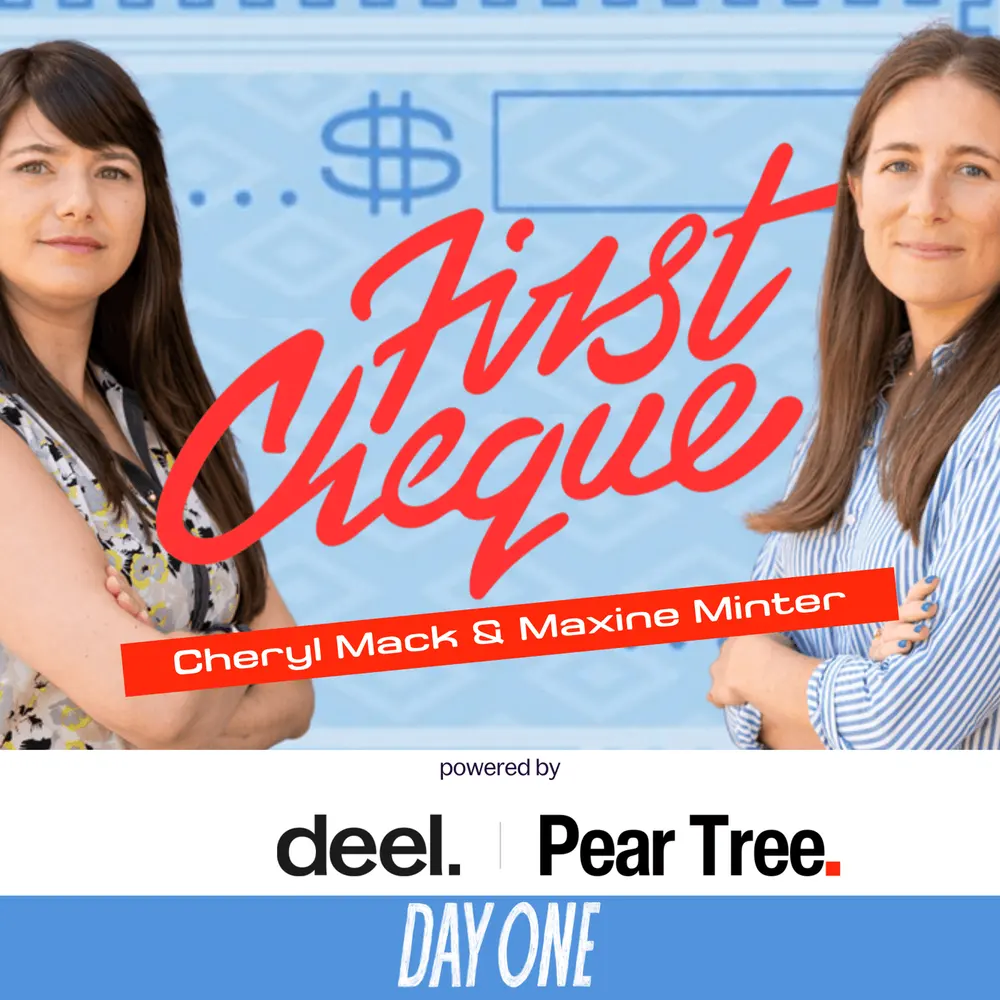 First Cheque with Cheryl Mack & Maxine Minter
Presented by Deel & Pear Tree
First Cheque with Cheryl Mack & Maxine Minter
Presented by Deel & Pear Tree 



 ▶
▶ ▶
▶ ▶
▶