Transcript Synced · select any line to jump ▾ 0:02 Pauline Fetaui: Founders scale faster on Deel. Set up payroll for any country in minutes, hire anyone anywhere, get visas handled fast, and get back to building. Visit deel.com/dayone. That's D-E-E-L.com/dayone. 0:20 Ricky Sevta: Customers come first, and customers are the only things that truly matter. The rest, the funding, the investor relationship, the internal politics, the, you know, founder relationship, all of that is secondary. Because if the customers don't exist, the business doesn't exist. But how often do you guys see your customer? How often do you guys sit down with your customers? How often do you actually listen to their pain points? How often do you actually understand that your solution is actually going to give them a brighter future? So that, as you scale, gets lost. Because as the business grows, the internal noise kicks in, and then you go into your Slack, and there's just a whole lot of internal combustion. And you're like, well, what about the customer? Yeah. 1:05 Pauline Fetaui: On this episode of PerspectiveX, you'll hear from Ricky Spetter, a master of scale who helped lead Simpro from $10 million to over $100 million ARR, gaining unicorn status as the chief revenue officer. Ricky shares hard-earned lessons on what it really takes to grow at that level, the grit, the sacrifice, and the pathway to accepting your own idea of work-life balance and fulfillment. Ricky is doing it all over again with the next startup, Deep Space, practicing what he already has learned, focusing on value, building strong teams, systems, and never losing sight of the core problem you're solving for your customer. 1:44 Speaker: You're listening to a Day One FM show. 1:48 Pauline Fetaui: As a startup founder, you're juggling multiple priorities from the expected, like finding product market fit, to the unexpected, like customer requests for SOC 2 or ISO 27001 certification. But achieving compliance is time-consuming, and time spent on it is time away from the needs of the business. That's where Vanta comes in. Vanta is the all-in-one solution for startups to become compliant quickly and build a security foundation with ease. With a combination of automation, an extensive partner network, and a security marketplace, Vanta provides the necessary tools and expertise for startups to achieve compliance seamlessly, no matter how urgent your needs are, and at every phase of growth. Over 10,000 leading companies, including— Cipherstash, Handle, and indebted, trust Vanta to automate compliance so they can focus on growing their business. Startup customers get $1,000 off Vanta at dayone.fm/vanta/pauline. Welcome, Ricky. Thank you for being here. 2:54 Ricky Sevta: Thank you so much, Pauline. Great to be here. Good to see you again. 2:57 Pauline Fetaui: Lovely to see you. And I think it's a year ago that we first connected and you jumped straight onto stage at Something Tech 2023. 2024, and you had the pleasure to interview Ashiq from Deputy. And I, after you interviewed, I was like, I need to, I need to go and meet that guy, and I actually need to interview him. 3:19 Ricky Sevta: Well, yeah, thanks, thanks again. It was lovely catching up with you then, and you know, catching up with Ashiq at any point in my life is a privilege, so thank you for making that happen. 3:32 Pauline Fetaui: Lovely to have you here. All right, so I'm going to do a little bit of a scene setting of who you are because I could always ask you, and I have done that in the past, but I'm going to do it for you. So because there is actually quite a lot to unpack today, you've had such a rich career, and that career feels like it's only just started again. So I'm sure it's not feeling that for you or your family and the people around you, but you're diving into new ventures yet again. But let's just go a bit down memory lane. So you kicked off as a mechatronics engineer by training, you transitioned into leadership in tech and then into startups. You joined Simpro around 2015, 2016 after being their customer, and you led their New Zealand business unit. You were promoted later to Chief Revenue Officer. We're going to talk about what that actually means in a sec. And that was around September 2020, and then you served until 2023 at Simpro. 4:30 Ricky Sevta: Yeah. 4:30 Pauline Fetaui: For those who don't know Simpro, they are a gigantic beast, a global company, previously a startup. They have of course reached unicorn status and you actually helped them on that journey. You kicked off and started with them when they were around $10 million ARR and you got them to $100 million ARR, which is super impressive. You helped and worked through them with the global go-to-market revenue operations, sales, the whole expansion, including a capital raise of about $550 million. That just blows my mind. I'm keen to jump in on how that experience was. And then you left Simpro about mid-2023. You now have started again. Well, it feels like it, or it looks like that on paper in the few podcasts I've listened to. You are the CEO of Deep Space, an AI construction management software. You are also a VC partner at Ventureon Partners together with fellow Simpro mates. And you're a board member of Whip Around, and you previously hosted your own podcast, Sassy Talk Unfiltered, correct? 5:35 Ricky Sevta: Geez, you make me sound good. Yes, I think. 5:39 Pauline Fetaui: I could keep going. I could keep going. 5:42 Ricky Sevta: So many fond memories is what I take from it, and a lot of friendships and mateship. But yeah, thanks. Thanks again, Pauline. And that was very, very kind of you. 5:50 Pauline Fetaui: Oh, you've had a rich life, not only in obviously some exits under your belt now, but also in the experiences and what I really love and what attracted me to have you on PerspectiveX is how do you actually scale when you're actually joining a company when it's already got its traction? It seemed to have sort of found its market, obviously with $10 million ARR, and then you take it even further because sometimes I find like people may think, oh my God, if we just get to $1 million, we're gonna be fine. Or if we just get to $5 million, we'll be fine. Then $10 million, we're gonna be fine. But really I think it's pretty much a shitstorm the whole way up. So tell me, what was your experience like joining Simpro? 6:32 Ricky Sevta: Yeah, you got me dating myself here. I think you mentioned shitstorm, so I agree. I don't think at any point in time of the journey it ever got easier. So you're also doing it for the first time, so I guess being naive helped you kind of get to the next stage and the stage after. One thing we didn't do, and we can come back to this, Pauline, is we never really paused to celebrate. No milestone was ever sort of good enough because we had us, uh, when I joined the business, we were pretty clear that we wanted to be $100 million business in USD. So that was kind of the North Star and we just went for it. How do you do it? And how do you do it as a first-time operator, uh, who didn't really necessarily come from the tech, right? So you just mentioned I was an engineer. I worked for a company called China Electric. I was one of the early customers. So I knew the industry. I knew the the problems, the personas, all of that really well. I didn't know the intricacies of scaling a tech business, but no one around me did either, right? So that was its own advantage. We were definitely just like rebels, maniacs, just underdog. If you also then go back 10 years, there wasn't this rich content. There were no podcasts. There weren't really great YouTube. There weren't these communities now that Pauline, you and others help run. There wasn't any founder network. Yeah. And even if they were, I think we were so tapped into just our own business that we didn't really look up. So how do you do it? You just do it by, I think, ruthless focus, prioritization, and being selfish, right? So I think that's something I and perhaps others don't often talk about. It was, it's full-time consuming. So we just, we consumed, we drank the Kool-Aid and— Yeah. That's all we ever worked on. So I know there's lots of stories about Mark Zuckerberg and Steve Jobs wearing the same t-shirts, so we were kind of somewhat similar. We just wear similar t-shirts every day, jeans, and just, you just start working. The way I kind of, because my mind is structured like an engineer, everything has to work in some sort of a fashion for it to then get to that end goal. So I'd look at a problem, I'd break it down,, like a Lego piece. And I'd actually just bit by bit, every piece must be broken and then put it back up. So then I know how to fix it. I also know every piece where it belongs and then create like an instruction manual as you're doing this. So you talk about like Simpro and the founders, incredible good mates for life. They'd done a lot of the hard work. When you come into the business and you're then trying to reach scale, it's all about repeatable scalable motion, right? So having that instruction manual that anyone can pick up in any country and really just read it should get you to a point where you're like, okay, I'm now 80% of my way through. I now need to then understand the 20%. So creating things like hiring profile, pulling onboarding experience for staff, enablement for staff, as well as customers, creating like a whole buyer's journey or a customer journey. All of that processes were, is I guess what helped the business truly find that. you know, as people call it, hyperscale. And that's kind of why I look back is what me and the team were able to achieve. 9:50 Pauline Fetaui: And did you find the, what you had at the time you joined, was it predominantly that revenue coming from New Zealand or had it already reached into new markets? Like how mature was sort of the processes, the systems, those sort of Lego blocks, how structured were they at the time? 10:07 Ricky Sevta: This will make you proud. I was so simple. I was the out of Queensland. So that's, so revenue was, you're right. It was largely coming out of ANZ. It was still very much a founder-led organization, even though they have had some level of, I guess, leadership prior. A lot of the processes or the playbooks, as we kind of came to know later, I didn't even know what playbook was. It was there, but it was in a lot of key people's head. It wasn't really drawn out anywhere. And if it was, maybe the training was in such a way that you couldn't just join the business and consume it. And this is not a knockback. So even when I joined the business, there was no onboarding. I started on a particular day and then the next day I was in the role, but there was no, this is how we do things. This is our blueprint. This is what makes us successful. This is how we win. This is how we lose. This is what we do touch and this is what we don't touch. There was no like guardrails. Now, there was definitely a website, there was definitely a good, really good product, there was definitely a need. So a lot of that good stuff was taken care of. So product-market fit had been achieved. Now, that's well and good. And then I think a lot of founders think once I've achieved product-market fit, I'm good. But it's not a, it's not a static thing. It comes and goes, right? So that's, that's what I had to work through. And I guess just build that engineering, or, you know, I think it's part science, part magic, part art, whatever you want to call it. That's, yeah, bringing that discipline into the organization was the key. 11:42 Pauline Fetaui: I like how you framed the product-market fit as something that you might hit, but then you always have to hit time and time again. And I could imagine that's the case when you're entering a new market. I listened to one of your, actually I read some of your posts and most recently you've been talking a lot about market. And how important and critical the market actually is. So you could actually have, you can have a really good team in a bad market, the market wins. You could have a really shit team or weaker team. 12:14 Ricky Sevta: Yes. 12:15 Pauline Fetaui: And obviously have a good market and you can still, the market will cover up the flaws basically. So finding product market fit time and time again, was that your experience with Simpro getting into other markets? How did you go about that? 12:29 Ricky Sevta: Yeah, really good question. I'm deeply passionate about this, right? Because if you think about Simpro or just any sort of holistic or, you know, all-in-one type of software, you're trying to serve multiple personas and you're trying to serve like multiple verticals. So just because you've hit product-market fit in a particular vertical or a particular industry or region doesn't necessarily mean you've now hit product-market fit all the way through. Sometimes Simpro, just to kind of, just as an example, not necessarily reality, is like we could have just targeted electrical businesses in Australia and have built a reasonably sizable business, but it wasn't never going to be, if you go back to the North Star metric, right? It was never going to be this beast of a business. So you had to kind of go in and then expand out to different verticals. So electrical, security, plumbing, fire, HVAC, and then go from Australia to New Zealand to the UK to the US, Netherlands, Singapore, and whatnot, right? Like, so every time you change any one of those things, you really are just refining or finding product-market fit again. Because you don't have the case studies, you don't have the history, you don't have the, the ins and outs, the nuances that exist for each vertical, right? So I think that's what I mean about you could come up with the best product on this planet, but if the market's not ready, you're just never going to achieve the product-market fit. And Just getting the two things right is definitely magic. There's a slight bit of luck involved. We can touch on that. But yeah, there's just, it's like KFC, you know, there's like so many ingredients, 11 secret ingredients that go into making what it is. And you just don't know what those ingredients are as you're working your way through. You're much wiser looking back and in hindsight and then doing it for the second time or the third time. There are definite things you would not ever do again. But for the first time, every idea is a great idea and you try and execute too many things. So I think that was the big learning too, is that sometimes you get ahead of yourself and you try far too many things when you just haven't earned the right to do so. 14:41 Pauline Fetaui: So tell me a little bit more. Let's unpack some of those secret ingredients because I think the value in a long-form podcast like this is we can, A, have the time to do that, B, other people need this sort of guidance. And like you said, there was no YouTube and podcasts around at your time. I'm sure you would've been an avid listener, as many are. So like, what, what are some of those sort of things? You could either answer it from a what not to do or what to do in, in trying to find whether the market is right. Mighty Partners is a growth lender backing Australia's best operators with the capital and confidence to grow without giving away what they've built. Mighty offers up to $10 million in funding with flexible repayment terms for up to 3 years. Join businesses like Amber Electric, WeMoney, and Safewill who have scaled sustainably using smart debt. Grow your business, keep your business. Mighty. Learn more at dayone.fm/mighty. 15:46 Ricky Sevta: A few things. So if you back then in particular, if you found early success, you thought you were ready to take on international market, you found a bit of success, you felt like, hey, I don't, you know, typical advice back then was focus on your core strength, hire for the skills that you don't have, right? So The over-indexing on bringing, I guess, high-level execs into the business is a lesson that we all learn. So, and my personal experience, and not to just talk on companies we have, bring in the VPs. These titles didn't even exist back then, right? So you go into the, some, you know, US is an example. For Australia, New Zealand startups in particular, US is the nirvana, right? We all want to get to there. It's a big market. You get there. The ecosystem is much more mature. They're kind of 10 years ahead in lots of thinking. So the playbooks and whatnot. So, you know, you start to adopt those titles. All of a sudden you bring someone in who's perhaps a little bit too senior, they take on the VP title, but you're still building the plane whilst you're flying this thing. And what you often find is that that slows you down because you don't have the processes, you don't have the budgets, you don't have the rigor that they want to come in and drive. So bringing in the right people at the right time was definitely the number one lesson I learned throughout. So I guess how we overcame that was, so you firstly do that job, even if it's for like 30 days, 60, 90, however long you can. Find out exactly what are the key things you're looking for and then draw up a, you know, talking about Secret Sauce, like a hiring profile. Yeah. That is not subjective but objective. I want this person to do exactly these things in this particular order. And then you go and look for that role and you bring that person in just with not rose-tinted glasses, but clear view of what they're walking into, just so that there's no surprises. What I often found was previously people were trying to sell each other on vision, where we're going to get to, and it's so easy to do that. Um, But when you bring in the mid-level managers or the directors and whatnot, you definitely need the clarity. That brought a lot of discipline into our organization. Things like tech stack. So again, don't get too ahead of yourself. It's okay to run a lot of things on spreadsheets, GSheets, WhatsApp, whatever it may be. But be prepared to bring in processes. Be prepared to bring in tech when it makes sense. Too often I find that because, you know, LinkedIn's full of advice that people go, oh, well, that company's now using this, this, this. If I just apply the same playbook, it should work, but it often doesn't. It creates noise, creates distractions. So this is what I mean about removing friction and not listening to things that don't matter. And then last one, which is, it's cliché and everyone says it, but I don't In my experience, hasn't been true. Customers come first and customers are the only things that truly matter. The rest, the funding, the investor relationship, the internal politics, the, you know, founder relationship, all of that is secondary because if the customers don't exist, the business doesn't exist. But, you know, how often do you guys see your customer? How often do you guys sit down with your customers? How often do you actually listen to their pain points? How often do you actually understand that your solution is actually going to give them a brighter future? So that, as you scale, gets gets lost because as the business grows, the internal noise kicks in and then you go into your Slack and there's just a whole lot of internal combustion and you're like, well, what about the customer? We worried about our churn, we worried about upsell, cross-sell and all those funky things. Where's the customer sitting amongst all of this? So I made a big point of going and seeing as many customers as possible. I would often get on a plane, bus, train, Uber, you name it. I would at least dedicate 30 to 40% of my time spending with the customers, existing customers, prospects, or whoever it may be. That never changed. Even during the COVID period, if when I could and if when I was allowed to, I'd leave the country. I'd do the 2 weeks of hotel lockdown or whatever it took. So this is what I mean about earlier about the sacrifice and the compromise, but it's a promise that you make to yourself and the customers. And if you ever break that promise, I think it filters through the organization. So customer journey, customer love was at the core of what we're trying to achieve. And that DNA mix never got lost. 20:30 Pauline Fetaui: I really am grateful that you actually said that customer being one of those key things and not losing sight and you having a direct relationship. We, giggled in the beginning what your title was, Chief Revenue Officer. So I was like, what is that? And also, if you're going and visiting clients, customers, and you're like, hi, I'm the Chief Revenue Officer, they'll be like, I'm sorry, are you here to make me feel better or take my money? What is it? What is that role? And like, how did you, I guess, balance the constantly seeing the 30 to 40% seeing the customers? Because I work with a lot of founders and there is sometimes a lot of excuse or avoidance to actually go and talk to the customer. 21:14 Ricky Sevta: Title is a funny thing, right? Like you look back and you're like, oh, even back then I'm like, what is this funky thing? So we never really care about the title, but title was more so about just keeping in terms with what was happening in the tech space. I often internally called it Chief Repeat Officer, CRO, as opposed to Chief Revenue Officer, because that's all you ever did. It's just content, repeat, repeat, repeat to yourself, repeat to the others, repeat to the promise that we made to the customer. Customer thing just cannot get lost on you. Features, your roadmap, your investor relationship, all of that is hugely important. But if I just keep going back to the point is like, if there are no customers and the problems you're solving are not big enough for the customers, why are you doing it? Because that's what you got. That's why you got it in the first place. So why lose sight of that? Now, how do you make time? You have to be really, really— Uh, firstly passionate about it and then secondly devoted to it. So I kind of blocked out time. On my calendar. You could not, unless it was like SOS, you could not take that time up. It was a commitment. If every time I travel, each city that I travel to, I often would, you know, the CS team, the sales team, I'd be like, let's go for a ride along. So I'll just sit in their car and let's go see customers. Because otherwise I often find all the companies I've ever been involved with, it's just internal nucleus. You just constantly talk about what's happening in the business and how should we be solving the problem. It's just so much easier when your customers are invested in the problem and your solution to just sit down with them. And the funny part was, Pauline, and I think that hasn't changed throughout my career, is that customers are more than willing to do that for you. Now, too often, too many founders or too many startups, people often only care about the customer when they're about to churn, are they coming up for renewal or when they're signing up as a new customer. So I call it the old telco mindset. I just don't firmly believe in it. I've purchased a lot of software, I'm sure like you have, and you kind of go, well, what should the experience be? And then we literally had like this massive A3 and every piece of customer journey was mapped out with a smiley face. So you could see when they're happy, when they're not happy, and then they're happy again, and then they're depressed because we've caused them that depression, and then they come back up. So the whole idea was what, how can we keep them in this threshold of somewhat happy, right? Like not always going to be grinning, but you go through waves. And the only way to do that was ensure that those touchpoints were there. And if you don't lead from the front, the teams also won't actually follow that process, right? Then it just becomes a process for the sake of process. So being very mindful and cognizant of that, and then going back to my earlier point, bringing in the right people at the right time. So therefore they can take a lot of the things away from you. So therefore you can go to think, you do the things that truly matter. So finding that balance is hugely important, but yeah, not spending enough time with the customers is not advice I would give to anybody. 24:18 Pauline Fetaui: What kind of key traits do you look for in a person? I guess that inherently has that sort of passion for customer that you share. 24:25 Ricky Sevta: I'm not a big fan of interviews. I don't think I do well with interviews, both sides. It's for me is like like, you know, first principles, how do you think about something? And if I don't hear the word customer often enough, I know that person's not really in tune with the problems of the customer. They're more, if they start to talk too much about metrics, I know maybe they're for the next, you know, next phase of the business. For me, it just shines through when they're talking about the problems they've solved before or the things that they care about. And in most cases though, Pauline, just to kind of really answer your question a bit better. is they've experienced it themselves in some sort of a way. And that's where most of the founders come from, right? They've experienced the problem for themselves and it's taken its personal toll. And then your early, like, you know, first 20, 30, 50 employees are much the same. They're basically an extension of founders. They've gone through something similar in their life and they've become so passionate and they gravitate towards the same thing. is kind of what you look for. It's a feeling, it's an emotion that shines through. I don't know if I have any set questions or anything of that nature. 25:37 Pauline Fetaui: I think that covers enough, you know, it's, you're describing those founder traits. So you're looking for those people who are as obsessive with the problem and the customer as the founders are and are willing to, you know, do anything that's possible to hit the mission, which is solving the problem really. So based on the traits of a founder then, and also we touched on this a little bit before we started, I shared that, you know, one of my, one of the things that I see in founders and I definitely saw in myself is that where you become obsessed and about a problem and you're wanting to solve something because you're innately trying to solve something within yourself, you know, and it's the, the two worlds are really all in one. It's all-consuming doing a startup. And a scale-up and building to a unicorn status as a leader in the business, as a founder in the business, but it's also, you know, how do you fit in work, life, you know, outside of that and how do you actually get that balance? Have you ever had the balance? 26:38 Ricky Sevta: It's a great question and it's a very deep question, right? I think I can probably only try to answer it now, given where I sit. In my life. There's a number of things that go on, right? I think I read a quote from somewhere, I can't remember who it was. Basically a lot of, not all, but many founders and early leaders or operators usually have not had a great, you know, 20s or high school or whatever it may be. So there is every person I've come across who has been, but you know, world's definition, uh, found success. And if you were to then become mates with them and you work through their journey, there's usually some sort of a trauma. 27:17 Pauline Fetaui: Mm-hmm. 27:17 Ricky Sevta: Or something you're trying to cover up. And I don't know, story goes something like this, well then, you know, brought up, had a loving family, found myself in a place where I was slightly odd. I looked at problems differently and kind of, you know, sort of worked through this engineering science or whatever type of a stream and never really fitted the corporate world. So here I am and I've started my startup. That's kind of usually how, you know, there's different nuances and patterns to it, but typically that's kind of what the journey goes. And even just my Simpro mates and Ashik and co., you can find there is a common thread when it comes to a lot of that. I think part of your question was from there, what is it you're trying to overcome? So for me, I often felt I was trying to overcome that perhaps, well, maybe taught me or told me that I wouldn't be able to achieve the things that I was meant to achieve. So you were trying to overcome some part of that. It's kind of like the Michael Jordan thing too, right? You create like these battles within your mind that maybe don't physically or emotionally or necessarily exist, but it's something that you need to then motivate yourself. Through that experience, you definitely become obsessed with the problem. And when you do that as a human being, there is no balance. I could be wrong. I never truly found it. And I don't know if too many mates that I know who have found it for themselves. For a period of time, you're so obsessed with the problem. And then as you start to find that the problem now is a big enough problem for a lot of other customers or prospects out in the world, and you can solve it for them, you actually get deeper and deeper and deeper into that problem. Yeah. And therefore your brain all of a sudden is consumed by it. Families obviously suffer the most, no doubt, right? Because probably still today, there's probably, uh, I don't say this with badge of honor, but even when you're with others, you're not present because you're consumed. So, uh, that takes its toll, emotional toll on the family, the kids. Uh, COVID period was an interesting one for all of us, wasn't it? So. But for us in particular, I talked about being with the customers and having a multi-geo business. All of a sudden, our lives were no longer the same. We were doing the same amount of work, but on screen. So our daughter at that moment in time was 3. She would think I'm watching YouTube all day because that's all you're doing. So, you know, I think it's funny what how kids think and the toll it takes. But yeah, the burnout comes. And the funny part about burnout is you never really kind of know it's happening to you until hindsight. So I don't think when you take this journey on, I think the journey finds you, Pauline. I think founders and anyone, it's something you just fall into and you fall into love with the problem. But if you're looking for a work-life balance, I I don't endorse the startup lifestyle and I have yet to meet someone who's achieved it. So I don't know what the secrets are. 30:34 Pauline Fetaui: Yeah, I feel ya. I think the post-COVID, there has been a wave of not work-life balance discussion, but finding sort of mindfulness, wellness, health, and finding those, I would call them coping mechanisms in order for you to produce more. And do more because the velocity of output that we have as humans today has only ever increased. You know, we're still expected to do more than we could possibly do. And in a startup, you have no choice, but also in society, you know, juggling things, even kids, they're scheduled to an inch of their life, you know, with extracurricular activities. 31:17 Ricky Sevta: Yes. 31:17 Pauline Fetaui: So from the start there, we're teaching that sort of same trait of, you know, kids have no spare time. There's no time for sitting, restfulness, and things like that. It's not really— I don't know, there's no space for it. So I don't, I, I don't know anyone who really answers that question in a very clear or confident way anyway, because it's a juggle and it's a struggle to figure out what it actually even means for each individual, because it is an individual journey, right? 31:46 Ricky Sevta: Yeah, absolutely. I think as you and I were talking about it before, it takes its toll too, and it's, it's definitely a struggle. It's definitely a juggle. And it It changes day by day, it changes week by week, and it's not just you. Now, if you're in your 20s and you are a founder who has got a lot of things in control in the sense that you don't have the external things to worry about, then maybe it may be different for you. I don't quite know, and I can't really speak from that lens, but someone who had a family, someone who's got a loving partner and kids, it definitely is difficult. 32:19 Pauline Fetaui: Yeah. 32:20 Ricky Sevta: The coping mechanism also is just understanding your pattern. So, you know, when you get frustrated and disappointment and all of that stuff that comes through as a founder or a CEO or any of those kind of roles, 90% of your day is dealing with really, really, really hard problems, right? So when you then do try and switch off, you just got to understand the patterns that coexist, right? It's not so easy to then go, oh, this is my home office, and as I walk out the door, I'm now a father or a partner, and you don't have the ability to do so. So just understanding what that means. So for someone like me, it may be that, hey, after I kind of would get into things, like, cool off for 10 minutes, maybe just stay in the office, uh, close the lid, um, put my phone upside down before I'd walk out. So I'd just give myself this, this distance between the work dad and then the dad that the kids needed. 33:16 Pauline Fetaui: Work dad, like that. 33:18 Ricky Sevta: Yeah, little things like that. And also just kind of making sure that the— your partner comes on for a journey, because it's— I don't know anyone, and particularly myself, you— I just don't know if you can compartmentalize work from your life at home. And if they're not in lockstep with you as to what's going on, it does become hugely, hugely complicated. They also— your partner, if you're in sync and you're open about certain things, they'll start to understand your mood, behavior changes, and whatnot. Sometimes you just have to be open and honest to say, I've had not the best day. I, I'm just gonna need your support for the next half a day or the next 2 hours. I just don't have it in me to help out with dinner or whatever it may be, right? So just picking up on those patterns and perhaps sometimes all too late. But yeah, I think those are the real struggles, the challenges that we all had to overcome. When you're traveling, you're just not around pulling your parent-teacher interviews, the number of birthdays, anniversaries, milestones that I missed. You lose your friendships. I'm back to that because the number of WhatsApp groups I got exited from because I was not a reliable mate. Yeah. Or a member. So you do fall into isolation mode, no doubt. So yeah, there's, there's more cons to this success. 34:46 Pauline Fetaui: You're not selling this very well. 34:49 Ricky Sevta: You didn't tell me that that was the purpose of it. No, look, I don't think it's about selling it, it's about knowing. 34:57 Pauline Fetaui: No, this is reality. This is reality, right? Like, I guess I guess you guys achieved success that is a lot of founders' dreams and a lot of leaders' dreams in a company. You went from to a unicorn status with Simpro. You had the best of mates with you and founders leading the way to do that. You were all on that mission. So it probably, it was easier to create that momentum of focus on work rather than focus on life outside of work because of that pull. You know, you had a pull as well, I would call it. Yeah. Felt, feels like it anyway from the energy that you give out that was pulling you in that direction. That's, I guess, and that comes with sacrifice to get to that status. Because if you don't have— if you do want to keep a life that has that compartmentalizing that you say is not possible to do, you can do it, but it's going to come at a cost. On the other side, you don't get to that status, you don't get to that unicorn status. 35:57 Ricky Sevta: I think so. I think that's what we're trying to say, right, collectively is that you've just got to know what you've signed up to. And it's not someone else signing up to it, it's just you. Now, if you want to be a $20 million business versus $200 million business, it's absolutely fine. So don't forget, but like we're not talking about financial output or outcome from it or how much any of that is like, what do you want to get out of this? So even as we went through our venture on journey, come Edison Pro, It was very clear to us is that we'll try and only connect with founders or we'll try and back founders who are on the same wavelength because it's extremely difficult to then go into this, because even an investor relationship is like a marriage, right? So if you're not on the same wavelength for the next 10 years, it's going to cause a lot of, a lot of ripple effect. And yeah, what you're signing up to on day one has to be the same as what you sign up to the day you come out. It's never going to be easy. As a first-time founder, you just don't know what that means. So even when we talk about travel and stuff, and there's so many times when I've spoken to people about that, they're like, oh, that sounds like a pretty good lifestyle, doesn't it? Like you travel around the world. When you're doing well, you kind of get to sit at the front of the plane and all that stuff. Like it sounds okay. It sounds good. But imagine doing that regularly and imagine not having weekends. Imagine not knowing public holidays. Constantly having to, you know, miss all the family milestones. Imagine the impact that it has on you as an individual, because even your family has now discounted that you're probably not going to be around, so you stop getting the invites. So all of that stuff is just not taken into account, is that there is a price to pay. And it's, it's out now, like you sit here and, you know, people, you don't, you don't want anyone to then feel sorry or bad about it. It's just, it's just what it takes if that's what you want, if you want it. Now, I think a lot of people try and tell themselves lies basically, or kidding themselves if they think that they can get to that just by working late nights, not having to give up on the weekends, still be there for like Saturday morning footies with the kids and still go out on Sundays with, you know, with their friends and stuff. It's just, it's kudos to you if you can do it. I am yet to meet someone who has done it successfully just because it's so consuming. And at some point in time, if you were to find that true success, you're going to have to jump on planes, which when times away. So I don't know how you do that. 38:37 Pauline Fetaui: Sage, sage advice. I think it is a reality slap in the face and it can be a good one because, you know, you've, you've Obviously you did that for a large chunk of your career so far. You sound like, well, it sounds like, and I think you've actually said this, I read it somewhere, I heard it, you don't really know how to relax yourself. 39:01 Ricky Sevta: Yeah, I don't know where I see this quite often. I mean, today's a public holiday as an example. 39:06 Pauline Fetaui: Yeah. 39:06 Ricky Sevta: In New Zealand, so. 39:07 Pauline Fetaui: Yeah, well, you actually forgot that it was a public holiday. 39:10 Ricky Sevta: Yeah, and I've recently come back from a family holiday. You can ask my wife. It's just who you are. It took me a long time, so it's not about anything or anyone. I think a lot of people go, I'm going to try and switch off because that's what I need. That's what people tell me that I need. I've just come out the other side where I've just go, I cannot relax like that. That's— I'm not an active relaxer. So I'm not someone who can go out of office Friday and then find me in 2 weeks and I'm going to ignore all this like messages and everything else. That's— that also I find it actually not relaxing at all. 39:43 Pauline Fetaui: It creates more stress for you. 39:45 Ricky Sevta: Yeah, some may go, you know, you're a control freak and stuff. So I don't need to be in the details. I don't need to necessarily know, but I just, I'd like to also work calms me down. So, you know, I can, I can be present. I can have a good afternoon with the people, the humans I'm with. And, but then like 4:00 PM and when everyone else is doing their own thing and the kids are busy, I don't mind hopping on the on the laptop for an hour. So it's, yeah, it's just knowing who you are, Pauline. Otherwise, I think for a period of time I was trying to fight with myself and I was trying to be someone I'm not because the world was telling me that what I'm doing is not normal. So I had to normalize basically who I'd become or who I was always. 40:29 Pauline Fetaui: And accept it. 40:30 Ricky Sevta: Yeah, I think accept it and then have the loved ones accept that. Um, that's hard. 40:35 Pauline Fetaui: Have you managed to keep, um, you've got a wife and you've got two kids, was it? 40:41 Ricky Sevta: Yes. Yeah, two kids. 40:42 Pauline Fetaui: How, how have they survived the journey of what you've just described, I guess? 40:47 Ricky Sevta: Um, try not to get emotional or anything. Uh, it's like anything, right? Like, without really kind of getting into a counseling or a therapy session, you, you definitely go through, uh, massive downs, uh, definitely less ups because the up is not really there for That's the other bit most people haven't realized. So you're out there spending great, having a great time with your mates, as you said, like, and it's a fact. Mateship that I got out from the business are massive and something I'll cherish forever. And then we continue to be mates. So you're out there, you're solving a lot of hard problems, you're doing a lot of cool things, you're catching up with customers. They don't get to experience all of that. All they see is dad who's not there. My partner who's not there, who can help me now and do this. Our kids were quite young when we were going through that journey. So again, at some point it's just because you don't have the self-awareness and you're going through this massive journey, it's sitting down and sitting down with your partner, firstly sitting down with yourself and just recognizing that those are the— that's the damage effectively you're creating or the gap you're leaving. And also then at some point being okay with the fact that I will not be able to spend quality time with my 5-year-old because that 5-year-old no longer exists. That 5-year-old is now a 10-year-old, right? So I think it's just being— it's being okay with it. It only becomes difficult when you constantly beat yourself up over certain things that you chose to do. And I think you remember a lot of it just goes back to who you're trying to overcome. So immigrant son grew up in countryside. Mm-hmm. Wanting to then break out from the mold, wanting to achieve something. 42:28 Pauline Fetaui: Countryside New Zealand. 42:29 Ricky Sevta: Yeah, countryside New Zealand, right? So I grew up just outside of King Country, Waitomo Caves, anyone who's listening in, to a place called Te Kawiti. So all of that within you, you really are just trying to overcome a lot of those things, and that has never left you. So even though you're doing a lot of these things, that's the part you're trying to leave behind or trying to overcome. So that has always, no matter what I've tried to do, has always outweighed what's in front of me, right? Like, because it never left me. So not until that— and it may never leave me. And therefore, you've just got to recognize that. Took a long time for my wife to also just accept and understand that that's who you are. That's— that's— you can be really sociable in a work environment, and when you switch off because you're on such a low that you may not be as present when you're even with the family. And it's not that you're a different person, it's just your energy levels. That's when you're kind of getting your batteries recharged. So I'm okay with talking to you like this, and I am talking a lot, but I, 2 hours down the track, I could be with family and I may not be talking as much at all. So it's just understanding, but that's just your it's your embedded patterns, right? It's your behavior. And I can't change that. I've tried and I just can't. And it takes someone special to understand and accept that. And, you know, a lot of love and courage goes to my wife, who then has to persevere through that and just go, okay, well, that's what makes him happy. I've now got to do what I have to do to support him. And then I— again, obviously, when you feel that you do try and do the same, but you've gotta, like anything, you gotta go through the hard steps. 44:17 Pauline Fetaui: Yeah, that's beautiful. And it sounds like you have a very special person by your side helping you and supporting you on that journey. Yeah, absolutely. Yeah, she's amazing. It's really lovely to hear. And I think it's refreshing to even talk about this because it is that sacrifice. I think the hustle culture exists obviously in the startup ecosystem, globally, right? The hustle culture. 44:38 Ricky Sevta: Yeah. 44:38 Pauline Fetaui: And now it's kind of shifting. I think there's a lot of people talking about wellness and, you know, being present and doing that. And that's, I think it's great for society and for the world, because the world I think is going on that journey of change post-COVID and health crisis, which is really nice to see. But the reality is, again, like it's hard to build a business. It's hard to be that passionate as a leader to solve a gigantic problem that exists around the world, and you want to be the person to go and tackle it, um, and keep, and keep all the balls in the air. And, and it does come at a cost. So, you know, owning that and accepting that, and also, um, just trying to figure yourself out and accept yourself is a beautiful way to do it, I think. Uh, it's something we could all do. 45:21 Ricky Sevta: I'm a big fan of hip-hop, Pauline. I don't, I don't know about— I am too. You are too? 45:26 Pauline Fetaui: So I don't know if you can see that painting behind my wall, right? Yeah, yeah, yeah. It's the vibe of hip hop. It's just definitely, yeah. 45:35 Ricky Sevta: I love it. So it's funny, right? As you go through this journey that where you take, figure out what's the best advice you ever got and stuff. And I look for advice where sometimes just the most non-relevant place. So, you know, someone like 50 Cent who says, you know, depression is for the privileged or things like that. You know, like there's just some of those hip hop guys, the things they say. 45:57 Pauline Fetaui: It's like boom. Yeah. 45:59 Ricky Sevta: Because of the hardship and the, you know, the background they've had. And I kind of just— I, I'm not gonna sit here and even pretend like I know anything about their life and the hardship they come from. But just again, like, personally, just going through what I had gone through, for me it was like, there are no options. There is no second options. I did— I don't, I don't have that in me. I'm not gonna sit here and pretend like I can do wellness and I can do this and that because I'm I'm just not satisfied, right? Like, I've made that promise to my 10-year-old, my, my 10, like, my younger self, and that's what I'm trying to go for, right? Like, possibly when I do get to the other end, I'll be like, I wasted far too much time chasing something that truly didn't matter. But at least I am aware of that, right? 46:48 Pauline Fetaui: And only you can come to that conclusion. 46:50 Ricky Sevta: That's correct. And it changes. Like, the person I am today is definitely not the person I was 2 years ago, or the 5 years, or when I was doing these stupid things. I'm already regretting some of it now, right? But it's just, I would not change it. I would not change a thing. 47:06 Pauline Fetaui: Mm, I love this. Now let's switch gears. You exited Simpro and I wanted to dive a lot into Simpro and I will maybe circle back on that, but I do wanna take a detour just off this back of this conversation. Left Simpro, it doesn't look like you had a break 'cause you went straight in to do your own podcast. And then you forged VentureOn Partners as well. So tell me a little bit about— And then, and now you're the CEO of a new startup. So you've basically loaded 2 to 3 things on your plate after Simpro, 'cause obviously you wanted to match the same energy output levels that you were working at before. But what was going on there? Why didn't you have a break? Why didn't you go and, you know, enjoy, you know, the benefits of your hard work and spend your time with traveling the world you probably already did that enough. What happened there? Like what made you go into the venture space and going back to do another startup? 48:04 Ricky Sevta: I think I've been asked this before. Again, it's just coming to terms with who you are. I just don't think I was the type who could just go from having until the last day a calendar that was, you know, quite filling. And then the next day you wake up and there's actually nothing. There's just no routine. You know, my mates, the Sean, the Curtis, they already had been on this kind of journey a little bit longer than I had. And we'd been talking about what to do next. So it was kind of in the making. So that's why we kicked our venture on. It was still like, I felt it was, you know, looking back, it was still semi-relaxing because it wasn't full on, right? We were just kicking up something. We started to then connect with founders. We needed, I needed that energy. I needed that rebirth of, you know, what else is new? What else is exciting? When you go through that journey, you also come along like like lots of other issues that you don't tackle within the business because you're so focused on, on the problem that you're trying to solve as the primary focus. So there was always this mindset that we would do something and we would do something different. Um, that's why we kind of went into it. Podcasts to me were just massively like, it was just a fun thing for me. Like, I, I totally enjoyed it. Me and Sean kicked that off and we spoke to a whole bunch friends that we made across the journey. I got to be on the other side. You actually are listening actively and kind of understanding their story. Even though we had met a lot of folks on this journey, I never really got to know about their backstory. So that's what that was. That was a fun project. It's probably one of the most rewarding projects that I'd been involved in. And then Deep Space. So Luke and Michael, who were the founders of Deep Space, we— We had this funny thing, right? So obviously all Aussie Kiwi blokes. So one of the first things we do is like have a beer test or catch up over beers. And that's when we met them over in Brisbane, where you host your events by Howard Smithworth and caught up with Luke and Michael and kind of got to understand as to what they were building. And that really kind of resonated with with everything we'd experienced. So having always been in and around the construction industry, uh, that again just keeps gravitating us, right? The problems that exist within that space. It's such a massive industry and the problems are so far wide and spread. Um, so that's kind of where it evolved. Uh, and then one thing led to another. The whole CEO thing is not by design necessarily. It's just when we— Mm-hmm. Having gone through that Simpro journey, what we had realized is that funding, definitely need funding at the right time and the right stage, but funding alone is not sufficient. You'd need the help, the actual help, the guidance. So the role is more about just jumping in the driver's seat and helping guide the business and the founders so that you can get to the other end faster. That's all, rather than taking a lot of detours. And so all the mistakes that you made, if you can avoid a few of those, idea is that you get there faster. Capital injection obviously comes in. So we play quite an active investor role. Um, that's why kind of two things go hand in hand. 51:30 Pauline Fetaui: Okay. I think you've, um, made a whole bunch of founders envious to have someone with your experience jump in and help them out. Lot during that sort of starting off stage. Like, uh, well, again, I'm sure I can, I can already imagine the gems that would be dropping just from having you there to access. That would just be so mind-boggling on how to get to product-market fit, because I assume they're still pretty early, um, in their journey. 51:58 Ricky Sevta: We, yeah, they were pretty early. So the pivots we made, again, are on the back of the findings of the, you know, the 10 years of hard work that had gone in before. So again, I don't want to be bullish and I definitely don't want to be here kind of celebrating premature success, but yeah, things are going, things are heading in the right direction. The product has to be much, much bigger than what most anticipate because the problems are quite large. And I think you talked about decluttering our personal lives. It's the same with software, right? There's just so much software out there now, Pauline, like it's insane. Even if we look at our personal devices, the number of apps we require. So for me nowadays, it's like software has to be a true all-in-one. It can't do everything 100%, but it needs to be like an operating system where it allows for other things to come in and integrate, but it should provide you with sufficient feature set so you can operate your business. So that's the journey we've been on. Super excited. Really good team. Bringing Uri, bringing some of those learnings, the hiring profiles and right people at the right stage with the right energy, with the right mix. But it's been super fulfilling to date and we're quite excited about where we're heading and we are taking on some of the market giants. But I still fundamentally believe we're solving the core problem that all the Aussies and Kiwis builders in particularly face in day-to-day life. So. it has a really deeper meaning. 53:32 Pauline Fetaui: Just give us a little bit of a, um, understanding of how far that problem is. I assume it's across a value chain, quite a long value chain if you're going down a platform. 53:42 Ricky Sevta: Yeah, absolutely. It's definitely a platform play. So it starts from design through to, I guess, commissioning on a construction site, right? Or project delivery. So when you think of a mid-sized builder, the number of silo tools they're having to work through in the business. So right the way through when the tender comes in, how they estimate, how they do— if they win, how do they deliver against the project, the site work coordination back to the office, the project financials, and then the commissioning stage. So the amount of paperwork, design, and everything that's involved, what we're trying to do is make sure that majority of that is handled by a platform, which is dSPACE, and then it interconnects with your accounting platform and payroll. But the fact you can then map out your you know, your budgeted cost versus your actual, versus your forecast. And you can also then liaise with your subcontractors' claims and your supplier claims. And project manager can get a single view of where their projects are currently sitting. I think that's the power that we're trying to deliver. So we, you know, enabling these mid-sized companies or SMBs, they've just always had to rely on a bunch of spreadsheets or like a whole bunch of small apps. Health and safety and quality is a big issue in our country, right? And rightly so. We have really high living standards and building standards as a result. So there's a lot of focus on that. So we've tried to make our, as an example, our site app really simple but effective. So for the site audience, they're not having to then click through from one app to the other. That, you know, things like in terms of UI/UX, they're not having to do a dropdown list of a whole number of things because that's not practical. 55:25 Pauline Fetaui: You can't scroll. Yeah, you can't do that on your phone. 55:26 Ricky Sevta: Yeah, you can't scroll. You've got, uh, so all of those considerations and then learning with having to work with tradies for the last 10 years, like bringing all that learning into the platform and just having the customer at the core of it, right? So we, we working with a lot of early adopters. And going through the implementation period with them. And yeah, taking on some of the world giants when it comes to software play. But in short, that's the problem we're trying to overcome is silo solutions or very expensive solutions that they're not really suiting or catering for this market. 56:03 Pauline Fetaui: Yeah, that's a huge problem and a very complex platform by the sounds of it. I think you launched, you recently launched an AI agent as well. 56:11 Ricky Sevta: That's correct, yeah. So it's modern tech. It has the ability to do a lot of that. And again, it's, you know, I'm sure everyone follows AI and AI has been one of those things that, you know, in my view, it's like any other tech. It now should serve the customer. So we kind of went, "Gonaz, what do you do about your customers?" And it's like, "What's the biggest problem?" The biggest problem is there's just so many revisions and versions of different documentations and different documents that come into my inbox, my Dropbox and whatnot. Our agent, Kai, has the ability to connect all those sources and it sits on top and it sits within your project container. So Pauline, I can just go, give me the latest version of this. Oh, was there a drawing that was attached to this variation? Because I can't seem to find it. So it's giving, it's like a super search function to begin with. And as it then learns, it gives you the ability to go, okay, this is all the costs that I've incurred to date on a project. It can also then estimate as to how much you should actually claim given the cost you've incurred and the margin that exists on the job, as an example, right? So it'll learn and it'll get better, but idea was to bring a simple, effective solution to the market. 57:24 Pauline Fetaui: Brilliant. I don't think anyone not working on some form of AI agents as their interface, especially for industry and B2B products, you know, you'll miss the market. So, um, well done to you guys for launching that because I know it's a long journey and it's, it is difficult. I can only imagine even more difficult for the tradie or construction industry because of the amount of tools that you were talking about that are available. Like, and also if you're not in tech, understanding whether you're being, you know, it's a con job or if it's the right tool to use or if it's actually gonna do what it says and am I gonna be compliant? All those considerations. How far behind is the industry and what do you see as the sort of industry shifts happening at the moment with AI? 58:14 Ricky Sevta: Yeah, it's funny as you say this. So I take a slightly different lens on this. I don't think the industry is necessarily behind. It's either been underserved or it's been misled. 58:27 Pauline Fetaui: Ooh, I like that. Nice. 58:28 Ricky Sevta: Yeah. 58:28 Pauline Fetaui: Nice reframe, much more appropriate. 58:31 Ricky Sevta: No, no, no. I think what you say is right. Like when you look at all the facts and stuff, it's not amazing. Amazing. But, you know, this industry is doing an amazing amount of work. You just simply look at the infrastructure that exists. Is that a tail or is it? 58:47 Pauline Fetaui: My dog. My dog coming for her. She often walks past and I'm like, there she goes again. She looks at me like, what the hell are you doing on YouTube? Just like your kid. 58:56 Ricky Sevta: Yeah, yeah, yeah. That's awesome. So yeah, as I was saying, it's just the amount of silo or point solution that have existed in the market space. And then I think the challenge that exists is that so many tech people have come into the industry and tried to fix it from a tech lens. Or there's been the other side where people from the industry have tried to look at a problem, but they only know the workflows they have always known of, right? So it almost needs this balance of someone who understands both the tech as well as the industry to kind of go, okay, what does the new future look like? Well, how should the problem truly be? Because what has industry kind of fallen in the trap of just accepting that it's hard. No solution can ever fix our problems because our problems are so complicated. So therefore it's this like self, you know, it's almost this vicious cycle. Now, if you come in and go, okay, well, it doesn't have to be like that. We're not going to solve everything at once. But what if we things, what if we looked at things differently? What if we no longer have to click 7 buttons to get to an outcome? What if we did that in 3? Yeah. Would that be helpful? So we've kind of taken everything back to the first principles. A lot of the solutions that exist within the space have been around for many, many years and they've been built on old architecture, right? As I call it, the crude database. So therefore those things operate in such a way. And then what they do is when they come in and implement that in your business, you have to go through a massive change management process and everyone has to adopt what the software does. It's not necessarily the workflow that you've had or it's functional, you now have to change the business to suit the requirements of the software. We, we look at problems slightly differently. We kind of go, these are the best practice. However, if you're doing certain things, it's more effective for you, we'll kind of try and combine the two without really creating this havoc for you. So implementation process as a result is much quicker, so is the adoption. And because it's built on this modern architecture, Pauline, if you've you know, a spreadsheet that you're in love with, we don't tell you to ditch it. You have the ability to actually import it and turn that into a tool. So it's just looking at problem wildly differently. And, you know, AI has been at the core because, as an example, if you have got a site inspection form, I'm getting really, this sounds like a full-on sales pitch now, but just to— 61:26 Pauline Fetaui: I asked, I asked. 61:27 Ricky Sevta: Yeah, yeah, yeah, but I'll stop because I'm getting far too passionate. So if you do have someone on the site who has an addiction form or a compliance form or any type of form that they have to use on a, you know, let's say XYZ builder's side, you could really then crunch that through the AI and then AI can digitize that form and then within seconds now you've got that in your app, right? So previously that kind of tech didn't exist. You would have to have taken a photo, turned that into like a DocuSign type of a document, you know, like go through each button and that itself would involve a human. 62:02 Pauline Fetaui: Yeah. 62:02 Ricky Sevta: So this is where we bring the modern tech into a very sophisticated and complicated environment and trying to find effective ways to make the whole process efficient. Ultimately, these people are like all the problems that we speak of. They suffer with the same issues, right? They're small business owners who don't have enough time. They jumped in the business for this reason or that reason to give their family a better life. And, you know, go out on their boat, enjoy golf, all the things you then don't get to do. So our aim is to give the people's life back. And the only way we can do that is bring software that actually helps them and their team be more efficient. So that will never be lost on us. 62:44 Pauline Fetaui: You've just enlightened me a little bit because you are actually right. If I look across other industries like the legal profession, even the health, I was with an insurance, health insurance for about 11 years. In my old world, and the industries itself hasn't actually changed as much. There's still a lot of disconnected, fragmented systems, processes, manual interventions, even though digitization was meant to have happened in the last, you know, 15 years. 63:14 Ricky Sevta: Yeah. 63:14 Pauline Fetaui: Like, remember when that word was exciting? It's kind of like AI, this evolution of AI, and you're right, modern architecture that enables you to be more personalized with the technology you're introducing and more integrate with the, like, so the nature or the journey of the transaction and the customer. This is an option, like, this is, yeah, definitely a tipping point and an opportunity for startups like, you know, yourselves to actually come in with more modern architecture and platforms because those, those existing platforms that have built, you know, in the last 15 to 20 years are going to suffer. 63:50 Ricky Sevta: That's it. That's it. You sell it better than I do. We need to have a chat. 63:56 Pauline Fetaui: I, uh, well, so my background's in pre-sales and, and platforms. So, well, and I, now you're hearing my excitement because I get excited about technology, but the, I think that's the tipping point and this is a great opportunity, um, and a great signal for all these startups. And so, yeah, going harder and going faster to actually take that opportunity. And like, back to your point, Mark, it being right. This is the time, right? 64:20 Ricky Sevta: This is the time. I think you hit the nail on the head. Even though I just spoke a few minutes ago about too many softwares that exist in this world, but it's never been a better time to be in this industry. Like, it is absolutely insane what we're now able to achieve with small, lean, focused teams. A team that will would be 10 times the size 10 years ago to achieve the same outcome is immense, right? So, and a lot of it does also fall back to all the problems that we were just talking about earlier on this podcast. If people can achieve those outcomes faster, I do hope that we, I don't know, at least envisage a future where people will have better work-life balance. I'm not an alarmist. I don't think we'll get to a point where AI is taking over so many jobs all of us are going back to farming and agriculture and whatnot. So, I mean, that would be nice. 65:18 Pauline Fetaui: I'm hanging my hat on that. 65:19 Ricky Sevta: Yeah, yeah, yeah. I wouldn't mind that myself, but I just, I don't, I don't see that. I see where technology is working alongside you. It's, and it's giving us truly time back so we can then do the things that we were meant to do or enjoy. Um, that's kind of, you know, anyway, that's my positive outlook. 65:38 Pauline Fetaui: That's my optimist way of looking at it as well. But recently, I listen to a lot of podcasts, as you can imagine, and one in particular was the godfather of AI, and then also one of the economists— not economist, she's a private equity investor, one of the largest investor funds under management as a woman. And they were talking about, you know, some of the risks and what can come And for the first time ever, and you know, given we run a large festival and we talk about sort of technology disruption every year, I've always been optimistic. And for the first time ever, I was like, okay, now there could be this sort of— not to divert from what we were talking about, but there's this kind of like thing like you can see brewing, and I can understand the fear of a lot of people that is rising. 66:29 Ricky Sevta: Yeah. 66:29 Pauline Fetaui: Okay, so we've got, we do have some significant technology companies, large companies laying off a lot of people at the moment, and they're forecasting to continue doing that over the next few years. The first teams to go are sales teams, you know, sort of those, obviously the roles that can easily be disrupted with the current AI tools that are available and also that's just going to get worse or get better, however you look at it. So there'll be a lot of sort of, I guess, people who are very identified with their role losing that position, having to go and hunt in a very competitive environment and/or reinvent themselves with a new skillset because that profession might be, you know, stood down globally and at risk. So they have to reinvent themselves. There is already a lot of displacement between gender men and female today and loneliness and person— people who are going through their own journey of post-COVID, of, you know, sort of— you can see the world is like, there's higher population of people who are lonely, single, depressed. 67:36 Ricky Sevta: Yes. 67:36 Pauline Fetaui: Even though for some it's a privilege. 67:37 Ricky Sevta: Yeah. 67:38 Pauline Fetaui: And that mixed with this plus the global economy and what's going on politically in the world, you can see this kind of sort of, again, another cloud of what could be a huge change and a shift for the world and humanity and where can it really go? And that was where the first time I started to think, you know, this could actually be the time where there is gonna be a lot of negative outcomes as a result of this shift with AI. What's your thoughts as I'm saying that? 68:09 Ricky Sevta: Yeah, no, absolutely, absolutely. And I'm not necessarily here to counter it either, right? I think some of those facts well and true, like that, you know, Microsoft, Google's the Facebook of the world, like, um, they definitely have changed the way they work or they certainly are making it. I don't know. I feel like as a human race, we've been through this. We've been through the agriculture revolution. We've been through this, you know, if you remember Y2K, we've been through recessions, you know, we've been through a number of those things, a lot of those things that I refer to, or in my head anyway, and I'm not sure if that's even true. I'm not, there's no facts there. Scott Galloway, professor from who I follow, he talks a lot about what you just highlighted, the loneliness and men and women and the single and like, you know, all of those kinds of stats are not great. Like we haven't done enough. 69:06 Pauline Fetaui: Right. 69:07 Ricky Sevta: And software and tech bubble. That has created so much wealth over the last 20 years hasn't really kind of gone back into the industry or the community and all of that. We haven't really done enough of that. So there's a whole lot of that needs to be fixed too. And then before we start cutting the jobs, but we also, I think we have to be really mindful and cognizant of the problems we're solving. I think there's too much of software that exists just to serve other tech players. So I think there's a lot of that inter-tech or B2B horizontal, like. 69:36 Pauline Fetaui: Yeah. 69:37 Ricky Sevta: Whereas maybe Doptinism and my voice comes from a place because we're tackling problems that just haven't been tackled maybe in such a way, or that industry itself employs millions and millions and millions of human beings who are still suffering. So whilst you and I sit here and we talk about AI, half my day is spent with customers who are still coming up to speed on how to use an app on their mobile phone, you know? So it's just such a contrasting world. I think you can definitely fall into this trap of living in this bubble where you're seeing things very, very widely differently. If you look at the top industries in the top 20 that'll be affected by AI or any new modern tech, construction is one of the lowest. It's like the second lowest. Um, well, I don't know again how true this is, but according to the studies, it'll have an impact of 6%. So it's tiny in the scheme of things, right? But your concerns are not I don't think that to be taken lightly. I think the tech industry at large, and even I hinted that, right? I just said, what would have taken me 100 people to do 10 years ago now takes 10. Now what happens to those 90? Right. So, but I'm hopeful that there are other things that are happening alongside, like as much as we say, we, you know, I have funny part was like Salesforce, I got rid of 5,000 staff, but then it's like. 2 weeks later, they're just hiring 5,000 sales staff now to sell their AI tools. So it's just like, maybe not until the day like AI also becomes the buyer. Um, I'm not, I'm not sure. 71:11 Pauline Fetaui: You're right. You're right. You just gave me a, you did give me a reality check. Cause you just reminded me when I was at Hewlett-Packard and I got given 24 hours notice cause I was a consultant and you, we got terminated. There was 33,000 or something of us got terminated overnight. 71:25 Ricky Sevta: Wow. 71:26 Pauline Fetaui: But the next, but then I got in exchange, I got a contract to go on permanent. 71:31 Ricky Sevta: Ah, there you have it. 71:34 Pauline Fetaui: So it is, it is, you reminded me, refresh my memory. Half of it is optics and what the propaganda is out there and— 71:40 Ricky Sevta: Yeah, it could be. 71:41 Pauline Fetaui: And that little, and partially that echo chamber that exists. But also you're right about like, you know, I think if anything, the messaging is you're tackling back to again, a real problem with a real customer and you're talking to them daily and that's what actually matters the most. 71:56 Ricky Sevta: So. I think so. That's what I— yeah, I think so. I think that's what I was trying to highlight. 72:00 Pauline Fetaui: I think that is critically important. And also, I would encourage all— anyone who's listening, um, the founders who are listening, you know, we have a responsibility and, uh, an opportunity to actually solve something really meaningful that is actually not being touched by those other things. So, so go, go and employ you all to like actually validate that you're solving something that's really worth solving, like what you guys are doing with Deep Space. So thank you for sharing what you guys are working I know, I love it. I can't wait to hear more offline. We talked about getting the market right. Now you've gone into a startup again. You've been at the big end, you've gone back to the small end. What are some of the things that you can touch on when it comes to like sort of scaling your team, building the team, focusing on the internal operations as you're delighting and trying to talk to them and validate with your customer? How do you like balance the both out whilst you scale Simpro, I guess? From that $10 million to $100 million, what were some of the, your 30 to 40% with the customer? Was the rest of it in your in-house? And what were some of the things that you were doing? And that if you were in a startup now, which you are, that you would do from the start, I guess? 73:09 Ricky Sevta: Ooh, wow. Such good questions. What was I doing with the rest of my time? Okay, so I was in most instances then taking their feedback from the customer, bringing it back to the business and making sure that was that was embedded into the business throughout. So if I was on sales calls, I was taking all of those live soundbites and not just feeding it back to the sales teams and the CS teams and implementation teams, but I often would also summarize, not just me, the team, entire team, obviously, right? 73:45 Pauline Fetaui: Yeah. 73:45 Ricky Sevta: That would always create this massive loop back into the product. So having a really tight internet product feedback loop from the, you know, people who talk to the customers the most, and then back to the product. We never lost this. So the product kept shifting and moving throughout. We had a public roadmap so you could see when things were up and coming, which features were most requested, and where the requests were coming from, right? And I've taken that and I've applied it from Deep Space from the get-go. So Deep Space now has a very public roadmap. Yeah. Roadmap. So there's half of that, Pauline, for example, like we sit and then we go, okay, this is us looking at the world differently and therefore solving the hard problems and not necessarily in a fashion they've been solved before. So 50% of the roadmap is through innovation. Rest of the 50%, the sequence is based on the points that we're collecting from our customers. So never losing focus of that has been kind of— Yeah. I've kind of embedded, I've tried to embed into the organization from very early on and everyone's obviously very receptive to that because it allows the solution to move much faster. But customers also feel like they're building this platform with you, right? So the big, big takeaway was your first 100,000 customers are almost like an extension of your product dev team. And their voice is heard equally. And therefore this even split of 50-50. So that's been big. The world has changed. Back in the days, 10 years ago, we used to have offices, so we got quite a lot of like human relationships. The other 20, 30% of my time was just based on knowing your people. I often would travel only for the primary reason of going seeing a customer, and the second one's to be present and talk to our people, right? So making sure what they wanted from their career. Mm-hmm. Whether we were delivering on their promises, whether, you know, all of that rather than waiting on this like 12 months performance or any of that sort of stuff. So that's what I just really big on creating friendships, but friendships in a meaningful way where people's careers were projected through those, right? And I think bringing the same discipline into some deep space is important for me. I want to make sure that everyone who comes in the organization has a successful career. And if it goes beyond deep space, that's absolutely fine as well. Yeah. I'm a big believer that individual who just comes and touches the organization must then, you know, blow up and find the success they deserve. So that's been big. Yeah, just more of a people leader, as people would call it nowadays, and try and set a vision. The other thing is just trying to remove noise, right? So because we tried so many things, I mean, like multi-Geo too, at least. Yeah. Right? Or as I mentioned about hiring too early, you're creating this, you know, weird funky feature that needs to come at year 2 into year 1. So just kind of applying that, okay, digging everything with a view of, do we really need this now? Are we sure? Have we done this? So asking a lot more valid questions, giving everyone a seat at the table. So it's a small nimble team. and everyone has a voice. It's a flat structure and we take everyone's input quite seriously, but not getting stuck. The experience has taught me that making a decision is better than making no decision. So either we just go pause, start, delete, and that's kind of the way we run things. I wrote manifesto. I just shared it with the team now. I purposely didn't share it with them. So I'm very satisfied and I guess proud, not even satisfied, proud of the way the team has kind of just taken that on and without me sharing it has kind of got to even where I thought we would be at this time. So I just should have shared it with them today just to say, hey, I wrote this a while ago. It's just so amazingly rewarding to see how collectively we've come so far and we've actually reached all the milestones that I thought we would by now. But from here on, let's all own it together. Yeah. Together. So I think creating this like tribe, um, yeah, I think, you know, focusing on customers, focusing on your people, and I think the rest takes care of it. 78:13 Pauline Fetaui: Yeah. Is this manifesto going to be published? 78:16 Ricky Sevta: I just got asked that. I'm not, I'm not, uh, I'm not entirely sure. We'll, we'll have to kind of discuss it. 78:22 Pauline Fetaui: You said you're building publicly, so there you go. 78:25 Ricky Sevta: Uh, yeah, maybe, maybe. 78:28 Pauline Fetaui: I assume, um, a lot of those lessons obviously would have come from your experience at Simpro. 78:33 Ricky Sevta: Of course, yeah. 78:34 Pauline Fetaui: You've mentioned a couple of times about scaling into other markets and you mentioned twice about doing that prematurely. What were the, how do you actually know when is the right time to go into a new market? 78:45 Ricky Sevta: Yeah, good question. So I think when the market pulls you, so when you're getting those queries and green shoot customers as opposed to forcing yourself in the market. Also then in hindsight, we know what the market now dictates and demands. US customers have a very different expectation of a software versus Aussie and Kiwi customers. We really just as, I think given our proximity to the world and given our education system and everything else, or, you know, whatever, we're quite resourceful. So we try a lot of things and we give things a good go and, you know, we're quite innovative in that sense. American audience or American customer base is because they have the luxury of everyone coming to your market, have the ability to to then pick and choose things. That also then creates variables and options, so they're also likely to churn faster. So the lesson there is you've got to make sure that your product is actually fit for that market. And I'm not talking about the S and the Zs and just things like that. The customer journey has to be way more tighter because of, you know, you're not going to get that second chance in that market. So really mindful of the sequencing. I'm a big believer that you must get to a good position in your home market before you shoot out overseas for a number of reasons. Cause I, as I talked about before, the so-called work-life balance gets thrown out. 80:10 Pauline Fetaui: Right. 80:12 Ricky Sevta: Um, East Coast is now 8 hours ahead or 16 hours behind or whatever. Right. So our time zone is not the most friendly and that creates its own challenges. So knowing all of those, it's, it's somewhat like like, let's kind of do this, get to this milestone, let's review. But indicator is usually market coming and knocking on your door. 80:32 Pauline Fetaui: Great. That's an easy, easy one, right? Simple. 80:35 Ricky Sevta: Yeah. 80:36 Pauline Fetaui: Before we sort of get towards the end, pricing. What's your, you know, how do you, oh, it's a double-pronged question. You got pricing and then you've got your product and you're trying to get product-market fit and you've got your customer obviously and the feedback loops going. How do you know that you've got a product and the pricing right or the market right? At what point do you know one of those are failing or you should just actually, it's all failing and it's definitely no-go, we need to pivot over here. How do you kind of, what do you see as the signs or signals and how to really iterate on that? 81:11 Ricky Sevta: I have come to a conclusion where you are getting to a point where you have like an MVP product and you're in front of the customers and you find there are early adopters who are seeing that this is going to be a solution that works for you, then I've fallen into the habit of letting them use the product in some shape or form and then go, okay, these are all the things that work and don't work. So that's how I'm gravitating more towards finding product-market fit is like, firstly, does your pitch resonate as opposed to having all the features built out? Right. So that's kind of been my learning, especially when you're building a platform, because otherwise you you could be building something for like 5 years, right? And that's cost you $20 million bucks and then you come out and you're like, no one wants it. So I think finding product market fit and stages has been hugely, incredibly powerful. I've done things at De-Stress, which I wouldn't do if I hadn't gone through this journey before. I've acquired a business underneath. So that came with its own set of customers. So we've now clubbed the two techs together and then that's also given us this 10x volume, right? In terms of customers. So cross-sell and upsellability all of a sudden has existed, which would not have. So again, looking at things a lot differently than as you would as a first-time founder. Pricing also wasn't a guesswork because of the journey I'd been on having worked with tradies. I'd kind of seen everything. I already had the competitive research. I think the advice there for anybody now is there's just a lot less guessing and I'll go back to our AI friend. ChatGPT and some of the others have incredible research already publicly available. You can actually slot a lot of good prompts in and get a lot of that out. Or ultimately what I do is just sit down with the customers, get into a space of trust where they're more than willing to share all the problems they have and they share the problems that exist, but they also share the pricing dilemmas that exist in the market space. So if you can then work backwards and go, okay, this is what it would look like and then this is how I'm going to do things. So one thing that's becoming really obvious and a problem in the construction industry is that a lot of the big players tend to charge you percentage of your revenue. It's not even a fixed per seat model. It's not a per usage model. So if you do well, I'm actually going to earn more money. Now I'm, I'll publicly say this, I'm not in favor of that because I come from a place where software should actually make you more efficient and make you more profitable and we shouldn't actually penalize your growth. So I have taken that and I've actually kind of turned it on its head and we've got a very fixed pricing structure, which is based on unlimited users across unlimited projects. So that's kind of, I've looked at it and we've all looked at it collectively at DSpace, but it's been— 83:57 Pauline Fetaui: How are you going to manage the change management with the industry for that? How do you think they'll receive that? 84:02 Ricky Sevta: Well, again, just having gone through the journey previously, I know it's well received because that's what people like. They want a, I think as we all do, right? We want some comfort that, you know, certain, like we all get, that's why inflation hits. Cause we were like, oh, loaf of bread only costs $5, but then tomorrow it's costing you $6. So no one likes surprises. Right. And I think so every business owner or every CFO or anybody who else I speak to, they appreciate it because it's a fixed line item. Now, if there's to be CPI increases and there's, you know, there's extent of cost that we can't absorb, that's a discussion that you should be you're willing to have with your customer base, but this fluctuation of, well, if you do well, but also then if you don't do well, does that mean your product is not helping you do well? Or so therefore, like my pricing drops. I just, for me on first principle, it just didn't make sense. So I just stick to what I know. 84:59 Pauline Fetaui: No, you're like spot on. There's, that pricing model exists in cybersecurity as well. A lot of cybersecurity products. That's why I'm asking. Cause I was like, The market is actually, I've got a company I work with and they've got a product and it's undercutting the market. Um, cause, and it is fixed price, so they're trying to do it differently. And yeah, the market sort of sentiment is like a bit of dubious, you know, interesting, interesting. Half of the, I think half of it is cause they're also a startup. So, um, that comes, that comes a lot with it as well. 85:30 Ricky Sevta: Yeah, there is that. And I think as you may have picked out, it's almost like you can sense it, right? Like some sort of bullish way of saying things. And it just, I'm kind of speak from some authority or level of confidence is because you've kind of seen that before. So this is what I mean about less second guessing, because you've done so much research already as you've gone through the journey and you know what the market actually wants. Now, like any startup that's going to take on something large, you then have to be also okay with with changing the buyer's behavior as long as it's valuable to them, right? I think people are acceptable, but the credibility also comes from the fact that, well, I think we've done one or two things, they've gone okay, so maybe we're not facing the criticism a typical startup would. I can't comment on that personally, but— 86:26 Pauline Fetaui: I think so. I think that would be just from my outside perspective, that would be the case as well for you. 86:30 Ricky Sevta: I'd like to think so. 86:31 Pauline Fetaui: You got a bit of precedence behind you, I think. A little bit. And you've got the industry network. 86:37 Ricky Sevta: Yeah, so all of that does help. 86:39 Pauline Fetaui: So that goes a long way as well. You've got— you've— it all helps. 86:41 Ricky Sevta: You're not starting from scratch. 86:44 Pauline Fetaui: Yeah, yeah. Health and your personal balance of health and wellness. Is that a comment? Compliment? How you— it is a compliment, bro with the mo. I can see bro with the mo on your screen down there. But, um, how— tell me about how you, um, sort of— obviously you've talked about about being relentless with the passion for the work and not necessarily— you've found your own path of balance. Does health come into it? 87:12 Ricky Sevta: Absolutely. Health is one of those things, if you don't have it, you know when it's not there, right? Because it has an impact. Been pretty, you know, thanks to my parents, got pretty good genes. Immune system's pretty solid to begin with, so that helps. But little things like just, you know, making sure you eat well, when you're traveling, it's so easy to then gravitate to, you know, fast food. And then obviously, you know, I can't help it. I haven't given up all things. So you consume a bit of alcohol and that kind of, one thing leads to another. So, you know, just for me, it's just good sleep. I'm one of those who probably doesn't need 8 hours worth of sleep every night to function. So I can get away. 87:54 Pauline Fetaui: Really? How long do you sleep then? 87:56 Ricky Sevta: There are some nights I'm absolutely fine with just sleeping 4 or 5 hours. There sometimes I need 4, 8. It just varies when you're traveling. Sometimes you sleep as little as 2 hours, especially when you're going across time zones. So because I've had so much experience and I'm about with that, I, I can work through. I just know, um, when my peaks and lows are going to be, and I can work my day around those. But in terms of health, Typically, I mean, I haven't been pretty good with this lately, but try and hit, you know, head to the gym, do some light heavyweight, you know, lift some weights, do some cardio, get out, get some sun on your back, eat healthy, make sure you have— 88:43 Pauline Fetaui: So it's something you keep in focus. 88:45 Ricky Sevta: Yeah, I think it's just kind of, again, like all things in life, one of those things, the less you think about it, the better it is. So it's The life is designed in such a way where it's, yeah, it's healthy by nature. My wife does a pretty good job at that. 89:01 Pauline Fetaui: Geez, I've got to meet this woman. She sounds amazing. Like a lot of women that I get to meet. Yeah, absolutely. 89:07 Ricky Sevta: You all are. 89:07 Pauline Fetaui: But the one thing that we didn't touch on that you said in the beginning is celebrating. What was that about? Not celebrating enough, I assume? 89:15 Ricky Sevta: No, yeah, exactly. So I think where I was going with that is because we were so focused on reaching the milestone of, and that, you know, in our head, the $100 million. Back then the metrics were quite simple. $100 million, you know, good year, you were growth, you get to that unicorn status. One of the only few to do it out of Australia. So very kind of focused on that. So, but you should, and I think lesson for all of us, and I speak on behalf of all of us here, is that every milestone is worth celebrating. Going to the US and finding your first customer, finding your first 10 customers, finding your first 100 customers, this, you know, your people reaching 3 years or 5 years anniversaries, work anniversaries, you're reaching $20 million or $50 million or first $10 million, whatever it may be, it is worth celebrating because if you don't, you're in this constant pursuit of happiness or success or milestone. And then when so many good things happen, you just, it's almost like. You know, my earlier version of me would be like, I was just not happy with it because it was just not good enough until we got there. So you don't want to create that momentum in the business where it's like, it's not good enough until that happens. So I've been very, I guess, aware of this and I try and over-communicate now when I can. We are 100% remote polling today. State. I mean, we didn't have sprinkled offices, smaller ones, but hybrid slash remote. So, you know, just making sure that people feel like their work's being recognized and rewarded. So, and it's never really monetary, right? I think most human beings turn up to work to make sure that they're being heard and what they're doing on day-to-day basis is being recognized. So little messages on the side with that, even with our customers, little gift packs and things like that. just, again, just kind of embedded into ways of doing work. 91:19 Pauline Fetaui: Ricky, I just, um, I've really enjoyed our conversation this morning, and I think the key things that I've taken out of it and I've learned off you is you are extremely honest with the reality of how much effort and work it takes to build a company from $10 million to $100 million. And it sounds like even when you got to the $100 million status, it was still a constant grind and push, or, and also being pulled into that space and working really tightly with the customer and your own team and really keeping focused on the goal at hand, which is, which is just getting each step and each Lego block stacked rather than thinking, oh my God, we're here now. We can just take it easy and relax. It sounds like you then taken that and just gone into this new startup with the same sort of philosophy. So it does sound like you, although you may not have celebrated in the past, you now are acknowledging and celebrating now. But you have— it sounds like you've really enjoyed the journey and the grind and the hard times and the challenges. 92:30 Ricky Sevta: Absolutely, loved it. 92:31 Pauline Fetaui: So it sounds like that is your reward and that is the fulfillment. Talent that you've got out of it the whole way through. 92:37 Ricky Sevta: Firstly, how do you summarize all of this so well? I don't know, you don't need an AI, you already got AI embedded in you. No, you've captured it really well. Thank you again. And as I said, and thanks for having me on, it's been, it's been great chatting with you and reflecting on some of those things. But I agree with you. I think every time I just naturally and freely talk about things, it's really the journey. I thoroughly enjoyed it and I continue to enjoy it. It's the, you know, we all make hundreds and hundreds of decisions every day. It's, that's all of that is very fulfilling and rewarding for me. Seeing others' careers blossom, you know, seeing someone who comes into the business as a BDR and has worked their way up to like VPS sales or, you know, how a junior dev then goes on to becoming a CPO or a CTO, like all of those things are just so amazing. And I think this is what startups can achieve and do and give back, right? I think this is a bit even I think Ashik touched on, or maybe we chatted when we were at your event last year, is the— We are doing something amazing. Even as an ecosystem, we are creating a lot of opportunities for a lot of individuals. We are giving back and That itself needs to be, you know, rewarded for so many individuals, but you know, just celebrate it because it's not easy and it's not meant to be easy, but the joy outweighs the grind, the sacrifices. So that's what keeps me going. 94:11 Pauline Fetaui: And now you're investing in companies like that. So I really, I really am grateful that you are giving back to the community because there's, there's, is not, there can be more people coming back and and doing and getting involved in the ecosystem like you are. So I really thank you for your time. Thank you for sharing and being vulnerable with some of those challenging parts that people don't often share and also sharing a glimpse of your Simpro journey. And I hope to see you maybe one day again soon when you're in the deep space. 94:42 Ricky Sevta: Absolutely. 94:42 Pauline Fetaui: On that rise with deep space. Yeah. 94:44 Ricky Sevta: Oh, thank you very much for being a supporter and thanks for having me on again and thanks for all the questions and actively listening and, and just back and forth conversation. I really enjoyed it. Thank you again, Pauline. 94:54 Pauline Fetaui: Likewise. Thank you for tuning in to the Perspective X podcast. If you enjoyed this episode and want to hear more, please hit the subscribe button wherever you get your podcasts. This podcast was produced by the media gurus and our friends at Day One, the podcast network network for founders, operators, and investors.
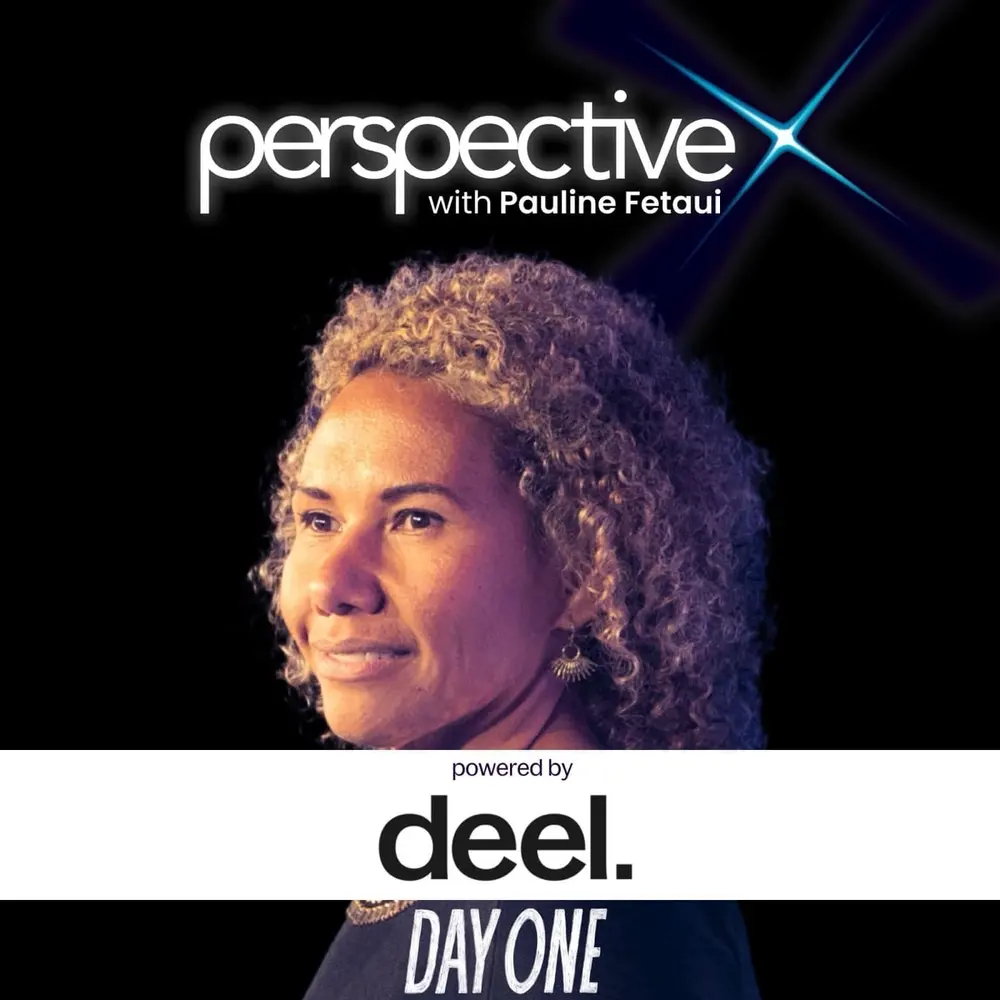 Perspective X with Pauline Fetaui
Presented by Deel
Perspective X with Pauline Fetaui
Presented by Deel 

 ▶
▶ ▶
▶ ▶
▶