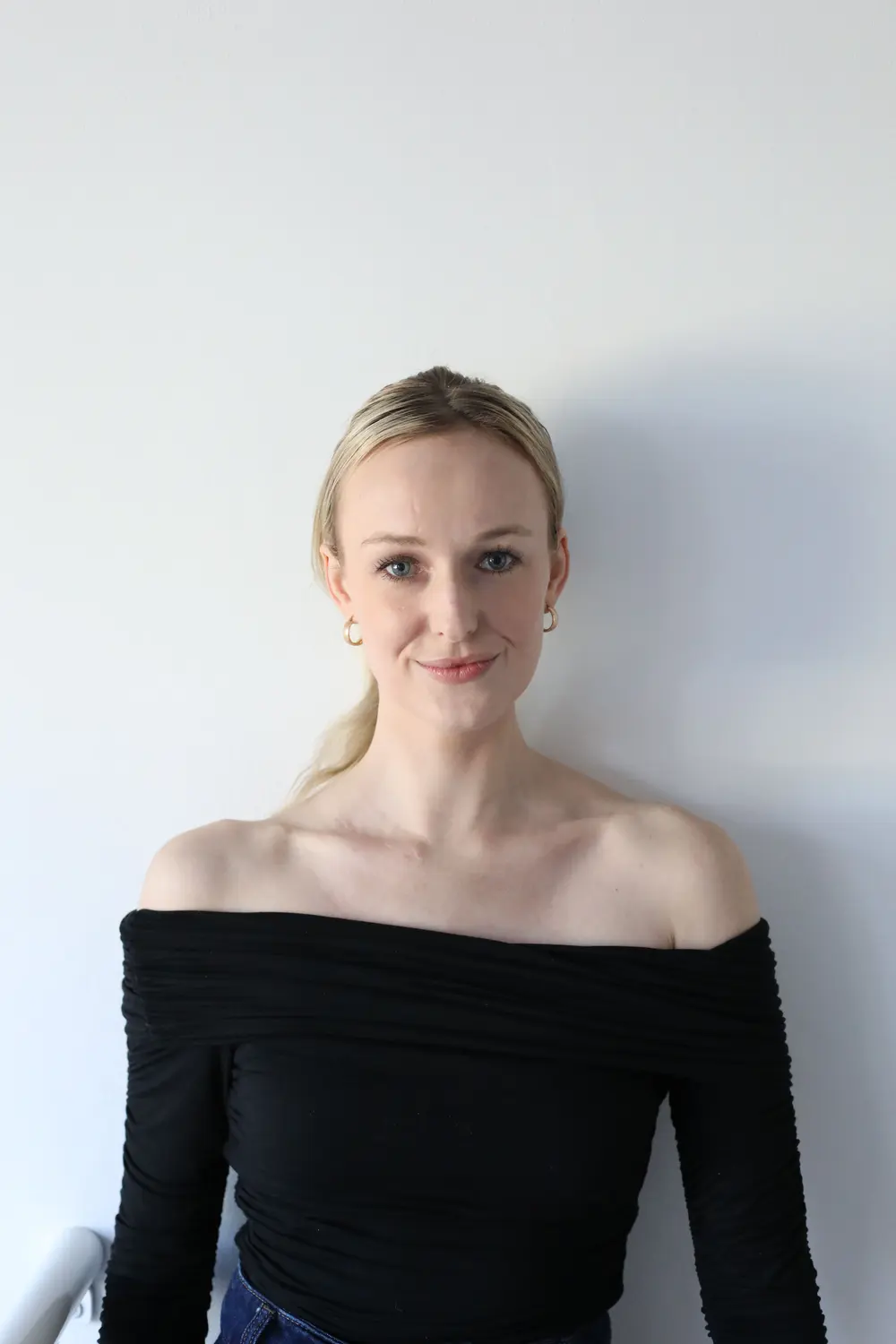
Transcript Synced · select any line to jump ▾ 0:00 Adam Spencer: Hi, I'm Adam Spencer and welcome to Day One, the podcast that spotlights Australian startups, founders, and the organizations that empower Australian entrepreneurship. We go back to the beginning to tell the story of Australia's most inspiring founders and how they built their companies. You're listening to a special interview series as part of a documentary W2D1 is producing about the history of the Australian startup ecosystem. This episode was conducted by guest host Will Cho. 0:33 Will Tjo: Hi everyone, and welcome back to the Australian Startup Series interviews. Our guest today is Emily Casey. It is so good to have you on, Emily. 0:39 Emily Casey: Thanks for having me, Will. 0:41 Will Tjo: To start us off, could you introduce yourself and what you're currently working on? 0:44 Emily Casey: For sure. Um, so currently I run a little health tech newsletter and community called What the Health, which is basically an insights and connection space for all things health innovation in Australia. 1:04 Will Tjo: I can see from your profile that you've been involved with some of the most iconic names in the Australian startup ecosystem, such as Airtasker and Stone and Chalk, Startmate, and so on. Emily, would you say that you've always been an entrepreneur? Take us back to even university days. 1:18 Emily Casey: Oh, that's such a, a good question. Look, I think maybe when I was really young, I was really interested in business and business concepts, playing shop from the age of like 3 or 4. And then as I grew up, I went more towards the science path. And when I was in high school, you kind of have to pick what direction, or back then you did, and I picked medicine. And going into medicine, it was kind of amazing, but also a little bit sad in that I, neglected, I guess, a lot of my business interests. It was always still there, but I definitely put it on pause. And you're sort of taught to, I guess, very much play a game and fit into a box in a system. And so a bit of that entrepreneurial spirit, we'll say, was left behind. I still did a lot of extracurricular things like, you know, student societies, running sponsorship portfolios for the medical bodies and things like that, and worked a lot on the side, especially in hospitality. But to be honest, it wasn't until about 2018 that I really came back and started to explore startups and realized, I guess, what was out there and what was possible again. So— Hmm. 2:36 Will Tjo: Tell me more about your decision-making process, because you were faced with, you know, a fork in the road where you must choose one or the other, but you ended up going towards the medicine side. What made you choose that? 2:46 Emily Casey: Look, to be honest, I felt like there was very few options at the time. I grew up in very classic sort of what you call, I suppose, middle-class white Australia. And we were taught as women that, you know, or high-achieving women, should I say, that your path was law, medicine, or engineering if you're a little bit edgy. And I was just sort of strongly encouraged to go one of those routes. And I always liked problem solving and people and science. And so medicine just seemed to fit for me. Engineering, hated physics, law, not quite my vibe. So yeah, it's, I didn't know that I had the optionality at that stage of life. 3:28 Will Tjo: Yeah, that makes sense. And here you are, you're back in business, but actually in the intersect between, I'm still in healthcare, but more of that kind of business focus. What brought you back? 3:39 Emily Casey: That in itself is such an interesting windy journey. And to be honest, I didn't know that I would end up back in health. So after I sort of hit pause in med school 5 years deep, and I took an internship in corporate finance of all things, I was just exploring paths and you're quite sheltered in medicine to be honest. You don't really interact or have as much variety in university as other courses do. You've got the one cohort very set program, it's very intensive. And I just had enough of med, but was looking at consulting at the time. And the internship in finance, I knew finance in its purest form was probably not gonna be for me. But by doing that, I was at Westpac and Westpac had the reinventure portfolio of startups at the time. And I was lucky enough to be brought along to a few of those meetings. And that really piqued my interest. I was like, this is really fun and really exciting. So I sort of tugged on that thread of interest and ended up— funnily enough, one of the people suggested I go to some events at Strata Chalk. So I went to the Spark Festival events there and volunteered at StartCon in 2018 and was totally hooked by all these people doing these crazy things that I— I couldn't imagine and had never heard of. And it was just the passion and the willingness of people to sort of help and be open and encouragement. So I ended up, you know, taking a couple of internships at startups, super random. The first one was Employment Hero of all things. I really wanted to do one at Hot Doc because it made sense from the medicine standpoint. And I was talking to Airtree through their talent program. 5:29 Will Tjo: Mm-hmm. 5:30 Emily Casey: But they were like, "Hey, there's this random contract at Employment Hero." And I wasn't sure what to do, but taking it was the best thing I could have ever done. I met so many great people and just fell in love with the culture of working at startups. That sort of led me into, I guess, you know, exploring it more. And finally, I submitted a little application into SheStarts, which is a program or— A competition. Accelerator for non-technical female founders at the time. And I threw in like an application with a fintech idea at the intersection of social impact and fintech, just looking to sort of learn without having to, I suppose, fork out for the expensive courses or university degrees at the time. 6:16 Speaker: Mm-hmm. 6:16 Speaker: And somehow got through a couple of rounds of interviews and ended up in their pre-accelerator program. Which was one of the biggest blessings to ever happen because I guess I got to experience what startups were from the working side, but I really wanted to understand the business model side. And so I got to go through that program with 40 other amazing women and the BlueChilli team. And that was sort of my, I guess, trial by fire and learnt the ins and outs of startups. Didn't get funded. Thank goodness. But I got way more traction than I ever anticipated. And a lot of people were really interested in the idea. The idea— would you like me to explain? 7:01 Will Tjo: Yeah, absolutely. 7:03 Emily Casey: The idea was really, look, in hindsight, kind of dumb, but I guess it hadn't happened yet. There was big changes in the payments infrastructure at the time, and fintech was really, really hot. 'Cause this was end of 2018, start of 2019. And I guess there was a lot of people looking for impact and social impact projects. And there wasn't really the ability to get involved easily with charities or invest ethically. And Raise was sort of really taking off, the Roundup app that enabled you to sort of, you know, round up with every payment and send money off to an investment portfolio. 7:44 Will Tjo: Hmm. 7:45 Emily Casey: So I took that concept and applied it to social impact and thought it could be fun to do that, to send to either, you know, an organization of your choice or invest ethically into ETFs and things like that. And because no one was doing it, it was kind of quite popular and got a bunch of sort of like partners, businesses and stuff that were really keen to jump on board. But I guess going through, you know, the intense sprints that came with pre-accelerator and then working after that, I realized that I really didn't want to actually spend the next 3 to 5 years of my life or whatever building a fintech company and pulled the plug and a job at Stern Chalk came along at the right time. 8:27 Will Tjo: Yeah, that's absolutely amazing. Your profile is pretty much the embodiment of everything works out in the end, you know. You started off doing pure medicine, you didn't like it, you went into corporate finance, still didn't like it, and then you somehow ended up as one of the top 40 at SheStarts. And from there, we just kind of went up and ahead. What was it like starting your first businesses in these areas? And when you first started, did you have any preconceptions of what it would be like being a startup founder? And what was it like in reality? 9:00 Emily Casey: Good question. To be honest, I didn't really have a preconception at the time. And I think it really speaks to the, I suppose, lack of visibility and funding in the women's segment of startups. Because SheStarts did a brilliant campaign at the time. They targeted me very hard once I'd clicked on something or attended an event, and I know they did for a lot of women. But I honestly didn't believe that I had the capacity to break into tech given my strange background. I think, you know, you're taught you have to go and study coding or be from that background. And it wasn't until I sort of was in that cohort and started to see people who looked a little bit like me or had strange backgrounds that I started to entertain the idea. 9:50 Will Tjo: Hmm. 9:51 Emily Casey: And even after doing SheStarts, I didn't think that I would be interested in doing my own thing. I thought I would perhaps, you know, find an organization that I really loved and people I loved and values I was aligned with. And I would be happy doing that. But it wasn't until I guess the opportunity or problem perhaps presented itself in the form of health technology. And I saw just such a big gap when COVID hit that I just sort of took the jump because it seemed like there was this problem that I was uniquely placed to perhaps help. 10:28 Will Tjo: Yeah. 10:29 Emily Casey: And so for me, I didn't have the courage to back myself, but it was about, about finding the right people who then enabled me to sort of see what was possible and push me further. 10:40 Will Tjo: Yeah, I love that. This next question I was going to ask, what are some gaps in the ecosystem that you still observe today? You briefly alluded to one of them before where there was like a lack of funding for women founders at the time. Could you tell me more about that? 10:54 Emily Casey: For sure. It's a very hot topic right now, given the recent funding reports, and obviously International Women's Day. Or Women's History Month, but funding for women in Australia and the startup ecosystem at large is a bit of a battle. It always has been, and that's for many reasons, but it seems like we're actually going a tiny bit backwards. Some crazy stat that it was like 2% or less than funding went to women, I believe. I could be very wrong on that, I'll need to double-check, but there is still just— Yeah. A lack of, not a lack of women founders, there's women founders, but there's a lack of venture in the most typical sense going towards women. There's some great programs coming through, which is awesome to really work on that almost like seed stage, getting women founders through, but there's still not the appetite or risk perhaps to back these businesses. As well as I suppose there may be some skills gaps, but— Yeah. I think it's also, you know, gotta break that pipeline. But the other section that I'm super passionate about, no shock, is the gap in health funding in Australia. So health, wellness, and I guess med or bio funding in the innovation space, that has also been seriously lacking. And Australia is punching well below its weight, despite having some of the best researchers and, you know, medical capabilities in the world. 12:25 Will Tjo: Mm-hmm. 12:25 Emily Casey: For some reason, we've let that lag and we haven't been providing the structures and skills to help those people sort of commercialize or tap into people who can help them commercialize these ideas. And as a result, we're falling behind from the innovation stance. And our healthcare system is also suffering greatly too. And so that's what I'm super passionate about, bridging a bit of that gap. And it's great to see that COVID has sort of put the spotlight on health and wellness. And there's a little bit more coming through, but still probably well behind the rest of the ecosystem. 13:05 Will Tjo: Yeah, this is an incredibly broad question. And I'm sure there's no silver bullet. But why do these funding gaps exist? The gender funding gap as well as in biohealth tech? 13:15 Emily Casey: Ooh, I think the gender funding gap, I'm definitely not well positioned enough to speak to, but I think it's deeply embedded beliefs and the ways that the system operates. So I think, you know, it's such a complex problem. The way that the business world is structured has always been inherently, unfortunately geared towards men and come with, you know, specific tick boxes or characteristics, which we've all been led to believe that we think is what makes a good a good leader or a good business person. 13:51 Will Tjo: Yeah. 13:51 Emily Casey: And it has been very geared towards a masculine way of operating. But, you know, if we look to the US, for example, things like Pinterest, they were overlooked by so many male investors because they just didn't understand the problem or the woman's viewpoint or this whole different viewpoint to perhaps their own. And that just speaks to the necessity of diversity of people making the decisions too. So, you know, a lot of the investors that actually did take that jump went and spoke to often their partners or the women in their lives, or could see things from that alternative perspective. And then obviously there's been a huge result from that. And that's kind of what we need a bit more of. 14:39 Will Tjo: Mm-hmm. 14:40 Emily Casey: And similarly, Femtech or women's health has also been quite neglected because there hasn't been a lot of discussion around women's health from, you know, both the health side of things and obviously in the investment space too. And the people who've been making the decisions have largely, unfortunately, been traditionally men, and they may not either understand the industry or things that, you know, women encounter on a daily basis. Mm-hmm. So that also adds to, I guess, a bit of that particular problem. Hmm. 15:14 Will Tjo: I love the quotes that you made, especially around the criteria to which, you know, some of these boxes get ticked are predominantly geared towards masculine traits and also how decision makers are predominantly men as well. So it almost becomes like a boys club where, you know, there's a cycle that just continually goes on and on. 15:34 Emily Casey: Exactly, exactly. And, you know, we're all brought up with those lessons and things, and it's, you know, there is obviously some people who actively choose to do those things, but if you're brought up with a set lot of values and beliefs, it's really hard to break them. And I know myself and a lot of other women in the space, you know, we can fall easily into the trap of discrediting things because we perhaps have been taught in school that this is the way things should be and this is what good looks like, when in fact that's often not the case. 16:09 Will Tjo: Yeah. What would you like to see happen from your perspective to, to try to solve this? 16:14 Emily Casey: To solve the funding gap? 16:16 Will Tjo: Yep. 16:17 Emily Casey: For women specifically? 16:18 Will Tjo: Yep. 16:19 Emily Casey: Oh, that's a great question. I think there's been a lot of great traction recently, um, in terms of, you know, a lot of funds have been talking about it and running programs like the F2F, females and funders networking things and such. But I think there's got to be a real active effort from everyone. So from, you know, the get-go, getting people in from universities and high schools and creating visibility about some of those options. Like, from people like myself, if I hadn't have stumbled and had, I guess, the perhaps some might call it crazy ambition to follow those weird little threads, then you might never know that these options are available to you. 17:03 Speaker: Yeah. 17:03 Speaker: And so creating those pathways is really, really important, as well as, I guess, reframing a lot of the conversations that we're having in terms of investment criteria, who is making those calls as well. So it's great to see that a lot more female partners are being named at firms and things, but still the large majority of people with, I guess, the decision-making power in venture capital, private equity, and things like that are still unfortunately largely men and often of a specific demographic. 17:36 Will Tjo: Hmm. 17:36 Emily Casey: And to get them over the line is quite hard. So there almost needs to be, I guess, more representation and educational pieces, which I know many scoff at. And it sounds like a very stereotypical cliché line, but in order to create, I guess, the world we want, we have to change who makes the decisions, where the input's coming from, and broaden our scope of what we define to be successful or successful people, and take bets on these other people to, I guess, give them the opportunities to prove themselves as well. Because, you know, they always say that we want to look at historical data, but unfortunately, given the way we've operated for thousands of years. It just doesn't exist, and someone's got to take the leap to do things differently. 18:24 Will Tjo: Yeah, absolutely. I love that. Cliché or not, it's nonetheless the truth, right? The education piece especially is so important, making sure that from a young age, the women know that these options are available to them. As you mentioned, if you didn't take those pathways, you may have never stumbled upon this whole area of technology, healthcare, and so on. 18:45 Emily Casey: Exactly. And you can still feel it in rooms, especially in, I guess, the health tech space in particular, right? There's still just such an imbalance in representation. And it's quite uncomfortable at times, not that anyone means for it to be, but you know, you can feel uncomfortable if you're the only one in the room that is of a certain background. 19:12 Will Tjo: Switching gears a little bit, what would you say that we're doing better though, compared to other geographies in our ecosystem? 19:19 Emily Casey: Oh, that is an interesting question. I haven't had a huge amount of experience with too many other geographies, I suppose, but it looks like in the last few years Australia's ecosystem has been really collaborative and obviously undergone a huge amount of growth, and it's kind of in that really fun phase where we're seeing a lot of the initial talent that was brought up in the first gen of Australian startups come back and, you know, start their own ventures and things like that and give back as well, which is amazing to see. And so I think we have this huge opportunity, and we're seeing it happen, of people paying it forward, which is really nice. And it still has a very community vibe, and you can always find people who, uh— Yeah. More than willing to go way out of their way to help you and mentor you or connect you with people who are able to do that. And I'm so grateful for so many of the people I've met over the last 3 years and also particularly this last year who, you know, perhaps believed in me more than I ever would have myself. And, you know, they've done that for endless people and you can just see the ripple effects of that starting to happen. 20:35 Speaker: Mm-hmm. 20:35 Speaker: So I think it's perhaps just that real community vibe, which is essential and I hope we keep going forward with because community is really key to, I guess, getting more people involved, creating a great environment that people wanna be a part of and can deliver their best work in as well. And we have a huge opportunity to, I guess, take the reins and become leaders in some of the tech ecosystem And yeah, I think community is the route in which we are able to do that. 21:07 Will Tjo: Mm, absolutely. Could you name a couple of those mentors that you had throughout those last 3 years? 21:12 Emily Casey: For sure. One of the first ones that comes to mind for me is Gretchen Scott. She is an absolute boss. She was the Chief Operating Officer of a company called Link who were acquired by Cloudflare. I met her in my time at Stone Chalk and she was just so, open and questioned me on things in the best possible way to push me to sort of, you know, do better and go after what I really wanted. Michael Batko as well, indirectly, who everyone knows and loves. When I first moved to Melbourne, I saw him speak and went into his blogs and learned so much, and then eventually became part of the Startmate Women's Fellowship. And that has undoubtedly been the best community that really did change my life in terms of support and finding my people per se. Prior to that, I'd been in startups about a year and a half or 2 years, but it was very male-heavy. And, you know, a lot of the founders I was around and teams I was around were a lot of older men. And that's great, but kind of was— felt like I was missing my support crew or some people who could, you know, relate to my journey. And the Women's Fellowship was insane for that. And I suppose more recently, I've been super lucky to have Matt Allen in my corner too, and I've learned so much from him. And I'm actually working on something with him and a great new team of people that's to be announced shortly, but for now, under wraps. 22:51 Will Tjo: I love that. Just two more questions now. As you know, Emily, what we're trying to do with this podcast is to document as historically and as accurately as possible the history of our ecosystem, just so that we could shape our future to be better. And we're aiming to reach all corners from founders, investors, academics, and policymakers. Is there anything that we haven't talked about today that's always on your mind that they need to hear about? 23:13 Emily Casey: I guess for me, I kind of did cut this story short earlier around how I ended up back in the health tech space. And I know I've touched on it briefly, but I think One of the big things that is missing in the ecosystem right now, and it's starting to happen, which is awesome to see, is that on-ramp for individuals that perhaps do come from a different background. So obviously I come from a medicine background, and when I talk to any of my friends that are doctors or in academia, very, very few of them know about startups or that they even exist. I say health tech, and they think I'm talking about electronic medical records. And that really just speaks to, I guess, you know, the lack of visibility and knowledge more broadly. And I think to really succeed in A, health and, you know, research, but also B, as a startup ecosystem, we need to perhaps do a better job of creating some of those on-ramps and visibility outside of our bubble because it's a growing one, but it's still very sheltered in aspects. And so I think there really needs to be a few more bridges to the more traditional spaces to really absolutely maximize the outputs and get more great people in. 24:43 Will Tjo: Hmm, just bridging the gap between, you know, some of the more traditional industries and the startups and increasing collaboration there. 24:49 Emily Casey: Exactly, and that's the— also another huge buzzword and so much easier said than done. But I truly think that that's a really big missing piece of the puzzle, and if we don't bridge it, then the gap will probably just get wider and wider and will leave a lot of people behind. 25:07 Will Tjo: Yeah. Lastly, Emily, if a brand new entrepreneur or founder came to you, given all your wins, your experience, and your mistakes, what would you tell them to increase their chances of success? 25:16 Emily Casey: I would tell them to be open and put yourself out there. Speak to as many people as you possibly can, not with necessarily, you know, a huge ask, but a ask and just be curious. Being a good person and speaking to others really does increase your surface area for luck, which is a really terrible cliché and Michael Batko saying or startup cult line, But I think that really is everything at the end of the day. Just being open and curious is the biggest asset and will get you a really, really long way. 25:55 Will Tjo: Thank you so much for your time and your insight today, Emily. 25:58 Emily Casey: Thanks, Will. 25:59 Will Tjo: What's next for you and your journey? 26:01 Emily Casey: That's a great question. For me, I'm just gonna continue growing What The Health. So it is a bit of a media brand that has quickly grown over the last year into an Australian, New Zealand audience and now international as well, and community on top of that. So hopefully we're going to run a few programs to, I guess, get the health innovation community, you know, educated and more connected, as well as working a little bit in the investment space more, which is also super fun. So I started out with Airtree Explorers last year and have had the absolute privilege of talking to endless founders and investors over the last year. So I'll be leaning more into that, um, with more news to come soon. 26:55 Adam Spencer: I hope you enjoyed that interview. More interviews are on the way. Follow the podcast wherever you're listening right now. Stay tuned for more interviews with many, many more amazing people from the Australian startup ecosystem. Thanks for listening and see you next time. 27:13 Emily Casey: Bye.