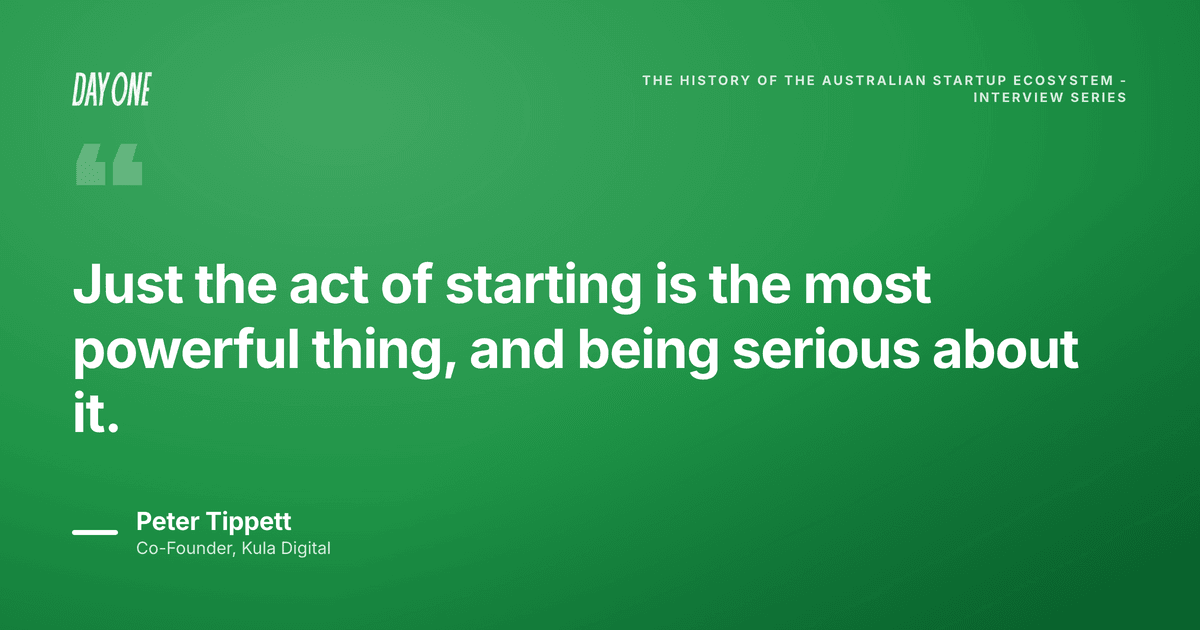
Transcript Synced · select any line to jump ▾ 0:00 Adam Spencer: Let me tell you about our partner, Teamified. If you need to build a top-notch team quickly, Teamified is your go-to solution. They not only provide fractional CTOs, they can also do contractors and even remote team members tailored exactly to your needs. And whether you're looking for expertise in the Philippines, India, or Sri Lanka, Teamified has you covered. What's amazing is that Teamified uses a blend of AI and human expertise to cut hiring times by 50%, cent. Their platform handles everything from automated onboarding to day-to-day management and even performance tracking. You can also handle rewards and recognition, buy equipment, and order training all through their platform. Simplify your hiring process and get the best talent fast with Teamified. Check them out now and transform your team. Go to dayone.fm/teamified. That's dayone.fm/teamified. Thank you. T-E-A-M-I-F-I-E-D, and get started today. Hi, I'm Adam Spencer, founder of the Day One Network, which is bringing the history of the Australian startup ecosystem to you. I believe in founders. It's why I do everything I do at Day One and our media company, W2D1 Media. And that's why the Day One Network exists, to create helpful content for founders. We've got some great shows in development. But a large part of what we do couldn't be done without support from our partners and sponsors. And I couldn't be happier than to be working with NTP, who get community better than any other technology recruitment company out there. A Newcastle company like mine, NTP are invested in seeing the growth of the local tech community in Newcastle, Sydney, and more broadly Australia. So thank you NTP for helping us bring— 1:48 Speaker: Thank you. 1:48 Speaker: Helpful content to founders and the startup community in Australia. Back to the interview. Hi, I'm Adam Spencer, founder of the Day One Network, which is bringing the history of the Australian startup ecosystem to you. I believe in founders. It's why I do everything I do at Day One and our media company, W2D1 Media. And that's why the Day One Network exists, to create helpful content for founders. We've got some great shows in development. But a large part of what we do couldn't be done without support from our partners and sponsors. And I couldn't be happier than to be working with NTP, who get community better than any other technology recruitment company out there. A Newcastle company like mine, NTP are invested in seeing the growth of the local tech community in Newcastle, Sydney, and more broadly Australia. So thank you NTP for helping us bring— 2:41 Speaker: Thank you. 2:41 Speaker: Helpful content to founders and the startup community in Australia. Back to the interview. Hi, I'm Adam Spencer and welcome to Day One, the podcast that spotlights Australian startups, founders, and the organizations that empower Australian entrepreneurship. We go back to the beginning to tell a story of Australia's most inspiring founders and how they built their companies. You're listening to a special interview series as part of a documentary W2D1 is producing about the history of the Australian startup ecosystem. This episode was conducted by guest host Will Cho. 3:19 Speaker: Hello everyone, and welcome back to the Australian Startup Series interview. Our guest today is Peter Tippett. Welcome to the show, Peter. 3:25 Peter Tippett: Thank you very much for asking me to join. 3:27 Speaker: So could you tell us a bit about yourself and what you're currently working on? 3:30 Peter Tippett: I've been building startups since the, would you believe, the late '70s when I wrote my first software. On a computerized lathe. I moved to Australia from New Zealand in 1995 with my company then and really started getting involved in the Australian startup scene after leaving Leak Legal about 2008. We built our first Australian-based startup, which we took global with live TV engagement, and I left that in 2014. Did another startup 2015 and then moved north to Newcastle just over 3 years ago. A bit of variety of activity. 4:10 Speaker: You've been an entrepreneur, a serial entrepreneur at that, for about 5 decades now. And so you've seen the start of the whole ecosystem. What has it been like and how has it evolved? 4:23 Peter Tippett: Well, would you believe I built my first computer when I was 17? Would you believe it was a 1 MHz processor? With 128 bytes of memory. 4:33 Speaker: Wow. 4:34 Peter Tippett: And a hexadecimal keypad. I wrote my first commercial software on the Apple II, and that's when I first learned the experience of IP theft, where companies say they'll sell it, and then 3 months later they come out, oh, we can't sell it. Then 3 months later they came out with their own version, and about 70% was my code. 4:51 Speaker: Wow. 4:51 Peter Tippett: Yeah, so I've been through what they call the Web 1, Web 2, and I'm actually in the process, would you believe, of building a Web 3 business right now. 4:59 Speaker: Wow, every single one. 5:01 Adam Spencer: Yep. 5:02 Speaker: Was it difficult creating software back then, launching your own products? Because you mentioned there was a business that took your software. Was there much support structures around you? 5:12 Peter Tippett: There was nothing. I was in New Zealand, I was building software for companies, and I actually even built my own accounting software company, which I started in '87, and that's why I came across there in '95 with it. That business today is still in business. I left that in 2000 due to different experiences, but back then you weren't called a startup. You were just a business. 5:33 Speaker: Just a small business. 5:34 Peter Tippett: Just a small business. I wrote like a web server into my accounting software in '96 and came runner-up in the Channel 9 Software Awards, but that was all the only accolade you could get. And everything was bootstrapped. 5:47 Speaker: Yeah. When would you say that things started to kick off and what we had some semblance of a community start to rise? 5:54 Peter Tippett: When I left legal 2008 and joined the startup, it was based around the 80/20 rule as a public unlisted company. So they raised some money from non-sophisticated investors. And that was an experience to see how that worked, but I wouldn't do it again. We ended up with 180 shareholders and managing shareholders is a nightmare, especially when things don't go well because at the GFC hit. About 5 months after raising the money. 6:26 Speaker: Yeah. 6:26 Peter Tippett: But out of that came our live TV engagement, which we took global. People have seen it on the cricket for about 6 years as the viewers' verdict, where the commentator asked the TV audience what they thought. And we had clients like UFC, Disney, NBC, Red Bull, Fox Sports using our software around the world. 6:47 Speaker: Wow. 6:48 Peter Tippett: It was all started by us actually getting on a plane in 2010 in August, we flew to Boston to meet the chief marketing officer of UFC. We pulled out the iPad and said, here's your TV screen, gave him the phone and said, tell us who's gonna win the fight. And basically did it. We switched it around, try it yourself. And that was on an iPhone 3. 2 minutes later, he says, um, can you put it on now? Next event in Indianapolis in 4 weeks' time. We went, yeah, no trouble. Walked out the door and went, oh God, we hadn't even put on a TV screen yet. Um, we delivered that one month later and had it working. Wow. And that idea started back, would you believe, only in April 2010. So 2010, April, we started it. We're on air with UFC in September. Wow. 6 months later, we were in Brazil with Miss USA doing 65,000 votes a second. On Amazon and hammering that away as their first real test of what we developed. But we must raise most of our money offshore after that and raised, I think, about $18 million. 7:57 Speaker: Why was that? Why did you go offshore? Was it just a lack of capital in Australia? 8:01 Peter Tippett: Lack of capital. The market was only just starting here and we had connections into Silicon Valley, but a lot of money actually came out of Canada because it was the TV executives and the TV investors that were backing us at that point, basically. And I was part of TIE as well in Australia, which is an entrepreneurial network. And we were doing mentoring and helping other startups. In those early days, it was young. There was no structure yet. And there was the level of experience. What we see today is we're basically on that third cycle of experience. 8:34 Speaker: Yeah. 8:35 Peter Tippett: But back then there was no real founders. And as Nikki at Blackbird can tell you, raising a fund at that time was It took him a year. And basically when we dealt with offshore, we did one deal, would you believe, in 15 minutes for $1.5 million. 8:50 Speaker: Wow. 8:51 Peter Tippett: And it was in our bank account 7 days later. 8:53 Speaker: Why is that the case? I mean, it seems that Australia seems to lag behind the rest of the world. I've heard some guests say between 10 to 15 years. Would you agree with that? 9:04 Peter Tippett: Yes and no. There are some here that take a chance and go with it. I'm moving quick. It's just the difference of volume of capital. Um, like AirTree's announcement yesterday for $35 million for Web3. Well, in the last 4 weeks, $7 billion US has been allocated to Web3 projects as funding. 9:27 Speaker: Yeah. 9:27 Peter Tippett: Um, it's just the scale difference. Um, and basically we're, we're only on second generation founders. We haven't even hit third generation founders. Where you've got to think in the US, they're on like 10th cycle. It's just experience and the willingness, but also the amount of capital. 9:44 Speaker: Yeah. Do you think then it kind of roots towards like a cultural problem? Australian founders and investors just don't have the risk appetite. 9:52 Peter Tippett: Yeah, I'm, I was doing the raising for this business last year. We had a couple of people put money in and then when we went back and said, this is where we're going with Web3. Web3 with NFTs, basically only one of them want to come in. The other one's going, no, I don't get it, I don't want to play in that world yet. And to the point, our pitch deck has actually been structured so it's orientated just for the people understand Web3. If you're not into Web3, we won't even talk to you now because we spend all that time educating you. But I've seen this before. I saw at the start of the cloud in 2008. Mm-hmm. With all the ups and downs, all the burpees going on, and that business ipower could never have happened without the cloud. 10:39 Speaker: Yeah. 10:39 Peter Tippett: And that's what I see right now. It's just the Web3 is amazing. I'm 4 times faster than the start of cloud. 10:45 Speaker: Yeah. And Australian, I guess, investors and founders just haven't kept up with that speed. 10:51 Peter Tippett: Well, basically, like, I've been listening to presentations presentations from Jason Kanellalis, um, his Insider, where he had VCs pitching to you. And like, he's done that, and the VCs in the US are actually pitching to investors now to say what they can do for them. Where Australia, like, a number of VCs or investors, angel investors, say, well, a very different attitude. 11:15 Speaker: Oh. 11:15 Peter Tippett: And it's very interesting to see the American model. And we're dealing with someone in Israel right now, and it's the same attitude as You've got a great idea. How can we help you? 11:25 Speaker: Do you see that change over the next, say, 5 or 10 years, or do you think it'll take longer for our ecosystem to mature? 11:32 Peter Tippett: I think it's going to accelerate. The issue is, see, Web3 is very different to the old SaaS model. So Web3 is about community. And basically the way you raise money under Web3 is very different. Like you'll do a pre-seed and you'll do a seed. But then your Series A will not be from the investor network, it'll actually be from your community. 11:54 Speaker: Yeah. 11:54 Peter Tippett: And your community will start funding you just like you do with IPOs on the stock exchange. And that's gonna change a lot of habits because suddenly you as an investor who would rather come in a Series A, Series B because it's safe, suddenly now don't even have those on the table anymore. Now you gotta realize you're gonna have to write checks. Sooner and you can't own as much. And that's like Dom Henderson actually wrote in his blog yesterday. There's no more of owning 20% of a company because it's going to be owned by the community. 12:29 Speaker: Do you think that development of the change of ownership structures, so instead of having Series A and B, it's going to be community funded, is a good or a bad thing? 12:37 Peter Tippett: It's going to be DAO-driven, but it's not going to— it's going to be like I had with the public company, but the difference is you're doing this all remote. People have actually got to doing things to have votes. They can't just buy some shares, they have to be engaged in the community to get voting rights. 12:53 Speaker: Hmm. 12:53 Peter Tippett: And because they're also using your currency or token, this money always going into your treasury to allow you to do things. So the bigger community grows, the more everybody makes, cuz the community benefits. So your community becomes your advertising channel. And your go-to-market channel. No more giving money to Google and Facebook. 13:14 Speaker: Yeah. 13:15 Peter Tippett: And that's gonna change a lot of activities in this area. It's quite interesting and quite fun for this massive change. 13:23 Speaker: Do you think then, with the rise of technologies like this, then I guess geographical ecosystems won't necessarily matter as much? There's no point having like an Australian ecosystem, an American ecosystem, Israeli, and so on. 13:38 Peter Tippett: You know, it'll be like a lot more connected. Like we've already got used to it with COVID Like the business I'm building could not have existed without the effect of COVID on people's attitude. Because basically pre-COVID, only 5% of teachers believed they could teach yoga and wellness online. COVID, now over 90% of them can do it. And they believe it can be done. That's the change. We as a people now accept online, like you and me doing an interview. 14:08 Adam Spencer: Yeah. 14:09 Peter Tippett: Normally we would've been sitting in a room together face to face and doing this, not doing it over an internet connection where you're in Sydney, I'm in basically Newcastle, 2.5 hours distance apart. 14:19 Speaker: Yeah. 14:20 Peter Tippett: And it's like my team, even though they're around Newcastle, we aren't actually— the time we spend face to face, maybe once every 2 to 3 weeks. 14:27 Speaker: Yeah. 14:28 Peter Tippett: Uh, and we could be spending face to face place, we don't because we find it's more efficient working remote. 14:34 Speaker: Yeah. 14:35 Peter Tippett: And that's going to change. Like, I'm talking to a company in Israel right now. I, after this interview, I've got a call with lawyers in Switzerland to set up the foundation for this project. Basically, it's a global activity. And my shareholders, well, the DAO owners will be all over the world as well. So it's a very different different. This Web3 is gonna— it's becoming back to the pure idea of the internet, of being decentralized, but now an organizational activity. The infrastructure can support it. So now about how we think organizationally and behaviorally, which is very different to caring about the tech now. Yeah, it's the easy part. 15:16 Speaker: So far we've been talking about the support structures and infrastructure of founders and investors. What about government? Do you see them as a key player in Web3? 15:27 Peter Tippett: Uh, yes. The issue they've got is the speed of Web3. Like, who would have thought 6 months ago NFTs would have done what they've done now, where this month— last month they did $9 billion in transaction volume just on OpenSea. But you can see, like, India yesterday announced that they're going to do a 30% tax on crypto. So they can start taxing you. Because that's the only way they're going to get access to it, which means inherently they're going, well, it's here, the Pandora's box open. We can't put it away. We've got to manage it. The problem is governments move too slow. And companies are going to work really hard to manage that. 16:09 Speaker: Yeah. 16:10 Peter Tippett: Like for us, like us looking at Switzerland, why? Well, Crypto Valley in Switzerland is like where Ethereum and all them are, and there's a lot of talent there, but there's also the legal structures are there. We were considering Singapore 3 months ago, but Singapore's been changing the rules, and that's a big difference. 16:31 Speaker: It's interesting that you, you mentioned this because it sounds like there will be a brain drain towards geographies that are more friendly that have more friendly policies? 16:44 Peter Tippett: Well, we weren't— we're not moving ourselves. We'll keep a subsidiary here which is running the business and doing everything. Engineering will spread around the world because that talent is talent, and with the whole online world, it doesn't matter where it is anymore, as Aladdin can tell you. So that's a big change and all that. So yeah, it's a real headache in that way, and basically we just got to deal with it. 17:11 Adam Spencer: Yeah. 17:11 Speaker: So Peter, what we're doing with this podcast is to document as accurately and truthfully as possible the history of our ecosystem to inform where to go in the future. And we're trying to reach all the corners of the ecosystem, from founders, investors, policymakers, and students. Pick any one of those or all of them. What's on your mind that you feel like all of them need to hear? 17:32 Peter Tippett: Well, I say I moved out of the Sydney startup scene 3 and a half years ago. So I haven't been networking, haven't done the face-to-face the same. And I found in the regional, there is a lot of talent up here, but it's not noticed. And that talent's having to go to the city. But now with remote, we don't have to. And I think basically COVID is allow— allows now regional to actually be thought about properly, which has been the major issue, as I see for regional. Regional's now valuable, like— Yeah. The facilities we've got, like the university here in Newcastle, the whole top floor of a brand new building is dedicated to coworking space with the latest technology available. And then the 3 floors below have got all the creative industries. So you've got access to green screen rooms, sound recordings, video, and the people who are doing it, the creators and that, which is what Web3 really supports, are going to come from those places. Yeah. And that's the thing, and like in the Hunter where we're doing, there's a lot of heavy deep tech going on, but I've noticed it's very much from being in Sydney to being regional, regional feels as though it's forgotten. 18:44 Speaker: So what I'm hearing is even though there is this greater recognition of regional ecosystems and talent due to COVID, it still largely goes unnoticed compared to the metro areas. 18:55 Peter Tippett: Yeah. Well, you look at what Tech Central is doing. It'll centralize and pull a lot of people in. The brain drain is going to come out of the regional, but a lot of people going, well, I don't want to go into the city. I want to have a lifestyle. And I can have a lifestyle by working remotely. So then the whole centralization model starts to break down. But then the issue is face-to-face networking is the most powerful tool to communicate, like. It's been easier for me to talk to investors internationally than to talk locally. Because internationally, I'm already used to doing Zoom calls. And I'm doing that on a regular basis, where down in Sydney, I have really— haven't really tapped the investment community in Sydney at all, which is a very different thought process. Like, I'm only 2.5 hours away. But rather deal with other people around the world. It's a very different game. Yeah. 19:50 Speaker: What sort of form would you want the recognition to come in? Is it infrastructure development? 19:58 Peter Tippett: I think it's more like, I can see what, in Newcastle we've got the Fuse, we've got Amplify that's now public. We've got a lot of the startups are starting to appear like they're on people's radars and getting the quality. Acquired or invested in, and the money's actually coming internationally. Like, some of those checks have been $20 million checks, $20 million. That will start getting us recognition, but it's a slow process. And that's the whole thing. It is a lot slower than being in Sydney, where you're basically in those hubs where you're face to face. The speed of communication, the speed of growth is substantially faster. 20:38 Speaker: Yeah. 20:39 Peter Tippett: As I talk about, when you're doing it through this, your bandwidth is through a little pipe, but when you're face-to-face, the pipe is massive, and the amount of information that you can pass, um, and that's why face-to-face networking, or going to face-to-face events, works so well. 20:54 Speaker: Yeah. 20:55 Peter Tippett: But like, I got to come down to event next month, I got to be there for 3 days, I got to pay for 4 nights accommodation in Sydney, that's $1,200, thank you very much. 21:04 Speaker: Yeah. 21:05 Peter Tippett: And that's the other thing, it's just for regional, travel becomes annoying. My co-founder lives in Byron. 21:12 Speaker: It's just allowing greater use of technology really to facilitate the process instead of having to physically just be there. That's the disadvantage of regional. 21:23 Peter Tippett: Yeah, and we're a lot more okay with remote. I still find the Zoom models and that are very, they're the best we have right now. Yeah, I did research in video conferencing, would you believe, back in 2001. 21:37 Speaker: Wow. 21:38 Peter Tippett: The team I had, we built a whole video conference system for Doctors Without Borders, and I had a Sun Micro as the machine encoding everything. Yeah, like a Sun minicomputer, which is the size of the filing cabinet, and your video size was 240 by 320. We now are doing video at 720 and 15 frames per second still, um, which is basically why we get fatigue because we're only operating at 15 frames per second when we're video conferencing. 22:04 Speaker: Yeah. 22:05 Peter Tippett: And we see it 24 frames per second. Technology's got to go through another jump. Then Australia has an NBN that's not that fast. I'm a Kiwi. My brother-in-law rubs it in every time I go over there. He says, oh, come here and have a play of my system. He's got a fiber to the house, 1 gigabit synchronous connection. Flight to your house, right? My laptop died 3 hours before flying to NZ, my screen died. So I took my spare one, got to my parents' place, plugged it into the network. 4 hours later, I downloaded my whole old laptop via the internet where I had it backed up onto that laptop so I could work. 22:46 Speaker: Wow. 22:47 Peter Tippett: Wouldn't even contemplate it here on the NBN. 22:49 Speaker: Yeah, we're barely pushing 50 megabytes per second. 22:52 Peter Tippett: You know, I'm like, I've got about 100 meg here and about 20 up. Um, and if I go 200 meters, um, close to the river, I got 5G, would you believe, is 800 megabits down and 80 up on 5G. But there's not many people on it, so I can be at that speed. That's, I think, is going to hold us back. 23:12 Speaker: Yeah. 23:13 Peter Tippett: Is our speed of internet. 23:19 Speaker: So lastly, Peter, this is the advice question. If a brand new entrepreneur or founder came to you, you know, given all your experience, mistakes and wins, what's one piece of advice you'd want to give them to increase their chances of success? 23:32 Peter Tippett: Tap into the mentor network. Like I'm a mentor at the university and we run a program called Venture Mentor Services where they allocate 2 or 3 mentors to a startup. So you don't get one-eyed view, you get a view from 3 different people. So you actually get a proper view of what's happening. And that's, to me, is talking to other people who, who have been there, but they're not over far ahead of you. They may be 3 months or 6 months or 12 months ahead of you. So they felt your pain. Um, too many of them mentors are advisors. They're accountants or lawyers and all that. And they'll give you advice, but you want founders, people who've been there and felt the pain, have the scars. And I got a lot of them over the years, but it's been able to get to those, but it's so hard. Because there's so many startups being created every week. And there's only so many founders. I'm part of a thing called Lunch Club. And every Thursday at 12 o'clock, I'm connected with somebody randomly. And we have a half-hour talk or an hour's talk about things. It's just teaching new founders, just connect with people. And it's not about going to networking events because you only get to talk to them for 5 minutes and you're going to move on to the next one. Somewhere where you can actually talk to a founder for an hour. 24:54 Speaker: Yeah. How would you suggest that the startups differentiate themselves? 24:59 Peter Tippett: Uh, most startups don't know what they're building in reality until they've built it, and then they realize then they find the piece, the little gem, the diamond in the rough. But most— you've all got to go through the pain. We all tell us we've got to go through MVP, we've got to go through the Lean Canvas, we've got to go through all those processes. And we do it all online and all that, but you got to do— you just got to start. 25:25 Speaker: Yeah. 25:26 Peter Tippett: And if you don't start, well, you're not going to get anywhere. Just the act of starting is the most powerful thing and being serious about it. 25:34 Speaker: Yeah. 25:35 Peter Tippett: So many times I've got this thing and I said, okay, what are you doing? I've got my full-time job. So I says, well, then you're not passionate about what you're about to build, are you? Yes, I am. Well, why are you still got your full-time job? Got to pay the bills. Well, then work out how you get to the point where you don't have to worry about the bills. Either raise some money or get a co-founder or work out a way, move back home with the young. I'm in my early 60s. I'm starting again. I've got another startup from scratch. I'm lucky I've got— I can look at my father. He was wiped out at 55. And his business, the engineering business, restarted at 60. When he passed away last year, he was in his early 80s. My mum's got a couple of million dollars to live off for the rest of her life. And that traveled the world and built some great products. So the age is not the barrier. The barrier is people's attitude. 26:31 Speaker: It's like the old adage, if you really want it, you'll find a way to make it happen. 26:36 Peter Tippett: Yeah. And if you can talk to people who have actually gone through it, then you can feel confident. That's the hardest thing, is actually feeling as though you're not an imposter. And that's what a lot of— I've seen, like, I just the females founders mentoring, just getting her to think, just getting to think beyond the box for what she had normal job. What she ended up was way beyond what she thought, and then bringing her back to reality, but allowed her to go through that experience of expanding way beyond what she could ever think of doing, then coming back and says, well, how can we test it and make it work and understand and get feedback? And she's thinking of building a website. And I said, well, why not just— you've got an Instagram, you're already using Instagram, why not just use that as your little test site? And away she went. Because it's not engineering, it's actually understanding your users. Yeah. And that's the hardest thing to get people to understand. Go and talk to people. 27:36 Speaker: Yeah. 27:37 Peter Tippett: I used to get sick of when startups come and says, I can't talk to you about my idea, but I've got a really great idea. Like, oh, you've got to sign an NDA. Well, that's not going to happen. Silly things like that happen and still happen. 27:49 Speaker: Yeah. It's been a pleasure having you on the show, Peter. 27:52 Peter Tippett: Thank you very much. 27:53 Speaker: What's next for you? 27:54 Peter Tippett: Ah, well, I've got a call with Xerox shortly, talk about foundation structure, but we're still, we're raising money at the moment before we do our IDO or IEO, depending on if we can be accepted onto exchange, which is join interest. Um, because at the end of the day, we intend to support the yoga teacher so they actually get real income. Um, because now their online classes are now an asset. 28:18 Speaker: Mm. 28:19 Peter Tippett: And as soon as you turn something into an asset, there's amazing stuff you can do. And we've already proved that with the last 6 months, the data we've got. A yoga studio teacher, like teacher with one class, their class is worth as an asset value of $8,000-$10,000. 28:35 Speaker: Wow. 28:35 Peter Tippett: So think about the first time those teachers who are teaching are now building an asset which theoretically they could actually borrow against to buy a house. Who would have thought that? 28:45 Speaker: Yeah. 28:46 Peter Tippett: That's how big a game changer I'm seeing in this whole world right now is IP is now able to be put in the hands of regular people to convert into assets instead of the top musicians. That have been doing it for the last 20 years, or TV shows. Regular people can access the same type of capability now, and it's not hard to create content now. Yeah, just look at us doing this podcast. 29:11 Speaker: Yeah. Where could the audience go if they wanted to learn more and connect with you? 29:14 Peter Tippett: Um, easiest way is my LinkedIn profile, Peter Tippett. Easy to find. Um, or my Twitter handle is Peter_Tippett. 29:24 Speaker: To our audience, I hope that you found it incredibly valuable. Until next time. 29:33 Adam Spencer: I hope you enjoyed that interview. More interviews are on the way. Follow the podcast wherever you're listening right now. Stay tuned for more interviews with many, many more amazing people from the Australian startup ecosystem. Thanks for listening and see you next time.