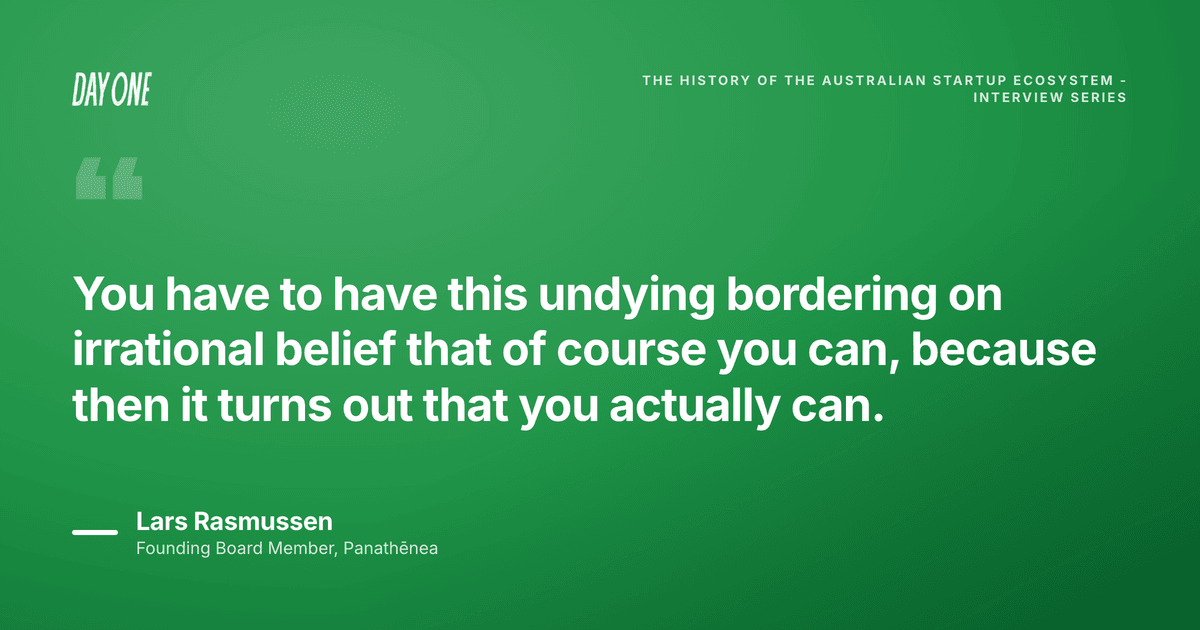
Transcript Synced · select any line to jump ▾ 0:00 Adam Spencer: Let me tell you about our partner, Teamified. If you need to build a top-notch team quickly, Teamified is your go-to solution. They not only provide fractional CTOs, they can also do contractors and even remote team members tailored exactly to your needs. And whether you're looking for expertise in the Philippines, India, or Sri Lanka, Teamified has you covered. What's amazing is that Teamified uses a blend of AI and human expertise to cut hiring times by 50%, cent. Their platform handles everything from automated onboarding to day-to-day management and even performance tracking. You can also handle rewards and recognition, buy equipment, and order training all through their platform. Simplify your hiring process and get the best talent fast with Teamified. Check them out now and transform your team. Go to dayone.fm/teamified. That's dayone.fm/teamified. T-E-A-M-I-F-I-E-D, and get started today. Hi, I'm Adam Spencer, founder of the Day One Network, which is bringing the history of the Australian startup ecosystem to you. I believe in founders. It's why I do everything I do at Day One and our media company, W2D1 Media. And that's why the Day One Network exists, to create helpful content for founders. We've got some great shows in development. But a large part of what we do couldn't be done without support from our partners and sponsors. And I couldn't be happier than to be working with NTP, who get community better than any other technology recruitment company out there. A Newcastle company like mine, NTP are invested in seeing the growth of the local tech community in Newcastle, Sydney, and more broadly Australia. So thank you NTP for helping us bring— 1:48 Lars Rasmussen: Thank you. 1:48 Adam Spencer: Helpful content to founders and the startup community in Australia. Back to the interview. Hi, I'm Adam Spencer, founder of the Day One Network, which is bringing the history of the Australian startup ecosystem to you. I believe in founders. It's why I do everything I do at Day One and our media company, W2D1 Media. And that's why the Day One Network exists, to create helpful content for founders. We've got some great shows in development. But a large part of what we do couldn't be done without support from our partners and sponsors. And I couldn't be happier than to be working with NTP, who get community better than any other technology recruitment company out there. A Newcastle company like mine, NTP are invested in seeing the growth of the local tech community in Newcastle, Sydney, and more broadly Australia. So thank you NTP for helping us bring— 2:41 Speaker: Thank you. 2:41 Adam Spencer: Helpful content to founders and the startup community in Australia. Back to the interview. Hi, I'm Adam Spencer and welcome to Day One, the podcast that spotlights Australian startups, founders, and the organizations that empower Australian entrepreneurship. We go back to the beginning to tell the story of Australia's most inspiring founders and how they built their companies. You're listening to a special interview series as part of a documentary W2D1 is producing about the history of the Australian startup ecosystem. This episode was conducted by guest host Will Cho. 3:19 Speaker: Hi everyone, and welcome back to the Australian Startup Series interviews. Our guest today is Lars Rasmussen. Welcome to the show, Lars. 3:26 Lars Rasmussen: Thank you. How are you? 3:28 Speaker: I'm very well, thank you. So Lars, could you please tell us a bit about yourself and what you're currently working on? 3:34 Lars Rasmussen: Yeah, so I'm a computer scientist by, training, and I worked for a long time as a programmer and then as a manager, then as an entrepreneur. And along the way, I started investing a little bit, angel investing, and that's gradually become my, my day job, if you like. And yeah, that's, that's what I do now. I have maybe 50 startups in my portfolio, several of them Australian, my best ones of course Australian. Yeah, at that time being a fairly new dad with my my 5-year-old delightful daughter. 4:10 Speaker: Obviously you've got such an extensive career being the founder of Google Maps and so on and so forth. Would you say that you've always been an entrepreneur? 4:19 Lars Rasmussen: I would say I've always wanted to be an entrepreneur. I guess I got this from my family. My parents started companies, not in, in tech, it was in journalism. But yeah, I always thought it was a cool thing to do your own Saying I did spend a long time in school. I have a PhD in computer science. I was in my, goodness, late 20s before I even graduated. And then my first job was a job, but I was like the first engineer in a startup that a professor from UC Berkeley, Mike Loeb, started in California. And so I've got that immediate taste of what startup life is like. And then when that was over after a few years, that's when my brother and I started a little company that became Google Maps. We started as an independent company called WhereTo Technologies. And, um, and that's actually also part of my Australian history. I was kind of half in Australia when it started. And, um, after my brother and I worked on this thing for maybe 6 to 9 months, we hired 2 Australian friends of ours, Noel Gordon and Stephen Ma, and kind of centered the development in Noel's spare bedroom. In Sydney, which is my favorite city in the world, by the way, with Athens in Greece a close second. That's where I live now. And, um, but that's, that's kind of how it started. And then we sold it to Google, and, uh, it was a fantastic ride, obviously, to be part of creating Google Maps. And as you may know, it, it helped start the engineering office for Google in Sydney, which is— 5:57 Speaker: Boom. 5:58 Lars Rasmussen: Has always been one of Google's best performing engineering outfits. And then, you know, again, I've been on the, on the investing side of startups too, and I've helped other people start their companies. And I think it's a tremendously rewarding thing when it works, and it's a tremendously painful thing when it doesn't, which I've also experienced a bunch. 6:20 Speaker: Out of curiosity, why did you choose Sydney? 6:23 Lars Rasmussen: Look, it's a combination of always having been in love with Australia. I was born in Denmark, and even as a kid, I had this thing about Australia. And I had like a pen pal in Australia when I was a kid, and I just like loved the place. Never really traveled much. My family was not big on traveling. And so it's just always the thing in my head that I really wanted to go to Australia. And then this company I joined right after graduating, they ended up building a small development team in Sydney. This was like in the dot-com bubble days. Engineers were really hard to find. And our CEO had some mates in Australia. He hired them, they set up an office and so on. And then the bubble burst and that company kind of died, but it was just enough that I made some friends in Australia. And actually at the time I was falling in love with a Cuban woman who became my wife, and it was difficult at the time for Dane Cuban to be together in California where I lived. This was under George W. Bush, and the immigration policies for Cubans were super crazy strict. And so then we were like, look, there's this thing in Australia. And I asked my employer, Digital Fountain they were called, can I go to Australia so I can be with my girlfriend, who became my wife later? And they were like, sure. And so, you know, we did the paperwork, we flew together to Sydney. And unfortunately, we kind of landed when Digital Fountain was downsizing dramatically because there was this big stock market crash centered in tech back in, what, 2001 or so. But we just immediately fell in love with Sydney. We loved it, loved it, loved it. And then I was kind of back and forth between Sydney and Australia as we were starting up the mapping company. And— sorry, between Sydney and California, I mean. Mm-hmm. But then once we sold it to Google, I really wanted to stay in Australia. And Google did not have an engineering office in Australia. And so I was kind of surprised when I rocked up to the top VP of engineering at Google and said, "Hey, do you mind if we stay in Australia?" And he was like, "No, sounds great. Do it." And so I went back to Australia and Noel and Steve, of course, stayed there. They're from Australia. Yeah. From Sydney. And we just kind of rocked up and had a 5-person sales team. And we did a hired office and we grew the hired office a little bit. And then the 3 of us were sitting there and we built Google Maps. We turned the technology our little startup had built into Google Maps out of that little Sydney office with my brother who stayed in California and just 2 more engineers that Google added to the team. And then of course that became a really big success and maybe 9 months after we launched Google Maps, that same VP, Alan Eustace— I think he's left Google now, but he's a fantastic, fantastic, uh, both engineer and a top-notch executive. And he, uh, he was like, "Look, Google Maps is such a big success. You guys are clearly thriving down in Australia. Why don't you make a real office out of this, like, start hiring?" And, uh, and there were 2 reasons why Google was into this. One was that they just had this theory that Google should have engineering offices in every major city in the world, and Sydney's obviously one of them. And so— Mm-hmm. Alan had like a checklist and Sydney was on it. And when I rocked up and said, "Hey, can I do this thing in Sydney?" He was like, "Oh, check." And so he met an objective that Larry Page, I think, had set for him. The other thing is that there was this really senior engineer at Google, Rob Pike, great friend of mine now. He also had a thing for Australia. And he had kind of told Google, "If you ever, when you ever want to build an office in Australia," I want to help. And so those two things together, the fact that a really seasoned Google engineer plus me, who was a newbie, was willing to go there, then it just all worked out. And it was a fantastic thing. I got to live in Sydney, which in my opinion, it's like you can't beat the quality of life in Sydney. We got to live there, we got hired, the best engineers in town, and we got to work on Google Maps. And it was like both professionally and lifestyle-wise, some of the best times in my life. 10:37 Speaker: Hmm, that's really amazing. What was the community like in Sydney at that time, the startup ecosystem? Was it vibrant or was it non-existent from your view? 10:48 Lars Rasmussen: Well, it was definitely existing, uh, existent, and it was— I would not say it was thriving because when I arrived in Sydney, it was right when the bubble had burst, the dot-com bubble had burst, and so everyone was losing money until all of these super overvalued companies were were dying. And so a lot of the big companies pulled out of Sydney, and small companies too. You know, the startup that kind of brought me there died. And so money was really hard to get, investment at the time. On the other hand, Atlassian had started, was growing, was becoming a big thing. And a bunch of the people who had been let go as the bubble burst were like, you know, eager to build stuff. And so a lot of really interesting things came out of this kind of weird time when a bubble burst and you go from this, we're all going to be rich, we're all going to be rich, we're all going to be rich, to whoa, everyone's firing everyone. And that kind of unleashes a lot of creativity. And I would argue that our little startup, VertuTech, kind of came out of that. Like, we very literally started the company because we got laid off from a larger startup that died when the bubble burst. And then sure, it was hard to raise money, but that also brings, um, and amount of clarity. You know, when you're so constrained with resources, you have to build, you know, just the core of the core of the core of your vision and see if that's— that sticks. And so I would— I would say that, you know, there was, um, it was there, like the seeds were there. And there's one tree, Atlassian, that was— had taken root and was really impressive and was growing, was clearly going to be a big thing. And, uh, this is a great time. It was a great time to be there. I'll tell you one thing that I think is interesting. So the people, you know, you always build up a set of like advisors and friends in your field. And when I announced, look, I'm going to move to Australia permanently, there was a lot of well-meaning advice not to do that. There was a very strong impression that Australians, they have it too good. They don't work so hard because life there is just too good. It's all about the beaches, the barbies, the beer. Hmm. Be completely unfounded. I, you know, I was worried maybe this is just like a land of leisure and I won't be able to do anything professionally. But, and of course, now it turned out quite the opposite. By far, by far, by far my biggest— two biggest successes, professional successes in life, has come out of Sydney. And of course what happens is, we talked a bunch about this when I arrived at Sydney, that Sydney has a very strong tourism industry because it's such a beautiful An amazing country, right? And so the tourism industry portrays the country like that, as a land of leisure where people don't work very hard and it's just one long party. But in reality, it's completely different. Like, Australia has an incredibly well-educated workforce, an incredibly hardworking, thirsty for— hungry for success kind of workforce. And it was great, actually. It was a great place for me to work on the MapStang and later, of course, to help Canva get off the ground. And I've invested in a couple other companies that I'm very excited about that are a little younger than Canva. But I think Australia, like, for the size of the country, it has an incredible startup community, has incredible impact on the world. And then you get to live in one of the most beautiful places on Earth. Like, I'm sure we used to say this, that you can probably find nicer places to live, and you can probably find, like, better places to work as a techie, but the combination of having this, this major world-class vibrant city full of hard-working, well-educated people in one of the most beautiful places in the world, the combination of the two is, is to me unbeatable. And actually, one, when, when the Google office started growing going very fast. It quickly became the most transferred-to office of all of the Google engineering offices. Like, a lot of the people who worked there were people who came from other Google offices that wanted to come work there, both because we were working on really exciting things, but also because the life there is just so good that I'm surprised that anyone decided not to go. As you can probably tell, I miss Australia a little bit. Just a little bit. Although I have I have it pretty good here in Athens, so I should not complain. 15:23 Speaker: I'd love to get your views on how our ecosystem has developed over the last two decades. And is it what you expected it to be, for better or worse? 15:32 Lars Rasmussen: Look, from where I am, my expectations were high and they've been well exceeded. And of course, I've been super lucky arriving at the right time when things have probably burst, new things are just getting started. And I got to work for well-funded entities. I got to like meet some of the, like a large number of the best, best, best engineers in town because they were attracted to Google, of course. And so I've been lucky that I was in a position to help young entrepreneurs like Cliff and Mel at Canva, like Daniel, Daniel Attas, who started a company called Neura. I had to think about that because they just changed their name from Linesoft. Yeah. And another one, I think we used to be out of Melbourne, they just moved to London called Law Adviser and some others that didn't do so well. But like, I think I'm just like super fortunate to have been in that situation and I could offer a little bit of support and be playing a small role in these incredible journeys. Like Canva, I think is by far one of the most, you know, in the top 5 of private software companies in the world, just 10 years into this journey, started by two super young entrepreneurs that would not be like your, you know, they grew up in Perth and started their first company in Perth, and they might not be like your first choice, oh, these are the ones that are going to change the world. But once you meet them, which are— 17:01 Speaker: Oh yeah. 17:01 Speaker: That's an opportunity I only got because I'd done certain things before that in in Sydney with the mapping thing and with Google and so on. And now they have blown through all expectations, like my wildest expectations for that company, they've blown through, and they seem to be just getting started. And then, like I said, there are other companies, and there are a bunch I still am learning about, new big thriving Australian companies that are doing, uh, so well. And it's impressive for a country that's so relatively small. compared to, you know, I've worked in New York, I worked in Silicon Valley, of course I worked in London, much, much bigger countries. And yet I think, well, certainly personally, I found much more success in Sydney. 17:45 Speaker: It sounds like I'm hearing that for the country of our size, we really punched above our weight, and a lot of unicorns and exceptional founders have come to be from Australia. 17:54 Lars Rasmussen: Yes. 17:56 Speaker: Shifting gears a little bit, from your perspective, What, what could we still be doing better though? 18:00 Lars Rasmussen: What can we improve on? I have to be honest, I haven't spent a lot of time in Sydney recently, in part of course because of the pandemic, but even before then I only did a few visits. Actually, my, my most recent visit was when Canva was doing some press work. They were releasing their first iPad app, and I think they were valued in the hundreds of millions. And I remember saying out loud to the press that I think this is a gonna be the next unicorn of Australia. And, uh, and I remember thinking, that can't be true, you know. But all the, you know, the objective signs were there. The team obviously had what it took, and still I'm like, that's just too good to be true. But it turned out not to be at all. And so I can't, I can't really tell you a lot about what it's like now. I can tell you what it was like when I was there, when I spent a lot of time like talking to people about entrepreneurship and technology and Australia. And I think the single thing that came up again and again and again was, was people questioning whether it's possible to do things like Canva in a place like Australia, simply because of its size and its distance from the rest of the world and so on. 19:15 Speaker: Mm-hmm. 19:15 Lars Rasmussen: And I kept, I kept trying to explain to people that I think possibly the difference between being able to do something like that and not being able to do something like that is exactly what you believe the answer to that question is. Like, when I met Mel and Cliff, there was like no shred of a hint of a doubt in their mind that they were going to change the world and they were going to do it out of Australia. And it didn't even occur to them to question that. But many other people did at the time. Again, this was a long time ago. This way, you know, investment money was hard to get to and so on. 19:49 Speaker: Mm-hmm. 19:50 Lars Rasmussen: And I think you have to have this I, I like to call it pathological optimism. To be successful at entrepreneurship, you have to have this undying, bordering on irrational belief that of course you can, because then it turns out that you actually can. And in particular, with software and technology, you can be anywhere in the world. There is a sufficient number of high-quality engineers to hire. You can build anything for the whole world. That's just like how technology works. Like, if you're doing hardware, other more traditional old-school businesses, it might be a little harder out of Australia. But with software, yes, absolutely, you can do it from there. And probably even more so now after the pandemic and more people have gotten used to the idea of working from home, working remotely, that might make it even easier. Actually, it's like I'm really impressed with how Canva has tackled the crisis, both in terms of keeping the morale of their team up and also coming up with the right balance between, you know, people need to be in the office occasionally to have that face time, but we recognize that you can actually be quite productive from home. But so again, it's— and I've seen this in other places when I travel, and here in Athens as well, that that before you can be successful, you have to have this pathological optimism that of course you can. And it doesn't— like Athens as well, you know, city same size as Sydney, the same kind of property of tremendously well-educated engineers, hasn't quite had that first success yet, even though this country went through tremendous financial difficulty after the financial crisis and so on. But there are many exciting things, Guy. In fact, in a lot of ways, I feel like Athens is where— not quite where Sydney was when I went to Sydney, but a little bit further along the journey of becoming a really thriving, successful startup place, but not as far along. That's why we say Athens still has to produce its first unicorn. It got pretty close recently with one of the, um, like a real estate-focused startup here. Anyway, so again, I think that's a, you know, that's the key thing. It's like, just do it. If I can steal someone else's motto, like Sydney has everything it takes and then some to be a successful tech entrepreneur. 22:22 Speaker: Yeah, I love that. You briefly, I guess, alluded to it a bit about Athens and having them produce their first unicorns to get things kicked off, because I know that you were one of the key people for the Google Wave project, and it was I think Samantha Wong, who leads Blackbird in New Zealand, who described it as sort of the PayPal mafia of Australia. I'd love to get your general thoughts on this and the perspective of, is this needed for the development and growth of the ecosystem, like this sort of flywheel? 22:52 Lars Rasmussen: So I think there's always gonna be the situation in a, let's call it a new place, right, where there isn't yet the kind of thriving ecosystem exist now in Australia. Everyone is trying to make that first thing happen. Let's call it a unicorn. I'm not sure that's such a meaningful definition anymore, right? But the first seed that turns into a real tree, like Atlassian or maybe the Maps thing that turned into the Google office there. And that just creates— it accelerates things greatly because now people hear the story that yes, it was possible right here with the people here, with the environment, with the ecosystem, the infrastructure that's here. Yes, it was possible. And then it both inspires a bunch of people, also teaches a bunch of people how to do things. And the Wave project, which by the way was tremendously, tremendously painful to me personally when it failed, it had this property that it collected and an incredible amount of really truly outstanding world-class engineers, which makes it embarrassing that I couldn't turn it into something more successful. But it had that effect that it gathered up this incredible number, amount of people, and then all at the same time they were all kind of like let go. Not like fired or anything, but the project disintegrated really quickly. And then suddenly there was this large— We had like 60 people on the team who were all just unbelievable talented. And they were all now sort of with wanderlust. And the Canva thing, by the way, the reason I was able to help Meloncliff get started had a lot to do with the fact that Wave had just failed. And so there were all these people I could introduce them to, like Cameron, who became the third co-founder there, had worked on the Wave team, and Cam Adams. And Dave Herndon, who's now the CTO of Canva, was also, he was an engineer on that team. And many other people that work at Canva now have been key members of the Wave team. And actually I have, so I, like I mentioned earlier, my day job is now really more about investing than being an entrepreneur myself. And people often ask me, "Well, what's your theory?" And I tell them, "Honestly, I don't have a theory." And, but the one thing I have that you could possibly call a theory is that if any one of those people from the Google Wave team in Australia is part of a founding effort of a startup. If I get a chance to invest, I will invest. 25:31 Speaker: Hmm. 25:31 Lars Rasmussen: And that has worked out super well. Canva, of course, is a great example of this. Neura, the other Australian company I mentioned, is an example of this. And I just invested, actually, just in the past couple months in two other companies from people out of the Wave team who are no longer in Australia though. Dahl Olsen, who's in New York, Grim Eiberson, who's in Norway. They were both working with us in Australia and they're staying and they've just started their own companies. And I'm just like, can I please invest? And they're like, well, can we tell you what we're working on? I'm like, sure, fine, tell me. And then they tell me and then I get even more excited. But it's just like an incredible number of people. Now, just back to your question, is it necessary? I don't think that particular thing is necessary. Okay. But I think when you follow the growth of a place from, you know, not having much going on in tech startups to having a lot going on in tech startups, there's always a few things like that you can point to that something happened. And sometimes, like in this case, was really a failure. Google Wave was a big failure, but still enough came out of it that it helped start a bunch of other things. 26:41 Speaker: Yeah, I love how you constantly describe these I guess crisis points as, and kind of make something sprout out of it. So in Sydney, you first described it as like post-dot-com bust, even though everyone was losing money and so on, like people ended up finding their way towards startups. And with the Google Wave project here, you talked about how that led you to invest in Canva. 27:04 Lars Rasmussen: I do think that, you know, crisis, you know, everything goes in ups and downs. In the world. And I do think often it's a better time to start something new and risky when it's not that— certainly starting something when you're just at the top of a bubble that's about to burst, that can be a really unfortunate time to start something because you start with too many resources and you build up too big a burn rate thinking that money is so easily available that you have to worry about it, and then suddenly the money goes away. because of some macroeconomic thing that happens, you know, the financial crisis or the dot-com burst or whatever it seems like may or may not be happening this year, suddenly the money goes away and you can't, it's hard to survive when you started at like boom time, right? But like we started at the worst of times. Like we actually didn't raise a cent of money before we sold to Google. We did everything on our, you know, own money. We did some contracting gigs. We didn't pay ourselves at all. We cashed in some pensions, that kind of thing. And that's painful, of course, but it does, I think, really unleash a lot of hard work and creativity and hunger and so on that I think is a good sign. But it's possible that it's kind of midway between the total bottom and the total top when things are going up and up and there's enough time left on the bubble that maybe Maybe better. I haven't had that particular experience, but you can see some of the fintech things that have happened recently that goes from nothing to billions of dollars in just a few years because there's so much money available right now. That might be a better time. But for me, what is important is that when crises do happen, that actually, I think, should encourage people to start things and not to be like this bond and give up. You may have to tighten your your belt a little for a while, but I think it's actually, on balance, a pretty good time to be starting something new. It's right in the aftermath of the bubble bursting. 29:14 Speaker: So Lars, what we're trying to do here at the series is to document our history just so that we could look to the future. And we're trying to reach all corners of the ecosystem from founders, policymakers, academics, and so on. 29:27 Speaker: Yep. 29:28 Speaker: What one message would you want to give them? 29:30 Lars Rasmussen: I'd say they're all a bunch of lucky bastards for living in Sydney, obviously. But, you know, life has kind of pulled me away. I'm still hoping someday I can find my way back down there. But yeah, look, just to keep at it. I think you're in one of the most amazing, if not the most amazing place in the world to build. Startups— well, to live in general, and therefore to build startups. Like, it's like I said before, like, the ingredients you need is a city big enough to provide the workforce you need and with enough super well-educated individuals. I think engineers, of course, but you need that in all the fields that you need to hire for. And Sydney just like has that. And then on top, the most incredibly amazing lifestyle, which is both good for the people who live there, but it also means you can, you can easily attract others to come work there when needed. That certainly was our experience. 30:30 Speaker: Yeah, it's just as long as the core ingredients are present. 30:33 Lars Rasmussen: Yeah, exactly. And, you know, I hope the same is true for Athens. That remains to be seen. I'm doing my little to, um, to make it work. I don't have a, you know, a Wave team here in Athens that I can help plug into exciting startups, but maybe I should build another failing project here. But, you know, we try, we invest in some companies here, we encourage people. Actually, I gave a TED Talk here back when Athens was at the bottom financially, right? A few years after the financial crisis has hit, I gave a talk about this particular thing and how my biggest success started in a similar time financially. And certainly this is in 2012. Now I'm back 10 years later and a lot of exciting things have started. Since then for sure. And it feels like— I hope the pandemic isn't going to mess that up— but it feels like economically it's springtime here in Athens. Um, it's— if you didn't happen to live in Sydney, I'd encourage you to come work here. But, uh, but I know the one place in the world I cannot get people to go to Athens from is Sydney, Australia. It's just too good there. 31:43 Speaker: That's amazing. So lastly, Lars, it's the advice question. If a brand new entrepreneur came to you, you know, given all your experience, your wins and your mistakes, what's one piece of advice you'd give them to increase their chances of success? 31:55 Lars Rasmussen: So I don't know if there is one universal piece that will apply for everyone, right? And so I'd like to learn a little bit more about what they're planning to do. But some things I found myself mentioning more than once to different entrepreneurs is— and this is not my advice, like, I think my company that popularized this thing, that you should only really start a company when you just can't help yourself. Like when the idea that you want to work on is so important to you and you think it's so important to the world and that you're the right person to do it that you just can't stop thinking about it. And as opposed to sometimes, and particularly in boom times, people are like, "Wow, I should go start a company because other people start a company, seems to be doing well and having a good time and making lots of money and so on." Yeah. And that's not necessarily the best motivation. Often you hear people say that it's the execution and not the idea that matters. And I don't agree with this. Like, you have to have both. Like, your vision has to be correct. And I think to a large extent, that's actually what went wrong with Wave is that the vision was too much about the work tool I personally needed and the people around me personally needed and not so much about the work tool that mass market needed. And, you know, we pitched this to Google as being the next email, and it was just— there was a misalignment there in the market need versus what our vision was. So that's one thing. And the other thing is this thing about pathological optimism, right? So, like, you have to have it. I was actually just talking to a company here in Athens who— they had kind of bootstrapped themselves to a pretty decent business. In tech. I'm not going to mention who it is, but they had, you know, they hired a bunch of people, they're making a good deal of revenue, but they're not growing very fast in the space they're at. And then they have started talking internally about whether they should, like, really swing for the fences, like, do a real, you know, international startup aiming to be billions and billions of dollars. And then they had that same question, Lars, you think that's possible? Could we do that? And I told them that I think they're in this position where the only missing ingredients is for you to answer that question with a yes without hesitation. Like, if you have to get me to tell you that you can do it, you probably can't. Like, it has to come from this sense of, "You can't possibly fail," which obviously objectively isn't true. But you have to have this undying belief that it's possible, and then you end up really quite surprising yourself. I mean, not surprising yourself because you were sure that was the case, but maybe surprising the people around you. So those are the key things I see over and over. 34:42 Speaker: Yeah. 34:43 Lars Rasmussen: Having the right vision in addition, of course, to having the right team and then having that kind of spirit. Actually, one more thing if you have time. Often, like now I have like 50 investments, right? And as is often the case in an angel investor's portfolio, there's this one standout thing called Canva, right? That's just like blowing up in ways that are incredible. And so now I step back and I try to look at all 50 of the— many of the ones I did in a similar period of time. So I invested in Canva around 10 years ago. Many of the other things I invested around then have failed and lost all the money. And I try to look at if I only knew what I knew about each of these when I invested, And it was all at the same time. Like, could I pick up— what is it about Malan Cliff that makes them the big success story? And part of it is the vision they had was just brilliant and in a space where many other people didn't dare go because they thought Adobe, the incumbent in design, had just like won. And yet Malan Cliff, who are in the field and intricately familiar with Adobe's products, were like, no, they haven't. Yeah. But I think that the thing, the thing that really stands out about them is the incredible tenacity that they have, the incredible work ethic. Almost scary, I tell you. Like, we met in this kind of networking organization that's about kitesurfing and being on the beach and talking tech. And Mel often talks about how she learned how to kitesurf just to meet those people who invest in the company. But I remember We were all on the beach in these events and when the rest of us were on the beach partying, Mel and Cliff were in the room working, like every day. They just didn't stop. And they were like massaging their pitch and they were working on the vision and they were doing this. So they just wouldn't stop. I hope they know that they're like among the most successful people in the world, that they get a chance to relax a little. 36:46 Speaker: Yeah. 36:46 Lars Rasmussen: But that's the thing, this undying, I will not give up. Undying belief in my vision. Like, that seems to be an ingredient that is necessary to be a successful entrepreneur. 36:59 Speaker: That's really inspiring. To play the devil's advocate a little bit, where do you draw the line between knowing that you're beating a dead horse and having that undying belief? 37:08 Lars Rasmussen: Um, that's a really good question, and I don't have a super good answer for that. To be perfectly honest. And I have obviously been in both situations, right, where with the Maps story, I can trace several times where it was really tempting to give up. You know, we were doing this thing, we tried to raise money, no one invested. We tried to hire people, no one would join the team until we got Nolan and Stephen involved down in Australia. And it was really tempting to give up. And I love to say that I have the same kind of undying tenacity, and maybe I do, maybe I don't, but I think— I do. The fact that we were in this crisis mode in tech and very few companies were hiring, that was part of the, like, we're not giving up because what are we going to do? There's no one's hiring. I mean, Google was really the only company we considered. When we considered giving up, we're like, we can go get a job at Google. And we're like, no, no, we can keep going. And so, and so there, I think definitely if we had not had the kind of we will not give up mentality, Google Maps would have just not happened. Yeah. And there were many points where it looked like it was going to fail kind of thing. And then on the other hand, you know, I worked on things that always didn't work out. Where do you stop? You stop when you really, you know, when you really just can't continue in my opinion. 38:28 Speaker: Right. 38:28 Lars Rasmussen: So, like many, many, many big successes have gone through these near-death experiences where if the entrepreneur had given up, it just wouldn't have happened, right? And by having this tenacity, it still comes out. And so then, you know, the flip side is you have to be willing to, or maybe you should just ignore it entirely as you're trying your thing, but you have to be willing to suffer some pretty big setbacks, right? So like we've done this thing with Google Maps, huge, huge success. And then I think we were overconfident, if such a thing is possible. I know I'm partly contradicting myself, right? We went in and we did this thing. And even though I'd had the success prior, you know, financially we were fine. On. It was really hard. It was really hard when, when Google suddenly pulled the plug on the, on the project, in particular because so many people knew about it. And much as I love to say I don't care what people think about me, of course I do. And having told so many people that this was going to be a big— or implied to them that it's going to be a big thing— it was very painful. And so that's the, that's the flip side of it. And I think so right now I'm I'm not engaged personally in entrepreneurship. And part of it is it's a roller coaster. You have to be willing to ride this roller coaster that has massive ups and massive downs to it. 39:46 Speaker: Yeah. 39:46 Lars Rasmussen: And as an investor, I get to kind of like ride 20 separate roller coasters at the same time, right? And with some luck, they'll even each other out for me so I can be a little calmer in my life. I just had my first child. She's 5 now. And I get to spend more time with her. And that's a choice I've made to try and help with the experience I've had and a little bit of money I can help invest sort of in early stage stuff. But I'm— I have to be honest with you, when I talk to an entrepreneur and I'm the investor, I'm envious. You know, there's part of me that really wants to be on the other side of that table and be the one who's about to, to do this incredibly exciting journey with its ups and downs. And maybe, who knows, maybe, maybe I will. Maybe I'll start a company with my daughter when she's a little older. Who knows? 40:34 Speaker: Anyhow. Yeah, I think I get what you're saying though. It seems to me you'd much rather go to the other extreme of beating a dead horse than risk giving up too early. 40:44 Lars Rasmussen: Yeah, I think you have to have that approach. You have to have that approach. You have to be willing to take the beating if it fails, or I think you're just unlikely to to succeed. And I think Mel and Cliff, when I tell that story, they can— obviously, I am not going to tell their stories here, right? But they actually, before Canva, they had some other companies they started that went through these kind of near-death things where they just pulled rabbits out of the hat. And you have to do that, I think. 41:13 Speaker: Yeah. Lars, it's been absolutely brilliant having you on today. 41:17 Lars Rasmussen: Oh, thank you. It's been lots of fun. Brings back such fun memories. I don't know if I mentioned, but I really love Sydney. 41:24 Speaker: At least a million times, I think. 41:27 Lars Rasmussen: I'm super envious of you guys living there. Although again, Athens is pretty cool too. 41:32 Speaker: Yeah. What's next for you? Just continually investing? 41:34 Lars Rasmussen: Yeah, so we, you know, we're expanding our portfolio. Like I mentioned, just invested actually two things started by former Wave team members, and we'll keep doing this. For now, I spend most of my time just trying to be a dad. Which is quite hard too, but delightful. And then we'll see. We'll see. I had started a company with my wife in music tech, which eventually we handed over to the team. They— it's— that company has not taken off yet, but I'm quite excited about its prospect, in particular now that we've given it over to a younger set of entrepreneurs. And then we have tons of ideas of things we might start in on, but I'm kind of trying deliberately along the lines of what I said earlier to not just jump into the next thing without making sure this is really what I want to spend the next 10 years of my life on. 42:26 Speaker: Yeah. 42:27 Lars Rasmussen: If that makes sense. 42:28 Speaker: Yeah. 42:28 Lars Rasmussen: And so for now I'm investing. If you happen to know someone looking for an investment, we're all ears. And, uh, we, we typically, we try to be in the first round. We often invest in companies before they've even written a line of code. Yeah, that's us. 42:43 Speaker: Where could the audience go if they wanted to learn more and connect with you? 42:45 Lars Rasmussen: Connect with me? I think LinkedIn is probably the easiest place to get rid of me. Although, get rid of me, get in touch with me. But I think, you know, it honestly works better if you can try and find the common connection that can introduce you. Because I do get a fair bit of, like, cold outreach, and I'm definitely of the sort of older school that you get more of my attention if you come with a warm introduction from someone I know. 43:13 Speaker: Hmm. 43:13 Lars Rasmussen: Although if you don't have that, don't hesitate reaching out to me on LinkedIn. 43:23 Adam Spencer: I hope you enjoyed that interview. More interviews are on the way. Follow the podcast wherever you're listening right now. Stay tuned for more interviews with many, many more amazing people from the Australian startup ecosystem. Thanks for listening and see you next time. 43:41 Lars Rasmussen: Bye.