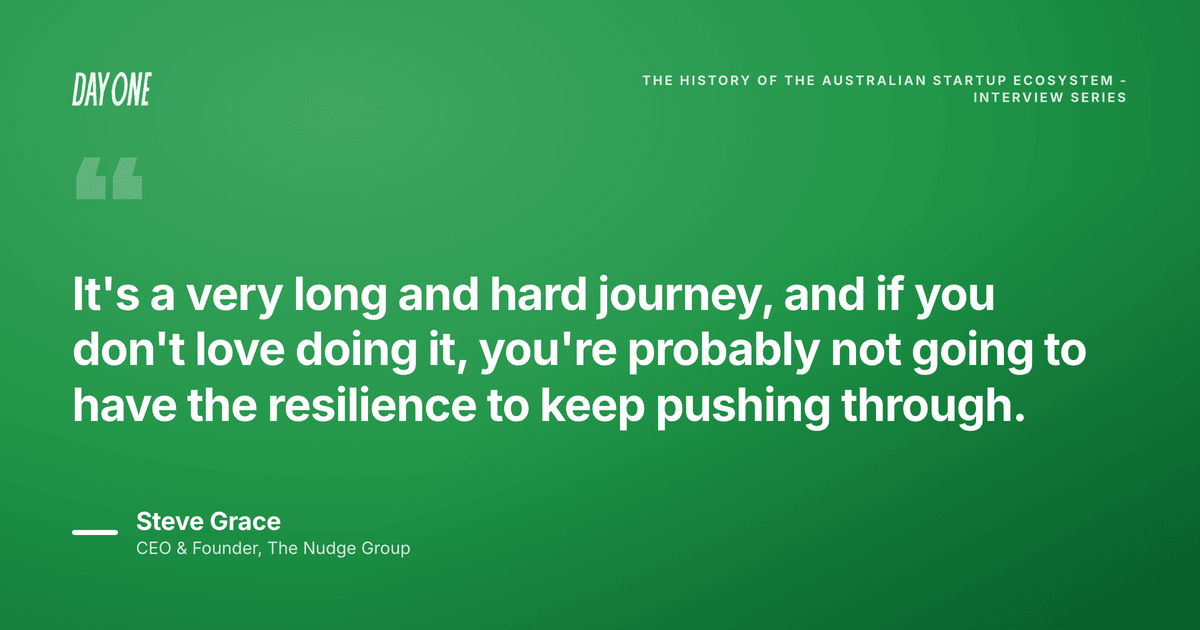
Transcript Synced · select any line to jump ▾ 0:00 Speaker: Let me tell you about our partner, Teamified. If you need to build a top-notch team quickly, Teamified is your go-to solution. They not only provide fractional CTOs, they can also do contractors and even remote team members tailored exactly to your needs. And whether you're looking for expertise in the Philippines, India, or Sri Lanka, Teamified has you covered. What's amazing is that Teamified uses a blend of AI and human expertise to cut hiring times by 50%. Their platform handles everything from automated onboarding to day-to-day management and even performance tracking. You can also handle rewards and recognition, buy equipment, and order training all through their platform. Simplify your hiring process and get the best talent fast with Teamified. Check them out now and transform your team. Go to dayone.fm/teamified. That's dayone.fm/t-e-a-m-i-f-i-e-d and get started today. Thank you. Hi, I'm Adam Spencer, founder of the Day One Network, which is bringing the history of the Australian startup ecosystem to you. I believe in founders. It's why I do everything I do at Day One and our media company, W2D1 Media. And that's why the Day One Network exists, to create helpful content for founders. We've got some great shows in development, but a large part of what we do couldn't be done without support from our partners and sponsors. And I couldn't be happier than to be working with NTP, who get community better than any other technology recruitment company out there. A Newcastle company like mine, NTP are invested in seeing the growth of the local tech community in Newcastle, Sydney, and more broadly Australia. So thank you NTP for helping us bring helpful content to founders and the startup community in Australia. Back to the interview. Hi, I'm Adam Spencer, founder of the Day One Network, which is bringing the history of the Australian startup ecosystem to you. I believe in founders. It's why I do everything I do at Day One and our media company, W2D1 Media. And that's why the Day One Network exists, to create helpful content for founders. We've got some great shows in development, but a large part of what we do couldn't be done without support from our partners and sponsors. And I couldn't be happier than to be working with NTP, who get community better than any other technology recruitment company out there. A Newcastle company like mine, NTP are invested in seeing the growth of the local tech community in Newcastle, Sydney, and more broadly Australia. So thank you NTP for helping us bring helpful content to founders and the startup community in Australia. Back to the interview. Hi, I'm Adam Spencer and welcome to Day One, the podcast that spotlights Australian startups, founders, and the organizations that empower Australian entrepreneurship. We go back to the beginning to tell the story of Australia's most inspiring founders and how they built their companies. You're listening to a special interview series as part of a documentary W2D1 is producing about the history of the Australian startup ecosystem. This episode was conducted by guest host Will Cho. 3:19 Speaker: Hi everyone, and welcome back to the Australian Startup Series interviews. Our guest today is Steve Grace. So good to have you on, Steve. 3:25 Steve Grace: Thank you, nice to be here. 3:27 Will Tjo: So to start us off, could you introduce yourself and what you're currently working on? 3:31 Steve Grace: Sure, my name is Steve Grace. I'm the founder of and CEO of the Nudge Group and also Balance the Grind. Both of these companies are very involved in the startup ecosystem, which is why we're talking. 3:47 Will Tjo: And I'd love to dig into what these organizations do in a moment, but to start us off, would you say that you've always been an entrepreneur, Steve? 3:57 Steve Grace: That's a really interesting— no one's ever asked me that question before. I mean, I used to wash cars when I was young around the local neighborhood to earn money, and I used to sell things that I could— I'd buy and sell things. So I guess to some degree, but I think A lot of that was driven by my father who just probably encouraged me to do a lot of those things. As opposed to just going out and getting a traditional job, he said, why don't you think of ways you can make money and go and do that instead? 4:22 Will Tjo: Yeah, absolutely. It seems like the very classic entrepreneurial journey. At the very beginning, you found a couple of opportunities like washing cars, decided to go out there and do it. 4:31 Steve Grace: Yeah, I think it's, I think it's, if you encourage that in a child, It's a very empowering thing because, you know, I noticed this with my kids. They just want more control over their life because as a child you're told what to do all the time, right? By parents, by teachers, by everybody. So if you could find something that you can own and control, it's very addictive, I think, at that young age. 4:51 Will Tjo: Yeah. So was being an entrepreneur what you expected it to be? 4:56 Steve Grace: Definitely not. Gosh, you know, on both sides, it's so much better than I probably imagined and so much worse than I probably imagined at the same time. At the same time, and I think that almost defines it, isn't it? The ups and downs are quite insane. 5:12 Will Tjo: Yeah, I love that. When would you say that you formally was introduced to the startup ecosystem? When you started to, you know, launch your first formal business? 5:21 Steve Grace: Yeah, it's interesting. My first business was a company called Fingerprint, which was a recruitment company designed to jump on the bandwagon of digital. So that's when digital roles were just coming out. I'd been doing tech recruitment for years, I just got my residency in Australia, which meant I was allowed to go and start my own company because until then I'd been on a visa. And that was back in 2003, but I don't know if you'd call it the startup community. I mean, it was my business, but there wasn't, there wasn't a big fuss around startups probably until my second business in Ashdown, which was, you know, nearly 10 years later when I started to sort of notice companies like Atlassian and Airtasker and Culture Amp. and Skullrunner and those kinds of companies that were just sort of coming around then. 6:03 Will Tjo: Yeah, so Ashdown was 2010, was it? 6:06 Steve Grace: Ashdown was started in 2010, and I think my actual— and this is quite an interesting story that not a lot of people know yet because we haven't announced it— but my first brush with any kind of accelerator was I was in Melbourne for work and I walked past the York Butter Factory, which became YBF Ventures, and I wandered in there and I said, why don't you just let me recruit for your startups? And they promptly marched me out because we were a traditional recruiter. I was wearing a suit and I was about as far away from, from anything that you could imagine was startup. But the reason it's interesting is that I've just literally bought YBF Finishes with a friend of mine, Matthew Brown. We've bought the assets because the, the company got into trouble due to COVID, um, and having a lot of space and leases that they just weren't able to fill because no one was allowed in. And not wanting to see that brand die because it literally was my first ever sort of startup experience, um, we've ended up managing to purchase the assets and we're going to relaunch it as more of an event and training business for early-stage startups, which is super cool. 7:04 Will Tjo: That's really exciting. What you said before, where you approached the accelerator, you were wearing a suit and it was almost as far removed from an image of a startup as possible. It's interesting because there is— I know that there is a distinction between some people label themselves as startup people, some people say they're not startup people. When would you say that you kind of felt in the startup community, or would you say you've always been in it? 7:28 Steve Grace: I think I was always in it. I think I was never in the suit community. I was never, they don't sit well on me. I'm just kidding. I don't know, I just, I've always preferred that more casual. I'm not a big planner, I'm not a big smart person, I guess, in that respect. I don't like to dress up, I like to wear t-shirts. So I think I was probably in it, I just didn't realize. 7:51 Will Tjo: Yeah, that's fair enough. So when you first created your business fingerprint, you mentioned that there was nothing there. Is there any sort of support structures at all? 8:02 Steve Grace: I was in, there was no such thing as coworking space. I was in a serviced office in the middle of Sydney City and I had no windows and it was very, very small and I would sit there and I would go slightly insane because you couldn't see the outside. So you could go in the morning sunshine, you come out at night and it could be belting with rain and you just wouldn't know. So I think life's changed a lot from there. I mean, that was really the only kind of support for any startups then was these serviced offices and everyone wore suits and no one spoke to each other and there was absolutely no collaboration whatsoever. So I don't know, it was, it was a very different time and there wasn't any, no obvious startup culture. Obviously there were startups, but it wasn't a thing. People didn't talk about it as a thing. 8:45 Will Tjo: Yeah. What changed do you think? 8:47 Steve Grace: What changed? Um, that's a very good question. I think probably the startup culture was founded out of the US. I think everyone can probably agree with that. And I think people started to want to emulate more of what was happening there. If you're talking about what happened in Australia, I think we got people who realized you didn't have to wear a suit. You didn't have to go after the same markets. You didn't have to offer the same services that large companies did. There was a market for people. People were looking for different things. And I can't tell you exactly because I was still pretty young. I mean, I was under 30 when I started my first business. And when you're that age, I hate to say it, but you tend to be very focused on yourself. And I was very focused on myself and very focused on my company. And I was just trying to, just trying to make some money. 9:35 Will Tjo: Yeah, that makes sense. And over the last 2 decades, the growth of our ecosystem, would you say that it's exceeded your expectations or underexceeded? 9:43 Steve Grace: I think it's exceeded it, probably due to COVID, which is a controversial thing to say. I think it under-exceeded my expectations prior to that. I thought it was going somewhere, which was, you know, part of the reason I wanted to start Nudge, but I don't think it had gotten to where it is now if it hadn't have been for COVID and the huge shift in the way that people think. I felt that Australia was very much lagging behind the US and the UK and Israel and other countries as well. And I was worried we were going to miss out. 10:15 Will Tjo: Yeah. Tell me more about what you meant by shifting the way that people think. 10:21 Steve Grace: So COVID, I think, changed the way everybody thinks because they were forced into a change that would have happened, but it would have happened over a period of time. So it was a very violent change in terms of speed of uptake. I'm talking about companies that were still using on-premise servers suddenly had to go into the cloud because their staff were no longer in the office. I'm talking about people suddenly having to buy things online, nearly everything online. 10:44 Will Tjo: Mm-hmm. 10:45 Steve Grace: I'm thinking about people working from home. You know, these things were happening, but they were, they were really crawling along. And then suddenly over really a period of that first 6 months, once we kind of got past the initial fear of the pandemic, which I think was very much a case for the first 3 months, no one actually knew if we were going to survive as a human race almost. I think once we got past that, everyone started to have this ability to, to think differently because they had no other choice. And when you're violently pushed into thinking differently into the greatest part of your life, which is your work life, um, you suddenly start to apply that to other, other areas. And I think when you have more time at home, you've got more time to look at other areas. And suddenly people started to think because there was less time just living life. And there was more time trying to work out how to live life, which made them look at everything in their life, I believe. And that, that accelerated us particularly, but I think the world as well, for 5, 10 years in terms of what it might have taken us to get where we are now. 11:41 Will Tjo: Yeah, I hear you. In essence, it enabled us to be okay with change, adapt quickly, and as you mentioned, adopt technologies at a much faster pace. 11:50 Steve Grace: Absolutely, and look, there was a lot of negative, and still are a lot of negative things coming out of that. You know, the mental health issues that have come out of that change and people being forced to do it. But overall, I think it's been a very good thing, even though there's been a lot of, I guess, downsides to it that have affected a lot of people as well. But I think if you looked at it from a global perspective, I think it's been a positive. 12:10 Will Tjo: Yeah, I'm interested to hear about what you think that we could still be doing better because prior to COVID, you mentioned that we were slow in our uptake of change. 12:19 Steve Grace: Yes, look, I'm quite, it's quite a few things I think that really need to be addressed here. One of them I'm trying to do myself with that YBF business that I mentioned earlier, which I can talk about, but I think the government seriously needs to get moving quicker on innovation and visas and the talent shortage which affects Australia and other places like Singapore where the small populations far more than it perhaps does in countries like the US or the UK. So I really wish the government could move faster. You know, they've always been 3 years behind where the visa situations need to be. They're either, you know, not enough or there's too many depending on what's going on in the world. So I think that would be nice. Okay. But I think the most problematic area is the early stage area. And there's two parts to this. One is supporting them, and we'll come back to that in a second. But the other thing is, and I see this a lot because we work with so many early stage companies, is founders at really early stage companies think that the people they hire are going to be with them forever. 13:16 Speaker: Hmm. 13:17 Steve Grace: Now that's great, it's a romantic kind of thing, but it's also not a reality and probably not what should happen because the people that you're hiring at the very early stage are all-rounders. They cope very well with ambiguity. They're not specialists. They're not, you know, necessarily strategic. They're real just doers. And that's what you need at that stage. As you grow, what you need changes. Now, some of those people will be able to transition, but a lot of them won't. And I think unfortunately in Australia, the ESOP plans that we use usually means when those people do leave, they lose their shares in the business. Even though they were instrumental in getting off the ground. That's something they do very well in other countries. We don't do well here. I talk about it a lot, and I really think that's something that does need to be looked at. And it's just an education thing. 13:59 Will Tjo: That's all it is. Yeah, I can see how this ties together with the whole visa issue as well, because of our talent shortage. And that in combination with the policy issue of people who leave these startups are unable to have those shares. It becomes like a snowball. 14:14 Steve Grace: I think they can, you know, there's good leavers/bad leavers clauses, but I just think there's not enough education. And I think we need to, understand as founders that the people we hire at the beginning, maybe 1 or 2 will make the journey, but the rest need to go off and go and help someone else start off. And they should be rewarded because they're often taking a very low salary due to cash constraints and cash flow constraints. And they don't always get to keep their shares. You know, sometimes they do, don't get me wrong. But I think that people don't recognize that at the beginning and put something in place so that there's actually career paths for people who can go and spend 1 to 2 years in companies and then move to another one and then move to another one and make a career out of that. And still hold on to a portion of their equity, which is hopefully gonna be their retirement plan, considering they're not earning a huge amount of money, often during that time. I think there just needs to be more awareness around it and more focus. 15:02 Will Tjo: Yeah. Do you think this will be solved in any time in the future, or do you think the only solution is for startups to go overseas and establish elsewhere? 15:09 Steve Grace: No, no, I think it will be solved. I don't think that's the only solution at all. I mean, I think, you know, the other thing that Australia has not been great at in the past, and I think this has changed, was they used to think, too small. You know, they would think of local markets. I don't think that's happened now. I think VCs like Blackbird have come along and talked a lot about, look, if you're not going global, we don't want to talk to you. And I think now everybody thinks about global markets as opposed to local markets. But again, COVID's helped them do that because of this working from home, manny. It's not about having 10 people in an office in Surry Hills. It's not about that at all. So that's enabling people to think bigger. So I think that Australia is definitely catching up. The area that Australia, I think, still misses out on is they focus very much on the UK and the US markets and not enough on Asia, which is madness to me. There's so many people in Asia. It's right on our doorstep. It's a market that is much easier for us to work within time zones and things. And yet people, they, it's not that they don't include it, but they don't necessarily think about it as much as they do those other two markets, which are far harder to break into. Yeah. 16:12 Will Tjo: Yeah, why is that? Why don't we focus on Asia even though it's our neighbors? 16:17 Steve Grace: I think it's a cultural thing. I think people align more closely with the UK and the US from a cultural perspective, and I think there are these preconceived ideas that it's difficult to do business in Asia. I think there's the corruption thing that people think about. I think, you know, people understand that if you can do business in Japan, it's very different. If you can do business in Singapore, it's different to Hong Kong. It's actually not all that different. I think it's, again, it's a lack of education and understanding, which is where most problems in any area stem from. 16:47 Speaker: Yeah. 16:47 Will Tjo: And this theme of education has popped up a couple of times so far. Who bears the onus, do you think, to educate? 16:54 Steve Grace: Everybody, I suppose. But again, you know, that's something that we're trying to build with YBF is a lot more online, easy, free education for founders. I think, there is not enough support for founders that isn't expensive and founders are time poor. So I think we just need to talk about it more. The, the, an area that I was going to touch on, which I would kind of ties into this, is that if you look at the startup press and, you know, whether it be the newsletters or the blogs or the podcasts or anything other than yourself, they tend to focus very much on the glamour. You know, the ones that have done the big raises, the ones that are doing the big IPOs, the ones that have grown by this amount. There's not enough focus on the earlier stage companies. And I think there needs to be, again, more focus here because if we don't really help those early stage companies, if we don't educate them, if we don't focus on them, if we don't give them a platform to push their products and, and get themselves more well-known, then there is no startup culture at the other end. You've got to have a lot of people in that funnel for them— 17:54 Will Tjo: Good ones. 17:54 Steve Grace: Good ones to drop out the bottom. And I don't think we support that. We don't support them enough at the top end of the funnel. And I think that's very, very dangerous to just focus on the ones who've already made it. They don't need help. We should celebrate them, absolutely. But we need to have much more celebration of the earlier stage ones. 18:11 Will Tjo: Yeah, absolutely. Shifting gears a little bit, what do you think that we do better than other ecosystems? 18:16 Steve Grace: I think that we need to make it more accessible for early-stage founders to access funding. It is incredibly difficult if you are pre-seed to raise money. It is, there's so many angel groups, there's so many angels. A lot of these angels wanna give $10 grand, right? And that, that's great, but you need a lot of those if you wanna raise $500,000. I think that there's a lot of people who just go, Yep, that's great. I can see where you are. When you've had some success, come back and talk to me. We need to have a better, more supportive structure at the earlier stage to get them there to then talk to the Edreys and the Blackbirds of this world. 18:55 Will Tjo: Yeah, definitely. What do you think that we do better than other ecosystems? So our strengths? 19:01 Steve Grace: Oh, that's a good question. I don't think I've ever been asked that question before. I think the collaboration in the Australian ecosystem is mind-blowingly good. Now we operate in 5 or 6 countries now, and maybe I am biased because I live here, even though I'm English, But maybe I am biased that I live here. But I think the collaboration and the willingness to share and give time to each other has been the thing that surprised me the most when I got involved in this space. It just blew me away and continues to, how much people are willing to give their time for nothing and their, and their ideas and share what they're doing. There's no hiding from your competitors. Everybody's very, very supportive. Of it. And I think everybody genuinely wants everyone to succeed. I don't think it's a sort of hidden, yeah, we really want you to succeed, but actually deep down we don't. I think everybody really does. And I, I've not seen, even though that's a characteristic of all startup ecosystems, I don't think I've seen it as strong anywhere as Australia. 19:59 Will Tjo: Yeah, that's consistent with a lot of guests who have been on this podcast talking about when you compare Australia with, say, in Silicon Valley, um, it's definitely not as competitive and cutthroat. 20:09 Steve Grace: Same in the UK, you know, it's brutal. And I think there's a lot of false support, if that makes sense, where people are pretending that they want that person to succeed, but deep down they either don't care or they actually don't want that person to succeed. I don't think you see that here, which is, it's interesting. I've not really analyzed why, but it was the first thing that popped into my head when you asked me that question. Yeah. 20:31 Will Tjo: Do you think that it's inevitable though, with Australia's ecosystem becomes as large as Silicon Valley or the UK? 20:37 Steve Grace: No, I actually don't. I don't think it is at all. I think there's a difference, like one of the reasons I've stayed here for now 23 years, you know, I moved here at 25, partly the weather, partly the fact that I think it's a great place to grow up children and family, but I love the mentality of Australians. I love the way they approach life. I love the camaraderie that Australians have. You don't see that in other countries. At the same level. So I don't, I mean, I hope it doesn't, you never know, but I really hope it doesn't. I think the country itself has a, and I'm not, I'm not going to say a battler mindset because it's the wrong, but they, they have come from, you know, roots of trying to force themselves into the world. I think they've done an outstanding job of it. And I think that is core in the culture. I don't think it will go. 21:26 Will Tjo: Do you have any unpopular opinions about our ecosystem? Something you believe is true, others don't agree with you? 21:36 Steve Grace: It's an interesting question, I saw that you were gonna ask me that. It's not necessarily an unpopular opinion, but it can be slightly, it can be slightly confronting. I just, I really don't feel the funding system in Australia is fair to the early-stage startups. I know I've mentioned that a couple of times, and I mention it a lot because it's It's something that I'm genuinely trying to change. And I also don't think people recognize that, yes, right now the markets are booming, the cash is flowing, startups are growing, you know, talent's obviously a big problem, but outside of that, you know, all the signs are very positive. That will of course change, as it always does in every cycle. Now I'm not, can't tell you when unfortunately, but it will. And when it does, if we haven't sorted this issue out, then our ecosystem, as in the startup ecosystem, will start to shrink. And that would be the greatest crime in Australian history, I think, because I feel we're finally really pushing into the world. People want to work. I don't know how many people would be aware of this, but when we're recruiting for Australian startups launching into the UK or US, people in those countries want to work for them. They really do. They love working for Australian companies. And I think this is an opportunity for us to really get on the world stage properly. So if we don't support that and we don't sort this issue out, then it would be the worst thing ever. It would make me very unhappy, which is why I'm trying to do something about it. But I think everyone needs to do something about it, and I think everyone needs to talk about it more. And podcasts like this are a great way of doing that. And if anyone wants to talk to me about it, please just call me. 23:08 Will Tjo: Yeah, so I'm interested to hear about what you mean by unfair. What makes it unfair for the funding for early-stage ventures? 23:16 Steve Grace: I think what makes it unfair is that if you need a small amount of money, it's very difficult to get that. If you— so what they're trying to do, and I see it, I don't think it's a conscious thing, but if you— people are trying to get companies to raise more money at an earlier stage. Now they're trying to do that because obviously they get their equity as an investor at a greater percentage. You know, they're going to get a lot more. Now I just think that's unfair. I think that If you want to raise $50 grand, you should be allowed to raise $50 grand. If you go and try and raise $50 grand, they'll tell you, you need to raise $250 grand. You're trying to raise $200, they'll tell you, you need to raise $750 grand. And I, like I said, I don't know if it's conscious or not, but to me it's a greed grab trying to get the most business at the cheapest price. 24:00 Will Tjo: Yeah. 24:00 Steve Grace: That is not what I believe as a supportive partner should do at all. And it also sends the wrong sense of security to early stage founders who have more money than they need, don't always necessarily know how to spend it, and then they can spent on the wrong things and so forth. So I just don't think it's a supportive enough environment for them. They are usually first-time founders if they're raising that sort of amount of money. They obviously don't have a huge amount of experience in what they're doing. And I think they get taken advantage of. 24:28 Will Tjo: Yeah, I know what you mean now. When you say unfair, it's almost predatory. 24:32 Steve Grace: That's the right, oh, that's such a good, I wish I'd come up with that word. That's exactly what I mean. I think even though there are, don't get me wrong, Some amazing VCs out there. The good ones don't come in till the later stage. The early stage are left with the predatory ones, as you put it. I think that's a great way of putting it. 24:48 Will Tjo: Yeah. So Steve, as you know, what we're trying to do with this podcast is to document as accurately as possible the history of our ecosystem to look to the future. And we're aiming to reach all corners from founders, investors, policymakers, and academics. Is there anything that we haven't talked about today that's always top of mind for you that they need to hear? 25:05 Steve Grace: That's a good question. I think, I think we need to look at the accelerator space again. The accelerator space, you go back 2010, accelerator space was booming, right? Startmate was founded, BlueChilli was founded, YBF was founded, you know, all these companies that were finding accelerators has kind of struggled due to a lot of the COVID issues. I think we need to look at new ways of doing that. We need to look at new ways to support. So if you take a company, for example, like Antler, I think Antler does the most amazing job. They teach them a huge amount, right? And they support them really well when they come out the other side. And that's fantastic. But unless you go through the Antler program, you don't necessarily have access to that. So what we need is we need more focus around accelerators that you can just join voluntarily out of your own. You don't necessarily have to go through that program. I don't think Antler should change what they're doing, because I think it's amazing, but we need other versions of that. 25:58 Speaker: Mm-hmm. 25:58 Steve Grace: And we need versions that are gonna help these companies go global, very much like those, that Antler program does. 26:04 Will Tjo: Yeah, so in essence, just lowering the barriers to entry so that everyone can get in, really. 26:09 Steve Grace: Yeah, I think you can see that out of everything I've talked about. I really just believe we need to focus more and more and more on this pre-seed to Series A and get as many companies as we can to Series A, whether it be government support, accelerator support, whether the VCs that are succeeding successful and do the bigger ones should start mini versions of themselves. I just think we need to focus there right now, not in 5 years' time or in 2 years' time. We need to focus there right now. The market is such a crucial point. There's never going to be a better time. We've got a few years left before the market starts to turn the other way. Let's absolutely plump up our, our big funnel at the top to make sure that we can push through that when the cycle turns the other way. 26:47 Will Tjo: Yeah. Tell me more about this cycle. What are you basing it off? 26:51 Steve Grace: History. I mean, economic cycles, you know, every economy in the world goes through cycles of boom and bust. If you want to be that dramatic. At the moment, funding is very, I guess, available due to a lack of other investments, record low interest rates. You know, there's numerous reasons. I won't get into global economics because I'm nowhere near qualified to, but with every upcycle, there is a downcycle in absolutely everything. And in It will come, and I think, you know, when it does, funding will become harder to get. And where you might get 20 companies founded this week with sort of startup seed money, you might only get 5 in a couple of years. It's gonna have a big impact, right? And I think then at that stage, if we haven't made it easier and accessible and pushed through, and as I mentioned, you know, stuff that funnel at the top end, then it'll start to thin out. That would be, that would just be such a shame. 27:45 Will Tjo: Yeah, I probably know the answer, what you're gonna say to this question. And it might be a controversial question in itself, 'cause I know that it seems that the theme of what we've been talking about is to try to get things out there as fast as possible before the cycle ends. We wanna encourage as much as possible. Do you think that that sets up potentially dangerous situations where people who shouldn't be founders become founders? 28:06 Steve Grace: No, I don't. I think that this will be a greatest learning experience they've ever had. You know, if you look at the way the world's gone, meta-universes, NFTs, all this sort of stuff, it's becoming increasingly easier to create things because you can do it in a virtual world. And if you have certain technical skills, you can create worlds and all sorts of things. I think we need to get more people going through the experience of what it's like to be a founder. You know, your very first question to me was, was it what you expected? And I said, yes and no. I think the only way we're gonna get really strong founders if more people give it a try and find out what it truly means to be a founder and try and find out if they've got what it takes to keep pushing and become a good founder. And the only way we can do that is by getting more people into the system. Think of it like a sport, right? If you have huge amounts of children trying soccer at an early age, you're going to get a better national soccer team in however many years. I think this is the same principle. I think we need to encourage more people because I think there's a lot of people out there who could make amazing founders, who don't realize it, hadn't considered it because they were busy, they were in a job or whatever. So I think we need to get more and more and more people jumping into this space. 29:13 Will Tjo: Yeah, it's just a numbers game. More founders means a better ecosystem in the long run. 29:18 Steve Grace: And you know what? It doesn't just mean that, it also means the ones that do try it and don't like it can go and work for another founder but have a far greater appreciation of what that founder's going through and probably support them better in the whole ecosystem too. 29:31 Will Tjo: Yeah. Lastly, Steve, any advice that you'd give to a future entrepreneur based on your wins, your mistakes, and your experience? 29:38 Steve Grace: Yeah, I thought a lot about this question 'cause it's a very difficult question to answer. I think ultimately to me, having had a number of companies, this is the company that I feel is truly me and that I think I was sort of made to create, if that makes sense. I know that's very dramatic, but my point is, you've really got to love the subject matter. The only thing that does scare me is people just starting a business for the sake of starting a business and doing anything. You know, right, we're gonna go and solve property management, we're gonna go and solve a fintech issue, an insurance issue. If they don't love that subject matter, it's gonna be very hard to be successful. It's a very long and hard journey. And if you don't love doing it, you're probably not gonna have the resilience to keep pushing through to have a success. Success that you want. So find something that you either know inside out or something that you love. And I'm not talking about hobbies, but love that subject matter. I love startups because I find founders fascinating, right? I just find them such interesting people. That's why I do this. Now just think about it when you're going to start something. Think about what you're doing. Make sure it's something that you will still love doing even when it all goes wrong. 30:46 Will Tjo: Yeah, I love that. Thank you so much for being a guest today, Steve. 30:49 Steve Grace: My pleasure. 30:51 Will Tjo: Where could the audience go if they wanted to learn more and connect with you? 30:53 Steve Grace: Good question. LinkedIn is always the easiest place. Obviously, I'm under Steve Grace on LinkedIn. You can go to The Nudge Group at thenudgegroup.com. Any of those, any of those are the easiest way to get. I think you can even book into my calendar through The Nudge Group website if I'm right. 31:07 Will Tjo: Awesome. And what's next for you and your journey at The Nudge Group? 31:10 Steve Grace: So I think, William, probably the next thing for us is moving more into that that US market. There's a big focus on growing our community around through the Balance the Grind website. That's really grown to an unbelievable size during COVID And I think we're now trying to service that audience with some more relevant content. Now we understand more, there's like 100,000 people a month going to that website now. So we've got to work out a way to, to give them more of what they want. So if anyone wants to tell me, please get in contact. But yeah, I really want to have this complete global ecosystem. System so that we can help particularly Australian startups launch wherever it is in the world they want. 31:46 Speaker: Awesome. 31:46 Speaker: To our audience, I hope you found it incredibly valuable. Until next time. 31:56 Speaker: I hope you enjoyed that interview. More interviews are on the way. Follow the podcast wherever you're listening right now. Stay tuned for more interviews with many, many many more amazing people from the Australian startup ecosystem. Thanks for listening and see you next time. 32:13 Speaker: Bye.