Transcript Synced · select any line to jump ▾ 0:02 Pauline Fetaui: Founders scale faster on Deel. Set up payroll for any country in minutes. Hire anyone anywhere. Get visas handled fast and get back to building. Visit deel.com/dayone. That's D-E-E-L.com/dayone. 0:21 Paul Stovell: I've never wasted time creating a pitch deck to investors, right? And I've never wasted time delivering pitch decks to investors. So every minute of effort that's gone into building Octopus has just gone into making a better product, providing better customer service, and doing the right things for our customers. And in that respect, I think like every customer we have is our investor, right? Because that's how we built the business. And so every customer, um, chooses whether we make the next funding round or not by renewing their license or not. And that's the way it should be. Like, if we disappoint our customers, we should be out of business, but we shouldn't be out of business because my pitch deck didn't follow the right format that a particular investor expects a pitch deck to follow and isn't rehearsed well enough. 1:05 Pauline Fetaui: What happens when a quietly brilliant engineer and his wife decide to build something the opposite of Silicon Valley hype? You get Octopus Deploy, a global software company powering over 4,000 teams worldwide, built from a Brisbane library with zero initial funding, no pitch deck, and over $100 million revenue AUD. In this episode, Paul Stovall shares how he went from coding as a teen to turning down the acquisition offers, building slowly with purpose and scaling with his life partner by his side. We dive into why he never chased investors and never needed to, what it's really like to co-found with your spouse, and how he thinks about building product, parenting, and renovating a classic car without burning out. And the mindset shift that helped him fall back in love with the company he almost walked away from. This is a founder story. It cuts through the noise, no hype, No tech theater, just a masterclass in calm conviction, building for the long game, and redefining what success can look like. Let's get into it. 2:05 Speaker: You're listening to a Day One FM show. 2:09 Pauline Fetaui: As a startup founder, you're juggling multiple priorities from the expected, like finding product market fit, to the unexpected, like customer requests for SOC 2 or ISO 27001 certification. But achieving compliance is time consuming and time spent on it is time away from the needs of the business. That's where Vanta comes in. Vanta is the all-in-one solution for startups to become compliant quickly and build a security foundation with ease. With a combination of automation, an extensive partner network, and a security marketplace, Vanta provides the necessary tools and expertise for startups to achieve compliance seamlessly, no matter how urgent your needs are, and at every phase of growth. Over 10,000 leading companies, including— 2:53 Speaker: Cipherstash. Handle. 2:55 Pauline Fetaui: And Indetted. Trust Vanta to automate compliance so they can focus on growing their business. Startup customers get $1,000 off Vanta at dayone.fm/vanta/pauline. Paul, can you tell me who you are and what are you known for? 3:16 Paul Stovell: Uh, hi. Um, so I'm Paul Stovell, uh, founder and CEO of Octopus Deploy. Octopus.com. 3:23 Pauline Fetaui: And what does Octopus Deploy do? 3:26 Paul Stovell: So we are a continuous delivery company. So we focus on deployment automation, all the things involved in helping companies ship working software into production. 3:36 Pauline Fetaui: And just so we can zoom out a little bit and understand how big Octopus Deploy is, what's your turnover at the moment, or what status do you have claim to? 3:47 Paul Stovell: So we are just crossing $80 million US dollars. So not sure, exchange rates haven't been that great lately, but yeah, north of $100 million Australian. 3:57 Pauline Fetaui: Fantastic. 3:58 Paul Stovell: We're about 330 people spread around the world. Big R&D in Australia, New Zealand, and Israel through an acquisition that we made recently. And then sales, marketing kind of spread around the world, support and so on. We have about 4,000 customers, mostly in North America and then Europe, and then probably Australia is about 10% of our business. So pretty geographically distributed revenue-wise. 4:24 Pauline Fetaui: Wow. 4:25 Paul Stovell: And our customers range from, you know, global 2000s through to SMBs and pretty much everybody in between that has a software team. 4:33 Pauline Fetaui: Fantastic. Congratulations on reaching that scale. 4:36 Paul Stovell: Thank you. 4:37 Pauline Fetaui: Now tell me where— I can see a beautiful, what looks like an octopus tentacle behind you. I assume that's your offices. Are you based? 4:46 Paul Stovell: I am. So, uh, so we live in Brisbane in Queensland, and, uh, we haven't— we have a couple of offices around the world. One's in Israel and then the other is, uh, is here in Brisbane. Um, we did this space, uh, actually it was during COVID we decided we needed to get a new office. We're a fully remote company, interestingly, so everybody works from home almost all of the time, but there's something special, I think, about having a headquarters and a place to come to. So, uh, yeah, during COVID we negotiated a lease here and then because we got such a good deal, we spent the money that we saved on a big tentacle. It's going in the middle of the office. 5:21 Pauline Fetaui: Oh, that's hilarious. So obviously, um, very entertaining and I'm sure, um, people feel very connected to the octopus, um, when they come into work. How big is the office and why did you, when everyone was deciding to leave the office spaces during COVID you decided to go in? What changed that? 5:38 Paul Stovell: Yeah, we're a little bit contrarian, aren't we? So when we started the company, we started with like working from a library at the beginning. So we would go down to like the city, Brisbane City Council Library. We would work from there kind of every Wednesday, and then otherwise people were working from home most of the time. And then at some point around 2014, we got a small office. There was something about like, you know, I think we'd probably employed 5 or 6 people by then, and we thought, 'Okay, we're becoming a real company. We should get like a real office, right? Because that's what real companies do.' And then we found actually like going into the office every day wasn't actually really helping productivity. Let's just go back to what was working, which was people working from home and just coming in sort of once a week. And so we stayed in that office. That office fit about 12 people and we stayed there for like 7, 8 years. Like the company got to probably 100+ people by the time we moved out of that office. 6:32 Pauline Fetaui: Wow. 6:33 Paul Stovell: Because no one was in there all the time. And so, yeah, so I think actually during COVID I think a lot of people were discovering remote work for the first time. And I think probably falling in love with a lot of the benefits of remote work, whereas, you know, we'd been doing it for so long that we also saw some of the positives of occasionally getting together in person and felt there is still value in having a space that people can come to. 6:55 Pauline Fetaui: I love that. So that's a good segue into, um, you being 13 years old. So obviously 13 years old and, um, celebrating this year. Uh, well done. And I can celebrate as well because River City Labs is also 13 years old, one of the labs that I head up. But obviously the ecosystem has changed for building startups and in Australia over time, and you started off in a library. So what's the differences that you're seeing between starting a business back then and now with the ecosystem? 7:27 Paul Stovell: I think the ecosystem's definitely, I would say, you know, bigger. More capital available to people starting than it was back then. I think back then it didn't feel like there were too many options and there wasn't as much, I think, of a supporting network around it as well. I think also the visibility of it, like when, when Octopus was starting, I don't think it sort of felt like raising money to build a business is something that people do in America, but not something that we do here. I'm not sure if that's a bad thing actually, because it kind of meant that we picked a particular path and went down. And I think it was also a little bit of a timing-related thing too. Like if I remember when I was coming up as a software engineer, I taught myself to code when I was 17, started to get really into the software industry. And this was kind of just following like the dot-com crash. And so venture capital had poured into IT. At that time in the lead up to the 2000s. 8:29 Pauline Fetaui: Yeah. 8:29 Paul Stovell: And VCs had this reputation of investing in companies, firing the founder CEO and putting a, a grown-up CEO in charge, right? And these businesses would, would always fail. And so there was like a, I think a, at that point following the dot-com bust, like this real lack of trust in investors and particularly venture capital, early stage venture capital. And so then that, that was like the period where I was kind of getting quite inspired by let's just build small software businesses that are successful and profitable and we don't need outside investment. And I probably carried that perception of what venture capital was and what seed funding was for a very long time. And then I think by the time Octopus started in 2012, I think again, we just sort of come out of the GFC and just pools of capital just weren't so readily available anyway. It felt like a really good time to start a business and just focus on the fundamentals. 9:20 Pauline Fetaui: Okay, so let's go into that, um, starting the business. So you have a co-founder with Sonya. So she's not only your co-founder, but she is also your wife. So can you tell us a little bit about when Sonya came into the picture with you? Obviously you were starting to code a lot earlier than that meeting. And at what point did you guys decide to go into business together? 9:42 Paul Stovell: So, uh, we had met and been dating, um, for, for quite a while, uh, and then around I think 2011, I had moved to London to work for Credit Suisse there. And it was while I was working at Credit Suisse, just doing some contracting that I started to really work on Octopus as a sort of maybe one day this could be a business, but really it's a hobby project. I'm having fun. I'm going to write some code and maybe some other software engineers will use it and they'll think I'm really cool. Yeah. That was like the main driving motivator of, of the first parts of building it. 10:16 Pauline Fetaui: Okay. 10:16 Paul Stovell: And then, so I did that as like a nights and weekends project. People started following it. They started using it. At some point we started to make it so you could buy a license key and customers would occasionally buy a license key for like $500. And I would take the day off work contracting and just spend the day working on the product. Sonia and I would talk about it and like, hey, maybe this could be more than just a hobby, you know, maybe it could be something bigger. And then sort of around 2011, Redgate Software had been using Octopus during this time. And so they approached us to buy the company. 10:53 Pauline Fetaui: Ew. 10:54 Paul Stovell: And they offered us, I think it was $100,000 at the time. And so I phoned Sonya and I'm like, because I think by this time I'd probably proposed to her, but she was still living in Brisbane. I was in London and, you know, thinking of coming back, starting a life together. And I told her, you know, what they'd offered. And she was like, I don't think you should do it. And I'm like, well, it's $100,000. We should, we should totally do it. And she's like, no, you've been talking about doing your own thing for a while. I think you should, you should back yourself on it. So I phoned Redgate back and I said, no, we're, we're not going to sell. And they upped the price to $400,000. And I said to Sonia, no, like now it's $400,000. Like we should totally sell. This is like life-changing. And, uh, but again, I think she kind of saw that. I think her worry was like in the long run, I would actually regret doing that. And so she— 11:41 Pauline Fetaui: Mm-hmm. 11:41 Paul Stovell: Obviously it wasn't her decision, but I think just encouraged me to just back myself and make a decision that was more oriented towards the long-term rather than the short-term. And so what we ended up doing was Redgate forked the code for Octopus. And so I spent 6 weeks at their office helping them sort of make it red and, you know, help them kind of launch a new product. And then I finished my consulting work at Credit Suisse. And decided, right, I'm gonna, with the money that Redgate paid us to fork the code, I'm gonna move back to Brisbane. You know, we'll, uh, we'll go and get married and start our life together. And then we had to decide what to do. So I moved back to Brisbane and it was like, I can either get another job, go back to consulting, contracting, like I was doing. I was about 25 at the time, 25 years old. And, um, and we thought, you know what, this octopus thing seems like it's working. Redgate was certainly interested in it, you know, maybe we should actually, instead of allowing people to buy a license key, but then the product not require them to activate it, because we're too worried they wouldn't, maybe we should see what happens if they do. And so, so from that point, this is sort of in 2012, Sonya started, we turned it into an actual company. Sonya started doing all the financing, the books, even started doing a bunch of the marketing and other stuff we were doing. I was working on the code and we started charging for licenses and within in October of 2012, it made $10,000 in that month. 13:10 Pauline Fetaui: Fantastic. 13:11 Paul Stovell: Yeah, and like, that sounds like an overnight thing, but you know, I'd started this in like 2010, so it had about 2 years of nights and weekends effort to— 13:20 Pauline Fetaui: To get it to that point. 13:22 Paul Stovell: Yeah, yep. 13:23 Pauline Fetaui: I love that. So basically, she is like your advisor slash guru that has your best interests at heart, but obviously has the commercial nous to see something there and just, which you already knew, that was there, right? 13:38 Paul Stovell: I think I could definitely see that people were interested in it. I think the question was, you know, like going— I was a software developer. To go to actually turning something into a business was something I was always interested in doing, but also felt like, where do you begin on something like that? Like, it's such a big journey, it's such a hard thing to do, you know. I don't even know how to register the ABN, you know, like where do you sort of begin on those things? Whereas she actually had a finance background, so to her a lot of that stuff didn't seem like the hard thing. And so, and then I think just that, you know, the benefit of having someone in your life that believes in you, you know, it can never be underestimated. And I think it's, we definitely work really well as a team. And so we worked together. She ran the finance function at Octopus for the next 8 or 9 years up until like, you know, we were hundreds of people. She was doing all the payroll herself. She was processing everything that was coming in, producing reports, you know, really kind of grew as, as the business grew. And, and, and also though, not just that, I think there's a huge part of like the Octopus culture around profitability, not, not getting too crazy, not following just because companies in Silicon Valley have ping pong tables, we need ping pong tables. There's a lot of that kind of mindset that I think she just brought a real common sense element to it. And I think it's been really good that we've been quite thoughtful about those things over time. 15:05 Pauline Fetaui: Yeah, I've listened to a few of your sessions, like I've attended events that you've talked at, and I replayed one of the episodes from Something Tech 2024 where you were interviewed by Rohit Bhakava on stage. And one thing that you repeatedly said throughout was deliver value, profitability, and deliver value that was to your customers. So I could definitely see that in the way you speak and obviously what you've just said with Sonya, it sounds like you only had sight to build a traditional business, not what you see obviously on the highlight reels in Silicon Valley and also in the startup ecosystem at large where capital raising is sort of worshipped as a success measure rather than profitability. 15:52 Paul Stovell: Yeah. If you think of like, what do you have to do to get written up on the front page of a newspaper in this country, in like startup world? Like you have to raise money or you have to do something really bad. Like they're the two reasons that you'll turn up in a, in a paper. And I think that's unfortunate because I I do think there's so many great businesses to be built that would be great outcomes for the people building it. 16:16 Pauline Fetaui: Hmm. 16:17 Paul Stovell: If you focus on the fundamentals and, and I think like in, in the entire history of the company, we've never created a pitch deck for investors. And which means I've never wasted time creating a pitch deck to investors, right? And I've never wasted time delivering pitch decks to investors. So every minute of effort that's gone into building Octopus has just gone into making a better product, providing better customer service, and doing the right things for our And in that respect, I think like every customer we have is our investor, right? Because that's how we've built the business. And so every customer chooses whether we make the next funding round or not by renewing their license or not. And that's the way it should be. Like if we disappoint our customers, we should be out of business, but we shouldn't be out of business because my pitch deck didn't follow the right format that a particular investor expects a pitch deck to follow and isn't rehearsed well enough. Yeah. 17:08 Pauline Fetaui: Mighty Partners is a growth lender backing Australia's best operators with the capital and confidence to grow without giving away what they've built. Mighty offers up to $10 million in funding with flexible repayment terms for up to 3 years. Join businesses like Amber Electric, WeMoney, and Safewill who have scaled sustainably using smart debt. Grow your business, keep your business. Mighty. Learn more at dayone.fm/mighty. Yeah, I could not agree more. Revenue-first considerations, it's a novel idea, right? Okay, so before we go into the capital raising, because I do want to talk about that later, I want to go back to your comment about building and creating, and you kind of knew you want to do a business, but it was a little bit, you know, I don't know how to do an ABN and things like that, that sort of stuff. Now I had the luxury, of checking out your blog, which obviously has not been updated for a few years. I'm sure you'll go and update it at some point after this. But I had no idea, and I've obviously researched you a little bit, that you are not only a builder of technologies, but you are a builder of many things, including household furniture. I see, I think it's your son's bedding that you built basically what looks like a tractor. And you've got obviously renovations around your house, which is like, looks impeccable. 18:35 Paul Stovell: Yeah. 18:35 Pauline Fetaui: So you've obviously been a creator and a builder from the beginning, and you later talked about in the blog that, you know, you, you actually started programming at 15, definitely self-taught, and you built something that was not even public at the time with other open source web servers that they couldn't do. And you did that in year 12. So you've obviously had a tenacity and curiosity and obsession, like obviously personal interest in technology and building. Where did that kind of come from? 19:07 Paul Stovell: I think, uh, yeah, there is a part of it which is curiosity and obsessive nature of just finding things really interesting and wanting to learn more about it. I think also coupled with like this sense of if there's people in the world who can do a thing and they're humans, well, I can do that thing because I'm also a human, right? Like a huge underestimation of how hard things are that actually sort of, I think, allows you to embark on some of these things. And that's definitely Been something I think I've gotten leaned into more and more over time. Like, I think there's a, a big part of life and building companies and just life in general, which is around the continued acquisition of skills and competence. So like, you know, I think when I think about like my own personal identity now, there's a, a big chunk of that that is like related to Octopus and the, the company and the culture that we've built that I take a lot of pride in. But I also think there's, you know, like at the moment I'm restoring a 1960s car and this started out as like, let's buy the car and, you know, pay an expert to fix it and, you know, get it working. And then over time became, well, I could do that myself and I could do that myself and how hard can that be? And so now I'm 6 weeks into a lot of the welding and replacing the sills and panel beading work and all the stuff that it takes. And I'm doing it all myself, doing it all with Sonia. But it all just starts with like, how hard can it really be? You know? And then you find out and then you get through it and you, and you grow from there. And I think that's a life in a lot of ways. Just, just how hard can it be? Take it on, learn a skill. And so if I look back, like that's been the most fun thing about Octopus. I know how to run a marketing team. I know how to send an email campaign. I know how to prepare financial decks for investors. I know how to help customers be successful with things. I know how to fill in the Wisconsin state tax return. Just all this stuff that you just have to overcome as part of building a business. And, uh, and the same is kind of true in, in life, just taking these things on. 21:16 Pauline Fetaui: Thank you for sharing that because I think that's really valuable and insights for emerging founders who are coming up and have a huge road ahead of them. You have to kind of enjoy the journey and those challenges and lean into those hard things because it's not the result and it's not the destination. It seems it's I think that's the traits that I've seen between founders who have been successful and those who are still building and some who have, you know, not succeeded is that persistence to actually get really interested in the hard thing to overcome it more from a personal perspective rather than just going, ah, it's blocking me from my destination. I need to get to, you know, this much MRR or this much ARR. So it's like that sort of, it's, are you, yeah, it's a personality trait. Would you say that's true? 22:05 Paul Stovell: Yeah. Yeah. I think, I mean, I know that schools talk about this a lot, but it's this idea of a growth mindset that I think at some point you do really internalize as, you know, when you start a new task, it's totally fine to be really bad at that thing. And I see, like, I see this with my kids, right? Like, they'll, they'll play a sport for the first time and they'll complain, oh, I'm no good at, you know, table tennis or whatever. And it's like, Really? Like you've never done this thing before and you're surprised that you're no good at it? Of course you're no good at it. But guess what? Like it's only up from here. Keep learning. Like as long as you're enjoying it, keep doing it. And it will become just another one of the 100 things that you previously once weren't good at and one day are good at. And, and that's, there's so much joy that, that comes from that. And I think too, there's something about like, there's something I think fundamental, I suppose, to my sense of what it is to be a person or a man in the world, which is there's like competence. There's something about competence at the heart of that. I'm not sure exactly what it is. And so becoming increasingly competent at as many things as you can be, I think is a sort of noble aspiration for its own sake. 23:12 Pauline Fetaui: Yeah, I agree. Like I think, um, some might call it enlightenment. So some people have the journey to get enlightened, um, right? I'm definitely one of, I subscribe to that, but it's more from the point of, yeah, being able to hack myself. How, how can I be the best person that I can be and take advantage off the experiences this world has. And then truly, yeah, get excited about those hard things. And when you like really overcome something, it's like, shit, I just did that. 23:39 Paul Stovell: That's pretty cool. Yeah. And you stack those things on top of each other all the time, and it just gives you more confidence to just try more things and to take bigger swings at things. 23:47 Pauline Fetaui: I love that you seem to have that outlook. And obviously you've built a significantly large business. And Obviously, you know, you've got the car that you're now leveling up, but have you been doing that the whole time during building? Like, was the first 1 or 2 years like that as well? Did you have that balance of, I need to do this in life as well as in building this thing? 24:11 Paul Stovell: No, we did. I think it's been a natural thing. I think the reason I think I fell in love with software is like software, you never run out of stuff to learn. Like there's always a new language to learn, a new framework, a new way of solving a problem, a new way of thinking. Thinking about problems. And I think if that's— if there's a common trait, I think, between the things that I've got really curious in and wanting to just obsess about and become good at, it's, it's things where, you know, when you're, you're going to sleep and there's a problem that you need to solve tomorrow and you're puzzling over it. So when I did, like, we, uh, around 2016, we bought our house and it was this old Queenslander that we needed to do a lot of work for. And so we, we did what everyone does, which is you hire tradespeople And then we had the experience that most people have, which is tradespeople don't really care that much about the work they're doing. And it's a bit of a, you know, sometimes you get good people and sometimes you don't. And you start to look at the things they're doing and think, you know, that doesn't seem so hard. I could learn that. And these days with YouTube, you know, you can learn a lot of, you can become like fairly decently competent at a lot of skills pretty quickly by mostly because you make up for your complete lack of talent and skill by caring about the outcome and taking the time to do it right. So Uh, let's say, you know, we would do that when we did a lot of the house stuff ourselves in sort of 2016 to '17. And there was even a period, I think, in building Octopus where like through 2017, I probably reduced my time to like working half time at Octopus and the other half making progress on the house and other things that we were doing at the time in that part of life. 25:45 Pauline Fetaui: Had you already, you had raised capital by then, obviously. 25:48 Paul Stovell: Well, no. So, uh, No, so the first, there's really only been two investors in Octopus. So one was Redgate in around, yeah, 2014. 25:58 Pauline Fetaui: Okay. 25:59 Paul Stovell: Yeah. Yeah. But that, that was actually, so what had happened is Redgate forked the code. They made their own product and then we were competing with them with effectively a similar product. And then we out-iterated them. We just built way more features than they did during the next couple of years. And so they cried uncle and they approached us to sort of say, okay, we want to shut down our product. If you let us invest in Octopus, we can at least direct the customers. And we thought, well, this is kind of good. We get rid of our competitor, we get all their customers. But in exchange, they'll have to be on our board. That's a little bit annoying, but Simon seems like a nice guy, so maybe we'll learn something from him. Because Redgate was about 400 people at the time. And that turned out in hindsight to be a really great decision because Simon's a wonderful person and I think he's brought a lot of value to the business. But it wasn't done to bring capital into the business. The business never needed it. We were just profitable from the beginning. And stayed that way. But I, even at that point when Redgate invested in it, there was no view that it would be much bigger than it was. You know, if it got to 10 people, 20 people, that would've been totally fine. Yeah. 26:59 Pauline Fetaui: Okay. So you taking a few days off to renovate was not a problem from your board's perspective at the time? 27:05 Paul Stovell: No, no. And when we, we were still majority owners then. Yeah. 27:09 Pauline Fetaui: I love that. So back into that lifestyle and business balance that you had, obviously you and Sonya, you're married. You also were newly married, you're building a business, and then you've obviously had some children. 27:22 Paul Stovell: Yeah. 27:23 Pauline Fetaui: How, how was it balancing that out with both of you obviously taking some time outta the business? 27:28 Paul Stovell: It's, it's never, it's, it really is never easy. Like anyone who sort of makes it look easy, it, it really isn't. I, I think, yeah. So during that period, you know, we, we renovated a house. We had two babies during the time of Octopus and, you know, raised kids during that period. 27:47 Pauline Fetaui: And, and we built Octopus obviously. 27:49 Paul Stovell: Mostly, um, plus probably a bunch of other stuff that came and went that we did through the years that kept us busy. And I don't know if there was ever a point in time where we stopped and said like, we've got the balance right here. It was kind of more like a perpetual keeping the plate spinning on all of the fronts. But being able to lean on each other, I think, was a, was a huge part of it. There's, there's definitely some challenges, like big, um, discussion at the moment, like around how parental leave or something works within Australia. But when you're sort of a, a couple founding a business and you have a baby, there is no paid parental leave for it because you're paying for it. And, uh, you can't really afford to hire anyone to cover the work that they're doing. So like the night that, um, our, uh, our youngest was born, Sonya did the payroll the night before, like, because no one else was going to do it. I couldn't do it. I don't have the attention to detail to do it well. So, uh, so, you know, there's just, just hundreds of stories and experiences like this where you're just doing your best to make it all work and trying to find, you know, lots of moments to enjoy it along the way. Like, I think one of the nice things we have is we've never thought about Octopus as like a destination to get to. It was always just like, let's kind of keep enjoying every step along the way. 29:04 Pauline Fetaui: It's like your third child, maybe your first child. 29:07 Paul Stovell: Very much. And very much like a child in that, um, you know, like you can never give your children enough time. In fact, like the days where you devote the entire day for them, tend to be the days they sort of misbehave the most, right? They sort of need the most. There's never enough you can give them. And the business is the same. Like I could give 24 hours a day to Octopus and it would not be enough. It would always want more. And so you have to sort of find ways to disconnect. That said, like working together and building the business is one of, I think, the highlights of my life. Like marriage and a partnership is sort of of one thing, but then also to be sort of spending every working day together with the same problem in mind. And we're two quite different individuals too. We have, um, very different ways of looking at the world and very complementary ways of looking at the world. And that also causes friction. But I think together, definitely we sort of form up this superhuman that's like, at least in my case, 4 times better than what I would be by myself. 30:06 Pauline Fetaui: I love that insight into it being like your child. But you obviously have some detachment to it because you can set boundaries and not give it. You've obviously balanced it and set boundaries there because you've recognized that, yeah, the more you give, the more it's going to suck the life out of you. 30:23 Paul Stovell: Sometimes. And there's, and there's sometimes like a child, it will not respect the boundary and misbehave, right? So you'll get like, you'll, you'll be on holiday and then you'll just get this urgent thing from a customer. Or an employee or something that you just can't ignore. So there is, there is that element. It's also a little bit like raising a child though, in the sense of, you know, like, uh, with our kids, we, we sort of look at it as we can see their intelligence and we can see their passion for things and we have no desired outcome of where we want them to get to, but you can sense a potential and you want, you sort of feel it's your obligation to push them them to that potential because otherwise you'd be letting them down. And the company is exactly the same. Like, there's a sense of what the company's potential could be, and there's a delta between the path it's on today and what it takes to reach that potential. And it needs to be a natural potential. It can't be a sort of unnatural thing that you're pushing it towards. 31:21 Pauline Fetaui: It sounds like you both have a very healthy objective view that you're raising— it's a business, you're getting to profit, it's an external to you, it's not you. So whether you do this, whether you do another project and how you persist at it, obviously you're going to put everything into it. But at the— it sounds like you've got that healthy sort of space where if you had a trouble or a problem within it, you're not going to sink at the same time because you're so identified with it. 31:48 Paul Stovell: Yeah, that's right. I think not having your identity wrapped up in the outcome or the success of the thing is a really healthy place to be. Not, not I wouldn't say that's 100%. Certainly when we have days where, you know, something isn't going great in the business, you can't help but also feel a bit personally down about that, right? 32:06 Pauline Fetaui: Of course. You're human. 32:07 Paul Stovell: It's really hard to distance. Yeah. Well, see, the most fun thing I enjoyed about software when I first got into software when I was a kid is like every other thing I wanted to do as a kid, I needed money to do, right? So if you said like, I'm going to get into cricket, well, okay, you've got to go buy the equipment to play cricket. Well, I couldn't afford the equipment to play cricket, so I just didn't play cricket. And, You know, maybe I want to be almost, almost anything you could think of. I want to be a musician. Well, you have to go buy a guitar. I can't afford a guitar. But then with software, like, if, as long as you've got a computer, and by that, by that point in time, a lot of houses had computers, everything else is free and unlimited. Like, the only limit is your imagination and time. 32:48 Pauline Fetaui: Mm-hmm. 32:48 Paul Stovell: Like, it's, it's probably the most purest form of that, right? Just the unlimited nature of your aspect to create stuff. Maybe the differences are like if you're creating movies or you're creating some form of art, but those things still cost a bit of money to start and every project costs a bit of money. Software doesn't have that. You can build a massive business or a product that's used by thousands of people with coffee as the only raw ingredient feeding into that. And that's, so I love that about software. And then I think, um, Octopus in some ways is like a really interesting canvas to sort of express yourself on. So, you know, you can sort of take things that you're passionate about or care about. You know, my own experiences being an employee at places and then thinking about what, what would it look like if I wanted to work at a company and how do I sort of manifest that in the company that I'm building. Um, like, those are the things that it's worth taking pride on, and those are the things that you can sort of couple to your identity. And those things don't really depend on what the ultimate outcome is either. You can be very proud of a company you've built even if it turns out to be a total failure in Yeah, I love that. 33:54 Pauline Fetaui: Thank you for sharing that. I want to dive into a bit of building your product and getting started. And first part is let's go back to the very, very beginning, 2010, I think you started dabbling around in this. So, building the product and getting started, obviously you saw a problem, you're working in the environment. We, I definitely know from firsthand, DevOps, thank goodness that it's come around because there's a lot of improvements that needed to happen around that sort of code management, release management. At what point did you start dabbling around, had that sort of sight that this was a product that was needed and started bringing on users? And how did you go about doing that? 34:31 Paul Stovell: So I had taught myself to program and then at some point joined a consulting firm and I was there for about 5 years. And then I sort of branched out on my own. I spent some time at Credit Suisse and some other places. And being a young engineer, sort of coming in, particularly coming in as like a consultant, you know, technology, but that's kind of all you really know and no one really takes you that seriously. So I learned very quickly like as a 19-year-old walking into the Commonwealth Bank as the consultant here to help with, you know, some technology they were doing, that no one was ever going to take me seriously unless I figured out what it was that they valued and how I could deliver it quickly. And so that kind of set the tone, I think, for like the next 5 or 6 years of that work. And so every time I would start on a new engagement, there'd be a bunch of fundamental scaffolding that you would just try and get in place really quickly. I want source control. I want daily builds, and then I need some way to get the thing I'm building into production or a test environment or something so that every single day I can show the person who's paying me to be there that I'm making some kind of progress. And if I'm making the wrong progress, I can correct it quickly. And at the time, you know, those first couple of things, source control, you'd set up within a few minutes. The build system might take you a couple of days to get up and running, and then the deployment The deployment process at that time was so difficult. It was so hard to just ship anything to any kind of test environment. So Octopus was kind of really born out of that frustration. There was a lot of talk around continuous delivery, a lot of talk around sort of build pipelines, but then deployment was kind of almost this afterthought, which was actually, in my mind, the hardest thing. It was the most risky thing. It's where people care about what's going into production, who's got control, who's got access, the auditing that needs to happen. Reason. So to do any, any of this kind of stuff, every company I saw was building their own deployment tooling to take care of that. And it's funny, there's so many people who work at Octopus today, who as part of their job application basically said, in my current job, I built the thing that we used before we used Octopus, right? Because every company was just kind of building their own to solve this problem. So I kind of built it to solve my problem. And there's something around like, as you build a product, When you build a product, you have a point of view on how a problem can be solved better. And so that becomes the thing that you embed in your product. Otherwise you're just building someone else's product, right? So you're building, there's some unique insight that you have. And then you, you begin this conversation with the market. So in my case, I built the first couple of versions of it, took some screenshots, posted them to the blog that I was running at the time. And, you know, I had this small audience of people who had been following my blog as a .NET developer for a while. And a lot of them commented. I think I got like 20 comments or something saying, hey, this is really cool. This is solving a really valuable problem. And that was like a really nice signal to keep going. And a couple of the comments even suggested things that would be really helpful. And so then I would iterate on that, right? Take the ideas, embody those in the product, think deeply about them, express them in the product, and post something the next day or the next week showing that progress. And so over a couple of years, just through that channel of blogging about it, showing a little bit of progress along the way, talking about the ups and downs, people really kind of attached to it and, and bought into it. And I think wanted to see it be successful. Yeah. 37:54 Pauline Fetaui: So how did you bring on those users? Obviously they were people who are following you were developers that could use the product or. 38:01 Paul Stovell: Yeah. I think a lot of them either were in a position where they could just use the product or more likely sort of introduce it to someone on their team who would be the kind of person that would look after a thing like this. And then, so we bought the domain name octopusdeploy.com. It was a thing you could download and install. And lots of people did that. And at the time I sort of felt like, because I actually thought about open sourcing it for a long time. And I started to think actually for this to work, it needs to be something that lots of people can use together. Like it's not a thing people are going to run on their desktop. It needs to be a server thing. It needs really good documentation because it's going to be doing stuff in production. And so it needs some kind of commercial model around it that allows that reinvestment. Investment into making the product better and better and, you know, documentation and all the other things that just is really hard to do with open source. So, but at the time I also just wanted feedback on it. And so that's why for the first couple of years, there was no way to buy a license key, or if you bought one, the product never asked for it in the first place, because I just wanted people to use it and just give me the feedback and let me know how it could be improved. And so many current Octopus customers came through that process of just using it when it was free and then maybe feeling generous and buying a small license or something and then growing from there. 39:13 Pauline Fetaui: Beautiful. Um, at what point did you decide to then, okay, right, we're going to register the business? Like, what was the tipping point? How many users did you have at that point to go, okay, we start charging? 39:25 Paul Stovell: Yeah. So in the time I was living in London and doing the Credit Suisse stuff, and then we'd started that transition with Redgate when they forked the product, you know, by that point, I think we'd probably sold 8 license keys, right? And each one was about— 39:38 Pauline Fetaui: 8? 39:38 Paul Stovell: Yeah, just 8. And each one was about $500. So this is not like quit the job kind of money. But that's because the product didn't ask for a license key. So every one of those 8 was somebody who just maybe felt sorry or just wanted to sort of buy a, you know, make a small donation or didn't realize the product wasn't going to ask for a license key. I'm not sure. 39:59 Pauline Fetaui: And they loved your blog. 40:00 Paul Stovell: And they love the blog. Yeah, exactly. And so, and so then it was like that, that moment of moving back to Brisbane and thinking, okay, I'm, I'm going to have to start applying for jobs, but in the meantime, let's change the product. So it asks for a license key, because if we could turn it into a full-time business, that would be a really fun adventure to go on. And so we did that. And that's where I think I never realized what the sort of pent-up demand and the user base was like, because you couldn't really measure it because it wasn't a SaaS app then. It was a downloadable thing. So we had no idea how many people were using it or would be willing to pay for it. 40:30 Pauline Fetaui: You did not do any sort of surveying out to see if anyone was using the product before turning that on? 40:36 Paul Stovell: No. I think there's definitely a, you know, the Lean Startup book kind of talks about a particular way of going about building a product and building a business or something that just never quite resonated with me. I think Octopus was very much, I'm a creative person and I see a better way of solving something that would you know, I think would work better for me and maybe would work better for enough other people to be worth investing time and effort in productizing, you know, let's kind of see where that takes us. And then I think we were quite surprised when, when people just started buying it. 41:10 Pauline Fetaui: And you said you had, um, in your first month, $10,000 in revenue. 41:14 Paul Stovell: We made $10,000 that month. And then we made, I think, $8,000 the next month, $7,000 the next month, $9,000 the next month. You know, it just sort of stayed at that range and then it very slowly built up. So then by about, so from that point, you know, it was just me and Sonya and we probably did that. So from 2012 through to 2014, it was just the two of us. 41:35 Pauline Fetaui: Yeah. 41:36 Paul Stovell: We brought someone on as a contractor for a little while and it would just creep up. So like it started getting to like $40,000 a month and you start to think like, gosh, could we employ someone else to work on this? Well, I don't know how to employ people. That feels like a really hard thing to do, right? Like how do you do that? And But again, like, how hard can it be? So we, we just started doing, started, like, I think, I think the, the worry was because we used to sell like perpetual licenses, it always felt like, okay, we sold $40,000 this month, but next month, like, what if that was the last customer? 42:09 Pauline Fetaui: Yeah. 42:09 Paul Stovell: And there just isn't any. And then after like 12 months of that not coming true, we thought like, okay, there's enough money in the bank built up that if we did hire someone, because we saw it as this massive of obligation that we would be taking on, right? Like, you don't want to hire someone and then 6 months later have to let them go because you didn't understand your business well enough. We really felt the burden of that obligation, and so we're quite slow and quite deliberate in the decision to bring somebody on. 42:34 Pauline Fetaui: I just want to track back to what you said about, um, you being a creator and building something that is solving your problem, and, and you, you can basically refine that. And you've got the benefit, obviously, of being a software developer yourself to be able to do that and have really close insight. And you also worked in environment. So that's all the upside you get. But let's not forget, and this is more for the founders who are listening to this, who are still coming up and building, you actually had it out there in the market. You were testing and getting feedback. In fact, I think what you've showed through your blogs and in the earlier days and just your general, like the general sense I get from you from watching your interviews and chatting to you prior to this is you have a— complete freedom and transparency in what you're doing. You're building publicly, like they say, build publicly, but you truly were building publicly because you were exposing everything and giving access to it. 43:27 Paul Stovell: Yeah, like in those days, you know, we had, I had the blog where I was talking about what we were doing. We also had like a public roadmap and everything, which was pretty unusual at the time. And so like I would bump into people at conferences and they would say, hey, I recommended Octopus to our company. Money, even though there's this bigger competitor or something, because out of the competitor, we just can't figure out what they're doing next. Whereas you just have this public Trello board where you're putting all the stuff that you're planning to work on next, and we see cards moving left to right. And like, to me, there was just no downside, or the downsides that people might feel about building stuff in public, I think, are sort of overblown in their minds and don't really come to fruition. Whereas like the upsides of it, there's a lot of upsides for it. People just start to, I think, really— latch on to what you're doing. They want to see it be successful. They want to have input in it. They're glad when you listen to the input. So that, and we've kind of tried very hard, I think, to keep that model of transparency. We even have, if you apply for a job at Octopus, before you apply, one of the things we encourage you to do is read our public handbook. It's at handbook.octopus.com, and it lays out everything. It lays out our compensation philosophy. It lays out how you get promoted. It lays out sort of the values and what we expect of people. It lays out when we talk about remote at work, what does that do? When we talk about like how we think about politics at work, you know, all these things are just laid out in this public handbook. And it's fantastic because people read it and they either decide that we're a terrible company, they never apply, which is great, it doesn't waste our time. 45:00 Pauline Fetaui: Self-select, yep. 45:01 Paul Stovell: Yeah, they select out of it. Or they read it and they come to the interview with really intelligent questions that we can, you know, structure around and they know what they're getting into. So, there's no downside to that. And it's funny that more companies don't do it because it's a really effective recruiting strategy, I think. Yeah. 45:15 Pauline Fetaui: And I think you, like, that's recruitment strategy both for customer and employees, right? So, I think there is a lot of fear that, you know, oh, they're not gonna like what I want, or they're not gonna come back. I always try and tell companies that I work with is, you know, okay, how big is your market? How many customers do you potentially have? Okay, you have a few million, right? So, if you go and burn the first 100, you gonna cry over it? No, you're gonna keep going. And the thing is, it's all about how you deal it. Like you have a humility about you and I can imagine, and I can see the culture of Octopus Deploy that the intention of what you're trying to do to solve their problem earnestly is really felt. So really, yeah, there is no downside. And yeah, if you kind of make a few people's life uncomfortable for a period of time, I'm sure, and during that earlier days that you would've been super focused and getting the feedback and turning it around. 46:08 Paul Stovell: Yeah. Yeah. I think like the product that you build, it evolves through this conversation with the market, right? Where you are trying things. And I think, I think this is where like product managers get this wrong sometimes. I think product managers can spend a lot of time interviewing customers and asking questions, but they often won't show up with a concrete, like, here's the straw man of what we're actually thinking of building. Think, give us feedback on the thing. They sort of, they hesitate to do that for some reason. Whereas like, to me, that's actually the most valuable thing. I don't want to hear what the vision is. Like when we meet with vendors, I don't want to hear about the vision. I don't want to hear about the kind of problems you're interested in solving. Show me the Figma and I'll tell you if I think the Figma is going to solve my problem or not. That's so much more interesting conversation to have. 46:57 Pauline Fetaui: I agree, completely agree. And I used to work with product managers and UX designers and it was definitely a pain point is like, yeah, let's just actually show them what we're thinking. Because most of the time, like the books say, is your customer doesn't really know the answer, otherwise they would have solved it already. So you've got to have some point of view and throw it up against the wall. 47:17 Paul Stovell: Yeah, yeah. And at some point, you'll, once you talk to 3 or 4 of them, you'll start to hear those common themes anyway. At that point, it's best to just put something out there and be willing to be wrong, be willing to be told it's a bad solution, but at least it's like, it's a starting point. 47:33 Pauline Fetaui: Great insight. Thank you. Now you mentioned that you had raised from two investors. So obviously Simon, who's amazing, I'll have to meet him one day, who was your first one. And that was not obviously intentional, but your competitor gave up and came on board. The second time you raised, when was that? 47:54 Paul Stovell: So we, at that point, you know, from 2014 Redcat Kate sort of joined the board and then we, we just ran it as a slowly growing, and I say slowly, like we grew 30 to 50% every year basically from that point forward. Uh, and then around 2020 we started hitting $20 million ARR. 48:15 Pauline Fetaui: Wow. 48:17 Paul Stovell: Uh, through that sort of bootstrapping product-led growth model that, that we'd been doing. And, and this was sort of around the time investors really started to, to notice us. And so And so I think instead of us putting pitch decks together and going to talk to investors, we actually had the opposite thing starting to happen. So you start to get investors reaching out, wanting to learn more about it. And the way a lot of that would come about is investors who invest in companies will often, you know, talk to the CTO, talk to other people, like as part of their diligence, they'll ask them what kind of products they use. And they just heard Octopus over and over and over. And so they started to to, you know, reach out to us and, and, and want to talk. And, you know, we would talk to a couple of them, but most of the time we just wouldn't answer the emails and we wouldn't, uh, take it any further because we had a profitable business that was growing well, that was generating, like, we were growing 30 to 50% every year and generating like 30, 40% free cash flow as well. 49:15 Pauline Fetaui: Mm-hmm. 49:15 Paul Stovell: And it never felt like we had the kind of problem that you need capital to solve. So in that case, what's the point of bringing an investor on? It's just going to be, you know, mismatched expectations. And so we ignored most of them or, you know, politely declined to meet a lot of them. And then around, yeah, 2020, I think the thing that had stood out to me is over the, you know, 6, 7 years leading up to that, every single year in order to keep growing and sort of push the company to reach towards that potential of what it could be, We were having to get a lot better at a lot of different things. So like in the early days, uh, we worked on the product. We had terrible design. It was like purple and green, you know, the user experience wasn't great. The, uh, support, there was like no support experience in the early days. Like if you emailed every Friday, I would go and answer the emails, but I didn't really feel like answering them the other days because I was enjoying coding. So like if you contact us before on a Monday, bad luck, wait till Friday. You know, and then, and so every year we had to get better, like significantly better at, at everything. So, you know, you hit this point where having good product gets you to a couple of million ARR, but if you're not providing good customer support, um, you're going to plateau there. And so to get through that plateau, you have to kind of get good at doing customer support. You have to start to get good at marketing. You have to start to get good at sales. And so definitely around, around $20 million ARR, we were feeling this sense of of there doesn't seem to be a reason this thing won't keep growing, which surprised us actually. It took me a long time to feel comfortable with that notion. But if we are gonna keep growing, there's a lot of new things we are going to have to become good at. 50:55 Pauline Fetaui: Mm-hmm. 50:55 Paul Stovell: And it may be, it is time to bring on people who have done this before, have been through this journey. As long as we are aligned around some of the fundamentals, like being profitable over the long run and you know, building a great business and everything. Um, and so at that point, uh, I, I actually went through a bit of a, a reflection journey of when we started Octopus, the goal was never to build something big. And yet every year it just kept becoming bigger and bigger. And the reason investors were so interested in us is I think they could see how big the TAM is. And I think to give, to give you a sense of like what that is, I think if you imagine every company in the world has a software team. 90% of the bugs that those software teams create, they get tracked in a product called Jira from Atlassian. And Jira makes $2 billion a year just tracking bugs by software teams who build software. And then they use Datadog, which they spend $3 billion collectively on to monitor the applications they've deployed. And so the idea that the product that is deploying those things in the first place, the whole continuous delivery pipeline in between the bugs being tracked in Jira and the application being monitored by Datadog, underdog wouldn't be doing billions of dollars of ARR is actually quite hard to believe. It makes sense there would be a really large business doing that. And you know, with $20 million ARR at the time, but thinking, you know what, like I think they might be right. This actually could be really big. And, and why not us? You know, we, we do have the makings to do it, I think. And I think we've got a great culture, so why not give it a shot? So then we did like a reverse process where we had a whole bunch of investors come and pitch to us. We ran a bit of a structured process around that. 52:32 Pauline Fetaui: Wait, pause, pause there. Who led, who led that and whose idea was that? 52:36 Paul Stovell: There was probably a conversation between like Sonya, Simon and I around like, does it make sense to bring someone on? And, and we sort of, so, so what we started to think about is, do we believe the TAM is as big as people seem to, otherwise people seem to think it is. And so we built conviction around that. Yeah, we think the opportunity is big. Then we went to, okay, in order to achieve that, does it make sense to have, to bring other people on who can help us do that? Or is that going to be more of a hindrance? You know, are we going to be aligned? And so I think we agreed it would make sense to bring someone on. And then we started to think about, okay, what's sort of the right way to do that? And there was definitely like Insight Partners who we ultimately ended up going with. They had been the most prolific and the most, they had the most conviction about our business. Like by the time, they were kind of the ones that triggered the process in some ways because they built so much conviction in talking to our customers that they sort of came and to us with the plan of like how they could help us grow and accelerate and all the ways in which they would help, which they've largely been really good partners on. 53:39 Pauline Fetaui: What year was that? 53:40 Paul Stovell: This was, so this was the end of 2020. 53:43 Pauline Fetaui: Okay. 53:44 Paul Stovell: So then we ran a bit of a process though, because, you know, we'd talked to Insight, we talked to a couple of other firms, but we hadn't really got to know a lot of them. So we ran a bit of a process, had a bunch of other top-tier firms participate in that process. Yeah, ultimately though, ended up, it was hard to get around just the amount of conviction Insight had built around the business in the lead up to it. And they're a really, really amazing firm. I think they've got like $20 billion asset under management or something. And the team there is really nice. So the New York folks, they're really easy to work with because they're fairly straight talking, which I struggled to get from some of the East Coast, the West Coast VCs that we talked to. Yeah. Um, yeah, and so, uh, so we sold a minority stake to them, um, and, uh, and then they joined the board. 54:28 Pauline Fetaui: How much was that? 54:29 Paul Stovell: So in total, uh, it was $172 million US. Um, and so we sold, by that time, I think, uh, most of that went to Redgate at the time, because Redgate sold a chunk of their shares. Um, they still own about 10%, and then we sold I think about 20-ish percent of our shares too. So, um, so yeah. And, uh, that was an all-secondary sale too, which I think, uh, is a pretty, um, uncommon, uh, event. 55:02 Pauline Fetaui: Correct. Correct. So, um, and at that point you were about $30 million revenue? 55:07 Paul Stovell: Uh, $20, $21 million US dollars. Yeah. At that time. 55:11 Pauline Fetaui: How big, how big was your team at that point? 55:14 Paul Stovell: I think about 70 8 people, maybe, maybe just a touch over 100. I'm trying to remember the exact timing. And the thing is like the company had been so cashflow positive. I like how many startups do this. We were paying dividends. We were kind of getting towards the end of every year. We had, we had all this profit. We had to pay tax on it. So you pay the tax and then you've got the profit left and it's like, well, I guess we'll just dividend it out. We can't, we could spend more on Google Ads, I suppose, but that doesn't feel like a great use of money. So we didn't. And so we we were, we were sort of paying dividends through that period. But then I think, but the other thing I do think though is because it was like the only thing we're putting all of our time and effort and love into, and because it was profitable, I think in a lot of ways we also maybe held back on, on growing the business and really pursuing that opportunity. And so there was a period where we also started to think like, how, you know, could we be bigger and grow faster and solve more customer problems? if we were to accelerate this instead of holding ourselves back a little bit. And so bringing Insighton for us personally was a nice way to sort of de-risk that and to say, you know, from, from this point on, Octopus has been a success for us and everything from this point is, is upside and, and fun challenges to, to go after. 56:31 Pauline Fetaui: What changed at that point when you got that investment? So how much sort of, I guess, control and directorship did you both have over the business? 56:39 Paul Stovell: So we still own a majority of the company. And that's a nice place to be. In. And I would say nothing really changed too much. Like at that, at that point we used to do a monthly, I suppose you'd call it a board meeting, but it was just a Zoom call between, you know, Simon and I most months, just chatting about how the business was going and ideating on things. And then when Insight joined, I think there's a couple of spreadsheet reports we fill out once a year. And the board meetings sort of became 2 hours long and they became quarterly but it's much the same thing. You know, it's people in a firm who cares about the company being successful and are leaning in, trying to understand it, and you're trying to share your problems with them and get their ideas on how to get through them together. So actually nothing changed all that much. But one thing I think we were very careful of is making sure that the investor that we chose to bring on would be able to help us achieve what we were trying to achieve. We want to be really aligned that, and that it wouldn't fundamentally change how the business was operating. So if we, like, if there was an investor who said, look, we want to put hundreds of millions of dollars into this and we want you to push towards like growing at 100% year on year and start to really burn the money and, you know, growth at all costs kind of model, because you're going to build this giant unicorn or die trying. That's not the deal that we were interested in doing. We, we wanted someone that understood that this is a huge market that we're going after, but we're going to go after it in a way that makes sense. 58:11 Pauline Fetaui: Yeah. Well, you guys already were on a trajectory, so the success and the pattern had been created, so you didn't want to change that. And that makes absolute sense. 58:19 Paul Stovell: Yeah. We asked them specifically about like the return profile they were looking for. And then we looked at the return profile we'd already delivered over the last 6 years and thought, yep, we can feel pretty confident doing that. And I mean, when they invested, this was in 2021. So this was like peak like, uh, valuation multiple period, right? Because it was like in that, in that sort of COVID period. And like, I'm really proud that they are still in the money on that investment. Like our valuation has grown, uh, even though multiples have dramatically dropped since then. Um, they're not upside down on that investment. And I take a lot of pride in that because I think that's a really important thing the founders should do is like you have a fiduciary obligation to the investors that you bring on to deliver a return for them. 59:00 Pauline Fetaui: It sounds like as a team, including Simon in this, you had a really clear strategy to engage investment, but also strike a commercial deal and what you were looking for and what you asked for. Was that the case? Like, was there any point during the process you were like, shit, I don't know what I'm doing and how do we navigate these gigantic beasts and what if they take us for a ride? 59:28 Paul Stovell: Yeah, that's always the case. Like you're trying to figure out, is this going to be a match, right? Because I mean, it sounds really cool to bring money on or something, but like you're going to be doing board meetings with folks for the next 10 years, you know, working together on something. And so a lot of it, I think it was actually a little bit more at the interpersonal level, like getting a sense of, you know, can I work with these people? Can I give them feedback that they'll listen to? You know, all those things. So you spend time and effort on on that. And then, and then just aligning on expectations and getting comfortable with all of those things. We did actually work with, um, an investment bank at the time. Uh, it was a sort of software-focused M&A investment bank called Shearn Co. out of Boston. 60:11 Pauline Fetaui: Mm-hmm. 60:12 Paul Stovell: Um, and, and they were, they were really good at helping us kind of navigate that process. And, uh, like one of the things we did is like we knew we were at about $20 million ARR, ARR, but ARR isn't actually like a very well-defined metric and there's a lot of different ways you think about it. And we just calculated it ourselves. We had our own sort of the software program we wrote to figure out what our ARR was. And I didn't want to get like halfway through this process with all these firms just to find out that I double counted or that, you know, got it wrong or something. And so, yeah, we worked with them to sort of like, hey, can you do a bit of an audit of our business and present back to us? We think we are here, but it would be good to know before we get any further. Yeah. 60:50 Pauline Fetaui: Did you guys often engage like sort of external advice throughout your journey and how early did you do that? 60:58 Paul Stovell: I'd say by and large we've leaned into doing things ourselves where we can, probably out of a stubborn sense of how hard can things be. And then only in specific cases probably reached out. And I think that's not necessarily a bad thing because I'll give you an example. So like accounting and tax, you know, you obviously go to external people to do that partly because you have to, but it still actually is really beneficial to try and deeply understand them yourselves. And so when we figured out we needed to start collecting sales tax in the US, we spent 6 weeks figuring out what that means and how to do stuff in our business. And then once we figured it out, we started to then find external people that could help us, you know, implement the things that we needed. Another good example, after Insight invested, we thought, okay, let's bring in an employee stock option program because the goal of the business was changing, right? 61:51 Pauline Fetaui: Mm-hmm. 61:51 Paul Stovell: And so that's when, like, that's a very messy field, but it felt like really valuable use of our time to spend, you know, a good couple of months trying to understand it really in depth so that we could set up a program that made sense. And then the more we understood it, the more comfortable we felt to bring someone external in and give them specific things to do to help us doing that. And I do think that's generally a good approach because otherwise what happens is you just end up at some point you end up becoming an expert in this thing because you made a mistake or that you overlooked or you trusted the expert or something. It tends to work a bit easier going the other way. 62:25 Pauline Fetaui: Yeah, I love that. I think I definitely encourage you have to be able to— I use this term, you have to see the kitchen floor. So if you can't do the work on the kitchen floor, then, you know, just don't look for the cake that's been baked at the end. It's actually getting involved, getting your hands dirty. And you have to really do that building because that's going to give you also that confidence in your business and what you've built. Like there's no gray areas, so you can kind of like answer any question that gets thrown at you. 62:52 Paul Stovell: That's right. And it's like a, it's a trap I think founders fall into. It's this like hire the expert trap. And this is like, I think boards fall into this a lot where you'll say, ah, we've got a problem with leads, you know, board, what do you suggest we do about it? And the board will say, well, you know, what we suggest is you hire someone who knows how to solve it. And that's like the only suggestion a lot of the time, right? Unless you've got a really good board. So, and the problem with that is like, then you convince yourself that like, oh gosh, if I could only hire the right person, my problem would be solved. And so you spend 6 months recruiting the person and that's great because you don't have to think about the problem for 6 months because you're just recruiting. And then you spend 6 months onboarding the person you've hired. And that's great because, you know, it's only been 6 months. They, of course, they wouldn't have solved the problem yet. And then you spend 12 months realizing that you hired completely the wrong person. It's not their fault, it's your fault. You're going to have to part ways. And like, you know, 2 years later you still have the same problem, but you just bought yourself time to have to deal with it. And flipping it around and saying, okay, this is a problem worth solving. I'm going to try and become the expert in it first. And once I've got a really crisp idea of exactly what the problem is, I'm going to go out and hire someone who's world-class. To implement what I think needs to be done and give them some guidance around exactly how you want it solved and then let them really, you know, make it world-class from there. That seems to be the only thing that works, but it's, it's a trap I think we all fall into. I've certainly fallen into a lot. 64:21 Pauline Fetaui: I think so, agree. Um, don't tell me you didn't have any mentors though along the way to give you guidance, advice, help you troubleshoot stuff. 64:28 Paul Stovell: Absolutely. Um, so there was a period in, I think like late 2018. I don't want to give the impression that everything's kind of been up into the right. In terms of like revenue growth, it kind of has been, um, on a sort of annual or quarterly basis. There's definitely months where it's slower or whatever. 64:47 Pauline Fetaui: But let's, let's be clear, like you didn't switch on the revenue model till much later. So there was the first 2 years where you were just users. 64:53 Paul Stovell: There's nothing. Yes, that's right. And then, and then it's, you know, it's gone up from there, but, but, you know, sometimes fast, sometimes slow, sometimes it's been really hard. The hardest parts of building the company though has been people-related stuff, at least for me. So, um, and particularly when it comes to hiring people, particularly when it comes to hiring people in fields that are not my background and I'm just having to learn. 65:14 Pauline Fetaui: Mm-hmm. 65:14 Paul Stovell: And unfortunately you learn these things by doing it, by failing, by disappointing people, by making huge mistakes and undoing them. And I definitely reached a point, I think in 2018 where I I've kind of mishired a person in this role for the third time. I can't seem to get it right. It seems like an important thing for the company to get right. And in fact, there's all kinds of people-related issues that I'm just kind of struggling to navigate. As you know, I'd never managed people before Octopus, and I'm just trying to learn it as I'm going. And, uh, I, you know, I reached this point where I thought, you know, I think actually we needed a CEO that knows how to do all of these things, but somebody, I think somebody Simon encouraged me to speak to someone that he had been working with who is the chairman of Redgate's board and is also an executive coach. His name is also Simon, Simon Brown. And from about 2018, I've been working with Simon and like having that coach, that mentor that you can share problems with that they're not helping to solve, but they're helping you kind of think through and to solve and give you sort of mental frameworks to think about and reason about a problem and bringing their own experience. 66:23 Pauline Fetaui: Yeah. 66:23 Paul Stovell: Like in his case, been quite senior at Microsoft during the Bill Gates era. And so it's seen a lot and had a lot of relevant knowledge to bring. That's the only reason I'm still here. Like I would have quit the job and totally failed at it. And, you know, probably have a whole ton of 1-star Glassdoor reviews to show for it if I hadn't had sort of really leaned in and worked with Simon and tried to grow. 66:46 Pauline Fetaui: Thank you for sharing that. I think that's so important. Again, you're just transparent. I listened to one of your interviews and you did mention, and maybe this was after that sort of 2018 19 period where you were having a few challenges, I guess, scaling, where you said you felt lost, and that was in 2020. What was going on during that time? You said you like, you hadn't really seen that you had a unicorn. You explained that from a market perspective, you hadn't really seen it, but yeah, what was going on? 67:15 Paul Stovell: So when Octopus had started, the goal was let's hire 3 or 4 people. Like, once we started to turn into a business, we thought it'd be kind of cool to have 3 or 4 people to write code, to sell the product for a bit more than we spend making it, and to reinvest that in, in, and, um, and sort of build a slow business from there. And, and that I think was modeled probably on like the heroes I grew up with. Wasn't like the VC, because this, again, this was like the dot-com bust, right? There was no talk of VC-backed companies. It was like the Joel Spolskys building FogBugs and then Trello and Stack Overflow back in the day. It was Eric Sink had this, blog about micro ISVs, right? Like building small little products as like side hobbies. That's the thing that like really inspired me. And so that's what Octopus was always intended to be. And so when we would hire people, we didn't talk about stock options or growth or anything like that because it wasn't supposed to be a growing company. Like we are hiring you because we have excess profit and we have a problem worth solving. And instead of working at a bank, you can work for us and it'll be more interesting than working at a bank. but it will be sort of just as safe because we're a profitable, successful company. That was like the deal that we had with folks. And so I think, yeah, by sort of 2018, I was starting to feel out of my depth, particularly as I think I realized the product was fine at this point. Sales and marketing were going to be the things that held us back, and I just had no clue what I was doing. And I was, I'd spent a good couple of years stepping on rakes and hitting myself in the face trying to do things in the sales and marketing world. So I think there was that going on. And then it was also this sense of like, what are we doing? We're 78 people, the revenue just won't stop growing. So, 'cause I think like when I joined the consulting firm, when I was kind of 18, 19, I felt like I'm going to be here forever. And then about 5 years in, I think I started to feel like I'm hitting a place where I've learned what I can from this. I'm starting to get itchy feet and to think about what's next. And so by this point, I'd sort of been in Octopus for for 7 years or so, and started to think about like, okay, like honestly, anything I could have imagined achieving with Octopus back when it started compared to then, I'd well and truly achieved. Like, and so then without like a vision of like, where do you go to next? You start to think about, well, what, what am I doing? Like, I can do this for another 20 years, but do I want to? And where is it going to go? And am I going to enjoy it? Like I still, at that point, I was still writing code on different things. You know, I kind of knew as the company gets bigger, I probably won't be able to write code as much anymore. And would I enjoy that? And so I think it was just a lot of figuring out what's next. And then I think when we built conviction around it and started to ask this question of why not us, that's probably what got me back into the mindset of like, okay, I'm in this, I'm in this for the next 10 years and I'm going to at least, you know, and I'm going to build this and take it to the next step. 70:09 Pauline Fetaui: But yeah. So it sounded like you just needed to reframe your perspective or your goals. Goal. So your, your goal was to get to 5 employees and build like sort of a lifestyle business that allowed you to tinker around and still create. 70:20 Paul Stovell: Yeah. 70:21 Pauline Fetaui: Okay, now we're strapping in and we're going for the big market. 70:24 Paul Stovell: Yeah. And it's funny, like I'm actually going through a little bit of that right now because, um, back then in 2020, I sort of set this bit of a vision as to like the size and scale that we would be. And we're actually approaching that now. And so there's this sort of point where like you've never quite achieved your goal because like back then you would've listed 15 metrics or something and you've probably hit 13 of them and 2 of them weren't important anyway. So you never quite feel like you've achieved your goal, but sort of when you look at it in aggregate, you kind of have. And if you haven't set a new goal, you get a bit lost and say, actually I had a lot of people in the last couple of months pushing me of like, Paul, you know, you, you wrote this sort of 2025 vision. We're sort of there. Like if you haven't noticed, it's 2025. Like what's the, what's the plan? So putting effort into that now, trying to figure out the next 5 years. 71:12 Pauline Fetaui: I love that. So your goal setting that you've done and your metrics obviously have played a big role given your emphasis to focus on profit from day one. Well, not from day one, from the time you decided you're going to do this as a business and to where you are now, and then being able to resize that every now and then as you feel like, oh, I've hit it now, now what do I do? It sounds like you had metrics and tracking from the start? How fundamental has that been for you? 71:40 Paul Stovell: You know what? I think it's like the part of business culture I find the least useful is like metrics, KPIs, OKRs, that whole conversation. I tune out of it. I think what is really good to have is a sort of aspiration and a bit of a backtracking for like, Okay, in my case, I know how big the TAM for Octopus can be. I know how big we can be if we sustain our growth rate. So I've got like the big, there is a big number in mind, right? What day is this going to be? Yeah, you've got that. And then I think like, I see these conversations where people will say like, all right, so what we need to do is we need to, it's like for every department, we need to set some KPIs and we need to manage towards those KPIs. And I think that confuses that confuses the entire thing. So for example, let's say that you owned a toll road, right? 72:34 Pauline Fetaui: Mm-hmm. 72:34 Paul Stovell: Like you just, you bought a toll road or something. There's so many cars that travel on your toll road a day. So for us, that's like, there's so many trials that happen per day. There's so many things. And it's really useful to think about like, in an ideal world, how many cars would travel on our toll road, right? And, and you'd say like, oh, today there's 1,000 that travel on the toll road, but in the future I want it to be 10,000, you know? So that's, that's like the big big goal, everything from that point on is a waste of time, I sort of feel. Like the, because the real question is, do we want more people on our toll road or less? We want more. Okay, we know we want more. What is the credible plan that we are going to do that will actually get more people onto the toll road? And like, as an executive team, 99.9% of our time should be spent talking about, do we have the right plan and are we executing things in all the right ways? And are we regretting anything about how we've spent the last 3 weeks in a way that could have got more people onto that toll road or not? 73:32 Pauline Fetaui: No. 73:32 Paul Stovell: And there should be like 0.01% of the time is spent talking about the KPI of, you know, by November we should have 1,047 people on the toll road. Like, 'cause most of that comes down to how good of a job you did at picking the goal in the first place. And very little of it has to do with like decisions that you make. And so I think we are just generally big believers that like, like KPIs are not strategy and managing people towards KPIs is a waste of time. You manage people towards, do they have clarity on the thing that you want them to do? And are they executing in the best possible way that's most likely to create the outcome that you want? And you sort of manage around that, but KPIs are kind of a waste of time. 74:13 Pauline Fetaui: I think that makes sense for your team. Like I tend to agree, like the more time you spend talking about it, the less time you're doing it. But for you and Sonya, you know, did you track top line numbers then? Like how did you know when, obviously you reflected on the numbers of people you had on the toll road every 3 weeks, but was that it? 74:35 Paul Stovell: Yeah, no, that's right. There's a backwards looking view of these things, which is important. So you can look back and say like, oh, our revenue is slowing down, what's to be done about that? And again, that's like 99% of the conversation is the what's to be done about it question. And if none of these metrics lead you to a really important what's to be done about it, then it's kind of useful, useless metric. So we would definitely, like I would be in, we were using Xero for accounting back then. We would both be in it on a daily basis. Like every day I'd run the P&L and kind of see how revenue was tracking or something. But only because like revenue is the constraint to growing our business. 75:14 Pauline Fetaui: Yeah. 75:14 Paul Stovell: So if I'm hoping to hire someone next month, it's going to depend on the revenue that's coming in this month. So you're, you're tracking it from that point of view. But I don't think there was ever times where we set a goal for one of those numbers and then sort of watched our progress against that goal like a hawk. 75:31 Pauline Fetaui: Mm-hmm. 75:31 Paul Stovell: It just didn't really work. 'Cause the question I think is it's more better to look at it and say, well, revenue this month isn't kind of where we might have hoped it would be. It hasn't really grown the way we hoped. You know, is there anything in the last month that we would've done differently or anything that we're planning to do in the next month that we should do differently? That would sort of correct that and fix it up. And if there's nothing, then there's no point sweating about it. Like, the number is what it is. Just, just focus on the thing that you do have control over. 75:56 Pauline Fetaui: Yeah, love that. Um, so obviously, um, you guys have had a lot of, I guess you've built a product that is obviously needed in the market and you've had significant success with your revenue from an early stage. Well, as soon as you turned on the actual business model. Some would say, and like from listening to your story and how you've had the sort of options, I guess, to sort of focus on revenue, build a good sustainable company, be selective with how you bring on investors and who you bring on as investors, and then also being able to build it and balance life and work in the way you want to. So it could seem like, oh, you know, wow, it just like it's such a sort of privileged spot to be in. It's such a unique story. And I guess it is because, you know, that's why there's not— everyone can do what you've done, but you've obviously found a problem in the market. It's needed, people are willing to pay for it, and you've gone and hit there. Have you had any points in time, and you've mentioned a few of them, where you thought, oh well, if you hadn't had revenue and you could have gone that way, have you had a point where you gone, okay, this is not working, we should give up, or like, has— what has the challenges been like and how have you navigated those? 77:17 Paul Stovell: There's, there's definitely been a lot. I'd say not too many of them, uh, stress me or worry me apart from the people-related ones. Like, people-related ones are always like the most heartbreaking ups and downs to, to deal with. So there's— we've definitely had our share of those over the years. I've, you know, the business has definitely had its challenges. So for example, in, uh, around sort of 2017, we were probably the only vendor really in our space at our sort of price point. And then in 2017, uh, Microsoft announced that they were going to be making a competing product, that it was going to be effectively free. Um, it wasn't going to be as good, but it would solve a big chunk of the problem for the market. And so we suddenly found ourselves competing directly with Microsoft and that really knocked us and we had to change our strategy a lot. But, you know, we got through that. We've changed a lot of parts about how our business model has worked over the years. Some of those changes, particularly around pricing, I think pricing is something people underestimate the power of sort of growth acceleration through pricing changes. But, you know, we've done those and many of them have worked and many of them who work, they've gone really badly. And so we correct from those. We've definitely had years where we spent tons of money building features that nobody used. We've spent very little money building features that everybody used. It's really hard to predict some of those things. We've re-orged, we've re-orged again. Some of the re-orgs were bad, some of them were good. There's been nothing like ruinous, I suppose, at this point. We've had a couple of cases, I think one where one of our competitors at this point is, has raised tons and tons of money. money and is burning through it. Like to give you a sense, you know, we, we grew in one year from like $36 million to $50-something million. And we did it by being profitable. Uh, while in that same year, that vendor went from like $50 to $100 million and burned $100 million doing it. 79:15 Pauline Fetaui: Holy shit. 79:15 Paul Stovell: And like, I just am not going to spend that sort of silly money because like where that vendor is now is their whole kind of company economics are upside down and they've got their own problems, but they, they sort of scaled bigger than us. But that's one where you sort of watch it coming up and you like a really fast car coming up behind you and you're sort of looking back and you can sort of see it and you're sort of wondering like, is this, should I stay my course or what should I do about this? And it's hard to watch a little bit, but you sort of pick your course and you stay with it a bit and surround yourself with people that can test your thinking. Like I think there's a big part of, when people join the executive team at Octopus actually, it's kind of funny because they say like, Paul, you need to be more assertive and make more decisions, Right? Like that's the feedback I'll often get from like a new executive joining. And, but then I think after a while, one of the things I try to really lean in on is this idea of, you know, I've got, I'm a bit stubborn about my belief in the, what the business can grow into. But otherwise, I think I'm really trying to just optimize for that outcome, which means is it won't be my idea half the time. So a lot of the times I'll, I'll put out an idea or someone else will put out an idea and we'll bat it around and explore it, not looking for consensus necessarily, but really trying to figure out what is the best thing to be done. What's the thing that's going to maximize the outcome for the business? And it's pretty rare that I need to make a decision because like, if you and I have the exact same information and the exact same experiences, then we would always make the same decision, right? And so if you and I are leaning towards different opinions about what should be done about something, it must be because we've either got different experiences or different data that we're working with, which means we just have to have more conversation to figure it out. And so that's a lot of like how our executive team works. But it's not how people like executives are supposed to work, right? Like as a CEO, I'm supposed to yell at people and throw telephones around and give people orders and hold them accountable to a KPI and like— I don't, I spend most of my time trying to figure out, are we doing the right thing? And what might we do about the things that aren't working? 81:19 Pauline Fetaui: I think you are suited to continue your business in the new culture because those days of throwing telephones around are the old days that I grew up in with Hewlett-Packard. So definitely have shifted, but I do remember them and I'm thankful that you're not that. 81:34 Paul Stovell: Yeah. 81:35 Pauline Fetaui: So you seem, obviously you're grounded, you're pretty, you come across grounded. You and Sonya have steered the ship partnership and created something magnificent. Um, you've got $100 million revenue tracking AUD, that is obviously over 300 people in your team. Um, you've raised capital, some capital, extremely intentional. And, uh, now with where you guys are at, what sort of, what's happening with your capital raise journey? And sort of, you do come across at some times when I have seen you, and I did attend an angel summit in Queensland recently where you were talking to a room full of angel investors, and a lot of the time you were really clear and kind of telling them stop investing in companies, or sort of not stop investing in companies. That's probably the wrong way to say it, but you came across maybe a little bit anti-investment. So is there a capital raise on your horizon, or what's your thoughts on capital raising overall? 82:34 Paul Stovell: No, at this point, like I think Octopus is on the path to being and continuing to be a, a world-class business. And I think, like I said, I think there'll be a company doing huge amounts of revenue in our space, and I think we're pretty well positioned to do that. And so at some point it would seem pretty natural for a company like that to be a public company. And I think again, given how much transparency we operate with, in fact, if, if people want to just kind of track our, you know, from an investor point of view, what it'd be like to be an investor in Octopus. If you go to, um, ir, like investorrelations.octopus.com, you'll, you'll see, uh, we publish our numbers there. We just started publishing like a quarterly report if you, if you want to see it. So I think that's like, that's the, that's the sort of long run. At this point, again, we don't feel capital constrained. Uh, we're, we're always kind of like Talent constrained, idea constrained. But the problem with bringing on capital to solve those things is you find yourself spending it and then you find yourself being unprofitable and then you sort of find yourself having to make really difficult decisions to fix that or, or be at the mercy of, uh, follow-on rounds. And, and I think when I look at our space, there was a lot of money that flew into DevOps, you know, 4 or 5 years ago. A lot of people kind of bet that like with cloud native and Kubernetes, there'd be these giant businesses to be built. Right now, like, all of those companies are kind of wiped out. So there's a big part of Octopus's success, which is actually just going to be that we survived while all the other companies have just kind of struggled. Like, every company I would say, not even that we compete with, but that's sort of like adjacent to us that our customers also spend money on. If I look on LinkedIn, their number of employees has declined. You know, it's pretty obvious their revenue is declining. They're getting acquired. Um, whereas we're just growing and just doing our thing. And you know, there's one public company, GitLab, in the space, and I think it's got its own challenges and they, they're not really going after the same opportunity that we're after anyway. They're going quite wide, whereas we're going very deep. And I think that's a more durable business anyway. So yeah, we, we're pretty happy with like our strategy and no immediate plans around capital raising or, or requirement for it. I think my, my thought on investors is I think I think here's the thing I struggle with. So they go to my kids' school and they'll ask this question of like, what do you want to be when you grow up? And everyone says at my kids' school, we want to be a YouTuber, right? And you sort of think like, oh, really? Like these kids, they want to be YouTubers. But actually, I think there's something really nice about that, which is in the old days, what they would have said is I want to be a TV star. But there's a big difference because I want to be a TV star means I need to go to all of the auditions, and some talent scout is going to decide whether I'm good enough to be on TV. But if I want to be a YouTuber, I just need a phone and I can make my own videos, and the people who watch it will decide if I'm good enough to spend time watching. And I think that's just a really, like, that disintermediation of, like, like talent making its way into our screens is a really good thing. And I think the same is sort of true with startup culture though, which is this idea of like when people want to start a company, nothing actually prevents you from doing that. You don't need anyone's permission. In fact, like the kind of people who I think do a good job starting companies tend to be people who don't feel like they need other people's permission to do something in the world. So then why would you spend so much time trying to convince a whole lot of people to give you permission to start the business? Why not put that time into finding some other way to do it? And then I think what happens is they spend so much time pitching that when someone finally says, yes, I'll give you the check, that's kind of like the desperate musician who spent ages sort of sending out demo tapes and someone has finally spotted their talent and they give them the contract, right? and they're so excited that someone finally believes in them that they signed the contract. And next thing you know, like you are Taylor Swift and you're regretting this contract that you signed, right? Like, I don't know the story, but do you know what I mean? And so I think, and that's just the wrong way to think about the whole thing. Like these investors, they are doing a really important thing for the market, which is there are some types of businesses that are capital intensive to start, and there is capital looking for long-term investments to spend. And so they are providing a way in which that capital makes its way to the companies that need it, that otherwise couldn't start without it, or that can be accelerated by starting it. But that's all it is. And so you're not pitching, you're selling a financial product to these folks and you have to be so conscious of it. So I'm talking to so many founders at the moment who are of 6, 7, 8, 9, 10 years into that journey and their entire, you know, last half a decade of work is being undone because they finally realize that 5 years ago, it wasn't that someone spotted their talent and decided to put them on TV. It's that they sold a financial product 5 years ago and they're looking for a return. And that's not, that's not the investor's fault. It's probably arguably the founder's fault for not quite realizing what they're getting to. And so I think when I talk to founders, I try to sort of help them understand that part of the dynamic, because I think if they're conscious of it and they consciously decide to pursue that path, then, then that's great. But I've seen founders exit their company for very little to show for it when they easily could have made $3, $4, $5 million had they not gone for the unicorn. And you know, they could have found financial independence for their family had they not gone for this great big exit by, because once you bring investors on you, that's, that's the profile that you're committing to, especially early stage. You're saying, you're going to give me some money and I'm going to do my best to build a unicorn and I'm probably going to fail and that's okay. I'll try and fail fast. Right. But if that's not actually the deal you want to make, then don't, don't make that deal. So yeah, it's not, I'm definitely not anti-investor and I love the investors that we, we have in Octopus. And I think everyone here is a good participant in making this thing successful. I do think so much money flew into venture capital over the last few years. It does kind of distort. So you do end up in some markets where you think, I better raise money because everybody else is, right? 89:01 Pauline Fetaui: Mm-hmm. 89:01 Paul Stovell: And I'm bringing a knife to a gunfight here, so maybe there's no choice. I see this a lot in AI at the moment. So that's, that's challenging. But generally I think as long as people are conscious of it, then it's going to be a much better outcome for everyone. And, and, and my message to investors, like at that conference was just be really upfront about this. Like make sure, because you as an investor, you have a portfolio and you can afford a whole lot of failures. In fact, your model assumes there will be a lot of failures. It's all surrounded. Yeah. Like that's the whole model. But they have one business that they're spending 10 years building and maybe that's not the pro— like the model they want to be in. So just tell them that that's what it is and make sure they understand and agree. And then, yeah, from there. 89:43 Pauline Fetaui: Well, I appreciate your candid views on that because you've just told them, so there you go. Okay, so let's go down to a little bit of your personal life and some of the habits maybe that you've formed over some time. So I'm really curious because obviously you've built a gigantic beast. It could consume you. You've put boundaries up. You've worked out that balance, although obviously there's peaks and troughs with it all. But I wanna zoom into sort of your personal traits and your health, I guess, or lifestyle that you've built over time and how you've maintained that. Because I definitely work with a lot of companies where, you know, it's kind of promoted or celebrated that I haven't slept, or, you know, the hustle culture that exists around where— I think the hustle culture is only moment to moment. It's not all the time, and you can't be that all the time. We're not robots yet. Um, so tell me, how have you approached, um, your habits around sleep? 90:43 Paul Stovell: Um, so when we had younger kids, it was much harder than it is now. We generally— yeah, we generally managed to get 7 hours sleep most nights. Um, the exceptions for me tend to be I love a lot of what do. Not all of it, there's chores you have to do, but there's a lot of what I do with Octopus I really enjoy doing. So I find it quite hard to like fully disengage from that. And particularly if I find an interesting problem I really want to obsess about and dive deep into, I'll find myself kind of being up late at night thinking about those things. Or, and as the company's grown, we have a geographically distributed team. So the day tends to be kind of more split up and I have nights where I do a lot of evening calls and things like that. But generally speaking, we sleep pretty well. We start most days at 6 o'clock. 8 o'clock, um, one of us, I tend to drive the kids to school most days. That's kind of important to spend that time with them, drop them off, and then Sonja will pick them up for the afternoon most days. And, uh, and then yeah, the day will kind of start. Usually I'll sort of drop the kids off and then by about sort of 8 o'clock, and then just as I say goodbye at the gate, there's a call that starts at 8 o'clock and I'll kind of do that as I walk back to the car. Spend probably way too much of the day on Zoom, try and carve out a bit of time to focus on things. And then try to sort of build blocks of time to focus on things and time to do other stuff kind of around that. So there will be, there's usually at least one morning a week where I'll start from like 6:00 AM doing calls or something to get like certain time zone overlap or nights where I do a lot of those things. And then like I'll take Monday's usually a nice quiet day because all the Americans are still on holiday and stuff. So I'll take Monday and and I'll go and, you know, do some welding on the car or something as a bit of a break from, from, from all the things. I think so finding that balance is an important thing. I think avoiding burnout is hard, but I think that's different to just sort of the hours you're putting in. In general, hours I put into Octopus seem to be generally well spent. 92:50 Pauline Fetaui: Has that always been the case? 92:52 Paul Stovell: Yeah. Early days of Octopus, I would stay up till 2 AM coding on something, not because I had to, but cause I couldn't put it down. It's fun problems. And you know, and though that, that kind of sense of enjoyment kind of extends to pretty much everything I've engaged in at Octopus over the last 10 years. 93:10 Pauline Fetaui: Has that been the same for Sonya? I know you can't speak on her behalf, but how's that balance between both of you? 93:16 Paul Stovell: I think a bit different. She's like, I think we both have a high sense of responsibility, but I have a very good ability to ignore a lot. Right. So I can sort of say like, yes, there's a million things that need to be done this week, but actually only only two of them matter and I'm going to focus on those two. Whereas she'll struggle to sort of not focus on all those other things that need to be done. And so I think particularly when, uh, when she was working in the business full-time, I think her— like, we got into it for different reasons. So my goal was like, I, I want to build this thing and it's something I've kind of always wanted to do, and, and she was encouraging me in doing that. Her thing was like, as your partner, I want to help you in that thing. And so I'm going to put as much, you know, I'm going to take everything I do really seriously. I'm always going to try and do the best to build the business, but I'm not here out of passion. I'm kind of, I'm here for you. I'm not here because I want to do this sort of thing. And in fact, I think that was the, as time went on, she took on more and more things just as the nature of like the company was growing. And I think at some point it was really healthy to sort of stop and think like, is, are you really enjoying this? Is it really what you want to do? You know, there's only so many hours in the day. How do you focus this on things you really want to do? And, but Octopus would not be anywhere near what it is without her sacrifice in doing that. 94:39 Pauline Fetaui: You sound like you have a very lucky woman in your life. Oh, sorry. You are a lucky man. 94:46 Paul Stovell: Absolutely. Yeah, absolutely. 94:47 Pauline Fetaui: I'm sure she thinks the same, but yeah, you've definitely, you guys are the superhuman put together. 94:52 Paul Stovell: Yeah. And it's been the adventure of a lifetime in a lot of ways too, because like one of the things we did, there were periods, because like, I think generally the CEO-CFO relationship is a really hard one. Like even when you're not married, but try being married to the CFO. Like that's a, because like the CEO's job is to kind of like say yes and push the boundaries and the CFO's job is to say we can't afford to do it. Right. And so, you know, we'd have periods where you end up sleeping on the couch over like a business decision that kind of spills into personal things and that, that, that sort of thing that you did a year ago and all these, like every stuff every marriage has. But one of the things that we did though, at some point, if people are familiar with like CliftonStrengths Finder or DiSC profiles, those sort of things. 95:37 Pauline Fetaui: Yes. 95:37 Paul Stovell: So we, we actually did a bit of a thing with Strengths Finder where we, uh, sort of spent a bit of time really trying to understand each other's strengths. And it was so funny because prior to that, that, like, if I was to list out like the 5 things that bother me the most about Sonya and she was to do the same for me, it's funny how much those are our strengths, right? Like, it's the flip side of the strength. Um, and so after we did that, that program, I started to kind of reflect on those things. I think that's sort of the first time where I started to think like, okay, I'm not going to be annoyed that she keeps reminding me that there's a tax return or something that I need to I'm actually going to like appreciate that that's the strength that she brings that I just don't have. I'm not wired to thinking that way. Um, and that, I think that actually like was just not even just for working together, but just for our marriage was just a really healthy place to come to, to understand about each other and to just value in, in each other. Um, and there's lots of things like that we've kind of done over the years, I think, that have helped us to kind of navigate life together as well as the business work. 96:40 Pauline Fetaui: together. Oh, I love this. You, I, I kind of wait to see what your kids do when they're older. What, what amazing examples of relationship, um, both in work and at home. So let's look forward now. So, um, what's next for you and Sonya? Are you guys gonna build again? 97:00 Paul Stovell: I think in terms of like, I guess full-time where I'm spending time, Octopus is still gonna be the focus for quite a long time, I think. Um, and, uh, but I think the thing that we've actually been trying to do is to find other things that we can enjoy doing together. So, uh, I think I mentioned the car at the start, but back, back when Sonya was a kid, um, she could, she'd sort of saved up this money and wanted to buy a car and she wanted to get an MG, right? Those little British convertibles. 97:27 Pauline Fetaui: Yeah. 97:28 Paul Stovell: Because the, back in the, in the sort of '70s, '80s, and her dad refused for her to be able to get a little convertible, right? Cause he thought it wouldn't be safe. Safe. And so she always wanted this MT. And so we bought one a while back and it's rusty and it's got all of these issues. And so over time, as we looked into like the process of restoring it, we started thinking more and more like, you know, we could do this. And so we spend that time together sort of on Mondays or afternoons or something or on weekends working on the car restoration together. And it's like little projects like that where you just get to work together. Together, appreciate each other's strengths, you know, find that time to be together. We're finding ways to do that outside of Octopus. Yeah. 98:10 Pauline Fetaui: I'm really happy for you guys. You've built something amazing. You have taken a really deliberate approach to it that has, you know, obviously it's had its challenges along the way like any, any life journey has, but you've worked through those together as well as let your strengths shine and built something amazing that's still growing, um, and you should absolutely be proud of yourself, but we're also a little bit proud of you as well, um, given what you guys have built. So thank you so much, uh, for your time and being on Perspective X. You have absolutely given us many perspectives to think about, and I know that a lot of founders will find a lot of value in it. 98:54 Paul Stovell: Thank you so much for having me. 98:59 Pauline Fetaui: Thank you for tuning in to the PerspectiveX podcast. If you enjoyed this episode and want to hear more, please hit the subscribe button wherever you get your podcasts. This podcast was produced by the media gurus and our friends at Day One, the podcast network for founders, operators, and investors.
 Perspective X with Pauline Fetaui
Presented by Deel
Perspective X with Pauline Fetaui
Presented by Deel 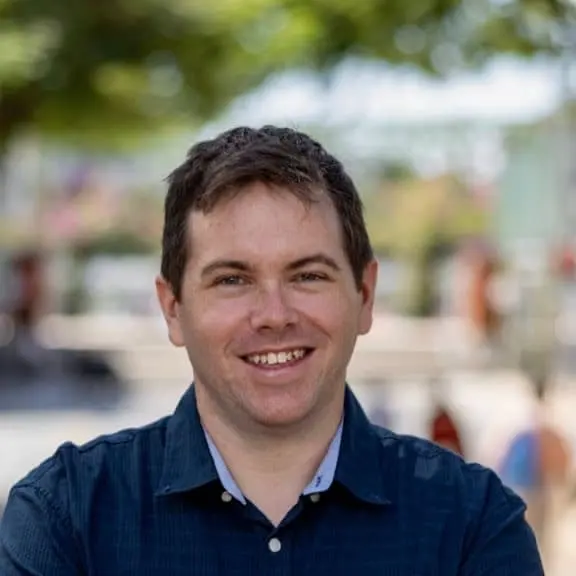
 ▶
▶ ▶
▶ ▶
▶