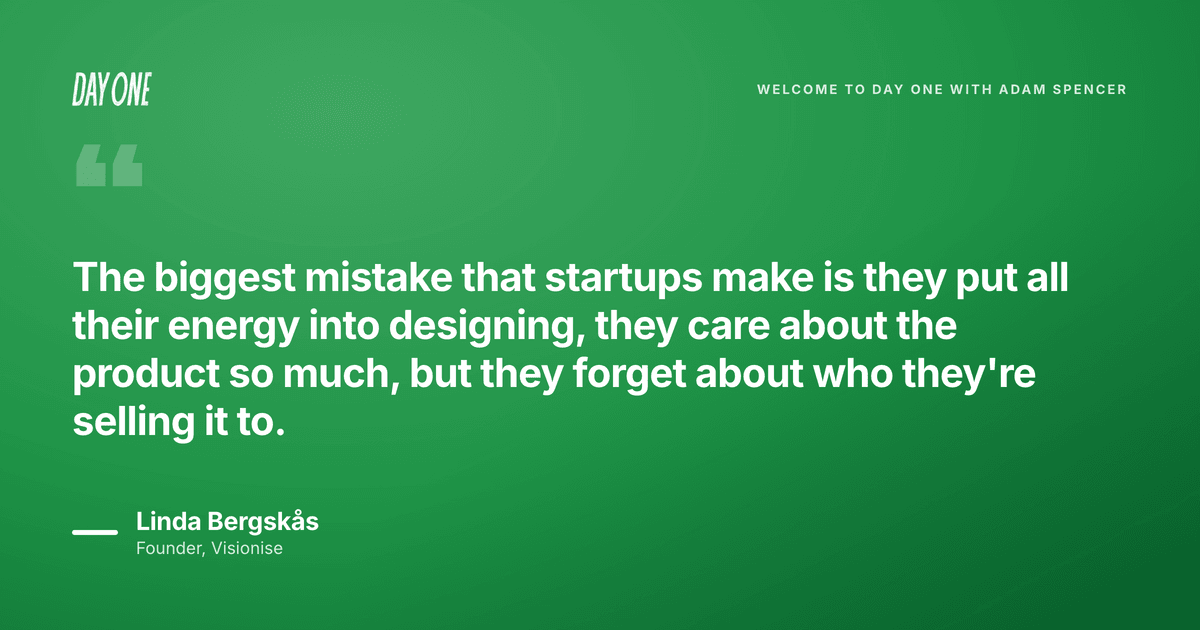
Transcript Synced · select any line to jump ▾ 0:00 Adam Spencer: You're listening to a DayOne.fm show. 0:05 Speaker: What drives you to make bold moves, to build something that didn't exist before, to live, lead, and choose life with intention? Welcome to Perspective X. I'm Pauline Fatowi, and this is not your typical business podcast. Each episode, I get to speak to extraordinary entrepreneurs and leading innovators to unpack what truly fuels their journey. Not just the wins, but the inner work, the overlooked decisions, the mindset shifts, and the personal moments that sparked something bigger. This show is about the ripple effect of choice, the kind of deep accountability that lets us respond to life rather than react to it. Because when you realize everything is temporary, and you are the creator of your own experience, you start to play the game differently. So if you're curious about how people build meaning alongside success, how they evolve through challenges and shape the world with intention, this is your invitation to listen in. Perspective X, where we go beyond the highlight reel and into the moments that changed everything. Available now wherever you get your podcasts. 1:21 Linda Bergskås: In the beginning, when I was a one-woman show, there wasn't any life-work balance, I have to be honest. It was 16, 18-hour days. 1:33 Adam Spencer: Hi, welcome to Day One, the show for regional startups and the organizations that support them. Today's episode was made in part with support from SingularityU Australia. Join your local chapter and get involved in solving the world's grand challenges. Learn more at welcometodayone.com.au. Www.visioneyes.com/singularity. I'm Adam Spencer, and today I'm going to share with you the story of Vision Eyes and its founder, Linda Beiskos. 2:00 Speaker: My name's Linda Beiskos. I'm the director of Vision Eyes Fashion Design and Manufacturing Services. 2:06 Adam Spencer: Let's go back to day one, where this story begins. 2:12 Speaker: I grew up in a very remote little place where Dad built our house, made my car, made the furniture, Mum made the clothes. And we ate what we grew and hunted basically. So, I just learned from mum how to make clothes and I've always made clothes. I wanted to be a fashion designer more than anything as a child, but where I grew up there was no such career. 2:38 Speaker: Mm-hmm. 2:38 Linda Bergskås: So, I was also into art, did a lot of paintings and various types of art and ended up, looked at what can I do with my creativity, decided to do graphic design as the, I guess, had the most hope of actually turning into a career. Create something that can make a living off. 2:55 Adam Spencer: So Linda completed her graphic design degree and we'll come back to that in a minute, but before we start to tell the VisionEyes story, we need to learn what comes before that. Before VisionEyes, Linda had a fashion brand and a retail storefront. 3:09 Linda Bergskås: I first started a retail store. I was sewing myself and buying some other brands. And then I realized that it's too time-consuming and also my passion was more in design rather than making, so I decided I needed to, some help with that and I looked at a number of different places where I could do it and I picked Bali because it's close and the sort of workmanship that they did there was aligned with what I wanted to create and I just went there and did a bit of research and met a lady that I ended up setting up a factory with, a local Balinese lady. And then from there I set up a warehouse and a design studio and ended up with 200 retailers around the world on a wholesale base. 3:57 Adam Spencer: So after 9 years, Linda sold that business to spend some well-deserved time to focus on being a mum to her 2 children. Linda wanted to start a new business, one that would eventually allow her to do what she loved while also balancing that with her family life. After Linda had taken a bit of time off to focus on family, she wanted to start another business, one that would help her maintain a healthy balance between work and family. While she had been taking a break, she was already being asked advice about how to start a fashion brand. 4:35 Linda Bergskås: I had already a lot of connections and I had all the resources and I'd looked at ways I could use that to move forward in a different way. And another reason was that I was always asked all the time from people that wanna start a fashion brand or wanted to move factory. People always asking me for help, whether it was from the manufacturing side or whether it was from the brand side. Eventually I thought, well, I think the business is organically happening by itself. So it was just a natural flow from one business to another. 5:10 Adam Spencer: So how was Linda able to build a successful company that allows her business to service dozens of clients while also living a great lifestyle with her family? 5:20 Linda Bergskås: In the beginning when I was a one-woman show, there wasn't any life-work balance, I have to be honest. It was 16, 18-hour days. 5:29 Adam Spencer: So how were those 16 and 18-hour days being spent? 5:33 Linda Bergskås: First, I did a lot of research on different platforms and different technology solutions that could improve the efficiency of our operations. So trialing a lot of them was quite time-consuming and setting it all up and then realizing down the track that, oh, I didn't really do everything I needed to do. And also we were held back a bit budget-wise in the beginning. So we would just go with what we could afford. But then as the business is growing and you need to grow your systems accordingly, but then, you know, gone into more sophisticated systems and we take, I've taken platforms and just sort of moulded it to how we need it to work for our specific business type. And it's a big investment, but that's the only reason we can operate with such a large volume now. 6:18 Adam Spencer: With a very small team, Visioneyes are able to serve far more clients and serve them well. And that's because of the systems Linda and her team have built within their business. 6:28 Linda Bergskås: So we design and manage and produce for about 60+ brands, 63 I think it was when I counted yesterday. 6:37 Adam Spencer: And setting up those systems and workflows was a critical part of Linda's business plan long before she started to bring on team members to help. Having the right systems and technology in place has allowed Linda to scale Visionize. 6:49 Linda Bergskås: One of the key things behind this business model was that I wanted to set it up in a way where we could streamline the process so much that we could keep on taking on more and more work without it physically being equally as much work. Mm-hmm. So it's to do with technology and our systems for how we manage the process. So we have a way that eliminates error, eliminate communication, a way that there's a lot of automation in our systems. In a way that we can communicate very efficiently with our offshore partners. The actual day-to-day task and what often can be a time-consuming task, we've removed a lot of those so that we try to maximize what we call billable hours. Time is crucial and that's something we, I spent a lot of time creating systems to save time. And over time, it's very well worth it. 7:54 Adam Spencer: Linda's graphic design degree comes back into play now, helping her brand her new business. So Linda has set up the business, business plan done, systems in place, branding, website done. 8:08 Linda Bergskås: I created my own website, all our own marketing material. We have never paid for any major marketing campaigns or anything like that. I've just done it all. Myself and from that it's just, yeah, word of mouth and traffic that we get on our website. 8:24 Adam Spencer: But what was Visioneyes? How was it helping and who was it helping? We'll get to who in a minute but first, what was Visioneyes offering? What was its product/service? 8:35 Linda Bergskås: It started off, the main offering was first to help with offshore manufacturing and set up brands with offshore manufacturing but then the design services, which I did already offer, that became more and more a main part of the business as well, a lot more than I expected. And I guess I just found that by starting out with that, that we already had a trust and relationship going on, so then I found that my clients also wanted me to design, they also wanted me to do their branding, they also wanted me to do their website, and I just ended up doing everything in the end, their budgets, their marketing, everything. It just sort of was an organic thing that it's, yeah, it kept on adding to the services. 9:20 Adam Spencer: Linda was in a great position having run her previous fashion business for 9 years or so and the contacts and relationships she had built over those years really helped her transition into her new business. 9:32 Linda Bergskås: I often had people asking me for help but there was just as I had been sitting down and actually starting to create this business plan, I launched Messenger on my new phone And suddenly all these new messages came up and one of them was from a fan of my previous fashion brand. I didn't know this person, she was up in Byron Bay and she just said she was a fan of my brand and asking if I could help her with starting a fashion label and production in Bali. And I responded saying, "Oh, funny you ask because I'm actually just in the process of making a business helping with exactly that." And then she responds back saying, "Thanks for responding back 6 or 7 years later, but anyway." Hahaha. "Okay, now that you have, let's do it." So something had happened with my messages that I hadn't seen. I think it was messages from people that weren't my friends. They were in a different place and I hadn't seen them. And they come a few years later and yeah, that was the first one. 10:37 Adam Spencer: So where are we now? As we heard previously, Linda was a one-woman show setting up her new business and getting things off the ground. Her existing network was really advantageous in kicking the business into gear, and a big part of her business plan was building systems into the business from day one to be able to leverage her time and serve more customers effectively. But systems and workflows only get you so far, and you only have a certain number of hours in your day. Meet Linda's not-so-secret weapon. 11:08 Kara Armstrong: Hi, I'm Kara, and I am admin and accounts for Visionize. 11:12 Adam Spencer: Kara helps Linda in the day-to-day operations of Visionize and helping move the business into the future. Right now, one of the many projects projects they are working on is refining the website user experience. 11:24 Linda Bergskås: On the agenda for this year too, on the website, to try and simplify it a little bit because it is a little bit overwhelming. There's so much information there, and that was what I was trying to do in the beginning when I was trying to map it all out. And, and yeah, like you said, put it into buckets, but there are so many buckets. Can we take one of them out? But we can't because all the areas within our business are actually really busy, and we are adding to them now. 11:50 Kara Armstrong: But it also It just goes to show, I guess, the naivety of someone trying to, 'cause it's very, very, very common for anyone, they might, they don't even have design experience, to be like, well, I've got an idea and I wanna create it, right? So they go online and they Google manufacturer Bali, manufacturer China, and then they send pictures to someone and someone makes something and either takes their money or actually makes it, who knows. But it's very, very common and easily accessible now to make your own brand. But what people don't understand is how complex this business sounds, the manufacturing is more complex than that. There's so many pieces to the puzzle. And yeah, we explain it in like layman's terms. We explain it nice and, you know, a little bit wrapped up. Yeah. But it's very complex and it's very hard. And just because you've done it for even years, you've manufactured for years, you're gonna still run into those same problems that may have happened 5 years ago. Months ago that you thought you'd maybe fix. 12:52 Linda Bergskås: Yeah. 12:53 Kara Armstrong: So it is— the reason why it sounds complex is because it is complex. 12:58 Linda Bergskås: The biggest mistake that startups do is that they put all their energy into designing and all that, they care about the product so much, but then they forget about the fact that— 13:08 Kara Armstrong: Who they're selling it to. 13:09 Linda Bergskås: Who they're selling it to, that's right, and they haven't done enough market research. Like for us, we've been lucky with our marketing, but that's only because because I have a long history in the industry, but for someone who's like been an accountant and decided to be a fashion designer, it's a bit different. And then they have this beautiful product and they're launching to nobody. 13:28 Speaker: Mm-hmm. 13:29 Linda Bergskås: Because no one knows about them. 13:30 Speaker: Yeah. 13:31 Linda Bergskås: That's the biggest problem. 13:31 Kara Armstrong: And then they kinda come back to us and they're like, oh, well, we can't sell. 13:35 Linda Bergskås: Yeah. So this is another reason why we now, we keep adding to our services. 'Cause then we find that that's also now becoming our responsibility that they need to sell the product. Yeah. Now that we created it for them. So now we're implementing into the first stage of the project, they have to have marketing meetings with our marketing person. And then we help them with doing their marketing plan and prepare, make sure everything is done in the right order, that this site is, is crawled by Google in time, that they've got X amount of followers by the time they launch, and all these things. Because if we don't help them with all these steps, they end up with a product with no customers. 14:11 Kara Armstrong: And then we're kind of shooting ourselves in the foot. And we're just joining the mass Exactly. 14:17 Linda Bergskås: And they don't budget, they just, they come to us like, "I wanna start a fashion business and I've got $5,000." And we're like, "No." So then we have to do the budgets as well and show them how much, you know, we do a very detailed budget so they know the net profit based on sell-through scenarios and the overlap based on how many seasons per year and it's quite, People don't understand the cash flow and the raw landed cost markups. All of this is just like, they don't want to know about it. They choose not to know about it. Yeah, I'm scared. All of that. So we actually don't let anyone go to sampling before they've approved the budget. They just come to us with some rough sketches. I wanna have a brand and then we take care of the rest. Startups generally come with unrealistic expectations to everything. And often very needy. So we have been trying very hard to set the expectations right from the beginning. We have quite a filtration process now. Like, they have to fill out quite an extensive inquiry in order for us to even talk to them. 15:25 Adam Spencer: Yeah. 15:25 Linda Bergskås: And from that inquiry, they have to answer questions that will straight away help us determine, you know, is this worthwhile or not? And then, We are very honest with them upfront about how much money everything's gonna cost and the risk and the complexity and everything. Sometimes I've had people come here thinking they've got the best idea in the world and they've flown in or whatever and then I have them leaving in tears because I just ruined their dream. But I'd rather them know upfront— 15:56 Adam Spencer: Yeah. 15:57 Linda Bergskås: How much they're gonna be up for financially and all the work and all the risk the risk that's associated, rather than, you know, us just saying, yeah, let's take this customer and see how far we can get it, and then they're going to come and scream at us down the track. 16:11 Kara Armstrong: What's so important and what's really hard, I guess, in any scenario with customers, paying customers, is that if you aren't successful, we aren't successful, the factory's not successful. We by no means don't want you to be successful. We're not looking to just take you money, 'cause there's no point in that for us. So to give you an idea, we'll maybe get 15 to 20 inquiry a week and convert maybe 2 of those. 16:38 Linda Bergskås: If they feel like the actual brief, that's like a pretty serious inquiry. 'Cause even when I showed— 16:43 Kara Armstrong: No, no. I can assure you, but they can still write on that inquiry, what's your budget? And they write $2 grand. 16:51 Linda Bergskås: Yeah, yeah, but what I mean is that a lead is just someone coming to the website in the first place. The second step for them to go to the appropriate page fill out quite an extensive brief that asks about budgets and detailed stuff about like, it prompts like a mini business plan basically. 17:06 Kara Armstrong: Yeah. 17:06 Linda Bergskås: That is still considered a serious lead, although yeah, there's people on there that have like, are absolutely off the track, but they've gone through the extent of filling out an extensive brief. So still this is a lead that's gone to the second stage of the process. Most people have attention span of 2 seconds on a website. For them to actually go on that page and fill it out and, you know, a lot of questions. 17:29 Kara Armstrong: We have a lot of dreamers who fill out the manufacturing brief. 17:32 Linda Bergskås: Yeah. 17:32 Kara Armstrong: And then from that, our conversion rate from our inquiry, if you have to look at the stats, it doesn't look great. But that's because if we were converting 15 brands a week, then that's not even sustainable. That's kind of not on brand for us. But, um, yeah, that's just like the amount of people, I guess, who I have nice ideas. 17:53 Linda Bergskås: We'd be talking about doing webinars and things like that. It's something that is kind of bulked up that once we've created it, it costs us nothing to keep it going. And that's something we could sell to all those people that aren't quite ready yet. And it saves us answering the same question 20 times a day because they can go and listen to that webinar. So then the next step is after they feel that brief, they get an email and then they can have a free, what is it? 18:21 Adam Spencer: 10-minute. 18:21 Linda Bergskås: 10-minute consult with Kara. And then if they wanna have more serious, like really detailed questions about budgets and like how much is this all gonna cost, et cetera, they can have a paid half an hour with me, a video or in-house. Or they can have a design feasibility meeting with our head designer for an hour before they commit to the whole service. 18:42 Kara Armstrong: 'Cause we don't wanna take anyone on who's not prepared. It's almost cruel to have someone pay a whole bunch of money and then, yeah, if they're not fully, fully, fully, fully prepared. Like, I send them their final kind of service agreement and everything, and before I do that, I will email them and say, do you have any questions at all before we do this? You know, are you sure you're on top of this? It's not just like a sales pitch where, you know, at the end it's like, and how do you feel about that? It's very much like very consciously taking on clients. I think that that's an important word, like consciously. 19:17 Linda Bergskås: And a lot of the time too, like they come here and feel like a little bit crushed. I didn't realize, you know, how complex and how much it was gonna cost, et cetera. And they get a bit upset, but then, you know, they come back a year later. 19:29 Adam Spencer: Both Kara and Linda are big supporters of sustainability within the fashion industry. And it's a foundational value that Visionize is built on. 19:38 Linda Bergskås: So growing up in nature and being a vegetarian all my life and growing up in a family that's very involved in environmental protection, for me being in fashion and knowing the negative impact that the fashion industry has on the environment is really concerning. And so my focus is to help our industry to leave less of a footprint and also to help small businesses have the same opportunity as large businesses to work with world-class professional manufacturers, have the same access to resources as the big companies. 20:14 Kara Armstrong: And also how the employees are actually treated, what they're aware of when it comes to their rights, and how many hours they work, do they get maternity leave, all of those types of things which are often looked over. It's very important to us to stay on top of that, and it's something that we check in with our factories very often often about, and we also prompt our clients to ask those questions, and we like being asked those questions, and we want to ask those questions, and we think that it's important to always speak up when it does come to manufacturing in an area that you may have never been, you know, to go and— especially if you're starting out as a brand— to go and see the factory and make a relationship, because even though this person, you know, maybe made are really, really far away away, it's important to regardless have a relationship with them because you are going to be business partners. And yeah, that's something that we try and educate our clients on a fair bit and promote. 21:13 Adam Spencer: Thank you for listening to the story of VisionEyes with Linda Beiskos and Kara Armstrong. I hope you enjoyed it. Everything that was mentioned in the episode today is on the show notes page on welcometodayone.com. If you enjoyed this story, please consider subscribing to the podcast and rating the show at ratedayone.com. And thank you to our supporters on Patreon, supporters like Murray Herbst and SingularityU Australia. I invite you to help us continue to tell these stories and supporting Australian startups by pledging your support on Patreon. You can do that by going to welcometodayone.com/patreon. Thank you for giving this episode of Welcome to Day One your attention. This story was created by me, Adam Spencer. Interviews conducted by me, Adam Spencer. A big thank you to Linda and Kara for being involved. The script was written by me, Adam Spencer. Music by Lee Rosevere. Full attribution on our website at www.welcometodayone.com. This episode was produced by me and edited by Natalie Holland.
 ▶
▶ ▶
▶ ▶
▶