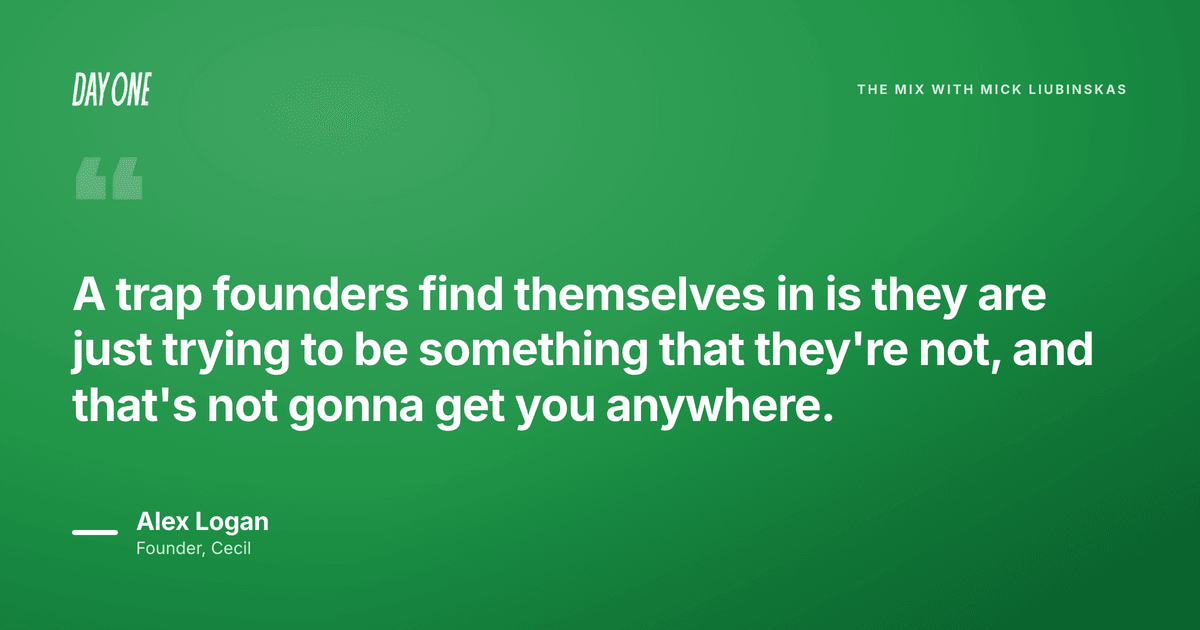
Transcript Synced · select any line to jump ▾ 0:00 Speaker: You're listening to a DayOne.fm show. 0:05 Speaker: What drives you to make bold moves, to build something that didn't exist before, to live, lead, and choose life with intention? Welcome to Perspective X. I'm Pauline Fatowi, and this is not your typical business podcast. Each episode, I get to speak to extraordinary entrepreneurs and leading innovators to unpack what truly fuels their journey. Not just the wins, but the inner work, the overlooked decisions, the mindset shifts, and the personal moments that sparked something bigger. This show is about the ripple effect of choice, the kind of deep accountability that lets us respond to life rather than react to it. Because when you realize everything is temporary, and you are the creator of your own experience, you start to play the game differently. So if you're curious about how people build meaning alongside success, how they evolve through challenges and shape the world with intention, this is your invitation to listen in. Perspective X, where we go beyond the highlight reel and into the moments that changed everything. Available now wherever you get your podcasts. 1:20 Speaker: Are you building a SaaS business and looking to achieve compliance with SOC 2 and ISO 27001 or other security and privacy frameworks? Compliance can unlock major growth and build essential customer trust, but let's face it, it's usually time-consuming and expensive. And like really kind of a pain. That's where Vanta comes in. Vanta automates up to 90% of customer compliance tasks, making you audit-ready fast and saving you up to 85% of the associated costs. Plus, Vanta scales with your business, offering a market-leading trust management platform to continuously monitor compliance, unify risk management, and streamline security reviews. Join 7,000 global companies, including Atlassian and Dovetail, that trust Vanta to build and improve their security in real time. And for our listeners, Vanta is offering 10% off. Just go to vanta.com/first. That's vanta.com/first. 2:11 Alex Logan: We also went fly fishing and caught a rainbow trout, which was a reintroduced species into that ecosystem. That experience is natural capital at its best. 2:26 Speaker: Hi, I'm Charlotte Connell here from Climate Salad. We're a community of climate tech founders, investors, supporters, and the climate curious. And our whole mission is to help 1,000 climate tech companies and create 10 global successes by 2030. And I'm joined here by Mick. 2:42 Mick Liubinskas: Thanks, Charlotte. Yeah, great to be here. We're looking forward to this podcast. You're about to hear a podcast from Alex Logan from CECL, and one thing I loved about it is just a really straightforward explanation of what natural capital is and then really showing how massive an opportunity is, especially for Australia. Charlotte, what did you like about this podcast? 3:04 Speaker: I mean, I really love Alex as a founder and I get off on these geeky guys working behind screens, doing their digital platform product building, but being immersed in nature and doing it for nature. Like, I got a real kick out of hearing about the team and how they, you know, roll up their sleeves, they go fly fishing, and they do it because they have so much purpose in every day to make sure that we look after this planet. 3:27 Mick Liubinskas: Yeah, such a genuine connection. Well, here we go. Podcast with Alex Logan from Sessile. 3:33 Alex Logan: Good to be here with you both, Charlotte and Mick. I am the co-founder and CEO of Sessile, and we are building out infrastructure for natural capital markets around the world. 3:46 Speaker: So what exactly is natural capital? Like when we think of climate solutions, we go to solar panels, carbon accounting. What's this natural capital you're talking about? Can you give an explainer 101? 3:57 Alex Logan: Yeah, so there are many definitions that some might have read on the web before joining this podcast, but just to take a bit of a different angle on it, the reason that we think about the market that we're playing in as natural capital is because we strongly believe that there's actually a dual crisis that we are faced with over the next 50 to 100 years, and that's both a climate crisis and a nature crisis. So as you mentioned, Charlotte, it's not always front of mind when someone thinks about climate to be thinking about natural capital. But we often also think of a bit of a visual with, I think at times we have carbon tunnel vision. And a big part of the way that we think about the opportunity in the market that we're playing in is beyond carbon. So natural ecosystems around the world have so many additional benefits, and by framing the market that we are playing in as natural capital, we enable ourselves to think about, yes, the carbon benefit to restoring land ecosystems around the world, but also be inclusive of biodiversity and the local communities that support these land ecosystems. So for us, on a selfish level almost, that's why we think about our market as, as natural capital, because we truly think that for our vision to be realized, we need to be solving much more than just the carbon problem. 5:21 Speaker: Mm-hmm. 5:22 Mick Liubinskas: And Alex, non-natural capital, feels funny to say that, but capital, currency, money has been managed by humans for over 5,000 years. There's just like masses of infrastructure and understanding on which that is all built. Natural capital and establishing that understanding, where are we in that journey? 5:43 Alex Logan: Well, I think that capital in being involved in managing and supporting land ecosystems has been there. I mean, we have markets for agriculture, for forestry. But I think that one challenge that we've probably had is that we haven't necessarily aligned incentives around the benefits of that natural capital. So we have— let's take agriculture as, as an example here, and food systems. We have incentivized at times pretty reckless behavior on, in many ways, degrading land as opposed to leveraging it for resources and also respecting those, those land ecosystems. So I think that you're right, these markets have existed, but a big shift that we need to make if we want to preserve these ecosystems to support us, whether it's in agriculture, food systems, or other ecosystems, we really need to rethink what we're valuing. And excitingly, we're seeing the increase in value of agricultural land, particularly in Australia. And a big part of that is that we are starting to value other parts of these ecosystems, which is really, really exciting. 6:59 Speaker: You've mentioned before in conversations the size of the opportunity of this natural capital market. Could you touch on that? What is the opportunity? 7:09 Alex Logan: Yeah, sometimes it's— 7:10 Speaker: Apart from saving our planet. 7:13 Alex Logan: Yeah, I think that it's almost at times overwhelming because it is that the numbers that we talk about are so significant. Similarly, I think it occurs across the climate ecosystem, but the opportunity around investing in natural capital and viewing it as an investment quality asset globally will result in trillions of dollars of investment. There's a huge amount of scale of opportunity that comes with these financial markets. But at this point in time, I think we aren't there yet, although we are seeing momentum. There are a lot of challenges to solve for us to, to really see that market form and to realize what that needs to look like over the next 10 to 20 years. So the sheer scale of it around the world, we're talking about billions of hectares of opportunity. And trillions of dollars. So these are very, very big numbers. But when we break it down to the fundamentals of that market operating efficiently, we have a lot of work to be done. 8:20 Mick Liubinskas: And getting that work done from Australia, we're a big country with a small market, but we play big in resources, in agriculture, do pretty well in forestry. I don't fully know that space, but can you talk about Australia's role globally? And are there other companies who are leading the way? In Australia? 8:36 Alex Logan: Yeah, so I mean, we are fortunate with the ecosystem in Australia and to break down different parts of what we see is really exciting. There are the teams that we work really closely with who are actually operating this land. So there are farmers around Australia, there are funds around Australia who are operating this land. I think there's a really great opportunity with the teams who we're supporting with our software to effectively make a really big transition in many ways to the operating system for these ecosystems. I think there were also— in combination with that, there are challenges with natural ecosystems, their ability to be resilient in an increase in temperature and and some of the climate impacts that we're going to see is often criticized as a problem for investing in these, these types of ecosystems. But what I get really excited about and often geek out on is the teams that are actually working with technology to increase the resilience of these types of ecosystems. So in Australia, we have Lone Bio, which is bringing to market some incredible technology around enhancing those great benefits of sucking carbon out of the sky and storing it in, in soil and making that more permanent. So we're seeing, yeah, fantastic technologies from R&D and universities in Australia coming out and looking to, to make these ecosystems more resilient. I think that we also have a tremendous amount of financing opportunities. So there, if you ever follow Agri-Investor, which is a great publication that basically every day it's very heartwarming to see another fund announced or another amount of capital getting poured into this space. So I think there's great momentum within the finance ecosystem in Australia in recognizing that value. As I mentioned before, some of the property prices have increased tremendously in the last 12 to 18 months as we start to look at these assets very, very differently. And finally, yeah, Cecil is one of many parts of the value chain. That is getting and becoming more digitally native. So we see a lot of startups playing in this space, looking at the measurement, reporting, and verification, which is a really important part of what's going to make this, this market investment quality. 11:04 Speaker: In Australia and across New Zealand, HolonIQ recently released their Climate Tech 100 for this region, and there was only 3 in that nature-based biosphere solutions, and Cecil, of course, is one of them, and Lord of Trees. And another, a company that, that plants and increases those nature-based solutions. Because when we think about that, we think about, oh, you're, you're planting trees, but Cecil's a SaaS platform. Who are your customers and what role do you play in helping value the natural capital sphere? 11:36 Alex Logan: So I think probably my first comment would be on the limited amount of number of people in the biosphere category. I think it's a really challenging job to categorize things within climate, and HollandIQ is doing an amazing job at working through that on a, on a global scale. I think there's a lot more people who are on that map who are contributing to a very similar market that we are, which is exciting. But for us, we have effectively started on the supply side of these markets, and the teams that we work with are not producers themselves in, in an agricultural sense, but the teams that are managing portfolios of projects across Australia within programs to support the restoration of a wide network of producers around Australia. So we aggregate to that level. Typically they might be asset managers or project developers, but increasingly we're seeing pull from the other side of the market and supporting those teams to better reports back to their stakeholders as we start to see the investment come into this space. 12:44 Mick Liubinskas: Alex, the podcast we did with Olympia, it was really interesting to see that most people don't think about waste, right? That's kind of so many of the problems of climate are just hidden away. You don't, the average person doesn't have to think about them. Like when you're talking to people who may not fully grasp the big detail around natural capital and how it all needs to be managed, like, What do you say to help them connect to the problem and understand it? Like, it's obviously not a day-to-day problem for the average person, but how do you get them to care about something that's so big and so important? 13:17 Alex Logan: I think there's a lot of different ways of influencing. It is my job to sort of communicate, but, and even in that question, my mind went to different ways in which we find it really important to communicate to different stakeholders. But maybe to, to break it down a little bit, I think often having the right analog for what our product is, is looking to do. So we think a lot about Carta, which is cap table management out of the US. They started with organizing cap tables on for private companies and increasingly in aggregating a lot of that information and supporting those startups transitioned into then also being able to create a lot more confidence on the investment side. So we see a lot of analogues to where we've started, but also how we continue to support these teams to attract more investment into their portfolios. So that's one analogue that we think about from a product perspective. But maybe if I was to look more broadly at the market, this is a effectively a capital activations problem that we have right now. When we look at supply and demand, going back to basics, there is a tremendous amount of demand for investing and finding new asset classes to invest in that have a positive outcome on the climate. We feel though that on the supply side, it's not always viewed as an investment quality asset right now. Uh, so the supply side, we really need to lift that up and continue to find ways in which we bring rigorous investment quality information to that demand and start to find ways in which that financing can flow into these projects and really grow this market to what it needs to be. So I think going back to simple sort of business school aspects of things is something that allows people to relate to it a bit more as well. 15:14 Speaker: Alex, where did you come up with this solution? I heard you say before about like the things that you like to geek out on. Were you a tree geek to start with or a, you know, a nature geek, or were you a product developer? Like, what, where, how did you go from Alex Logan working away in software to creator of this incredible climate solution? 15:38 Alex Logan: So yeah, for me personally, I spent 10 years working as a product manager, first of all in the Sydney ecosystem, Sydney local tech ecosystem. But then fortunately had a journey at Boston Consulting Group, which exposed me to a very diverse range of perspectives on what matters and what problems are really important to solve. For me, really, the journey started with what I like to describe as I wasn't getting out of bed each morning with as much energy, and I was lacking— although I had a fantastic privileged opportunity to build products 0 to 1 over and over again. 16:20 Speaker: Mm-hmm. 16:20 Alex Logan: And work with really amazing teams. I was really lacking that purpose and unfortunately, whilst building an insurance venture in Malaysia, met my co-founder Rory, and we shared that similar feeling of wanting to explore what it would be like to have that purpose and really reflecting on if we look back in 20 or 30 years, what were we going to be proud of? And that kicked off a really amazing conversation between Rory and myself. And for us, it was a lot of very selfish exploration at the beginning, looking at how we were going to find for ourselves to stop using takeaway cups, small problems that we were thinking about. But ultimately, we started to get exposed to the systemic problems that existed in global industries at BCG. And we explored many ways at which we could try to support that. Unfortunately, the timing isn't always right when you're at a consulting firm. And despite our best efforts, we were getting staffed on different things. So that catalyzed us to think about, well, like, do we need to go and do this ourselves? And I'll never forget the moment when it became really clear. I was driving back, had just visited Rory when I was in Byron. 17:44 Speaker: Bye, Rory. 17:44 Alex Logan: And the fire in my stomach after driving back from Byron was just so compelling. It was something that I hadn't felt since I probably started my first job at HelloFresh when it first launched in Australia. It wasn't that I hadn't had that feeling in a very long time. So I think to answer your question, there were many things that contributed to having that moment of clarity and wanting to go and solve this problem. And also a level of patience to explore and move past just that surface level of what that purpose was gonna be. And we worked really hard to understand what the biggest problems were and how we're gonna have the biggest impact. And that's what led to solving this problem, which is an ambitious problem to look to solve, but one that, yeah, definitely gets me out of bed every morning very quickly. 18:34 Mick Liubinskas: And from two founders, you've grown a team and you've got a real global team. Can you talk about how you've built that group? How do you manage them globally? And what's their, like, how do they buy into the vision? 18:47 Alex Logan: Yeah, it's probably the thing that I'm most proud of is the team that we've managed to build in the last 12 months. And what is so inspiring about everyone that works at Sessile is how unique each of their journey is to working with purpose and working at our organization. They're very different, each and every one of their stories as to how they sort of made their way to Cecil. But to speak to one of them was sort of straight out of university, exploring opportunities after doing environmental sciences at university. We actually had an initial conversation of which— 19:31 Speaker: Hello. 19:31 Alex Logan: There were no real skillset matches for what was going to support Cecil at that point in time. And we'd had a coffee and that person went home and made a commitment that they were gonna find a way to work at Cecil either way. And then about 3 weeks later, I had a data upload problem whereby I needed like some more hands on deck and that person just willingly jumped at it, not really knowing what that was going to mean for them and the amount of time that he's now spent in spreadsheets. But the willingness to come in and just on a limb take that opportunity is, I think, yeah, different to everyone else, but very similar in just wanting to really work on that purpose. And it doesn't matter what it takes, it's just going to be going in the right direction and realizing what that opportunity is. 20:21 Speaker: Sounds very similar to Mick. If you have a coffee with him, you end up working for Climate Salad or doing something else. So be careful, anyone listening, don't have coffees with Mick. Or do. 20:30 Mick Liubinskas: Just be aware. Just be really aware. Be aware. It's interesting, right? There's so many people so passionate about climate that expose them a little bit of an opportunity and they jump at it. Like, that's so, that's thrilling. And Charlotte is absolute testament to that from last year. So I concur with you, Alex. 20:48 Speaker: And I love hearing the natural capital bird life in the background of the call there, Alex. I noticed that your team, I mean, on LinkedIn, it just keeps growing and growing and it's a testament to the success of Cecil. And I noticed too that your retreats are always out in nature. You like to get the team hands-on dirty. Why is that? 21:10 Alex Logan: Yeah, I guess there's two aspects to that which I think are really important. The first is the framing of them as retreats, which sometimes I need to be careful as to how glamorous I describe that to our investors because there's a lot of work that definitely goes on at those retreats. But it's in the DNA of Cecil, actually. When Rory and I first started thinking about what this opportunity is, we went away to Crescent Head and we spent a weekend thinking about the opportunity. And there's actually a blog post from a long time ago that came off the back of that retreat that we had together. So there's part of our DNA that is going away and having really intimate conversations about what the problem is and what we want to solve. But I think also combining that with, yeah, we wake up each morning and roll over and stare in front of a screen. We're very, at times, disconnected from the work that actually goes on on the ground. And the best example of this, we were very privileged to stay at the Wilmont property just outside of Armadale. And that experience is natural capital at its best. We were looking at mixed pastures, we had rotational grazing with cattle on the land, which is contributing to uplifting the soil health. We also went fly fishing and caught a rainbow trout, which was a reintroduced species into that ecosystem. So there's something really special about the opportunity that we get to actually connect with what this looks like, because yeah, we— Yeah. Crunch numbers for our teams that we support, we build software, but inherently we need to spend time actually understanding what's going on and what good looks like. So it's a really special time just to get out there and see it and feel it as well. 23:04 Mick Liubinskas: Yeah, that's really great. I totally get that importance to reconnect and it's important for every person, right? And it was another thing we also touched on with Olympia, but that connection back to nature, feel that there is just a big rebalancing back towards nature, which I think is really, really, really important. One thing that's deeper in that area around agriculture and natural capital is the people who've helped you grow this business. And I know you've— Sarah Knowlett from Tenacious Ventures. When I first started getting into climate, I was lucky enough to spend a bit of time with Sarah, and I— it took about 2 minutes for her to dive deep into this new space for me to realize I just had no, no idea of the depth and the specialized nature of it all. Can you talk about in terms of the impact that people like Sarah at Tenacious Ventures can have on a business like yours? And what does that specialist and combined knowledge do to help? 23:59 Alex Logan: So I like talking to Sarah about this in the sense that one thing that she framed back to me once, which I often quote now, is that they're an ag climate-focused fund, which seems niche almost. But when you, as you described there, Mick, when you get talking to them, it touches so many different systems around the world. And actually, the amount of opportunities that they see as a climate and agricultural fund is a lot. And it's actually a really difficult job to categorize things and for them to understand where they need to focus and what things they can go really deep on. And Yeah, they're, I mean, with their backgrounds of where they've come from, they're experts in strategically looking in very specifically to some of these different verticals. So to have that type of experience and to be able to have that as something that they can go really deep on. I speak a lot about my experience in capital raising as, yeah, you can get a response from basically any fund around the world if you put climate and software into the headline. But you don't often find the third or fourth conversation, the level of depth in understanding of what this world needs to look like in 10 to 20 years as much. But it's very clear that, yeah, if anything, Matthew and Sarah are pushing you to think about what it really is going to look like and how these markets are going to be created around these opportunities. Yeah, it is a privilege on our side to have them and to be able to get into those discussions. But I think it's an important lesson for people who are on this journey within climate to expect that and also really test yourself. Are you having those conversations where someone truly does see the vision for this market that you have? And that's going to be a really important partner for you. And we've been really fortunate that Anyone who has come on the journey with us has pushed our thinking on that, and I think that's going to serve us really well in the future. 26:10 Speaker: Could we tap into this capital raising? Because I know that you, you do lean into the climate salad community and you're always offering help and advice on those early-stage founders that are looking to capital raise. And I know that you have been quite successful and you've been able to establish Cecil not just here in Australia but globally. Recently we were in the US and Michael Molitor, climate tech mentor and advisor for Sessile, Sophie Perdom, founder of Climate Tech VC, who looks at thousands of climate tech startups, mentioned that she was quite disappointed she wasn't on your cap table on the recent raise. So to get someone like Sophie to say, like, she's taken notice of Sessile, loves what you do, and disappointed she's not on the cap table. How has that journey been? And what advice do you give for other startups looking to establish themselves globally? 26:58 Alex Logan: Yeah, I think that this is quite general advice for, I think, anyone looking to go on the founder journey, but it takes a lot of resilience and a lot of humility through the experience to be able to really make it all the way through and develop those relationships. So yeah, there have been way more challenges than there have been successes along this journey, which is a really, really important thing to recognize. But to speak to some of the relationships that we've built that have led to really meaningful ongoing relationships were the ones that started early. So we knew Sarah and Matthew at Tenacious almost 12 months. Actually, the first interaction we had was with Cass Mao, and that was at a very, very early stage in the journey. And I don't know what Cass would remember from that conversation, and I don't know if it would have anything to do what Cecil is today, but it was a relationship and that led to a conversation with, with Matthew. And yeah, it's led to a really meaningful relationship within our business over the last almost 12 months as them as an investor. So that's one example where it was 12 months. In every other example, I've known investors for 6 months before we've got to the point of initiating a capital raise conversation. So it's age-old advice, but I think that through that resilience and the humility to build meaningful relationships, we've been able to do that successfully. But it's not the end of the journey for us, and we'll continue to need to develop those relationships as we grow. And that's a constant in sort of my daily life on an ongoing basis. So yeah, pretty general advice, I would say, but very applicable to this space as well. 28:57 Mick Liubinskas: Expanding as well on Charlotte's comment that you have been really generous in your support of other companies in Climate Salad despite your busyness. And this is totally a loaded question for boosting Charlotte and I's ego in the work we do, but we focus on the climate tech founders and their teams. So a lot of people don't see the inner workings of Climate Salad all the time. Can you give us, share a bit of the sense of like what that community is like and what value do you think it creates for the ecosystem? 29:26 Alex Logan: Yeah, I think that we're still at the very early stages of what this community needs to look like. I think that I might have mentioned this at the end of year celebration in 2021, but I would like to see those events get bigger and bigger. Over the next 5 to 10 years, but it's relatively small if you compare it to fintech in Australia or SaaS in Australia. So we're at the very beginning of what this looks like. And that's notwithstanding, there have been people who I have a lot of respect for that have been working in this space in Australia for a lot longer than that, and arguably with less resources than we have now. 30:09 Speaker: Yeah. 30:09 Alex Logan: So there's a recognition that it's not new to some people, but I still think that we're at a really small scale. So for us as a community in Australia, we need to make the most of that while we have the chance, which is a lot more intimate relationships, a lot more helping that can be done whilst it's still at this scale. But I think we still have a long way to go. If I was to compare my experience to what it is like in Australia in comparison to some of the conversations and some of the communities that are building in the US, there's a lot of momentum there. So I would challenge us to also think about why aren't we growing faster and why aren't we doing more? Because I was reflecting on this with someone after one of the two climate speaking events at Sunrise last week. 31:02 Speaker: Good morning. 31:02 Alex Logan: These are the most exciting opportunities, and I feel very strongly about that, that will come up over the next 10 to 20 years. I mean, I'm constantly fascinated by the amazing work that people are doing with OceanTech, biochar. There are new amazing things that pop up every single day. Even just looking at the ecosystem building around carbon removal, I mean, there is so much fascinating stuff going on that We're really, really just at the beginning. And if I was to provide any feedback for Australia, it's that, yeah, we need to keep moving really, really fast. But again, I think that, yeah, we also need to respect the opportunity that we have and Climate Salad as a community and the intimacy that it creates between different humans, I think is really important to set the right foundations. 31:53 Speaker: It's beautiful to hear you say that, Alex, because it's so easy to have that feeling of dread come up, you know, post-COP27, post-IPCC reports, the flooding that was preceded by drought. But you are, and we are as well, in these unique positions that we get to be immersed in the climate tech solutions. What is it that gives you hope? 32:17 Alex Logan: I think it has to come down to what I was speaking about before, that these are the most interesting problems that we will solve in the next 20, to 30 years. And the most curious minds that I know, and some of the general population, is curious about how we're going to solve these problems. So I think that there's a massive amount of recognition of what needs to get done now and also a lot of curiosity about, well, how do we solve that? And that's really healthy for solutions. I think there are still people who probably are a bit defeated by how big the problem is. But I think that the entrepreneurial spirit in a lot of people around the world is coming out to solve these problems, just like we saw in what it would have been like 10 or 20 years ago around building a digital platform and allowing that to be accessed by anyone around the world. I think that the same type of people are now obsessed with, I can completely reimagine an industry or a market, and I'm going to do that, and it's going to have a huge upside and impact on the climate. That is the type of things that I think I get most buoyed by, is that the way in which people are talking about what they're going to do and how that's going to have such a significant impact. 33:48 Speaker: Nice. Alex, can you break down for us what is the key difference between carbon credits, offsets, high-integrity credits, or high-integrity offsets? What are the differences? 33:59 Alex Logan: Yeah, so I think this is quite a large topic, but to break it down, at least in one framework for people that are listening, I think in the world of carbon, we need to reduce emissions rapidly. That's the most important part of what we need to do right now. And to reduce emissions, you can transition from different types of energy to renewable energy. So there's a huge amount of opportunity in reduction. But there's a reason that we call it net zero commitments, because there will still be business as usual, and there will be emissions in the atmosphere. I've already gone past a point at which the atmosphere can manage the emissions that are up there. So we do need to remove emissions from the atmosphere as well. And this is where credits come in. So if you are continuing to have emissions go into the atmosphere, you use credits as opposed to reduction. Now, credits can be used in different forms. And you can have an offset, or you can have an inset, which is two different mechanisms for leveraging that credit. And there are different types of credits as well. 35:13 Speaker: So— 35:13 Alex Logan: We have avoided emissions credits, we have removal credits. So there's again, different levels of support for those types of credits. And then you have the quality of the credit. So looking at its different attributes and the real outcomes that it's producing. So there's again, a lot of question marks over— 35:38 Speaker: Yeah. 35:38 Alex Logan: And reports that come out around the integrity of these different mechanisms. But I think it's important to remember that those definitions are really important, and we need to be clear on when we're talking about integrity, what does that mean? Are we talking about it within a specific industry that might be part of an insetting program and what that looks like? So it's a complex topic that I think we are seeing a lot of frameworks get developed around the world to continue to— 36:07 Speaker: Yeah. 36:07 Alex Logan: Manage the risks that are associated with it. I think that ultimately though, where we need to get to is a common understanding of making these investment quality attributes a core part of, of what any credit looks like as part of any offsetting or insulating program. 36:24 Speaker: Thank you. You're right. We always just think of trees as really great, but those beautiful blue gums all across San Francisco, they're actually not meant to be there. In Australia, fantastic, increases biodiversity. In the States, maybe not so much. 36:37 Alex Logan: Yes, and that comes back to that earlier point that I made around carbon tunnel vision. And a big part of even just using natural capital as the market that we are playing in is to remove ourselves from that tunnel vision and to think about those additional benefits outside of carbon credits as well. 36:55 Mick Liubinskas: Well, thanks, Alex. Love hearing the story and the journey you've been on. We're just gonna do a couple of quickfire questions here. So, Just starting with, other than running a company that's trying to solve these massive problems around nature-based solutions, what's one positive climate action that you do in your personal life that you'd like to share? 37:15 Alex Logan: So probably at the moment it's my wardrobe. I'm thinking a lot about how my wardrobe looks over the next 10 to 20 years as well. I keep on saying 10 to 20 years, maybe that's just the timeframe, probably even over the next 6 months. How can I think about wearing different things or continuing to find new models for, yeah, consumption essentially, and reducing my consumption of new products? I don't know if that's also just because I'm a poor founder at the moment and that comes with the job, but that's my current thought process of trying to do something impactful, uh, is reducing consumption through my wardrobe. 37:49 Speaker: I also do that. What's an interesting climate fact that you didn't know that you were amazed to find out on this journey? 37:56 Alex Logan: Yeah, I think one recently that I wasn't aware of is that, and this is more of a like historical one, but there is more CO2 actually in the ocean than there is in the atmosphere. And for a long time there was people that believed that that was going to be the solution and we weren't going to have this problem because a lot of it would return back down to the ocean. But it didn't. It actually has been stuck in the atmosphere. And that's what's— yeah, so it was just interesting. I think that was more in the '50s and the '60s. But yeah, interesting fact. And I still think that the ocean has a massive role in us reversing the problem that we have. But it was just interesting to see how our understanding and knowledge has come so far in a short amount of time. 38:43 Mick Liubinskas: Yeah, it's true. I was just out last night and someone was saying, oh yeah, the Amazon is the lungs of the world. And it's like, No, not really. The oceans are the lungs of the world. Like, it just doesn't, doesn't look as good on an image when you do that though. 38:57 Alex Logan: Mangroves, right? 38:58 Mick Liubinskas: Yeah, mangroves, absolutely. So, so many parts to it. Alex, you're on your journey and, you know, by no means finished, but we hope there's lots and lots of companies that get started to solve these big problems. For early first-time entrepreneurs, like, what's one thing that you would like to share that might help people in their journey? 39:16 Alex Logan: Yeah, I think there's many things that I would do differently, but everything is easy in hindsight. Probably the most impactful thing that I think about still a lot even now is actually having a really strong grip on where you're at as a business. And sometimes it's not where you want to be or it's not where other people expect you to be. And that can influence conversation significantly. And I feel as though it's a bit of a trap founders find themselves in is they are just trying to be something that they're not, and that's not going to get you anywhere. So if you're pre-product market fit, then own it and tell people that you're pre-product market fit, even if it's taken you longer than you expected. Uh, if you're not ready to commercialize, don't assume just because the timeline suggests that you should go to market with your product. So I think there's a lot of wisdom in just being really honest with where are you at as a business and owning it. 40:15 Speaker: Thank you so much, Alex. This is a really, uh, whet the appetite for those climate curious to understand that there is a plethora of solutions out there and to understand the nature-based and the natural capital world so much better. So thank you for letting us dive into your Cecil world, Cecil.Earth, and discover more, and also to give us that hope. We need more Product builders like you building as many products for these solutions definitely gives me hope. 40:44 Mick Liubinskas: And Charlotte, I'm gonna get to throw in a dad joke here. You mentioned plethora, and Charlotte taught me what plethora means the other day, and that means a lot. So thanks, Charlotte. 40:56 Speaker: You know, I actually can't stand it when people use it in sentences, and as soon as I said it, I was like, "Damn it, I did it." I meant to be like diverse. Yeah, the bread. 41:06 Mick Liubinskas: Well, if plethora is the keyword of this conversation, it's different from our first, the keyword of our first conversation with Olympia, which you'll have to listen to it to work out what it was. But there's a plethora of companies, plethora of opportunities, and a plethora of plethoras, which I don't know, may have its own name. 41:22 Alex Logan: Oh gosh. 41:23 Mick Liubinskas: We've ended on a nice light note. 41:25 Speaker: Right, I'm looking up at the thesaurus and I'm getting more words in that vocab of mine. 41:29 Mick Liubinskas: Aplosaurus? 41:31 Alex Logan: Oh, come on. 41:32 Mick Liubinskas: Alex, thanks so much for sharing. Thanks so much for sharing your journey and the work you're doing at Sessile and your contribution to the climate tech ecosystem here in Australia. And best of luck for keep it growing. 41:45 Alex Logan: Thanks so much, Mick and Charlotte. Good to be here. 41:56 Speaker: Listen to the Unfunded Podcast, brought to you by the Day One Network and hosted by me, tech writer Joan Westenberg. We're sharing the no-holds-barred untold stories from entrepreneurs who have decided to build a business on their terms. I'll be interviewing successful founders and operators on the grit and ingenuity it takes to build and scale independent startups without the support of traditional venture capital funding. Subscribe to the Unfunded Podcast now, wherever you get your podcasts.