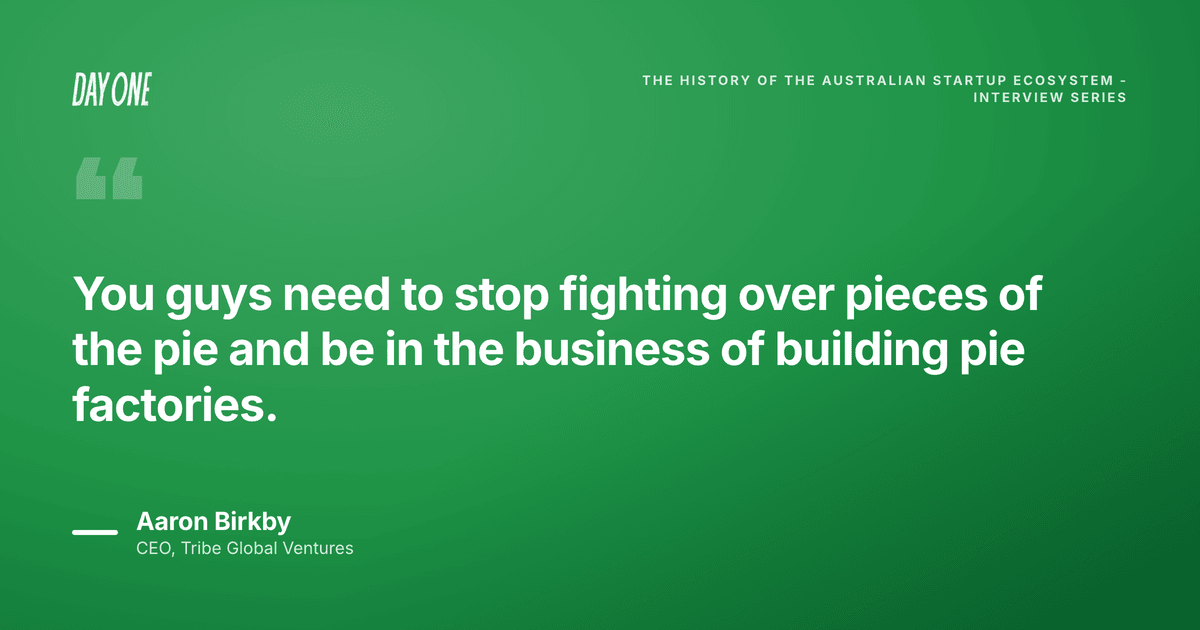
Transcript Synced · select any line to jump ▾ 0:00 Speaker: Let me tell you about our partner, Teamified. If you need to build a top-notch team quickly, Teamified is your go-to solution. They not only provide fractional CTOs, they can also do contractors and even remote team members tailored exactly to your needs. And whether you're looking for expertise in the Philippines, India, or Sri Lanka, Teamified has you covered. What's amazing is that Teamified uses a blend of AI and human expertise to cut hiring times by 50%, cent. The platform handles everything from automated onboarding to day-to-day management and even performance tracking. You can also handle rewards and recognition, buy equipment, and order training all through their platform. Simplify your hiring process and get the best talent fast with Teamified. Check them out now and transform your team. Go to dayone.fm/teamified. That's dayone.fm/teamified. T-E-A-M-I-F-I-E-D, and get started today. Hi, I'm Adam Spencer, founder of the Day One Network, which is bringing the history of the Australian startup ecosystem to you. I believe in founders. It's why I do everything I do at Day One and our media company, W2D1 Media. And that's why the Day One Network exists, to create helpful content for founders. We've got some great shows in development, but a large part of what we do couldn't be done without support from our partners and sponsors. And I couldn't be happier than to be working with NTP, who get community better than any other technology recruitment company out there. A Newcastle company like mine, NTP are invested in seeing the growth of the local tech community in Newcastle, Sydney, and more broadly Australia. So thank you, NTP, for helping us bring helpful content to founders and the startup community in Australia. Back to the interview. Hi, I'm Adam Spencer, founder of the Day One Network, which is bringing the history of the Australian startup ecosystem to you. I believe in founders. It's why I do everything I do at Day One and our media company, W2D1 Media. And that's why the Day One Network exists, to create helpful content for for founders. We've got some great shows in development, but a large part of what we do couldn't be done without support from our partners and sponsors. And I couldn't be happier than to be working with NTP, who get community better than any other technology recruitment company out there. A Newcastle company like mine, NTP are invested in seeing the growth of the local tech community in Newcastle, Sydney, and more broadly Australia. So thank you, NTP, for helping us bring helpful content to founders and the startup community in Australia. Back to the interview. Hi, I'm Adam Spencer and welcome to Day One, the podcast that spotlights Australian startups, founders, and the organizations that empower Australian entrepreneurship. We go back to the beginning to tell the story of Australia's most inspiring founders and how they built their companies. You're listening to a special interview series as part of a documentary W2D1 is producing about the history of the Australian startup ecosystem. On the episode today, we have— 3:18 Aaron Birkby: Hi, I'm Aaron Burkey, co-founder of The Unconventional Group. The Unconventional Group is a new brand to something that Peter Alanis and I co-founded a few years ago. It comprises Peak Persona, which is a program to get you impact fit for— so for entrepreneurs, it deals with psychology, mindset, and leadership. We also run corporate innovation, so really looking at developing the dynamic capability of corporates and large organizations because we actually see that as one of the biggest gaps in the Australian ecosystem right now. 3:48 Speaker: What was that biggest gap that you think is in the Australian ecosystem right now? 3:57 Aaron Birkby: So when I compare us globally, what we really lack here is a good solid foundation of enterprise and corporate customers who are doing innovation correctly. And what I mean by that is I look at, you know, lessons learned from Israel or London, Berlin, Silicon Valley, where corporates invest in, be a customer of, or acquire startups. And Aussie corporates still don't actually understand the opportunity that early-stage tech startups and ventures actually represent. 4:28 Speaker: Mm-hmm. 4:28 Aaron Birkby: And there's a lot of innovation theater happening, but there's very little true open innovation or, or true engagement with the startup ecosystem. And part of that is that the poor understanding on the corporate side, and part of it is also, I, I think partly not necessarily bad actors in the sense of wrong intent, but I think there's been a lot of people selling corporate innovation programs that have failed to deliver on them, which has poisoned the well as such. And I think it's a natural cycle too. I think we just have to go through that evolution. 4:56 Speaker: Can you tell me a bit about your— you mentioned Muradie. You've been involved with those guys in the past. 5:01 Aaron Birkby: Yes. 5:02 Speaker: That probably helps you a lot with what you're doing now as well. 5:05 Aaron Birkby: So I was the entrepreneur in residence for Telstra Muradie program here in Brisbane. So I helped bring the Muradie program into Queensland. Before that, I'd known Mick Lubinskis, who was the EIR in Sydney for a fair while, and Annie Parker. And I just loved what they were doing. I mean, Annie had come from Wayra out of the UK to lead the MirroD program, and she brought in that mindset of, this isn't about Telstra, this is about the entrepreneurs and backing the entrepreneurs. And I think she did that, led that incredibly well. And so I was, yeah, I was quite proud to be part of that. And exactly because it was at arm's length as much as possible from Telstra as a company. Yeah, fast forward to today, and funnily enough, I was just just actually having coffee with the head of innovation at Telstra and talking about their plans for Muree T going forward. It's actually all been wound up, so they're just in portfolio caretaker mode. And going through what the reasoning of why was it shut, and it was like, it was a financial decision because we weren't getting a direct, you know, economic return to Telstra. We were investing all these things that didn't have a direct value back. Which I think just highlights when roles change within corporates, which happens quite quickly in Australia. Yeah. That narrative around the why is often lost, why initiatives were created. And so the metrics of success get changed, and therefore you're measuring against something that was never intended to be the metric of success. So I think it's a natural challenge when employees within an organization, typically in Australia in those innovation roles, tend to change every 2 years. They tend to— their only mechanism of promotion is to go and get engaged at another company once they've become a head of innovation. Mm-hmm. I think there's so much loss of cultural narrative around purpose of programs that were created and then new individuals wanted to create their own stamp. So I think it's a bit of a shame that Telstra closed that down rather than evolve it, which I think would have been smarter. 6:51 Speaker: That's really interesting. When would you first say you got involved in startup land? 6:57 Aaron Birkby: So, look, I started my first software business when I was 16. So that's back in like 1990-something. I don't know, '92, '93 as a kid. But in terms of actually entering the ecosystem, that was in 2012 after selling my main software company. And I was actually based on the Gold Coast at that time in Queensland. And I hadn't, to be honest, I hadn't really heard of the startup ecosystem. I'd been head down in my own company for 9 years and came out of that and started looking around at what was happening and— Yeah. I reached out to as many people as I could and learnt that there was a very, like in Queensland, a bit of a nascent, like very intangible startup community. And yes, I decided to start a startup hub, as you do, down the Gold Coast called Silicon Lakes. And then that really took me on a journey where from that I got connected nationally into what, you know, the few people who were around as a community, I would say, because there was actually a fair few groups doing things for much longer, and then connected internationally and saw the startup hubs like Silicon Valley and elsewhere overseas, and I was like, wow, we have a lot to do here in Australia. 2012 is the short answer. 8:14 Speaker: That seems to be about the time where a lot of stuff was starting to happen anyway. 8:20 Aaron Birkby: Mm-hmm. 8:21 Speaker: 2012 was— so would you say it existed before that? 8:24 Aaron Birkby: I don't think we had a real sense of community before that, but definitely in Queensland, the i-Lab accelerator out of UQ had been running for possibly close to a decade prior to that. At Griffith University, there was the innovation center there that had been running for quite some time prior. There's guys like Rick Anstey and Laurie Hammond who were running Incubate and the IQ Venture Funds in Queensland for a good probably 10 years by that point. So there were lots of accelerator programs, lots of innovation programs. It just didn't have the labeling that it does now. And the other thing it didn't have was that sense of community, whereas much more now, you have a very clear startup community. That didn't exist back then. 9:10 Speaker: Fast forward to today, what does the landscape look like today? If you had to, yeah, say name a bunch of organizations that were the main kind of movers and shakers, in Queensland? 9:22 Aaron Birkby: Sure. 9:22 Speaker: Who would they be? 9:23 Aaron Birkby: Yeah, so look, Queensland's gone through an interesting evolution. We went from a very grassroots-up, community-driven ecosystem with almost no government support. Like, it was very much led by entrepreneurs. And that gave us an amazing culture. And so saw that grow, and then we, there are a number of us on a startup working group that was putting forward recommendations to government, and snap election and surprise election result, we ended up with a government that didn't have an agenda for innovation. They didn't expect to take office. 9:52 Speaker: Mm-hmm. 9:52 Aaron Birkby: And they took that and ran with it. But what ended up happening is $750 million got injected into the ecosystem and very quickly a lot of new players began operation and moved from other states purely because that funding was available. And it, my view now is that money's run out and a lot of those weren't sustainable and they've all collapsed. So what we have left right now is an interesting ecosystem where River City Labs still exists. So it, it went through its acquisition from the Australian Computer Society. Mm-hmm. It still operates here in Brisbane. We still have UQ running i-Lab. We have QT Entrepreneurship that have closed their venture creation arms, so BlueChilli and CEA have been wound up, but they've pivoted to a bigger focus on entrepreneurial education. Then we have things like Arc Hub, which is more hardware-focused. We have things like Substation 33 down at Logan that's running, like, recycling— Correct. IT goods, but actually treating it as an incubator. We have places like Gold Coast Tech Space down on the Gold Coast, the GC Hub down on the Gold Coast. And then we have a lot of regional. The other thing that's unique about Queensland is we have 13 regional centers, so most of our population is outside of Brisbane. And every one of those towns has an innovation hub. So whether it's Cairns, Mackay, Rockhampton, they all actually have these little micro innovation hubs running as well. 11:12 Speaker: So— 11:13 Aaron Birkby: What I would say is that the ones that were in this back in sort of 2015 that were in it for the right reasons, they are still here now. But all the ones that were the flash in the pan, they came to Queensland because there was money on the table, they've all wound up shop and left again. 11:29 Speaker: You kind of touched on this slightly, but what makes Queensland unique in terms of startups? What are the big strong drawcards or advantages? Queensland has? 11:42 Aaron Birkby: Yeah, so I would say number one is our culture. So I spent most of my life growing up in Sydney, and what I would say about Sydney is it's a very transactional relationship. And I know I'm being very broad here, I risk offending people, but that was at least my experience. And even when I travel back to the ecosystem there now, you know, commercial agreements, even ecosystem relationships, they're very transactional, exchange of value. In Queensland, it's very much— it's about people and relationships. It's just a completely different culture. And I think that's much more like Boulder in Colorado. I think it's much more like certain ecosystems around the world. I actually think that's a positive. The other thing we have is amazing talent pool and relatively cheap cost of living compared to many other places, relatively cheap talent pool for a world-class talent pool. I also think we have lifestyle, and where that plays a role is people live here because they want to and because they prioritize a certain type of existence rather than somewhere like Silicon Valley where they move there because of purely the commercial gain that can be made from it. But I think there's a lot of other things that go under the radar. We've had amazing entrepreneurs here and I don't just mean the likes of Steve Baxter or Glen Richards, but we actually have a history. If you go back pre-2012, the, the decade before that, or probably two decades before that, But we had a really strong gaming development community here for a very long time. We also had, you know, lots of the tech that ran the porn, online porn industry was actually here in Southeast Queensland. 13:10 Speaker: Mm-hmm. 13:10 Aaron Birkby: Not talked about a lot. But we actually have a track record of some pretty amazing innovation. And that ties me to my last point, which is, you know, of everywhere I know in the world, Queensland entrepreneurs are just heads down getting it done. We don't big note ourselves. And I don't want to pick on Sydney again, but I definitely noticed like an inverse relationship, like lots of noise, not much substance. Whereas up here I feel like there's heaps of substance and hardly any noise, which is also a detriment to our ecosystem as well in terms of attracting inbound investment. 13:45 Speaker: Do you think we're on the right track? If so, why? And if not, what do we need to change? 13:52 Aaron Birkby: So are we on the right track? Yes, but I'm always incredibly frustrated by how slow the track is. And when I start seeing things that— like if we're all rowing in the same direction, I'd feel much better. But to tie that to something tangible, what I see in Australia is we're constantly inventing things that don't need to be reinvented. Because I've spent a lot of time in overseas innovation hubs, which are all 5 to 10 years ahead of us. There's so many things that we can just pick up and bring here. And instead, we tend to try and invent new programs from scratch. And there's just such a lag, like it's such a slow way of doing it because then we've got to go through all the laps of learning as opposed from here's what worked in this jurisdiction, how about we adapt it locally and run with it. The other thing I think that really is holding us back, so it's not necessarily that we're on the wrong track, but I— Mm-hmm. I think our behavior isn't helping us get there faster is all of the operators tend to suffer from having unsustainable business models. And part of the reason for that is everyone's fighting over the same pieces, like the same crumbs on the table. And it was interesting, I've taken several groups over to meet David Cotton and Brad Feld at Techstars over the years, and they've, they've both spent time here in the Australian ecosystem, and they make the same observation. In that in Australia everyone pitches for every government grant or every piece of funding that's up. We're all running to the same doors to get funding to do the same things. And anytime there's a new funding bucket, we all spin up a new program to do it. And we lack the collaboration piece. And so David Cohen's comment was, you guys need to stop fighting over pieces of the pie and be in the business of building pie factories. 15:34 Speaker: Mm-hmm. 15:34 Aaron Birkby: And the way you need to do that is to have the intellectual honesty to know what you're good at and know what you're not good at. And instead of when funding comes up for something spinning up your own program, go and work with those that are the best at that so they can be sustainable and they can develop the world best practice. And I think that was— I think it's something we haven't got to yet as a national ecosystem. We still are all doing our own thing even though we're connected, we know each other. There's so many different iterations of school program and different programs. If we just could double down on the best and achieve sustainability and achieve some really good knowledge that we could compete globally would be, I think, something aspirational to achieve. 16:18 Speaker: Yeah. When you said you'd be happier if we were all rowing in the same direction, what is that direction? What's that right direction that we all need to be rowing towards? 16:29 Aaron Birkby: I think it comes back to how are we measuring success? And look, I understand that we all have different— each program has its own nuance of what we're trying to achieve. I think a lot of the government funding is focused on jobs growth, but jobs growth, it biases what we're building for. For me, I think a north— if we're talking about as an ecosystem, then I think a north star has to be— one of the north stars has to be more exits. Because if you look at the data of globally of ecosystems. If we're achieving exits for founders, first of all, there's more likelihood those founders will recycle back and they'll become investors and they'll become mentors. And so we end up with this self-propelling machine. But as a leading indicator, if we're getting that, we're getting lots of other things. So I would like to see us as— that's like something we're all rowing towards is getting more exits for founders. 17:21 Speaker: Who are some of the people that come before you that you looked up to as entrepreneurs, as founders? 17:28 Aaron Birkby: So look, people who come to mind are definitely guys like Rick Anstey and the late Laurie Hammond. I have so much respect for them and their thought leadership around supporting entrepreneurship in Australia. Here in Queensland, I love Mark Salvey, so the first Queensland Chief Entrepreneur, founder of Blue Sky. I think as a leader, he's one of the most impactful leaders to bring others up, like lifting other leaders to go and lead. And I really do miss his leadership in the ecosystem. Steve Baxter, I think, has had a massive impact. So Steve never describes himself as a charitable person in the sense of giving, but that guy has given so much capital, so much time, so much everything to build an ecosystem when he doesn't have to. Like, he doesn't have to do any of it, and he does. He goes into battle every single time for it. I have a ton of respect for him. Yeah. But I think nationally, you know, I love what Annie Parker did with Miri D. I love what Mick Lubinskis, everything Mick touches. I look at guys like Phil Moore. I look at the Startmate team and Nikki and the whole team there and what they've built. I think we have some amazing humans that are self-sacrificing and give a lot for a greater purpose. And they're the ones that I look up to and respect. 18:48 Speaker: A bunch of those names that I've lined up for interviews, but I know that Mick, is next Monday, I'm pretty sure. If there's one question that you would like me to ask him, what would that be? 19:00 Aaron Birkby: Yeah, so I think Mick is known as Mr. Focus because of his Pollinizer days and he constantly talks about entrepreneurs need to focus. But he spent time in Silicon Valley living there recently and I'm curious to ask the question, what do we need to stop doing? Like as an ecosystem, what do we need to stop doing? Which ties back to that focus question. Yeah, I'd love his perspective on that. 19:22 Speaker: If a brand new founder come to you, if you could give them one piece of advice that would just slightly increase the chances of their success, what would you tell them? 19:31 Aaron Birkby: So mine might sound a bit left field, but be true to self. And what I mean by that is don't feel a need to conform to the expectations of anyone else. I think we have a lot of rah-rah in our ecosystem. Everyone tells you, like there's this bias towards everyone needs to build a unicorn and I couldn't disagree more. I think there's nothing wrong with building an amazing e-commerce business or whatever if it's in line with your purpose because if you don't have that alignment, it'll all come unraveled when, you know, shit hits the fan and things get real. So I think just be true to self. I think, look, as an, so I'm speaking as an ecosystem rather than as founders. I think founders should just go and do. 20:14 Speaker: Yeah. 20:14 Aaron Birkby: But as an ecosystem, I think the leadership layer should stop competing and stop annihilating each other and collaborate more. So let's not keep reinventing the wheel. If you're spinning up something new, before you do that, go and ask the 15 people already doing it how you can partner with them. That would be mine. 20:34 Speaker: What's something really important that you wanna get off your chest and that's always top of mind about the Australian startup ecosystem or the Queensland ecosystem? That you think is really important that needs to go into this series? 20:47 Aaron Birkby: So I think it's where all of us need to be spending more time is as the humble cheerleaders to every other founder out there. And what I mean by that is, you know, we have tall poppy syndrome here in Australia. We can't big note ourselves. It's not part of our DNA. It's not part of our culture. We're very different to the US in that sense. So we need to do it for each other. We need to stand up and say, "Hey, check this person out. Look at the amazing business she's built. Look at this company." And we need to make that relatable to the punters, to the mums and dads, to the voters. There's so much focus— I was on the board of Startup Aus for a while and I got frustrated in how much time was spent lobbying the government. And I think that's completely backwards. The pollies will do what the voters understand and vote for. And I think We've failed as an ecosystem to sell it to the mums and dads. And I still hear comments, parents telling their kids, "Oh, don't study IT and be a programmer 'cause all those jobs are outsourced to India." And here we have this massive deficit of talent where startups can't recruit. So I think we need to change the entire narrative. And I'd love to get to the point where we talk about our founders the way we talk about our sports players. And that's only gonna happen when we make it relatable and human tell those stories with a megaphone on every rooftop, on every billboard, on every TV screen. So that's why I love what you're doing. I think anything that gives a voice to founders is absolutely critical in our economy right now. 22:17 Speaker: I hope you enjoyed that interview. More interviews are on the way. Follow the podcast wherever you're listening right now. Stay tuned for more interviews with many, many more amazing amazing people from the Australian startup ecosystem. Thanks for listening and see you next time. 22:32 Aaron Birkby: Thank you.