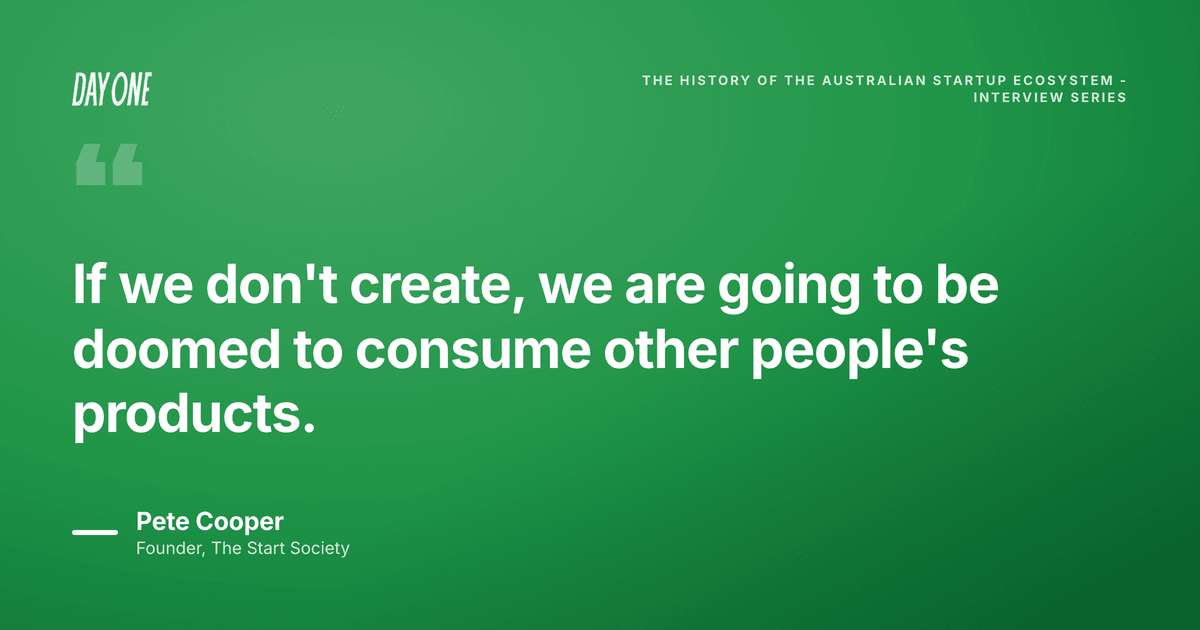
Transcript Synced · select any line to jump ▾ 0:00 Speaker: Let me tell you about our partner, Teamified. If you need to build a top-notch team quickly, Teamified is your go-to solution. They not only provide fractional CTOs, they can also do contractors and even remote team members tailored exactly to your needs. And whether you're looking for expertise in the Philippines, India, or Sri Lanka, Teamified has you covered. What's amazing is that Teamified uses a blend of AI and human expertise to cut hiring times by 50%. Their platform handles everything from automated onboarding to day-to-day management and even performance tracking. You can also handle rewards and recognition, buy equipment, and order training all through their platform. Simplify your hiring process and get the best talent fast with Teamified. Check them out now and transform your team. Go to dayone.fm/teamified. That's dayone.fm/t-e-a-m-i-f-i-e-d and get started today. 0:59 Speaker: Thank you. 1:01 Speaker: Hi, I'm Adam Spencer, founder of the Day One Network, which is bringing the history of the Australian startup ecosystem to you. I believe in founders. It's why I do everything I do at Day One and our media company, W2D1 Media. And that's why the Day One Network exists, to create helpful content for founders. We've got some great shows in development, but a large part of what we do couldn't be done without support from our partners and sponsors. And I couldn't be happier than to be working with NTP, who get community better than any other technology recruitment company out there. A Newcastle company like mine, NTP are invested in seeing the growth of the local tech community in Newcastle, Sydney, and more broadly Australia. So thank you NTP for helping us bring helpful content to founders and the startup community in Australia. Back to the interview. Hi, I'm Adam Spencer, founder of the Day One Network, which is bringing the history of the Australian startup ecosystem to you. I believe in founders. It's why I do everything I do at Day One and our media company, W2D1 Media. And that's why the Day One Network exists, to create helpful content for founders. We've got some great shows in development, but a large part of what we do couldn't be done without support from our partners and sponsors. And I couldn't be happier than to be working with NTP, who get community better than any other technology recruitment company out there. A Newcastle company like mine, NTP are invested in seeing the growth of the local tech community in Newcastle, Sydney, and more broadly Australia. So thank you NTP for helping us bring helpful content to founders and the startup community in Australia. Back to the interview. Hi, I'm Adam Spencer and welcome to Day One, the podcast that spotlights Australian startups, founders, and the organizations that empower Australian entrepreneurship. We go back to the beginning to tell the story of Australia's most inspiring founders and how they built their companies. You're listening to a special interview series as part of a documentary W2D1 is producing about the history of the Australian startup ecosystem. On the episode today, we have— 3:18 Pete Cooper: Hi, I'm Pete. You probably know me from the early days of the ecosystem with events like SidStart that became StartCon, the big conference, but we also did a lot of other smaller things that have made a big difference, like the early days of setting up Fishburners, which is one of the big incubators, and a lot of state and federal and a little bit of local government lobbying to get the ecosystem being supported, and also, yeah, early tech startups, so ones in finance in particular which have been globally successful, and helping connect the financial community in Australia to the ecosystem so we get better investment flow, like partnering with the ASX for the pitch festivals and the pushing for superannuation funds to invest in tech startups. 4:02 Speaker: What are you most proud of? When did you first start? You were probably involved before it was really like quote unquote startup ecosystem, but what year did you first get involved? 4:18 Pete Cooper: I got an Apple II computer and started programming and built a pharmacy system for my dad, which was spectacularly bad. And I think the staff actively resented the boss's son tinkering in the middle of their workplace. Great lesson in customer user experience and customer engagement. But there was a little community around then called the Apple User Group. So 40 years ago. And we, you know, did computer science at UTS, which has proven to be a great decision because I think UTS has been one of the bedrock institutions for the ecosystem. Probably actually spectacularly unsuccessful in engaging because of the sort of competing nature of the different schools, but once that sort of cross-school, that innovation at the intersection thing gets worked out, All of the universities have been very successful. I think Sydney Uni's incubator program run by James Alexander was one of the best from the university's point of view. But these days it's probably, you know, maybe Murray Herbst at UTS and the groundwork we did with Maryanne Williams before that. So I think one of the great lessons for me is that universities have a role, a really important role to play, but they it's probably not as great as they realize and they're probably not as well structured as they realize to grab it. And that's where the independent accelerators and mentoring groups and angel investors and the coworking spaces, all those other elements have been so important. And then once people see that, oh, actually everyone's got something to contribute, then you can focus on being the best connected ecosystem rather than— Yeah. The biggest or the most dominant institution. So it's a real people game. 6:04 Speaker: Can you tell me a little bit about that groundwork that you did with Mary-Anne? What groundwork were you referring to? 6:13 Pete Cooper: We're trying to get into the university a meaningful cultural change to grab innovation. And prior to that, we set up fishburners, and I'm not going to name names of fishburners because there's just too many people that contributed to it, but let's just say there was probably 6 desks and we assembled them in that very early days. I think I have to give a special credit to Pete Davidson. Pete and I, we both independently hit on the need for a physical space because I did set up the events at the conferences and there were some other good ones around at the time. Just after, I think, Tech23, which is still going strong now. 6:54 Speaker: Yeah. 6:56 Pete Cooper: Really started to show the universities that this was not a fad. It's not a black art, you know, building a tech startup and a global enterprise very focused on the customer. It's not a black art, it's actually a science and it's getting more of a science every day. There's still wonderful human creativity, but the rules of entrepreneurship can be learned. And the great accelerators like Y Combinator out of the US and Founder Institute, which I helped support and set up, big shout out to Benjamin Chong and all the other mentors. They set the groundwork that others then came along and built on, like Startmate, which is, you know, world-class, the most amazing Aussie accelerator. And the universities are saying, what? This is our turf. You know, we should be doing this. We've got AGSM, which is great. I did a bit of study at Oxford and Harvard and various courses and did a bit of work at UTS. And I think it was a bit of a shock to the universities that they didn't own this space anymore. And actually they had more to learn from engaging than just by trying to say, oh, it's all ours. And then downstream from that, you know, and I do mean downstream, it should have been upstream if there was leadership, but downstream from that, the politicians, particularly federally, didn't realize, probably with the exception of Malcolm Turnbull and one or two others, the importance of it as an ecosystem and a job creator. But in the early days, we were just scratching around trying to work out what works and what doesn't and learning from, you know, San Francisco, London, and maybe Colorado. 8:20 Speaker: The impression that I got was that universities were, you know, trying to push this, you know, startup ecosystem forward before the private companies and private capital started coming in and setting up these accelerators like Startmate. So were they in the, you know, quote-unquote game before? Because I was under the impression that it was Startmate happened and then university started to follow, but it's around the other way, was it? 8:46 Pete Cooper: I think the universities were trying to make it work in parallel to Startmate. Startmate was definitely the tipping point because it got the support of the major players. And I don't just mean financially, I mean reputations and, you know, the Atlassian co-founders, for example, Mike and Scott. And we probably undervalue as an ecosystem how many other people were doing it before the celebrity roles kicked in. Before the words fintech popped up, there were some spectacularly successful global financial technology companies and placed things like SASU and Cameron Systems, you know, these are used by thousands of institutions and companies, SMEs and corporates, even Smarts Group and the insider trading detection software. There was a small group of consultants that had productized tech called RJE that did the Hong Kong Jockey Club and then did the Australian Stock Exchange using basically the same tech. I worked on the control system for that. So Sadly, we launched the same week of the market crash in '87. And they tried to blame the system, but fortunately that was proven wrong. So yeah, there's really great heritage in Australia. And it was sort of like a little bit nauseous because we keep talking about innovation like the Hills Hoist or the lawnmower or something. And fortunately we got past that stage. And now every parent and every, you know, high school, even junior school child with even a hint of creativity or entrepreneurship or both ideally would consider this for a career path and so they should. So it's, yeah, it's kind of a funny historical journey. It hasn't been led by the universities. In the early days, we were just trying to find like-minded souls to hang out with. The weird guys with beards at the Apple User Group got replaced by the coffee mornings that we used to do in Clarence Street or the beers, you know, once a month or so. Yeah. It moved around a bit, but there was this— we're talking tiny groups, 20 people. The first SIDS start was 50 people RSVP'd. We thought 20 would turn up and 80 turned up and the security guards were literally kicking us out at the end of the night because for many of us, it was the first time that we'd seen this many people in the ecosystem in one place. That was 2009. We're starting to get into the sort of the meaningful stage then because we realized that this is a global industry and that Australia was going to have a place in it. And it was probably at least 3 or 4 years after that that we finally got even asked to participate in the global rankings, you know, the Startup Genome global rankings. And we got some of our sort of celebrities starting to kick in, like the Rasmussen brothers. I think one of them was trying to bring his partner, who was not, you know, another great hat tip to Australian equality and diversity. They had trouble getting immigration visas in other countries, but Australia welcomed them with open arms. And then we ended up with the co-founders of or the co-creators, I should say, of Google Maps calling Australia home. And it's like, I personally think that's as big as, you know, arguing with New Zealand about the pavlova. You know, it's a formative moment in our history that ties back to our values and how we see ourselves. I keep getting called the, alternatively, the grandfather, which is not very attractive, or the godfather, which is also not very attractive. [LAUGHTER] But occasionally we need to be reminded of these simple things that were done by humble people that, you know, I don't want to be in the front line and I don't think I'd be described as humble, but there's a lot of people that have just quietly built great businesses like Melanie, Cliff, and Cam over at Canva that started off doing school books, you know, school yearbooks. We did a dental system, Pete Renton and I, I finished graduating at UTS into the dental system and years later I was on the federal task force to stand up the Australian Digital Health Agency and all the national health records. So there is this tiny stepping stones or thin thread that connects us. One of the characteristics of the ecosystem that's been so great is it has been welcoming. And to me, it's really demonstrated the Australian values, inclusiveness and equality and okay, we lost our way a little, from time to time and competed too much when we should be collaborating to hit the global markets, competing against the world, not against each other. You know, and I say, you know, we can't be the biggest, but we can be the best connected. And it was role modeled by the Aussie Mafia, a fun term used to describe the guys in the States mainly or international. And I flipped in and out of the country, so I wasn't firmly in that group, but I certainly connected to many of them. 13:22 Speaker: Yeah. 13:23 Pete Cooper: It was international. It was Australian values being demonstrated, everything from wealth creation to social impact and welcoming newcomers, whether at these coffee meetings or Fishburners, now the Sydney Tech Startup Hub, and hopefully a whole district we get between Central and Redfern. You know, all these things have been decades in the coming, and it hasn't been one person. And it's because of the welcoming nature that people have thought, "Oh, I'm welcome here and I can make a difference." That inclusivity has been just one of the most heartwarming and inspiring and motivating because when you have a bad day, you can share it with your fellow co-founders. And when you have a great day, you can share it with your fellow co-founders. When you've got knowledge gaps, the peer learning is really the most valuable. And this is where the closing the loop back to the universities. Universities now realize that community-based peer learning is the most scalable and fastest. Whereas their curriculum model is like project management, waterfall model, you know, old school. You can't ever keep up with an old school curriculum development model. It has to be accelerated peer learning driven by a specialist community. There's just too many skills moving too fast. The technology industry alone is just going too fast in too many directions. So I think we need to be grabbing, grabbing this thing by the horns at a national level. And I don't just mean government handouts, I mean genuine involvement at the center of the innovation for the country. Rick Richardson, who's a famous inventor and a good friend of mine, who invented the principles of software activation and patented that way before Microsoft and had a famous $300 million lawsuit that he won eventually against Microsoft. And he and I and a bunch of other people have been collaborating on building a new Office of Innovation for Australia because— Yeah. It is one of our most potentially large competitive advantages. And once again, social impact and wealth creation, not just one or the other. And if we don't do it, we're already seeing the competition from other countries gradually whittle away at it as we slip down the rankings. But now at least we can see that it works and it's just waiting for people to wake up to it. 15:31 Speaker: You mentioned the Aussie mafia. Now I know Mick Labinskis was was one of those guys in that group, but can you mention a few other names that made up that group? 15:43 Pete Cooper: Yeah, there's a fair few. I think the ones that have recently come to the fore are people like Nicky Savak because he formed a very good partnership with Mike Cannon-Brookes. But there's a lot of people that have got lower profile that I think made very strategic contributions, like Elias, if you've heard of him. Bartier Hausmann, who built and exited. There's a bunch of people that weren't ever formal members of that group but are highly connected in and around it and maybe didn't have the commercial chops or the business track record for, you know, raising funds or getting shipping product, but they had a spectacular impact on the community connectedness. You know, quiet people like, you know, Sean Marshall, who did some of the early legwork for Sid Start, and they brought together these diverse groups or helped everyone bring together these diverse groups, you know, from like gaming and institutional finance software, which is one of my large background points. And then this new, how do we do it all faster with the customer at the center of the universe rather than some IT project manager at the center of the universe. Yeah. Center of the universe. It's these quiet— and I put Mick in the quiet category, he's got a very high profile now, but he's actually had a very true north, you know, on values and the community first. One of his big driving things is equality and climate as well. And he's had, you know, this remarkable true north. And these are role models for the country, not just for our ecosystem. And I think that's one of the great things about it. And we've got High-profile women that have been ignored, I think, on the national stage. They're probably getting a little bit of recognition now, but that have made huge contributions. Jen George and Jane Lu and Melanie Perkins from Canva before, Sam Wong from Startmate. But even before that, there was a lot of lower-profile people that are probably just more coders and technical architects and these geeks that don't come out of the cupboard very often. They're much more interested in getting work done. 17:52 Speaker: Do you have any unpopular opinions about where things are right now and what needs to change? 17:58 Pete Cooper: I think that, you know, probably we should be focusing on the big gaps. We're starting to make some progress on, you know, superannuation being invested in tech startups. And, you know, Australia's been, it's been an incredible success story, but largely because of resources. Imagine if we'd put some of our superannuation into Apple, Google, Facebook. Tesla in the early days and we didn't. And imagine if we put some of that money into Atlassian, Canva, SafetyCulture, you know, all the typical ones, but also the ones that, you know, that I led that we exited for just in the simple tens of millions rather than tens of billions businesses and then spawned hundreds of those companies rather than what we're doing now, two decades later, doing hundreds of companies and potentially thousands of companies. We really should have been on that bandwagon much earlier and measuring ourselves against the progress we've made rather than measuring against the progress we should have made is actually what we should be doing now. We've just been thinking too small, too slow, too often. The best example I could give was the first time we spoke at New South Wales Parliament House and I was talking about the importance of open data, famously with Garbage Collector. Mm-hmm. Stormed into the conference and basically took over the stage while I and another speaker were just taking questions after speaking. And he wasn't interested in our agenda, he was interested in grabbing a headline. But I must give my applause to the guy because at that time we were talking about open data and someone was at risk of being legally prosecuted by the state government for putting bus timetables online, which is now something every Australian accepts as normal, right? You can see how far your bus away is and how reliable it is. And some countries, they do star ratings on bus drivers and, you know, real-time feedback to the central control and all these things that are now accepted norms. That person was going to be potentially jailed or fined for copying public data. And Rees, to his credit, had the moral fortitude or good advisors enough to stand up and say, this is wrong. We shouldn't have been prosecuting this guy. Yeah. We should be apologizing to him and thanking him for creating the app and being a role model. And in response, I'm going to create the Apps for New South Wales competition, which is— I know it's small beer money in the scheme of things, but it's been a wonderful motive for people to innovate. And often beer money is enough to have spectacular innovation. 20:26 Speaker: What's your message to the world? What are some of the biggest gaps that you see today? 20:33 Pete Cooper: Well, the lobbyists controlling the agendas of politicians and media and lobbyists controlling the agenda of politicians, media short-term and lobbyists long-term, sadly crept into our industry sort of a little bit too early and without naming corporates' names, some very big well-known names were involved in that. So it would be very useful if we had, I believe it would be very useful if we had a truly independent national industry body. I think it would be really nice if we sat with representatives of that body at the heart of federal government advising them on Future Fund and advising them on where the entire population of Australia's retirement money gets invested. Because frankly, you know, we know better than they do and we'll continue to know better than they do because we have a better way of learning. This peer learning I was talking about before. It doesn't mean we're always going to be right. It's still risky. Investing is risky and investing is dangerous. But you've got to take a balanced risk. And at the moment, we're sort of fractions of 1% going into real tech. And imagine if we just put, you know, 10% into Apple, 10%— which is now the biggest tech company in the world— 10% into Google, 10% into Facebook, 10% into Tesla. It would actually kick Australia up from being sort of 4th or 5th to possibly even 3rd in the world in fund administration and the flow-on effects of wealth creation, diversifying away from resources and strategic soft power influence globally from it. So, um, yeah, that's— I think that's a big gap. Mainly I just think we should be putting more effort into it being a daily conversation. Most of the kids know that tech is central to the world, but they're only looking at a very narrow place. And as consumers of tech, like users of Facebook or users of Reddit, or users of TikTok, and rather than creators. And if we don't create, we are going to be doomed to consume other people's products. Encouraging and letting people experiment and giving them beer money to attempt an experiment, customer-centric global startup experiment, and we're talking hundreds or thousands, not tens of thousands of dollars to do that. I think it should be mandatory for every student in every discipline almost because the cross-discipline innovation at the intersection is just there's so many demonstrated examples. You know, if you ask, was there an intersection between tech and mental health or tech and philosophy 5 years ago, people would say nope. But now there's an entire category. If you asked about, you know, non-government-controlled finances in the crypto space, for example, or, you know, data sharing with personal control like blockchain, these are now accepted global norms, and less than a decade ago, they're unheard of. And I think we're just getting started. You know, there'll be stuff in genetics, there'll be stuff in the new wave— it's not even new anymore— AI and machine learning that we just haven't even comprehended yet. So yeah, I think it needs to be much more mainstream, and it would be great for our diversity as a country in terms of income. Uh, it'd be great for our resilience, you know, if we do end up with this sort of global conflict going on. And it's It's also sort of an inspirational hope thing. It aligns with our core values of being an optimistic country, an equal, inclusive, optimistic country, not one that's head down, ashamed, and locked up in COVID, but one that's looking out to the world. Even though we're physically constrained, it doesn't mean we need to be mentally or electronically constrained. And it's such a shining light for the world. If you compare us as a democracy, a stable, long-term democracy with freedom of speech against large parts of the world and making the internet dark and regulated and controlled, and the more we can use it, use this freedom and teach it because it's not a black art anymore, the wealthier we'll be, but also I think we'll be happier if we align it with our values and get the social impact that we know we can at scale for millions of people. 24:39 Speaker: I hope you enjoyed that interview. More interviews are on the way. Follow the podcast wherever you're listening right now. Stay tuned for more interviews with many, many more amazing people from the Australian startup ecosystem. Thanks for listening and see you next time.